15 Results for "

Akt1-IN-1

" in MedChemExpress (MCE) Product Catalog:
Products (15)

15 Results for "Akt1-IN-1" in MCE Product Catalog:

1
1 Cited Publications
Cat. No.: HY-146459
Purity:  99.74%
Target:  

Akt

Research Areas:  

Cancer

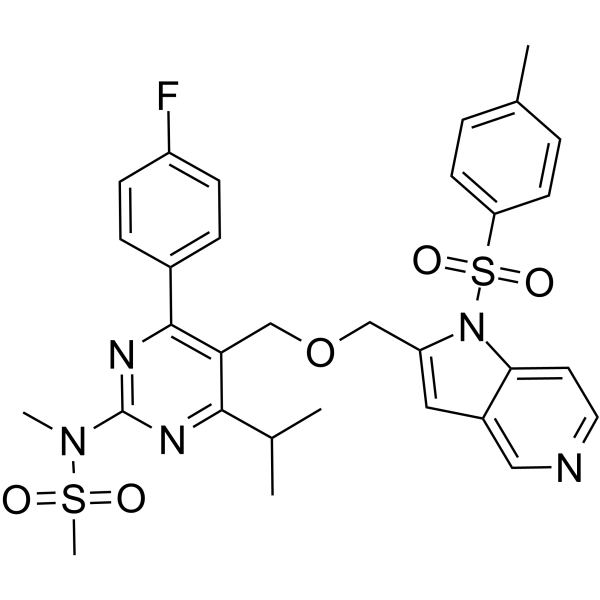
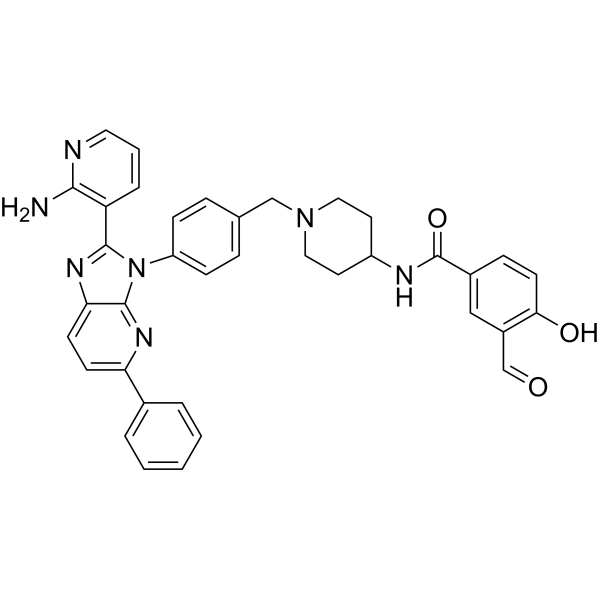
Akt1-IN-1 (compound 5b) is a potent and selective Akt1 inhibitor with an IC50 value of 18.79 nM in MIA Paca-2 cells. Akt1-IN-1 does not exhibit obvious teratogenicity, hepatotoxicity and cardiotoxicity (No Observed Adverse Effect Level > 100 µM). Akt1-IN-1 can be used for researching anticancer .
loading...
    loading...
3
3 Cited Publications
Cat. No.: HY-N1401
CAS No.: 112246-15-8
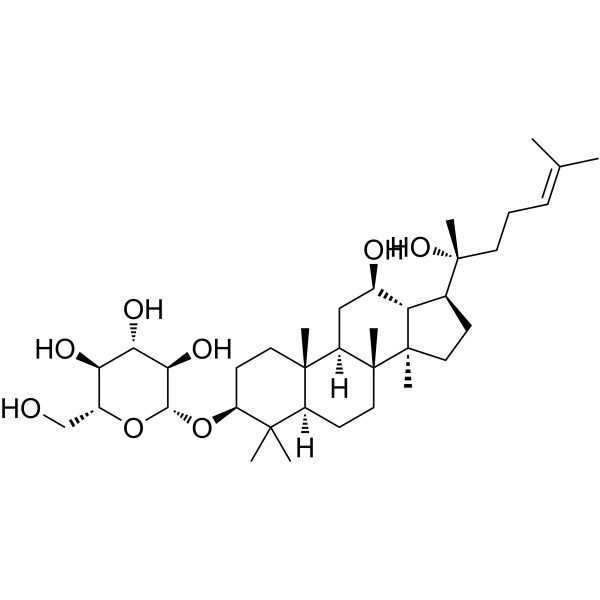
20(R)-Ginsenoside Rh2 is an orally active protopanaxadiol-type saponin with multiple biological activities. 20(R)-Ginsenoside Rh2 exerts a significant inhibitory effect on non-small cell lung cancer and liver cancer by inducing cell cycle arrest and promoting apoptosis. 20(R)-Ginsenoside Rh2 exerts anti-γ-herpesvirus effects by inhibiting viral DNA replication. 20(R)-Ginsenoside Rh2 inhibits inflammatory mediators by reducing the levels of NO, PGE2, and ROS; it can delay skin photoaging by reducing ROS and inhibiting MMP-9/2 activity. 20(R)-Ginsenoside Rh2 accelerates the recovery after muscle injury by activating the Akt1/PKB signaling pathway. 20(R)-Ginsenoside Rh2 can inhibit osteoclast formation and exert an anti-osteoporosis effect .
loading...
    loading...
1
1 Cited Publications
Cat. No.: HY-119016
CAS No.: 1072443-89-0
Purity:  98.47%
Synonyms: BML-258
Target:  

SphK CaMK

Research Areas:  

Cancer

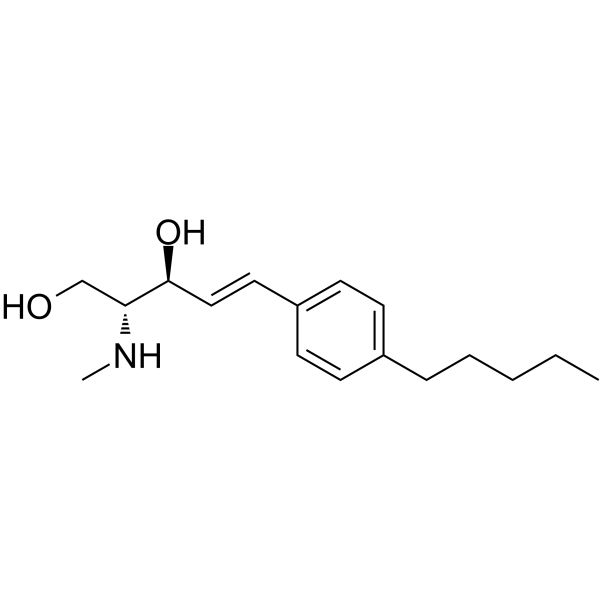
SK1-I (BML-258), an analog of sphingosine, is an isozyme-specific competitive SPHK1 inhibitor with a Ki value of 10 μM . SK1-I shows no activity at SPHK1 PKCα, PKCδ, PKA, AKT1, ERK1, EGFR, CDK2, IKKβ or CamK2β. SK1-I enhances autophagy and has antitumor activity .
loading...
    loading...
Cat. No.: HY-N0863
CAS No.: 54522-52-0
Synonyms: NSC-698790; Smilax saponIN B
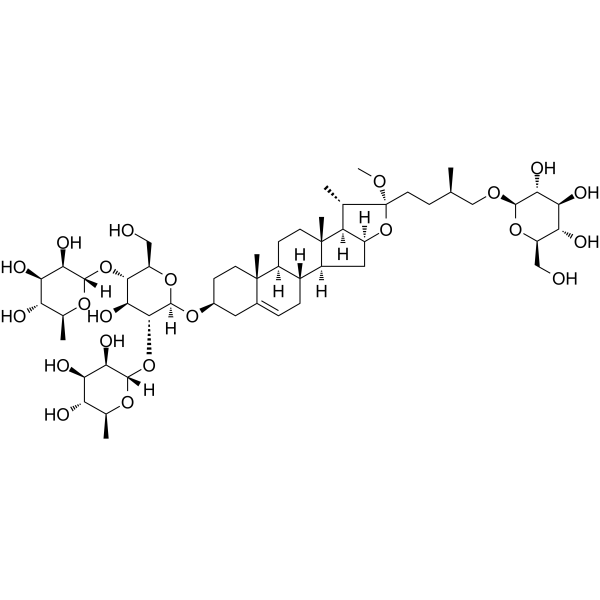
Methyl protodioscin (NSC-698790; Smilax saponin B) is a multi-target, selective, steroidal diglycoside inhibitor with antitumor activity that induces cell cycle arrest. The mechanism of action of Methyl protodioscin is complex, involving the induction of G2/M cell cycle arrest, regulation of the Bcl-2/Bax apoptotic pathway, inhibition of the Akt1/c-Myc axis and MAPK/ERK signaling, while simultaneously downregulating ADAM15 and inducing FOXO1 to reduce cholesterol synthesis. It also inhibits the JNK/c-Jun pathway, reducing the production of inflammatory factors (IL-6, TNF-α). Methyl protodioscin exhibits significant antitumor (inhibiting proliferation, migration, invasion, and inducing apoptosis), anti-inflammatory, and anti-restenosis activities. Methyl protodioscin can be used in research on lung cancer, prostate cancer, pancreatic cancer, and other tumors, as well as inflammatory diseases such as airway inflammation and enteritis .
loading...
    loading...
Cat. No.: HY-W073128
CAS No.: 376-06-7
Synonyms: PFTeDA
Perfluorotetradecanoic acid (PFTeDA) is an orally active perfluoroalkyl substance. Perfluorotetradecanoic acid directly binds to the ligand-binding domain of purified hPPARγ, with a Kd value of 157.8 μM. Perfluorotetradecanoic acid significantly reduces the activity of the SIRT1/PGC1α and AMPK signaling pathways while stimulating the activity of the AKT1/mTOR signaling pathway. Perfluorotetradecanoic acid significantly upregulates the expression of corticosterone biosynthesis genes. Perfluorotetradecanoic acid increases ROS levels and promotes Apoptosis. Perfluorotetradecanoic acid impairs Leydig cell function and male reproductive endocrine function in adult male rats .
loading...
    loading...
Cat. No.: HY-169960
Target:  

mTOR

Research Areas:  

Cancer

2DII is a potent and selective mTORC2 inhibitor. 2DII selectively binds mSin1 PH domain and decreases the expression of AKT1 phosphorylation .
loading...
    loading...
Cat. No.: HY-148868
CAS No.: 1334107-58-2
Target:  

Akt PKA CDK

Research Areas:  

Others

Akt1&PKA-IN-1 is a potent dual Akt/PKA inhibitor with IC50 values of 0.03 , 0.11 μM, and 9.8 μM for PKAa, Akt, and CDK2, respectively. Akt1&PKA-IN-1 is selective for cyclin-dependent kinase 2 (CDK2) .
loading...
    loading...
Cat. No.: HY-161438
CAS No.: 3033576-50-7
Target:  

Akt

Research Areas:  

Cancer

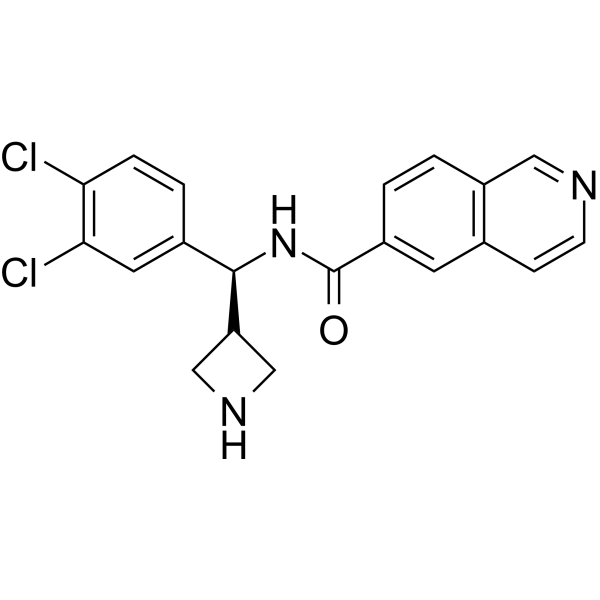
Akt1-IN-3 (Compd 7) is an inhibitor of AKT1. Akt1-IN-3 inhibits AKT1- E17K with IC50 < 15 nM .
loading...
    loading...
Cat. No.: HY-E70786
Target:  

Akt

Research Areas:  

Cancer

AKT is the oncogenic protein kinase that regulates essential cellular functions such as migration, proliferation, differentiation, apoptosis, and metabolism. Mammalian cells are characterized by the expression of three different Akt isoforms, Akt1, Akt2, and Akt3. AKT1 E17K is a mutant of AKT1. AKT1 E17K Recombinant Human Active Protein Kinase is obtained by expressing AKT1 E17K proteins .
loading...
    loading...
Cat. No.: HY-154960
CAS No.: 2988927-63-3
Research Areas:  

Cancer

Tubulin/AKT1-IN-1 (Compound D1-1) is an inhibitor of tubulin polymerization and AKT pathway activation. Tubulin/AKT1-IN-1 significantly inhibits the proliferation and metastasis of H1975 cells and slightly induced their apoptosis and can be used for non-small-cell lung cancer (NSCLC) research .
loading...
    loading...
Cat. No.: HY-RS00545
Research Areas:  

Others

AKT1S1 Human Pre-designed siRNA Set A contains three designed siRNAs for AKT1S1 gene (Human), as well as a negative control, a positive control, and a FAM-labeled negative control.

loading...
    loading...
Cat. No.: HY-N1401R
CAS No.: 112246-15-8
20(R)-Ginsenoside Rh2 (Standard) is the analytical standard of 20(R)-Ginsenoside Rh2. This product is intended for research and analytical applications. 20(R)-Ginsenoside Rh2 is an orally active protopanaxadiol-type saponin with multiple biological activities. 20(R)-Ginsenoside Rh2 exerts a significant inhibitory effect on non-small cell lung cancer and liver cancer by inducing cell cycle arrest and promoting apoptosis. 20(R)-Ginsenoside Rh2 exerts anti-γ-herpesvirus effects by inhibiting viral DNA replication. 20(R)-Ginsenoside Rh2 inhibits inflammatory mediators by reducing the levels of NO, PGE2, and ROS; it can delay skin photoaging by reducing ROS and inhibiting MMP-9/2 activity. 20(R)-Ginsenoside Rh2 accelerates the recovery after muscle injury by activating the Akt1/PKB signaling pathway. 20(R)-Ginsenoside Rh2 can inhibit osteoclast formation and exert an anti-osteoporosis effect.
loading...
    loading...
Cat. No.: HY-179516
CAS No.: 3087064-94-3
Research Areas:  

Cancer

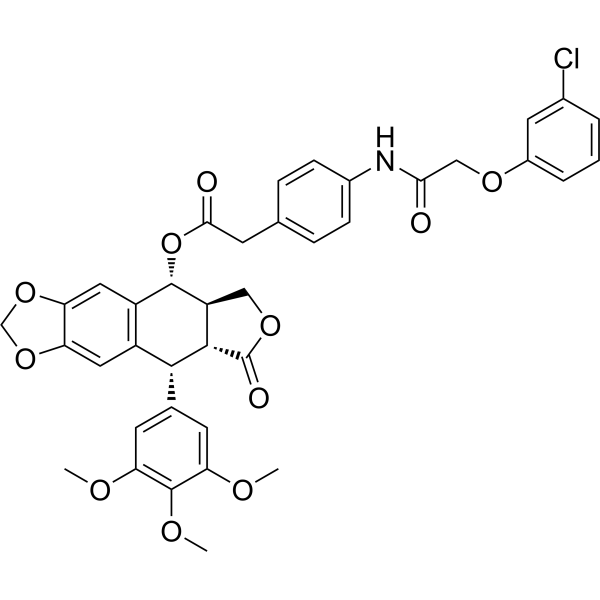
AKT1-IN-11, a Podophyllotoxin (HY-15552) derivative, is a AKT1/tubulin dual inhibitor. AKT1-IN-11 down-regulates the phosphorylation level of AKT kinase in tumor cells, disrupting cell proliferation, causeing G2/M phase arrest and inducing apoptosis. AKT1-IN-11 also promotes tubulin depolymerization. AKT1-IN-11 can be used for the research of colorectal cancer .
loading...
    loading...
Cat. No.: HY-184145
Research Areas:  

Cancer

AKT1-IN-13 is an orally active AKT1 inhibitor with an IC50 of 5.17 μM. AKT1-IN-13 also exhibits high inhibitory activity against PAK1, PKA, MAP2K1 (MEK1 / MAPKK1) and MAPK1 (ERK2). AKT1-IN-13 induces cell apoptosis, activates the pro-apoptotic protein BAX, inhibits the anti-apoptotic protein Bcl-2, and activates caspase 3 simultaneously. As a cytotoxic agent, AKT1-IN-13 exerts a killing effect on orthotopically transplanted liver cancer in an AKT1-dependent manner. AKT1-IN-13 can be used in studies related to hepatocellular carcinoma .
loading...
    loading...
Cat. No.: HY-183366
Target:  

HDAC Caspase Akt

Research Areas:  

Inflammation/Immunology Cancer

HDAC1-IN-14 is an indole-based benzamide selective HDAC1 inhibitor with an IC50 of 77 nM. HDAC1-IN-14 acts as an antiproliferative agent, with GI50 values ranging from nanomolar to low micromolar levels in various cancer cells. HDAC1-IN-14 induces G0-G1 cell cycle arrest in colon cancer cells. HDAC1-IN-14 upregulates the expression of Caspase-3, Cyto-C and Bax, and downregulates the expression of AKT-1. HDAC1-IN-14 can be used in research related to leukemia, non-small cell lung cancer, colon cancer, central nervous system cancer, melanoma, ovarian cancer, renal cancer, prostate cancer and breast cancer .
loading...
    loading...
  • 1

