



20(R)-Ginsenoside Rh2
Based on 3 publication(s) in Google Scholar
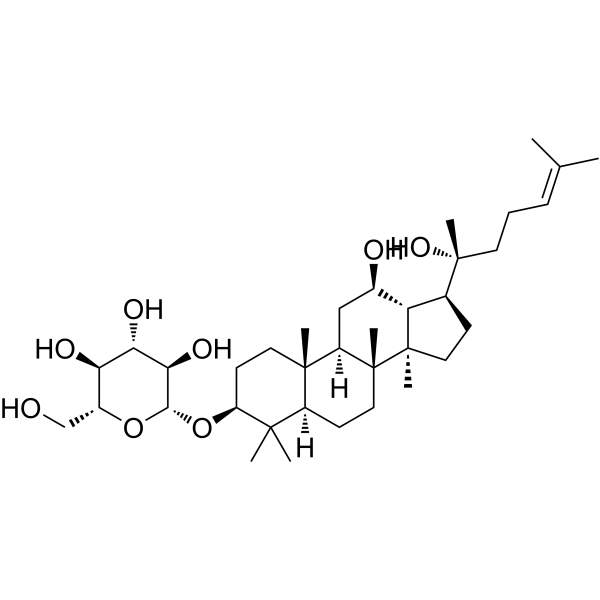
20(R)-Ginsenoside Rh2 is an orally active protopanaxadiol-type saponin with multiple biological activities. 20(R)-Ginsenoside Rh2 exerts a significant inhibitory effect on non-small cell lung cancer and liver cancer by inducing cell cycle arrest and promoting apoptosis. 20(R)-Ginsenoside Rh2 exerts anti-γ-herpesvirus effects by inhibiting viral DNA replication. 20(R)-Ginsenoside Rh2 inhibits inflammatory mediators by reducing the levels of NO, PGE2, and ROS; it can delay skin photoaging by reducing ROS and inhibiting MMP-9/2 activity. 20(R)-Ginsenoside Rh2 accelerates the recovery after muscle injury by activating the Akt1/PKB signaling pathway. 20(R)-Ginsenoside Rh2 can inhibit osteoclast formation and exert an anti-osteoporosis effect.
For research use only. We do not sell to patients.
- Purity : 99.84%
- CAS No.: 112246-15-8
- Formula: C36H62O8
- Molecular Weight:622.87
-
Storage:
4°C, protect from light
* In solvent : -80°C, 6 months; -20°C, 1 month (protect from light)

To place orders, for customer services and technical support, please contact: MedChemExpress USA
Tel: 609-228-6898 E-mail: [email protected] [email protected]


-
 Biological Activity
-
Chemical Information
-
Solvent & Solubility
- Protocols
- Purity & Documentation
- References
-
 Help & FAQs


-
HY-N0262
CordycepinBacterial Inhibitor -

HY-N1401R
20(R)-Ginsenoside Rh2 (Standard)Standard of 20(R)-Ginsenoside Rh2 -
HY-17394
CisplatinDNA Alkylator -

HY-N0262R
Cordycepin (Standard)Bacterial Inhibitor -
HY-15827
NSC 405020MMP14 Inhibitor -
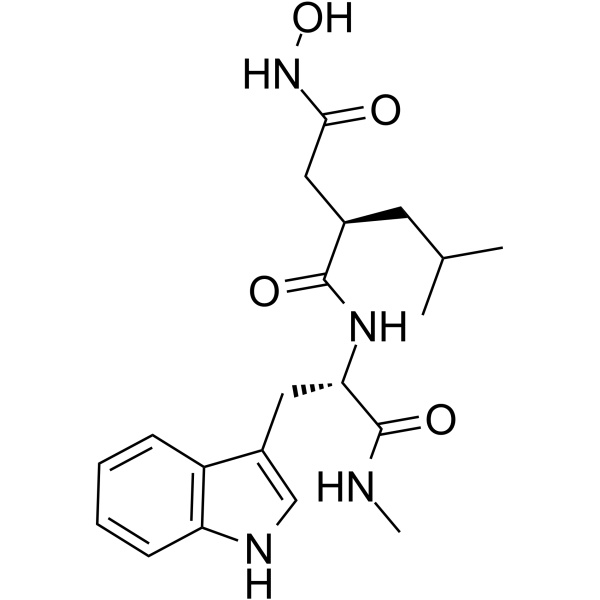
HY-15768
IlomastatMMP Inhibitor -
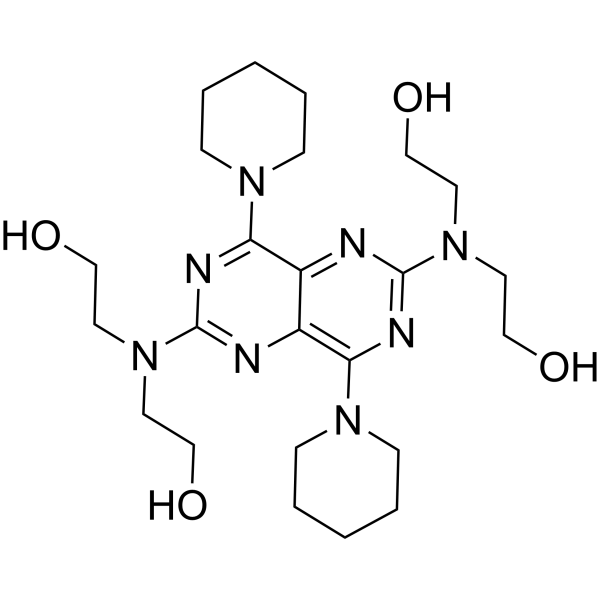
HY-B0312
DipyridamolePDE Inhibitor -
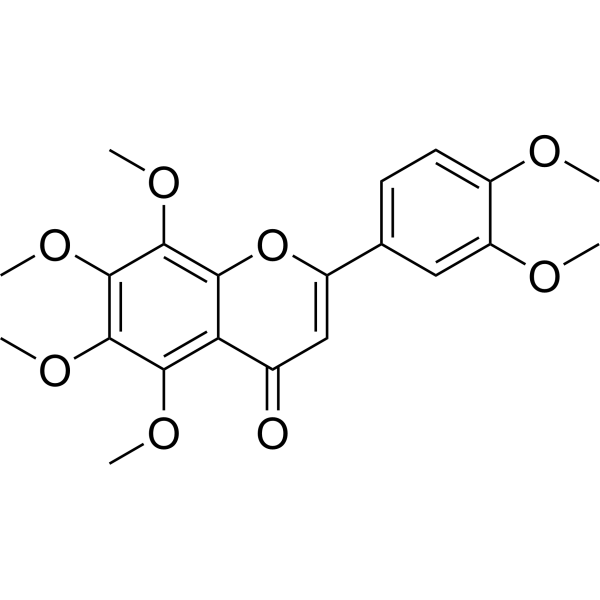
HY-N0155
NobiletinROR Agonist -
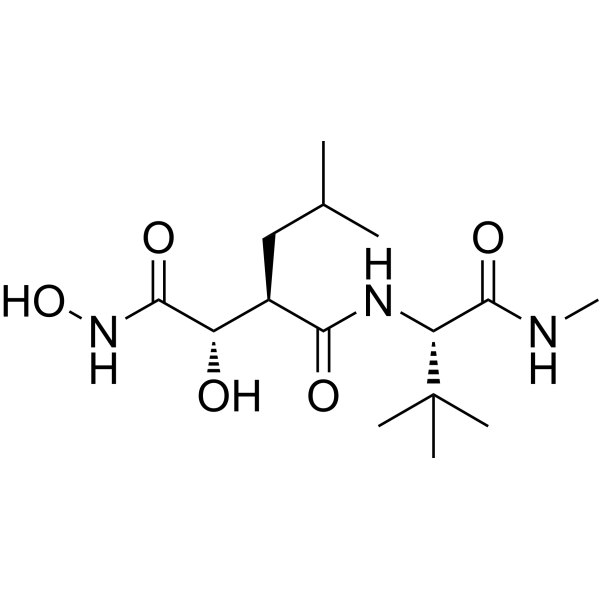
HY-12169
MarimastatMMP Inhibitor -
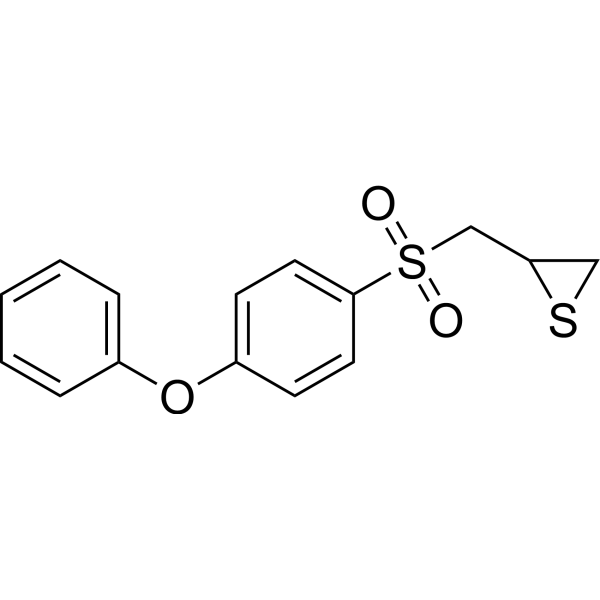
HY-12354
SB-3CTMMP2/9 Inhibitor -
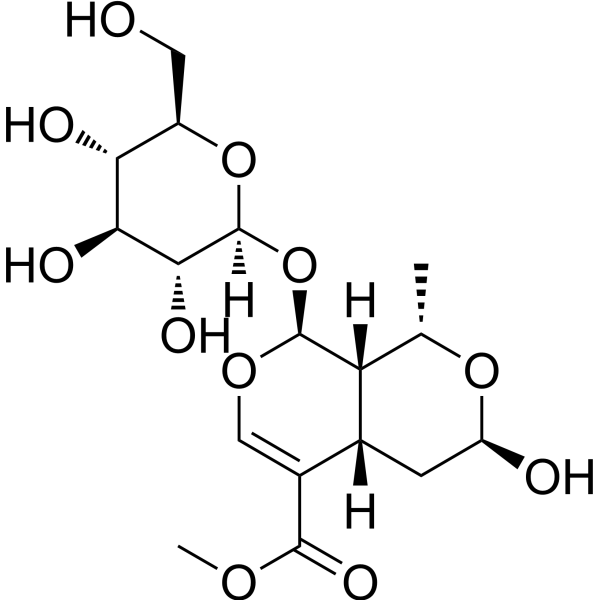
HY-N0532
MorronisidePyroptosis Inhibitor -
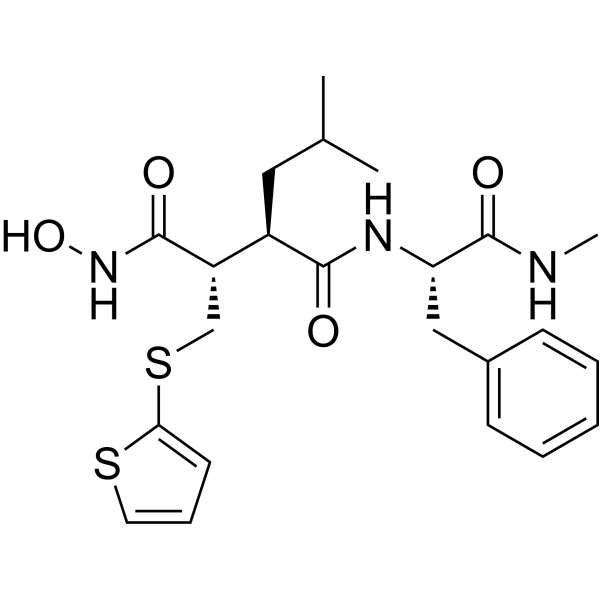
HY-13564
BatimastatMMP Inhibitor
Publications Citing Use of MedChemExpress (MCE) 20(R)-Ginsenoside Rh2
MoreAll DNA/RNA Synthesis Isoforms
More

Biological Activity
Description
|
MMP9 |
MMP2 |
Akt1 |
Cellular Effect
|
Cell Line

|
Type | Value | Description | References |
|---|---|---|---|---|
| DU-145 | IC50 |
38 μM
Compound: Rh2
|
Antiproliferative activity against human DU-145 cells incubated for 3 days
Antiproliferative activity against human DU-145 cells incubated for 3 days
|
[PMID: 32702586] |
| HCT-116 | IC50 |
19.6 μM
Compound: Rh2
|
Cytotoxicity against human HCT-116 assessed as reduction in cell viability by MTT assay
Cytotoxicity against human HCT-116 assessed as reduction in cell viability by MTT assay
|
[PMID: 32702586] |
| HCT-116 | IC50 |
35 μM
Compound: Rh2
|
Induction of cell death in human HCT-116 cells incubated for 48 hrs by trypan blue staining based analysis
Induction of cell death in human HCT-116 cells incubated for 48 hrs by trypan blue staining based analysis
|
[PMID: 32702586] |
| HeLa | IC50 |
2.52 μg/mL
Compound: Rh2
|
Induction of apoptosis in human HeLa cells incubated for 2 hrs by fluorescence microscopic analysis
Induction of apoptosis in human HeLa cells incubated for 2 hrs by fluorescence microscopic analysis
|
[PMID: 32702586] |
| HepG2 | IC50 |
1.648 μg/mL
Compound: Rh2
|
Induction of apoptosis in human HepG2 cells incubated for 72 hrs
Induction of apoptosis in human HepG2 cells incubated for 72 hrs
|
[PMID: 32702586] |
| HepG2 | IC50 |
100 μM
Compound: Rh2
|
Induction of apoptosis in human HepG2 cells incubated for 48 hrs by PI/Annexin V-FITC analysis
Induction of apoptosis in human HepG2 cells incubated for 48 hrs by PI/Annexin V-FITC analysis
|
[PMID: 32702586] |
| HepG2 | IC50 |
129.2 μM
Compound: Rh2
|
Induction of apoptosis in human HepG2 beta-catenin cells incubated for 48 hrs by PI/Annexin V-FITC analysis
Induction of apoptosis in human HepG2 beta-catenin cells incubated for 48 hrs by PI/Annexin V-FITC analysis
|
[PMID: 32702586] |
| HepG2 | IC50 |
42.12 μM
Compound: Rh2
|
Induction of apoptosis in human HepG2 cells incubated for 24 hrs
Induction of apoptosis in human HepG2 cells incubated for 24 hrs
|
[PMID: 32702586] |
| HepG2 | IC50 |
58.12 μM
Compound: Rh2
|
Induction of apoptosis in human HepG2 cells incubated for 72 hrs by PI/Annexin V-FITC analysis
Induction of apoptosis in human HepG2 cells incubated for 72 hrs by PI/Annexin V-FITC analysis
|
[PMID: 32702586] |
| HepG2 | IC50 |
83.33 μM
Compound: Rh2
|
Induction of apoptosis in human HepG2 beta-catenin cells incubated for 72 hrs by PI/Annexin V-FITC analysis
Induction of apoptosis in human HepG2 beta-catenin cells incubated for 72 hrs by PI/Annexin V-FITC analysis
|
[PMID: 32702586] |
| HL-60 | IC50 |
25.59 μM
Compound: Rh2
|
Induction of apoptosis in human HL-60 cells assessed as reduction in cell viability incubated for 72 hrs by CCK-8 assay
Induction of apoptosis in human HL-60 cells assessed as reduction in cell viability incubated for 72 hrs by CCK-8 assay
|
[PMID: 32702586] |
| HL-60 | IC50 |
38 μM
Compound: Rh2
|
Cytotoxicity against human HL-60 cells measured after 24 hrs by MTT assay
Cytotoxicity against human HL-60 cells measured after 24 hrs by MTT assay
|
[PMID: 32702586] |
| Jurkat | IC50 |
35 μM
Compound: Rh2
|
Inhibition of proliferation in human Jurkat cells assessed as reduction in cell viability incubated for 48 hrs by CCK-8 assay
Inhibition of proliferation in human Jurkat cells assessed as reduction in cell viability incubated for 48 hrs by CCK-8 assay
|
[PMID: 32702586] |
| K562 | IC50 |
60 μM
Compound: Rh2
|
Cytotoxicity against human K562 cells incubated for 48 hrs by CCK-8 assay
Cytotoxicity against human K562 cells incubated for 48 hrs by CCK-8 assay
|
[PMID: 32702586] |
| Kasumi 1 | IC50 |
60.06 μM
Compound: Rh2
|
Induction of apoptosis in human Kasumi 1 cells assessed as reduction in cell viability incubated for 72 hrs by CCK-8 assay
Induction of apoptosis in human Kasumi 1 cells assessed as reduction in cell viability incubated for 72 hrs by CCK-8 assay
|
[PMID: 32702586] |
| KG-1 | IC50 |
60 μM
Compound: Rh2
|
Cytotoxicity against human KG-1 alpha cells incubated for 48 hrs by CCK-8 assay
Cytotoxicity against human KG-1 alpha cells incubated for 48 hrs by CCK-8 assay
|
[PMID: 32702586] |
| LNCaP | IC50 |
17 μM
Compound: Rh2
|
Antiproliferative activity against human LNCaP cells incubated for 3 days
Antiproliferative activity against human LNCaP cells incubated for 3 days
|
[PMID: 32702586] |
| PC-3 | IC50 |
35 μM
Compound: Rh2
|
Antiproliferative activity against human PC-3 cells incubated for 3 days
Antiproliferative activity against human PC-3 cells incubated for 3 days
|
[PMID: 32702586] |
| SK-HEP1 | IC50 |
3.15 μg/mL
Compound: Rh2
|
Induction of apoptosis in human SK-HEP1 cells incubated for 2 hrs by fluorescence microscopic analysis
Induction of apoptosis in human SK-HEP1 cells incubated for 2 hrs by fluorescence microscopic analysis
|
[PMID: 32702586] |
| SW480 | IC50 |
35 μM
Compound: Rh2
|
Induction of cell death in human SW480 cells incubated for 48 hrs by trypan blue staining based analysis
Induction of cell death in human SW480 cells incubated for 48 hrs by trypan blue staining based analysis
|
[PMID: 32702586] |
| SW480 | IC50 |
4.06 μg/mL
Compound: Rh2
|
Induction of apoptosis in human SW480 cells incubated for 2 hrs by fluorescence microscopic analysis
Induction of apoptosis in human SW480 cells incubated for 2 hrs by fluorescence microscopic analysis
|
[PMID: 32702586] |
| U-937 | IC50 |
38 μM
Compound: Rh2
|
Cytotoxicity against human U-937 cells measured after 24 hrs by MTT assay
Cytotoxicity against human U-937 cells measured after 24 hrs by MTT assay
|
[PMID: 32702586] |
In Vitro
20(R)-Ginsenoside Rh2 (0-50 μM, 24 h) is capable of suppressing the production of NO, PGE2, ROS and MMP-9 (matrix metalloproteinase-9) but does not modulate the gelatinolytic activity of MMP-2 (matrix metalloproteinase-2) induced by LPS (HY-D1056) in the RAW264.7 macrophage cells[1].
20(R)-Ginsenoside Rh2 (0-25 μM, 24 h) decreases the ROS level (but unable to modulate the NO), inhibits the gelatinolytic activity of both MMP-9 and MMP-2 in the non-stimulated HaCat cells and exhibits no cytotoxicity on HaCat cells[1].
20(R)-Ginsenoside Rh2 (0-200 μg/mL, 24 h-28 d) inhibits the proliferation and colony formation in 95D and NCI-H460 cells and induces apoptosis in both cells[3].
20(R)-Ginsenoside Rh2 (50-100 μg/mL, 48 h) mediates cell cycle arrest in G1/S phase of 95D cells and cell cycle arrest in G2 phase of NCI‑H460 cells[3].
20(R)-Ginsenoside Rh2 (0-100 μM, 72 h) significantly inhibits murine gammaherpesvirus 68 (MHV-68) proliferation (IC50 = 2.77 μM) by inhibiting the replication of MHV-68 after entry into the NIH-3T3 cells and inhibits lytic replication of human gammaherpesvirus herpesvirus (KSHV)-positive cell line BC3[4].
20(R)-Ginsenoside Rh2 (5-10 μg/mL, 72 h) increases C2C12 murine myoblasts and inhibits primary rat cardiomyocytes proliferation by activating Akt/PKB signaling and suppresses expression of p27Kip1 and p57KIP2[5].
20(R)-Ginsenoside Rh2 exhibits inhibition of osteoclast formation with an IC50 of 12 μM and shows no inhibition of osteoclast proliferation[6].
MedChemExpress (MCE) has not independently confirmed the accuracy of these methods. They are for reference only.
-
Cell Line:HaCat cells
-
Concentration:0, 0.2, 1, 5 and 25 μM
-
Incubation Time:24 h
-
Result:Observed the reduction of MMP-9 and MMP-2 gelatinolytic activity.
Inhibited TNF-a-induced MMP-9 gelatinolytic activity.
-
Cell Line:95D and NCI-H460 cells
-
Concentration:0, 50, 100, 200 µg/mL
-
Incubation Time:24, 48 and 72 h
-
Result:Exhibited the IC50s of 1006.15, 491.46 and 596.81 µg/mL at 24, 48 and 72 h against 95D cells.
Exhibited the IC50s of 386,77, 783,49 and 368,32 µg/mL at 24, 48 and 72 h against NCI-H460 cells.
-
Cell Line:95D and NCI-H460 cells
-
Concentration:50 and 100 µg/mL
-
Incubation Time:48 h
-
Result:Increased the accumulation rate of 95D cells in S phase from 34.70% to 43.05% and that of NCI‑H460 cells in S phase is 3.64% to 22.94% at 100 µg/mL.
-
Cell Line:95D and NCI-H460 cells
-
Concentration:50 and 100 µg/mL
-
Incubation Time:48 h
-
Result:Had the maximum total apoptosis rate of 21.67% in 95D cells and NCI‑H460 cells total apoptosis rate was 27.30%.
The number of nuclear fragmentation (apoptotic bodies) has significantly increased.
-
Cell Line:NIH-3T3 cells infected MHV-68
-
Concentration:100 µM
-
Incubation Time:72 h
-
Result:Reduced the mRNA expression of the viral lysate gene RTA.
Reduced the expression of the RTA (key gene during the lytic phase) and ORF56 (gene related to DNA synthesis).
-
Cell Line:NIH-3T3 cells infected MHV-68
-
Concentration:100 µM
-
Incubation Time:72 h
-
Result:Significantly decreased the expression of the late viral protein ORF45 (capsid protein) and M9.
-
Cell Line:C2C12 murine myoblasts
-
Concentration:5 and 10 µg/mL
-
Incubation Time:72 h
-
Result:Selectively enhanced myoblast proliferation (BrdU of human primary cells increased by 35%).
Inhibited the proliferation of cardiac fibroblasts (CdF).
-
Cell Line:C2C12 myoblast cells and primary rat cardiomyocytes
-
Concentration:5 µg/mL
-
Incubation Time:72 h
-
Result:Significantly downregulated p27Kip1 and p57Kip2 mRNA in C2C12 myoblast cells.
Downregulated p27Kip1 and showed no change on p57Kip2 in primary rat cardiomyocytes.
-
Cell Line:C2C12 myoblast cells and primary rat cardiomyocytes
-
Concentration:5 and 10 µg/mL
-
Incubation Time:72 h
-
Result:Significantly increased Akt phosphorylation in C2C12 myoblast cells.
Consistented with the mRNA results.
In Vivo
20(R)-Ginsenoside Rh2 (2 mg/kg, i.p., once daily, for 7 days) promotes the proliferation of cardiac muscle cells and improves cardiac function in myocardial infarction rats model[5].
20(R)-Ginsenoside Rh2 (2 mg/kg, i.p., once daily, for 7-14 days) accelerates the regeneration of skeletal muscles and reduces fibrosis in skeletal muscle degeneration mice model[5].
20(R)-Ginsenoside Rh2 (5 μg/mL) enhances cardiomyocyte proliferation in the zebrafish[5].
MedChemExpress (MCE) has not independently confirmed the accuracy of these methods. They are for reference only.
-
Animal Model:Myocardial infarction model established in adult male 8-week-old Sprague Dawley rats (weight range 230-250 g)[5]
-
Dosage:2 mg/kg
-
Administration:Intraperitoneal injection (i.p.), once daily, for 7 days
-
Result:Increased ejection fraction (EF) by 28%, left ventricular wall thickness increased, and scar area decreased.
-
Animal Model:Hepatoma model established in female H22 hepatoma-bearing mice (18-22g)[2]
-
Dosage:2, 3, 4, 6mg/kg
-
Administration:Oral administration (p.o.), once daily for 10 days
-
Result:Significantly inhibited tumor growth, and the weight of the mice remained stable.
The number of nuclear divisions decreased, the area of necrosis increased, and apoptotic-like cells (with nuclear shrinkage and fragmentation) were significantly present.
Significantly downregulated the expression of Bcl-2, Bax/Bak/Bcl-xL, but no significant change was observed.
-
Animal Model:Skeletal muscle degeneration model established in 8-week-old male C57BL/6 mice (weight range 23-25 g) [5]
-
Dosage:2 mg/kg
-
Administration:Intraperitoneal injection (i.p.), once daily, for 7 and 14 days
-
Result:Observed a large number of central nuclear myofibers (indicative of new formation) with their diameters significantly increased compared to the control group during 7 days treatment.
The number of inflammatory cells decreased by 50% during 7 days treatment.
Arranged more closely in the muscle fibers, reduced the scar area, and the swimming time remained stable during 14 days treatment.
- Mitochondrial membrane-potential fluorescent assay
- Annexin V plus membrane-impermeant dye apoptosis staining
- BrdU Incorporation Assay
- ROS/oxidative-stress fluorescent staining
- Protocol for Cell Cycle
- Liver Cancer Modeling
- Detection of Apoptosis
- TUNEL staining for apoptotic DNA fragmentation
- Flow cytometric DNA-content cell-cycle staining
- PCNA Immunodetection Proliferation Assay
- Mitochondrial membrane-potential and mitochondrial mass staining
- Apoptosis Solutions
- Osteoclast differentiation from monocyte/macrophage precursors


Chemical Information
-
CAS No. 112246-15-8
-
Appearance Solid
-
Molecular Weight 622.87
-
Formula C36H62O8
-
Color White to off-white
-
SMILES
O[C@H]([C@H]([C@@H]([C@@H](CO)O1)O)O)[C@@H]1O[C@H]2CC[C@]3(C)[C@@]4([H])C[C@@H](O)[C@@H]5[C@@H]([C@](C)(O)CC/C=C(C)\C)CC[C@](C)5[C@@](C)4CC[C@@]3([H])C2(C)C
-
Structure Classification
-
Shipping
Room temperature in continental US; may vary elsewhere.
-
Storage
4°C, protect from light
* In solvent : -80°C, 6 months; -20°C, 1 month (protect from light)


Publications (3)
-
Journal Impact Factor
-
Most Recent
-
Sci Adv
2023 Jan 20;9(3):eadd3867. PMID: 36662861 -
Phytomedicine
Rare ginsenoside Rk1 protects against cisplatin-induced auditory damage by regulating the MST1/LONP1 pathway. [Abstract]2026 Apr 26. PMID: 42097003 -
Vet Microbiol
The Chinese medicine monomer Schisandrin C inhibits PRRSV infection by regulating the OGT-PI3K/AKT/mTOR signaling pathway. [Abstract]2026 May:316:110992. PMID: 41865607


Solvent & Solubility
In Vitro:
DMSO : 100 mg/mL (160.55 mM; Need ultrasonic; Hygroscopic DMSO has a significant impact on the solubility of product, please use newly opened DMSO)
Please refer to the solubility information to select the appropriate solvent. Once prepared, please aliquot and store the solution to prevent product inactivation from repeated freeze-thaw cycles.
Storage method and period of stock solution: -80°C, 6 months; -20°C, 1 month (protect from light). When stored at -80°C, please use it within 6 months. When stored at -20°C, please use it within 1 month.
Please refer to the solubility information to select the appropriate solvent. Once prepared, please aliquot and store the solution to prevent product inactivation from repeated freeze-thaw cycles.
Storage method and period of stock solution: -80°C, 6 months; -20°C, 1 month (protect from light). When stored at -80°C, please use it within 6 months. When stored at -20°C, please use it within 1 month.
Concentration (start) × Volume (start) = Concentration (final) × Volume (final)
In Vivo:
Select the appropriate dissolution method based on your experimental animal and administration route.
- For the following dissolution methods, please ensure to first prepare a clear stock solution using an In Vitro approach and then sequentially add co-solvents:
- To ensure reliable experimental results, the clarified stock solution can be appropriately stored based on storage conditions. As for the working solution for In Vivo experiments, it is recommended to prepare freshly and use it on the same day.
- The percentages shown for the solvents indicate their volumetric ratio in the final prepared solution. If precipitation or phase separation occurs during preparation, heat and/or sonication can be used to aid dissolution.
In Vivo Dissolution Calculator
Please enter the basic information of animal experiments:
-
-
-
-
Recommended: Prepare an additional quantity of animals to account for potential losses during experiments.
Please enter your animal formula composition:
-
%DMSO +
Recommended: Keep the proportion of DMSO in working solution below 2% if your animal is weak.
-
%+
-
+%Tween-80 + +
-
%Saline +
The co-solvents required include: DMSO, . All of co-solvents are available by MedChemExpress (MCE). , Tween 80. All of co-solvents are available by MedChemExpress (MCE).
Working solution concentration: 0.22 mg/mL
Method for preparing stock solution: mg drug dissolved in μL DMSO. Stock solution concentration: mg/mL. * In solvent : -80°C, 6 months; -20°C, 1 month (protect from light)
1. Take μL DMSO stock solution;
2. Add μL .
μL , mix evenly;
3. Then add μL Tween 80, mix evenly;
4. Then add μL
Please ensure that the stock solution in the first step is dissolved to a clear state, and add co-solvents in sequence. You can use ultrasonic heating (ultrasonic cleaner, recommended frequency 20-40 kHz), vortexing, etc. to assist dissolution.


Purity & Documentation
-
Data Sheet (291 KB)
-
SDS (393 KB)
- English - EN (393 KB)
- Français - FR (393 KB)
- Deutsch - DE (393 KB)
- Norwegian - NO (393 KB)
- Español - ES (393 KB)
- Swedish - SV (393 KB)
- Italian - IT (393 KB)
- Korean - KR (393 KB)
- Portuguese - PT (393 KB)
-
Handling Instructions (2659 KB)
References
[1]. Choi WY, et al. Anti-inflammatory, antioxidative and matrix metalloproteinase inhibitory properties of 20(R)-ginsenoside Rh2 in cultured macrophages and keratinocytes. J Pharm Pharmacol. 2013 Feb;65(2):310-6. [Content Brief]
[2]. Lv Q, et al. Antitumoral Activity of (20R)- and (20S)-Ginsenoside Rh2 on Transplanted Hepatocellular Carcinoma in Mice. Planta Med. 2016 May;82(8):705-11. [Content Brief]
[4]. Kim AR, et al. Screening ginseng saponins in progenitor cells identifies 20(R)-ginsenoside Rh2 as an enhancer of skeletal and cardiac muscle regeneration. Sci Rep. 2020 Mar 18;10(1):4967. [Content Brief]
[5]. Kang S, et al. Antiviral activity of 20(R)-ginsenoside Rh2 against murine gammaherpesvirus. J Ginseng Res. 2017 Oct;41(4):496-502. [Content Brief]
[6]. Liu J, et al. 20(R)-ginsenoside Rh2, not 20(S), is a selective osteoclastgenesis inhibitor without any cytotoxicity. Bioorg Med Chem Lett. 2009 Jun 15;19(12):3320-3. [Content Brief]


Complete Stock Solution Preparation Table
Please refer to the solubility information to select the appropriate solvent. Once prepared, please aliquot and store the solution to prevent product inactivation from repeated freeze-thaw cycles.
Storage method and period of stock solution: -80°C, 6 months; -20°C, 1 month (protect from light). When stored at -80°C, please use it within 6 months. When stored at -20°C, please use it within 1 month.
| Optional Solvent | Concentration Solvent Mass | 1 mg | 5 mg | 10 mg | 25 mg |
|---|---|---|---|---|---|
| DMSO | 1 mM | 1.6055 mL | 8.0274 mL | 16.0547 mL | 40.1368 mL |
| 5 mM | 0.3211 mL | 1.6055 mL | 3.2109 mL | 8.0274 mL | |
| 10 mM | 0.1605 mL | 0.8027 mL | 1.6055 mL | 4.0137 mL | |
| 15 mM | 0.1070 mL | 0.5352 mL | 1.0703 mL | 2.6758 mL | |
| 20 mM | 0.0803 mL | 0.4014 mL | 0.8027 mL | 2.0068 mL | |
| 25 mM | 0.0642 mL | 0.3211 mL | 0.6422 mL | 1.6055 mL | |
| 30 mM | 0.0535 mL | 0.2676 mL | 0.5352 mL | 1.3379 mL | |
| 40 mM | 0.0401 mL | 0.2007 mL | 0.4014 mL | 1.0034 mL | |
| 50 mM | 0.0321 mL | 0.1605 mL | 0.3211 mL | 0.8027 mL | |
| 60 mM | 0.0268 mL | 0.1338 mL | 0.2676 mL | 0.6689 mL | |
| 80 mM | 0.0201 mL | 0.1003 mL | 0.2007 mL | 0.5017 mL | |
| 100 mM | 0.0161 mL | 0.0803 mL | 0.1605 mL | 0.4014 mL |


20(R)-Ginsenoside Rh2 Related Classifications
HY-N1401 Related Classifications
 Powered by Bioz