1. Search Result
Search Result
Results for "

Anaerobic bacteria

" in MedChemExpress (MCE) Product Catalog:

112

Inhibitors & Agonists

1

Biochemical Assay Reagents

2

Peptides

19

Natural
Products

12

Isotope-Labeled Compounds

Cat. No. Product Name Target Research Areas Chemical Structure
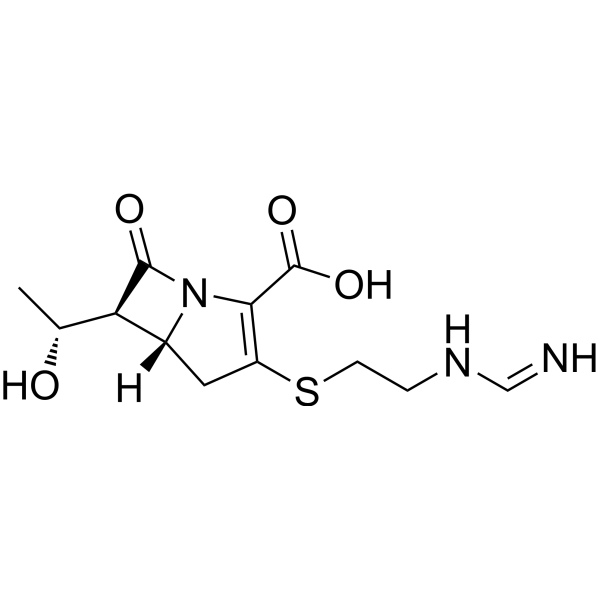
  • HY-B1369A
    Imipenem
    Maximum Cited Publications
    35 Publications Verification

    N-Formimidoyl thienamycin; MK0787

    Antibiotic Bacterial Infection
    Imipenem (MK0787), a stable crystalline derivative of thienamycin, is an antibiotic and has the excellent activity against a broad range of gram-positive and gram-negative aerobic and anaerobic bacteria. Imipenem can be used for the research of carbapenem-nonsusceptible and P. aeruginosa biofilm infections .
    Imipenem
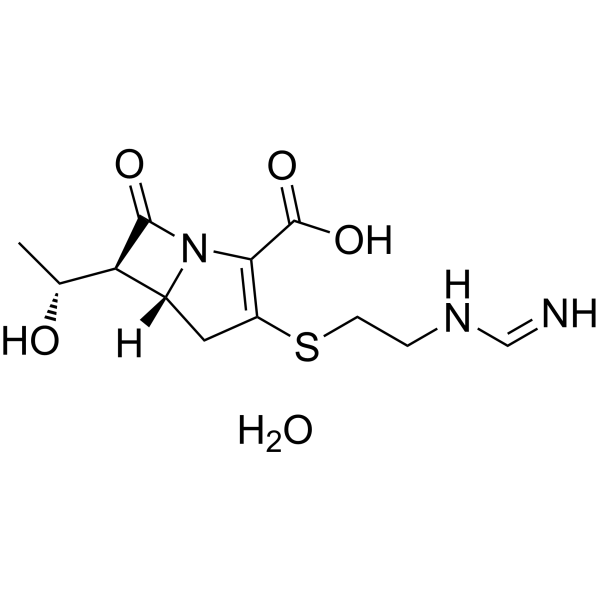
  • HY-B1369
    Imipenem monohydrate
    Maximum Cited Publications
    35 Publications Verification

    N-Formimidoyl thienamycin monohydrate; MK0787 monohydrate

    Antibiotic Bacterial Infection
    Imipenem monohydrate, a stable crystalline derivative of thienamycin, is an antibiotic and has the excellent activity against a broad range of gram-positive and gram-negative aerobic and anaerobic bacteria. Imipenem monohydrate can be used for the research of carbapenem-nonsusceptible and P. aeruginosa biofilm infections .
    Imipenem monohydrate
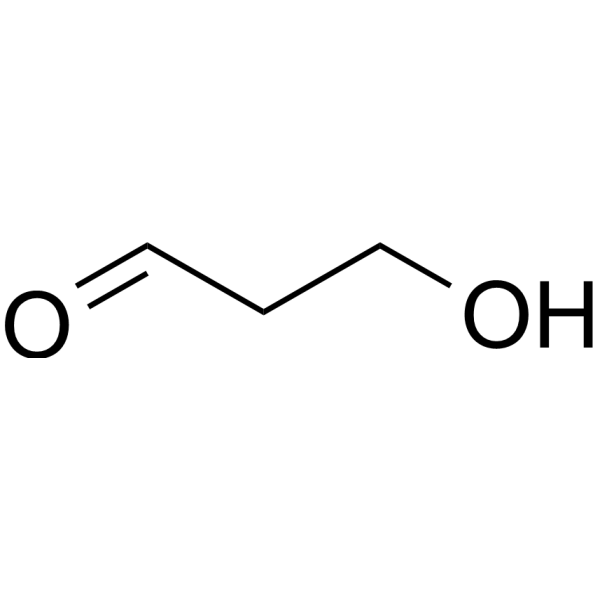
  • HY-N8461
    Reuterin
    3 Publications Verification

    3-Hydroxypropionaldehyde; 3-Hydroxypropanal

    Bacterial Infection
    Reuterin is a broad-spectrum antimicrobial agent active against Gram positive and Gram negative bacteria, as well as yeasts, moulds and protozoa. Reuterin is produced by specific strains of Lactobacillus reuteri during anaerobic metabolism of glycerol. Reuterin also demonstrates potent antimicrobial activity against a broad panel of human and poultry meat campylobacter spp. Isolates .
    Reuterin
  • HY-13625
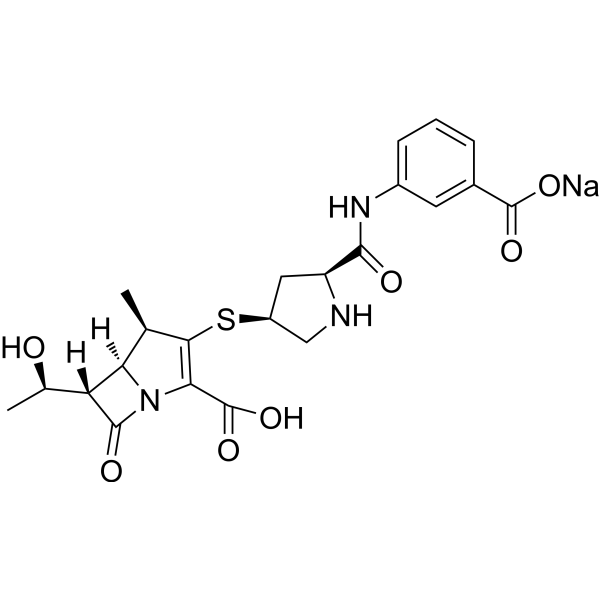
    Ertapenem sodium
    10+ Cited Publications

    L-749345; MK-826

    Bacterial Antibiotic Infection Cancer
    Ertapenem sodium (L-749345) is a broad spectrum and long acting β-lactam antibiotic. Ertapenem sodium has a broad-spectrum anti-anaerobic activity against a variety of anaerobes with a mode MIC of 0.12 μg/mL. Ertapenem sodium can be used for the research of severe infections caused by bacteria in the skin, lungs, stomach, pelvis, and urinary tract .
    Ertapenem sodium
  • HY-B0479

    Thiophenicol; Dextrosulphenidol

    Beta-lactamase Bacterial Antibiotic Infection
    Thiamphenicol (Thiophenicol), a methyl-sulfonyl derivative of Chloramphenicol, is a broad-spectrum antimicrobial antibiotic. Thiamphenicol acts by binding to the 50S ribosomal subunit, leading to inhibition of protein synthesis and bacteriostatic effect (against Gram-negative, Gram-positive aerobic and anaerobic bacteria) .
    Thiamphenicol
  • HY-117778

    Enolase Bacterial Antibiotic Infection Cancer
    SF2312, a natural phosphonate antibiotic (Antibiotic), is a highly potent Enolase inhibitor with IC50s of 37.9 nM and 42.5 nM for human recombinant ENO1 and ENO2, respectively. SF2312 is active against bacteria under anaerobic conditions .
    SF2312
  • HY-12687
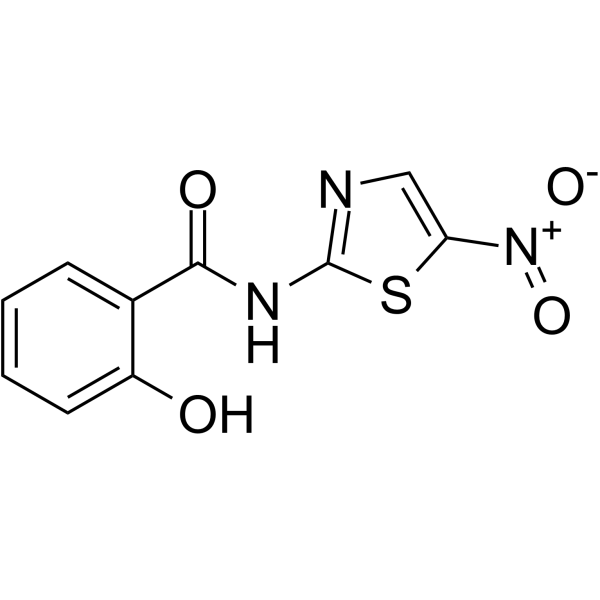
    Tizoxanide
    10+ Cited Publications

    TIZ

    Bacterial HIV Autophagy Parasite IKK Influenza Virus Infection Cancer
    Tizoxanide (TIZ) is the active metabolite of Nitazoxanide, which is a thiazolide anti-infective compound against anaerobic bacteria, protozoa, and a range of viruses. Tizoxanide (TIZ) has anti-HIV-1 activities and potent inhibition of both HBV and HCV replication with values EC50 of 0.46μM and 0.15 μM, respectively. Tizoxanide also exerts anti-inflammatory effects by inhibiting the production of pro-inflammatory cytokines and suppressing of the activation of the NF-κB and the MAPK signaling pathways in LPS-treated macrophage cells .
    Tizoxanide
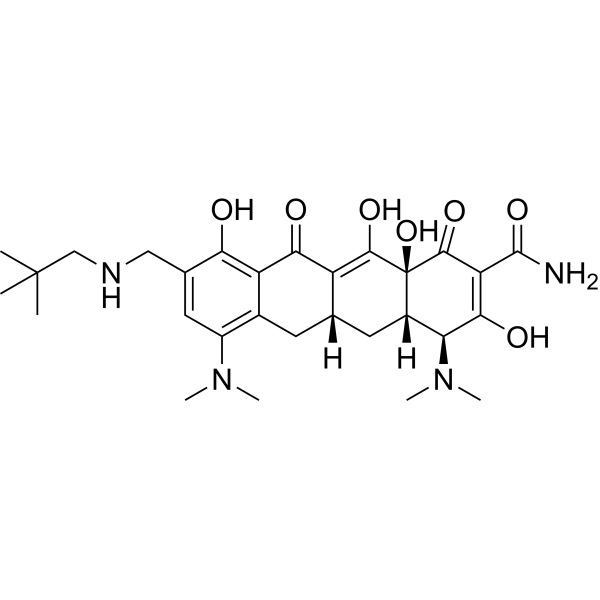
  • HY-14865
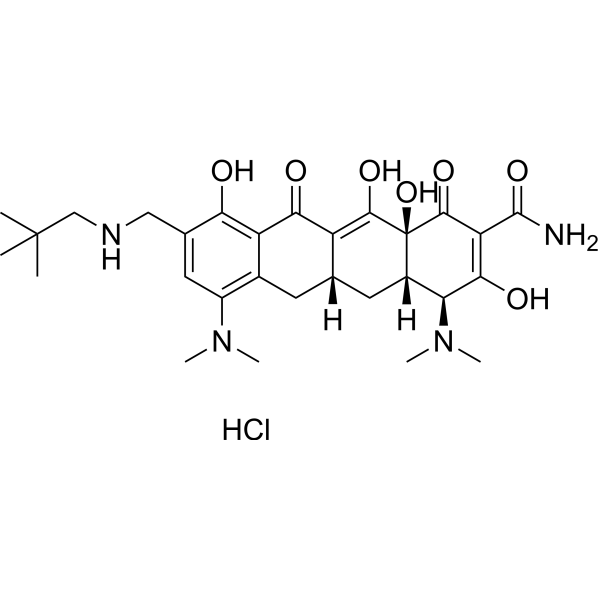
    Omadacycline
    30+ Cited Publications

    PTK 0796; Amadacycline

    Bacterial Antibiotic Infection
    Omadacycline (PTK 0796), a first-in-class orally active aminomethylcycline antibacterial, is a member of the tetracycline class of antibiotics. Omadacycline acts through the inhibition of bacterial protein synthesis by binding to the 30S ribosomal subunit. Omadacycline possesses broad-spectrum antibacterial activity against aerobic and anaerobic Gram-positive and Gram-negative bacteria, as well as atypical bacteria. Omadacycline can be used for the research of acute bacterial skin and skin-structure infections, community-acquired pneumonia, and urinary tract infections .
    Omadacycline
  • HY-141619A

    Bacterial Infection
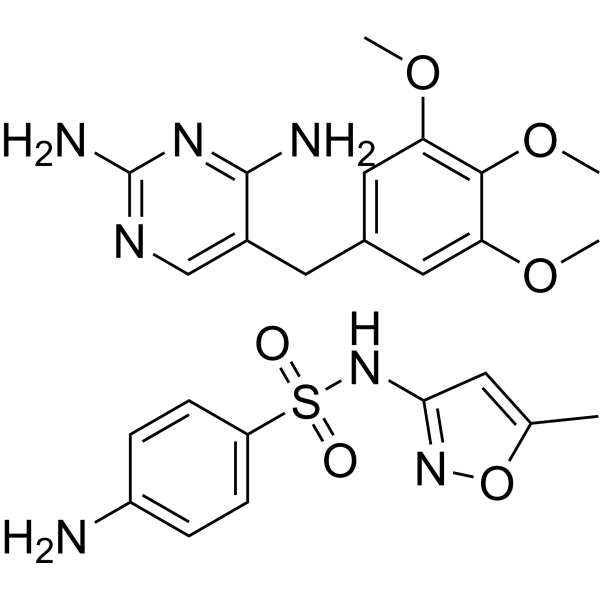
    Cotrimoxazole (Trimethoprim/sulfamethoxazole 1:19), an antibacterial agent, is a Trimethoprim (HY-B0510) and Sulfamethoxazole (HY-B0322) mixture. The ratio of Trimethoprim to Sulfamethoxazole in the combination mixture is 1 : 19 .
    Cotrimoxazole (Trimethoprim/sulfamethoxazole 1:19)
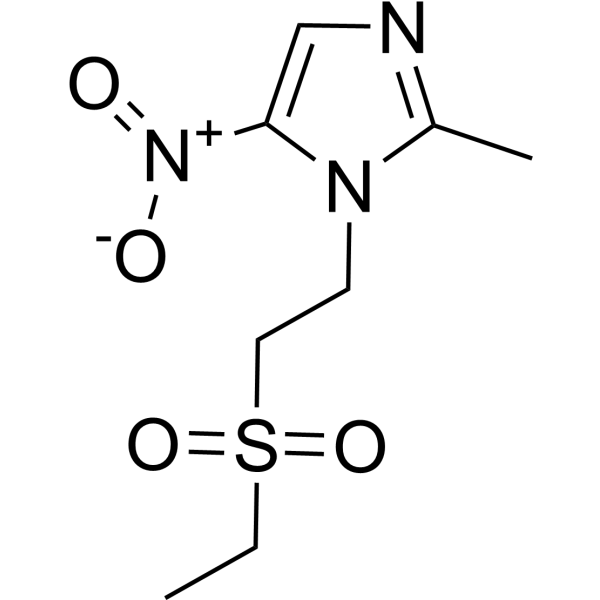
  • HY-B0177
    Tinidazole
    5 Publications Verification

    Bacterial Antibiotic Parasite Infection Cancer
    Tinidazole, an orally available antibacterial agent, is a 5-nitroimidazole with selective activity against anaerobic bacteria and protozoa .
    Tinidazole
  • HY-B0395C
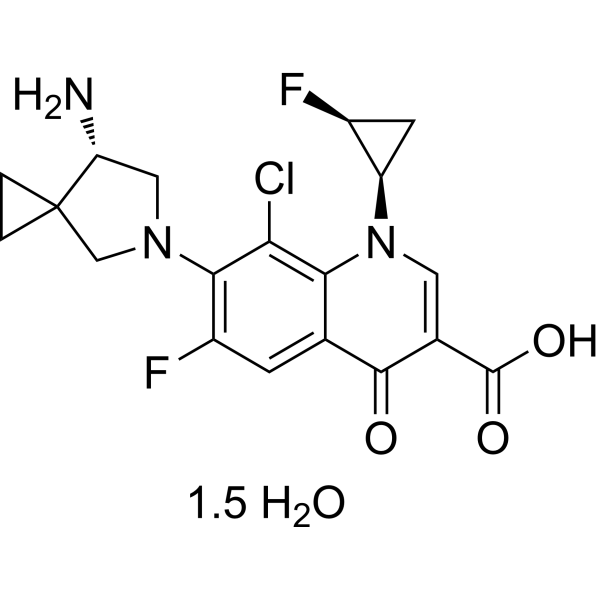
    Sitafloxacin hydrate
    5+ Cited Publications

    DU6859a hydrate

    Bacterial Antibiotic Infection
    Sitafloxacin (DU6859a) hydrate is an orally active fluoroquinolone antibiotic (antibiotic) with in vitro activity against a wide range of Gram-positive and -negative bacteria, including anaerobic bacteria, as well as atypical pathogens. Sitafloxacin is used in the study of respiratory tract infections and urinary tract infections .
    Sitafloxacin hydrate
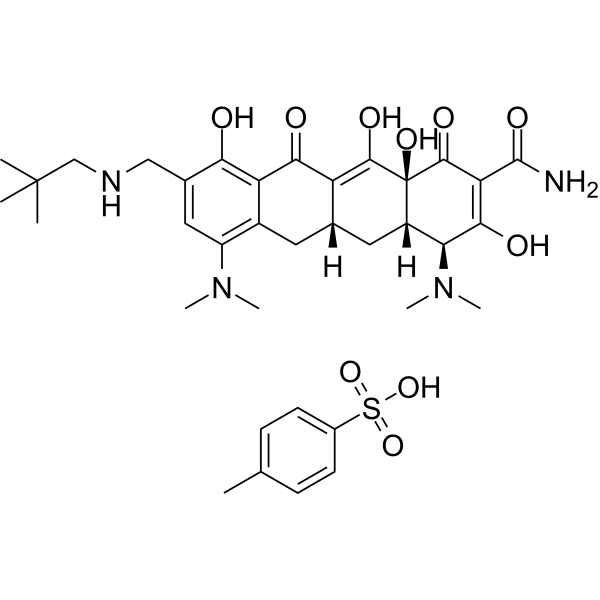
  • HY-14865B
    Omadacycline tosylate
    30+ Cited Publications

    PTK 0796 tosylate; Amadacycline tosylate

    Bacterial Antibiotic Infection
    Omadacycline (PTK 0796) tosylate, a first-in-class orally active aminomethylcycline antibacterial, is a member of the tetracycline class of antibiotics. Omadacycline tosylate acts through the inhibition of bacterial protein synthesis by binding to the 30S ribosomal subunit. Omadacycline tosylate possesses broad-spectrum antibacterial activity against aerobic and anaerobic Gram-positive and Gram-negative bacteria, as well as atypical bacteria. Omadacycline tosylate can be used for the research of acute bacterial skin and skin-structure infections, community-acquired pneumonia, and urinary tract infections .
    Omadacycline tosylate
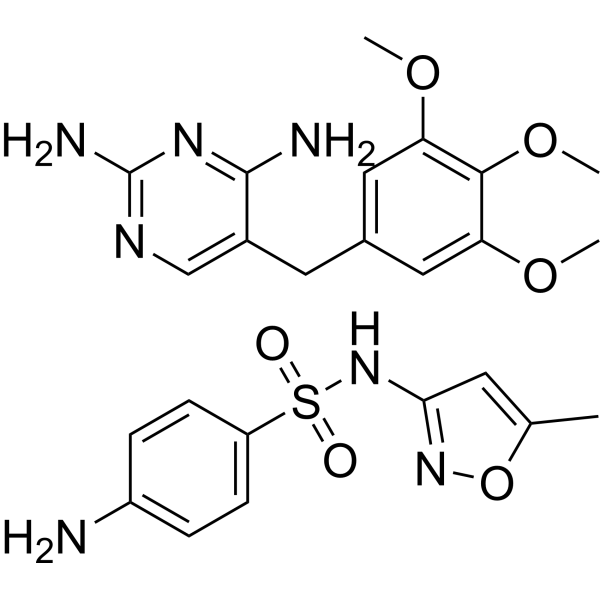
  • HY-141619

    Bacterial Infection
    Cotrimoxazole (Trimethoprim/sulfamethoxazole 1:5), an antibacterial agent, is a Trimethoprim (HY-B0510) and Sulfamethoxazole (HY-B0322) mixture. The ratio of Trimethoprim to Sulfamethoxazole in the combination mixture is 1 : 5 .
    Cotrimoxazole (Trimethoprim/sulfamethoxazole 1:5)
  • HY-P10352A

    Bacterial Infection
    Pediocin PA-1 TFA is a class IIa bacteriocin that specifically binds to membrane proteins of susceptible Gram-positive bacteria (such as Listeria monocytogenes) to form voltage-independent hydrophilic pores, leading to dissipation of proton motive force, ATP depletion and cell death. Pediocin PA-1 TFA shows no significant activity against intact Gram-negative bacteria, strains carrying immunity genes and obligate anaerobic commensal gut microbiota, and its bactericidal function depends on the integrity of disulfide bonds, with activity lost upon reduction. Pediocin PA-1 TFA can be used not only as a food biopreservative but also for research on listeriosis .
    Pediocin PA 1 TFA
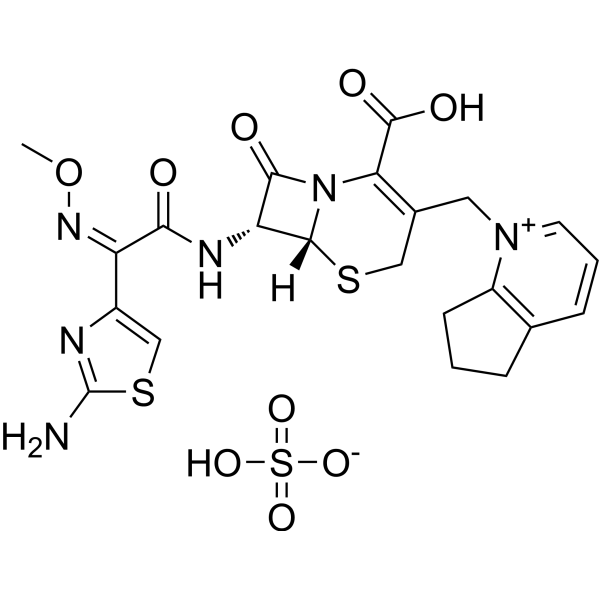
  • HY-B1824
    Cefpirome sulfate
    1 Publications Verification

    HR-810 sulfate

    Bacterial Antibiotic Infection
    Cefpirome (HR-810) sulfate is a cephalosporin antibiotic that can cross cell membranes and the blood-brain barrier. Cefpirome sulfate binds to penicillin-binding proteins with high affinity, thereby inhibiting bacterial cell wall synthesis. Cefpirome sulfate exhibits bactericidal and growth-inhibitory activities against Gram-negative bacteria, Gram-positive bacteria, and susceptible anaerobic bacteria (including some β-lactamase-producing strains) .
    Cefpirome sulfate
  • HY-B1484
    Moxalactam sodium salt
    1 Publications Verification

    Latamoxef sodium; Lamoxactam sodium; LY-127935 sodium

    Beta-lactamase Bacterial Antibiotic Infection
    Moxalactam (Latamoxef) sodium salt is a synthetic oxa-β-lactam antibiotic. Moxalactam sodium salt has a broad spectrum of activity against Gram-positive and Gram-negative aerobic and anaerobic bacteria. Moxalactam sodium salt inhibits production of β-lactamases .
    Moxalactam sodium salt
  • HY-B0395
    Sitafloxacin
    5+ Cited Publications

    DU6859a

    Bacterial Antibiotic Infection
    Sitafloxacin (DU6859a) is a potent, orally active fluoroquinolone antibiotic. Sitafloxacin shows antichlamydial activity and antibacterial activities against a broad range of gram-positive and gram-negative bacteria, including anaerobic bacteria, as well as against atypical pathogens. Sitafloxacin can be used for the research of respiratory tract infection and urinary tract infection .
    Sitafloxacin
  • HY-B0508
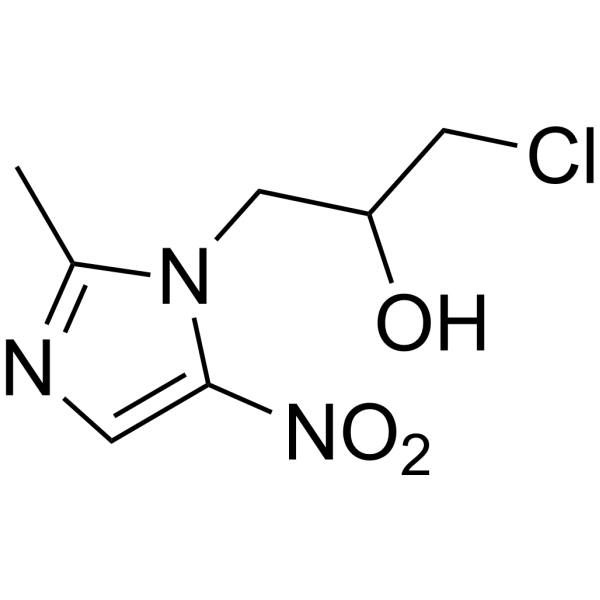
    Ornidazole
    2 Publications Verification

    Ro 7-0207

    Bacterial Parasite Antibiotic Hedgehog Infection Cancer
    Ornidazole (Ro 7-0207) is a nitroimidazole derivative with anti-trichomonad activity and in vitro activity against a variety of anaerobic bacteria. Ornidazole inhibits Sonic hedgehog (Shh) signaling pathway, exhibits antitumor activity. Ornidazole can be used in research of Crohn’s disease .
    Ornidazole
  • HY-B0724A
    Pazufloxacin mesylate
    1 Publications Verification

    T-3762; Pazufloxacin methanesulfonate; Pazufloxacin mesilate

    Bacterial DNA/RNA Synthesis Infection
    Pazufloxacin mesylate is an orally active fluoroquinolone antimicrobial agent. Pazufloxacin mesylate inhibits DNA gyrase with IC50 values of 0.88 μg/mL (E. coli) and 1.9 μg/mL (P. aeruginosa). Pazufloxacin mesylate exhibits broad-spectrum antimicrobial activity, with MIC90 values ranging from 0.025 to 100 μg/mL against Gram-positive and Gram-negative bacteria, non-fermenting bacteria, Legionella spp., and anaerobic bacteria. Pazufloxacin mesylate is indicated for research on systemic infections, lung infections, urinary tract infections, and Legionella pneumonia .
    Pazufloxacin mesylate
  • HY-14865C
    Omadacycline hydrochloride
    30+ Cited Publications

    PTK0796 hydrochloride; Amadacycline hydrochloride

    Bacterial Antibiotic Infection
    Omadacycline (PTK 0796) hydrochloride, a first-in-class orally active aminomethylcycline antibacterial, is a member of the tetracycline class of antibiotics. Omadacycline hydrochloride acts through the inhibition of bacterial protein synthesis by binding to the 30S ribosomal subunit. Omadacycline hydrochloride possesses broad-spectrum antibacterial activity against aerobic and anaerobic Gram-positive and Gram-negative bacteria, as well as atypical bacteria. Omadacycline hydrochloride can be used for the research of acute bacterial skin and skin-structure infections, community-acquired pneumonia, and urinary tract infections .
    Omadacycline hydrochloride
  • HY-B1257

    Sodium cefmetazole

    Bacterial Antibiotic Infection Cancer
    Cefmetazole sodium (Sodium cefmetazole) is a semisynthetic cephamycin antibiotic with broad-spectrum antibacterial activity, covering gram-positive, gram-negative, and anaerobic bacteria. Cefmetazole sodium binds to penicillin binding proteins (PBPs), resulting in interfering bacterial cell wall biosynthesis. Cefmetazole sodium is used for the research of gynecologic, intraabdominal, urinary tract, respiratory tract and skin and soft tissue infections .
    Cefmetazole sodium
  • HY-A0294

    MK-0826

    Antibiotic Bacterial Infection Cancer
    Ertapenem (MK-0826) is a broad spectrum and long acting β-lactam antibiotic. Ertapenem has a broad-spectrum anti-anaerobic activity against a variety of anaerobes with a mode MIC of 0.12 μg/mL. Ertapenem can be used for the research of severe infections caused by bacteria in the skin, lungs, stomach, pelvis, and urinary tract .
    Ertapenem
  • HY-A0294A
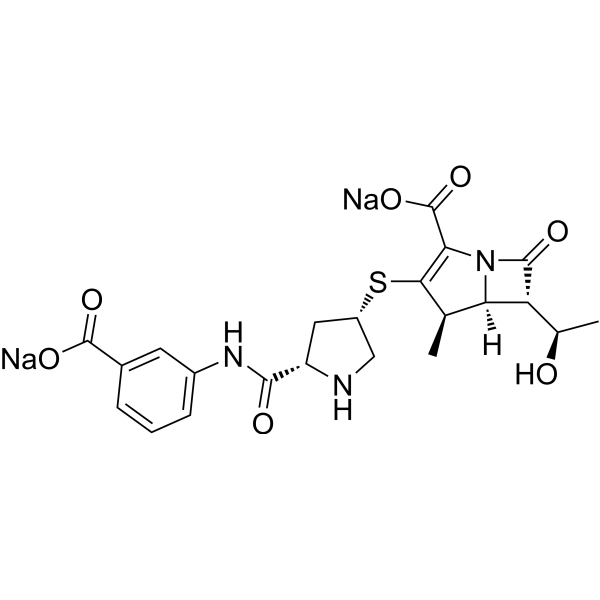
    Ertapenem disodium
    10+ Cited Publications

    MK-0826 disodium

    Bacterial Antibiotic Infection Cancer
    Ertapenem (MK-0826) disodium is a broad spectrum and long acting β-lactam antibiotic. Ertapenem disodium has a broad-spectrum anti-anaerobic activity against a variety of anaerobes with a mode MIC of 0.12 μg/mL. Ertapenem disodium can be used for the research of severe infections caused by bacteria in the skin, lungs, stomach, pelvis, and urinary tract .
    Ertapenem disodium
  • HY-13625R

    L-749345 (Standard); MK-826 (Standard)

    Reference Standards Bacterial Antibiotic Infection Cancer
    Ertapenem sodium (Standard) is the analytical standard of Ertapenem sodium. This product is intended for research and analytical applications. Ertapenem sodium (L-749345) is a broad spectrum and long acting β-lactam antibiotic. Ertapenem sodium has a broad-spectrum anti-anaerobic activity against a variety of anaerobes with a mode MIC of 0.12 μg/mL. Ertapenem sodium can be used for the research of severe infections caused by bacteria in the skin, lungs, stomach, pelvis, and urinary tract[1][2].
    Ertapenem sodium (Standard)
  • HY-B0159

    Q-35

    Bacterial Antibiotic Infection
    Balofloxacin (Q-35) is an orally active fluoroquinolone antibiotic with broad-spectrum antibacterial activity against gram-negative, gram-positive, and anaerobic bacteria. Balofloxacin can be used for the research of respiratory, intestinal, and urinary tract infections .
    Balofloxacin
  • HY-15781
    Morinidazole
    1 Publications Verification

    Bacterial Infection
    Morinidazole is an orally active and 5-nitroimidazole antimicrobial agent that undergoes extensive metabolism in humans via N +-glucuronidation and sulfation. Morinidazole can be used for bacterial infections research including appendicitis and pelvic inflammatory disease (PID) caused by anaerobic bacteria .
    Morinidazole
  • HY-B1923S

    Pipracil-d5

    Isotope-Labeled Compounds Antibiotic Bacterial Beta-lactamase Penicillin-binding protein (PBP) Infection
    Piperacillin-d5 is deuterium labeled Piperacillin. Piperacillin is kind of semisynthetic penicillins. Piperacillin has a broad spectrum of activity against Gram-positive and Gram-negative aerobic and anaerobic bacteria. Piperacillin has shown greater activity against β-lactamase-producing organisms than the other penicillins .
    Piperacillin-d5
  • HY-B1369R

    N-Formimidoyl thienamycin monohydrate (Standard); MK0787 monohydrate (Standard)

    Reference Standards Antibiotic Bacterial Infection
    Imipenem (monohydrate) (Standard) is the analytical standard of Imipenem (monohydrate). This product is intended for research and analytical applications. Imipenem monohydrate, a stable crystalline derivative of thienamycin, is an antibiotic and has the excellent activity against a broad range of gram-positive and gram-negative aerobic and anaerobic bacteria. Imipenem monohydrate can be used for the research of carbapenem-nonsusceptible and P. aeruginosa biofilm infections .
    Imipenem monohydrate (Standard)
  • HY-P10352

    Bacterial Infection
    Pediocin PA 1 is a class IIa bacteriocin that specifically binds to membrane proteins of susceptible Gram-positive bacteria (such as Listeria monocytogenes) to form voltage-independent hydrophilic pores, leading to dissipation of proton motive force, ATP depletion and cell death. Pediocin PA 1 shows no significant activity against intact Gram-negative bacteria, strains carrying immunity genes and obligate anaerobic commensal gut microbiota, and its bactericidal function depends on the integrity of disulfide bonds, with activity lost upon reduction. Pediocin PA 1 can be used not only as a food biopreservative but also for research on listeriosis .
    Pediocin PA 1
  • HY-B0318S
    Metronidazole-13C2,15N2
    1 Publications Verification

    Bacterial Parasite Apoptosis Antibiotic Infection
    Metronidazole- 13C2, 15N2 is the 13C-labeled and 15N-labeled Metronidazole. Metronidazole is a nitroimidazole antibiotic medication used particularly for anaerobic bacteria and protozoa.
    Metronidazole-13C2,15N2
  • HY-116228

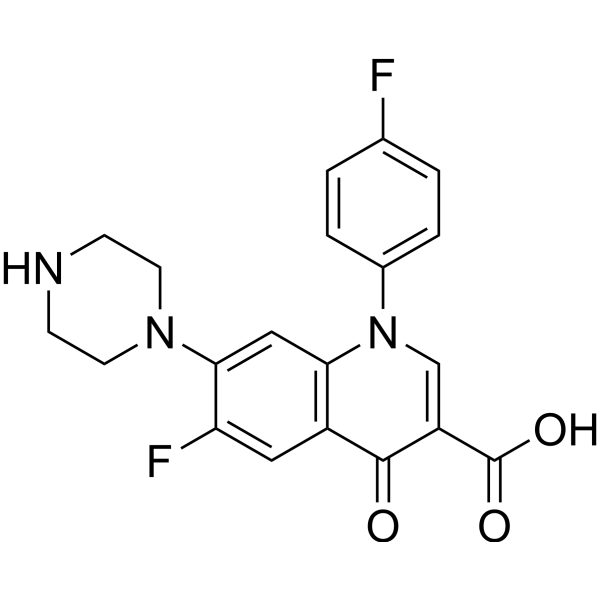
    Caderofloxacin; CS-940

    Bacterial Infection
    Cadrofloxacin (Caderofloxacin; CS-940) is an orally active antibacterial agent with significant bactericidal activity against quinolone-resistant Staphylococcus aureus, Gram-positive bacteria, Gram-negative bacteria and anaerobic bacteria. Cadrofloxacin effectively improves systemic infection and experimental Klebsiella pneumoniae pneumonia in mice. Cadrofloxacin can be widely used in research related to systemic bacterial infections and bacterial pneumonia .
    Cadrofloxacin
  • HY-157365

    Biochemical Assay Reagents Others
    Anaerobic Agar is a special medium for isolating anaerobic bacteria. The composition of 1 litre medium is 58.4 g anaerobic agar .
    Anaerobic Agar
  • HY-B0479S

    Thiophenicol-d3; Dextrosulphenidol-d3

    Isotope-Labeled Compounds Bacterial Antibiotic Infection
    Thiamphenicol-d3 is a deuterium labeled Thiamphenicol. Thiamphenicol, a methyl-sulfonyl derivative of Chloramphenicol, is a broad-spectrum antimicrobial antibiotic. Thiamphenicol acts by binding to the 50S ribosomal subunit, leading to inhibition of protein synthesis and bacteriostatic effect (against Gram-negative, Gram-positive aerobic and anaerobic bacteria) .
    Thiamphenicol-d3
  • HY-B0536

    AM-1091; CI-960; PD 127391

    Bacterial Antibiotic Infection
    Clinafloxacin (AM 1091) is a potent and broad-spectrum fluoroquinolone antibiotic, has inhibitory activity against gram-positive, gram-negative bacterias, and anaerobic pathogens in vitro . Clinafloxacin is against DNA gyrase and topoisomerase IV of?S. aureus with IC50 values of 0.92 μg/ml and 1.62 μg/ml, respectively .
    Clinafloxacin
  • HY-125919

    Reactive Oxygen Species (ROS) Bacterial Endogenous Metabolite Infection Inflammation/Immunology
    Vulpinic acid, a lichen metabolite, decreases H2O2-induced ROS production, oxidative stress and oxidative stress-related damages in human umbilical vein endothelial cells (HUVEC). Vulpinic acid is active against staphylococci, enterococci, and anaerobic bacteria.Vulpinic acid has the potential for atherosclerosis research .
    Vulpinic acid
  • HY-B1595

    CS 1170

    Antibiotic Bacterial Infection Cancer
    Cefmetazole (CS 1170) is a semisynthetic cephamycin antibiotic with broad-spectrum antibacterial activity, covering gram-positive, gram-negative and anaerobic bacteria. Cefmetazole binds to penicillin binding proteins (PBPs), resulting in interfering bacterial cell wall biosynthesis. Cefmetazole is used for the research of gynecologic, intraabdominal, urinary tract, respiratory tract and skin and soft tissue infections .
    Cefmetazole
  • HY-B0479R

    Thiophenicol (Standard); Dextrosulphenidol (Standard)

    Beta-lactamase Reference Standards Bacterial Antibiotic Infection
    Thiamphenicol (Standard) is the analytical standard of Thiamphenicol. This product is intended for research and analytical applications. Thiamphenicol (Thiophenicol), a methyl-sulfonyl derivative of Chloramphenicol, is a broad-spectrum antimicrobial antibiotic. Thiamphenicol acts by binding to the 50S ribosomal subunit, leading to inhibition of protein synthesis and bacteriostatic effect (against Gram-negative, Gram-positive aerobic and anaerobic bacteria) .
    Thiamphenicol (Standard)
  • HY-B0536A

    AM 1091 hydrochloride; CI 960 hydrochloride; PD127391 hydrochloride

    Bacterial Antibiotic Infection
    Clinafloxacin hydrochloride (AM 1091 hydrochloride) is a potent and broad-spectrum fluoroquinolone antibiotic, has inhibitory activity against gram-positive, gram-negative bacterias, and anaerobic pathogens in vitro . Clinafloxacin hydrochloride is against DNA gyrase and topoisomerase IV of S. aureus with IC50 values of 0.92 µg/ml and 1.62 µg/ml, respectively .
    Clinafloxacin hydrochloride
  • HY-B0159A

    Q-35 dihydrate

    Bacterial Antibiotic Infection
    Balofloxacin dihydrate (Q-35 dihydrate) is an orally active fluoroquinolone antibiotic with broad-spectrum antibacterial activity against gram-negative, gram-positive, and anaerobic bacteria. Balofloxacin dihydrate can be used for the research of respiratory, intestinal, and urinary tract infections .
    Balofloxacin dihydrate
  • HY-B0318S1

    Bacterial Parasite Apoptosis Antibiotic Infection
    Metronidazole-d4 is the deuterium labeled Metronidazole. Metronidazole is a nitroimidazole antibiotic medication used particularly for anaerobic bacteria and protozoa.
    Metronidazole-d4
  • HY-B1484A

    Latamoxef; Lamoxactam; LY-127935

    Beta-lactamase Bacterial Antibiotic Infection
    Moxalactam (Latamoxef) is a synthetic oxa-β-lactam antibiotic. Moxalactam has a broad spectrum of activity against Gram-positive and Gram-negative aerobic and anaerobic bacteria. Moxalactam inhibits production of β-lactamases .
    Moxalactam
  • HY-B0395CR

    DU6859a hydrate (Standard)

    Bacterial Antibiotic Reference Standards Infection
    Sitafloxacin (hydrate) (Standard) is the analytical standard of Sitafloxacin (hydrate). This product is intended for research and analytical applications. Sitafloxacin (DU6859a) hydrate is an orally active fluoroquinolone antibiotic (antibiotic) with in vitro activity against a wide range of Gram-positive and -negative bacteria, including anaerobic bacteria, as well as atypical pathogens. Sitafloxacin is used in the study of respiratory tract infections and urinary tract infections .
    Sitafloxacin hydrate (Standard)
  • HY-B1824R

    HR-810 sulfate (Standard)

    Reference Standards Antibiotic Bacterial Infection
    Cefpirome (HR-810) sulfate (Standard) is the analytical standard of Cefpirome sulfate. This product is intended for research and analytical applications. Cefpirome sulfate is a cephalosporin antibiotic that can cross cell membranes and the blood-brain barrier. Cefpirome sulfate binds to penicillin-binding proteins with high affinity, thereby inhibiting bacterial cell wall synthesis. Cefpirome sulfate exhibits bactericidal and growth-inhibitory activities against Gram-negative bacteria, Gram-positive bacteria, and susceptible anaerobic bacteria (including some β-lactamase-producing strains).
    Cefpirome sulfate (Standard)
  • HY-B0724B

    T3761

    Bacterial DNA/RNA Synthesis Infection
    Pazufloxacin is an orally active fluoroquinolone antimicrobial agent. Pazufloxacin inhibits DNA gyrase with IC50 values of 0.88 μg/mL (E. coli) and 1.9 μg/mL (P. aeruginosa). Pazufloxacin exhibits broad-spectrum antimicrobial activity, with MIC90 values ranging from 0.025 to 100 μg/mL against Gram-positive and Gram-negative bacteria, non-fermenting bacteria, Legionella spp., and anaerobic bacteria. Pazufloxacin is indicated for research on systemic infections, lung infections, urinary tract infections, and Legionella pneumonia .
    Pazufloxacin
  • HY-138094

    Drug Metabolite Infection
    N-(2-hydroxyethyl)-oxamic acid is formed when Metronidazole is reduced either chemically or by the action of the intestinal bacteria. Metronidazole, a nitroimidazole antibiotic, has activity against various protozoans and most Gram-negative and Gram-positive anaerobic bacteria .
    N-(2-Hydroxyethyl)oxamic acid
  • HY-B0177S

    Isotope-Labeled Compounds Bacterial Infection
    Tinidazole-d5 is the deuterium labeled Tinidazole. Tinidazole, an orally available antibacterial agent, is a 5-nitroimidazole with selective activity against anaerobic bacteria and protozoa .
    Tinidazole-d5
  • HY-105213

    MC-352

    Antibiotic Bacterial Infection
    YM-17K (MC-352) is a macrolide antibiotic. YM-17K exhibits antimicrobial activity against Gram-positive bacteria, Gram-negative bacteria, and anaerobic bacteria. YM-17K exhibits stable activity in serum and is less affected by pH values .
    YM-17K
  • HY-B0395A

    DU6859a hydrochloride

    Antibiotic Bacterial Infection
    Sitafloxacin (DU6859a) hydrochloride is a potent, orally active fluoroquinolone antibiotic. Sitafloxacin hydrochloride shows antichlamydial activity and antibacterial activities against a broad range of gram-positive and gram-negative bacteria, including anaerobic bacteria, as well as against atypical pathogens. Sitafloxacin hydrochloride can be used for the research of respiratory tract infection and urinary tract infection .
    Sitafloxacin hydrochloride
  • HY-113829
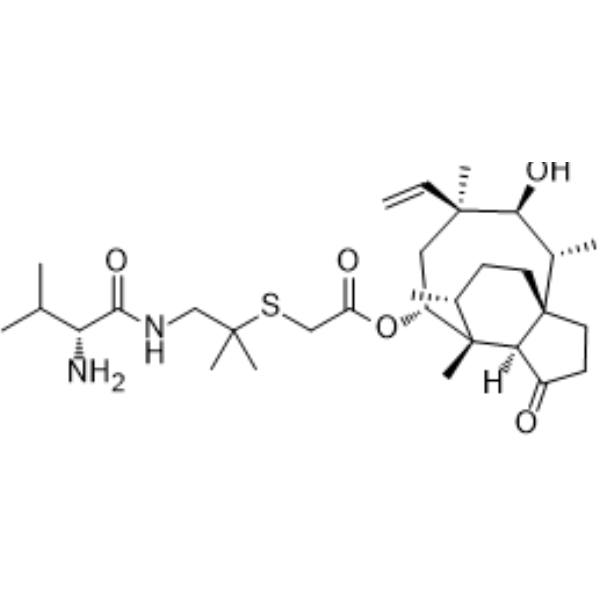
    Valnemulin
    2 Publications Verification

    Antibiotic Bacterial Infection Inflammation/Immunology
    Valnemulin is an orally active broad-spectrum antibiotic against Gram-negative and Gram-positive bacteria, anaerobic bacteria, Mycoplasma, and Spirochetes. Valnemulin ameliorates enteric diseases, acute polyarthritis and enzootic pneumonia in pigs . Valnemulin exhibits anti-inflammatory efficacy against lipopolysaccharide (HY-D1056)-induced lung injury .
    Valnemulin
  • HY-122289

    Dihydrofolate reductase (DHFR) Bacterial Infection
    Metioprim is a competitive inhibitor of bacterial Dihydrofolate reductase (DHFR). Metioprim has inhibitory activity against anaerobic bacteria. Metioprim shows synergistic activity in combination with DDS (HY-B0688) against E. coli. and various mycobacteria .
    Metioprim

Inquiry Online

Your information is safe with us. * Required Fields.

Salutation


Country or Region *

Applicant Name *


Organization Name *

Department *


Email Address *


Product Name *

Cat. No.


Requested quantity *

Phone Number *


Remarks

Inquiry Online

Inquiry Information

Product Name:
Cat. No.:
Quantity:
MCE Japan Authorized Agent:

