



Ornidazole
Based on 2 publication(s) in Google Scholar
Ornidazole (Ro 7-0207) is an orally effective antibacterial agent that crosses the blood-brain barrier. Ornidazole downregulates Hedgehog, angiogenesis, PI3K/AKT/mTOR, and anti-apoptotic proteins, upregulates PTEN, FOXO3a, apoptosis- and endoplasmic reticulum stress-related molecules, elevates VDAC1, promotes endoplasmic reticulum-mitochondrial calcium transfer, and inhibits TPI/GAPDH in a non-competitive manner. Ornidazole reversibly impairs epididymal sperm motility and induces testicular damage, apoptosis, autophagy, oxidative stress, and mitochondrial dysfunction. Ornidazole can be used in research on infections, infertility, periodontitis, asthenozoospermia, malignant melanoma, and non-small cell lung cancer.
For research use only. We do not sell to patients.
- Purity : 99.49%
- CAS No.: 16773-42-5
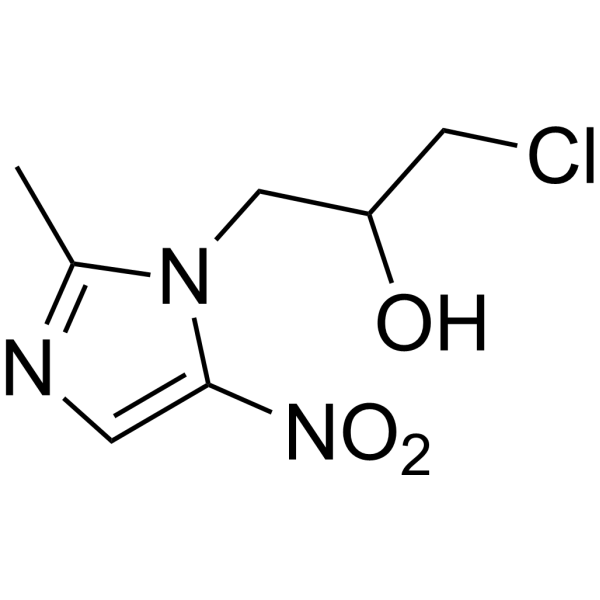
- Formula: C7H10ClN3O3
- Molecular Weight:219.63
-
Storage:
4°C, protect from light, stored under nitrogen
* In solvent : -80°C, 6 months; -20°C, 1 month (protect from light, stored under nitrogen)

To place orders, for customer services and technical support, please contact: MedChemExpress USA
Tel: 609-228-6898 E-mail: [email protected] [email protected]


-
 Biological Activity
-
Chemical Information
-
Solvent & Solubility
- Protocols
- Purity & Documentation
- References
-
 Help & FAQs


-
HY-B0318
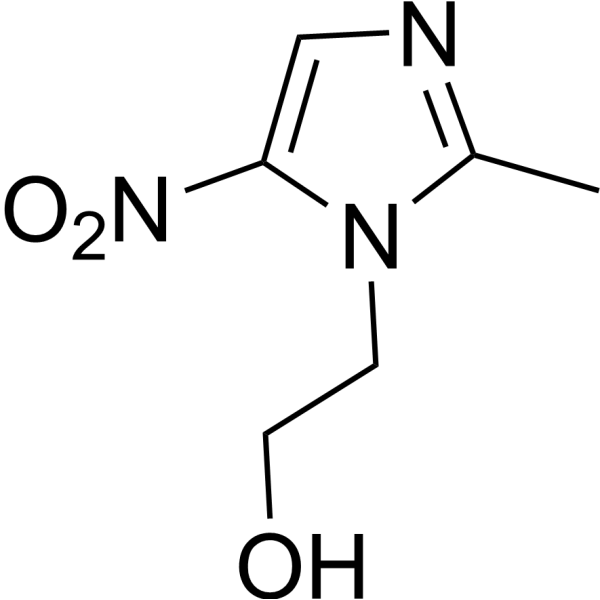
MetronidazoleAntibiotic -
HY-B0177
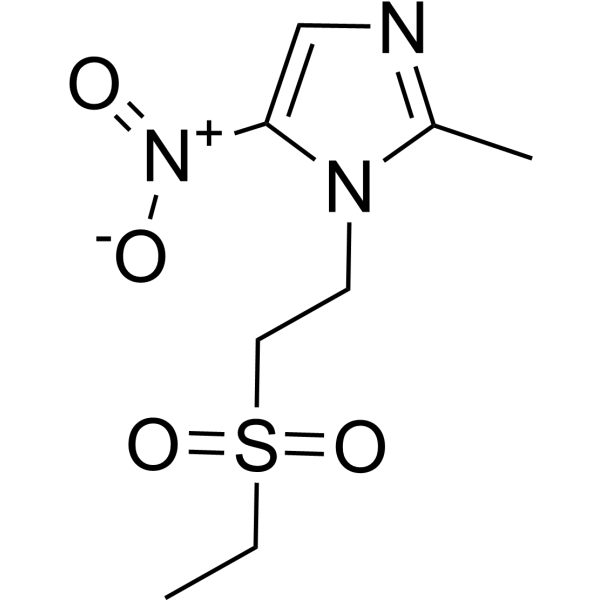
TinidazoleAntibacterial Agent -
HY-B0105
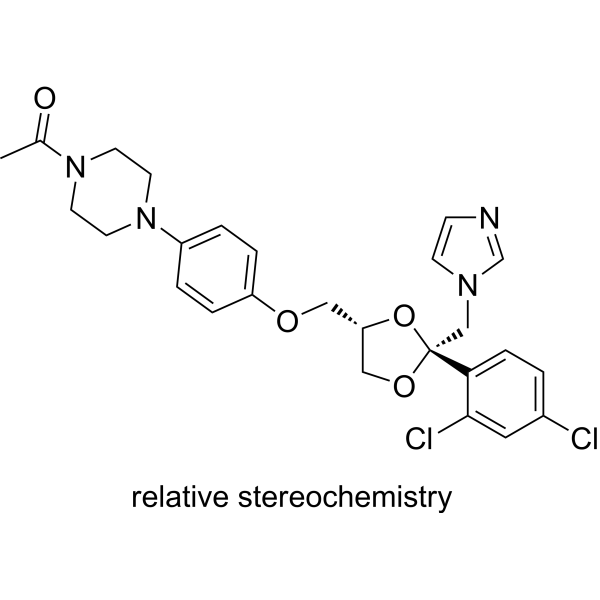
KetoconazoleCYP3A4 Inhibitor -
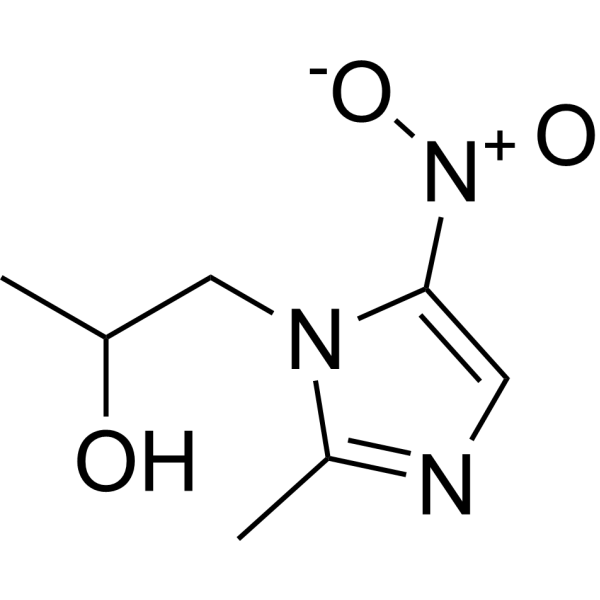
HY-B1118
SecnidazoleAntibiotic -
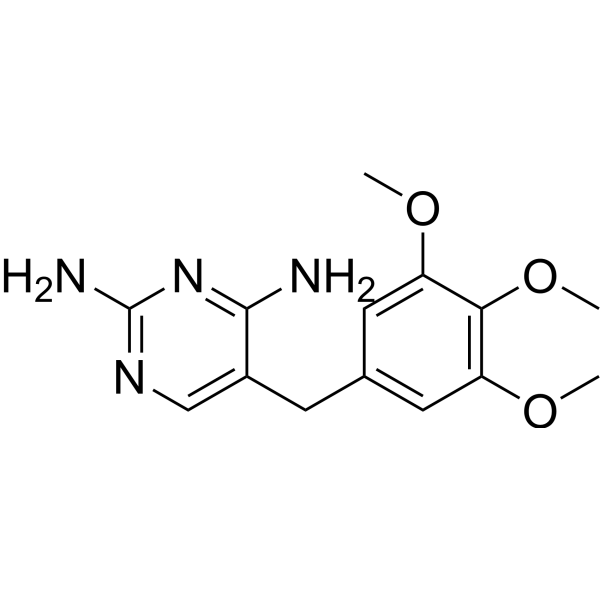
HY-B0510
TrimethoprimBacteriostatic Antibiotic -

HY-B0508R
Ornidazole (Standard)Reference Standard -
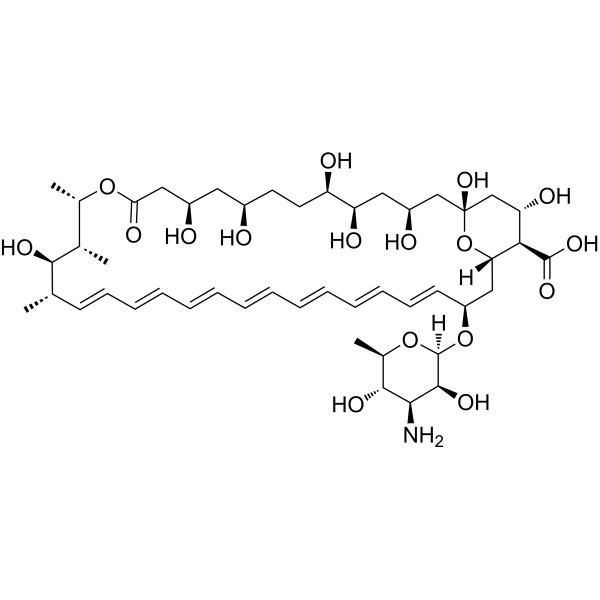
HY-B0221
Amphotericin BAntifungal Agent -
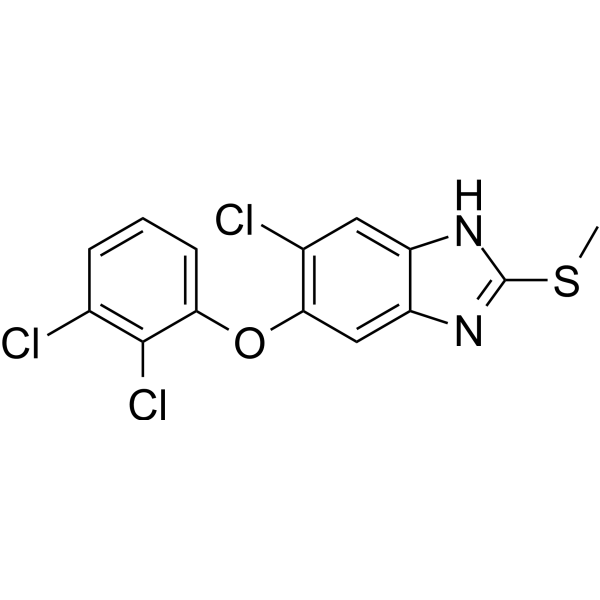
HY-B0621
TriclabendazoleParasite Inhibitor -

HY-B0318R
Metronidazole (Standard)Antibiotic -
HY-B0357
DiclazurilAnticoccidial Agent -

HY-B0621R
Triclabendazole (Standard)Parasite Inhibitor -

HY-B0510R
Trimethoprim (Standard)Bacteriostatic Antibiotic


Biological Activity
Description
|
PI3K |
Hedgehog |
Akt |
mTOR |
FOXO3 |
PTEN |
TPI |
GAPDH |
In Vitro
Ornidazole (50-3200 μg/mL; 24-72 h) inhibits B16F10 melanoma cell proliferation in a concentration- and time-dependent manner, and 200-3200 μg/mL increases the inhibition rate from 5% to 97% at 72 h[5].
Ornidazole (400-1200 μg/mL; 8-24 h) inhibits B16F10 melanoma cell migration in a dose-dependent manner, with inhibition rates of 15%, 60%, and 96% at 400, 800, and 1200 μg/mL, respectively, after 24 h[5].
Ornidazole (400-1200 μg/mL; 24-72 h) induces DNA double-strand breaks in B16F10 melanoma cells[5].
Ornidazole (200-3200 µg/mL; 24-72 h) inhibits the viability of A549 and H1299 NSCLC cells in a concentration- and time-dependent manner, and ≥400 µg/mL reduces cell viability[8].
Ornidazole (400-1200 µg/mL; 24-48 h) eliminates A549 and H1299 NSCLC cell survival at 1200 µg/mL within 48 h[8].
Ornidazole (400-1200 µg/mL; 0-24 h) inhibits the migration of A549 and H1299 NSCLC cells within 0-24 h[8].
Ornidazole (800 µg/mL) decreases VEGFA and VEGFR2 levels and increases Casp3 protein levels in A549 and H1299 NSCLC cells[8].
Ornidazole (200 μg/mL; 24 h) induces mitochondrial calcium overload in GC-2 spd cells, and DHA reverses this effect in a PPARγ-dependent manner[6].
Ornidazole (200 μg/mL; 24 h) selectively upregulates VDAC1 and enhances VDAC1-IP3R1 coupling in GC-2 spd cells, and DHA downregulates this effect through PPARγ[6].
MedChemExpress (MCE) has not independently confirmed the accuracy of these methods. They are for reference only.
-
Cell Line:B16F10 mouse melanoma cells
-
Concentration:400, 800, and 1200 μg/mL
-
Incubation Time:48 h
-
Result:B16F10 cell viability was reduced compared with untreated control cells at 48 h.
Exposed melanoma cells could not survive in the medium, unlike control cells.
-
Cell Line:B16F10 mouse melanoma cells
-
Concentration:50, 100, 200, 400, 800, 1200, 1600, and 3200 μg/mL
-
Incubation Time:24, 48, and 72 h
-
Result:B16F10 proliferation was inhibited in a concentration- and time-dependent manner.
Concentrations >200 μg/mL markedly reduced cell viability.
During 72-h incubation, increasing the concentration from 200 to 3200 μg/mL raised the inhibition rate from 5% to 97%.
-
Cell Line:B16F10 mouse melanoma cells
-
Concentration:400, 800, and 1200 μg/mL
-
Incubation Time:8 and 24 h
-
Result:B16F10 migration was inhibited dose-dependently.
At 400, 800, and 1200 μg/mL, migration was inhibited by 15%, 60%, and 96%, respectively, after 24 h.
-
Cell Line:GC-2 spd mouse spermatocyte cells
-
Concentration:200 μg/mL
-
Incubation Time:24 h
-
Result:DHA promoted PPARγ nuclear accumulation and elevated PPARγ protein abundance.
GW9662 abolished the DHA-induced nuclear accumulation effect.
-
Cell Line:GC-2 spd mouse spermatocyte cells
-
Concentration:200 μg/mL
-
Incubation Time:24 h
-
Result:VDAC1 protein selectively increased to 1.65 relative to control 1.00, while IP3R1 was 0.99 and MCU was 0.98.
VDAC1-IP3R1 PLA interaction was enhanced.
DHA attenuated the increase in VDAC1 and reduced VDAC1-IP3R1 interaction, and GW9662 reversed the DHA effect.
-
Cell Line:human NSCLC A549 and H1299 cell lines
-
Concentration:200, 400, 800, 1200, 1600, 2000, and 3200 µg/mL
-
Incubation Time:24, 48, and 72 h
-
Result:Reduced A549 and H1299 cell viability in concentration- and time-dependent patterns.
Concentrations ≥400 µg/mL reduced viability across the tested incubation times.
-
Cell Line:human NSCLC A549 and H1299 cell lines
-
Concentration:400, 800, and 1200 µg/mL
-
Incubation Time:24 h and 48 h
-
Result:At 1200 µg/mL, A549 and H1299 cells could not survive in the medium at the end of 48 h compared with the control group.
-
Cell Line:human NSCLC A549 and H1299 cell lines
-
Concentration:400, 800, and 1200 µg/mL
-
Incubation Time:0, 4, 8, and 24 h
-
Result:Inhibited A549 and H1299 wound closure in a time- and dose-dependent manner at 400, 800, and 1200 µg/mL compared with control groups.
In Vivo
Ornidazole (40 mg/kg; p.o.; daily; 2 weeks after SRP) combined with Pefloxacin mesylate (HY-B0147A) and SRP significantly reduces inflammatory markers of periodontitis in rats[3].
Ornidazole (200 mg/kg/day; p.o.; daily; 20 days) reduces fertility in healthy male Sprague Dawley rats but fails to achieve complete infertility[2].
Ornidazole (400 mg/kg/day; p.o.; daily; 6-7 days) induces reversible infertility in healthy male Sprague Dawley rats, with fertility recovering after drug withdrawal[2].
MedChemExpress (MCE) has not independently confirmed the accuracy of these methods. They are for reference only.
-
Animal Model:Sprague Dawley (Charles River Sprague Dawley; male; mature 350-400 g)[2]
-
Dosage:400 mg/kg/day
-
Administration:p.o. (oral gavage); daily; 14 days
-
Result:All five administered rats became infertile: three on day 6, one on day 7, and one on day 10.
At the day 3 mating, 5/5 females were pregnant with 9.2 implantations; at day 6.4, 4/5 (80%) with 3.2 implantations; at day 9.8, 0/4 (0%) with 0 implantations; at day 14.5, 0/4 (0%) with 0 implantations.
Spermatozoa from administered rats had lower VSL and VAP in epididymal regions 3, 4, and 5; lower VCL in regions 3 and 5; lower STR and WOB in regions 4 and 5; and lower LIN in region 4.
Percentage motility and ALH did not differ by region.
Cauda epididymal homogenates contained protein 34.71 mg/g tissue; α-glucosidase 92.03 mU/g tissue and 2.65 mU/mg protein; L-carnitine 12.14 μmol/g tissue and 348 nmol/mg protein; and GPC 6.23 μmol/g tissue and 177 nmol/mg protein; these did not differ from fertile controls.
-
Animal Model:Sprague Dawley (Charles River Sprague Dawley; male; mature 350-400 g)[2]
-
Dosage:200 mg/kg/day
-
Administration:p.o. (oral gavage); daily; 20 days
-
Result:At day 9, 4/4 females were pregnant with 7.3 implantations; at day 14.4, 2/5 (40%) with 5.8 implantations; at day 17.4, 4/5 (80%) with 7.8 implantations; at day 20, 3/4 (75%) with 6.5 implantations.
Three males became totally infertile (two on day 14, one on day 16), and two of these regained some fertility.
The lowest fertility rates in the other rats were 25% and 71%.
Sperm motility characteristics were lower than in controls but no clear difference was reported.
-
Animal Model:Sprague Dawley (Charles River Sprague Dawley; male; mature 350-400 g)[2]
-
Dosage:400 mg/kg/day
-
Administration:p.o. (oral gavage); daily; 6 days, or 7 days if no mating occurred on the evening of day 6, then vehicle alone p.o. until day 14
-
Result:At day 3, 3/4 females were pregnant with 10.8 implantations; at day 6.4, 2/5 (40%) with 1.4 implantations; at day 9.2, 1/5 (20%) with 2.2 implantations; at day 12.2, 4/5 (80%) with 8.0 implantations; at day 15.2, 5/5 (100%) with 12.8 implantations.
Four of five rats became totally infertile (one on day 3, two on day 6, one on day 10); one rat did not become infertile but fell to 40% fertility on day 7.
Fertility returned in all animals: three reached 100% on days 12, 14, and 17; the others reached 75% and 56% on days 15 and 16.
-
Animal Model:Sprague-Dawley (male, 180 g)[3]
-
Dosage:100 mg/kg body weight/day
-
Administration:p.o. (drinking water); daily; 2 weeks after SRP
-
Result:SBI decreased from 3.57 (ECP) to 2.58 (mean reduction 27.73%).
PI decreased from 2.50 to 1.67 (33.20%).
PPD decreased from 2.98 mm to 1.53 mm (48.66%).
GCF-AST decreased from 2346.70 IU/L to 1369.50 IU/L (41.64%).
ABL decreased from 3.69 mm to 2.17 mm (41.19%).
HE inflammatory score median decreased from 2.5 (ECP) to 1.75.
-
Animal Model:Sprague-Dawley (male, 180 g)[3]
-
Dosage:40 mg/kg
-
Administration:p.o. (drinking water); daily; 2 weeks after SRP
-
Result:SBI decreased from 3.57 (ECP) to 2.37 (mean reduction 33.61%).
PI decreased from 2.50 to 1.43 (42.80%).
PPD decreased from 2.98 mm to 1.32 mm (55.70%).
GCF-AST decreased from 2346.70 IU/L to 1196.21 IU/L (49.03%).
ABL decreased from 3.69 mm to 2.18 mm (43.63%).
HE inflammatory score median decreased from 2.5 (ECP) to 1.63.
-
Animal Model:Sprague Dawley (male, sexually mature, 330-370 g)[4]
-
Dosage:400 mg/kg
-
Administration:i.g. (oral gavage); once daily; 14 days
-
Result:Compared with vehicle control, rats showed decreased sperm motility, sperm concentration, and sperm viability.
Spermatogenic tubule space increased and numbers of stromal/interstitial cells and spermatogenic cells in testicular tissue decreased.
Testicular apoptosis rate and cleaved caspase-3 expression increased, while Bcl2 expression decreased.
LC3II/I, Beclin-1, and LC3-positive cell rates increased.
p-AKT/AKT and p-mTOR/mTOR ratios decreased.
-
Animal Model:Swiss albino (male, 8 weeks of age)[5]
-
Dosage:80 mg/kg body weight
-
Administration:i.p.; once daily; for 12 days
-
Result:In the unsorted B16F10 group, 3 of 6 mice had complete loss of tumor tissue and the remaining 3 had a 96% reduction in tumor tissue.
In the CD133+ group, all 6 mice showed a 50% reduction in tumor volume.
In the CD133− group, tumor volume decreased in all 6 mice.
Tumor-tissue mRNA expression of Shh, Smo, Gli1, Ptch1, and Bmi1 decreased, and SHH, PTCH1, SMO, GLI1, and CD133 protein levels decreased.
CD133, Oct3/4, Nanog, and Sox2 mRNA levels decreased in all three groups; Bax expression increased and Bcl2 expression decreased; Grp78, Xbp1, Chop, and Casp12 expression increased; and Atg5, Atg12, Becn1, Map1lc3b, and Atf4 expression decreased.
- Research Protocol for Infectious Diseases
- Human pluripotent stem cell endothelial-cell differentiation
- Vascular/Branching Fractal Analysis
- Annexin V plus membrane-impermeant dye apoptosis staining
- ROS/oxidative-stress fluorescent staining
- Sperm Thawing for Functional Recovery
- Detection of Apoptosis
- TUNEL staining for apoptotic DNA fragmentation
- Endothelial Tube Formation Assay
- Autophagy
- Mitochondrial membrane-potential and mitochondrial mass staining
- Apoptosis Solutions
- Lysosome and acidic-vesicle live-cell staining
- Macroautophagy Solutions
- Endothelial Cell Migration/Angiogenic Sprouting Assay
Clinical Trial
| NCT Number | Sponsor | Condition | Start Date |
Phase

|
|---|---|---|---|---|
| NCT01329991 | 2011-05 | PHASE1 |


Product Details
-
Structure Classification
-
Initial Source
Propionibacterium acnes


Chemical Information
-
CAS No. 16773-42-5
-
Appearance Solid
-
Molecular Weight 219.63
-
Formula C7H10ClN3O3
-
Color White to off-white
-
SMILES
CC1=NC=C([N+]([O-])=O)N1CC(CCl)O
-
Synonyms
Ro 7-0207
-
Shipping
Room temperature in continental US; may vary elsewhere.
-
Storage
4°C, protect from light, stored under nitrogen
* In solvent : -80°C, 6 months; -20°C, 1 month (protect from light, stored under nitrogen)


Publications (2)
-
Journal Impact Factor
-
Most Recent
-
Sci Rep
Qualitative immunoassay for the determination of tetracycline antibiotic residues in milk samples followed by a quantitative improved HPLC-DAD method. [Abstract]2022 Aug 25;12(1):14502. PMID: 36008564 -
Zebrafish
Ronidazole Is a Superior Prodrug to Metronidazole for Nitroreductase-Mediated Hepatocytes Ablation in Zebrafish Larvae. [Abstract]2023 Jun;20(3):95-102. PMID: 37229597


Solvent & Solubility
In Vitro:
DMSO : ≥ 100 mg/mL (455.31 mM; Hygroscopic DMSO has a significant impact on the solubility of product, please use newly opened DMSO)
H2O : 10 mg/mL (45.53 mM; Need ultrasonic)
* "≥" means soluble, but saturation unknown.
Please refer to the solubility information to select the appropriate solvent. Once prepared, please aliquot and store the solution to prevent product inactivation from repeated freeze-thaw cycles.
Storage method and period of stock solution: -80°C, 6 months; -20°C, 1 month (protect from light, stored under nitrogen). When stored at -80°C, please use it within 6 months. When stored at -20°C, please use it within 1 month.
* Note: If you choose water as the stock solution, please dilute it to the working solution, then filter and sterilize it with a 0.22 μm filter before use.
Concentration (start) × Volume (start) = Concentration (final) × Volume (final)
In Vivo:
Select the appropriate dissolution method based on your experimental animal and administration route.
- For the following dissolution methods, please ensure to first prepare a clear stock solution using an In Vitro approach and then sequentially add co-solvents:
- To ensure reliable experimental results, the clarified stock solution can be appropriately stored based on storage conditions. As for the working solution for In Vivo experiments, it is recommended to prepare freshly and use it on the same day.
- The percentages shown for the solvents indicate their volumetric ratio in the final prepared solution. If precipitation or phase separation occurs during preparation, heat and/or sonication can be used to aid dissolution.
Add each solvent one by one: 10% DMSO 40% PEG300 5% Tween-80 45% Saline
Solubility: ≥ 2.5 mg/mL (11.38 mM); Clear solution
This protocol yields a clear solution of ≥ 2.5 mg/mL (saturation unknown).
Taking 1 mL working solution as an example, add 100 μL DMSO stock solution (25.0 mg/mL) to 400 μL PEG300, and mix evenly; then add 50 μL Tween-80 and mix evenly; then add 450 μL Saline to adjust the volume to 1 mL.
Preparation of Saline: Dissolve 0.9 g sodium chloride in ddH₂O and dilute to 100 mL to obtain a clear Saline solution.
Add each solvent one by one: 10% DMSO 90% (20% SBE-β-CD in Saline)
Solubility: ≥ 2.5 mg/mL (11.38 mM); Clear solution
This protocol yields a clear solution of ≥ 2.5 mg/mL (saturation unknown).
Taking 1 mL working solution as an example, add 100 μL DMSO stock solution (25.0 mg/mL) to 900 μL 20% SBE-β-CD in Saline, and mix evenly.
Preparation of 20% SBE-β-CD in Saline (4°C, storage for one week): 2 g SBE-β-CD powder is dissolved in 10 mL Saline, completely dissolve until clear.
For the following dissolution methods, please prepare the working solution directly:
It is recommended to prepare fresh solutions and use them promptly within a short period of time.
The percentages shown for the solvents indicate their volumetric ratio in the final prepared solution. If precipitation or phase separation occurs during preparation, heat and/or sonication can be used to aid dissolution.
Add each solvent one by one: PBS
Solubility: 20 mg/mL (91.06 mM); Clear solution; Need ultrasonic
In Vivo Dissolution Calculator
Please enter the basic information of animal experiments:
-
-
-
-
Recommended: Prepare an additional quantity of animals to account for potential losses during experiments.
Please enter your animal formula composition:
-
%DMSO +
Recommended: Keep the proportion of DMSO in working solution below 2% if your animal is weak.
-
%+
-
+%Tween-80 + +
-
%Saline +
The co-solvents required include: DMSO, . All of co-solvents are available by MedChemExpress (MCE). , Tween 80. All of co-solvents are available by MedChemExpress (MCE).
Working solution concentration: 0.22 mg/mL
Method for preparing stock solution: mg drug dissolved in μL DMSO. Stock solution concentration: mg/mL. * In solvent : -80°C, 6 months; -20°C, 1 month (protect from light, stored under nitrogen)
1. Take μL DMSO stock solution;
2. Add μL .
μL , mix evenly;
3. Then add μL Tween 80, mix evenly;
4. Then add μL
Please ensure that the stock solution in the first step is dissolved to a clear state, and add co-solvents in sequence. You can use ultrasonic heating (ultrasonic cleaner, recommended frequency 20-40 kHz), vortexing, etc. to assist dissolution.
Purity & Documentation


References
[4]. Huang G, et al. Umbilical Cord-Derived Mesenchymal Stem Cells Improve Ornidazole-Induced Asthenozoospermia in Rats via Activation of the AKT/mTOR Pathway. International journal of endocrinology. 2024;2024:3494652. [Content Brief]
[5]. Evyapan G, et al. Ornidazole suppresses CD133+ melanoma stem cells via inhibiting hedgehog signaling pathway and inducing multiple death pathways in a mouse model. Croatian medical journal. 2022 Oct 31;63(5):461-474. [Content Brief]
[7]. Wei TT, et al. Effects of the ornidazole enantiomers on the central nervous system: Involvement of the GABAA receptor. Chem Biol Interact. 2015 Dec 5;242:163-9. [Content Brief]

Complete Stock Solution Preparation Table
Please refer to the solubility information to select the appropriate solvent. Once prepared, please aliquot and store the solution to prevent product inactivation from repeated freeze-thaw cycles.
Storage method and period of stock solution: -80°C, 6 months; -20°C, 1 month (protect from light, stored under nitrogen). When stored at -80°C, please use it within 6 months. When stored at -20°C, please use it within 1 month.
| Optional Solvent | Concentration Solvent Mass | 1 mg | 5 mg | 10 mg | 25 mg |
|---|---|---|---|---|---|
| H2O / DMSO | 1 mM | 4.5531 mL | 22.7656 mL | 45.5311 mL | 113.8278 mL |
| 5 mM | 0.9106 mL | 4.5531 mL | 9.1062 mL | 22.7656 mL | |
| 10 mM | 0.4553 mL | 2.2766 mL | 4.5531 mL | 11.3828 mL | |
| 15 mM | 0.3035 mL | 1.5177 mL | 3.0354 mL | 7.5885 mL | |
| 20 mM | 0.2277 mL | 1.1383 mL | 2.2766 mL | 5.6914 mL | |
| 25 mM | 0.1821 mL | 0.9106 mL | 1.8212 mL | 4.5531 mL | |
| 30 mM | 0.1518 mL | 0.7589 mL | 1.5177 mL | 3.7943 mL | |
| 40 mM | 0.1138 mL | 0.5691 mL | 1.1383 mL | 2.8457 mL | |
| DMSO | 50 mM | 0.0911 mL | 0.4553 mL | 0.9106 mL | 2.2766 mL |
| 60 mM | 0.0759 mL | 0.3794 mL | 0.7589 mL | 1.8971 mL | |
| 80 mM | 0.0569 mL | 0.2846 mL | 0.5691 mL | 1.4228 mL | |
| 100 mM | 0.0455 mL | 0.2277 mL | 0.4553 mL | 1.1383 mL |
* Note: If you choose water as the stock solution, please dilute it to the working solution, then filter and sterilize it with a 0.22 μm filter before use.


Ornidazole Related Classifications
HY-B0508 Related Classifications
 Powered by Bioz
Keywords
- Ornidazole
- 16773-42-5
- Ro 7-0207
- Antibiotic
- Bacterial
- Parasite
- Hedgehog
- PI3K
- Akt
- mTOR
- PTEN
- FOXO
- PPAR
- Apoptosis
- Autophagy
- Phosphoinositide 3-kinase
- PKB
- Protein kinase B
- Mammalian target of Rapamycin
- Phosphatase and tensin homolog
- MMAC1
- Forkhead box O
- Peroxisome proliferator-activated receptors
- GABA_A benzodiazepine site
- amebiasis
- antiprotozoal
- asthenozoospermia
- blood-brain barrier
- giardiasis
- nitroimidazole antimicrobial
- non-small cell lung cancer
- periodontitis
- trichomoniasis
- Inhibitor
- inhibitor
- inhibit