12 Results for "

Anti-injury

" in MedChemExpress (MCE) Product Catalog:
Products (12)

12 Results for "Anti-injury" in MCE Product Catalog:

12
12 Cited Publications
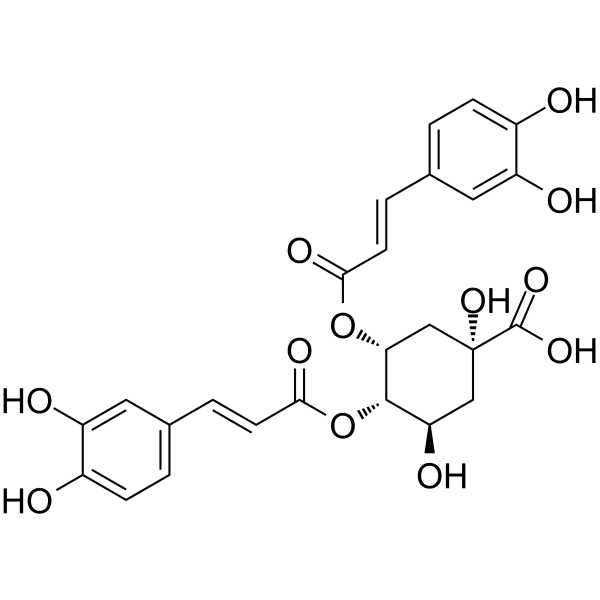
Cat. No.: HY-N0058
CAS No.: 57378-72-0
Synonyms: Isochlorogenic acid C; 4,5-diCQA
4,5-Dicaffeoylquinic acid (Isochlorogenic acid C) is an antioxidant, can be isolated from Gynura divaricata and Laggera alata. 4,5-Dicaffeoylquinic acid reduces islet cell apoptosis and improves pancreatic function in type 2 diabetic mice, and has obvious inhibitory activities against yeast α-glucosidase. 4,5-Dicaffeoylquinic acid inhibits prostate cancer cells through cell cycle arrest. 4,5-Dicaffeoylquinic acid also has anti-apoptotic, anti-injury and anti-hepatitis B virus effects .
loading...
    loading...
1
1 Cited Publications
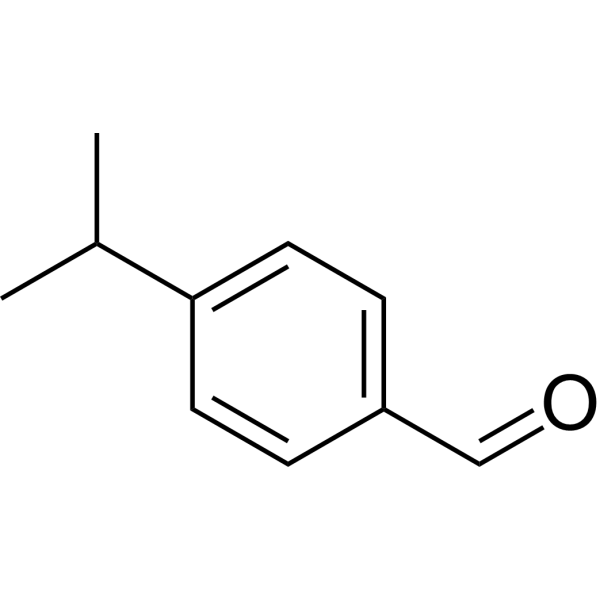
Cat. No.: HY-Y0790
CAS No.: 122-03-2
Synonyms: p-Isopropylbenzaldehyde
Cuminaldehyde is the main component of Cuminum cyminum and has multiple biological activities, including anti-inflammatory, anti-cancer, anti-diabetic, anti-injury, anti-neuropathy and antibacterial effects. Cuminaldehyde is an inhibitor of aldose reductase (IC50= 0.00085 mg/mL), α-glucosidase (IC50=0.5 mg/mL) and lipoxygenase (IC50=1370 μM). Cuminaldehyde also inhibits the fibrillation of α-synuclein and prevents its aggregation. Cuminaldehyde has potential application value in the research of neurodegenerative diseases, cancer, diabetes and neuropathic pain diseases .
loading...
    loading...
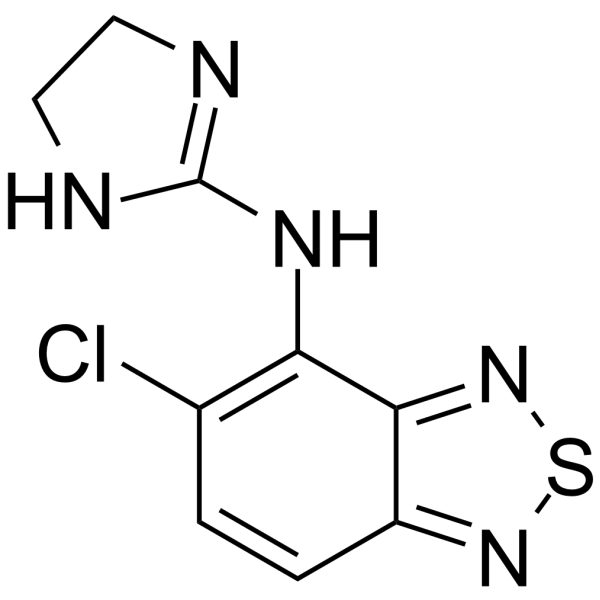
Cat. No.: HY-B0194
CAS No.: 51322-75-9
Tizanidine, a skeletal muscle relaxant, is an orally effective central α2-adrenoceptor agonist (IC50 = 6.9 nmol). Tizanidine primarily exerts muscle relaxation effects by inhibiting the release of excitatory amino acids (glutamate and aspartate) from the presynaptic terminals of spinal cord interneurons. Tizanidine has anti-injury activity and can inhibit gastrointestinal (GI) transport. Tizanidine can inhibit the proliferation, migration, and invasion of lung cancer cells and induce cell apoptosis by upregulating Nischarin and inhibiting the AKT and Wnt3a/β-catenin signaling pathways. Tizanidine can be used to treat spasticity caused by diseases such as multiple sclerosis (MS), stroke, and spinal cord injury (SCI) .
loading...
    loading...
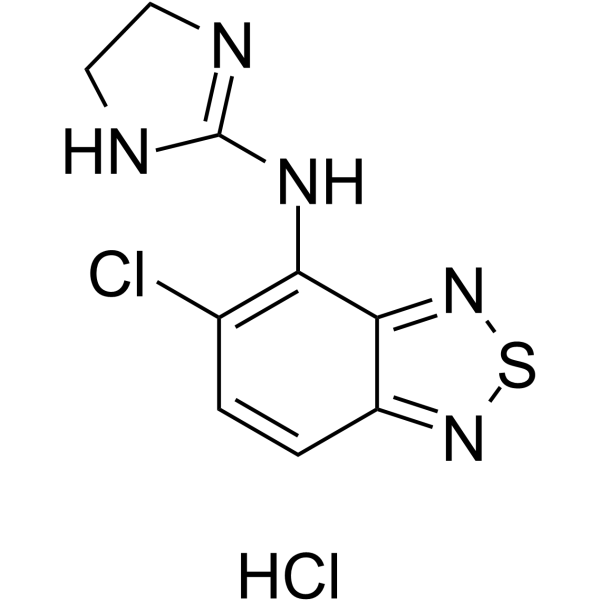
Cat. No.: HY-B0194A
CAS No.: 64461-82-1
Tizanidine hydrochloride, a skeletal muscle relaxant, is an orally effective central α2-adrenoceptor agonist (IC50 = 6.9 nmol). Tizanidine hydrochloride primarily exerts muscle relaxation effects by inhibiting the release of excitatory amino acids (glutamate and aspartate) from the presynaptic terminals of spinal cord interneurons. Tizanidine hydrochloride has anti-injury activity and can inhibit gastrointestinal (GI) transport. Tizanidine hydrochloride can inhibit the proliferation, migration, and invasion of lung cancer cells and induce cell apoptosis by upregulating Nischarin and inhibiting the AKT and Wnt3a/β-catenin signaling pathways. Tizanidine hydrochloride can be used to treat spasticity caused by diseases such as multiple sclerosis (MS), stroke, and spinal cord injury (SCI) .
loading...
    loading...
Cat. No.: HY-N6962
CAS No.: 481-18-5
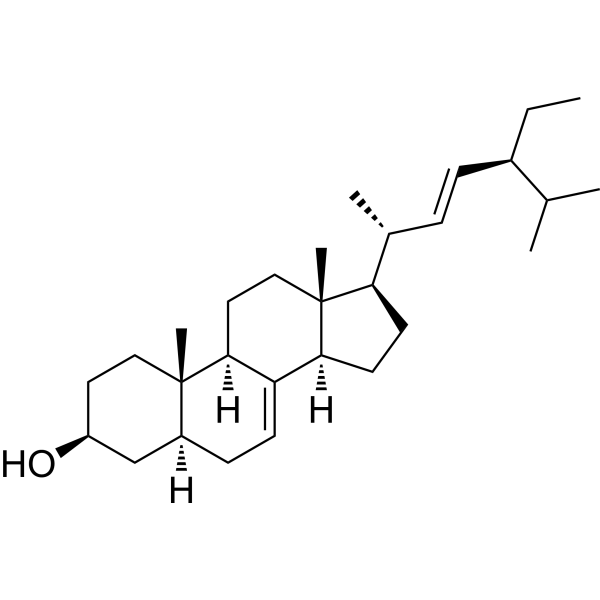
α-Spinasterol is an orally taken antagonist of transient receptor potential vanilloid 1 ( TRPV1), and it's also an inhibitor of COX-1 and COX-2, with IC50 values of 16.17 μM and 7.76 μM, respectively. α-Spinasterol exhibits antibacterial, anti-inflammatory, antidepressant, and antioxidant effects, has the ability to cross the blood-brain barrier, and can improve diabetes in mice .
loading...
    loading...
Cat. No.: HY-N0058R
CAS No.: 57378-72-0
Synonyms: Isochlorogenic acid C (Standard); 4,5-diCQA (Standard)
4,5-Dicaffeoylquinic acid (Standard) is the analytical standard of 4,5-Dicaffeoylquinic acid. This product is intended for research and analytical applications. 4,5-Dicaffeoylquinic acid (Isochlorogenic acid C) is an antioxidant, can be isolated from Gynura divaricata and Laggera alata. 4,5-Dicaffeoylquinic acid reduces islet cell apoptosis and improves pancreatic function in type 2 diabetic mice, and has obvious inhibitory activities against yeast α-glucosidase. 4,5-Dicaffeoylquinic acid inhibits prostate cancer cells through cell cycle arrest. 4,5-Dicaffeoylquinic acid also has anti-apoptotic, anti-injury and anti-hepatitis B virus effects .
loading...
    loading...
Cat. No.: HY-B0194S
CAS No.: 1188331-19-2
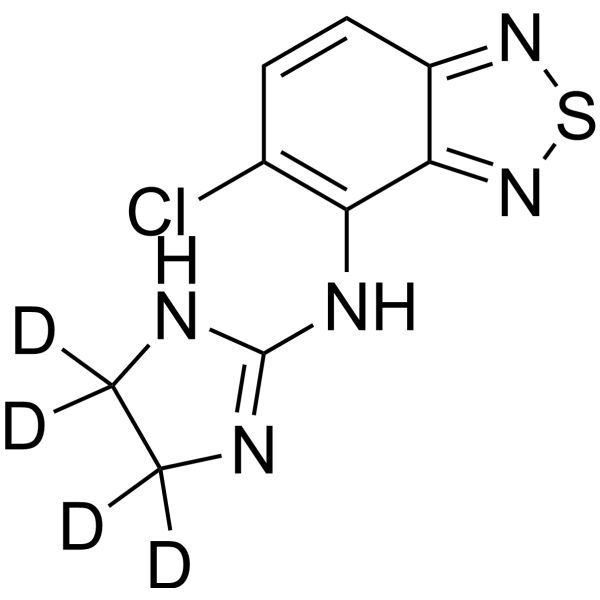
Tizanidine-d4 is the deuterium labeled Tizanidine (HY-B0194). Tizanidine, a skeletal muscle relaxant, is an orally effective central α2-adrenoceptor agonist (IC50 = 6.9 nmol). Tizanidine primarily exerts muscle relaxation effects by inhibiting the release of excitatory amino acids (glutamate and aspartate) from the presynaptic terminals of spinal cord interneurons. Tizanidine has anti-injury activity and can inhibit gastrointestinal (GI) transport. Tizanidine can inhibit the proliferation, migration, and invasion of lung cancer cells and induce cell apoptosis by upregulating Nischarin and inhibiting the AKT and Wnt3a/β-catenin signaling pathways. Tizanidine can be used to treat spasticity caused by diseases such as multiple sclerosis (MS), stroke, and spinal cord injury (SCI).
loading...
    loading...
Cat. No.: HY-Y0790R
CAS No.: 122-03-2
Synonyms: p-Isopropylbenzaldehyde (Standard)
Cuminaldehyde Standard is the analytical standard of Cuminaldehyde. This product is intended for research and analytical applications. Cuminaldehyde is the main component of Cuminum cyminum and has multiple biological activities, including anti-inflammatory, anti-cancer, anti-diabetic, anti-injury, anti-neuropathy and antibacterial effects. Cuminaldehyde is an inhibitor of aldose reductase (IC50= 0.00085 mg/mL) and α-glucosidase (IC50=0.5 mg/mL). Cuminaldehyde also inhibits the fibrillation of α-synuclein and prevents its aggregation Cuminaldehyde can induce apoptosis in colon adenocarcinoma cells by targeting topoisomerase I and II. In addition, Cuminaldehyde also exerts anti-inflammatory activity by inhibiting lipoxygenase. Cuminaldehyde has a strong inhibitory effect on the growth of Aspergillus flavus and the biosynthesis of aflatoxin B1 (AFB1). Cuminaldehyde can exert anti-injury and anti-neuropathy effects by participating in opioid receptors, L-arginine/NO/cGMP pathways and anti-inflammatory effects. Cuminaldehyde has potential application value in the research of neurodegenerative diseases, cancer, diabetes and neuropathic pain diseases .
loading...
    loading...
Cat. No.: HY-169451
CAS No.: 55658-71-4
Synonyms: HU-580
Target:  

5-HT Receptor

Research Areas:  

Neurological Disease

Cannabidiolic acid methyl ester (HU-580) is an orally active cannabidiolic acid analogue. Cannabidiolic acid methyl ester can enhance the activation of 5-HT1A receptor and increase the expression of c-Fos and NeuN in specific hypothalamic nuclei of rats. Cannabidiolic acid methyl ester has anti-nausea, anti-anxiety and anti-injury effects .
loading...
    loading...
Cat. No.: HY-B0194AR
CAS No.: 64461-82-1
Tizanidine hydrochloride (Standard) is the analytical standard of Tizanidine hydrochloride (HY-B0194A). This product is intended for research and analytical applications. Tizanidine hydrochloride, a skeletal muscle relaxant, is an orally effective central α2-adrenoceptor agonist (IC50 = 6.9 nmol). Tizanidine hydrochloride primarily exerts muscle relaxation effects by inhibiting the release of excitatory amino acids (glutamate and aspartate) from the presynaptic terminals of spinal cord interneurons. Tizanidine hydrochloride has anti-injury activity and can inhibit gastrointestinal (GI) transport. Tizanidine hydrochloride can inhibit the proliferation, migration, and invasion of lung cancer cells and induce cell apoptosis by upregulating Nischarin and inhibiting the AKT and Wnt3a/β-catenin signaling pathways. Tizanidine hydrochloride can be used to treat spasticity caused by diseases such as multiple sclerosis (MS), stroke, and spinal cord injury (SCI).
loading...
    loading...
Cat. No.: HY-B0194AS
CAS No.: 1188263-51-5
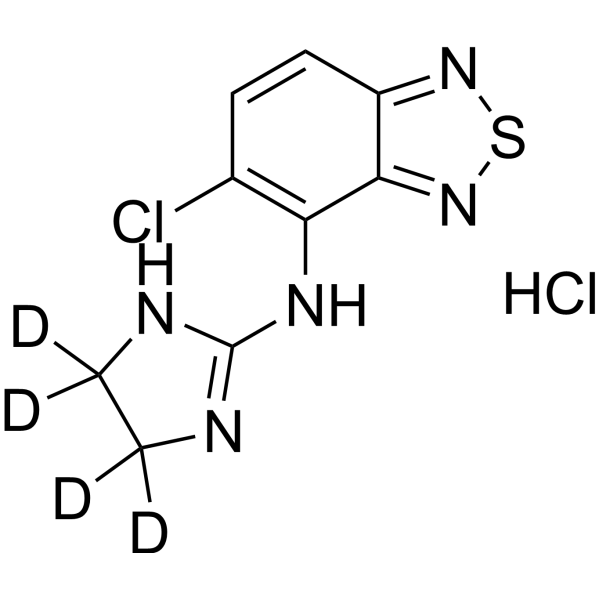
Tizanidine-d4 hydrochloride is deuterium labeled Tizanidine hydrochloride (HY-B0194A). Tizanidine hydrochloride, a skeletal muscle relaxant, is an orally effective central α2-adrenoceptor agonist (IC50 = 6.9 nmol). Tizanidine hydrochloride primarily exerts muscle relaxation effects by inhibiting the release of excitatory amino acids (glutamate and aspartate) from the presynaptic terminals of spinal cord interneurons. Tizanidine hydrochloride has anti-injury activity and can inhibit gastrointestinal (GI) transport. Tizanidine hydrochloride can inhibit the proliferation, migration, and invasion of lung cancer cells and induce cell apoptosis by upregulating Nischarin and inhibiting the AKT and Wnt3a/β-catenin signaling pathways. Tizanidine hydrochloride can be used to treat spasticity caused by diseases such as multiple sclerosis (MS), stroke, and spinal cord injury (SCI).
loading...
    loading...
Cat. No.: HY-B0194R
CAS No.: 51322-75-9
Tizanidine (Standard) is the analytical standard of Tizanidine (HY-B0194). This product is intended for research and analytical applications. Tizanidine, a skeletal muscle relaxant, is an orally effective central α2-adrenoceptor agonist (IC50 = 6.9 nmol). Tizanidine primarily exerts muscle relaxation effects by inhibiting the release of excitatory amino acids (glutamate and aspartate) from the presynaptic terminals of spinal cord interneurons. Tizanidine has anti-injury activity and can inhibit gastrointestinal (GI) transport. Tizanidine can inhibit the proliferation, migration, and invasion of lung cancer cells and induce cell apoptosis by upregulating Nischarin and inhibiting the AKT and Wnt3a/β-catenin signaling pathways. Tizanidine can be used to treat spasticity caused by diseases such as multiple sclerosis (MS), stroke, and spinal cord injury (SCI).
loading...
    loading...
  • 1

