22 Results for "

Anti-leishmania

" in MedChemExpress (MCE) Product Catalog:
Products (22)

22 Results for "Anti-leishmania" in MCE Product Catalog:

6
6 Publications Verification
Cat. No.: HY-B0621
CAS No.: 68786-66-3
Synonyms: CGA89317
Research Areas:  

Infection

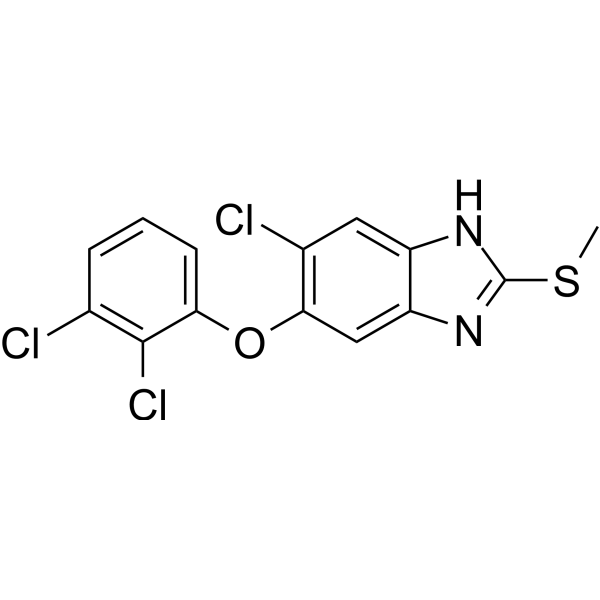
Triclabendazole is an orally active parasite inhibitor. Triclabendazole has anti-Leishmania activity and induces gasdermin E (GSDME)-dependent pyroptosis by caspase-3 activation. Triclabendazole can be used for the research of fasciola hepatica .
loading...
    loading...
3
3 Cited Publications
Cat. No.: HY-N6961
CAS No.: 84-79-7
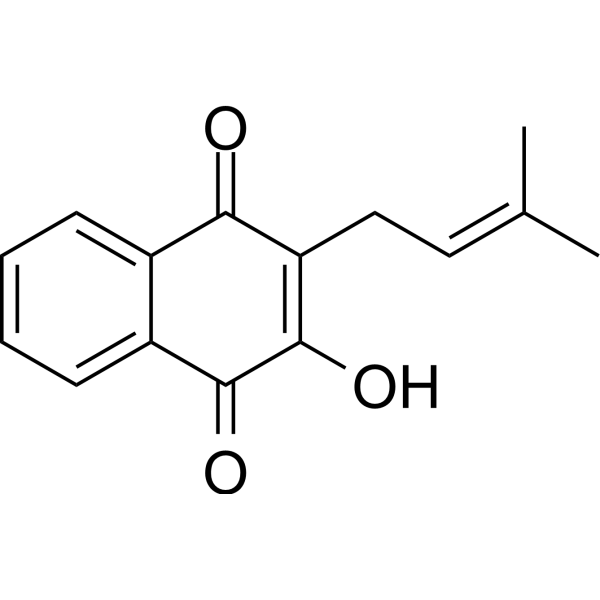
Lapachol, a natural naphthoquinone, is an orally active, potent DHODH inhibitor. Lapachol has immunosuppressive activity on lymphocytes through its direct ability to block DHODH activity and inhibit pyrimidine synthesis. Lapachol is a vitamin K antagonist with antitumor activity and can inhibit DNA and RNA synthesis in neoplastic cells. Lapachol has anti-Leishmania activity .
loading...
    loading...
2
2 Cited Publications
Cat. No.: HY-N2575
CAS No.: 77029-83-5
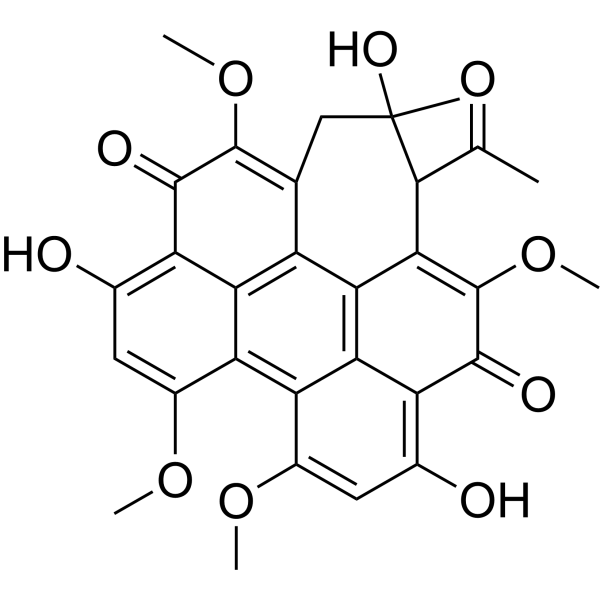
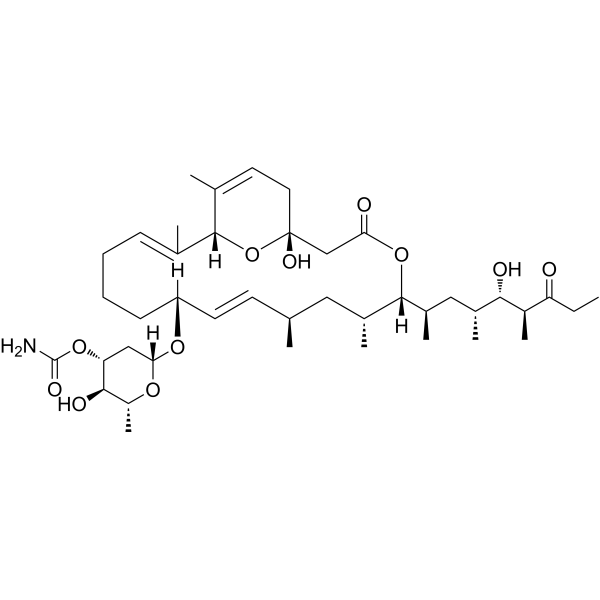
Hypocrellin A is a PKC inhibitor that exerts antidiabetic activity by reversing the effects of high glucose on endothelin (ET-1) expression. Hypocrellin A is also a photosensitizer for photodynamic therapy (PDT) with anticancer, antibacterial and antiviral activities, especially against human immunodeficiency virus (HIV). In addition, Hypocrellin-A also possesses anti-Leishmania activity (IC50=0.27 μg/ml) .
loading...
    loading...
1
1 Cited Publications
Cat. No.: HY-N0769
CAS No.: 482-27-9
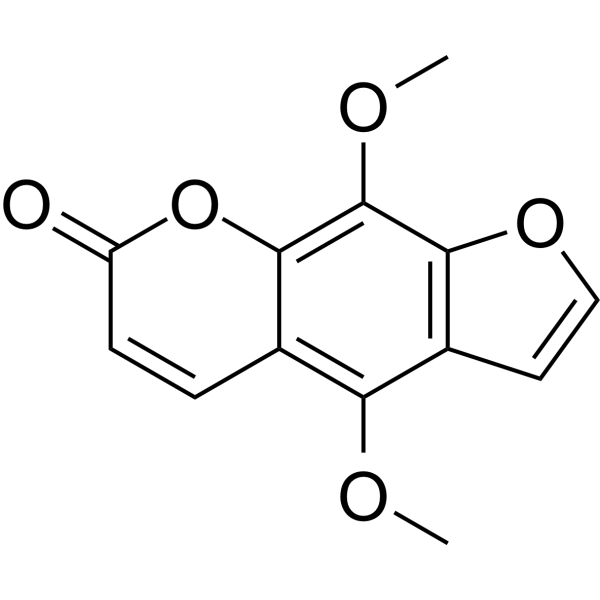
Isopimpinellin, an orally active compound isolated from Glomerella cingulata. Isopimpinellin blocks DNA adduct formation and skin tumor initiation by 7,12-dimethylbenz[a]anthracene. Isopimpinellin possesses anti-leishmania effect .
loading...
    loading...
Cat. No.: HY-124481
CAS No.: 289030-99-5
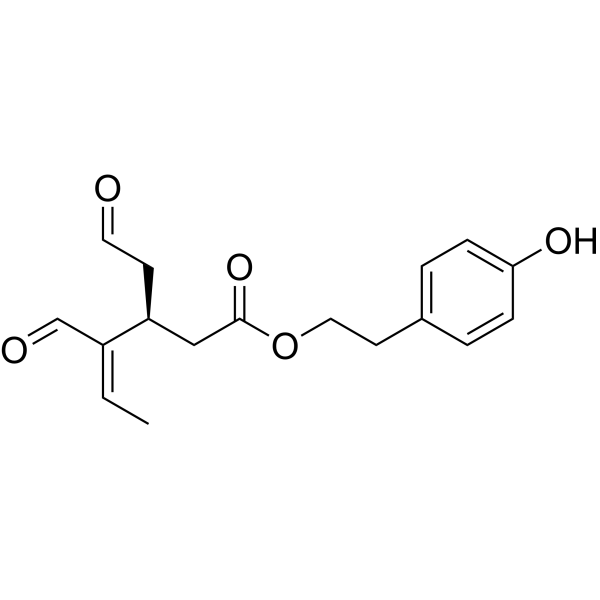
Oleocanthal is an orally active phenolic seciridoid compound. Oleocanthal can be extracted from olive oil. Oleocanthal inhibits COX-1 and COX-2, reduces ROS and NO, and upregulates Nrf-2 and HO-1. Oleocanthal reduces deposition. Oleocanthal exhibits anti-Leishmania activity against promastigotes and amastigotes of L. major, with IC50 values of 18.7 and 87 μg/mL, respectively. Oleocanthal exhibits anticancer activity against colon, breast, liver, and melanoma cancers. Oleocanthal also exhibits anti-inflammatory and neuroprotective properties. Oleocanthal can be used in Alzheimer's disease research .
loading...
    loading...
Cat. No.: HY-W749694
CAS No.: 76735-58-5
Synonyms: Canniflavone
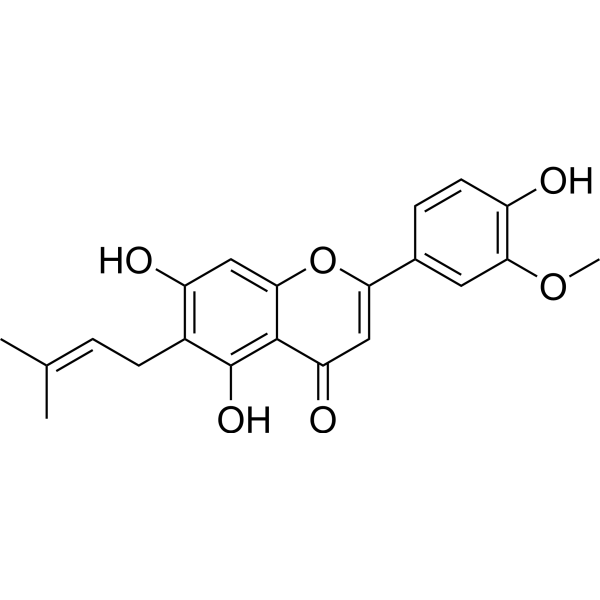
Cannflavin B is a flavonoid compound that can be isolated from Cannabis sativa L. Cannflavin B is inhibitors of PGE2 release (IC50: 0.7 μM), mPGES-1 (IC50: 3.7 μM), and 5-lipoxygenase. Cannflavin B has multiple activities such as anti-inflammatory, antioxidant, anti-glycation, anti-ferroptosis, anti-tumor, and anti-Leishmania (IC50: 14 μM). Cannflavin B can also inhibit the TrkB-BDNF signaling pathway .
loading...
    loading...
Cat. No.: HY-Y0148
CAS No.: 1679-53-4
Synonyms: NSC 15139; 10-HDAA
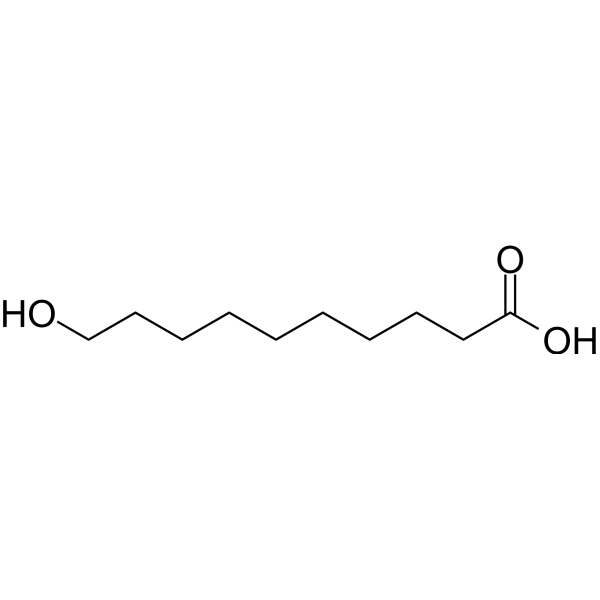
10-Hydroxydecanoic acid (10-HDAA) is a saturated fatty acid derived from 10-hydroxy-trans-2-decenoic acid, which can be isolated from royal jelly. 10-Hydroxydecanoic acid exhibits various biological activities, including anti-inflammatory, insecticidal, anti-malarial, and anti-Leishmania properties, as well as enhancing antigen-specific immune responses. The anti-inflammatory effects of 10-Hydroxydecanoic acid are primarily mediated by inhibiting the activation of NF-κB and the translation of interferon regulatory factor 1 (IRF-1), which reduces the production of interleukin 6 (IL-6) and nitric oxide (NO) in inflammatory cells. Additionally, 10-Hydroxydecanoic acid alleviates neuroinflammatory responses through the p53-autophagy pathway and the p53-NLRP3 pathway. Finally, 10-Hydroxydecanoic acid enhances antigen-specific immune responses by promoting the effective uptake of antigens by microfold cells .
loading...
    loading...
Cat. No.: HY-B0621R
CAS No.: 68786-66-3
Synonyms: CGA89317 (Standard)
Triclabendazole (Standard) is the analytical standard of Triclabendazole. This product is intended for research and analytical applications. Triclabendazole is an orally active parasite inhibitor. Triclabendazole has anti-Leishmania activity and induces gasdermin E (GSDME)-dependent pyroptosis by caspase-3 activation. Triclabendazole can be used for the research of fasciola hepatica .
loading...
    loading...
Cat. No.: HY-N6961R
CAS No.: 84-79-7
Lapachol (Standard) is the analytical standard of Lapachol. This product is intended for research and analytical applications. Lapachol, a natural naphthoquinone, is an orally active, potent DHODH inhibitor. Lapachol has immunosuppressive activity on lymphocytes through its direct ability to block DHODH activity and inhibit pyrimidine synthesis. Lapachol is a vitamin K antagonist with antitumor activity and can inhibit DNA and RNA synthesis in neoplastic cells. Lapachol has anti-Leishmania activity .
loading...
    loading...
Cat. No.: HY-127160
CAS No.: 19379-90-9
Purity:  99.73%
Research Areas:  

Infection

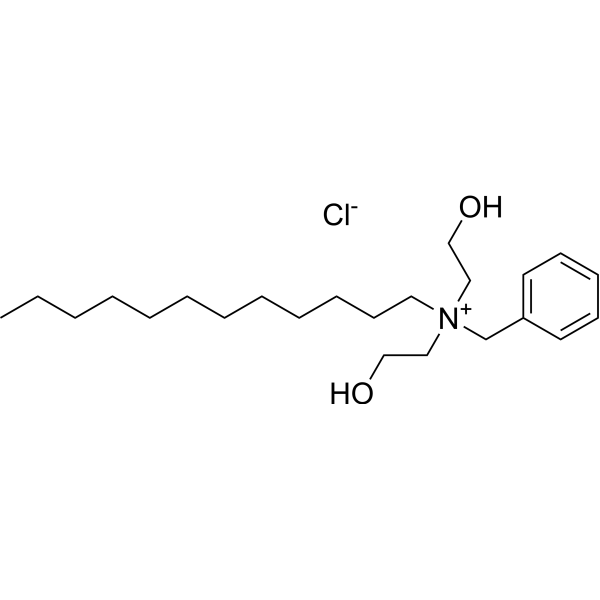
Benzoxonium chloride is an anti-leishmanial agent. Benzoxonium chloride inhibits bacteria, certain protozoa, yeasts and non-spore forming organisms .
loading...
    loading...
Cat. No.: HY-149957
CAS No.: 2934738-41-5
Target:  

Parasite

Research Areas:  

Infection

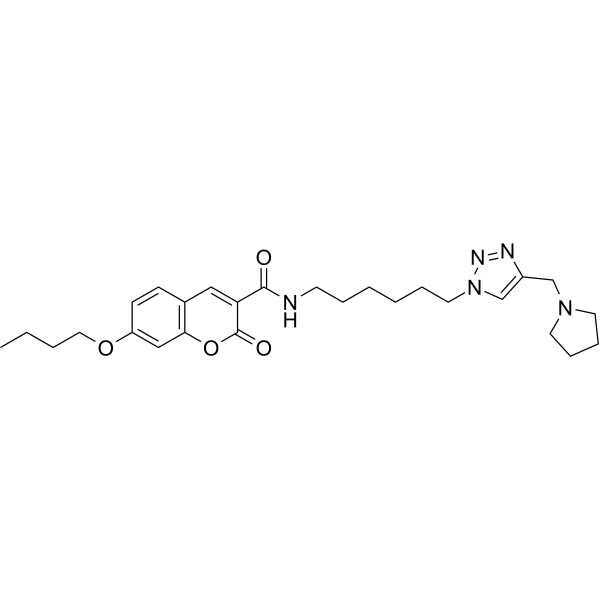
Antileishmanial agent-16 (compound 14c) is an anti-Leishmania agent. Antileishmanial agent-16 has superior anti-Leishmania major promastigotes activity (IC50 = 0.59 µM) and anti-Leishmania major amastigotes activity (IC50 = 0.81 µM). Antileishmanial agent-16 has good safety to mammalian cells (VERO cells) .
loading...
    loading...
Cat. No.: HY-149980
Target:  

Parasite

Research Areas:  

Infection

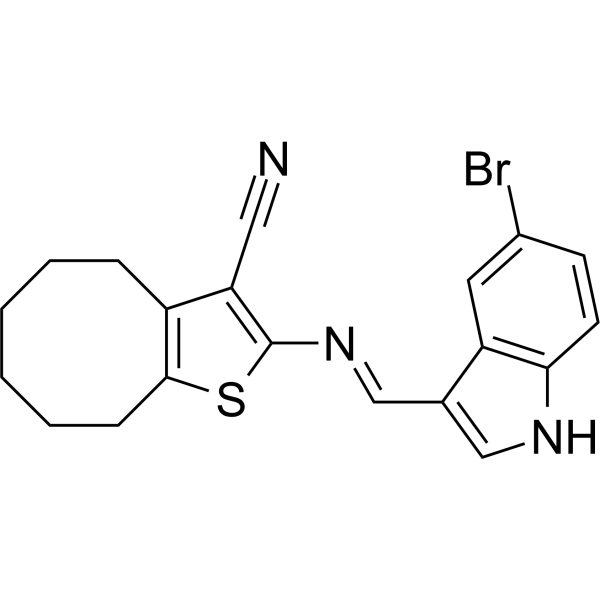
DCN-83, an anti-leishmania agent, is most potent against the amastigote form with an IC50 of 0.71 μM. DCN-83 has the potential to cross the blood-brain barrier and central nervous system .
loading...
    loading...
Cat. No.: HY-N0769R
CAS No.: 482-27-9
Isopimpinellin (Standard) is the analytical standard of Isopimpinellin. This product is intended for research and analytical applications. Isopimpinellin, an orally active compound isolated from Glomerella cingulata. Isopimpinellin blocks DNA adduct formation and skin tumor initiation by 7,12-dimethylbenz[a]anthracene. Isopimpinellin possesses anti-leishmania effect .
loading...
    loading...
Cat. No.: HY-170358
CAS No.: 861382-34-5
Target:  

Parasite

Research Areas:  

Infection

Antileishmanial agent-31 (Compound p1) is a pyrazole derivative. Antileishmanial agent-31 has anti-leishmania activity with an IC50 of 35.53 μg/mL. In addition, Antileishmanial agent-31 has high stability. Antileishmanial agent-31 can be used for anti-leishmaniasis research .
loading...
    loading...
Cat. No.: HY-B0621S
CAS No.: 1353867-93-2
Synonyms: CGA89317-d3
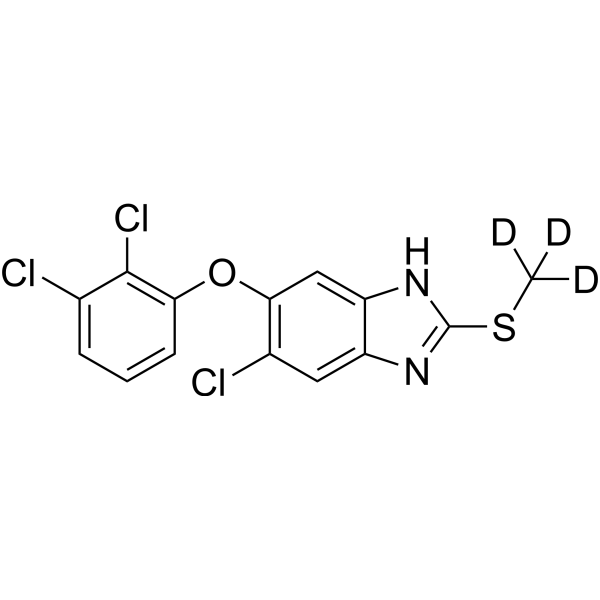
Triclabendazole-d3 is the deuterium labeled Triclabendazole (HY-B0621). Triclabendazole is an orally active parasite inhibitor. Triclabendazole has anti-Leishmania activity and induces gasdermin E (GSDME)-dependent pyroptosis by caspase-3 activation. Triclabendazole can be used for the research of fasciola hepatica .
loading...
    loading...
Cat. No.: HY-161325
Target:  

Parasite

Research Areas:  

Infection

Antileishmanial agent-26 (Compound 69) is a guanidine-containing compound with anti-Leishmania donovani activity. Its IC50 value against Leishmania donovani is 5.67 μM, and its CC50 value against THP-1 is 3.79 μM. Antileishmanial agent-26 can be used in the research of tropical diseases .
loading...
    loading...
Cat. No.: HY-N2575R
CAS No.: 77029-83-5
Hypocrellin A (Standard) is the analytical standard of Hypocrellin A. This product is intended for research and analytical applications. Hypocrellin A is a PKC inhibitor that exerts antidiabetic activity by reversing the effects of high glucose on endothelin (ET-1) expression. Hypocrellin A is also a photosensitizer for photodynamic therapy (PDT) with anticancer, antibacterial and antiviral activities, especially against human immunodeficiency virus (HIV). In addition, Hypocrellin-A also possesses anti-Leishmania activity (IC50=0.27 μg/ml)[1][2][3][4][5][6][7][8][9].
loading...
    loading...
Cat. No.: HY-127160R
CAS No.: 19379-90-9
Research Areas:  

Infection

Benzoxonium (chloride) (Standard) is the analytical standard of Benzoxonium (chloride). This product is intended for research and analytical applications. Benzoxonium chloride is an anti-leishmanial agent. Benzoxonium chloride inhibits bacteria, certain protozoa, yeasts and non-spore forming organisms .
loading...
    loading...
Cat. No.: HY-Y0148R
CAS No.: 1679-53-4
Synonyms: NSC 15139 (Standard); 10-HDAA (Standard)
10-Hydroxydecanoic acid (Standard) is the analytical standard of 10-Hydroxydecanoic acid. This product is intended for research and analytical applications. 10-Hydroxydecanoic acid (10-HDAA) is a saturated fatty acid derived from 10-hydroxy-trans-2-decenoic acid, which can be isolated from royal jelly. 10-Hydroxydecanoic acid exhibits various biological activities, including anti-inflammatory, insecticidal, anti-malarial, and anti-Leishmania properties, as well as enhancing antigen-specific immune responses. The anti-inflammatory effects of 10-Hydroxydecanoic acid are primarily mediated by inhibiting the activation of NF-κB and the translation of interferon regulatory factor 1 (IRF-1), which reduces the production of interleukin 6 (IL-6) and nitric oxide (NO) in inflammatory cells. Additionally, 10-Hydroxydecanoic acid alleviates neuroinflammatory responses through the p53-autophagy pathway and the p53-NLRP3 pathway. Finally, 10-Hydroxydecanoic acid enhances antigen-specific immune responses by promoting the effective uptake of antigens by microfold cells[1][2][3][4][5].
loading...
    loading...
Cat. No.: HY-183008
CAS No.: 179118-06-0
BSF2 is a anti-Leishmania agent. BSF2 modulates gene expression linked to ubiquitination, chromatin remodeling, and peroxisomal membrane transport pathways in Leishmania braziliensis. BSF2 downregulates TNF, IL-17, NF-κB, and Toll-like receptor pathways in Leishmania-infected macrophages. BSF2 exerts leishmanicidal activity against intracellular Leishmania braziliensis amastigotes. BSF2 can be used for the research of american tegumentary leishmaniasis .
loading...
    loading...

