1. Search Result
Search Result
Results for "

C2C12 mouse

" in MedChemExpress (MCE) Product Catalog:

23

Inhibitors & Agonists

1

Peptides

7

Natural
Products

1

Isotope-Labeled Compounds

Cat. No. Product Name Target Research Areas Chemical Structure
  • HY-W021448
    Glycocyamine
    1 Publications Verification

    Guanidinoacetic acid

    Endogenous Metabolite Metabolic Disease
    Glycocyamine (Guanidinoacetic acid) is a direct precursor of creatine and an orally active energy metabolism regulator and myogenic differentiation inducer. Glycocyamine can activate the Akt/mTOR/S6K signaling pathway via miR-133a-3p and miR-1a-3p, and stimulate the mRNA expression of myogenic differentiation factor 1 (MyoD) and myopoietin (MyoG). Glycocyamine can increase muscle creatine concentration and maintain ATP homeostasis through the creatine phosphate/creatine kinase system. Glycocyamine can be used in research on feed additives for poultry farming .
    Glycocyamine
  • HY-112820
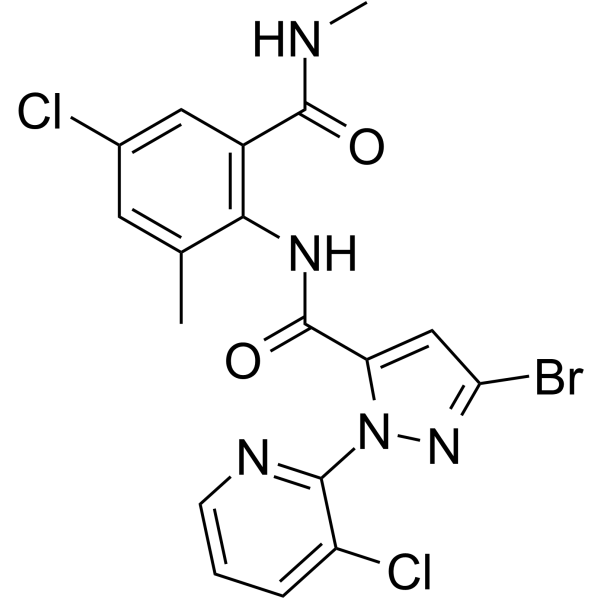
    Chlorantraniliprole
    2 Publications Verification

    Environmental Pollutants Insecticide Others
    Chlorantraniliprole is an insecticide that potently and selectively activates insect ryanodine receptor, with EC50s of 40 nM and 50 nM for Drosophila melanogaster and H. virescens ryanodine receptor, and ~300-fold more potent than that in the mouse myoblast cell line, C2C12 (EC50, 14 μM).
    Chlorantraniliprole
  • HY-W012734
    L-Pipecolic acid
    1 Publications Verification

    H-HoPro-OH

    Endogenous Metabolite Metabolic Disease
    L-Pipecolic acid (H-HoPro-OH) is an oral active metabolite of Lysine and can accumulate in the bodily fluids of infants with autosomal inherited diseases, such as Zellweger syndrome and neonatal adrenal insufficiency. L-Pipecolic acid can promote muscle cell health and growth by enhancing protein synthesis, and plays a role in promoting gut health. L-Pipecolic acid holds promise for research in the fields of metabolic disorders, muscle growth disorders, and intestinal diseases .
    L-Pipecolic acid
  • HY-N4150
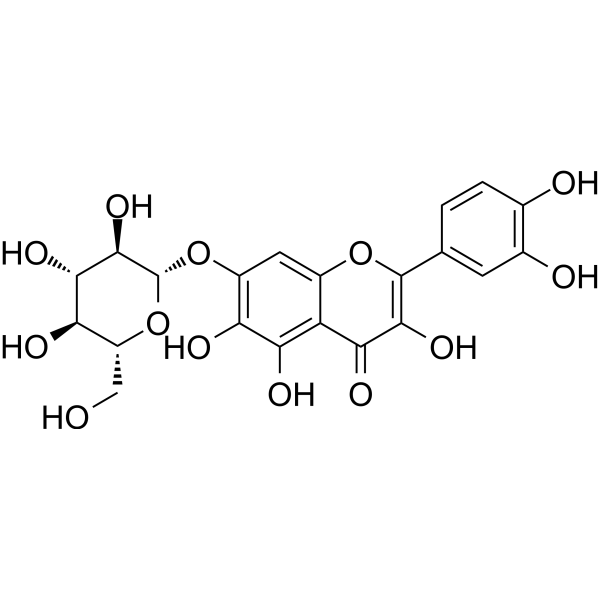
    Quercetagitrin
    1 Publications Verification

    Quercetagetin-7-O-glucoside

    Phosphatase Tau Protein NF-κB Neurological Disease Metabolic Disease Inflammation/Immunology
    Quercetagitrin (Quercetagetin-7-O-glucoside) is a natural product that can be isolated from the African marigold (Tagetes erecta). Quercetagitrin has anti-inflammatory activity. Quercetagitrin inhibits Tau accumulation. Quercetagitrin can reverse neuroinflammation and cognitive deficits in P301S-Tau transgenic mouse model through inhibiting NF-κB activation. Quercetagitrin is a dual-target inhibitor of PTPN6 (IC50 = 1 μM) and PTPN9 (IC50 = 1.7 μM). Quercetagitrin enhances glucose uptake by mature C2C12 myoblasts. Quercetagitrin can be studied in research for Alzheimer’s disease and type 2 diabetes .
    Quercetagitrin
  • HY-N1677

    Akt mTOR Bacterial Fungal AMPK Infection Metabolic Disease Inflammation/Immunology Cancer
    2,6-Dimethoxy-1,4-benzoquinone is a 1,4-benzoquinone derivative. 2,6-Dimethoxy-1,4-benzoquinone promotes phosphorylation of AKT, S6K, mTOR, 4E-BP1, and AMPK, and attenuates mTORC1 activity as part of the AKT/mTOR pathway. 2,6-Dimethoxy-1,4-benzoquinone stimulates myoblast differentiation, increases myotube size, elevates MHC protein expression, enhances mitochondrial biogenesis, respiration, and DNA content, and increases skeletal muscle weights, fiber size, grip strength, and treadmill performance. 2,6-Dimethoxy-1,4-benzoquinone exerts anti-cancer, anti-inflammatory, anti-adipogenic, antibacterial, and antimutagenic effects, inhibits adipogenic transcription factors, nitric oxide production, skin tumor development, Magnaporthe oryzae growth, spore germination, appressorium formation, and growth of select bacterial species, induces H2O2 generation and rice defense gene expression, and reduces rice blast lesion formation. 2,6-Dimethoxy-1,4-benzoquinone can be used for the research of obesity, skin tumorigenesis, rice blast disease, and food-borne illness .
    2,6-Dimethoxy-1,4-benzoquinone
  • HY-N3266

    Tyrosinase Phosphatase Cholinesterase (ChE) SARS-CoV PERK JNK p38 MAPK TGF-beta/Smad Apoptosis Reactive Oxygen Species (ROS) AMPK MMP Cardiovascular Disease Infection Neurological Disease Inflammation/Immunology Cancer
    Methyl rosmarinate is an orally active hydroxycinnamic acid. Methyl rosmarinate exhibits an IC50 of 24.70 μM and a Ki of 15.29 μM against PTP1B, an IC50 of 41.46 μg/mL against BChE, a Ki of 0.61 mM against mushroom tyrosinase, and an IC50 of 2.50 μM against SARS-CoV-2 3CLpro. Methyl rosmarinate downregulates the phosphorylation levels of ERK, JNK, p38, Smad2 and Smad3. Methyl rosmarinate activates erythrocyte BPGM and promotes the production of 2,3-BPG. Methyl rosmarinate induces apoptosis of fibroblasts. Methyl rosmarinate prolongs the survival time of hypoxic mice. Methyl rosmarinate improves insulin sensitivity. Methyl rosmarinate binds to SARS-CoV-2 3CLpro and inhibits viral replication. Methyl rosmarinate induces glioblastoma cell death. Methyl rosmarinate activates the TGR5/AMPK axis and reduces the levels of ROS and MDA. Methyl rosmarinate shows inhibitory activity against MMP-1. Methyl rosmarinate can be used in research related to pulmonary fibrosis, hypoxia-induced injury, type 2 diabetes, Alzheimer's disease, hyperpigmentation disorders, COVID-19, glioblastoma and myocardial ischemia-reperfusion injury .
    Methyl rosmarinate
  • HY-128591
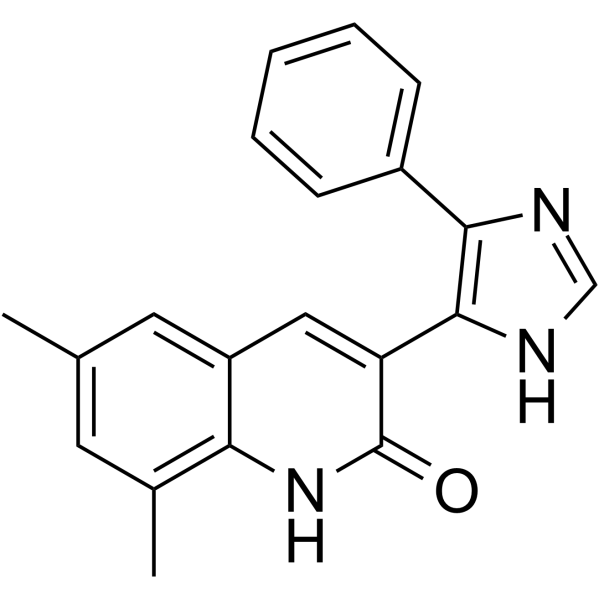
    DIPQUO
    2 Publications Verification

    Phosphatase Metabolic Disease
    DIPQUO is an activator of the bone marker alkaline phosphatase (ALP), with an EC50 of 6.27 μM in C2C12 cells. DIPQUO promotes mouse and human osteoblast differentiation via activation of p38 MAPK-β .
    DIPQUO
  • HY-108440

    Myosin Cardiovascular Disease
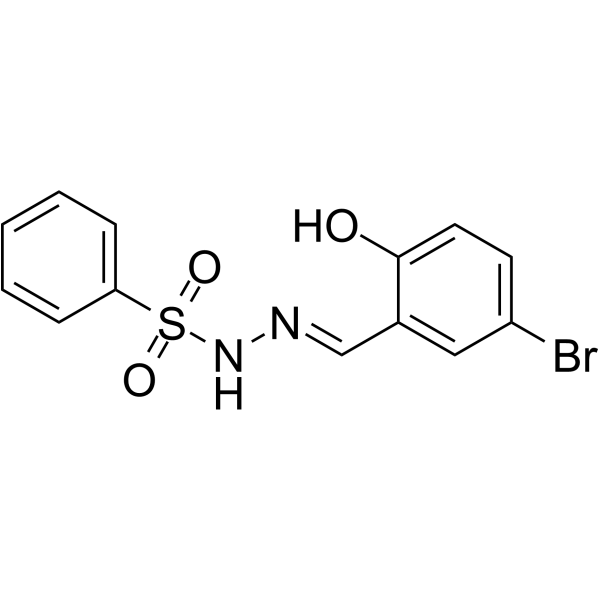
    Shz-1, a small cardiogenic molecule, induces various cardiac-specific genes including sarcomeric tropomyosin in P19CL6 cells. Shz-1 induces Nkx2.5 expression in mouse. Shz-1 activates the axolotl TPM4 promoter-driven ectopic expression in C2C12 cells .
    Shz-1
  • HY-W012734R

    H-HoPro-OH (Standard)

    Reference Standards Endogenous Metabolite Metabolic Disease
    L-Pipecolic acid (Standard) is an analytical standard of L-Pipecolic acid. This product is used for research and analytical applications. L-Pipecolic acid (H-HoPro-OH) is an oral active metabolite of Lysine and can accumulate in the bodily fluids of infants with autosomal inherited diseases, such as Zellweger syndrome and neonatal adrenal insufficiency. L-Pipecolic acid can promote muscle cell health and growth by enhancing protein synthesis, and plays a role in promoting gut health. L-Pipecolic acid holds promise for research in the fields of metabolic disorders, muscle growth disorders, and intestinal diseases .
    L-Pipecolic acid (Standard)
  • HY-117356A

    P2Y Receptor NF-κB ERK Apoptosis Inflammation/Immunology
    MRS2693 ammonium is the ammonium dalt form of MRS2693 (HY-117356). MRS2693 ammonium is a selective agonist for P2Y6 with an EC50 of 0.015 μM. MRS2693 ammonium protects C2C12 skeletal muscle cells from TNFα-induced apoptosis. MRS2693 ammonium reduces the activation of NF-kB, activates the ERK1/2 pathway, and has a cytoprotective effect on mouse ischemia-reperfusion injury model [2].
    MRS2693 ammonium
  • HY-112820R

    Insecticide Reference Standards Others
    Chlorantraniliprole (Standard) is the analytical standard of Chlorantraniliprole. This product is intended for research and analytical applications. Chlorantraniliprole is an insecticide that potently and selectively activates insect ryanodine receptor, with EC50s of 40 nM and 50 nM for Drosophila melanogaster and H. virescens ryanodine receptor, and ~300-fold more potent than that in the mouse myoblast cell line, C2C12 (EC50, 14 μM).
    Chlorantraniliprole (Standard)
  • HY-136395

    Reactive Oxygen Species (ROS) Infection
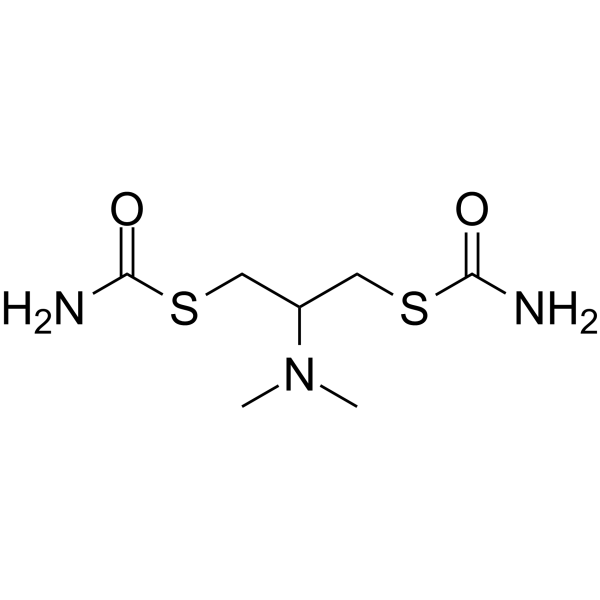
    Cartap, an organonitrogen insecticide, can cause a marked irreversible Ca 2+-dependent contracture in both isolated mouse and rabbit phrenic nerve-diaphragms. Cartap significantly increases the level of endogenous reactive oxygen species (ROS) in C2C12 cells .
    Cartap
  • HY-W040028

    Reactive Oxygen Species (ROS) Infection
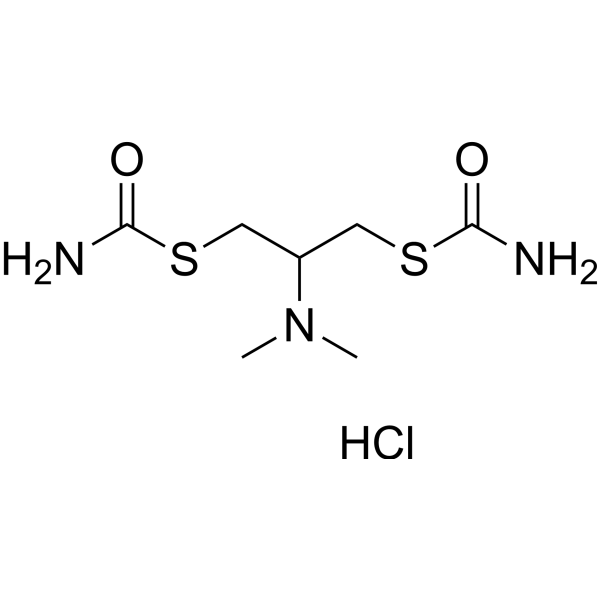
    Cartap hydrochloride, an organonitrogen insecticide, can cause a marked irreversible Ca 2+-dependent contracture in both isolated mouse and rabbit phrenic nerve-diaphragms. Cartap hydrochloride significantly increases the level of endogenous reactive oxygen species (ROS) in C2C12 cells .
    Cartap hydrochloride
  • HY-160514

    Phosphatase Metabolic Disease
    LXQ46 is an orally active inhibitor for protein tyrosine phosphatase 1B (PTP1B), with an IC50 of 0.190 μM. LXQ46 enhances insulin and leptin signaling pathways in insulin-resistant C2C12. LXQ46 ameliorates type 2 diabetes and increases insulin tolerance in mouse models .
    LXQ46
  • HY-W040028R

    Reference Standards Reactive Oxygen Species (ROS) Infection
    Cartap (hydrochloride) (Standard) is the analytical standard of Cartap (hydrochloride). This product is intended for research and analytical applications. Cartap hydrochloride, an organonitrogen insecticide, can cause a marked irreversible Ca2+-dependent contracture in both isolated mouse and rabbit phrenic nerve-diaphragms. Cartap hydrochloride significantly increases the level of endogenous reactive oxygen species (ROS) in C2C12 cells .
    Cartap hydrochloride (Standard)
  • HY-W721606

    Isotope-Labeled Compounds Insecticide Others
    Chlorantraniliprole-d6 is the deuterium labeled Chlorantraniliprole (HY-112820). Chlorantraniliprole is an insecticide that potently and selectively activates insect ryanodine receptor, with EC50s of 40 nM and 50 nM for Drosophila melanogaster and H. virescens ryanodine receptor, and ~300-fold more potent than that in the mouse myoblast cell line, C2C12 (EC50, 14 μM).
    Chlorantraniliprole-d6
  • HY-N4150R

    Quercetagetin-7-O-glucoside (Standard)

    Reference Standards Phosphatase Tau Protein NF-κB Metabolic Disease Inflammation/Immunology Cancer
    Quercetagitrin (Standard) is the analytical standard of Quercetagitrin. This product is intended for research and analytical applications. Quercetagitrin (Quercetagetin-7-O-glucoside) is a natural product that can be isolated from the African marigold (Tagetes erecta). Quercetagitrin has anti-inflammatory activity. Quercetagitrin inhibits Tau accumulation. Quercetagitrin can reverse neuroinflammation and cognitive deficits in P301S-Tau transgenic mouse model through inhibiting NF-κB activation. Quercetagitrin is a dual-target inhibitor of PTPN6 (IC50 = 1 μM) and PTPN9 (IC50 = 1.7 μM). Quercetagitrin enhances glucose uptake by mature C2C12 myoblasts. Quercetagitrin can be studied in research for Alzheimer’s disease and type 2 diabetes .
    Quercetagitrin (Standard)
  • HY-108440R

    Reference Standards Others Cardiovascular Disease
    Shz-1 (Standard) is the analytical standard of Shz-1 (HY-108440). This product is intended for research and analytical applications. Shz-1, a small cardiogenic molecule, induces various cardiac-specific genes including sarcomeric tropomyosin in P19CL6 cells. Shz-1 induces Nkx2.5 expression in mouse. Shz-1 activates the axolotl TPM4 promoter-driven ectopic expression in C2C12 cells .
    Shz-1 (Standard)
  • HY-162578

    PPAR Metabolic Disease
    PPARα/γ agonist 4 (Compound (S)-7) is an orally active dual potent agonist of PPARα and PPARγ, with EC50 values of 0.061 μM and 1.42 μM respectively. PPARα/γ agonist 4 acts through an insulin-independent mechanism and exhibits mitochondrial pyruvate carrier inhibition and anti-diabetic properties. PPARα/γ agonist 4 is expected to be used in research for dyslipidemic type 2 diabetes .
    PPARα/γ agonist 4
  • HY-183148

    NAMPT ATP Synthase Neurological Disease
    NAMPT activator-10 (Compound B11) is an orally active NAMPT activator with a target Kd value of 0.64 μM. NAMPT activator-10 activates the rate-limiting enzyme in NAD + biosynthesis and promotes intracellular NAD + synthesis. NAMPT activator-10 reduces lactate accumulation, enhances glycogen storage in the liver and muscle, increases tissue ATP production, improves exercise endurance and muscle strength, and exerts a protective effect against fatigue-induced muscle damage in mouse fatigue models. NAMPT activator-10 can be used in studies related to muscle fatigue .
    NAMPT activator-10
  • HY-P11741

    Exosomes Biochemical Assay Reagents Neurological Disease
    BV2 is a delivery peptide that binds to BVES, with a Ka of 2.03 μM for the BVES target. BV2 specifically binds to the extracellular domain of BVES, achieving muscle homing and cellular internalization via caveolae-mediated endocytosis. When BV2 is modified on the surface of exosomes by PMO, it enhances dystrophin restoration in the peripheral muscles and myocardium of dystrophin-deficient mice. BV2 is applicable to research related to Duchenne muscular dystrophy and muscle atrophy .
    BV2
  • HY-115549

    AMPK Acetyl-CoA Carboxylase Metabolic Disease
    AMPK activator 18 is a potent allosteric activator of AMPK complexes containing the β2 isoform. AMPK activator 18activates α2-containing AMPK α2β2γ1 and α2β2γ3 complexes, with EC50 values of 17.2 and 82.1 nM. AMPK activator 18 stimulates β2-AMPK in cells, and glucose uptake by isolated skeletal muscle. AMPK activator 18 induces acetyl-coenzyme A carboxylase (ACC) and AMPK α-T172 phosphorylation. AMPK activator 18 can be used for the research of type 2 diabetes .
    AMPK activator 18
  • HY-153507

    Acyltransferase Metabolic Disease
    DGAT1-IN-4 is a potent, orally active, and selective DGAT1 inhibitor with an IC50 of 17 nM. DGAT1-IN-4 exhibits >588-fold selectivity over DGAT2. DGAT1-IN-4 suppresses intracellular triglyceride synthesis in mouse myoblast cells. DGAT1-IN-4 suppresses body weight gain in diet-induced obese dogs. DGAT1-IN-4 can be used for the research of obesity .
    DGAT1-IN-4

Inquiry Online

Your information is safe with us. * Required Fields.

Salutation


Country or Region *

Applicant Name *


Organization Name *

Department *


Email Address *


Product Name *

Cat. No.


Requested quantity *

Phone Number *


Remarks

Inquiry Online

Inquiry Information

Product Name:
Cat. No.:
Quantity:
MCE Japan Authorized Agent:

