4 Results for "

CSRM-617

" in MedChemExpress (MCE) Product Catalog:
Products (4)

4 Results for "CSRM-617" in MCE Product Catalog:

1
1 Cited Publications
Cat. No.: HY-122611A
CAS No.: 1353749-74-2
Purity:  99.97%
Research Areas:  

Cancer

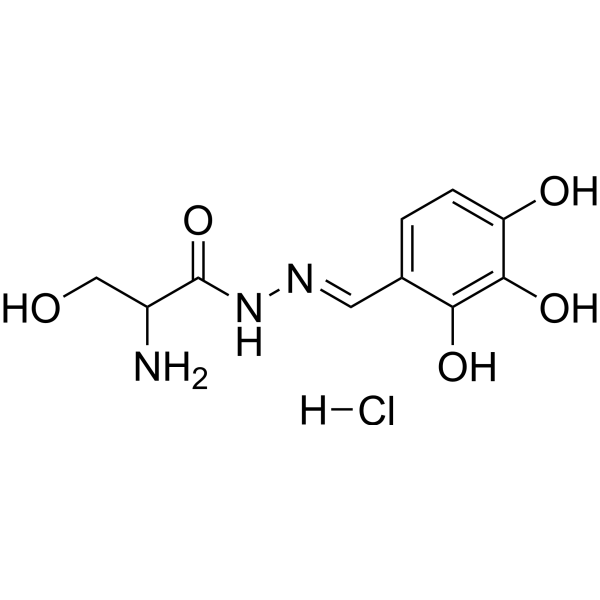
CSRM617 hydrochloride is a selective small-molecule inhibitor of the transcription factor ONECUT2 (OC2, a master regulator of androgen receptor) with a Kd of 7.43 uM in SPR assays, binding to OC2-HOX domain directly. CSRM617 hydrochloride induces apoptosis by appearance of cleaved Caspase-3 and PARP. CSRM617 hydrochloride is well tolerated in the prostate cancer mouse model
loading...
    loading...
Cat. No.: HY-122611
CAS No.: 787504-88-5
Research Areas:  

Cancer

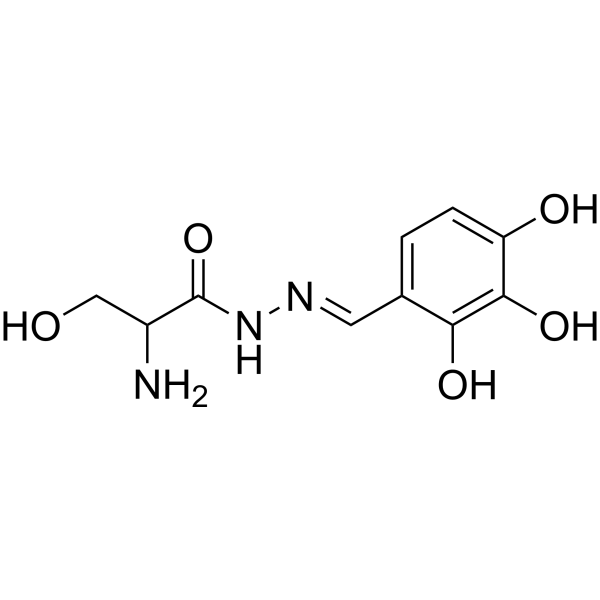
CSRM617 is a selective small-molecule inhibitor of the transcription factor ONECUT2 (OC2, a master regulator of androgen receptor) with a Kd of 7.43 uM in SPR assays, binding to OC2-HOX domain directly. CSRM617 induces apoptosis by appearance of cleaved Caspase-3 and PARP. CSRM617 is well tolerated in the prostate cancer mouse model
loading...
    loading...
Cat. No.: HY-122611R
CAS No.: 787504-88-5
Research Areas:  

Cancer

CSRM617 (Standard) is the analytical standard of CSRM617. This product is intended for research and analytical applications. CSRM617 is a selective small-molecule inhibitor of the transcription factor ONECUT2 (OC2, a master regulator of androgen receptor) with a Kd of 7.43 uM in SPR assays, binding to OC2-HOX domain directly. CSRM617 induces apoptosis by appearance of cleaved Caspase-3 and PARP. CSRM617 is well tolerated in the prostate cancer mouse model
loading...
    loading...
Cat. No.: HY-N1486R
CAS No.: 6246-46-4
Synonyms: 3-Ketoursolic acid (Standard)
CSRM617 (Standard) is the analytical standard of CSRM617. This product is intended for research and analytical applications. CSRM617 is a selective small-molecule inhibitor of the transcription factor ONECUT2 (OC2, a master regulator of androgen receptor) with a Kd of 7.43 uM in SPR assays, binding to OC2-HOX domain directly. CSRM617 induces apoptosis by appearance of cleaved Caspase-3 and PARP. CSRM617 is well tolerated in the prostate cancer mouse model
loading...
    loading...

