17 Results for "

Candida tropicalis

" in MedChemExpress (MCE) Product Catalog:
Products (17)

17 Results for "Candida tropicalis" in MCE Product Catalog:

1
1 Cited Publications
Cat. No.: HY-N2840
CAS No.: 488-44-8
Synonyms: Allodulcitol
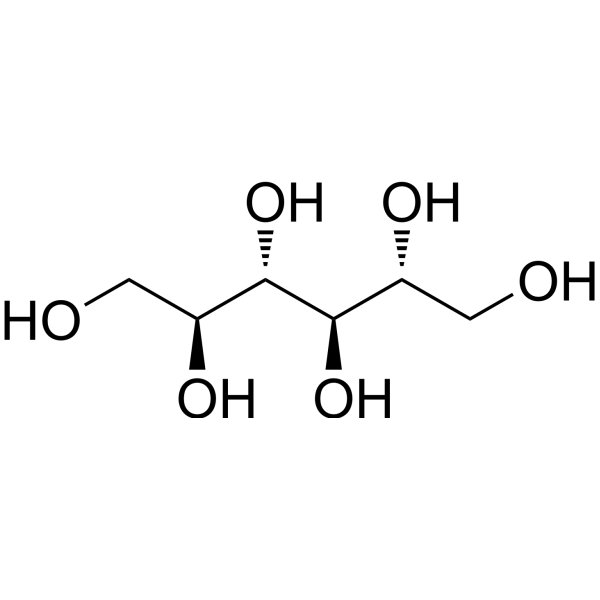
Allitol (Allodulcitol) is an orally active rare sugar alcohol found in Itea virginica L, Tylopilus plumbeoviolaceus. Allitol has anti-obesity and hypoglycaemic activities. Allitol reduces carcass and total body fat mass, increases cecal weight, surface area, and short-chain fatty acid production, and upregulates cecal microbial enzymes linked to butyrate metabolism. Allitol can be used for the researches of obesity and diabetes .
loading...
    loading...
Cat. No.: HY-N7626
CAS No.: 480-00-2
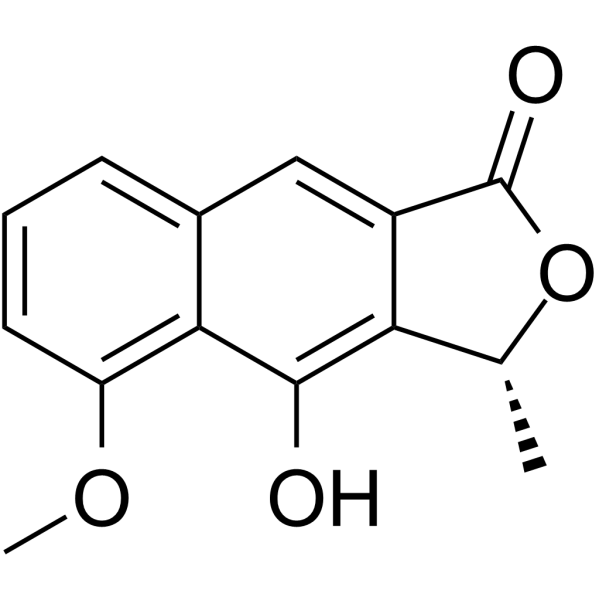
Eleutherol is a naphthalene isolated from E. americana with antifungal activities . Eleutherol is against yeasts Candida albicans, C. tropicalis, Saccharomyces cerevisiae and Cryptococcus neoformans with MIC values between 7.8 µg/mL and 250 µg/mL . Eleutherol inhibits α-glucosidase function with an IC50>1.00 mM .
loading...
    loading...
Cat. No.: HY-129315
CAS No.: 67914-61-8
Purity:  99.60%
Synonyms: N-Deacetylketoconazole; R-39519
Target:  

Bacterial Fungal

Research Areas:  

Infection

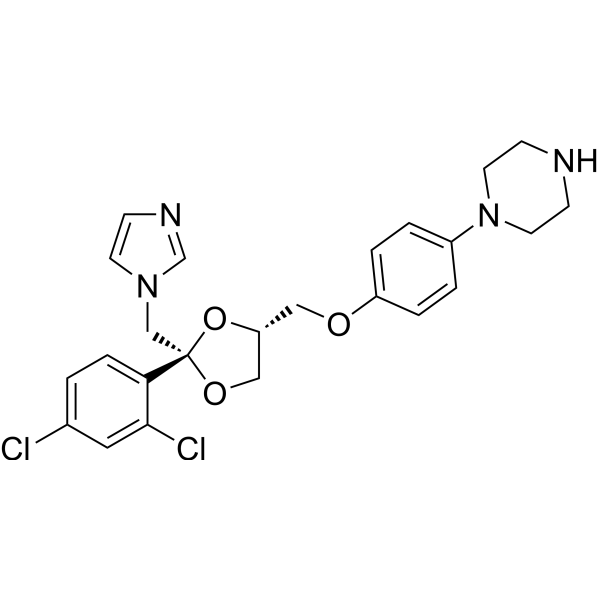
Deacylketoconazole (N-Deacetylketoconazole; R-39519) is an orally active metabolite of Ketoconazole (HY-B0105). Deacylketoconazole exhibits antifungal and antibacterial activity. Deacylketoconazole is cytotoxic in rats hepatocyte .
loading...
    loading...
Cat. No.: HY-149822
CAS No.: 2896209-47-3
Target:  

Fungal

Research Areas:  

Infection

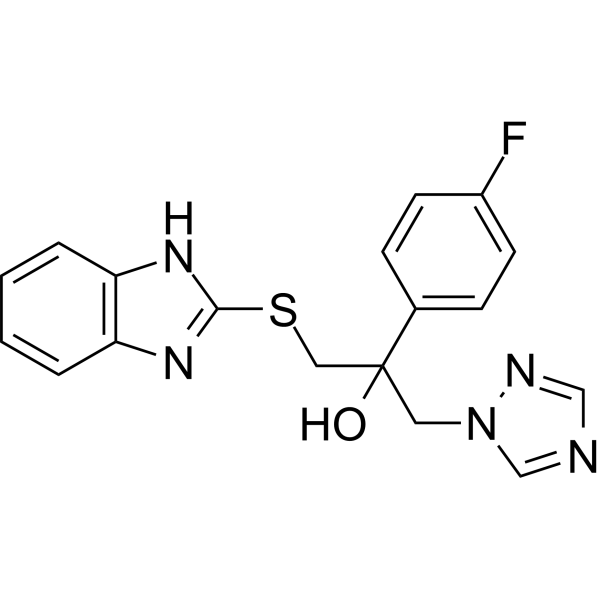
Antifungal agent 51 (Compound 5c) has potent antifungal activity, especially against Candida albicans FDC 151 , Candida parapsilosis ATCC 22019 and Candida tropicalis FDC 138, with the MIC value is less than 0.063 μg/mL, and it has low toxicity to cells and no carcinogenicity .
loading...
    loading...
Cat. No.: HY-126787
CAS No.: 113204-43-6
Synonyms: YP-02259L-C
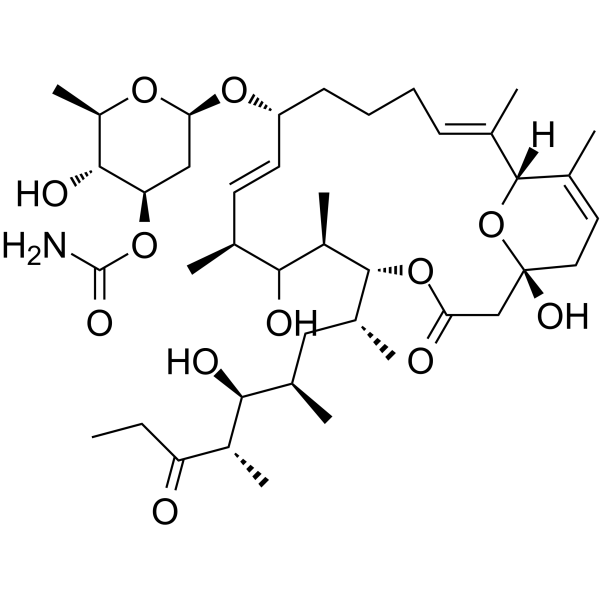
17-Hydroxyventuricidin A (YP-02259L-C) is an antimicrobial compound.17-Hydroxyventuricidin A inhibits the growth of the two tested filamentous fungi (Verticillium dahlia and Fusarium sp.) and of Candida tropicalis R2 CIP203 .
loading...
    loading...
Cat. No.: HY-P10540
CAS No.: 2383115-01-1
Target:  

Bacterial

Research Areas:  

Infection

Pantinin-2 is a cysteine-free toxic peptide found in the emperor scorpion (paninus imperator). Pantinin-2 has high activity against Gram-positive bacteria but weak activity against Gram-negative bacteria. Pantinin-2 also exhibits activity against Candida tropicalis and has relatively mild hemolytic activity against human erythrocytes. Pantinin-2 can be used in the development of antimicrobial drugs for drug-resistant pathogens .
loading...
    loading...
Cat. No.: HY-136755
CAS No.: 1155361-03-7
Target:  

Cytochrome P450 Fungal

Research Areas:  

Infection

CYP51-IN-5 is a cytochrome P450 14α-demethylase (CYP51) inhibitor and an antifungal (fungal) agent belonging to the triazole derivative class. CYP51-IN-5 is applicable to the research of Candida albicans, Cryptococcus neoformans, Candida parapsilosis, Candida tropicalis, Trichophyton rubrum, Candida krusei and Microsporum gypseum .
loading...
    loading...
Cat. No.: HY-183872
CAS No.: 851075-79-1
Research Areas:  

Infection

FTR1335 is an Antifungal agent as well as a selective, substrate peptide-competitive, and myristoyl-CoA non-competitive inhibitor of N-myristoyltransferase CaNmt, with an IC50 of 0.49 nM against Candida albicans CaNmt. FTR1335 exhibits fungicidal activity against Candida albicans and inhibits the growth of Candida tropicalis. FTR1335 can be used in research related to Candida albicans infections .
loading...
    loading...
Cat. No.: HY-187518
CAS No.: 3134912-65-2
Research Areas:  

Infection

NMT-IN-9 is an arylpyrrolidone-based NMT inhibitor with an IC50 of 93.20 nM and a KD of 5.57 × 10 -9 M against NMT. NMT-IN-9 exhibits broad-spectrum antifungal activity against Candida albicans, Candida glabrata, Candida tropicalis, Cryptococcus neoformans and Aspergillus fumigatus, with an MIC of 2-16 μg/mL, and retains activity against fluconazole-resistant Candida isolates, with an MIC of 8-16 μg/mL. NMT-IN-9 induces intracellular ROS accumulation, mitochondrial membrane depolarization, DNA damage, apoptosis and necrotic cell death in fungal cells, and disrupts fungal cell integrity. NMT-IN-9 can be used for studies on NMT-targeted antifungal mechanisms and fluconazole-resistant Candida infections .
loading...
    loading...
Cat. No.: HY-136753
CAS No.: 1155361-01-5
Target:  

Fungal

Research Areas:  

Infection

Antifungal agent-162 (Compound 1c) is an Antifungal agent. Antifungal agent-162 exhibits potent in vitro antifungal activity against Candida albicans, Cryptococcus neoformans, Candida parapsilosis, Candida tropicalis, Candida krusei, and Microsporum gypseum (with MIC80 values ranging from 0.0156 to 0.25 μg/mL), while shows no activity against Aspergillus fumigatus .
loading...
    loading...
Cat. No.: HY-180672
Target:  

Fungal

Research Areas:  

Infection

Antifungal agent 145 (Compound 14') is a highly effective fungicide. Antifungal agent 145 exhibits MICs against Candida albicans, Candida tropicalis, and Cryptococcus neoformans of 4, 8, and 8 μg/mL respectively. Antifungal agent 145 exerts a potent and rapid bactericidal effect by disrupting the fungal cell membrane, and can effectively inhibit and destroy biofilms. Antifungal agent 145 has improved safety and can be used in antifungal research .
loading...
    loading...
Cat. No.: HY-181159
Target:  

Fungal

Research Areas:  

Infection

Antifungal agent-164 is an exo-β-(1,3)-glucanase inhibitor that binds to the enzyme’s binding site. Antifungal agent-164 inhibits the growth of fungal. Antifungal agent-164 can be used for the research of candida infection .
loading...
    loading...
Cat. No.: HY-184314
CAS No.: 3122934-62-4
Target:  

Fungal

Research Areas:  

Infection

Antifungal agent-166 is an antifungal agent. The combination of Antifungal agent-166 and Fluconazole exerts synergistic bacteriostatic effects against fluconazole-resistant Candida albicans. Antifungal agent-166 exhibits bacteriostatic activity against both Candida glabrata and Cryptococcus neoformans. Antifungal agent-166 reverses the fluconazole resistance of strains by downregulating ergosterol synthesis-related genes, drug resistance-related genes and virulence-related genes. Antifungal agent-166 can enhance the efficacy of Fluconazole in Galleria mellonella and mouse candidiasis models, reduce fungal load and improve survival rate. Antifungal agent-166 can be used in the research of fungal infections .
loading...
    loading...
Cat. No.: HY-W018143
CAS No.: 3034-41-1
Target:  

Bacterial Fungal

Research Areas:  

Infection

1-Methyl-4-nitroimidazole is an antibacterial agent. 1-Methyl-4-nitroimidazole is reduced by bacterial nitroreductases to form toxic derivatives, which cause DNA damage, inhibit bacterial nucleic acid synthesis, generate toxic superoxides through futile cycling of reduced radical anions, and induce bacterial cell death. 1-Methyl-4-nitroimidazole exhibits moderate in vitro activity against bacteria and fungal. 1-Methyl-4-nitroimidazole can be used in the research of skin infections, purulent infections and urinary tract infections .
loading...
    loading...
Cat. No.: HY-W747508
CAS No.: 58814-86-1
Target:  

Fungal Antibiotic

Research Areas:  

Infection

Aculeacin A is a β-1,3-glucan synthase inhibitor. Aculeacin A is an antifungal antibiotic. Aculeacin A inhibits cell wall glucan synthesis in growing yeast cells, induces cell lysis, osmotic fragility, cell aggregation and abnormal cell morphology, without affecting the synthesis of proteins, nucleic acids or mannan. Aculeacin A acts only on growing yeast cells and has a narrow antifungal spectrum, mainly targeting Candida and Torulopsis species. Aculeacin A shows reduced activity in human serum and exhibits a paradoxical dose-response pattern. Aculeacin A has an inoculum effect against some Candida albicans strains, and its activity is pH-stable. Aculeacin A can be used in studies of fungal infections, such as those caused by Candida, Torulopsis and other species .
loading...
    loading...
Cat. No.: HY-111989
CAS No.: 103923-27-9
Target:  

Bacterial Fungal

Research Areas:  

Infection Inflammation/Immunology

Pirtenidine free base is a broad-spectrum antibacterial and anti-plaque agent. Pirtenidine free base exhibits bactericidal activity against oral plaque bacteria in vitro and inhibits plaque formation. Pirtenidine free base inhibits the growth, budding, germ tube formation and buccal epithelial cell adhesion of Candida albicans and Saccharomyces cerevisiae, reduces the oxygen uptake rate of yeast, and impairs mitochondrial respiratory function. Pirtenidine free base disrupts the integrity of fungal cell wall and membrane, leading to cytoplasmic leakage, cell shrinkage, and lysis. Pirtenidine free base binds tightly to mucosal surfaces in vivo with low systemic exposure. Pirtenidine free base can be used in studies related to dental plaque, fungal infections and oral candidiasis .
loading...
    loading...
Cat. No.: HY-W142206
CAS No.: 930-60-9
Cyclopent-4-ene-1,3-dione is a potent antifungal inhibitor of chitin synthesis. Cyclopent-4-ene-1,3-dione is potently antifungal against human pathogenic Candida species (IC50 = 1-2 μM). Cyclopent-4-ene-1,3-dione is detected in feijoa cultivars with high antifungal bioactivity. Cyclopent-4-ene-1,3-dione can be used for the research of fungal infections .
loading...
    loading...
  • 1

