1. Search Result
Search Result
Pathways Recommended: Membrane Transporter/Ion Channel
Results for "

Erythrocyte membrane

" in MedChemExpress (MCE) Product Catalog:

24

Inhibitors & Agonists

1

Fluorescent Dyes

4

Peptides

9

Natural
Products

1

Recombinant Proteins

2

Antibodies

Targets Recommended:
Cat. No. Product Name Target Research Areas Chemical Structure
  • HY-Y0525
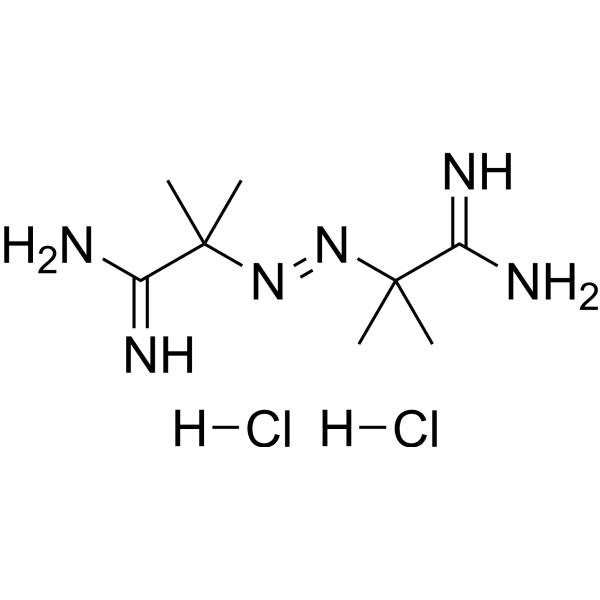
    AAPH
    2 Publications Verification

    2,2'-Azodiisobutyramidine dihydrochloride

    Reactive Oxygen Species (ROS) Inflammation/Immunology
    AAPH (2,2'-Azodiisobutyramidine dihydrochloride) has an effect of radical generation. AAPH induces oxidative stress and erythrocyte hemolysis . AAPH decomposes at 37°C to generate an alkyl radical, is used as an initiator. In the presence of oxygen, these alkyl radicals will be converted to peroxyl radicals that can cause lipid peroxidation and loss of erythrocyte membrane integrity, which could ultimately lead to hemolysis .
    AAPH
  • HY-111355B

    Sirtuin Endogenous Metabolite PKC AMPK DOCK Metabolic Disease Inflammation/Immunology Cancer
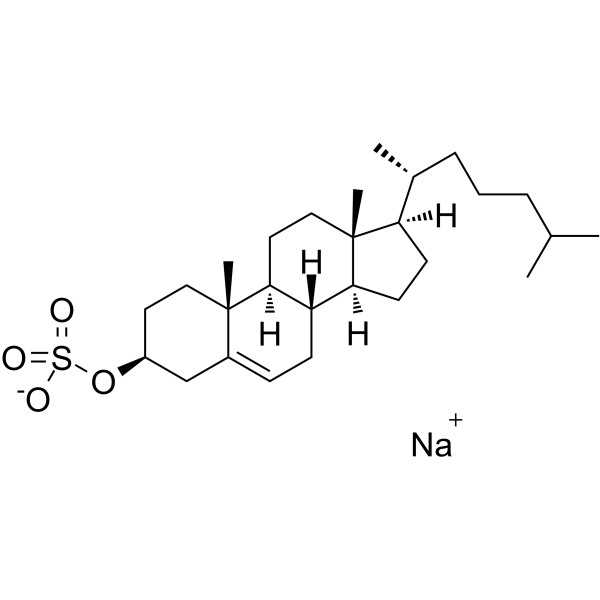
    Cholesterol sulfate sodium is a naturally occurring, orally active cholesterol derivative that is widely distributed in various tissues and body fluids. Cholesterol sulfate sodium acts as a DOCK2 inhibitor, with IC50 values of 2 μM and 2.9 μM against mouse and human targets, respectively. Cholesterol sulfate sodium restricts excessive neutrophil infiltration and alleviates intestinal inflammation and damage. Cholesterol sulfate sodium serves as an activator of protein kinase C (PKC), which promotes squamous cell differentiation and inhibits skin carcinogenesis. Cholesterol sulfate sodium regulates cholesterol homeostasis and cellular metabolism by activating the AMPK-Sirt1 pathway. Cholesterol sulfate sodium can be used in research related to actinic keratitis, ulcerative colitis, skin cancer, and other conditions .
    Cholesteryl sulfate sodium
  • HY-W035091
    Tetrachloroauric acid
    1 Publications Verification

    Biochemical Assay Reagents Cardiovascular Disease Neurological Disease
    Tetrachloroauric acid is an Au (III) compound and bilayer disruptor that can be used to damage red blood cells. Tetrachloroauric acid specifically disrupts the bilayer structure of representative phospholipids (dimyristoylphosphatidylcholine and dimyristoylphosphatidylethanolamine) in human red blood cell membranes, and induces morphological changes in intact human red blood cells. Tetrachloroauric acid causes downregulation of MT I-II and GFAP expression in the mouse brain following chronic treatment. Tetrachloroauric acid is being used in studies related to neurotoxicity and hematotoxicity, including analyses of human red blood cells and molecular models of red blood cell membranes, as well as immunohistochemical evaluation of the mouse brain .
    Tetrachloroauric acid
  • HY-147168

    Biochemical Assay Reagents Others
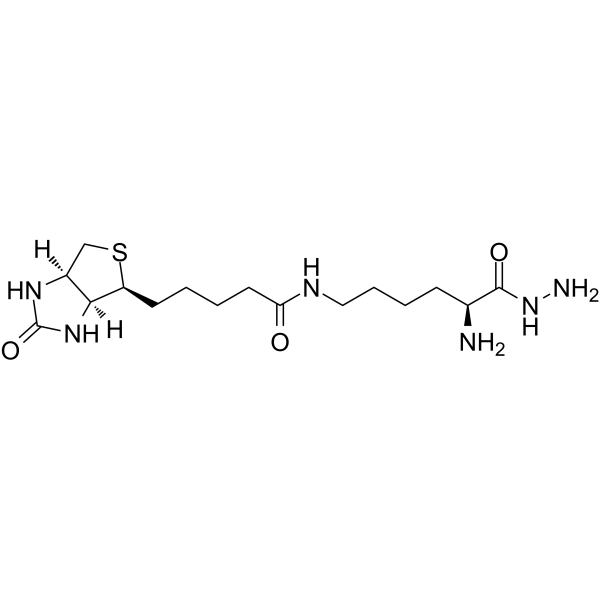
    Biocytin hydrazide is a long-chain biotin-containing hydrazide, serving as a biotin-derived active coupling reagent, selective labeling agent and biotinylating reagent. Biocytin hydrazide targets aldehyde, carboxyl, amino and guanidino groups to biotinylate glycoconjugates, K99 lectin, peptides and proteins through its hydrazide moiety, and achieves nonradioactive detection of sialic acid- and galactose-containing glycoconjugates via the avidin–biotin system .
    Biocytin hydrazide
  • HY-136933

    Na+/K+ ATPase Cardiovascular Disease
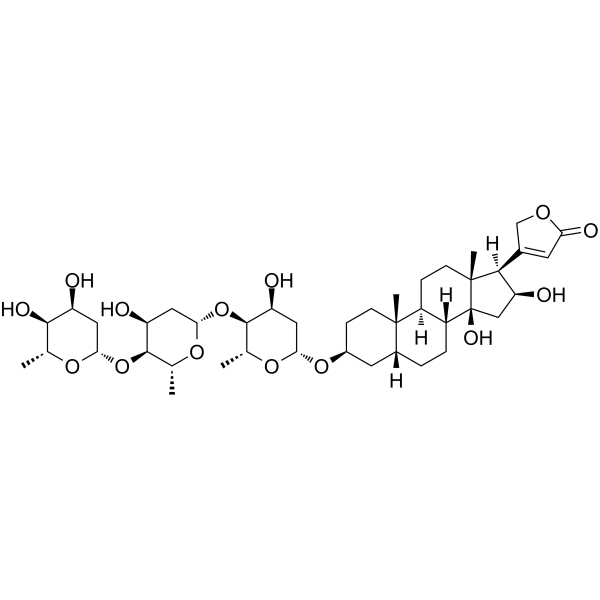
    Gitoxin is a degradation metabolite of Digitoxin (HY-B1357) and a non-competitive Na +/K +-ATPase inhibitor, with an IC50 of 1.18e-6 M against the porcine high-affinity subtype and an IC50 of 2.85e-5 M against the porcine low-affinity subtype. Gitoxin regulates atrial contractility and rhythmicity. Gitoxin is applicable to research related to congestive heart failure .
    Gitoxin
  • HY-P1629

    Bacterial Fungal Antibiotic Infection
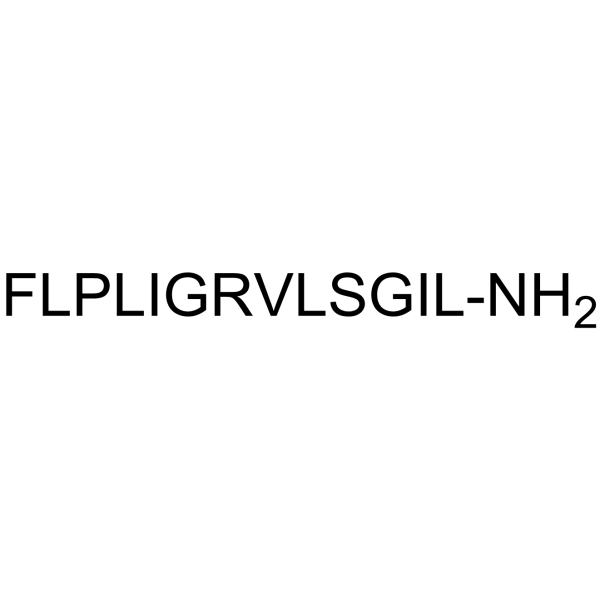
    Temporin A is a short alpha-helical antimicrobial peptide isolated from the skin of the frog Rana temporaria. Temporin A is effective against a broad spectrum of Gram-positive bacteria. Temporin A interacts directly with the cell membrane of the microorganism and it is non-toxic to erythrocytes at concentrations that are antimicrobial. Temporin A also has antifungal activities (against yeast-like Candida albicans) .
    Temporin A
  • HY-P11292

    Calcium Channel Cardiovascular Disease
    Caloxin 1b3, a peptide, is a selective plasma membrane Ca 2+ pump 1 (PMCA1) inhibitor. Caloxin 1b3 significantly inhibits PMCA1 Ca 2+–Mg 2+-ATPase in the rabbit duodenal mucosa than the PMCA4 in the human erythrocyte ghosts. Caloxin 1b3 also increases cytosolic Ca 2+ concentration in endothelial cells. Caloxin 1b3 can be used for cardiovascular disorders research .
    Caloxin 1b3
  • HY-116392B

    Glucosylceramide Synthase (GCS) Parasite Infection Endocrinology Cancer
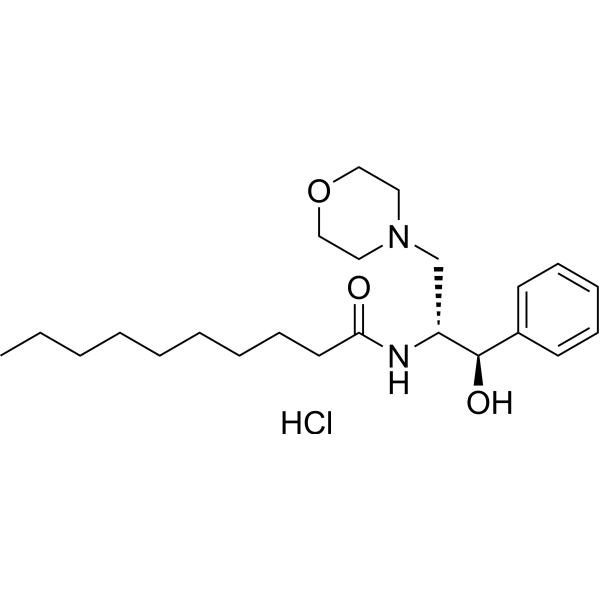
    DL-threo-PDMP hydrochloride is a competitive glucosylceramide synthase (GCS) inhibitor and antimalarial agent. DL-threo-PDMP hydrochloride competitively inhibits the activity of GCS. DL-threo-PDMP hydrochloride restores cisplatin sensitivity in cisplatin-resistant testicular germ cell tumor cells. DL-threo-PDMP hydrochloride blocks the growth of ring-stage Plasmodium falciparum parasites .
    DL-threo-PDMP hydrochloride
  • HY-P2936

    Phospholipase Cardiovascular Disease Infection
    Sphingomyelin phosphodiesterase, Streptomyces sp. is a sphingomyelin phosphodiesterase derived from the genus Streptomyces, which cleaves the phosphodiester bond of sphingomyelin. Sphingomyelin phosphodiesterase, Streptomyces sp. catalyzes the hydrolysis of sphingomyelin in micelles, synthetic substrates, erythrocyte ghost membranes and liposomes, as well as the hydrolysis of the substrate HNP. In the presence of Mg 2+ or Mn 2+ , Sphingomyelin phosphodiesterase, Streptomyces sp. induces hemolysis of bovine erythrocytes through the hydrolysis of membrane sphingomyelin .
    Sphingomyelin phosphodiesterase, Streptomyces sp.
  • HY-P10281

    Bacterial Infection Cardiovascular Disease
    RW3 (MP196) is a small cationic antimicrobial hexapeptide. RW3 targets the bacterial cytoplasmic membrane and inhibits cellular respiration and cell wall synthesis. RW3 exhibits high bioactivity against Gram-positive bacteria such as Bacillus subtilis 168 (MIC of 2 µg/mL). RW3 causes shrinking of murine erythrocytes. RW3 can be used in antimicrobial and antifungal research .
    RW3
  • HY-N16375

    Drug Metabolite Fungal ATP Synthase Infection
    (3R,6S)-Bassiatin (Compound 5) is an enantiomer of the fungal metabolite Bassiatin (HY-165143). Bassianin is a compound isolated from fungi that has the activity of inhibiting erythrocyte membrane ATPase and causing cell lysis. Its inhibitory effect on ATPase may be due to membrane disruption .
    (3R,6S)-Bassiatin
  • HY-P5727

    Bacterial Infection
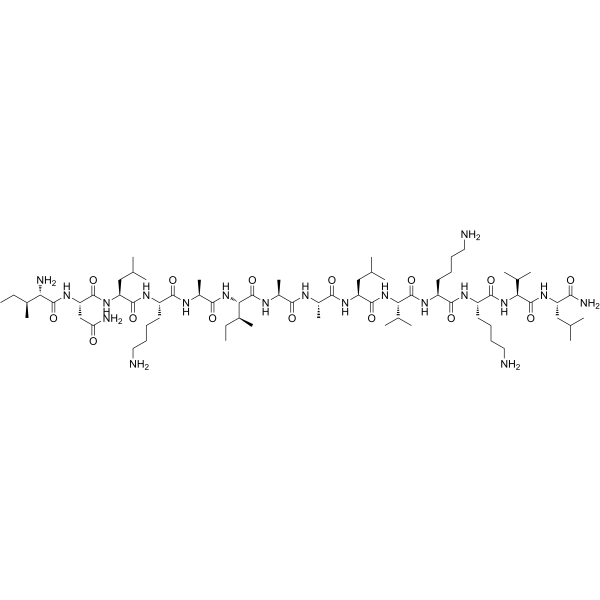
    HR1 is a mastoid protease. HR1 can increase the permeability of human erythrocyte membrane. HR1 can induce cytoplasmic membrane permeation in bacteria and mast cells .
    HR1
  • HY-N3702

    Syk Infection Inflammation/Immunology
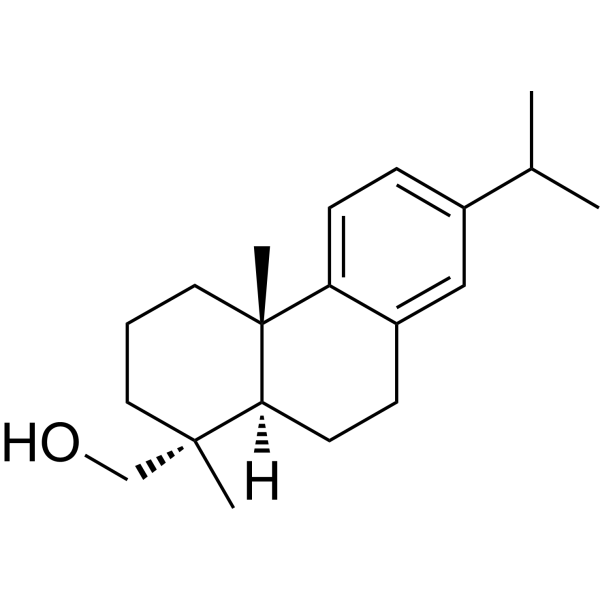
    Dehydroabietinol is a SYK inhibitor with an IC50 of 46.4 μM. Dehydroabietinol inhibits the growth of Trypanosoma cruzi epimastigotes, Leishmania braziliensis promastigotes and Leishmania infantum promastigotes. Dehydroabietinol indirectly inhibits the growth of Plasmodium falciparum, alters the erythrocyte membrane, and induces spherostomatocyte transformation and endovesicle formation. Dehydroabietinol can be used in studies related to immune-mediated diseases, Chagas disease, leishmaniasis and malaria .
    Dehydroabietinol
  • HY-165143

    Fungal Others
    Bassianin is a compound isolated from fungi that has the activity of inhibiting erythrocyte membrane ATPase and causing cell lysis. Its inhibitory effect on ATPase may be due to membrane disruption.
    Bassianin
  • HY-106745

    Ro 22-4839

    Calmodulin Cardiovascular Disease
    Elziverine (Ro 22-4839) is a brain circulation improvement agent with vasospasm antispasmodic effects. Elziverine is a calmodulin antagonist. Elziverine inhibits erythrocyte cell membrane rupture, platelet aggregation and lipid peroxidation .
    Elziverine
  • HY-183764

    COX Lipoxygenase TNF Receptor Interleukin Related MMP Inflammation/Immunology
    COX-2/5-LOX-IN-8 is an orally active dual COX-2/5-LOX inhibitor, with an IC50 of 6.30 μM against sheep-derived COX-2 and an IC50 of 8.09 μM against 5-LOX. COX-2/5-LOX-IN-8 acts as a membrane stabilizer that stabilizes erythrocyte membranes against hypotonicity-induced hemolysis. COX-2/5-LOX-IN-8 functions as a protein stabilizer that inhibits heat-induced denaturation of bovine serum albumin. COX-2/5-LOX-IN-8 reduces paw swelling, improves hind limb weight-bearing function, decreases serum levels of pro-inflammatory cytokines (TNF-α, IL-1β, IL-6, CRP), and lowers serum levels of cartilage degradation biomarkers (COMP, MMP-3, CTX-II). COX-2/5-LOX-IN-8 can be used in the research of osteoarthritis .
    COX-2/5-LOX-IN-8
  • HY-N18114

    Calcium Channel Metabolic Disease
    rel-(E)-6,7-Transdihydroxyligustilide is a compound found in the dried tuberous roots of Polygonum multiflorum. rel-(E)-6,7-Transdihydroxyligustilide inhibits Ca 2+‑ATPase in calmodulin-deficient human erythrocyte membranes. rel-(E)-6,7-Transdihydroxyligustilide is used for the research of hyperlipidemia .
    rel-(E)-6,7-Transdihydroxyligustilide
  • HY-W842297

    Parasite Infection
    Epiquinine is a stereoisomer of Quinine (HY-D0143). Epiquinine exhibits activity against chloroquine-sensitive and chloroquine-resistant Plasmodium falciparum parasites. Epiquinine can be used for the research of malaria .
    Epiquinine
  • HY-N19777

    Fungal Infection
    Glochidioboside, a neolignan glucoside found in Sambucus williamsii, is an antifungal agent. Glochidioboside induces membrane depolarization, membrane permeabilization, and pore formation on fungal membranes. Glochidioboside exerts an antifungal activity through a membrane-disruptive mechanism .
    Glochidioboside
  • HY-N10625A

    5α-Cyprinol

    Phosphatase Metabolic Disease
    Cyprinol (5α-Cyprinol) is an orally active bile salt and xenochemical pheromone . Cyprinol impairs renal function and increases plasma ALP activity in rats, induces diel vertical migration in Daphnia spp., enhances the permeability of the rectal mucosa to water-soluble compounds, and aids lipid digestion in fish. Cyprinol can be used in studies of fish toxicity and acute renal failure .
    Cyprinol
  • HY-66012A

    Proxymetacaine

    Sodium Channel Neurological Disease
    Proparacaine (Proxymetacaine) is a local anesthetic. Proparacaine blocks voltage-gated sodium channels on neuronal cell membranes, thereby inhibiting signal conduction and nociceptive signal transmission. Proparacaine blocks nociceptive signals in the eye and induces ocular muscle relaxation to reduce eye movement during surgery. Proparacaine is used in research related to cataracts .
    Proparacaine
  • HY-N16471A

    Cytochrome P450 5-HT Receptor Neurological Disease
    Escholtzine perchlorate is an Alkaloid. Escholtzine perchlorate can be isolated from Eschscholzia californica. Escholtzine perchlorate is a CYP3A4 inhibitor, 5-HT1A receptor inhibitor with a CYP3A4 IC50 of 13.4 μM, 5-HT1A EC50 of 11 μM. Escholtzine perchlorate can be used for the research of anxiety, depression .
    Escholtzine perchlorate
  • HY-203233

    Fluorescent Dye Others
    Rhodamine-DHPE is a fluorescently labeled phosphatidylethanolamine lipid that labels phospholipid bilayers. Rhodamine-DHPE serves as a fluorescence quenching substrate and membrane stain. The fluorescence lifetime of Rhodamine-DHPE decreases significantly in the presence of Cu 2+-PS complexes. Rhodamine-DHPE effectively stains the membranes of human red blood cells and mouse fibroblasts, and supports lifetime-resolved imaging via pump-probe fluorescence microscopy .
    Rhodamine-DHPE
  • HY-N18431

    ST-A TFA

    Fungal Infection
    Stellettamide A TFA is a marine toxin found in a marine sponge. Stellettamide A TFA is a calmodulin inhibitor. Stellettamide A TFA can inhibit Ca 2+/Mg 2+ ATPase, phosphodiesterase, myosin light chain , and Mg 2+-ATPase. Stellettamide A TFA inhibits high K +- and Ca 2+-induced contraction in permeabilized smooth muscle. Stellettamide A TFA exhibits antifungal activity against Mortierella remannianus. Stellettamide A TFA can be used for the research of fungal infection .
    Stellettamide A TFA

Inquiry Online

Your information is safe with us. * Required Fields.

Salutation


Country or Region *

Applicant Name *


Organization Name *

Department *


Email Address *


Product Name *

Cat. No.


Requested quantity *

Phone Number *


Remarks

Inquiry Online

Inquiry Information

Product Name:
Cat. No.:
Quantity:
MCE Japan Authorized Agent:

