1. Search Result
Search Result
Results for "

FaDu

" in MedChemExpress (MCE) Product Catalog:

34

Inhibitors & Agonists

1

Inhibitory Antibodies

4

Natural
Products

1

Click Chemistry

Cat. No. Product Name Target Research Areas Chemical Structure
  • HY-13902
    Berzosertib
    20+ Cited Publications

    VE-822; VX-970; M6620

    ATM/ATR Apoptosis STING Caspase Infection Metabolic Disease Cancer
    Berzosertib (VE-822) is an orally active, CNS-penetrant, and selective ATR kinase inhibitor. Berzosertib blocks ATR kinase activity, abrogates G2/M cell cycle checkpoint, impairs DNA damage repair. Berzosertib induces apoptosis, inhibnits conlony migration, inhibits cell proliferation, and activates cGAS-STING axes in cancer cells. Berzosertib can be used for the research of cancers, such as head and neck squamous cell carcinoma, and colorectal cancer .
    Berzosertib
  • HY-101570
    Nedisertib
    Maximum Cited Publications
    27 Publications Verification

    Peposertib; M3814

    DNA-PK BCRP Cancer
    Nedisertib (Peposertib) is an orally active selective DNA-dependent protein kinase (DNA-PK) inhibitor with an IC50 value of less than 3 nM. Nedisertib also acts as a modulator of ABCG2, capable of reversing ABCG2-mediated multidrug resistance (MDR), thus providing new strategies for combination therapy. By inhibiting DNA double-strand break repair, Nedisertib can enhance the efficacy of chemotherapy and radiotherapy. Nedisertib exhibits antitumor activity .
    Nedisertib
  • HY-114245
    Se-Methylselenocysteine
    2 Publications Verification

    Methylselenocysteine; Se-Methylseleno-L-cysteine

    Apoptosis Endogenous Metabolite Beta-secretase Cancer
    Se-Methylselenocysteine, a precursor of Methylselenol, has potent cancer chemopreventive activity and anti-oxidant activity. Se-Methylselenocysteine is orally bioavailable, and induces apoptosis .
    Se-Methylselenocysteine
  • HY-B0942
    Benzethonium chloride
    1 Publications Verification

    Environmental Pollutants nAChR Bacterial Apoptosis Caspase Infection Neurological Disease Cancer
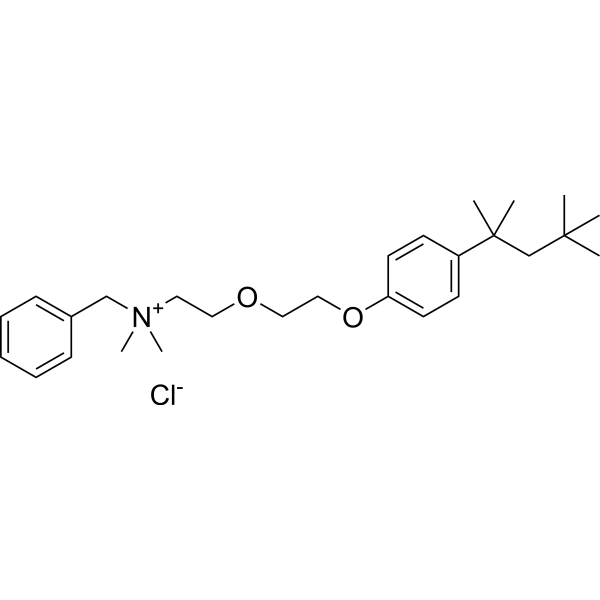
    Benzethonium chloride inhibits nicotinic acetylcholine receptors in human recombinant α7 and α4β2 neurons in Xenopus laevis oocytes, which has antibacterial, anticancer, antisepsis and disinfection activity. Benzethonium chloride induced Apoptosis and activated caspases in cancer cell lines. Benzethonium chloride ablates the tumor-forming ability of FaDu cells, delays the growth of xenograft tumors in vivo .
    Benzethonium chloride
  • HY-P99676

    SI-B001; BL-B01D1 Antibody

    EGFR Cancer
    Izalontamab (SI-B001) is a bispecific anti-EGFR/HER3 monoclonal antibody with high selectivity for EGFR/HER3 heterodimer. Izalontamab can be used for the research of cancer .
    Izalontamab
  • HY-125006
    TRi-1
    5 Publications Verification

    JNK p38 MAPK Cancer
    TRi-1 is a potent, specific and irreversible inhibitor of cytosolic thioredoxin reductase 1 (TXNRD1), with an IC50 of 12 nM. TRi-1 has little mitochondrial toxicity for anticancer therapy .
    TRi-1
  • HY-B1260
    Cetrimonium bromide
    2 Publications Verification

    CTAB; Cetyltrimethylammonium bromide; Hexadecyltrimethylammonium bromide

    Environmental Pollutants Biochemical Assay Reagents Apoptosis TGF-β Receptor MMP Cancer
    Cetrimonium bromide (CTAB), a quaternary ammonium, is an orally active cationic surfaetant. Cetrimonium bromide has toxicity and anticancer effect. Cetrimonium bromide inhibits cell migration and invasion through modulating the canonical and non-canonical TGF-β signaling pathways. Cetrimonium bromide can be used for DNA extraction .
    Cetrimonium bromide
  • HY-120087

    MOFs HIF/HIF Prolyl-Hydroxylase Cancer
    KG-548 is an ARNT/TACC3 disruptor and a HIF-1α inhibitor. KG-548 directly interferes with ARNT/TACC3 complex formation by competing with TACC3 for binding to the ARNT PAS-B domain. ARNT is the aryl hydrocarbon receptor nuclear translocator, also known as HIF-β .
    KG-548
  • HY-N0757
    8-​O-​Acetylharpagide
    1 Publications Verification

    Akt Bcl-2 Family Apoptosis Adrenergic Receptor Cardiovascular Disease Inflammation/Immunology Cancer
    8-O-Acetylharpagide is an orally active iridoid glycoside compound. 8-O-Acetylharpagide exhibits anti-aging activity at low doses and anticancer activity at high doses. 8-O-Acetylharpagide induces late-stage apoptosis and necrosis-like death in cancer cells, and downregulates anti-apoptotic proteins such as Akt, p-Akt and Bcl-2. 8-O-Acetylharpagide is mainly metabolized in rats via demethylation, hydrolysis and glucuronidation, and its active metabolites downregulate the AKT/NF-κB/MMP9 signaling axis. 8-O-Acetylharpagide exerts vasoconstrictive effects by activating vascular α-adrenoceptor .
    8-​O-​Acetylharpagide
  • HY-12692

    DO3A tert-butyl; DO3A-t-Bu-ester

    Drug Derivative Cancer
    DOTA tert-Butyl ester is a cyclic tosamide benzyl derivative.
    DO3A tert-Butyl ester
  • HY-176761

    Apoptosis Autophagy Caspase mTOR Cancer
    NSC647889 is an apoptosis and autophagy inducer. NSC647889 induces apoptosis, inhibits mTOR pathway and abrogates DNA synthesis. NSC647889 triggers LC3-positive vesicle formation, modulates AKT and 4EBP1 phosphorylation and shows heightened caspase-3 activation in multicellular spheroids. NSC647889 can be used for the research of solid cancer tumour, head-neck carcinoma, and colorectal cancer .
    NSC647889
  • HY-P99719

    BAY 1129980; Anti-C4.4a antibody-drug conjugates

    Antibody-Drug Conjugates (ADCs) Cancer
    Lupartumab Amadotin (BAY 1129980) is an antibody–drug conjugate (ADC) consisting of a fully human C4.4A (LYPD3)-targeting mAb (BAY 1135626) (HY-147281) conjugated to a novel, highly potent derivative of the microtubule-disrupting cytotoxic drug auristatin via a noncleavable alkyl hydrazide linker. Lupartumab Amadotin can be used for the research of non-small cell lung cancer .
    Lupartumab Amadotin
  • HY-161248

    Microtubule/Tubulin Cancer
    E7130 is a microtubule inhibitor, which ameliorates the tumor microenvironment through suppression of cancer-associated fibroblasts (CAF) and promotion of tumor vasculature remodeling .
    E7130
  • HY-153067

    Drug-Linker Conjugates for ADC Topoisomerase Cancer
    Mal-cyclohexane-Gly-Gly-Phe-Gly-Exatecan (Compound 11) is a bioactive compound-linker conjugate for ADC. Mal-cyclohexane-Gly-Gly-Phe-Gly-Exatecan can conjugate with antibodies to form ADC (C-11) with anti-tumor activity. Exatecan is a DNA Topoisomerase I inhibitor. Mal-cyclohexane-Gly-Gly-Phe-Gly-Exatecan can be used in the research of squamous cell carcinoma, pancreatic adenocarcinoma and colorectal cancer .
    Mal-cyclohexane-Gly-Gly-Phe-Gly-Exatecan
  • HY-160438B

    Bcl-2 Family Survivin Cancer
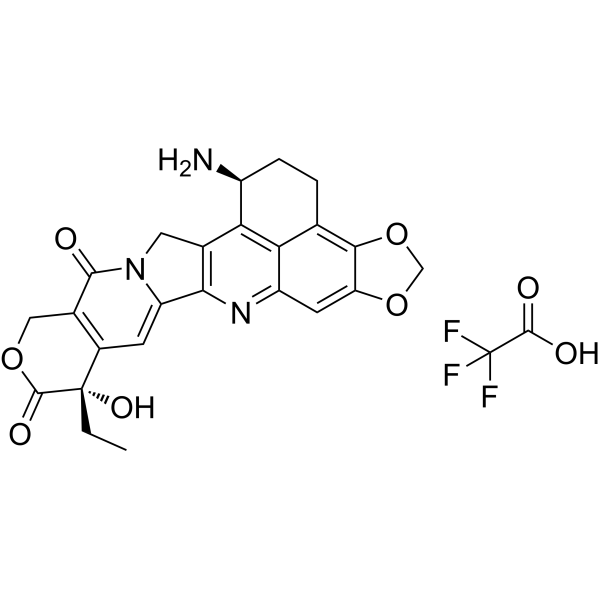
    PBX-7011 TFA is a derivative of camptothecin (HY-16560), which inhibits expressions of the cancer related survival genes DDX5, Survivin, Mcl-1 and XIAP in cells FaDu, degrades DDX5 proteins and exhibits anticancer activity .
    PBX-7011 TFA
  • HY-174803

    p38 MAPK HDAC AMPK MDM-2/p53 Microtubule/Tubulin Pim Survivin Apoptosis Cancer
    WMJ-J-09 is an HDAC inhibitor with IC50 values of 7.5 nM (HDAC1), 21.3 nM (HDAC2), 18.4 nM (HDAC3), 90.9 nM (HDAC8), 3.9 nM (HDAC6) and 8715.7 nM (HDAC4). WMJ-J-09 blocks the cell cycle and induces apoptosis in cancer cells. WMJ-J-09 induces cancer cell death through the LKB1-AMPK-p38MAPK-p63-survivin signaling cascade.WMJ-J-09 inhibits HDAC enzyme activity, leading to acetylation of key proteins and thereby regulating cancer cell death. WMJ-J-09 can be used in HCT116 cells and FaDu cells research[1][2].
    WMJ-J-09
  • HY-W272058

    Drug Derivative Cancer
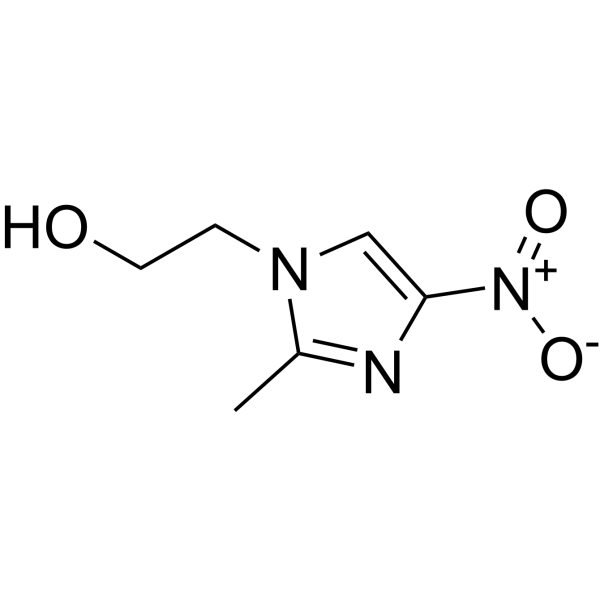
    Isometronidazole is a hypoxic cell sensitizer. Isometronidazole (750 mg/kg) shows an efficacy as a hypoxic cell sensitizer in severely hypoxic FaDu tumors but not in less hypoxic GL tumors.
    Isometronidazole
  • HY-W272058R

    Biochemical Assay Reagents Reference Standards Cancer
    Isometronidazole (Standard) is the analytical standard of Isometronidazole. This product is intended for research and analytical applications. Isometronidazole is a hypoxic cell sensitizer. Isometronidazole (750 mg/kg) shows an efficacy as a hypoxic cell sensitizer in severely hypoxic FaDu tumors but not in less hypoxic GL tumors.
    Isometronidazole (Standard)
  • HY-169134

    PROTACs Apoptosis Cancer
    PROTAC 20S proteasome subunit β5 degrader 1 (compound 12f) is a targeted degrader of PROTAC for 20S proteasome subunit β5, with a DC50 value of 0.11 μM in FaDu cells. PROTAC 20S proteasome subunit β5 degrader 1 disrupts the cell cycle, promotes apoptosis, and inhibits cell proliferation and migration in both FaDu and KM3/BTZ cells. PROTAC 20S proteasome subunit β5 degrader 1 can be used to study the resistance of pharyngeal cancer and multiple myeloma to Bortezomib (HY-10227) (Pink: Target protein ligand (HY-10227); Blue: E3 ligase ligand (HY-103596); Black: Linker (HY-169142)) .
    PROTAC 20S proteasome subunit β5 degrader 1
  • HY-169135

    PROTACs Proteasome Cancer
    PROTAC 20S proteasome subunit β5 degrader 2 is a PROTAC degrader for 20S proteasome subunit β5, with a DC50 of 0.16 μM. PROTAC 20S proteasome subunit β5 degrader 2 inhibits the proliferation of cancer cell FaDu with IC50 of 0.23 μM. PROTAC 20S proteasome subunit β5 degrader 2 exhibits antitumor efficacy in mice models . (Pink: Ligand for target protein (HY-10227); Blue: Ligand for E3 ligase (HY-103596); Black: Linker (HY-Y1760))
    PROTAC 20S proteasome subunit β5 degrader 2
  • HY-146029

    Apoptosis Cancer
    Apoptosis inducer 3 (Compound 3) is an apoptosis inducer that selectively triggers apoptosis and late-apoptosis. Apoptosis inducer 3 shows cytotoxicity against cancer cells .
    Apoptosis inducer 3
  • HY-147874

    Chloride Channel Apoptosis Cancer
    ANO1-IN-3 (Compound 3n) is a potent and selective ANO1 inhibitor with an IC50 of 1.23 μM. ANO1-IN-3 induces apoptosis .
    ANO1-IN-3
  • HY-114245R

    Methylselenocysteine (Standard); Se-Methylseleno-L-cysteine (Standard)

    Reference Standards Apoptosis Endogenous Metabolite Beta-secretase Cancer
    Risedronic acid (Standard) is the analytical standard of Risedronic acid. This product is intended for research and analytical applications. 0
    Se-Methylselenocysteine (Standard)
  • HY-114245B

    Methylselenocysteine hydrochloride; Se-Methylseleno-L-cysteine hydrochloride

    Endogenous Metabolite Apoptosis Beta-secretase Cancer
    Se-Methylselenocysteine hydrochloride, a precursor of Methylselenol, has potent cancer chemopreventive activity and anti-oxidant activity. Se-Methylselenocysteine hydrochloride is orally bioavailable, and induces apoptosis .
    Se-Methylselenocysteine hydrochloride
  • HY-101570R

    Peposertib (Standard); M3814 (Standard)

    DNA-PK Reference Standards BCRP Cancer
    Nedisertib (Standard) is the analytical standard of Nedisertib (HY-101570). This product is intended for research and analytical applications. Nedisertib (Peposertib) is an orally active selective DNA-dependent protein kinase (DNA-PK) inhibitor with an IC50 value of less than 3 nM. Nedisertib also acts as a modulator of ABCG2, capable of reversing ABCG2-mediated multidrug resistance (MDR), thus providing new strategies for combination therapy. By inhibiting DNA double-strand break repair, Nedisertib can enhance the efficacy of chemotherapy and radiotherapy. Nedisertib exhibits antitumor activity .
    Nedisertib (Standard)
  • HY-180805

    Hexokinase Mitophagy Apoptosis GLUT Cancer
    HK2-IN-3 (compound 12) is a potent hexokinase 2 (HK2) inhibitor with an IC50 of 56.4 nM. HK2-IN-3 reduces glucose uptake and downregulated GLUT1/GLUT4 in oral squamous cell carcinoma (OSCC). HK2-IN-3 induces mitophagy and apoptosis. HK2-IN-3 suppresses tumor growth and angiogenesis in OSCC xenograft mouse models. HK2-IN-3 can be used for OSCC research .
    HK2-IN-3
  • HY-183597

    Drug Derivative Cancer
    L-BPA-BPA is an aromatic dipeptide and an analog of L-BPA (HY-W087830). L-BPA-BPA undergoes rapid hydrolytic cleavage in vivo to release the boron neutron capture agent L-BPA. L-BPA-BPA enables boron delivery to tumors; when used in combination with neutron irradiation, it also induces immunological effects including vaccine responses and abscopal tumor suppression. L-BPA-BPA can be used in the research of colon cancer and hypopharyngeal cancer .
    L-BPA-BPA
  • HY-W1130459

    Liposome Cancer
    (R)-C12-200 is the (R)-isomer of C12-200 (HY-145405), an ionizable cationic lipid and helper lipid. (R)-C12-200 enables functional mRNA delivery to head and neck squamous cell carcinoma xenograft tumor cells in NU/J immunocompromised mice, with minimal off-target delivery to liver or spleen. (R)-C12-200 can be utilized in the formation of lipid nanoparticles and mRNA delivery .
    (R)-C12-200
  • HY-124610

    Kallikrein Cancer
    DKFZ-633 is a potent KLK6 inhibitor and KLK6-specific probe with an IC50 of 250 nM against human KLK6. DKFZ-633 covalently labels active KLK6 in a specific manner, and successfully pulls down and captures endogenous active KLK6 from cell-conditioned media. DKFZ-633 serves as a critical tool for investigating the function of KLK6 and its regulatory mechanisms in head and neck cancer .
    DKFZ-633
  • HY-183186

    METTL3 Cytochrome P450 Cancer
    EP102 is an orally active, selective inhibitor of the METTL3/METTL14 complex with an IC50 of 2 nM. EP102 reduces intracellular N6-methyladenosine levels, inhibits cancer cell proliferation, and thereby suppresses tumor growth in mouse models. EP102 is applicable for the research of acute myeloid leukemia, ovarian solid tumors and advanced solid tumors .
    EP102
  • HY-183513

    FAP Cancer
    L-Ala-BPA is a boron delivery agent. L-Ala-BPA is transported into tumor cells via PEPT1/2 and LAT-1 (SLC7A5) pathways and is rapidly cleaved systemically by endogenous proteases including FAP to yield L-BPA (HY-W087830). L-Ala-BPA shows antitumor activity and can be used for the research of Boron Neutron Capture Therapy (BNCT) .
    L-Ala-BPA
  • HY-124714

    Kallikrein Cancer
    DKFZ-251 is a kininogenase-related peptidase KLK6 inhibitor (IC50=0.47 μM), and also exhibits certain inhibitory activity against KLK5 and KLK7 (IC50 values are 1.1 nM and 73 nM, respectively). DKFZ-251 transiently acylates the catalytic serine of KLK6 to form a long-lived acyl-enzyme complex that inhibits enzyme function. DKFZ-251 is a phenotypic modulator that alters cell proliferation capacity and regulates epithelial-mesenchymal transition (EMT). DKFZ-251 can be used in research related to head and neck cancer .
    DKFZ-251
  • HY-13902A

    VE-822 hydrochloride; VX-970 hydrochloride; M6620 hydrochloride

    ATM/ATR Apoptosis STING Caspase Neurological Disease Cancer
    Berzosertib (VE-822) hydrochloride is an orally active, CNS-penetrant, and selective ATR kinase inhibitor. Berzosertib hydrochloride blocks ATR kinase activity, abrogates G2/M cell cycle checkpoint, impairs DNA damage repair. Berzosertib hydrochloride induces apoptosis, inhibnits conlony migration, inhibits cell proliferation, and activates cGAS-STING axes in cancer cells. Berzosertib hydrochloride can be used for the research of cancers, such as head and neck squamous cell carcinoma, and colorectal cancer .
    Berzosertib hydrochloride
  • HY-181567

    METTL3 Cancer
    METTL3-IN-13 is a METTL3 inhibitor. METTL3-IN-13 is applicable to the research of multiple cancers such as hypopharyngeal squamous cell carcinoma and non-small cell lung cancer .
    METTL3-IN-13

Inquiry Online

Your information is safe with us. * Required Fields.

Salutation


Country or Region *

Applicant Name *


Organization Name *

Department *


Email Address *


Product Name *

Cat. No.


Requested quantity *

Phone Number *


Remarks

Inquiry Online

Inquiry Information

Product Name:
Cat. No.:
Quantity:
MCE Japan Authorized Agent:

