



Search Result
Results for "
HER2 inhibitor
" in MedChemExpress (MCE) Product Catalog:
11
Isotope-Labeled Compounds
| Cat. No. |
Product Name |
Target |
Research Areas |
Chemical Structure |
-
- HY-13631D
-
|
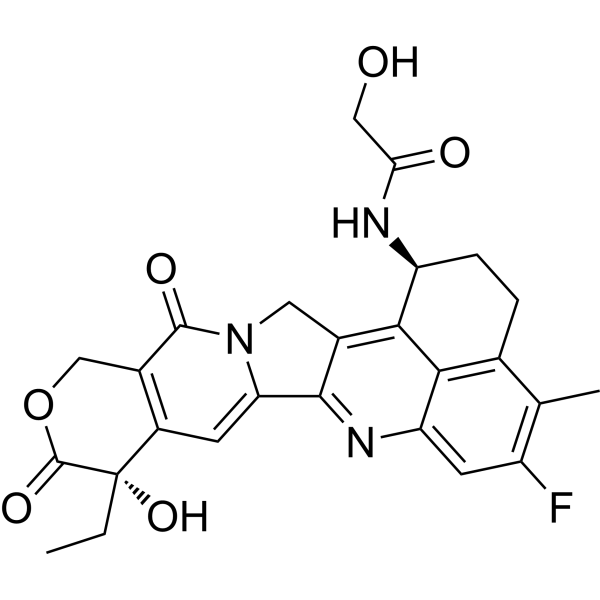
Exatecan derivative for ADC
|
Topoisomerase
ADC Payload
|
Cancer
|
|
DXd (Exatecan derivative for ADC) is a potent DNA topoisomerase I inhibitor, with an IC50 of 0.31 μM, used as a conjugated drug of HER2-targeting ADC (DS-8201a).
|
-
-
- HY-138298
-
|
T-DXd (solution); DS-8201 (solution); DS-8201a (solution)
|
Antibody-Drug Conjugates (ADCs)
EGFR
|
Cancer
|
|
Trastuzumab deruxtecan (T-DXd; DS-8201a) (solution) is an anti-human epidermal growth factor receptor 2 (HER2) antibody-drug conjugate (ADC). Trastuzumab deruxtecan is composed of a humanized anti-HER2 antibody, an enzymatically cleavable peptide-linker, a topoisomerase I inhibitor (a toxin component of Dxd), and the drug-linker conjugate for ADC is Deruxtecan (HY-13631E). Trastuzumab deruxtecan can be used for the research of HER2-positive breast cancer and gastric cancer .
|
-
-
- HY-138298A
-
|
T-DXd; DS-8201; DS-8201a
|
Antibody-Drug Conjugates (ADCs)
EGFR
|
Cancer
|
|
Trastuzumab deruxtecan (DS-8201a) is an anti-human epidermal growth factor receptor 2 (HER2) antibody-drug conjugate (ADC). Trastuzumab deruxtecan is composed of a humanized anti-HER2 antibody, an enzymatically cleavable peptide-linker, a topoisomerase I inhibitor (a toxin component of Dxd), and the drug-linker conjugate for ADC is Deruxtecan (HY-13631E). Trastuzumab deruxtecan can be used for the research of HER2-positive breast cancer and gastric cancer .
|
-
-
- HY-16069
-
|
Irbinitinib; ARRY-380; ONT-380
|
EGFR
|
Cancer
|
|
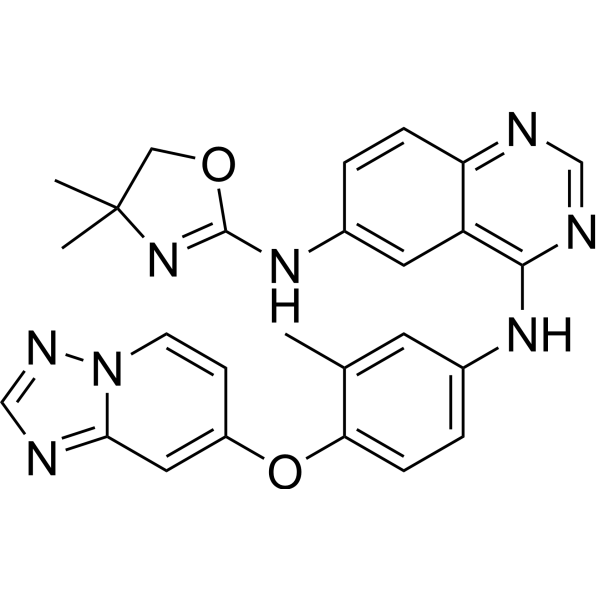
Tucatinib (Irbinitinib) is a potent, orally active and selective HER2 inhibitor with an IC50 of 8 nM.
|
-
-
- HY-32721
-
|
HKI-272
|
EGFR
|
Cancer
|
|
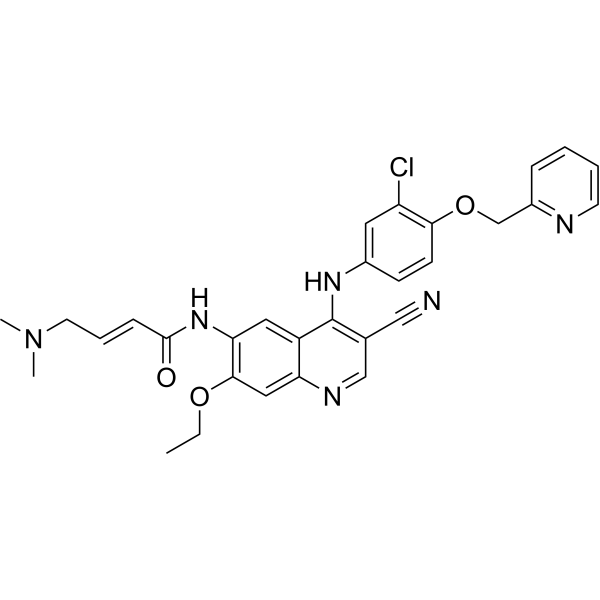
Neratinib (HKI-272) is an orally available, irreversible, highly selective HER2 and EGFR inhibitor with IC50s of 59 nM and 92 nM, respectively .
|
-
-
- HY-148810
-
|
BI 1810631
|
c-Met/HGFR
|
Cancer
|
|
Zongertinib (BI 1810631) is a potent and selective HER2 and EGFR tyrosine kinase inhibitor with IC50 values of 13 nM and 579 nM, respectively. Zongertinib has antitumor activity and can be used in the study of multiple solid tumors .
|
-
-
- HY-P9912
-
Pertuzumab
Maximum Cited Publications
9 Publications Verification
|
EGFR
|
Cancer
|
|
Pertuzumab, a humanized IgG1 monoclonal antibody, is a HER2 dimerization inhibitor for the treatment of metastatic HER2-positive breast cancer.
|
-
-
- HY-104065
-
|
SHR-1258
|
EGFR
|
Cancer
|
|
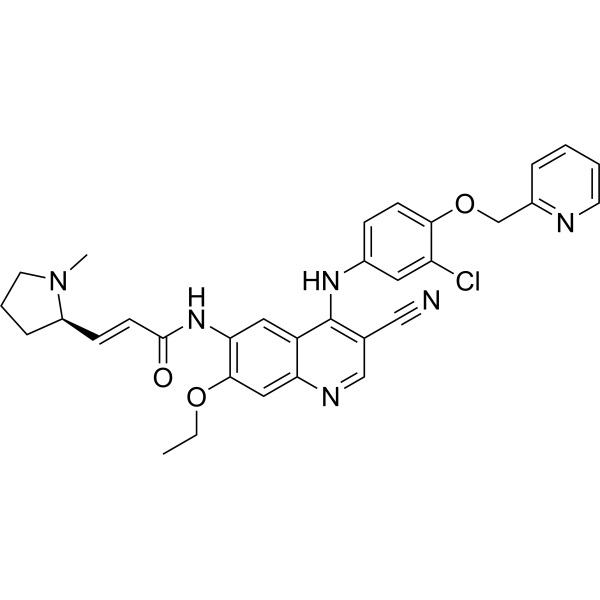
Pyrotinib (SHR-1258) is a potent and selective EGFR/HER2 dual inhibitor with IC50s of 13 and 38 nM, respectively .
|
-
-
- HY-32721B
-
|
HKI-272 maleate
|
EGFR
|
Cancer
|
|
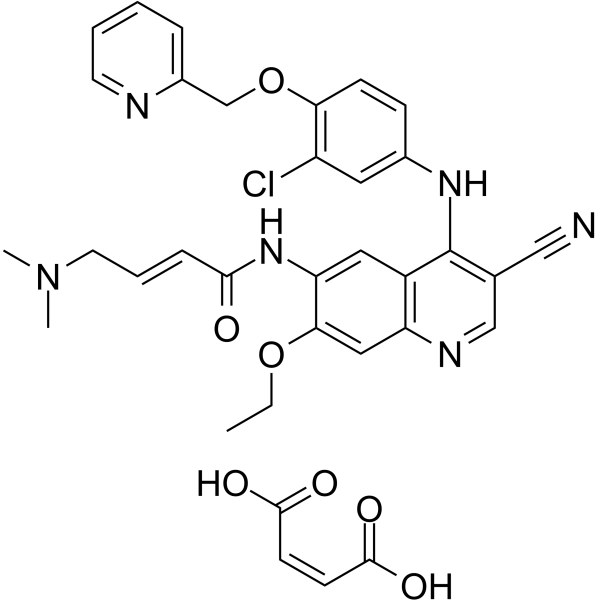
Neratinib (HKI-272) maleate is an orally available, irreversible, highly selective HER2 and EGFR inhibitor with IC50s of 59 nM and 92 nM, respectively .
|
-
-
- HY-13631DS
-
|
Exatecan-d5 derivative for ADC
|
Topoisomerase
ADC Payload
|
Cancer
|
|
DXd-d5 is a deuterium labeled DXd. DXd is a potent DNA topoisomerase I inhibitor, with an IC50 of 0.31 μM, used as a conjugated drug of HER2-targeting ADC (DS-8201a) .
|
-
-
- HY-164718
-
|
BAY 2927088
|
EGFR
|
Cancer
|
|
Sevabertinib (BAY 2927088) is an orally active and reversible dual EGFR-HER2 inhibitor (IC 50 <0.5 nM for wild-type HER2, HER2 A775insYVMA, wild-type EGFR, and EGFR D770_N771insSVD). Sevabertinib has anticancer activity against lung cancer .
|
-
-
- HY-13501
-
|
TAK-165
|
EGFR
|
Cancer
|
|
Mubritinib (TAK-165) is a potent and selective EGFR2/HER2 inhibitor with an IC50 of 6 nM.
|
-
-
- HY-136789
-
|
BDTX-189
|
EGFR
|
Cancer
|
|
Tuxobertinib (BDTX-189) is a potent, orally active and selective inhibitor of allosteric EGFR and HER2 oncogenic mutations, including EGFR/HER2 exon 20 insertion mutants. Tuxobertinib shows KDs of 0.2, 0.76, 13 and 1.2 nM for EGFR, HER2, BLK and RIPK2, reapectively. Anticancer activity .
|
-
-
- HY-P9912A
-
|
|
EGFR
|
Cancer
|
|
Pertuzumab (anti-HER2), a humanized monoclonal antibody, is a HER2 dimerization inhibitor for the treatment of metastatic HER2-positive breast cancer.
|
-
-
- HY-10213
-
|
PF-04929113
|
HSP
|
Cancer
|
|
SNX-5422 (PF-04929113), a prodrug of SNX-2112, is an orally active Hsp90 inhibitor, with a Kd of 41 nM, and also induces Her-2 degradation, with an IC50 of 37 nM.
|
-
-
- HY-N9330
-
|
|
Xanthine Oxidase
Ras
EGFR
MEK
PERK
Apoptosis
|
Cancer
|
|
Broussoflavonol F is a potent dual inhibitor of the HER2-RAS-MEK-ERK signaling pathway and mushroom tyrosinase with an IC50 value of 82.3 μM. Broussoflavonol F downregulates the expression of RAS, HER2, phosphorylated BRAF, phosphorylated MEK and phosphorylated Erk proteins. Broussoflavonol F induces cell cycle arrest and apoptosis, and exhibits cytotoxicity in colon cancer cells. Broussoflavonol F inhibits endothelial proliferation, migration and tube formation, suppresses subintestinal vascular development, and reduces the mRNA levels of angiogenesis-associated genes.Broussoflavonol F can be used for colon cancer research .
|
-
-
- HY-164762
-
|
SHR-A1811
|
Antibody-Drug Conjugates (ADCs)
EGFR
|
Cancer
|
|
Trastuzumab rezetecan (SHR-A1811) is a HER2-targeting antibody-drug conjugate (ADC). Trastuzumab rezetecan is composed of a humanized anti-HER2 antibody (HY-P9907), a cleavable linker MC-Gly-Gly-Phe-Gly (HY-44246), and a topoisomerase I inhibitor payload Rezetecán (HY-147408). Trastuzumab rezetecan can be used for research in HER2-positive breast cancer .
|
-
-
- HY-16069A
-
|
Irbinitinib hemiethanolate; ARRY-380 hemiethanolate; ONT-380 hemiethanolate
|
EGFR
|
Cancer
|
|
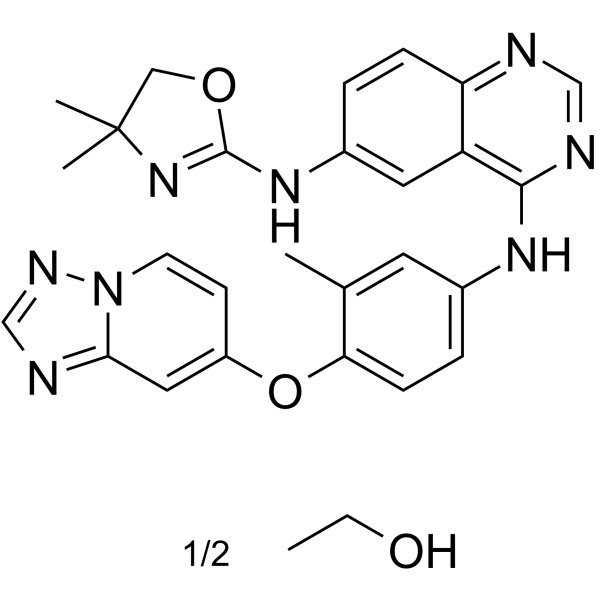
Tucatinib (Irbinitinib) hemiethanolate is a potent, orally active and selective HER2 inhibitor with an IC50 of 8 nM.
|
-
-
- HY-150024
-
|
|
EGFR
|
Cancer
|
|
BI-4142 is a potent, highly selective and orally active HER2 inhibitor with an IC50 of 5 nM .
|
-
-
- HY-17632
-
|
TH-4000
|
EGFR
|
Cancer
|
|
Tarloxotinib bromide (TH-4000) is an irreversible EGFR/HER2 inhibitor.
|
-
-
- HY-104065B
-
|
SHR-1258 dimaleate
|
EGFR
|
Cancer
|
|
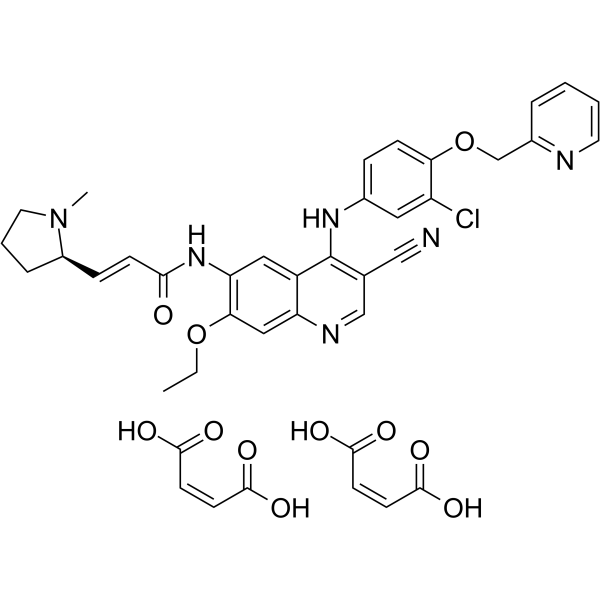
Pyrotinib dimaleate (SHR-1258 dimaleate) is a potent and selective EGFR/HER2 dual inhibitor with IC50s of 13 and 38 nM, respectively .
|
-
-
- HY-177008
-
|
|
PROTACs
EGFR
Apoptosis
Akt
ERK
|
Cancer
|
|
PROTAC HER2 degrader-1 is a highly selective HER2 PROTAC degrader, with a DC50 of 69 nM and a Dmax of 96%. PROTAC HER2 degrader-1 inhibits HER2-positive cell proliferation and tumor growth through persistent HER2 degradation and potent inhibition of downstream pathways (AKT and ERK). PROTAC HER2 degrader-1 induces apoptosis in BT-474 cells. PROTAC HER2 degrader-1 can be used for research of HER2-positive cancers. (Pink: HER2 ligand: (HY-177009); Black: Linker; Blue: CRBN ligand: (HY-W023573) .
|
-
-
- HY-112293
-
|
|
EGFR
|
Cancer
|
|
GW2974 is a potent dual inhibitor of EGFR and HER2 with IC50 value of 0.007 μM and 0.016 μM, respectively. GW2974 demonstrates in vitro inhibition of the EGFR and HER2 and inhibits the growth of tumor cell. GW2974 can be used for glioblastoma multiforme (GBM) disease research .
|
-
-
- HY-15732
-
|
JNJ-26483327
|
EGFR
|
Cancer
|
|
BGB-102 is a potent multi-kinase inhibitor against EGFR, HER2, and HER4 with IC50s of 9.6 nM, 18 nM and 40.3 nM, respectively.
|
-
-
- HY-P990238
-
|
|
EGFR
|
Inflammation/Immunology
Cancer
|
|
Anti-Human/Rat HER2 (neu) Antibody (7.16.4) is an anti-human and anti-rat HER2 IgG2a monoclonal antibody. Anti-Human/Rat HER2 (neu) Antibody (7.16.4) reduces tumor cell proliferation by inhibiting the HER2 signaling pathway. Anti-Human/Rat HER2 (neu) Antibody (7.16.4) can activate CD8 + T cells. Anti-Human/Rat HER2 (neu) Antibody (7.16.4) can be used for research on cancer such as breast cancer .
|
-
-
- HY-143319
-
|
|
EGFR
|
Cancer
|
|
SPH5030 is a selective and irreversible HER2 inhibitor. SPH5030 inhibits HER2 WT and EGFR WT with IC50s of 3.51 and 8.13 nM, respectively. SPH5030 shows excellent activities against HER2 mutants. SPH5030 can be used for the research of cancer .
|
-
-
- HY-164763
-
|
|
Antibody-Drug Conjugates (ADCs)
EGFR
|
Cancer
|
|
SHR-A1201 is a HER2-targeting antibody-drug conjugate (ADC). SHR-A1201 is composed of a humanized anti-HER2 antibody (HY-P9907), a linker SMCC (HY-42360), and a microtubulin inhibitor payload Mertansine (HY-19792). SHR-A1201 can be used for research in HER2-positive breast cancer .
|
-
-
- HY-P99969
-
|
CMAB-302; Cipterbin
|
EGFR
|
Cancer
|
|
Inetetamab is a monoclonal antibody binding to domain IV of HER2 receptor. Inetetamab alone or together with tyrosine kinase inhibitors has antitumor activities .
|
-
-
- HY-111553
-
|
|
EGFR
|
Cancer
|
|
TAS0728 is a potent, selective, orally active, irreversible and covalent-binding HER2 inhibitor, with an IC50 of 13 nM. TAS0728 also shows IC50s of 4.9, 8.5, 31, 65, 33, 25 and 86 nM for BMX、HER4、BLK、EGFR、JAK3、SLK and LOK respectively. Furthermore, TAS0728 exhibits robust and sustained inhibition of the phosphorylation of HER2, HER3, and downstream effectors .
|
-
-
- HY-108931
-
|
|
EGFR
|
Cancer
|
|
AG 1406 (compound M19) is a HER2 inhibitor, with an IC50 of 10.57 μM for HER2 in BT474 cell and >50 μM for EGFR in EGF-3T3 cell .
|
-
-
- HY-157297
-
|
|
CDK
|
Cancer
|
|
CDK-IN-13 (compound 32E) is a potent and selective inhibitor of CDK12/cyclinK with an IC50 of 3 nM. CDK-IN-13 inhibits the growth of the HER2-positive breast cancer cell lines .
|
-
-
- HY-153856
-
|
|
EGFR
|
Cancer
|
|
TAS2940 is a brain-penetrable, orally active, irreversible and selective pan-ERBB inhibitor. TAS2940 against wild-type HER2, HER2 V777L, and A775_G776insYVMA with IC50 values of 5.6 nM, 2.1 nM, and 1.0 nM, respectively. TAS2940 can be used for the study of tumors with HER2 and EGFR aberrations .
|
-
-
- HY-178116
-
|
|
EGFR
PARP
|
Cancer
|
|
HER2-IN-23 is a selective HER2 inhibitor. HER2-IN-23 reduces in total HER2 expression rather than in phosphorylated HER2 (p-HER2). HER2-IN-23 reduces cyclin D1 level and stimulates PARP cleavage. HER2-IN-23 can be used for the study of HER2-positive breast cancer .
|
-
-
- HY-176744
-
|
|
EGFR
Apoptosis
|
Cancer
|
|
HER2-IN-22 is a potent and selective HER2 inhibitor with an IC50 of 215 μM. HER2-IN-22 possesses killing activity against various tumor cells and can induce cell apoptosis. HER2-IN-22 significantly inhibits tumor growth. HER2-IN-22 can be used in the study for tumors such as HER2+ breast cancer .
|
-
-
- HY-163418
-
|
|
EGFR
|
Cancer
|
|
HER2-IN-17 (Compound 2) is an inhibitor for HER2, which inhibits the Her YVMA exon 20 insertion mutation (HER2 YVMA) with an IC50 <200 nM. HER2-IN-17 inhibits proliferation of HER2 YVMA mutated BaF3 cells with an IC50 <200 nM and amliorates non-small-cell lung cancer (NSCLC) .
|
-
-
- HY-151162
-
|
|
EGFR
|
Cancer
|
|
HER2-IN-12 is a HER2 inhibitor (IC50: 121 nM). HER2-IN-12 can be used in the research of cancers, such as breast cancer .
|
-
-
- HY-174414
-
|
|
EGFR
|
Cancer
|
EGFR/HER2-IN-18 is a stable EGFR/HER2 dual inhibitor with IC50 values of 0.09 (EGFR) and 0.08 μM (HER2) respectively. EGFR/HER2-IN-18 exhibits broad-spectrum anti-cancer activity. EGFR/HER2-IN-18 induces MCF-7 cells apoptosis and inhibits the cell cycle. EGFR/HER2-IN-18 can be used for the study of breast cancer .
|
-
-
- HY-143733
-
|
|
EGFR
|
Cancer
|
|
HER2-IN-5 is a potent and orally active HER-2 inhibitor, example 10, extracted from patent WO2021164697 .
|
-
-
- HY-P10793
-
|
|
EGFR
Apoptosis
|
Cancer
|
|
Cyclic(YCDGFYACYMDV) is a HER2 signaling pathway inhibitor with anti-cancer activity. This compound self-assembles into nanoparticles in aqueous solution and transforms into nanofibers upon specific binding to HER2 on cancer cells. This transformation disrupts HER2 dimerization and subsequent downstream signaling events, leading to cancer cell apoptosis (Apoptosis). The inhibitory effects on HER2 positive breast cancer have been demonstrated to be effective in a murine xenograft model .
|
-
-
- HY-168285
-
-
-
- HY-172820
-
|
DP303c
|
Antibody-Drug Conjugates (ADCs)
EGFR
|
Cancer
|
|
Trastuzumab envedotin (DP303c) is a anti-human epidermal growth factor receptor 2 (HER2) antibody-drug conjugate (ADC). Trastuzumab envedotin is composed of the tubulin polymerization inhibitor Monomethyl auristatin E (MMAE) (HY-15162) to the anti-HER2 antibody DP001 via a cleavable linker. Trastuzumab envedotin can be used for the research of HER2-positive solid tumors, such as breast cancer, colorectal cancer, and gastric cancer .
|
-
-
- HY-10213A
-
|
PF-04929113 mesylate
|
HSP
|
Cancer
|
|
SNX-5422 Mesylate (PF-04929113 Mesylate), a prodrug of SNX-2112, is an orally active Hsp90 inhibitor, with a Kd of 41 nM, and also induces Her-2 degradation, with an IC50 of 37 nM.
|
-
-
- HY-16069R
-
|
Irbinitinib (Standard); ARRY-380 (Standard); ONT-380 (Standard)
|
EGFR
Reference Standards
|
Cancer
|
|
Tucatinib (Standard) is the analytical standard of Tucatinib. This product is intended for research and analytical applications. Tucatinib (Irbinitinib) is a potent, orally active and selective HER2 inhibitor with an IC50 of 8 nM.
|
-
-
- HY-164487
-
|
|
Proteasome
|
Cancer
|
|
JBJ-08-178-01 is a mutant-selective tyrosine kinase inhibitor against human epidermal growth factor receptor 2 (HER2) with an antitumoral activity. JBJ-08-178-01 reduces both the kinase activity and protein levels of HER2 by inducing proteasomal degradation of the receptor in lung cancer. JBJ-08-178-01 is promising for research of non-small-cell lung cancer .
|
-
-
- HY-104065A
-
|
(Rac)-SHR-1258
|
Drug Isomer
|
Cancer
|
|
(Rac)-Pyrotinib ((Rac)-SHR-1258) is the racemic form of Pyrotinib (HY-104065). Pyrotinib is a potent and selective dual EGFR/HER2 receptor inhibitor.
|
-
-
- HY-153856A
-
|
|
EGFR
|
Cancer
|
|
TAS2940 fumarate is a brain-penetrable, orally active, irreversible and selective pan-ERBB inhibitor. TAS2940 fumarate against wild-type HER2, HER2 V777L, and A775_G776insYVMA with IC50 values of 5.6 nM, 2.1 nM, and 1.0 nM, respectively. TAS2940 fumarate can be used for the study of tumors with HER2 and EGFR aberrations .
|
-
-
- HY-143323
-
|
|
EGFR
|
Cancer
|
|
HER2-IN-9 is an orally active HER2 inhibitor, with an IC50 value of 0.03 μM. HER2-IN-9 inhibits HER-2 positive breast cancer cells proliferation and migration. HER2-IN-9 can be used in the research of breast cancers .
|
-
-
- HY-163417
-
|
|
EGFR
|
Cancer
|
|
HER2-IN-15 (Compound 1) is an inhibitor for HER2, which inhibits the Her YVMA exon 20 insertion mutation (HER2 YVMA) with an IC50 <200 nM. HER2-IN-15 inhibits proliferation of HER2 YVMA mutated BaF3 cells with an IC50 <200 nM and amliorates non-small-cell lung cancer (NSCLC) .
|
-
-
- HY-163420
-
|
|
EGFR
|
Cancer
|
|
HER2-IN-16 (Compound 14) is an inhibitor for HER2, which inhibits the Her YVMA exon 20 insertion mutation (HER2 YVMA) with an IC50 <200 nM. HER2-IN-16 inhibits proliferation of HER2 YVMA mutated BaF3 cells with an IC50 <200 nM and amliorates non-small-cell lung cancer (NSCLC) .
|
-
-
- HY-153557
-
|
|
EGFR
Potassium Channel
|
Cancer
|
|
HER2-IN-13 (Compound 33) is an HER2 inhibitor with an IC50 of 8 nM. HER2-IN-13 also inhibits wt-EGFR with an IC50 of 0.40 μM .
|
-
- HY-153557A
-
|
|
EGFR
|
Cancer
|
|
HER2-IN-14 (Compound 34) is an HER2 inhibitor with an IC50 of 18 nM. HER2-IN-14 also inhibits wt-EGFR with an IC50 of 6.3 μM .
|
-
- HY-144097
-
|
|
EGFR
|
Inflammation/Immunology
Cancer
|
|
HER2-IN-8 is a HER-2 inhibitor extracted from patent WO2021179274A1 compound 107. HER2-IN-8 can be used for the research of cancer and inflammation .
|
-
- HY-163419
-
|
|
EGFR
|
Cancer
|
|
HER2-IN-18 is a HER2 inhibitor, with an IC50 less than 200 nM for HER-YVMA and HER-WT. HER2-IN-18 can be used for cancer research .
|
-
- HY-163657
-
|
|
EGFR
|
Cancer
|
|
HER2-IN-20 (compound 32) is a potent and selective HER2 WT and HER2 YVMA inhibitor with IC50 values of 49, 42 nM, respectively. HER2-IN-20 has the potential for the research of non-small cell lung cancer (NSCLC) .
|
-
- HY-143734
-
|
|
EGFR
|
Cancer
|
|
HER2-IN-6 is a potent inhibitor of HER2. HER2-IN-6 has the potential for the research of wild and/or mutant EGFR and/or HER2 kinase mediated tumor (extracted from patent WO2021164697A1, compound 11) .
|
-
- HY-162623
-
|
|
EGFR
|
Cancer
|
|
EGFR/HER2-IN-15, a dihydropyrimidine, is a potent EGFR/HER2 inhibitor. EGFR/HER2-IN-15 significantly inhibits EGFR wt activity with an IC50 of 37.21 nM. EGFR/HER2-IN-15 has anticaner effects .
|
-
- HY-143874
-
|
|
EGFR
|
Cancer
|
|
HER2-IN-7 is a potent inhibitor of HER2. Deregulation of ErbB family signalling modulates proliferation, invasion, metastasis, angiogenesis, and tumour cell survival. HER2-IN-7 has the potential for the research of diseases associated ErbBs (especially HER2), including cancer (extracted from patent WO2019214634A1, compound 23) .
|
-
- HY-135725
-
|
|
EGFR
|
Cancer
|
|
D-69491 hydrochloride is a HER-2 tyrosine kinase inhibitor that reduces HER-2 phosphorylation, inhibits the proliferation of SKOV-3 cells, and has anticancer activity .
|
-
- HY-172623
-
|
|
EGFR
Caspase
Apoptosis
Bcl-2 Family
|
Cancer
|
|
EGFR/HER2-IN-17 (Compound 7h) is a dual inhibitor of epidermal growth factor receptor (EGFR) and human epidermal growth factor receptor 2 (HER2). EGFR/HER2-IN-17 inhibits cancer cell proliferation. EGFR/HER2-IN-17 interacts with the binding pockets of EGFR and HER2, activating caspase-3 and caspase-8, and decreases the expression of Bcl-2, thereby inducing apoptosis. EGFR/HER2-IN-17 is promising for research of cancers .
|
-
- HY-151156
-
|
|
EGFR
Apoptosis
|
Cancer
|
|
EGFR/HER2-IN-6 (compound 43) is an EGFR/HER2 and DHFR inhibitor. EGFR/HER2-IN-6 inhibits EGFR kinase, HER2 kinase and DHFR with IC50s of 0.122, 0.078 and 0.585 μM, respectively. EGFR/HER2-IN-6 shows anticancer activity against several cancer cell lines with high safety profile and selectivity indices. EGFR/HER2-IN-8 can be used for the research of cancer .
|
-
- HY-151161
-
|
|
EGFR
|
Cancer
|
|
EGFR/HER2-IN-8 (compound 34) is a EGFR/HER2 and DHFR inhibitor. EGFR/HER2-IN-8 inhibits EGFR kinase, HER2 kinase and DHFR with IC50s of 0.45, 0.244 and 5.669 μM, respectively. EGFR/HER2-IN-8 shows anticancer activity against several cancer cell lines with high safety profile and selectivity indices. EGFR/HER2-IN-8 can be used for the research of cancer .
|
-
- HY-157399
-
|
|
EGFR
|
Cancer
|
|
EGFR/HER2-IN-10 (compound 9F) is a potent and selective dual EGFR/HER2 inhibitor with IC50s of 2.3 nM and 234 nM for EGFR and HER2, respectively. EGFR/HER2-IN-10 shows an effective antiproliferative action against prostate carcinoma .
|
-
- HY-174841
-
|
|
EGFR
|
Cancer
|
|
EGFR/HER2-IN-19 (Compound L1) is a dual inhibitor against epidermal growth factor receptor (EGFR) and human epidermal growth factor receptor 2 (HER2). EGFR/HER2-IN-19 is promising for research of cancers driven by EGFR/HER2 .
|
-
- HY-115952
-
|
|
EGFR
|
Cancer
|
|
EGFR/HER2-IN-3 (Compound ZINC21942954) is a dual inhibitor of EGFR and HER2 .
|
-
- HY-115951
-
|
|
EGFR
|
Cancer
|
|
EGFR/HER2-IN-2 (Compound ZINC35560729) is a dual inhibitor of EGFR and HER2 with IC50 values of 5.02 µM and 0.83 µM against EGFR and HER2, respectively .
|
-
- HY-153111
-
|
|
EGFR
|
Cancer
|
|
EGFR/HER2-IN-9 (Compound 1) is an EGFR and HER2 inhibitor with IC50s of 3.2, 8.3 and 14 nM against EGFR, EGFR T790M and HER2, respectively .
|
-
- HY-146238
-
|
|
EGFR
Thymidylate Synthase
Apoptosis
|
Cancer
|
|
EGFR/HER2/TS-IN-1 (Compound 4d) is an EGFR, HER2 and TS (Thymidylate synthase) inhibitor with IC50 values of 0.203, 0.088 and 0.168 μM against EGFR, HER2 and TS, respectively. EGFR/HER2/TS-IN-1 induces MCF7 cell apoptosis .
|
-
- HY-151158
-
|
|
EGFR
|
Cancer
|
|
EGFR/HER2-IN-7 is a potent anticancer agent with high selectivity against MCF-7 breast cancer cells. EGFR/HER2-IN-7 is a EGFR/HER2 kinase and DHFR inhibitor, with IC50s of 0.18 μM (EGFR), 0.146 μM (HER2), respectively. EGFR/HER2-IN-7 shows moderate inhibition on DHFR (IC50=0.907 μM) .
|
-
- HY-160682
-
|
|
EGFR
|
Others
|
|
EGFR/HER2-IN-12 (compound 14b) is a dual inhibitor of EGFR and HER2 with 81% and 51% inhibition at 10 μM. The toxicity of EGFR/HER2-IN-12 to cancer cells A431 and MDA-MB-361 was not significant .
|
-
- HY-163453
-
|
|
EGFR
|
Cancer
|
|
HER2-IN-19 (Compound 10e) is a potent inhibitor of HER2 and EGFR with IC50 values of 0.87 respectively and 3.5 nM. HER2-IN-19 has potent inhibitory activity against tumor cells, IC50 NCI-N87 = 1.63 nM, IC50 BT474= 15.17 nM, IC50 BaF3-HER2YVMA = 1.49 nM .
|
-
- HY-161602
-
|
|
EGFR
|
Cancer
|
|
EGFR/HER2-IN-13 (Compd 38) is an inhibitor of mutant EGFR/HER2s which are resistant to other drugs. EGFR/HER2-IN-13 can be used for cancer research .
|
-
- HY-161603
-
|
|
EGFR
|
Cancer
|
|
EGFR/HER2-IN-14 (Compd 46) is an inhibitor of mutant EGFR/HER2s which are resistant to other drugs. EGFR/HER2-IN-14 can be used for cancer research .
|
-
- HY-159519
-
|
|
Apoptosis
EGFR
|
Cancer
|
|
EGFR/HER2-IN-16 (compound 12K) is an effective dual-target inhibitor of EGFR (IC50=6.15 nM) and HER-2 (IC50=9.78 nM) with anti-tumor activity. EGFR/HER2-IN-16 can inhibit the migration of SK-BR-3 cells, arrest the cell cycle in the G0/G1 phase, and induce apoptosis. EGFR/HER2-IN-16 exhibits good anti-proliferative activity against tumor cell models and has little damage to healthy cells. EGFR/HER2-IN-16 can be used in breast cancer research .
|
-
- HY-149633
-
|
|
EGFR
Dihydrofolate reductase (DHFR)
Apoptosis
|
Cancer
|
|
EGFR/HER2/DHFR-IN-3 (compound 4c) is a potent dual inhibitor of EGFR/HER2, with IC50s of 0.138 and 0.092 μM, respectively. EGFR/HER2/DHFR-IN-3 also inhibits DHFR, with an IC50 of 0.193 M. EGFR/HER2/DHFR-IN-3 causes arrest at the S phase of the cell cycle and induces apoptosis in MCF7 breast cancer cells .
|
-
- HY-156639
-
|
|
EGFR
|
Cancer
|
|
EGFR/ErbB-2 inhibitor-1 is a ErbB2/HER2 inhibitor .
|
-
- HY-147798
-
|
|
EGFR
CDK
|
Cancer
|
|
EGFR/HER2/CDK9-IN-3 (Compound 10) is a potent inhibitor of EGFR/HER2/CDK9 with IC50s of 191.08, 132.65, and 113.98 nM, respectively. EGFR/HER2/CDK9-IN-3 exhibits remarkable antitumor activity .
|
-
- HY-147796
-
|
|
EGFR
CDK
|
Cancer
|
|
EGFR/HER2/CDK9-IN-1 (Compound 4) is a potent inhibitor of EGFR/HER2/CDK9 with IC50s of 90.17, 131.39, and 67.04 nM, respectively. EGFR/HER2/CDK9-IN-1 exhibits remarkable antitumor activity .
|
-
- HY-147797
-
|
|
EGFR
CDK
|
Cancer
|
|
EGFR/HER2/CDK9-IN-2 (Compound 9) is a potent inhibitor of EGFR/HER2/CDK9 with IC50s of 145.35, 129.07, and 117.13 nM, respectively. EGFR/HER2/CDK9-IN-2 exhibits remarkable antitumor activity .
|
-
- HY-144053
-
|
|
EGFR
|
Cancer
|
|
EGFR-IN-36 is a potent EGFR inhibitor with IC50s of 19.09 nM, 120.01 nM, 2.35 nM for EGFR (WT), HER2 (WT), HER2 (A775_G776insYVMA), respectively. EGFR-IN-36 has potential for wild and/or mutant EGFR and/or HER2 kinase mediated tumors research .
|
-
- HY-160613
-
|
|
EGFR
|
Cancer
|
|
EGFR/HER2-IN-11 (compound 20) is an orally active dual inhibitor for human epidermal growth factor receptor 2 (HER2) and epidermal growth factor receptor (EGFR), with IC50s of 7.7 and 22 nM, respectively. EGFR/HER2-IN-11 exhibits antitumor efficacy and inhibits proliferation against cancer cells BT-474 with GI50 of 601 nM .
|
-
- HY-151154
-
|
|
EGFR
|
Cancer
|
|
EGFR/HER2/DHFR-IN-1 is a potent anticancer agent with high selectivity against MCF-7 breast cancer cells. EGFR/HER2/DHFR-IN-1 is a multiple inhibitor of EGFR/HER2 kinase and DHFR, with IC50s of 0.153 μM, 0.108 μM, 0.291 μM, respectively. EGFR/HER2/DHFR-IN-1 arrests cell cycle at G1/S and induces cells apoptosis .
|
-
- HY-146239
-
|
|
EGFR
Thymidylate Synthase
|
Cancer
|
|
EGFR/HER2/TS-IN-2 (compound 17) is a potent EGFR/HER2 and TS (Thymidylate synthase) inhibitor, with IC50 values of 0.173, 0.125, and 1.12 μM, respectively. EGFR/HER2/TS-IN-2 shows cytotoxic activity against MDA-MB-231 cancer cell lines, with an IC50 of 1.69 µM .
|
-
- HY-110333
-
|
|
EGFR
|
Cancer
|
|
BMS-599626 dihydrochloride is a small molecule pan-HER (human epidermal growth factor receptor) kinase inhibitor. BMS-599626 dihydrochloride primarily targets HER1 (IC50=20 nmol/L) and HER2 (IC50=30 nmol/L) kinase activity in the HER family. BMS-599626 inhibits the kinase activity of HER1 and HER2 by competing with their ATP-binding sites, and can inhibit the downstream signaling pathway by blocking the heterodimer formation of HER1 and HER2. BMS-599626 dihydrochloride can be used to study the antitumor effects of multiple HER1 or HER2 overexpressed tumor models .
|
-
- HY-147994
-
|
|
EGFR
|
Cancer
|
|
EGFR/HER2-IN-5 (compound 6h) is an orally active irreversible dual inhibitor. EGFR/HER2-IN-5 inhibits EGFR with an IC50 value of 1.01 nM and demonstrates potent EGFR kinase inhibitory activities on L858R and T790M mutations. EGFR/HER2-IN-5 has potent antitumor efficacy in vivo and can be used for lung cancer research .
|
-
- HY-147992
-
|
|
EGFR
|
Cancer
|
|
EGFR/HER2-IN-4(compound 6d) is an orally active irreversible dual inhibitor. EGFR/HER2-IN-4 inhibits EGFR with an IC50 value of 0.6 nM and demonstrates potent EGFR kinase inhibitory activities on L858R and T790M mutations. EGFR/HER2-IN-4 has potent antitumor efficacy in vivo and can be used for lung cancer research .
|
-
- HY-149632
-
|
|
EGFR
Dihydrofolate reductase (DHFR)
|
Cancer
|
|
EGFR/HER2/DHFR-IN-2 (Compound 4b) is an inhibitor of EGFR, HER2, and DHFR (IC50: 0.248, 0.156, 0.138 μM respectively). EGFR/HER2/DHFR-IN-2 has anticancer activities against a panel of cancer cells (IC50: 9.14, 7.33, 14.18, 24.87, 20.07, 6.16 μM for Hep G2, HeLa, HEp-2, HCT 116, PC-3, MCF7 cells). EGFR/HER2/DHFR-IN-2 reduce breast cancer tumor growth .
|
-
- HY-137786
-
|
|
EGFR
|
Cancer
|
|
EGFR-IN-16 (compound 3) is a potent EGFR inhibitor with pIC50 of 4.85 and 4.74 for EGFR and HER-2, respectively .
|
-
- HY-164489
-
|
|
EGFR
Akt
ERK
Apoptosis
|
Cancer
|
|
KU004 is a potent dual EGFR/HER2 inhibitor with anticancer effects. KU004 inhibits the proliferation of human breast cancer SKBR3 cells by inducing G1 phase arrest. KU004 blocks the activation of HER2, EGFR and downstream Akt and Erk pathways and induces cell Apoptosis mainly via the extrinsic pathway. KU004 is a quinazoline derivative .
|
-
- HY-155079A
-
|
|
EGFR
|
Others
|
|
(R)-DZD1516 is the R enantiomer of DZD1516 (HY-155079). DZD1516 is a potent and selective HER2 inhibitor .
|
-
- HY-147303
-
|
|
Trk Receptor
EGFR
|
Cancer
|
|
Sacibertinib is a tyrosine kinase (Trk) inhibitor with EC50 value of 110 nM and 244 nM for EGFR-TK phosphorylation and HER2, respectively. Antineoplastic activity .
|
-
- HY-178119
-
|
|
EGFR
CDK
PARP
|
Cancer
|
|
HER4/HER2-IN-1 (Compound 4b) is a HER4/HER2 inhibitor. HER4/HER2-IN-1 inhibits the proliferation of HER2-positive cells. HER4/HER2-IN-1 reduces the total expression level of HER2 in A431 cells, while the phosphorylated HER2 (p-HER2) does not decrease. HER4/HER2-IN-1 lowers the level of cell cycle protein D1 (cyclin D1) and stimulates the cleavage of PARP. HER4/HER2-IN-1 can be used for the study of cancer, such as breast cancer .
|
-
- HY-177895
-
|
|
EGFR
|
Cancer
|
|
IAM1363 is a selective, irreversible and brain-penetrant HER2 inhibitor. IAM1363 shows over 1,000-fold selectivity for HER2 compared to EGFR. IAM1363 can be used for the study of advanced HER2 cancers, such as HER2-driven non-small cell lung cancer (NSCLC) .
|
-
- HY-172160
-
|
|
EGFR
|
Cancer
|
|
HER2-IN-21 (compound 657994) is a human epidermal growth factor receptor 2 (HER2) inhibitor, with an IC50 of 3.85 μM .
|
-
- HY-P991977
-
|
5G9
|
EGFR
Apoptosis
PARP
Akt
ERK
|
Cancer
|
|
BSI-001 (5G9) is a HER2-targeting antibody. BSI-001 inhibits cell proliferation and migration, induces apoptosis and PARP cleavage, and suppresses HER2-mediated downstream signaling pathways (including the phosphorylation of EGFR, HER3, AKT and ERK) when combined with Trastuzumab (HY-P9907) in HER2-positive cancer cells. BSI-001 exhibits synergistic anti-tumor efficacy in animal models of gastric cancer and breast cancer when combined with Trastuzumab. BSI-001 can be used for the research of HER2-positive breast cancer and HER2-overexpressing gastric cancer .
|
-
- HY-P991982
-
|
|
ADC Antibody
|
Cancer
|
|
ZV0201 Antibody (ZV02) is a monoclonal antibody inhibitor targeting Her2. ZV0201 Antibody can be used to synthesize the antibody-drug conjugate (ADC) ZV0201. ZV0201 Antibody can be used to research related to HER2-positive tumors .
|
-
- HY-185276
-
|
|
EGFR
|
Cancer
|
|
EGFR-IN-204 (Example 1) is a HER2 exon 20 mutation inhibitor with selectivity for wild-type EGFR. EGFR-IN-204 exerts antiproliferative effects on cells dependent on HER2 exon 20 YVMA insertion mutation and wild-type HER2, and shows strong selectivity over cells dependent on wild-type EGFR. EGFR-IN-204 is applicable to non-small cell lung cancer research .
|
-
- HY-P992130
-
|
TQB2102 Antibody
|
ADC Antibody
EGFR
|
Cancer
|
|
Rolditamig (TQB2102 Antibody) is a recombinant humanized anti-human epidermal growth factor receptor 2 (HER2) antibody. Rolditamig can be conjugated with an enzyme-cleavable linker and a topoisomerase I inhibitor to form the ADC TQB2102. Rolditamig is applicable to research on solid tumors such as HER2-positive breast cancer .
|
-
- HY-P992401
-
|
|
EGFR
CD3
PI3K
Akt
p38 MAPK
Caspase
Apoptosis
IFNAR
TNF Receptor
Interleukin Related
|
Cancer
|
|
M802 is an anti-HER2/CD3 bispecific antibody, with a Kd of 0.578 nM for human HER2 and a Kd of 71.2 nM for human CD3. M802 inhibits the PI3K/AKT and MAPK signaling pathways, suppresses tumor cell proliferation, activates caspase-3, and promotes tumor cell apoptosis (apoptosis). M802 recruits and activates CD3-positive immune cells, mediates cytotoxicity against HER2-positive tumor cells, and induces immune cells to secrete IFN-γ, TNF-α, IL-2 and IL-6. M802 exhibits anti-tumor efficacy in mice with gastric cancer xenografts. M802 can be used in research related to HER2-positive breast cancer, HER2-positive gastric cancer and other cancers. The recommended isotype control is human IgG1 kappa (HY-P99001) .
|
-
- HY-183253
-
|
|
Drug-Linker Conjugates for ADC
Eukaryotic Initiation Factor (eIF)
EGFR
|
Cancer
|
|
DL149 is a component of an antibody-drug conjugate (ADC) formed by conjugating the eIF4A inhibitor FD236 (HY-186186) with an ADC linker, and exhibits potential antitumor activity. DL149 can bind to an anti-HER2 antibody to form a complete ADC molecule, which precisely binds to the HER2 receptor on the surface of tumor cells. After internalization into cells, it releases the eIF4A inhibitor payload. DL149 irreversibly blocks the mRNA translation process in tumor cells, thereby inhibiting tumor cell proliferation and inducing their death. DL149 exhibits in vivo antitumor activity in the SK-OV-3 xenograft tumor model, and can be used for the research of HER2-positive solid tumors .
|
-
- HY-177989
-
|
SGI-078
|
EGFR
|
Cancer
|
|
ER121 (SGI-078) is an orally active non-toxic small molecule ErbB2 kinase inhibitor. ER121 shows potent antitumor activity can be used for the research of HER2-related breast cancer .
|
-
- HY-126319
-
|
|
VEGFR
EGFR
|
Cancer
|
|
SU5204, a tyrosine kinase inhibitor, has IC50s of 4 and 51.5 μM for FLK-1 (VEGFR-2) and HER2, respectively .
|
-
- HY-16069S
-
|
Irbinitinib-d6; ARRY-380-d6; ONT-380-d6
|
Isotope-Labeled Compounds
EGFR
|
Cancer
|
|
Tucatinib-d6 (Irbinitinib-d6) is deuterium labeled Tucatinib. Tucatinib (Irbinitinib) is a potent, orally active and selective HER2 inhibitor with an IC50 of 8 nM .
|
-
- HY-10530A
-
|
ASLAN001 tosylate; ARRY-334543 tosylate
|
EGFR
|
Cancer
|
|
Varlitinib (ASLAN001) tosylate is a potent, reversible, small molecule pan-EGFR inhibitor with IC50s of 7, 2, 4 nM for HER1, HER2 and HER4, respectively .
|
-
- HY-10530
-
|
ASLAN001; ARRY-334543
|
EGFR
|
Cancer
|
|
Varlitinib (ASLAN001) is a potent, reversible, small molecule pan-EGFR inhibitor with IC50s of 7, 2, 4 nM for HER1, HER2 and HER4, respectively .
|
-
- HY-16069AR
-
|
Irbinitinib hemiethanolate (Standard); ARRY-380 hemiethanolate (Standard); ONT-380 hemiethanolate (Standard)
|
EGFR
Reference Standards
|
Cancer
|
|
Tucatinib (hemiethanolate) (Standard) is the analytical standard of Tucatinib (hemiethanolate). This product is intended for research and analytical applications. Tucatinib (Irbinitinib) hemiethanolate is a potent, orally active and selective HER2 inhibitor with an IC50 of 8 nM.
|
-
- HY-132842
-
|
DZD9008
|
EGFR
Btk
|
Cancer
|
|
Sunvozertinib (DZD9008) is a potent ErbBs (EGFR, Her2, especially mutant forms) and BTK inhibitor. Sunvozertinib shows IC50s of 20.4, 20.4, 1.1, 7.5, and 80.4 nM for EGFR exon 20 NPH insertion, EGFR exon 20 ASV insertion, EGFR L858R and T790M mutations, and Her2 Exon20 YVMA, and EGFR WT A431, respectively (patent WO2019149164A1, example 52) .
|
-
- HY-50767S
-
|
PD 0332991-d8
|
Isotope-Labeled Compounds
CDK
|
Cancer
|
|
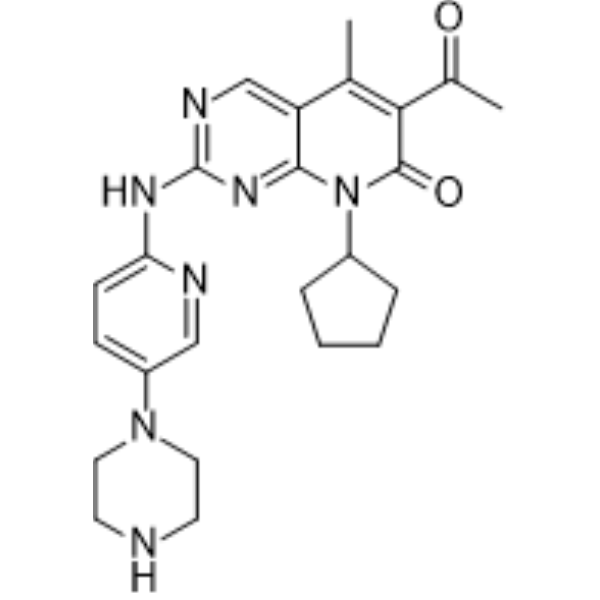
Palbociclib-d8 is a deuterium labeled Palbociclib. Palbociclib is a selective and orally active CDK4 and CDK6 inhibitor with IC50s of 11 and 16 nM, respectively. Palbociclib has the potential for ER-positive and HER2-negative breast cancer research .
|
-
- HY-50767S1
-
|
PD 0332991-d4 hydrochloride
|
Isotope-Labeled Compounds
CDK
|
Cancer
|
|
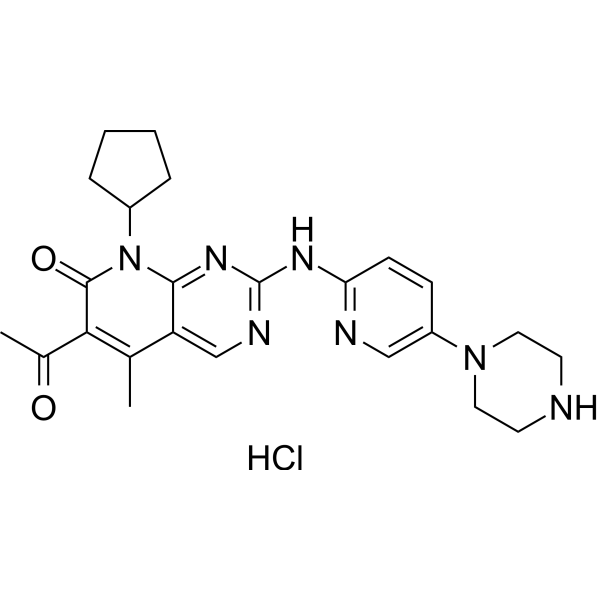
Palbociclib-d4 (hydrochloride) is the deuterium labeled Palbociclib hydrochloride. Palbociclib (PD 0332991) is a selective CDK4 and CDK6 inhibitor with IC50s of 11 and 16 nM, respectively. Palbociclib has the potential for ER-positive and HER2-negative breast cancer research .
|
-
- HY-124454
-
|
|
Drug Derivative
|
Cancer
|
|
JCC76 is the derivative of Nimesulide (HY-B0363). JCC76 inhibits the proliferation of Her2 positive breast cancer cell SKBR-3 with IC50 of 3.43 μM .
|
-
- HY-153444
-
|
PF-07248144
|
Histone Acetyltransferase
|
Cancer
|
|
Prifetrastat (PF-07248144), a first-in-class, selective, and orally active KAT6A and KAT6AB inhibitor. Prifetrastat can be used for the study of ER+/HER2− breast cancer .
|
-
- HY-121250
-
|
|
Fatty Acid Synthase (FASN)
Apoptosis
|
Cancer
|
|
Fasnall is a selective fatty acid synthase (FASN) inhibitor with an IC50 of 3.71 μM. Fasnall induces apoptosis in HER2 + breast cancer cell lines. Fasnall shows potent anti-tumor activities .
|
-
- HY-10261A
-
|
BIBW 2992MA2
|
EGFR
Autophagy
Apoptosis
c-Met/HGFR
Akt
p38 MAPK
|
Cancer
|
|
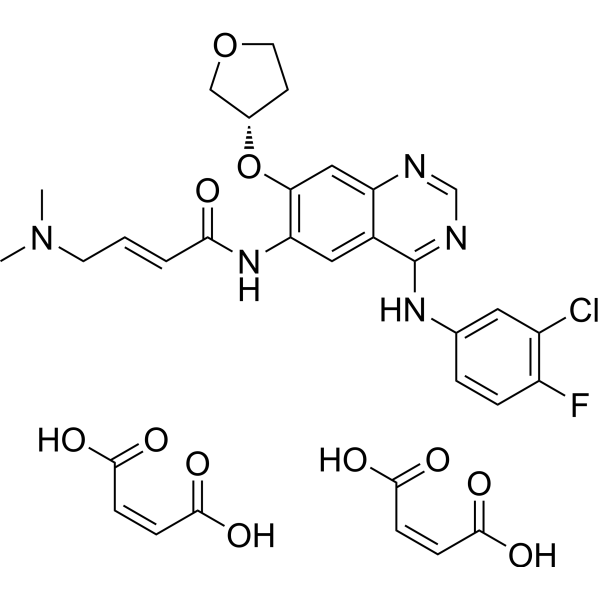
Afatinib (BIBW 2992) dimaleate is an orally active, potent and irreversible dual specificity inhibitor of ErbB family (EGFR and HER2), with IC50 values of 0.5 nM, 0.4 nM, 10 nM and 14 nM for EGFR wt, EGFR L858R, EGFR L858R/T790M and HER2, respectively. Afatinib dimaleate can be used for the research of esophageal squamous cell carcinoma (ESCC), non-small cell lung cancer (NSCLC) and gastric cancer .
|
-
- HY-10261
-
|
BIBW 2992
|
EGFR
Autophagy
Apoptosis
c-Met/HGFR
Akt
p38 MAPK
|
Cancer
|
|
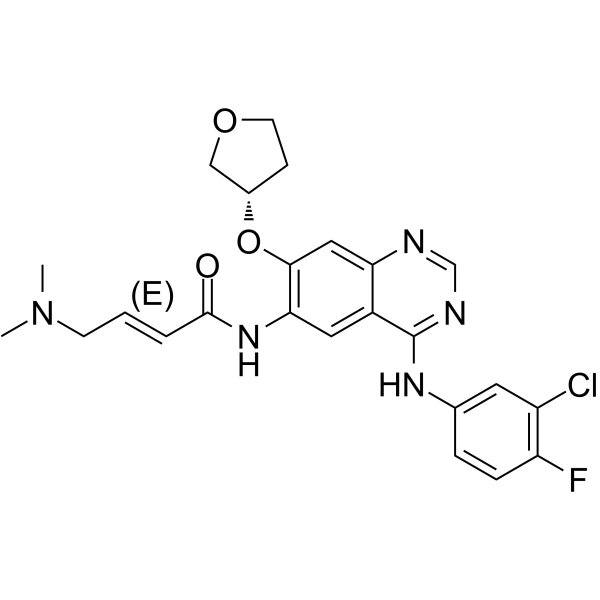
Afatinib (BIBW 2992) is an orally active, potent and irreversible dual specificity inhibitor of ErbB family (EGFR and HER2), with IC50 values of 0.5 nM, 0.4 nM, 10 nM and 14 nM for EGFR wt, EGFR L858R, EGFR L858R/T790M and HER2, respectively. Afatinib can be used for the research of esophageal squamous cell carcinoma (ESCC), non-small cell lung cancer (NSCLC) and gastric cancer .
|
-
- HY-10261D
-
|
BIBW 2992 oxalate
|
EGFR
Autophagy
Apoptosis
c-Met/HGFR
Akt
|
Cancer
|
|
Afatinib (BIBW 2992) oxalate is an orally active, potent and irreversible dual specificity inhibitor of ErbB family (EGFR and HER2), with IC50 values of 0.5 nM, 0.4 nM, 10 nM and 14 nM for EGFR wt, EGFR L858R, EGFR L858R/T790M and HER2, respectively. Afatinib oxalate can be used for the research of esophageal squamous cell carcinoma (ESCC), non-small cell lung cancer (NSCLC) and gastric cancer .
|
-
- HY-155079
-
|
|
EGFR
|
Cancer
|
|
DZD1516 is a potent and selective HER2 inhibitor (IC50=0.56 nM) with good blood-brain permeability. DZD1516 exhibits antitumor activity in CNS and subcutaneous xenograft mouse models .
|
-
- HY-160015
-
|
|
Drug-Linker Conjugates for ADC
Topoisomerase
|
Cancer
|
|
CB07-Exatecan is an ADC drug-Linker conjugate that can be used for the synthesis of ADCs. ADC conjugated with CB07-Exatecan and trastuzumab inhibits the growth of HER2-positive cancer cells. CB07-Exatecan can be used in cancer research .
|
-
- HY-10261R
-
|
BIBW 2992 (Standard)
|
Reference Standards
EGFR
Autophagy
Apoptosis
c-Met/HGFR
Akt
p38 MAPK
|
Cancer
|
|
Afatinib (Standard) is the analytical standard of Afatinib. This product is intended for research and analytical applications. Afatinib (BIBW 2992) is an orally active, potent and irreversible dual specificity inhibitor of ErbB family (EGFR and HER2), with IC50 values of 0.5 nM, 0.4 nM, 10 nM and 14 nM for EGFRwt, EGFRL858R, EGFRL858R/T790M and HER2, respectively. Afatinib can be used for the research of esophageal squamous cell carcinoma (ESCC), non-small cell lung cancer (NSCLC) and gastric cancer .
|
-
- HY-146262
-
|
|
EGFR
|
Cancer
|
|
LDC0496 is a potent and selective EGFR inhibitor. LDC0496 possesses intense inhibitory potency toward EGFR and Her2 exon20 insertion mutations, as well as selectivity over wild type EGFR and within the kinome .
|
-
- HY-W008914
-
|
|
EGFR
|
Cancer
|
|
(E/Z)-CP-724714 is a racemic compound of (E)-CP-724714 and (Z)-CP-724714 isomers. CP-724714 is a potent and selective orally active ErbB2 (HER2) inhibitor .
|
-
- HY-118032
-
|
|
Apoptosis
Autophagy
JNK
ERK
|
Cancer
|
|
Bozepinib is a PKR (RNA-dependent protein kinase) activator and potently inhibits the HER-2 signaling pathway as well as JNK and ERK kinases. Bozepinib induces PKR-mediated apoptosis and synergizes with IFNα to trigger apoptosis, autophagy and senescence. Bozepinib also demonstrates in vivo antitumor and antimetastatic efficacy in xenografted nude mice .
|
-
- HY-32721R
-
|
HKI-272 (Standard)
|
Reference Standards
EGFR
|
Cancer
|
|
Neratinib (Standard) is the analytical standard of Neratinib. This product is intended for research and analytical applications. Neratinib (HKI-272) is an orally available, irreversible, highly selective HER2 and EGFR inhibitor with IC50s of 59 nM and 92 nM, respectively .
|
-
- HY-10261AR
-
|
BIBW 2992MA2 (Standard)
|
Reference Standards
EGFR
Autophagy
Apoptosis
c-Met/HGFR
Akt
p38 MAPK
|
Cancer
|
|
Afatinib (dimaleate) (Standard) is the analytical standard of Afatinib (dimaleate). This product is intended for research and analytical applications. Afatinib (BIBW 2992) dimaleate is an orally active, potent and irreversible dual specificity inhibitor of ErbB family (EGFR and HER2), with IC50 values of 0.5 nM, 0.4 nM, 10 nM and 14 nM for EGFRwt, EGFRL858R, EGFRL858R/T790M and HER2, respectively. Afatinib dimaleate can be used for the research of esophageal squamous cell carcinoma (ESCC), non-small cell lung cancer (NSCLC) and gastric cancer .
|
-
- HY-163428
-
|
ZN-A-1041
|
EGFR
|
Inflammation/Immunology
Cancer
|
|
ZN-A-1041 inhibits HER2 in BT474 cell and wt-EGFR in H838 cells, with IC50s of 9.5 nM and 12 μM respectively. ZN-A-1041 can be used for research of cancer and inflammation .
|
-
- HY-104065R
-
|
SHR-1258 (Standard)
|
Reference Standards
EGFR
|
Cancer
|
|
Pyrotinib (Standard) is the analytical standard of Pyrotinib (HY-104065). This product is intended for research and analytical applications. Pyrotinib (SHR-1258) is a potent and selective EGFR/HER2 dual inhibitor with IC50s of 13 and 38 nM, respectively .
|
-
- HY-182755
-
|
|
Steroid Sulfatase
|
Cancer
|
|
Steroid sulfatase-IN-12 is a steroid sulfatase inhibitor. Steroid sulfatase-IN-12 inhibits the activity of steroid sulfatase. Steroid sulfatase-IN-12 can be used in research related to hormone receptor-positive/HER2-negative breast cancer .
|
-
- HY-177414
-
|
|
Antibody-Drug Conjugates (ADCs)
EGFR
|
Inflammation/Immunology
Cancer
|
|
BB-1701 is an anti-HER2 antibody-drug conjugate (ADC). BB-1701 is composed of a humanized anti-HER2 antibody (Trastuzumab) (HY-P9907), a linker (Mal-PEG2-VCP), a microtubule inhibitor (Eribulin) (HY-13442), and the drug-linker conjugate for ADC is Mal-PEG2-VCP-Eribulin (HY-128870). BB-1701 has a potent cytotoxicity and bystander effects on tumors with heterogeneous target expression. BB-1701 significantly induces immunogenic cell death and the activation of the immune .
|
-
- HY-10261E
-
|
(R)-BIBW 2992
|
EGFR
c-Met/HGFR
p38 MAPK
|
Cancer
|
|
(R)-Afatinib ((R)-BIBW 2992) is the Afatinib isomer. Afatinib (HY-10261) is an orally active, potent and irreversible dual specificity inhibitor of?ErbB?family (EGFR?and?HER2), with?IC50?values of 0.5 nM, 0.4 nM, 10 nM and 14 nM for?EGFR wt, EGFR L858R,?EGFR L858R/T790M?and HER2, respectively. Afatinib can be used for the research of esophageal squamous cell carcinoma (ESCC), non-small cell lung?cancer?(NSCLC) and gastric?cancer .
|
-
- HY-135815
-
|
TAK-788; AP32788
|
EGFR
|
Cancer
|
|
Mobocertinib (TAK-788) is an orally active and irreversible EGFR/HER2 inhibitor. Mobocertinib potently inhibits oncogenic variants containing activating EGFRex20ins mutations with selectivity over wild-type EGFR. Mobocertinib can be used in NSCLC research .
|
-
- HY-135815B
-
|
TAK-788 mesylate; AP32788 mesylate
|
EGFR
|
Cancer
|
|
Mobocertinib (TAK-788) mesylate is an orally active and irreversible EGFR/HER2 inhibitor. Mobocertinib mesylate potently inhibits oncogenic variants containing activating EGFRex20ins mutations with selectivity over wild-type EGFR. Mobocertinib mesylate can be used in NSCLC research .
|
-
- HY-104065BR
-
|
SHR-1258 dimaleate (Standard)
|
Reference Standards
EGFR
|
Cancer
|
|
Pyrotinib dimaleate (Standard) is the analytical standard of Pyrotinib dimaleate. This product is intended for research and analytical applications. Pyrotinib dimaleate (SHR-1258 dimaleate) is a potent and selective EGFR/HER2 dual inhibitor with IC50s of 13 and 38 nM, respectively .
|
-
- HY-32721S
-
|
|
EGFR
|
Cancer
|
|
Neratinib-d6 (HKI-272-d6) is the deuterium labeled Neratinib. Neratinib (HKI-272) is an orally available, irreversible tyrosine kinase inhibitor with IC50s of 59 nM and 92 nM for HER2 and EGFR, respectively.
|
-
- HY-50767C
-
|
PD-0332991 hydrochloride
|
CDK
|
Cancer
|
|
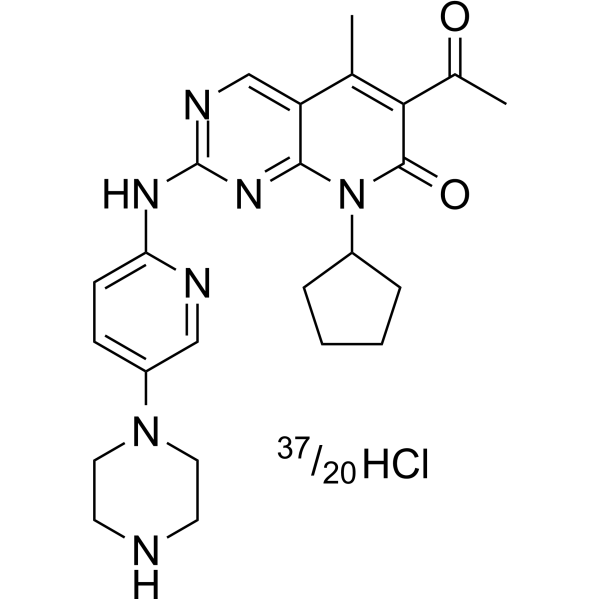
Palbociclib (PD 0332991) hydrochloride is an orally active selective CDK4 and CDK6 inhibitor with IC50 values of 11 and 16 nM, respectively. Palbociclib hydrochloride has potent anti-proliferative activity and induces cell cycle arrest in cancer cells. Palbociclib hydrochloride can be used in the research of HR-positive and HER2-negative breast cancer and hepatocellular carcinoma .
|
-
- HY-50767B
-
|
PD-0332991 dihydrochloride
|
CDK
|
Cancer
|
|
Palbociclib (PD 0332991) dihydrochloride is an orally active selective CDK4 and CDK6 inhibitor with IC50 values of 11 and 16 nM, respectively. Palbociclib dihydrochloride has potent anti-proliferative activity and induces cell cycle arrest in cancer cells, which can be used in the research of HR-positive and HER2-negative breast cancer and hepatocellular carcinoma .
|
-
- HY-50767
-
Palbociclib
Maximum Cited Publications
239 Publications Verification
PD 0332991
|
CDK
|
Cancer
|
|
Palbociclib (PD 0332991) is an orally active selective CDK4 and CDK6 inhibitor with IC50 values of 11 and 16 nM, respectively. Palbociclib has potent anti-proliferative activity and induces cell cycle arrest in cancer cells, which can be used in the research of HR-positive and HER2-negative breast cancer and hepatocellular carcinoma .
|
-
- HY-50767D
-
|
PD 0332991 orotate
|
CDK
|
Cancer
|
|
Palbociclib (PD 0332991) orotate is an orally active selective CDK4 and CDK6 inhibitor with IC50 values of 11 and 16 nM, respectively. Palbociclib orotate has potent anti-proliferative activity and induces cell cycle arrest in cancer cells. Palbociclib orotate can be used in the research of HR-positive and HER2-negative breast cancer and hepatocellular carcinoma .
|
-
- HY-50767A
-
|
PD 0332991 monohydrochloride
|
CDK
|
Cancer
|
|
Palbociclib (PD 0332991) monohydrochloride is an orally active selective CDK4 and CDK6 inhibitor with IC50 values of 11 and 16 nM, respectively. Palbociclib monohydrochloride has potent anti-proliferative activity and induces cell cycle arrest in cancer cells, which can be used in the research of HR-positive and HER2-negative breast cancer and hepatocellular carcinoma .
|
-
- HY-A0065
-
|
PD 0332991 isethionate
|
CDK
|
Infection
Neurological Disease
Cancer
|
|
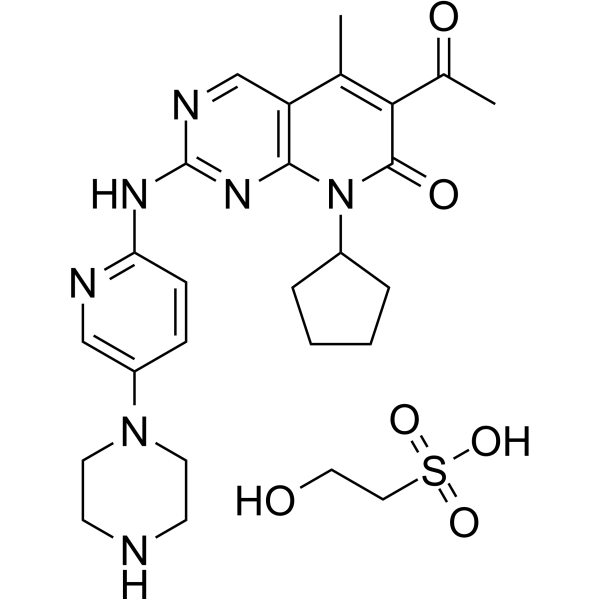
Palbociclib (PD 0332991) isethionate is an orally active selective CDK4 and CDK6 inhibitor with IC50 values of 11 and 16 nM, respectively. Palbociclib isethionate has potent anti-proliferative activity and induces cell cycle arrest in cancer cells, which can be used in the research of HR-positive and HER2-negative breast cancer and hepatocellular carcinoma .
|
-
- HY-171689
-
|
AZD 8205; P-Sam
|
Antibody-Drug Conjugates (ADCs)
Topoisomerase
|
Cancer
|
|
Puxitatug samrotecan (AZD 8205) is a B7-H4-directed antibody-drug conjugate (ADC) bearing a Topoisomerase I inhibitor (TOP1i) payload. Puxitatug samrotecan improves HR +/HER2 - breast cancer .
|
-
- HY-135815A
-
|
TAK-788 succinate; AP32788 succinate
|
EGFR
|
Cancer
|
|
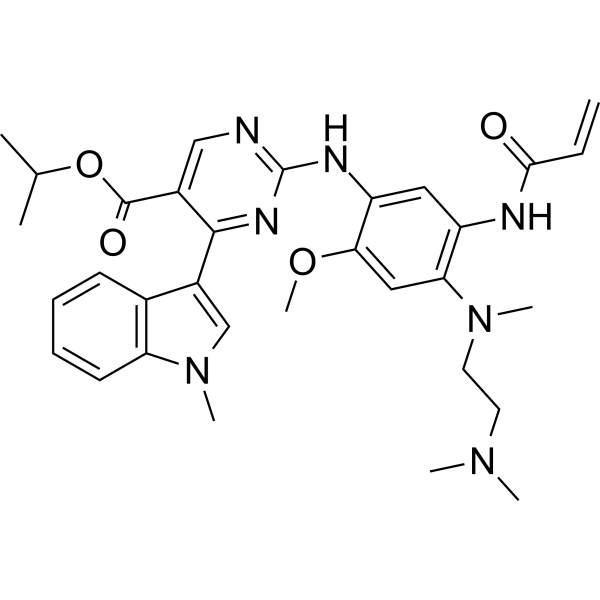
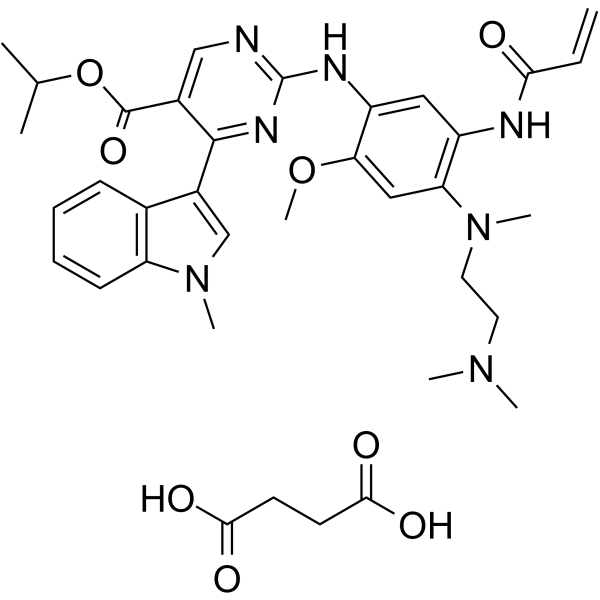
Mobocertinib (TAK-788) succinate is an orally active and irreversible EGFR/HER2 inhibitor. Mobocertinib succinate potently inhibits oncogenic variants containing activating EGFRex20ins mutations with selectivity over wild-type EGFR. Mobocertinib succinate can be used in NSCLC research .
|
-
- HY-174231
-
|
|
EGFR
Apoptosis
|
Cancer
|
|
EGFR-IN-163 (Compound 13) is a competitive epidermal growth factor receptor (EGFR) inhibitor (IC50=0.079 μM, selective for HER-2 inhibition). EGFR-IN-163 induces tumor cell apoptosis and cell cycle arrest at G₂/M phase. EGFR-IN-163 is promising for research of estrogen receptor-positive (ER+) breast cancer .
|
-
- HY-183844
-
|
|
|
Cancer
|
|
C5F2-HCB is a CYP-mediated inhibitor of the biosynthesis of arachidonic acid epoxygenase product (±) 14,15-EET (HY-150084), with an IC50 of 3.1 μM. C5F2-HCB inhibits EET-driven oxidative phosphorylation (OXPHOS) associated with tumor hypoxia, converting an immunologically "cold" tumor microenvironment into a "hot" one. C5F2-HCB reverses the immune-excluded tumor microenvironment in ER +HER2 − breast cancer allograft models. C5F2-HCB can be used in research related to ER +HER2 − breast cancer .
|
-
- HY-10530R
-
|
ASLAN001 (Standard); ARRY-334543 (Standard)
|
Reference Standards
EGFR
|
Cancer
|
|
Varlitinib (Standard) is the analytical standard of Varlitinib (HY-10530). This product is intended for research and analytical applications. Varlitinib (ASLAN001) is a potent, reversible, small molecule pan-EGFR inhibitor with IC50s of 7, 2, 4 nM for HER1, HER2 and HER4, respectively .
|
-
- HY-104065AR
-
|
(Rac)-SHR-1258 (Standard)
|
Drug Isomer
Reference Standards
|
Cancer
|
|
(Rac)-Pyrotinib (Standard) is the analytical standard of (Rac)-Pyrotinib (HY-104065A). This product is intended for research and analytical applications. (Rac)-Pyrotinib ((Rac)-SHR-1258) is the racemic form of Pyrotinib (HY-104065). Pyrotinib is a potent and selective dual EGFR/HER2 receptor inhibitor.
|
-
- HY-W654305
-
|
PD 0332991-d4
|
Isotope-Labeled Compounds
CDK
|
Cancer
|
|
Palbociclib-d4 is deuterium labeled Palbociclib. Palbociclib (PD 0332991) is an orally active selective CDK4 and CDK6 inhibitor with IC50 values of 11 and 16 nM, respectively. Palbociclib has potent anti-proliferative activity and induces cell cycle arrest in cancer cells, which can be used in the research of HR-positive and HER2-negative breast cancer and hepatocellular carcinoma .
|
-
- HY-148789
-
|
OP-1250
|
Estrogen Receptor/ERR
|
Inflammation/Immunology
Cancer
|
|
Palazestrant is an antiestrogen and antineoplastic agent. Palazestrant can completely inhibit the activity of 17b-estradiol (E2) with IC50 value of 6.4 nM, and inhibit the proliferation of MCF7 and CAMA-1 cells with IC50 value of 1.4-1.6 nM. Palazestrant can inhibit ER +/HER2 + cancer .
|
-
- HY-101982
-
|
Lys-Nε-MCC-DM1
|
Drug-Linker Conjugates for ADC
|
Cancer
|
|
Lys-SMCC-DM1 (Lys-Nε-MCC-DM1) is a agent-linker conjugates for ADC that can inhibit tubulin polymerization. Lys-SMCC-DM1 is the active metabolite of T-DM1. T-DM1 is a HER2-targeting ADC with a tubulin polymerization inhibitor DM1. Lys-SMCC-DM1 can be used in the research of breast cancer .
|
-
- HY-151159
-
|
|
Dihydrofolate reductase (DHFR)
EGFR
|
Cancer
|
|
DHFR-IN-4 is a potent dihydrofolate reductase (DHFR) inhibitor with an IC50 value of 123 nM. DHFR-IN-4 also has inhibitory activity against EGFR and HER2 with IC50s of 246 nM and 357 nM, respectively. DHFR-IN-4 has remarkable broad spectrum cytotoxic potency against cancer cells .
|
-
- HY-10261S1
-
|
BIBW 2992-d4
|
EGFR
Autophagy
|
Cancer
|
|
Afatinib-d4 is the deuterium labeled Afatinib. Afatinib (BIBW 2992) is an irreversible EGFR family inhibitor with IC50s of 0.5 nM, 0.4 nM, 10 nM and 14 nM for EGFRwt, EGFRL858R, EGFRL858R/T790M and HER2, respectively.
|
-
- HY-10223
-
|
|
EGFR
HDAC
|
Cancer
|
|
CUDC-101 is a potent inhibitor of HDAC, EGFR, and HER2 with IC50s of 4.4, 2.4, and 15.7 nM, respectively. CUDC-101 is a click chemistry reagent, it contains an Alkyne group and can undergo copper-catalyzed azide-alkyne cycloaddition (CuAAc) with molecules containing Azide groups.
|
-
- HY-123766
-
|
|
EGFR
|
Cancer
|
|
EGFR-IN-99 (compound 1a) is a potent EGFR and HER2 Exon 20 insertion mutant inhibitor. EGFR-IN-99 has excellent antiproliferative activity against DFCI127 cells, with an EC50 of 11.5 nM. EGFR-IN-99 can be used for the research of non-small cell lung cancer (NSCLC) .
|
-
- HY-133780
-
|
|
EGFR
Autophagy
|
Cancer
|
|
Afatinib impurity 11 is an impurity of Afatinib. Afatinib is an irreversible EGFR family inhibitor with IC50s of 0.5 nM, 0.4 nM, 10 nM and 14 nM for EGFR wt, EGFR L858R, EGFR L858R/T790M and HER2, respectively .
|
-
- HY-121881
-
|
|
HSP
|
Cancer
|
|
PU3 is an Hsp90 inhibitor that competes with geldanamycin (GM) and others for the conserved ATP/ADP pocket of Hsp90. PU3 also induces degradation of proteins such as Her2 and inhibits breast cancer cell growth by causing retinoblastoma protein hypophosphorylation, G1 arrest, and cell differentiation. PU3 has the potential to be a cancer inhibitor. .
|
-
- HY-P9974
-
|
OMP-18R5
|
Wnt
|
Cancer
|
|
Vantictumab (OMP-18R5) is a fully human IgG2 monoclonal antibody. Vantictumab inhibits Wnt pathway signaling by binding to FZD1/2/5/7/8 receptors. Vantictumab can be studied against cancers through direct actions on tumor cells, including CSCs, and effects on the stroma, such as metastatic HER2-negative breast cancer and metastatic pancreatic adenocarcinoma .
|
-
- HY-10293R
-
|
INCB007839 (Standard); INCB7839 (Standard)
|
Reference Standards
MMP
|
Cancer
|
|
Aderbasib (Standard) is the analytical standard of Aderbasib (HY-10293). This product is intended for research and analytical applications. Aderbasib (INCB007839) is a potent, orally active and target specific low nanomolar hydroxamate-based inhibitor of ADAM10 and ADAM17. Aderbasib exhibits robust antineoplastic activity and can be used for cancer research, including diffuse large B-cell non-Hodgkin lymphoma, HER2+ breast cancer, gliomas, et al .
|
-
- HY-50767R
-
|
PD 0332991 (Standard)
|
Reference Standards
CDK
|
Cancer
|
|
Palbociclib (Standard) is the analytical standard of Palbociclib. This product is intended for research and analytical applications. Palbociclib (PD 0332991) is an orally active selective CDK4 and CDK6 inhibitor with IC50 values of 11 and 16 nM, respectively. Palbociclib has potent anti-proliferative activity and induces cell cycle arrest in cancer cells, which can be used in the research of HR-positive and HER2-negative breast cancer and hepatocellular carcinoma .
|
-
- HY-176812
-
|
|
Ras
PI3K
Akt
|
Cancer
|
|
VVD-849 is a RAS ligand. VVD-849 covalently binds to Cys242 in the RAS-binding domain of PI3K p110α and promotes RAS/PI3K interaction. VVD-849 partially inhibits pAKT (S473) in HER2-overexpressing tumors. VVD-849 can be used for the research of cancers such as breast cancer .
|
-
- HY-135815R
-
|
TAK-788 (Standard); AP32788 (Standard)
|
EGFR
Reference Standards
|
Cancer
|
|
Mobocertinib (Standard) is the analytical standard of Mobocertinib. This product is intended for research and analytical applications. Mobocertinib (TAK-788) is an orally active and irreversible EGFR/HER2 inhibitor. Mobocertinib potently inhibits oncogenic variants containing activating EGFRex20ins mutations with selectivity over wild-type EGFR. Mobocertinib can be used in NSCLC research .
|
-
- HY-14674
-
|
|
EGFR
Apoptosis
|
Cancer
|
|
CP-724714 is a potent, selective and orally active ErbB2 (HER2) tyrosine kinase inhibitor, with an IC50 of 10 nM. CP-724714 displays a marked selectivity against EGFR kinase (IC50=6400 nM). CP-724714 potently inhibits ErbB2 receptor autophosphorylation in intact cells. Antitumor activities .
|
-
- HY-100349
-
|
|
PDGFR
VEGFR
|
Cancer
|
|
SU4312 is the racemate of (Z)-SU4312 and (E)-SU4312. (Z)-SU4312 inhibits PDGFR and FLK-1 with IC50s of 19.4 and 0.8 μM, respectively. (E)-SU4312 inhibits PDGFR, FLK-1, EGFR, HER-2, and IGF-1R with IC50s of 24.2, 5.2, 18.5, 16.9 and 10.0 μM, respectively .
|
-
- HY-10261AS
-
|
BIBW 2992MA2-d6
|
Isotope-Labeled Compounds
EGFR
Autophagy
|
Cancer
|
|
Afatinib-d6 (dimaleate) is the deuterium labeled Afatinib dimaleate. Afatinib dimaleate is an irreversible EGFR family inhibitor with IC50s of 0.5 nM, 0.4 nM, 10 nM and 14 nM for EGFRwt, EGFRL858R, EGFRL858R/T790M and HER2, respectively .
|
-
- HY-10293
-
|
INCB007839; INCB7839
|
MMP
|
Cancer
|
|
Aderbasib (INCB007839) is a potent, orally active and target specific low nanomolar hydroxamate-based inhibitor of ADAM10 and ADAM17. Aderbasib exhibits robust antineoplastic activity and can be used for cancer research, including diffuse large B-cell non-Hodgkin lymphoma, HER2 + breast cancer, gliomas, et al .
|
-
- HY-116437
-
|
|
EGFR
|
Cancer
|
|
Selatinib is an orally active EGFR and HER2 tyrosine kinase inhibitor with IC50 values of 13.0 nM and 8.5 nM, respectively. Selatinib undergoes oxidative metabolism in vivo to produce Lapatinib (HY-50898). Selatinib inhibits the growth of breast, gastric and ovarian tumors. Selatinib can be used in research related to gastric cancer, breast cancer and ovarian cancer .
|
-
- HY-156513
-
|
7-Hydroxyethyl carbamate-(10Me-11F-Camptothecin)
|
ADC Payload
|
Cancer
|
|
ZD06519 (7-Hydroxyethyl carbamate-(10Me-11F-Camptothecin)) is a camptothecin (HY-16560) analogue and a topoisomerase I inhibitor. ZD06519 is an ADC cytotoxin with a strong bystander effect, inhibiting a variety of malignancies such as HER2-positive and FRα-overexpressing tumors. ZD06519 inhibits DNA cleavage, relaxation, and reconnection processes, inducing tumor cell death. ZD06519 can be used for ADC synthesis and cancer research .
|
-
- HY-170326
-
|
|
Ligands for Target Protein for PROTAC
HSP
|
Cancer
|
|
Hsp90-in-35 (Compound 379) is an inhibitor of Hsp90. The IC50 of HSP90-IN-35 for Her2 is between 0.05 and 0.5 μM. HSP90-IN-35 has antitumor activity. HSP90-IN-35 can be used to synthesize PROTAC (HY-153881) .
|
-
- HY-50767AR
-
|
PD 0332991 monohydrochloride (Standard)
|
CDK
Reference Standards
|
Cancer
|
|
Palbociclib (monohydrochloride) (Standard) is the analytical standard of Palbociclib (monohydrochloride). This product is intended for research and analytical applications. Palbociclib (PD 0332991) monohydrochloride is an orally active selective CDK4 and CDK6 inhibitor with IC50 values of 11 and 16 nM, respectively. Palbociclib monohydrochloride has potent anti-proliferative activity and induces cell cycle arrest in cancer cells, which can be used in the research of HR-positive and HER2-negative breast cancer and hepatocellular carcinoma .
|
-
- HY-145102
-
|
|
HSP
Apoptosis
|
Cancer
|
|
NCT-58 is a potent inhibitor of C-terminal HSP90. NCT-58 does not induce the heat shock response (HSR) due to its targeting of the C-terminal region and elicits anti-tumor activity via the simultaneous downregulation of HER family members as well as inhibition of Akt phosphorylation. NCT-58 kills Trastuzumab-resistant breast cancer stem-like cells. NCT-58 induces apoptosis in HER2-positive breast cancer cells .
|
-
- HY-100349A
-
|
(Z)-SU4312
|
PDGFR
VEGFR
|
Cancer
|
|
cis-SU4312 ((Z)-SU4312) inhibits PDGFR and FLK-1 with IC50s of 19.4 and 0.8 μM, respectively. cis-SU4312 inhibits PDGFR, FLK-1, EGFR, HER-2, and IGF-1R with IC50s of 24.2, 5.2, 18.5, 16.9 and 10.0 μM, respectively. cis-SU4312 can cross blood brain barrier .
|
-
- HY-135815AR
-
|
TAK-788 succinate (Standard); AP32788 succinate (Standard)
|
EGFR
Reference Standards
|
Cancer
|
|
Mobocertinib (succinate) (Standard) is the analytical standard of Mobocertinib (succinate). This product is intended for research and analytical applications. Mobocertinib (TAK-788) succinate is an orally active and irreversible EGFR/HER2 inhibitor. Mobocertinib succinate potently inhibits oncogenic variants containing activating EGFRex20ins mutations with selectivity over wild-type EGFR. Mobocertinib succinate can be used in NSCLC research .
|
-
- HY-13963
-
ZCL278
3 Publications Verification
|
Ras
Dengue Virus
VSV
Arenavirus
|
Infection
Neurological Disease
Metabolic Disease
Cancer
|
|
ZCL278 is a selective Cdc42 inhibitor with Kds of 6.4 μM in fluorescence titration and 11.4 μM in surface plasmon resonance (SPR) measurement. ZCL278 is able to disrupt the Cdc42-ITSN interaction as well as GTP/GDP binding. ZCL278 has inhibitory effects on various enveloped viruses, but is ineffective against non-enveloped viruses. ZCL278 can be used for the studies of arsenic neurotoxicity and HER2-positive gastric cancer (GC) .
|
-
- HY-160694
-
|
cBu-Cit-PROTAC BRD4 Degrader-5
|
PROTAC-Linker Conjugates for PAC
Epigenetic Reader Domain
|
Cancer
|
|
cBu-Cit-GAL-02-221 is a PROTAC that degrades BRD4 by association with cBu-Cit. cBu-Cit-GAL-02-221 can effectively inhibit BRD4 in HER2 positive and negative breast cancer cell lines. cBu-Cit-GAL-02-221 has a single bond and can be conjugated to an ADC antibody to form a PAC .
|
-
- HY-147794
-
|
|
CDK
COX
EGFR
|
Cancer
|
|
CDK9-IN-41 is a potent CDK9, EGFR, HER2, and COX-2 kinases inhibitor with IC50s of 192.81 nM, 254.03 nM, 238.81 nM, and 775 nM. COX-2-IN-18 exhibits remarkable antitumor activity against leukemia cancer cells, colon cancer cells, melanoma cells, ovarian cells and breast cells .
|
-
- HY-P99275
-
|
AMG-888; U3-1287
|
EGFR
Akt
ERK
PARP
Survivin
|
Cancer
|
|
Patritumab (Human Anti-ERBB3 Recombinant Antibody) is a neutralizing monoclonal antibody to ERBB3. Patritumab shows a synergy with Cetuximab (HY-P9905), potently inhibits the phosphorylation of EGFR, HER2, HER3, ERK, and AKT. Patritumab also induces cell apoptosis and suppresses the growth of pancreatic, non-small cell lung cancer, and colorectal cancer xenograft tumors .
|
-
- HY-10261B
-
|
(E/Z)-BIBW 2992
|
EGFR
Apoptosis
c-Met/HGFR
Akt
p38 MAPK
Autophagy
|
Others
Cancer
|
|
(E/Z)-Afatinib ((E/Z)-BIBW 2992) is the mixture of (E)-Afatinib and (Z)-Afatinib. Afatinib (HY-10261) is an irreversible inhibitor of EGFR, by irreversibly binding to their ATP binding site to block activation of EGFR, HER2, HER4, and EGFRvIII. Afatinib used in co-administration with Temozolomide (HY-17364), potently targeting to EGFRvIII-cMet signaling in glioblastoma cells .
|
-
- HY-181130
-
|
|
CDK
Apoptosis
|
Cancer
|
|
Anticancer agent 299 (compound P12) is a cell-cycle inhibitor, senescence inducer, apoptosis inducer, and antiproliferative agent. Anticancer agent 299 exhibits selective activity against cancer cells with minimal effects on non-tumoral chondrocyte cells at relevant concentrations. Anticancer agent 299 can be used for the research of ER+/HER2− breast cancer and BRAF-mutant melanoma .
|
-
- HY-170442
-
|
CDK2-IN-37
|
CDK
|
Cancer
|
|
ECI830 (CDK2-IN-37) is an orally active, ATP-competitive and highly selective CDK2 inhibitor. ECI830 shows high selectivity over other CDK family members. ECI830 can be used for the study of HR+/HER2- breast cancer and CCNE1-amplified tumors (such as ovarian cancer and lung cancer) .
|
-
- HY-161781
-
-
- HY-144676
-
|
|
EGFR
Apoptosis
|
Cancer
|
|
pan-HER-IN-1 (Compound C5) is an irreversible, orally active pan-HER inhibitor with IC50 values of 0.38, 1.6, 2.2 and 3.5 nM against EGFR, HER4, EGFR T790M/L858R and HER2, respectively. pan-HER-IN-1 induces apoptosis and shows antitumor activities .
|
-
- HY-144677
-
|
|
EGFR
Apoptosis
|
Cancer
|
|
pan-HER-IN-2 (Compound C6) is a reversible, orally active pan-HER inhibitor with IC50 values of 0.72, 2.0, 8.2 and 75.1 nM against EGFR, HER4, EGFR T790M/L858R and HER2, respectively. pan-HER-IN-2 induces apoptosis and shows antitumor activities .
|
-
- HY-P99304
-
|
Anti-Human ERBB3 Recombinant Antibody
|
EGFR
PI3K
Akt
p38 MAPK
|
Cancer
|
|
Lumretuzumab (Anti-Human ERBB3 Recombinant Antibody) is a humanized anti-HER3 (ERBB3) monoclonal antibody. Lumretuzumab effectively inhibits the activity of key oncogenic signaling pathways such as PI3K/AKT and MAPK. Lumretuzumab has been optimized through glycosyl engineering to enhance antibody-dependent cell-mediated cytotoxicity (ADCC). Lumretuzumab can be used to study HER3-positive, HER2-low-expressing solid tumors, especially breast cancer .
|
-
- HY-176811
-
|
|
Ras
PI3K
Akt
|
Cancer
|
|
VVD-442 is an inhibitor targeting PI3Kα. VVD-442 covalently binds to Cys242 in the RAS-binding domain of PI3K p110α, induces conformational changes, and disrupts the interaction between PI3K p110α and RAS proteins. VVD-442 also blocks RAS-mediated PI3K activation. VVD-442 can be used in research related to RAS-mutant cancers and HER2-overexpressing cancers .
|
-
- HY-185205
-
|
|
PI3K
Akt
|
Cancer
|
|
VVD-484 is a PI3K p110α inhibitor with an IC50 of 0.59 μM against human targets.,VVD-484, classified as a "silent ligand", forms a covalent bond with Cys242 of PI3K p110α without disrupting the p110α-KRAS G12C interaction. VVD-484 inhibits phosphorylation (S473) of AKT via a RAS-independent pathway. VVD-484 can be used in the research of HER2-overexpressing cancers .
|
-
- HY-201330
-
|
RGT-419B
|
CDK
|
Cancer
|
|
GDC-4198 (RGT-419B) is an orally active CDK4/2 inhibitor with desired degrees of selectivity against kinases such as CDK6, CDK9 and GSK3β. GDC-4198 inhibits the activity of cyclin-CDK complexes, blocks phosphorylation of the retinoblastoma protein (pRb), arresting the cell cycle transition from G1 to S phase. GDC-4198 is promising for research of cancers, such as breast cancer (especially hormone receptor-positive, HER2-negative type), lung cancer, and colorectal cancer .
|
-
- HY-45661
-
|
NUV-422
|
CDK
|
Neurological Disease
Cancer
|
|
Inixaciclib (NUV-422) is a blood-brain barrier-penetrant inhibitor of CDK2, CDK4 and CDK6. Inixaciclib inhibits cancer cell growth. Inixaciclib induces anti-tumor activity in xenograft models of glioblastoma, CDK4/CDK6 inhibitor-resistant HR + HER2 - metastatic breast cancer, and anti-androgen-resistant prostate cancer. Inixaciclib can be used for the research of relapsed or metastatic castration-resistant prostate cancer .
|
-
- HY-120625
-
|
|
HSP
|
Cancer
|
|
PU3 is a small molecule inhibitor of Hsp90 that competes with geldanamycin for Hsp90. PU3 induces degradation of proteins, including Her2, similar to geldanamycin. PU3 inhibits the growth of breast cancer cells, causing retinoblastoma protein hypophosphorylation, G1 arrest, and differentiation. PU3 represents a novel class of synthetic compounds that bind to Hsp90 and inhibit the proliferation of cancer cells. PU3 could provide a new strategy for the treatment of cancers .
|
-
- HY-150023
-
|
|
EGFR
Itk
PI4K
Btk
CDK
Raf
JAK
|
Cancer
|
|
BI-1622 is an orally active, potent and highly selective HER2 (ERBB2) inhibitor, with an IC50 of 7 nM. BI-1622 shows greater than 25-fold selectivity over EGFR. BI-1622 shows high antitumor efficacy in vivo in xenograft mouse tumor models with engineered H2170 and PC9 cells and had a favorable agent metabolism and pharmacokinetics profile .
|
-
- HY-107367
-
|
S-22611
|
EGFR
|
Cancer
|
|
Epertinib (S-22611) is a potent, orally active, reversible, and selective tyrosine kinase inhibitor of EGFR, HER4 and HER2, with IC50s of 1.48 nM, 2.49 nM and 7.15 nM, respectively. Epertinib shows potent antitumor activity . Epertinib is a click chemistry reagent, it contains an Alkyne group and can undergo copper-catalyzed azide-alkyne cycloaddition (CuAAc) with molecules containing Azide groups.
|
-
- HY-132842A
-
|
(S)-DZD9008
|
EGFR
Btk
|
Cancer
|
|
(S)-Sunvozertinib ((S)-DZD9008), the S-enantiomer of Sunvozertinib, shows inhibitory activity against EGFR exon 20 NPH and ASV insertions, EGFR L858R/T790M mutation and Her2 exon20 YVMA insertion (IC50=51.2 nM, 51.9 nM, 1 nM, and 21.2 nM, respectively). (S)-Sunvozertinib also inhibits BTK .
|
-
- HY-107367A
-
|
S-22611 hydrochloride
|
EGFR
|
Cancer
|
|
Epertinib (S-22611) hydrochloride is a potent, orally active, reversible, and selective tyrosine kinase inhibitor of EGFR, HER4 and HER2, with IC50s of 1.48 nM, 2.49 nM and 7.15 nM, respectively. Epertinib hydrochloride shows potent antitumor activity . Epertinib (hydrochloride) is a click chemistry reagent, it contains an Alkyne group and can undergo copper-catalyzed azide-alkyne cycloaddition (CuAAc) with molecules containing Azide groups.
|
-
- HY-10251
-
|
AC480
|
EGFR
|
Cancer
|
|
BMS-599626 (AC480) is a selective and orally bioavailable HER1 and HER2 inhibitor, with IC50s of 20 and 30 nM, respectively. BMS-599626 displays ~8-fold less potent to HER4 (IC50=190 nM), >100-fold to VEGFR2, c-Kit, Lck, MEK. BMS-599626 inhibits tumor cell proliferation, and has potential to increase tumor response to radiotherapy .
|
-
- HY-12010
-
|
AC480 Hydrochloride
|
EGFR
|
Cancer
|
|
BMS-599626 Hydrochloride (AC480 Hydrochloride) is a selective and orally bioavailable HER1 and HER2 inhibitor, with IC50s of 20 and 30 nM, respectively. BMS-599626 Hydrochloride displays ~8-fold less potent to HER4 (IC50=190 nM), >100-fold to VEGFR2, c-Kit, Lck, MEK. BMS-599626 Hydrochloride inhibits tumor cell proliferation, and has potential to increase tumor response to radiotherapy .
|
-
- HY-15730
-
|
HM781-36B; NOV120101
|
EGFR
Apoptosis
|
Cancer
|
|
Poziotinib (HM781-36B) is an orally active, irreversible pan-HER inhibitor, which effectively inhibits EGFR wt, HER-2 and HER-4 with IC50s of 3.2, 5.3 and 23.5 nM, respectively. Poziotinib (HM781-36B) also shows excellent inhibitory activities against mutated EGFRs, including EGFR T790M and EGFR L858R/T790M, with IC50s of 4.2 and 2.2 nM, respectively. Excellent antitumor activity .
|
-
- HY-112749
-
|
|
Heme Oxygenase (HO)
Reactive Oxygen Species (ROS)
Mitochondrial Metabolism
Microtubule/Tubulin
Caspase
Apoptosis
|
Cancer
|
|
ME-344 is an Isoflavone. ME-344 increases mitochondrial ROS generation. ME-344 inhibits tubulin polymerization. ME-344 inhibits HO-1 and impacts its mitochondrial translocation. ME-344 induces Apoptosis through Caspase 3 activation. ME-344 synergizes with Vinblastine in leukemia cells. ME-344 displays anti-tumor activity against leukemia and lung tumor. ME-344 can be used in the research of lung cancer, acute myeloid leukemia, and HER2-negative breast cancer .
|
-
- HY-172970
-
|
|
CDK
DNA/RNA Synthesis
Apoptosis
|
Cancer
|
|
HQY1428 is an orally active CDK12 inhibitor. HQY1428 inhibits DNA replication, causes G2/M arrest in SKOV3 cells, induces DNA double-strand breaks and apoptosis. HQY1428 has anti-tumor activity in the SKOV3 xenograft mouse model. HQY1428 combined with the HER2 inhibitor Lapatinib (HY-50898) in the NCI-N87 xenograft mouse model produces a synergistic therapeutic effect .
|
-
- HY-182468
-
|
|
Histone Acetyltransferase
Estrogen Receptor/ERR
CDK
|
Cancer
|
|
OP-3136 is a selective KAT6 inhibitor. OP-3136 reduces the proliferative capacity of cancer cells and inhibits cell growth in ER + breast cancer cell models with overexpressed KAT6. When combined with ER antagonists/degraders or CDK4/6 inhibitors, OP-3136 exhibits synergistic anti-tumor activity in mouse xenograft models. OP-3136 can be used in studies related to HR +/HER2 - breast cancer .
|
-
- HY-13314
-
|
XL-647; EXEL-7647; KD-019
|
EGFR
VEGFR
Src
|
Cancer
|
|
Tesevatinib (XL-647) is an orally available, blood-brain barrier-penetrant inhibitor of the epidermal growth factor receptor (EGFR). Tesevatinib significantly reduces cellular viability, with IC50 values of 11 nM and 102 nM in GBM12 and GBM6, respectively. Tesevatinib also inhibits HER2 (IC50=16.1 nM), VEGFR2 (IC50=1.5 nM), and Src (IC50=10.3 nM). Tesevatinib can inhibit tumor proliferation and exhibits antitumor activity .
|
-
- HY-13314A
-
|
XL-647 tosylate; EXEL-7647 tosylate; KD-019tosylate
|
EGFR
VEGFR
Src
|
Cancer
|
|
Tesevatinib (XL-647) tosylate is an orally available, blood-brain barrier-penetrant inhibitor of the epidermal growth factor receptor (EGFR). Tesevatinib tosylate significantly reduces cellular viability, with IC50 values of 11 nM and 102 nM in GBM12 and GBM6, respectively. Tesevatinib tosylate also inhibits HER2 (IC50=16.1 nM), VEGFR2 (IC50=1.5 nM), and Src (IC50=10.3 nM). Tesevatinib tosylate can inhibit tumor proliferation and exhibits antitumor activity .
|
-
- HY-10223R
-
|
|
Reference Standards
EGFR
HDAC
|
Cancer
|
|
CUDC-101 (Standard) is the analytical standard of CUDC-101 (HY-10223). This product is intended for research and analytical applications. CUDC-101 is a potent inhibitor of HDAC, EGFR, and HER2 with IC50s of 4.4, 2.4, and 15.7 nM, respectively. CUDC-101 is a click chemistry reagent, it contains an Alkyne group and can undergo copper-catalyzed azide-alkyne cycloaddition (CuAAc) with molecules containing Azide groups.
|
-
- HY-W703549
-
|
INCB007839-d3; INCB7839-d3
|
Isotope-Labeled Compounds
MMP
|
Cancer
|
|
Aderbasib-d3 (INCB007839-d3) is deuterium labeled Aderbasib. Aderbasib (INCB007839) is a potent, orally active and target specific low nanomolar hydroxamate-based inhibitor of ADAM10 and ADAM17. Aderbasib exhibits robust antineoplastic activity and can be used for cancer research, including diffuse large B-cell non-Hodgkin lymphoma, HER2 +?breast cancer, gliomas, et al .
|
-
- HY-169216
-
|
|
EGFR
VEGFR
CDK
|
Cancer
|
|
Multi-target kinase inhibitor 3 (compund 6i) is a multi-kinase target inhibitor with anticancer activity. Multi-target kinase inhibitor 3 inhibits EGFR, HER2, VEGFR-2, and CDK2 with IC50s of 0.063 μM, 0.054 μM, 0.119 μM, and 0.448 μM, respectively. Multi-target kinase inhibitor 3 has a good inhibitory effect on breast cancer cells MCF-7, with an IC50 of 6.10 μM .
|
-
- HY-178145
-
|
|
Drug-Linker Conjugates for ADC
Topoisomerase
|
Cancer
|
|
Mc-Lys(PEG12)-Cap-Ala-Ala-PABC-exatecan (compound 12) is a Drug-Linker Conjugate for ADC. Mc-Lys(PEG12)-Cap-Ala-Ala-PABC-exatecan contains the ADC linker (Mc-Lys(PEG12)-Cap-Ala-Ala-PABC) (HY-178146) and a DNA topoisomerase I inhibitor Exatecan (HY-13631). Mc-Lys(PEG12)-Cap-Ala-Ala-PABC-exatecan can be used for the development of ADC targeting HER2-positive breast cancer .
|
-
- HY-10214
-
|
PF-04928473
|
HSP
Autophagy
|
Cancer
|
|
SNX-2112 (PF 04928473) is an orally active Hsp90 inhibitor, with a Kd of 16 nM for Hsp90 and IC50s of 30 nM, 30 nM for Hsp90 α and Hsp90 β, also induces Her-2 degradation, and inhibits Grp94 and Trap-1, with IC50s of 10 nM, 4.275 μM and 0.862 μM, respectively . SNX-2112 (PF 04928473) binds Hsp90 isoforms Hsp90α, Hsp90β and Hsp90b1/Grp94 with Kds of 4 nM, 6 nM and 484 nM, respectively .
|
-
- HY-13963S
-
|
|
Isotope-Labeled Compounds
Endogenous Metabolite
|
Infection
Cancer
|
|
ZCL278- 13C is a 13C-labeled version of ZCL278 (HY-13963). ZCL278 is a selective Cdc42 inhibitor with Kds of 6.4 μM in fluorescence titration and 11.4 μM in surface plasmon resonance (SPR) measurement. ZCL278 can disrupt the interaction between Cdc42 and ITSN, and also inhibit the binding of GTP and GDP. ZCL278 has inhibitory effects on various enveloped viruses, but is ineffective against non-enveloped viruses. ZCL278 can be used in the research of arsenic neurotoxicity and HER2-positive gastric cancer (GC) [1][2][3][4].
|
-
- HY-101982R
-
|
Lys-Nε-MCC-DM1 (Standard)
|
Reference Standards
Drug-Linker Conjugates for ADC
|
Cancer
|
|
Lys-SMCC-DM1 (Standard) is the analytical standard of Lys-SMCC-DM1 (HY-101982). This product is intended for research and analytical applications. Lys-SMCC-DM1 (Lys-Nε-MCC-DM1) is a agent-linker conjugates for ADC that can inhibit tubulin polymerization. Lys-SMCC-DM1 is the active metabolite of T-DM1. T-DM1 is a HER2-targeting ADC with a tubulin polymerization inhibitor DM1. Lys-SMCC-DM1 can be used in the research of breast cancer .
|
-
- HY-121706
-
|
|
HSP
|
Cancer
|
|
PU-20F is a Hsp90 inhibitor with an EC50 of 6.8 μM. PU-20F competes with Geldanamycin (HY-15230) for binding to Hsp90 and regulates the function of this molecular chaperone. PU-20F induces the degradation of oncogenic Her2 tyrosine kinase. PU-20F blocks the growth of breast cancer cells. PU-20F can be used in breast cancer-related research .
|
-
- HY-10261BR
-
|
(E/Z)-BIBW 2992 (Standard)
|
EGFR
Apoptosis
c-Met/HGFR
Akt
p38 MAPK
Autophagy
Reference Standards
|
Others
|
|
(E/Z)-Afatinib (Standard) is the analytical standard of (E/Z)-Afatinib. This product is intended for research and analytical applications. (E/Z)-Afatinib ((E/Z)-BIBW 2992) is the mixture of (E)-Afatinib and (Z)-Afatinib. Afatinib (HY-10261) is an irreversible inhibitor of EGFR, by irreversibly binding to their ATP binding site to block activation of EGFR, HER2, HER4, and EGFRvIII. Afatinib used in co-administration with Temozolomide (HY-17364), potently targeting to EGFRvIII-cMet signaling in glioblastoma cells .
|
-
- HY-177445
-
|
|
Histone Acetyltransferase
Estrogen Receptor/ERR
|
Cancer
|
|
KAT6-IN-4 (Compound Example 2) is a selective lysine acetyltransferase 6 (KAT6) inhibitor. KAT6-IN-4 suppresses transcription of oncogenes like ERα. KAT6-IN-4 demonstrates potent antitumor efficacy in ER +/HER2 - breast cancer xenografts. KAT6-IN-4 is promising for research of KAT6-driven malignancies (e.g., breast cancer, NSCLC) .
|
-
- HY-172621
-
|
|
EGFR
|
Cancer
|
|
EGFR-IN-159 (compound 12), a dihydropyrimidine, is a potent EGFR inhibitor with an IC50 value of 29.00 nM. EGFR-IN-159 exhibits dose-dependent inhibition against EGFR and HER2. EGFR-IN-159 shows cytotoxicity against MCF-7 breast cancer cells and Vero cells with IC50 values of 16.07 μg/mL and 35.98 μg/mL, respectively. EGFR-IN-159 has no BBB permeation. EGFR-IN-159 shows appreciable anti-cancer activity .
|
-
- HY-121605
-
|
|
Apoptosis
|
Cancer
|
|
RL71 is a curcuminoid anticancer agent that exhibits potent cytotoxicity against a variety of ER-negative breast cancer cells. RL71 (1 μM) induces cell cycle arrest in the G2/M phase and induces apoptosis in SKBr3 cells. RL7 also decreases HER2/neu phosphorylation and increases p27. RL71 also significantly reduced the phosphorylation of Akt and transiently increased the stress kinases JNK1/2 and p38 MAPK. Furthermore, RL71 exhibited anti-angiogenic potential in vitro, inhibiting the migration of HUVEC cells and the ability of these cells to form tubular networks .
|
-
- HY-183741
-
|
|
PI3K
Akt
|
Cancer
|
|
VVD-844 is an orally active covalent inhibitor of PI3Kα, which inhibits Pl3Kα/p110α interaction with an IC50 of 4 nM. VVD-844 covalently binds to Cys 242 in the RAS binding domain of p110α, blocking RAS-p110α interaction and inhibiting PI3Kα activity. VVD-844 inhibits PI3Kα signaling activation in HER2-overexpressing cells via a RAS-independent mechanism. VVD-844 suppresses tumor growth in mouse. VVD-844 can be used for the research of cancers .
|
-
- HY-149636
-
|
|
EGFR
CDK
VEGFR
Apoptosis
|
Cancer
|
|
Multi-target kinase inhibitor 2 is a multi-targeted kinase inhibitor, and exhibits activity against EGFR, Her2, VEGFR2, and CDK2 enzymes, with IC50 values of 79 nM, 40 nM,136 nM, and 204 nM, respectively. Multi-target kinase inhibitor 2 shows cytotoxic effects were observed against HepG2, HeLa , MDA-MB-231 and MCF-7, with IC50 of 41, 57, 51 and 59 μM. Multi-target kinase inhibitor 2 induces cell cycle arrest and apoptosis in HepG2 cells .
|
-
- HY-15196
-
TAK-285
3 Publications Verification
|
EGFR
|
Cancer
|
|
TAK-285 is a potent, selective, ATP-competitive and orally active HER2 and EGFR(HER1) inhibitor with IC50 of 17 nM and 23 nM, respectively. TAK-285 is >10-fold selectivity for HER1/2 than HER4, and less potent to MEK1/5, c-Met, Aurora B, Lck, CSK etc. TAK-285 has effective antitumor activity . TAK-285 can cross the blood-brain barrier (BBB) .
|
-
- HY-172429A
-
|
ORIC-114 hemihydrate
|
EGFR
|
Neurological Disease
Cancer
|
|
Enozertinib (ORIC-114) hemihydrate is an orally active, CNS-penetrant, highly selective and irreversible dual EGFR/HER2 inhibitor that exhibits potent and targeted inhibition of exon 20 insertion mutations. Enozertinib hemihydrate exhibits high kinome selectivity for the EGFR family of receptors to reduce off-target kinase liabilities. Enozertinib hemihydrate induces tumor regression and demonstrates antitumor activity in central nervous system and non-small cell lung cancer (NSCLC) tumor models. Enozertinib hemihydrate can be used for the research of solid tumors and NSCLC .
|
-
- HY-P992441
-
|
|
Transmembrane Glycoprotein
|
Cancer
|
|
PHST001 is a humanized anti-CD24 antibody. PHST001 binds cell-surface CD24, blocks CD24-Siglec10 interaction, and engages Fc receptors to promote macrophage-mediated tumor cell phagocytosis. PHST001 inhibits growth of breast cancer and ovarian cancer, and reduces metastatic lesions in mouse xenograft models. PHST001 can be used for the research of triple negative breast cancer, HER2+ breast cancer, metastatic tumors, and ovarian cancer .
|
-
- HY-172429
-
|
ORIC-114
|
EGFR
|
Neurological Disease
Cancer
|
|
Enozertinib (ORIC-114) is an orally active, CNS-penetrant, highly selective and irreversible dual EGFR/HER2 inhibitor that exhibits potent and targeted inhibition of exon 20 insertion mutations. Enozertinib exhibits high kinome selectivity for the EGFR family of receptors to reduce off-target kinase liabilities. Enozertinib induces tumor regression and demonstrates antitumor activity in central nervous system and non-small cell lung cancer (NSCLC) tumor models. Enozertinib can be used for the research of solid tumors and NSCLC .
|
-
- HY-156617A
-
|
SHR169265
|
ADC Payload
Topoisomerase
|
Cancer
|
(αR)-Cyclopropaneacetamide-Exatecan (SHR169265) is a DNA Topoisomerase I inhibitor with enhanced membrane permeability (with an IC50 of 1.34 μM against the human DNA Topoisomerase I). (αR)-Cyclopropaneacetamide-Exatecan exerts cytotoxic effects by inhibiting the enzymatic activity of Topoisomerase I, and this anticancer effect is independent of the expression level of HER2. (αR)-Cyclopropaneacetamide-Exatecan is an ADC Cytotoxin derived from Exatecan (HY-13631), which can be used in research related to advanced cancers such as breast cancer, gastric cancer, colorectal cancer and non-small cell lung cancer .
|
-
- HY-13314R
-
|
XL-647 (Standard); EXEL-7647 (Standard); KD-019 (Standard)
|
EGFR
VEGFR
Src
Reference Standards
|
Cancer
|
|
Tesevatinib (Standard) is the analytical standard of Tesevatinib. This product is intended for research and analytical applications. Tesevatinib (XL-647) is an orally available, blood-brain barrier-penetrant inhibitor of the epidermal growth factor receptor (EGFR). Tesevatinib significantly reduces cellular viability, with IC50 values of 11 nM and 102 nM in GBM12 and GBM6, respectively. Tesevatinib also inhibits HER2 (IC50=16.1 nM), VEGFR2 (IC50=1.5 nM), and Src (IC50=10.3 nM). Tesevatinib can inhibit tumor proliferation and exhibits antitumor activity .
|
-
- HY-107367AR
-
|
S-22611 hydrochloride (Standard)
|
Reference Standards
EGFR
|
Cancer
|
|
Epertinib hydrochloride (Standard) (S-22611 hydrochloride (Standard)) is the analytical standard of Epertinib (hydrochloride) (HY-107367A). This product is intended for research and analytical applications. Epertinib (S-22611) hydrochloride is a potent, orally active, reversible, and selective tyrosine Kinase inhibitor of EGFR, HER4 and HER2, with IC50s of 1.48 nM, 2.49 nM and 7.15 nM, respectively. Epertinib hydrochloride shows potent antitumor activity . Epertinib (hydrochloride) is a click chemistry reagent, it contains an Alkyne group and can undergo copper-catalyzed azide-alkyne cycloaddition (CuAAc) with molecules containing Azide groups.
|
-
- HY-183285
-
|
|
PI3K
Akt
|
Cancer
|
|
PI3Kα-IN-32 (Compound 11f) is a selective, orally active PI3Kα inhibitor, with an IC50 of 26.3 nM against PI3Kα H1047R. PI3Kα-IN-32 inhibits AKT phosphorylation. PI3Kα-IN-32 exhibits anticancer activity against breast cancer. PI3Kα-IN-32 can be used in the research of HR +/HER2 - breast cancer .
|
-
- HY-164399
-
|
|
HSP
EGFR
CDK
Akt
|
Cancer
|
|
SST0116CL1 is a HSP90 inhibitor (IC50: 0.21 μM). SST0116CL1 binds to the ATP binding pocket of Hsp90, and interferes with Hsp90 chaperone function thus resulting in client protein (EGFR, CDK4 and AKT) degradation. SST0116CL1 induces degradation of Her2 in BT-474 cell (IC50: 0.2 μM). SST0116CL1 has antiproliferative activity and inhibits tumor growth. SST0116CL1 can be used for the study of leukemia, gastric and ovarian carcinoma .
|
-
- HY-10214R
-
|
PF-04928473 (Standard)
|
Reference Standards
HSP
Autophagy
|
Cancer
|
|
SNX-2112 (Standard) is the analytical standard of SNX-2112 (HY-10214). This product is intended for research and analytical applications. SNX-2112 (PF 04928473) is an orally active Hsp90 inhibitor, with a Kd of 16 nM for Hsp90 and IC50s of 30 nM, 30 nM for Hsp90 α and Hsp90 β, also induces Her-2 degradation, and inhibits Grp94 and Trap-1, with IC50s of 10 nM, 4.275 μM and 0.862 μM, respectively . SNX-2112 (PF 04928473) binds Hsp90 isoforms Hsp90α, Hsp90β and Hsp90b1/Grp94 with Kds of 4 nM, 6 nM and 484 nM, respectively .
|
-
- HY-121605S
-
|
|
Isotope-Labeled Compounds
Apoptosis
|
Cancer
|
|
RL71-d6 is a deuterium labeled RL71 (HY-121605). RL71 is a curcuminoid anticancer agent that exhibits potent cytotoxicity against a variety of ER-negative breast cancer cells. RL71 (1 μM) induces cell cycle arrest in the G2/M phase and induces apoptosis in SKBr3 cells. RL7 also decreases HER2/neu phosphorylation and increases p27. RL71 also significantly reduced the phosphorylation of Akt and transiently increased the stress kinases JNK1/2 and p38 MAPK. Furthermore, RL71 exhibited anti-angiogenic potential in vitro, inhibiting the migration of HUVEC cells and the ability of these cells to form tubular networks .
|
-
- HY-N1073
-
|
6-Isopentenylgenistein; Erythrinin B
|
Apoptosis
EGFR
HSP
ERK
Akt
|
Infection
Cancer
|
Wighteone (6-Isopentenylgenistein; Erythrinin B) is a prenylated isoflavone that acts as a HSP90/EGFR L858R/T790M inhibitor and antifungal agent. Wighteone reduces the expression level of HSP90, blocks EGF-induced phosphorylation of EGFR, and thereby inhibits the downstream ERK and AKT signaling pathways. Wighteone induces cell cycle redistribution, inhibits proliferation and triggers apoptosis in cancer cells. Wighteone can be isolated from Erythrina suberosa, and can also be induced to synthesize in Lotus japonicus under specific conditions. Wighteone can be used to study HER2-positive breast cancer, leukemia, non-small cell lung cancer with EGFR L858R/T790M mutation, and fungal infections .
|
-
- HY-148118A
-
|
|
LYTACs
|
Cancer
|
|
Tri-GalNAc(OAc)3 TFA is a trivalent N-acetylgalactosamine (GalNAc) derivative that can be used to synthesize GalNAc-LYTAC. Tri-GalNAc is a specific ligand targeting the asialoglycoprotein receptor (ASGPR), mediating the endocytosis and transport of cell surface proteins (such as EGFR, HER2) to lysosomes for degradation by lysosomal targeting chimeras (LYTACs). Tri-GalNAc significantly reduces the level of target proteins and inhibits downstream signaling pathways (such as EGFR-mediated Akt and MAPK signals). Tri-GalNAc(OAc)3 TFA can be used for hepatocyte targeting studies, and can degrade carcinogenic membrane proteins and inhibit tumor cell proliferation in liver cancer cell models .
|
-
- HY-155580
-
|
|
Monoamine Oxidase
HSP
|
Cancer
|
|
MAO A/HSP90-IN-2 (compound 4-C) is a dual inhibitor of HSP90and MAO A with the IC50 values of 0.016 and 4.58 μM, respectively. MAO A/HSP90-IN-2 increases HSP70 expression and reduces HER2 and phospho-Akt expression, and decreases IFN-γ induced PD-L1 expression in GL26 cells. MAO A/HSP90-IN-2 inhibits the growth of Temozolomide (HY-17364) -sensitive and -resistant GBM cells, colon cancer, leukemia, non-small cell lung and other cancers, and has potential to inhibit tumor immune escape [1] sup >.
|
-
- HY-164399A
-
|
|
HSP
ERK
CDK
Akt
|
Cancer
|
|
SST0116CL1 free base is a HSP90 inhibitor (IC50: 0.21 μM). SST0116CL1 free base binds to the ATP binding pocket of Hsp90, and interferes with Hsp90 chaperone function thus resulting in client protein (EGFR, CDK4 and AKT) degradation. SST0116CL1 free base induces degradation of Her2 in BT-474 cell (IC50: 0.2 μM). SST0116CL1 free base has antiproliferative activity and inhibits tumor growth. SST0116CL1 free base has antiproliferative activity and inhibits tumor growth. SST0116CL1 free base can be used for the study of leukemia, gastric and ovarian carcinoma .
|
-
- HY-149407
-
|
|
VEGFR
CDK
EGFR
Necroptosis
Apoptosis
|
Cancer
|
|
Multi-kinase-IN-4 (compound 5d) is multi-targeted kinase inhibitor, including VEGFR2, EGFR, HER2, and CDK2, with IC50 values of 0.33, 0.22, 0.18 and 2.09 μM, respectively. Multi-kinase-IN-4 shows broad-spectrum anti-cancer activities against HepG2, MCF-7, MDA-231, and HeLa cell lines (IC50 = 1.94–7.1 µM), but exhibits lower toxicity in the WI-38 cells (IC50 = 40.85 µM). Multi-kinase-IN-4 induces apoptosis and arrests cell cycle at S phase in HepG2 cells. Multi-kinase-IN-4 has the potential for the research of cancer .
|
-
- HY-163099
-
|
|
Drug-Linker Conjugates for ADC
Topoisomerase
Apoptosis
|
Cancer
|
|
P5 (PEG24)-VC-PAB-Exatecan is a TOP1 inhibitor payload with antibody-conjugation-dependent activity. Conjugation of P5 (PEG24)-VC-PAB-Exatecan with Trastuzumab (HY-P9907) generates a DAR8 antibody-drug conjugate (ADCs) with antibody-like pharmacokinetic properties. P5 (PEG24)-VC-PAB-Exatecan induces S-phase and G2-M-phase cell cycle arrest, DNA damage and apoptosis in target-positive tumor cells, and releases damage-associated molecular patterns (DAMP) related to immunogenic cell death (ICD). The ADCs prepared from it exert bystander killing effects on non-target tumor cells. ADCs based on P5 (PEG24)-VC-PAB-Exatecan exhibit linker stability in vitro and in vivo, show in vivo efficacy, and can be used in research related to HER2-positive cancers .
|
-
- HY-155577
-
|
|
Monoamine Oxidase
HSP
|
Cancer
|
|
MAO A/HSP90-IN-1 (4-b) is a MAO A/HSP90 dual inhibitor with IC50 value of 1.77 μM and 0.019 μM in Glioblastoma (GBM) GL26 cells and HSP90α, respectively. MAO A/HSP90-IN-1 (4-b) can inhibit MAO A activity, HSP90 binding and the expression of HER2 and phospho-Akt to inhibit the growth of GBM, they also reduce PD-L1 expression, which inhibits T cell activation. MAO A/HSP90-IN-1 (4-b) have potential to inhibit tumor immune escape. MAO A/HSP90-IN-1 (4-b) can be used for brain tumor-related diseases research .
|
-
- HY-183246
-
|
|
PAK
Cdc42-binding kinase
|
Cancer
|
|
Rac/Cdc42-IN-1, the major phase I metabolite of the oral Rac/Cdc42 inhibitor MBQ-167 (HY-112842) in vivo, is a selective Rac inhibitor. Rac/Cdc42-IN-1 functions by blocking the GTP-binding activation of Rac1, targeting the autophosphorylation of Thr 423/Thr 402/Thr 436 and Ser 141/Ser 144/Ser 154 in downstream PAK1/2/3, with an inhibitory effect superior to that of MBQ-167. Rac/Cdc42-IN-1 significantly inhibits cell migration, and suppresses tumor growth and distant metastasis to the lung, liver and kidney in HER2+ breast cancer mouse models. Rac/Cdc42-IN-1 can be used for targeted research on metastatic breast cancer .
|
-
- HY-181687
-
|
|
HSP
CDK
|
Cancer
|
|
Hsp90-IN-46 is a Hsp90 inhibitor. Hsp90-IN-46 exhibits broad-spectrum antiproliferative activity against tumor cell lines. Hsp90-IN-46 inhibits breast cancer cell proliferation by reducing colony formation and downregulating the proliferation marker Ki-67. Hsp90-IN-46 inhibits Hsp90 and its ATPase activity, downregulates the downstream substrate oncoproteins HER2 and CDK4, and moderately induces the heat shock response. Hsp90-IN-46 shows significant antitumor activity in a mouse model of triple-negative breast cancer tumor xenografts. Hsp90-IN-46 can be used for research on various cancers including triple-negative breast cancer, leukemia, non-small cell lung cancer, colon cancer, ovarian cancer, renal cancer, prostate cancer .
|
-
- HY-157229
-
STX-721
1 Publications Verification
|
EGFR
ERK
|
Cancer
|
|
STX-721 is an orally active, irreversible, covalent EGFR exon 20 insertion (ex20ins) inhibitor that selectively targets ex20ins-mutant dynamic protein states. STX-721 potently inhibits the kinase activity of EGFR ex20ins mutants (NPG, ASV, SVD). STX-721 inhibits phosphorylation of EGFR (pEGFR Y1068) and downstream ERK (pERK Thr202/Tyr204), and suppresses proliferation of ex20ins-mutant Ba/F3 cells and human NSCLC cell lines (NCI-H2073 ASV KI, CUTO-14 ASV). STX-721 induces tumor regression in EGFR ex20ins-mutant PDX/CDX models. STX-721 can be used for the study of non-small cell lung cancer (NSCLC) harboring EGFR or HER2 ex20ins mutations .
|
-
- HY-164392
-
|
|
EGFR
Apoptosis
|
Cancer
|
|
TAS-121 is an orally active, selective, covalent, third-generation mutant EGFR-tyrosine kinase inhibitor (EGFR-TKI). TAS-121 inhibits the L858R mutation (IC50=1.7 nM), Ex19del mutation (IC50=2.7 nM), L858R/T790M mutation (IC50=0.56 nM) and Ex19del/T790M mutation (IC50=1.1 nM) and wild-type EGFR (IC50=8.2 nM). TAS-121 inhibits HER2 and HER4 with IC50s of 110 and 2.6 nM, respectively. TAS-121 inhibits phosphorylation of EGFR and its downstream signaling targets to block cell proliferation. TAS-121 induces apoptosis and displays antitumor activity in SW48 (EGFR G719S) and NCI-H1975 (EGFR L858R/T790M) xenograft models .
|
-
- HY-10333
-
-
- HY-10333R
-
|
|
Reference Standards
EGFR
VEGFR
|
Cardiovascular Disease
Cancer
|
|
BMS-690514 (Standard) is the analytical standard of BMS-690514 (HY-10333). This product is intended for research and analytical applications. BMS-690514 is a potent and orally active inhibitor of EGFR and VEGFR; has IC50s of 5, 20 and 60 nM for EGFR, HER 2 and HER 4, respectively.
|
-
- HY-138302
-
|
|
Drug Intermediate
|
Cancer
|
|
PF-06862309 is a PF-06843195 (HY-131972) phosphate ester prodrug. PF-06862309 can be hydrolyzed to PF-06843195 in the presence of alkaline phosphatase. PF-06843195 is a highly selective PI3Kα inhibitor. PF-06862309 can be used for the study of breast cancer with ER +, HER 2-, and PIK3CA mutations .
|
-
- HY-179343
-
|
|
HSP
|
Cancer
|
|
Hsp90-IN-43 (Compound 12) is a Hsp90-TPR2A interaction inhibitor with an IC50 of 360 nM and a Kd of 928 nM. Hsp90-IN-43 effectively inhibits the proliferation of BT474 cells. Hsp90-IN-43 can be used for the study of breast cancer .
|
-
- HY-178157
-
|
|
CDK
EGFR
VEGFR
|
Cancer
|
|
Multi-target kinase-IN-7 (Compound 1e) is an orally active multi-target kinase inhibitor (IC50 values: CDK2=0.314 μM, EGFR=0.183 μM, HER-2=0.197 μM, VEGFR-2=0.235 μM). Multi-target kinase-IN-7 is promising for research of solid tumors (e.g., lung, breast, prostate cancer) .
|
-
- HY-W1117786
-
|
|
ADC Payload
NAMPT
|
Cancer
|
|
Nampt-IN-10 (Compound 4) is an efficient inhibitor of nicotinamide phosphoribosyltransferase (NAMPT). Nampt-IN-10 exhibits nanomolar-level inhibitory activity against cell lines such as MDA-MB453, NCI-N87, and NCI-H526. Nampt-IN-10 can be used as an ADC payload, and the ADC constructed with it as the core demonstrates significant anti-tumor activity .
|
-
- HY-122664
-
|
|
BRK
Apoptosis
STAT
ERK
Akt
|
Cancer
|
|
XMU-MP-2 is a selective BRK/PTK6 inhibitor with an IC50 of 5.4 nM. XMU-MP-2 inhibits the proliferation of BRK-positive breast cancer cells and induces apoptosis. XMU-MP-2 is applicable to breast cancer-related research .
|
-
- HY-183118
-
|
|
CDK
Apoptosis
|
Neurological Disease
Cancer
|
|
CID-078 is an orally active macrocyclic cyclin A and cyclin B inhibitor. CID-078 binds cyclin hydrophobic patches, disrupting interactions of cyclin A-Cdk2 with E2F1 and cyclin B-Cdk1 with Myt1, and selectively targets RxL binding motifs to block complex-substrate interactions. CID-078 induces DNA damage, G2/M cell cycle arrest, apoptosis, mitotic catastrophe, spindle assembly checkpoint activation, and neomorphic cyclin B-CDK2 complex formation, driving synthetic lethality in E2F-driven cancer cells. CID-078 can be used for the research of small cell lung cancer, non-small cell lung cancer, triple negative breast cancer, advanced solid tumors, luminal HR +/HER 2- breast cancer, RB1-altered solid tumors, and neuroblastoma .
|
-
-
-
HY-L177
-
|
|
1,777 compounds
|
|
Antibody inhibitors are compounds with the same activity as the original therapeutic antibodies, which can be used as positive controls for drug efficacy evaluation and other studies. Antibody inhibitors can also assist in verifying the functional activity of the target protein. These antibody inhibitors are active in vivo and can achieve certain physiological functions by blocking or neutralizing target proteins, such as CD20, HER2, EGFR, VEGFR, TNF-α, etc. In drug screening, antibody inhibitor-based screening can be carried out to identify active compounds targeting target proteins and target diseases.
MCE can provide 1,777 antibody inhibitors that can be used for drug development in cancer, immunity, infection and other hot research areas.
|
-
-
HY-L184
-
|
|
1,122 compounds
|
|
Gastric Cancer (GC) is one of the most common malignant tumors in the world, ranking fourth in mortality rate globally. Because the early symptoms of stomach neoplasm are usually not obvious, are diagnosed with gastric cancer at terminal stage, and the relative survival rate within 5 years is very low. With the further understanding of the molecular characteristics of stomach neoplasm, many therapeutic targets for gastric cancer have been identified, and molecular targeted therapies such as CTLA-4, HER2 and immune checkpoint inhibitors have made rapid progress. Although survival rates for patients with gastric neoplasm have improved over the past few decades, the prognosis is still worrying. Therefore, there is an urgent need for new drugs to treat gastric cancer.
MCE designs a unique collection of 1,122 small molecules with definite or potential anti-gastric cancer activity, which is an important tool for studying the pathological mechanism of stomach neoplasm and developing drugs for stomach neoplasm.
|
| Cat. No. |
Product Name |
Type |
-
- HY-138298
-
|
T-DXd (solution); DS-8201 (solution); DS-8201a (solution)
|
Fluorescent Dyes
|
|
Trastuzumab deruxtecan (T-DXd; DS-8201a) (solution) is an anti-human epidermal growth factor receptor 2 (HER2) antibody-drug conjugate (ADC). Trastuzumab deruxtecan is composed of a humanized anti-HER2 antibody, an enzymatically cleavable peptide-linker, a topoisomerase I inhibitor (a toxin component of Dxd), and the drug-linker conjugate for ADC is Deruxtecan (HY-13631E). Trastuzumab deruxtecan can be used for the research of HER2-positive breast cancer and gastric cancer .
|
-
- HY-138298A
-
|
T-DXd; DS-8201; DS-8201a
|
Fluorescent Dyes
|
|
Trastuzumab deruxtecan (DS-8201a) is an anti-human epidermal growth factor receptor 2 (HER2) antibody-drug conjugate (ADC). Trastuzumab deruxtecan is composed of a humanized anti-HER2 antibody, an enzymatically cleavable peptide-linker, a topoisomerase I inhibitor (a toxin component of Dxd), and the drug-linker conjugate for ADC is Deruxtecan (HY-13631E). Trastuzumab deruxtecan can be used for the research of HER2-positive breast cancer and gastric cancer .
|
-
- HY-164762
-
|
SHR-A1811
|
Fluorescent Dyes
|
|
Trastuzumab rezetecan (SHR-A1811) is a HER2-targeting antibody-drug conjugate (ADC). Trastuzumab rezetecan is composed of a humanized anti-HER2 antibody (HY-P9907), a cleavable linker MC-Gly-Gly-Phe-Gly (HY-44246), and a topoisomerase I inhibitor payload Rezetecán (HY-147408). Trastuzumab rezetecan can be used for research in HER2-positive breast cancer .
|
-
- HY-172820
-
|
DP303c
|
Fluorescent Dyes
|
|
Trastuzumab envedotin (DP303c) is a anti-human epidermal growth factor receptor 2 (HER2) antibody-drug conjugate (ADC). Trastuzumab envedotin is composed of the tubulin polymerization inhibitor Monomethyl auristatin E (MMAE) (HY-15162) to the anti-HER2 antibody DP001 via a cleavable linker. Trastuzumab envedotin can be used for the research of HER2-positive solid tumors, such as breast cancer, colorectal cancer, and gastric cancer .
|
-
- HY-177414
-
|
|
Fluorescent Dyes
|
|
BB-1701 is an anti-HER2 antibody-drug conjugate (ADC). BB-1701 is composed of a humanized anti-HER2 antibody (Trastuzumab) (HY-P9907), a linker (Mal-PEG2-VCP), a microtubule inhibitor (Eribulin) (HY-13442), and the drug-linker conjugate for ADC is Mal-PEG2-VCP-Eribulin (HY-128870). BB-1701 has a potent cytotoxicity and bystander effects on tumors with heterogeneous target expression. BB-1701 significantly induces immunogenic cell death and the activation of the immune .
|
| Cat. No. |
Product Name |
Target |
Research Area |
-
- HY-P10793
-
|
|
EGFR
Apoptosis
|
Cancer
|
|
Cyclic(YCDGFYACYMDV) is a HER2 signaling pathway inhibitor with anti-cancer activity. This compound self-assembles into nanoparticles in aqueous solution and transforms into nanofibers upon specific binding to HER2 on cancer cells. This transformation disrupts HER2 dimerization and subsequent downstream signaling events, leading to cancer cell apoptosis (Apoptosis). The inhibitory effects on HER2 positive breast cancer have been demonstrated to be effective in a murine xenograft model .
|
| Cat. No. |
Product Name |
Target |
Research Area |
Image |
-
- HY-P9912
-
Pertuzumab
Maximum Cited Publications
9 Publications Verification
|
EGFR
|
Cancer
|
|
Pertuzumab, a humanized IgG1 monoclonal antibody, is a HER2 dimerization inhibitor for the treatment of metastatic HER2-positive breast cancer.
|
-
(5)
-
- HY-P99275
-
|
AMG-888; U3-1287
|
EGFR
Akt
ERK
PARP
Survivin
|
Cancer
|
|
Patritumab (Human Anti-ERBB3 Recombinant Antibody) is a neutralizing monoclonal antibody to ERBB3. Patritumab shows a synergy with Cetuximab (HY-P9905), potently inhibits the phosphorylation of EGFR, HER2, HER3, ERK, and AKT. Patritumab also induces cell apoptosis and suppresses the growth of pancreatic, non-small cell lung cancer, and colorectal cancer xenograft tumors .
|
-
(5)
-
- HY-P9912A
-
|
|
EGFR
|
Cancer
|
|
Pertuzumab (anti-HER2), a humanized monoclonal antibody, is a HER2 dimerization inhibitor for the treatment of metastatic HER2-positive breast cancer.
|
-
(5)
-
- HY-P9974
-
|
OMP-18R5
|
Wnt
|
Cancer
|
|
Vantictumab (OMP-18R5) is a fully human IgG2 monoclonal antibody. Vantictumab inhibits Wnt pathway signaling by binding to FZD1/2/5/7/8 receptors. Vantictumab can be studied against cancers through direct actions on tumor cells, including CSCs, and effects on the stroma, such as metastatic HER2-negative breast cancer and metastatic pancreatic adenocarcinoma .
|
-
(5)
-
- HY-P99304
-
|
Anti-Human ERBB3 Recombinant Antibody
|
EGFR
PI3K
Akt
p38 MAPK
|
Cancer
|
|
Lumretuzumab (Anti-Human ERBB3 Recombinant Antibody) is a humanized anti-HER3 (ERBB3) monoclonal antibody. Lumretuzumab effectively inhibits the activity of key oncogenic signaling pathways such as PI3K/AKT and MAPK. Lumretuzumab has been optimized through glycosyl engineering to enhance antibody-dependent cell-mediated cytotoxicity (ADCC). Lumretuzumab can be used to study HER3-positive, HER2-low-expressing solid tumors, especially breast cancer .
|
-
(5)
-
- HY-P990238
-
|
|
EGFR
|
Inflammation/Immunology
Cancer
|
|
Anti-Human/Rat HER2 (neu) Antibody (7.16.4) is an anti-human and anti-rat HER2 IgG2a monoclonal antibody. Anti-Human/Rat HER2 (neu) Antibody (7.16.4) reduces tumor cell proliferation by inhibiting the HER2 signaling pathway. Anti-Human/Rat HER2 (neu) Antibody (7.16.4) can activate CD8 + T cells. Anti-Human/Rat HER2 (neu) Antibody (7.16.4) can be used for research on cancer such as breast cancer .
|
-
(5)
-
- HY-P99969
-
|
CMAB-302; Cipterbin
|
EGFR
|
Cancer
|
|
Inetetamab is a monoclonal antibody binding to domain IV of HER2 receptor. Inetetamab alone or together with tyrosine kinase inhibitors has antitumor activities .
|
-
(5)
-
- HY-P991977
-
|
5G9
|
EGFR
Apoptosis
PARP
Akt
ERK
|
Cancer
|
|
BSI-001 (5G9) is a HER2-targeting antibody. BSI-001 inhibits cell proliferation and migration, induces apoptosis and PARP cleavage, and suppresses HER2-mediated downstream signaling pathways (including the phosphorylation of EGFR, HER3, AKT and ERK) when combined with Trastuzumab (HY-P9907) in HER2-positive cancer cells. BSI-001 exhibits synergistic anti-tumor efficacy in animal models of gastric cancer and breast cancer when combined with Trastuzumab. BSI-001 can be used for the research of HER2-positive breast cancer and HER2-overexpressing gastric cancer .
|
-
(5)
-
- HY-P991982
-
|
|
ADC Antibody
|
Cancer
|
|
ZV0201 Antibody (ZV02) is a monoclonal antibody inhibitor targeting Her2. ZV0201 Antibody can be used to synthesize the antibody-drug conjugate (ADC) ZV0201. ZV0201 Antibody can be used to research related to HER2-positive tumors .
|
-
(5)
-
- HY-P992130
-
|
TQB2102 Antibody
|
ADC Antibody
EGFR
|
Cancer
|
|
Rolditamig (TQB2102 Antibody) is a recombinant humanized anti-human epidermal growth factor receptor 2 (HER2) antibody. Rolditamig can be conjugated with an enzyme-cleavable linker and a topoisomerase I inhibitor to form the ADC TQB2102. Rolditamig is applicable to research on solid tumors such as HER2-positive breast cancer .
|
-
(5)
-
- HY-P992401
-
|
|
EGFR
CD3
PI3K
Akt
p38 MAPK
Caspase
Apoptosis
IFNAR
TNF Receptor
Interleukin Related
|
Cancer
|
|
M802 is an anti-HER2/CD3 bispecific antibody, with a Kd of 0.578 nM for human HER2 and a Kd of 71.2 nM for human CD3. M802 inhibits the PI3K/AKT and MAPK signaling pathways, suppresses tumor cell proliferation, activates caspase-3, and promotes tumor cell apoptosis (apoptosis). M802 recruits and activates CD3-positive immune cells, mediates cytotoxicity against HER2-positive tumor cells, and induces immune cells to secrete IFN-γ, TNF-α, IL-2 and IL-6. M802 exhibits anti-tumor efficacy in mice with gastric cancer xenografts. M802 can be used in research related to HER2-positive breast cancer, HER2-positive gastric cancer and other cancers. The recommended isotype control is human IgG1 kappa (HY-P99001) .
|
-
(5)
-
- HY-P992441
-
|
|
Transmembrane Glycoprotein
|
Cancer
|
|
PHST001 is a humanized anti-CD24 antibody. PHST001 binds cell-surface CD24, blocks CD24-Siglec10 interaction, and engages Fc receptors to promote macrophage-mediated tumor cell phagocytosis. PHST001 inhibits growth of breast cancer and ovarian cancer, and reduces metastatic lesions in mouse xenograft models. PHST001 can be used for the research of triple negative breast cancer, HER2+ breast cancer, metastatic tumors, and ovarian cancer .
|
-
(5)
| Cat. No. |
Product Name |
Category |
Target |
Chemical Structure |
-
- HY-N1073
-
|
6-Isopentenylgenistein; Erythrinin B
|
Leguminosae
Genista ephedroides DC.
Plants
Isoflavones
Source Classification
|
Apoptosis
EGFR
HSP
ERK
Akt
|
Wighteone (6-Isopentenylgenistein; Erythrinin B) is a prenylated isoflavone that acts as a HSP90/EGFR L858R/T790M inhibitor and antifungal agent. Wighteone reduces the expression level of HSP90, blocks EGF-induced phosphorylation of EGFR, and thereby inhibits the downstream ERK and AKT signaling pathways. Wighteone induces cell cycle redistribution, inhibits proliferation and triggers apoptosis in cancer cells. Wighteone can be isolated from Erythrina suberosa, and can also be induced to synthesize in Lotus japonicus under specific conditions. Wighteone can be used to study HER2-positive breast cancer, leukemia, non-small cell lung cancer with EGFR L858R/T790M mutation, and fungal infections .
|
-
-
- HY-N9330
-
-
| Cat. No. |
Product Name |
Chemical Structure |
-
- HY-13631DS
-
|
|
|
DXd-d5 is a deuterium labeled DXd. DXd is a potent DNA topoisomerase I inhibitor, with an IC50 of 0.31 μM, used as a conjugated drug of HER2-targeting ADC (DS-8201a) .
|
-
-
- HY-50767S
-
|
|
|
Palbociclib-d8 is a deuterium labeled Palbociclib. Palbociclib is a selective and orally active CDK4 and CDK6 inhibitor with IC50s of 11 and 16 nM, respectively. Palbociclib has the potential for ER-positive and HER2-negative breast cancer research .
|
-
-
- HY-16069S
-
|
|
|
Tucatinib-d6 (Irbinitinib-d6) is deuterium labeled Tucatinib. Tucatinib (Irbinitinib) is a potent, orally active and selective HER2 inhibitor with an IC50 of 8 nM .
|
-
-
- HY-32721S
-
|
|
|
Neratinib-d6 (HKI-272-d6) is the deuterium labeled Neratinib. Neratinib (HKI-272) is an orally available, irreversible tyrosine kinase inhibitor with IC50s of 59 nM and 92 nM for HER2 and EGFR, respectively.
|
-
-
- HY-W654305
-
|
|
|
Palbociclib-d4 is deuterium labeled Palbociclib. Palbociclib (PD 0332991) is an orally active selective CDK4 and CDK6 inhibitor with IC50 values of 11 and 16 nM, respectively. Palbociclib has potent anti-proliferative activity and induces cell cycle arrest in cancer cells, which can be used in the research of HR-positive and HER2-negative breast cancer and hepatocellular carcinoma .
|
-
-
- HY-50767S1
-
|
|
|
Palbociclib-d4 (hydrochloride) is the deuterium labeled Palbociclib hydrochloride. Palbociclib (PD 0332991) is a selective CDK4 and CDK6 inhibitor with IC50s of 11 and 16 nM, respectively. Palbociclib has the potential for ER-positive and HER2-negative breast cancer research .
|
-
-
- HY-10261S1
-
|
|
|
Afatinib-d4 is the deuterium labeled Afatinib. Afatinib (BIBW 2992) is an irreversible EGFR family inhibitor with IC50s of 0.5 nM, 0.4 nM, 10 nM and 14 nM for EGFRwt, EGFRL858R, EGFRL858R/T790M and HER2, respectively.
|
-
-
- HY-10261AS
-
|
|
|
Afatinib-d6 (dimaleate) is the deuterium labeled Afatinib dimaleate. Afatinib dimaleate is an irreversible EGFR family inhibitor with IC50s of 0.5 nM, 0.4 nM, 10 nM and 14 nM for EGFRwt, EGFRL858R, EGFRL858R/T790M and HER2, respectively .
|
-
-
- HY-W703549
-
|
|
|
Aderbasib-d3 (INCB007839-d3) is deuterium labeled Aderbasib. Aderbasib (INCB007839) is a potent, orally active and target specific low nanomolar hydroxamate-based inhibitor of ADAM10 and ADAM17. Aderbasib exhibits robust antineoplastic activity and can be used for cancer research, including diffuse large B-cell non-Hodgkin lymphoma, HER2 +?breast cancer, gliomas, et al .
|
-
-
- HY-121605S
-
|
|
|
RL71-d6 is a deuterium labeled RL71 (HY-121605). RL71 is a curcuminoid anticancer agent that exhibits potent cytotoxicity against a variety of ER-negative breast cancer cells. RL71 (1 μM) induces cell cycle arrest in the G2/M phase and induces apoptosis in SKBr3 cells. RL7 also decreases HER2/neu phosphorylation and increases p27. RL71 also significantly reduced the phosphorylation of Akt and transiently increased the stress kinases JNK1/2 and p38 MAPK. Furthermore, RL71 exhibited anti-angiogenic potential in vitro, inhibiting the migration of HUVEC cells and the ability of these cells to form tubular networks .
|
-
-
- HY-13963S
-
|
|
|
ZCL278- 13C is a 13C-labeled version of ZCL278 (HY-13963). ZCL278 is a selective Cdc42 inhibitor with Kds of 6.4 μM in fluorescence titration and 11.4 μM in surface plasmon resonance (SPR) measurement. ZCL278 can disrupt the interaction between Cdc42 and ITSN, and also inhibit the binding of GTP and GDP. ZCL278 has inhibitory effects on various enveloped viruses, but is ineffective against non-enveloped viruses. ZCL278 can be used in the research of arsenic neurotoxicity and HER2-positive gastric cancer (GC) [1][2][3][4].
|
-
| Cat. No. |
Product Name |
|
Classification |
-
- HY-10223
-
|
|
|
Alkynes
|
|
CUDC-101 is a potent inhibitor of HDAC, EGFR, and HER2 with IC50s of 4.4, 2.4, and 15.7 nM, respectively. CUDC-101 is a click chemistry reagent, it contains an Alkyne group and can undergo copper-catalyzed azide-alkyne cycloaddition (CuAAc) with molecules containing Azide groups.
|
-
- HY-163099
-
|
|
|
Alkynes
|
|
P5 (PEG24)-VC-PAB-Exatecan is a TOP1 inhibitor payload with antibody-conjugation-dependent activity. Conjugation of P5 (PEG24)-VC-PAB-Exatecan with Trastuzumab (HY-P9907) generates a DAR8 antibody-drug conjugate (ADCs) with antibody-like pharmacokinetic properties. P5 (PEG24)-VC-PAB-Exatecan induces S-phase and G2-M-phase cell cycle arrest, DNA damage and apoptosis in target-positive tumor cells, and releases damage-associated molecular patterns (DAMP) related to immunogenic cell death (ICD). The ADCs prepared from it exert bystander killing effects on non-target tumor cells. ADCs based on P5 (PEG24)-VC-PAB-Exatecan exhibit linker stability in vitro and in vivo, show in vivo efficacy, and can be used in research related to HER2-positive cancers .
|
-
- HY-159519
-
|
|
|
Azide
|
|
EGFR/HER2-IN-16 (compound 12K) is an effective dual-target inhibitor of EGFR (IC50=6.15 nM) and HER-2 (IC50=9.78 nM) with anti-tumor activity. EGFR/HER2-IN-16 can inhibit the migration of SK-BR-3 cells, arrest the cell cycle in the G0/G1 phase, and induce apoptosis. EGFR/HER2-IN-16 exhibits good anti-proliferative activity against tumor cell models and has little damage to healthy cells. EGFR/HER2-IN-16 can be used in breast cancer research .
|
Your information is safe with us. * Required Fields.
Inquiry Information
- Product Name:
- Cat. No.:
- Quantity:
- MCE Japan Authorized Agent:

