Search Result
Results for "
HL60 cell
" in MedChemExpress (MCE) Product Catalog:
1
Biochemical Assay Reagents
7
Isotope-Labeled Compounds
| Cat. No. |
Product Name |
Target |
Research Areas |
Chemical Structure |
-
- HY-B1490
-
|
|
Serotonin Transporter
Apoptosis
Autophagy
|
Neurological Disease
Inflammation/Immunology
Cancer
|
|
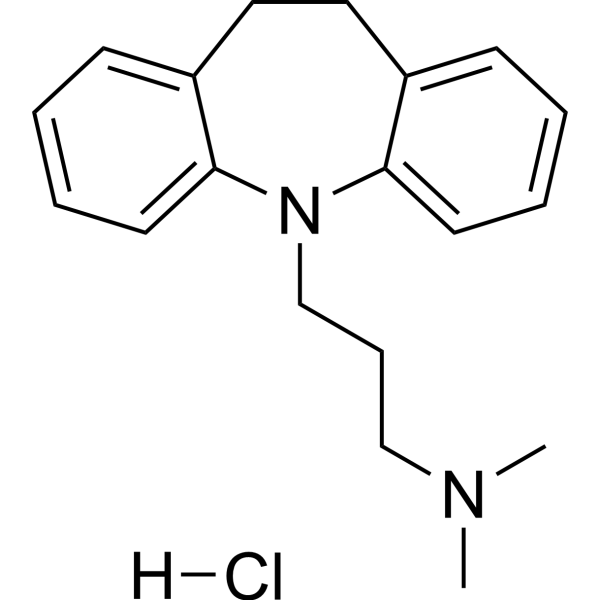
Imipramine hydrochloride is an orally active tertiary amine tricyclic antidepressant. Imipramine hydrochloride is a Fascin1 inhibitor with antitumor activities. Imipramine hydrochloride also inhibits serotonin transporter with an IC50 value of 32 nM. Imipramine hydrochloride stimulates U-87MG glioma cells autophagy and induces HL-60 cell apoptosis. Imipramine hydrochloride shows neuroprotective and immunomodulatory effects .
|
-
-
- HY-B1490A
-
|
|
Serotonin Transporter
Autophagy
Apoptosis
|
Neurological Disease
Inflammation/Immunology
Cancer
|
|
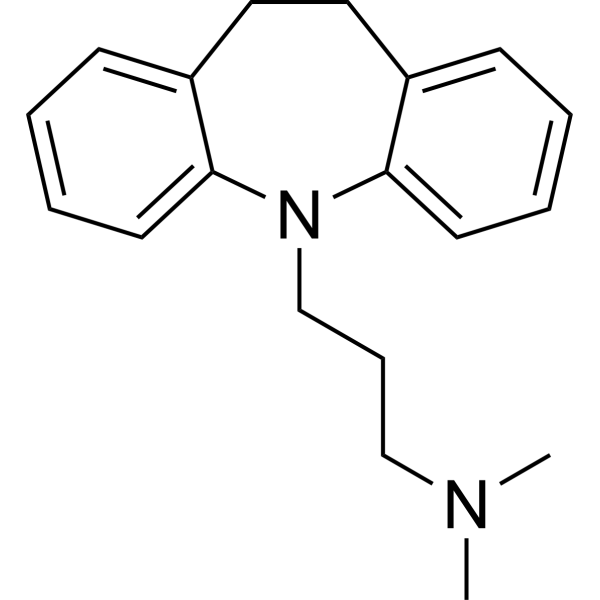
Imipramine is an orally active tertiary amine tricyclic antidepressant. Imipramine is a Fascin1 inhibitor with antitumor activities. Imipramine also inhibits serotonin transporter with an IC50 value of 32 nM. Imipramine stimulates U-87MG glioma cells autophagy and induces HL-60 cell apoptosis. Imipramine shows neuroprotective and immunomodulatory effects .
|
-
-
- HY-13516
-
|
|
Apoptosis
Autophagy
Filovirus
HIV
|
Infection
Inflammation/Immunology
Cancer
|
|
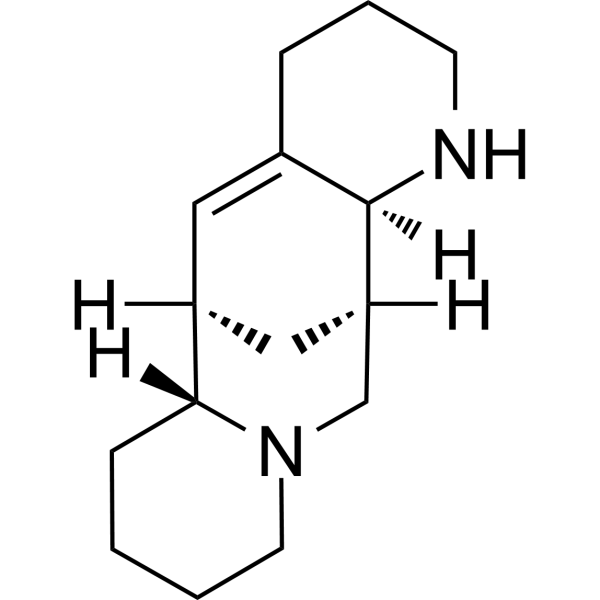
Aloperine is an alkaloid in sophora plants such as Sophora alopecuroides L, which has shown anti-cancer, anti-inflammatory and anti-virus properties .
Aloperine is widely used to treat patients with allergic contact dermatitis eczema and other skin inflammation in China . Aloperine induces apoptosis and autophagy in HL-60 cells .
|
-
-
- HY-N1231
-
|
Kushenol F
|
Apoptosis
|
Cancer
|
|
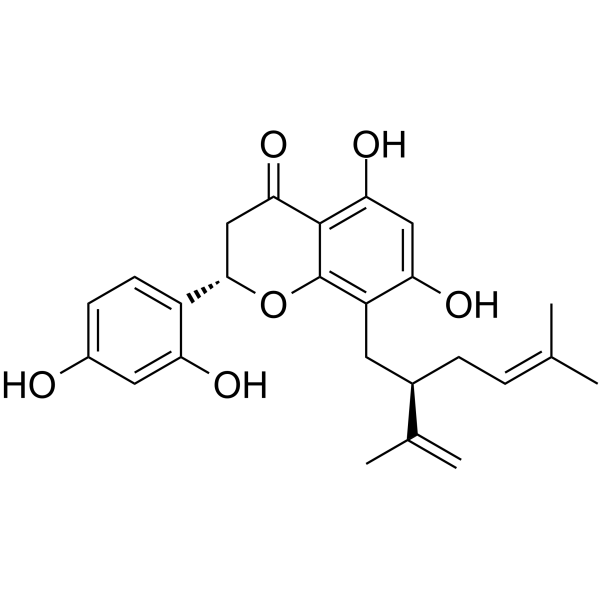
Sophoraflavanone G (Kushenol F) is iaolated from Sophora flavescens and shows anti-tumor and anti-inflammatory properties.? Sophoraflavanone G (Kushenol F) induces MDA-MB-231 and HL-60 cells apoptosis through suppression of MAPK-related pathways .
|
-
-
- HY-136684
-
|
S-p-Bromobenzylglutathione cyclopentyl diester
|
Glyoxalase (GLO)
|
Neurological Disease
Cancer
|
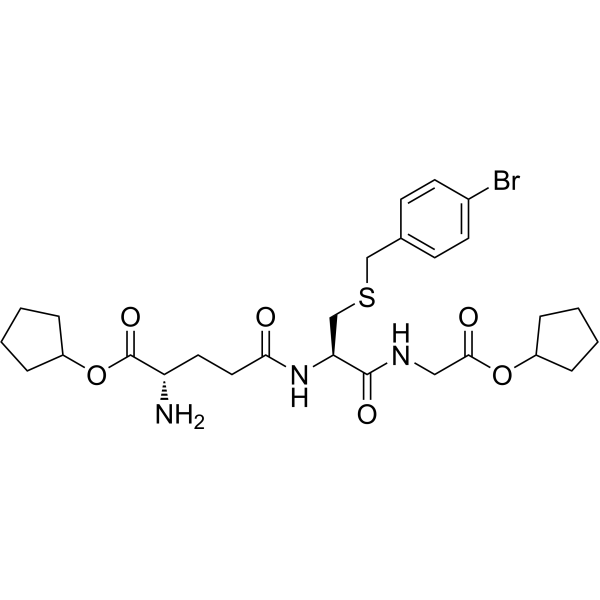
BrBzGCp2 is a Glyoxalase 1 (GLO1) inhibitor, with a GC50 of 4.23 μM in HL-60 cells. BrBzGCp2 possesses antitumor and neuroprotective activity .
|
-
-
- HY-W588250
-
|
|
Integrin
|
Inflammation/Immunology
|
|
Surfactin C1 is an amphiphilic biosurfactants. Surfactin C1 inhibits leukemic cell (HL-60) adhesion to human umbilical vein endothelial cells (HUVEC). Surfactin C1 inhibits adhesion melecules expression, such as ICAM-1 and VCAM-1 .
|
-
-
- HY-33350
-
-
-
- HY-101413
-
Iberin
2 Publications Verification
NSC 321801
|
Apoptosis
Endogenous Metabolite
Bacterial
|
Cancer
|
|
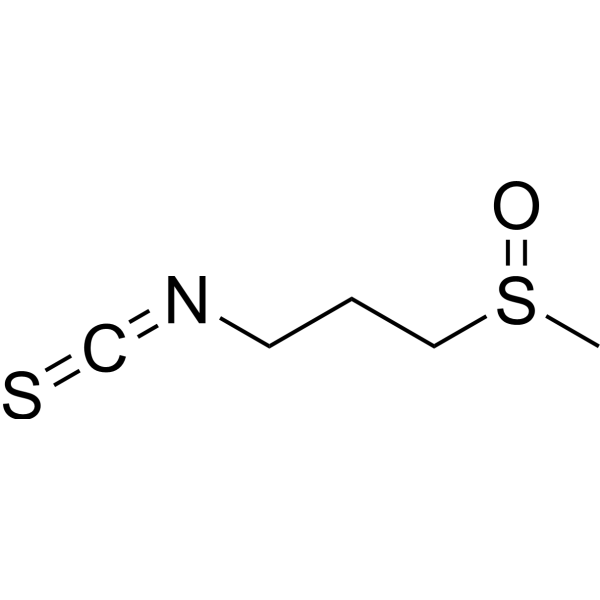
Iberin (NSC 321801), a sulfoxide analogue of sulforaphane, is a naturally occurring member of isothiocyanate family. Iberin inhibits cell survival with an IC50 of 2.3 μM in HL60 cell. Iberin induces apoptosis.
|
-
-
- HY-113978
-
-
-
- HY-N10765
-
|
|
Bacterial
|
Inflammation/Immunology
Cancer
|
|
Salvinolone is active against methicillin-resistant Staphylococcus aureus (MRSA) and vancomycin-resistant Enterococcus (VRE). Salvinolone shows cytotoxic activity with an IC50 of 47.6 μM against the HL-60 tumor cell line for 72 h .
|
-
-
- HY-129578
-
-
-
- HY-112328
-
|
|
Apoptosis
Autophagy
Reactive Oxygen Species (ROS)
CDK
|
Infection
Cancer
|
|
Fascaplysin is an antimicrobial and cytotoxic red pigment, that can come from the marine sponge (Fascaplysinopsis sp.). Fascaplysin has been synthesized in seven steps from indole (65% yield). Fascaplysin can induces apoptosis and autophagy in human leukemia HL-60 cells. Fascaplysin shows anti-tumor activity .
|
-
-
- HY-149470
-
|
|
Histone Acetyltransferase
|
Cancer
|
|
MOZ-IN-3 (Compound 6j) is a KAT6A (MOZ) acetyltransferase inhibitor (IC50: 30 nM). MOZ-IN-3 has antitumor activity against four different myeloid leukemia cell lines (HL-60, U937, SKNO-1, K562). MOZ-IN-3 has favorable metabolic stability and pharmacokinetics .
|
-
-
- HY-N10127
-
|
|
Others
|
Cancer
|
|
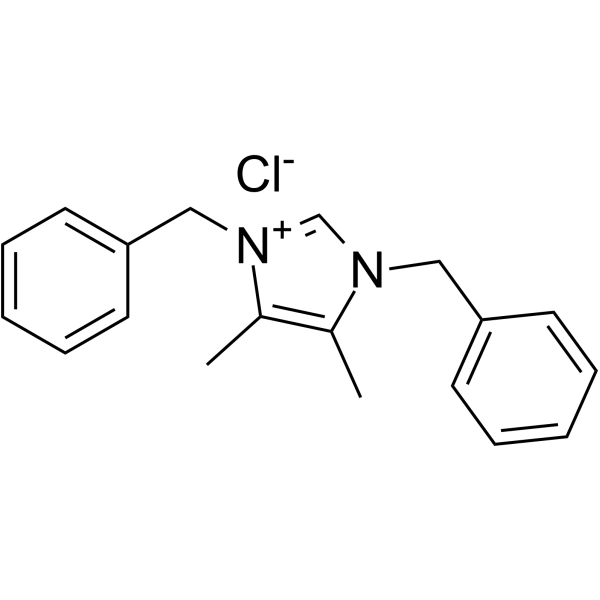
Lepidiline C shows cytotoxic activity against HL-60 cells with an IC50 of 27.7 μM.
|
-
-
- HY-N2113
-
|
|
Autophagy
|
Cancer
|
|
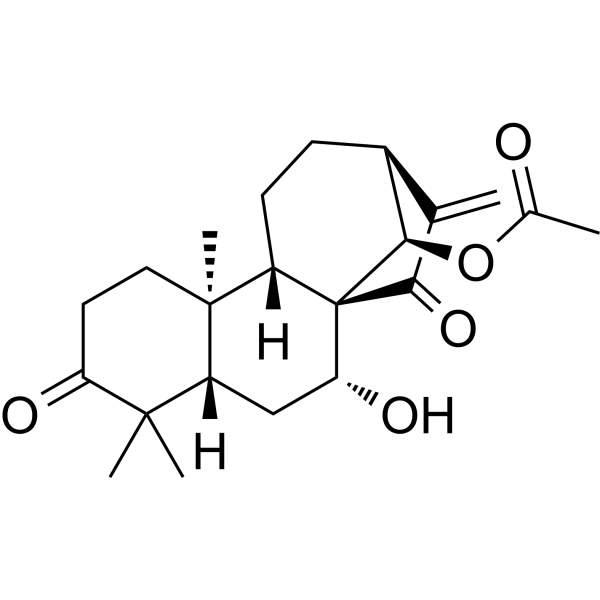
Glaucocalyxin B is an ent kaurane diterpenoid isolated from the Chinese traditional medicine Rabdosia japonica with anticancer and antitumor activity; decreases the growth of HL-60 cells with an IC50 of approximately 5.86 μM at 24 h.
|
-
-
- HY-N6694
-
-
-
- HY-147222
-
SAE-14
1 Publications Verification
GPR183 antagonist-1
|
EBI2/GPR183
|
Neurological Disease
Inflammation/Immunology
|
|
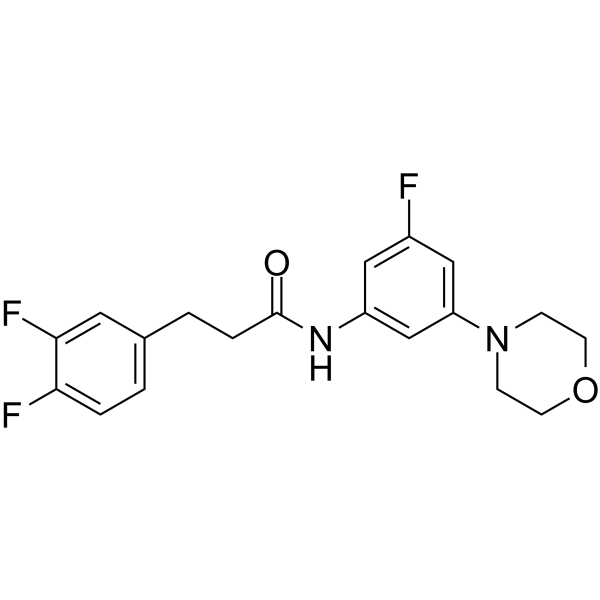
SAE-14 (compound SAE-14) is a potent, specific GPR183 antagonist with an IC50 value of 28.5 nM, can antagonize 7α, 25-OHC–induced calcium mobilization with IC50 value below 50 nM in HL-60 cells. GPR183 antagonist-1 can reverse allodynia in mice .
|
-
-
- HY-108277
-
|
|
Apoptosis
|
Cancer
|
|
Ginsenoside F5, from crude extracts of flower buds of Panax ginseng, remarkably inhibits the growth of HL-60 cells by the apoptosis pathway .
|
-
-
- HY-106784
-
|
|
Fungal
Apoptosis
|
Infection
Cancer
|
|
Ajoene, a garlic-derived compound, is an antithrombotic and antifungal agent. Ajoene inhibits proliferation and induces apoptosis of human leukaemia CD34-negative cells including HL-60, U937, HEL and OCIM-I. Anticancer activities .
|
-
-
- HY-N7450
-
-
-
- HY-129583
-
|
|
17β-HSD
|
Cancer
|
|
Lepidiline A exhibits cytotoxic activity against HL-60 cells with an IC50 value of 32.3 μM. Lepidiline A targets HSD17B1 activity, increases the bioconversion efficiency of sex hormones (including the conversion of estrogen into 17β-estradiol and 4-androsten-3,7-dione into testosterone), thereby improving the reproductive capacity of fruit flies. .
|
-
-
- HY-155066
-
|
|
PI3K
mTOR
Apoptosis
|
Cancer
|
|
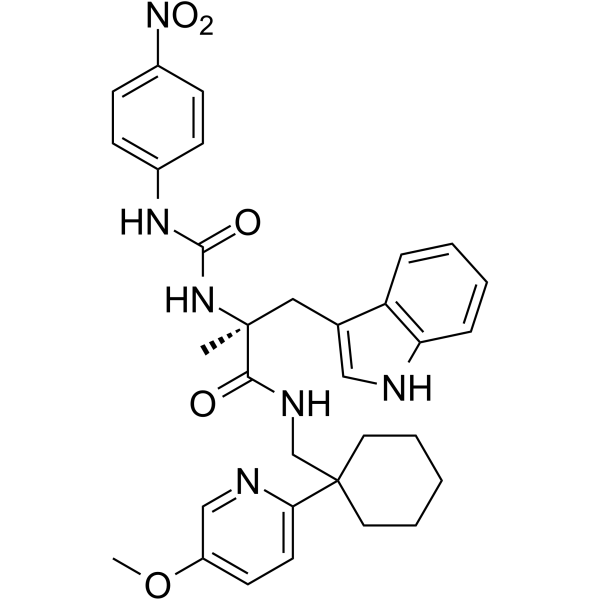
FD274 is a highly potent PI3K/mTOR dual inhibitor with IC50s of 0.65 nM, 1.57 nM, 0.65 nM, 0.42 nM, and 2.03 nM against PI3Kα/β/γ/δ and mTOR, respectively. FD274 exhibits significant anti-proliferation of AML cell lines (HL-60 and MOLM-16). FD274 arrests HL-60 cell cycle at G1 phase and increases apoptosis. FD274 demonstrates dose-dependent inhibition of tumor growth in the HL-60 xenograft model. FD274 has the potential for acute myeloid leukemia research .
|
-
-
- HY-N10531
-
|
Lewis a
|
Others
|
Others
|
|
Lewis a trisaccharide (Lewis a) is a trisaccharide that has been found to be present in the glycan structures of spermatozoa. Lewis a trisaccharide also is a major component of the glycan structures on the surface of HL-60 cells .
|
-
-
- HY-N7634
-
|
|
Farnesyl Transferase
Parasite
|
Infection
Cancer
|
|
Tectol, isolated from Lippia sidoides, exhibits significant activity against human leukemia cell lines HL60 and CEM . Tectol is a farnesyltransferase (FTase) inhibitor with IC50s of 2.09 and 1.73 μM for human and T. brucei FTase, respectively. Tectol inhibits drug-resistant strain of P. falciparum (FcB1) with an IC50 of 3.44 μM .
|
-
-
- HY-N15387
-
|
|
Drug Derivative
|
Cancer
|
|
Hericenone J (Compound 6) is an aromatic compound with anticancer activity, which is found in Hericium erinaceum. Hericenone J is cytotoxic and can significantly reduce the viability of HL-60 human acute promyelocytic leukemia cells with an IC50 value of 4.13 μM. Hericenone J is promising for research of leukemia .
|
-
-
- HY-N12153
-
|
|
Others
|
Cancer
|
|
Theasaponin E2 shows cytotoxicity against K562 and HL60 cells (IC50: 14.7 μg/mL). Theasaponin E2 can be isolated from Camellia sinensis .
|
-
-
- HY-123554
-
|
|
Apoptosis
|
Cancer
|
|
Flavagline FL3 is a flavagline with potent and selective cytotoxicity in cancer cells.Flavagline FL3 induces apoptosis of HL60 and Hela cells by triggering the translocation of Apoptosis Inducing Factor (AIF) and caspase-12 to the nucleus .
|
-
-
- HY-171334
-
|
|
PROTACs
PIN1
|
Cancer
|
|
PROTAC PIN1 degrader-2 (1) is a PROTAC-based PIN1 degrader (Pink: PIN1 ligand HY-171442, Blue: cereblon ligand Thalidomide (HY-14658), Black: linker HY-W014883). PROTAC PIN1 degrader-2 (1) possesses anti-cancer activity, with IC50 values of 2248 nM (MV-4-11 cells), 3984 nM (MOLM-13), 3925 nM (HL-60), 3925 nM (HL-60), 3925 nM (HL-60), 3925 nM (HL-60) and 3925 nM (HL-60) respectively .
|
-
-
- HY-111008A
-
|
VF-233 hydrocHLoride
|
DNA/RNA Synthesis
|
Cancer
|
|
Trimidox hydrochloride (VF-233) is a ribonucleotide reductase inhibitor with antileukemic activities. Trimidox hydrochloride inhibits the growth of human promyelocytic leukemia HL-60 cells with an IC50 of 35 μM .
|
-
-
- HY-N9339
-
|
(+)-Norglaucine
|
Others
|
Cancer
|
|
Norglaucine ((+)-Norglaucine), a cytotoxic alkaloid, exhibits cytotoxicity towards the tumor cell lines B16-F10, HepG2, K562 and HL-60 cells .
|
-
-
- HY-N1710
-
|
|
Apoptosis
Caspase
|
Cancer
|
|
28-Deoxonimbolide is a Nimbin (HY-N3187) type limonoid, that can be isolated from Azadirachta indica seed extracts. 28-Deoxonimbolide shows anticancer activity. 28-Deoxonimbolide induces apoptotic cell death in HL60 cells via both the mitochondrial- and the death receptor-mediated pathways .
|
-
-
- HY-N11928
-
|
|
Others
|
Cancer
|
|
Changnanic acid (schisandrin) is a triterpene compound with potential anti-tumor effects. Changnanic acid exhibits moderate cytotoxic activity against human tumor cell lines Bel-7402, MCF-7 and HL-60, with IC50s of 100 μM, 100 μM and 50.51 μM respectively .
|
-
-
- HY-146565
-
|
|
DNA-PK
|
Cancer
|
|
DNA-PK-IN-8 is a highly potent, selective and orally active DNA-dependent protein kinase (DNA-PK) inhibitor with an IC50 value of 0.8 nM. DNA-PK-IN-8 exhibits synergistic antiproliferative activity against a series of cancer cell lines and significantly suppresses HL-60 tumor growth, when using in combination with Doxorubicin .
|
-
-
- HY-N10208
-
|
|
Endogenous Metabolite
|
Cancer
|
|
Aspericin C is a pyran derivative found in the marine-derived fungus Rhizopus sp. 2-PDA-61. Aspericin C shows cytotoxic activities against P388, A549, HL-60, and BEL-7420 cell lines (IC50=14.6, 7.1, 61.4, and 24.2 μM, respectively) .
|
-
-
- HY-175261
-
|
|
CDK
Wee1
Checkpoint Kinase (Chk)
|
Cancer
|
|
DHI1 is an anti-leukemia agent with high selectivity for Jurkat (IC50 = 21.83 μM) and HL-60 (IC50 = 19.14 μM) leukemia cells and has low toxicity to non-cancerous cells. DHI1 can induce G2/M phase cell arrest in Jurkat and HL-60 leukemia cells, as well as S phase arrest in HL-60 cells, and has significant effects on cell cycle signaling molecules Wee1, cyclin B1, cdc2 on Tyr15, and Chk1. DHI1 inhibits the migration and invasion of Jurkat and HL-60 cells by disrupting cytoskeletal actin filaments. DHI1 can be used to study hematological malignancies .
|
-
-
- HY-N7338
-
|
|
Others
|
Cancer
|
|
Yadanziolide C is a quassinoid with antiproliferative and differentiation-inducing properties in promyelocytic HL-60 cells .
|
-
-
- HY-155390
-
|
|
Caspase
Apoptosis
|
Cancer
|
|
Caspase-3 activator 3 (compound 2h) induces apoptosis in HL-60 and K562 cells via significant caspase 3 activation. Caspase-3 activator 3 shows antileukemic acticity against HL-60 and K562 cells, with IC50 values of 42.89 and 33.61 μM, respectively .
|
-
-
- HY-N8477
-
-
-
- HY-115754
-
|
PEITC-Cys
|
DNA/RNA Synthesis
Cytochrome P450
|
Cancer
|
|
S-(N-PhenethylthiocarbaMoyl)-L-cysteine (PEITC-Cys), an anticarcinogenic agent, has antileukemic activity. S-(N-PhenethylthiocarbaMoyl)-L-cysteine inhibits DNA synthesis in HL60 cells . S-(N-PhenethylthiocarbaMoyl)-L-cysteine is a P450 inhibitor .
|
-
-
- HY-N8658
-
|
|
Others
|
Infection
Inflammation/Immunology
|
|
Epinodosin is a diterpenoid. Epinodosin has moderate cytotoxicity against HL-60 cells with IC50 value of 10.4 μM. Epinodosin can be used for the research of inflammatory diseases .
|
-
-
- HY-159610
-
|
|
Molecular Glues
|
Cancer
|
|
GSPT1 degrader-10 (compound A) is a cereblon-based molecular glue degrader of GSPT1 with more than 95% degradation. GSPT1 degrader-8 inhibits cell viability in HL-60 cells with an IC50 of 10 nM .
|
-
-
- HY-135122
-
|
|
ADC Payload
DNA Alkylator/Crosslinker
|
Cancer
|
|
DC10SMe is a DNA alkylator, can be used in the synthesis of antibody-drug conjugate (ADC). DC10SMe exhibits IC50s of 15 pM, 12 pM, and 12 pM for Ramos, Namalwa, and HL60/s cancer cells, respectively .
|
-
-
- HY-113978R
-
-
-
- HY-P1121
-
|
|
Formyl Peptide Receptor (FPR)
|
Inflammation/Immunology
|
|
WKYMVM-NH2 is a hexapeptide that activates neutrophils and myeloid cells via the FPRL1 and FPRL2 receptors. It exhibits EC50 values of 2 nM and 80 nM in HL-60-FPRL1 and HL-60-FPRL2 cells, respectively. In HL-60 cells stably expressing FPRL2, WKYMVM-NH₂ induces chemotaxis, with optimal migration observed at concentrations ranging from 10 to 50 nM. It also stimulates superoxide production in neutrophils, with an EC50 of 75 nM. WKYMVM-NH₂ is a useful tool for research in the field of inflammatory diseases .
|
-
-
- HY-112900
-
|
|
ADC Payload
|
Cancer
|
|
DC41SMe, a DC1 derivative, shows cytotoxicity in Ramos, Namalwa, and HL60/s cells with IC50s ranging from 18-25 pM. DC1, a simplified analogue of CC-1065, is an antibody conjugate of cytotoxic DNA alkylators for the targeted treatment of cancer .
|
-
-
- HY-159609
-
|
|
Molecular Glues
|
Cancer
|
|
GSPT1 degrader-9 (Compound F) is a cereblon-based molecular glue degrader for G1 to S phase transition protein 1 (GSPT1) that degrades GSPT1 with a rate of 95% (1 μM) GSPT1 and 86% (0.1 μM). GSPT1 degrader-9 inhibits the cell viability of HL-60 with an IC50 of 9.2 nM .
|
-
-
- HY-B1490AS
-
|
|
Isotope-Labeled Compounds
Serotonin Transporter
|
Neurological Disease
Inflammation/Immunology
Cancer
|
|
Imipramine-d6 is the deuterium labeled Imipramine hydrochloride. Imipramine is an orally active tertiary amine tricyclic antidepressant. Imipramine is a Fascin1 inhibitor with antitumor activities. Imipramine also inhibits serotonin transporter with an IC50 value of 32 nM. Imipramine stimulates U-87MG glioma cells autophagy and induces HL-60 cell apoptosis. Imipramine shows neuroprotective and immunomodulatory effects .
|
-
-
- HY-B1490S1
-
-
-
- HY-N8088
-
|
|
Others
|
Cancer
|
|
Neolancerin is a natural product with weak cytotoxic activity against HL-60 cells .
|
-
-
- HY-122157
-
|
|
DNA/RNA Synthesis
|
Cancer
|
|
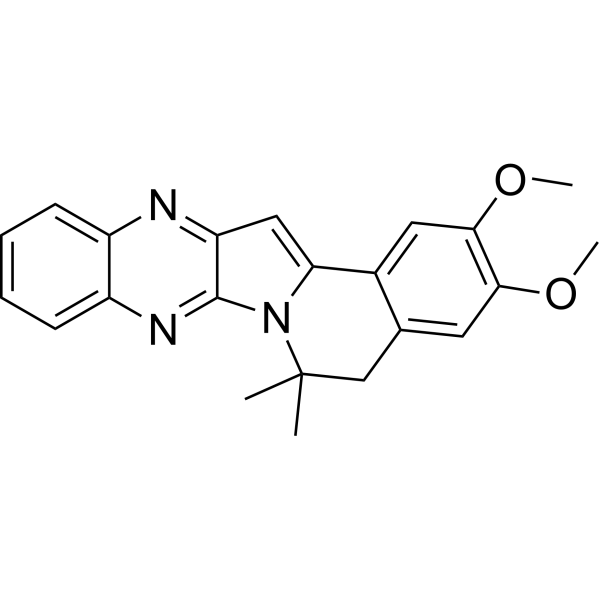
YM-534, an imidazole compound, is an anti-cancer agent. YM-534 inhibits HL-60 cells with an IC50 of 2.5 μM. YM-534 retards the processing of preribosomal to ribosomal RNA of HL-60 cells. YM-534 can be used for the study of promyelocytic leukemia .
|
-
- HY-N14190
-
|
|
Others
|
Cancer
|
|
Macrosphelide L is a cell adhesion inhibitor. Macrosphelide L inhibits the adhesion of HL-60 cells to HU-VEC cells with an IC50 of 5.6 μM .
|
-
- HY-N14556
-
|
|
Apoptosis
|
Cancer
|
|
L-2,5-Dihydrophenylalanine can cause apoptosis of HL-60 in human myeloblastoid leukemia cells .
|
-
- HY-N7562
-
|
|
Others
|
Cancer
|
|
Ustusolate E is a drimane sesquiterpene with moderate cytotoxicity against HL-60 cells with an IC50 value of 9.0 μM .
|
-
- HY-N1081A
-
|
(S)-Viteralone
|
Others
|
Cancer
|
|
Viteralone (compound 5) is a natural product that can be isolated from Vitex negundo. Viteralone is cytotoxic to HL-60 cancer cells .
|
-
- HY-119827
-
|
F 860191
|
Topoisomerase
|
Cancer
|
|
Moflomycin (F 860191) is a compound with strong anti-leukemic activity and low mutagenicity. Moflomycin has an antiproliferative effect on the leukemic cell line HL60 in vitro (IC50=2.9 nM) . Moflomycin enhances topoisomerase II-induced DNA breaks and free radical production .
|
-
- HY-111008
-
|
VF-233
|
DNA/RNA Synthesis
|
Cancer
|
|
Trimidox (VF-233) is a ribonucleotide reductase inhibitor with antileukemic activities. Trimidox inhibits the growth of human promyelocytic leukemia HL-60 cells with an IC50 of 35 μM .
|
-
- HY-N10852
-
|
|
Others
|
Cancer
|
|
Shikokianin, a diterpenoid, shows significant cytotoxicity against HL-60 and A-549 cells with IC50 values of 3.4 μM and 18.8 μM, respectively .
|
-
- HY-N14886
-
|
|
Antibiotic
Bacterial
|
Infection
|
|
Pyridindolol K2 is an alkaloid antibiotic found in Str. Sp. K93-0711. Pyridindolol K2 can inhibit the adhesion of HL-60 cells .
|
-
- HY-D1267
-
|
|
Apoptosis
|
Cancer
|
PAO-Nap is the modified PAO attached a naphthalimide fluorophore using aminocaproic acid as a linker. PAO induces oxidative stress-mediated apoptosis in HL-60 cells by selectively targeting thioredoxin reductase .
|
-
- HY-131555
-
|
|
Apoptosis
|
Cancer
|
|
p-Decylaminophenol is an aminophenol analog with anticancer activities. p-Decylaminophenol induces apoptosis of HL60 cells .
|
-
- HY-N10392
-
|
|
Apoptosis
|
Cancer
|
|
(S)-Erypoegin K is a potent anticancer agent. (S)-Erypoegin K shows potent anti-proliferative activity against HL-60 cells. (S)-Erypoegin K induces apoptosis .
|
-
- HY-117220
-
|
|
Others
|
Cancer
|
|
Aspochalasin M is a colorless solid. Aspochalasin M shows modest activity against HL-60 cells with an IC50 of 20.0 μM. Aspochalasin M has the potential for the research of leukemic disease .
|
-
- HY-N9159
-
|
|
Others
|
Cancer
|
|
Piptocarphin F (Compound 5) is a sesquiterpene
lactone. Piptocarphin F shows cytotoxic activity on human leukemia cell line
HL-60 (IC50=5.69 μmol*L -1) .
|
-
- HY-158019
-
|
|
DNA/RNA Synthesis
|
Cancer
|
|
Anticancer agent 196 (compound 1) shows cell cytotoxicity with IC50 values of 7.69 µM and 54.2 µM for HL-60 cells and A549 cells, respectively. Anticancer agent 196 can induce DNA damage .
|
-
- HY-158020
-
|
|
DNA/RNA Synthesis
|
Cancer
|
|
Anticancer agent 197 (compound 2b) shows cell cytotoxicity with IC50 values of 10.03 µM and 73.54 µM for HL-60 cells and A549 cells, respectively. Anticancer agent 197 can induce DNA damage .
|
-
- HY-N16442
-
|
|
Endogenous Metabolite
Prolyl Endopeptidase (PREP)
|
Cancer
|
|
Pyrrocidine B (Compound 6), an alkaloid, is a microbial secondary metabolite. Pyrrocidine B can be isolated from the endophytic fungus Neonectria ramulariae Wollenw KS-246. Pyrrocidine B has significant cytotoxicity against leukemia cells (IC50 of 4.6 μM for HL60 cells) with a weak Prolyl oligopeptidase (POP) inhibitory activity .
|
-
- HY-N12534
-
|
|
Apoptosis
|
Cancer
|
|
Monaspin B is a natural product produced by the co-culture of Monascus purpureus and Aspergillus oryzae. Monaspin B exerts anti-proliferation activity by inducing apoptosis of HL-60 cells, IC50 160 nM. Monaspin B has antitumor activity .
|
-
- HY-N16642
-
|
|
Others
|
Cancer
|
|
Rabdoternin D is an Ent-Kaurane diterpenoid found in Rabdosia rubescens. Rabdoternin D shows no significant cytotoxicity to Hep G2, COLO 205, MCF-7 and HL-60 cancer cells with IC50 values >100 μM .
|
-
- HY-N10364
-
|
|
Others
|
Cancer
|
|
6β,7β-Epoxyasteriscunolide A, a sesquiterpenoid, shows cytotoxicity against the HL-60 and MOLT-3 leukemia cell lines, with IC50s range 4.1-5.4 μM .
|
-
- HY-N12108
-
|
|
Phosphatase
|
Infection
Inflammation/Immunology
Cancer
|
|
Forphenicine is a bacterial metabolite that is found in S. fulvoviridis and an inhibitor of alkaline phosphatase. Forphenicine inhibits the growth of HL-60 leukemia cells at 10 µM. Forphenicine also increases survival in a guinea pig model of experimental autoimmune encephalomyelitis (EAE) .
|
-
- HY-N7623
-
|
|
Drug Derivative
|
Cancer
|
|
Ursonic acid methyl ester is an esterified derivative of Ursolic acid (HY-N0140). Ursonic acid methyl ester shows growth inhibitory activity against four tumor cell lines, HL-60, BGC, Bel-7402 and Hela with ED50 values of >100 µg/ml .
|
-
- HY-107471
-
|
GP2a
|
Cannabinoid Receptor
|
Cancer
|
|
CB2 receptor agonist 3 is a robust and selective CB2 cannabinoid agonist with Kis of 7.6 and 900 nM for CB2 and CB1, respectively. CB2 receptor agonist 3 significantly increases P-ERK 1/2 expression in HL-60 cells .
|
-
- HY-N3615
-
|
|
Others
|
Cancer
|
|
Confluentin can be isolated from Rhododendron dauricum. Confluentin shows weak cytotoxicity against human tumor cells (IC50: 15.05, 17.08, 18.48, and 23.01 μM for HL-60, SMMC-7712, A-549, and MCF-7) .
|
-
- HY-155389
-
|
|
Caspase
|
Cancer
|
|
Caspase-3 activator 2 (Compound 2f) is a caspase 3 activator that induces apoptosis and can be used in cancer research. Caspase-3 activator 2 is cytotoxic to HL-60 cells and K562 cells, with IC50 values of 33.52 μM and 76.90 μM respectively .
|
-
- HY-N15112
-
|
|
Others
|
Cancer
|
|
Pintulin can inhibit P388, L 1210, HL-60, KB and other tumor cell lines with IC50s (μg/mL) of 0.8, 0.8, 0.8, 0.25, respectively. Pintulin has only very weak antibacterial activity against the microorganisms tested .
|
-
- HY-N16645
-
|
|
Cholinesterase (ChE)
|
Cancer
|
|
Plasiaticine B (Compound 2) is an indole alkaloid found in Plantago asiatica. Plasiaticine B shows no significant cytotoxicity to HL-60, A-549 and MCF-7 cells with IC50 >40 μM. Plasiaticine B shows no significant inhibitory effect on AChE, with an inhibition rate <60% .
|
-
- HY-N11651
-
|
|
Others
|
Others
|
|
Peganumine A is a natural product that can be found in Peganum harmala. Peganumine A shows cytotoxicity with IC50s of5.8, 38.5, 40.2, 55.4 µM for HL-60, MCF-7, PC-3, and HepG2 cells ,respectively .
|
-
- HY-N10206
-
|
|
Endogenous Metabolite
|
Cancer
|
|
11-epi-Chaetomugilin I is a metabolite found in Chaetomium globosum. 11-epi-Chaetomugilin I exhibits significant cytotoxic activity against the murine P388 leukemia cell line, the human HL-60 leukemia cell line, the murine L1210 leukemia cell line, and the human KB epidermoid carcinoma cell line .
|
-
- HY-129334
-
|
|
Telomerase
|
Cancer
|
|
Macrocalin B is a diterpenoid, which can be isolated from Isodon xerophilus. Macrocalin B inhibits the proliferation of cancer cells K562, HL-60, A549, MKN, CA and HCT with IC50 of 2.81-171 μM. Macrocalin B inhibits the telomerase in K562 with an IC50 in nanomolar level .
|
-
- HY-N14377
-
|
|
Bacterial
|
Infection
Cancer
|
|
Papyracon D has weak effect against nematodes and has inhibitory effect on L1210 and HL60 cells. Papyracon D also has weak anti-Gram-positive bacterial effect .
|
-
- HY-N14947
-
|
|
Quinone Reductase
|
Cancer
|
|
Pterulinic acid is a coenzyme I: Coenzyme Q oxidoreductase inhibitor. he IC50 (μg/mL) L1210 and HL60 of Pterulinic acid to mammalian cell lines are 50 and 20 respectively. HeLaS3 25; BHK is 100 .
|
-
- HY-129578R
-
|
|
Reference Standards
Autophagy
Cathepsin
|
Infection
Inflammation/Immunology
Cancer
|
|
Asperphenamate (Standard) is the analytical standard of Asperphenamate. This product is intended for research and analytical applications. Asperphenamate, a fungal metabolite of Aspergillus flatiipes with anti-cancer effect, exhibits IC50 values of 92.3 μM, 96.5 μM and 97.9 μM in T47D, MDA-MB-231 and HL-60 cells, respectively[1][2].
|
-
- HY-N1231R
-
|
Kushenol F (Standard)
|
Reference Standards
Apoptosis
|
Cancer
|
|
Sophoraflavanone G (Standard) is the analytical standard of Sophoraflavanone G. This product is intended for research and analytical applications. Sophoraflavanone G (Kushenol F) is iaolated from Sophora flavescens and shows anti-tumor and anti-inflammatory properties. Sophoraflavanone G (Kushenol F) induces MDA-MB-231 and HL-60 cells apoptosis through suppression of MAPK-related pathways .
|
-
- HY-N3210
-
|
|
Others
|
Cancer
|
|
Nb-Demethylechitamine is an alkaloid isolated from the methanol extract of Alstonia rostrata twigs. Nb-Demethylechitamine has in vitro cytotoxic activity against several human cancer cell lines, including human myeloid leukemia HL-60, liver cancer SMMC-7721, lung cancer A-549, breast cancer MCF-7, and colon cancer SW480 cells .
|
-
- HY-135124
-
|
|
ADC Payload
|
Cancer
|
|
DC44SMe, a phosphate proagent of cytotoxic DNA alkylator DC44, can be used in the synthesis of antibody-drug conjugate (ADC). DC44SMe exhibits IC50s of 2.0 nM, 2.8 nM, and 1.9 nM for Ramos, Namalwa, and HL60/s cancer cells, respectively. DC44SMe can be used for the targeted treatment of cancer .
|
-
- HY-135123
-
|
|
ADC Payload
|
Cancer
|
|
DC4SMe, a phosphate proagent of cytotoxic DNA alkylator DC4, can be used in the synthesis of antibody-drug conjugate (ADC). DC4SMe exhibits IC50s of 1.9 nM, 2.9 nM, and 1.8 nM for Ramos, Namalwa, and HL60/s cancer cells, respectively. DC4SMe can be used for the targeted treatment of cancer .
|
-
- HY-172153
-
|
|
CDK
Reactive Oxygen Species (ROS)
Apoptosis
|
Cancer
|
|
CDK2-IN-41 (Compound 7a) is a CDK2 inhibitor that exerts anticancer activity by binding to CDK2, thereby inhibiting the cell cycle, inducing cytotoxicity, promoting ROS production, and triggering Apoptosis. CDK2-IN-41 exhibits an IC50 of 10 µM against acute myeloid leukemia (AML) HL-60 cells. It holds potential for research in AML-related cancer therapy .
|
-
- HY-13516R
-
|
|
Apoptosis
Autophagy
Filovirus
HIV
Reference Standards
|
Infection
Inflammation/Immunology
Cancer
|
|
Aloperine (Standard) is the analytical standard of Aloperine. This product is intended for research and analytical applications. Aloperine is an alkaloid in sophora plants such as Sophora alopecuroides L, which has shown anti-cancer, anti-inflammatory and anti-virus properties .
Aloperine is widely used to treat patients with allergic contact dermatitis eczema and other skin inflammation in China . Aloperine induces apoptosis and autophagy in HL-60 cells .
|
-
- HY-168082
-
|
|
Histone Methyltransferase
|
Cancer
|
|
Dot1L-IN-8 (Compound 15) is a potent Dot1L inhibitor. Dot1L-IN-8 inhibits HL-60, K562, MV4-11, HH, and KG-1 cells vitality with IC50s of 0.45, 1.03, 0.68, 1.66, and 1.12 μM, respectively .
|
-
- HY-158371
-
|
|
HDAC
Casein Kinase
|
Cancer
|
|
HDAC/CK2-IN-1 (compound 38) is a HDAC1 (IC50 = 1.46 μM), HDAC6 (IC50 = 0.66 μM), and CK2 (IC50 = 3.67 μM) inhibitor. HDAC/CK2-IN-1 exhibits promising antproliferative activity against Jurkat, MCF-7, HCT-116, and HL-60 cell lines .
|
-
- HY-B1490S
-
|
|
Serotonin Transporter
Apoptosis
Autophagy
|
Neurological Disease
Inflammation/Immunology
Cancer
|
|
Imipramine-d4 (hydrochloride) is the deuterium labeled Imipramine hydrochloride. Imipramine hydrochloride is an orally active tertiary amine tricyclic antidepressant. Imipramine hydrochloride is a Fascin1 inhibitor with antitumor activities. Imipramine hydrochloride also inhibits serotonin transporter with an IC50 value of 32 nM. Imipramine hydrochloride stimulates U-87MG glioma cells autophagy and induces HL-60 cell apoptosis. Imipramine hydrochloride shows neuroprotective and immunomodulatory effects .
|
-
- HY-B1490AS1
-
|
|
Serotonin Transporter
Isotope-Labeled Compounds
Apoptosis
Autophagy
|
Others
|
|
Imipramine-d4 is deuterium labeled Imipramine. Imipramine is an orally active tertiary amine tricyclic antidepressant. Imipramine is a Fascin1 inhibitor with antitumor activities. Imipramine also inhibits serotonin transporter with an IC50 value of 32 nM. Imipramine stimulates U-87MG glioma cells autophagy and induces HL-60 cell apoptosis. Imipramine shows neuroprotective and immunomodulatory effects .
|
-
- HY-N17431
-
|
|
Others
|
Cancer
|
|
Cynanoside K is a pregnane glycoside isolated from Cynanchum atratum. Cynanoside K shows no activity against HL-60, KATO-III, and A549 cells .
|
-
- HY-N15332
-
|
Bellissaponin BS2
|
Others
|
Cancer
|
|
Virgaureasaponin 1 (Bellissaponin BS2) is a saponin that can be isolated from Bellis perennis. Virgaureasaponin 1 is cytotoxic against tumor cells (IC50: 4.6 μM for HL-60 cells) .
|
-
- HY-N7154
-
|
|
Others
|
Cancer
|
|
2,3-O-Isopropylidenyl euscaphic acid, a triterpenoid from the seeds of blackberry (Rubus fructicosus), exhibits cytotoxic activity towards HL-60 human leukaemia cells with IC50 value of 72.8 μM .
|
-
- HY-179399
-
|
|
Apoptosis
Mitochondrial Metabolism
|
Cancer
|
|
β-carboline-ACS81 is a β-carboline derivative with potent antitumor properties. β-carboline-ACS81 induces apoptosis through the collapse of mitochondrial membrane potential and arrests cell cycle at G2/M phase in HL-60 cells. β-carboline-ACS81 possesses potent antiproliferative activity against HL-60 cells (IC50 = 1.52 μM). β-carboline-ACS81 can be used for the research of leukemia, histiocytic lymphoma, hepatocellular carcinoma, malignant melanoma, colorectal carcinoma and lung carcinoma .
|
-
- HY-N16393
-
|
Mitorubrinol
|
Others
|
Cancer
|
|
(-)-Mitorubrinol is found in the marine-derived Penicillium purpurogenum G59 strain induced by diethyl sulfate (DES). (-)-Mitorubrinol exhibits inhibitory effects on K562, HL-60, HeLa, and BGC-823 cancer cell lines .
|
-
- HY-W016470
-
|
|
Drug Derivative
|
Cancer
|
|
9,10-Dihydrophenanthrene is an analogue of 9,10-Phenanthrenequinone (HY-W014507). 9,10-Dihydrophenanthrene loses its anti-tumor activity that induces apoptosis in HCT-116 and HL-60 tumor cells .
|
-
- HY-131496
-
|
|
STAT
|
Cancer
|
|
ortho-Topolin riboside is a naturally occurring cytokinin secreted from Populus x robusta leaves after sunrise. ortho-Topolin riboside has shown unique cytotoxic activity against NCI60 cell lines compared with the activity of other cytokinins.ortho-Topolin riboside induced differentiation through inhibition of STAT3 signaling in acute myeloid leukemia HL-60 cells.
|
-
- HY-177714
-
|
|
Drug Derivative
|
Cancer
|
|
14-Acetoxy parthenolide (compound 6a) is a parthenolide (PTL) derivative. 14-Acetoxy parthenolide exhibits potent anti-acute myeloid leukemia (AML) activity against HL-60 and KG1a cells, with IC50 values of 2.8 µM and 6.3 µM, respectively. 14-Acetoxy parthenolide can be used for AML research .
|
-
- HY-123417
-
|
|
Phosphatase
|
Cancer
|
|
IRC-083864 is an inhibitor of CDC25 phosphatase. IRC-083864 inhibits the activity of recombinant human full-length CDC25 phosphatase with an IC50 value of 23 nM. IRC-083864 inhibits cell viability with an IC50 value of 47 nM on the HL60 cell line .
|
-
- HY-112898
-
|
|
ADC Payload
|
Cancer
|
|
DC1Sme, a DC1 derivative, exhibits IC50 values of 22 pM, 10 pM, 32 pM and 250 pM for Ramos, Namalwa, HL60/s and COLO 205 cancer cells, respectively. DC1, an analogue of the minor groove-binding DNA alkylator CC-1065, is a ADC Cytotoxin. DC1 can be used in synthesis of antibody-drug conjugates for the targeted treatment of cancer.
|
-
- HY-18051
-
|
|
Calcium Channel
|
Cancer
|
|
CXL 017 is a sarco/endoplasmic reticulum Ca 2+-ATPase (SERCA) inhibitor. CXL 017 can inhibit the ATPase activity of SERCA by competing with ATP for binding. CXL 017 exhibits selective cytotoxicity against multidrug-resistant acute myeloid leukemia cells HL60/MX2. CXL 017 can be used in the research of tumors such as multidrug-resistant acute myeloid leukemia .
|
-
- HY-B1490AR
-
|
|
Serotonin Transporter
Autophagy
Apoptosis
Reference Standards
|
Neurological Disease
Inflammation/Immunology
Cancer
|
|
Imipramine (Standard) is the analytical standard of Imipramine. This product is intended for research and analytical applications. Imipramine is an orally active tertiary amine tricyclic antidepressant. Imipramine is a Fascin1 inhibitor with antitumor activities. Imipramine also inhibits serotonin transporter with an IC50 value of 32 nM. Imipramine stimulates U-87MG glioma cells autophagy and induces HL-60 cell apoptosis. Imipramine shows neuroprotective and immunomodulatory effects .
|
-
- HY-B1490AS3
-
-
- HY-B1490R
-
|
|
Reference Standards
Serotonin Transporter
Apoptosis
Autophagy
|
Neurological Disease
Inflammation/Immunology
Cancer
|
|
Imipramine (hydrochloride) (Standard) is the analytical standard of Imipramine (hydrochloride). This product is intended for research and analytical applications. Imipramine hydrochloride is an orally active tertiary amine tricyclic antidepressant. Imipramine hydrochloride is a Fascin1 inhibitor with antitumor activities. Imipramine hydrochloride also inhibits serotonin transporter with an IC50 value of 32 nM. Imipramine hydrochloride stimulates U-87MG glioma cells autophagy and induces HL-60 cell apoptosis. Imipramine hydrochloride shows neuroprotective and immunomodulatory effects .
|
-
- HY-162910
-
|
|
Xanthine Oxidase
HDAC
Autophagy
Apoptosis
|
Metabolic Disease
Inflammation/Immunology
Cancer
|
|
HDAC-IN-79 (compound 4) is an orally active dual xanthine oxidase-HDAC inhibitor (Xanthine oxidase: IC50=6.6 nM; HDAC1: IC50=134 nM; HDAC2: IC50=284 nM; HDAC3: IC50=173 nM; HDAC6: IC50=1.32 nM;), with significant in vivo anti-hyperuricemia and anti-tumor activities. HDAC-IN-79 is the most potent cell growth inhibitor (IC50=0.706 μM) of leukemia HL60 cells, induces apoptosis and autophagy, and can regulate the expression levels of signature biomarkers associated with intracellular HDAC inhibition .
|
-
- HY-N9674
-
|
|
Others
|
Cancer
|
|
Epimedonin H is a selective prenylated 2-phenoxychromone compound with no significant cytotoxicity against five human cancer cell lines, including HL-60 and SMMC-7721 (IC50 > 10 μM). Epimedonin H can be used in potential activity screening studies in the field of natural product chemistry. Epimedonin H can be extracted from the dried aerial parts of Epimedium brevicornum (a plant of the genus Epimedium in the Berberidaceae family) .
|
-
- HY-N12641
-
|
|
Apoptosis
Pyroptosis
|
Cancer
|
|
Ardisianone is a component with an alkyl benzoquinone structure that can be isolated from Ardisia virens Kurz and Ardisia compressa tea extract. Ardisianone exhibits potent antileukemic activity, particularly against HL-60 cells, with IC50 values of 1.87 μM (24 h) and 1.67 μM (48 h). Ardisianone induces caspase-dependent apoptosis and triggers pyroptosis. Ardisianone can be used for the study of acute myeloid leukemia (AML) .
|
-
- HY-W740572
-
|
|
Prostaglandin Receptor
COX
|
Inflammation/Immunology
|
|
O-Desmethyl-N-deschlorobenzoyl indomethacin is a metabolite of the non-steroidal anti-inflammatory drug (NSAID) and COX inhibitor indomethacin (HY-14397). It is formed from indomethacin in isolated rabbit hepatocytes. O-Desmethyl-N-deschlorobenzoyl indomethacin (600 μM) decreases the viability of HL-60 leukemia cells when cultured with glucose oxidase. It has also been used in the synthesis of prostaglandin D2 (HY-101988) receptor antagonists.
|
-
- HY-W047131
-
|
|
Bacterial
|
Infection
Cancer
|
|
IPrAgCl is an antibacterial agent. IPrAgCl exhibits antiproliferative activity against MCF7 cell line with an IC50 of 30 nM. IPrAgCl has an IC50 of 35 nM against KB cancer cell line. IPrAgCl induces apoptosis in HL60 cell line. IPrAgCl promotes apoptosis-inducing factor translocation from the mitochondrial to the nuclear compartment .
|
-
- HY-155557
-
|
|
Apoptosis
|
Cancer
|
|
Anti-inflammatory agent 45 (compound 2v) is an anticancer agent with direct inhibitory effects on the growth of different blood cancers including leukemia, lymphoma and myeloma cell lines. Anti-inflammatory agent 45 induces apoptosis and inhibits NO production in HL60 leukemia cells (IC50=14.7 μM) .
|
-
- HY-107471R
-
|
GP2a (Standard)
|
Reference Standards
Cannabinoid Receptor
|
Cancer
|
|
CB2 receptor agonist 3 (Standard) is the analytical standard of CB2 receptor agonist 3 (HY-107471). This product is intended for research and analytical applications. CB2 receptor agonist 3 is a robust and selective CB2 cannabinoid agonist with Kis of 7.6 and 900 nM for CB2 and CB1, respectively. CB2 receptor agonist 3 significantly increases P-ERK 1/2 expression in HL-60 cells .
|
-
- HY-113455S1
-
|
Alpha-dimorphecolic acid-13C18
|
Isotope-Labeled Compounds
Endogenous Metabolite
Apoptosis
Drug Derivative
|
Cancer
|
|
9(S)-HODE- 13C18 ((+)-α-Dimophecolic acid- 13C18) is 13C labeled 9S-HODE. 9S-HODE (Alpha-dimorphecolic acid) is an octadecadienoic acid and the main active derivative of linoleic acid, which can reduce the viability of HL-60 cells and induce apoptosis. 9S-HODE is rich in lipid peroxidation (LPO) products and is almost an ideal marker for LPO .
|
-
- HY-19969
-
|
|
Interleukin Related
|
Inflammation/Immunology
|
|
YM-90709 is a novel IL-5 inhibitor which selectively blocks the binding of IL-5 to the IL-5 receptor (IL-5R).YM-90709 potently inhibits the binding of [ 125I]-IL-5 to IL-5R on human peripheral eosinophils and eosinophilic HL-60 clone 15 cells with IC50 values of 1.0 and 0.57 μM .
|
-
- HY-N1746
-
|
2'-O-Methylkurarinone
|
RANKL/RANK
|
Metabolic Disease
Inflammation/Immunology
Cancer
|
|
(2S)-2'-Methoxykurarinone, a compound isolated from the roots of Sophora flavescens, has anti-inflammatory, antipyretic, antidiabetic, and antineoplastic effects. (2S)-2'-Methoxykurarinone (MK) inhibits osteoclastogenesis and bone resorption through down-regulation of RANKL signaling. (2S)-2'-Methoxykurarinone (MK) displays cytotoxic activity against human myeloid leukemia HL-60 cells .
|
-
- HY-124122
-
|
|
VEGFR
Checkpoint Kinase (Chk)
Apoptosis
Caspase
Bcl-2 Family
|
Cancer
|
|
BPTQ is a potent inhibitor against VEGFR1 and CHK2 with IC50 values of 0.54 and 1.70 µmol/L, respectively. BPTQ is also an intercalator of DNA with anticancer activities. BPTQ inhibits the proliferation of HL-60 cells by arresting cells at S and G2/M phase with an IC50 value of 12 µmol/L. BPTQ also activates the mitochondria-mediated Apoptosis pathway by a decrease in mitochondrial membrane potential, increase in the Bax:Bcl-2 ratio and activation of caspases .
|
-
- HY-137632
-
|
|
PKA
|
Cancer
|
|
Sp-8-Cl-cAMPS is an analog of cAMP (HY-B1511) and a derivative of Sp-8-Cl-cAMP. Sp-8-Cl-cAMPS inhibits the growth of human leukemia cell HL-60 and colon cancer cell LS-174T, with IC50 of 8-100 μM. Sp-8-Cl-cAMPS activates the protein kinases cAKI and cAKII, with Ka of 0.25 and 3.2 μM .
|
-
- HY-17563R
-
|
Deoxyguanosine (Standard); Guanine deoxyriboside (Standard)
|
Reference Standards
Endogenous Metabolite
|
Cancer
|
2'-Deoxyguanosine (Standard) is the analytical standard of 2'-Deoxyguanosine. This product is intended for research and analytical applications. 2’-Deoxyguanosine (Deoxyguanosine) is a purine nucleoside with a variety of biological activities. 2’-Deoxyguanosine can induce DNA division in mouse thymus cells. 2’-Deoxyguanosine is a potent cell division inhibitor in plant cells .
In Vitro: 2'-Deoxyguanosine inhibits the clonal growth of HL-60 and K562 leukemia cells with IC50 values of 50 and 80 μM, respectively .
|
-
- HY-12892
-
SKI-178
1 Publications Verification
|
SphK
Apoptosis
|
Cancer
|
|
SKI-178 is a potent sphingosine kinase-1 (SphK1) and SphK2 inhibitor. SKI-178 is cytotoxic at IC50 concentrations ranging from 1.8 to 0.1 μM in both agent sensitive and multi-agent resistant cancer cell lines (i.e., MTR3, NCI-ADR and HL60/VCR cells). SKI-178 induces apoptosis in a CDK1-dependent manner in human acute myeloid leukemia cell lines .
|
-
- HY-N14415
-
|
|
Bacterial
|
Infection
Cancer
|
|
Cochleamycin A showed strong inhibitory activity against tumor cells, with IC50s (μg/mL) of P388, HL60, K562, COL0205 and HT29 cells of 1.6, 14.0, 6.2, 16.5 and 19.1, respectively. Cochleamycin A also has anti-Gram-positive bacteria activity .
|
-
- HY-N2513R
-
|
|
Reference Standards
Lipoxygenase
DNA/RNA Synthesis
|
Cancer
|
|
β-Boswellic acid (Standard) is the analytical standard of β-Boswellic acid. This product is intended for research and analytical applications. β-Boswellic acid is isolated from the gum resin of Boswellia serrata. β-Boswellic acid is a nonreducing-type inhibitor of the 5-lipoxygenase (5-LO) product formation either interacting directly with the 5-LO or blocking its translocation . β-Boswellic acid inhibits the synthesis of DNA, RNA and protein in human leukemia HL-60 cells .
|
-
- HY-P3736
-
|
MP-2
|
Interleukin Related
|
Cancer
|
|
Myelopeptide-2 is a peptide originally isolated from the supernatant of porcine bone marrow cell cultures, can restore mitogenic reactivity of human T lymphocytes inhibited by HL-60 leukemia cells or measles virus conditions. Myelopeptide-2 also recover depressed interleukin-2 (IL-2) synthesis and interleukin-2 receptor (IL-2R) expression. Myelopeptide-2 involves in immunity homeostasis, is perspective to be applied in antitumor and antivirus research .
|
-
- HY-107397
-
Ch55
2 Publications Verification
|
RAR/RXR
|
Cancer
|
|
Ch55 is a potent synthetic retinoid. Ch55 binds to RAR-α and RAR-β receptors with high affinity. Ch55 displays low affinity for cellular retinoic acid binding protein (CRABP). Ch55 is a potent inducer of the differentiation of HL60 cells with an EC50 of 200 nM. Ch55 can be used for cancer research .
|
-
- HY-W080443
-
|
|
Endogenous Metabolite
|
Others
Cancer
|
|
O-allylvanillin is O-allylchalcone derivative with anti-cancer effects . O-allylvanillin inhibits THP-1, HL60, Hep-G2, MCF-7 cells growth with IC50 values of 74.76 μM, 63.52 μM, 90.99 μM, and 90.11 μM, respectively .
|
-
- HY-103286
-
|
|
Bombesin Receptor
|
Cancer
|
|
PD176252 is a potent antagonist of neuromedin-B preferring (BB1) and gastrin-releasing peptide-preferring (BB2) receptor with Kis of 0.17 nM and 1 nM for human BB1 and BB2 receptors, and 0.66 nM, 16 nM for Rat BB1 and BB2 receptors, respectively; PD176252 is also an agonist of N-Formyl peptide receptor1/2 (FPR1/FPR2), with EC50s of 0.31 and 0.66 μM in HL-60 cells.
|
-
- HY-110086
-
|
|
Integrin
|
Inflammation/Immunology
|
|
RWJ 50271 is an selective and orally active inhibitor of lymphocyte function-associated antigen-1/intercellular adhesion molecule-1(LFA-1/ICAM-1) interaction with an IC50 of 5.0 μM (HL60 cells). RWJ 50271 inhibits LFA-1/ICAM-1-mediated cell adhesion .
|
-
- HY-111193
-
|
3-CHLoroprocainamide
|
NF-κB
Apoptosis
|
Cancer
|
|
Declopramide (3-Chloroprocainamide) is an orally active antitumor agent, which inhibits proliferation of cancer cells HL60 and K562, and inhibits tumor growth of human brain astrocytoma (T24) in mouse model. Declopramide induces apoptosis, inhibits NF-κB through inhibition of IκBα degradation. Declopramide serves also as chemosensitizer in research .
|
-
- HY-181023
-
|
|
PROTACs
HDAC
|
Cancer
|
|
PROTAC HDAC8 Degrader-3 (Compound BP1) is an efficient and selective HDAC8 PROTAC degrader with a DC50 of 20 nM. PROTAC HDAC8 Degrader-3 exhibits IC50 for HDAC8 and CRBN of 0.46 and 7.5 μM, respectively. PROTAC HDAC8 Degrader-3 exhibits potent anti-proliferative activity against MM.1S and HL-60 cells. PROTAC HDAC8 Degrader-3 can be used for research on multiple myeloma and acute myeloid leukemia .
|
-
- HY-12398A
-
|
|
VD/VDR
|
Metabolic Disease
Inflammation/Immunology
|
|
TEI-9648, a Vitamin D3 Lactone analogue, is a potent and specific vitamin D receptor (VDR) antagonist. TEI-9648 inhibits VDR/VDRE-mediated genomic actions of 1α,25(OH)2D3. TEI-9648 also inhibits HL-60 cell differentiation induced by of 1α,25(OH)2D3. TEI-9648 has the potential for bone metabolism research .
|
-
- HY-173123
-
|
|
Histone Demethylase
Apoptosis
|
Cancer
|
|
LSD1-IN-40 (Compound 9e) is a potent LSD1 inhibitor, with an IC50 of 9.85 nM. LSD1-IN-40 exhibits exceptional selectivity for LSD1 over both MAOs and hERG. LSD1-IN-40 exhibits significant inhibitory activity against leukemia cells (MV-4-11, HL-60, and THP-1 cells). LSD1-IN-40 can induce apoptosis in MV-4-11 cells. LSD1-IN-40 has the potential for the research of acute myeloid leukemia .
|
-
- HY-12398
-
|
|
VD/VDR
|
Metabolic Disease
Inflammation/Immunology
|
|
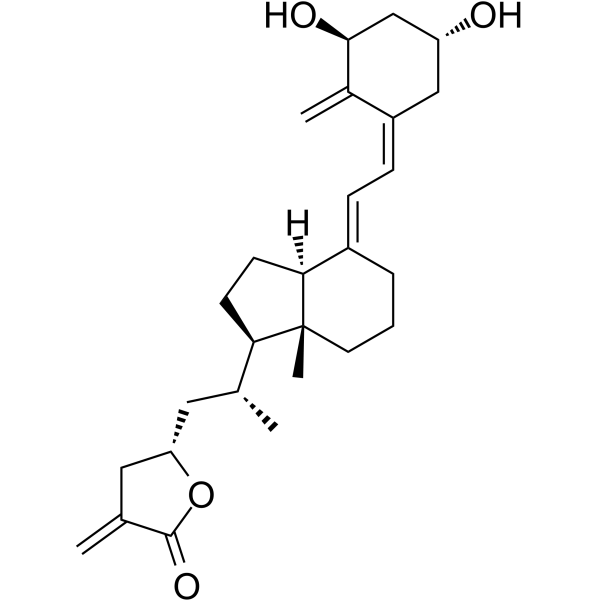
TEI-9647, a Vitamin D3 Lactone analogue, is a potent and specific vitamin D receptor (VDR) antagonist. TEI-9647 inhibits VDR/VDRE-mediated genomic actions of 1α,25(OH)2D3. TEI-9647 inhibits bone resorption and HL-60 cell differentiation induced by of 1α,25(OH)2D3. TEI-9647 has the potential for suppressing the excessive bone resorption and osteoclast formation in Paget's disease .
|
-
- HY-126066
-
-
- HY-N2513
-
|
|
Lipoxygenase
DNA/RNA Synthesis
|
Cancer
|
|
β-Boswellic acid is isolated from the gum resin of Boswellia serrata with anticancer, antioxidant activity, anti-inflammatory activity and anti-arthritic pain.β-Boswellic acid is an orally active nonreducing-type inhibitor of the 5-lipoxygenase (5-LO) product formation either interacting directly with the 5-LO or blocking its translocation. β-Boswellic acid inhibits the synthesis of DNA, RNA and protein in human leukemia HL-60 cells with IC50 values ranging from 0.6 to 7.1 μM. β-Boswellic acid is promising for research of diabetes, inflammatory and arthritic diseases .
|
-
- HY-103286R
-
|
|
Reference Standards
Bombesin Receptor
|
Cancer
|
|
PD176252 (Standard) is the analytical standard of PD176252 (HY-103286). This product is intended for research and analytical applications. PD176252 is a potent antagonist of neuromedin-B preferring (BB1) and gastrin-releasing peptide-preferring (BB2) receptor with Kis of 0.17 nM and 1 nM for human BB1 and BB2 receptors, and 0.66 nM, 16 nM for Rat BB1 and BB2 receptors, respectively; PD176252 is also an agonist of N-Formyl peptide receptor1/2 (FPR1/FPR2), with EC50s of 0.31 and 0.66 μM in HL-60 cells.
|
-
- HY-168338
-
|
|
Cannabinoid Receptor
Caspase
|
Cancer
|
|
CB2 receptor agonist 8 (Compound 17) is an agonist for cannabinoid receptor 2 (CB2 receptor). CB2 receptor agonist 8 exhibits cytotoxicity in cells U87, RPMI 8226, HL-60, and L929 with IC50s of 91.03, 16.29, 23.51 and 564.6 μM, respectively. CB2 receptor agonist 8 activates caspase 3/7, increases the expressions of pro-apoptotic genes BAX, BAD, BIM and tumor suppressor genes p53, and induces apoptosis in U87. CB2 receptor agonist 8 inhibits the migration of U87 .
|
-
- HY-W013706
-
|
ITP trisodium salt; Inosine triphosphate trisodium salt
|
Endogenous Metabolite
|
Metabolic Disease
|
|
Inosine-5'-triphosphate trisodium salt is a nucleotide analogue that acts on multiple G proteins and is widely used in G protein-related research. It can bind to the α -subunit of G proteins and participate in G protein-mediated signal transduction as a substitute for GTP. Its mechanism of action is to interact with the nucleotide-binding site of the G protein α -subunit, affecting the activity and function of G proteins. In the research field, it is mainly used to explore the role of the G protein signaling pathway in cellular physiological and pathological processes. For example, in HL-60 leukemia cells, its impact on G protein-mediated signal transduction can be studied .
|
-
- HY-124007
-
|
ISAHA
|
HDAC
|
Cancer
|
|
4-Iodo-SAHA (1k) is an orally active class I and class II histone deacetylase (HDAC) inhibitor with EC50s of 1.1, 0.95, 0.12, 0.24, 0.85 and 1.3 μM for Skbr3, HT29, U937, JA16 and HL60 cell lines, respectively. 4-Iodo-SAHA (1k) can be used for the research of cancer .
|
-
- HY-107397R
-
|
|
Reference Standards
RAR/RXR
|
Cancer
|
|
Ch55 (Standard) is the analytical standard of Ch55 (HY-107397). This product is intended for research and analytical applications. Ch55 is a potent synthetic retinoid. Ch55 binds to RAR-α and RAR-β receptors with high affinity. Ch55 displays low affinity for cellular retinoic acid binding protein (CRABP). Ch55 is a potent inducer of the differentiation of HL60 cells with an EC50 of 200 nM. Ch55 can be used for cancer research .
|
-
- HY-178144
-
|
|
Formyl Peptide Receptor (FPR)
Calcium Channel
Interleukin Related
NO Synthase
|
Neurological Disease
Inflammation/Immunology
|
|
FPR2 agonist 5 is a selective Formyl Peptide Receptor 2 (FPR2) agonist. FPR2 agonist 5 induces Ca 2+ mobilization in FPR2-HL60 transfected cells with an EC50 of 1.2 μM and causes FPR2 desensitization with an IC50 of 0.32 μM. FPR2 agonist 5 exerts neuroprotective effects by mitigating LDH release, NO production, IL-1β, IL-6, IL-33, and IL-10 levels in LPS (HY-D1056)-induced mouse primary microglial cells. FPR2 agonist 5 can be used for the study of neuroinflammatory-related diseases .
|
-
- HY-161687
-
|
|
Src
|
Cancer
|
|
Cisplatin/Dasatinib prodrug-1 (Compound 3) is a prodrug of Cisplatin (HY-17394) and Dasatinib (HY-10181). Cisplatin/Dasatinib prodrug-1 exhibits antiproliferative activity against A2780, MDA-MB-231, MCF7, HCT116, RD, Thp1 and HL60 cancer cells with IC50s of 0.1, 0.1, 0.36, 2.0, 0.4, 0.3 and 0.25 μM, respectively .
|
-
- HY-N13081
-
|
|
Others
|
Cancer
|
|
3-Oxo-cinobufagin (compound 8) is a potential anticancer compound that can be isolated from the broth of M. spinosus by high-performance liquid chromatography. Compared to other isolated compounds, the hydroxyl group at the C-5 position of 3-Oxo-cinobufagin is further oxidized or isomerized, significantly reducing its cytotoxic activity against most cell lines (except HEL), while increasing its activity against the BEL cell line. The IC50 values of 3-Oxo-cinobufagin's cytotoxicity against cancer cells are: 71.3 μM (HepG2), 90.2 μM (SMMC-7221), 0.11 μM (BEL-7402), 72.5 μM (K562), 5.3 μM (HL-60), and 12 nM (HEL) .
|
-
- HY-N10778
-
|
|
Others
|
Others
|
|
(19R,23E)-5b,19-Epoxy19-ethoxycucurbita-6,23-diene-3b,25-diol is a cucurbitane-type triterpenoid. (19R,23E)-5b,19-Epoxy19-ethoxycucurbita-6,23-diene-3b,25-diol has been tested to no effect against 5 cancer cell lines, MCF-7, HepG2, Du145, Colon205 and HL-60 by MTT assay .
|
-
- HY-N16817
-
|
|
NO Synthase
|
Inflammation/Immunology
Cancer
|
|
Rabdoternin E is a potential anti-inflammatory and antitumor agent. 2α-Acetoxy-14,15-cyclopimara-7β,16-diol only inhibits nitric oxide (NO) production in lipopolysaccharide (LPS)-induced RAW264.7 macrophages (IC50=2.3 μM) and exhibits cytotoxicity against human tumor cells such as HL-60 and SW-480 (IC50 values ??of 2.6 μM and 4.1 μM, respectively). Rabdoternin E is an ent-kaurane-type diterpenoid compound that can be naturally extracted from the 70% acetone aqueous extract of the aerial parts of Isodon rosthornii (Diels) Hara (a plant of the Lamiaceae family, Isodon genus) .
|
-
- HY-111832
-
|
TeGG
|
UGT
|
Infection
Metabolic Disease
|
|
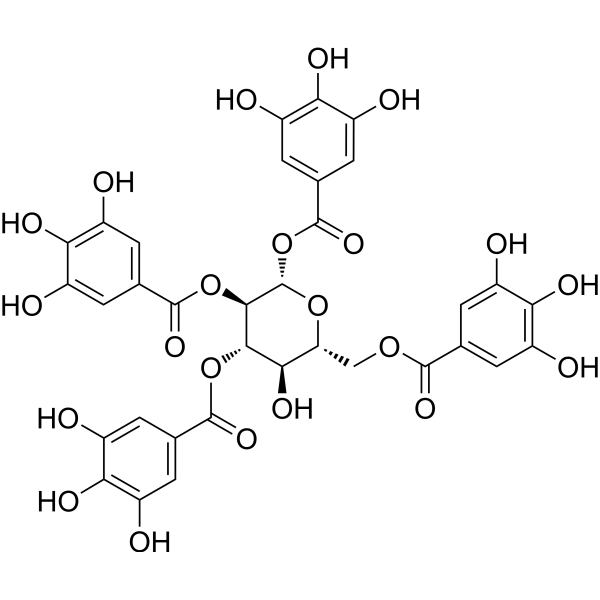
1,2,3,6-Tetragalloylglucose (TEgG) is a competitive inhibitor of UDP-glucuronyltransferase UGT1A1, targeting the competitive substrate binding site of UGT1A1. 1,2,3,6-Tetragalloylglucose inhibits UGT1A1-mediated β-estradiol 3-glucuronidation and SN-38 glucuronidation with IC50 of 6.01 μM and 4.31 μM, respectively, and binds to UGT1A1 with Ki of 3.55 μM. 1,2,3,6-Tetragalloylglucose also induces tumor cell apoptosis, inhibit cell proliferation, activates caspase-3 and induces DNA fragmentation in HL-60 cells. 1,2,3,6-Tetragalloylglucose also inhibits HIV integrase and reverse transcriptase, and inhibits HCV protease .
|
-
- HY-149522
-
|
|
Bcl-2 Family
Apoptosis
|
Cancer
|
|
BCL6-IN-10 (Compound WK499) is a BCL6 inhibitor. BCL6-IN-10 interrupts the binding of BCL6 to SMRT protein. BCL6-IN-10 induces cell apoptosis, cell cycle arrest and DNA damage. BCL6-IN-10 inhibits AML cell proliferation (IC50s: 0.91, 1.63, 1.026, 7.42, 0.87, 0.85μM for OCl-AML3, THP1, MOLM13, HL60, KG1, NB4 cell respectively) .
|
-
- HY-N8501
-
|
|
Bacterial
|
Infection
|
|
Emestrin is a mycotoxin originally isolated from E. striata that has antimicrobial, immunomodulatory, and cytotoxic activities. It is active against the fungi C. albicans and C. neoformans, as well as the bacteria E. coli, S. aureus, and methicillin-resistant S. aureus (MRSA; IC50s=3.94, 0.6, 2.21, 4.55, and 2.21 μg/mL, respectively).2 Emestrin is a chemokine (C-C motif) receptor 2 (CCR2) antagonist (IC50=5.4 μM in a radioligand binding assay using isolated human monocytes).3 Emestrin (0.1 μg/mL) induces apoptosis in HL-60 cells. It induces heart, thymus, and liver tissue necrosis in mice when administered at doses ranging from 18 to 30 mg/kg.
|
-
- HY-124273
-
|
L-threo Cer(d18:1/2:0); L-threo Ceramide (d18:1/2:0); N-acetyl-L-threo-Sphingosine
|
Endogenous Metabolite
|
Cardiovascular Disease
|
|
C2 L-threo Ceramide (d18:1/2:0) (L-threo Cer(d18:1/2:0); L-threo Ceramide (d18:1/2:0)) is a bioactive sphingolipid and cell-permeable analog of naturally occurring ceramides. It stimulates cholesterol efflux in CHO cells expressing the human ABCA1 receptor when used at a concentration of 10 μM, however, this efflux is 50% less than that stimulated by C2 ceramide. C2 L-threo Ceramide inhibits IL-4 production by 17% in EL4 T cells stimulated with phorbol 12-myristate 13-acetate when used at a concentration of 10 μM. It also induces cell cycle arrest in the G0/G1 phase and a 7-fold increase in sphingosine accumulation as well as inhibits growth of HL-60 leukemia cells.
|
-
- HY-W276819
-
|
|
Polo-like Kinase (PLK)
|
Cancer
|
|
PLK1-IN-9 (Compound M2) is an inhibitor for polo-like kinase 1 (PLK1), that inhibits PLK proteins modified with peptides 1010pT, cdc25c and PBIP, with IC50s of 1.6, 0.8 and 1.4 μM, respectively. PLK1-IN-9 inhibits proliferations of cancer cells HeLa, HL60, SNU387/499, HepG2, exhibits cytotoxicity and induces apoptosis. PLK1-IN-9 inhibits tumor growth in HepG2 xenograft mouse model .
|
-
- HY-144450
-
|
|
PI3K
Akt
|
Cancer
|
|
PI3K-IN-29 is a potent PI3K inhibitor. PI3K-IN-29 displays good inhibition potencies against U87MG, HeLa and HL60 cells with IC50 values of 0.264, 2.04 and 1.14 µM, respectively. PI3K-IN-29 inhibits PI3K/Akt pathway by inhibiting phosphorylation of Akt that is catalyzed by PI3K .
|
-
- HY-W013706R
-
|
ITP trisodium salt (Standard); Inosine triphosphate trisodium salt (Standard)
|
Endogenous Metabolite
Reference Standards
|
Metabolic Disease
|
|
Inosine-5'-triphosphate (trisodium salt) (Standard) is the analytical standard of Inosine-5'-triphosphate (trisodium salt) (HY-W013706). This product is intended for research and analytical applications. Inosine-5'-triphosphate trisodium salt is a nucleotide analogue that acts on multiple G proteins and is widely used in G protein-related research. It can bind to the α -subunit of G proteins and participate in G protein-mediated signal transduction as a substitute for GTP. Its mechanism of action is to interact with the nucleotide-binding site of the G protein α -subunit, affecting the activity and function of G proteins. In the research field, it is mainly used to explore the role of the G protein signaling pathway in cellular physiological and pathological processes. For example, in HL-60 leukemia cells, its impact on G protein-mediated signal transduction can be studied .
|
-
- HY-161708
-
|
|
PROTACs
CDK
FLT3
|
Cancer
|
|
PROTAC FLT3/CDKs degrader-1 (Compound C3) is a degrader for cyclin-dependent kinases (DC50 is 18.73 nM for CDK2) and the FMS-like tyrosine kinase 3 (FLT3). PROTAC FLT3/CDKs degrader-1 induces differentation of HL-60 (72.77% differentation at 6.25 nM), inhibits proliferation of AML cells, with IC50s of 2.9-37 nM. PROTAC FLT3/CDKs degrader-1 is potential for ameliorating acute myeloid leukemia. (Pink: ligand for target protein FLT3/CDKs ligand-1 (HY-161709); Black: linker (HY-W012935); Black: ligand for E3 ligase Thalidomide 5-fluoride (HY-W087383))
|
-
- HY-172889
-
|
|
PI3K
HDAC
Apoptosis
mTOR
Akt
|
Cancer
|
|
PI3K/HDAC-IN-4 (Compound 31f) is a PI3K/HDAC dual inhibitor (IC50: 0.2μM). PI3K/HDAC-IN-4 shows high selectivity for HDAC1-3 (IC50 values of 75.5 nM, 70.9 nM, and 1.9 nM, respectively). PI3K/HDAC-IN-4 is a potent PIK3 inhibitor with IC50 values of 2.5 nM, 80.5 nM, 10.0 nM, and 57.2 nM for PI3Kα, β, δ, and γ, respectively. PI3K/HDAC-IN-4 significantly induces tumor cell apoptosis by simultaneously inhibiting the PI3K/AKT/mTOR signaling pathway and HDAC1-3. PI3K/HDAC-IN-4 exhibits potent antiproliferative activity in a variety of tumor cell lines (e.g., MV4-11, Jeko-1, HL60, and MCF-7, with IC50 values of 0.2, 0.9, 0.8, and 1.5 μM, respectively). PI3K/HDAC-IN-4 can be used in the study of lymphoma and leukemia .
|
-
- HY-W419589
-
|
|
COX
NO Synthase
Interleukin Related
Reactive Oxygen Species (ROS)
|
Inflammation/Immunology
Cancer
|
|
Xanthomicrol is extracted from the resin of the plant called Chinese bellflower (a member of the Scrophulariaceae family) and is a monoamine oxidase (MAOs) inhibitor. Xanthomicrol has anti-tumor and anti-inflammatory properties, with IC50 values of 0.88 and 1.69 μg/mL in HL60 and K562 cells. Xanthomicrol's the main metabolite of 5DT in mouse colon, and it can reduce levels of iNOS protein and mRNA, as well as COX-2 protein levels. Additionally, Xanthomicrol decreases the production of the pro-inflammatory cytokine IL-1β and induces the expression of the antioxidant enzyme HO-1 .
|
-
- HY-156016
-
|
|
HDAC
|
Cancer
|
|
HDAC/CD13-IN-1 (Compound 12) is a HDAC/CD13 inhibitor (IC50: 0.34 μM for hCD13, 0.53 μM for porcine CD13, 0.03, 0.06, 0.02 μM for HDAC1/2/3). HDAC/CD13-IN-1 inhibits MV4-11, K562, Jeko-1, and HL60 cell proliferation (IC50: 0.25-2.04 μM). HDAC/CD13-IN-1 induces cancer cell apoptosis. HDAC/CD13-IN-1 has anti-metastasis and anti-invasion efficacy .
|
-
- HY-180503
-
|
|
VD/VDR
|
Endocrinology
|
|
19-Nor-22-oxa-1a,25(OH)2-VD3 is a vitamin D₃ analogue. 19-Nor-22-oxa-1a,25(OH)2-VD3 has an extremely low affinity for the vitamin D receptor (VDR) and hardly binds to the vitamin D binding protein (DBP). 19-Nor-22-oxa-1a,25(OH)2-VD3 can effectively induce the differentiation of HL-60 cells and cause G₀-G₁ phase cell cycle arrest. 19-Nor-22-oxa-1a,25(OH)2-VD3 can be used to study diseases such as excessive hyperparathyroidism .
|
-
- HY-N2423B
-
|
(E/Z)-Allyl-glucosinolate free base; (E/Z)-2-Propenyl-glucosinolate free base
|
NF-κB
p38 MAPK
Apoptosis
|
Cardiovascular Disease
Infection
Inflammation/Immunology
Cancer
|
|
(E/Z)-Sinigrin ((E/Z)-Allyl-glucosinolate; (E/Z)-2-Propenyl-glucosinolate) free base is an orally active aliphatic thioglucoside anti-leukemia compound. Allyl isothiocyanate, produced by the hydrolysis of (E/Z)-sinigrin free base by myrosinase, has an IC50 of 2.71 μM against HL60 leukemia cells. The hydrolysis products of (E/Z)-sinigrin free base can further activate apoptosis pathways, inhibit NF-κB and MAPK signaling pathways, and induce phase II metabolic enzyme activity, thus exhibiting anti-cancer, anti-inflammatory, antibacterial, antioxidant, and wound healing activities. (E/Z)-Sinigrin free base can be used in research on cancer, inflammation-related diseases (such as atherosclerosis), and infectious diseases. (E/Z)-Sinigrin free base can be naturally extracted from the seeds of Brassica nigra, Brassica juncea, and other Brassicaceae plants such as broccoli and Brussels sprouts. Methyl pechueloate is a guaiane-type sesquiterpene ester compound and a potential precursor of xerantholide. It is useful in the structural elucidation and biosynthetic pathway studies of sesquiterpenoids. Methyl pechueloate can be naturally extracted from the aerial parts of Pechuel-Loeschea leibnitziae (Kuntze) O. Hoffm .
|
-
- HY-139118
-
|
|
c-Myc
Apoptosis
|
Cancer
|
|
NSC308848 is a potent apoptosis inducer in a Myc-dependent manner. NSC308848 inhibits Myc transactivation and interferes with the DNA-binding activity of Myc family proteins .
|
-
- HY-113337A
-
|
P1,P4-Di-(adenosine-5')-tetraphosphate tetraammonium
|
Apoptosis
|
Cancer
|
|
Ap4A tetraammonium (P1,P4-Di-(adenosine-5')-tetraphosphate tetraammonium) is a conserved second messenger in organisms ranging from bacteria to humans. Ap4A tetraammonium binds to the histidine triad nucleotide-binding protein 1 (HINT1) activates the transcription of genes downstream of MITF. Ap4A tetraammonium induces apoptosis .
|
-
- HY-W165232
-
|
1-Methyl-2-piperidinone
|
Drug Derivative
|
Cancer
|
|
N-Methylvalerolactam (1-Methyl-2-piperidinone) (Compound 22) is a derivative of 2-Piperidone (HY-W042193). N-Methylvalerolactam significantly induces the differentiation of leukemia cells without inhibiting cell proliferation. N-Methylvalerolactam can be used for leukemia research .
|
-
- HY-113337
-
|
P1,P4-Di-(adenosine-5')-tetraphosphate
|
Apoptosis
|
Cancer
|
|
Ap4A (P1,P4-Di-(adenosine-5')-tetraphosphate) is a conserved second messenger in organisms ranging from bacteria to humans. Ap4A binds to the histidine triad nucleotide-binding protein 1 (HINT1) activates the transcription of genes downstream of MITF. Ap4A induces apoptosis .
|
-
- HY-N13095
-
|
|
DNA/RNA Synthesis
Apoptosis
|
Cancer
|
|
(+)-Plakevulin A (Plakevulin A) is an oxylipin and can be isolated from an Okinawan sponge Plakortis sp. (+)-Plakevulin A inhibits the enzymatic activity of DNA polymerases α and δ. (+)-Plakevulin A induces apoptosis and shows anticancer activity .
|
-
- HY-N11576
-
|
|
Apoptosis
GSK-3
c-Myc
β-catenin
|
Cancer
|
|
Secalonic acid D is a toxic compound against tumor cells. Secalonic acid D can be isolated from the metabolites of Aspergillus aculeatus. Secalonic acid D activates GSK3-β, and degrades β-catenin. Thus, Secalonic acid D down-regulates c-Myc expression, arrests cell cycle at G1 phase, induces cell apoptosis .
|
-
- HY-N3119
-
|
|
Apoptosis
|
Cancer
|
|
Paeoniflorigenone, isolated as an active ingredient from the root of moutan cortex, induces apoptosis selectively in the cancer cell lines and exhibits antiproliferative effect .
|
-
- HY-13502B
-
|
Mitozantrone diacetate; NSC 301739 diacetate
|
Topoisomerase
PKC
Orthopoxvirus
Apoptosis
Endogenous Metabolite
|
Infection
Cancer
|
|
Mitoxantrone diacetate is a potent topoisomerase II inhibitor. Mitoxantrone diacetate also inhibits protein kinase C (PKC) activity with an IC50 of 8.5 μM. Mitoxantrone diacetate induces apoptosis of B-CLL (B-chronic lymphocytic leukaemia) cells. Mitoxantrone diacetate shows antitumor activity . Mitoxantrone diacetate also has anti-orthopoxvirus activity with EC50s of 0.25 μM and and 0.8 μM for cowpox and monkeypox, respectively .
|
-
- HY-118452
-
|
|
Microtubule/Tubulin
Apoptosis
|
Cancer
|
|
cis-3,4',5-Trimethoxy-3'-hydroxystilbene is a stilbene. cis-3,4',5-Trimethoxy-3'-hydroxystilbene induces cytochrome c release to the cytoplasm. cis-3,4',5-Trimethoxy-3'-hydroxystilbene-induced apoptosis is associated with mitochondrial release of cytochrome c. cis-3,4',5-Trimethoxy-3'-hydroxystilbene also suppresses tubulin polymerization. cis-3,4',5-Trimethoxy-3'-hydroxystilbene can be used for leukemic research .
|
-
- HY-N7175
-
|
9,11-Dehydroergosterol peroxide; 9(11)-DHEP
|
Apoptosis
Endogenous Metabolite
|
Cancer
|
|
5,8-Epidioxyergosta-6,9(11),22-trien-3-ol (9,11-Dehydroergosterol peroxide), an important steroid from medicinal mushroom, exerts antitumor activity in several tumor types. 5,8-Epidioxyergosta-6,9(11),22-trien-3-ol inhibits HT29 cell growth by inducing CDKN1A expression, thus causing cell cycle arrest and apoptosis .
|
-
- HY-N12817
-
|
|
NO Synthase
|
Inflammation/Immunology
Cancer
|
|
Anti-inflammatory agent 80 (Compound 2/2f) is an anti-inflammatory agent and has anti-tumor activity. Anti-inflammatory agent 80 can be isolated fromCynanchum limprichtiiSchltr .
|
-
- HY-N17978
-
|
|
Drug Derivative
|
Others
|
|
Ecliptasaponin B (compound 7) is a triterpenoid saponin and growth inhibitor present in the leaves of Aralia elata Seem.
|
-
- HY-13502
-
Mitoxantrone
Maximum Cited Publications
46 Publications Verification
Mitozantrone; NSC 301739
|
Topoisomerase
PKC
Orthopoxvirus
Apoptosis
Endogenous Metabolite
|
Infection
Cancer
|
|
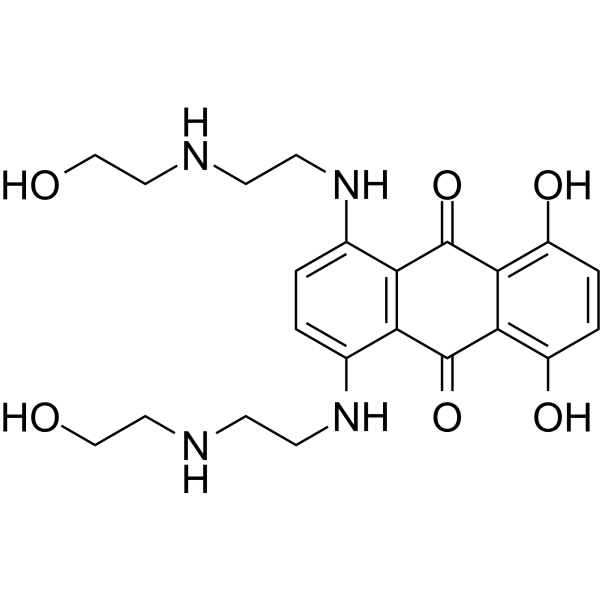
Mitoxantrone is a potent topoisomerase II inhibitor. Mitoxantrone also inhibits protein kinase C (PKC) activity with an IC50 of 8.5 μM. Mitoxantrone induces apoptosis of B-CLL (B-chronic lymphocytic leukaemia) cells. Mitoxantrone shows antitumor activity . Mitoxantrone also has anti-orthopoxvirus activity with EC50s of 0.25 μM and and 0.8 μM for cowpox and monkeypox, respectively .
|
-
- HY-13502AS
-
|
Mitozantrone-d8dihydrocHLoride; NSC 301739-d8 dihydrocHLoride
|
Endogenous Metabolite
PKC
Apoptosis
Topoisomerase
Orthopoxvirus
Isotope-Labeled Compounds
|
Infection
Cancer
|
|
Mitoxantrone-d8 dihydrochloride is deuterated labeled Mitoxantrone dihydrochloride (HY-13502A). Mitoxantrone dihydrochloride is a potent topoisomerase II inhibitor. Mitoxantrone dihydrochloride also inhibits protein kinase C (PKC) activity with an IC50 of 8.5 μM. Mitoxantrone dihydrochloride induces apoptosis of B-CLL (B-chronic lymphocytic leukaemia) cells. Mitoxantrone dihydrochloride shows antitumor activity . Mitoxantrone dihydrochloride also has anti-orthopoxvirus activity with EC50s of 0.25 μM and and 0.8 μM for cowpox and monkeypox, respectively .
|
-
- HY-13502AR
-
|
Mitozantrone dihydrocHLoride (Standard); NSC 301739 dihydrocHLoride (Standard)
|
Reference Standards
Topoisomerase
PKC
Orthopoxvirus
Apoptosis
Endogenous Metabolite
|
Infection
Cancer
|
|
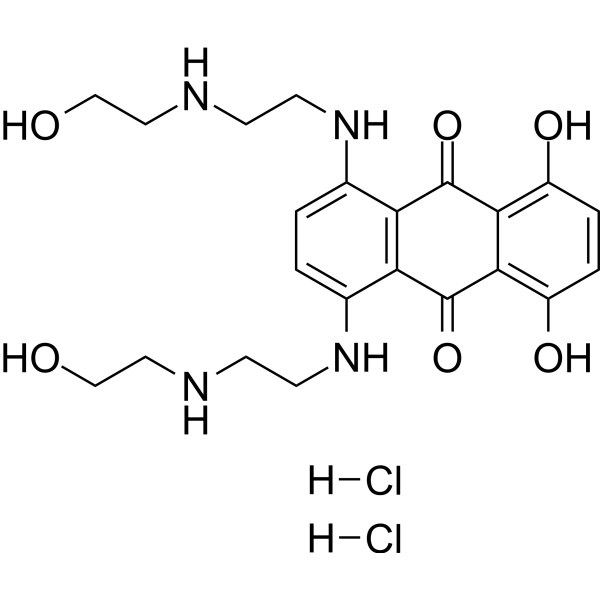
Mitoxantrone (dihydrochloride) (Standard) is the analytical standard of Mitoxantrone (dihydrochloride). This product is intended for research and analytical applications. Mitoxantrone dihydrochloride is a potent topoisomerase II inhibitor. Mitoxantrone dihydrochloride also inhibits protein kinase C (PKC) activity with an IC50 of 8.5 μM. Mitoxantrone dihydrochloride induces apoptosis of B-CLL (B-chronic lymphocytic leukaemia) cells. Mitoxantrone dihydrochloride shows antitumor activity . Mitoxantrone dihydrochloride also has anti-orthopoxvirus activity with EC50s of 0.25 μM and and 0.8 μM for cowpox and monkeypox, respectively .
|
-
- HY-13502R
-
|
Mitozantrone (Standard); NSC 301739 (Standard)
|
Reference Standards
Topoisomerase
PKC
Orthopoxvirus
Apoptosis
Endogenous Metabolite
|
Infection
Cancer
|
|
Mitoxantrone (Standard) is the analytical standard of Mitoxantrone. This product is intended for research and analytical applications. Mitoxantrone is a potent topoisomerase II inhibitor. Mitoxantrone also inhibits protein kinase C (PKC) activity with an IC50 of 8.5 μM. Mitoxantrone induces apoptosis of B-CLL (B-chronic lymphocytic leukaemia) cells. Mitoxantrone shows antitumor activity . Mitoxantrone also has anti-orthopoxvirus activity with EC50s of 0.25 μM and and 0.8 μM for cowpox and monkeypox, respectively .
|
-
- HY-13502A
-
|
Mitozantrone dihydrocHLoride; NSC 301739 dihydrocHLoride
|
Topoisomerase
PKC
Orthopoxvirus
Apoptosis
Endogenous Metabolite
|
Infection
Cancer
|
|
Mitoxantrone dihydrochloride is a potent topoisomerase II inhibitor. Mitoxantrone dihydrochloride also inhibits protein kinase C (PKC) activity with an IC50 of 8.5 μM. Mitoxantrone dihydrochloride induces apoptosis of B-CLL (B-chronic lymphocytic leukaemia) cells. Mitoxantrone dihydrochloride shows antitumor activity . Mitoxantrone dihydrochloride also has anti-orthopoxvirus activity with EC50s of 0.25 μM and and 0.8 μM for cowpox and monkeypox, respectively .
|
-
- HY-B0456
-
|
Vitamin B2; E101
|
Environmental Pollutants
Endogenous Metabolite
Bacterial
|
Metabolic Disease
Cancer
|
Riboflavin, an orally active and easily absorbed micronutrient, is a precursor of flavin mononucleotide (FMN) and flavin adenine dinucleotide (FAD), which serve as coenzymes for numerous enzymatic reactions and perform key metabolic functions by mediating the transfer of electrons in biological oxidation-reduction reaction .
|
-
- HY-B0456R
-
|
Vitamin B2 (Standard); E101 (Standard)
|
Reference Standards
Endogenous Metabolite
Bacterial
|
Metabolic Disease
Cancer
|
Riboflavin (Standard) is the analytical standard of Riboflavin. This product is intended for research and analytical applications. Riboflavin, an orally active and easily absorbed micronutrient, is a precursor of flavin mononucleotide (FMN) and flavin adenine dinucleotide (FAD), which serve as coenzymes for numerous enzymatic reactions and perform key metabolic functions by mediating the transfer of electrons in biological oxidation-reduction reaction .
|
-
- HY-116392D
-
|
|
Glucosylceramide Synthase (GCS)
Apoptosis
|
Cancer
|
|
PDMP hydrochloride is a glucosylceramide synthase (GCS) inhibitor. PDMP hydrochloride induces apoptosis in K562/A02 cells. PDMP hydrochloride can be used in cancer (such as leukemia) research .
|
-
- HY-142690A
-
|
|
Apoptosis
HDAC
|
Cancer
|
|
HDAC-IN-27 dihydrochloride (Compound 11h) is a potent, orally active class I HDAC-selective inhibitor with IC50 values ranging from 0.43 to 3.01 nM against HDAC1-3. HDAC-IN-27 dihydrochloride exhibits both in vivo and in vitro antitumor activity. HDAC-IN-27 dihydrochloride demonstrates significant anti-proliferative activity against acute myeloid leukemia (AML) cell lines by inducing apoptosis and histone acetylation (AcHH3 and AcHH4). HDAC-IN-27 dihydrochloride can be used for research in acute myeloid leukemia (AML) .
|
-
- HY-142690
-
|
|
HDAC
Apoptosis
|
Cancer
|
|
HDAC-IN-27 (Compound 11h) is a potent, orally active class I HDAC-selective inhibitor with IC50 values ranging from 0.43 to 3.01 nM against HDAC1-3. HDAC-IN-27 exhibits both in vivo and in vitro antitumor activity. HDAC-IN-27 demonstrates significant anti-proliferative activity against acute myeloid leukemia (AML) cell lines by inducing apoptosis and histone acetylation (AcHH3 and AcHH4). HDAC-IN-27 can be used for research in acute myeloid leukemia (AML) .
|
-
- HY-W128159
-
|
|
Hemoglobin
|
Cancer
|
|
N-Acetyl-2-pyrrolidone (No.20) is an N-acetylated amide. N-Acetyl-2-pyrrolidone can induce the differentiation of mouse erythroleukemia cells and has the activity of stimulating proliferation. N-Acetyl-2-pyrrolidone can be used in the research of leukemia differentiation therapy .
|
-
- HY-186076
-
|
|
HSP
Fungal
|
Infection
Cancer
|
|
Hsp90-IN-47 (Compound C15) is a Hsp90 inhibitor and antifungal agent, with an IC50 of 0.014 μM against Hsp90α. When combined with Fluconazole (HY-B0101), Hsp90-IN-47 exerts significant synergistic antifungal effects against fluconazole-resistant Candida albicans 0304103. Hsp90-IN-47 exhibits antitumor activity against acute myeloid leukemia and non-small cell lung cancer .
|
-
- HY-B0425A
-
|
Albamycin sodium; Cathomycin sodium
|
Bacterial
Antibiotic
Orthopoxvirus
Apoptosis
DNA/RNA Synthesis
HSP
|
Infection
Cancer
|
|
Novobiocin (Albamycin) sodium is a potent and orally active antibiotic. Novobiocin sodium also is a DNA gyrase inhibitor and a heat shock protein 90 (Hsp90) antagonist. Novobiocin sodium has the potential for the research of highly beta-lactam-resistant pneumococcal infections. Novobiocin sodium shows anti-orthopoxvirus activity .
|
-
- HY-108491
-
|
|
SphK
Apoptosis
|
Cancer
|
|
N,N-Dimethylsphingosine is a sphingosine kinase inhibitor. N,N-Dimethylsphingosine binds competitively to sphingosine kinase and blocks the conversion of sphingosine to sphingosine-1-phosphate. N,N-Dimethylsphingosine inhibits sphingosine-1-phosphate release and aggregation of platelets, and also exerts pro-apoptotic effects by resetting ceramide/sphingosine-1-phosphate homeostasis. N,N-Dimethylsphingosine can be used in cancer-related research .
|
-
- HY-120621
-
|
|
Phospholipase
|
Inflammation/Immunology
|
|
BMS-229724 is an orally active and tight-binding cytosolic phospholipase A2 (cPLA2) inhibitor with an IC50 of 2.8 μM. BMS-229724 can inhibit the production of arachidonic acid and eicosanoids in U937 cells, neutrophils, platelets, and other cells. BMS-229724 has anti-inflammatory activity and can be used in the research of diseases such as skin inflammation .
|
-
- HY-12291
-
|
HMSL 10017-101-1
|
Raf
Apoptosis
|
Cancer
|
|
HG6-64-1 (HMSL 10017-101-1) is a B-raf kinase modulator.HG6-64-1 modulates B-raf kinase activity, including the V600E mutant form and the drug-resistant gatekeeper mutation T529I. HG6-64-1 is a germinal center kinase inhibitor. HG6-64-1 induces cell cycle arrest and apoptosis. HG6-64-1 can be used for the research of diffuse large B-cell lymphoma (DLBCL) .
|
-
- HY-175358
-
|
|
PROTACs
Deubiquitinase
|
Cancer
|
|
PROTAC USP7 Degrader-1 is a VHL-recruiting PROTAC and USP7 degrader with binding activity to both USP7 and the VHL E3 ubiquitin ligase. PROTAC USP7 Degrader-1 recruits the VHL E3 ligase to mediate the ubiquitination and subsequent proteolytic degradation of USP7 .
|
-
- HY-N13130
-
|
|
Others
|
Cancer
|
|
(+)-Mollisacacidin is a flavan compound found in the root bark of Albizia glaberrima. (+)-Mollisacacidin exhibits no significant antiproliferative effect on cancer cells .
|
-
- HY-N18321
-
|
|
Drug Derivative
|
Cancer
|
|
3-Deacetyl-4-demethylsalannin, a salannin-type limonoid, is an anticancer agent. 3-Deacetyl-4-demethylsalannin induces cytotoxic activity against leukemia cells and stomach cancer cells, and shows inactivity against lung and breast cancer cells at concentrations up to 100 μM. 3-Deacetyl-4-demethylsalannin can be used for the research of leukemia, stomach cancer .
|
-
- HY-W551344
-
|
|
DNA/RNA Synthesis
|
Cancer
|
|
dCTPase-IN-1 is a highly selective deoxycytidine triphosphate pyrophosphatase 1 (dCTPase) inhibitor with an IC50 of 20 nM. dCTPase-IN-1 functionally inhibits dCTPase, exhibits a synergistic effect in enhancing cytotoxicity, and has no inherent cytotoxicity. dCTPase-IN-1 can be used for the research of leukemia .
|
-
- HY-185682
-
|
|
Sirtuin
Apoptosis
Autophagy
Caspase
|
Cancer
|
|
NCO-141 is a selective SIRT2 inhibitor with an IC50 of 0.5 μM. NCO-141 induces cell apoptosis via caspase activation and mitochondrial superoxide anion production. NCO-141 induces cell autophagy by increasing LC3-II levels and autophagosome accumulation. NCO-141 is applicable to relevant research on leukemia .
|
-
- HY-P991517
-
|
|
Transmembrane Glycoprotein
Reactive Oxygen Species (ROS)
|
Cardiovascular Disease
Cancer
|
|
BI-836858 is a fully human anti-CD33 monoclonal antibody. BI-836858 reduces CD33+ cells via antibody-dependent cellular cytotoxicity (ADCC), blocks downstream signaling of S100A9/CD33, decreases the secretion of immunosuppressive cytokines and reactive oxygen species-induced genomic instability, and restores bone marrow hematopoietic function. BI-836858 is applicable to the research of myelodysplastic syndrome (MDS) and AML .
|
-
- HY-13219
-
|
|
COX
Lipoxygenase
Reactive Oxygen Species (ROS)
NF-κB
|
Neurological Disease
Inflammation/Immunology
|
|
Tepoxalin is an orally active dual inhibitor of Cyclooxygenase/Lipoxygenase, with IC50 values of 4.6 μM (sheep cyclooxygenase), 2.85 μM (rat cyclooxygenase), 0.15 μM (rat 5-lipoxygenase), and 3.0 μM (h12-lipoxygenase), respectively. Tepoxalin inhibits ROS production and NF-κB activation. Tepoxalin suppresses the production of thromboxane B2, leukotriene B4, prostaglandins and cytokines, and blocks platelet aggregation. Tepoxalin exhibits potent anti-inflammatory activity in rats with adjuvant-induced arthritis. Tepoxalin possesses analgesic activity. Tepoxalin shows no ulcerogenic activity within the anti-inflammatory dose range. Tepoxalin can be used in studies related to adjuvant-induced arthritis, skin inflammation and Alzheimer's disease .
|
-
- HY-N18214
-
|
|
Drug Derivative
|
Cancer
|
|
3-Deacetyl-1,6-diacetylsendanal is a limonoid compound isolated from the fruits of Melia azedarach. 3-Deacetyl-1,6-diacetylsendanal reduces the viability of leukemia and gastric cancer cells. 3-Deacetyl-1,6-diacetylsendanal can be used in research related to leukemia and gastric cancer .
|
-
- HY-N19936
-
|
|
Drug Derivative
|
Cancer
|
|
Qinyangshengenin-3-O-β-D-digitoxopyranoside is a C21 steroidal glycoside that can be found in the whole herb of Prunella vulgaris Linn. Qinyangshengenin-3-O-β-D-digitoxopyranoside can be used for research of leukemia and lung cancer .
|
-
- HY-N18117A
-
|
|
NO Synthase
EBV
|
Infection
Inflammation/Immunology
Cancer
|
|
23-Hydroxyohchininolide is a limonoid found in the leaves of Melia azedarach L.. 23-Hydroxyohchininolide inhibits LPS (HY-D1056)-induced NO production and exerts cytotoxic activity against human leukemia and stomach cancer cells. 23-Hydroxyohchininolide inhibits TPA (HY-18739)-induced Epstein-Barr virus early antigen activation. 23-Hydroxyohchininolide can be used for the research of cancer, infection and inflammatory disease .
|
-
- HY-N18117
-
|
|
EBV
|
Infection
Cancer
|
|
21-Hydroxyisoohchininolide is a salannin-type limonoid. 21-Hydroxyisoohchininolide inhibits lipopolysaccharide (LPS, HY-D1056)-induced nitric oxide production in mouse macrophages. 21-Hydroxyisoohchininolide exhibits cytotoxic activity against leukemia cells and breast cancer cells. 21-Hydroxyisoohchininolide suppresses phorbol 12-myristate 13-acetate (PMA) (HY-18739)-induced activation of Epstein-Barr virus early antigen in lymphocytes. 21-Hydroxyisoohchininolide can be used for the research of leukemia, breast cancer and inflammatory diseases .
|
-
- HY-N18115
-
|
|
Drug Derivative
|
Cancer
|
|
3-O-Deacetyl-3-O-tigloylsalannin is a salannin-type limonoid and cytotoxic agent found in the fruits of Melia azedarach. 3-O-Deacetyl-3-O-tigloylsalannin can be used for the research of leukemia, stomach cancer, breast cancer .
|
-
- HY-P992333
-
|
|
C-type Lectin-like Receptors (CTLRs)
|
Cancer
|
|
CLT030 Antibody is a human monoclonal antibody targeting CLL1/CLEC12A/CD371, with a Kd value of 7.32 nM against human targets. CLT030 Antibody can be used to synthesize the ADC CLT030. It is applicable to research related to acute myeloid leukemia .
|
-
- HY-W116336B
-
|
|
Biochemical Assay Reagents
Fungal
Bacterial
|
Infection
Cancer
|
|
Zinc oxide, 99.99% metals basis is a versatile wide-bandgap semiconductor with superior comprehensive properties. Zinc oxide, 99.99% metals basis serves as raw material for Schottky diodes, functional nanostructures, sensors, energy harvesters and photocatalysts for hydrogen production. Zinc oxide, 99.99% metals basis acts as a non-toxic antibacterial agent and selective cytotoxin against multiple bacteria, fungi and spores. Zinc oxide, 99.99% metals basis induces cancer cell death. Zinc oxide, 99.99% metals basis is applicable to drug delivery, biosensing, bioimaging and researches on cancer, microbial infections and skin diseases .
|
-
- HY-125426
-
|
|
Glycosidase
Dengue Virus
|
Infection
|
|
ToP-DNJ is a selective endoplasmic reticulum α-glucosidase II (GluII) inhibitor with an IC50 value of 9.0 μM. ToP-DNJ selectively inhibits the two catalytic reactions of GluII, and exhibits stronger activity in the first step of converting di-glycosylated glycans to mono-glycosylated glycans. ToP-DNJ exhibits anti-DENV activity. ToP-DNJ can be used in studies related to dengue virus infection .
|
-
| Cat. No. |
Product Name |
Type |
-
- HY-W116336B
-
|
|
Biochemical Assay Reagents
|
|
Zinc oxide, 99.99% metals basis is a versatile wide-bandgap semiconductor with superior comprehensive properties. Zinc oxide, 99.99% metals basis serves as raw material for Schottky diodes, functional nanostructures, sensors, energy harvesters and photocatalysts for hydrogen production. Zinc oxide, 99.99% metals basis acts as a non-toxic antibacterial agent and selective cytotoxin against multiple bacteria, fungi and spores. Zinc oxide, 99.99% metals basis induces cancer cell death. Zinc oxide, 99.99% metals basis is applicable to drug delivery, biosensing, bioimaging and researches on cancer, microbial infections and skin diseases .
|
| Cat. No. |
Product Name |
Target |
Research Area |
-
- HY-W588250
-
|
|
Integrin
|
Inflammation/Immunology
|
|
Surfactin C1 is an amphiphilic biosurfactants. Surfactin C1 inhibits leukemic cell (HL-60) adhesion to human umbilical vein endothelial cells (HUVEC). Surfactin C1 inhibits adhesion melecules expression, such as ICAM-1 and VCAM-1 .
|
-
- HY-P1121
-
|
|
Formyl Peptide Receptor (FPR)
|
Inflammation/Immunology
|
|
WKYMVM-NH2 is a hexapeptide that activates neutrophils and myeloid cells via the FPRL1 and FPRL2 receptors. It exhibits EC50 values of 2 nM and 80 nM in HL-60-FPRL1 and HL-60-FPRL2 cells, respectively. In HL-60 cells stably expressing FPRL2, WKYMVM-NH₂ induces chemotaxis, with optimal migration observed at concentrations ranging from 10 to 50 nM. It also stimulates superoxide production in neutrophils, with an EC50 of 75 nM. WKYMVM-NH₂ is a useful tool for research in the field of inflammatory diseases .
|
-
- HY-P3736
-
|
MP-2
|
Interleukin Related
|
Cancer
|
|
Myelopeptide-2 is a peptide originally isolated from the supernatant of porcine bone marrow cell cultures, can restore mitogenic reactivity of human T lymphocytes inhibited by HL-60 leukemia cells or measles virus conditions. Myelopeptide-2 also recover depressed interleukin-2 (IL-2) synthesis and interleukin-2 receptor (IL-2R) expression. Myelopeptide-2 involves in immunity homeostasis, is perspective to be applied in antitumor and antivirus research .
|
| Cat. No. |
Product Name |
Target |
Research Area |
Image |
-
- HY-P991517
-
|
|
Transmembrane Glycoprotein
Reactive Oxygen Species (ROS)
|
Cardiovascular Disease
Cancer
|
|
BI-836858 is a fully human anti-CD33 monoclonal antibody. BI-836858 reduces CD33+ cells via antibody-dependent cellular cytotoxicity (ADCC), blocks downstream signaling of S100A9/CD33, decreases the secretion of immunosuppressive cytokines and reactive oxygen species-induced genomic instability, and restores bone marrow hematopoietic function. BI-836858 is applicable to the research of myelodysplastic syndrome (MDS) and AML .
|
-
(5)
-
- HY-N9415
-
|
|
Inhibitory Antibodies
|
Cancer
|
|
Sitoindoside II is a chemopreventive agent that induces HL-60 cell differentiation (ED50: 69 nM). Sitoindoside II can be isolated from the ethanol extract of whole plants of Munronia delavayi .
|
-
(5)
-
- HY-P992333
-
|
|
C-type Lectin-like Receptors (CTLRs)
|
Cancer
|
|
CLT030 Antibody is a human monoclonal antibody targeting CLL1/CLEC12A/CD371, with a Kd value of 7.32 nM against human targets. CLT030 Antibody can be used to synthesize the ADC CLT030. It is applicable to research related to acute myeloid leukemia .
|
-
(5)
| Cat. No. |
Product Name |
Category |
Target |
Chemical Structure |
-
- HY-13502
-
-
-
- HY-B0456
-
-
-
- HY-13516
-
-
-
- HY-13502A
-
-
-
- HY-B0425A
-
-
-
- HY-111832
-
|
TeGG
|
other families
Classification of Application Fields
Phenols
Polyphenols
Metabolic Disease
Plants
Disease Research Fields
Source Classification
|
UGT
|
|
1,2,3,6-Tetragalloylglucose (TEgG) is a competitive inhibitor of UDP-glucuronyltransferase UGT1A1, targeting the competitive substrate binding site of UGT1A1. 1,2,3,6-Tetragalloylglucose inhibits UGT1A1-mediated β-estradiol 3-glucuronidation and SN-38 glucuronidation with IC50 of 6.01 μM and 4.31 μM, respectively, and binds to UGT1A1 with Ki of 3.55 μM. 1,2,3,6-Tetragalloylglucose also induces tumor cell apoptosis, inhibit cell proliferation, activates caspase-3 and induces DNA fragmentation in HL-60 cells. 1,2,3,6-Tetragalloylglucose also inhibits HIV integrase and reverse transcriptase, and inhibits HCV protease .
|
-
-
- HY-W013706
-
|
ITP trisodium salt; Inosine triphosphate trisodium salt
|
Classification of Application Fields
Ketones, Aldehydes, Acids
Metabolic Disease
Endogenous metabolite
Disease Research Fields
Source Classification
|
Endogenous Metabolite
|
|
Inosine-5'-triphosphate trisodium salt is a nucleotide analogue that acts on multiple G proteins and is widely used in G protein-related research. It can bind to the α -subunit of G proteins and participate in G protein-mediated signal transduction as a substitute for GTP. Its mechanism of action is to interact with the nucleotide-binding site of the G protein α -subunit, affecting the activity and function of G proteins. In the research field, it is mainly used to explore the role of the G protein signaling pathway in cellular physiological and pathological processes. For example, in HL-60 leukemia cells, its impact on G protein-mediated signal transduction can be studied .
|
-
-
- HY-N1231
-
-
-
- HY-N2513
-
-
-
- HY-101413
-
-
-
- HY-N10765
-
-
-
- HY-129578
-
-
-
- HY-112328
-
-
-
- HY-126066
-
-
-
- HY-N10127
-
-
-
- HY-N2113
-
-
-
- HY-N1746
-
-
-
- HY-N11576
-
-
-
- HY-N3119
-
-
-
- HY-108277
-
-
-
- HY-106784
-
-
-
- HY-N7450
-
-
-
- HY-129583
-
-
-
- HY-17563R
-
-
-
- HY-B0456R
-
-
-
- HY-N10531
-
-
-
- HY-N7634
-
-
-
- HY-N15387
-
|
|
Monophenols
Microorganisms
Phenols
Source Classification
|
Drug Derivative
|
|
Hericenone J (Compound 6) is an aromatic compound with anticancer activity, which is found in Hericium erinaceum. Hericenone J is cytotoxic and can significantly reduce the viability of HL-60 human acute promyelocytic leukemia cells with an IC50 value of 4.13 μM. Hericenone J is promising for research of leukemia .
|
-
-
- HY-N12153
-
-
-
- HY-N9339
-
-
-
- HY-N1710
-
-
-
- HY-N11928
-
-
-
- HY-N10208
-
-
-
- HY-113337
-
-
-
- HY-N7338
-
-
-
- HY-N8477
-
-
-
- HY-N8658
-
-
-
- HY-N2513R
-
-
-
- HY-N8088
-
-
-
- HY-N14190
-
-
-
- HY-N14556
-
-
-
- HY-N7562
-
-
-
- HY-N1081A
-
-
-
- HY-N10852
-
-
-
- HY-N14886
-
-
-
- HY-N10392
-
-
-
- HY-N9415
-
|
|
Lipid
|
Others
|
|
Sitoindoside II is a chemopreventive agent that induces HL-60 cell differentiation (ED50: 69 nM). Sitoindoside II can be isolated from the ethanol extract of whole plants of Munronia delavayi .
|
-
-
- HY-117220
-
-
-
- HY-N9159
-
-
-
- HY-N16442
-
-
- HY-N12534
-
|
|
Natural Products
Microorganisms
Source Classification
|
Apoptosis
|
|
Monaspin B is a natural product produced by the co-culture of Monascus purpureus and Aspergillus oryzae. Monaspin B exerts anti-proliferation activity by inducing apoptosis of HL-60 cells, IC50 160 nM. Monaspin B has antitumor activity .
|
-
- HY-N16642
-
-
- HY-N10364
-
-
- HY-N12108
-
-
- HY-N3615
-
-
- HY-N15112
-
-
- HY-N16645
-
-
- HY-N10206
-
-
- HY-129334
-
-
- HY-N14377
-
-
- HY-N14947
-
-
- HY-129578R
-
-
- HY-N1231R
-
-
- HY-N3210
-
-
- HY-13516R
-
-
- HY-N12641
-
|
|
Quinones
Benzene Quinones
Plants
Primulaceae
Source Classification
|
Apoptosis
Pyroptosis
|
|
Ardisianone is a component with an alkyl benzoquinone structure that can be isolated from Ardisia virens Kurz and Ardisia compressa tea extract. Ardisianone exhibits potent antileukemic activity, particularly against HL-60 cells, with IC50 values of 1.87 μM (24 h) and 1.67 μM (48 h). Ardisianone induces caspase-dependent apoptosis and triggers pyroptosis. Ardisianone can be used for the study of acute myeloid leukemia (AML) .
|
-
- HY-N14415
-
-
- HY-N10778
-
|
|
Triterpenes
Terpenoids
Cucurbitaceae
Plants
Source Classification
Momordica charantia Linn.
|
Others
|
|
(19R,23E)-5b,19-Epoxy19-ethoxycucurbita-6,23-diene-3b,25-diol is a cucurbitane-type triterpenoid. (19R,23E)-5b,19-Epoxy19-ethoxycucurbita-6,23-diene-3b,25-diol has been tested to no effect against 5 cancer cell lines, MCF-7, HepG2, Du145, Colon205 and HL-60 by MTT assay .
|
-
- HY-N8501
-
|
|
Structural Classification
Natural Products
Microorganisms
Source Classification
|
Bacterial
|
|
Emestrin is a mycotoxin originally isolated from E. striata that has antimicrobial, immunomodulatory, and cytotoxic activities. It is active against the fungi C. albicans and C. neoformans, as well as the bacteria E. coli, S. aureus, and methicillin-resistant S. aureus (MRSA; IC50s=3.94, 0.6, 2.21, 4.55, and 2.21 μg/mL, respectively).2 Emestrin is a chemokine (C-C motif) receptor 2 (CCR2) antagonist (IC50=5.4 μM in a radioligand binding assay using isolated human monocytes).3 Emestrin (0.1 μg/mL) induces apoptosis in HL-60 cells. It induces heart, thymus, and liver tissue necrosis in mice when administered at doses ranging from 18 to 30 mg/kg.
|
-
- HY-N17431
-
-
- HY-N15332
-
-
- HY-N7154
-
-
- HY-N16393
-
-
- HY-W016470
-
-
- HY-N9674
-
-
- HY-N13095
-
-
- HY-13502B
-
-
- HY-N7175
-
|
9,11-Dehydroergosterol peroxide; 9(11)-DHEP
|
Classification of Application Fields
Solanum lyratum Thunberg
Solanaceae
Plants
Disease Research Fields
Steroids
Source Classification
Cancer
|
Apoptosis
Endogenous Metabolite
|
|
5,8-Epidioxyergosta-6,9(11),22-trien-3-ol (9,11-Dehydroergosterol peroxide), an important steroid from medicinal mushroom, exerts antitumor activity in several tumor types. 5,8-Epidioxyergosta-6,9(11),22-trien-3-ol inhibits HT29 cell growth by inducing CDKN1A expression, thus causing cell cycle arrest and apoptosis .
|
-
- HY-N12817
-
-
- HY-13502AR
-
|
Mitozantrone dihydrocHLoride (Standard); NSC 301739 dihydrocHLoride (Standard)
|
Quinones
Structural Classification
Anthraquinones
Endogenous metabolite
Source Classification
|
Reference Standards
Topoisomerase
PKC
Orthopoxvirus
Apoptosis
Endogenous Metabolite
|
|
Mitoxantrone (dihydrochloride) (Standard) is the analytical standard of Mitoxantrone (dihydrochloride). This product is intended for research and analytical applications. Mitoxantrone dihydrochloride is a potent topoisomerase II inhibitor. Mitoxantrone dihydrochloride also inhibits protein kinase C (PKC) activity with an IC50 of 8.5 μM. Mitoxantrone dihydrochloride induces apoptosis of B-CLL (B-chronic lymphocytic leukaemia) cells. Mitoxantrone dihydrochloride shows antitumor activity . Mitoxantrone dihydrochloride also has anti-orthopoxvirus activity with EC50s of 0.25 μM and and 0.8 μM for cowpox and monkeypox, respectively .
|
-
- HY-13502R
-
-
- HY-N13081
-
|
|
Microorganisms
Steroids
Source Classification
|
Others
|
|
3-Oxo-cinobufagin (compound 8) is a potential anticancer compound that can be isolated from the broth of M. spinosus by high-performance liquid chromatography. Compared to other isolated compounds, the hydroxyl group at the C-5 position of 3-Oxo-cinobufagin is further oxidized or isomerized, significantly reducing its cytotoxic activity against most cell lines (except HEL), while increasing its activity against the BEL cell line. The IC50 values of 3-Oxo-cinobufagin's cytotoxicity against cancer cells are: 71.3 μM (HepG2), 90.2 μM (SMMC-7221), 0.11 μM (BEL-7402), 72.5 μM (K562), 5.3 μM (HL-60), and 12 nM (HEL) .
|
-
- HY-N16817
-
|
|
Structural Classification
Terpenoids
Labiatae
Erythrina arborescensRoxb.
Diterpenoids
Plants
Source Classification
|
NO Synthase
|
|
Rabdoternin E is a potential anti-inflammatory and antitumor agent. 2α-Acetoxy-14,15-cyclopimara-7β,16-diol only inhibits nitric oxide (NO) production in lipopolysaccharide (LPS)-induced RAW264.7 macrophages (IC50=2.3 μM) and exhibits cytotoxicity against human tumor cells such as HL-60 and SW-480 (IC50 values ??of 2.6 μM and 4.1 μM, respectively). Rabdoternin E is an ent-kaurane-type diterpenoid compound that can be naturally extracted from the 70% acetone aqueous extract of the aerial parts of Isodon rosthornii (Diels) Hara (a plant of the Lamiaceae family, Isodon genus) .
|
-
- HY-W013706R
-
|
ITP trisodium salt (Standard); Inosine triphosphate trisodium salt (Standard)
|
Structural Classification
Ketones, Aldehydes, Acids
Endogenous metabolite
Source Classification
|
Endogenous Metabolite
Reference Standards
|
|
Inosine-5'-triphosphate (trisodium salt) (Standard) is the analytical standard of Inosine-5'-triphosphate (trisodium salt) (HY-W013706). This product is intended for research and analytical applications. Inosine-5'-triphosphate trisodium salt is a nucleotide analogue that acts on multiple G proteins and is widely used in G protein-related research. It can bind to the α -subunit of G proteins and participate in G protein-mediated signal transduction as a substitute for GTP. Its mechanism of action is to interact with the nucleotide-binding site of the G protein α -subunit, affecting the activity and function of G proteins. In the research field, it is mainly used to explore the role of the G protein signaling pathway in cellular physiological and pathological processes. For example, in HL-60 leukemia cells, its impact on G protein-mediated signal transduction can be studied .
|
-
- HY-N2423B
-
|
(E/Z)-Allyl-glucosinolate free base; (E/Z)-2-Propenyl-glucosinolate free base
|
Structural Classification
Glucosinolates
Plants
Brassicaceae
Source Classification
Mutarda nigra (L.) Bernh.
|
NF-κB
p38 MAPK
Apoptosis
|
|
(E/Z)-Sinigrin ((E/Z)-Allyl-glucosinolate; (E/Z)-2-Propenyl-glucosinolate) free base is an orally active aliphatic thioglucoside anti-leukemia compound. Allyl isothiocyanate, produced by the hydrolysis of (E/Z)-sinigrin free base by myrosinase, has an IC50 of 2.71 μM against HL60 leukemia cells. The hydrolysis products of (E/Z)-sinigrin free base can further activate apoptosis pathways, inhibit NF-κB and MAPK signaling pathways, and induce phase II metabolic enzyme activity, thus exhibiting anti-cancer, anti-inflammatory, antibacterial, antioxidant, and wound healing activities. (E/Z)-Sinigrin free base can be used in research on cancer, inflammation-related diseases (such as atherosclerosis), and infectious diseases. (E/Z)-Sinigrin free base can be naturally extracted from the seeds of Brassica nigra, Brassica juncea, and other Brassicaceae plants such as broccoli and Brussels sprouts. Methyl pechueloate is a guaiane-type sesquiterpene ester compound and a potential precursor of xerantholide. It is useful in the structural elucidation and biosynthetic pathway studies of sesquiterpenoids. Methyl pechueloate can be naturally extracted from the aerial parts of Pechuel-Loeschea leibnitziae (Kuntze) O. Hoffm .
|
-
- HY-N17978
-
-
- HY-N13130
-
-
- HY-N18321
-
-
- HY-N18214
-
-
- HY-N19936
-
-
- HY-N18117A
-
-
- HY-N18117
-
|
|
Structural Classification
Terpenoids
Melia azedarach L.
Diterpenoids
Plants
Meliaceae
Source Classification
|
EBV
|
|
21-Hydroxyisoohchininolide is a salannin-type limonoid. 21-Hydroxyisoohchininolide inhibits lipopolysaccharide (LPS, HY-D1056)-induced nitric oxide production in mouse macrophages. 21-Hydroxyisoohchininolide exhibits cytotoxic activity against leukemia cells and breast cancer cells. 21-Hydroxyisoohchininolide suppresses phorbol 12-myristate 13-acetate (PMA) (HY-18739)-induced activation of Epstein-Barr virus early antigen in lymphocytes. 21-Hydroxyisoohchininolide can be used for the research of leukemia, breast cancer and inflammatory diseases .
|
-
- HY-N18115
-
-
| Cat. No. |
Product Name |
Chemical Structure |
-
- HY-B1490AS
-
|
|
|
Imipramine-d6 is the deuterium labeled Imipramine hydrochloride. Imipramine is an orally active tertiary amine tricyclic antidepressant. Imipramine is a Fascin1 inhibitor with antitumor activities. Imipramine also inhibits serotonin transporter with an IC50 value of 32 nM. Imipramine stimulates U-87MG glioma cells autophagy and induces HL-60 cell apoptosis. Imipramine shows neuroprotective and immunomodulatory effects .
|
-
-
- HY-B1490S1
-
|
|
|
Imipramine-d3 (hydrochloride) is deuterium labeled Imipramine (hydrochloride). Imipramine is an orally active tertiary amine tricyclic antidepressant. Imipramine is a Fascin1 inhibitor with antitumor activities. Imipramine also inhibits serotonin transporter with an IC50 value of 32 nM. Imipramine stimulates U-87MG glioma cells autophagy and induces HL-60 cell apoptosis. Imipramine shows neuroprotective and immunomodulatory effects .
|
-
-
- HY-B1490S
-
|
|
|
Imipramine-d4 (hydrochloride) is the deuterium labeled Imipramine hydrochloride. Imipramine hydrochloride is an orally active tertiary amine tricyclic antidepressant. Imipramine hydrochloride is a Fascin1 inhibitor with antitumor activities. Imipramine hydrochloride also inhibits serotonin transporter with an IC50 value of 32 nM. Imipramine hydrochloride stimulates U-87MG glioma cells autophagy and induces HL-60 cell apoptosis. Imipramine hydrochloride shows neuroprotective and immunomodulatory effects .
|
-
-
- HY-B1490AS1
-
|
|
|
Imipramine-d4 is deuterium labeled Imipramine. Imipramine is an orally active tertiary amine tricyclic antidepressant. Imipramine is a Fascin1 inhibitor with antitumor activities. Imipramine also inhibits serotonin transporter with an IC50 value of 32 nM. Imipramine stimulates U-87MG glioma cells autophagy and induces HL-60 cell apoptosis. Imipramine shows neuroprotective and immunomodulatory effects .
|
-
-
- HY-B1490AS3
-
|
|
|
Imipramine-d4-1 is the deuterium labeled Imipramine (HY-W010179). Imipramine is an orally active tertiary amine tricyclic antidepressant. Imipramine is a Fascin1 inhibitor with antitumor activities. Imipramine also inhibits serotonin transporter with an IC50 value of 32 nM. Imipramine stimulates U-87MG glioma cells autophagy and induces HL-60 cell apoptosis. Imipramine shows neuroprotective and immunomodulatory effects .
|
-
-
- HY-113455S1
-
|
|
|
9(S)-HODE- 13C18 ((+)-α-Dimophecolic acid- 13C18) is 13C labeled 9S-HODE. 9S-HODE (Alpha-dimorphecolic acid) is an octadecadienoic acid and the main active derivative of linoleic acid, which can reduce the viability of HL-60 cells and induce apoptosis. 9S-HODE is rich in lipid peroxidation (LPO) products and is almost an ideal marker for LPO .
|
-
-
- HY-13502AS
-
|
|
|
Mitoxantrone-d8 dihydrochloride is deuterated labeled Mitoxantrone dihydrochloride (HY-13502A). Mitoxantrone dihydrochloride is a potent topoisomerase II inhibitor. Mitoxantrone dihydrochloride also inhibits protein kinase C (PKC) activity with an IC50 of 8.5 μM. Mitoxantrone dihydrochloride induces apoptosis of B-CLL (B-chronic lymphocytic leukaemia) cells. Mitoxantrone dihydrochloride shows antitumor activity . Mitoxantrone dihydrochloride also has anti-orthopoxvirus activity with EC50s of 0.25 μM and and 0.8 μM for cowpox and monkeypox, respectively .
|
-
| Cat. No. |
Product Name |
|
Classification |
-
- HY-W013706
-
|
ITP trisodium salt; Inosine triphosphate trisodium salt
|
|
Nucleotide Analogs
|
|
Inosine-5'-triphosphate trisodium salt is a nucleotide analogue that acts on multiple G proteins and is widely used in G protein-related research. It can bind to the α -subunit of G proteins and participate in G protein-mediated signal transduction as a substitute for GTP. Its mechanism of action is to interact with the nucleotide-binding site of the G protein α -subunit, affecting the activity and function of G proteins. In the research field, it is mainly used to explore the role of the G protein signaling pathway in cellular physiological and pathological processes. For example, in HL-60 leukemia cells, its impact on G protein-mediated signal transduction can be studied .
|
Your information is safe with us. * Required Fields.
Inquiry Information
- Product Name:
- Cat. No.:
- Quantity:
- MCE Japan Authorized Agent:

