9 Results for "

IRF and NF-κB pathway signaling

" in MedChemExpress (MCE) Product Catalog:
Products (9)

9 Results for "IRF and NF-κB pathway signaling" in MCE Product Catalog:

3
3 Cited Publications
Cat. No.: HY-117066
CAS No.: 256922-53-9
Purity:  99.18%
Synonyms: 3M002
Research Areas:  

Inflammation/Immunology

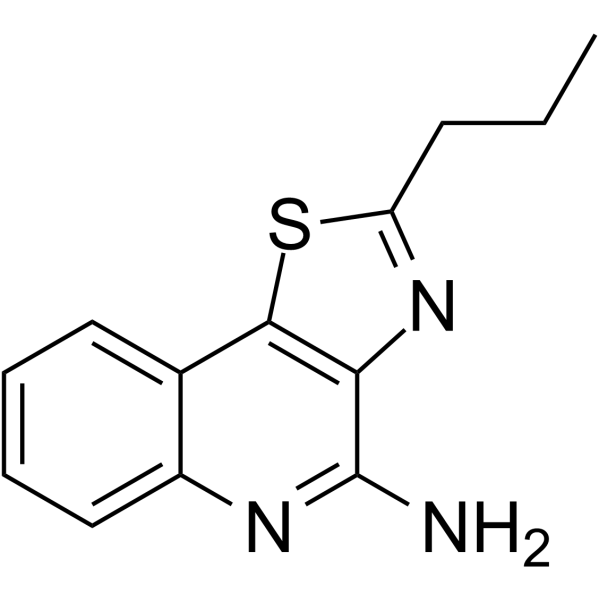
CL075 (3M002) is a selective TLR8 agonist with immunomodulating properties. CL075 triggers a MyD88-dependent signaling pathway to elicit production of inflammatory cytokines and type I interferons (IFNs) via activation of NF-κB and IRF7, respectively .
loading...
    loading...
Cat. No.: HY-173063
CAS No.: 1111460-83-3
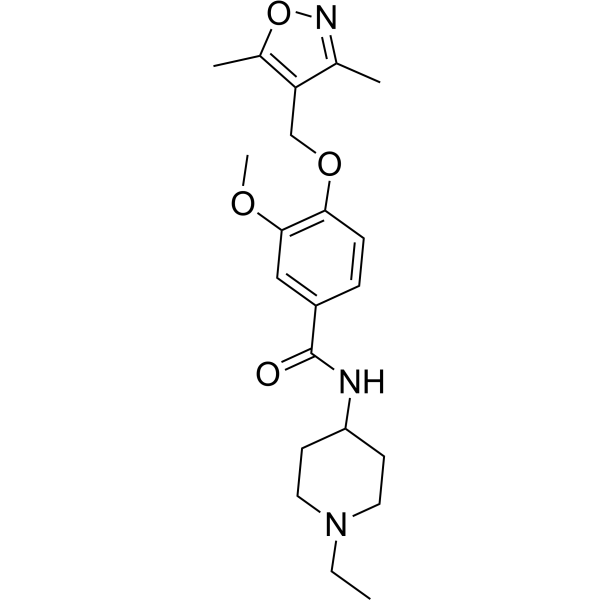
TLR8 antagonist-1 (Compound 10) is a selective TLR8 antagonist. TLR8 antagonist-1 can inhibit TLR8-mediated inflammation and signaling pathways, reduce the recruitment of MyD88, and inhibit the NF-κB and IRF pathways. TLR8 antagonist-1 has anti-inflammatory activity .
loading...
    loading...
Cat. No.: HY-176192
SMU-14a is a selective Toll-like receptor 3 (TLR3) inhibitor wirh an IC50 of 0.18 μM. SMU-14a reduces phosphorylation of p65, ERK, and TBK1 via NF-κB, MAPK, and IRF3 signaling pathways. SMU-14a inhibits IL-6 secretion in mouse peritoneal macrophages, downregulates TNF-α in human peripheral blood monocytes and decreases serum alanine aminotransferase (ALT) and aspartate aminotransferase (AST) levels. SMU-14a can be used for the research of acute hepatitis .
loading...
    loading...
Cat. No.: HY-149724
CAS No.: 3035442-58-8
Target:  

STING NO Synthase

Research Areas:  

Inflammation/Immunology

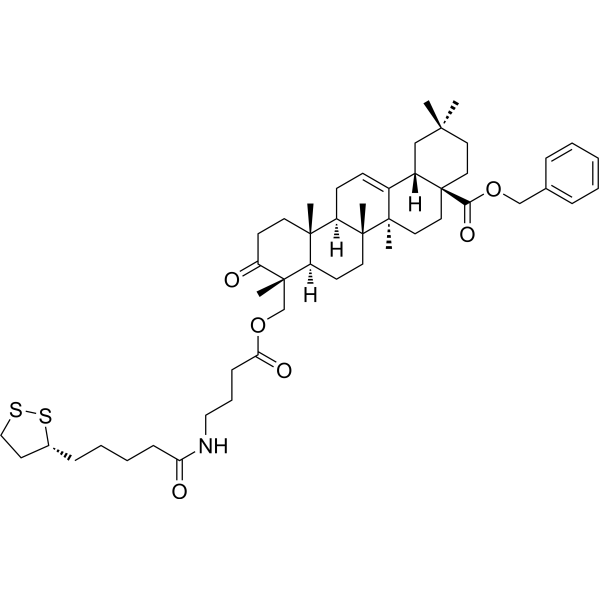
Anti-inflammatory agent 65 (compound 29) is a Hederagonic acid derivative with potent anti-inflammatory activity. Anti-inflammatory agent 65 inhibits nitric oxide (NO) release. Anti-inflammatory agent 65 inhibits the nuclear translocation of IRF3 and p65, and disrupts the STING/IRF3/NF-κB signaling pathway, thereby attenuating the inflammatory response .
loading...
    loading...
Cat. No.: HY-112880
CAS No.: 1951464-78-0
c-(2'FdAMP-2'FdIMP) (Compound 52),a derivative of cAIMP (HY-134375), is a cyclic dinucleotide (CDN). c-(2'FdAMP-2'FdIMP) is a STING activator and significantly induce STING-dependent IRF and NF-κB pathway signaling. c-(2'FdAMP-2'FdIMP) can be used for STING-based immunotherapy, such as cancers and infectious diseases research .
loading...
    loading...
Cat. No.: HY-180120
UM-203 is a reversible covalent STING antagonist. UM-203 is effective against both mouse and human STING, and in particular, it inhibits the most common human STING R232 variant. UM-203 can inhibit STING oligomerization and reduce phosphorylation of downstream TBK1 and IRF3, thereby blocking the IRF3 and NF-κB-mediated signaling pathways and inhibiting IFNβ and IL-6 secretion. UM-203 can be used for the research of inflammation and immunology, such as systemic lupus erythematosus .
loading...
    loading...
Cat. No.: HY-N10175
CAS No.: 959772-67-9
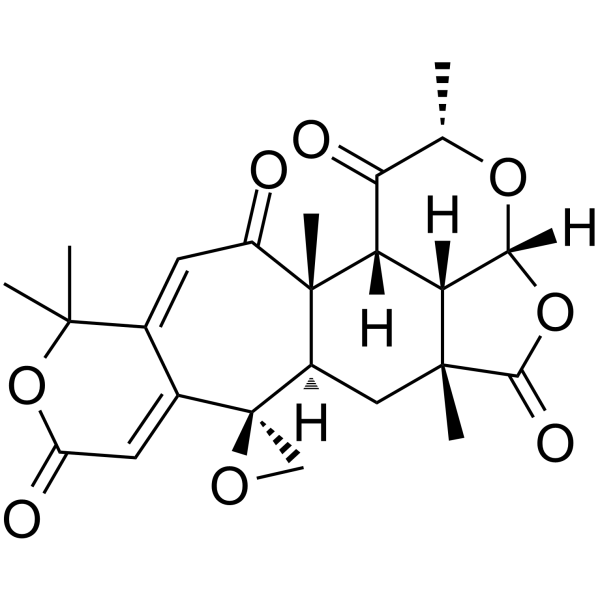
keleyacetal C, a meroterpenoid compound with anti-inflammatory effects via inhibiting NF-κB, ERK1/2 and IRF3 signaling pathways. Berkeleyacetal C significantly inhibits the expression of iNOS and the following NO production by macrophages. Berkeleyacetal C inhibits expression and secretion of key pro-inflammatory factors and chemokines (TNF-α, IL-6, IL-1β, MIP-1α, and MCP-1). Berkeleyacetal C also inhibits activation of neutrophils and reactive oxygen species (ROS) production. Berkeleyacetal C can be used for the study of inflammatory disorders .
loading...
    loading...
Cat. No.: HY-L237
338 compounds

Pattern Recognition Receptors (PRRs) are a crucial class of protein molecules expressed in cells of the innate immune system. The core function of Pattern Recognition Receptors is to recognize Pathogen-Associated Molecular Patterns (PAMPs) and Damage-Associated Molecular Patterns (DAMPs). Upon recognizing and binding to PAMPs or DAMPs, PRRs rapidly initiate intracellular signaling pathways (such as the NF-κB, IRF, and inflammasome pathways). This triggers the production of inflammatory factors, chemokines, and type I interferons, thereby initiating inflammatory responses to eliminate pathogens or repair damage. PRRs represent the body's first line of defense against infection, and the rapidity and broad specificity of their response are crucial for host survival. However, aberrant activation of PRR signaling is also a cause of many chronic inflammatory diseases, autoimmune disorders, and neurodegenerative diseases. Therefore, precisely regulating PRR activity has become a key therapeutic strategy for these conditions.

MCE has cataloged 338 inhibitors targeting key PRRs, such as NLRs, TLRs, C-type Lectin Receptors (CLRs), and cGAS, to support drug discovery efforts for chronic inflammatory diseases.

Cat. No.: HY-189215
CAS No.: 3087067-85-1
Anti-Influenza agent 12 is an orally active inhibitor of influenza A virus infection. Anti-Influenza agent 12 inhibits RIG-I-mediated innate immune signaling and TLR3-mediated signaling pathways. Anti-Influenza agent 12 inhibits NF-κB phosphorylation and downregulates the expression levels of IRF3, ASC, iNOS, IL-4, IL-6, and IFN-α inflammatory genes. Anti-Influenza agent 12 inhibits viral nucleoprotein (NP) and matrix protein 2 (M2) mRNA transcription and protein synthesis. Anti-Influenza agent 12 inhibits virus-induced apoptosis, reduces ROS and NO production, and maintains mitochondrial membrane potential. Anti-Influenza agent 12 exhibits broad-spectrum activity against H1N1 and H3N2 subtypes, reduces viral load, and alleviates lung tissue damage. Anti-Influenza agent 12 can be used for research on influenza A virus infection .
loading...
    loading...

