1. Search Result
Search Result
Pathways Recommended: Stem Cell/Wnt Cell Cycle/DNA Damage
Results for "

Kelly neuroblastoma cells

" in MedChemExpress (MCE) Product Catalog:

6

Inhibitors & Agonists

1

Fluorescent Dyes

1

Biochemical Assay Reagents

1

GMP Molecules

Cat. No. 상품명 Target 연구분야 Chemical Structure
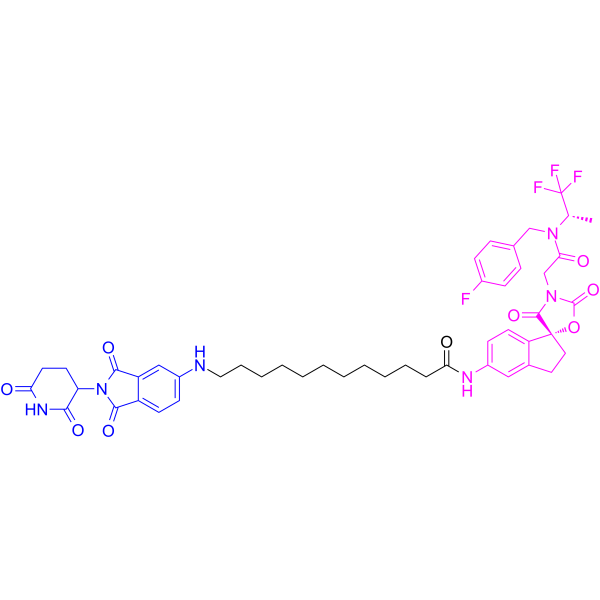
  • HY-122822

    PROTACs Histone Acetyltransferase Interleukin Related CXCR TNF Receptor CD28 Inflammation/Immunology Cancer
    GSK699 is a KAT2A/B/PCAF/GCN5 PROTAC degrader . GSK699 induces proteasome-dependent degradation of KAT2A, KAT2B, PCAF and GCN5, regulates the histone acetyltransferase activity of the SAGA complex, and reduces the level of histone H3K9ac. GSK699 inhibits the growth of neuroblastoma, acute myeloid leukemia and small cell lung cancer cells. GSK699 reduces the production of inflammatory cytokines and chemokines, and impairs LPS-stimulated immune cell responses. GSK699 is applicable to research related to acute myeloid leukemia, small cell lung cancer, neuroblastoma and inflammatory diseases .
    GSK699
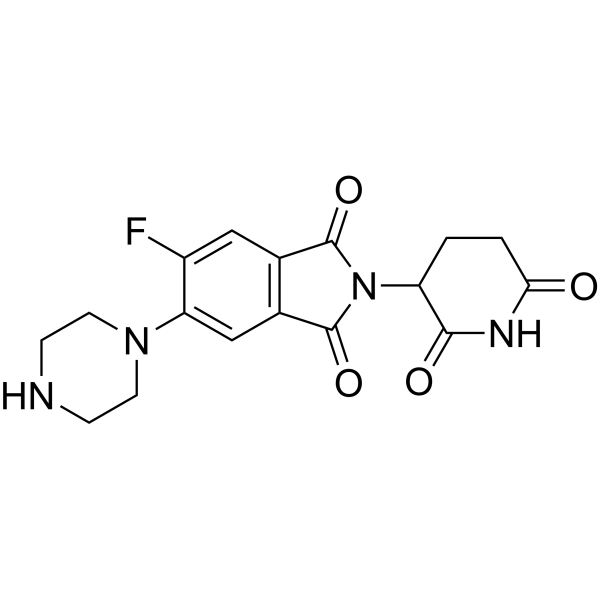
  • HY-134983

    E3 Ligase Ligand-Linker Conjugates Apoptosis Autophagy Cancer
    Thalidomide-piperazine hydrochloride is a synthetic E3 ligase ligand-linker conjugate, containing a cereblon ligand based on Thalidomide (HY-14658) and one linker. Thalidomide-piperazine hydrochloride can be used in studies related to PROTAC synthesis .
    Thalidomide-Piperazine 5-fluoride
  • HY-172609

    Phosphatase Apoptosis MDM-2/p53 Caspase Metabolic Disease Cancer
    SL-176 is a PPM1D (Wip1) inhibitor. SL-176 inhibits lipid droplet formation, downregulates the mRNA and protein expression of PPARγ and C/EBPα, and blocks adipocyte differentiation. SL-176 induces G2/M cell cycle arrest, apoptosis and inhibits cell proliferation in breast cancer cells overexpressing PPM1D, and activates components of the p53 pathway. SL-176 suppresses tumor growth in a zebrafish model of neuroblastoma. SL-176 is applicable to research related to obesity, breast cancer and neuroblastoma .
    SL-176
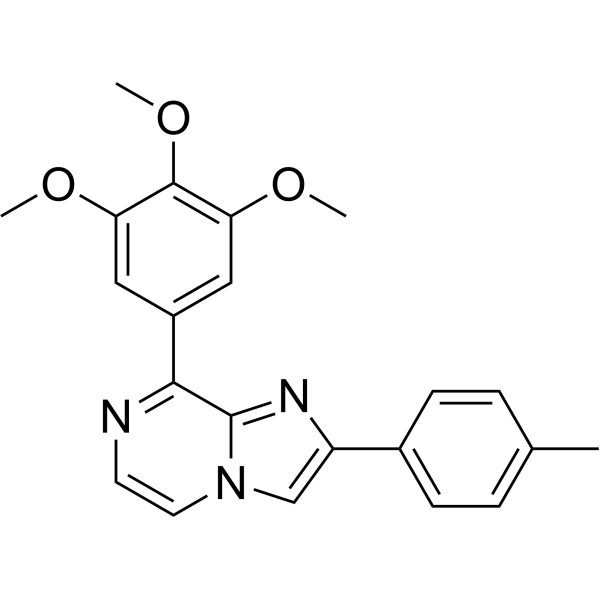
  • HY-155962

    Microtubule/Tubulin Cancer
    Tubulin polymerization-IN-47 (Compound 4h) is a tubulin polymerization inhibitor and mitotic inhibitor. Tubulin polymerization-IN-47 inhibits neuroblastoma cancer cell proliferation, with IC50s of 7 and 12 nM for Chp-134 and Kelly cell line .
    Tubulin polymerization-IN-47
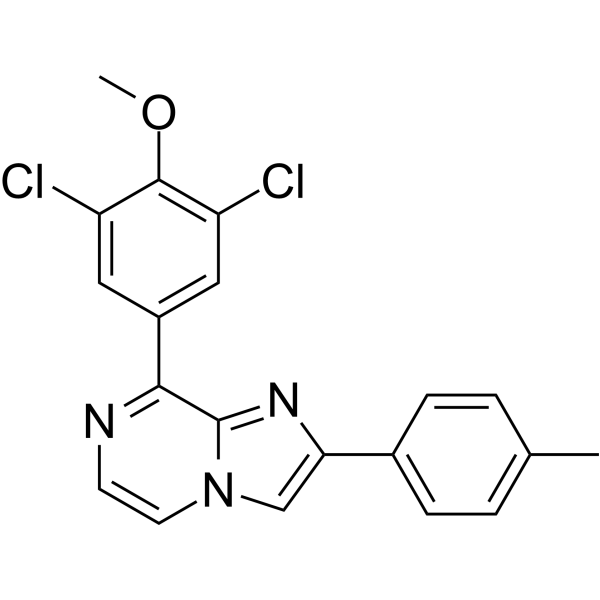
  • HY-155963

    Microtubule/Tubulin Cancer
    Tubulin polymerization-IN-48 (Compound 4k) is a tubulin polymerization inhibitor. Tubulin polymerization-IN-48 has a moderate effect on disruption of the microtubule network. Tubulin polymerization-IN-48 inhibits neuroblastoma cancer cell proliferation, with IC50s of 79 and 165 nM for Chp-134 and Kelly cell line .
    Tubulin polymerization-IN-48
  • HY-138794G

    Deubiquitinase SARS-CoV Histone Demethylase Cancer
    XL177A GMP is XL177A (HY-138794) produced by using GMP guidelines. GMP small molecules works appropriately as an auxiliary reagent for cell therapy manufacture. XL177A is a covalent USP7 inhibitor that blocks the deubiquitinase activity of USP7. XL177A destabilizes non-canonical PRC1 complexes or KDM6A and reduces chromatin deposition of H2AK119Ub, thereby relieving the repression of neuronal differentiation programs. Meanwhile, XL177A also regulates the ELOF1-UVSSA-USP7-nuclear β-catenin axis, decreasing the transcription levels of related proteins and the accumulation of nuclear β-catenin. XL177A exerts antiviral effects by reducing the expression levels of coronavirus receptors, and exhibits inhibitory activity against APC-mutated colorectal cancer cells, neuroblastoma, and coronaviruses including SARS-CoV-2 variants. XL177A is mainly used in studies related to colorectal cancer, neuroblastoma, and coronavirus infections .
    XL177A

온라인 문의

Your information is safe with us. * Required Fields.

호칭


Country or Region *

고객명 *


회사명 *

Department *


메일주소 *


상품명 *

Cat. No.


Requested quantity *

전화번호 *


비고

온라인 문의

Inquiry Information

상품명:
Cat. No.:
수량:
MCE Japan Authorized Agent:

