4 Results for "

Lignification

" in MedChemExpress (MCE) Product Catalog:
Products (4)

4 Results for "Lignification" in MCE Product Catalog:

Cat. No.: HY-N7698B
CAS No.: 38854-46-5
Target:  

Glycosidase

Research Areas:  

Inflammation/Immunology Cancer

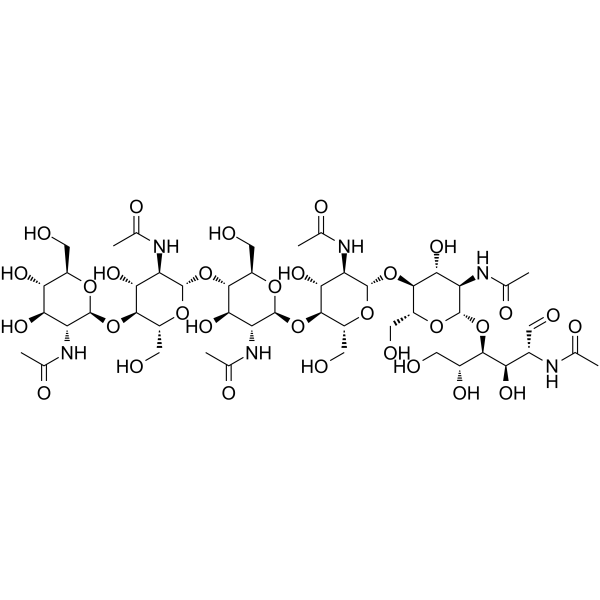
Hexa-N-acetylchitohexaose is an inducer of disease resistance in crop plants, which could elicit an increase of lignification-related and antioxidative enzymes in soybean plants. Hexa-N-acetylchitohexaose is a substrate of lysozyme. Hexa-N-acetylchitohexaose shows antitumor effect .
loading...
    loading...
Cat. No.: HY-134230
CAS No.: 42990-62-5
Purity:  99.8%
Synonyms: L-α-aminooxy-β-phenylpropionic acid; AOPP
Research Areas:  

Metabolic Disease

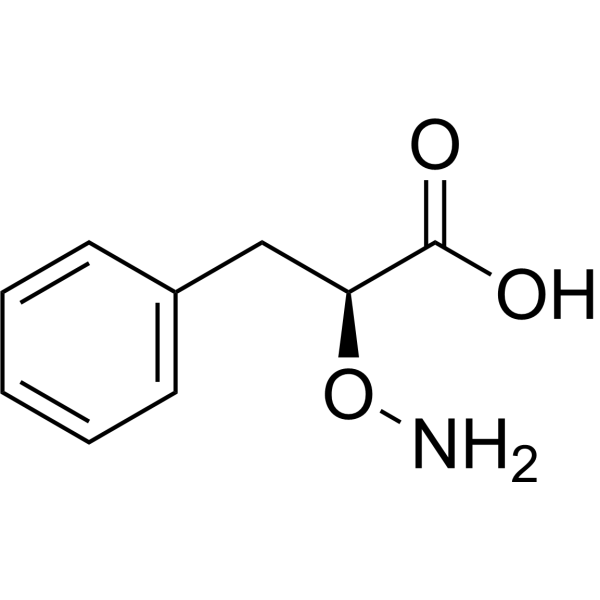
L-2-Aminooxy-3-phenylpropanoic acid (L-α-aminooxy-β-phenylpropionic acid; AOPP) is an inhibitor of L-phenylalanine ammonia-lyase (PAL). L-2-Aminooxy-3-phenylpropanoic acid inhibits lignification without reducing the number of tracheary elements formed .
loading...
    loading...
Cat. No.: HY-W720329
CAS No.: 950782-86-2
Research Areas:  

Others

Indaziflam is an alkyltriazine herbicide. Indaziflam targets the cellulose synthase complex and inhibits cellulose biosynthesis in plant cell walls. Indaziflam induces radial swelling of plants, ectopic lignification, inhibition of root and hypocotyl elongation, abnormal root and cell morphology, and also induces DNA strand breaks and micronucleus formation in HepG2 cells. Indaziflam can be used for research on monocot weed control .
loading...
    loading...
Cat. No.: HY-DY2037
Target:  

Fluorescent Dye

Research Areas:  

Others

Lignin Staining Solution (Safranin Method) is a histochemical staining solution for lignin with Safranin O as the active component. Lignin Staining Solution (Safranin Method) enables lignified cell walls to appear red to deep red (pinkish in regions with low lignification) via the high affinity of the dye for lignin. Lignin Staining Solution (Safranin Method) can be used to visualize lignin distribution in ex vivo thick sections of annual shoots from woody plants and vibratome sections of stems from herbaceous plants (such as Arabidopsis and flax), as well as for in situ quantification of cell wall substructural regions (cell corners, intercellular layers, secondary walls) based on Safranin O ratiometric fluorescence .
loading...
    loading...

