18 Results for "

Myocardial ischemia-reperfusion model

" in MedChemExpress (MCE) Product Catalog:
Products (18)

18 Results for "Myocardial ischemia-reperfusion model" in MCE Product Catalog:

6
6 Cited Publications
Cat. No.: HY-N0430A
CAS No.: 1198398-71-8
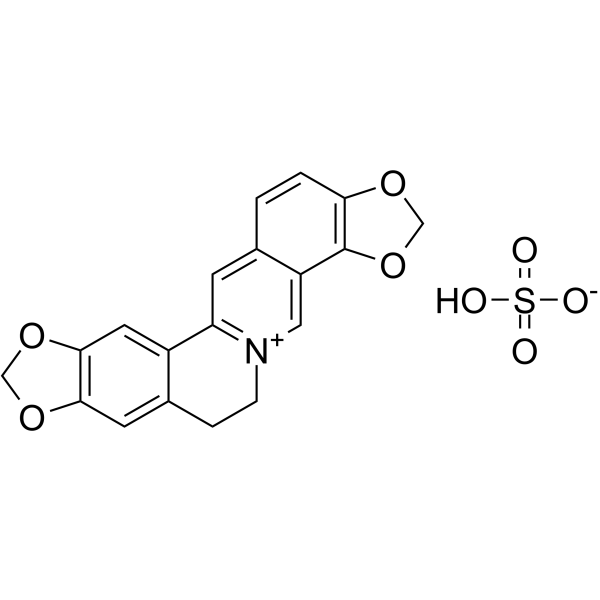
Coptisine Sulfate is an orally active and brain-penetrant alkaloid found in Coptis chinensis. Coptisine Sulfate is a reversible, uncompetitive IDO inhibitor with a Ki of 5.8 μM and an IC50 of 6.3 μM. Coptisine Sulfate suppresses neuroinflammation, reduces Aβ plaque burden and shows neuroprotective activity. Coptisine Sulfate shows anti-inflammation activity by blocking NF-κB, MAPK, and PI3K/Akt activation. Coptisine Sulfate inhibits cancer cells proliferation, induces DNA damage, G2/M phase cell cycle arrest, apoptosis, ROS production and mitochondrial dysfunction. Coptisine Sulfate inhibits Rho/ROCK pathway activation, reduces arrhythmia, limits cardiac injury marker release, reduces infarct size, and preserves cardiac function in rat myocardial ischemia/reperfusion models. Coptisine Sulfate downregulates HMGCR and upregulates LDLR and CYP7A1 to modulate cholesterol metabolism, reduces abnormal serum lipid levels, and promotes fecal bile acid excretion. Coptisine Sulfate be used for the research of cancer, hypercholesterolemia, Alzheimer’s disease, inflammatory disorders and cardiovascular disease .
loading...
    loading...
4
4 Cited Publications
Cat. No.: HY-N1501
CAS No.: 5273-86-9
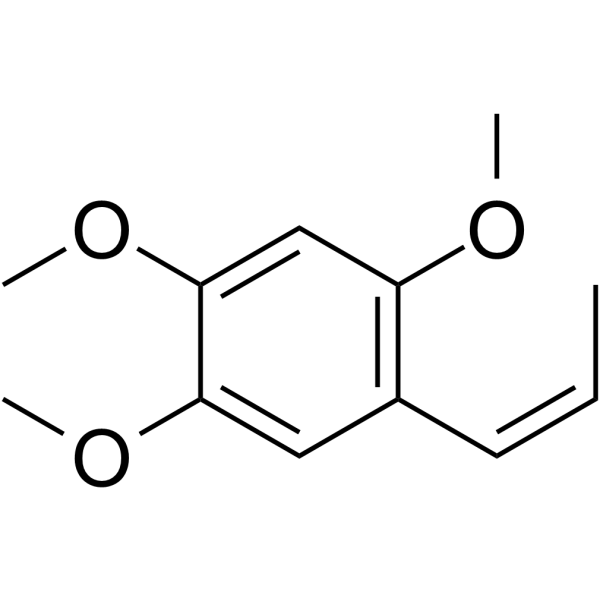
Beta-asarone is an orally active and BBB-penetrable anti-inflammatory agent and neuroprotective agent, which is the major ingredient of Acorus tatarinowii Schott. Beta-asarone can protect nerve cells from apoptosis and autophagy, inhibit expression of α-synuclein, as well as myocardial protection. Beta-asarone can be used in the study of neurological and cardiovascular diseases .
loading...
    loading...
2
2 Cited Publications
Cat. No.: HY-N4195
CAS No.: 38963-95-0
Synonyms: Resveratrol glycoside; trans-Resveratrol 4'-O-β-D-glucopyranoside
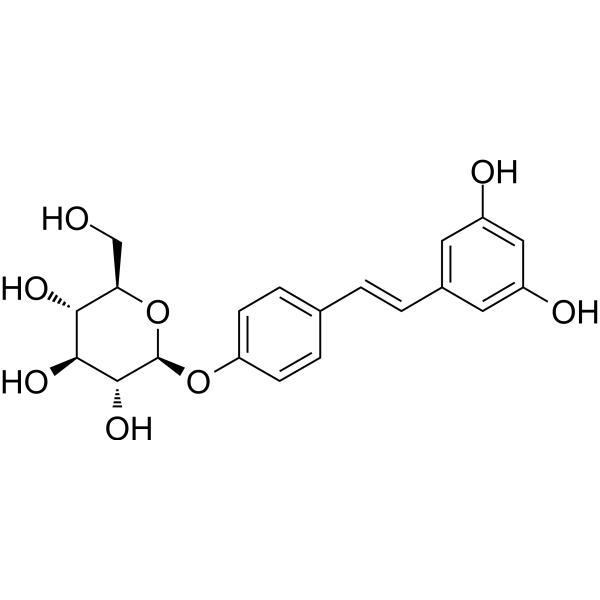
Resveratroloside (Resveratrol glycoside) is an orally active competitive inhibitor of α-glucosidase. Resveratroloside has hypoglycemic and cardioprotective effects. Resveratroloside can be used for the research of diabetes and heart system diseases .
loading...
    loading...
Cat. No.: HY-173572
CAS No.: 433953-86-7
Target:  

Sirtuin Autophagy

Research Areas:  

Cardiovascular Disease

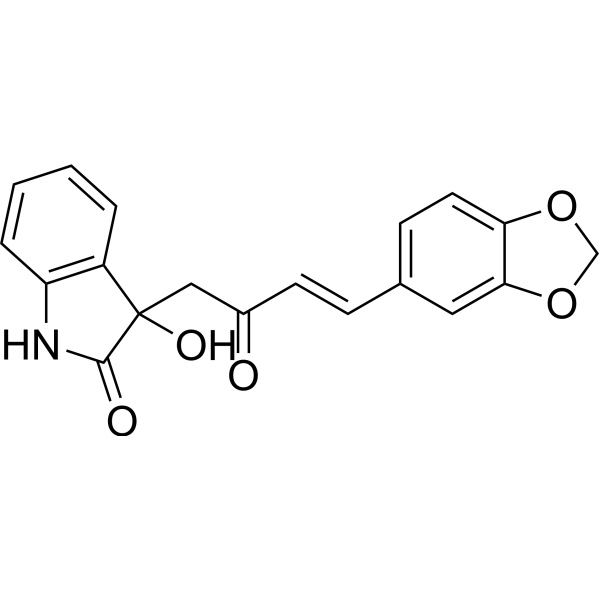
SKLB-11A is a selective, orally active and allosteric SIRT3 (sirtuin 3) agonist with a Kd value of 4.7 μM. SKLB-11A is highly selective for other members of the SIRT family. SKLB-11A activates autophagy-related signaling pathways, prevents mitochondrial dysfunction, improves cardiac function in Doxorubicin (HY-15142A)-induced cardiotoxicity and myocardial ischemia/reperfusion models .
loading...
    loading...
Cat. No.: HY-N0430
CAS No.: 3486-66-6
Synonyms: Coptisin
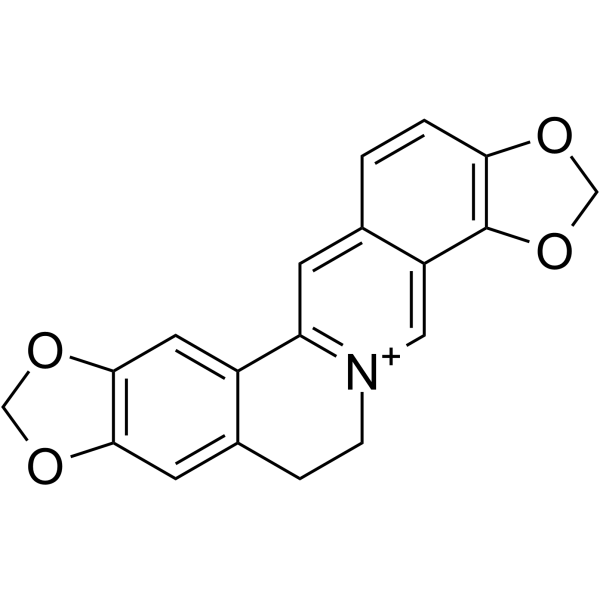
Coptisine is an orally active and brain-penetrant alkaloid found in Coptis chinensis. Coptisine is a reversible, uncompetitive IDO inhibitor with a Ki of 5.8 μM and an IC50 of 6.3 μM. Coptisine suppresses neuroinflammation, reduces Aβ plaque burden and shows neuroprotective activity. Coptisine shows anti-inflammation activity by blocking NF-κB, MAPK, and PI3K/Akt activation. Coptisine inhibits cancer cells proliferation, induces DNA damage, G2/M phase cell cycle arrest, apoptosis, ROS production and mitochondrial dysfunction. Coptisine inhibits Rho/ROCK pathway activation, reduces arrhythmia, limits cardiac injury marker release, reduces infarct size, and preserves cardiac function in rat myocardial ischemia/reperfusion models. Coptisine downregulates HMGCR and upregulates LDLR and CYP7A1 to modulate cholesterol metabolism, reduces abnormal serum lipid levels, and promotes fecal bile acid excretion. Coptisine can be used for the research of cancer, hypercholesterolemia, Alzheimer’s disease, inflammatory disorders and cardiovascular disease .
loading...
    loading...
Cat. No.: HY-176716
CAS No.: 2988020-77-3
Research Areas:  

Cardiovascular Disease

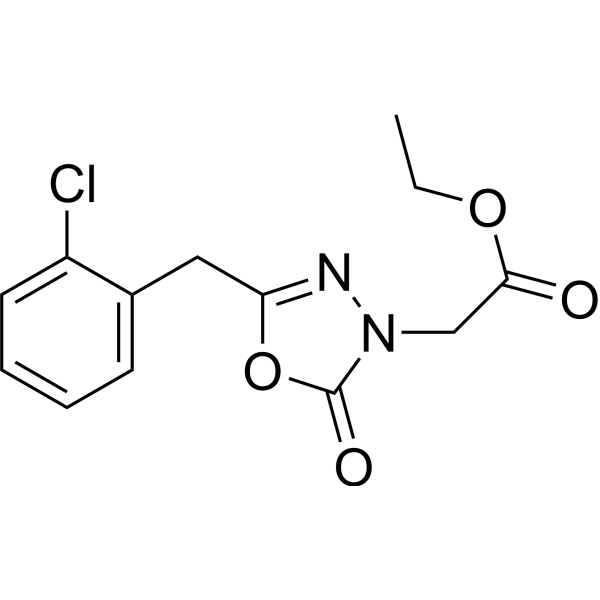
ALDH2 activator 1 (Compound Z17) is an allosteric aldehyde dehydrogenase 2 (ALDH2) agonist. ALDH2 activator 1 enhances cardiac function and reduces myocardial necrosis in a mouse model of myocardial ischemia-reperfusion. ALDH2 activator 1 is promising for research of cardiovascular diseases such as myocardial infarction (MI) .
loading...
    loading...
Cat. No.: HY-P5875A
P4pal10 TFA is the TFA salt form of P4pal10 (HY-P5875). P4pal10 TFA is an antagonist for protease-activated receptor 4 (PAR4). P4pal10 TFA inhibits the platelet aggregation, inhibits tissue factor (TF)-induced thrombin generation, and exhibits anticoagulant and antithrombotic activities. P4pal10 TFA reduces the oedema and the granulocyte infiltration induced by Carrageenan (HY-125474). P4pal10 TFA ameliorates the injury in rats myocardial ischemia/reperfusion (I/R) models .
loading...
    loading...
Cat. No.: HY-106150
CAS No.: 176644-21-6
Synonyms: EMD-96785
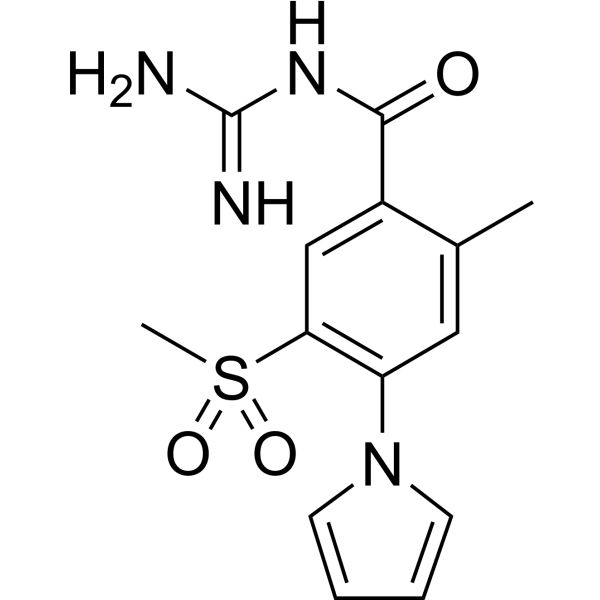
Eniporide (EMD 96785) is a Na(+)/H(+) exchange (NHE) inhibitor. Eniporide specifically inhibits the NHE-1 isoform. Eniporide improves cardiac performance inhibition associated with myocardial ischemia/reperfusion in animals, and limits infarct size in experimental models. Eniporide regulates cardiac performance and high-energy phosphate content in clinically relevant pig models of CPB and cardiac arrest .
loading...
    loading...
Cat. No.: HY-105362
CAS No.: 162412-71-7
Target:  

Endothelin Receptor

Research Areas:  

Cardiovascular Disease

PD 155080 is a selective endothelin A receptor (ETA receptor) antagonist. PD 155080 reduces coronary resistance in the isolated rat heart model. PD 155080 improves myocardial systolic function and diastolic function in the ischemia/reperfusion model. PD 155080 can be used for the study of cardiovascular diseases .
loading...
    loading...
Cat. No.: HY-A0113
CAS No.: 90139-06-3
Synonyms: Ro 31-3113
Cilazaprilat is an inhibitor of angiotensin-converting enzyme (ACE; IC50=0.7 nM for the rat enzyme) and an active metabolite of Cilazapril (HY-A0043). It decreases creatine kinase release in primary neonatal rat cardiac myocytes in an in vitro model of ischemia-reperfusion injury induced by hypoxia and reoxygenation when used at a concentration of 10 μM.3 Intra-arterial administration of cilazaprilat (3 μg/kg per minute) increases coronary blood flow and fractional shortening in a dog model of coronary hypoperfusion-induced myocardial ischemia.
loading...
    loading...
Cat. No.: HY-155517
CAS No.: 3049730-43-7
INF200 (compound 5) is a sulfonylurea-based inhibitor of NLRP3 and NLRP3-mediated pyroptosis. INF200 has beneficial cardiometabolic effects in rat model of high-fat diet (HFD)-induced metaflammation,and shows anti-inflammatory activity to (10 μM) decreases IL-1β release in human macrophages. INF200 improves glucose and lipid profiles,and attenuates systemic inflammation and biomarkers of cardiac dysfunction (particularly BNP). INF200 also improves myocardial damage-dependent ischemia/reperfusion injury (IRI) in hemodynamic evaluation .
loading...
    loading...
Cat. No.: HY-19129
CAS No.: 129648-96-0
Research Areas:  

Cardiovascular Disease

KT2-962 is a thromboxane A2 (TXA2) receptor antagonist and potent hydroxyl radical scavenger (IC50=500 nM). KT2-962 reduces myocardial infarct size and ventricular fibrillation. KT2-962 demonstrates cardioprotective effect in a canine ischemia/reperfusion model. KT2-962 is promising for research of myocardial ischemia-reperfusion injury and TXA2-mediated vascular diseases .
loading...
    loading...
Cat. No.: HY-121726
CAS No.: 355428-84-1
Target:  

mTOR Autophagy

Research Areas:  

Cardiovascular Disease

3HOI-BA-01 is amTORinhibitor.3HOI-BA-01reduces infarct size and inducedautophagyin a murine myocardial ischemia/reperfusion injury model .
loading...
    loading...
Cat. No.: HY-106150A
CAS No.: 190368-98-0
Research Areas:  

Cardiovascular Disease

Eniporide mesylate (EMD 96785 mesylate) is a Na(+)/H(+) exchange (NHE) inhibitor. Eniporide mesylate specifically inhibits the NHE-1 isoform. Eniporide mesylate improves cardiac performance inhibition associated with myocardial ischemia/reperfusion in animals, and limits infarct size in experimental models. Eniporide mesylate regulates cardiac performance and high-energy phosphate content .
loading...
    loading...
Cat. No.: HY-W783623
CAS No.: 140670-42-4
Synonyms: DG(22:6/0:0/22:6); 1,3-Didocosahexaenoin
Research Areas:  

Cardiovascular Disease

1,3-Didocosahexaenoyl glycerol (DG(22:6/0:0/22:6); 1,3-Didocosahexaenoin) is an ω-3 polyunsaturated fatty acid, which exhibits cardioprotective effects in rat myocardial ischemia/reperfusion (I/R) injury model through conjugation with Poly-l-glutamic acid (PGA) .
loading...
    loading...
Cat. No.: HY-P5875
CAS No.: 1021346-05-3
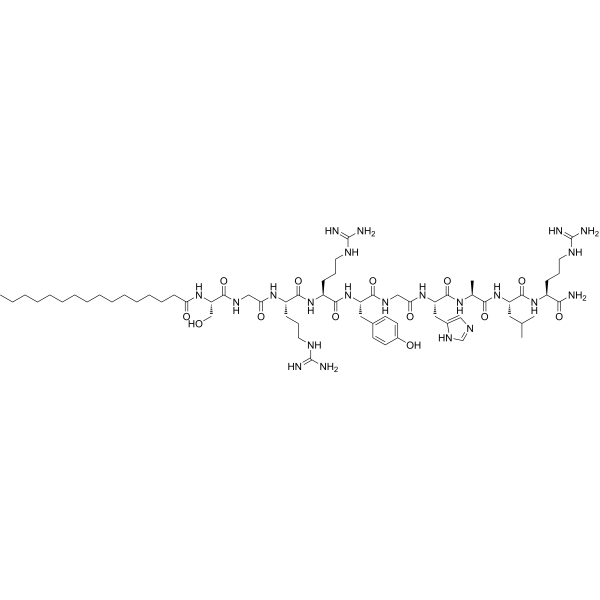
P4pal10 is an antagonist for protease-activated receptor 4 (PAR4). P4pal10 inhibits the platelet aggregation, inhibits tissue factor (TF)-induced thrombin generation, and exhibits anticoagulant and antithrombotic activities. P4pal10 reduces the oedema and the granulocyte infiltration induced by Carrageenan (HY-125474). P4pal10 ameliorates the injury in mice myocardial ischemia/reperfusion (I/R) models .
loading...
    loading...
Cat. No.: HY-121586
CAS No.: 59040-30-1
Synonyms: Bay g 6575
Target:  

Lipoxygenase

Research Areas:  

Cardiovascular Disease

Nafazatrom (Bay g 6575) is an orally active cardioprotective agent that protects against ischemic damage. Nafazatrom dose-dependently inhibits neutrophil aggregation, superoxide anion generation, arachidonic acid metabolism, and to a lesser extent the release of β-glucosidase, platelet aggregation or arachidonic acid in vitro. Acid metabolism has no significant effect. In a dog ischemia-reperfusion model, Nafazatrom (10 mg/kg; po) reduced infarct size and the occurrence of arrhythmias and rescued ischemic myocardial function without affecting any hemodynamic changes. The basis of Nafazatrom's cardioprotection may be inhibition of neutrophil function and cellular infiltration in vitro .
loading...
    loading...
Cat. No.: HY-P992212

Target:  

L-Selectin

Research Areas:  

Inflammation/Immunology

Anti-CD62L Antibody (DREG-200) is a human monoclonal antibody targeting CD62L/L-selectin. Anti-CD62L Antibody (DREG-200) binds to residues 45, 46 and 47 of L-selectin, and blocks L-selectin-mediated interactions, neutrophil rolling, adhesion, aggregation, secondary anchoring, as well as leukocyte rolling on ligands. Anti-CD62L Antibody (DREG-200) reduces myocardial necrosis, coronary endothelial dysfunction, and neutrophil migration driven by neutrophil microparticles. Anti-CD62L Antibody (DREG-200) exerts cardioprotective effects in feline models. Anti-CD62L Antibody (DREG-200) can be used in studies related to myocardial ischemia-reperfusion injury. The recommended isotype control is Mouse IgG1 kappa (HY-P99977) .
loading...
    loading...
  • 1

