Delivery of temperature sensitive items including proteins and kits will be paused on 6/19 for the Juneteenth holiday. For urgent orders please contact customer service.
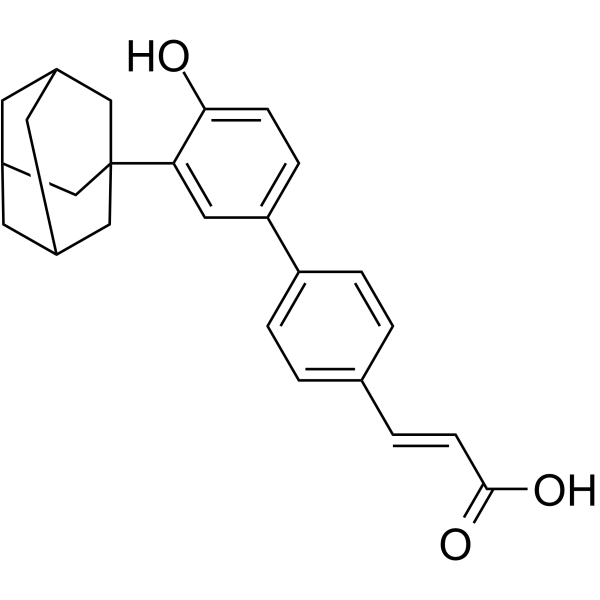
Adarotene is an effective apoptosis inducer, which surprisingly produces DNA damage and exhibites a potent antiproliferative activity on a large panel of human tumor cells.
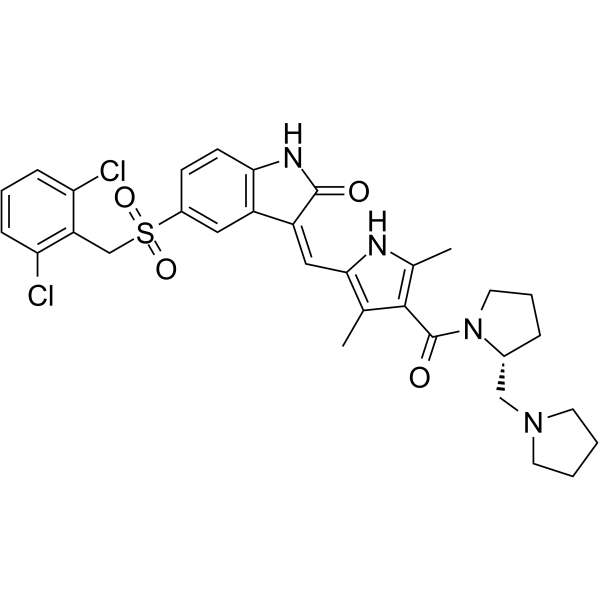
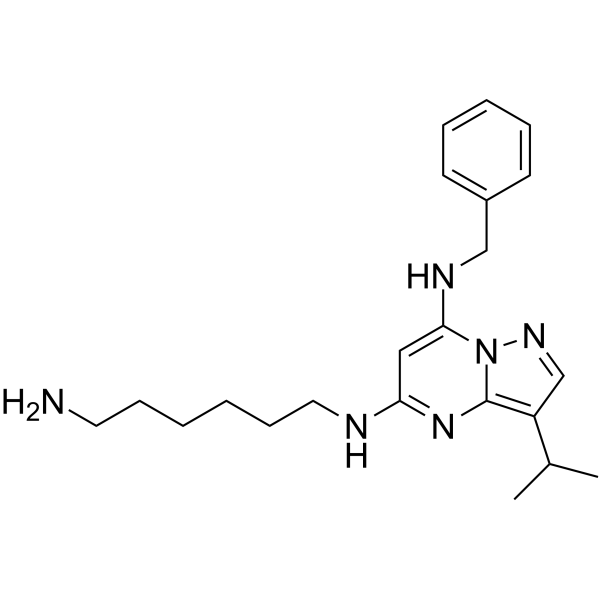
SP-96 is a highly potent, selective and non-ATP-competitive Aurora B (IC50=0.316 nM) inhibitor and shows >2000 fold selectivity against FLT3 and KIT. SP-96 shows selective growth inhibition in NCI60 screening, incluing MDA-MD-468 (GI50=107 nM). SP-96 can be used for the research of triple negative breast cancer (TNBC) .
Sulfabenzamide (N-Sulfanilylbenzamide) is a sulfonamide antibacterial agent. Sulfabenzamide exhibit antibacterial activity against Staphylococcus aureus (ATCC 25923) and Escherichia coli (ATCC 8739). Sulfabenzamide can promote autophagic cell autophagy in breast cancer cells through p53/ DRAM pathway. Sulfabenzamide increases caspase-3 activity, deactivates PARP1 and DNA-PK, downregulates AKT1 and AKT2. Sulfabenzamide can be used for the researches of breast cancer and bacterial infections .
Sclareol glycol is the precursor of ambroxide. Hyphozyma roseonigraATCC 20624 was the only reported strain capable of degrading sclareol to the main product of sclareol glycol .
Benzisothiazolone is an isothiazolone fungicide. Benzisothiazolone has growth inhibiting activity against E. coliATCC 8739 and saccharornyces pombe NCYC 1354. Benzisothiazolone can be used in the study of growth inhibition model .
Ambuic acid exhibits antimicrobial activity against Staphylococcus aureus, with IC50 of 43.9 μM for strain ATCC 6538. Ambuic acid is an inhbitor for the biosynthesis of cyclic peptide quorum sensing molecules (quormones) in gram-positive bacteria. Ambuic acid exhibits anti-inflammatory activity through ERK/JNK/MAPK signaling pathway .
3-Aminobiphenyl is a chemical isomer of 4-ABP. 3-Aminobiphenyl can inhibit the growth of human intestinal bacteria Bifidobacterium infantis ATCC 15697, B. bifidium ATCC 11863, Clostridium perfringensATCC 13124, Escherichia coliATCC 25922, E. coliATCC 35218, Enterobacter cloacae ATCC 13047 and Salmonella typhimurium TA98, TA100, YG1041. 3-Aminobiphenyl can be used as a biomarker of exposure to aromatic amines from cigarette smoke .
p38α inhibitor 2 is a highly potent and selective p38α MAPK inhibitor, with a pIC50 of 9.6. p38α inhibitor 2 inhibits the hERG ion channel (IC50=27 μM) and shows a promising selectivity profile when tested in a panel of 51 other protein kinases (<30% inhibition at 10 μM concentration) and a panel of 141 other biological targets .
MASTL/Aurora A-IN-1 (Compound MA4) is a dual inhibitor of MASTL and Aurora A kinases with IC50 values of 0.56 μM and 0.16 μM, respectively. MASTL/Aurora A-IN-1 has broad-spectrum anticancer activity and has potent anticancer activity against SR (leukemia), K-562 (leukemia), MDA-MB-435 (melanoma), MOLT-4 (leukemia), and SK-MEL-2 (melanoma) cell lines in NCI-60 cancer cell lines with GI50 values of 0.023, 0.032, 0.037, 0.044, and 0.051 μM, respectively. MASTL/Aurora A-IN-1 inhibits Aurora A and MASTL kinases, inducing cell cycle G2/M arrest, thereby inhibiting cancer cell proliferation. MASTL/Aurora A-IN-1 can be used in cancer research, especially for tumors with dysregulated mitosis .
Flucofuron exhibits high efficacy against trophozoites of both N. fowleri strains (ATCC 30808 : IC50 = 2.58 μM and ATCC 30215: IC50 = 2.47 μM), being even active against the resistant cyst stage (IC50 = 0.88 μM). Flucofuron can induce cell apoptosis. Flucofuron can be used for the researches of infection and inflammation, such as Primary amoebic meningoencephalitis (PAM) .
Alicaforsen is an oligonucleotide and immunostimulant targeting human ICAM-1 mRNA. Alicaforsen hybridizes to specific sites to reduce the expression level of ICAM-1. Alicaforsen is applicable to relevant research on psoriasis, rheumatoid arthritis and inflammatory bowel disease .
3-Bromo-1H-pyrrole-2,5-dione (compound 2c) is a 3-substituted pyrrole-2,5-dione compound with antibacterial activity. 3-Bromo-1H-pyrrole-2,5-dione inhibits pathogenic strains of S. aureusATCC 25923, E. coliATCC 25922, P. aeruginosaATCC 27853, with MIC values of 32 μg/mL, 32 μg/mL, and 64 μg/mL, respectively .
Centanamycin (ML-970; AS-I-145; NSC 716970) is a novel DNA-binding agent, and shows cytotoxic activity, with an average GI50 of 34 nM in NCI-60 cell line screening .
Mutanolysin, streptomyces globisporus ATCC21553 (0.2 μm filtered) is an N-acetylmuramidase that can be used to prepare nucleic acids and intact ribosomal RNA from Gram-positive bacteria .
DHODH-IN-32 (Compound A1) is a DHODH inhibitor. DHODH-IN-32 shows significant cytotoxicity against NCI-60 cell lines, especially being sensitive to breast cancer, prostate cancer and leukemia cell lines. DHODH-IN-32 can induce cell apoptosis by activating the Caspase pathway. DHODH-IN-32 causes G0/G1 phase cell cycle arrest and inhibits cellular metabolism by ROS. DHODH-IN-32 exhibits significant anti-tumor properties in mouse breast cancer models. DHODH-IN-32 can be used for the study of breast cancer .
Hepsulfam (NCI 329680; ZINC01574758) is a anticancer agent that shows excellent antileukemic activity with an median IC50 of 0.91 μg/mL in a panel of different tumors.
FGFR1/VEGFR2-IN-2 (compound 6l) is a VEGFR2/FGFR1 dual inhibitor. The IC50 values for VEGFR2 and FGFR1 are 0.025 µM and 0.026 µM respectively, and for EGFR and PDGFR-β, the IC50 values are 0.106 µM and 0.077 µM. FGFR1/VEGFR2-IN-2 showes significant anti-cancer activity (GI=60.38%) on NCI-60 cell line, with an IC50 of 8.51 µM in T-47D cell line and anti-migration. FGFR1/VEGFR2-IN-2 acts to arrest cells in the G1 phase and promote apoptosis and necrosis; the IC50 for MCF-7 cell line exceeds 100 µM, and the IC50 for MDA-MB-231 is 69.17 µM, non-toxic to normal cells .
Farobin A is a natural compound with antibacterial, antioxidant and anti-inflammatory activities. Farobin A against Streptococcus mutans ATCC 25175 and Streptococcus sobrinusATCC 33478. Farobin A shows anti-inflammatory activity on cytokine IL-6 and TNF-α .
TOPOI/PARP-1-IN-2 (compound 6c) is a dual PARP-1 and topoisomerase 1 (TOPO-1) inhibitor with IC50s of 32.2 nM and 46.2 nM, respectively. TOPOI/PARP-1-IN-2 shows a selectivity for PARP-1 over PARP-2. TOPOI/PARP-1-IN-2 disrupts the cell cycle at the S phase and induces apoptosis in NCI-60 cancer cell lines .
4'-Methoxy-S-trityl-L-cysteinol is an allosteric inhibitor of vertebrate Kinesin Spindle Protein (KSP). 4'-Methoxy-S-trityl-L-cysteinol significantly enhances its inhibitory activity against NCI60 tumor cells by modifying the trityl and cysteine groups. Its EC50 for bipolar spindle formation is 28 μM, showing stronger inhibitory potency than the parent molecule and monastrol.
(-)-Decursinol (Aegelinol; (-)-Smyrinol) is a natural pyranocoumarin compound tant can be isolated from the roots of Apiaceae plants such as Ferulago campestris. (-)-Decursinol inhibits both Gram-positive bacteria (Staphylococcus aureusATCC 13709, Enterococcus faecalisATCC 14428) and Gram-negative bacteria (Salmonella typhiiATCC 19430, Enterobacter cloacaeATCC 10699, Enterobacter aerogenesATCC 13048) with minimum inhibitory concentrations (MIC) ranging from 16 to 64 μg/mL. (-)-Decursinol possesses antioxidant activity. (-)-Decursinol can be used for the study of bacterial infections .
Platinum(COD)dichloride (Compound Pt1) is an Antibacterial agent. Platinum(COD)dichloride shows antibacterial activity against a panel of gram-positive bacteria including Vancomycin (HY-B0671) and Methicillin (HY-121544) resistant Staphylococcus aureus .
LpxC-IN-5 is a potent non-hydroxamate LpxC (UDP-3-O-acyl-N-acetylglucosamine deacetylase) inhibitor with an IC50 of 20 nM. LpxC-IN-5 shows antibacterial activity against E. coliATCC25922, P. aeruginosaATCC27853, K. pneumoniaeATCC13883 and P. aeruginosa 5567 with MIC of 16, 4, 64, and 4 μg/mL, respectively .
8-Desmethyleleutherin (Compound 2) is an antibacterial agent that can be extracted from the bulbs of Eleutherine americana. 8-Desmethyleleutherin has MIC values of both 62.5 µg/mL for S. aureus strains ATCC27664 and ATCC25923 .
DNA ligase-IN-2 (compound 2) is a potent LigA inhibitor and inhibits the DNA-independent autoadenylation activity of both full-length LigA and a truncated enzyme, LigA:AD (IC50=29 nM). DNA ligase-IN-2 effectively inhibits the growth of Staphylococcus aureus in vitro, with MIC valuse of 1, 1, and >64 μg/mL for S. aureusATCC 29213, S. aureusATCC 700699 and E. coliATCC 25922, respectively .
Kalafungin is an antibiotic, antimicrobial agent and a β-lactamase inhibitor from marine Streptomyces, with IC50 of 225.37 μM. Kalafungin destroys cell membranes. Kalafungin shows inhibitory activities against a variety of pathogenic fungi, yeasts, protozoa, gram-positive bacteria (such as S. aureusATCC 33591 and S. aureusATCC 23591), and, to a lesser extent, gram-negative bacteria .
IKE16 is a fungi-selective eukaryotic topoisomerase II inhibitor, with an IC50 value of 13.68 μM. IKE16 suppresses both the DNA relaxation activity and the decatenation activity of yTOPOII selectively. IKE16 shows moderate activity against standard fungal strains (Candida albicansATCC 10231, Saccharomyces cerevisiaeATCC 89763) with a minimum inhibitory concentration (MIC) of 2 μg/mL against S. cerevisiaeATCC 89763. IKE16 exhibits high cytotoxicity against human cells, with an EC50 of 0.07 μM in HepG2 and 0.045 μM in HEK-293. IKE16 can be used for the study of antifungal infection .
Hepsulfam (NCI 329680; ZINC01574758) is a anticancer agent that shows excellent antileukemic activity with an median IC50 of 0.91 μg/mL in a panel of different tumors.
FtsZ-IN-12 (Compound 16e) is the inhibitor for filamentous temperature-sensitive mutant Z (FtsZ) that promotes the polymerization of FtsZ protein, inhibits its GTPase activity, thereby interfering with bacterial cell division process. FtsZ-IN-12 exhibits boardspectrum antibacterial activity that inhibits B. subtilisATCC9372, B. pumilus CMCC63202, S. aureusATCC25923, E. coli BW25113 and A. baumanniiATCC19606 with MIC of 0.062-1 μg/mL. FtsZ-IN-12 inhibits the formation of bacterial biofilms and exhibits a clearing effect on mature biofilms. FtsZ-IN-12 exhibits bactericidal activity without hemolytic toxicity to mammalian red blood cells (15 mg/kg) .
N,N-Dimethyldoxorubicin is a Doxorubicin (HY-15142A) analogue. N,N-Dimethyldoxorubicin shows cytotoxicity against a panel of tumor cell lines (IC50s < 0.3 μM) .
Eupenifeldin is pentacyclic bistropolone isolated from cultures of Eupenicillium brefeldianum ATCC 74184. Eupenifeldin is cytotoxic against the HCT-116 cell line. Eupenifeldin has the potential for the research of leukemia .
c[Arg-Arg-Arg-Arg-Nal-Nal-Nal] (Compound 9C) shows broad-spectrum activity against drug-resistant Gram-positive and Gram-negative bacteria, with MICs of 3.1, 3,1, 12.5, and 25 μg/mL for MRSA (ATCC BAA-1556), S. aureus (ATCC 29213), P. aeruginosa (ATCC 27883), and E. coli (ATCC 25922), respectively .
c[Arg-Arg-Arg-Arg-Dip-Dip-Dip] (Compound 8C) shows broad-spectrum activity against drug-resistant Gram-positive and Gram-negative bacteria, with MICs of 3.1, 3,1, 12.5, and 12.5 μg/mL for MRSA (ATCC BAA-1556), S. aureus (ATCC 29213), P. aeruginosa (ATCC 27883), and E. coli (ATCC 25922), respectively .
oligo-α-1,6-Glucosidase, Bacillus cereus ATCC7064 is a hydrolase that mainly hydrolyzes oligosaccharides with α-1,6-glycosidic bonds. oligo-α-1,6-Glucosidase, Bacillus cereus ATCC7064 can catalyzes the exo hydrolysis of α-1,6-glucoside bonds from the nonreducing ends of panose, palatinose, α-limit dextrins, and isomaltooligosaccharides. oligo-α-1,6-Glucosidase, Bacillus cereus ATCC7064 participates in the degradation pathway of starch and glycogen, assisting enzymes such as α-amylase to completely hydrolyzes amylopectin .
FASN-IN-6 (compound 44) is a potent fatty acid biosynthesis (FAB) inhibitor. FASN-IN-6 is an antibacterial agent with MICs of 1 μg/mL and 4 μg/mL for S. aureus ATCC 25923 and E. faecalis ATCC 29212, respectively .
8-Deazafolic acid is an antimicrobial drug for the folate-dependent bacteria, Streptococcus faecium (ATCC 8043) and Lactobacillus casei (ATCC 74691). 8-Deazafolic acid has activity against lymphoid leukemia L1210 in mice .
hERG-IN-1 (compound 2a) is an antibacterial agent and inhibitor of hERG. hERG-IN-1 inhibits pulmonary infection caused by Pseudomonas aeruginosa strain ATCC 27853 .
Massarigenin C is a compound that can be isolated from Massarina tunicata. Massarigenin C has inhibitory activity against Bacillus subtilis (ATCC 6051) .
ortho-Topolin riboside is a naturally occurring cytokinin secreted from Populus x robusta leaves after sunrise. ortho-Topolin riboside has shown unique cytotoxic activity against NCI60 cell lines compared with the activity of other cytokinins.ortho-Topolin riboside induced differentiation through inhibition of STAT3 signaling in acute myeloid leukemia HL-60 cells.
Norfunalenone exhibits weak cytotoxic activity in mouse myeloma NS-1 cell line (ATCC TIB-18) with an IC50 of 70 μM. Norfunalenone also exhibits weak antibacterial activity against B. subtilis (MIC=100 μg/mL; IC50=265 μM) .
Antibacterial agent 289 (Compound 7c) is an antibacterial agent. Antibacterial agent 289 has potent inhibitory activity against Helicobacter pylori (H. pylori) (MIC: 0.804 μg/mL for H. pyloriATCC 26695) with significant growth inhibition. Antibacterial agent 289 can be used for H. pylori infection research .
Antifungal agent 51 (Compound 5c) has potent antifungal activity, especially against Candida albicans FDC 151 , Candida parapsilosisATCC 22019 and Candida tropicalis FDC 138, with the MIC value is less than 0.063 μg/mL, and it has low toxicity to cells and no carcinogenicity .
Antibacterial agent 143 (Compound 5a) is an antibacterial agent with MICs of 25, 25, 50 and 50 μg/mL against B. subtilisATCC6633, S. aureusATCC6538, P. aeruginosaATCC13525 and E. coliATCC35218, respectively .
2',3'-Dehydrosalannol is a potent antibacterial agent. 2',3'-Dehydrosalannol shows antibacterial activity against K. pneumoniaATCC 13883, P. aeruginosaATCC 27853, S. aureusATCC 25922, E. coliATCC 11775, and E. faecalisATCC 10541, with MIC values of 0.78, 1.56, 1.56, 6.25, and 25 μg/mL, respectively .
Antimicrobial agent-38 (compound 10) is a potent inhibitor of methicillin-resistant S. aureus strain ATCC 700699 and nonresistant strain ATCC 29213, with MICs of 32 and 64 mg/L .
Maximin H4 is an antimicrobial peptide derived from the skin secretions of Chinese red belly toad Bombina maxima. Maximin H4 has activity against Escherichia coliATCC25922, Staphylococcus aureusATCC2592, Bacillus pyocyaneus CMCCB1010 and Candida albicansATCC2002, the MIC values are 12, 6, 12, 6 μg/ml, respectively .
Maximin H2 is an antimicrobial peptide derived from the skin secretions of Chinese red belly toad Bombina maxima. Maximin H2 has activity against Escherichia coliATCC25922, Staphylococcus aureusATCC2592, Bacillus pyocyaneus CMCCB1010 and Candida albicansATCC2002, the MIC values are 20, 2, 4, 2 μg/ml, respectively .
Maximin H3 is an antimicrobial peptide derived from the skin secretions of Chinese red belly toad Bombina maxima. Maximin H3 has activity against Escherichia coliATCC25922, Staphylococcus aureusATCC2592, Bacillus pyocyaneus CMCCB1010 and Candida albicansATCC2002, the MIC values are 20, 10, 20, 5 μg/ml, respectively .
Maximin H1 is an antimicrobial peptide derived from the skin secretions of Chinese red belly toad Bombina maxima. Maximin H1 has activity against Escherichia coliATCC25922, Staphylococcus aureusATCC2592, Bacillus pyocyaneus CMCCB1010 and Candida albicansATCC2002, the MIC values are 9, 4.5, 9, 4.5 μg/ml, respectively .
10-Thiofolic acid is a potent antibacterial and antitumor agent. 10-Thiofolic acid inhibits the growth of Streptococcus faecium (ATCC 8043) and Lactobacillus casei (ATCC 7469). 10-Thiofolic acid has the potential for the research of leukemia .
ent-Epanorin is an enantiomer of Epanorin (HY-N16418). ent-Epanorin has more potent antibacterial and antiparasitic activity against Bacillus subtilis (ATCC 6633), Staphylococcus aureus (ATCC 25923) and Giardiaduodenalis 713 compared to Epanorin .
Antibacterial agent 215 (Compound 3b) is an inhibitor for carbonic anhydrase (CA), with Ki of 17.61, 5.14 and 43.74 nM, for hCA I, hCA II and AChE, respectively. Antibacterial agent 215 exhibits anti-tuberculosis, with MIC of 62.5 µg/ml against M. tuberculosis. Antibacterial agent 215 exhibits antifungal activities against Candida spp. strains ATCC 14053, ATCC 1369, and ATCC 15126, with MICs of 125 µg/ml .
RL-37 is an alpha-helical antimicrobial peptide. RL-37 can be isolated for rhesus monkey bone marrow. RL-37 rapidly permeabilizes the membranes of Escherichia coli ML-35p and lysed liposomes. RL-37 has effective antibacterial activity against staphylococci, such as wild-type and Methicillin (HY-121544)-resistant S. aureus strains and S. epidermidisATCC 49741. RL-37 can be used for human skin infections research .
Antibacterial agent 132 has anticandidal effects against C. parapsilosis (ATCC 22019) and C. krusei (ATCC 6258) with MIC90 values of <0.06 μg/mL and 62.50 μg/mL, respectively. Antibacterial agent 132 inhibits aromatase enzyme with an IC50 of 0.047μM .
PD-L1/LpxC-IN-1 (Conpound 12b) is the inhibitor for PD-L1 and LpxC with IC50 of 5.2 μM and 0.081 μM. PD-L1/LpxC-IN-1 inhibits the biosynthesis of bacterial lipopolysaccharide, causes the lysis and death of bacterial cells. PD-L1/LpxC-IN-1 inhibits Gram-negative bacteria, MIC for K. pneumoniaeATCC 13883, E. coliATCC 8739, S. typhimuriumATCC 14028 and P. aeruginosaATCC 9027 is 0.25-0.5 μg/mL. PD-L1/LpxC-IN-1 downregulates the expression of inflammatory factors IL-2 and IFN-γ, upregulates the expression of CD4+ and CD8+ cells, thereby activating the immune system and inhibiting excessive inflammatory responses. PD-L1/LpxC-IN-1 exhibits antibacterial activity in K. pneumoniaeATCC 13883 infected mouse models .
Anti-MRSA agent 14 (Compound C17) has antibacterial agent against MRSA and MRSA-infected skin murine model. Anti-MRSA agent 14 is more potential than Norfloxacin (HY-B0132) against MRSA. Anti-MRSA agent 14 disrupts cell membrane and restrains metabolism. Anti-MRSA agent 14 shows antibacterial effects against S. aureusATCC 6538, S. aureusATCC 29213, S. epidermidisATCC 12228, and MRSA with MIC values of 1, 2, 2, 1 μM respectively .
Aspyrone is a polyketide fungal metabolite that has been found in Aspergillus and has diverse biological activities. It is active against a panel of 13 fungi when used at a concentration of 20 μg/mL and a panel of 21 bacteria in a disc assay when used at a concentration of 100 μg per disc.1 Aspyrone (10-1,000 mg/L) is nematocidal against P. penetrans.
ATP synthase inhibitor 3 (compound PT6) is an orally active inhibitor of mycobacterial F-ATP synthase (IC50=0.788 μM). ATP synthase inhibitor 3 inhibits the growth of Mycobacterium tuberculosis H37Rv strain (ATCC-27294) in vitro and depletes intracellular ATP levels at an IC50 value of 30μM .
Tubulin polymerization-IN-33 is an inhibitor of [1,2]oxazoloisoindoles tubulin polymerization, exhibits high antiproliferative activity against the NCIpanel .
Glucoallosamidin A is a glycoside antibiotic that can inhibit Chitinase activity. Glucoallosamidin A can inhibit Candida albicansATCC 10231 chitinase with an IC50 of 3.4 μg/mL .
trans-Stilbene-NHCO-(CH2)3-acid, a trans-stilbene hapten, can be used to elicit a panel of monoclonal antibodies that display a range of fluorescent spectral behavior .
Nocardicin B is originally isolated from Nocardia uniformis subsp. tsugamanensisATCC 21806. Nocardicin B only has a weak antibacterial effect on Proteus and axillary bacillus .
Antituberculosis agent-15 (Compound 18c) is a selective antimycobacterial agent with MICs of 0.45 and 0.28 μM for M. tuberculosis H37Rv (ATCC 27294) and its wild-type H37Rv-LP (ATCC 25618), respectively. Antituberculosis agent-15 has potent intracellular inhibitory activities in macrophage infection models with IC50s of 0.16 μM. Antituberculosis agent-15 can be used for tuberculosis research .
10(R)-Hydroxystearic acid is a derivative of Oleic acid (HY-N1446). 10(R)-Hydroxystearic acid can be biocatalytically produced by Lactobacillus rhamnosusATCC 53103 .
Peptaibolin has anti-Gram-positive bacteria and yeast activity, but the antibacterial activity is weak. Peptaibolin inhibits Subtilis ATCC 6633 and candida albicans with MICs (μg/mL) of 100, 100, respectively .
Saccharothrixin K, a glycosylated saccharothrixin, shows moderate inhibition against Helicobacter pylori G27, H. pylori 159, and Staphylococcus aureusATCC25923 with MIC values of 16 μg/mL .
FLGFVGQALNALLGKL-NH2 is an antimicrobial peptide of frog origin. FLGFVGQALNALLGKL-NH2 has activity against Staphylococcus aureusATCC 29213 (MIC=32 μM) .
EGFR-IN-129 (Compound 10b) is a potent and selective EGFR inhibitor, with an IC50 of 51.2 nM. EGFR-IN-129 exhibits broadest-spectrum antiproliferative activity against the NCI-tumor panel .
E. coli Extract Total is an extract of Escherichia coli (ATCC 11303) grown in culture at 37°C and at the 3/4 logarithmic growth phase, which can be used to prepare unilamellar vesicles.
Mycestericin C is a compound isolated from the culture broth of Mycelia steriliaATCC 20349. Mycestericin C suppresses the proliferation of lymphocytes in the mouse allogeneic mixed lymphocyte reaction .
APC-AF700 is a tandem fluorochrome conjugate for flow cytometry. APC-AF700 can be incorporated into 10-color and 12-color flow cytometry antibody panels (Ex/Em = 633/715 nm) .
3''-Deamino-3''-hydroxykanamycin B (NK-1012-1) is a kanamycin antibiotic. 3''-Deamino-3''-hydroxykanamycin B can be produced by S. tenebrarius. 3''-Deamino-3''-hydroxykanamycin B is effective against E. coliATCC 25922 and E. coli CCARM 1A020, with MIC values of 128 μg/mL .
Neomethymycin (Compound5) is a 12-membered ring macrolide natural product. Neomethymycin can be found in engineered Streptomyces venezuelaeATCC 15439 strain DHS2001, where it forms via biotransformation of 10-deoxymethyonolide .
Tuberactinomycin-O is a peptide antibiotic belonging to the tuberactinomycin family. Tuberactinomycin-O inhibits the growth of various bacteria, including Staphylococcus aureus, Escherichia coli, Pseudomonas aeruginosa and Mycobacterium ATCC 607. Tuberactinomycin-O exhibits acute toxicity in male mice when administered intravenously. Tuberactinomycin-O can be used in the research of tuberculosis .
Dicatenarin is a caspase‑3 activator with growth‑inhibitory activity against human cancer cells. Dicatenarin increases caspase‑3 activity, induces intracellular ROS generation, and activates the mitochondrial‑mediated apoptotic pathway. Dicatenarin exerts growth‑inhibitory effects against a panel of human cancer cell lines. Dicatenarin can be used in research on pancreatic cancer, lung cancer, colon cancer, breast cancer, prostate cancer, and ovarian cancer .
Pulvinamide is a tetronic acid pigment, a pulvinic acid derivative, an Antibacterial agent and Antifungal agent. Pulvinamide can be isolated from lichens. Pulvinamide weakly inhibits the growth of Bacillus subtilis (ATCC 6633) with an MIC of 50 μg/mL. Pulvinamide weakly inhibits the growth of Candida albicans (ATCC 10231) and Saccharomyces cerevisiae (ATCC 9763), with MIC values of 200 μg/mL and 100 μg/mL, respectively .
Florfenicol-propanoate-piperidin (Compound 1) is the derivative of Florfenicol (HY-B1374). Florfenicol-propanoate-piperidin exhibits antibacterial activity, inhibits E. coliATCC25922, Salmonella CICC110420, S. aureusATCC29213, B. subtilis CMCC(B)63501, E. faecalisATCC29212, S. suis CVCC606, and Haemophilus parasuis with MIC of 2-8 μM .
Sporminarin A (Compound 1), a polyketide, is a microbial secondary metabolite. Sporminarin A can be isolated from the Sporormiella minimoides. Sporminarin A has significant antifungal activity against Aspergillus flavus with an MIC50 of 25 μg/mL. Sporminarin A also has antibacterial activity against Staphylococcus aureus (ATCC 29213) and Candida albicans (ATCC 14053) .
3-Hydroxyglabrol is an Antibacterial agent. 3-Hydroxyglabrol can be isolated from Glycyrrhiza glabra L. var. typica. 3-Hydroxyglabrol inhibits the growth of Staphylococcus aureus (ATCC 13709) and Mycobacterium smegmatis (ATCC 607), with a MIC of 6.25 mcg/mL. 3-Hydroxyglabrol can be used for the research of Staphylococcus aureus infection, Mycobacterium smegmatis infection .
Antifungal agent-161 (Compound 7) is an Antifungal agent. Antifungal agent-161 potently inhibits Candida albicansATCC 36082 (with a MIC of 1.32 μM) and Candida glabrataATCC 2001 (with a MIC of 1.66 μM). Antifungal agent-161 reduces fungal loads in infected mice and eliminates Candida albicans and Candida glabrata infections. Antifungal agent-161 can be used for the research of candidiasis .
Toluquinone is a Toluquinol analogue. Toluquinone shows lower growth inhibitory activity against a panel of cancer cell lines of breast adenocarcinoma, promyelocytic leukemia, glioblastoma, fibrosarcoma, and colorectal adenocarcinoma than Toluquinol .
1-Hydroxy-3,5-dimethoxyxanthone is a xanthone and Antibacterial agent. 1-Hydroxy-3,5-dimethoxyxanthone can be isolated from Lomatogonium rotatum. 1-Hydroxy-3,5-dimethoxyxanthone inhibits the growth of Pseudomonas aeruginosaATCC27853 and Escherichia coliATCC25923 with an MIC of 640 μg/mL. 1-Hydroxy-3,5-dimethoxyxanthone exhibits anticancer activity against cervical cancer, breast cancer, melanoma, liver cancer, and gastric cancer .
Roginolisib (MSC2360844) hemifumarate is a potent, orally active and selective PI3Kδ inhibitor, with an IC50 of 145 nM. Roginolisib hemifumarate shows highly selective against a panel of 278 additional kinases .
Istamycin Y0 is an aminoglycoside antibiotic. Istamycin Y0 can be found in Streptomyces tenjimariensisATCC 31603. Istamycin Y0 has only weak antibacterial activity against a few bacteria .
TBCA is a highly selective CK2 (casein kinase II) inhibitor with an IC50 of 110 nM and a Ki of 77 nM. TBCA shows selectivity for CK2 over CK1, DYRK1A and a panel of 27 other kinases .
Roginolisib (MSC2360844; IOA-244) is a potent, orally active and selective PI3Kδ inhibitor, with an IC50 of 145 nM. Roginolisib shows highly selective against a panel of 278 additional kinases .
Stephacidin B is a fungal metabolite. Stephacidin B shows in vitro cytotoxicity against a panel of human tumor cell lines. Stephacidin B shows the strongest cytotoxicity against testosterone-dependent prostate LNCaP cancer cells .
Topovale (ARC 111) is a topoisomerase I inhbitor. Topovale is an antitumor agent, and shows low nM cytotoxicity against a panel of cancer cells. Topovale induces reversible topoisomerase I (TOP1) cleavage complexes in tumor cells .
QN523 is a novel scaffold with agent-like properties, showing potent in vitro cytotoxicity in a panel of 12 cancer cell lines. QN523 induces apoptosis and autophagy. QN523 can be used in research of cancer .
4(1H)-Quinolinone, 1-methyl-2-(5Z)-5-undecen-1-yl- (compound 2) is a quinolone alkaloid that can be isolated from Cnidium. 4(1H)-Quinolinone, 1-methyl-2-(5Z)-5-undecen-1-yl- has methicillin-resistant Staphylococcus aureus (MRSA) activity, with MIC values of 32 μg/mL (ATCC 33591) and 16 μM/mL (ATCC 25923), respectively .
Sulfabenzamide (N-Sulfanilylbenzamide)-d4 is the deuterium labeled Sulfabenzamide (HY-B0960). Sulfabenzamide is a sulfonamide antibacterial agent. Sulfabenzamide exhibit antibacterial activity against Staphylococcus aureus (ATCC 25923) and Escherichia coli (ATCC 8739). Sulfabenzamide can promote autophagic cell autophagy in breast cancer cells through p53/ DRAM pathway. Sulfabenzamide increases caspase-3 activity, deactivates PARP1 and DNA-PK, downregulates AKT1 and AKT2. Sulfabenzamide can be used for the researches of breast cancer and bacterial infections .
Azithromycin-amide-C3-amide-quinoxaline (Compound 5f) is an Azithromycin (HY-17506) derivative and antibacterial agent. Azithromycin-amide-C3-amide-quinoxaline inhibits topoisoisomerase I with an IC50 of 120.7 μM. Azithromycin-amide-C3-amide-quinoxaline interacts with 70S E. coli ribosome with a Kd of 0.8 nM. Azithromycin-amide-C3-amide-quinoxaline inhibits bacterial translation with an IC50 of 0.7 μM. Azithromycin-amide-C3-amide-quinoxaline shows antibacterial potency against S. pneumoniaATCC 49619, S. aureusATCC 29213, E. faecalisATCC 29212 with MICs of 0.06 μg/mL, 2 μg/mL, 0.5 μg/mL, respectively. Azithromycin-amide-C3-amide-quinoxaline exhibits anticancer activity against prostate cancer, colon cancer .
N2W2 is a tryptophan- and lysine-rich β-hairpin antimicrobial peptide. N2W2 exhibits potent antimicrobial activity but also high toxicity. N2W2 is highly susceptible to trypsin or chymotrypsin. N2W2 can be used for the research of bacterial infection .
Antibacterial agent 334 is an antimicrobial peptide with in vitro activity against both Gram-negative and Gram-positive bacteria. Antibacterial agent 334 disrupts bacterial membrane integrity, induces membrane depolarization, impairs bacterial physiological processes without causing immediate bacterial lysis, and reduces the formation of Staphylococcus aureus biofilms. Antibacterial agent 334 can be used in studies related to Staphylococcus aureus infections .
Sulfabenzamide (N-Sulfanilylbenzamide) (Standard) is the analytical standard of Sulfabenzamide (HY-B0960). This product is intended for research and analytical applications. Sulfabenzamide is a sulfonamide antibacterial agent. Sulfabenzamide exhibit antibacterial activity against Staphylococcus aureus (ATCC 25923) and Escherichia coli (ATCC 8739). Sulfabenzamide can promote autophagic cell autophagy in breast cancer cells through p53/ DRAM pathway. Sulfabenzamide increases caspase-3 activity, deactivates PARP1 and DNA-PK, downregulates AKT1 and AKT2. Sulfabenzamide can be used for the researches of breast cancer and bacterial infections .
Antimicrobial agent-14, a benzyl thiophene sulfonamide derivative is an antimicrobial agent, with a MIC of 200 μM against Campylobacter coliATCC33559. Antimicrobial agent-14 can be used for the research of bacterial foodborne gastroenteritis .
2-(p-Tolyl) propanoic acid (2-(4-methylphenyl) propionic acid) acts as an Antimicrobial agent intermediate. 2-(p-Tolyl) propanoic acid inhibits COX-1 and COX-2 enzymes, with IC50 values of 38.23 μM and 64.30 μM, respectively. 2-(p-Tolyl) propanoic acid is applicable to research on E. coli, Enterococcus faecalis, Listeria monocytogenes, and Staphylococcus aureus .
NNRT-IN-11 (14l) is a potent non-nucleoside reverse transcriptase (NNRT) inhibitor with EC50 values of 6.50 to 52.9 nM against WT and a panel of HIV-1 mutants. NNRT-IN-11 has antiviral activity .
CK2 inhibitor 3 is a potent CK2 inhibitor with IC50 value of 280 nM. CK2 inhibitor 3 inhibits endocellular CK2, significantly affects viability of tumour cells and shows remarkable selectivity on a panel of 320 kinases .
Eremomycin (MM 45289) is a potent glycopeptide antibiotic closely related to Vancomycin (HY-B0671). Eremomycin shows antibacterial activity in Staphylococcus spp. and Bacillus subtilis ATCC6633, with the MIC values of 0.03-1.6 μg/mL .
Minosaminomycin is an antibiotic containing myo-inosamine that can be extracted from Streptomyces No. MA514A1. Minosaminomycin exerts antimicrobial activity against Mycobacterium smegrnatisATCC 607 and Mycobacterium phlei (MIC= 1.56/6.25 mcg/mL) .
Heronapyrrole B ((+)-Heronapyrrole B) is a Gram-positive-selective antibacterial agent (IC50=0.6-1.1 μM against Staphylococcus aureusATCC9144). Heronapyrrole B is promising for research of bacterial infections and antibiotics .
TRPV3 antagonist 74a is a potent and selective TRPV3 antagonist. TRPV3 antagonist 74a displays no significant activity against a panel of other ion channels. TRPV3 antagonist 74a can be used for the research of neuropathic pain .
ArnicolideC is a sesquiterpene lactone isolated Centipeda minima . ArnicolideC exertes a cytotoxic effect on the panel of Nasopharyngeal carcinoma (NPC) cells, significantly inhibiting cell growth in a dose- and time- dependent manner. ArnicolideC also exhibits inhibitory effects on NPC proliferation .
L-731128 is a novel alkyl citrate. L-731128 can be isolated as a minor component of Sporormiella intermedia (MF 5447, ATCC 20985) fermentations. L-731128 is a potent squalene synthase inhibitor, with an IC50 value of 767 nM .
Lepidozin G inhibits the growth of a panel of cancer cell lines with IC50 values ranging from 4.2 ± 0.2 to 5.7 ± 0.5 μM. Lepidozin G induces PC-3 cell death via mitochondrial-related apoptosis.
Lateritin is a potent inhibitor of acyl-CoA:cholesterol acyltransferase (ACAT), isolated from the mycelial cake of Gibberella lateritium IFO 7188 . Lateritin also inhibits the growth of a mini-panel of human cancer cell lines, gram-positive bacteria, and Candida albicans .
P-113D is an antimicrobial peptide that targets Pseudomonas aeruginosa, showing good antibacterial activity and can be used in cystic fibrosis research, the MIC for P-113D against ATCC 27853 is 3.1 μg/mL .
Sargentodoside D is a phenolic glycoside. Sargentodoside D occurs in the stems of Sargentodoxa cuneata. Sargentodoside D is applicable to research on infections caused by Acinetobacter baumannii, Candida albicans and Staphylococcus aureus, as well as research on cervical cancer .
2-Hexylglutaconic acid is a 2-Pentenedioic acid (HY-W073501A) derivative found in the soil-derived fungus Gongronella butleri. 2-Pentenedioic acid is a chemical building block in synthesis, with research applications focusing on metabolic studies .
Antibacterial agent 81 is a DNA transcription inhibitor. Antibacterial agent 81 inhibits S. aureus USA300 and M. smegmatisATCC14468 with MIC values of 12.5 and 7.8 μM, respectively. Antibacterial agent 81 can be used for the research of infection .
ent-Rhizocarpic acid is an enantiomer of Rhizocarpic acid. ent-Rhizocarpic acid has more potent antibacterial and antiparasitic activity against Staphylococcus aureus (ATCC 25923) and Giardiaduodenalis 713 compared to Rhizocarpic acid. ent-Rhizocarpic acid also has a weak but selective antitumor activity against NS-1 cells .
2',4'-Dihydroxy-4,6'-diMethoxydihydrochalcone is a dihydrochalcone compound isolated from Iryanthera juruensis Warb. 2',4'-Dihydroxy-4,6'-diMethoxydihydrochalcone is a major cytotoxic metabolite when tested against a panel of cancer cell lines .
DRF-1042 is an orally active derivative of Camptothecin. DRF-1042 acts to inhibit DNA topoisomerase I. DRF-1042 shows good anticancer activity against a panel of human cancer cell lines including multi-agent resistance (MDR) phenotype .
Benzisothiazolone (Standard) is the analytical standard of Benzisothiazolone. This product is intended for research and analytical applications. Benzisothiazolone is an isothiazolone fungicide. Benzisothiazolone has growth inhibiting activity against E. coli ATCC 8739 and saccharornyces pombe NCYC 1354. Benzisothiazolone can be used in the study of growth inhibition model .
N-Acetyltyramine is a quorum-sensing inhibitor (QSI) compound produced by V. alginolyticus M3-10. N-Acetyltyramine is capable of inhibiting the QS of C. violaceumATCC 12472. N-acetyltyramine reverses resistance in Doxorubicin-resistant leukemia P388 cells .
UNC3866 is a potent antagonist of the CBX7-H3 interaction as determined by AlphaScreen (IC50=66±1.2 nM) and is more than 100-fold selective for CBX7 over the other nine members of this methyl-lysine (Kme) reader panel.
BDM88855 hydrochloride is an allosteric inhibitor for the homolog AcrB protein. BDM88855 hydrochloride can boost the antibacterial effect of a panel of antibiotics (eg: Oxacillin (HY-B0925A), Linezolid (HY-10394), Novobiocin (HY-B0425), etc.) on wild-type E. coli .
BDM88855 is an allosteric inhibitor for the homolog AcrB protein. BDM88855 can boost the antibacterial effect of a panel of antibiotics (eg: Oxacillin (HY-B0925A), Linezolid (HY-10394), Novobiocin (HY-B0425), etc.) on wild-type E. coli .
VD5123 is a serine protease inhibitor. VD5123 inhibits TMPRS2, HGFA, matriptase, hepsin with IC50s of 15, 3980, 140, 37 nM respectively. VD5123 can be used for antiviral research, such as SARS-CoV-2 and broad panel of coronaviruses and influenza viruses .
N-(3-Oxobutanoyl)-L-homoserine lactone (3-oxo-C4-HSL) is a carbapenem antibiotic biosynthesis autoregulator in Erwinia carotovora ATCC 39048. N-(3-Oxobutanoyl)-L-homoserine lactone induces expression of rhiI in R. leguminosarum .
Factor D inhibitor 6 is a potent, highly selective and orally active factor D (FD) inhibitor with an IC50 of 30 nM and a Kd of 6 nM. Factor D inhibitor 6 is inactive against factor B, lassical and lectin complement-pathway activation, and a broad assay panel of receptors, ion channels, kinases and proteases .
UNC3866 TFA is a potent antagonist of the CBX7-H3 interaction as determined by AlphaScreen (IC50=66±1.2 nM) and is more than 100-fold selective for CBX7 over the other nine members of this methyl-lysine (Kme) reader panel.
MK-4965 is a nonnucleoside reverse transcriptase inhibitor (NNRTI). MK-4965 displays excellent activities against not only HIV-1 wild-type (WT) virus but also against a broad panel of NNRTI-resistant viruses and can be used for the research of HIV-1 infection .
BeKm-1 TFA is a potent and selective KV11.1 (hERG) channel blocker. BeKm-1 TFA is selective for KV11.1 over a panel of 14 other potassium channels. BeKm-1 TFA dose-dependently prolongs QTc interval in isolated rabbit heart.
Anserinone B is an antifungal and antibacterial benzoquinone. Anserinone B causes radial growth reductions of 50% and 37% against S.fimicola and A. furfuraceus, respectively. Anserinones B also displays moderate cytotoxicity in the NCI’s60 human tumor cell line panel (GI50=4.4 µg/mL) .
IDR-1018 acetate is an innate defense regulator conjugate, with MICs of 16 μg/mL for MRSA USA300 LAC, MRSA SAP 0017 and S. epidermidisATCC14990. IDR-1018 acetate can be used to synthesis V-IDR1018 (vancomycin-innate defense regulator conjugate) .
IDR-1018 is an innate defense regulator conjugate, with MICs of 16 μg/mL for MRSA USA300 LAC, MRSA SAP 0017 and S. epidermidisATCC14990. IDR-1018 can be used to synthesis V-IDR1018 (vancomycin-innate defense regulator conjugate) .
Cyperine is a phytotoxic fungal metabolite that has been found in A. cypericola. It inhibits A. thaliana enoyl-acyl carrier protein reductase (ENR; IC50=89 μM). Cyperine induces necrosis in a panel of nine plant species in a leaf bioassay and inhibits root growth in A. thaliana seedlings (IC50=38.4 μM).
TC ASK 10 (Compound 10) is a potent, selective and orally active apoptosis signal-regulating kinase 1 (ASK1) inhibitor with an IC50 of 14 nM. The inhibitory activities of TC ASK 10 towards other representative panel of kinases are less than 50%, except for ASK2 (IC50 of 0.51 μM) .
NUC-7738, an aryloxy phosphoramidate of 3′-Deoxyadenosine, is a 5′-aryloxy phosphoramidate prodrug of 3′-Deoxyadenosine (3′-dA). NUC-7738 has potent cytotoxic activity against a panel of hematological cancer cell lines. NUC-7738 can be used in research of cancer .
MR22 is a potent pan-SIK (salt-inducible kinase) inhibitor. MR22 no longer exhibits activity on STE group kinases and displays excellent selectivity in a representative kinase panel. MR22-dependent SIK inhibition led to centrosome dissociation and subsequent cell-cycle arrest in ovarian cancer cells .
Fluazifop (Standard) is the analytical standard of Fluazifop. This product is intended for research and analytical applications. Fluazifop is a grass-selective herbicide via inhibiting acetyl-CoA carboxylase .
ALK5-IN-26 (EX-22) is an ALK (Activin receptor-like kinase) inhibitor. ALK5-IN-26 inhibits ALK5 with an IC50 value ≤10 nM. ALK5-IN-26 can be used for the research of cancer .
ALK5-IN-25 (compound EX-02) is a potent ALK-5 inhibitor with an IC50 ≤10 nM.ALK5-IN-25 also inhibits ALK-2 (selectivity ALK2/ALK5≤10). ALK5-IN-25 can be used for the research of cancer .
CN-CC-861 is a broad-spectrum antibiotic. CN-CC-861 shows antibiotic activities for susceptible and multidrug-resistant bacteria. CN-CC-861 shows potent bactericidal activity in vivo .
Efinaconazole (KP-103) is a triazole antifungal agent and againsts T. mentagrophytes SM-110 and C. albicansATCC 10231 with MICs of 0.0039 μg/mL and 0.00098 μg/mL, respectively . Efinaconazole has a potent in vitro activity against fungal pathogens including dermatophytes, Candida and Malassezia species .
3-O-Methylellagic acid is a nature product that can be isolated from Myrciaria cauliflora, with anti-inflammatory activity. 3-O-Methylellagic acid shows an inhibitory effect on glucose transport assay. 3-O-Methylellagic acid has antibacterial activity, with a MIC of 32 μg/mL for Staph. AureusATCC 25923 .
Polydextrose is an orally active prebiotic. Polydextrose promotes the growth of Pediococcus pentosaceusATCC 43200. Polydextrose reduces cholesterol and synergistically lowers blood sugar with Sitagliptin (HY-13749). Currently, it is mainly used in the research of diseases such as hyperlipidemia, type 2 diabetes, and postoperative iron deficiency anemia .
DHFR-IN-8 (compound 6r) is a dihydrofolate reductase (DHFR) inhibitor that affects purine and thymidylate biosynthesis in cell proliferation and growth. DHFR-IN-8 inhibits methicillin-resistant Staphylococcus aureus (MRSA) ATCC 43300 (IC50=15.6 ng/mL) in mouse models of systemic infection and thigh infection .
VP-4604 is a potent anti-methicillin-resistant Staphylococcus aureus (MRSA) agent. VP-4604 exhibits significant microbial growth inhibition toward Staphylococcus aureus (ATCC 43300) with MIC of 4-8 µg/mL. VP-4604 inhibits the growth of methicillin‐resistant Staphylococcus aureus with growth inhibition >95% .
VP-4556 is a potent anti-methicillin-resistant Staphylococcus aureus (MRSA) agent. VP-4556 exhibits significant microbial growth inhibition toward Staphylococcus aureus (ATCC 43300) with MIC of 8 µg/mL. VP-4556 inhibits the growth of methicillin‐resistant Staphylococcus aureus with growth inhibition >95% .
NNMT-IN-5 (Compound 3-12) is a potent nicotinamide N-methyltransferase (NNMT) inhibitor (IC50 = 47.9 ± 0.6 nM). NNMT-IN-5 also has an excellent selectivity profile over a panel of human methyltransferases. NNMT-IN-5 can be used for the research of cancer, diabetes, metabolic disorders, and neurodegenerative diseases .
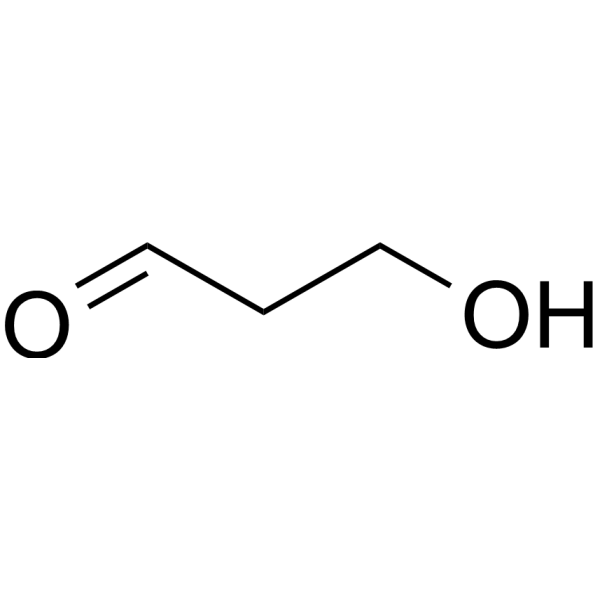
Reuterin is a broad-spectrum antimicrobial agent active against Gram positive and Gram negative bacteria, as well as yeasts, moulds and protozoa. Reuterin is produced by specific strains of Lactobacillus reuteri during anaerobic metabolism of glycerol. Reuterin also demonstrates potent antimicrobial activity against a broad panel of human and poultry meat campylobacter spp. Isolates .
Anticancer agent 139 (Compound 6h) has potent anticancer activity. Anticancer agent 139 displayed a π–cationic interaction with the residue Lys352 of Tublin. Anticancer agent 139 has good anticancer activity against SNB-19, OVCAR-8, and NCI-H40 with PGIs of 86.61, 85.26, and 75.99, respectively. Anticancer agent 139 also has moderate anticancer activity against HOP-62, SNB-75, ACHN, NCI/ADR-RES, 786-O, A549/ATCC, HCT-116, and MDA-MB-231 with PGIs of 67.55, 65.46, 59.09, 59.02, 57.88, 56.88, 56.53, 56.4, and 51.88 respectively .
Cuevaene A can be isolated from the strain of gdmAI-disrupted Streptomyces sp. LZ35 and. Cuevaene A displays moderate activity against Gram-positive bacteria (e.g., Bacillus subtilis strain ATCC 11060) and modest activity against fungi (e.g., Fusarium verticillioides strain S68 and Rhizoctonia solani strain GXE4) .
Majoranaquinone exhibits a high antibacterial effect against 4 Staphylococcus, 1 Moraxella, and 1 Enterococcus strains. Majoranaquinone shows substantial efflux pump inhibitory activity in Escherichia coliATCC 25922 strain. Majoranaquinone is found to be an effective biofilm formation inhibitor on E.coli, ATCC 25922 and E. coli K-12 AG100 bacteria .
Thiocillin I is a thiopeptide antibiotic and has in vitro antibacterial activity against Gram-positive bacterial strains. The MIC values of Thiocillin I against S. aureus 1974149, E. faecalis 1674621, B. subtilisATCC 6633 and S. pyogenes 1744264 are 2 μg/mL, 0.5 μg/mL, 4 μg/mL and 0.5 μg/mL, respectively .
Protactin is a pentapeptide lactone produced by Streptomyces cucumeris strain L703-4 (ATCC 53784) with significant antioxidant properties. Protactin can be converted to actinomycin Zp by ferrocyanide oxidation. Actinomycin Zp exhibits potent antibacterial activity in vitro and has significant antitumor effects against P-388 leukemia in a mouse model .
PLX647 is an orally active, highly specific dual FMS and KIT kinase inhibitor, with IC50s of 28 and 16 nM, respectively. PLX647 shows selectivity for FMS and KIT over a panel of 400 kinases at a concentration of 1 μM except FLT3 and KDR (IC50s=91 and 130 nM, respectively) .
Pilabactam (ANT3310) sodium is a broad-spectrum covalent Serine β-Lactamase inhibitor, with IC50 values ranging from 1 nM to 175 nM (a panel of Serine β-Lactamase). Pilabactam sodium potentiates activity of β-lactam antibiotics against Carbapenem-Resistant Enterobacterales (CRE) and Acinetobacter baumannii (CRAB). Pilabactam sodium can be used in the research of bacterial infection .
PITCOIN4 is a highly selective Class II Alpha PI3K-C2α inhibitor. PITCOIN4 shows nanomolar inhibition of PI3K-C2α and >100-fold selectivity in a general kinase panel .
PLX647 dihydrochloride is an orally active, highly specific dual FMS and KIT kinase inhibitor, with IC50s of 28 and 16 nM, reapectively. PLX647 dihydrochloride shows selectivity for FMS and KIT over a panel of 400 kinases at a concentration of 1 μM except FLT3 and KDR (IC50s=91 and 130 nM, respectively) .
CA-170 is an orally delivered dual inhibitor of VISTA and PD-L1. CA-170 exhibits potent rescue of proliferation and effector functions of T cells inhibited by PD-L1/L2 and VISTA with selectivity over other immune checkpoint proteins as well as a broad panel of receptors and enzymes .
CP-481715 is a potent, reversible and selective CCR1 antagonist with a Kd of 9.2 nM for human CCR1. CP-481715 is >100-fold selective for CCR1 as compared with a panel of G-protein-coupled receptors including related chemokine receptors. CP-481715 has the potential for rheumatoid arthritis and other inflammatory diseases research .
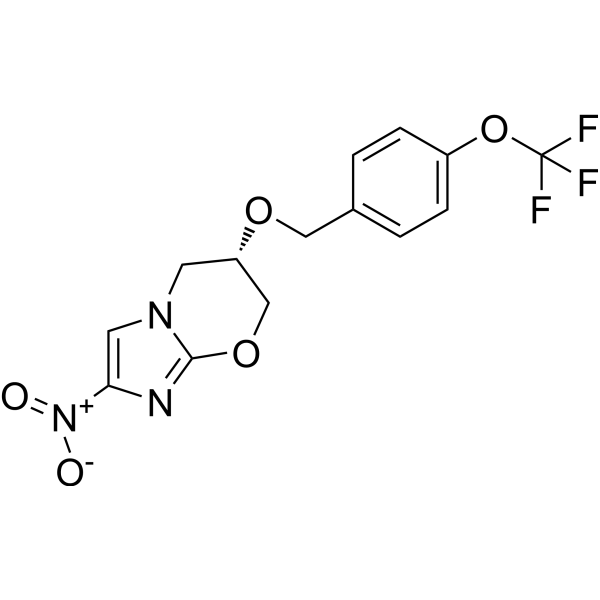
Pretomanid (PA-824) is an antibiotic used for the research of multi-drug-resistant tuberculosis affecting the lungs. Pretomanid exhibits a sub-micromolar MIC against M. tuberculosis (MTB). The MIC values of PA-824 against a panel of MTB pan-sensitive and Rifampin mono-resistant clinical isolates range from 0.015 to 0.25 μg/mL.
Pilabactam (ANT3310) is a broad-spectrum covalent Serine β-Lactamase inhibitor, with IC50 values ranging from 1 nM to 175 nM (a panel of Serine β-Lactamase). Pilabactam potentiates activity of β-lactam antibiotics against Carbapenem-Resistant Enterobacterales (CRE) and Acinetobacter baumannii (CRAB). Pilabactam can be used in the research of bacterial infection .
Antibacterial agent 336 is an antibacterical agent with broad-spectrum inhibitory activity against Gram-negative and Gram-positive bacteria. Antibacterial agent 336 binds tightly via its pyridine group to the carboxyl group, Lys-465 residue, and Leu-480 residue of the MsbA protein, interfering with bacterial outer membrane synthesis, and exerts concentration-dependent bactericidal activity against bacterial. Antibacterial agent 336 has low cytotoxicity to normal human liver cells. Antibacterial agent 336 can be used for the research of bacterial infections .
Cuevaene B can be isolated from the strain of gdmAI-disrupted Streptomyces sp. LZ35 and. Cuevaene B displays moderate activity against Gram-positive bacteria (e.g., Bacillus subtilis strain ATCC 11060) and modest activity against fungi (e.g., Fusarium verticillioides strain S68 and Rhizoctonia solani strain GXE4) .
Rupintrivirvr (AG7088), an antiviral agent, is a potent, selective and irreversible inhibitor of human rhinovirus (HRV) 3C protease. Rupintrivirvr inhibits replication of a panel of 48 different HRV serotypes in H1-HeLA and MRC-5 cell protection assays, with a mean EC50 of 0.023 μM. Rupintrivirvr shows immune-modulatory effect .
AL 8697 is a specific and orally active p38α MAPK inhibitor with an IC50 of 6 nM. AL 8697 displays 14-fold greater inhibition of p38α compared to p38β (IC50=82 nM), and 300-fold selectivity for p38α over a panel of 91 kinases. Anti-inflammatory activity .
HGS004 is a humanized IgG4 monoclonal antibody inhibitor targeting CCR5. HGS004 has potent antivival activity against a diverse panel of CCR5-tropic HIV-1 and durg (such as Maraviroc (HY-13004))-resistant strains. HGS004 can be used for HIV-1 infections research .
Rhizocticin A is an antifungal phosphono-oligopeptide against Ascodesmis, Plicaria, Rhizoctonia with MIC of 3.5 μg/mL. Rhizocticin A produces toxic L-2-Amino-5-phospho-3-cis-pentenoic acid (L-APPA), which may interfere with cell metabolism .
IPMCL-28b is an antibacterial agent targeting the bacterial cell membrane. Its minimum inhibitory concentration (MIC) against Staphylococcus aureus ATCC 25923 is 1.56 μg/mL, and the MIC against methicillin-resistant Staphylococcus aureus (MRSA) is 6.25 μg/mL. IPMCL-28b is expected to be used in the research of the anti-infection field .
Efinaconazole-d4 is the deuterium labeled Efinaconazole. Efinaconazole (KP-103) is a triazole antifungal agent and againsts T. mentagrophytes SM-110 and C. albicans ATCC 10231 with MICs of 0.0039 μg/mL and 0.00098 μg/mL, respectively . Efinaconazole has a potent in vitro activity against fungal pathogens including dermatophytes, Candida and Malassezia species .
Dermaseptin-B3 inhibits the growth of Gram-positive and Gram-negative bacteria (MIC: 1.3, 2.3, 5.0, 2.6, 2.3 μM for S. aureus, P. aeruginosa, P. aeruginosa, E. (ATCC 25922), E. (54127) respectively). Dermaseptin-B3 also inhibits tumor cell proliferation .
Nanangenine F is a drimane sesquiterpenoid with weak antibacterial and anticancer activities. Nanangenine F inhibits Bacillus subtilis (ATCC 6633) with an IC50 of 78 µg/mL. Nanangenine F inhibits NS-1, DU-145, MCF-7 and human fibroblast NFF cells with IC50s of 49 µg/mL, 95 µg/mL, 49 µg/mL, and 84 µg/mL, respectively .
Antibacterial agent 274 (Compound 18b) is a membrane-targeting antibacterial agent that demonstrates a MIC of 8 μg/mL against Acinetobacter baumanniiATCC 17978. By disrupting bacterial membrane integrity, it induces intracellular ROS accumulation and causes leakage of DNA and proteins, thereby exhibiting potent antibacterial activity. This compound is suitable for research applications targeting Gram-negative bacterial infections .
Apoptosis inducer 20 (12) causes G2/M cell cycle arrest and induction of apoptosis via caspase 3/7 activation, which occurred during M arrest. Apoptosis inducer 20 is a novel indolic benzenesulfonamide with anti-proliferative effect against a broad panel of cancer cell lines, which is proming for research of new anti-mitotic agents .
LAS195319 is an orally active and potent inhibitor against PI3Kδ with an IC50 value of 0.5 nM. LAS195319 is also a highly selective inhibitor against an extensive panel of proteins, lipid kinases and GPCRs. LAS195319 causes an inhibition of neutrophil and eosinophil infiltration. LAS195319 is promising for research of respiratory diseases such as asthma and chronic obstructive pulmonary disease (COPD) .
Scolopin-2 is an antimicrobial peptide that can be isolated from centipede venoms. Scolopin-2 shows strong antimicrobial activities against a panel of Gram-positive/negative bacteria and fungi (MIC ≤ 7.5 μg/mL) . Scolopin-2 shows moderate hemolytic activity against both human and rabbit red cells. Scolopin-2 can be used for antimicrobial research .
PRMT5-IN-30 (compound 17) is a potent and selective protein arginine methyltransferase 5 (PRMT5) inhibitor with an IC50 of 0.33 μM and a Kd of 0.987 μM. PRMT5-IN-30 exhibits a broad selectivity against a panel of other methyltransferases. PRMT5-IN-30 inhibits PRMT5 mediated SmD3 methylation .
Everafenib is a potent and blood-brain barrier (BBB) penetrant BRAF inhibitor, also inhibits MAPK signaling. Everafenib has inhibitory activity against a panel of V600EBRAF melanoma cell lines with IC50 values of 2-10 nM, which is better than Dabrafenib (HY-14660) and Vemurafenib (HY-12057). Everafenib has efficacy in an intracranial mouse model of metastatic melanoma .
SHP2-IN-31 is a SHP2 inhibitor, with IC50s of 13 nM (Wild-type SHP2), >10000 nM (SHP1), >10000 nM (SHP2 E76K) . SHP2-IN-31 inhibits pERK in a panel of tumor cells. SHP2-IN-31 inhibits tumor growth in RTK/KRAS-driven xenograft models .
2-Mercaptopyridine N-oxide sodium has bactericidal effect and is against a standard strain of Mycobacterium tuberculosis H37Rv (ATCC 27294) with MIC90 of 7.20 μM. 2-Mercaptopyridine N-oxide sodium and its complex with iron, gallium, and bismuth have good anti-M. tuberculosis activity. 2-Mercaptopyridine N-oxide sodium has potential for the treatment of tuberculosis .
Antibacterial agent 298 exhibits significant antibacterial activity against Pseudomonas putida (ATCC 25922) with an IC50 4.48 µg/mL. Antibacterial agent 298 shows strong antibiofilm activity. Antibacterial agent 298 also inhibits approximately 50% of biofilm formation in L. lactis and P. putida. Antibacterial agent 298 can be used for the study of Bacterial infections caused by multidrug-resistant bacteria (MDR) .
HIV-1 inhibitor-13 (compound 16c) is a orally active and potent HIV-1 non-nucleoside reverse transcriptase inhibitor (NNRTI), with IC50 of 0.14 μM (HIV-1 RT). HIV-1 inhibitor-13 shows activity against a panel of HIV-1 resistant strains, with EC50 values of 2.85-18.0 nM .
Taprenepag (CP-544326) is a potent and selective prostaglandin EP(2) agonist with IC50s of 10 and 15 nM for human and rat EP2, respectively. Taprenepag shows selectivity for EP2 over other EP receptors (IC50s>3200 nM for EP1, EP3, and EP4) and a panel of 37 G protein-coupled receptors .
B26 peptoid is a ptoid antibiotic. B26 peptoid exhibits excellent broad-spectrum activity and high selectivity toward a panel of Gram-positive and Gram-negative bacterial strains. B26 peptoid disrupts bacterial membranes and has bactericidal activity. B26 peptoid shows low propensity for bacterial drug resistance. B26 peptoid can be used for the research of bacterial infection .
CB2R agonist 4 is a cannabinoid receptor 2 (CB2R) agonist with an EC50 value of 6.9 μM. CB2R agonist 4 can induce cell apoptosis, ROS production and protein misfolding. CB2R agonist 4 shows cytotoxicity to a panel of tumor cell lines. CB2R agonist 4 can be used for the research of cancer .
Glenthmycin E is an antibacterial agent found in Australian sheep pasture-derived Streptomyces sp. CMB-PB041. Glenthmycin E inhibits growth of multiple bacterial and exhibits no detectable cytotoxicity to eukaryotic cells including fungal and human carcinoma cells. Glenthmycin E can be used for the research of bacterial infections .
Neomycin C is an impurity of Neomycin (HY-150520) and a stereoisomer of Neomycin B (HY-17624). Neomycin C exerts in vitro antimicrobial activity against Staphylococcus epidermidis and Staphylococcus aureus. Neomycin C can be used for the research of bacterial infection .
HBA(111-142), an antimicrobial peptide, is a C-terminal 32-mer fragment of alpha-hemoglobin. HBA(111-142) has antibacterial activity against the ESKAPE panel of pathogens. HBA(111-142) forms amyloid fibrils, and has antiviral activities. HBA(111-142) inhibits measles and herpes viruses (HSV-1, HSV-2, HCMV) .
Pretomanid-d4 is the deuterium labeled Pretomanid. Pretomanid (PA-824) is an antibiotic used for the research of multi-drug-resistant tuberculosis affecting the lungs. Pretomanid exhibits a sub-micromolar MIC against M. tuberculosis (MTB). The MIC values of PA-824 against a panel of MTB pan-sensitive and Rifampin mono-resistant clinical isolates range from 0.015 to 0.25 μg/mL .
KIF18A-IN-4 is a moderately potent ATP and microtubule (MT) noncompetitive KIF18A inhibitor (IC50=6.16 μM). KIF18A-IN-4 has selectivity against a large panel of mitotic kinesins and kinases, and does not show any direct effects on tubulin assembly. KIF18A-IN-4 exhibits anti-tumor activity .
PHA-665752 is a selective, ATP-competitive, and active-site inhibitor of the catalytic activity of c-Met kinase (Ki=4 nM; IC50=9 nM). PHA-665752 exhibits >50-fold selectivity for c-Met compared with a panel of diverse tyrosine and serine-threonine kinases. PHA-665752 induces apoptosis and cell cycle arrest, and exhibits cytoreductive antitumor activity .
Antifungal agent-164 is an exo-β-(1,3)-glucanase inhibitor that binds to the enzyme’s binding site. Antifungal agent-164 inhibits the growth of fungal. Antifungal agent-164 can be used for the research of candida infection .
Ticarcillin is a semisynthetic, extended-spectrum, carboxypenicillin antibacterial agent, and is active against gram-positive cocci, including streptococci and staphylococci. Ticarcillin is also effective against most gram-negative organisms, including Pseudomonas aeruginosa. Ticarcillin can be used in lower respiratory tract infections, skin and skin structure infections, urinary tract infections, and intraabdominal infections research .
Ticarcillin monosodium is a semisynthetic, extended-spectrum, carboxypenicillin antibacterial agent, and is active against gram-positive cocci, including streptococci and staphylococci. Ticarcillin monosodium is also effective against most gram-negative organisms, including Pseudomonas aeruginosa. Ticarcillin monosodium can be used in lower respiratory tract infections, skin and skin structure infections, urinary tract infections, and intraabdominal infections research .
Topoisomerase IV inhibitor 2 (compound 7d) is a potent DNA topoisomerase IV (TOPO IV) inhibitor with IC50s of 0.23 μM and 0.43 μM for TOPO IV and DNA gyrase, respectively. Topoisomerase IV inhibitor 2 has anti-bacterial activity, with MICs of 0.972 μM and 0.608 μM in Staphylococcus aureus Newman and Escherichia coliATCC8739, respectively .
Topoisomerase IV inhibitor 2 (compound 5d) is a potent DNA topoisomerase IV (TOPO IV) inhibitor with IC50s of 0.35 μM and 0.55 μM for TOPO IV and DNA gyrase, respectively. Topoisomerase IV inhibitor 2 has anti-bacterial activity, with MICs of 1.985 μM and 0.744 μM in Staphylococcus aureus Newman and Escherichia coliATCC8739, respectively .
Eltanexor (KPT-8602) is a second-generation, highly specific and orally active exportin-1 (XPO1) inhibitor with potent anti-leukemic activity. Eltanexor (KPT-8602) inhibits XPO1-dependent nuclear export (EC50=60.9 nM) by directly targeting XPO1. Eltanexor (KPT-8602) induces Caspase-dependent apoptosis in a panel of leukemic cell lines .
Pretomanid (Standard) is the analytical standard of Pretomanid. This product is intended for research and analytical applications. Pretomanid (PA-824) is an antibiotic used for the research of multi-drug-resistant tuberculosis affecting the lungs. Pretomanid exhibits a sub-micromolar MIC against M. tuberculosis (MTB). The MIC values of PA-824 against a panel of MTB pan-sensitive and Rifampin mono-resistant clinical isolates range from 0.015 to 0.25 μg/mL.
Rupintrivir-d7 is a deuterated labeled Rupintrivir . Rupintrivirvr (AG7088), an antiviral agent, is a potent, selective and irreversible inhibitor of human rhinovirus (HRV) 3C protease. Rupintrivirvr inhibits replication of a panel of 48 different HRV serotypes in H1-HeLA and MRC-5 cell protection assays, with a mean EC50 of 0.023 μM. Rupintrivirvr shows immune-modulatory effect .
TAS05567 is a potent, highly selective, ATP-competitive and orally active Syk inhibitor with an IC50 of 0.37 nM. In a panel of 192 kinases, TAS05567 only shows >70% inhibition of Syk and 4 other kinases (FLT3, JAK2, KDR and RET with IC50s of 10 nM, 4.8 nM, 600 nM and 29 nM, respectively). TAS05567 can be used for humoral immune-mediated inflammatory conditions such as autoimmune and allergic diseases .
Balixafortide (POL6326) is a potent, selective, well-tolerated peptidic CXCR4 antagonist with an IC50 < 10 nM. Balixafortide shows 1000-fold selective for CXCR4 than a large panel of receptors including CXCR7. Balixafortide blocks β-arrestin recruitment and calcium flux with IC50s < 10 nM. Balixafortide is also a potent hematopoietic stem and progenitor cell (HSPC) mobilizing agent. Anti-cancer effects .
MBL-IN-3 (compound 72922413) is a New Delhi metallo-β-lactamase-1 (NDM-1) inhibitor(IC50=54±4 μM). MBL-IN-3 is identified and shown to lower minimum inhibitory concentrations (MICs) of Meropenem (HY-13678) for a panel of E. coli and K. pneumoniae clinical isolates expressing NDM-1. MBL-IN-3 can be used for antibiotic sensitizer research .
OATD-01 is a highly potent, first-in-class, orally active and selective chitinase inhibitor with low nanomolar activity toward CHIT1 (hCHIT1,IC50=23 nM). OATD-01 shows excellect PK profile in multiple species and is selectivity against a panel of other off-targets. OATD-01 exhibits significant antifibrotic efficacy in vivo and can be used for pulmonary fibrosis (IPF) research .
Pretomanid-d5 is deuterated labeled Pretomanid (HY-10844). Pretomanid (PA-824) is an antibiotic used for the research of multi-drug-resistant tuberculosis affecting the lungs. Pretomanid exhibits a sub-micromolar MIC against M. tuberculosis (MTB). The MIC values of PA-824 against a panel of MTB pan-sensitive and Rifampin mono-resistant clinical isolates range from 0.015 to 0.25 μg/mL.
DDR1-IN-9 is a selective inhibitor of DDR1 with significant kinase activity suppression, exhibiting a Kd value of 4.7 nM and an IC50 value of 9.4 nM. DDR1-IN-9 demonstrates reduced potency against a diverse panel of 400 nonmutated kinases, indicating its specificity. Additionally, DDR1-IN-9 shows favorable pharmacokinetic properties and potential therapeutic effects in a model of pulmonary fibrosis.
Antibacterial agent 107 (compound 14) is a potent antibacterial agent. Antibacterial agent 107 shows potent antibacterial activity against Gram-positive bacteria, with a MIC of 1.56 μg/mL (MRSA). Antibacterial agent 107 exhibits low hemolytic activity, high membrane selectivity, and rapid bactericidal activity. Antibacterial agent 107 shows effective in vivo efficacy in the murine model of bacterial keratitis caused by Staphylococcus aureusATCC29213 .
VP-4604 (Standard) is the analytical standard of VP-4604. This product is intended for research and analytical applications. VP-4604 is a potent anti-methicillin-resistant Staphylococcus aureus (MRSA) agent. VP-4604 exhibits significant microbial growth inhibition toward Staphylococcus aureus (ATCC 43300) with MIC of 4-8 μg/mL. VP-4604 inhibits the growth of methicillin‐resistant Staphylococcus aureus with growth inhibition >95%[1].
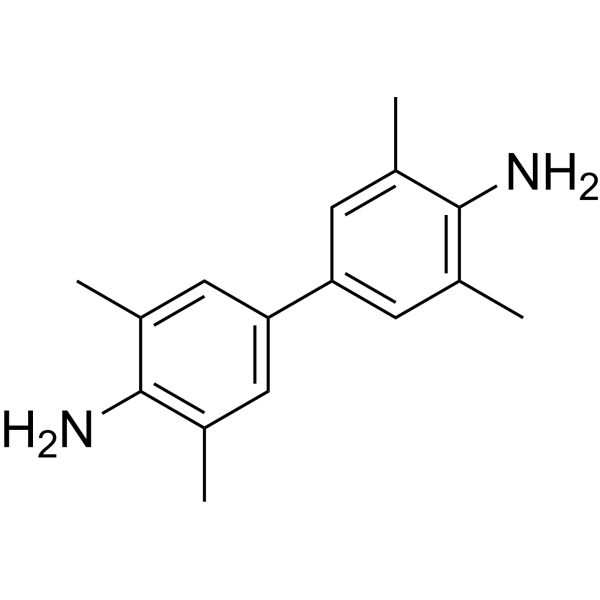
TMB is a non-toxic, non-mutagenic, colorless dye that is also used as a chromogenic agent in enzyme detection systems based on horseradish peroxidase (HRP). TMB can function as a photoacoustic probe for reactive oxygen and nitrogen species (ROS/RNS), reacting with hypochlorite, hydrogen peroxide, singlet oxygen, and nitrogen dioxide to produce blue oxidation products. TMB can detect the singlet oxygen produced by the outer membrane of Escherichia coli ATCC 25922 .
SARS-CoV-2 nsp14-IN-1 (Compound 3) is a prototypic bisubstrate inhibitor of SARS-CoV-2 Nsp14 MTase with an IC50 value of 0.061 μM. SARS-CoV-2 nsp14-IN-1 (Compound 3) has an excellent selectivity profile over a panel of human methyltransferases, can against apanel of 10 human MTases including histone lysine, proteinarginine, and DNA and RNA MTases .
HPN-01 is a potent and selective IKK inhibitor, with pIC50 values of 6.4, 7.0 and <4.8 for IKK-α, IKK-β and IKK-ε, respectively. HPN-01 displays greater 50-fold selectivity over a panel of more than 50 other kinases, including ALK5, CDK-2, EGFR, ErbB2, GSK3β, PLK1, Src, and VEGFR-2 .
VERU-111 (ABI-231) is a potent and orally active α and β tubulin inhibitor, which displays strong antiproliferative activity, with an average IC50 of 5.2 nM against panels of melanoma and prostate cancer cell lines. VERU-111 (ABI-231) suppresses tumor growth and metastatic phenotypes of cervical cancer cells via targeting HPV E6 and E7, and has potential for the treatment of prostate cancer .
ZINC05007751 is a potent NIMA-related kinase NEK6 inhibitor with an IC50 of 3.4 μM. ZINC05007751 shows antiproliferative activity against a panel of human cancer cell lines, and displays a synergistic effect with Cisplatin and Paclitaxel in a BRCA2 mutated ovarian cancer cell line. ZINC05007751 is very selective against NEK1 and NEK6 with no significant activity was observed against NEK2, NEK7, and NEK9 .
(+)-JNJ-A07 is a highly potent, orally active pan-serotype dengue virus inhibitor targeting the NS3-NS4B interaction. (+)-JNJ-A07 exerts nanomolar to picomolar activity against a panel of 21 clinical isolates. (+)-JNJ-A07 has a favourable pharmacokinetic profile that results in outstanding efficacy against dengue virus infection in mouse infection models .
TC ASK 10 (Standard) is the analytical standard of TC ASK 10 (HY-103258). This product is intended for research and analytical applications. TC ASK 10 (Compound 10) is a potent, selective and orally active apoptosis signal-regulating kinase 1 (ASK1) inhibitor with an IC50 of 14 nM. The inhibitory activities of TC ASK 10 towards other representative panel of kinases are less than 50%, except for ASK2 (IC50 of 0.51 μM) .
Multi-kinase-IN-5 (compound 15c) is a promising multi-kinase inhibitory agent. Multi-kinase-IN-5 inhibits a panel of protein kinases (RET, KIT, cMet, VEGFR1,2, FGFR1, PDGFR and BRAF), showing % inhibition of 74%, 31%, 62%, 40%, 73%, 74%, 59%, and 69%, respectively, and IC50 of 1.287, 0.117 and 1.185 μM against FGFR1, VEGFR, and RET kinases, respectively .
EB-3D is a potent and selective choline kinase α (ChoKα) inhibitor, with an IC50 of 1 μM for ChoKα1. EB-3D exerts effects on ChoKα expression, AMPK activation, apoptosis, endoplasmic reticulum stress and lipid metabolism. EB-3D exhibits a potent antiproliferative activity in a panel of T-leukemia cell lines. Anti-cancer activity .
TAS2R14 agonist-2 (compound 28.1) is a potent and selective TAS2R14 agonist with an EC50 value of 72 nM. TAS2R14 agonist-2 reveals marked selectivity over a panel of 24 non-bitter taste human G protein-coupled receptors. TAS2R14 agonist-2 can be used for the studies of asthma or chronic obstructive pulmonary disease .
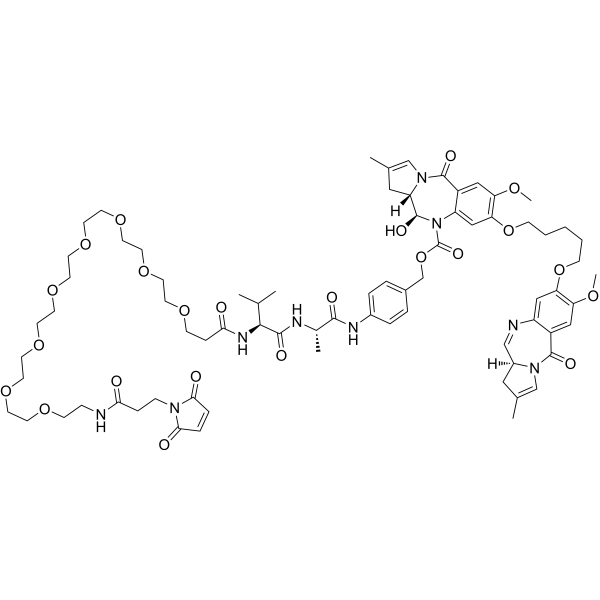
Tesirine (SG3249) is an antibody-drug conjugate (ADC) pyrrolobenzodiazepine (PBD) dimer payload. Tesirine combines potent antitumor activity with desirable physicochemical properties such as favorable hydrophobicity and improved conjugation characteristics. SG3199 (HY-101161) is the released warhead component of the ADC payload Tesirine. SG3199 retains picomolar activity in a panel of cancer cell lines. PBD dimers are highly efficient DNA minor groove cross-linking agents with potent cytotoxicity .
Rupintrivir (Standard) is the analytical standard of Rupintrivir (HY-106161). This product is intended for research and analytical applications. Rupintrivirvr (AG7088), an antiviral agent, is a potent, selective and irreversible inhibitor of human rhinovirus (HRV) 3C protease. Rupintrivirvr inhibits replication of a panel of 48 different HRV serotypes in H1-HeLA and MRC-5 cell protection assays, with a mean EC50 of 0.023 μM. Rupintrivirvr shows immune-modulatory effect .
Dichamanetin, a C-benzylated flavanone that can be isolated from Piper sarmentosum, is a potent antibacterial and anticancer agent. Dichamanetin displays antibacterial activity against a panel of Gram-positive strains, including resistant S. aureus strains with MIC values in the range of 1-7.5 μg/mL. Dichamanetin inhibits cancer cell growth by affecting ROS-related signaling components via mitochondrial-mediated apoptosis. Dichamanetin can be used for colon, prostate, breast cancer and infection research .
Antibacterial agent 228 (Compound 8) inhibits the mycobacterial ribosome (IC50 for Mycobacterium smegmatis is 2.31 μM) and exhibits antibacterial activity against M. tuberculosis H37Rv (MIC=2 and 0.25 μg/mL for wildtype and Δ1258c mutant), M. abscessusATCC 19977 (MIC=8 and 8 μg/mL for wildtype and Δ2780c mutant) and M. smegmatis (MIC=8 μg/mL) .
Tunicamycin B is a Tunicamycin (HY-A0098) derivative with antimicrobial activity. Tunicamycin B shows antibacterial activity against Bacillus thuringiensis BT01 and B. thuringiensis W102 (MICs of 0.125 and 0.063 μg/mL, respectively) and antifungal activity against Candida albicansATCC 96901 and C. albicans CMCC (F) 98001 (MICs of 8.0 and 4.0 μg/mL, respectively). Tunicamycin B can be used for antimicrobial research .
BMS-986260, an immuno-oncology agent, is a potent, selective, and orally active TGFβR1 inhibitor (IC50=1.6 nM). BMS-986260 displays exquisite selectivity for TGFβR1 over its isozyme TGFβR2, as well as in a panel of more than 200 kinases examined. BMS-986260 inhibits TGFβ mediated nuclear translocation of pSMAD2/3 in MINK and NHLF cells lines with an IC50 of 350 nM and 190 nM, respectively .
ZAK-IN-1 is an orally active and selective selective leucine-zipper and sterile‑α motif kinase (ZAK) inhibitor with IC50 of 4 nM and KD of 8 nM. ZAK-IN-1 exhibits excellent selectivity against a panel of 403 wild-type kinases. ZAK-IN-1 blocks p38/GATA-4 and JNK/c-Jun signaling and shows promising anti antihypertrophic cardiomyopathy (HCM) efficacy. ZAK-IN-1 can be used for the study of HCM .
Camidanlumab tesirine (ADCT 301) is an ADC comprising HuMax-TAC, a human IgG1 mAb directed against human CD25, stochastically conjugated through a dipeptide cleavable linker to a pyrrolobenzodiazepine (PBD) dimer warhead. Camidanlumab tesirine has a drug–antibody ratio (DAR) of 2.3. Camidanlumab tesirine binds human CD25 with picomolar affinity. Camidanlumab tesirine has highly potent and selective cytotoxicity against a panel of CD25-expressing human lymphoma cell lines .
Balixafortide TFA (POL6326 TFA) is a potent, selective, well-tolerated peptidic CXCR4 antagonist with an IC50 < 10 nM. Balixafortide TFA shows 1000-fold selective for CXCR4 than a large panel of receptors including CXCR7. Balixafortide TFA blocks β-arrestin recruitment and calcium flux with IC50s < 10 nM. Balixafortide TFA is also a potent hematopoietic stem and progenitor cell (HSPC) mobilizing agent. Anti-cancer effects .
CA-170 (Standard) is the analytical standard of CA-170 (HY-101093). This product is intended for research and analytical applications. CA-170 is an orally delivered dual inhibitor of VISTA and PD-L1. CA-170 exhibits potent rescue of proliferation and effector functions of T cells inhibited by PD-L1/L2 and VISTA with selectivity over other immune checkpoint proteins as well as a broad panel of receptors and enzymes .
NP3-742 is an orally active NLRP3 inhibitor that binds to the NLRP3 NACHT domain. NP3-742 inhibits IL-1β release with IC50s of 6 nM and 47 nM in both the cellular and whole blood assays, respectively. NP3-742 is highly selective against a panel of more than 50 enzymes, receptors and sodium and calcium channels. NP3-742 can be used for the study of gout, cardiovascular disease or osteoarthritis .
Usaramine is a pyrrolizidine alkaloid that can be isolated from seeds of Crolatalaria pallida. Usaramine selective Usaramine demonstrates antibiofilm activity against Staphylococcus epidermidis. Usaramine can be used for the research of bacterial infections .
FP1-24 is a non-selective CK1 kinase inhibitor, with IC50 values of 40 nM, 10 nM, 10 nM, and 40 nM against human CK1γ1, CK1γ2, CK1γ3 and CK1δ, respectively. FP1-24 exerts its activity by reducing the phosphorylation level of LRP5/6 at the T1479 site during WNT signaling pathway activation. The non-specific binding of FP1-24 to multiple kinases can be used for biological studies of specific CK1γ .
7-O-Methylaloeresin A is 5-methylchromone glycoside isolated from Commiphora socotrana (Burseraceae). 7-O-Methylaloeresin A exhibits good activity against multiple agent resistant Staphylococcus aureus (NCTC 11994) and Salmonella typhimurium (ATCC 1255) with MIC values of 0.72 and 0.18 mM, respectively. 7-O-Methylaloeresin A has antioxidant activities, gives IC50 values of 0.026 mM and 0.021 mM for DPPH and 2-deoxyribose degradation assay, respectively.
Tyrosinase activator-1 (Compound 7A) is a Tyrosinase activator. Tyrosinase activator-1 significant antibacterial activity against gram-positive bacteria, such as MRSA, Staphylococcus aureusATCC653 and Enterococcus faecium with MICs of 12.5-20 μM. Tyrosinase activator-1 activates tyrosinase by competitively occupying the binding site of L-DOPA on the surface of tyrosinase without interfering with the substrate binding at the active center. Tyrosinase activator-1 can be used for bacterial infections and antibiotics development research .
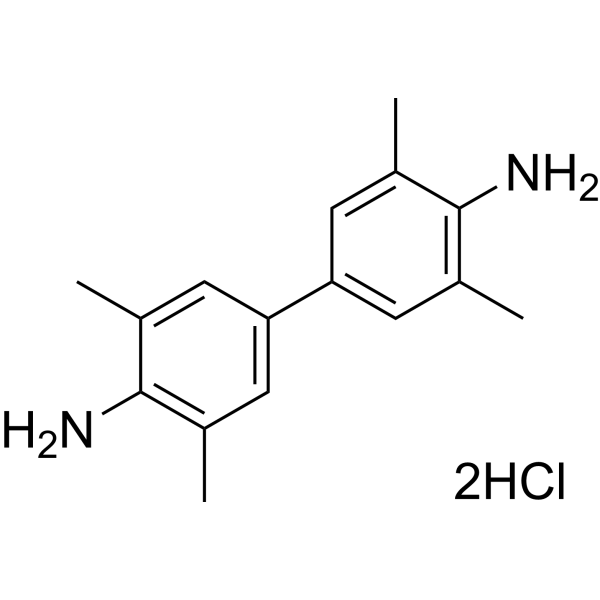
TMB dihydrochloride is the dihydrochloride form of TMB (HY-15930). TMB dihydrochloride is a non-toxic, non-mutagenic, colorless dye that is also used as a chromogenic agent in enzyme detection systems based on horseradish peroxidase (HRP). TMB dihydrochloride can function as a photoacoustic probe for reactive oxygen and nitrogen species (ROS/RNS), reacting with hypochlorite, hydrogen peroxide, singlet oxygen, and nitrogen dioxide to produce blue oxidation products. TMB dihydrochloride can detect the singlet oxygen produced by the outer membrane of Escherichia coli ATCC 25922 .
Mal-Deferoxamine is a maleimide-functionalized trihydroxamate siderophore derivative that can be isolated from Streptomyces pilosus. Mal-Deferoxamine possesses highly specific Fe (III) chelating ability, and the stability of complexes formed between it and non-Fe (III) metal ions is significantly lower. Mal-Deferoxamine exhibits growth inhibitory effects against Gram-positive bacteria, but shows no obvious inhibitory activity against Gram-negative bacteria (MIC>50 μM). Mal-Deferoxamine is mainly suitable for scientific research in hematology and related fields .
EGFR-IN-12 is a 4,6-disubstituted pyrimidine and is a potent, ATP-competitive, irreversible and highly selective EGFR inhibitor with an IC50of 21 nM. EGFR-IN-12 also inhibits mutant EGFR L858R and EGFR L861Q with IC50s of 63 nM and 4 nM, respectively. EGFR-IN-12 displays strong selectivity for EGFR over HER4 (IC50 = 7640 nM) and a panel of 55 other kinases. EGFR-IN-12 induces cells apoptosis and has antitumor activity .
ITI-214 is a potent, CNS-active, orally bioavailable PDE1 inhibitor (Ki of 58 pM) with excellent selectivity against other PDE family members and against a panel of enzymes, receptors, transporters and ion channels. ITI-214 inhibits recombinant full-length human PDE1A, PDE1B and PDE1C with Kis of 33 pM, 380 pM and 35 pM, respectively. ITI-214 shows efficacy in various animal models of motor and cognitive functions .
NR162 is a selective CASK (Ca 2+/calmodulin-dependent Ser/Thr kinase) inhibitor with an IC50 of 80 nM and a Kd of 22 nM. NR162 shows about 50-fold selectivity for CASK than TYRO3. NR162 targets the unique GFG motif of CASK and has excellent shape complementarity to the CASK ATP binding pocket. NR162 can be used for the research of neurological diseases .
TMB (Standard) is the analytical standard of TMB. This product is intended for research and analytical applications. TMB is a non-toxic, non-mutagenic, colorless dye that is also used as a chromogenic agent in enzyme detection systems based on horseradish peroxidase (HRP). TMB can function as a photoacoustic probe for reactive oxygen and nitrogen species (ROS/RNS), reacting with hypochlorite, hydrogen peroxide, singlet oxygen, and nitrogen dioxide to produce blue oxidation products. TMB can detect the singlet oxygen produced by the outer membrane of Escherichia coli ATCC 25922 .
TMB (dihydrochloride x.hydrate) is the dihydrochloride x hydrate form of TMB (HY-15930). TMB (dihydrochloride x.hydrate) is a non-toxic, non-mutagenic, colorless dye that is also used as a chromogenic agent in enzyme detection systems based on horseradish peroxidase (HRP). TMB (dihydrochloride x.hydrate) can function as a photoacoustic probe for reactive oxygen and nitrogen species (ROS/RNS), reacting with hypochlorite, hydrogen peroxide, singlet oxygen, and nitrogen dioxide to produce blue oxidation products. TMB (dihydrochloride x.hydrate) can detect the singlet oxygen produced by the outer membrane of Escherichia coli ATCC 25922 .
CYP51-IN-20 (compound 5b) is an inhibitor of CYP51 and has antifungal activity. CYP51-IN-20 has a significant inhibitory effect on Candida albicans ATCC 10231, downregulates ERG11 (Cyp51) gene expression, and significantly reduces the yeast-to-hyphae morphological transition. CYP51-IN-20 can synergize with Voriconazole (HY-76200) to occupy the entire CYP51 binding site and exert a synergistic inhibitory effect in the Glechoma moth model .
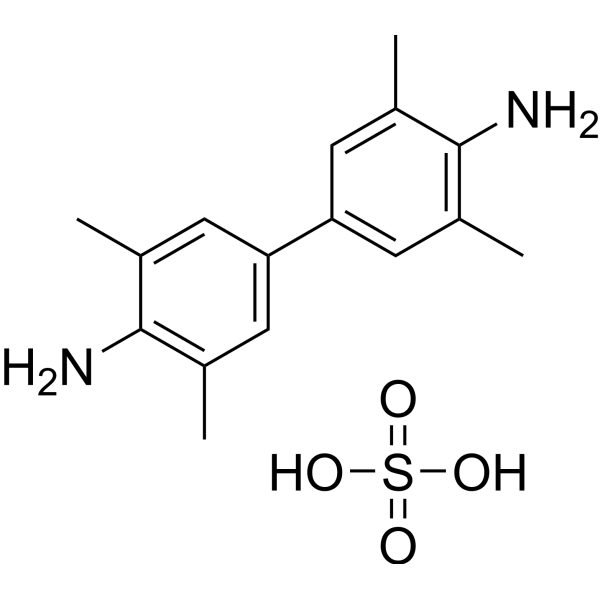
TMB monosulfate is the monosulfate form of TMB (HY-15930). TMB monosulfate is a non-toxic, non-mutagenic, colorless dye that is also used as a chromogenic agent in enzyme detection systems based on horseradish peroxidase (HRP). TMB monosulfate can function as a photoacoustic probe for reactive oxygen and nitrogen species (ROS/RNS), reacting with hypochlorite, hydrogen peroxide, singlet oxygen, and nitrogen dioxide to produce blue oxidation products. TMB monosulfate can detect the singlet oxygen produced by the outer membrane of Escherichia coli ATCC 25922 .
ART5537 is a selective EXO1 inhibitor with a IC50 of 3.4 nM and a Kd of 6.8 nM. ART5537 exerts cellular homologous recombination (HR) inhibition with EC50 of 7.2 nM in HAP1 parental cells. ART5537 shows >200-fold selectivity over a panel of the wider nuclease superfamily. ART5537 exerts biological effects that are exclusively driven by EXO1 inhibition. ART5537 demonstrates sensitization to ionizing radiation and synergy with Olaparib (HY-10162). ART5537 can be used for research in breast cancer and colorectal adenocarcinoma .
ITI-214 free base is a potent, CNS-active, orally bioavailable PDE1 inhibitor (Ki of 58 pM) with excellent selectivity against other PDE family members and against a panel of enzymes, receptors, transporters and ion channels. ITI-214 free base inhibits recombinant full-length human PDE1A, PDE1B and PDE1C with Kis of 33 pM, 380 pM and 35 pM, respectively. ITI-214 free base shows efficacy in various animal models of motor and cognitive functions .
DPI-4452 is a CAIX-targeting cyclic peptide with a DOTA cage, and can be chelated with radionuclide for CAIX-expressing tumor PET-CT imaging and study. DPI-4452 specifically and selectively binds CAIX without interaction with an in vitro off-target receptor panel of 55 targets (IC50 for recombinant hCAIX: 130 nM). Radiolabeled DPI-4452 inhibits tumor growth in HT-29 and SK-RC-52 xenograft mouse models . DPI-4452 can be used for the synthesis/research of Radionuclide-Drug Conjugates (RDCs).
BS-181 dihydrochloride is a potent and selective CDK7 inhibitor (IC50=21 nM) than Seliciclib (HY-30237). BS-181 is also against CDK2, CDK5 and CDK9 with IC50 values of 880 nM, 3000 nM and 4200 nM, respectively (fails to block CDK1, 4 and 6). BS-181 dihydrochloride inhibits a panel of cancer cells growth (IC50=11.5 μM-37.3 μM) and induces cell apoptosis. BS-181 dihydrochloride has the potential for the research of cancer therapy .
BS-181 is a potent and selective CDK7 inhibitor (IC50=21 nM) than Seliciclib (HY-30237). BS-181 is also against CDK2, CDK5 and CDK9 with IC50 values of 880, 3000 and 4200 nM, respectively (fails to block CDK1, 4 and 6). BS-181 inhibits a panel of cancer cells growth (IC50=11.5 μM-37.3 μM) and induces cell apoptosis. BS-181 has the potential for the research of cancer therapy .
Antimycobacterial agent-12 (Compound Ec42), a derivative of Platensimycin (HY-127146), is a dual-functional inhibitor KasA and KasB. Antimycobacterial agent-12 has antibacterial activity with a MICs of 2, 2 and 4 μg/mL against Staphylococcus aureusATCC 29213, Mycobacterium smegmatis and its Isoniazid (HY-B0329)-resistant strain, respectively. Antimycobacterial agent-12 has a superior antimycobacterial activity in M. smegmatis-infected mouse models. Antimycobacterial agent-12 can be used for tuberculosis research .
HPA3NT3-A2 is an analogue of the HP (2-20) peptide, antimicrobial peptide. HPA3NT3-A2 shows antimicrobial activities against multi-reagent resistant bacteria strains .
Dyrk1A-IN-16 is a selective, brain-penetrant and ATP-competitive Dyrk1A inhibitor with a IC50 of 53 nM. Dyrk1A-IN-16 displays high selectivity across a broad kinase panel (specific for DYRK kinases) with nanomolar potency. Dyrk1A-IN-16 impairs neurosphere self-renewal, cell invasion, and EGFR stability in vitro. Dyrk1A-IN-16 inhibits tumor growth and prolongs survival in vivo. Dyrk1A-IN-16 has potential for glioblastoma (GBM) research .
(6-Isothiocyanatohexyl)(methyl)sulfane (Lesquerellin; 6-Methylthiohexyl isothiocyanate) is an isothiocyanate found in wasabi (W. japonica) and has various biological activities. (6-Isothiocyanatohexyl)(methyl)sulfane is active against the bacterium Bacillus subtilis and the fungus T. mentagrophytes (MIC=25 μg/mL). (6-Isothiocyanatohexyl)(methyl)sulfane also has anthelmintic activity against blue mussel (M. edulis). (6-Isothiocyanatohexyl)(methyl)sulfane has antifouling activity when applied to polyvinyl chloride (PVC) panels at a concentration of 50 μmol/cm2 in a conventional immersion test.
Dyrk1A-IN-15 is a selective, brain-penetrant and ATP-competitive Dyrk1A inhibitor with a IC50 of 19 nM. Dyrk1A-IN-15 displays high selectivity across a broad kinase panel (specific for DYRK kinases) with nanomolar potency. Dyrk1A-IN-15 impairs neurosphere self-renewal, cell invasion, and EGFR stability in vitro. Dyrk1A-IN-15 inhibits tumor growth and prolongs survival in vivo. Dyrk1A-IN-15 has potential for glioblastoma (GBM) research .
XL019?is a potent, orally active, and selective JAK2 inhibitor, with IC50s of 2.2, 134.3, and 214.2 nM for JAK2, JAK1 and JAK3, respectively. XL019 shows 50-fold or greater selectivity for JAK2, versus a panel of over 100 serine/threonine and tyrosine kinases, including other members of the JAK family. XL019 potently inhibits STAT3 and STAT5 phosphorylation in cells harboring either JAK2V617F or wild-type JAK2 .
Cochliodone A is an active compound extracted from cultures of the deep-sea derived fungus Chaetomium sp. and has antibacterial and anticancer activity. Cochliodone A is toxic to a variety of bacteria, with MICs of 15.3 μg/mL (V. vulnificus), 32.7 μg/mL (V. rotiferianus), 15.9 μg/mL (S. aureus ATCC 43300), and 16.3 μg/mL (S . aureus CGMCC 1.12409). Cochliodone A also inhibits a variety of cancer cell lines, with IC50s of 28.1 μM (A549), 20.7 μM (HeLa), and 23.2 μM (Hep G2) .
Poly diallyldimethylammonium chloride is a cationic polymer with quaternary ammonium side groups, which exhibits excellent flocculation performance and thermal stability. Poly diallyldimethylammonium chloride also possesses microbicidal activity. Poly diallyldimethylammonium chloride can be used in studies on bacterial and fungal infections, as well as in research related to water treatment, textile printing and dyeing, papermaking chemical industry and other fields, with a wide range of applications .
LYP-IN-1 is a potent, selective and specific LYP inhibitor with a Ki and an IC50 of 110 nM and 0.259 μM, respectively. LYP-IN-1 also has selectivity for a large panel of PTPs, such as SHP1 (IC50=5 μM) and SHP2 (IC50=2.5 μM). LYP-IN-1 exhibits highly efficacious cellular activity in T- and mast cells. LYP-IN-1 can be used for the study of autoimmune disorders . LYP-IN-1 is a click chemistry reagent, it contains an Alkyne group and can undergo copper-catalyzed azide-alkyne cycloaddition (CuAAc) with molecules containing Azide groups.
EGFR-IN-12 (Standard) is the analytical standard of EGFR-IN-12. This product is intended for research and analytical applications. EGFR-IN-12 is a 4,6-disubstituted pyrimidine and is a potent, ATP-competitive, irreversible and highly selective EGFR inhibitor with an IC50of 21 nM. EGFR-IN-12 also inhibits mutant EGFRL858R and EGFRL861Q with IC50s of 63 nM and 4 nM, respectively. EGFR-IN-12 displays strong selectivity for EGFR over HER4 (IC50 = 7640 nM) and a panel of 55 other kinases. EGFR-IN-12 induces cells apoptosis and has antitumor activity .
Flutax-2 is an active fluorescent derivative of Paclitaxel (HY-B0015) that binds to polymerized αβ-tubulin dimers. Flutax-2 is applicable for imaging microtubules in live cells, isolated cytoskeletons and parasites (Ex/Em=496/526 nm) .
Antibacterial agent 89 is a potent antibacterial agent. Antibacterial agent 89 shows anti-clostridial activity. Antibacterial agent 89 inhibits the release of cytotoxins and the β’CH-σ interaction. Antibacterial agent 89 disrupts the process of bacterial transcription .
DHFR-IN-9 (compound 8A) is a dihydrofolate reductase (DHFR) inhibitor that affects purine and thymidylate biosynthesis in cell proliferation and growth. DHFR-IN-9 inhibits methicillin-resistant Staphylococcus aureus (MRSA) ATCC 43300 (IC50=0.25 μg/mL) and has anti-infective effects in mouse models of systemic infection and thigh infection caused by it (dose: 2.5 mg /kg, 5 mg/kg; ip). DHFR-IN-9 has stronger anticancer activity than paclitaxel (Y-B0015) in a mouse model of breast cancer (dose: 2.5 mg/kg; ip; once every 3 days) .
Periplanetasin-4 is an antimicrobial peptide that can be derived from the American cockroach (Periplaneta americana). Periplanetasin-4 reduces cell rounding and apoptosis. Periplanetasin-4 blocks Clostridium difficile toxin A-induced ROS production and the activation of downstream p38 MAPK and p21. Periplanetasin-4 significantly increases mitochondrial calcium level, reduces DPH fluorescence intensity and vacuolar dysfunction in Candida albicansATCC 90028 cells. Periplanetasin-4 significantly ameliorates toxin A-induced mucosal damage in the mouse gut. Periplanetasin-4 can be used for the study of colitis .
Gramicidin S analogue 9 is a bactericidal agent that can be found as a cyclic peptide analogue. Gramicidin S analogue 9 disrupts bacterial cell membranes. Gramicidin S analogue 9 can be used for the research of methicillin-resistant staphylococcus aureus infection .
Glucomoringin, a structurally unusual glucosinolate found in seeds of Moringa oleifera Lam., is an antimicrobial agent. Glucomoringin permits to maximize it's power when bioactivated with myrosinase. Glucomoringin can be used for the research of bacterial infections .
Ribostamycin sulfate (Vistamycin sulfate) is a broad-spectrum aminoglycoside Antibiotic with bactericidal activity against Gram-positive cocci, Gram-negative cocci, bacilli, and drug-resistant strains. Ribostamycin sulfate also acts as an inhibitor of protein disulfide isomerase (PDI), with a binding constant KD of 319 μM for bovine PDI. Ribostamycin sulfate targets bacterial 16S ribosomal RNA and the 30S ribosomal subunit, causing translational misreading and thereby inhibiting bacterial protein synthesis. Ribostamycin sulfate disrupts the integrity of bacterial cell membranes, induces membrane pore formation, and leads to bacterial death. Ribostamycin sulfate can be used in studies related to bacterial infections .
25-Hydroperoxycycloart-23-en-3β-ol is an anticancer, antibacterial, and antimalarial agent. 25-Hydroperoxycycloart-23-en-3β-ol can be isolated from Blepharodon nitidum. 25-Hydroperoxycycloart-23-en-3β-ol exhibits anti-Mycobacterium tuberculosis and antileishmanial activities. 25-Hydroperoxycycloart-23-en-3β-ol shows significant cytotoxic activity against a panel of tumor cell lines (large cell lung cancer, melanoma, colon adenocarcinoma, chronic myelogenous leukemia) .
Tesirine (GMP) (SG3249 (GMP)) is Tesirine (HY-128952) produced by using GMP guidelines. GMP small molecules works appropriately as an auxiliary reagent for cell therapy manufacture. Tesirine (SG3249) is an antibody-drug conjugate (ADC) pyrrolobenzodiazepine (PBD) dimer payload. Tesirine combines potent antitumor activity with desirable physicochemical properties such as favorable hydrophobicity and improved conjugation characteristics. SG3199 (HY-101161) is the released warhead component of the ADC payload Tesirine. SG3199 retains picomolar activity in a panel of cancer cell lines. PBD dimers are highly efficient DNA minor groove cross-linking agents with potent cytotoxicity .
PROTAC ERRα ligand 1 is a PROTAC target protein ligand. PROTAC ERRα ligand 1 is an orally active ERRα inverse agonist with IC50 values of 0.6 μM for ERRα. PROTAC ERRα ligand 1 shows no significant activity against a panel of other nuclear receptors, including ERα c, ERRγ, ERβ, PPARα, PPARγ, PPARδ, and RXRα. PROTAC ERRα ligand 1 can provide enhanced insulin sensitivity in vivo. PROTAC ERRα ligand 1 can be used for metabolic diseases research, such as type 2 diabetes and obesity .
EGFR/HER2/DHFR-IN-2 (Compound 4b) is an inhibitor of EGFR, HER2, and DHFR (IC50: 0.248, 0.156, 0.138 μM respectively). EGFR/HER2/DHFR-IN-2 has anticancer activities against a panel of cancer cells (IC50: 9.14, 7.33, 14.18, 24.87, 20.07, 6.16 μM for Hep G2, HeLa, HEp-2, HCT 116, PC-3, MCF7 cells). EGFR/HER2/DHFR-IN-2 reduce breast cancer tumor growth .
GSK-25 is a potent, selective and orally bioavailable ROCK1 inhibitor (IC50=7 nM). GSK-25 maintains good selectivity against a panel of 31 kinases (>100 fold), as well as RSK1 and p70S6K (RSK1: IC50=398 nM, p70S6K: IC50=1 μM). GSK-25 inhibits P450 profile (IC50s of 2.5, 5.2, 2.5 µM for CYP2C9, CYP2D6, CYP3A4, respectively) .
Antimicrobial agent-34 (compound 4h) is an antibacterial agent (MIC = 1–4 μg/mL), with a clogP value of 9.14. Antimicrobial agent-34 has good plasma stability (HC50 of 131.1 μg/mL) and good membrane selectivity (HC50/MIC is 65.6), with rapid sterilization capability. Antimicrobial agent-34 destroys the integrity of bacterial cell membranes, induces an increase in intracellular reactive oxygen species, and leaks protein and DNA, ultimately leading to bacterial death. Antimicrobial agent-34 demonstrates significant in vivo antibacterial potency in a mouse sepsis model infected with Staphylococcus aureus ATCC43300 .
Anti-MRSA agent 40 (Compound 7-8) is a potent agent against Methicillin-resistant Staphylococcus aureus (MRSA). Anti-MRSA agent 40 exhibits significant antibacterial activity against MRSA2 and S. aureusATCC 29213, with its MIC values being 1 μg/mL. Anti-MRSA agent 40 causes depolarization of the cell membrane, damages membrane integrity, and simultaneously increases the level of ROS within MRSA2, ultimately leading to cell lysis and death. Anti-MRSA agent 40 shows significant efficacy in the MRSA2 skin abscess model. Anti-MRSA agent 40 can be used for research on anti-MRSA infections .
wkwkwNGwkwkw-NH2 is a self-assembling β-hairpin antimicrobial peptide. wkwkwNGwkwkw-NH2 self-assembles into nanofibers. wkwkwNGwkwkw-NH2 interacts with LPS on the surface of the bacterial membrane and then disrupts the bacterial outer membrane, inner membrane, and cytoplasmic membrane to exert its antibacterial effects. wkwkwNGwkwkw-NH2 has high antibacterial activity and low hemolytic activity. wkwkwNGwkwkw-NH2 significantly reduces the S. aureusATCC 25923 load at the skin wound. wkwkwNGwkwkw-NH2 displays synergistic effects when combined with antibiotics. wkwkwNGwkwkw-NH2 facilitates wound healing .
Tunicamycin A1 (Tunicamycin 14:1; Tunicamycin II; Tunicamycin C) is an antibiotic. Tunicamycin A1 exhibits antibacterial activity against a variety of bacterial. Tunicamycin A1 can be used in studies related to bacterial infections .
800CW NHS ester is a near-infrared fluorescent dye active ester that can conjugate with amine-containing small molecules, antibodies, peptides, and other substances to form fluorescent conjugates. 800CW NHS ester exhibits high fluorescence quantum yield and low non-specific binding properties. 800CW NHS ester can be used in biomedical research such as microbial infection imaging, tumor imaging, and biochemical detection .
Danoprevir (ITMN-191) is an orally active NS3/4A protease inhibitor for hepatitis C virus (HCV) with an IC50 of 0.29 nM and is selective for NS3/4A over a panel of 53 proteases (IC50 higher than 10 μM). Danoprevir (ITMN-191) inhibits HCV genotypes 1a, 1b, 4, 5, and 6 (IC50s=0.2-0.4 nM) as well as 2b and 3a (IC50s=1.6, 3.5 nM) . Danoprevir is also a SARS-CoV 3CL pro inhibitor with an IC50 of 0.05 μM .
UCP1172 is an antibacterial (Antibacterial) agent and Dihydrofolate reductase inhibitor, with an IC50 of 0.0089 μM against Staphylococcus aureusDfrB, 0.22 μM against DfrG, 0.41 μM against DfrA, and 0.030 μM against DfrK. UCP1172 potently inhibits the growth of MRSA/MSSA isolates carrying dfrG and dfrK (MIC values of 0.3125-0.625 μg/mL), shows weak activity against MRSA carrying dfrA (MIC of 5 μg/mL), and exerts extremely potent inhibitory effects on wild-type S. aureusATCC 43300 (MIC of 0.0098 μg/mL). UCP1172 can be used in studies related to tuberculosis and Staphylococcus aureus infections .
EGFR/VEGFR2-IN-12 is a dual EGFR/VEGFR2 inhibitor, with an IC50 value of 64 nM against human EGFR and an IC50 value of 74 nM against human VEGFR2. EGFR/VEGFR2-IN-12 inhibits the phosphorylation of EGFR and VEGFR2, induces cell cycle arrest at the G1/S phase, activates apoptotic pathways, promotes PARP-1 cleavage, exhibits low micromolar antiproliferative activity, and shows much higher selectivity for cancer cells than normal cells. EGFR/VEGFR2-IN-12 is applicable for cancer-related research .
HIV-1 inhibitor-51, a non-nucleoside reverse transcriptase inhibitor (NNRTI), exhibits outstanding antiviral activity against WT HIV-1 (IIIB) and a panel of mutant strains. HIV-1 inhibitor-51 has high binding affinity (KD=2.50 μM) and inhibitory activity (IC50=0.03 μM) to WT HIV-1 RT. HIV-1 inhibitor-51 has EC50s of 2.22-53.3 nM for mutant strains (L100I, K103N, Y181C, Y188L, E138K, F227L + V106A, RES056) .
P1D-34 is a Pin1PROTAC degrader with a DC50 value of 177 nM. P1D-34 also down-regulates Pin1 client proteins such as Cyclin D1, Rb, Mcl-1, Akt, and c-Myc. P1D-34 shows anti-proliferative activities in a panel of acute myeloid leukemia (AML) cell lines. P1D-34 induces cell DNA damage and apoptosis by releasing ROS generation. Pink: PIN1 ligand (HY-171442A), Blue: CRBN ligand (HY-14658), Black: Linker (HY-W014883) .
TRK-IN-32 is a potent TRK inhibitor. TRK-IN-32 potently inhibits TRK WT, TRK G595R and TRK G667C with IC50 values of 0.08 nM, 2.14 nM and 0.68 nM, respectively. TRK-IN-32 also demonstrates antiproliferative activity against a panel of Ba/F3 cell lines transformed with wild type, xDFG, solvent-front as well as gatekeeper mutant TRK fusion proteins. TRK-IN-32 induces apoptosis of Ba/F3-TRKA WT and Ba/F3-TRKA G667C cells.TRK-IN-32 can be used for the study of various cancers (such as thyroid cancer, secretory breast carcinoma) .
ISM7594 is an orally active FGFR2/3 inhibitor. ISM7594 shows broad-spectrum antiproliferative potency in
FGFR2- or FGFR3-altered cancer cell panels, including FGFR2/3 amplification, fusion, and mutation (BaF3-TEL-FGFR2-V564F (IC50 = 0.067 nM), BaF3-TEL-FGFR2-V564I (IC50 = 2 nM)) types. ISM7594 inhibits tumor growth in a dose-dependent manner. ISM7594 can be used for the study of advanced solid tumors with FGFR2/3 aberrations .
Antibacterial agent 331 is an antibacterial agent with anti-biofilm activity. Antibacterial agent 331 exhibits activity against a variety of Gram-positive and Gram-negative bacteria. Antibacterial agent 331 eliminates MRSE 62 and promotes the repair of infected wounds in mouse models. Antibacterial agent 331 can be used for research on infections .
Antibacterial agent 256 (Compound C09) is an inhibitor for type I signal peptidase (SPase I). Antibacterial agent 256 inhibits gram-positive bacteria, that inhibits S. aureusATCC 29213, E. faecium QF31, E. faecalis SF23-1 and S. suis P1/7, with MIC of 1-16 μg/mL. Antibacterial agent 256 exhibits cytotoxicity in cancer cell HEp-2 and Caco-2 with CC50 of 14.65 μg/mL and 21.93 μg/mL. Antibacterial agent 256 exhibits a hemolytic activity on mouse RBCs, with an HC50 of 13.29 μg/mL. Antibacterial agent 256 ameliorates the MRSA skin infection in mouse model .
Anti-MRSA agent 39 is an orally active ClpX modulator that binds Staphylococcus aureus caseinolytic protease X (SaClpX) with high affinity (Kd = 3.6 μM). Anti-MRSA agent 39 exerts antibacterial effects through temperature-dependent inhibition of cell division. Anti-MRSA agent 39 elicits profound metabolic dysregulation in methicillin-resistant Staphylococcus aureus (MRSA), manifesting as significantly reduced ATP levels, elevated reactive oxygen species (ROS), and decreased NAD+/NADH ratio, and accelerates bacterial lysis rates in MRSA ATCC 33591. Anti-MRSA agent 39 significantly increases the proportion of MRSA cells in the mitotic phase, and the cells exhibit obvious morphological abnormalities. Anti-MRSA agent 39 can be used for the study of invasive MRSA infections .
DD-CIP2 is a DNA damage and apoptosis inducer. DD-CIP2 demonstrates effective anti-proliferative activity against multiple cancer cell. DD-CIP2 modulates the DNA damage response pathway, triggering robust DNA damage, cell cycle arrest, and apoptosis in vitro. DD-CIP2 demonstrates significant anti-tumor efficacy in vivo at well-tolerated doses, without substantial toxicity. DD-CIP2 exhibits superior cytotoxic potency against a broad panel of blood-and solid-tumor-derived cancer cell lines independent of their BRCA1/2 status. DD-CIP2 can be used for small-cell lung cancer (SCLC) and non small-cell lung cancer (NSCLC) research .
Danoprevir (Standard) is the analytical standard of Danoprevir (HY-10238). This product is intended for research and analytical applications. Danoprevir (ITMN-191) is an orally active NS3/4A protease inhibitor for hepatitis C virus (HCV) with an IC50 of 0.29 nM and is selective for NS3/4A over a panel of 53 proteases (IC50 higher than 10 μM). Danoprevir (ITMN-191) inhibits HCV genotypes 1a, 1b, 4, 5, and 6 (IC50s=0.2-0.4 nM) as well as 2b and 3a (IC50s=1.6, 3.5 nM) . Danoprevir is also a SARS-CoV 3CLpro inhibitor with an IC50 of 0.05 μM .
MRSA antibiotic 3 (Compound C8) is a small-molecule antibiotic active against Methicillin (HY-121544)-resistant Staphylococcus aureus (MRSA), showing a MIC of 0.5 μg/mL against the standard S. aureus strain (ATCC 29213). MRSA antibiotic 3 potently inhibits the ATPase activity of S. aureusDNA gyrase with an IC50 of 0.32 μM. MRSA antibiotic 3 exhibits strong inhibitory activity against five clinical MRSA isolates, with MIC values ranging from 0.5 to 1 μg/mL. MRSA antibiotic 3 demonstrates negligible cytotoxicity at effective antibacterial concentrations and causes no hemolysis in erythrocytes even at extremely high concentrations. MRSA antibiotic 3 shows significant protective effects in both Galleria mellonella infection and murine sepsis models .
(K(C10)GGGRrRPC)2 (Compound (C-C10)C-C) is a dimeric lipopeptide and antibacterial agent. (K(C10)GGGRrRPC)2 enhances the accumulation of ROS, inhibits the bacterial respiratory chain dehydrogenase activity. (K(C10)GGGRrRPC)2 exhibits significant inhibition of bacterial biofilm formation. (K(C10)GGGRrRPC)2 exhibits antimicrobial activity against Acinetobacter baumannii AB1901, A. baumannii AB1902, Pseudomonas aeruginosa 25349, Staphylococcus aureus 11011, with MICs of 4 μM, 8 μM, 4 μM, and 8 μM, respectively. (K(C10)GGGRrRPC)2 shows antimicrobial efficacy against E. coliATCC 25922 .
LpxH-IN-3 is a Klebsiella pneumoniaeLpxH inhibitor with an IC50 of 0.17 μM. LpxH-IN-3 binds to the L-shaped hydrophobic binding pocket of Klebsiella pneumoniae LpxH, forms hydrogen bonds and other interactions with key residues, disrupts lipid A biosynthesis, and induces bacterial death. LpxH-IN-3 exhibits moderate antibacterial activity against Klebsiella pneumoniae and Escherichia coli. LpxH-IN-3 can be used for the research of klebsiella pneumoniae infection .
KF-22 is an antimicrobial peptide that exhibits antimicrobial activity against both Gram-negative and Gram-positive bacteria. KF-22 demonstrates broad-spectrum, potent activity against multidrug-resistant bacteria with low toxicity. KF-22 can be used in research related to infections .
NSC 109555 is an ATP-competitive inhibitor of checkpoint kinase 2 (Chk2; IC50=200 nM in a cell-free kinase assay). It is selective for Chk2 over Chk1 and 16 kinases in a panel but does inhibit Brk, c-Met, IGFR, and LCK with IC50 values of 210, 6,000, 7,400, and 7,100 nM, respectively. NSC 109555 inhibits Chk2 autophosphorylation and phosphorylation of the Chk2 substrate histone H1 in vitro (IC50=240 nM). It inhibits the growth of, and induces autophagy in, L1210 leukemia cells in vitro.2 NSC 109555 (1,250 nM) potentiates gemcitabine-induced cytotoxicity in MIA PaCa-2, CFPAC-1, PANC-1, and BxPC-3 pancreatic cancer cells, as well as reduces gemcitabine-induced increases in Chk2 phosphorylation and enhances gemcitabine-induced production of reactive oxygen species (ROS) in MIA PaCa-2 cells.
N-Methylphenethylamine is an indirectly acting sympathomimetic amine that is formed via PNMT-catalyzed N-methylation of phenethylamine (PEA) in the human body. N-Methylphenethylamine exhibits affinity for β-adrenergic receptors on the surface of cancer cells or bacterial cells. N-Methylphenethylamine can be used for neurotransmitter research or as a pharmaceutical intermediate .
Prothioconazole is an orally active broad-spectrum fungicide. Prothioconazole weakly inhibits CaCYP51 activity in Candida albicans, with an apparent IC50 of approximately 120 μM. Prothioconazole disrupts Microtubule stability by reducing the acetylation level of α-tubulin. Prothioconazole induces Mitochondrial dysfunction, oxidative stress, DNA damage, and Apoptosis. Prothioconazole accumulates 14-methylated sterols and depletes ergosterol in cells, culture media, plants, and animals. Prothioconazole interferes with pyruvate metabolism and glycolysis/gluconeogenesis processes in mouse liver, downregulates Fasn mRNA expression, and induces hepatotoxicity and renal metabolic disorders. Prothioconazole reduces the fertility of female mice. Prothioconazole inhibits body weight gain and increases liver/kidney indices in mice. Prothioconazole can be used in studies related to candidiasis .
Deoxymorellin is a caged xanthone found in resins and fruits of Garcinia hanburyi hook. f.. Deoxymorellin exhibits cytotoxicity. Deoxymorellin can be used for research of Methicillin (HY-121544)-resistant or Methicillin-susceptible Staphylococcus aureus .
PI3K-IN-11 (compound 13) is a PI3K inhibitor, which selectively inhibits PI3Kα, PI3Kβ, PI3K, and PI3Kδ (IC50s=6.4, 13, 8, and 11 nM, respectively) over mTOR (IC50=2.9 μM). PX-13-17OH is greater than 420-fold selective for PI3K in a panel of 20 lipid and protein kinases. PX-13-17OH inhibits phosphorylation of Akt and S6 kinase (S6K) in PTEN-negative U87MG cells when used at concentrations ranging from 0.03 to 1 μg/mL. It inhibits tumor growth in a U87MG mouse xenograft model when administered at doses ranging from 2.5 to 10 mg/kg.
Milbemycin A3 is a 16-membered macrocyclic lactone compound found in the soil bacterium Saccharopolyspora hygroscopicus subsp. aureolacrimosus. Milbemycin A3 enhances the opening of glutamate- and GABA-gated chloride channels and exhibits insecticidal activity. Milbemycin A3 can be used in insect resistance-related research .
D-Tartaric acid (D-(-)-Tartaric acid) serves as an additive in beverages and other food products. When combined with pyrrole, D-Tartaric acid is used to construct a D-TA/polypyrrole-based bacterial imprinted polymer sensor for the detection of Vibrio parahaemolyticus. D-Tartaric acid enhances the sensitivity of polypyrrole-based bacterial imprinted polymer sensors for detecting Vibrio parahaemolyticus. D-Tartaric acid is applicable to research on Vibrio parahaemolyticus infection .
Clusin is a lignan that can be found in Hernandia nymphaeifolia. Clusin inhibits growth of the Gram-negative pathogen Neisseria gonorrhoeae. Clusin is inactive against murine lymphocytic leukemia cells and human cancer cells .
Sarcinaxanthin is a carotenoid present in various bacteria with antioxidant activity. Sarcinaxanthin scavenges singlet oxygen, thereby inhibiting oxidative degradation in the β-carotene/linoleic acid system. Sarcinaxanthin acts as a photoprotective agent against UVB radiation that induces erythema. Sarcinaxanthin can be applied in studies related to antioxidation and radiation resistance .
Mammea B/BA is a bacteriostatic agent found in the seeds of Mammea americana L. Mammea B/BA inhibits growth of Staphylococcus aureus strains. Mammea B/BA can be used for the research of methicillin-resistant Staphylococcus aureus infection .
Octadecane is an alkane used as a phase change material for storing thermal energy at ambient temperature. Octadecane can endow pesticide formulations with environmental responsiveness in the field of agricultural nanomaterials, enabling precise and safe pesticide application .
PBP10 is a decapeptide. PBP10 selectively binds to lipoteichoic acid (LTA), lipopolysaccharide (LPS) and phosphatidylinositol-4,5-bisphosphate (PIP2). PBP10 penetrates cell membranes and possesses bactericidal, anti-inflammatory, cell motility-inhibiting and actin assembly-regulating activities. PBP10 is applicable to relevant research on bacterial infections, microbe-induced inflammation, skin and soft tissue infections, as well as sepsis .
ClpP agonist 1 is a Staphylococcus aureus ClpP (SaClpP) agonist with an EC50 of 1.44 μM, Kd values of 2.95 μM (isothermal titration calorimetry) and 18 μM (bio-layer interferometry), and a low drug resistance frequency. ClpP agonist 1 reduces bacterial load, shrinks infected area and improves histopathological outcomes in a mouse skin infection model. ClpP agonist 1 can be used for the research of Methicillin (HY-121544)-resistant Staphylococcus aureus (MRSA) skin infections .
PB2-IN-2 is an orally active PB2 inhibitor with RNA-dependent RNA Polymerase (RNP) IC50 = 0.2 nM, LRA (Ligand Receptor Assay) EC50 = 0.8 nM, Cytopathic Effect (CPE) EC50 = 0.1 nM. PB2-IN-2 exhibits broad-spectrum, nanomolar antiviral potency against a panel of influenza A strains (including H1N1pdm09, Lyon/1337/2007/H1N1, Tex12-Like/H3N2, PR/8/34/H1N1, WSN/1933/H1N1, rPR8(H1N1)/H7N9 with EC50 = 1.5, 3.6, 3.7, 13.8, 2.9 and 9.8 nM and all the CC50 values > 2 μM. PB2-IN-2 possesses an excellent pharmacokinetic profile and metabolic stability. PB2-IN-2 can be used for anti-influenza research .
Cefetamet pivoxyl (Ro 15-8075 free base) is an orally active cephalosporin Antibiotic and a prodrug of Cefetamet (HY-A0111). After ingestion, Cefetamet pivoxyl is hydrolyzed by gastrointestinal esterases to form Cefetamet. Cefetamet pivoxyl is primarily active against aerobic Gram-negative bacteria (such as Enterobacteriaceae, *Neisseria*, *Haemophilus*) and some Gram-positive bacteria (such as non-enterococcal streptococci). Cefetamet pivoxyl exhibits potent in vivo antibacterial activity against strains of Gram-positive bacteria (S. pyogenes) and Gram-negative bacteria (E. coli, K. pneumoniae, S. marcescens, P. vulgaris, P. mirabilis, H. influenzae) .
Antibacterial agent 333, Tryptanthrin (HY-N6607) derivative, is a antibacterial agent with antibacterial activity against Vibrio parahaemolyticus (MIC50 = 8 μg/mL) and Vibrio alginolyticus (MIC50 = 16 μg/mL). Antibacterial agent 333 inhibits biofilm formation and maturation. Antibacterial agent 333 exhibits activity against drug-resistant Vibrio strains. Antibacterial agent 333 lacks cytotoxicity toward mammalian cells and has no hemolytic activity. Antibacterial agent 333 can be used for the research of infection .
Striatisporolide A is an antibacterial agent. Striatisporolide A exhibits antibacterial activity against Escherichia coli in vitro. Striatisporolide A damages the cell wall and cell membrane of Escherichia coli, and induces changes in protein levels and morphology. Striatisporolide A reduces the level of apoptosis (apoptosis) in HUVECs, inhibits excessive production of ROS, and possesses pro-proliferative and mild cytoprotective effects. Striatisporolide A can be used in studies related to bacterial infections and degenerative diseases .
Homo-BacPROTAC7 TFA is a PROTAC protein degrader targeting ClpC1/ClpC2 with a Kd of 0.5-2.5 nM for both targets. Homo-BacPROTAC7 (TFA) acts as a bactericidal agent, induces killing of pathogenic mycobacteria, retains activity against dormant-like mycobacterial cells with reduced intracellular ATP levels, and shows elevated antibiotic potency relative to its parent monomer. Homo-BacPROTAC7 (TFA) can be used for the research of tuberculosis .
Metacetamol (AMAP) is an analog of Acetaminophen (HY-66005). Metacetamol induces dose-dependent necrosis in primary hepatocytes via glutathione depletion, mitochondrial damage, and formation of mitochondrial protein adducts. Metacetamol derivatives act as anticancer and antibacterial agents. Metacetamol can be used in studies related to breast cancer, bacterial infections, and fungal infections (candidiasis) .
MSU-44147 is an inhibitor and antimicrobial agent targeting MmpL3 in Mycobacterium abscessus, with low eukaryotic cytotoxicity, a narrow antimicrobial spectrum that is specific only to mycobacteria, and low drug resistance frequency. MSU-44147 reduces trehalose dimycolate levels by inhibiting MmpL3 function, disrupts biofilm formation and reduces the viability of related bacteria, while exerting bactericidal effects on intracellular Mycobacterium abscessus. MSU-44147 exhibits additive or synergistic effects with antibiotics and can be used in research on multidrug-resistant isolates and infections of Mycobacterium abscessus .
UBI (31-38) is a Ubiquicidin-derived octapeptide and anti-bacterial agent. UBI (31-38) selectively interacts with anionic phospholipid membranes and restricts lipid lateral motion. UBI (31-38) induces anionic vesicle aggregation via electrostatic repulsion screening, and undergoes conformational changes in membrane-mimicking environments. UBI (31-38) can be used for the research of infection imaging probes .
Ristomycin sulfate is an antibacterial antibiotic and platelet aggregation inducer. Ristomycin sulfate interacts with the D-alanyl-D-alanine terminus of bacterial cell wall precursors to regulate bacterial cell wall synthesis. Ristomycin sulfate induces platelet aggregation in vitro and inhibits the growth of Gram-positive bacteria. Ristomycin sulfate serves as an in vitro diagnostic compound for detecting von Willebrand factor activity. Ristomycin sulfate is applicable to research related to von Willebrand disease and Bernard-Soulier syndrome .
α-Androstenol (5α-Androst-16-en-3α-ol) is a steroid pheromone that has been found in boar testes and male axillary sweat. α-Androstenol is also a positive allosteric modulator of GABAA receptors, which enhances GABA-activated currents in primary mouse cerebellar granule cells (EC50 of 0.4 μM). α-Androstenol produces anxiolytic-like, antidepressant-like, and anticonvulsant effects in mice.α-Androstenol can be used for the research of seizures .
MSU-43557 is a Mycobacterium abscessusMmpL3 (MAB_4508) inhibitor and bactericidal agent. MSU-43557 inhibits MmpL3 function, disrupts trehalose monomycolate synthesis, and reduces biofilm-associated Mycobacterium abscessus viability. MSU-43557 exerts bactericidal activity against intracellular Mycobacterium abscessus. MSU-43557 shows low eukaryotic cytotoxicity and low Mycobacterium abscessus resistance frequency. MSU-43557 can be used for the research of mycobacterium abscessus infection .
Nifurpipone is an orally active broad-spectrum antimicrobial agent. Nifurpipone acts against Gram-positive and Gram-negative bacteria, and reduces bacterial loads in systemic, intramuscular and urinary tract infections in mouse models. Nifurpipone can be used in studies related to bacterial infections .
Phthalaldehyde (Phthaldialdehyde) reacts with proteins containing primary amines and blocked amino-terminal peptides of amino acids. Phthalaldehyde stabilizes bacterial outer membranes and cell walls, increases the optical density of bacterial cell suspensions, and inhibits bacterial lysis induced by ethylenediaminetetraacetic acid and sodium dodecyl sulfate. Phthalaldehyde exhibits bactericidal activity against Gram-negative vegetative bacteria .
Topoisomerase I-IN-22 is an inhibitor of MRSA DNA Topoisomerase I with an IC50 of 0.85 μg/mL. Topoisomerase I-IN-22 can specifically disrupt the cell membrane structure of MRSA, enter the interior of bacteria and inhibit the activity of DNA Topoisomerase I, thereby interfering with the processes of DNA replication and transcription. Topoisomerase I-IN-22 can be used for the research of MRSA infection .
Mucic acid is an aldonic acid that can be prepared from pectin. Mucic acid increases the expression level of Runx2, promotes osteoblast differentiation, and upregulates osteogenic differentiation marker genes. Mucic acid can be used to prepare platform compounds, polymers, polymer materials and metal-organic frameworks. Mucic acid is applicable to the research of bone-related defects .
Tetralin (1,2,3,4-Tetrahydronaphthalene) is an Antibacterial agent. Tetralin inhibits the growth of E. coli and Arthrobacter strain T2. Tetralin serves as a probe molecule for cracking and hydrotreating the light cycle oil .
TMB is a non-toxic, non-mutagenic, colorless dye that is also used as a chromogenic agent in enzyme detection systems based on horseradish peroxidase (HRP). TMB can function as a photoacoustic probe for reactive oxygen and nitrogen species (ROS/RNS), reacting with hypochlorite, hydrogen peroxide, singlet oxygen, and nitrogen dioxide to produce blue oxidation products. TMB can detect the singlet oxygen produced by the outer membrane of Escherichia coli ATCC 25922 .
800CW NHS ester is a near-infrared fluorescent dye active ester that can conjugate with amine-containing small molecules, antibodies, peptides, and other substances to form fluorescent conjugates. 800CW NHS ester exhibits high fluorescence quantum yield and low non-specific binding properties. 800CW NHS ester can be used in biomedical research such as microbial infection imaging, tumor imaging, and biochemical detection .
TMB dihydrochloride is the dihydrochloride form of TMB (HY-15930). TMB dihydrochloride is a non-toxic, non-mutagenic, colorless dye that is also used as a chromogenic agent in enzyme detection systems based on horseradish peroxidase (HRP). TMB dihydrochloride can function as a photoacoustic probe for reactive oxygen and nitrogen species (ROS/RNS), reacting with hypochlorite, hydrogen peroxide, singlet oxygen, and nitrogen dioxide to produce blue oxidation products. TMB dihydrochloride can detect the singlet oxygen produced by the outer membrane of Escherichia coli ATCC 25922 .
TMB monosulfate is the monosulfate form of TMB (HY-15930). TMB monosulfate is a non-toxic, non-mutagenic, colorless dye that is also used as a chromogenic agent in enzyme detection systems based on horseradish peroxidase (HRP). TMB monosulfate can function as a photoacoustic probe for reactive oxygen and nitrogen species (ROS/RNS), reacting with hypochlorite, hydrogen peroxide, singlet oxygen, and nitrogen dioxide to produce blue oxidation products. TMB monosulfate can detect the singlet oxygen produced by the outer membrane of Escherichia coli ATCC 25922 .
TMB (Standard) is the analytical standard of TMB. This product is intended for research and analytical applications. TMB is a non-toxic, non-mutagenic, colorless dye that is also used as a chromogenic agent in enzyme detection systems based on horseradish peroxidase (HRP). TMB can function as a photoacoustic probe for reactive oxygen and nitrogen species (ROS/RNS), reacting with hypochlorite, hydrogen peroxide, singlet oxygen, and nitrogen dioxide to produce blue oxidation products. TMB can detect the singlet oxygen produced by the outer membrane of Escherichia coli ATCC 25922 .
Tesirine (GMP) (SG3249 (GMP)) is Tesirine (HY-128952) produced by using GMP guidelines. GMP small molecules works appropriately as an auxiliary reagent for cell therapy manufacture. Tesirine (SG3249) is an antibody-drug conjugate (ADC) pyrrolobenzodiazepine (PBD) dimer payload. Tesirine combines potent antitumor activity with desirable physicochemical properties such as favorable hydrophobicity and improved conjugation characteristics. SG3199 (HY-101161) is the released warhead component of the ADC payload Tesirine. SG3199 retains picomolar activity in a panel of cancer cell lines. PBD dimers are highly efficient DNA minor groove cross-linking agents with potent cytotoxicity .
APC-AF700 is a tandem fluorochrome conjugate for flow cytometry. APC-AF700 can be incorporated into 10-color and 12-color flow cytometry antibody panels (Ex/Em = 633/715 nm) .
Phthalaldehyde (Phthaldialdehyde) reacts with proteins containing primary amines and blocked amino-terminal peptides of amino acids. Phthalaldehyde stabilizes bacterial outer membranes and cell walls, increases the optical density of bacterial cell suspensions, and inhibits bacterial lysis induced by ethylenediaminetetraacetic acid and sodium dodecyl sulfate. Phthalaldehyde exhibits bactericidal activity against Gram-negative vegetative bacteria .
D-Tartaric acid (D-(-)-Tartaric acid) serves as an additive in beverages and other food products. When combined with pyrrole, D-Tartaric acid is used to construct a D-TA/polypyrrole-based bacterial imprinted polymer sensor for the detection of Vibrio parahaemolyticus. D-Tartaric acid enhances the sensitivity of polypyrrole-based bacterial imprinted polymer sensors for detecting Vibrio parahaemolyticus. D-Tartaric acid is applicable to research on Vibrio parahaemolyticus infection .
Polydextrose is an orally active prebiotic. Polydextrose promotes the growth of Pediococcus pentosaceusATCC 43200. Polydextrose reduces cholesterol and synergistically lowers blood sugar with Sitagliptin (HY-13749). Currently, it is mainly used in the research of diseases such as hyperlipidemia, type 2 diabetes, and postoperative iron deficiency anemia .
TMB (dihydrochloride x.hydrate) is the dihydrochloride x hydrate form of TMB (HY-15930). TMB (dihydrochloride x.hydrate) is a non-toxic, non-mutagenic, colorless dye that is also used as a chromogenic agent in enzyme detection systems based on horseradish peroxidase (HRP). TMB (dihydrochloride x.hydrate) can function as a photoacoustic probe for reactive oxygen and nitrogen species (ROS/RNS), reacting with hypochlorite, hydrogen peroxide, singlet oxygen, and nitrogen dioxide to produce blue oxidation products. TMB (dihydrochloride x.hydrate) can detect the singlet oxygen produced by the outer membrane of Escherichia coli ATCC 25922 .
Tesirine (GMP) (SG3249 (GMP)) is Tesirine (HY-128952) produced by using GMP guidelines. GMP small molecules works appropriately as an auxiliary reagent for cell therapy manufacture. Tesirine (SG3249) is an antibody-drug conjugate (ADC) pyrrolobenzodiazepine (PBD) dimer payload. Tesirine combines potent antitumor activity with desirable physicochemical properties such as favorable hydrophobicity and improved conjugation characteristics. SG3199 (HY-101161) is the released warhead component of the ADC payload Tesirine. SG3199 retains picomolar activity in a panel of cancer cell lines. PBD dimers are highly efficient DNA minor groove cross-linking agents with potent cytotoxicity .
E. coli Extract Total is an extract of Escherichia coli (ATCC 11303) grown in culture at 37°C and at the 3/4 logarithmic growth phase, which can be used to prepare unilamellar vesicles.
DPI-4452 is a CAIX-targeting cyclic peptide with a DOTA cage, and can be chelated with radionuclide for CAIX-expressing tumor PET-CT imaging and study. DPI-4452 specifically and selectively binds CAIX without interaction with an in vitro off-target receptor panel of 55 targets (IC50 for recombinant hCAIX: 130 nM). Radiolabeled DPI-4452 inhibits tumor growth in HT-29 and SK-RC-52 xenograft mouse models . DPI-4452 can be used for the synthesis/research of Radionuclide-Drug Conjugates (RDCs).
UNC3866 is a potent antagonist of the CBX7-H3 interaction as determined by AlphaScreen (IC50=66±1.2 nM) and is more than 100-fold selective for CBX7 over the other nine members of this methyl-lysine (Kme) reader panel.
Balixafortide TFA (POL6326 TFA) is a potent, selective, well-tolerated peptidic CXCR4 antagonist with an IC50 < 10 nM. Balixafortide TFA shows 1000-fold selective for CXCR4 than a large panel of receptors including CXCR7. Balixafortide TFA blocks β-arrestin recruitment and calcium flux with IC50s < 10 nM. Balixafortide TFA is also a potent hematopoietic stem and progenitor cell (HSPC) mobilizing agent. Anti-cancer effects .
PBP10 is a decapeptide. PBP10 selectively binds to lipoteichoic acid (LTA), lipopolysaccharide (LPS) and phosphatidylinositol-4,5-bisphosphate (PIP2). PBP10 penetrates cell membranes and possesses bactericidal, anti-inflammatory, cell motility-inhibiting and actin assembly-regulating activities. PBP10 is applicable to relevant research on bacterial infections, microbe-induced inflammation, skin and soft tissue infections, as well as sepsis .
Balixafortide (POL6326) is a potent, selective, well-tolerated peptidic CXCR4 antagonist with an IC50 < 10 nM. Balixafortide shows 1000-fold selective for CXCR4 than a large panel of receptors including CXCR7. Balixafortide blocks β-arrestin recruitment and calcium flux with IC50s < 10 nM. Balixafortide is also a potent hematopoietic stem and progenitor cell (HSPC) mobilizing agent. Anti-cancer effects .
IDR-1018 acetate is an innate defense regulator conjugate, with MICs of 16 μg/mL for MRSA USA300 LAC, MRSA SAP 0017 and S. epidermidisATCC14990. IDR-1018 acetate can be used to synthesis V-IDR1018 (vancomycin-innate defense regulator conjugate) .
IDR-1018 is an innate defense regulator conjugate, with MICs of 16 μg/mL for MRSA USA300 LAC, MRSA SAP 0017 and S. epidermidisATCC14990. IDR-1018 can be used to synthesis V-IDR1018 (vancomycin-innate defense regulator conjugate) .
UBI (31-38) is a Ubiquicidin-derived octapeptide and anti-bacterial agent. UBI (31-38) selectively interacts with anionic phospholipid membranes and restricts lipid lateral motion. UBI (31-38) induces anionic vesicle aggregation via electrostatic repulsion screening, and undergoes conformational changes in membrane-mimicking environments. UBI (31-38) can be used for the research of infection imaging probes .
Periplanetasin-4 is an antimicrobial peptide that can be derived from the American cockroach (Periplaneta americana). Periplanetasin-4 reduces cell rounding and apoptosis. Periplanetasin-4 blocks Clostridium difficile toxin A-induced ROS production and the activation of downstream p38 MAPK and p21. Periplanetasin-4 significantly increases mitochondrial calcium level, reduces DPH fluorescence intensity and vacuolar dysfunction in Candida albicansATCC 90028 cells. Periplanetasin-4 significantly ameliorates toxin A-induced mucosal damage in the mouse gut. Periplanetasin-4 can be used for the study of colitis .
Scolopin-2 is an antimicrobial peptide that can be isolated from centipede venoms. Scolopin-2 shows strong antimicrobial activities against a panel of Gram-positive/negative bacteria and fungi (MIC ≤ 7.5 μg/mL) . Scolopin-2 shows moderate hemolytic activity against both human and rabbit red cells. Scolopin-2 can be used for antimicrobial research .
c[Arg-Arg-Arg-Arg-Nal-Nal-Nal] (Compound 9C) shows broad-spectrum activity against drug-resistant Gram-positive and Gram-negative bacteria, with MICs of 3.1, 3,1, 12.5, and 25 μg/mL for MRSA (ATCC BAA-1556), S. aureus (ATCC 29213), P. aeruginosa (ATCC 27883), and E. coli (ATCC 25922), respectively .
c[Arg-Arg-Arg-Arg-Dip-Dip-Dip] (Compound 8C) shows broad-spectrum activity against drug-resistant Gram-positive and Gram-negative bacteria, with MICs of 3.1, 3,1, 12.5, and 12.5 μg/mL for MRSA (ATCC BAA-1556), S. aureus (ATCC 29213), P. aeruginosa (ATCC 27883), and E. coli (ATCC 25922), respectively .
Maximin H4 is an antimicrobial peptide derived from the skin secretions of Chinese red belly toad Bombina maxima. Maximin H4 has activity against Escherichia coliATCC25922, Staphylococcus aureusATCC2592, Bacillus pyocyaneus CMCCB1010 and Candida albicansATCC2002, the MIC values are 12, 6, 12, 6 μg/ml, respectively .
Maximin H2 is an antimicrobial peptide derived from the skin secretions of Chinese red belly toad Bombina maxima. Maximin H2 has activity against Escherichia coliATCC25922, Staphylococcus aureusATCC2592, Bacillus pyocyaneus CMCCB1010 and Candida albicansATCC2002, the MIC values are 20, 2, 4, 2 μg/ml, respectively .
Maximin H3 is an antimicrobial peptide derived from the skin secretions of Chinese red belly toad Bombina maxima. Maximin H3 has activity against Escherichia coliATCC25922, Staphylococcus aureusATCC2592, Bacillus pyocyaneus CMCCB1010 and Candida albicansATCC2002, the MIC values are 20, 10, 20, 5 μg/ml, respectively .
Maximin H1 is an antimicrobial peptide derived from the skin secretions of Chinese red belly toad Bombina maxima. Maximin H1 has activity against Escherichia coliATCC25922, Staphylococcus aureusATCC2592, Bacillus pyocyaneus CMCCB1010 and Candida albicansATCC2002, the MIC values are 9, 4.5, 9, 4.5 μg/ml, respectively .
RL-37 is an alpha-helical antimicrobial peptide. RL-37 can be isolated for rhesus monkey bone marrow. RL-37 rapidly permeabilizes the membranes of Escherichia coli ML-35p and lysed liposomes. RL-37 has effective antibacterial activity against staphylococci, such as wild-type and Methicillin (HY-121544)-resistant S. aureus strains and S. epidermidisATCC 49741. RL-37 can be used for human skin infections research .
FLGFVGQALNALLGKL-NH2 is an antimicrobial peptide of frog origin. FLGFVGQALNALLGKL-NH2 has activity against Staphylococcus aureusATCC 29213 (MIC=32 μM) .
P-113D is an antimicrobial peptide that targets Pseudomonas aeruginosa, showing good antibacterial activity and can be used in cystic fibrosis research, the MIC for P-113D against ATCC 27853 is 3.1 μg/mL .
UNC3866 TFA is a potent antagonist of the CBX7-H3 interaction as determined by AlphaScreen (IC50=66±1.2 nM) and is more than 100-fold selective for CBX7 over the other nine members of this methyl-lysine (Kme) reader panel.
BeKm-1 TFA is a potent and selective KV11.1 (hERG) channel blocker. BeKm-1 TFA is selective for KV11.1 over a panel of 14 other potassium channels. BeKm-1 TFA dose-dependently prolongs QTc interval in isolated rabbit heart.
Protactin is a pentapeptide lactone produced by Streptomyces cucumeris strain L703-4 (ATCC 53784) with significant antioxidant properties. Protactin can be converted to actinomycin Zp by ferrocyanide oxidation. Actinomycin Zp exhibits potent antibacterial activity in vitro and has significant antitumor effects against P-388 leukemia in a mouse model .
Dermaseptin-B3 inhibits the growth of Gram-positive and Gram-negative bacteria (MIC: 1.3, 2.3, 5.0, 2.6, 2.3 μM for S. aureus, P. aeruginosa, P. aeruginosa, E. (ATCC 25922), E. (54127) respectively). Dermaseptin-B3 also inhibits tumor cell proliferation .
HBA(111-142), an antimicrobial peptide, is a C-terminal 32-mer fragment of alpha-hemoglobin. HBA(111-142) has antibacterial activity against the ESKAPE panel of pathogens. HBA(111-142) forms amyloid fibrils, and has antiviral activities. HBA(111-142) inhibits measles and herpes viruses (HSV-1, HSV-2, HCMV) .
N2W2 is a tryptophan- and lysine-rich β-hairpin antimicrobial peptide. N2W2 exhibits potent antimicrobial activity but also high toxicity. N2W2 is highly susceptible to trypsin or chymotrypsin. N2W2 can be used for the research of bacterial infection .
B26 peptoid is a ptoid antibiotic. B26 peptoid exhibits excellent broad-spectrum activity and high selectivity toward a panel of Gram-positive and Gram-negative bacterial strains. B26 peptoid disrupts bacterial membranes and has bactericidal activity. B26 peptoid shows low propensity for bacterial drug resistance. B26 peptoid can be used for the research of bacterial infection .
HPA3NT3-A2 is an analogue of the HP (2-20) peptide, antimicrobial peptide. HPA3NT3-A2 shows antimicrobial activities against multi-reagent resistant bacteria strains .
Gramicidin S analogue 9 is a bactericidal agent that can be found as a cyclic peptide analogue. Gramicidin S analogue 9 disrupts bacterial cell membranes. Gramicidin S analogue 9 can be used for the research of methicillin-resistant staphylococcus aureus infection .
wkwkwNGwkwkw-NH2 is a self-assembling β-hairpin antimicrobial peptide. wkwkwNGwkwkw-NH2 self-assembles into nanofibers. wkwkwNGwkwkw-NH2 interacts with LPS on the surface of the bacterial membrane and then disrupts the bacterial outer membrane, inner membrane, and cytoplasmic membrane to exert its antibacterial effects. wkwkwNGwkwkw-NH2 has high antibacterial activity and low hemolytic activity. wkwkwNGwkwkw-NH2 significantly reduces the S. aureusATCC 25923 load at the skin wound. wkwkwNGwkwkw-NH2 displays synergistic effects when combined with antibiotics. wkwkwNGwkwkw-NH2 facilitates wound healing .
(K(C10)GGGRrRPC)2 (Compound (C-C10)C-C) is a dimeric lipopeptide and antibacterial agent. (K(C10)GGGRrRPC)2 enhances the accumulation of ROS, inhibits the bacterial respiratory chain dehydrogenase activity. (K(C10)GGGRrRPC)2 exhibits significant inhibition of bacterial biofilm formation. (K(C10)GGGRrRPC)2 exhibits antimicrobial activity against Acinetobacter baumannii AB1901, A. baumannii AB1902, Pseudomonas aeruginosa 25349, Staphylococcus aureus 11011, with MICs of 4 μM, 8 μM, 4 μM, and 8 μM, respectively. (K(C10)GGGRrRPC)2 shows antimicrobial efficacy against E. coliATCC 25922 .
KF-22 is an antimicrobial peptide that exhibits antimicrobial activity against both Gram-negative and Gram-positive bacteria. KF-22 demonstrates broad-spectrum, potent activity against multidrug-resistant bacteria with low toxicity. KF-22 can be used in research related to infections .
HGS004 is a humanized IgG4 monoclonal antibody inhibitor targeting CCR5. HGS004 has potent antivival activity against a diverse panel of CCR5-tropic HIV-1 and durg (such as Maraviroc (HY-13004))-resistant strains. HGS004 can be used for HIV-1 infections research .
Camidanlumab tesirine (ADCT 301) is an ADC comprising HuMax-TAC, a human IgG1 mAb directed against human CD25, stochastically conjugated through a dipeptide cleavable linker to a pyrrolobenzodiazepine (PBD) dimer warhead. Camidanlumab tesirine has a drug–antibody ratio (DAR) of 2.3. Camidanlumab tesirine binds human CD25 with picomolar affinity. Camidanlumab tesirine has highly potent and selective cytotoxicity against a panel of CD25-expressing human lymphoma cell lines .
Reuterin is a broad-spectrum antimicrobial agent active against Gram positive and Gram negative bacteria, as well as yeasts, moulds and protozoa. Reuterin is produced by specific strains of Lactobacillus reuteri during anaerobic metabolism of glycerol. Reuterin also demonstrates potent antimicrobial activity against a broad panel of human and poultry meat campylobacter spp. Isolates .
Ribostamycin sulfate (Vistamycin sulfate) is a broad-spectrum aminoglycoside Antibiotic with bactericidal activity against Gram-positive cocci, Gram-negative cocci, bacilli, and drug-resistant strains. Ribostamycin sulfate also acts as an inhibitor of protein disulfide isomerase (PDI), with a binding constant KD of 319 μM for bovine PDI. Ribostamycin sulfate targets bacterial 16S ribosomal RNA and the 30S ribosomal subunit, causing translational misreading and thereby inhibiting bacterial protein synthesis. Ribostamycin sulfate disrupts the integrity of bacterial cell membranes, induces membrane pore formation, and leads to bacterial death. Ribostamycin sulfate can be used in studies related to bacterial infections .
Ristomycin sulfate is an antibacterial antibiotic and platelet aggregation inducer. Ristomycin sulfate interacts with the D-alanyl-D-alanine terminus of bacterial cell wall precursors to regulate bacterial cell wall synthesis. Ristomycin sulfate induces platelet aggregation in vitro and inhibits the growth of Gram-positive bacteria. Ristomycin sulfate serves as an in vitro diagnostic compound for detecting von Willebrand factor activity. Ristomycin sulfate is applicable to research related to von Willebrand disease and Bernard-Soulier syndrome .
Thiocillin I is a thiopeptide antibiotic and has in vitro antibacterial activity against Gram-positive bacterial strains. The MIC values of Thiocillin I against S. aureus 1974149, E. faecalis 1674621, B. subtilisATCC 6633 and S. pyogenes 1744264 are 2 μg/mL, 0.5 μg/mL, 4 μg/mL and 0.5 μg/mL, respectively .
N-Methylphenethylamine is an indirectly acting sympathomimetic amine that is formed via PNMT-catalyzed N-methylation of phenethylamine (PEA) in the human body. N-Methylphenethylamine exhibits affinity for β-adrenergic receptors on the surface of cancer cells or bacterial cells. N-Methylphenethylamine can be used for neurotransmitter research or as a pharmaceutical intermediate .
Metacetamol (AMAP) is an analog of Acetaminophen (HY-66005). Metacetamol induces dose-dependent necrosis in primary hepatocytes via glutathione depletion, mitochondrial damage, and formation of mitochondrial protein adducts. Metacetamol derivatives act as anticancer and antibacterial agents. Metacetamol can be used in studies related to breast cancer, bacterial infections, and fungal infections (candidiasis) .
Mucic acid is an aldonic acid that can be prepared from pectin. Mucic acid increases the expression level of Runx2, promotes osteoblast differentiation, and upregulates osteogenic differentiation marker genes. Mucic acid can be used to prepare platform compounds, polymers, polymer materials and metal-organic frameworks. Mucic acid is applicable to the research of bone-related defects .
Sclareol glycol is the precursor of ambroxide. Hyphozyma roseonigraATCC 20624 was the only reported strain capable of degrading sclareol to the main product of sclareol glycol .
Ambuic acid exhibits antimicrobial activity against Staphylococcus aureus, with IC50 of 43.9 μM for strain ATCC 6538. Ambuic acid is an inhbitor for the biosynthesis of cyclic peptide quorum sensing molecules (quormones) in gram-positive bacteria. Ambuic acid exhibits anti-inflammatory activity through ERK/JNK/MAPK signaling pathway .
Eremomycin (MM 45289) is a potent glycopeptide antibiotic closely related to Vancomycin (HY-B0671). Eremomycin shows antibacterial activity in Staphylococcus spp. and Bacillus subtilis ATCC6633, with the MIC values of 0.03-1.6 μg/mL .
3-O-Methylellagic acid is a nature product that can be isolated from Myrciaria cauliflora, with anti-inflammatory activity. 3-O-Methylellagic acid shows an inhibitory effect on glucose transport assay. 3-O-Methylellagic acid has antibacterial activity, with a MIC of 32 μg/mL for Staph. AureusATCC 25923 .
Usaramine is a pyrrolizidine alkaloid that can be isolated from seeds of Crolatalaria pallida. Usaramine selective Usaramine demonstrates antibiofilm activity against Staphylococcus epidermidis. Usaramine can be used for the research of bacterial infections .
Farobin A is a natural compound with antibacterial, antioxidant and anti-inflammatory activities. Farobin A against Streptococcus mutans ATCC 25175 and Streptococcus sobrinusATCC 33478. Farobin A shows anti-inflammatory activity on cytokine IL-6 and TNF-α .
(-)-Decursinol (Aegelinol; (-)-Smyrinol) is a natural pyranocoumarin compound tant can be isolated from the roots of Apiaceae plants such as Ferulago campestris. (-)-Decursinol inhibits both Gram-positive bacteria (Staphylococcus aureusATCC 13709, Enterococcus faecalisATCC 14428) and Gram-negative bacteria (Salmonella typhiiATCC 19430, Enterobacter cloacaeATCC 10699, Enterobacter aerogenesATCC 13048) with minimum inhibitory concentrations (MIC) ranging from 16 to 64 μg/mL. (-)-Decursinol possesses antioxidant activity. (-)-Decursinol can be used for the study of bacterial infections .
8-Desmethyleleutherin (Compound 2) is an antibacterial agent that can be extracted from the bulbs of Eleutherine americana. 8-Desmethyleleutherin has MIC values of both 62.5 µg/mL for S. aureus strains ATCC27664 and ATCC25923 .
Kalafungin is an antibiotic, antimicrobial agent and a β-lactamase inhibitor from marine Streptomyces, with IC50 of 225.37 μM. Kalafungin destroys cell membranes. Kalafungin shows inhibitory activities against a variety of pathogenic fungi, yeasts, protozoa, gram-positive bacteria (such as S. aureusATCC 33591 and S. aureusATCC 23591), and, to a lesser extent, gram-negative bacteria .
Eupenifeldin is pentacyclic bistropolone isolated from cultures of Eupenicillium brefeldianum ATCC 74184. Eupenifeldin is cytotoxic against the HCT-116 cell line. Eupenifeldin has the potential for the research of leukemia .
ArnicolideC is a sesquiterpene lactone isolated Centipeda minima . ArnicolideC exertes a cytotoxic effect on the panel of Nasopharyngeal carcinoma (NPC) cells, significantly inhibiting cell growth in a dose- and time- dependent manner. ArnicolideC also exhibits inhibitory effects on NPC proliferation .
Rhizocticin A is an antifungal phosphono-oligopeptide against Ascodesmis, Plicaria, Rhizoctonia with MIC of 3.5 μg/mL. Rhizocticin A produces toxic L-2-Amino-5-phospho-3-cis-pentenoic acid (L-APPA), which may interfere with cell metabolism .
Massarigenin C is a compound that can be isolated from Massarina tunicata. Massarigenin C has inhibitory activity against Bacillus subtilis (ATCC 6051) .
Norfunalenone exhibits weak cytotoxic activity in mouse myeloma NS-1 cell line (ATCC TIB-18) with an IC50 of 70 μM. Norfunalenone also exhibits weak antibacterial activity against B. subtilis (MIC=100 μg/mL; IC50=265 μM) .
2',3'-Dehydrosalannol is a potent antibacterial agent. 2',3'-Dehydrosalannol shows antibacterial activity against K. pneumoniaATCC 13883, P. aeruginosaATCC 27853, S. aureusATCC 25922, E. coliATCC 11775, and E. faecalisATCC 10541, with MIC values of 0.78, 1.56, 1.56, 6.25, and 25 μg/mL, respectively .
Glucoallosamidin A is a glycoside antibiotic that can inhibit Chitinase activity. Glucoallosamidin A can inhibit Candida albicansATCC 10231 chitinase with an IC50 of 3.4 μg/mL .
Nocardicin B is originally isolated from Nocardia uniformis subsp. tsugamanensisATCC 21806. Nocardicin B only has a weak antibacterial effect on Proteus and axillary bacillus .
Peptaibolin has anti-Gram-positive bacteria and yeast activity, but the antibacterial activity is weak. Peptaibolin inhibits Subtilis ATCC 6633 and candida albicans with MICs (μg/mL) of 100, 100, respectively .
Saccharothrixin K, a glycosylated saccharothrixin, shows moderate inhibition against Helicobacter pylori G27, H. pylori 159, and Staphylococcus aureusATCC25923 with MIC values of 16 μg/mL .
Istamycin Y0 is an aminoglycoside antibiotic. Istamycin Y0 can be found in Streptomyces tenjimariensisATCC 31603. Istamycin Y0 has only weak antibacterial activity against a few bacteria .
Stephacidin B is a fungal metabolite. Stephacidin B shows in vitro cytotoxicity against a panel of human tumor cell lines. Stephacidin B shows the strongest cytotoxicity against testosterone-dependent prostate LNCaP cancer cells .
4(1H)-Quinolinone, 1-methyl-2-(5Z)-5-undecen-1-yl- (compound 2) is a quinolone alkaloid that can be isolated from Cnidium. 4(1H)-Quinolinone, 1-methyl-2-(5Z)-5-undecen-1-yl- has methicillin-resistant Staphylococcus aureus (MRSA) activity, with MIC values of 32 μg/mL (ATCC 33591) and 16 μM/mL (ATCC 25923), respectively .
Minosaminomycin is an antibiotic containing myo-inosamine that can be extracted from Streptomyces No. MA514A1. Minosaminomycin exerts antimicrobial activity against Mycobacterium smegrnatisATCC 607 and Mycobacterium phlei (MIC= 1.56/6.25 mcg/mL) .
Heronapyrrole B ((+)-Heronapyrrole B) is a Gram-positive-selective antibacterial agent (IC50=0.6-1.1 μM against Staphylococcus aureusATCC9144). Heronapyrrole B is promising for research of bacterial infections and antibiotics .
Anserinone B is an antifungal and antibacterial benzoquinone. Anserinone B causes radial growth reductions of 50% and 37% against S.fimicola and A. furfuraceus, respectively. Anserinones B also displays moderate cytotoxicity in the NCI’s60 human tumor cell line panel (GI50=4.4 µg/mL) .
Fluazifop (Standard) is the analytical standard of Fluazifop. This product is intended for research and analytical applications. Fluazifop is a grass-selective herbicide via inhibiting acetyl-CoA carboxylase .
Cuevaene A can be isolated from the strain of gdmAI-disrupted Streptomyces sp. LZ35 and. Cuevaene A displays moderate activity against Gram-positive bacteria (e.g., Bacillus subtilis strain ATCC 11060) and modest activity against fungi (e.g., Fusarium verticillioides strain S68 and Rhizoctonia solani strain GXE4) .
Majoranaquinone exhibits a high antibacterial effect against 4 Staphylococcus, 1 Moraxella, and 1 Enterococcus strains. Majoranaquinone shows substantial efflux pump inhibitory activity in Escherichia coliATCC 25922 strain. Majoranaquinone is found to be an effective biofilm formation inhibitor on E.coli, ATCC 25922 and E. coli K-12 AG100 bacteria .
Protactin is a pentapeptide lactone produced by Streptomyces cucumeris strain L703-4 (ATCC 53784) with significant antioxidant properties. Protactin can be converted to actinomycin Zp by ferrocyanide oxidation. Actinomycin Zp exhibits potent antibacterial activity in vitro and has significant antitumor effects against P-388 leukemia in a mouse model .
Cuevaene B can be isolated from the strain of gdmAI-disrupted Streptomyces sp. LZ35 and. Cuevaene B displays moderate activity against Gram-positive bacteria (e.g., Bacillus subtilis strain ATCC 11060) and modest activity against fungi (e.g., Fusarium verticillioides strain S68 and Rhizoctonia solani strain GXE4) .
7-O-Methylaloeresin A is 5-methylchromone glycoside isolated from Commiphora socotrana (Burseraceae). 7-O-Methylaloeresin A exhibits good activity against multiple agent resistant Staphylococcus aureus (NCTC 11994) and Salmonella typhimurium (ATCC 1255) with MIC values of 0.72 and 0.18 mM, respectively. 7-O-Methylaloeresin A has antioxidant activities, gives IC50 values of 0.026 mM and 0.021 mM for DPPH and 2-deoxyribose degradation assay, respectively.
Cochliodone A is an active compound extracted from cultures of the deep-sea derived fungus Chaetomium sp. and has antibacterial and anticancer activity. Cochliodone A is toxic to a variety of bacteria, with MICs of 15.3 μg/mL (V. vulnificus), 32.7 μg/mL (V. rotiferianus), 15.9 μg/mL (S. aureus ATCC 43300), and 16.3 μg/mL (S . aureus CGMCC 1.12409). Cochliodone A also inhibits a variety of cancer cell lines, with IC50s of 28.1 μM (A549), 20.7 μM (HeLa), and 23.2 μM (Hep G2) .
Mycestericin C is a compound isolated from the culture broth of Mycelia steriliaATCC 20349. Mycestericin C suppresses the proliferation of lymphocytes in the mouse allogeneic mixed lymphocyte reaction .
Neomethymycin (Compound5) is a 12-membered ring macrolide natural product. Neomethymycin can be found in engineered Streptomyces venezuelaeATCC 15439 strain DHS2001, where it forms via biotransformation of 10-deoxymethyonolide .
Dicatenarin is a caspase‑3 activator with growth‑inhibitory activity against human cancer cells. Dicatenarin increases caspase‑3 activity, induces intracellular ROS generation, and activates the mitochondrial‑mediated apoptotic pathway. Dicatenarin exerts growth‑inhibitory effects against a panel of human cancer cell lines. Dicatenarin can be used in research on pancreatic cancer, lung cancer, colon cancer, breast cancer, prostate cancer, and ovarian cancer .
Sporminarin A (Compound 1), a polyketide, is a microbial secondary metabolite. Sporminarin A can be isolated from the Sporormiella minimoides. Sporminarin A has significant antifungal activity against Aspergillus flavus with an MIC50 of 25 μg/mL. Sporminarin A also has antibacterial activity against Staphylococcus aureus (ATCC 29213) and Candida albicans (ATCC 14053) .
3-Hydroxyglabrol is an Antibacterial agent. 3-Hydroxyglabrol can be isolated from Glycyrrhiza glabra L. var. typica. 3-Hydroxyglabrol inhibits the growth of Staphylococcus aureus (ATCC 13709) and Mycobacterium smegmatis (ATCC 607), with a MIC of 6.25 mcg/mL. 3-Hydroxyglabrol can be used for the research of Staphylococcus aureus infection, Mycobacterium smegmatis infection .
1-Hydroxy-3,5-dimethoxyxanthone is a xanthone and Antibacterial agent. 1-Hydroxy-3,5-dimethoxyxanthone can be isolated from Lomatogonium rotatum. 1-Hydroxy-3,5-dimethoxyxanthone inhibits the growth of Pseudomonas aeruginosaATCC27853 and Escherichia coliATCC25923 with an MIC of 640 μg/mL. 1-Hydroxy-3,5-dimethoxyxanthone exhibits anticancer activity against cervical cancer, breast cancer, melanoma, liver cancer, and gastric cancer .
Sargentodoside D is a phenolic glycoside. Sargentodoside D occurs in the stems of Sargentodoxa cuneata. Sargentodoside D is applicable to research on infections caused by Acinetobacter baumannii, Candida albicans and Staphylococcus aureus, as well as research on cervical cancer .
2-Hexylglutaconic acid is a 2-Pentenedioic acid (HY-W073501A) derivative found in the soil-derived fungus Gongronella butleri. 2-Pentenedioic acid is a chemical building block in synthesis, with research applications focusing on metabolic studies .
Nanangenine F is a drimane sesquiterpenoid with weak antibacterial and anticancer activities. Nanangenine F inhibits Bacillus subtilis (ATCC 6633) with an IC50 of 78 µg/mL. Nanangenine F inhibits NS-1, DU-145, MCF-7 and human fibroblast NFF cells with IC50s of 49 µg/mL, 95 µg/mL, 49 µg/mL, and 84 µg/mL, respectively .
Glenthmycin E is an antibacterial agent found in Australian sheep pasture-derived Streptomyces sp. CMB-PB041. Glenthmycin E inhibits growth of multiple bacterial and exhibits no detectable cytotoxicity to eukaryotic cells including fungal and human carcinoma cells. Glenthmycin E can be used for the research of bacterial infections .
Dichamanetin, a C-benzylated flavanone that can be isolated from Piper sarmentosum, is a potent antibacterial and anticancer agent. Dichamanetin displays antibacterial activity against a panel of Gram-positive strains, including resistant S. aureus strains with MIC values in the range of 1-7.5 μg/mL. Dichamanetin inhibits cancer cell growth by affecting ROS-related signaling components via mitochondrial-mediated apoptosis. Dichamanetin can be used for colon, prostate, breast cancer and infection research .
Tunicamycin B is a Tunicamycin (HY-A0098) derivative with antimicrobial activity. Tunicamycin B shows antibacterial activity against Bacillus thuringiensis BT01 and B. thuringiensis W102 (MICs of 0.125 and 0.063 μg/mL, respectively) and antifungal activity against Candida albicansATCC 96901 and C. albicans CMCC (F) 98001 (MICs of 8.0 and 4.0 μg/mL, respectively). Tunicamycin B can be used for antimicrobial research .
Glucomoringin, a structurally unusual glucosinolate found in seeds of Moringa oleifera Lam., is an antimicrobial agent. Glucomoringin permits to maximize it's power when bioactivated with myrosinase. Glucomoringin can be used for the research of bacterial infections .
25-Hydroperoxycycloart-23-en-3β-ol is an anticancer, antibacterial, and antimalarial agent. 25-Hydroperoxycycloart-23-en-3β-ol can be isolated from Blepharodon nitidum. 25-Hydroperoxycycloart-23-en-3β-ol exhibits anti-Mycobacterium tuberculosis and antileishmanial activities. 25-Hydroperoxycycloart-23-en-3β-ol shows significant cytotoxic activity against a panel of tumor cell lines (large cell lung cancer, melanoma, colon adenocarcinoma, chronic myelogenous leukemia) .
Tunicamycin A1 (Tunicamycin 14:1; Tunicamycin II; Tunicamycin C) is an antibiotic. Tunicamycin A1 exhibits antibacterial activity against a variety of bacterial. Tunicamycin A1 can be used in studies related to bacterial infections .
Deoxymorellin is a caged xanthone found in resins and fruits of Garcinia hanburyi hook. f.. Deoxymorellin exhibits cytotoxicity. Deoxymorellin can be used for research of Methicillin (HY-121544)-resistant or Methicillin-susceptible Staphylococcus aureus .
Clusin is a lignan that can be found in Hernandia nymphaeifolia. Clusin inhibits growth of the Gram-negative pathogen Neisseria gonorrhoeae. Clusin is inactive against murine lymphocytic leukemia cells and human cancer cells .
Sarcinaxanthin is a carotenoid present in various bacteria with antioxidant activity. Sarcinaxanthin scavenges singlet oxygen, thereby inhibiting oxidative degradation in the β-carotene/linoleic acid system. Sarcinaxanthin acts as a photoprotective agent against UVB radiation that induces erythema. Sarcinaxanthin can be applied in studies related to antioxidation and radiation resistance .
Mammea B/BA is a bacteriostatic agent found in the seeds of Mammea americana L. Mammea B/BA inhibits growth of Staphylococcus aureus strains. Mammea B/BA can be used for the research of methicillin-resistant Staphylococcus aureus infection .
Striatisporolide A is an antibacterial agent. Striatisporolide A exhibits antibacterial activity against Escherichia coli in vitro. Striatisporolide A damages the cell wall and cell membrane of Escherichia coli, and induces changes in protein levels and morphology. Striatisporolide A reduces the level of apoptosis (apoptosis) in HUVECs, inhibits excessive production of ROS, and possesses pro-proliferative and mild cytoprotective effects. Striatisporolide A can be used in studies related to bacterial infections and degenerative diseases .
The pentameric ring of the B subunit of the CTXB protein guides the A subunit by binding to GM1 ganglioside on intestinal epithelial cells. This loop binds five GM1 gangliosides and promotes the specific interaction of the toxin with its cellular receptor. Vibrio cholerae serotype O1 CTXB Protein (HEK293, His) is the recombinant virus-derived Vibrio cholerae serotype O1 CTXB protein, expressed by HEK293, with C-His labeled tag.
Efinaconazole-d4 is the deuterium labeled Efinaconazole. Efinaconazole (KP-103) is a triazole antifungal agent and againsts T. mentagrophytes SM-110 and C. albicans ATCC 10231 with MICs of 0.0039 μg/mL and 0.00098 μg/mL, respectively . Efinaconazole has a potent in vitro activity against fungal pathogens including dermatophytes, Candida and Malassezia species .
Pretomanid-d5 is deuterated labeled Pretomanid (HY-10844). Pretomanid (PA-824) is an antibiotic used for the research of multi-drug-resistant tuberculosis affecting the lungs. Pretomanid exhibits a sub-micromolar MIC against M. tuberculosis (MTB). The MIC values of PA-824 against a panel of MTB pan-sensitive and Rifampin mono-resistant clinical isolates range from 0.015 to 0.25 μg/mL.
Sulfabenzamide (N-Sulfanilylbenzamide)-d4 is the deuterium labeled Sulfabenzamide (HY-B0960). Sulfabenzamide is a sulfonamide antibacterial agent. Sulfabenzamide exhibit antibacterial activity against Staphylococcus aureus (ATCC 25923) and Escherichia coli (ATCC 8739). Sulfabenzamide can promote autophagic cell autophagy in breast cancer cells through p53/ DRAM pathway. Sulfabenzamide increases caspase-3 activity, deactivates PARP1 and DNA-PK, downregulates AKT1 and AKT2. Sulfabenzamide can be used for the researches of breast cancer and bacterial infections .
Pretomanid-d4 is the deuterium labeled Pretomanid. Pretomanid (PA-824) is an antibiotic used for the research of multi-drug-resistant tuberculosis affecting the lungs. Pretomanid exhibits a sub-micromolar MIC against M. tuberculosis (MTB). The MIC values of PA-824 against a panel of MTB pan-sensitive and Rifampin mono-resistant clinical isolates range from 0.015 to 0.25 μg/mL .
Rupintrivir-d7 is a deuterated labeled Rupintrivir . Rupintrivirvr (AG7088), an antiviral agent, is a potent, selective and irreversible inhibitor of human rhinovirus (HRV) 3C protease. Rupintrivirvr inhibits replication of a panel of 48 different HRV serotypes in H1-HeLA and MRC-5 cell protection assays, with a mean EC50 of 0.023 μM. Rupintrivirvr shows immune-modulatory effect .
CN-CC-861 is a broad-spectrum antibiotic. CN-CC-861 shows antibiotic activities for susceptible and multidrug-resistant bacteria. CN-CC-861 shows potent bactericidal activity in vivo .
Polydextrose is an orally active prebiotic. Polydextrose promotes the growth of Pediococcus pentosaceusATCC 43200. Polydextrose reduces cholesterol and synergistically lowers blood sugar with Sitagliptin (HY-13749). Currently, it is mainly used in the research of diseases such as hyperlipidemia, type 2 diabetes, and postoperative iron deficiency anemia .
Alicaforsen is an oligonucleotide and immunostimulant targeting human ICAM-1 mRNA. Alicaforsen hybridizes to specific sites to reduce the expression level of ICAM-1. Alicaforsen is applicable to relevant research on psoriasis, rheumatoid arthritis and inflammatory bowel disease .
Tesirine (GMP) (SG3249 (GMP)) is Tesirine (HY-128952) produced by using GMP guidelines. GMP small molecules works appropriately as an auxiliary reagent for cell therapy manufacture. Tesirine (SG3249) is an antibody-drug conjugate (ADC) pyrrolobenzodiazepine (PBD) dimer payload. Tesirine combines potent antitumor activity with desirable physicochemical properties such as favorable hydrophobicity and improved conjugation characteristics. SG3199 (HY-101161) is the released warhead component of the ADC payload Tesirine. SG3199 retains picomolar activity in a panel of cancer cell lines. PBD dimers are highly efficient DNA minor groove cross-linking agents with potent cytotoxicity .
Inquiry Online
Your information is safe with us. * Required Fields.
Western blot analysis of extracts from THP-1(lane 2(20μg), Jurkat (lane 3(20μg) and NIH3T3(lane 4(20μg) using FOXO1A (HY-P80132) Rabbit mAb. Proteins were transferred
to a PVDF membrane and blocked with 5% non-fat milk in TBST for 2 hour at room temperature. The primary antibody (1/1000) and Loading control antibody (Beta Actin, HY-P80438, 1/10000) was
used in 5% non-fat milk in TBST at 4°C overnight. Goat Anti-Mouse/Rabbit IgG-HRP Secondary Antibody (1/10000) was used for 1 hour at room temperature.
Western blot analysis of extracts from THP-1(lane 2(20μg), Jurkat (lane 3(20μg) and NIH3T3(lane 4(20μg) using FOXO1A (HY-P80132) Rabbit mAb. Proteins were transferred
to a PVDF membrane and blocked with 5% non-fat milk in TBST for 2 hour at room temperature. The primary antibody (1/1000) and Loading control antibody (Beta Actin, HY-P80438, 1/10000) was
used in 5% non-fat milk in TBST at 4°C overnight. Goat Anti-Mouse/Rabbit IgG-HRP Secondary Antibody (1/10000) was used for 1 hour at room temperature.
Western blot analysis of extracts from THP-1(lane 2(20μg), Jurkat (lane 3(20μg) and NIH3T3(lane 4(20μg) using FOXO1A (HY-P80132) Rabbit mAb. Proteins were transferred
to a PVDF membrane and blocked with 5% non-fat milk in TBST for 2 hour at room temperature. The primary antibody (1/1000) and Loading control antibody (Beta Actin, HY-P80438, 1/10000) was
used in 5% non-fat milk in TBST at 4°C overnight. Goat Anti-Mouse/Rabbit IgG-HRP Secondary Antibody (1/10000) was used for 1 hour at room temperature.
Western blot analysis of extracts from THP-1(lane 2(20μg), Jurkat (lane 3(20μg) and NIH3T3(lane 4(20μg) using FOXO1A (HY-P80132) Rabbit mAb. Proteins were transferred
to a PVDF membrane and blocked with 5% non-fat milk in TBST for 2 hour at room temperature. The primary antibody (1/1000) and Loading control antibody (Beta Actin, HY-P80438, 1/10000) was
MedchemExpress Validation 03
Western blot analysis of extracts from THP-1(lane 2(20μg), Jurkat (lane 3(20μg) and NIH3T3(lane 4(20μg) using FOXO1A (HY-P80132) Rabbit mAb. Proteins were transferred
MedchemExpress Validation 04
Western blot analysis of extracts from THP-1(lane 2(20μg), Jurkat (lane 3(20μg) and NIH3T3(lane 4(20μg) using FOXO1A (HY-P80132) Rabbit mAb. Proteins were transferred
to a PVDF membrane and blocked with 5% non-fat milk in TBST for 2 hour at room temperature. The primary antibody (1/1000) and Loading control antibody (Beta Actin, HY-P80438, 1/10000) was
used in 5% non-fat milk in TBST at 4°C overnight. Goat Anti-Mouse/Rabbit IgG-HRP Secondary Antibody (1/10000) was used for 1 hour at room temperature.
MedchemExpress Validation
Western blot analysis of extracts from THP-1(lane 2(20μg), Jurkat (lane 3(20μg) and NIH3T3(lane 4(20μg) using FOXO1A (HY-P80132) Rabbit mAb. Proteins were transferred
to a PVDF membrane and blocked with 5% non-fat milk in TBST for 2 hour at room temperature. The primary antibody (1/1000) and Loading control antibody (Beta Actin, HY-P80438, 1/10000) was
used in 5% non-fat milk in TBST at 4°C overnight. Goat Anti-Mouse/Rabbit IgG-HRP Secondary Antibody (1/10000) was used for 1 hour at room temperature.
Western blot analysis of extracts from THP-1(lane 2(20μg), Jurkat (lane 3(20μg) and NIH3T3(lane 4(20μg) using FOXO1A (HY-P80132) Rabbit mAb. Proteins were transferred
to a PVDF membrane and blocked with 5% non-fat milk in TBST for 2 hour at room temperature. The primary antibody (1/1000) and Loading control antibody (Beta Actin, HY-P80438, 1/10000) was
used in 5% non-fat milk in TBST at 4°C overnight. Goat Anti-Mouse/Rabbit IgG-HRP Secondary Antibody (1/10000) was used for 1 hour at room temperature.
MedchemExpress Validation
Western blot analysis of extracts from THP-1(lane 2(20μg), Jurkat (lane 3(20μg) and NIH3T3(lane 4(20μg) using FOXO1A (HY-P80132) Rabbit mAb. Proteins were transferred
to a PVDF membrane and blocked with 5% non-fat milk in TBST for 2 hour at room temperature. The primary antibody (1/1000) and Loading control antibody (Beta Actin, HY-P80438, 1/10000) was
used in 5% non-fat milk in TBST at 4°C overnight. Goat Anti-Mouse/Rabbit IgG-HRP Secondary Antibody (1/10000) was used for 1 hour at room temperature.
MedchemExpress Validation
Western blot analysis of extracts from THP-1(lane 2(20μg), Jurkat (lane 3(20μg) and NIH3T3(lane 4(20μg) using FOXO1A (HY-P80132) Rabbit mAb. Proteins were transferred
to a PVDF membrane and blocked with 5% non-fat milk in TBST for 2 hour at room temperature. The primary antibody (1/1000) and Loading control antibody (Beta Actin, HY-P80438, 1/10000) was
used in 5% non-fat milk in TBST at 4°C overnight. Goat Anti-Mouse/Rabbit IgG-HRP Secondary Antibody (1/10000) was used for 1 hour at room temperature.
MedchemExpress Validation
Western blot analysis of extracts from THP-1(lane 2(20μg), Jurkat (lane 3(20μg) and NIH3T3(lane 4(20μg) using FOXO1A (HY-P80132) Rabbit mAb. Proteins were transferred
to a PVDF membrane and blocked with 5% non-fat milk in TBST for 2 hour at room temperature. The primary antibody (1/1000) and Loading control antibody (Beta Actin, HY-P80438, 1/10000) was
used in 5% non-fat milk in TBST at 4°C overnight. Goat Anti-Mouse/Rabbit IgG-HRP Secondary Antibody (1/10000) was used for 1 hour at room temperature.
MedchemExpress Validation
Western blot analysis of extracts from THP-1(lane 2(20μg), Jurkat (lane 3(20μg) and NIH3T3(lane 4(20μg) using FOXO1A (HY-P80132) Rabbit mAb. Proteins were transferred
to a PVDF membrane and blocked with 5% non-fat milk in TBST for 2 hour at room temperature. The primary antibody (1/1000) and Loading control antibody (Beta Actin, HY-P80438, 1/10000) was
used in 5% non-fat milk in TBST at 4°C overnight. Goat Anti-Mouse/Rabbit IgG-HRP Secondary Antibody (1/10000) was used for 1 hour at room temperature.
MedchemExpress Validation
Western blot analysis of extracts from THP-1(lane 2(20μg), Jurkat (lane 3(20μg) and NIH3T3(lane 4(20μg) using FOXO1A (HY-P80132) Rabbit mAb. Proteins were transferred
to a PVDF membrane and blocked with 5% non-fat milk in TBST for 2 hour at room temperature. The primary antibody (1/1000) and Loading control antibody (Beta Actin, HY-P80438, 1/10000) was
used in 5% non-fat milk in TBST at 4°C overnight. Goat Anti-Mouse/Rabbit IgG-HRP Secondary Antibody (1/10000) was used for 1 hour at room temperature.
MedchemExpress Validation
Western blot analysis of extracts from THP-1(lane 2(20μg), Jurkat (lane 3(20μg) and NIH3T3(lane 4(20μg) using FOXO1A (HY-P80132) Rabbit mAb. Proteins were transferred
to a PVDF membrane and blocked with 5% non-fat milk in TBST for 2 hour at room temperature. The primary antibody (1/1000) and Loading control antibody (Beta Actin, HY-P80438, 1/10000) was
used in 5% non-fat milk in TBST at 4°C overnight. Goat Anti-Mouse/Rabbit IgG-HRP Secondary Antibody (1/10000) was used for 1 hour at room temperature.
MedChemExpress values your privacy and your trust is important to us. We use cookies to enhance your website experience. Some cookies are necessary to run the website.
Privacy and Cookie Policy

