
1. Search Result
Search Result
Results for "

NSCLC-IN-1

" in MedChemExpress (MCE) Product Catalog:

49

Inhibitors & Agonists

1

Fluorescent Dyes

2

Natural
Products

2

Click Chemistry

Cat. No. Product Name Target Research Areas Chemical Structure
  • HY-141601
    Telisotuzumab vedotin
    2 Publications Verification

    ABBV-399

    Antibody-Drug Conjugates (ADCs) c-Met/HGFR Microtubule/Tubulin Cancer
    Telisotuzumab vedotin (ABBV-399) (Teliso-V) is an anti-c-Met antibody-drug conjugate. Telisotuzumab vedotin consists of an anti-c-Met monoclonal antibody Telisotuzumab (ABT-700) (HY-P99391) and Monomethyl Auristatin E (HY-15162). Telisotuzumab vedotin exerts antitumor activity with acceptable toxicity in vivo. Telisotuzumab vedotin can be used for non-small cell lung cancer (NSCLC) research .
    Telisotuzumab vedotin
  • HY-135815
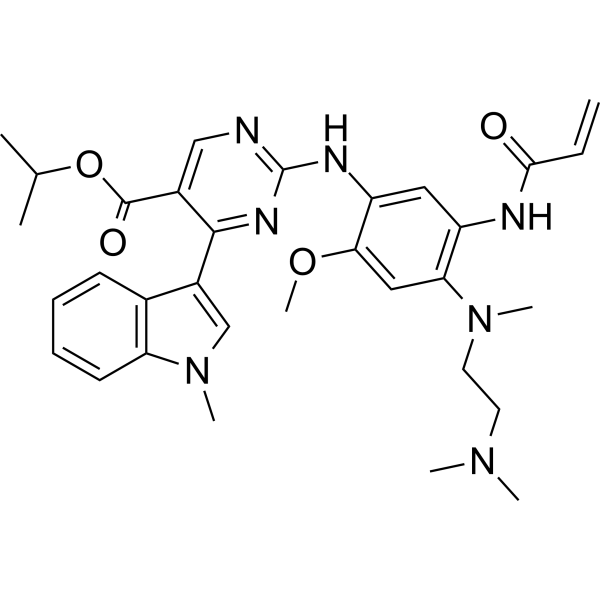
    Mobocertinib
    Maximum Cited Publications
    12 Publications Verification

    TAK-788; AP32788

    EGFR Cancer
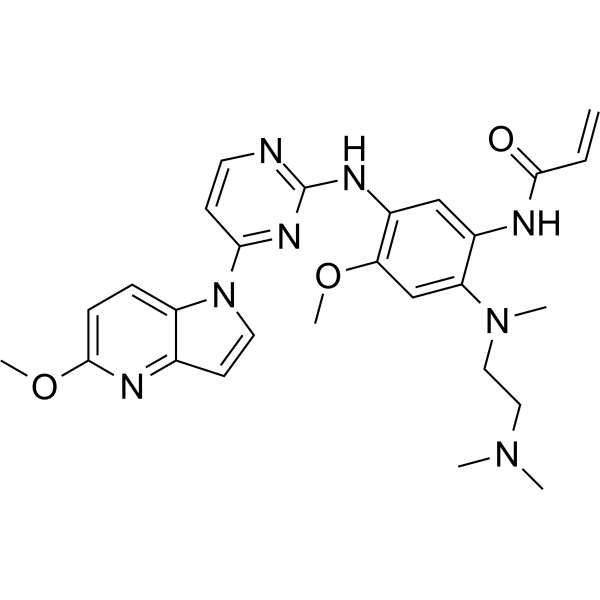
    Mobocertinib (TAK-788) is an orally active and irreversible EGFR/HER2 inhibitor. Mobocertinib potently inhibits oncogenic variants containing activating EGFRex20ins mutations with selectivity over wild-type EGFR. Mobocertinib can be used in NSCLC research .
    Mobocertinib
  • HY-175749

    Molecular Glues Wee1 Inflammation/Immunology Cancer
    BMS-986463, a CRBN E3 ligase modulator (CELMoD), is a WEE1 kinase molecular glue degrader. BMS-986463 significantly inhibits tumor regression and reduces the level of phospho-CDK2. BMS-986463 can be used for advanced malignant solid tumors like non-small cell lung cancer (NSCLC) research .
    BMS-986463
  • HY-147858

    PROTACs EGFR Apoptosis Cancer
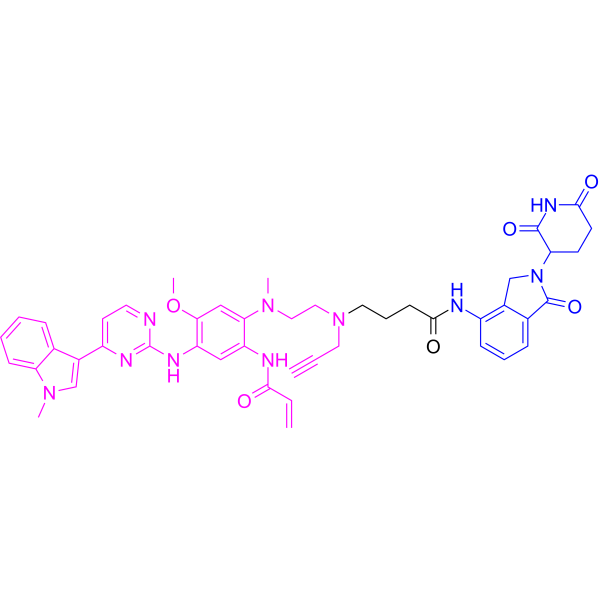
    PROTAC EGFR degrader 7 (compound 13b) is a potent and selective CRBN-recruiting PROTAC EGFR L858R/T790M degrader, with a DC50 of 13.2 nM. PROTAC EGFR degrader 7 inhibits NCI–H1975 cells proliferation, with an IC50 of 46.82 nM. PROTAC EGFR degrader 7 significantly induces apoptosis and G2/M phase arrest in NCI–H1975 cell. PROTAC EGFR degrader 7 shows antitumor activity, and can be used for non-small cell lung cancer (NSCLC) research . PROTAC EGFR degrader 7 is a click chemistry reagent, it contains an Alkyne group and can undergo copper-catalyzed azide-alkyne cycloaddition (CuAAc) with molecules containing Azide groups.
    PROTAC EGFR degrader 7
  • HY-135815A
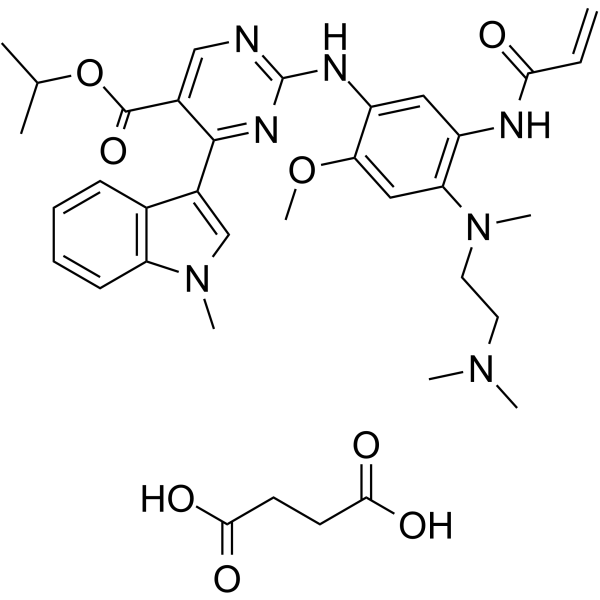
    Mobocertinib succinate
    Maximum Cited Publications
    12 Publications Verification

    TAK-788 succINate; AP32788 succINate

    EGFR Cancer
    Mobocertinib (TAK-788) succinate is an orally active and irreversible EGFR/HER2 inhibitor. Mobocertinib succinate potently inhibits oncogenic variants containing activating EGFRex20ins mutations with selectivity over wild-type EGFR. Mobocertinib succinate can be used in NSCLC research .
    Mobocertinib succinate
  • HY-172920

    Wnt β-catenin EGFR ERK COX Akt GSK-3 c-Myc Apoptosis Interleukin Related JNK Inflammation/Immunology Cancer
    Wnt/β-catenin-IN-6 is an orally active Wnt/β-catenin pathway inhibitor. Wnt/β-catenin-IN-6 blocks the AKT/GSK-3β/β-catenin signaling pathway, leading to reduced expression of Wnt target genes (c-Myc, c-Jun). Wnt/β-catenin-IN-6 reduces COX2 expression and IL-8 levels, highlighting its dual anti-inflammatory and antitumor effects. Wnt/β-catenin-IN-6 can induce apoptosis. Wnt/β-catenin-IN-6 serves as a tool for non-small cell lung cancer (NSCLC) research .
    Wnt/β-catenin-IN-6
  • HY-137295

    PKC Apoptosis Inflammation/Immunology
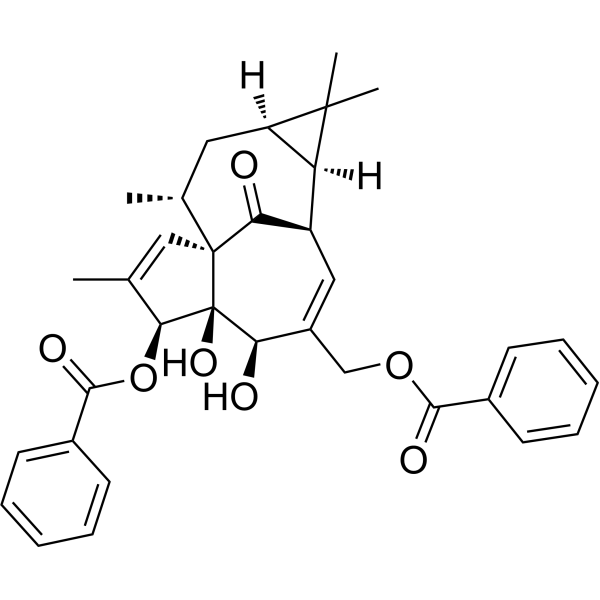
    Ingenol 3,20-dibenzoate is a potent protein kinase C (PKC) isoform-selective agonist. Ingenol 3,20-dibenzoate induces selective translocation of nPKC-delta, -epsilon, and -theta and PKC-mu from the cytosolic fraction to the particulate fraction and induces morphologically typical apoptosis through de novo synthesis of macromolecules. Ingenol 3,20-dibenzoate increases the IFN-γ production and degranulation by NK cells, especially when NK cells are stimulated by NSCLC cells .
    Ingenol 3,20-dibenzoate
  • HY-162100

    ULK Autophagy Cancer
    MR-2088 is a reversible, ATP-competitive, and selective ULK1/2 inhibitor with pEC50 values of 8.3 and 8.7 respectively. MR-2088 effectively inhibits autophagic flux and demonstrates a synergistic antiproliferative effect with Trametinib (HY-10999) (MEK inhibitor) in vitro. MR-2088 can be used for non-small lung cell cancer (NSCLC) research .
    MR-2088
  • HY-161388

    Ferroptosis Mitophagy Cancer
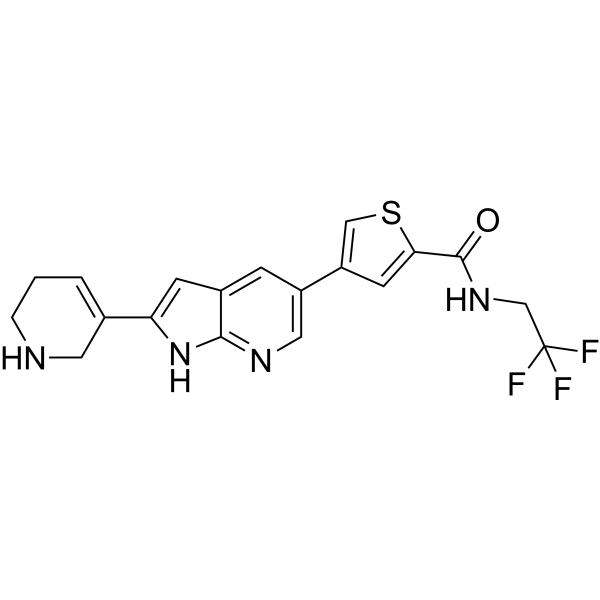
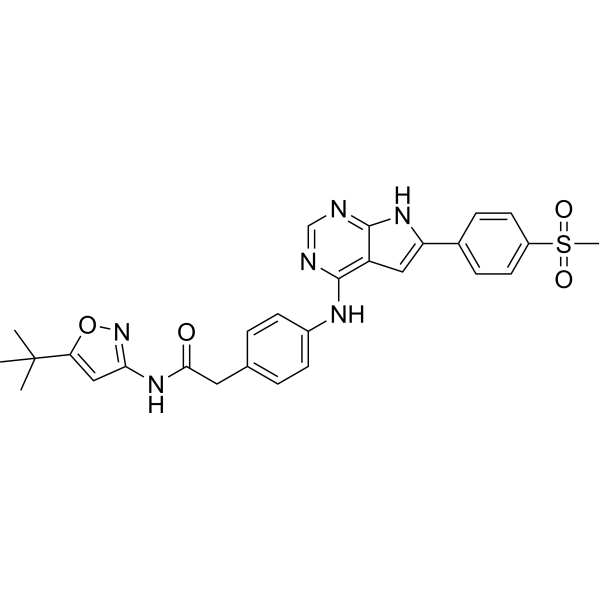
    NSCLC-IN-1 (Compound A10-2) induces mitophagy and ferroptosis through targeting transmembrane BAX inhibitor motif containing 6 (TMBIM6). NSCLC-IN-1 induces mitochondrial Ca 2+ imbalance, leading to mitochondrial damage. NSCLC-IN-1 reduces intracellular glutathione (GSH), increases the accumulation of lipid peroxides (LPO) and malondialdehyde (MDA) content. NSCLC-IN-1 is a potent anti-NSCLC agent .
    NSCLC-IN-1
  • HY-W423595

    EGFR Cancer
    BEBT-109 is a potent pan-mutant-selective EGFR inhibitor. BEBT-109 has improved pharmacokinetic properties. BEBT-109 can be used for multiple mutant-EGFR-driven non-small cell lung cancer (NSCLC) research .
    BEBT-109
  • HY-147281

    Drug-Linker Conjugates for ADC Cancer
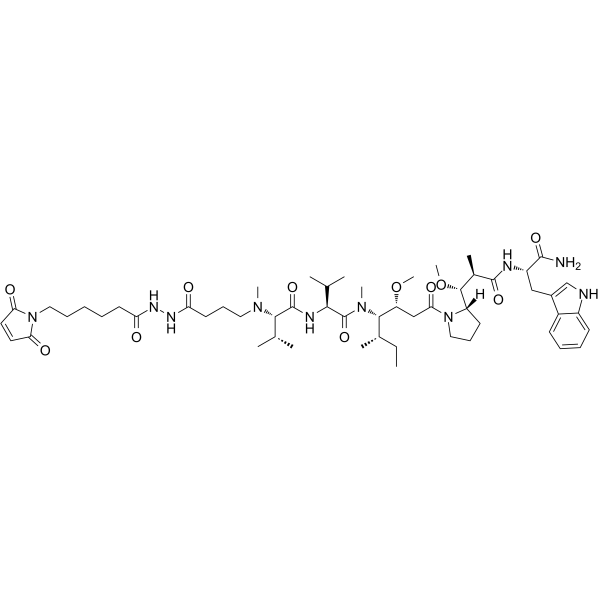
    BAY 1135626 is used to synthesize BAY 1129980, and use to anti-tumor research. BAY 1129980 is a Auristatin-based anti-C4.4A (LYPD3) antibody–agent conjugate (ADC), is used to non–small cell lung cancer (NSCLC) research .
    BAY 1135626
  • HY-103702

    Proton Pump DNA/RNA Synthesis Apoptosis Inflammation/Immunology Cancer
    TIP48/49-IN-1 is an orally active, specific RUVBL1/2 (TIP48/49) ATPase inhibitor with an IC50 of 59 nM against purified RUVBL1/2. TIP48/49-IN-1 inhibits the DNA replication process, leading to S-phase arrest. TIP48/49-IN-1 induces apoptosis. TIP48/49-IN-1 can be used for the research of non-small cell lung cancer (NSCLC) cells .
    TIP48/49-IN-1
  • HY-156671A

    Ras PI3K ERK mTOR Apoptosis Cancer
    RMC-4998 formic is an orally active inhibitor targeting the active or GTP-bound state of the KRAS G12C mutant. RMC-4998 formic can form a ternary complex with intracellular CYPA and the activated KRAS G12C mutant, with an IC50 value of 28 nM. RMC-4998 formic can inhibit ERK signaling in KRAS G12C mutant cancer cells and induce apoptosis. RMC-4998 formic can be used for non-small cell lung cancer (NSCLC) research .
    RMC-4998 formic
  • HY-168875

    TrxR Reactive Oxygen Species (ROS) Cancer
    TrxR1 prodrug-1 (compound 5u) is a potent inhibitor of TrxR1. TrxR1 prodrug-1 exhibits significant antitumor efficiency in nude mice and NSCLC organoids .
    TrxR1 prodrug-1
  • HY-151377

    RET EGFR Aurora Kinase c-Fms MAP4K Cancer
    RET-IN-19 (compound 59) is a potent RET inhibitor, with IC50 values of 6.8 and 13.51 nM against RET-wt and RET V804M, respectively. RET-IN-19 shows anticancer activity. RET-IN-19 can be used for non-small cell lung cancer (NSCLC) research .
    RET-IN-19
  • HY-173403

    TrxR Reactive Oxygen Species (ROS) Apoptosis Cancer
    TrxR-IN-8 (Compound 6f) is a selective TrxR inhibitor (IC50: 10.2 μM). TrxR-IN-8 induces apoptosis through oxidative stress by stimulating the production of reactive oxygen species (ROS), reducing intracellular thiols, and lowering the glutathione/glutathione ratio. TrxR-IN-8 exhibits significant cytotoxicity against non-small cell lung cancer (NSCLC) cells .
    TrxR-IN-8
  • HY-119182
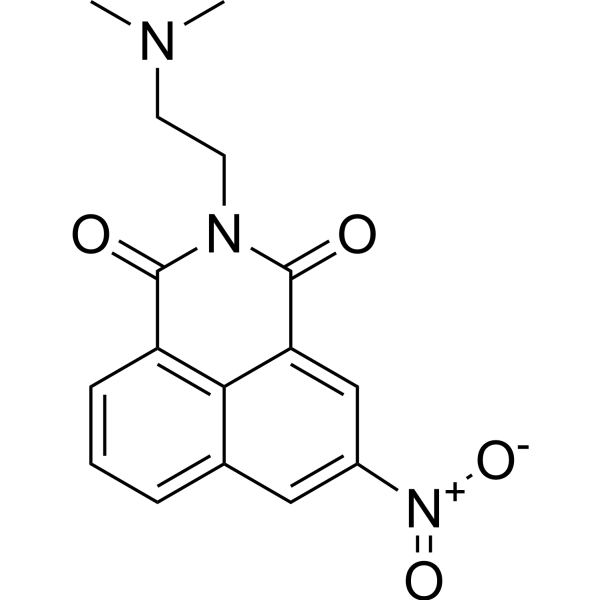
    Mitonafide
    2 Publications Verification

    NSC 300288

    DNA/RNA Synthesis Cancer
    Mitonafide (NSC 300288) is a cytostatic agent. Mitonafide binds to double-stranded DNA through intercalation, and inhibits DNA and RNA synthesis. Mitonafide is an antitumor agent that can be used in the research of cancers, such as non-small cell lung cancer (NSCLC), leukemia .
    Mitonafide
  • HY-178023

    HDAC Cancer
    HDAC6-IN-64 (Compound 8) is a HDAC6 inhibitor with an IC50 of 11.9  nM. HDAC6-IN-64 has poor cell permeability. HDAC6-IN-64 can be used for chemotherapy of cancers like NSCLC research .
    HDAC6-IN-64
  • HY-179536

    Ras Cancer
    KRAS-IN-49 (compound 7b) is a selective and covalent KRAS G13C inhibitor. KRAS-IN-49 covalently binds to Cys13 of KRAS G13C. KRAS-IN-49 can be used for non-small cell lung cancer (NSCLC) research .
    KRAS-IN-49
  • HY-156671B

    Ras PI3K ERK mTOR Apoptosis Cancer
    RMC-4998 TFA is an orally active inhibitor targeting the active or GTP-bound state of the KRAS G12C mutant. RMC-4998 TFA can form a ternary complex with intracellular CYPA and the activated KRAS G12C mutant, with an IC50 value of 28 nM. RMC-4998 TFA can inhibit ERK signaling in KRAS G12C mutant cancer cells and induce apoptosis. RMC-4998 TFA can be used for for non-small cell lung cancer (NSCLC) research .
    RMC-4998 TFA
  • HY-150610

    EGFR Cancer
    EGFR-IN-69 (compound 17g) is a potent EGFR inhibitor, with IC50 values of 4.3, 6.6 and 25.6 nM against EGFR L858R/T790M/C797S, EGFR L858R/T790M, and EGFR 19del/T790M/C797S, respectively. EGFR-IN-69 can be used for non-small-cell-lung-cancer (NSCLC) research .
    EGFR-IN-69
  • HY-178021

    HDAC DNA/RNA Synthesis Apoptosis RAD51 Caspase Cancer
    HDAC1-IN-11 (Compound 6) is a HDAC1 inhibitor with an IC50 of 106.6  nM. HDAC1-IN-11 inhibits the expression of Sp1 and RAD51, thereby inducing Caspase-dependent apoptosis. HDAC1-IN-11 has antitumor activity and sensitizes Etoposide (HY-13629) and Gemcitabine (HY-17026), promoting synergistic death of NSCLC cells through the inhibition of homologous recombination and non-homologous end joining (NHEJ) pathways involved in DNA DSB repair. HDAC1-IN-11 can be used for chemotherapy of cancers like NSCLC research .
    HDAC1-IN-11
  • HY-178022

    HDAC Apoptosis Caspase RAD51 DNA/RNA Synthesis Cancer
    HDAC6-IN-63 (Compound 7) is an orally active HDAC6 inhibitor with an IC50 of 145  nM. HDAC6-IN-63 inhibits the expression of Sp1 and RAD51, thereby inducing Caspase-dependent apoptosis. HDAC6-IN-63 has antitumor activity and sensitizes Etoposide (HY-13629) and Gemcitabine (HY-17026), promoting synergistic death of NSCLC cells through the inhibition of homologous recombination and non-homologous end joining (NHEJ) pathways involved in DNA DSB repair. HDAC6-IN-63 can be used for chemotherapy of cancers like NSCLC research .
    HDAC6-IN-63
  • HY-178391

    ROS Kinase p38 MAPK ERK Apoptosis Cancer
    SMU-037 is an orally active and selective ROS1 inhibitor that demonstrates potent activity (IC₅₀ = 6.8 nM) and possesses the ability to penetrate the blood-brain barrier. SMU-037 shows ~25-fold selectivity over ALK, and superior sensitivity against the G2032R mutation. SMU-037 attenuates phosphorylation of ROS1 and downstream MAPK-ERK signaling pathway, leading to cell cycle arrest and apoptosis. SMU-037 effectively suppresses tumor progression in both xenograft and intracranial mouse models. SMU-037 can be used for non-small cell lung cancer (NSCLC) research .
    SMU-037
  • HY-164476

    EGFR GSK-3 PD-1/PD-L1 Cancer
    ES-072 is an orally effective selective EGFR mutant (EGFR-T790M) inhibitor. ES-072 activates GSK3α by inhibiting EGFR-T790M activity, which promotes phosphorylation of PD-L1 at Ser279 and Ser283. The phosphorylated PD-L1 recruits the E3 ubiquitin ligase ARIH1, leading to ubiquitination and proteasomal degradation of PD-L1. This mechanism not only reduces cancer cell growth but also enhances anti-tumor immune response by lowering PD-L1 levels. ES-072 can be used to inhibit proliferation in non-small cell lung cancer (NSCLC) cells .
    ES-072
  • HY-175864

    EGFR Apoptosis p38 MAPK ERK Akt STAT Inflammation/Immunology Cancer
    EGFR-IN-173 is an orally active, pan-mutant EGFR tyrosine kinase inhibitor that targets EGFR 19del, L858R/T790M and C797S triple-mutations, potently inhibiting EGFR 19del/T790M/C797S with an IC50 of 1.19 nM while showing over 100-fold selectivity for mutant over wild-type EGFR (IC50 = 19.362 μM against WT). EGFR-IN-173 significantly inhibits cell migration, induces apoptosis in non-small cell lung cancer (NSCLC) cells. EGFR-IN-173 inhibits EGFR phosphorylation and suppresses the downstream pathways (MAPK/ERK, AKT, STAT3). EGFR-IN-173 exhibits antitumor efficacy in NSCLC and Ba/F3 xenograft models. EGFR-IN-173 can be used for NSCLC research .
    EGFR-IN-173
  • HY-173218

    EGFR Cancer
    anti-NSCLC agent-1 (compound 8dc) is an inhibitor of tyrosine kinase inhibitors (TKIs) with IC50 values of 0.05 and 0.09 μM in A549 and NCI-H441 cells. anti-NSCLC agent-1 shows anti-NSCLC activities in colony formation, migration, and invasion [1].
    anti-NSCLC agent-1
  • HY-139534A

    Drug Isomer Others
    (S)-ARI-1 is an S-enantiomer of ARI-1. ARI-1 is a ROR1 inhibitor and apoptosis inducer, used in NSCLC research .
    (S)-ARI-1
  • HY-N2104

    Others Cancer
    Daurinoline is an alkaloid that can be isolated from the roots of Menispermum dauricum. Daurinoline may be a potential anti-tumor agent or chemosensitizer for chemo-resistant NSCLC research .
    Daurinoline
  • HY-161031

    EGFR Cancer
    EGFR-IN-93 (compound 18) is an allosteric inhibitor of T790M/L858R double mutant EGFR. EGFR-IN-93 can be used for non-small lung cancer (NSCLC) research .
    EGFR-IN-93
  • HY-135815B

    TAK-788 mesylate; AP32788 mesylate

    EGFR Cancer
    Mobocertinib (TAK-788) mesylate is an orally active and irreversible EGFR/HER2 inhibitor. Mobocertinib mesylate potently inhibits oncogenic variants containing activating EGFRex20ins mutations with selectivity over wild-type EGFR. Mobocertinib mesylate can be used in NSCLC research .
    Mobocertinib mesylate
  • HY-119182R

    NSC 300288 (Standard)

    DNA/RNA Synthesis Reference Standards Cancer
    Mitonafide (Standard) is the analytical standard of Mitonafide. This product is intended for research and analytical applications. Mitonafide (NSC 300288) is a cytostatic agent. Mitonafide binds to double-stranded DNA through intercalation, and inhibits DNA and RNA synthesis. Mitonafide is an antitumor agent that can be used in the research of cancers, such as non-small cell lung cancer (NSCLC), leukemia .
    Mitonafide (Standard)
  • HY-154960

    Akt Apoptosis Microtubule/Tubulin Cancer
    Tubulin/AKT1-IN-1 (Compound D1-1) is an inhibitor of tubulin polymerization and AKT pathway activation. Tubulin/AKT1-IN-1 significantly inhibits the proliferation and metastasis of H1975 cells and slightly induced their apoptosis and can be used for non-small-cell lung cancer (NSCLC) research .
    Tubulin/AKT1-IN-1
  • HY-135815R

    TAK-788 (Standard); AP32788 (Standard)

    EGFR Reference Standards Cancer
    Mobocertinib (Standard) is the analytical standard of Mobocertinib. This product is intended for research and analytical applications. Mobocertinib (TAK-788) is an orally active and irreversible EGFR/HER2 inhibitor. Mobocertinib potently inhibits oncogenic variants containing activating EGFRex20ins mutations with selectivity over wild-type EGFR. Mobocertinib can be used in NSCLC research .
    Mobocertinib (Standard)
  • HY-155227

    Anaplastic lymphoma kinase (ALK) EGFR Apoptosis Cancer
    ALK/EGFR-IN-1 (Compound 8l) is an ALK/EGFR dual inhibitor that blocks the phosphorylation of EGFR and ALK. ALK/EGFR-IN-1 inhibits ALK/EGFR mutants respectively, with IC50 of 4.3 nM for EGFR L858R T790M in H1975 cells and EML4-ALK in BaF3 cells, respectively. and 3.6 nM. ALK/EGFR-IN-1 may be used in NSCLC research .
    ALK/EGFR-IN-1
  • HY-178451

    Apoptosis Cancer
    NQO1-responsive prodrug is a prodrug of Gemcitabine (dFdC) (HY-17026) with anti-cancer effect. NQO1-responsive prodrug remains stable in plasma and liver/intestinal S9 fractions, releasing dFdC in an NQO1-dependent manner. NQO1-responsive prodrug induces S-phase arrest and apoptosis. NQO1-responsive prodrug inhibits tumor growth in an A549 xenograft mouse model. NQO1-responsive prodrug can be used for breast and non-small cell lung cancer (NSCLC) research .
    NQO1-responsive prodrug
  • HY-147858A

    PROTACs Cancer
    PROTAC EGFR degrader 7 (compound 13b) is a potent and selective CRBN-recruiting PROTAC EGFRL858R/T790M degrader, with a DC50 of 13 [1].2 nM.PROTAC EGFR degrader 7 inhibits NCI-H1975 cells proliferation, with an IC50 of 46 [1].82 nM.PROTAC EGFR degrader 7 significantly induces apoptosis and G2/M phase arrest in NCI-H1975 cell.PROTAC EGFR degrader 7 shows antitumor activity, and can be used for non-small cell lung cancer (NSCLC) research .
    PROTAC EGFR degrader 7 diTFA
  • HY-175206

    P-glycoprotein Cancer
    P-gp-IN-30 (Compound 13) is a P-glycoprotein (P-gp) inhibitor by targeting YB-1. P-gp-IN-30 significantly enhances sensitivity to Paclitaxel by reducing total YB-1 and nucleus YB-1 protein expression, inhibiting the expression and function of downstream P-gp, further suppressing the efflux rate of Paclitaxel. P-gp-IN-30 potently inhibits tumor growth in A549/Taxol xenografts mice model with combination of Paclitaxel (HY-B0015). P-gp-IN-30 can be used for non-small cell lung cancer (NSCLC) research .
    P-gp-IN-30
  • HY-E70717

    FGFR Cancer
    FGFR1 has been implicated in numerous cancer types including non-small cell lung cancer (NSCLC). FGFR1 is activated upon FGF binding to its extracellular domain, resulting in protein dimerization and transautophosphorylation of the intracellular tyrosine kinase domains. FGFR1 V561M gatekeeper mutation drives Fexagratinib (AZD4547) (HY-13330) resistance through STAT3 Activation and EMT. FGFR1 V561M Recombinant Human Active Protein Kinase is a recombinant FGFR1 V561M protein that can be used to study FGFR1 V561M-related functions [1].
    FGFR1 V561M Recombinant Human Active Protein Kinase
  • HY-170438

    EGFR Cancer
    EGFR-IN-139 (compound PD 18) is an epidermal growth factor receptor (EGFR) inhibitor, with IC50s of 12.88 (wild type), 10.84 (L858R/T790M), 42.68 (L858R/T790M/C797S) nM, respectively. EGFR-IN-139 displays strong anticancer activity against A549 and H1975 cancer cell lines, which are highly expressed EGFR. EGFR-IN-139 has a strong selectivity to cancer cells. EGFR-IN-139 can be used for nonsmall cell lung cancer (NSCLC) research[1].
    EGFR-IN-139
  • HY-179534

    Ras Cancer
    G13Ci-22 is a MRTX1133 (HY-134813) based KRAS G13C inhibitor. G13Ci-22 can be used for non-small cell lung cancer (NSCLC) research .
    G13Ci-22
  • HY-180851

    Estrogen Receptor/ERR Cancer
    ER ligand-14 is an estrogen receptor (ER) ligand. ER ligand-14 can serve as a ligand for target protein for PROTAC, and can be used to develop and design degradative agents for PROTAC ERβ, such as ERB-2 (HY-180850). ERB-2 displays favorable antiproliferative activity against Osimertinib (HY-15772) resistance NSCLC cells .
    ER ligand-14
  • HY-135815AR

    TAK-788 succINate (Standard); AP32788 succINate (Standard)

    EGFR Reference Standards Cancer
    Mobocertinib (succinate) (Standard) is the analytical standard of Mobocertinib (succinate). This product is intended for research and analytical applications. Mobocertinib (TAK-788) succinate is an orally active and irreversible EGFR/HER2 inhibitor. Mobocertinib succinate potently inhibits oncogenic variants containing activating EGFRex20ins mutations with selectivity over wild-type EGFR. Mobocertinib succinate can be used in NSCLC research .
    Mobocertinib succinate (Standard)
  • HY-179481

    Ferroptosis Keap1-Nrf2 Glutathione Peroxidase Reactive Oxygen Species (ROS) Cancer
    Ferroptosis inducer-13 is a 5′-prenylated chalcone derivative that effectively induces ferroptosis in human non-small cell lung cancer (NSCLC) cells by altering the activity of the Nrf2/xCT/GPX4 pathway. Ferroptosis inducer-13 exhibits potent anti-proliferative effects in vitro, and inhibits tumour growth in a NSCLC mouse model. Ferroptosis inducer-13 can be used for NSCLC research .
    Ferroptosis inducer-13
  • HY-180853

    PI3K Akt mTOR Apoptosis Mitochondrial Metabolism Cancer
    PI3K/Akt/mTOR-IN-6 (Compound JW4) is an orally active PI3K/Akt/mTOR pathway inhibitor. PI3K/Akt/mTOR-IN-6 induces Apoptosis in cells via the mitochondrial pathway. PI3K/Akt/mTOR-IN-6 shows potent anti-NSCLC activity .
    PI3K/Akt/mTOR-IN-6
  • HY-183682

    EGFR p38 MAPK ERK Akt Cancer
    AZ14289671 is an orally active, blood-brain barrier-penetrant tyrosine kinase (tyrosine kinase) inhibitor (TKI) that specifically targets non-small cell lung cancer (NSCLC) harboring EGFR exon 20 insertion mutations (EGFR Exon20Ins), while largely sparing wild-type EGFR to reduce off-target toxicities such as rash and diarrhea. AZ14289671 inhibits the downstream MAPK/ERK/AKT pathway, suppressing tumor cell proliferation, survival and migration. AZ14289671 can be used for NSCLC research .
    AZ14289671
  • HY-173118

    EGFR Apoptosis Cancer
    EGFR-IN-152 (compound D4) is a potent EGFR tyrosine kinase inhibitor, exhibiting potent EGFR L858R/T790M/C797S inhibition activity (IC50 = 40 nM). EGFR-IN-152 induces G0/G1 phase cell cycle arrest and apoptosis, thereby inhibiting colony formation and cell proliferation of non-small cell lung cancer (NSCLC) cells. EGFR-IN-152 can be used for NSCLC research .
    EGFR-IN-152
  • HY-179385

    Microtubule/Tubulin Phosphatase Apoptosis Cancer
    Tubulin-IN-62 is a tubulin inhibitor targeting the colchicine-binding site. Tubulin-IN-62 exhibits IC50 values of 17.2 nM and 19.3 nM against SKOV3 and HCC827 cells, respectively. Tubulin-IN-62 inhibits microtubule polymerization, arrests the cell cycle at the G2/M phase, and induces apoptosis. Tubulin-IN-62 demonstrates significant antitumor efficacy in vivo with good tolerability. Tubulin-IN-62 can be used in ovarian cancer and non-small cell lung cancer (NSCLC) research .
    Tubulin-IN-62
  • HY-179585

    Apoptosis Cancer
    DD-CIP2 is a DNA damage and apoptosis inducer. DD-CIP2 demonstrates effective anti-proliferative activity against multiple cancer cell. DD-CIP2 modulates the DNA damage response pathway, triggering robust DNA damage, cell cycle arrest, and apoptosis in vitro. DD-CIP2 demonstrates significant anti-tumor efficacy in vivo at well-tolerated doses, without substantial toxicity. DD-CIP2 exhibits superior cytotoxic potency against a broad panel of blood-and solid-tumor-derived cancer cell lines independent of their BRCA1/2 status. DD-CIP2 can be used for small-cell lung cancer (SCLC) and non small-cell lung cancer (NSCLC) research .
    DD-CIP2

Inquiry Online

Your information is safe with us. * Required Fields.

Salutation


Country or Region *

Applicant Name *


Organization Name *

Department *


Email Address *


Product Name *

Cat. No.


Requested quantity *

Phone Number *


Remarks

Inquiry Online

Inquiry Information

Product Name:
Cat. No.:
Quantity:
MCE Japan Authorized Agent:

