8 Results for "

PALM cells

" in MedChemExpress (MCE) Product Catalog:
Products (8)

8 Results for "PALM cells" in MCE Product Catalog:

1
1 Cited Publications
Cat. No.: HY-P10441A
Research Areas:  

Inflammation/Immunology

S-palm P0(180-199) TFA is an S-palmitoylated peptide derived from P0 protein. S-palm P0(180-199) TFA induces IL-17+ cells, macrophage infiltration, and anti-P0 antibodies. S-palm P0(180-199) TFA induces chronic inflammatory demyelinating polyneuropathy in rats via active immunization, manifesting as a relapsing-remitting disease driven by persistent T cells, macrophages, Th17 cells and related cytokines, and P0-specific IgG . S-palm P0(180-199) TFA can be used in research related to chronic inflammatory demyelinating polyneuropathy .
loading...
    loading...
Cat. No.: HY-108693
CAS No.: 490-23-3
Purity:  98.89%
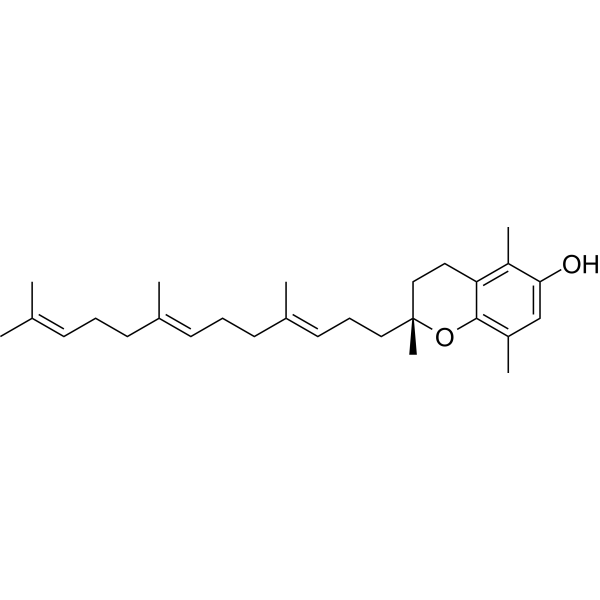
β-Tocotrienol is an isomer of vitamin E. β-Tocotrienol is a less potent antioxidant than α-tocotrienol. β-Tocotrienol can be found in the tocotrienol-rich fraction (TRF) of palm oil, which possesses anti-carcinogenic effects in vitro on human colon carcinoma and prostate cancer cells. β-Tocotrienol inhibits the growth of A549 (GI50 = 1.38 μM) and U87MG (GI50 = 2.53 μM) cells. β-Tocotrienol also induces apoptosis in cancer cells. β-Tocotrienol can inhibit PD-L1 expression and mitigates PD-L1-mediated immune suppression in vitro and in vivo .
loading...
    loading...
Cat. No.: HY-148702
CAS No.: 1349197-90-5
Purity:  98.37%
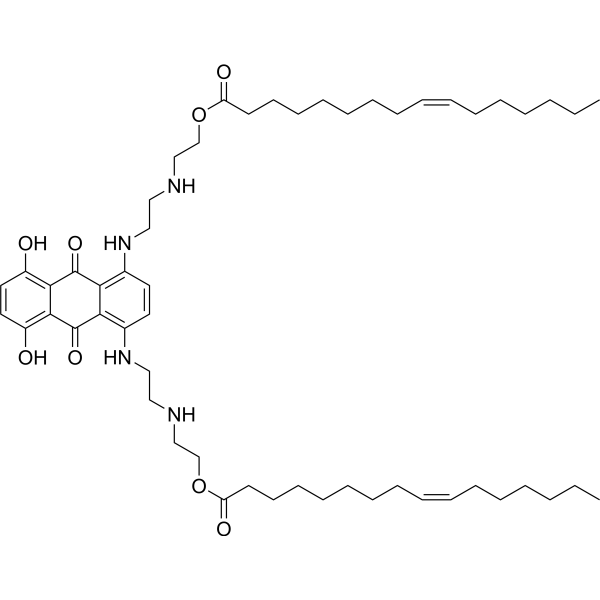
di-Pal-MTO is a palm oil-based lipid produced by combining the anticancer agent mitoxantrone (MTO) with palmitoleic acid. When nanoparticles of mono-Pal-MTO and di-Pal-MTO are combined in a molar ratio of 1:1, they show effective siRNA cell delivery and enhance anticancer activity .
loading...
    loading...
Cat. No.: HY-W719989
CAS No.: 472-93-5
γ-Carotene is a carotenoid found in Hippophae rhamnoides L. and peach palm fruits. γ-Carotene exhibits no significant inhibitory activity against self-activated hepatic stellate cells in vitro. γ-Carotene can be converted into retinol (Vitamin A) (HY-B1342) and can be used for the research of vitamin A deficiency [2].
loading...
    loading...
Cat. No.: HY-P10441
CAS No.: 1240687-76-6
Research Areas:  

Inflammation/Immunology

S-palm P0(180-199) is an S-palmitoylated peptide derived from P0 protein. S-palm P0(180-199) induces IL-17+ cells, macrophage infiltration, and anti-P0 antibodies. S-palm P0(180-199) induces chronic inflammatory demyelinating polyneuropathy in rats via active immunization, manifesting as a relapsing-remitting disease driven by persistent T cells, macrophages, Th17 cells and related cytokines, and P0-specific IgG . S-palm P0(180-199) can be used in research related to chronic inflammatory demyelinating polyneuropathy .
loading...
    loading...
Cat. No.: HY-148701
CAS No.: 1349197-89-2
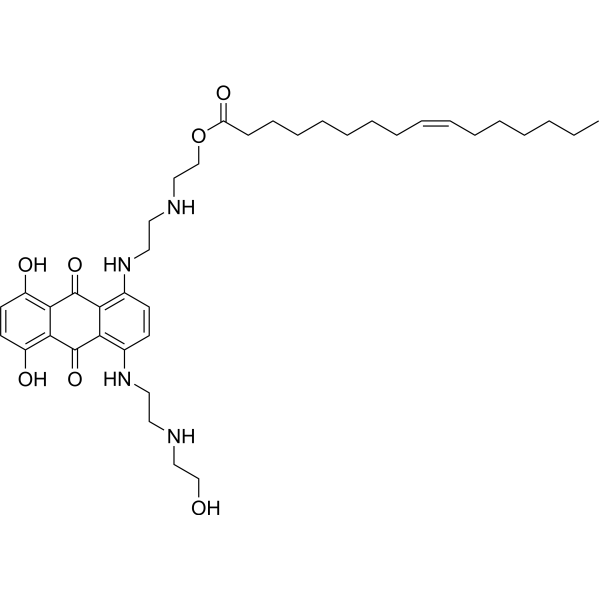
mono-Pal-MTO is a palm oil-based lipid produced by combining the anticancer agent mitoxantrone (MTO) with palmitoleic acid. When nanoparticles of mono-Pal-MTO and di-Pal-MTO are combined in a molar ratio of 1:1, they show effective siRNA cell delivery and enhance anticancer activity .
loading...
    loading...
Cat. No.: HY-108693R
CAS No.: 490-23-3
β-Tocotrienol (Standard) is the analytical standard of β-Tocotrienol. This product is intended for research and analytical applications. β-Tocotrienol is an isomer of vitamin E. β-Tocotrienol is a less potent antioxidant than α-tocotrienol. β-Tocotrienol can be found in the tocotrienol-rich fraction (TRF) of palm oil, which possesses anti-carcinogenic effects in vitro on human colon carcinoma and prostate cancer cells. β-Tocotrienol inhibits the growth of A549 (GI50 = 1.38 μM) and U87MG (GI50 = 2.53 μM) cells. β-Tocotrienol also induces apoptosis in cancer cells. β-Tocotrienol can inhibit PD-L1 expression and mitigates PD-L1-mediated immune suppression in vitro and in vivo .
loading...
    loading...
Cat. No.: HY-N19229
CAS No.: 65718-85-6
Dihydrocitrinone is a polyketide secondary metabolite and the major urinary metabolite of citrinin, which can be isolated from Aspergillus strains derived from the rhizosphere soil of date palms. Dihydrocitrinone exerts independent toxic effects in renal cell cultures and zebrafish embryo models, enhances the toxic effects of Ochratoxin A through additive or synergistic actions, and increases the level of miR-731 in zebrafish embryos when acting in combination with Ochratoxin A .
loading...
    loading...

