


1. Search Result
Search Result
Results for "

PD-1/PD-L1 HTRF screening

" in MedChemExpress (MCE) Product Catalog:

894

Inhibitors & Agonists

272

Screening Libraries

18

Fluorescent Dyes

5

Biochemical Assay Reagents

334

Peptides

3

MCE Kits

172

Inhibitory Antibodies

55

Natural
Products

76

Recombinant Proteins

9

Isotope-Labeled Compounds

25

Antibodies

5

Click Chemistry

8

Oligonucleotides

Targets Recommended:
Cat. No. Product Name Target Research Areas Chemical Structure
  • HY-P99144

    PD-1/PD-L1 Inflammation/Immunology
    Anti-Mouse PD-1 Antibody (RMP1-14) is an anti-mouse PD-1 IgG2a antibody. Anti-Mouse PD-1 Antibody (RMP1-14) can be used for the study of colon carcinoma [1].
    Anti-Mouse PD-1 Antibody (RMP1-14)
  • HY-P99145

    PD-1/PD-L1 Cancer
    Anti-Mouse PD-L1/B7-H1 Antibody (10F.9G2) is an anti-mouse PD-L1/B7-H1 IgG2b antibody inhibitor derived from host rat. Anti-Mouse PD-L1/B7-H1 Antibody (10F.9G2) blocks PD-1 signaling. Anti-Mouse PD-L1/B7-H1 Antibody (10F.9G2) can be used for the research of cancer, such as colon cancer [1].
    Anti-Mouse PD-L1/B7-H1 Antibody (10F.9G2)
  • HY-P9902A
    Pembrolizumab (anti-PD-1)
    5 Publications Verification

    MK-3475 (anti-PD-1); Lambrolizumab (anti-PD-1)

    PD-1/PD-L1 Cancer
    Pembrolizumab (anti-PD-1) is a humanized IgG4 antibody and PD-1 inhibitor. Pembrolizumab produces PD-1 blockade, preventing PD-L1 and PD-L2 from connecting to PD-1. This avoids the uncontrolled regulation of T cells on cells that normally express PD-1 .
    Pembrolizumab (anti-PD-1)
  • HY-108730
    Avelumab
    5+ Cited Publications

    Anti-Human PD-L1, Human Antibody; MSB 0010718C; MSB0010718C

    PD-1/PD-L1 Inflammation/Immunology Cancer
    Avelumab (Anti-Human PD-L1) a fully human IgG1 anti-PD-L1 monoclonal antibody (mAb) with potential antibody-dependent cell-mediated cytotoxicity (ADCC). Avelumab enhances ADCC on several cancer cell lines expressing PD-L1. Avelumab can be used for the study of chordoma [1].
    Avelumab
  • HY-P9919A
    Durvalumab (anti-PD-L1)
    5+ Cited Publications

    MEDI 4736 (anti-PD-L1)

    PD-1/PD-L1 Cancer
    Durvalumab (anti-PD-L1)(MEDI 4736) is a human anti-PD-L1 protein monoclonal antibody. Durvalumab (anti-PD-L1) completely blocks PD-L1 binding to PD-1 and CD80, IC 50 are 0.1 and 0.04 nM respectively, has anti-tumor activity [1] .
    Durvalumab (anti-PD-L1)
  • HY-P99144A
    Anti-Mouse PD-1 Antibody (S-5001)
    1 Publications Verification

    PD-1/PD-L1 Inflammation/Immunology Cancer
    Anti-Mouse PD-1 Antibody (S-5001) is a selective inhibitor targeting PD-1, blocking the PD-1/PD-L1 immune checkpoint axis through competitive binding to PD-1. Anti-Mouse PD-1 Antibody (S-5001) works by reversing the tumor immunosuppressive microenvironment and reactivating the anti-tumor activity of cytotoxic T lymphocytes. It can be used in research on tumors such as melanoma and HPV-positive oropharyngeal squamous cell carcinoma. Anti-Mouse PD-1 Antibody (S-5001) is often combined with photothermal therapy, chemotherapy, etc., to enhance efficacy [1] .
    Anti-Mouse PD-1 Antibody (S-5001)
  • HY-P990788

    PD-1/PD-L1 Inflammation/Immunology Cancer
    Anti-Mouse PD-1 Antibody (29F.1A12) is a rat-derived IgG2a κ type antibody inhibitor, targeting to mouse PD-1. Anti-Mouse PD-1 Antibody (29F.1A12) blocks the binding of PD-1 to its two ligands, PD-L1 and PD-L2. Anti-Mouse PD-1 Antibody (29F.1A12) can be used for the researches of cancer and immunology, such as CT26 tumor and pancreatic cancer [1] .
    Anti-Mouse PD-1 Antibody (29F.1A12)
  • HY-P990173

    PD-1/PD-L1 Inflammation/Immunology Cancer
    Anti-Mouse/Rat/Human PD-L1 Antibody (368A.4H1) is a mouse-derived PD-L1 IgG1 κ type antibody inhibitor. Anti-Mouse/Rat/Human PD-L1 Antibody (368A.4H1) increases IFN-γ levels in organoid-primed T cells. Anti-Mouse/Rat/Human PD-L1 Antibody (368A.4H1) can be used for the researches of cancer, such as oral squamous cell carcinoma and mammary cancer [1] .
    Anti-Mouse/Rat/Human PD-L1 Antibody (368A.4H1)
  • HY-134884
    INCB086550
    2 Publications Verification

    PD-1/PD-L1-IN-8

    PD-1/PD-L1 Cancer
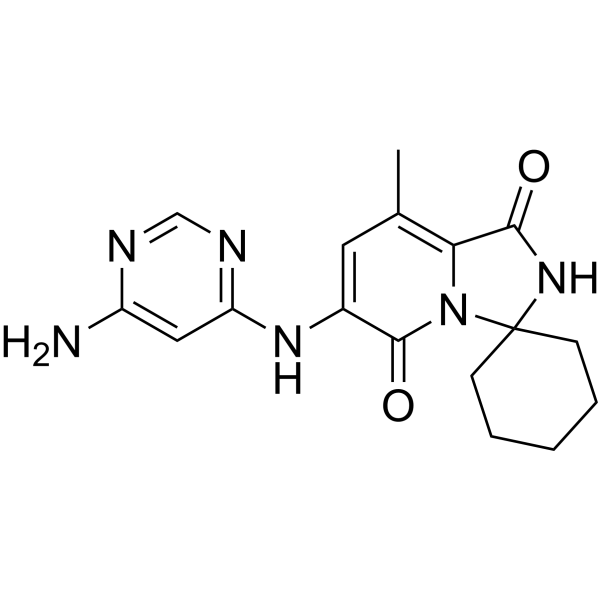
    INCB086550 is a potent, oral, small-molecule PD-L1 inhibitor with IC50s value of 3.1, 4.9 and 1.9 nM for human, cynomolgus, and rat, respectively. INCB086550 promotes the dimerization of cell-surface PD-L1 and induces PD-L1 entry into Golgi vesicles then traffick to the nucleus. INCB086550 can be used for multiple cancers research [1].
    INCB086550
  • HY-163757

    PROTACs PD-1/PD-L1 Inflammation/Immunology Cancer
    PROTAC PD-L1 degrader-1 is a CRBN-based PD-L1-PROTAC degrader with a notable PD-L1 protein degradation capability. PROTAC PD-L1 degrader-1 shows potent PD-L1 degradation in 4T1 cells with a DC50 of 0.609 μM. PROTAC PD-L1 degrader-1 can be used for the study of breast cancer. (Blue: CRBN ligand (HY-150839), Black: linker; Pink: PD-L inhibitor (HY-19745)) [1].
    PROTAC PD-L1 degrader-1
  • HY-138407

    GS-4224; PD-1/PD-L1-IN 7

    PD-1/PD-L1 HBV Infection Cancer
    Evixapodlin (GS-4224) is a human PD-1/PD-L1 protein/protein interaction inhibitor with an IC50 of 0.213 nM. Evixapodlin has anticancer and antiviral functions [1].
    Evixapodlin
  • HY-P990824
    Anti-Mouse PD-1 Antibody (J43)
    1 Publications Verification

    PD-1/PD-L1 Inflammation/Immunology Cancer
    Anti-Mouse PD-1 Antibody (J43) is a kind of armenian hamster IgG antibody inhibitor, targeting to mouse PD-1. Anti-Mouse PD-1 Antibody (J43) inhibits the interaction of PD-1 with PD-L1. Anti-Mouse PD-1 Antibody (J43) can be used for the researches of cancer and immunology, such as breast cancer and colon cancer [1] .
    Anti-Mouse PD-1 Antibody (J43)
  • HY-116274
    BMS-8
    1 Publications Verification

    PD-1/PD-L1 Cancer
    BMS-8 inhibits the PD-1/PD-L1 interaction with IC50 of 7.2 μM. BMS-8, binds directly to PD-L1 and induces formation of PD-L1 homodimers, which in turn prevents the interaction with PD-1 .
    BMS-8
  • HY-131183

    PROTACs PD-1/PD-L1 Inflammation/Immunology
    PROTAC PD-1/PD-L1 degrader-1, a PD-1/PD-L1 PROTAC based on Cereblon E3 ligand, inhibits PD-1/PD-L1 interaction with an IC50 of 39.2 nM. PROTAC PD-1/PD-L1 degrader-1 significantly restores the immunity repressed in a co-culture model of Hep3B/OS-8/hPD-L1 and CD3 T cells. PROTAC PD-1/PD-L1 degrader-1 moderately reduces the protein levels of PD-L1 in a lysosome-dependent manner [1].
    PROTAC PD-1/PD-L1 degrader-1
  • HY-132192
    PD-1/PD-L1-IN-9
    2 Publications Verification

    PD-1/PD-L1 Cancer
    PD-1/PD-L1-IN-9 is a potent and orally active inhibitor of PD-1/PD-L1 interaction, with an IC50 of 3.8 nM. PD-1/PD-L1-IN-9 can enhance the killing activity of tumor cells by immune cells. PD-1/PD-L1-IN-9 also exhibits significant in vivo antitumor activity in a CT26 mouse model [1].
    PD-1/PD-L1-IN-9
  • HY-P991078

    PD-1/PD-L1 Cancer
    Anti-Mouse PD-1 (LALA-PG) Antibody (RMP1-14) is a mouse-derived IgG2a, κ type antibody inhibitor, targeting to mouse PD-1.
    Anti-Mouse PD-1 (LALA-PG) Antibody (RMP1-14)
  • HY-153064

    PD-1/PD-L1-IN-30

    PD-1/PD-L1 Cancer
    MAX-10181 (PD-1/PD-L1-IN-30) is a PD-1/PD-L1 binding inhibitor, with an IC50 value of 0.018 μM. MAX-10181 can be used for research of cancers and other related diseases [1].
    MAX-10181
  • HY-P99833

    CK-301; TG-1501

    PD-1/PD-L1 Cancer
    Cosibelimab (CK-301) is a high-affinity, fully human PD-L1-blocking monoclonal antibody that binds PD-L1 and blocks its interaction with PD-1. Cosibelimab exhibits antitumor efficacy [1].
    Cosibelimab
  • HY-144258

    PD-1/PD-L1 Inflammation/Immunology Cancer
    PD-1/PD-L1-IN-14 (compound 17) is a bifunctional inhibitor of PD-1/PD-L1 interactions, with an IC50 of 27.8 nM. PD-1/PD-L1-IN-14 (compound 17) inhibits PD-1/PD-L1 interactions and promotes dimerization, internalization, and degradation of PD-L1 [1].
    PD-1/PD-L1-IN-14
  • HY-P1812
    AUNP-12
    3 Publications Verification

    NP-12

    PD-1/PD-L1 Cancer
    AUNP-12 (NP-12) is a peptide antagonist of the PD-1 signaling pathway, displays equipotent antagonism toward PD-L1 and PD-L2 in rescue of lymphocyte proliferation and effector functions. AUNP-12 exhibits immune activation, excellent antitumor activity, and potential for better management of immune-related adverse events (irAEs) [1].
    AUNP-12
  • HY-145774

    PD-1/PD-L1 Cancer
    PD-1/PD-L1-IN-23 is a potent and orally active inhibitor of PD-1/PD-L1. PD-1/PD-L1-IN-23 is an ester proagent of L7. L7 is a benzo[c][1,2,5]oxadiazole derivative and biologically evaluated as inhibitors of PD-L1. PD-1/PD-L1-IN-23 displays significant antitumor effects in tumor models of syngeneic and PD-L1 humanized mice [1].
    PD-1/PD-L1-IN-23
  • HY-P10950A

    PD-1/PD-L1 Inflammation/Immunology Cancer
    PD-L1 inhibitory peptide TFA is an inhibitor peptide targeting programmed cell death ligand 1 (PD-L1). PD-L1 inhibitory peptide TFA binds to PD-L1, relieving immunosuppression and restoring the antitumor activity of T cells. PD-L1 inhibitory peptide TFA is promising for research of cancers [1] .
    PD-L1 inhibitory peptide TFA
  • HY-101058A

    PD-1/PD-L1 Inflammation/Immunology Cancer
    PD1-PDL1-IN 1 TFA (compound 16) is a potent programmed cell death 1 (PD-1) inhibitor. PD1-PDL1-IN 1 TFA is useful as immune modulator [1].
    PD1-PDL1-IN 1 TFA
  • HY-P99544

    HBM-9167; KL-A167

    PD-1/PD-L1 Cancer
    Tagitanlimab (HBM-9167) is a humanized anti-PD-L1 antibody (IgG1κ type). Tagitanlimab selectively blocks the interaction of PD-L1 and PD-1. Tagitanlimab has the potential to be studied in recurrent or metastatic nasopharyngeal carcinoma (NPC) [1] .
    Tagitanlimab
  • HY-P2478

    PD-1/PD-L1 Inflammation/Immunology
    Human PD-L1 inhibitor V, a human PD-1 protein binding peptide with a Kd value of 3.32 μM. Human PD-L1 inhibitor V inhibit the interaction of hPD-1/hPD-L1 [1].
    Human PD-L1 inhibitor V
  • HY-103048A

    PD-1/PD-L1 Cancer
    PD-1/PD-L1-IN 3 TFA, a macrocyclic peptide, is a potent and selective inhibitor of the PD-1/PD-L1 and CD80/PD-L1 interactions extracted from patent WO2014151634A1, compound No.1. PD-1/PD-L1-IN 3 TFA interferes with PD-L1 binding to PD-1 and CD80 by binding to PD-L1, with IC50s of 5.60 nM and 7.04 nM, respectively. PD-1/PD-L1-IN 3 TFA can be used for the research of various diseases, including cancer and infectious diseases [1].
    PD-1/PD-L1-IN 3 TFA
  • HY-P991079

    PD-1/PD-L1 Cancer
    Anti-Mouse PD-1 Antibody (D265A) Antibody is a mouse-derived IgG2a, κ type antibody inhibitor, targeting to mouse PD-1.
    Anti-Mouse PD-1 Antibody (D265A) Antibody (RMP1-14)
  • HY-155101

    PD-1/PD-L1 Cancer
    PD-L1-IN-3 (Compound 4a) is a compound that targets PD-1/PD-L1, the IC50 value and EC50 value is 4.97nM and 2.70 μM for inhibit PD-L1 and Jurkat T cells, respectively. PD-L1-IN-3 can bind PD-L1 dimer to prevent PD-1 binding to PD-L1, therefore blocking PD-1 signaling. PD-L1-IN-3 can be used for lung cancer and melanoma diseases research [1].
    PD-L1-IN-3
  • HY-149830
    PD-L1-IN-2
    1 Publications Verification

    PD-1/PD-L1 Cancer
    PD-L1-IN-2 is a potential tumor immunological agent by inhibiting PD-L1. PD-L1-IN-2 is a Naamidine J derivative and exerts antitumor effects in vivo by reducing PD-L1 expression and enhancing tumor-infiltrating T-cell immunity. PD-L1-IN-2 is used for colorectal cancer research [1].
    PD-L1-IN-2
  • HY-P9972

    PDR001

    PD-1/PD-L1 IFNAR Cancer
    Spartalizumab is a humanized PD-1 IgG4 monoclonal antibody, with a Kd of 0.83 nM for human PD-1 and a Kd of 0.93 nM for cynomolgus monkey PD-1. Spartalizumab binds to PD-1 and blocks its interaction with the ligands PD-L1 and PD-L2. Spartalizumab induces increased IFNγ release. Spartalizumab can be used in the research of anaplastic thyroid carcinoma (ATC) and neuroendocrine neoplasms (NENs) [1] .
    Spartalizumab
  • HY-P10950

    PD-1/PD-L1 Inflammation/Immunology Cancer
    PD-L1 inhibitory peptide is an inhibitor peptide targeting programmed cell death ligand 1 (PD-L1). PD-L1 inhibitory peptide binds to PD-L1, relieving immunosuppression and restoring the antitumor activity of T cells. PD-L1 inhibitory peptide is promising for research of cancers [1] .
    PD-L1 inhibitory peptide
  • HY-155959

    PD-1/PD-L1 Cancer
    PD-1/PD-L1-IN-33 (Compound N11) is a PD-1/PD-L1 inhibitor. PD-1/PD-L1-IN-33 inhibits PD-1 and PD-L1 interaction with an IC50: 6.3 nM. PD-1/PD-L1-IN-33 promotes T-cell proliferation, activation, and infiltration into tumor spheres. PD-1/PD-L1-IN-33 has immunomodulatory and anticancer activity [1].
    PD-1/PD-L1-IN-33
  • HY-152240

    PD-1/PD-L1 Cancer
    PD-1/PD-L1-IN-29 (S4-1) is a potent PD-1/PD-L1 inhibitor with an IC50 value of 6.1 nM. PD-1/PD-L1-IN-29 binds PD-L1 and disrupts PD-1/PD-L1 interactions, induces PD-L1 dimerization and internalization, improves its localization to the endoplasmic reticulum, and promotes PD-L1 entry into the endoplasmic reticulum. PD-1/PD-L1-IN-29 has anticancer activity [1].
    PD-1/PD-L1-IN-29
  • HY-P2477

    PD-1/PD-L1 Inflammation/Immunology
    Human PD-L1 inhibitor IV, a polypeptide, is a competitive human PD-1 protein inhibitor with a Kd value of 1.38 μM. Human PD-L1 inhibitor IV inhibits the interaction of hPD-1/hPD-L1 [1].
    Human PD-L1 inhibitor IV
  • HY-P990828

    PD-1/PD-L1 Infection
    Anti-PD-L1/B7-H1 Antibody (29E.2A3) is a kind of mouse IgG2b κ chimeric antibody inhibitor, targeting to human PD-L1/B7-H1. Anti-PD-L1/B7-H1 Antibody (29E.2A3) can block the binding of PD-1 to PD-L1. Anti-PD-L1/B7-H1 Antibody (29E.2A3) can be used for the research of infection, such as hepatitis C virus (HCV) [1] .
    Anti-PD-L1/B7-H1 Antibody (29E.2A3)
  • HY-P10424

    PD-1/PD-L1 Cancer
    OPBP-1 is a D-peptide obtained by phage display screening, molecular docking and molecular dynamics simulation. OPBP-1 has high stability and strong antitumor and oral activity. OPBP-1 can selectively bind PD-L1 protein, significantly block the interaction between PD-1 and PD-L1, and this blocking effect helps to restore and improve the function of T lymphocytes and reduce the proportion of bone marrow derived suppressor cells (MDSCs) to combat tumor-induced immune escape. OPBP-1 can be used in cancer immunotherapy research [1].
    OPBP-1
  • HY-P2478A

    PD-1/PD-L1 Inflammation/Immunology
    Human PD-L1 inhibitor V TFA, a human PD-1 protein binding peptide with a Kd value of 3.32 μM. Human PD-L1 inhibitor V TFA inhibit the interaction of hPD-1/hPD-L1 [1].
    Human PD-L1 inhibitor V TFA
  • HY-P99633

    BGB-A333

    PD-1/PD-L1 Apoptosis Cancer
    Garivulimab (BGB-A333) is a humanized IgG1-variant monoclonal antibody that specifically targets and binds to PD-L1. Garivulimab selectively blocks the interaction of PD-L1 and PD-1. Garivulimab has antitumor activity [1].
    Garivulimab
  • HY-P10217

    PD-1/PD-L1 Cancer
    PD-1/PD-L1-IN-42 (Compound B8.4) is an inhibitor of the interaction between PD-1 and PD-L1, with an EC50 of 0.1 μM. PD-1/PD-L1-IN-42 can be used for the research of cancer immunotherapy [1].
    PD-1/PD-L1-IN-42
  • HY-103048

    PD-1/PD-L1 Cancer
    PD-1/PD-L1-IN 3, a macrocyclic peptide, is a potent and selective inhibitor of the PD-1/PD-L1 and CD80/PD-L1 interactions extracted from patent WO2014151634A1, compound No.1. PD-1/PD-L1-IN 3 interferes with PD-L1 binding to PD-1 and CD80 by binding to PD-L1, with IC50s of 5.60 nM and 7.04 nM, respectively. PD-1/PD-L1-IN 3 can be used for the research of various diseases, including cancer and infectious diseases [1].
    PD-1/PD-L1-IN 3
  • HY-132192A
    PD-1/PD-L1-IN-9 hydrochloride
    2 Publications Verification

    PD-1/PD-L1 Cancer
    PD-1/PD-L1-IN-9 hydrochloride is a potent and orally active inhibitor of PD-1/PD-L1 interaction, with an IC50 of 3.8 nM. PD-1/PD-L1-IN-9 hydrochloride can enhance the killing activity of tumor cells by immune cells. PD-1/PD-L1-IN-9 hydrochloride also exhibits significant in vivo antitumor activity in a CT26 mouse model [1].
    PD-1/PD-L1-IN-9 hydrochloride
  • HY-162972

    PROTACs PD-1/PD-L1 Inflammation/Immunology Cancer
    PROTAC PD-L1 degrader-2 is a PD-L1 PROTAC degrader with an IC50 of 197.4 nM and a Kd of 301 nM. PROTAC PD-L1 degrader-2 induces PD-L1 endocytosis, drives degradation via the proteasomal and lysosomal pathways, and inhibits the PD-1/PD-L1 interaction. As an immune activator, PROTAC PD-L1 degrader-2 increases the levels of CD4 +, CD8 +, granzyme B and perforin. PROTAC PD-L1 degrader-2 can be used in studies related to colon cancer immunology [1].
    PROTAC PD-L1 degrader-2
  • HY-162343

    PD-1/PD-L1 Inflammation/Immunology Cancer
    PD-1/ PD-L1-in-41 (Compound 5c) is a PD-L1 and PD-1 inhibitor with IC50 value of 10.2 nM [1].
    PD-1/PD-L1-IN-41
  • HY-145772

    PD-1/PD-L1 Cancer
    PD-1/PD-L1-IN-21 (Example 22) is a small-molecule inhibitor of the PD-1/PD-L1 protein-protein interaction. PD-1/PD-L1-IN-21 blocks PD-1/PD-L1 with the IC50 of 4.99 μM. PD-1/PD-L1-IN-21 can be used for the research of cancers, infectious diseases and autoimmune diseases [1].
    PD-1/PD-L1-IN-21
  • HY-143305

    PD-1/PD-L1 Cancer
    PD-1/PD-L1-IN-25 (compound D2) is an inhibitor of PD-1/PD-L1 interaction with an IC50 value of 16.17 nM. PD-1/PD-L1-IN-25 activates the antitumor immunity of T cells efficiently in PBMCs. PD-1/PD-L1-IN-25 can be used for the research of cancer [1].
    PD-1/PD-L1-IN-25
  • HY-163041

    PD-1/PD-L1 Inflammation/Immunology Cancer
    PD-1/PD-L1-IN-36 (Compound 2k) is a PD-1/PD-L1 complex inhibitor (IC50: 15 nM). PD-1/PD-L1-IN-36 can be used for research of cancer immunotherapy [1].
    PD-1/PD-L1-IN-36
  • HY-P2474

    PD-1/PD-L1 Cancer
    Human PD-L1 inhibitor I is a hPD-1 peptide ligand, with a KD of 3.39 μM. Human PD-L1 inhibitor I may disturb the binding of hPD-L1 to hPD-1 [1].
    Human PD-L1 inhibitor I
  • HY-144447

    PD-1/PD-L1 Cancer
    PD-1/PD-L1-IN-17 (Compound P20) is a potent inhibitor of PD-1/PD-L1 with an IC50 value of 26.8 nM. PD-1/PD-L1-IN-17 is a promising lead compound for the development of inhibitors of the PD-1/PD-L1 interaction. PD-1/PD-L1-IN-17 has the potential for the research of cancer diseases [1].
    PD-1/PD-L1-IN-17
  • HY-101058

    PD-1/PD-L1 Inflammation/Immunology
    PD1-PDL1-IN 1 (compound 16) is a potent programmed cell death 1 (PD-1) inhibitor. PD1-PDL1-IN 1 is useful as immune modulator [1].
    PD1-PDL1-IN 1
  • HY-144443

    PD-1/PD-L1 Cancer
    PD-1/PD-L1-IN-16 (Compound M23) is a potent inhibitor of PD-1/PD-L1 with an IC50 value of 53.2 nM. PD-1/PD-L1-IN-16 has the potential for the research of tumor immunoresearch [1].
    PD-1/PD-L1-IN-16

Inquiry Online

Your information is safe with us. * Required Fields.

Salutation


Country or Region *

Applicant Name *


Organization Name *

Department *


Email Address *


Product Name *

Cat. No.


Requested quantity *

Phone Number *


Remarks

Inquiry Online

Inquiry Information

Product Name:
Cat. No.:
Quantity:
MCE Japan Authorized Agent:

