29 Results for "

PDX tumors

" in MedChemExpress (MCE) Product Catalog:
Products (29)

29 Results for "PDX tumors" in MCE Product Catalog:

11
11 Publications Verification
Cat. No.: HY-104048
CAS No.: 1851373-36-8
Purity:  99.13%
Target:  

Histone Demethylase

Research Areas:  

Cancer

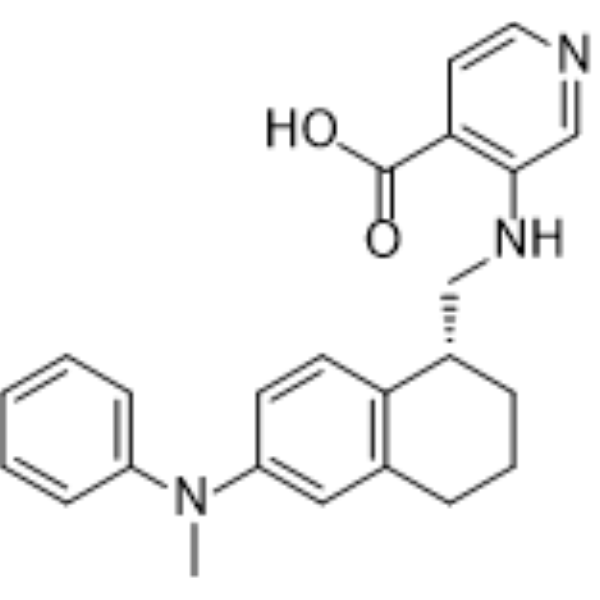
QC6352 is an orally active KDM4 inhibitor with anti-tumor and anti-proliferative activity. QC6352 has in vivo inhibitory effects on PDX models of breast and colon cancer and reduces the number of chemoresistant cell populations. QC6352 inhibits KDM4 different isoforms with IC50s of 104 nM (KDM4A), 56 nM (KDM4B), 35 nM (KDM4C), and 104 nM (KDM4D), respectively. QC6352 has moderate inhibitory activity against KDM5 with an IC50 of 750 nM (KDM5B) .
loading...
    loading...
3
3 Cited Publications
Cat. No.: HY-164992
Synonyms: MRG002; Trastuzumab MMAE
Trastuzumab vedotin (MRG002; Trastuzumab MMAE) is an antibody-drug conjugate and cytotoxin targeting HER2, with a Kd of 7.50E-11 M for human HER2. After binding to HER2, Trastuzumab vedotin undergoes internalization and lysosomal trafficking, delivering a cytotoxic payload to HER2-expressing cells and inducing tumor regression in in vivo xenograft models with HER2-expressing tumors. The anti-tumor activity of Trastuzumab vedotin is enhanced when used in combination with anti-PD-1 antibodies, and it exhibits preclinical anti-tumor activity in drug-resistant breast cancer, gastric cancer, and urothelial carcinoma PDX models. Trastuzumab vedotin has low antibody-dependent cellular cytotoxicity activity and can be used in studies related to HER2-positive breast cancer, HER2-positive gastric cancer, and unresectable locally advanced or metastatic HER2-positive urothelial carcinoma .
loading...
    loading...
3
3 Cited Publications
Cat. No.: HY-153268
CAS No.: 2607829-38-7
Purity:  99.03%
Synonyms: BDTX-1535; EGFR-IN-76
Target:  

EGFR

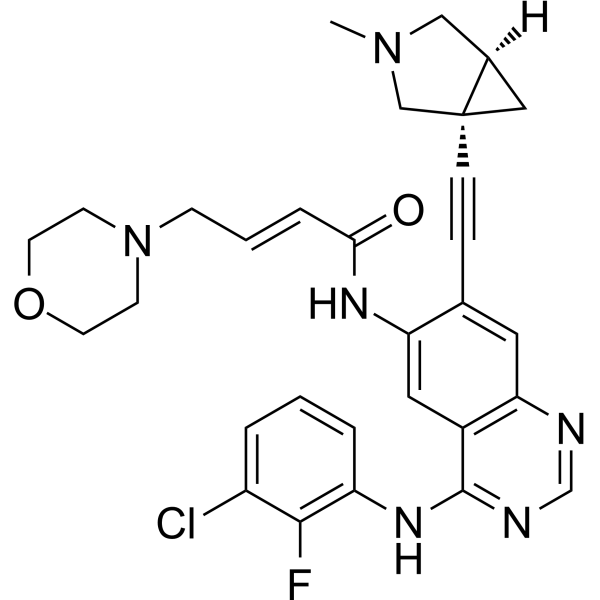
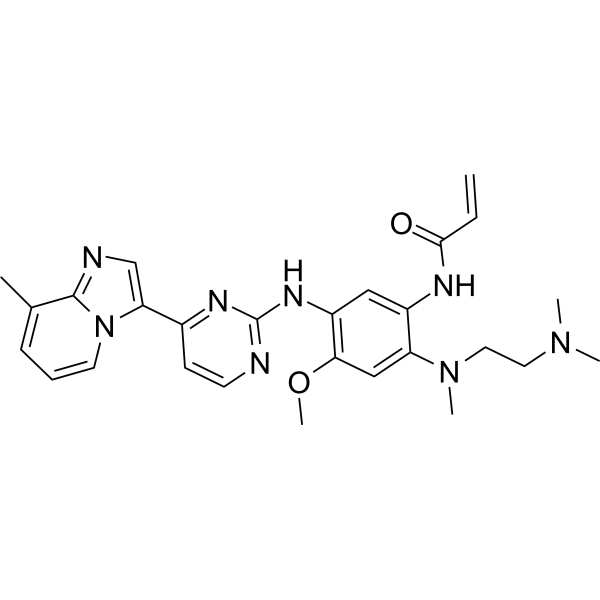
Silevertinib (BDTX-1535) is an irreversible, brain-penetrant, selective and orally active EGFR inhibitor with wild-type EGFR-sparing. Silevertinib targets key EGFR resistance mutations, including the kinase domain (C797S, L718Q, G724S, S768I), extracellular domain (EGFRvIII, A289X), and EGFR amplification. Silevertinib exerts anti-tumor activity with well tolerated in vivo. Silevertinib can be used for non-small cell lung cancer (NSCLC) and glioblastoma (GBM) research .
loading...
    loading...
3
3 Cited Publications
Cat. No.: HY-N5112A
CAS No.: 34539-65-6
Synonyms: Arnebin 1
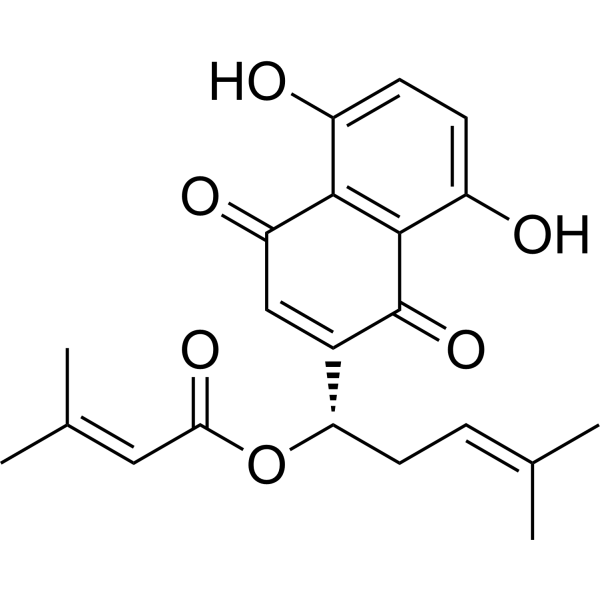
β,β-Dimethylacrylalkannin (Arnebin 1) is an orally active FGFR1 inhibitor (IC50=2.5 μM) and the main active component of Lithospermum erythrorhizon. β,β-Dimethylacrylalkannin blocks downstream signaling by binding to the ATP pocket of FGFR1, and regulates the CDK1/Cdc25C pathway and ROS-JNK axis, thereby inducing G2/M phase arrest, necrosis and apoptosis in cancer cells, and inhibiting tumor proliferation. β,β-Dimethylacrylalkannin also acts as a colistin adjuvant to disrupt the cell membrane of Gram-negative bacteria. β,β-Dimethylacrylalkannin exhibits significant tumor-inhibitory effects with no obvious toxicity in PDX models, but chronic exposure to high doses may alter the relative lung/liver weights of rats, while acute exposure to high doses causes responses such as reduced motor activity. β,β-Dimethylacrylalkannin finds wide application in studies related to hepatocellular carcinoma, colorectal cancer, colistin-resistant bacterial infections, hepatitis and psoriasis .
loading...
    loading...
1
1 Cited Publications
Cat. No.: HY-157229
CAS No.: 2765525-82-2
Purity:  98.25%
Target:  

EGFR ERK

Research Areas:  

Cancer

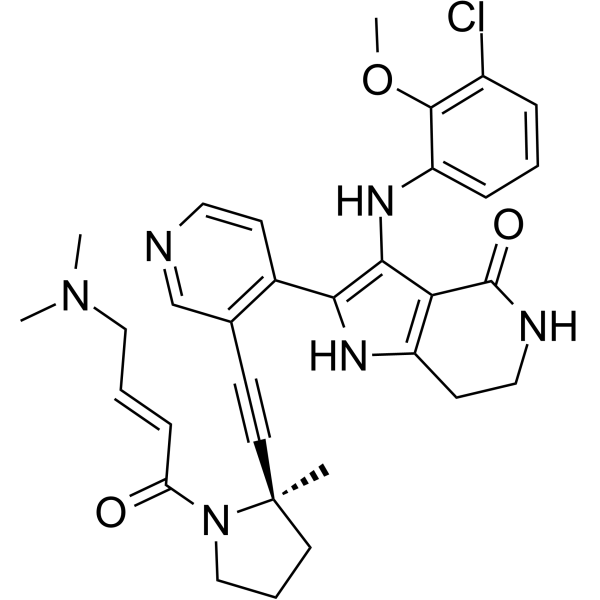
STX-721 is an orally active, irreversible, covalent EGFR exon 20 insertion (ex20ins) inhibitor that selectively targets ex20ins-mutant dynamic protein states. STX-721 potently inhibits the kinase activity of EGFR ex20ins mutants (NPG, ASV, SVD). STX-721 inhibits phosphorylation of EGFR (pEGFR Y1068) and downstream ERK (pERK Thr202/Tyr204), and suppresses proliferation of ex20ins-mutant Ba/F3 cells and human NSCLC cell lines (NCI-H2073 ASV KI, CUTO-14 ASV). STX-721 induces tumor regression in EGFR ex20ins-mutant PDX/CDX models. STX-721 can be used for the study of non-small cell lung cancer (NSCLC) harboring EGFR or HER2 ex20ins mutations .
loading...
    loading...
1
1 Cited Publications
Cat. No.: HY-155994
CAS No.: 3036457-38-9
Purity:  99.90%
Target:  

PROTACs PIKfyve Autophagy

Research Areas:  

Cancer

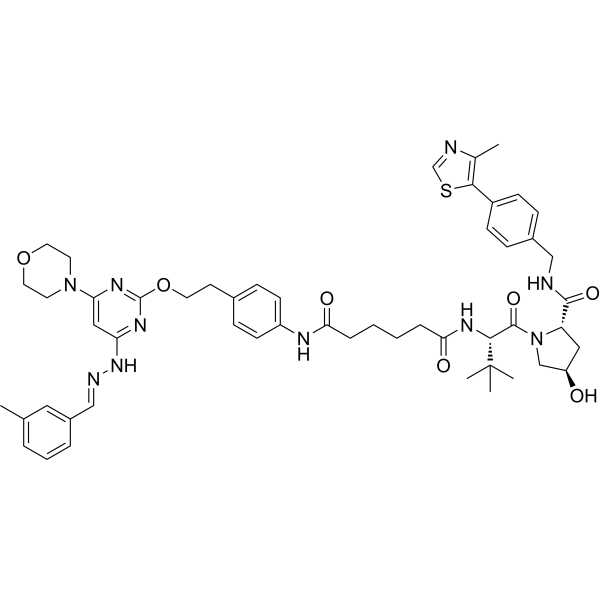
PIK5-12d is a PROTAC PIKfyve degrader (DC50 = 1.48 nM). PIK5-12d induces massive cytoplasmic vacuolization and blocks autophagic flux in multiple prostate cancer cells. PIK5-12d inhibits prostate cancer cell proliferation. PIK5-12d significantly suppresses tumor proliferation in mice bearing LTL-331R human prostate cancer PDX tumors. PIK5-12d can be used for the study of prostate cancer .
loading...
    loading...
1
1 Cited Publications
Cat. No.: HY-155537
CAS No.: 2064269-82-3
Purity:  99.50%
Synonyms: YK-029A
Target:  

EGFR

Research Areas:  

Cancer

YK-029A is an orally active inhibitor of mutant EGFR,targeting to both the T790M mutations (EGFR T790M) and exon 20 insertion of EGFR (EGFRex20ins). YK-029A exhibits significant antitumor activity,and results tumor regression in EGFRex20ins-driven PDX models .
loading...
    loading...
Cat. No.: HY-153468
CAS No.: 3035547-78-2
Synonyms: TEQ103; Sera2
Research Areas:  

Cancer

ErSO-TFPy (TEQ103) is an ERα+ tumor cell inhibitor with low nanomolar cytotoxic activity against ERα+ breast cancer cells. ErSO-TFPy activates the sodium channel TRPM4, causes an imbalance of intracellular calcium and sodium ions. ErSO-TFPy dysregulates calcium homeostasis in ERα+ tumor cells, triggers the anticipatory unfolded protein response, and induces rapid immune cell-independent necrotic cell death. ErSO-TFPy can be used for the research of estrogen receptor alpha positive breast cancer .
loading...
    loading...
Cat. No.: HY-P991372
Synonyms: RN927C antibody

Target:  

TROP2

Research Areas:  

Cancer

Anti-TROP2 Antibody (RN927C antibody) is a human monoclonal antibody targeting Trop-2. Anti-TROP2 Antibody exerts in vitro inhibitory effects on a variety of tumor cell lines. Anti-TROP2 Antibody exhibits anti-tumor activity in mouse pancreatic PDX, ovarian PDX, lung PDX and triple-negative breast cancer (TNB) PDX models. Anti-TROP2 Antibody can be used for research on pancreatic cancer, ovarian cancer, lung cancer and triple-negative breast cancer .
loading...
    loading...
Cat. No.: HY-171955
CAS No.: 315705-04-5
LXG6403 is an orally active and irreversible LOX inhibitor (IC50 = 1.3 μM). LXG6403 is ~3.5-fold more specific for LOX than LOXL2 and does not inhibit LOXL1. LXG6403 inhibits FAK signaling and induces ROS generation and DNA damage, leading to G1 arrest and apoptosis in chemoresistant triple-negative breast cancer (TNBC) cell lines. LXG6403 alters the extracellular matrix (ECM) and collagen structure, reducing collagen cross-linking and deposition, thereby increasing drug penetration and reducing tumor stiffness. LXG6403 overcomes Doxorubicin (HY-15142) resistance in chemoresistant TNBC PDX in vivo and can be used to study high-stiffness resistant tumors .
loading...
    loading...
Cat. No.: HY-P990953
CAS No.: 2640279-10-1
Synonyms: Gen1047
Target:  

CD3

Research Areas:  

Cancer

Zubotamig (Gen1047) is an CD3E/VTCN1-targeting Ig(G1 -κ_G1 -λ2) type chimeric human antibody. The recommed isotype control is Human IgG1 kappa, Isotype Control (HY-P99001). Zubotamig induces T-cell mediated cytotoxicity of B7H4-positive tumor cells, triggers T-cell activation, and induces cytokine release from T cells in the presence of B7H4-expressing tumor cells. Zubotamig demonstrates antitumor activity in mouse patient-derived xenograft (PDX) models. Zubotamig can be used for the research of solid cancers (including breast, ovarian and lung cancer) .
loading...
    loading...
Cat. No.: HY-177083
CAS No.: 1841402-73-0
Synonyms: AVA-6000
Target:  

FAP

Research Areas:  

Cancer

Faridoxorubicin (AVA-6000) is a FAP-activated chemotherapeutic prodrug. Faridoxorubicin undergoes selective hydrolysis by FAP, while it is resistant to cleavage by related mammalian peptidases and members of the DASH subfamily. Faridoxorubicin acts as a tumor growth inhibitor, reducing tumor volume and prolonging survival in in vivo models and PDX models with high FAP expression. Faridoxorubicin can be used in the research of osteosarcoma and sarcoma .
loading...
    loading...
Cat. No.: HY-179219S
CAS No.: 3035072-99-9
RTx-303 is an orally active, selective DNA polymerase θ (Polθ) inhibitor (IC50 = 5.1 nM). RTx-303 exhibits significantly high cellular potency and strongly potentiates PARPi in BRCA1/2 mutant cells and patient-derived xenograft models. RTx-303 can be used for the study of BRCA2-mutated breast cancer .
loading...
    loading...
Cat. No.: HY-158143
CAS No.: 2918814-97-6
Research Areas:  

Cancer

AZD3470 is an orally active MTA-cooperative PRMT5 inhibitor, selective for MTAP-deficient tumors. AZD3470 induces cell cycle G2/M phase alterations, DNA damage, apoptosis, and symmetric dimethylarginine reduction. AZD3470 alters alternative splicing, increases skipped exon events in DNA repair and cell cycle pathways, and inhibits cancer cell proliferation and tumor growth. AZD3470 can be used for the research of non-small cell lung cancer and MTAP-deleted solid tumors .
loading...
    loading...
Cat. No.: HY-178061
CAS No.: 2598870-24-5
Target:  

ERK RET

Research Areas:  

Cancer

APS03118 is an orally active, potent and selective rearranged during transfection (RET) inhibitor. APS03118 broadly inhibits RET fusions and mutations (including G810, V804, L730, and Y806 variants), with IC50 values predominantly below 1 nM (0.095 nM for WT; ranging from 0.00438 to 5.72 nM for mutants), and demonstrates marked superiority against RET G810 mutations. APS03118 inhibits the entire RET signaling pathway (including RET, Shc, and ERK1/2), with >20-fold selectivity over most off-target kinases (except FLT3 and YES). APS03118 induces complete tumor regression in KIF5B-RET and CCDC6-RET V804 M patient derived xenografts (PDXs) and significantly prolongs survival in an intracranial CCDC6-RET metastasis mice model. APS03118 can be used for selective RET inhibitor (SRI)-resistant, RET-driven cancer research .
loading...
    loading...
Cat. No.: HY-164492
CAS No.: 1455031-68-1
Target:  

Raf

Research Areas:  

Cancer

LSN3074753, an analog of LY3009120 (HY-12558), is a pan-RAF and Raf dimer inhibitor. LSN3074753 demonstrates activity against tumor cells with MAPK pathway activation driven by BRAF monomer or RAF dimers including BRAF- or KRAS-mutant colorectal cancer. LSN3074753 combined with Cetuximab (HY-P9905) shows additive and synergistic effects for colorectal cancer PDX models, particularly those with KRAS or BRAF mutation .
loading...
    loading...
Cat. No.: HY-P991294

Target:  

ADC Antibodies

Research Areas:  

Cancer

MGTA-117 is a humanized monoclonal antibody targeting CD117. MGTA-117 can be used for synthesis of antibody-drug conjugate (ADC), utilizing an amanitin payload. MGTA-117 has potent anti-tumor activity and increases survival in three acute myeloid leukemia (AML) xenograft hNSG mice models (Kasumi-1, AML PDX 1 and AML PDX 2). MGTA-117 enables hematopoietic stem cell transplantation (HSCT) preprocessing in AML, myelodysplasia with excess blasts (MDS-EB) and gene therapy .
loading...
    loading...
Cat. No.: HY-161736
Target:  

CDK

Research Areas:  

Cancer

ARN25499 (compound 15) is a CDC42 inhibitor. ARN25499 can be used in cancer-related research .
loading...
    loading...
Cat. No.: HY-P991353

Target:  

PD-1/PD-L1

Research Areas:  

Cancer

Sym-021 is a human monoclonal antibody (mAb) targeting PDCD1/PD-1/CD279. Sym-021 blocks the binding of PD-L1 and PD-L2 ligands, inducing the secretion of interferon IFN-γ and IL-2 and the proliferation of T cells. Sym-021 has anti-tumor activity in PDX mouse models .
loading...
    loading...
Cat. No.: HY-149695
CAS No.: 3032113-20-2
Target:  

EGFR

Research Areas:  

Cancer

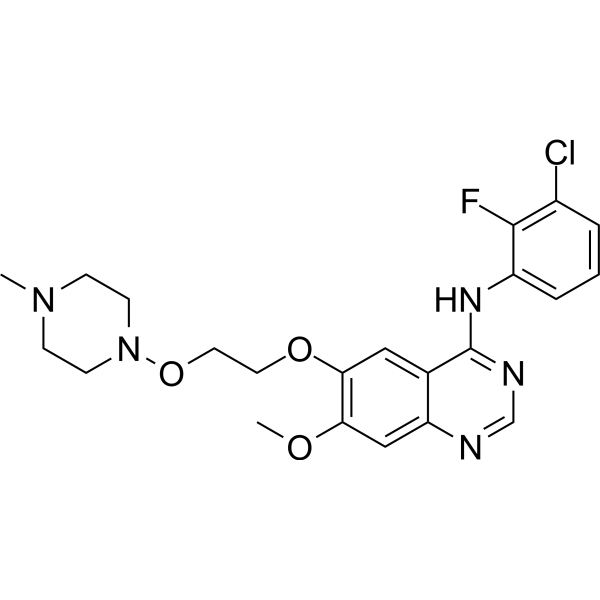
EGFR-IN-91 (compound 9) is an orally available EGFR inhibitor with blood-brain barrier penetrability. EGFR-IN-91 inhibits EGFR L858R/C797S and EGFR exon 19del/C797S, inducing tumor regression in xenograft (PDX) mouse models. EGFR-IN-91 has the potential to inhibit localized and metastatic non-small cell lung cancer (NSCLC) driven by EGFR mutants .
loading...
    loading...

