1. Search Result
Search Result
Results for "

POPG

" in MedChemExpress (MCE) Product Catalog:

4

Inhibitors & Agonists

1

Biochemical Assay Reagents

1

Peptides

2

Oligonucleotides

Cat. No. Product Name Target Research Areas Chemical Structure
  • HY-130463

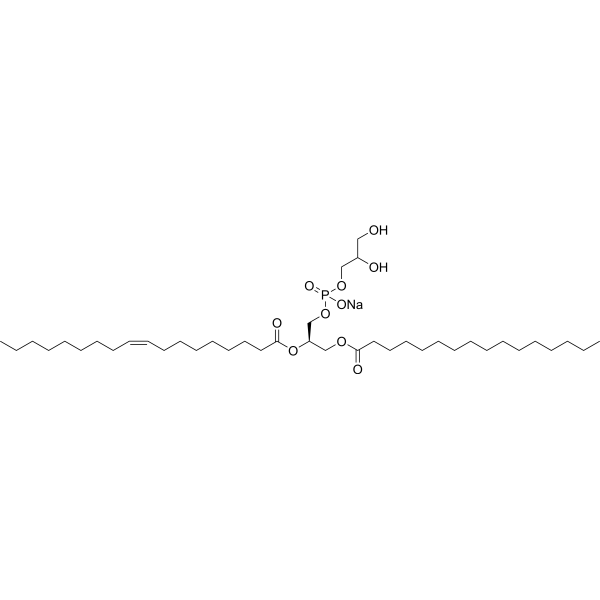
    PG(16:0/18:1); 1-Palmitoyl-2-oleoyl-sn-glycero-3-phospho-(1'-rac-glycerol)

    Liposome Biochemical Assay Reagents Neurotensin Receptor Neurological Disease
    POPG sodium salt is a negatively charged phospholipid. POPG sodium salt affects the interactions of membrane proteins with other molecules by changing the charge characteristics of the lipid environment. POPG sodium salt increases the apparent affinity of Gαq and 1γ1 for activated NTS1. POPG sodium salt can interact with the positive charge of peptides. POPG sodium salt can be used in Parkinson's disease research .
    POPG sodium salt
  • HY-142991

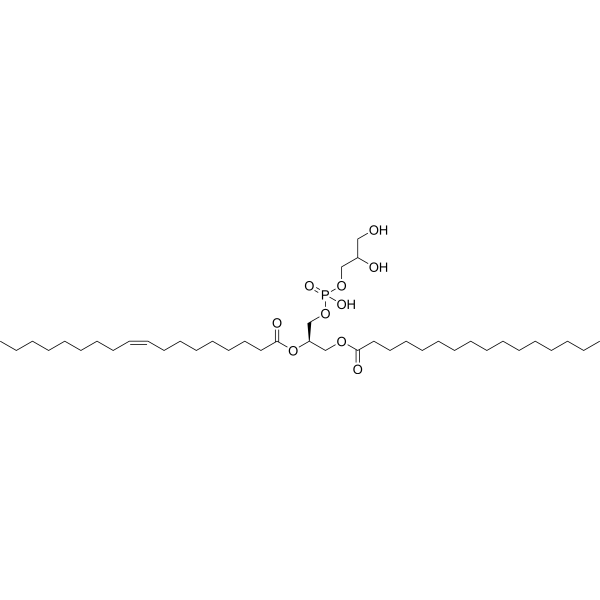
    POPG

    Liposome Others
    1-Palmitoyl-2-oleoyl-sn-glycero-3-phosphatidylglycerol (POPG) is an anionic phosphatidylglycerol that often serves as a key component to co-construct model phospholipid bilayers with phosphatidylcholine (e.g., at a 3:1 POPC:POPG ratio) for investigating the structure and dynamics of transmembrane proteins. 1-Palmitoyl-2-oleoyl-sn-glycero-3-phosphatidylglycerol acts as a fundamental material for mimicking the physicochemical properties of biological membranes and enables the elucidation of membrane protein interaction mechanisms .
    1-Palmitoyl-2-oleoyl-sn-glycero-3-phosphatidylglycerol
  • HY-130323

    Bacterial Infection
    13-HPOT is a linolenic acid hydroperoxide and an antibacterial agent. 13-HPOT interacts with lipid representatives of bacterial inner membranes. 13-HPOT exerts dose-dependent in vitro antibacterial activity against Pectobacterium carotovorum, Pseudomonas syringae pv. syringae DC3000, and Xanthomonas translucens pv. translucens .
    13-HPOT
  • HY-P11430

    Biochemical Assay Reagents Infection
    UBI (31-38) is a Ubiquicidin-derived octapeptide and anti-bacterial agent. UBI (31-38) selectively interacts with anionic phospholipid membranes and restricts lipid lateral motion. UBI (31-38) induces anionic vesicle aggregation via electrostatic repulsion screening, and undergoes conformational changes in membrane-mimicking environments. UBI (31-38) can be used for the research of infection imaging probes .
    UBI (31-38)

Inquiry Online

Your information is safe with us. * Required Fields.

Salutation


Country or Region *

Applicant Name *


Organization Name *

Department *


Email Address *


Product Name *

Cat. No.


Requested quantity *

Phone Number *


Remarks

Inquiry Online

Inquiry Information

Product Name:
Cat. No.:
Quantity:
MCE Japan Authorized Agent:

