27 Results for "

Salmonella enterica

" in MedChemExpress (MCE) Product Catalog:
Products (27)

27 Results for "Salmonella enterica" in MCE Product Catalog:

1
1 Cited Publications
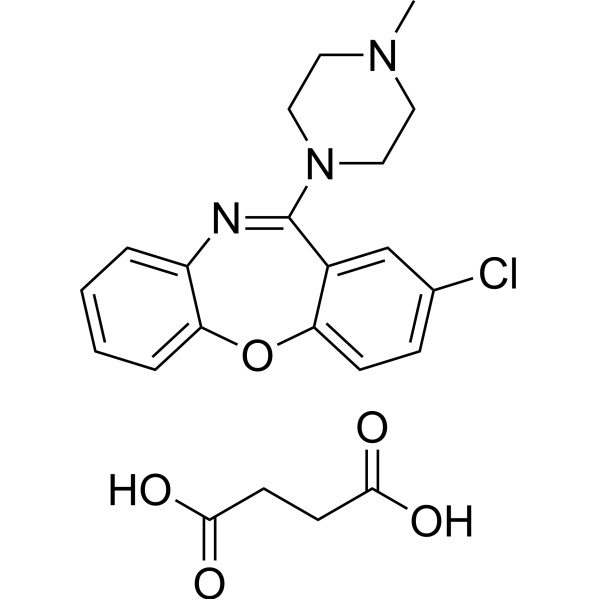
Cat. No.: HY-17390A
CAS No.: 27833-64-3
Loxapine succinate is an orally active dopamine inhibitor, 5-HT receptor antagonist and also a dibenzoxazepine anti-psychotic agent. Loxapine can also suppresses bacterial efflux pump activity and inhibit intracellular multiple-antibiotic-resistant Salmonella enterica serovar Typhimurium in macrophages .
loading...
    loading...
Cat. No.: HY-D1056C5
Synonyms: LPS, from Salmonella enterica (Serotype minnesota Re 595 (Re mutant))
Lipopolysaccharides (LPS), from S. enterica (Salmonella enterica) serotype minnesota Re 595 (Re mutant) is prepared from Salmonella enterica strain Re 595 (Re mutant). The structure in the LPS of strain Re 595 was shown to induce secretion and aggregation in human platelets .
It is recommended to prepare a solution with concentration ≥2 mg/mL. Vortex thoroughly for more than 10 minutes. Due to the adsorption characteristics of LPS, silanized container or low adsorption centrifuge tubes should be used for aliquoting and storage, and mix thoroughly before use.
loading...
    loading...
Cat. No.: HY-W007416
CAS No.: 26153-38-8
Target:  

Glycosidase Bacterial

Research Areas:  

Infection Metabolic Disease

3,5-Dihydroxybenzaldehyde is an α-glucosidase inhibitor with an IC50 of 0.47 μg/mL. 3,5-Dihydroxybenzaldehyde exerts bactericidal activity against Campylobacter jejuni, Escherichia coli O157:H7, Listeria monocytogenes and Salmonella enterica. 3,5-Dihydroxybenzaldehyde can be used in glucose metabolism-related research .
loading...
    loading...
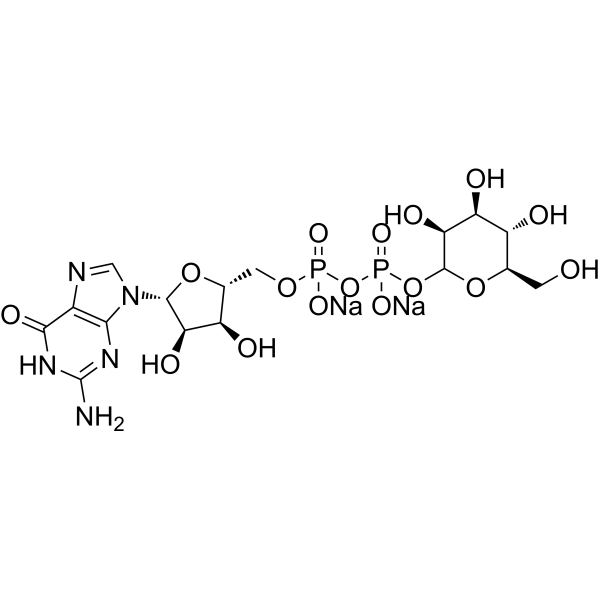
Cat. No.: HY-N7389A
CAS No.: 103301-73-1
GDP-D-mannose disodium consists of GDP-α-D-mannose (HY-N7389B) and GDP-β-D-mannose. GDP-α-D-mannose serves as a donor substrate for mannosyltransferases and acts as a precursor of GDP-β-L-fucose. GDP-α-D-mannose exerts competitive inhibition on GTP (with a Ki value of 14.7 μM) and non-competitive inhibition on mannose-1-P (with a Ki value of 115 μM). GDP-D-mannose disodium is metabolized to GDP-L-fucose (HY-134433) via GMDS (Gmd) and TSTA3 (WcaG) .
loading...
    loading...
Cat. No.: HY-D1056C3
Synonyms: LPS, from Salmonella enterica (Serotype typhimurium)
Lipopolysaccharides, from S. enterica (Salmonella enterica) serotype typhimurium are lipopolysaccharide endotoxins and TLR4 activators derived from serotype typhimurium of Salmonella enterica, and are classified as S-type LPS. Lipopolysaccharides, from S. enterica exhibit a typical three-part structure: O-antigen, core oligosaccharide, and lipid A. Lipopolysaccharides, from S. enterica serotype typhimurium can modulate the fate of bacteria in dendritic cells (DC), determining the uptake, degradation, and activation of immune functions by DC cells against the bacteria .
It is recommended to prepare a solution with concentration ≥2 mg/mL. Vortex thoroughly for more than 10 minutes. Due to the adsorption characteristics of LPS, silanized container or low adsorption centrifuge tubes should be used for aliquoting and storage, and mix thoroughly before use.
loading...
    loading...
Cat. No.: HY-W423191
CAS No.: 534-42-9
Synonyms: 4-O-α-D-Glucopyranosyl-D-gluconic acid
Maltobionic acid (4-O-α-D-Glucopyranosyl-D-gluconic acid) is an orally active oligosaccharide and iron chelator with antibacterial activity. Maltobionic acid inhibits the expression of NFATc1, suppresses osteoclast differentiation, inhibits bone resorption, and increases serum calcitonin levels. Maltobionic acid protects mammalian cells from hydrogen peroxide (H2O2)-induced oxidative damage; resists fermentation by the gut microbiota; and exhibits anti-digestive and anti-fermentative properties. Maltobionic acid can be used in research related to osteoporosis, bacterial infections, and constipation .
loading...
    loading...
Cat. No.: HY-D1056C1
Synonyms: LPS, from Salmonella enterica (Serotype enteritidis)
Lipopolysaccharides, from S. enterica (Salmonella enterica) serotype enteritidis are lipopolysaccharide endotoxins and TLR-4 activators derived from the enteritidis serotype of S. enterica, classified as S-type LPS, which can activate pathogen-associated molecular patterns (PAMP) of the immune system and induce cellular secretion of migrasomes. Lipopolysaccharides, from S. enterica serotype enteritidis exhibit a typical three-part structure: O-antigen, core oligosaccharide, and lipid A. Lipopolysaccharides, from S. enterica serotype enteritidis can induce systemic inflammatory responses, increasing levels of TNF-α, IFN-γ, IL-6, IL-10, and nitrate in plasma .
It is recommended to prepare a solution with concentration ≥2 mg/mL. Vortex thoroughly for more than 10 minutes. Due to the adsorption characteristics of LPS, silanized container or low adsorption centrifuge tubes should be used for aliquoting and storage, and mix thoroughly before use.
loading...
    loading...
Cat. No.: HY-155230
CAS No.: 3064088-06-5
Target:  

Bacterial

Research Areas:  

Infection

T3SS-IN-2 (Compound 2h) is a type three secretion system (T3SS) inhibitor. T3SS-IN-2 can be used for bacterial infection research .
loading...
    loading...
Cat. No.: HY-17390AR
CAS No.: 27833-64-3
Loxapine (succinate) (Standard) is the analytical standard of Loxapine (succinate). This product is intended for research and analytical applications. Loxapine succinate is an orally active dopamine inhibitor, 5-HT receptor antagonist and also a dibenzoxazepine anti-psychotic agent. Loxapine can also suppresses bacterial efflux pump activity and inhibit intracellular multiple-antibiotic-resistant Salmonella enterica serovar Typhimurium in macrophages .
loading...
    loading...
Cat. No.: HY-D0200
CAS No.: 1071-93-8
Synonyms: Adipodihydrazide
Adipic acid dihydrazide (Adipodihydrazide) is an antibacterial agent and crosslinking agent. Adipic acid dihydrazide can be used for the preparation of hydrogels. Adipic acid dihydrazide exhibits antibacterial activity against both Gram-positive and Gram-negative bacteria, such as Enterobacter aerogenes (MIC: 0.081 mg/mL) and Salmonella enterica (MIC: 0.99 mg/mL). Adipic acid dihydrazide is also an important intermediate that can be utilized in the synthesis of other active compounds .
loading...
    loading...
Cat. No.: HY-D1056C4
Synonyms: LPS, from Salmonella enterica (Serotype abortus equi)
Lipopolysaccharides, from S. enterica (Salmonella enterica) serotype Abortusequi are lipopolysaccharide endotoxins and TLR-4 activators derived from the Abortusequi serotype of S. enterica, classified as a mutated R-type LPS, which can activate pathogen-associated molecular patterns (PAMP) of the immune system and induce cellular secretion of migrasomes. Lipopolysaccharides, from S. enterica serotype abortus equi consist of core oligosaccharide (core oligosaccharide) and lipid A (Lipid A). S. enterica serotype Abortusequi is a major pathogen causing abortion in mares and is also associated with neonatal sepsis, multiple abscesses, orchitis, and polyarthritis in equids. It is primarily grouped based on lipopolysaccharides (O-antigen) and flagellin (H-antigen) .
It is recommended to prepare a solution with concentration ≥2 mg/mL. Vortex thoroughly for more than 10 minutes. Due to the adsorption characteristics of LPS, silanized container or low adsorption centrifuge tubes should be used for aliquoting and storage, and mix thoroughly before use.
loading...
    loading...
Cat. No.: HY-W040271
CAS No.: 929222-14-0
Target:  

Bacterial Antibiotic

Research Areas:  

Infection

N-3-Hydroxydecanoyl-DL-Homoserine lactone is a bacterial quorum-sensing molecule. N-3-Hydroxydecanoyl-DL-Homoserine lactone activates the transcription factor SdiA (EC50 = 0.6 µM), which detects N-acyl homoserine lactones (AHLs), and exerts its effect in Salmonella enterica (S. enterica) 1 2.
loading...
    loading...
Cat. No.: HY-158425
CAS No.: 3044081-98-0
Target:  

Bacterial

Research Areas:  

Infection

Antimicrobial agent-31 (compound 4a) is a potent antimicrobial agent. Antimicrobial agent-31 inhibits Salmonella enterica serovar Typhimurium and E.coli with MIC values of 19.24, 11.31 µg/mL, respectively .
loading...
    loading...
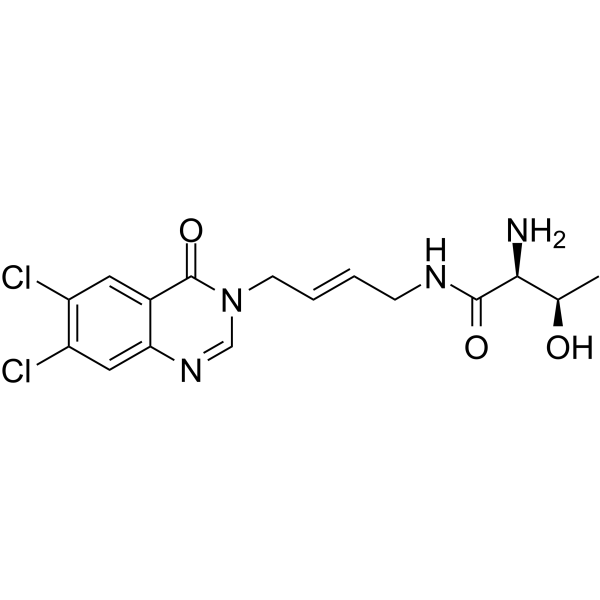
Cat. No.: HY-130718
CAS No.: 2408626-64-0
Target:  

Bacterial

Research Areas:  

Infection Cancer

ThrRS-IN-1 (Compound 30d) is a threonyl-tRNA synthetase (ThrRS) inhibitor with an IC50 of 1.4 µM and a Kd of 1.36 µM against Salmonella enterica ThrRS (SeThrRS). ThrRS-IN-1 simultaneously targets the tRNA Thr and L-threonine binding pockets of ThrRS. ThrRS-IN-1 shows potent antibacterial activities .
loading...
    loading...
Cat. No.: HY-P5286
CAS No.: 184870-30-2
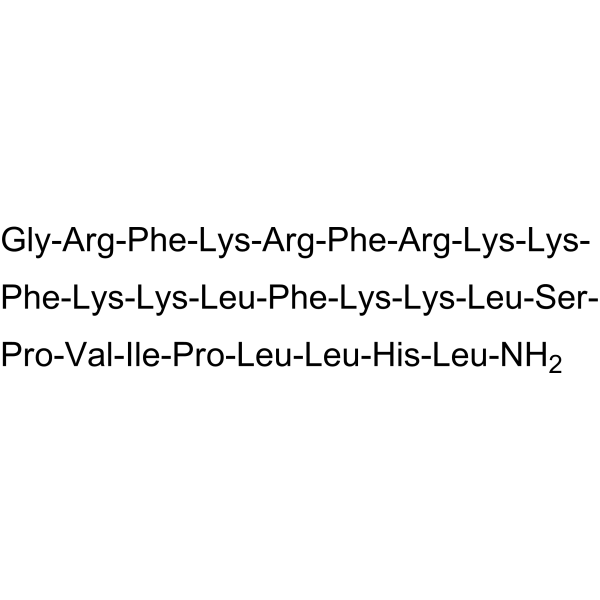
BMAP-27 is a cationic amphipathic α-helical antimicrobial peptide with anticancer activity. BMAP-27 disrupts the integrity and permeability of cell membranes, leading to the leakage of intracellular DNA, proteins and alkaline phosphatase. BMAP-27 increases intracellular ROS levels and reduces plasma endotoxin and TNF-α concentrations. BMAP-27 can be used in studies related to Salmonella infection, breast cancer, lung cancer and obstructive jaundice .
loading...
    loading...
Cat. No.: HY-146263
CAS No.: 3031483-23-2
Target:  

Bacterial

Research Areas:  

Infection

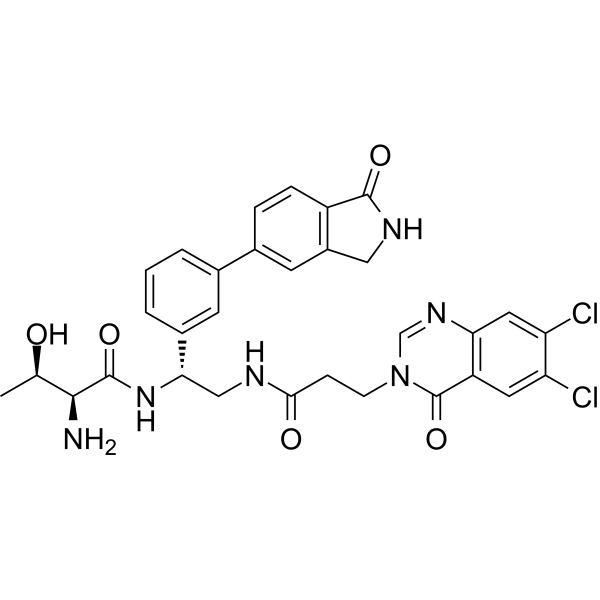
ThrRS-IN-3 (compound 36j) is a highly potent threonyl-tRNA synthetase (ThrRS) inhibitor, with an IC50 value of 19 nM and a Kd of 34 nM for Salmonella enterica ThrRS. ThrRS-IN-3 has antibacterial activities .
loading...
    loading...
Cat. No.: HY-141467S
CAS No.: 607721-34-6
Propionyl CoA-d5 is the deuterium labeled Propionyl CoA (HY-141467). Propionyl CoA serves as a common intermediate in the catabolic pathways of 1,2-propanediol and propionate in Salmonella enterica serovar Typhimurium LT2, and also functions as a precursor for 2-methylcitrate. Propionyl CoA is utilized as a substrate for the 2-methylcitrate synthase (PrpC) enzyme to synthesize 2-methylcitrate .
loading...
    loading...
Cat. No.: HY-151458
CAS No.: 2831498-15-6
VEGFR-2/DHFR-IN-1 (compound 8b) is an inhibitor of VEGFR-2 and DHFR with IC50s of 0.384 and 7.881 μM, respectively. VEGFR-2/DHFR-IN-1 shows good antibacterial activities against Escherichia coli, Streptococcus faecalis, Salmonella enterica, MSSA and MRSA with MIC values of 16, 16, 16, 8, and 16 μg/mL, respectively. VEGFR-2/DHFR-IN-1 exhibits good cytotoxic activities against C26, HepG2, and MCF7 cancer cell lines with IC50 values of 2.97-7.12 μM. VEGFR-2/DHFR-IN-1 can be used for the research of cancer .
loading...
    loading...
Cat. No.: HY-N18102
CAS No.: 102848-63-5
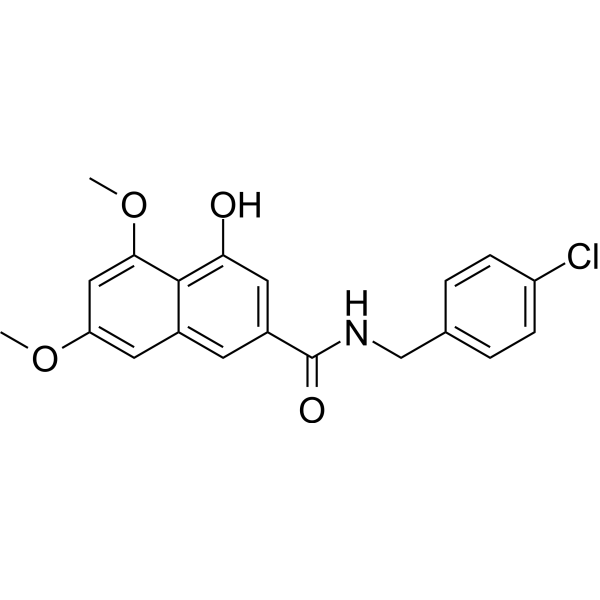
3,4-Seco-mansumbinoic acid (Compound 2) is an Antibacterial agent. 3,4-Seco-mansumbinoic acid can be isolated from the oleo-resin of Commiphora molmol. 3,4-Seco-mansumbinoic acid exhibits in vitro anti-staphylococcal activity, with the strongest activity against the multidrug-resistant Staphylococcus aureus strain SA-1199B (MIC 4 μg/mL) 3,4-Seco-mansumbinoic acid displays weak potentiation of Ciprofloxacin (HY-B0356) and Tetracycline (HY-A0107) activity against strains of Salmonella enterica serovar Typhimurium SL1344 and L10. 3,4-Seco-mansumbinoic acid can be used for the research of multidrug-resistant bacterial infection (Staphylococcus aureus, Salmonella enterica serovar Typhimurium) .
loading...
    loading...
Cat. No.: HY-141467S1
Propionyl CoA-d5 sodium is the deuterium labeled Propionyl CoA. Propionyl CoA serves as a common intermediate in the catabolic pathways of 1,2-propanediol and propionate in Salmonella enterica serovar Typhimurium LT2, and also functions as a precursor for 2-methylcitrate. Propionyl CoA is utilized as a substrate for the 2-methylcitrate synthase (PrpC) enzyme to synthesize 2-methylcitrate .
loading...
    loading...

