28 Results for "

Specificity protein 1

" in MedChemExpress (MCE) Product Catalog:
Products (28)

28 Results for "Specificity protein 1" in MCE Product Catalog:

  • Targets Recommended:
56
56 Publications Verification
Cat. No.: HY-A0122
CAS No.: 18378-89-7
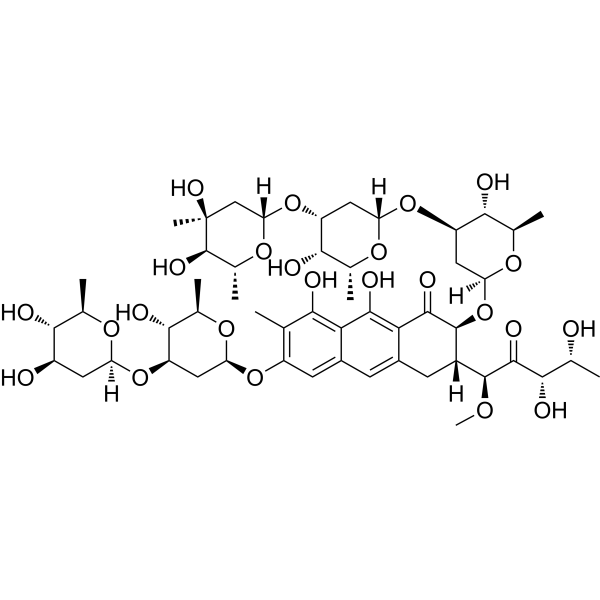
Synonyms: Mithramycin A
Plicamycin (Mithramycin A) is a selective specificity protein 1 (Sp1) inhibitor. Plicamycin inhibits the growth of various cancers by decreasing Sp1 protein. Plicamycin inhibits GSTM2 promoter activity and protein expression .
loading...
    loading...
4
4 Cited Publications
Cat. No.: HY-15435
CAS No.: 75621-03-3
Purity:  99.91%
Research Areas:  

Others

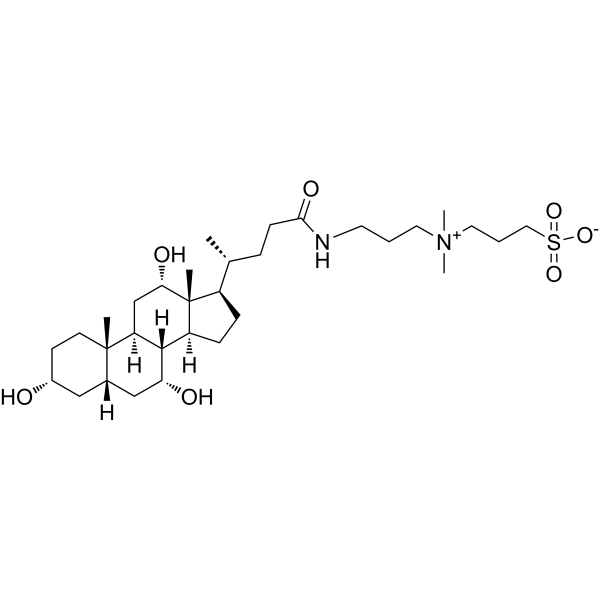
CHAPS is a cholic acid-derived, sulfobetaine-type zwitterionic detergent and micelle-forming agent. CHAPS exhibits properties of weak cationic or nonionic surfactants in different solution systems, undergoes micellization, and forms small, loose hydrophilic aggregates that are temperature-dependent. CHAPS stabilizes mononucleosomes under different ionic strengths, reduces nucleosome sequence specificity, promotes sliding of histone cores along DNA, solubilizes Tamm-Horsfall protein to reduce its interference with urinary exosome isolation, and maintains vesicle structure and the activity of related proteins at the same time. CHAPS is used to recover native folded fusion proteins, enhance the binding capacity of GST fusion proteins, and restore GST enzyme activity. However, CHAPS cannot refold proteins denatured by urea, guanidine hydrochloride or heat, nor can it construct the structure of intrinsically disordered proteins. CHAPS is commonly used in research on the separation and purification of membrane proteins .
loading...
    loading...
4
4 Cited Publications
Cat. No.: HY-15435A
CAS No.: 331717-45-4
Purity:  ≥98.0%
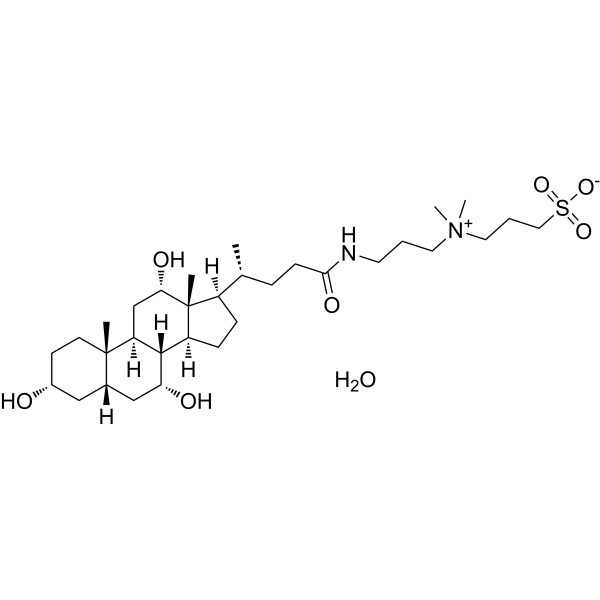
CHAPS hydrate is a cholic acid-derived, sulfobetaine-type zwitterionic detergent and micelle-forming agent. CHAPS hydrate exhibits properties of weak cationic or nonionic surfactants in different solution systems, undergoes micellization, and forms small, loose hydrophilic aggregates that are temperature-dependent. CHAPS hydrate stabilizes mononucleosomes under different ionic strengths, reduces nucleosome sequence specificity, promotes sliding of histone cores along DNA, solubilizes Tamm‑Horsfall protein to reduce its interference with urinary exosome isolation, and maintains vesicle structure and the activity of related proteins at the same time. CHAPS hydrate is used to recover native folded fusion proteins, enhance the binding capacity of GST fusion proteins, and restore GST enzyme activity. However, CHAPS hydrate cannot refold proteins denatured by urea, guanidine hydrochloride or heat, nor can it construct the structure of intrinsically disordered proteins. CHAPS hydrate is commonly used in research on the separation and purification of membrane proteins .
loading...
    loading...
3
3 Cited Publications
Cat. No.: HY-128744
CAS No.: 4408-78-0
Purity:  ≥98.0%
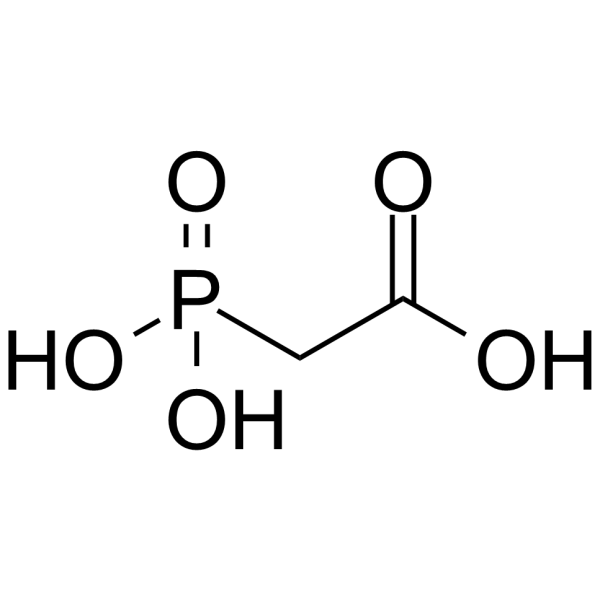
Phosphonoacetic acid is an endogenous metabolite and antiviral agent. Phosphonoacetic acid is active against orthopoxviruses and herpes viruses. Phosphonoacetic acid can inhibit HSV DNA synthesis and virus-specific DNA polymerase activity, and affect the synthesis of late viral proteins .
loading...
    loading...
2
2 Cited Publications
Cat. No.: HY-W010983
CAS No.: 170569-86-5
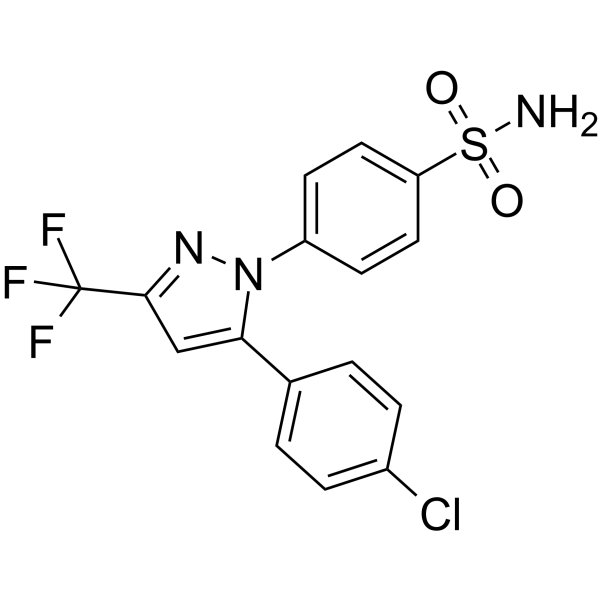
SC-236 is an orally active COX-2 specific inhibitor (IC50 = 10 nM) and a PPARγ agonist. SC-236 suppresses activator protein-1 (AP-1) through c-Jun NH2-terminal kinase. SC-236 exerts anti-inflammatory effects by suppressing phosphorylation of ERK in a murine model .
loading...
    loading...
2
2 Cited Publications
Cat. No.: HY-156404
CAS No.: 1449483-78-6
Purity:  99.04%
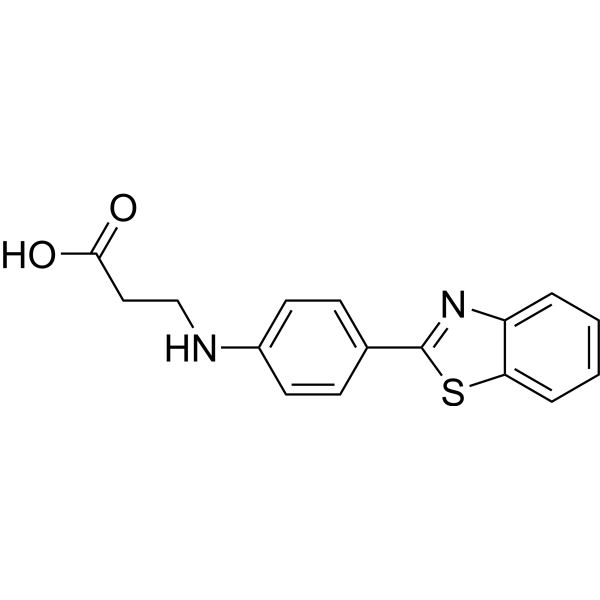
PM-1, a derivative of Thioflavin-T (ThT; HY-D0218), is a small but highly specific plasma membrane (PM) fluorescent dye for specific and long-time membrane imaging of living and fixed cells. PM-1 is embedded directly into the cell membrane and exhibits a very long retention time on the plasma membrane with a half-life of approximately 15 h. PM-1 can be used in combination with protein labeling probes to study ectodomain shedding and endocytosis processes of cell surface proteins .
loading...
    loading...
1
1 Cited Publications
Cat. No.: HY-100131
CAS No.: 1622849-58-4
Purity:  98.57%
Target:  

RIP kinase

Research Areas:  

Inflammation/Immunology

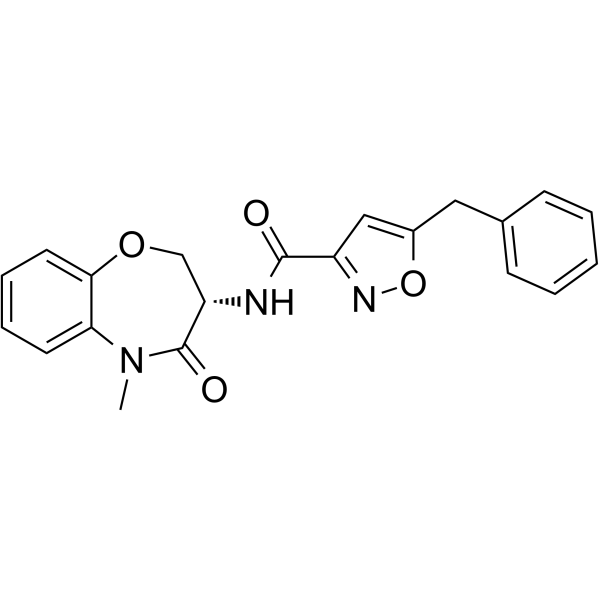
GSK481 is a highly potent, selective, and specific receptor interacting protein 1 (RIP1) kinase inhibitor with an IC50 of 1.3 nM, which inhibits Ser 166 phosphorylation in wild-type human RIP1 (IC50=2.8 nM). GSK481 also exhibits excellent translation in the U937 cellular assay with an IC50 of 10 nM .
loading...
    loading...
Cat. No.: HY-177554
CAS No.: 2724919-69-9
Research Areas:  

Cancer

KB05yne is a site-selective, alkyne-functionalized electrophilic "probe" fragment probe designed for covalent ligand discovery, with preferential reactivity toward specific cysteine residues in proteins. KB05yne strongly labels wild-type target proteins (e.g., CDKN2AIP, HPCAL1) but does not label their cysteine-to-alanine mutants, confirming site-specific cysteine reactivity. KB05yne can be used for the discovery and optimization of site-specific covalent ligands, and is applicable to proteins with diverse structures and functions, especially in studies targeting cysteine residues in cancer-related or difficult-to-purify proteins .
loading...
    loading...
Cat. No.: HY-148772
CAS No.: 2476724-74-8
Purity:  98.72%
Target:  

DNA/RNA Synthesis

Research Areas:  

Neurological Disease

PTC258 is a specific and orally active splicing modulator of Elongator complex protein 1 gene (ELP1). PTC258 increases the expression of ELP1 in vitro and in vivo. PTC258 is well tolerated in mouse model .
loading...
    loading...
Cat. No.: HY-W784030
CAS No.: 1380349-88-1
Research Areas:  

Others

N-TCO-L-lysine is a non-canonical amino acid. N-TCO-L-lysine contains a trans-cyclooctene (TCO) bioorthogonal reactive linker. N-TCO-L-lysine undergoes a bioorthogonal click reaction with SiR-Tz to enable fluorescent labeling of endogenously expressed proteins with site-specific incorporation. When used in combination with SiR-Tz, N-TCO-L-lysine allows super-resolution and live-cell imaging of endogenous proteins .
loading...
    loading...
Cat. No.: HY-W100287
CAS No.: 4532-33-6
Murrayafoline A is a carbazole alkaloid that can be extracted from Murraya tetramera. Murrayafoline A directly targets Specificity protein 1 (Sp1), thereby inhibiting NF-κB and MAPK signaling pathways. Murrayafoline a induces a G0/G1-phase arrest in platelet-derived growth factor (PDGF)-stimulated vascular smooth muscle cells. Murrayafoline A attenuates the Wnt/β-catenin pathway by promoting the degradation of intracellular β-catenin proteins. Murrayafoline A enhances the contraction of rat ventricular myocytes and L-type calcium current by activating protein kinase C. Murrayafoline A inhibits LPS (HY-D1056)-induced neuroinflammation in vivo. Murrayafoline A can be used for the study of inflammation, vascular complications and colon cancer .
loading...
    loading...
Cat. No.: HY-111447
CAS No.: 869853-70-3
Purity:  99.59%
Target:  

NADPH Oxidase Apoptosis

Research Areas:  

Cardiovascular Disease Cancer

VAS 3947, a specific NADPH oxidase (NOX) inhibitor, exerts a potent antiplatelet effect. VAS3947 induces apoptosis independently of anti-NOX activity, via UPR activation, mainly due to aggregation and misfolding of proteins .
loading...
    loading...
Cat. No.: HY-P11122
CAS No.: 861243-71-2
Research Areas:  

Inflammation/Immunology

MSP-1 P2 is a synthetic peptide of merozoite surface protein-1 (MSP-1). MSP-1 P2 stimulates umbilical cord blood lymphocytes to produce IFN-γ and IL-13, and this immune response is primarily mediated by CD4+ T cells. MSP-1 P2 can be used as a specific antigen stimulus to detect T cell responses and cytokine levels .
loading...
    loading...
Cat. No.: HY-171184
CAS No.: 1140627-77-5
Research Areas:  

Cancer

EAPB0503 is a quinoline compound with anti-tumor activity, showing strong cytotoxicity against melanoma cells in vitro (IC50=200 nM). EAPB0503 can induce specific cell cycle arrest in mitosis of CML cells and directly activate apoptosis, leading to an increase in the G0 cell population, disruption of mitochondrial membrane potential, PARP cleavage, and DNA fragmentation. EAPB0503 also reduces the levels of BCR-ABL protein .
loading...
    loading...
Cat. No.: HY-W010983R
CAS No.: 170569-86-5
SC-236 is an orally active COX-2 specific inhibitor (IC50 = 10 nM) and a PPARγ agonist. SC-236 suppresses activator protein-1 (AP-1) through c-Jun NH2-terminal kinase. SC-236 exerts anti-inflammatory effects by suppressing phosphorylation of ERK in a murine model .
loading...
    loading...
Cat. No.: HY-D0122
CAS No.: 73264-12-7
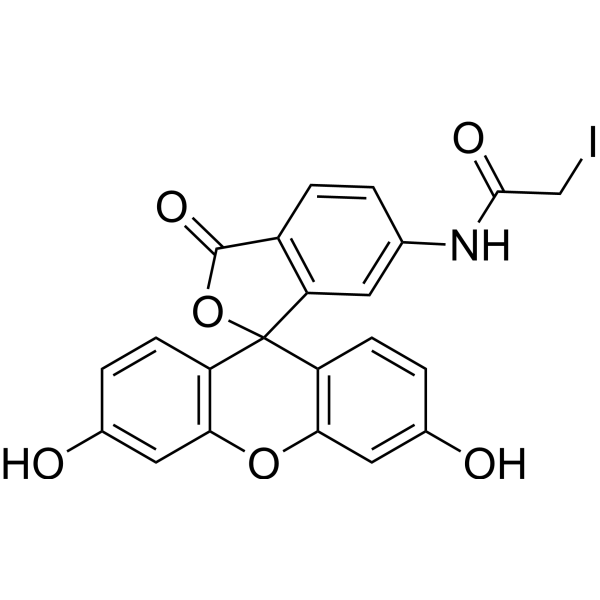
6-Iodoacetamidofluorescein, a sulphhydryl-specific fluorescent dye, and can be used to selectively label the -SH groups of nuclear matrix polypeptides and proteins .
loading...
    loading...
Cat. No.: HY-D2946
Synonyms: BC-TMR
CLIP-TMR (BC-TMR) is a TMR-labeled CLIP tag fluorescent probe. CLIP-TMR combines the high specificity recognition ability of the CLIP-tag and the excellent optical performance of the TMR fluorophore, and can be used for the specific labeling and visualization of the HCV NS5A protein .
loading...
    loading...
Cat. No.: HY-174573
Target:  

mRNA

Research Areas:  

Neurological Disease

Human NEUROD1 mRNA encodes the human neuronal differentiation 1 (NEUROD1)protein, a member of the NeuroD family of basic helix-loop-helix (bHLH) transcription factors. NEUROD1 forms heterodimers with other bHLH proteins and activates transcription of genes that contain a specific DNA sequence known as the E-box.
loading...
    loading...
Cat. No.: HY-134308
CAS No.: 221905-51-7
Target:  

Fluorescent Dye

Research Areas:  

Others

8-NBD-cAMP sodium is a fluorescently labeled cyclic adenosine phosphate (cAMP) analogue. 8-NBD-cAMP sodium retains a similar biological activity to cAMP, regulating their activity by binding to specific proteins such as EPACs or PKA. 8-NBD-cAMP sodium can be used in fluorescent competitive binding experiments to evaluate the binding affinity of newly synthesized EPAC1 agonists to EPAC1 proteins .
loading...
    loading...
Cat. No.: HY-178143
Target:  

KLF

Research Areas:  

Cancer

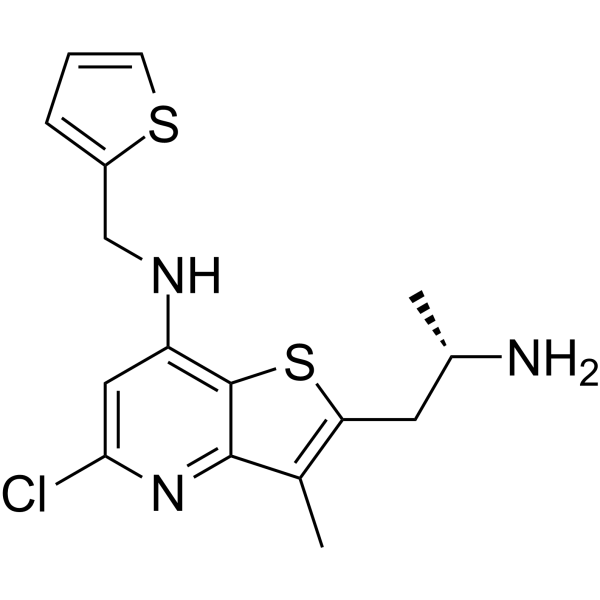
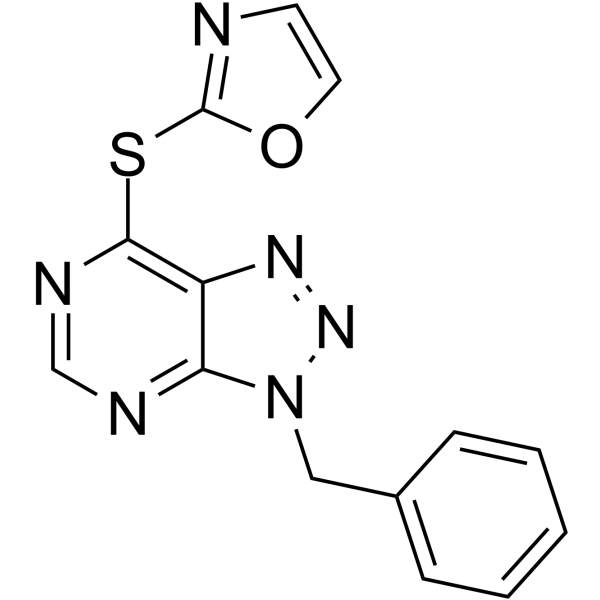
Sp1-IN-1 is a selective specificity protein 1 (Sp1) inhibitor. Sp1-IN-1 inhibits the proliferation of Hela cells and MCF-7 cells. Sp1-IN-1 can be used to the studies of cervical cancer and breast cancer .
loading...
    loading...

