Search Result
Results for "
TAMRA
" in MedChemExpress (MCE) Product Catalog:
1
Isotope-Labeled Compounds
| Cat. No. |
Product Name |
Target |
Research Areas |
Chemical Structure |
-
- HY-D2270
-
|
|
Fluorescent Dye
|
Others
|
|
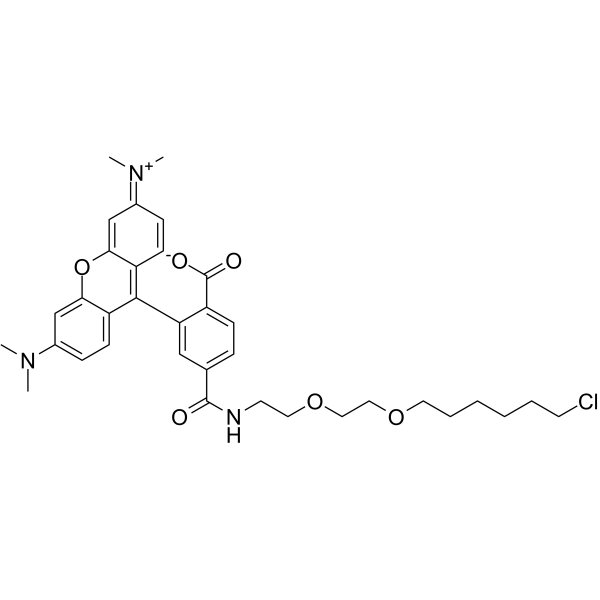
Halo tag TMR is a red fluorescent dye composed of Halo tag ligand molecules and TMR (TAMRA). Halo tag can quickly and stably covalently bind to Halo protein with high specificity and affinity (Ex/Em = 550/576 nm) .
|
-
-
- HY-15944
-
|
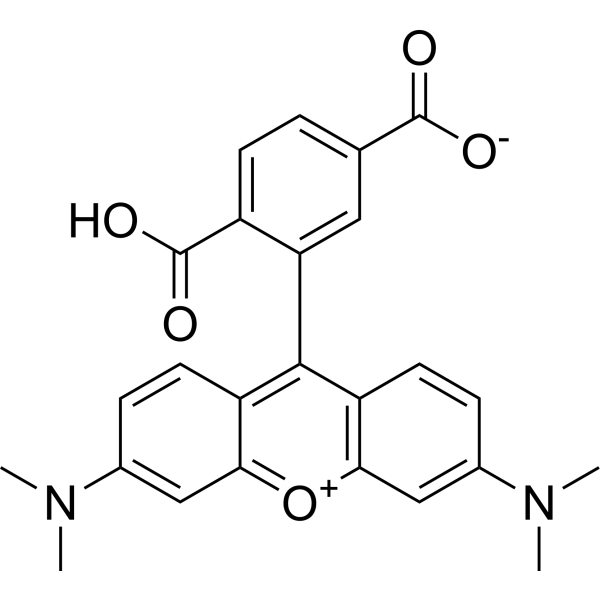
5(6)-Carboxytetramethylrhodamine
|
Fluorescent Dye
|
Others
|
|
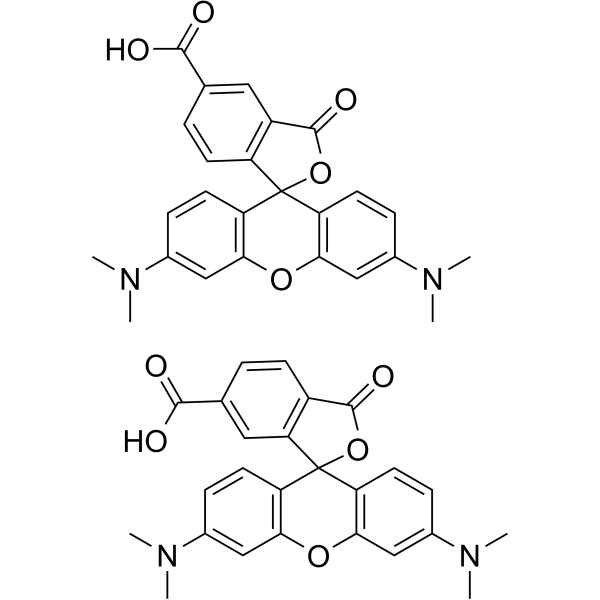
5(6)-TAMRA (5(6)-Carboxytetramethylrhodamine) is a fluorescent dye molecule widely used as a label for peptides and proteins (Ex/Em = 520/600 nm).
|
-
-
- HY-151857
-
|
|
Fluorescent Dye
|
Others
|
|
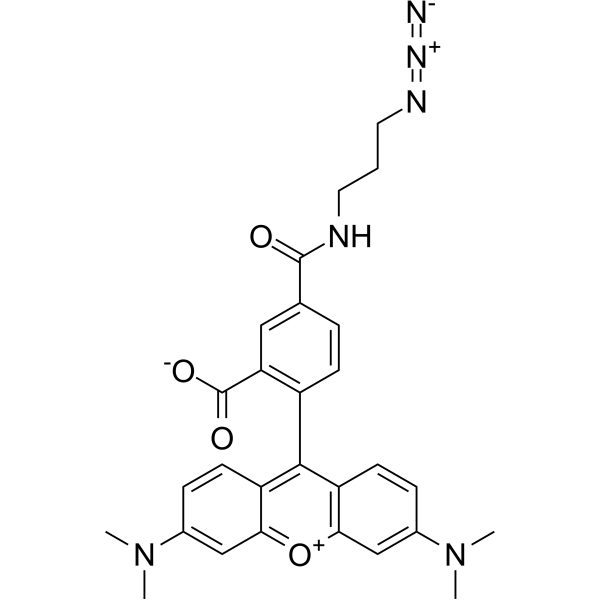
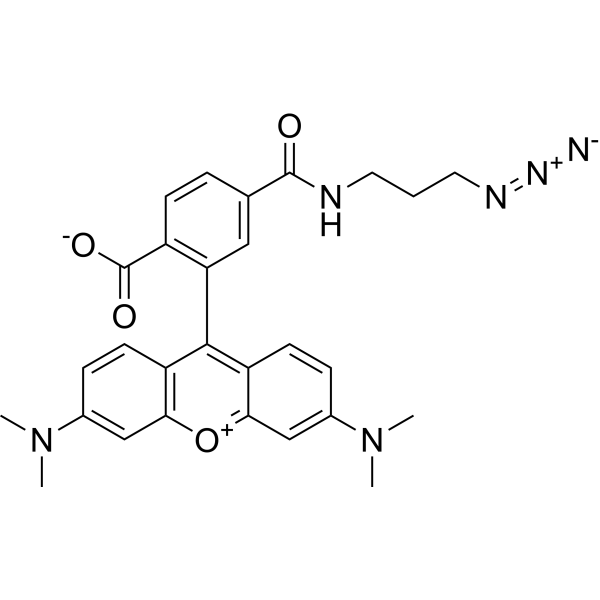
TAMRA azide, 5-isomer is a click chemical containing azide groups that can be used as a linker for TAMRA. The azide group of TAMRA Azide, 5-isomer enables copper-catalyzed click chemical reactions with alkynes, DBCO, and BCN . It contains an azide group and can undergo copper-catalyzed azide-alkyne cycloaddition (CuAAc) with molecules containing alkyne groups. It can also undergo ring strain-promoted alkyne-azide cycloaddition (SPAAC) with molecules containing DBCO or BCN groups (Ex/Em = 555/580 nm).
|
-
-
- HY-D0048
-
|
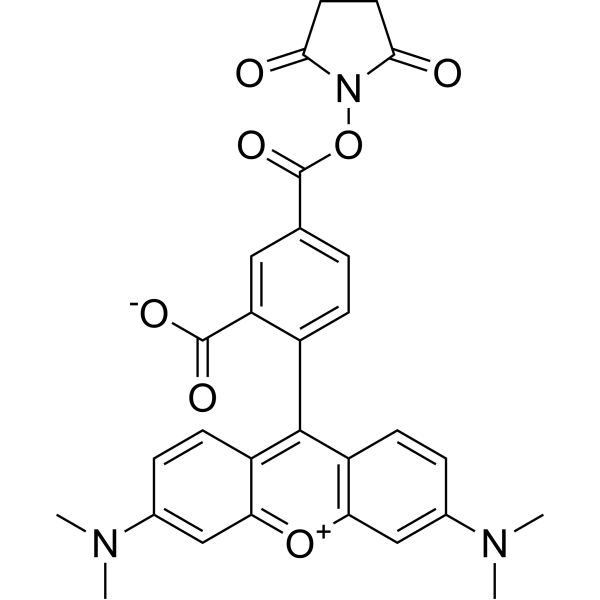
5-TAMRA-NHS ester; 5-Carboxytetramethylrhodamine succinimidyl ester
|
Fluorescent Dye
|
Others
|
|
5-TAMRA-SE is an amine-reactive fluorescent agent, and its conjugate produces bright, pH-insensitive orange-red fluorescence with good photostability (Ex/Em = 565/580 nm).
|
-
-
- HY-15942
-
5-TAMRA
3 Publications Verification
|
Fluorescent Dye
|
Others
|
|
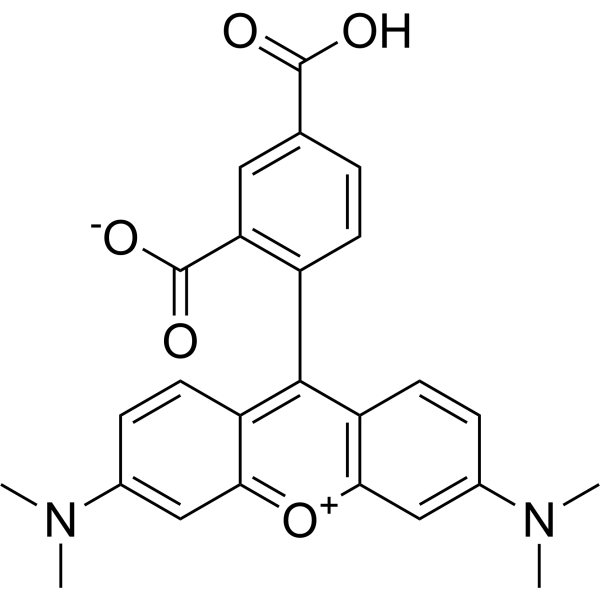
5-TAMRA can produce bright, pH-insensitive orange-red fluorescence (excitation and emission extremes of 546/579) and has good photostability. 5-TAMRA is mainly used as a fluorescent marker for the synthesis and study of specific oligonucleotide probes .
|
-
-
- HY-140947
-
|
|
Fluorescent Dye
|
Others
|
|
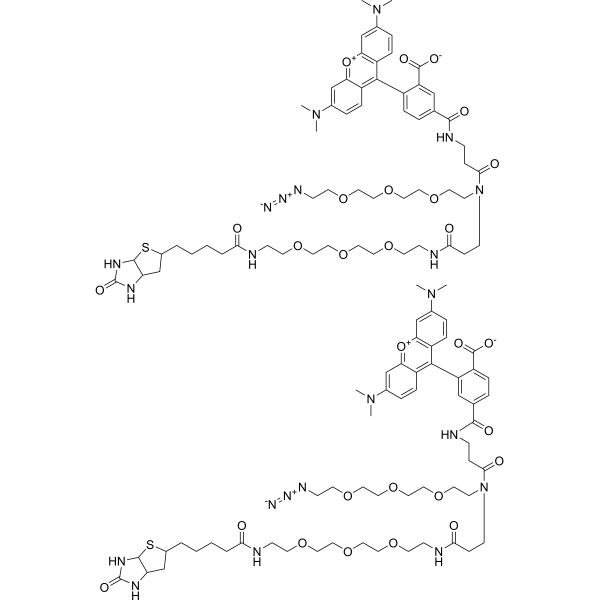
TAMRA-Azide-PEG-biotin is a dye derivative of TAMRA (HY-135640). TAMRA-Azide-PEG-biotin contains an Azide group and can undergo copper-catalyzed azide-alkyne cycloaddition reaction (CuAAc) with molecules containing Alkyne groups. It can also undergo strain-promoted alkyne-azide cycloaddition (SPAAC) reactions with molecules containing DBCO or BCN groups.
|
-
-
- HY-131033
-
|
|
Biochemical Assay Reagents
|
Others
|
|
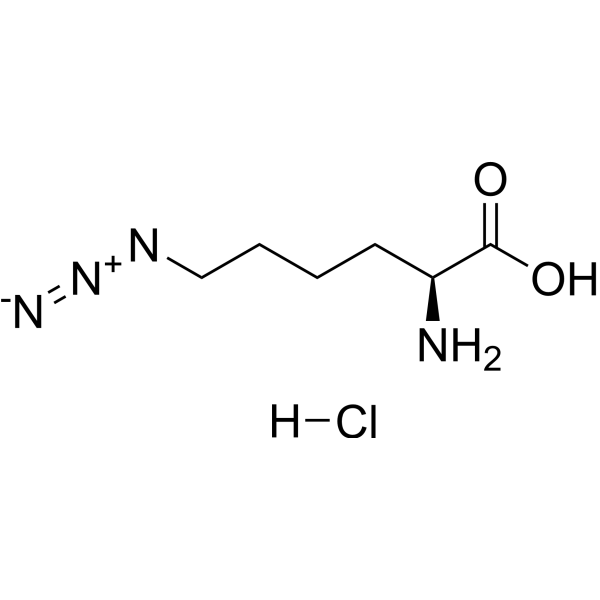
L-Azidonorleucine hydrochloride, an unnatural amino acid, is A Methionine surrogate. L-Azidonorleucine hydrochloride can be used to label mammalian cell proteins and identify a diverse set of methionyl-tRNA synthetase (MetRS) mutants . L-Azidonorleucine (hydrochloride) is a click chemistry reagent, it contains an Azide group and can undergo copper-catalyzed azide-alkyne cycloaddition reaction (CuAAc) with molecules containing Alkyne groups. It can also undergo strain-promoted alkyne-azide cycloaddition (SPAAC) reactions with molecules containing DBCO or BCN groups.
|
-
-
- HY-D0049
-
|
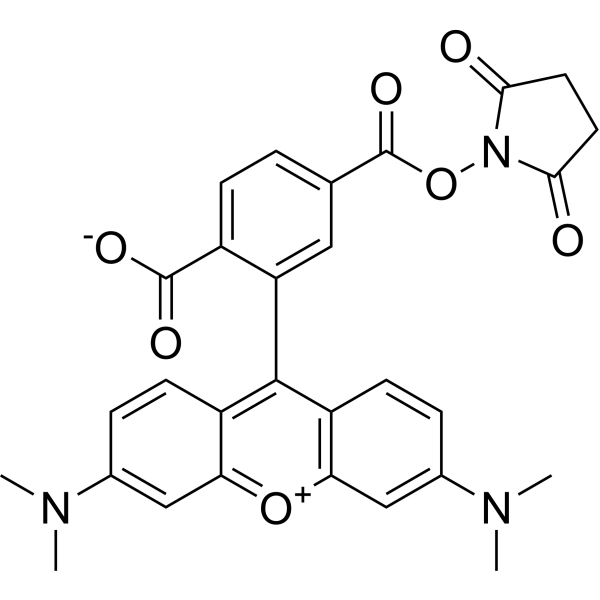
6-TAMRA-NHS ester; 6-Carboxytetramethylrhodamine N-succinimidyl ester
|
DNA Stain
|
Others
|
|
6-TAMRA-SE (6-TAMRA-NHS ester) is a fluorescent dye carrying the amine reactive group. 6-TAMRA-SE is one of the traditional fluorophores used for automated DNA sequencing .
|
-
-
- HY-15943
-
6-TAMRA
1 Publications Verification
6-Carboxytetramethylrhodamine
|
Fluorescent Dye
|
Others
|
|
6-TAMRA (6-Carboxytetramethylrhodamine) is a fluorescent dye. 6-TAMRA is often used in combination with 6-FAM (HY-66021) as an acceptor or fluorescence quencher for fluorescence resonance energy transfer (FRET) in biochemical studies such as potassium ion detection and ribonuclease activity assays .
|
-
-
- HY-D0723
-
|
5(6)-Carboxytetramethylrhodamine N-succinimidyl ester
|
Fluorescent Dye
|
Cancer
|
|
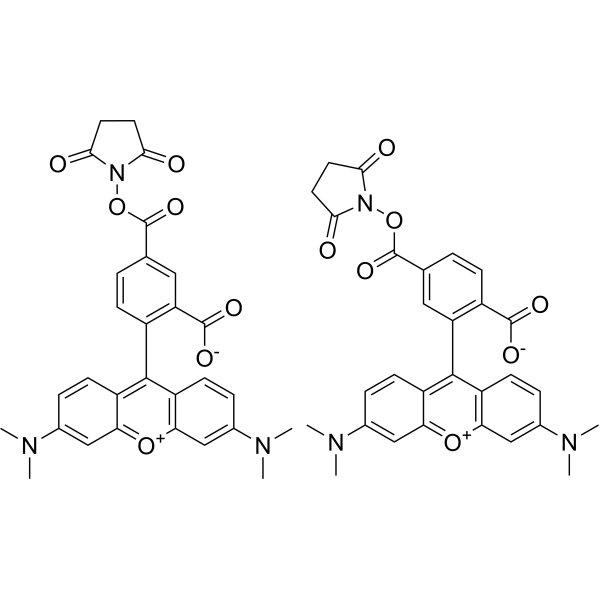
5(6)-TAMRA SE is a fluorescent dye that emits red fluorescence. 5(6)-TAMRA SE binds to oligonucleotides and is used in DNA sequencing. 5(6)-TAMRA SE can be used in cancer research (Ex/Em = 565/580 nm) .
|
-
-
- HY-W800705
-
|
|
Fluorescent Dye
|
Others
|
|
Tamra azide is an azide-terminated fluorescent dye and click reaction partner. Tamra azide undergoes Cu I-catalyzed cycloaddition click reaction with alkyne-functionalized nanodiamonds. After conjugation with nanodiamonds, Tamra azide serves as a fluorescent label that can be excited at a specific wavelength to exhibit characteristic luminescence (Ex/Em=555/580 nm) .
|
-
-
- HY-123629
-
|
|
Fluorescent Dye
|
Others
|
|
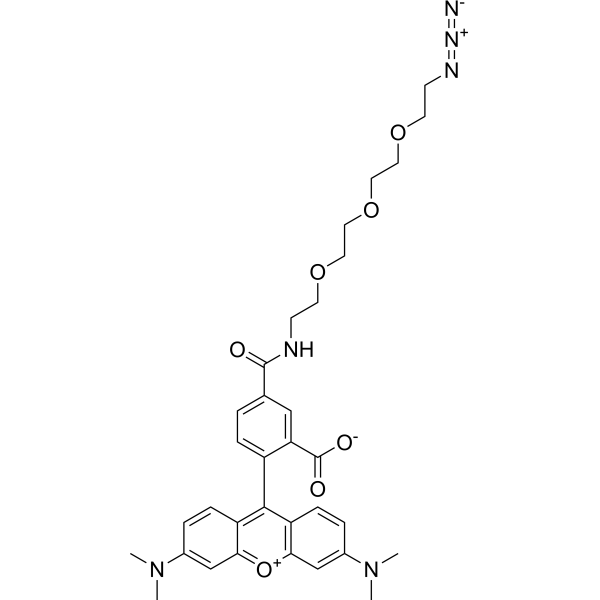
TAMRA-PEG3-Azide is a dye derivative of TAMRA (HY-135640) containing 3 PEG units. TAMRA-PEG3-Azide contains an Azide group and can undergo copper-catalyzed azide-alkyne cycloaddition reaction (CuAAc) with molecules containing Alkyne groups. It can also undergo strain-promoted alkyne-azide cycloaddition (SPAAC) reactions with molecules containing DBCO or BCN groups.
|
-
-
- HY-140509
-
-
-
- HY-P10398
-
|
|
ADAMTS
|
Others
|
|
5-FAM-TEGEARGSVILLK(5-TAMRA)K-NH2 TFA is a substrate for ADAMTS-4/ADAMTS-5, and can be used to detect ADAMTS-4 or ADAMTS-5 activity .
|
-
-
- HY-D1070
-
|
|
DNA Stain
|
Others
|
|
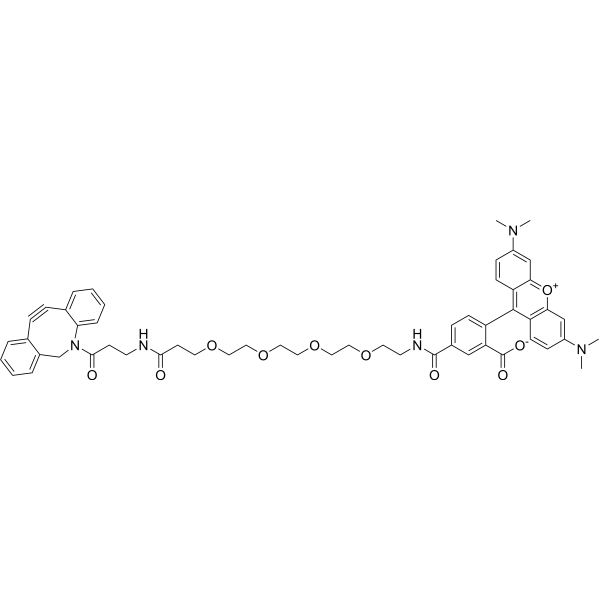
DBCO-PEG4-TAMRA is a PEG-based TAMRA dye and contains a DBCO group, which enables Click Chemistry. The TAMRA dye is a dye widely used in oligonucleotide labeling and automated DNA sequencing applications. DBCO-PEG4-TAMRA is a click chemistry reagent, it contains a DBCO group that can undergo strain-promoted alkyne-azide cycloaddition (SPAAC) with molecules containing Azide groups.
|
-
-
- HY-151680
-
-
-
- HY-W423080
-
|
|
Biochemical Assay Reagents
Fluorescent Dye
|
Others
|
|
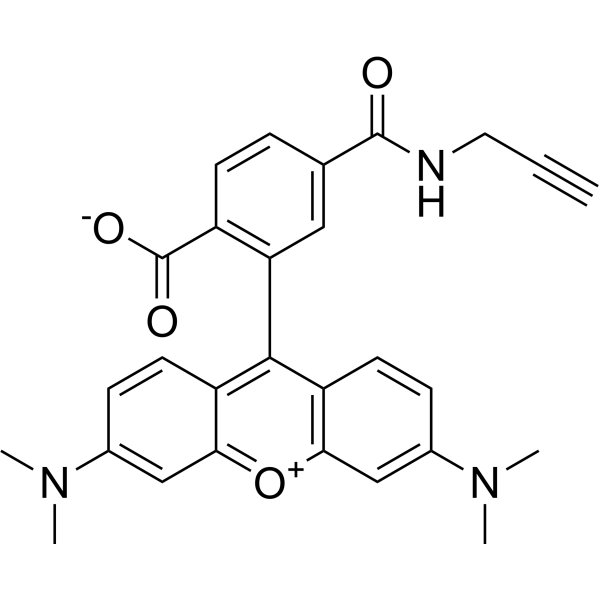
TAMRA alkyne, 5-isomer (Compound 3) is an alkyne derivative of TAMRA and can be used for the enrichment, in-gel fluorescence detection, and identification of O-GlcNAc-modified proteins. TAMRA alkyne, 5-isomer contains an Alkyne group and can undergo copper-catalyzed azide-alkyne cycloaddition reaction (CuAAc) with molecules containing Azide groups. It can also undergo strain-promoted alkyne-azide cycloaddition (SPAAC) reactions with molecules containing DBCO or BCN groups .
|
-
-
- HY-P3432
-
|
|
Biochemical Assay Reagents
|
Others
|
|
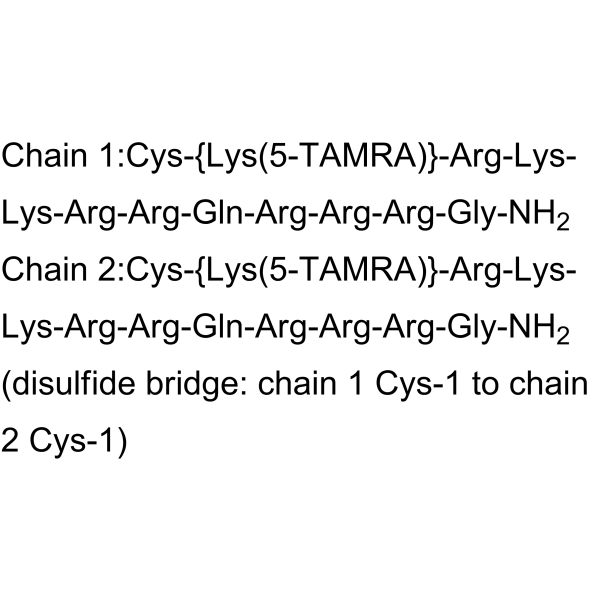
DfTat is a dimer of the prototypical cell-penetrating peptide TAT. DfTat can deliver small molecules, peptides and proteins into live cells with a particularly high efficiency. DfTat labeled with the rhodamine can be used as a tracer for easy detection .
|
-
-
- HY-D1306
-
|
|
Drug Isomer
|
Others
|
|
TAMRA azide, 6-isomer is an isomer of TAMRA. TAMRA azide, 6-isomer is the linker of TAMRA.
|
-
-
- HY-W142395
-
|
|
DNA Stain
|
Others
|
|
6-TAMRA free acid is a fluorophore widely used in the preparation of fluorescent antibodies and avidin derivatives for immunohistochemistry.
|
-
-
- HY-D2187
-
|
|
Fluorescent Dye
|
Others
|
|
6-TAMRA maleimide is a fluorescent dye composed of the fluorescent group of an avidin derivative and a maleimide group.
|
-
-
- HY-W190932
-
|
|
Fluorescent Dye
|
Others
|
|
TAMRA-PEG2-Maleimide is a dye derivative of TAMRA (HY-135640) containing 4 PEG units. TAMRA-PEG2-Maleimide contains a maleimide group that can react with a thiol group to form a covalent bond.
|
-
-
- HY-P4083
-
|
|
Fluorescent Dye
|
Others
|
|
(Arg)9,TAMRA-labeled is a TAMRA-labeled cell permeable peptide. (Arg)9 is a cell-permeable peptide used for drug delivery .
|
-
-
- HY-D2113
-
|
|
Fluorescent Dye
|
Others
|
|
TAMRA-PEG3-Alkyne is a dye derivative of TAMRA (HY-135640) containing 3 PEG units. TAMRA-PEG3-Alkyne contains Alkyne groups and can undergo copper-catalyzed azide-alkyne cycloaddition (CuAAc) with molecules containing Azide groups.
|
-
-
- HY-D2891
-
|
|
Fluorescent Dye
|
Others
|
|
5-TAMRA-DBCO is a fluorescent dye that combines 5-TAMRA (HY-15942) with a dibenzocyclooctyne (DBCO) moiety. 5-TAMRA-DBCO is able to copper-free click chemistry reactions with azide-functionalized molecules. 5-TAMRA-DBCO can be used for labeling proteins, peptides, nucleic acids (Ex/Em = 541/567 nm) .
|
-
-
- HY-D2890
-
|
|
Fluorescent Dye
|
Others
|
|
5-TAMRA-NHS is a fluorescent dye that combines 5-TAMRA (HY-15942) with a hydroxysuccinimide (NHS) group. The NHS group can react with amine-containing groups. 5-TAMRA-NHS can be used for fluorescent labeling and imaging (Ex/Em = 541/567 nm) .
|
-
-
- HY-135640
-
-
-
- HY-P4105
-
-
-
- HY-D2101
-
|
|
Fluorescent Dye
|
Others
|
|
TAMRA-PEG3-NH2 is a dye derivative of TAMRA (HY-135640) containing 3 PEG units. TAMRA-PEG3-NH2 contains NH2 groups, which can undergo condensation reactions with carboxyl groups to form covalent bonds.
|
-
-
- HY-W998707
-
|
|
Fluorescent Dye
|
Others
|
|
TAMRA amine, 5-isomer hydrochloride is a rhodamine dye with excitation/emission maximum 553/575 nm. The amine group is reactive with carboxylic acids, activated NHS esters, carbonyls (ketone, aldehyde) etc.
|
-
-
- HY-D1335
-
|
|
Fluorescent Dye
|
|
|
TAMRA amine, 5-isomer is an isomer of TAMRA, a xanthene dye with orange emission.
|
-
-
- HY-151774
-
|
|
Fluorescent Dye
|
Others
|
|
TAMRA hydrazide (6-isomer) is a click chemistry reagent that can be coupled to carbonyl compounds. The dye hydrazide in TAMRA hydrazide (6-isomer) labels carbonyl compounds such as aldehydes and ketones. TAMRA in TAMRA hydrazide (6-isomer) is a xanthene red fluorophore that reacts with terminal alkynes .
|
-
-
- HY-P0030
-
-
-
- HY-D2772
-
|
|
Biochemical Assay Reagents
|
Others
|
|
5-TAMRA cadaverine can used to modify carboxylic acid group in the presence of activators (e.g. EDC, or DCC) or activated esters (e.g. NHS esters) through a stable amide bond. It also can be reversibly coupled to aldehydes and ketones to form a Schiff base – which can be reduced to a generate stable amine derivative by sodium borohydride (NaBH4) or sodium cyanoborohydride (NaCNH3).
Although the mixed isomers of 5(6)-TAMRA cadaverine is a preferred, routinely used orange-fluorescent dye for staining proteins, it is rearly used for labeling peptides and nucleotides. Purification of 5(6)-TAMRA labeled peptide and nucleotides might be troublesome due to significant signal broadening in HPLC purification. Peptides and nucleotides labeled with a single isomer TAMRA usually give better resolution in HPLC purification that is often required in the conjugation processes.
|
-
-
- HY-141285
-
|
|
Fluorescent Dye
|
Others
|
|
TAMRA-PEG4-tetrazine is a dye derivative of TAMRA (HY-135640) containing 4 PEG units. TAMRA-PEG4-tetrazine contains a Tetrazine group that can undergo an inverse electron demand Diels-Alder reaction (iEDDA) with molecules containing TCO groups.
|
-
-
- HY-D2102
-
|
|
Fluorescent Dye
|
Others
|
|
TAMRA-PEG7-NH2 is a dye derivative of TAMRA (HY-135640) containing 7 PEG units. TAMRA-PEG7-NH2 contains NH2 groups, which can undergo condensation reactions with carboxyl groups to form covalent bonds.
|
-
-
- HY-D1722
-
|
TAMRA-dUTP
|
DNA Stain
|
Others
|
|
Tetramethylrhodamine-dUTP (TAMRA-dUTP) is used for end-labeling of DNA .
|
-
-
- HY-D2112
-
|
|
Fluorescent Dye
|
Others
|
|
TAMRA-PEG7-N3 is a TAMRA (HY-135640) dye derivative containing 7 PEG units. TAMRA-PEG7-N3 undergoes copper-catalyzed azide-alkyne cycloaddition (CuAAc) with molecules containing an alkynyl group (N3). It also undergoes strain-promoted alkyne-azide cycloaddition (SPAAC) with molecules containing DBCO or BCN groups. It contains an azide group and can undergo copper-catalyzed azide-alkyne cycloaddition (CuAAc) with molecules containing alkyne groups. It can also undergo ring strain-promoted alkyne-azide cycloaddition (SPAAC) with molecules containing DBCO or BCN groups.
|
-
-
- HY-D2111
-
|
|
Fluorescent Dye
|
Others
|
|
TAMRA-PEG2-N3 is a TAMRA (HY-135640) dye derivative containing 4 PEG units. TAMRA-PEG2-N3 undergoes copper-catalyzed azide-alkyne cycloaddition (CuAAc) with molecules containing an alkynyl group (N3). It also undergoes strain-promoted alkyne-azide cycloaddition (SPAAC) with molecules containing DBCO or BCN groups. It contains an azide group and can undergo copper-catalyzed azide-alkyne cycloaddition (CuAAc) with molecules containing alkyne groups. It can also undergo ring strain-promoted alkyne-azide cycloaddition (SPAAC) with molecules containing DBCO or BCN groups.
|
-
-
- HY-P10468
-
|
|
ADAMTS
|
Others
|
|
5-FAM-TEGEARGSVILLK(5-TAMRA)K-NH2 is a substrate for ADAMTS-4/ADAMTS-5, and can be used to detect ADAMTS-4 or ADAMTS-5 activity .
|
-
-
- HY-W716774
-
|
|
Fluorescent Dye
|
Others
|
|
5-TAMRA-Terazine is a fluorescent dye that combines 5-TAMRA (HY-15942) with a Terazine group. 5-TAMRA-Terazine is a click chemistry reagent, it contains a Tetrazine group that can undergo an inverse electron demand Diels-Alder reaction (iEDDA) with molecules containing TCO groups (Ex/Em = 541/567 nm) .
|
-
-
- HY-140946
-
|
|
Fluorescent Dye
|
Others
|
|
TAMRA-PEG3-biotin is a dye derivative of TAMRA (HY-135640) containing 3 PEG units. TAMRA-PEG3-biotin is tagged with biotin.
|
-
-
- HY-W142395S
-
|
|
Isotope-Labeled Compounds
DNA Stain
|
Others
|
|
6-TAMRA-d12 free acid is a deuterated-labeled 6-TAMRA, which is widely used in the preparation of fluorescent antibodies and as a fluorescent group for immunohistochemical avidin derivatives.
|
-
-
- HY-D2105
-
|
|
Fluorescent Dye
|
Others
|
|
TAMRA-PEG3-NHS is a dye derivative of TAMRA (HY-135640) containing 3 PEG units. TAMRA-PEG3-NHS contains NHS groups that react with ammonia to form ester bonds.
|
-
-
- HY-D2106
-
|
|
Fluorescent Dye
|
Others
|
|
TAMRA-PEG4-NHS is a dye derivative of TAMRA (HY-135640) containing 4 PEG units. TAMRA-PEG4-NHS contains NHS groups that react with ammonia to form ester bonds.
|
-
-
- HY-D2107
-
|
|
Fluorescent Dye
|
Others
|
|
TAMRA-PEG8-NHS is a dye derivative of TAMRA (HY-135640) containing 8 PEG units. TAMRA-PEG8-NHS contains NHS groups that react with ammonia to form ester bonds.
|
-
-
- HY-D2103
-
|
|
Fluorescent Dye
|
Others
|
|
TAMRA-PEG3-Maleimide is a dye derivative of TAMRA (HY-135640) containing 3 PEG units. TAMRA-PEG3-Maleimide contains maleimide groups that react with thiol groups to form covalent bonds.
|
-
-
- HY-D2104
-
|
|
Fluorescent Dye
|
Others
|
|
TAMRA-PEG7-Maleimide is a dye derivative of TAMRA (HY-135640) containing 7 PEG units. TAMRA-PEG7-Maleimide contains a maleimide group that can react with a thiol group to form a covalent bond.
|
-
-
- HY-D2108
-
|
|
Fluorescent Dye
|
Others
|
|
TAMRA-PEG3-COOH is a dye derivative of TAMRA (HY-135640) containing 3 PEG units. TAMRA-PEG3-COOH contains carboxyl groups, which can condense ammonia to form covalent bonds.
|
-
-
- HY-D2109
-
|
|
Fluorescent Dye
|
Others
|
|
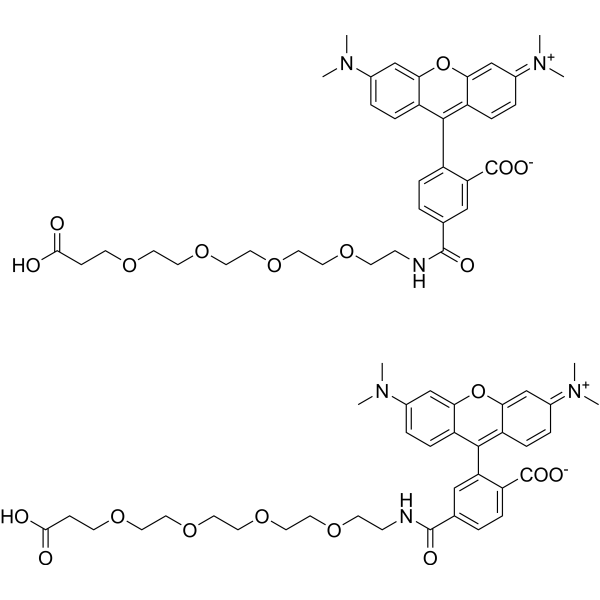
TAMRA-PEG4-COOH is a dye derivative of TAMRA (HY-135640) containing 4 PEG units. TAMRA-PEG4-COOH contains carboxyl groups, which can condense ammonia to form covalent bonds.
|
-
- HY-D2110
-
|
|
Fluorescent Dye
|
Others
|
|
TAMRA-PEG8-COOH is a dye derivative of TAMRA (HY-135640) containing 8 PEG units. TAMRA-PEG8-COOH contains carboxyl groups, which can condense ammonia to form covalent bonds.
|
-
- HY-P4083A
-
|
|
Fluorescent Dye
|
Others
|
|
(Arg)9,TAMRA-labeled acetate is a TAMRA-labeled, membrane-permeable cationic cell-penetrating polyarginine peptide. (Arg)9,TAMRA-labeled acetate acts as a cell-penetrating peptide for drug delivery .
|
-
- HY-D2114
-
|
|
Fluorescent Dye
|
Others
|
|
TAMRA-PEG8-Alkyne is a dye derivative of TAMRA (HY-135640) containing 8 PEG units. TAMRA-PEG8-Alkyne contains Alkyne groups and can undergo copper-catalyzed azide-alkyne cycloaddition (CuAAc) with molecules containing Azide groups.
|
-
- HY-141286
-
|
|
Fluorescent Dye
|
Others
|
|
TAMRA-PEG4-methyltetrazine is a dye derivative of TAMRA (HY-135640) containing 4 PEG units. TAMRA-PEG4-methyltetrazine contains a Tetrazine group that can undergo an inverse electron demand Diels-Alder reaction (iEDDA) with molecules containing TCO groups.
|
-
- HY-120666
-
|
|
Fluorescent Dye
|
Others
|
|
TAMRA-PEG4-Alkyne is a dye derivative of TAMRA (HY-135640) containing 4 PEG units. TAMRA-PEG4-Alkyne contains Alkyne groups and can undergo copper-catalyzed azide-alkyne cycloaddition (CuAAc) with molecules containing Azide groups (Ex/Em = 553/575 nm).
|
-
- HY-172284
-
|
|
Fluorescent Dye
|
Others
|
|
6-TAMRA cadaverine has achieved prominence as a dye for oligonucleotide labeling and automated DNA sequencing applications. The amino group (NH2) is reactive with carboxylic acids, activated NHS esters, carbonyls (ketone, aldehyde), etc.
|
-
- HY-D2098
-
|
|
Fluorescent Dye
|
Others
|
|
TAMRA-PEG2-NH2 is a dye derivative of TAMRA (HY-135640) containing 4 PEG units. TAMRA-PEG2-NH2 contains NH2 groups, which can undergo condensation reactions with carboxyl groups to form covalent bonds.
|
-
- HY-D2117
-
|
|
Fluorescent Dye
|
Others
|
|
TAMRA-PEG4-Me-Tet is a dye derivative of TAMRA (HY-135640) containing 4 PEG units. TAMRA-PEG8-Me-Tet contains a Tetrazine group that can undergo an inverse electron demand Diels-Alder reaction (iEDDA) with molecules containing TCO groups.
|
-
- HY-D2118
-
|
|
Fluorescent Dye
|
Others
|
|
TAMRA-PEG3-Me-Tet is a dye derivative of TAMRA (HY-135640) containing 3 PEG units. TAMRA-PEG3-Me-Tet contains a Tetrazine group that can undergo an inverse electron demand Diels-Alder reaction (iEDDA) with molecules containing TCO groups.
|
-
- HY-D2116
-
|
|
Fluorescent Dye
|
Others
|
|
TAMRA-PEG8-Me-Tet is a dye derivative of TAMRA (HY-135640) containing 8 PEG units. TAMRA-PEG8-Me-Tet contains a Tetrazine group that can undergo an inverse electron demand Diels-Alder reaction (iEDDA) with molecules containing TCO groups.
|
-
- HY-D2758
-
|
|
Fluorescent Dye
|
Others
|
|
TAMRA DBCO, 5-isomer is a derivative of tetramethylrhodamine (TMR, TAMRA) containing a cyclooctyne moiety (dibenzocyclooctyne, DBCO). Pure 5-isomer. DBCO reacts quickly and efficiently with azides by simply mixing the components without the need for a copper catalyst (so-called sterically promoted cycloaddition reaction (SPAAC)). TAMRA DBCO can be used for the labeling of proteins, peptides, nucleic acids, and other molecules containing azide groups.
|
-
- HY-140877
-
|
|
Fluorescent Dye
|
Others
|
|
Dde Biotin-PEG4-TAMRA-PEG4 Alkyne is a dye derivative of TAMRA (HY-135640) modified with a cleavable biotin group. Dde Biotin-PEG4-TAMRA-PEG4 Alkyne contains Alkyne groups that can undergo copper-catalyzed azide-alkyne cycloaddition (CuAAc) with molecules containing Azide groups.
|
-
- HY-P0300F
-
-
- HY-141091
-
|
|
Fluorescent Dye
|
Others
|
|
Biotin-PEG4-Dde-TAMRA-PEG3-Azide is a dye derivative of TAMRA (HY-135640) modified with a cleavable biotin group. Biotin-PEG4-Dde-TAMRA-PEG3-Azide contains an Azide group and can undergo copper-catalyzed azide-alkyne cycloaddition reaction (CuAAc) with molecules containing Alkyne groups. It can also undergo strain-promoted alkyne-azide cycloaddition (SPAAC) reactions with molecules containing DBCO or BCN groups.
|
-
- HY-140948
-
|
|
Fluorescent Dye
|
Others
|
|
(5,6)TAMRA-PEG3-Azide-PEG3-Desthiobiotin is a dye derivative of TAMRA (HY-135640) containing 3 PEG units. (5,6)TAMRA-PEG3-Azide-PEG3-Desthiobiotin contains an Azide group and can undergo copper-catalyzed azide-alkyne cycloaddition reaction (CuAAc) with molecules containing Alkyne groups. It can also undergo strain-promoted alkyne-azide cycloaddition (SPAAC) reactions with molecules containing DBCO or BCN groups.
|
-
- HY-DY1085
-
|
5(6)-Carboxytetramethylrhodamine (solution)
|
Fluorescent Dye
|
Others
|
5(6)-TAMRA (solution) (5(6)-Carboxytetramethylrhodamine (solution)) is a fluorescent dye molecule widely used as a label for peptides and proteins (Ex/Em = 520/600 nm). Solvent and concentration: DMSO: 10 mM The 1 mL volume is defined as the base specification. All larger sizes correspond to incremental volumes of this base.
|
-
- HY-P4878
-
-
- HY-112295
-
|
|
Biochemical Assay Reagents
|
Infection
|
|
AzKTB is a capture reagent which bears a short trypsin-cleavable peptide sequence between the azide module and the TAMRA/PEG-biotin labels. AzKTB is a click chemistry reagent, it contains an Azide group and can undergo copper-catalyzed azide-alkyne cycloaddition reaction (CuAAc) with molecules containing Alkyne groups. It can also undergo strain-promoted alkyne-azide cycloaddition (SPAAC) reactions with molecules containing DBCO or BCN groups.
|
-
- HY-182235
-
-
- HY-172717
-
|
|
Fluorescent Dye
|
Others
|
|
TAMRA-PEG4-t-butyl ester is a TAMRA red-fluorescent dye linker, with excitation/emission maximum 553/575 nm, containing a t-butyl protected carboxyl group which can be deprotected under acidic conditions.
|
-
- HY-D3416
-
|
TAMRA-2,4-dinitroaniline
|
Fluorescent Dye
|
Others
|
|
TMR-DN (TAMRA-2,4-dinitroaniline) is a bright orange fluorescent probe that binds to the SRB-2 aptamer, with a Kd value of 35 nM for the SRB-2 aptamer. TMR-DN exhibits low background fluorescence, enabling wash-free live-cell RNA imaging .
|
-
- HY-DY1107
-
|
|
Fluorescent Dye
|
Others
|
Halo tag TMR (solution) is a red fluorescent dye composed of Halo tag ligand molecules and TMR (TAMRA). Halo tag can quickly and stably covalently bind to Halo protein with high specificity and affinity (Ex/Em = 550/576 nm) . Solvent and concentration: DMSO: 5 mM
|
-
| Cat. No. |
Product Name |
Type |
-
- HY-D2270
-
|
|
Fluorescent Dye
|
|
Halo tag TMR is a red fluorescent dye composed of Halo tag ligand molecules and TMR (TAMRA). Halo tag can quickly and stably covalently bind to Halo protein with high specificity and affinity (Ex/Em = 550/576 nm) .
|
-
- HY-15944
-
|
5(6)-Carboxytetramethylrhodamine
|
Fluorescent Dye
|
|
5(6)-TAMRA (5(6)-Carboxytetramethylrhodamine) is a fluorescent dye molecule widely used as a label for peptides and proteins (Ex/Em = 520/600 nm).
|
-
- HY-D0048
-
|
5-TAMRA-NHS ester; 5-Carboxytetramethylrhodamine succinimidyl ester
|
Fluorescent Dye
|
|
5-TAMRA-SE is an amine-reactive fluorescent agent, and its conjugate produces bright, pH-insensitive orange-red fluorescence with good photostability (Ex/Em = 565/580 nm).
|
-
- HY-15942
-
5-TAMRA
3 Publications Verification
|
Fluorescent Dye
|
|
5-TAMRA can produce bright, pH-insensitive orange-red fluorescence (excitation and emission extremes of 546/579) and has good photostability. 5-TAMRA is mainly used as a fluorescent marker for the synthesis and study of specific oligonucleotide probes .
|
-
- HY-D0049
-
|
6-TAMRA-NHS ester; 6-Carboxytetramethylrhodamine N-succinimidyl ester
|
Fluorescent Dye
|
|
6-TAMRA-SE (6-TAMRA-NHS ester) is a fluorescent dye carrying the amine reactive group. 6-TAMRA-SE is one of the traditional fluorophores used for automated DNA sequencing .
|
-
- HY-15943
-
6-TAMRA
1 Publications Verification
6-Carboxytetramethylrhodamine
|
Fluorescent Dye
|
|
6-TAMRA (6-Carboxytetramethylrhodamine) is a fluorescent dye. 6-TAMRA is often used in combination with 6-FAM (HY-66021) as an acceptor or fluorescence quencher for fluorescence resonance energy transfer (FRET) in biochemical studies such as potassium ion detection and ribonuclease activity assays .
|
-
- HY-D0723
-
|
5(6)-Carboxytetramethylrhodamine N-succinimidyl ester
|
Fluorescent Dye
|
|
5(6)-TAMRA SE is a fluorescent dye that emits red fluorescence. 5(6)-TAMRA SE binds to oligonucleotides and is used in DNA sequencing. 5(6)-TAMRA SE can be used in cancer research (Ex/Em = 565/580 nm) .
|
-
- HY-D1306
-
|
|
Fluorescent Dye
|
|
TAMRA azide, 6-isomer is an isomer of TAMRA. TAMRA azide, 6-isomer is the linker of TAMRA.
|
-
- HY-W142395
-
|
|
Fluorescent Dye
|
|
6-TAMRA free acid is a fluorophore widely used in the preparation of fluorescent antibodies and avidin derivatives for immunohistochemistry.
|
-
- HY-D2187
-
|
|
Fluorescent Dye
|
|
6-TAMRA maleimide is a fluorescent dye composed of the fluorescent group of an avidin derivative and a maleimide group.
|
-
- HY-W190932
-
|
|
Fluorescent Dye
|
|
TAMRA-PEG2-Maleimide is a dye derivative of TAMRA (HY-135640) containing 4 PEG units. TAMRA-PEG2-Maleimide contains a maleimide group that can react with a thiol group to form a covalent bond.
|
-
- HY-D2113
-
|
|
Fluorescent Dye
|
|
TAMRA-PEG3-Alkyne is a dye derivative of TAMRA (HY-135640) containing 3 PEG units. TAMRA-PEG3-Alkyne contains Alkyne groups and can undergo copper-catalyzed azide-alkyne cycloaddition (CuAAc) with molecules containing Azide groups.
|
-
- HY-D2891
-
|
|
Fluorescent Dye
|
|
5-TAMRA-DBCO is a fluorescent dye that combines 5-TAMRA (HY-15942) with a dibenzocyclooctyne (DBCO) moiety. 5-TAMRA-DBCO is able to copper-free click chemistry reactions with azide-functionalized molecules. 5-TAMRA-DBCO can be used for labeling proteins, peptides, nucleic acids (Ex/Em = 541/567 nm) .
|
-
- HY-D2890
-
|
|
Fluorescent Dye
|
|
5-TAMRA-NHS is a fluorescent dye that combines 5-TAMRA (HY-15942) with a hydroxysuccinimide (NHS) group. The NHS group can react with amine-containing groups. 5-TAMRA-NHS can be used for fluorescent labeling and imaging (Ex/Em = 541/567 nm) .
|
-
- HY-135640
-
|
|
Fluorescent Dye
|
|
TAMRA-probe 1 is a commonly used fluorescent probe for labeling .
|
-
- HY-D2101
-
|
|
Fluorescent Dye
|
|
TAMRA-PEG3-NH2 is a dye derivative of TAMRA (HY-135640) containing 3 PEG units. TAMRA-PEG3-NH2 contains NH2 groups, which can undergo condensation reactions with carboxyl groups to form covalent bonds.
|
-
- HY-W998707
-
|
|
Fluorescent Dye
|
|
TAMRA amine, 5-isomer hydrochloride is a rhodamine dye with excitation/emission maximum 553/575 nm. The amine group is reactive with carboxylic acids, activated NHS esters, carbonyls (ketone, aldehyde) etc.
|
-
- HY-D1335
-
|
|
Fluorescent Dye
|
|
TAMRA amine, 5-isomer is an isomer of TAMRA, a xanthene dye with orange emission.
|
-
- HY-151774
-
|
|
Fluorescent Dye
|
|
TAMRA hydrazide (6-isomer) is a click chemistry reagent that can be coupled to carbonyl compounds. The dye hydrazide in TAMRA hydrazide (6-isomer) labels carbonyl compounds such as aldehydes and ketones. TAMRA in TAMRA hydrazide (6-isomer) is a xanthene red fluorophore that reacts with terminal alkynes .
|
-
- HY-D2772
-
|
|
Fluorescent Dye
|
|
5-TAMRA cadaverine can used to modify carboxylic acid group in the presence of activators (e.g. EDC, or DCC) or activated esters (e.g. NHS esters) through a stable amide bond. It also can be reversibly coupled to aldehydes and ketones to form a Schiff base – which can be reduced to a generate stable amine derivative by sodium borohydride (NaBH4) or sodium cyanoborohydride (NaCNH3).
Although the mixed isomers of 5(6)-TAMRA cadaverine is a preferred, routinely used orange-fluorescent dye for staining proteins, it is rearly used for labeling peptides and nucleotides. Purification of 5(6)-TAMRA labeled peptide and nucleotides might be troublesome due to significant signal broadening in HPLC purification. Peptides and nucleotides labeled with a single isomer TAMRA usually give better resolution in HPLC purification that is often required in the conjugation processes.
|
-
- HY-D2102
-
|
|
Fluorescent Dye
|
|
TAMRA-PEG7-NH2 is a dye derivative of TAMRA (HY-135640) containing 7 PEG units. TAMRA-PEG7-NH2 contains NH2 groups, which can undergo condensation reactions with carboxyl groups to form covalent bonds.
|
-
- HY-D2112
-
|
|
Fluorescent Dye
|
|
TAMRA-PEG7-N3 is a TAMRA (HY-135640) dye derivative containing 7 PEG units. TAMRA-PEG7-N3 undergoes copper-catalyzed azide-alkyne cycloaddition (CuAAc) with molecules containing an alkynyl group (N3). It also undergoes strain-promoted alkyne-azide cycloaddition (SPAAC) with molecules containing DBCO or BCN groups. It contains an azide group and can undergo copper-catalyzed azide-alkyne cycloaddition (CuAAc) with molecules containing alkyne groups. It can also undergo ring strain-promoted alkyne-azide cycloaddition (SPAAC) with molecules containing DBCO or BCN groups.
|
-
- HY-D2111
-
|
|
Fluorescent Dye
|
|
TAMRA-PEG2-N3 is a TAMRA (HY-135640) dye derivative containing 4 PEG units. TAMRA-PEG2-N3 undergoes copper-catalyzed azide-alkyne cycloaddition (CuAAc) with molecules containing an alkynyl group (N3). It also undergoes strain-promoted alkyne-azide cycloaddition (SPAAC) with molecules containing DBCO or BCN groups. It contains an azide group and can undergo copper-catalyzed azide-alkyne cycloaddition (CuAAc) with molecules containing alkyne groups. It can also undergo ring strain-promoted alkyne-azide cycloaddition (SPAAC) with molecules containing DBCO or BCN groups.
|
-
- HY-W716774
-
|
|
Fluorescent Dye
|
|
5-TAMRA-Terazine is a fluorescent dye that combines 5-TAMRA (HY-15942) with a Terazine group. 5-TAMRA-Terazine is a click chemistry reagent, it contains a Tetrazine group that can undergo an inverse electron demand Diels-Alder reaction (iEDDA) with molecules containing TCO groups (Ex/Em = 541/567 nm) .
|
-
- HY-D2105
-
|
|
Fluorescent Dye
|
|
TAMRA-PEG3-NHS is a dye derivative of TAMRA (HY-135640) containing 3 PEG units. TAMRA-PEG3-NHS contains NHS groups that react with ammonia to form ester bonds.
|
-
- HY-D2106
-
|
|
Fluorescent Dye
|
|
TAMRA-PEG4-NHS is a dye derivative of TAMRA (HY-135640) containing 4 PEG units. TAMRA-PEG4-NHS contains NHS groups that react with ammonia to form ester bonds.
|
-
- HY-D2107
-
|
|
Fluorescent Dye
|
|
TAMRA-PEG8-NHS is a dye derivative of TAMRA (HY-135640) containing 8 PEG units. TAMRA-PEG8-NHS contains NHS groups that react with ammonia to form ester bonds.
|
-
- HY-D2103
-
|
|
Fluorescent Dye
|
|
TAMRA-PEG3-Maleimide is a dye derivative of TAMRA (HY-135640) containing 3 PEG units. TAMRA-PEG3-Maleimide contains maleimide groups that react with thiol groups to form covalent bonds.
|
-
- HY-D2104
-
|
|
Fluorescent Dye
|
|
TAMRA-PEG7-Maleimide is a dye derivative of TAMRA (HY-135640) containing 7 PEG units. TAMRA-PEG7-Maleimide contains a maleimide group that can react with a thiol group to form a covalent bond.
|
-
- HY-D2108
-
|
|
Fluorescent Dye
|
|
TAMRA-PEG3-COOH is a dye derivative of TAMRA (HY-135640) containing 3 PEG units. TAMRA-PEG3-COOH contains carboxyl groups, which can condense ammonia to form covalent bonds.
|
-
- HY-D2109
-
|
|
Fluorescent Dye
|
|
TAMRA-PEG4-COOH is a dye derivative of TAMRA (HY-135640) containing 4 PEG units. TAMRA-PEG4-COOH contains carboxyl groups, which can condense ammonia to form covalent bonds.
|
-
- HY-D2110
-
|
|
Fluorescent Dye
|
|
TAMRA-PEG8-COOH is a dye derivative of TAMRA (HY-135640) containing 8 PEG units. TAMRA-PEG8-COOH contains carboxyl groups, which can condense ammonia to form covalent bonds.
|
-
- HY-D2114
-
|
|
Fluorescent Dye
|
|
TAMRA-PEG8-Alkyne is a dye derivative of TAMRA (HY-135640) containing 8 PEG units. TAMRA-PEG8-Alkyne contains Alkyne groups and can undergo copper-catalyzed azide-alkyne cycloaddition (CuAAc) with molecules containing Azide groups.
|
-
- HY-172284
-
|
|
Fluorescent Dye
|
|
6-TAMRA cadaverine has achieved prominence as a dye for oligonucleotide labeling and automated DNA sequencing applications. The amino group (NH2) is reactive with carboxylic acids, activated NHS esters, carbonyls (ketone, aldehyde), etc.
|
-
- HY-D2098
-
|
|
Fluorescent Dye
|
|
TAMRA-PEG2-NH2 is a dye derivative of TAMRA (HY-135640) containing 4 PEG units. TAMRA-PEG2-NH2 contains NH2 groups, which can undergo condensation reactions with carboxyl groups to form covalent bonds.
|
-
- HY-D2117
-
|
|
Fluorescent Dye
|
|
TAMRA-PEG4-Me-Tet is a dye derivative of TAMRA (HY-135640) containing 4 PEG units. TAMRA-PEG8-Me-Tet contains a Tetrazine group that can undergo an inverse electron demand Diels-Alder reaction (iEDDA) with molecules containing TCO groups.
|
-
- HY-D2118
-
|
|
Fluorescent Dye
|
|
TAMRA-PEG3-Me-Tet is a dye derivative of TAMRA (HY-135640) containing 3 PEG units. TAMRA-PEG3-Me-Tet contains a Tetrazine group that can undergo an inverse electron demand Diels-Alder reaction (iEDDA) with molecules containing TCO groups.
|
-
- HY-D2116
-
|
|
Fluorescent Dye
|
|
TAMRA-PEG8-Me-Tet is a dye derivative of TAMRA (HY-135640) containing 8 PEG units. TAMRA-PEG8-Me-Tet contains a Tetrazine group that can undergo an inverse electron demand Diels-Alder reaction (iEDDA) with molecules containing TCO groups.
|
-
- HY-D2758
-
|
|
Fluorescent Dye
|
|
TAMRA DBCO, 5-isomer is a derivative of tetramethylrhodamine (TMR, TAMRA) containing a cyclooctyne moiety (dibenzocyclooctyne, DBCO). Pure 5-isomer. DBCO reacts quickly and efficiently with azides by simply mixing the components without the need for a copper catalyst (so-called sterically promoted cycloaddition reaction (SPAAC)). TAMRA DBCO can be used for the labeling of proteins, peptides, nucleic acids, and other molecules containing azide groups.
|
-
- HY-DY1085
-
|
5(6)-Carboxytetramethylrhodamine (solution)
|
Fluorescent Dye
|
5(6)-TAMRA (solution) (5(6)-Carboxytetramethylrhodamine (solution)) is a fluorescent dye molecule widely used as a label for peptides and proteins (Ex/Em = 520/600 nm). Solvent and concentration: DMSO: 10 mM The 1 mL volume is defined as the base specification. All larger sizes correspond to incremental volumes of this base.
|
-
- HY-172717
-
|
|
Fluorescent Dye
|
|
TAMRA-PEG4-t-butyl ester is a TAMRA red-fluorescent dye linker, with excitation/emission maximum 553/575 nm, containing a t-butyl protected carboxyl group which can be deprotected under acidic conditions.
|
-
- HY-D3416
-
|
TAMRA-2,4-dinitroaniline
|
Fluorescent Dye
|
|
TMR-DN (TAMRA-2,4-dinitroaniline) is a bright orange fluorescent probe that binds to the SRB-2 aptamer, with a Kd value of 35 nM for the SRB-2 aptamer. TMR-DN exhibits low background fluorescence, enabling wash-free live-cell RNA imaging .
|
-
- HY-DY1107
-
|
|
Fluorescent Dye
|
Halo tag TMR (solution) is a red fluorescent dye composed of Halo tag ligand molecules and TMR (TAMRA). Halo tag can quickly and stably covalently bind to Halo protein with high specificity and affinity (Ex/Em = 550/576 nm) . Solvent and concentration: DMSO: 5 mM
|
| Cat. No. |
Product Name |
Target |
Research Area |
-
- HY-P10398
-
|
|
ADAMTS
|
Others
|
|
5-FAM-TEGEARGSVILLK(5-TAMRA)K-NH2 TFA is a substrate for ADAMTS-4/ADAMTS-5, and can be used to detect ADAMTS-4 or ADAMTS-5 activity .
|
-
- HY-P3432
-
|
|
Biochemical Assay Reagents
|
Others
|
|
DfTat is a dimer of the prototypical cell-penetrating peptide TAT. DfTat can deliver small molecules, peptides and proteins into live cells with a particularly high efficiency. DfTat labeled with the rhodamine can be used as a tracer for easy detection .
|
-
- HY-P4083
-
|
|
Fluorescent Dye
|
Others
|
|
(Arg)9,TAMRA-labeled is a TAMRA-labeled cell permeable peptide. (Arg)9 is a cell-permeable peptide used for drug delivery .
|
-
- HY-P4105
-
-
- HY-P0030
-
-
- HY-P10468
-
|
|
ADAMTS
|
Others
|
|
5-FAM-TEGEARGSVILLK(5-TAMRA)K-NH2 is a substrate for ADAMTS-4/ADAMTS-5, and can be used to detect ADAMTS-4 or ADAMTS-5 activity .
|
-
- HY-P4083A
-
|
|
Fluorescent Dye
|
Others
|
|
(Arg)9,TAMRA-labeled acetate is a TAMRA-labeled, membrane-permeable cationic cell-penetrating polyarginine peptide. (Arg)9,TAMRA-labeled acetate acts as a cell-penetrating peptide for drug delivery .
|
-
- HY-P0300F
-
-
- HY-P4878
-
| Cat. No. |
Product Name |
Chemical Structure |
-
- HY-W142395S
-
|
|
|
6-TAMRA-d12 free acid is a deuterated-labeled 6-TAMRA, which is widely used in the preparation of fluorescent antibodies and as a fluorescent group for immunohistochemical avidin derivatives.
|
-
| Cat. No. |
Product Name |
|
Classification |
-
- HY-151857
-
|
|
|
Labeling and Fluorescence Imaging
Azide
|
|
TAMRA azide, 5-isomer is a click chemical containing azide groups that can be used as a linker for TAMRA. The azide group of TAMRA Azide, 5-isomer enables copper-catalyzed click chemical reactions with alkynes, DBCO, and BCN . It contains an azide group and can undergo copper-catalyzed azide-alkyne cycloaddition (CuAAc) with molecules containing alkyne groups. It can also undergo ring strain-promoted alkyne-azide cycloaddition (SPAAC) with molecules containing DBCO or BCN groups (Ex/Em = 555/580 nm).
|
-
- HY-140947
-
|
|
|
PROTAC Synthesis
Azide
|
|
TAMRA-Azide-PEG-biotin is a dye derivative of TAMRA (HY-135640). TAMRA-Azide-PEG-biotin contains an Azide group and can undergo copper-catalyzed azide-alkyne cycloaddition reaction (CuAAc) with molecules containing Alkyne groups. It can also undergo strain-promoted alkyne-azide cycloaddition (SPAAC) reactions with molecules containing DBCO or BCN groups.
|
-
- HY-131033
-
|
|
|
Azide
|
|
L-Azidonorleucine hydrochloride, an unnatural amino acid, is A Methionine surrogate. L-Azidonorleucine hydrochloride can be used to label mammalian cell proteins and identify a diverse set of methionyl-tRNA synthetase (MetRS) mutants . L-Azidonorleucine (hydrochloride) is a click chemistry reagent, it contains an Azide group and can undergo copper-catalyzed azide-alkyne cycloaddition reaction (CuAAc) with molecules containing Alkyne groups. It can also undergo strain-promoted alkyne-azide cycloaddition (SPAAC) reactions with molecules containing DBCO or BCN groups.
|
-
- HY-123629
-
|
|
|
PROTAC Synthesis
Azide
|
|
TAMRA-PEG3-Azide is a dye derivative of TAMRA (HY-135640) containing 3 PEG units. TAMRA-PEG3-Azide contains an Azide group and can undergo copper-catalyzed azide-alkyne cycloaddition reaction (CuAAc) with molecules containing Alkyne groups. It can also undergo strain-promoted alkyne-azide cycloaddition (SPAAC) reactions with molecules containing DBCO or BCN groups.
|
-
- HY-D1070
-
|
|
|
DBCO
Labeling and Fluorescence Imaging
|
|
DBCO-PEG4-TAMRA is a PEG-based TAMRA dye and contains a DBCO group, which enables Click Chemistry. The TAMRA dye is a dye widely used in oligonucleotide labeling and automated DNA sequencing applications. DBCO-PEG4-TAMRA is a click chemistry reagent, it contains a DBCO group that can undergo strain-promoted alkyne-azide cycloaddition (SPAAC) with molecules containing Azide groups.
|
-
- HY-151680
-
-
- HY-W423080
-
|
|
|
Alkynes
|
|
TAMRA alkyne, 5-isomer (Compound 3) is an alkyne derivative of TAMRA and can be used for the enrichment, in-gel fluorescence detection, and identification of O-GlcNAc-modified proteins. TAMRA alkyne, 5-isomer contains an Alkyne group and can undergo copper-catalyzed azide-alkyne cycloaddition reaction (CuAAc) with molecules containing Azide groups. It can also undergo strain-promoted alkyne-azide cycloaddition (SPAAC) reactions with molecules containing DBCO or BCN groups .
|
-
- HY-D1306
-
|
|
|
Azide
|
|
TAMRA azide, 6-isomer is an isomer of TAMRA. TAMRA azide, 6-isomer is the linker of TAMRA.
|
-
- HY-D2113
-
|
|
|
Alkynes
Labeling and Fluorescence Imaging
|
|
TAMRA-PEG3-Alkyne is a dye derivative of TAMRA (HY-135640) containing 3 PEG units. TAMRA-PEG3-Alkyne contains Alkyne groups and can undergo copper-catalyzed azide-alkyne cycloaddition (CuAAc) with molecules containing Azide groups.
|
-
- HY-D2891
-
|
|
|
DBCO
|
|
5-TAMRA-DBCO is a fluorescent dye that combines 5-TAMRA (HY-15942) with a dibenzocyclooctyne (DBCO) moiety. 5-TAMRA-DBCO is able to copper-free click chemistry reactions with azide-functionalized molecules. 5-TAMRA-DBCO can be used for labeling proteins, peptides, nucleic acids (Ex/Em = 541/567 nm) .
|
-
- HY-141285
-
|
|
|
Tetrazine
PROTAC Synthesis
|
|
TAMRA-PEG4-tetrazine is a dye derivative of TAMRA (HY-135640) containing 4 PEG units. TAMRA-PEG4-tetrazine contains a Tetrazine group that can undergo an inverse electron demand Diels-Alder reaction (iEDDA) with molecules containing TCO groups.
|
-
- HY-D2112
-
|
|
|
Azide
Labeling and Fluorescence Imaging
|
|
TAMRA-PEG7-N3 is a TAMRA (HY-135640) dye derivative containing 7 PEG units. TAMRA-PEG7-N3 undergoes copper-catalyzed azide-alkyne cycloaddition (CuAAc) with molecules containing an alkynyl group (N3). It also undergoes strain-promoted alkyne-azide cycloaddition (SPAAC) with molecules containing DBCO or BCN groups. It contains an azide group and can undergo copper-catalyzed azide-alkyne cycloaddition (CuAAc) with molecules containing alkyne groups. It can also undergo ring strain-promoted alkyne-azide cycloaddition (SPAAC) with molecules containing DBCO or BCN groups.
|
-
- HY-D2111
-
|
|
|
Azide
Labeling and Fluorescence Imaging
|
|
TAMRA-PEG2-N3 is a TAMRA (HY-135640) dye derivative containing 4 PEG units. TAMRA-PEG2-N3 undergoes copper-catalyzed azide-alkyne cycloaddition (CuAAc) with molecules containing an alkynyl group (N3). It also undergoes strain-promoted alkyne-azide cycloaddition (SPAAC) with molecules containing DBCO or BCN groups. It contains an azide group and can undergo copper-catalyzed azide-alkyne cycloaddition (CuAAc) with molecules containing alkyne groups. It can also undergo ring strain-promoted alkyne-azide cycloaddition (SPAAC) with molecules containing DBCO or BCN groups.
|
-
- HY-D2114
-
|
|
|
Alkynes
Labeling and Fluorescence Imaging
|
|
TAMRA-PEG8-Alkyne is a dye derivative of TAMRA (HY-135640) containing 8 PEG units. TAMRA-PEG8-Alkyne contains Alkyne groups and can undergo copper-catalyzed azide-alkyne cycloaddition (CuAAc) with molecules containing Azide groups.
|
-
- HY-141286
-
|
|
|
PROTAC Synthesis
Tetrazine
|
|
TAMRA-PEG4-methyltetrazine is a dye derivative of TAMRA (HY-135640) containing 4 PEG units. TAMRA-PEG4-methyltetrazine contains a Tetrazine group that can undergo an inverse electron demand Diels-Alder reaction (iEDDA) with molecules containing TCO groups.
|
-
- HY-120666
-
|
|
|
PROTAC Synthesis
Alkynes
|
|
TAMRA-PEG4-Alkyne is a dye derivative of TAMRA (HY-135640) containing 4 PEG units. TAMRA-PEG4-Alkyne contains Alkyne groups and can undergo copper-catalyzed azide-alkyne cycloaddition (CuAAc) with molecules containing Azide groups (Ex/Em = 553/575 nm).
|
-
- HY-D2117
-
|
|
|
Tetrazine
Labeling and Fluorescence Imaging
|
|
TAMRA-PEG4-Me-Tet is a dye derivative of TAMRA (HY-135640) containing 4 PEG units. TAMRA-PEG8-Me-Tet contains a Tetrazine group that can undergo an inverse electron demand Diels-Alder reaction (iEDDA) with molecules containing TCO groups.
|
-
- HY-D2118
-
|
|
|
Labeling and Fluorescence Imaging
Tetrazine
|
|
TAMRA-PEG3-Me-Tet is a dye derivative of TAMRA (HY-135640) containing 3 PEG units. TAMRA-PEG3-Me-Tet contains a Tetrazine group that can undergo an inverse electron demand Diels-Alder reaction (iEDDA) with molecules containing TCO groups.
|
-
- HY-D2116
-
|
|
|
Tetrazine
Labeling and Fluorescence Imaging
|
|
TAMRA-PEG8-Me-Tet is a dye derivative of TAMRA (HY-135640) containing 8 PEG units. TAMRA-PEG8-Me-Tet contains a Tetrazine group that can undergo an inverse electron demand Diels-Alder reaction (iEDDA) with molecules containing TCO groups.
|
-
- HY-D2758
-
|
|
|
DBCO
|
|
TAMRA DBCO, 5-isomer is a derivative of tetramethylrhodamine (TMR, TAMRA) containing a cyclooctyne moiety (dibenzocyclooctyne, DBCO). Pure 5-isomer. DBCO reacts quickly and efficiently with azides by simply mixing the components without the need for a copper catalyst (so-called sterically promoted cycloaddition reaction (SPAAC)). TAMRA DBCO can be used for the labeling of proteins, peptides, nucleic acids, and other molecules containing azide groups.
|
-
- HY-140877
-
|
|
|
PROTAC Synthesis
Alkynes
|
|
Dde Biotin-PEG4-TAMRA-PEG4 Alkyne is a dye derivative of TAMRA (HY-135640) modified with a cleavable biotin group. Dde Biotin-PEG4-TAMRA-PEG4 Alkyne contains Alkyne groups that can undergo copper-catalyzed azide-alkyne cycloaddition (CuAAc) with molecules containing Azide groups.
|
-
- HY-141091
-
|
|
|
ADC Synthesis
Azide
|
|
Biotin-PEG4-Dde-TAMRA-PEG3-Azide is a dye derivative of TAMRA (HY-135640) modified with a cleavable biotin group. Biotin-PEG4-Dde-TAMRA-PEG3-Azide contains an Azide group and can undergo copper-catalyzed azide-alkyne cycloaddition reaction (CuAAc) with molecules containing Alkyne groups. It can also undergo strain-promoted alkyne-azide cycloaddition (SPAAC) reactions with molecules containing DBCO or BCN groups.
|
-
- HY-140948
-
|
|
|
Azide
PROTAC Synthesis
|
|
(5,6)TAMRA-PEG3-Azide-PEG3-Desthiobiotin is a dye derivative of TAMRA (HY-135640) containing 3 PEG units. (5,6)TAMRA-PEG3-Azide-PEG3-Desthiobiotin contains an Azide group and can undergo copper-catalyzed azide-alkyne cycloaddition reaction (CuAAc) with molecules containing Alkyne groups. It can also undergo strain-promoted alkyne-azide cycloaddition (SPAAC) reactions with molecules containing DBCO or BCN groups.
|
-
- HY-112295
-
|
|
|
Azide
|
|
AzKTB is a capture reagent which bears a short trypsin-cleavable peptide sequence between the azide module and the TAMRA/PEG-biotin labels. AzKTB is a click chemistry reagent, it contains an Azide group and can undergo copper-catalyzed azide-alkyne cycloaddition reaction (CuAAc) with molecules containing Alkyne groups. It can also undergo strain-promoted alkyne-azide cycloaddition (SPAAC) reactions with molecules containing DBCO or BCN groups.
|
| Cat. No. |
Product Name |
|
Classification |
Your information is safe with us. * Required Fields.
Inquiry Information
- Product Name:
- Cat. No.:
- Quantity:
- MCE Japan Authorized Agent:

