1. Search Result
Search Result
Pathways Recommended: TGF-beta/Smad
Results for "

TGF-β1 EMT

" in MedChemExpress (MCE) Product Catalog:

16

Inhibitors & Agonists

2

Natural
Products

Cat. No. 상품명 Target 연구분야 Chemical Structure
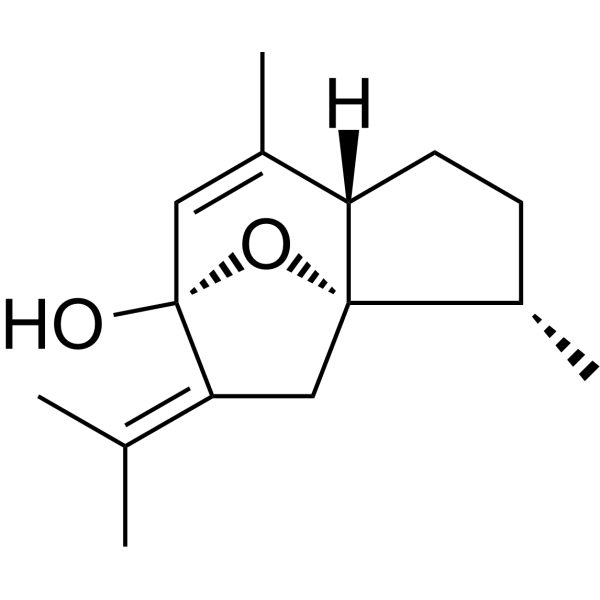
  • HY-124745
    KY-05009
    1 Publications Verification

    MAP4K Wnt Apoptosis Cancer
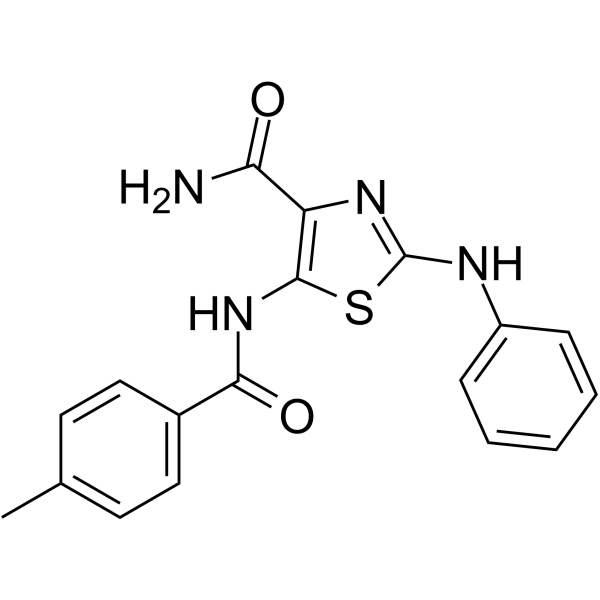
    KY-05009 is an ATP-competitive Traf2- and Nck-interacting kinase (TNIK) inhibitor with a Ki of 100 nM. KY-05009 pharmacologically inhibits TGF-β1-induced epithelial-to-mesenchymal transition (EMT) in human lung adenocarcinoma cells. KY-05009 inhibits the protein expression of TNIK and transcriptional activity of Wnt target genes and induces apoptosis in cancer cells. KY-05009 exerts anti-cancer activity [1].
    KY-05009
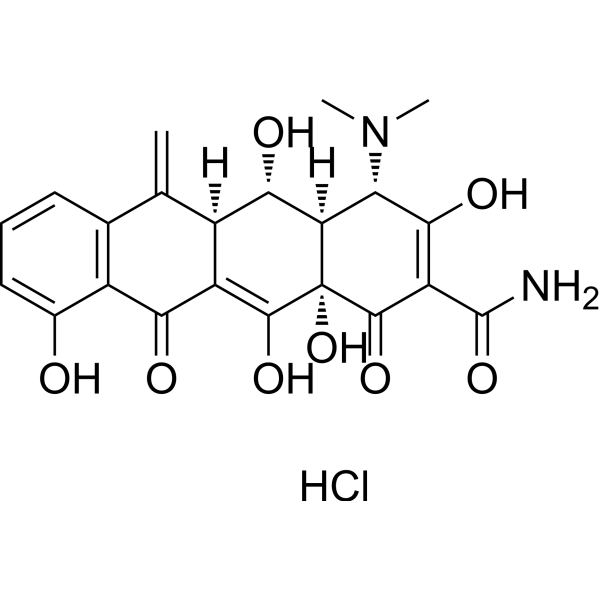
  • HY-B0449
    Methacycline hydrochloride
    2 Publications Verification

    Bacterial Antibiotic Infection
    Methacycline hydrochloride is a tetracycline antibiotic and can inhibits bacterial protein synthesis. Methacycline hydrochloride is a potent epithelial-mesenchymal transition (EMT) inhibitor. Methacycline hydrochloride blocks EMT in vitro and fibrogenesis in vivo without directly affecting TGF-β1 Smad signaling. Methacycline hydrochloride is an antimicrobial and has the potential for pulmonary fibrosis [1].
    Methacycline hydrochloride
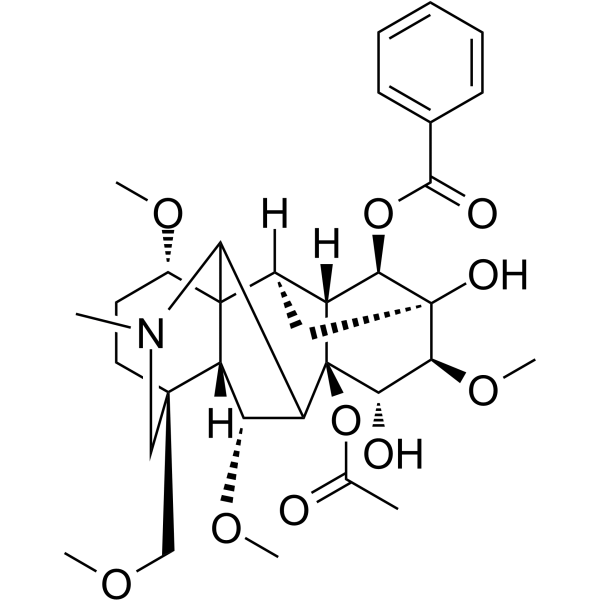
  • HY-N0267
    Hypaconitine
    2 Publications Verification

    NF-κB Potassium Channel Calcium Channel Cardiovascular Disease Neurological Disease Inflammation/Immunology Cancer
    Hypaconitine inhibits the KCNH2 current with an IC50 of 8.1 nM, and exhibits cardiotoxicity. Hypaconitine inhibits TGF-β1-induced epithelial-mesenchymal transition (EMT) in A549 cell through the inhibition of NF-κB nuclear translocation. Hypaconitine acts as the neuromuscular blocker. Hypaconitine is orally active [1] .
    Hypaconitine
  • HY-18766
    EW-7195
    1 Publications Verification

    TGF-β Receptor p38 MAPK Cancer
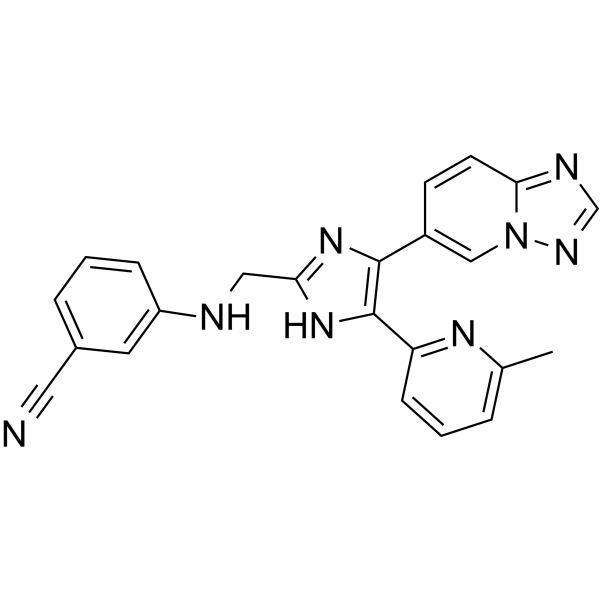
    EW-7195 is a potent and selective ALK5 (TGFβR1) inhibitor with an IC50 of 4.83 nM. EW-7195 has >300-fold selectivity for ALK5 over p38α. EW-7195 efficiently inhibits TGF-β1-induced Smad signaling, epithelial-to-mesenchymal transition (EMT) and breast tumour metastasis to the lung [1].
    EW-7195
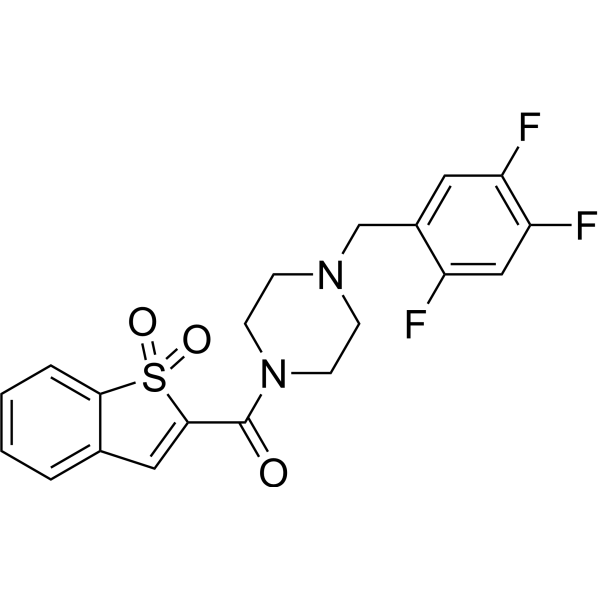
  • HY-151976
    STAT3-IN-15
    1 Publications Verification

    STAT Inflammation/Immunology
    STAT3-IN-15 is a potent and orally active STAT3 inhibitor against idiopathic pulmonary fibrosis (IPF). STAT3-IN-15 inhibits STAT3 phosphorylation. STAT3-IN-15 also inhibits the migration and deformation of epithelial cells induced by TGF-β1 and inhibit epithelial-mesenchymal transition (EMT) [1].
    STAT3-IN-15
  • HY-W005379

    TGF-beta/Smad Inflammation/Immunology
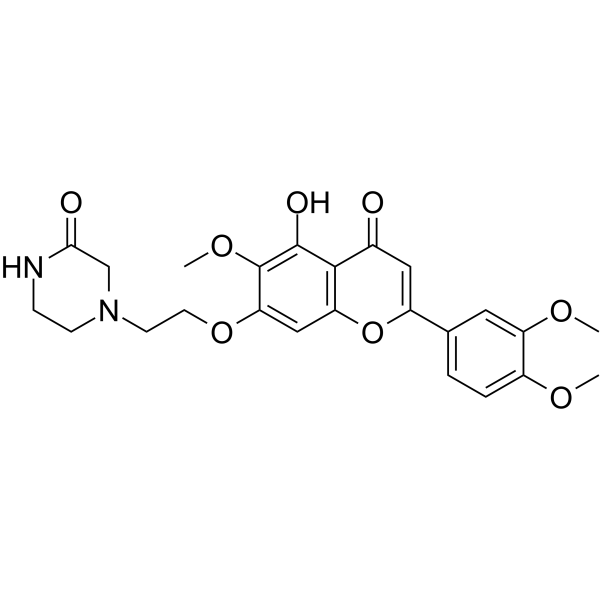
    DGM is an inhibitor of the TGF-β1/Smad signaling pathway with significant antifibrotic effects. DGM inhibits the epithelial-mesenchymal transition (EMT) process in alveolar epithelial cells and slows the progression of pulmonary fibrosis in vivo by reducing lung inflammation, improving lung function, and decreasing extracellular matrix (ECM) remodeling. DGM can be used in research on idiopathic pulmonary fibrosis (IPF) and EMT-related diseases [1].
    DGM
  • HY-128859

    Cytochrome P450 Metabolic Disease
    EMT inhibitor-2 (Compound 1) inhibits epithelial-mesenchymal transition (EMT) induced by substances such as IL-1β and TGF-β released from the immunocytes. EMT inhibitor-2 inhibits CYP3A4 testosteron and CYP2C9 with IC50s of 49.72 and 5.54 μM, respectively [1].
    EMT inhibitor-2
  • HY-151904

    TAM Receptor FLT3 PDGFR Cancer
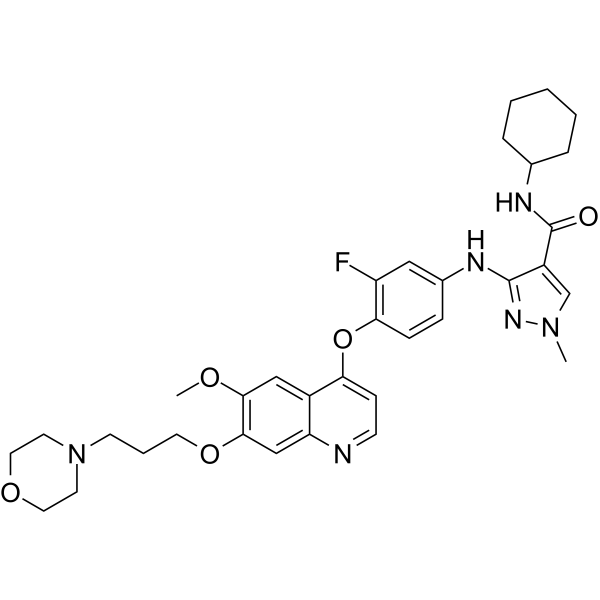
    AXL-IN-13 is a potent and orally active AXL inhibitor (IC50: 1.6 nM, Kd: 0.26 nM). AXL-IN-13 reverses TGF-β1-induced epithelial-mesenchymal transition (EMT), and inhibits cancer cell migration and invasion [1].
    AXL-IN-13
  • HY-W587701

    Bacterial Antibiotic
    Methacycline is a tetracycline antibiotic that inhibits bacterial protein synthesis. Methacycline is a potent inhibitor of epithelial-to-mesenchymal transition (EMT). Methacycline blocks EMT in vitro and inhibits fibrogenesis in vivo without directly affecting TGF-β1 Smad signaling. Methacycline is an antimicrobial agent with potential for use in pulmonary fibrosis research [1].
    Methacycline
  • HY-B0449R

    Reference Standards Bacterial Antibiotic Infection
    Methacycline (hydrochloride) (Standard) is the analytical standard of Methacycline (hydrochloride). This product is intended for research and analytical applications. Methacycline hydrochloride is a tetracycline antibiotic and can inhibits bacterial protein synthesis. Methacycline hydrochloride is a potent epithelial-mesenchymal transition (EMT) inhibitor. Methacycline hydrochloride blocks EMT in vitro and fibrogenesis in vivo without directly affecting TGF-β1 Smad signaling. Methacycline hydrochloride is an antimicrobial and has the potential for pulmonary fibrosis [1].
    Methacycline hydrochloride (Standard)
  • HY-N0267R

    Reference Standards NF-κB Potassium Channel Calcium Channel Cardiovascular Disease Neurological Disease Inflammation/Immunology Cancer
    Hypaconitine (Standard) is the analytical standard of Hypaconitine. This product is intended for research and analytical applications. Hypaconitine inhibits the KCNH2 current with an IC50 of 8.1 nM, and exhibits cardiotoxicity. Hypaconitine inhibits TGF-β1-induced epithelial-mesenchymal transition (EMT) in A549 cell through the inhibition of NF-κB nuclear translocation. Hypaconitine acts as the neuromuscular blocker. Hypaconitine is orally active [1] .
    Hypaconitine (Standard)
  • HY-169177

    JNK Inflammation/Immunology
    JNK-1-IN-4 (Compound E1) is an inhibitor for JNK, that inhibits JNK-1, JNK-2 and JNK-3 with IC50s of 2.7, 19.0 and 9.0 nM, respectively. JNK-1-IN-4 inhibits the phosphorylation of c-Jun, and reduces the expression of TGF-β1-induced EMT marker proteins, such as fibronectin and α-SMA. JNK-1-IN-4 exhibits good pharmacokinetic characteristics with a bioavailability of 69%. JNK-1-IN-4 exhibits anti-fibrotic effect in Bleomycin (HY-17565)-induced mice idiopathic pulmonary fibrosis models [1].
    JNK-1-IN-4
  • HY-170846

    FGFR VEGFR Bcr-Abl FLT3 Cytochrome P450 Inflammation/Immunology
    FGFRs-IN-1 (Compound A16) is the orally active inhibitor for FGFR, that inhibits FGFR1/2/3/4 with IC50s of 2.3, 7, 11, and 163 nM, respectively. FGFRs-IN-1 also inhibits VEGFR1/2/3, Abl, and Flt3 with IC50s of 61, 176, 112, 26, and 353 nM, respectively. FGFRs-IN-1 exhibits weak inhibitory efficacy against CYP enzymes. FGFRs-IN-1 reduces the expression of α-SMA and collagen I, and inhibits epithelial-mesenchymal transition (EMT) in TGF-β1 stimulated A549 cell. FGFRs-IN-1 exhibits anti-inflammatory activity in Bleomycin (HY-17565)-induced mouse pulmonary fibrosis model and CCl4 (HY-Y0298)-induced mouse liver fibrosis model [1].
    FGFRs-IN-1
  • HY-182796

    HyT JNK Cancer
    JNK1 degrader-1 is a JNK1 HyT degrader. JNK1 degrader-1 can induce JNK1 degradation through the HyT-mediated ubiquitin-proteasome system and autophagy-lysosome pathway. JNK1 degrader-1 inhibits TGF-β1-induced epithelial-mesenchymal transition (EMT). JNK1 degrader-1 can be used for research on fibrotic diseases and cancer metastasis. (Pink: JNK1 ligand (HY-183006); Blue: Hyt hydrophobic group (HY-W037848); Black: Linker (HY-B1008)) [1].
    JNK1 degrader-1
  • HY-179535

    TAM Receptor Discoidin Domain Receptor TGF-β Receptor Hedgehog Cancer
    Axl-IN-21 is an orally active and selective AXL inhibitor (Kd = 2.7 nM, IC50 = 4.0 nM). Axl-IN-21 displays kinase selectivity and retains strong activity against cancer-related mul-kinases (Mer with Kd = 1.4 nM, DDR1 with IC50 = 22.2 nM, HIPK4 with Kd = 11.0 nM and LOK with Kd =10 nM). Axl-IN-21 overcomes tumor microenvironment-driven resistance by blocking CAF-derived GAS6-induced AXL/STAT3/ABCG1 signaling, restoring chemosensitivity and inhibiting drug efflux in gastric cancer (GC). Axl-IN-21 suppresses TGF-β1-induced epithelial-mesenchymal transition (EMT), migration, and invasion in MDA-MB-231 cells. Axl-IN-21 exhibits no significant cytotoxicity in non-cancerous cells. Axl-IN-21 can be research for triple negative breast cancer and gastric cancer [1] [2] .
    Axl-IN-21
  • HY-182361

    AMPK JAK Cadherin Cancer
    NUAK1-IN-3 is a potent and selective NUAK1 inhibitor with an IC50 of 0.49 nM. NUAK1-IN-3 also inhibits NUAK2 and JAK3 with IC50 values of 265 and 225 nM. NUAK1-IN-3 engages Glu139 of NUAK1, forms a salt bridge between its bicyclic ring nitrogen and Asp142, and uses a fluorine atom to enhance hydrophobic binding interactions. NUAK1-IN-3 attenuates MYPT1 phosphorylation, suppresses the NUAK1-MYPT1 signaling axis, and inhibits proliferation, migration, and invasion of triple-negative breast cancer cells. NUAK1-IN-3 reverses TGF-β1-induced epithelial-mesenchymal transition (EMT) marker alterations, downregulates Snail and N-cadherin, and upregulates E-cadherin in tumor tissues. NUAK1-IN-3 suppresses tumor growth in triple-negative breast cancer xenograft models. NUAK1-IN-3 can be used for the research of triple-negative breast cancer [1].
    NUAK1-IN-3

온라인 문의

Your information is safe with us. * Required Fields.

호칭


Country or Region *

고객명 *


회사명 *

Department *


메일주소 *


상품명 *

Cat. No.


Requested quantity *

전화번호 *


비고

온라인 문의

Inquiry Information

상품명:
Cat. No.:
수량:
MCE Japan Authorized Agent:

