19 Results for "

TNBS-induced colitis

" in MedChemExpress (MCE) Product Catalog:
Products (19)

19 Results for "TNBS-induced colitis" in MCE Product Catalog:

3
3 Cited Publications
Cat. No.: HY-119347
CAS No.: 41365-32-6
Purity:  ≥98.0%
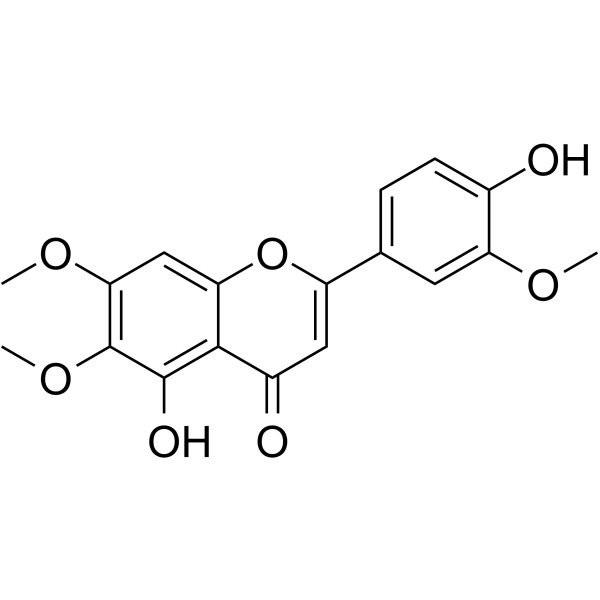
Cirsilineol, a natural flavone compound, selectively inhibits IFN-γ/STAT1/T-bet signaling in intestinal CD4 + T cells. Cirsilineol has potent immunosuppressive and anti-tumor properties. Cirsilineol significantly ameliorates trinitro-benzene sulfonic acid (TNBS)-induced T-cell-mediated experimental colitis in mice .
loading...
    loading...
2
2 Cited Publications
Cat. No.: HY-14149
CAS No.: 81098-60-4
Purity:  99.87%
Synonyms: R 51619; (±)-Cisaprid
Research Areas:  

Inflammation/Immunology

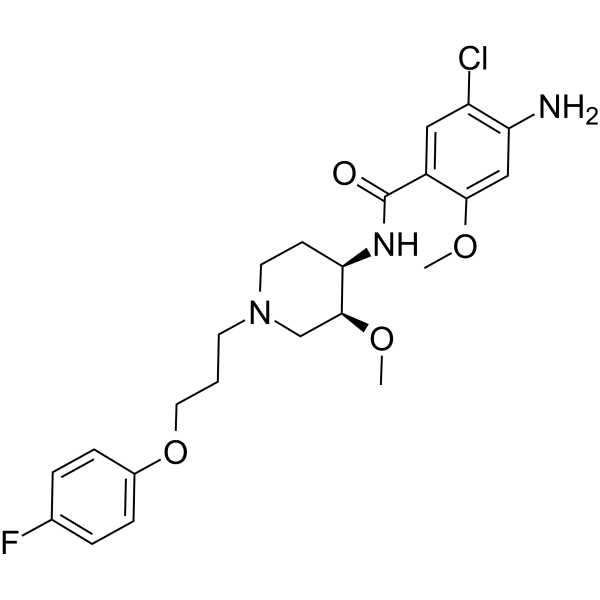
Cisapride (R 51619) is an orally active, selective 5-HT4 receptor agonist with an EC50 of 140 nM. Cisapride also acts as an hERG potassium channel blocker with an IC50 of 9.4 nM. Cisapride exerts gastrointestinal prokinetic effects by activating 5-HT4 receptors, but it also blocks the hERG potassium channel responsible for the repolarization phase of cardiac action potentials, delaying repolarization and thus prolonging the action potential duration . Cisapride can be used in research related to gastrointestinal dysfunction, gastroesophageal reflux disease, functional dyspepsia, chronic gastritis, gastroparesis, ulcerative colitis and necrotizing enterocolitis .
loading...
    loading...
2
2 Cited Publications
Cat. No.: HY-114360A
CAS No.: 38411-85-7
Purity:  99.60%
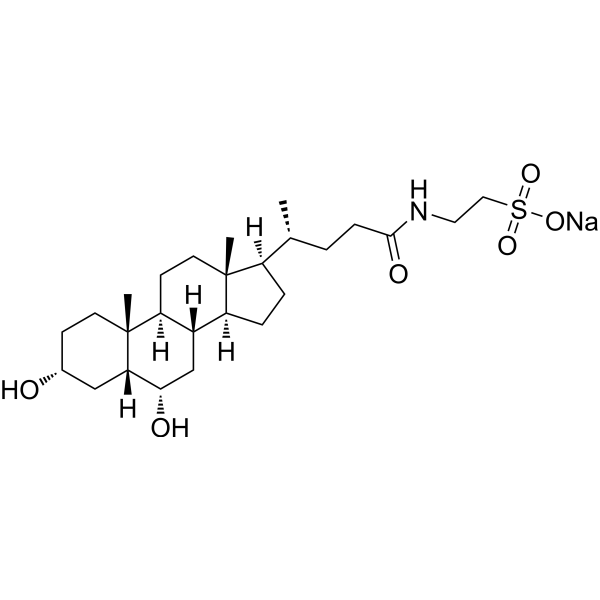
Taurohyodeoxycholic acid (THDCA) sodium is the taurine-conjugated form of the secondary bile acid hyodeoxycholic acid. Taurohyodeoxycholic acid can also reduce the activity and expression of myeloperoxidase TNF-α and IL-6, as well as colonic damage in TNBS-induced ulcerative colitis mouse model.
loading...
    loading...
2
2 Cited Publications
Cat. No.: HY-14149A
CAS No.: 260779-88-2
Synonyms: R 51619 monohydrate; (±)-Cisaprid monohydrate
Research Areas:  

Inflammation/Immunology

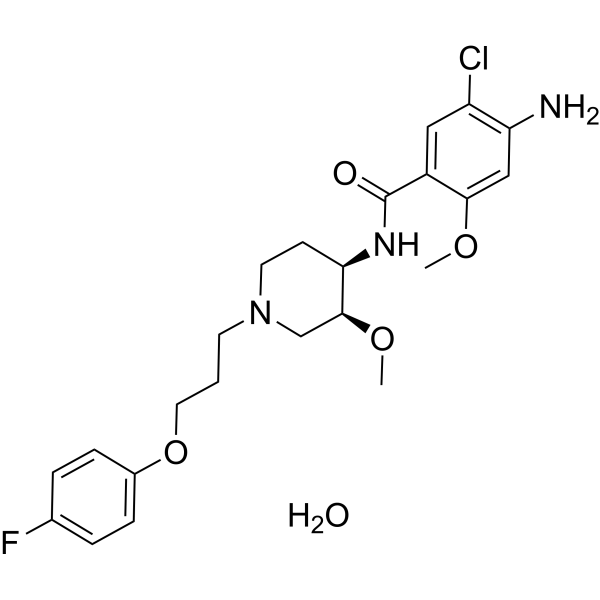
Cisapride (R 51619) monohydrate is an orally active, selective 5-HT4 receptor agonist with an EC50 of 140 nM. Cisapride monohydrate also acts as an hERG potassium channel blocker with an IC50 of 9.4 nM. Cisapride monohydrate exerts gastrointestinal prokinetic effects by activating 5-HT4 receptors, but it also blocks the hERG potassium channel responsible for the repolarization phase of cardiac action potentials, delaying repolarization and thus prolonging the action potential duration . Cisapride monohydrate can be used in research related to gastrointestinal dysfunction, gastroesophageal reflux disease, functional dyspepsia, chronic gastritis, gastroparesis, ulcerative colitis and necrotizing enterocolitis .
loading...
    loading...
Cat. No.: HY-P10587
CAS No.: 2763602-16-8
Synonyms: JNJ-77242113; JNJ-2113; PN-235
Research Areas:  

Inflammation/Immunology

Icotrokinra (JNJ-77242113) is an orally available, selective antagonist of the IL-23 receptor. Icotrokinra inhibits IL-23-induced STAT3 phosphorylation in peripheral blood mononuclear cells (IC50=5.6 pM) and inhibits IL-23-induced interferon IFN-γ production in NK cells with an IC50 of 18.4 pM. Icotrokinra exhibits anti-inflammatory activity in a rat TNBS-induced colitis model. Icotrokinra can be used in the study of psoriasis, psoriatic arthritis, and inflammatory bowel disease .
loading...
    loading...
Cat. No.: HY-B1230
CAS No.: 54-30-8
Target:  

mAChR

Research Areas:  

Inflammation/Immunology

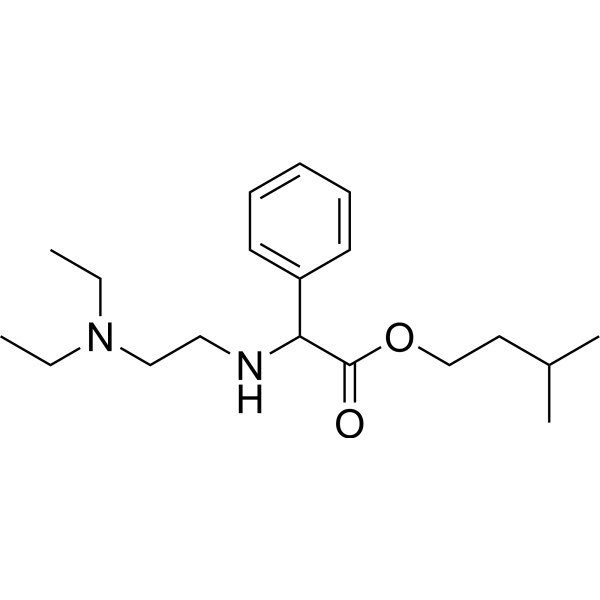
Camylofine is an antispasmodic agent with myogenic and neurogenic effects. Camylofine exhibits mild anticholinergic activity and blocks the M3 receptors on colonic smooth muscle. Camylofine dihydrochloride inhibits phosphodiesterase, elevates intracellular cAMP levels and reduces intracellular Ca 2+ levels, thereby promoting smooth muscle relaxation. Camylofine can be used in studies related to antispasmodia, gastrointestinal smooth muscle and ulcerative colitis .
loading...
    loading...
Cat. No.: HY-P10587A
Synonyms: JNJ-77242113 acetate; JNJ-2113 acetate; PN-235 acetate
Research Areas:  

Inflammation/Immunology

Icotrokinra (JNJ-77242113) acetate is an orally available, selective antagonist of the IL-23 receptor. Icotrokinra acetate inhibits IL-23-induced STAT3 phosphorylation in peripheral blood mononuclear cells (IC50=5.6 pM) and inhibits IL-23-induced interferon IFN-γ production in NK cells with an IC50 of 18.4 pM. Icotrokinra acetate exhibits anti-inflammatory activity in a rat TNBS-induced colitis model. Icotrokinra acetate can be used in the study of psoriasis, psoriatic arthritis, and inflammatory bowel disease .
loading...
    loading...
Cat. No.: HY-N11768
CAS No.: 51589-67-4
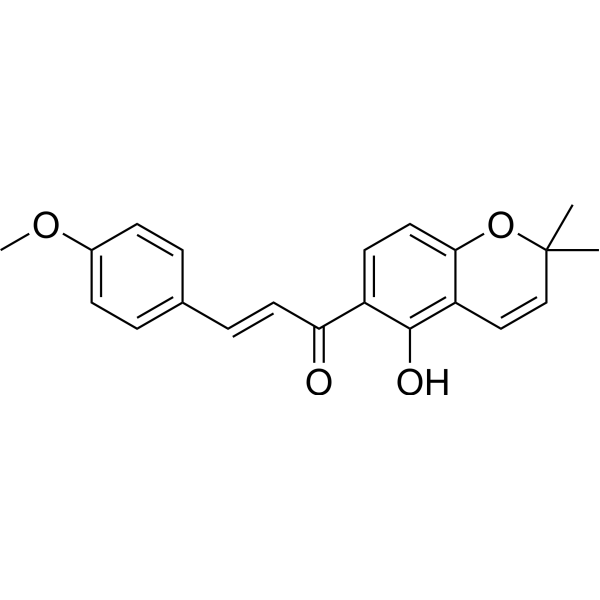
4-Methoxylonchocarpin is an orally active anti-inflammatory agent. 4-methoxylonchocarpin inhibits the binding of LPS to Toll-like Receptor (TLR) TLR4 to inhibit NF-κB activation and TNF Receptor and IL-6 expression. 4-Methoxylonchocarpin also inhibits the phosphorylation of TGF-beta activated kinase 1 and TNBS-induced expression of IL-1β, IL-17A, and TNF. 4-methoxylonchocarpin can improve 2,4, 6-trinitrobenzene sulfonic acid (TNBS)-induced colitis mouse model .
loading...
    loading...
Cat. No.: HY-114360AS1
Taurohyodeoxycholic acid-d4 (sodium) is a deuterated labeled Taurohyodeoxycholic acid (sodium) . Taurohyodeoxycholic acid (THDCA) sodium is the taurine-conjugated form of the secondary bile acid hyodeoxycholic acid. Taurohyodeoxycholic acid can also reduce the activity and expression of myeloperoxidase TNF-α and IL-6, as well as colonic damage in TNBS-induced ulcerative colitis mouse model.
loading...
    loading...
Cat. No.: HY-119347R
CAS No.: 41365-32-6
Cirsilineol (Standard) is the analytical standard of Cirsilineol. This product is intended for research and analytical applications. Cirsilineol, a natural flavone compound, selectively inhibits IFN-γ/STAT1/T-bet signaling in intestinal CD4+ T cells. Cirsilineol has potent immunosuppressive and anti-tumor properties. Cirsilineol significantly ameliorates trinitro-benzene sulfonic acid (TNBS)-induced T-cell-mediated experimental colitis in mice .
loading...
    loading...
Cat. No.: HY-189377
Research Areas:  

Inflammation/Immunology

SPH7050 is an orally active LANCL2 agonist with a Kd of 3.73 μM. SPH7050 inhibits PGE2 production. SPH7050 attenuates the disease activity index and colonic inflammation in TNBS-induced colitis in mice. SPH7050 can be used for research on inflammatory bowel disease .
loading...
    loading...
Cat. No.: HY-187551
CAS No.: 179487-75-3
NPC-18915 free base is a neutrophil activation inhibitor. NPC-18915 free base inhibits CD11b/CD18-mediated neutrophil adhesion. NPC-18915 free base induces shedding of L-selectin on the neutrophil surface, thereby reducing endothelial cell adhesion. NPC-18915 free base inhibits calcium ionophore-induced LTB4 synthesis in neutrophils. NPC-18915 free base reduces the severity of TNBS-induced acute and recurrent colitis in rat experiments. NPC-18915 free base can be used in studies related to colitis .
loading...
    loading...
Cat. No.: HY-B1230A
CAS No.: 5892-41-1
Target:  

mAChR

Research Areas:  

Inflammation/Immunology

Camylofine dihydrochloride is an antispasmodic agent with myogenic and neurogenic effects. Camylofine dihydrochloride exhibits mild anticholinergic activity and blocks the M3 receptors on colonic smooth muscle. Camylofine dihydrochloride inhibits phosphodiesterase, elevates intracellular cAMP levels and reduces intracellular Ca 2+ levels, thereby promoting smooth muscle relaxation. Camylofine dihydrochloride can be used in studies related to antispasmodia, gastrointestinal smooth muscle and ulcerative colitis .
loading...
    loading...
Cat. No.: HY-14149R
CAS No.: 81098-60-4
Synonyms: R 51619 (Standard); (±)-Cisaprid (Standard)
Cisapride (R 51619) (Standard) is the analytical standard of Cisapride (HY-14149). This product is intended for research and analytical applications. Cisapride (R 51619) is an orally active, selective 5-HT4 receptor agonist with an EC50 of 140 nM. Cisapride also acts as an hERG potassium channel blocker with an IC50 of 9.4 nM. Cisapride exerts gastrointestinal prokinetic effects by activating 5-HT4 receptors, but it also blocks the hERG potassium channel responsible for the repolarization phase of cardiac action potentials, delaying repolarization and thus prolonging the action potential duration . Cisapride can be used in research related to gastrointestinal dysfunction, gastroesophageal reflux disease, functional dyspepsia, chronic gastritis, gastroparesis, ulcerative colitis and necrotizing enterocolitis .
loading...
    loading...
Cat. No.: HY-14149S
CAS No.: 2738376-71-9
Synonyms: R51619-d6; (±)-Cisaprid-d6
Cisapride-d6 (R51619-d6) is the deuterated-labeled Cisapride (HY-14149). Cisapride (R 51619) is an orally active, selective 5-HT4 receptor agonist with an EC50 of 140 nM. Cisapride also acts as an hERG potassium channel blocker with an IC50 of 9.4 nM. Cisapride exerts gastrointestinal prokinetic effects by activating 5-HT4 receptors, but it also blocks the hERG potassium channel responsible for the repolarization phase of cardiac action potentials, delaying repolarization and thus prolonging the action potential duration . Cisapride can be used in research related to gastrointestinal dysfunction, gastroesophageal reflux disease, functional dyspepsia, chronic gastritis, gastroparesis, ulcerative colitis and necrotizing enterocolitis .
loading...
    loading...
Cat. No.: HY-W777120
CAS No.: 1285970-69-5
Synonyms: R 51619-13C,d3; (±)-Cisaprid-13C,d3
Cisapride- 13C,d3 (R 51619- 13C,d3) is the deuterated, 13C-labeled Cisapride (HY-14149). Cisapride (R 51619) is an orally active, selective 5-HT4 receptor agonist with an EC50 of 140 nM. Cisapride also acts as an hERG potassium channel blocker with an IC50 of 9.4 nM. Cisapride exerts gastrointestinal prokinetic effects by activating 5-HT4 receptors, but it also blocks the hERG potassium channel responsible for the repolarization phase of cardiac action potentials, delaying repolarization and thus prolonging the action potential duration . Cisapride can be used in research related to gastrointestinal dysfunction, gastroesophageal reflux disease, functional dyspepsia, chronic gastritis, gastroparesis, ulcerative colitis and necrotizing enterocolitis .
loading...
    loading...
Cat. No.: HY-P10587B
Synonyms: JNJ-77242113 hydrochloride; JNJ-2113 hydrochloride; PN-235 hydrochloride
Research Areas:  

Inflammation/Immunology

Icotrokinra (JNJ-77242113) hydrochloride is an orally available, selective antagonist of the IL-23 receptor. Icotrokinra hydrochloride inhibits IL-23-induced STAT3 phosphorylation in peripheral blood mononuclear cells (IC50=5.6 pM) and inhibits IL-23-induced interferon IFN-γ production in NK cells with an IC50 of 18.4 pM. Icotrokinra hydrochloride exhibits anti-inflammatory activity in a rat TNBS-induced colitis model. Icotrokinra hydrochloride can be used in the study of psoriasis, psoriatic arthritis, and inflammatory bowel disease .
loading...
    loading...
Cat. No.: HY-12292G
CAS No.: 1129669-05-1
IM-12 GMP is IM-12 (HY-12292) produced by using GMP guidelines. GMP small molecules works appropriately as an auxiliary reagent for cell therapy manufacture. IM-12 is an orally active anti-inflammatory agent that targets and inhibits the NF-κB and STAT3 signaling pathways. IM-12 activates the Wnt signaling pathway and promotes the nuclear translocation of β-catenin by inhibiting GSK3β, while also blocking the tyrosine kinase activity of p210BCR/ABL. IM-12 reduces the levels of IL-6, IL-17, NO, prostaglandin E2, iNOS and COX-2, and induces ER stress, Ca 2+ release, autophagy and apoptosis. IM-12 is heat-sensitive and does not induce autophagy in IM-resistant p210BCR/ABL T315I mutant cells. IM-12 is also a component of the 5iLA medium used for naive pluripotent stem cell research. IM-12 has been applied in studies related to carrageenan (HY-125474)-induced hind paw edema, TNBS-induced colitis, and acute and chronic myeloid leukemia .
loading...
    loading...
Cat. No.: HY-188018
Target:  

TNF Receptor

Research Areas:  

Inflammation/Immunology

Mouse Tnf ASO is an antisense oligonucleotide (ASO) that targets the expression of mouse TNF-α. Mouse Tnf ASO reduces the tissue levels of various pro-inflammatory cytokines, Th1 cytokines and Th17 cytokines. Mouse Tnf ASO improves the clinical and histopathological severity of experimental colitis, including alleviating weight loss, diarrhea and intestinal protein loss. Mouse Tnf ASO can be delivered to activated colonic macrophages in mice via galactosylated low-molecular-weight chitosan nanocomplexes, with higher delivery efficiency compared to naked ASO. Mouse Tnf ASO can be used in the research of Crohn's disease .
loading...
    loading...
  • 1

