1. Search Result
Search Result
Results for "

Trifluoromethanesulfonate

" in MedChemExpress (MCE) Product Catalog:

24

Inhibitors & Agonists

2

Fluorescent Dyes

7

Biochemical Assay Reagents

4

Peptides

3

Isotope-Labeled Compounds

1

Oligonucleotides

Cat. No. 상품명 Target 연구분야 Chemical Structure
  • HY-15594A

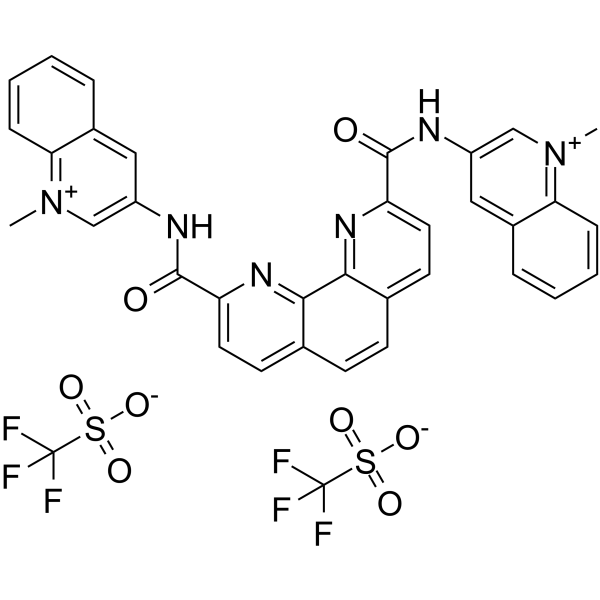
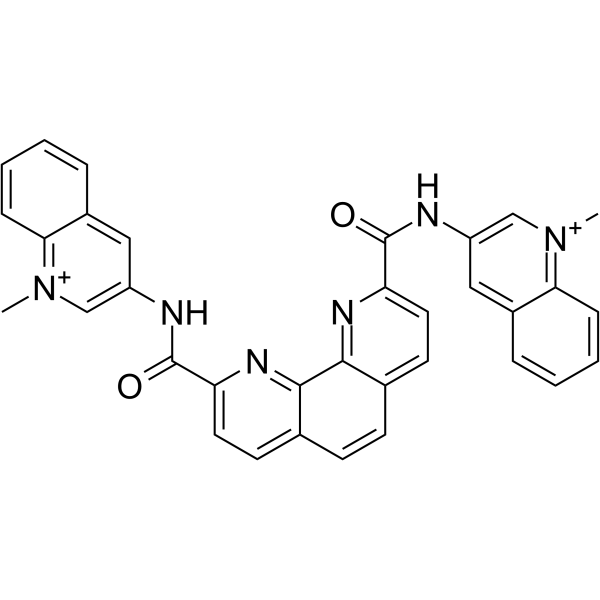
    Phen-DC3 Triflate

    G-quadruplex Cancer
    Phen-DC3 Trifluoromethanesulfonate is a G-quadruplex (G4) specific ligand which can inhibit FANCJ and DinG helicases with IC50s of 65±6 and 50±10 nM, respectively.
    Phen-DC3 Trifluoromethanesulfonate
  • HY-W020983

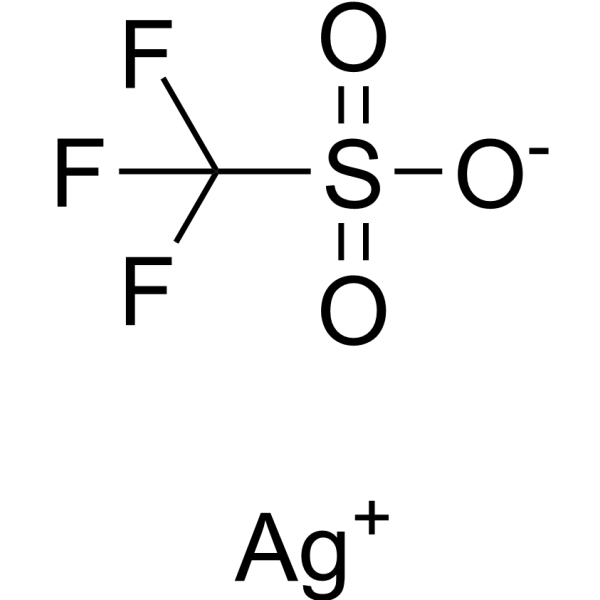
    Triflic acid silver; Perfluoromethanesulfonic acid silver; Fluorad FC 24 silver

    Biochemical Assay Reagents Others
    Silver trifluoromethanesulfonate, a perfluoroalkanesulfonic acid, is one of the superior catalysts for C- or O-acylation. Silver trifluoromethanesulfonate is widely used as a cationic catalyst in promoting Friedel-Crafts reactions and esterification reactions .
    Silver trifluoromethanesulfonate
  • HY-19997

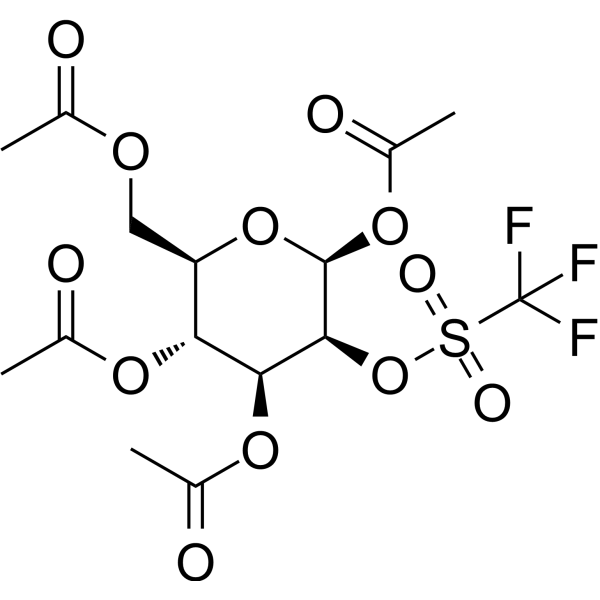
    TATM

    Biochemical Assay Reagents Cancer
    Mannose triflate is a glucose analog. Mannose triflate is a precursor for 18F-FDG synthesis for PET applications. Mannose triflate binds to 18F via SN2 nucleophilic substitution reaction. Mannose triflate can be used for an imaging technique in detection of cancer .
    Mannose triflate
  • HY-W042557

    Biochemical Assay Reagents Others
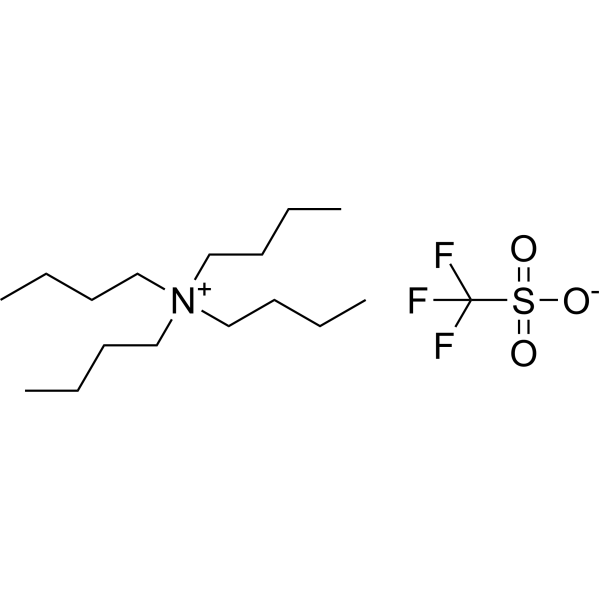
    Tetrabutylammonium trifluoromethanesulfonate, commonly known as TBAOTf. TBAOTf is widely used as a strong acid catalyst and phase transfer agent in organic synthesis, especially for reactions involving nucleophilic substitution, elimination, and rearrangement, in addition, it is also used as an electrolyte additive for rechargeable batteries and a stabilizer of supercritical fluids Due to its high stability, solubility and selectivity, TBAOTf is considered to be a highly efficient and multifunctional reagent in various applications.
    Tetrabutylammonium trifluoromethanesulfonate
  • HY-21170B

    Triflate lithium; Trifluoromethylsulfonate lithium; Trifluoromethanesulphonic acid lithium

    Biochemical Assay Reagents Herbicide Others
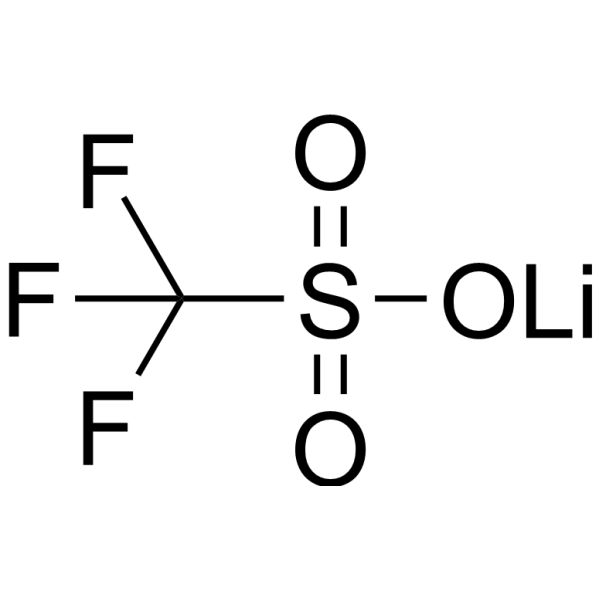
    Trifluoromethanesulfonate (Triflate;Trifluoromethylsulfonate) lithium is a stable lithium salt and dopant with four resonance states, which is commonly used as an electrolyte component in polymer light-emitting electrochemical cells and primary lithium batteries. Trifluoromethanesulfonate lithiumalso acts as a catalyst for the preparation of the herbicide Imazapyr. In MEH-PPV-based light-emitting electrochemical cells, Trifluoromethanesulfonate lithium promotes electrochemical p-type doping at the anode interface under applied bias, thereby facilitating the formation of p-i-n junctions, exciton generation, and light emission. Trifluoromethanesulfonate lithiumexhibits strong ion pairing in non-aqueous electrolytes, but its electrochemical stability window is narrower than that of lithium bistrifluoromethylsulfonyl imidee .
    Trifluoromethanesulfonate lithium
  • HY-W127678

    Tetraethylammonium (trifluoromethanesulphonate)

    Biochemical Assay Reagents Others
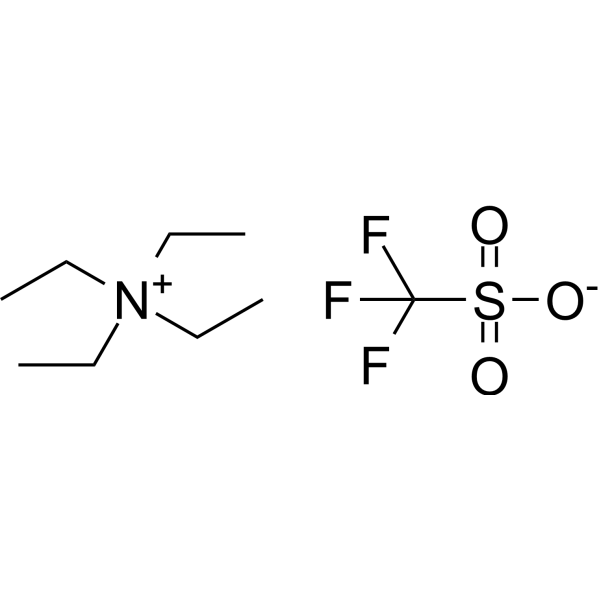
    Tetraethylammonium trifluoromethanesulfonate is a quaternary ammonium salt commonly used as a phase transfer catalyst in various chemical reactions, especially in organic synthesis. Tetraethylammonium trifluoromethanesulfonate has unique chemical properties that allow it to facilitate the transfer of ions or molecules from one phase to another, making it an important ingredient in a variety of industrial processes.
    Tetraethylammonium trifluoromethanesulfonate
  • HY-21170E

    Zinc(II) Triflate

    Biochemical Assay Reagents Others
    Zinc trifluoromethanesulfonate (Zinc (II) Triflate) is a Zn 2+ salt commonly used in potentiometric titration to determine the stability constants of Zn 2+-quinoline sulfonamide complexes. Aqueous solutions of Zinc trifluoromethanesulfonate form micellar structures, which result in poor desolvation kinetics of Zn 2+ and induce dendrite growth on zinc anodes, failing to support long-term cycling of zinc anodes .
    Zinc trifluoromethanesulfonate
  • HY-W415108

    Fluorescent Dye Others
    10-Methyl-9-(phenoxycarbonyl) acridinium trifluoromethanesulfonate is an acridinium ester that produces fluorescent 10-methyl-9-acridone upon oxidation with hydrogen peroxide, persulfate, and other oxidants under alkaline conditions. 10-Methyl-9-(phenoxycarbonyl) acridinium trifluoromethanesulfonate can be used in chemiluminescent assays, enzyme, antigen, antibody, and hormone immunoassays, and for the detection of oxidants in environmental, biological, and pharmaceutical samples .
    10-Methyl-9-(phenoxycarbonyl) acridinium trifluoromethanesulfonate
  • HY-W016916

    Triflic acid sodium; Perfluoromethanesulfonic acid sodium; Fluorad FC 24 sodium

    Biochemical Assay Reagents Others
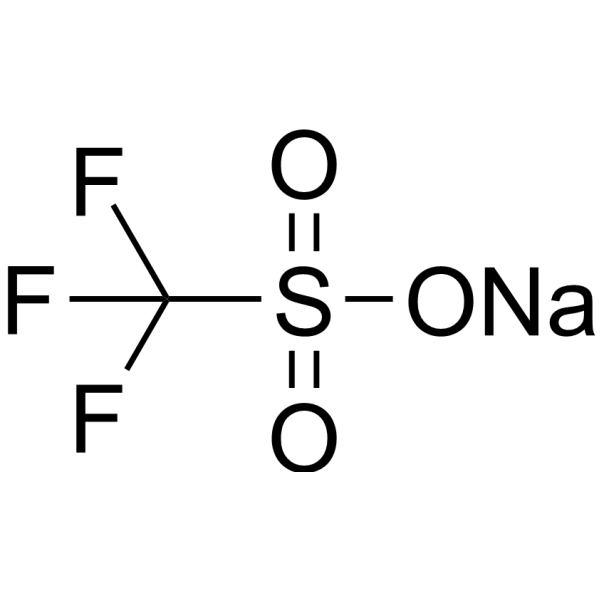
    Sodium trifluoromethanesulfonate is a biochemical reagent that can be used as a biological material or organic compound for life science related research.
    Trifluoromethanesulfonic acid sodium
  • HY-P2496

    Endothelin Receptor Fluorescent Dye NF-κB COX Prostaglandin Receptor Apoptosis TNF Receptor Interleukin Related MMP Cardiovascular Disease Inflammation/Immunology Cancer
    Endothelin 1 (swine, human), Alexa Fluor 488-labeled is an Endothelin-1 conjugated with Alexa Fluor 488 (HY-D1304). Endothelin-1 is an endogenous vasoconstrictor and agonist of ETA/ETB receptor. Endothelin 1 (swine, human) exerts effects including promoting mitosis, angiogenesis, tumor invasion and metastasis, and inhibiting apoptosis. Endothelin 1 (swine, human) induces inflammation and oxidative stress by activating the NF-κB pathway. Endothelin 1 (swine, human), Alexa Fluor 488-labeled is specifically designed for fluorescence imaging, flow cytometry or receptor localization studies, and can be used in research related to sepsis, atherosclerosis, systemic inflammatory response syndrome, cancer and congestive heart failure .
    Endothelin 1 (swine, human), Alexa Fluor 488-labeled
  • HY-P5372A

    Protease Activated Receptor (PAR) Cancer
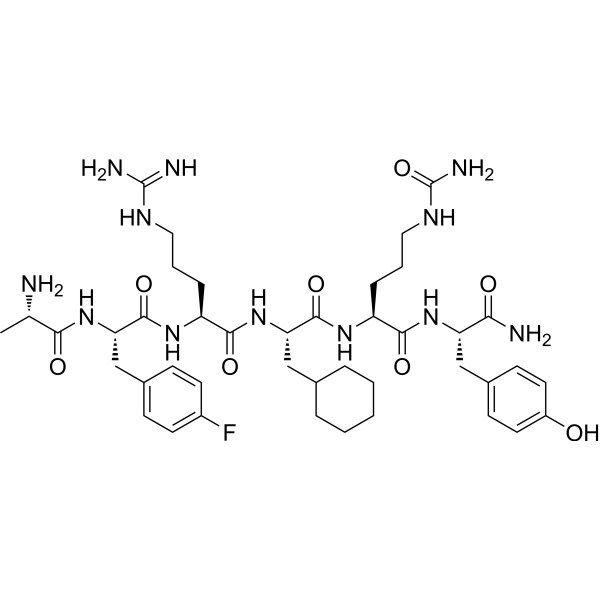
    Ala-parafluoroPhe-Arg-Cha-Cit-Tyr-NH2 TFA, a bioactive peptide, is a selective Protease activating receptor 1 (PAR-1) agonist over PAR-2. PAR-1 belongs to a subfamily of G-protein coupled receptors and is known to mediate the cellular effects of thrombin. In addition to its varied cellular effects of thrombin, PAR-1 has also been shown to coordinate with PAR-4 and regulate thrombin-induced hepatocellular carcinoma harboring thrombin formation within the tumor environment classified as 'coagulation type' .
    Ala-parafluoroPhe-Arg-Cha-Cit-Tyr-NH2 TFA
  • HY-150175

    Fluorescent Dye Inflammation/Immunology
    HKSOX-1 and its derivatives (HKSOX-1r and HKSOX-1m) are novel fluorescent probes designed for highly sensitive and selective detection of the superoxide anion radical (O2 •−) in cellular environments. These probes utilize an aryl trifluoromethanesulfonate group that undergoes O2 •−-mediated cleavage, releasing a free phenol and emitting fluorescence. They demonstrate excellent specificity and sensitivity across various pH ranges, withstand interference from strong oxidants and reductants typical in cellular contexts. HKSOX-1r, optimized for cellular retention, has been effectively employed in diverse assays including confocal imaging, flow cytometry, and zebrafish embryo studies, highlighting its utility in investigating O2 •− roles in inflammation, mitochondrial stress, and other physiological processes .
    HKSOX-1
  • HY-W599086

    Drug Intermediate Others
    3-((tert-Butoxycarbonyl)amino)-7-fluoro-8-((triisopropylsilyl)ethynyl)naphthalen-1-yl trifluoromethanesulfonate is a drug intermediate for synthesis of various active compounds.
    3-((tert-Butoxycarbonyl)amino)-7-fluoro-8-((triisopropylsilyl)ethynyl)naphthalen-1-yl trifluoromethanesulfonate
  • HY-W733807

    Isotope-Labeled Compounds Others
    Methyl trifluoromethanesulfonate-d3 is the deuterium labeled Methyl trifluoromethanesulfonate.
    Methyl trifluoromethanesulfonate-d3
  • HY-P5372

    Protease Activated Receptor (PAR) Cancer
    Ala-parafluoroPhe-Arg-Cha-Cit-Tyr-NH2, a bioactive peptide, is a selective Protease activating receptor 1 (PAR-1) agonist over PAR-2. PAR-1 belongs to a subfamily of G-protein coupled receptors and is known to mediate the cellular effects of thrombin. In addition to its varied cellular effects of thrombin, PAR-1 has also been shown to coordinate with PAR-4 and regulate thrombin-induced hepatocellular carcinoma harboring thrombin formation within the tumor environment classified as 'coagulation type' .
    Ala-parafluoroPhe-Arg-Cha-Cit-Tyr-NH2
  • HY-W709869

    Isotope-Labeled Compounds Others
    2-Allylphenyl trifluoromethanesulfonate-d4 is the deuterium labeled 2-Allylphenyl trifluoromethanesulfonate (HY-W709867).
    2-Allylphenyl trifluoromethanesulfonate-d4
  • HY-144015

    Liposome Others
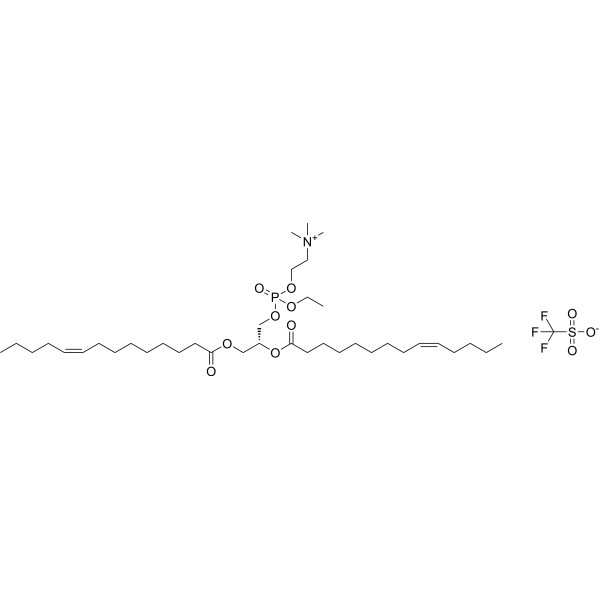
    14:1 EPC trifluoromethanesulfonate is ethyl-phosphatidylcholine (EPC) with monounsaturated 14:1 chains. 14:1 EPC trifluoromethanesulfonate shows transfection activity. 14:1 EPC trifluoromethanesulfonate can be used for drug delivery .
    14:1 EPC trifluoromethanesulfonate
  • HY-157044

    Bacterial Infection Cancer
    Antibacterial agent 162 trifluoromethanesulfonate (compound 7) is an antibacterial agent that exhibits potent inhibitory activity against Staphylococcus aureus, including MRSA. Antibacterial agent 162 trifluoromethanesulfonate is also an anticancer agent and exhibits antiproliferative activity against colon cancer and non-small cell lung cancer cells. Antibacterial agent 162 trifluoromethanesulfonate can be used in anticancer and antibacterial research .
    Antibacterial agent 162 trifluoromethanesulfonate
  • HY-157043

    Bacterial Infection
    Antibacterial agent 161 trifluoromethanesulfonate (Compound 6) has antibacterial activity. Antibacterial agent 161 trifluoromethanesulfonate has high antiproliferative effects against colon cancer and non-small cell lung cancer .
    Antibacterial agent 161 trifluoromethanesulfonate
  • HY-W087861

    Isotope-Labeled Compounds Others
    5-Methyl-5H-dibenzo[b,d]thiophen-5-ium trifluoromethanesulfonate-d3 is the deuterium labeled 5-Methyl-5H-dibenzo[b,d]thiophen-5-ium trifluoromethanesulfonate .
    5-Methyl-5H-dibenzo[b,d]thiophen-5-ium trifluoromethanesulfonate-d3
  • HY-173163

    Bacterial Infection
    (E)-2,6-Di-tert-butyl-4-(4-(diethylamino)styryl)pyrylium (trifluoromethanesulfonate) (Compound 4a) is a Gram-negative outer membrane permeabilizer with synergistic antibacterial activity through the blockage on LptA/LptC interaction via targeting Met47 in LptA. (E)-2,6-Di-tert-butyl-4-(4-(diethylamino)styryl)pyrylium (trifluoromethanesulfonate) potentiates pol B against both wild-typed and MDR A. baumannii and E. coli strains. (E)-2,6-Di-tert-butyl-4-(4-(diethylamino)styryl)pyrylium (trifluoromethanesulfonate) can be used as antibiotic adjuvants against MDR Gram-negative bacteria .
    (E)-2,6-Di-tert-butyl-4-(4-(diethylamino)styryl)pyrylium trifluoromethanesulfonate
  • HY-168322

    Fluorescent Dye Others
    2-Hydroxy nile red trifluoromethanesulfonate is a fluorescent probe, that enters into oligodeoxyribonucleic acid as a nucleotide replacement. 2-Hydroxy nile red trifluoromethanesulfonate can be used as a DNA probe for detecting the polar changes in tumor microenvironments .
    2-Hydroxy nile red trifluoromethanesulfonate
  • HY-D3379

    Neuro-DiO trifluoromethanesulfonate
  • HY-W249357

    MOFs Others
    Mono(2,2'-(ethyne-1,2-diyl)bis(1-(but-3-yn-1-yl)pyridin-1-ium)) mono(trifluoromethanesulfonate) is a metal-organic framework (MOF).
    Mono(2,2'-(ethyne-1,2-diyl)bis(1-(but-3-yn-1-yl)pyridin-1-ium)) monotrifluoromethanesulfonate

온라인 문의

Your information is safe with us. * Required Fields.

호칭


Country or Region *

고객명 *


회사명 *

Department *


메일주소 *


상품명 *

Cat. No.


Requested quantity *

전화번호 *


비고

온라인 문의

Inquiry Information

상품명:
Cat. No.:
수량:
MCE Japan Authorized Agent:

