

1. Search Result
Search Result
Results for "

VEGF

" in MedChemExpress (MCE) Product Catalog:

314

Inhibitors & Agonists

3

Screening Libraries

6

Biochemical Assay Reagents

28

Peptides

42

Inhibitory Antibodies

61

Natural
Products

81

Recombinant Proteins

9

Isotope-Labeled Compounds

23

Antibodies

1

Click Chemistry

20

Oligonucleotides

Cat. No. Product Name Target Research Areas Chemical Structure
  • HY-P9906
    Bevacizumab
    Maximum Cited Publications
    51 Publications Verification

    Anti-Human VEGF, Humanized Antibody

    VEGFR Cancer
    Bevacizumab, a humanized IgG1 monoclonal antibody, specifically binds to all VEGF-A isoforms with high affinity.
    Bevacizumab
  • HY-B0239
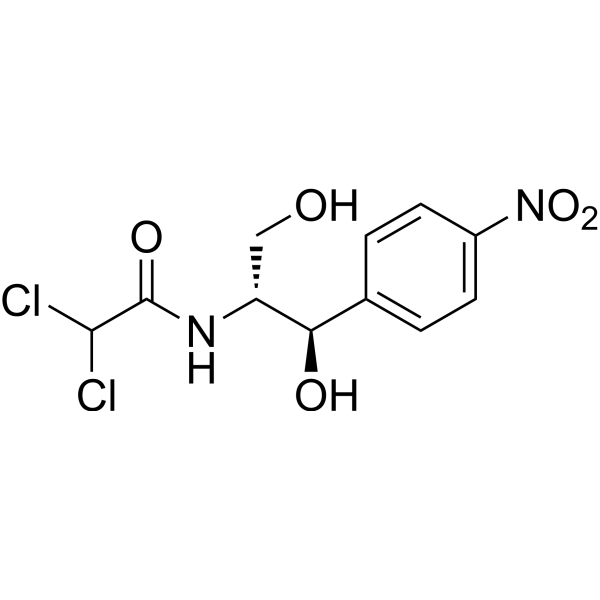
    Chloramphenicol
    15+ Cited Publications

    Antibiotic Bacterial HIF/HIF Prolyl-Hydroxylase VEGFR Autophagy Apoptosis Beclin1 JNK Akt MMP Infection Cancer
    Chloramphenicol is an orally active, potent and broad-spectrum antibiotic. Chloramphenicol shows antibacterial activity. Chloramphenicol represses the oxygen-labile transcription factor and hypoxia inducible factor-1 alpha (HIF-1α) in hypoxic A549 and H1299 cells. Chloramphenicol suppresses the mRNA levels of vascular endothelial growth factor (VEGF) and glucose transporter 1, eventually decreasing VEGF release. Chloramphenicol can be used for anaerobic infections and lung cancer research .
    Chloramphenicol
  • HY-P9906A
    Bevacizumab (Anti-VEGFA)
    Maximum Cited Publications
    51 Publications Verification

    VEGFR Cancer
    Bevacizumab, a humanized IgG1 monoclonal antibody, specifically binds to all VEGF-A isoforms with high affinity .
    Bevacizumab (Anti-VEGFA)
  • HY-P99675
    Ivonescimab
    1 Publications Verification

    AK112

    PD-1/PD-L1 VEGFR Cancer
    Ivonescimab (AK112) is a PD-1/VEGF bispecific antibody. Ivonescimab competitively inhibiting PD-1/PD-L1 interaction, reversing the immunosuppression mediated by it, and blocks the binding of VEGF-A to VEGFR2, inhibiting tumour angiogenesis in the tumour microenvironment. Ivonescimab also has significantly anticancer activity against EGFR-mutated locally advanced or metastatic non-squamous non-small cell lung cancer (NSCL) .
    Ivonescimab
  • HY-B0223
    Albendazole
    5+ Cited Publications

    SKF-62979

    Parasite Microtubule/Tubulin Autophagy Apoptosis Reactive Oxygen Species (ROS) VEGFR HIF/HIF Prolyl-Hydroxylase Antibiotic Bacterial Infection Cancer
    Albendazole (SKF-62979) is an orally active and broad-spectrum parasiticide with high effectiveness and low host toxicity, is used for the research of gastrointestinal parasites in humans and animals. Albendazole induces apoptosis and autophagy in cancer cells. Albendazole also inhibits tubulin polymerization and HIF-1α, VEGF expression, has antioxidant activity, and inhibits the glycolytic process in cancer cells .
    Albendazole
  • HY-108801A
    Aflibercept (VEGF Trap)
    1 Publications Verification

    VEGFR Cardiovascular Disease Metabolic Disease Cancer
    Aflibercept (VEGF Trap) is a soluble decoy VEGFR constructed by fusing the Ig domains of VEGFR1 and VEGFR2 with the Fc region of human IgG1. Aflibercept inhibits VEGF signaling by reducing VEGF-regulated processes. Aflibercept can be used for thr research of age-related macular degeneration (AMD) and cardiovascular disease .
    Aflibercept (VEGF Trap)
  • HY-17369B
    Tirofiban
    5+ Cited Publications

    L700462; MK383

    Integrin Cardiovascular Disease
    Tirofiban (L700462) is a selective and reversible platelet integrin receptor (Gp IIb/IIIa) antagonist that inhibits fibrinogen binding to this receptor and has antithrombotic activity. Tirofiban induces proliferation and migration on endothelial cell by inducing production of VEGF. Tirofiban can significantly reduces myocardial no-reflow and ischemia-reperfusion injury by alleviating myocardial microvascular structural and endothelial dysfunction in the ischemic area .
    Tirofiban
  • HY-110066
    (Z)-Guggulsterone
    5+ Cited Publications

    Apoptosis VEGFR Akt Angiotensin-converting Enzyme (ACE) SARS-CoV FXR Cardiovascular Disease Cancer
    (Z)-Guggulsterone, a constituent of Indian Ayurvedic medicinal plant Commiphora mukul, inhibits the growth of human prostate cancer cells by causing apoptosis. (Z)-Guggulsterone inhibits angiogenesis by suppressing the VEGF–VEGF-R2–Akt signaling axis . (Z)-Guggulsterone is also a potent FXR antagonist. (Z)-Guggulsterone reduces ACE2 expression and SARS-CoV-2 infection .
    (Z)-Guggulsterone
  • HY-P9951A
    Ranibizumab (anti-VEGF)
    1 Publications Verification

    RG-6321 (anti-VEGF)

    VEGFR Cardiovascular Disease
    Ranibizumab (RG-6321) (anti-VEGF) is a humanized anti-VEGF monoclonal antibody fragment and can recognize all VEGF-A isoforms (VEGF110, VEGF121, and VEGF165) . Ranibizumab (anti-VEGF) slows vision loss in vivo and is used for wet age-related macular degeneration (AMD) research .
    Ranibizumab (anti-VEGF)
  • HY-108801
    Aflibercept
    1 Publications Verification

    VEGF Trap; VEGF-TRAPR1R2; VEGF-trapR1

    VEGFR Cardiovascular Disease Metabolic Disease Cancer
    Aflibercept (VEGF Trap) is a soluble decoy VEGFR constructed by fusing the Ig domains of VEGFR1 and VEGFR2 with the Fc region of human IgG1. Aflibercept inhibits VEGF signaling by reducing VEGF-regulated processes. Aflibercept can be used for thr research of age-related macular degeneration (AMD) and cardiovascular disease .
    Aflibercept
  • HY-P990148
    Anti-Mouse VEGF-A Antibody (2G11-2A05)
    1 Publications Verification

    VEGFR Cancer
    Anti-Mouse VEGF-A Antibody (2G11-2A05) is a rat-derived IgG2a κ type antibody inhibitor, tragrting to mouse VEGF-A with high affinity. Anti-Mouse VEGF-A Antibody (2G11-2A05) shows good anti-tumor effect in gastric cancer xenograft models .
    Anti-Mouse VEGF-A Antibody (2G11-2A05)
  • HY-17369

    L700462 hydrochloride monohydrate; MK383 hydrochloride monohydrate

    Integrin Cardiovascular Disease
    Tirofiban (L700462) hydrochloride monohydrate is a selective and reversible platelet integrin receptor (Gp IIb/IIIa) antagonist that inhibits fibrinogen binding to this receptor and has antithrombotic activity. Tirofiban hydrochloride monohydrate induces proliferation and migration on endothelial cell by inducing production of VEGF. Tirofiban hydrochloride monohydrate can significantly reduces myocardial no-reflow and ischemia-reperfusion injury by alleviating myocardial microvascular structural and endothelial dysfunction in the ischemic area .
    Tirofiban hydrochloride monohydrate
  • HY-P9920A
    Ramucirumab (anti-VEGFR)
    1 Publications Verification

    VEGFR Cancer
    Ramucirumab (anti-VEGFR) is a human VEGFR-2 antagonist for the treatment of solid tumors. Ramucirumab (anti-VEGFR) is a recombinant human immunoglobulin G1 monoclonal antibody that binds to the extracellular binding domain of VEGFR-2 and prevents the binding of VEGFR ligands: VEGF-A, VEGF-C, and VEGF-D. Ramucirumab (anti-VEGFR) is also an angiogenesis inhibitor .
    Ramucirumab (anti-VEGFR)
  • HY-107818
    4-Hydroxychalcone
    2 Publications Verification

    ERK Akt Cardiovascular Disease Inflammation/Immunology Endocrinology
    4-Hydroxychalcone is an orally active flavonoid precursor. 4-Hydroxychalcone inhibits VEGF- and bFGF-induced phosphorylation of ERK1/2 and Akt. 4-Hydroxychalcone suppresses resistant hypertension by alleviating hyperaldosteronism, inflammation and renal injury in cryptochrome gene knockout mice. 4-Hydroxychalcone possesses anti-angiogenic activity .\n

    4-Hydroxychalcone
  • HY-P991628

    PF-08634404

    PD-1/PD-L1 VEGFR Cancer
    SSGJ-707 (PF-08634404) is a bispecific antibody targeting VEGF and PD-1. SSGJ-707 exerts dual anti-tumor effects by neutralizing VEGF and blocking the PD-1 signaling pathway. SSGJ-707 can be combined with platinum-based chemotherapy to inhibit advanced non-small cell lung cancer (NSCLC), and its inhibitory effect is not limited by PD-L1 expression levels. In the HARMONi-2 trial, the objective response rate of SSGJ-707 correlates with the PD-L1 tumor proportion score, and the incidence of grade ≥3 adverse events is comparable to that of Inetetamab (HY-P99969). SSGJ-707 is being extensively investigated for a variety of malignancies including advanced NSCLC, colorectal cancer and small cell lung cancer .
    SSGJ-707
  • HY-116624
    MAZ51
    5+ Cited Publications

    VEGFR Apoptosis Cancer
    MAZ51 is a selective inhibitor of VEGFR-3 (Flt-4) tyrosine kinase. MAZ51 inhibits VEGF-C-induced activation of VEGFR-3 without blocking VEGF-C-mediated stimulation of VEGFR2. MAZ51 had no effect on ligand-induced autophosphorylation of EGFR, IGF-1R and PDGFRβ. MAZ51 blocks proliferation and induces apoptosis in a wide variety of tumor cells. Antitumor activity .
    MAZ51
  • HY-B0164

    Histamine Receptor Inflammation/Immunology
    Mizolastine is an orally active, high affinity and specific peripheral histamine H1 receptor antagonist (second generation antihistamine). Mizolastine effectively inhibits mRNA expression of VEGF165, VEGF120, TNF-α and KC. Mizolastine can be used in studies of allergic rhinitis and chronic idiopathic urticarial .
    Mizolastine
  • HY-N0637A

    (±)-Huazhongilexone; Dihydroluteolin

    Melanocortin Receptor TRP Channel Metabolic Disease
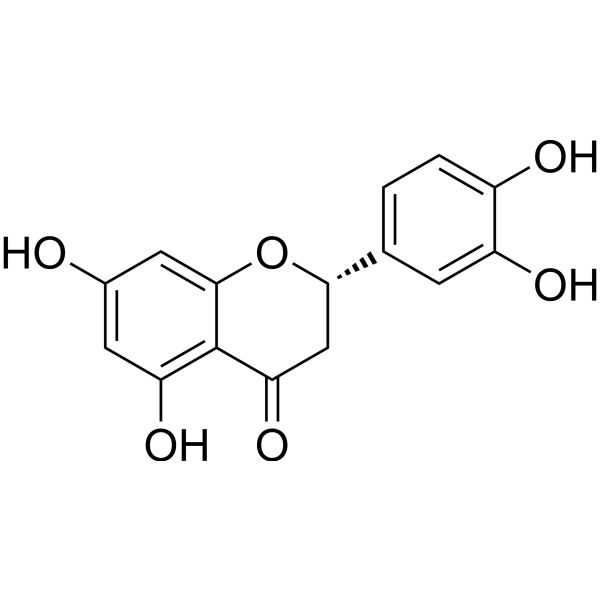
    (±)-Eriodictyol ((±)-Huazhongilexone; Dihydroluteolin) is an orally active TRPV1 receptor antagonist (IC50=44-47 nM, rTRPV1) with antioxidant and anti-inflammatory activities. (±)-Eriodictyol effectively inhibits lipid peroxidation and the release of proinflammatory cytokines by specifically antagonizing the TRPV1 receptor and activating the Nrf2 signaling pathway. (±)-Eriodictyol reduces the levels of ICAM-1, VEGF, eNOS and TNF-α in the retina and maintains the integrity of the blood-retinal barrier. (±)-Eriodictyol alleviates oxidative stress-induced apoptosis and hyperalgesia, enhances the activity and cytotoxicity of immune cells (such as B lymphocytes, NK cells and macrophages), and increases the levels of antioxidant enzymes simultaneously. (±)-Eriodictyol can be used in the research of diabetic retinopathy, acute lung injury and various pain-related diseases .
    (±)-Eriodictyol
  • HY-P5133
    Synstatin (92-119)
    1 Publications Verification

    SSTN92-119

    Integrin Cancer
    Synstatin (92-119) is an inhibitor of αvβ3/αvβ5 integrins and IGF1R with anti-angiogenic, anti-proliferative, antioxidant and anti-tumor activities. Synstatin (92-119) competitively blocks the capture of αvβ3/αvβ5 integrins and IGF1R by syndecan-1, disrupts the formation of the syndecan-1 : integrin : IGF1R ternary complex, inhibits integrin activation and talin-mediated signaling pathways, and blocks VEGF-induced angiogenesis. Synstatin (92-119) is applicable to research related to cancer and hepatocellular carcinoma .
    Synstatin (92-119)
  • HY-153017

    HIF/HIF Prolyl-Hydroxylase Cancer
    HIF-1 inhibitor-4 is a HIF-1 inhibitor (IC50: 560 nM). HIF-1 inhibitor-4 reduces the HIF-1α protein level without affecting its mRNA level .
    HIF-1 inhibitor-4
  • HY-P5558

    VEGFR Neurological Disease
    KLTWQELYQLKYKGI is a VEGF mimetic peptide designed based on the VEGF helix sequence 17-25, with the ability to activate VEGF receptors and exert pro-angiogenic biological activity. KLTWQELYQLKYKGI effectively promotes the attachment, spreading and proliferation of human umbilical vein endothelial cells. KLTWQELYQLKYKGI enhances the proliferation, migration and osteogenic differentiation of bone marrow stromal cells (BMSCs). KLTWQELYQLKYKGI synergistically accelerates angiogenesis and bone regeneration in rat cranial defect models. KLTWQELYQLKYKGI can be used for the research of brain tissue engineering and traumatic brain injury repair and biomaterials for bone tissue engineering and bone repair .
    KLTWQELYQLKYKGI
  • HY-P99905
    Efdamrofusp alfa
    1 Publications Verification

    IBI302

    VEGFR Cardiovascular Disease Neurological Disease
    Efdamrofusp alfa is a bispecific fusion protein. Efdamrofusp alfa is capable of neutralizing both VEGF isoforms and C3b/C4b. Efdamrofusp alfa can be used for the research of neovascular age-related macular degeneration (nAMD) and other complement-related ocular conditions .
    Efdamrofusp alfa
  • HY-N3677

    OGT Akt mTOR GSK-3 Reactive Oxygen Species (ROS) Apoptosis PARP MDM-2/p53 Inflammation/Immunology Cancer
    Dammarenediol II is a ginsenoside precursor . Dammarenediol II reduces the activity of O-GlcNAc transferase (OGT) and downregulates the global O-GlcNAcylation level. Dammarenediol II inhibits the phosphorylation of Akt, mTOR and GSK3β. Dammarenediol II inhibits human carboxylesterase activity, VEGF-induced ROS production, stress fiber formation and vascular endothelial cadherin disruption. Dammarenediol II promotes cell apoptosis (apoptosis), increases the levels of cleaved PARP1 and p53, and inhibits retinal microvascular leakage. Dammarenediol II can be used in studies related to liver cancer and diabetic retinopathy .
    Dammarenediol II
  • HY-B1076
    Medrysone
    1 Publications Verification

    HMS; 6α-Methyl-11β-hydroxyprogesterone

    VEGFR CCR STAT Neurological Disease
    Medrysone (HMS; 6α-Methyl-11β-hydroxyprogesterone) is a STAT6 modulator and M2 macrophage polarization inducer. Medrysone enhances IL-4-triggered STAT6 activation, upregulates the expression of M2 markers, and promotes the secretion of VEGF and CCL2. Medrysone also enhances the pro-migratory activity of M2-like macrophages toward endothelial cells. By regulating macrophage polarization and related repair pathways, Medrysone significantly promotes corneal wound repair in a rat mechanical injury model. Medrysone can be used for research related to corneal injury .
    Medrysone
  • HY-109561

    EYE001; NX1838

    VEGFR Metabolic Disease Inflammation/Immunology
    Pegaptanib sodium is an RNA aptamer with polyethylene glycol modifications, which is directed against vascular endothelial growth factor (VEGF)-165. Pegaptanib could be used for the study of neovascular age-related macular degeneration (AMD) .
    Pegaptanib sodium
  • HY-108868

    Salirgan; Salurin; Salyrgan

    HIF/HIF Prolyl-Hydroxylase VEGFR Metabolic Disease
    Mersalyl (Salirgan) is a potent vascular endothelial growth factor (VEGF) and hypoxia-inducible factor 1 (HIF-1) inducer. Mersalyl induces VEGF and ENO1 mRNA expression. Mersalyl shows diuresis effects .
    Mersalyl
  • HY-18963
    Lavendustin A
    1 Publications Verification

    RG-14355

    EGFR Cancer
    Lavendustin A (RG-14355) is a potent, selective and ATP-competitive inhibitor of epidermal growth factor receptor (EGFR) tyrosine kinase, with an IC50 of 11 nM. Lavendustin A does not inhibit protein kinase A or C. Lavendustin A can suppress VEGF-induced angiogenesis .
    Lavendustin A
  • HY-P99852

    ABT165; PR1283233

    VEGFR Notch Cancer
    Dilpacimab (ABT165) is a bispecific variable domain immunoglobulin. Dilpacimab binds to and inhibits DLL4 and VEGF and acts as a tumor growth inhibitor. Dilpacimab can be used in research related to metastatic colorectal cancer and advanced solid tumors .
    Dilpacimab
  • HY-P3369

    AXT-107

    VEGFR Tie Akt Cardiovascular Disease Metabolic Disease Inflammation/Immunology
    Gersizangitide (AXT107) is an anti-angiogenic peptide consisting of 20 amino acids, derived from collagen IV. Gersizangitide is an inhibitor of VEGF-A and VEGF-C and an activator of Tie2. Gersizangitide can block VEGF receptor signaling, inhibit vascular leakage, neovascularization and inflammation. Gersizangitide can be used in the research of diseases related to ocular neovascularization and angiogenesis .
    Gersizangitide
  • HY-132305
    VEGFR-3-IN-1
    2 Publications Verification

    VEGFR Cancer
    VEGFR-3-IN-1 is a potent and selective VEGFR3 inhibitor with an IC50 of 110.4 nM. VEGFR-3-IN-1 significantly inhibits proliferation and migration of VEGF-C-induced human dermal lymphatic endothelial cells (HDLEC), MDA-MB-231, and MDA-MB-436 cells by inactivating the VEGFR3 signaling pathway, and also effectively inhibits breast cancer growth .
    VEGFR-3-IN-1
  • HY-120417

    Src FAK Cardiovascular Disease
    JP-153 is the Src-FAK-Paxillin signaling inhibitor. JP-153 inhibits Src-dependent phosphorylation of paxillin (Y118) and downstream activation of Akt (S473). JP-153 reduces VEGF-induced migration and proliferation in retinal endothelial cells. JP-153 can be uesd for the study of neovascular eye disease .
    JP-153
  • HY-P990961

    IMM-2510; SYN-2510

    VEGFR PD-1/PD-L1 Cardiovascular Disease Inflammation/Immunology Cancer
    Palverafusp alfa (IMM-2510; SYN-2510) is a PD-L1/VEGF-targeting IgG1κ type humanized antibody. Palverafusp alfa blocks PD-1/PD-L1 binding, relieves immune suppression, mediates PD-L1-directed antibody-dependent cellular cytotoxicity (ADCC). Palverafusp alfa blocks VEGF/VEGFR binding, inhibits angiogenic signaling, relieves VEGF-induced immune suppression. Palverafusp alfa reduces endothelial cell proliferation, enhances ADCC and antibody-dependent cellular phagocytosis (ADCP), inhibits tumor growth, reverses T cell immune suppression. Palverafusp alfa exhibits immune stimulatory, antiangiogenic, and anti-tumor activity in the tumor microenvironment. Palverafusp alfa can be used for the research of cancer, such as solid tumors, non-small cell lung cancer .
    Palverafusp alfa
  • HY-P99215

    Anti-EGFL7; RG 7414

    VEGFR Cancer
    Parsatuzumab (Anti-EGFL7; RG 7414) is a humanized monoclonal antibody, acts as an immunomodulator and binds to EGFL7. Parsatuzumab selectively blocks the interaction between EGFL7 and endothelial cells, potentially inhibiting vascular regrowth and reducing vascular endothelial growth factor (VEGF) inhibition .
    Parsatuzumab
  • HY-P99830

    KH902

    VEGFR TNF Receptor Interleukin Related Cardiovascular Disease Inflammation/Immunology Cancer
    Conbercept (KH902) is a recombinant fusion protein composed of VEGFR-1 (second domain) and VEGFR-2 (third and fourth domains) regions fused to human IgG1 Fc. Conbercept is a VEGF inhibitor (IC50 = 8.8 pM) and is a soluble receptor decoy that blocks all isoforms of VEGF-A (Kd = 0.5 pM), VEGF-B (Kd = 8 pM), VEGF-C, and PlGF (Kd = 5 pM). Conbercept has anti-inflammatory effects, can lower the levels of VEGF, TNF-α and IL-6, and reduce the infiltration of inflammatory cells. Conbercept decreases tumor growth in several oncology studies. Conbercept can be used for various eye diseases such as polypoidal choroidal vasculopathy (PCV), diabetic macular edema (DME) and pathologic myopia choroidal neovascularization (pmCNV) .
    Conbercept
  • HY-P5438

    Btk c-Kit FAK FLT3 Insulin Receptor Others
    Srctide is a biological active peptide. (This is a peptide substrate for many protein kinases, such as Blk, BTK, cKit, EPHA1, EPHB2, EPHB3, ERBB4, FAK, Flt3, IGF-1R, ITK, Lck, MET, MUSK, Ret, Src, TIE2, TrkB, VEGF-R1 (Flt-1) and VEGF-R2 (KDR).)
    Srctide
  • HY-P991739

    VEGFR PD-1/PD-L1 Cancer
    RC148 is a humanized IgG1 bispecific antibody targeting VEGF and PD-1. RC148 allows dimeric VEGF crosslinking and gradually enhances PD-1 binding activity, potentially reduces systemic toxicity of the anti-VEGF approach, and enhances antitumor potency via VEGF-triggered enrichment in tumor areas. RC148 blocks the binding of VEGF to VEGFR and PD-1 to PD-L1, prevents the growth and migration of human umbilical vein endothelial cells, and enables efficient T cell activation. RC148 can be used for the study of breast cancer and lung cancer .
    RC148
  • HY-N7177

    Drug Metabolite VEGFR Cancer
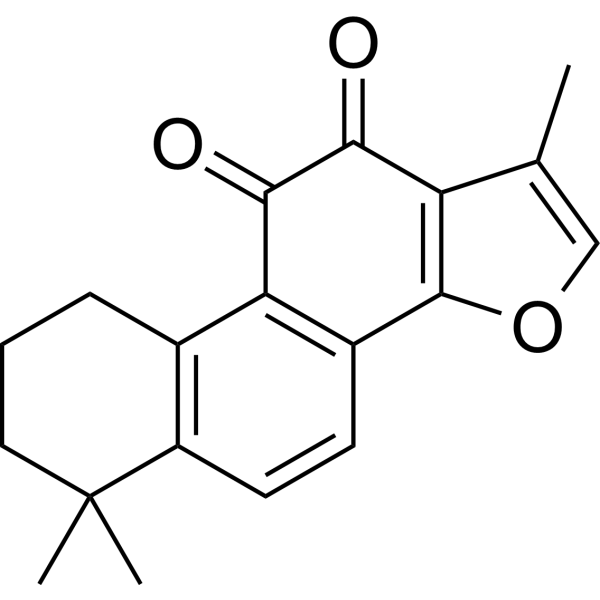
    Hydroxytanshinone IIA is a hydroxylated metabolite of Tanshinone IIA. Tanshinone IIA may suppress angiogenesis by targeting the protein kinase domains of VEGF/VEGFR2 .
    Hydroxytanshinone IIA
  • HY-P5107

    LMWP; TDSP5

    VEGFR Cancer
    Low molecular weight protamine is a cell-penetrating peptide with vascular endothelial growth factor (VEGF) inhibitory activity. Low molecular weight protamine can inhibit tumor growth and is used in cancer research .
    Low molecular weight protamine
  • HY-151465

    HIF/HIF Prolyl-Hydroxylase Cancer
    HIF-1α-IN-4 is a HIF-1α inhibitor with an IC50 value of 24 nM (in HEK293T cell). HIF-1α-IN-4 downregulates VEGF and PDK1 mRNA expressions under hypoxia. HIF-1α-IN-4 can be used in the research of cancer .
    HIF-1α-IN-4
  • HY-B0223R

    SKF-62979 (Standard)

    Reference Standards Parasite Microtubule/Tubulin Autophagy Apoptosis Reactive Oxygen Species (ROS) VEGFR HIF/HIF Prolyl-Hydroxylase Antibiotic Bacterial Infection Cancer
    Albendazole (Standard) is the analytical standard of Albendazole. This product is intended for research and analytical applications. Albendazole (SKF-62979) is an orally active and broad-spectrum parasiticide with high effectiveness and low host toxicity, is used for the research of gastrointestinal parasites in humans and animals. Albendazole induces apoptosis and autophagy in cancer cells. Albendazole also inhibits tubulin polymerization and HIF-1α, VEGF expression, has antioxidant activity, and inhibits the glycolytic process in cancer cells .
    Albendazole (Standard)
  • HY-N2666

    VEGFR Cancer
    5α-Hydroxycostic acid, a eudesmane-type sesquiterpene, is isolated from the herb Laggera alata. 5α-Hydroxycostic acid inhibits angiogenesis and suppresses breast cancer cell migration through regulating VEGF/VEGFR2 and Ang2/Tie2 pathways .
    5α-Hydroxycostic acid
  • HY-P1663
    ATWLPPR Peptide
    1 Publications Verification

    VEGFR Others
    ATWLPPR Peptide is a biological active peptide. (This peptide is a specific VEGFR2/KDR heptapeptide antagonist, it binds VEGFR2 (KDR/flk), completely inhibiting VEGF binding to KDR and preventing VEGF-induced angiogenesis in-vivo. It specifically inhibits human endothelial cell proliferation in-vitro and totally abolishes VEGF-induced angiogenesis in-vivo.)
    ATWLPPR Peptide
  • HY-153484A

    VEGFR Small Interfering RNA (siRNA) Others
    Bevasiranib sodium is a siRNA designed to silence the genes that produce vascular endothelial growth factor (VEGF). It is widely accepted that vascular endothelial growth factor (VEGF) is a key component in the pathogenesis of choroidal neo-vascularization (CNV), which is a precursor to wet age-related macular degeneration (wet AMD).
    Bevasiranib sodium
  • HY-112547

    CRT0066051

    PKD Others
    CRT5, a pyrazine benzamide, is a potent and selective inhibitor for all three isoforms of PKD in endothelial cells treated with VEGF (IC50s = 1, 2, and 1.5 nM for PKD1, PKD2, and PKD3, respectively). CRT5 decreases VEGF-induced endothelial migration, proliferation and tubulogenesis .
    CRT5
  • HY-137941

    Histamine Receptor Caspase NF-κB p38 MAPK Inflammation/Immunology
    Roxatidine is an active metabolite of Roxatidine acetate hydrochloride, is an orally active histamine H2-receptor antagonist. Roxatidine, an anti-ulcer agent, suppresses histamine release (thus inhibiting proton secretion) and inhibits the production of VEGF-1, an important marker of inflammation and angiogenesis. Anti-allergic inflammatory effect. Roxatidine is promising for research of gastric and duodenal ulcers .
    Roxatidine
  • HY-P4253

    H-Arg-Gln-OH

    VEGFR Cardiovascular Disease
    Arginyl-Glutamine is a dipeptide that can decrease VEGF levels and inhibit retinal neovascularization in a mouse model of oxygen-induced retinopathy .
    Arginyl-Glutamine
  • HY-176464

    TRP Channel Inflammation/Immunology
    SK2220691 is a potent TRPV4 inhibitor. SK2220691 inhibits pulmonary edema induced by GSK1016790. SK2220691 inhibits HCl-induced increases in key factors such as VEGF, keratinocyte-derived chemokine (KC; CXCL1), and granulocyte colony-stimulating factor (GCSF) .
    GSK2220691
  • HY-115436

    Apoptosis Cancer
    LYG-202, a flavonoid, has potent anti-angiogenic and antitumor activity. LYG-202 inhibits VEGF-stimulated HUVEC migration and tube formation. LYG-202 induces cancer cell apoptosis .
    LYG-202
  • HY-151466

    HIF/HIF Prolyl-Hydroxylase Monoamine Oxidase Cancer
    HIF-1α-IN-5 is a HIF-1α inhibitor with an IC50 value of 24 nM (in HEK293T cell). HIF-1α-IN-5 also inhibits MAO-A activity. HIF-1α-IN-5 downregulates VEGF and PDK1 mRNA expressions under hypoxia. HIF-1α-IN-5 can be used in the research of cancer .
    HIF-1α-IN-5
  • HY-P99525

    R 84 (antibody); GNR-011

    VEGFR Cancer
    Varisacumab (R 84; GNR-011) is a fully humanized IgG1 monoclonal antibody targeting VEGF. Varisacumab specifically blocks the interaction between VEGF and VEGFR2, but does not interfere with the interaction between VEGF and VEGFR1. Varisacumab achieves effective anti-tumor and anti-angiogenic effects and can be used in the research of non-small cell lung cancer and pancreatic cancer.
    Varisacumab

Inquiry Online

Your information is safe with us. * Required Fields.

Salutation


Country or Region *

Applicant Name *


Organization Name *

Department *


Email Address *


Product Name *

Cat. No.


Requested quantity *

Phone Number *


Remarks

Inquiry Online

Inquiry Information

Product Name:
Cat. No.:
Quantity:
MCE Japan Authorized Agent:

