1. Search Result
Search Result
Results for "

a549

" in MedChemExpress (MCE) Product Catalog:

1278

Inhibitors & Agonists

15

Fluorescent Dye

10

Biochemical Assay Reagents

31

Peptides

12

Inhibitory Antibodies

260

Natural
Products

12

Isotope-Labeled Compounds

16

Click Chemistry

8

Oligonucleotides

1

GMP Molecules

Cat. No. Product Name Target Research Areas Chemical Structure
  • HY-156110

    Insulin Receptor Cancer
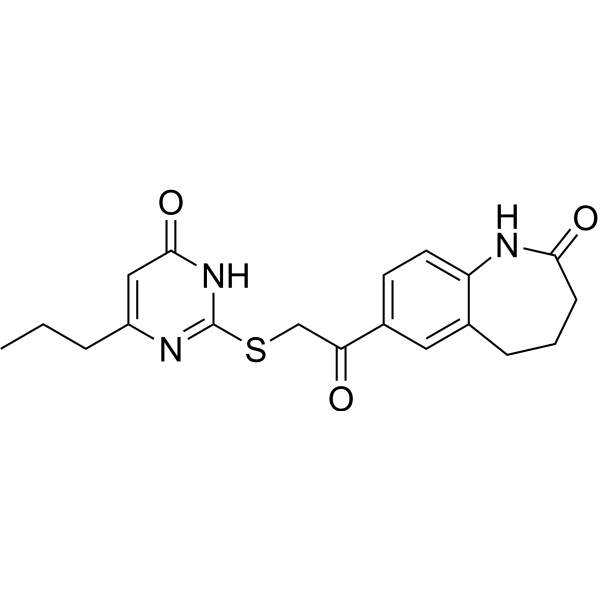
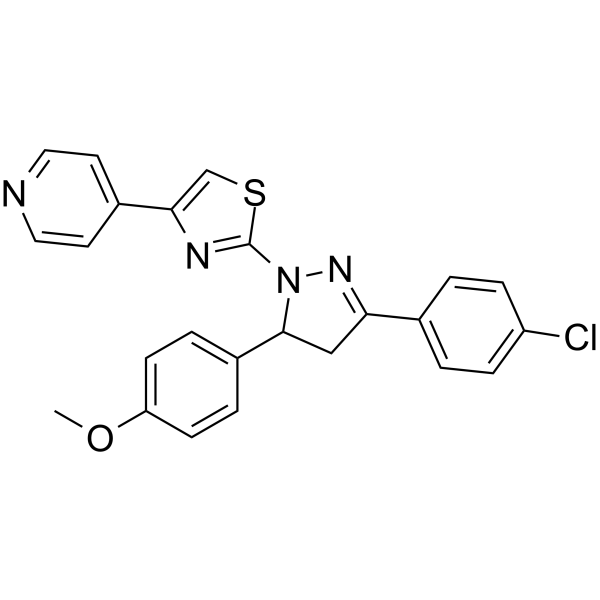
    IGF2BP1-IN-1 (Compound A11) is a IGF2BP1 inhibitor and inhibits downstream signaling. IGF2BP1-IN-1 binds to IGF2BP1 protein with a KD value of 2.88 nM. IGF2BP1-IN-1 inhibits cancer cells proliferation (IC50: 9 nM for A549 cell, 34 nM for HCT116). IGF2BP1-IN-1 induces cancer cell apoptosis. GF2BP1-IN-1 inhibits tumor growth in A549 xenograft mouse model .
    IGF2BP1-IN-1
  • HY-N2429

    COX Inflammation/Immunology
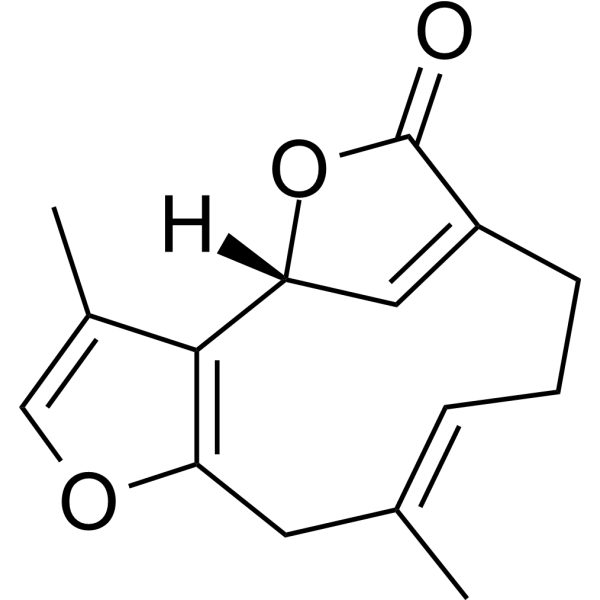
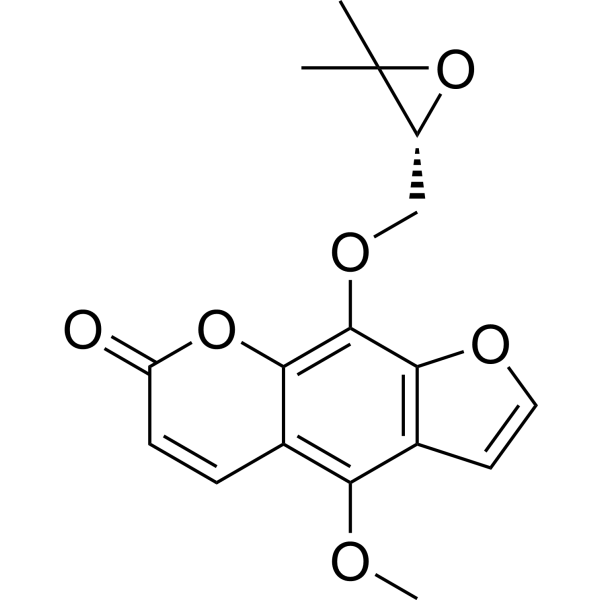
    Sphondin possesses an inhibitory effect on IL-1β-induced increase in the level of COX-2 protein and PGE2 release in A549 cells .
    Sphondin
  • HY-152147

    PROTACs HDAC Apoptosis DNA/RNA Synthesis Cancer
    SZUH280 is a potent and selective PROTAC HDAC8 degrader with a DC50 of 0.58 μM in A549 cells. SZUH280 induces cancer cell apoptosis. SZUH280 hampers DNA damage repair in cancer cells, promoting cellular radiosensitization .
    SZUH280
  • HY-75564

    Endogenous Metabolite Cancer
    Cyclo(Ala-Gly), a metabolite of a mangrove endophytic fungus, Penicillium thomi, exhibits cytotoxicity against A549, HepG2 and HT29 cells. The IC50 values range from 9.5 to 18.1 μM .
    Cyclo(Ala-Gly)
  • HY-147027

    PARP Caspase Apoptosis Neurological Disease Inflammation/Immunology Cancer
    PARP-1-IN-2 (compound 11g) is a potent PARP1 inhibitor, with an IC50 of 149 nM, and ADME prediction indicates it has high blood-brain barrier permeability. PARP1-IN-2 shows significantly potent anti-proliferative activity against Human lung adenocarcinoma epithelial cell line A549. PARP1-IN-2 can induce A549 cells apoptosis .
    PARP-1-IN-2
  • HY-131344

    mTOR Autophagy Cancer
    mTOR inhibitor-8 is an mTOR inhibitor and autophagy inducer. mTOR inhibitor-8 inhibits the activity of mTOR via FKBP12 and induces autophagy of A549 human lung cancer cells .
    mTOR inhibitor-8
  • HY-P3397A

    GHSR Cancer
    JV-1-36 acetate is a growth hormone-releasing hormone (GHRH) antagonist. JV-1-36 acetate inhibits the production of reactive oxygen species in A549 lung cancer cells. JV-1-36 can be used to study the effect of GHRH antagonists in vitro .
    JV-1-36 acetate
  • HY-163198

    ASCT mTOR Apoptosis Autophagy Cancer
    ASCT2-IN-1 (compound 20k) is an ASCT2 inhibitor with IC50 values of 5.6 μM and 3.5 μM in cells A549 and HEK293, respectively. ASCT2-IN-1 induces cell apoptosis. ASCT2-IN-1 inhibits tumor growth .
    ASCT2-IN-1
  • HY-P1935

    Biochemical Assay Reagents Cancer
    Cyclo(Ala-Pro) is an anticancer agent that is toxic to cancer cells such as A549, HCT-116 and HepG2 .
    Cyclo(Ala-​Pro)
  • HY-124429

    ERK Cancer
    FQI1 is a Late SV40 Factor (LSF) inhibitor. FQI1 inhibits cell proliferation, with IC50s of 3, 0.79, 6.3 μM for NIH/3T3, HeLa, A549 cells. FQI1 can be used for cancer research .
    FQI1
  • HY-178472

    PROTACs Aurora Kinase Cancer
    AurAP14 is an Aurora A PROTAC degrader (DC50 = 120 nM). AurAP14 shows significant inhibitory activity against various tumor cell lines, with IC50s of 0.294 μM in A549 cells and 0.534 μM in MCF-7 cells. AurAP14 induces apoptosis and arrests A549 cells in the S and G2/M phases. AurAP14 demonstrates anti-tumor efficacy in nude mouse xenograft models of A549 and A549/PTR. AurAP14can be used in the research on the treatment of Aurora A-overexpressing NSCLC. (Pink: Aurora A ligand (HY-10971), Blue: E3 ligase Ligand (HY-W437598), Black: Linker) .
    AurAP14
  • HY-172194

    CDK Cancer
    JNJ-3738 (Compound 148) is the inhibitor for CDK7 with a Ki of 21.75 nM. JNJ-3738 inhibits the proliferation of CDK7 WT expressing A549 with pIC50 of 7.37 .
    JNJ-3738
  • HY-149842

    Akt Apoptosis Cancer
    AKT-IN-18, an inhibitor of Akt, inhibits Akt with an IC50 of 69.45 μΜ in A549 cells. AKT-IN-18 induces apoptosis and can be used in non-small cell lung cancer study .
    AKT-IN-18
  • HY-N4048

    Others Cancer
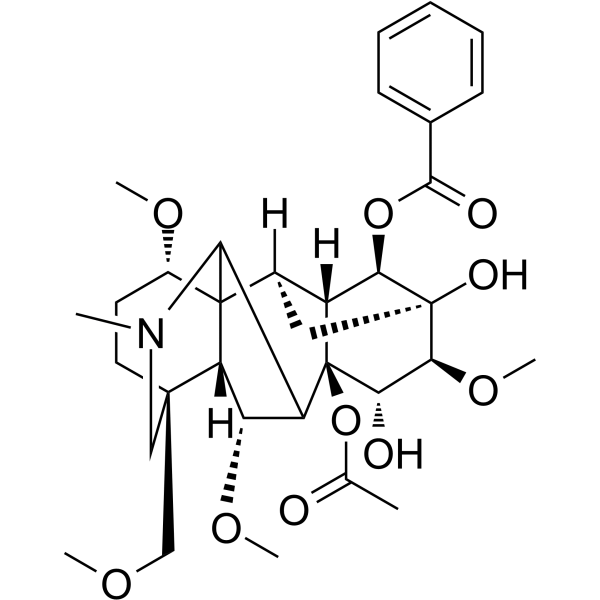
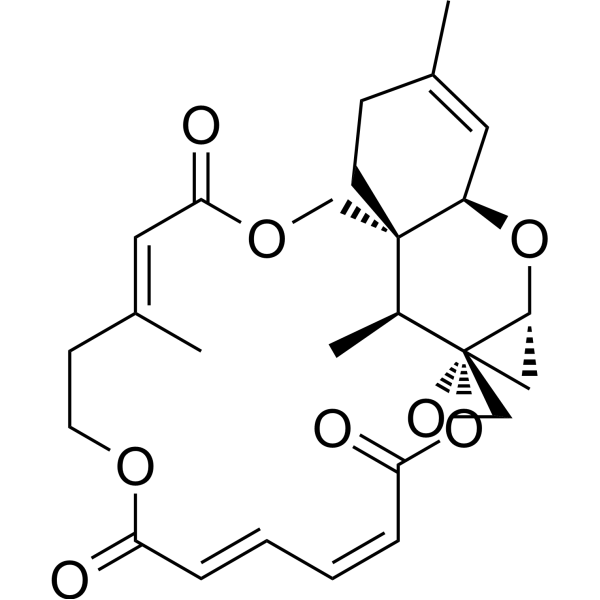
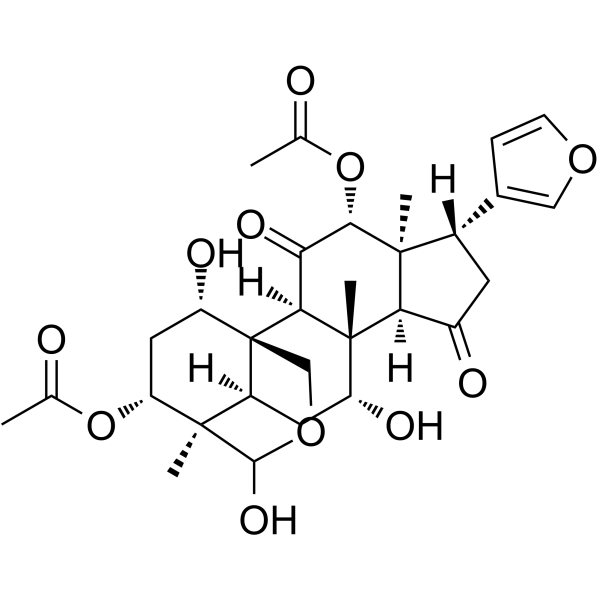
    Heudelotinone is a dinorditerpenoid that can be isolated from the stem bark and roots of Ricinodendron heudelotii. Heudelotinone shows cytotoxicity against SMMC-7721, A549 and Hela cells with IC50s of 21.68, 16.04 and 10.67 μM, respectively .
    Heudelotinone
  • HY-169370

    STAT Infection Inflammation/Immunology Cancer
    STAT3 HiBiT degrader 1 is a STAT3 HiBiT degrader with a DC50 of less than 0.05 μM in A549 cells .
    STAT3 HiBiT degrader 1
  • HY-162745

    PROTACs Cancer
    SMARCA2 degrader-20 is a PROTAC SMARCA2 degrader with a DC50 less than 100 nM in A549 cells .
    SMARCA2 degrader-20
  • HY-174245

    RET Cancer
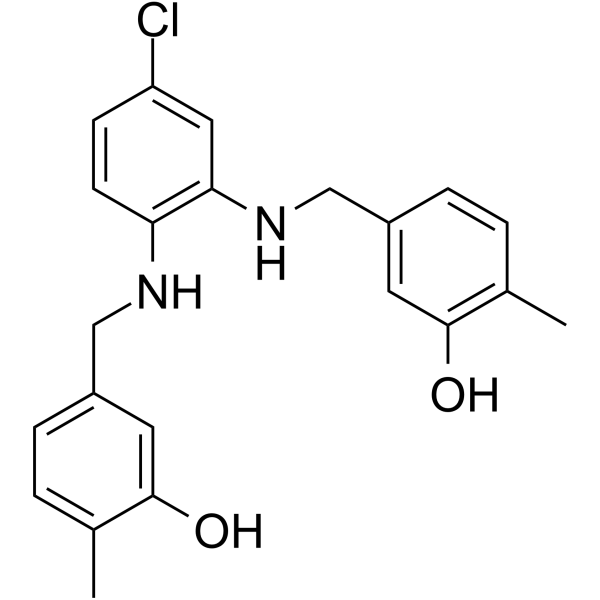
    RET-IN-30 (Compound 28) is a RET inhibitor that exhibits inhibitory activity against both wild-type RET and some of its mutants. RET-IN-30 can inhibit the proliferation of A549 cells and has anti-tumor activity .
    RET-IN-30
  • HY-163920

    PROTACs HDAC Cancer
    Degrader-1 (compound Z16) is a potent and selective HDAC8 PROTAC degrader with an DC50 of 0.27 nM in A549 cells .
    PROTAC HDAC8 Degrader-1
  • HY-N2199

    Apoptosis Autophagy Cancer
    Sotetsuflavone is a flavonoid that can be isolated from Cycas revolute. Sotetsuflavone inhibits migration and invasion of A549 cells by reversing EMT, and induces cell apoptosis and autophagy. Sotetsuflavone inhibits HIF-1α, VEGF, angiostatin, MMP-9, and MMP-13 expression in A549 cells. Sotetsuflavone also protects mice against Crohn's disease (CD)-like colitis. Sotetsuflavone can be used for research of NSCLC .
    Sotetsuflavone
  • HY-N16602

    Others Others
    (±)-Blephenanthrofuran B is a pair of enantiomers can be found in Bletilla striata. (±)-Blephenanthrofuran B shows no cytotoxic activity against human lung cancer A549 cells .
    (±)-Blephenanthrofuran B
  • HY-118528

    TGF-β Receptor Cancer
    TP0427736 is a selective inhibitor of ALK5 with an IC50 of 2.72 nM. TP0427736 inhibits Smad2/3 phosphorylation in A549 cells. TP0427736 decreases the growth inhibition of human outer root sheath cells .
    TP0427736
  • HY-144394

    Apoptosis c-Met/HGFR Cancer
    Antitumor agent-45 (Compound 21) could induce and stimulate A549 cells apoptosis in G0/G1 and G2/M phase. Antitumor agent-45 (Compound 21) inhibits c-Met expression to regulate the growth of tumor cells .
    Antitumor agent-45
  • HY-115941

    HDAC Microtubule/Tubulin Apoptosis Cancer
    HDAC-IN-9 is a potent and selective tubulin and HDAC dual inhibitor. HDAC-IN-9 inhibits the invasion and migration of A549 cells. HDAC-IN-9 shows potent antitumor and antiangiogenic effect in vitro and in vivo .
    HDAC-IN-9
  • HY-163880

    EGFR Ras p38 MAPK Reactive Oxygen Species (ROS) Cancer
    EGFR-IN-119 (Compound 5l) is an inhibitor for EGFR with an IC50 of 84.3 nM. EGFR-IN-119 inhibits the cytotoxicity in lung cancer cell A549 with an IC50 of 1.34 μM. EGFR-IN-119 downregulates the expressions of EGFR, KRAS, and MAP2K genes, exhibits antioxidant activity through reduction of reactive oxygen species (ROS), and hyperpolarizes the mitochondrial membrane potential .
    EGFR-IN-119
  • HY-N7980

    NF-κB Cancer
    Rubipodanone A, a naphthohydroquinone dimer, shows cytotoxicity against A549, BEL-7402, HeLa, HepG2, SGC-7901 and U251 cells. Rubipodanone A also shows obvious activating effect at 20 and 40 μM for NF-κB .
    Rubipodanone A
  • HY-P3397

    GHSR Cancer
    JV-1-36 is a growth hormone-releasing hormone (GHRH) antagonist. JV-1-36 inhibits the production of reactive oxygen species in A549 lung cancer cells. JV-1-36 can be used to study the effect of GHRH antagonists in vitro .
    JV-1-36
  • HY-161654

    SOS1 PROTACs Ras Cancer
    PROTAC SOS1 degrader-10 (Compound 11o) is a degrader for son of sevenless 1 (SOS1) in a CRBN and proteasome dependent manner. PROTAC SOS1 degrader-10 degrades SOS1 in KRAS mutant cancer cells SW620, A549 and DLD-1, with DC50s of 2.23, 1.85 and 7.53 nM, respectively. PROTAC SOS1 degrader-10 inhibits the proliferations of cells SW620, A549 and DLD-1, with IC50s of 36.7, 52.2 and 107 nM, respectively. PROTAC SOS1 degrader-10 inhibits phosphorylation of ERK. (Pink: SOS1 ligand (HY-161655); Black: linker (HY-161656); Blue: E3 ligase ligand (HY-W249500))
    PROTAC SOS1 degrader-10
  • HY-172116

    Mitochondrial Metabolism Apoptosis Reactive Oxygen Species (ROS) Cancer
    Mitochondria modulator-2 (Compound Ir1) induces the depolarization of mitochondrial membrane potential, induces ROS generation, inhibits cell migration of A549, arrests the cell cycle at G2/M phase, and induces apoptosis in A549 .
    Mitochondria modulator-2
  • HY-146105

    Apoptosis MDM-2/p53 MMP Bcl-2 Family Reactive Oxygen Species (ROS) Cancer
    Anticancer agent 65 (compound 4c) shows excellent activity in cancer cell lines, especially A549 cells, with an IC50 of 1.07 μM. Anticancer agent 65 induces S-phase arrest in A549 cells and increases the expression level of p53 and p21. Anticancer agent 65 causes apoptosis, ROS generation and collapse of MMP in A549 cells .
    Anticancer agent 65
  • HY-126422

    Others Cancer
    cis-Tiliroside, a kaempferol derivative, is a flavonoid glycoside. cis-Tiliroside exhibits better cytotoxic activity than trans-Tiliroside in A549 cell line .
    cis-Tiliroside
  • HY-160927

    Drug Derivative Cancer
    Docosahexaenoyl Serinol (Compound 1) inhibits proliferation of lung cancaer cells A549, with 77.4% inhibition rate at 3 μM .
    Docosahexaenoyl Serinol
  • HY-149890

    Apoptosis Cancer
    Anticancer agent 130 (compound 8d) is an anticancer agent that can significantly induce apoptosis in A549 cells .
    Anticancer agent 130
  • HY-145314

    Integrin Cancer
    TC113 is a c(RGDyK)-Based conjugate of Gemcitabine (GEM). TC113 could be internalized by A549 cells through integrin αvβ3. TC113 shows potent antiproliferative properties against WM266.4 and A549 cells .
    TC113
  • HY-170568

    Microtubule/Tubulin Apoptosis Cancer
    Tubulin polymerization-IN-73 (Compound 37) is an inhibitor for microtubule polymerization with an IC50 of 1.8 μM. Tubulin polymerization-IN-73 arrests the cell cycle at G2/M phase, induces apoptosis in A549 cell, inhibits the proliferation of A549 WT and A549/T resistant cell with IC50 of 0.023 μM and 0.057 μM. Tubulin polymerization-IN-73 exhibits antitumor efficacy in mouse model .
    Tubulin polymerization-IN-73
  • HY-156453

    PAK Apoptosis Cancer
    PAK4-IN-3(compound 27e) is aPAK4inhibitor, with theIC50of 10 nM.PAK4-IN-3shows antiproliferative activity against A549 cells with anIC50value of 0.61μM, and inducesapoptosisof A549 cells in a concentration-dependent manner and blocked the cell cycle at phase G0/G1 .
    PAK4-IN-3
  • HY-173007

    Akt PI3K Anaplastic lymphoma kinase (ALK) CDK Apoptosis Mitochondrial Metabolism Cancer
    ALK/PI3K/AKT-IN-1 (Compound 45) inhibits the proliferation of cancer cell A549, H1975 and PC9 with an IC50 of 0.44, 0.83 and 1.51 μM. ALK/PI3K/AKT-IN-1 increases the expression of p21 and p27, inhibits the activity of CDK2 and p-Rb, arrests the cell cycle at G1 phase. ALK/PI3K/AKT-IN-1 inhibits the ALK/PI3K/AKT signaling pathway, promotes the depolarization of mitochondrial membrane potential, and inducing apoptosis in A549 cell. ALK/PI3K/AKT-IN-1 inhibits the formation and growth of A549 cell spheroids .
    ALK/PI3K/AKT-IN-1
  • HY-145865

    Apoptosis Cancer
    Antiproliferative against-3 (comp 33) shows a prominent activity against Hela (IC50 = 0.21 µM), A549 (IC50 = 0.39 µM), and MCF-7 (IC50 = 0.33 µM), respectively. Antiproliferative against-3 (comp 33) also dose dependently induces apoptosis by arresting A549 cells at G1 phase .
    c-Met/MEK1/Flt-3-IN-1
  • HY-146274

    c-Met/HGFR Apoptosis Cancer
    c-Met-IN-10 (compound 26a) is a highly potent c-Met kinase inhibitor with an IC50 value of 16 nM. c-Met-IN-10 has inhibitory activity against cancer cells A549, H460 and HT-29 with IC50s of 0.56 ~ 1.59 μM. c-Met-IN-10 suppresses the colony formation on HT-29 cells, induces HT-29 and A549 cells apoptosis, and inhibits A549 cells motility. c-Met-IN-10 can be used for researching anticancer .
    c-Met-IN-10
  • HY-W548095

    Drug Derivative Cancer
    Anticancer agent 170 (compound 3a) is a keton derivative of Deguelin (HY-13425), and shows potency anti-cancer activity against A549, with the IC50 of 6.62 μM .
    Anticancer agent 170
  • HY-169273

    PROTACs SWI/SNF Complex Cancer
    PROTAC SMARCA2 degrader-22 (Compound 5) is a PROTAC degrader for SMARCA2 with a degradation efficacy of 94% at 100 nM. PROTAC SMARCA2 degrader-22 inhibits the proliferation of cell A549 with an EC50 < 250 nM .
    PROTAC SMARCA2 degrader-22
  • HY-155396

    PROTACs HDAC Cancer
    PRO-HD1 is a PROTAC HDAC6 degrader. PRO-HD1 degrades HDAC6 in A549 cells, and inhibits proliferation of Jurkat cells (IC50: 5.8 μM) .
    PRO-HD1
  • HY-146462

    Apoptosis ROS Kinase Cancer
    Anticancer agent 59 (compound 11) has inhibitory activity against kinds of cancer cell lines, especially in A549 with IC50 of 0.2 μM. Anticancer agent 59 induces apoptosis and an increase of Ca 2+ and ROS in cancer cells. Anticancer agent 59 significantly decreases mitochondrial membrane potential. Anticancer agent 59 can suppress tumor growth in A549 mouse xenograft model .
    Anticancer agent 59
  • HY-149839

    Apoptosis Cancer
    Antitumor agent-112 (compound 3a) is a potent antitumor agent. Antitumor agent-112 induces apoptosis. Antitumor agent-112 has cytotoxic activity on A549 cells with an IC50 value of 91.35 μM .
    Antitumor agent-112
  • HY-N10201

    Endogenous Metabolite Cancer
    Cytoglobosin C, a cytochalasan derivative, shows potent cytotoxicity against both SGC-7901 and A549 cell lines (IC50<10 μM) .
    Cytoglobosin C
  • HY-162956

    SARS-CoV Infection
    SARS-CoV-2-IN-97 (Compound CO-01) is an inhibitor for SARS-CoV-2 Nsp15 endoribonuclease with an IC50 of 53.5 μM. SARS-CoV-2-IN-97 exhibits low cytotoxicity in A549-AT cell with IC50 of 134 μM .
    SARS-CoV-2-IN-97
  • HY-154978

    Drug Derivative Cancer
    Cisplatin-resistant cells-IN-1 (Compound 8) has high cytotoxicity against Cisplatin (HY-17394)-resistant cells. Cisplatin-resistant cells-IN-1 reduces the metabolic activity effectively in the low nanomolar range (IC50: 0.14-1.79 μM in A549/A549-R, K562/K562-R, and MCF-7/MCF-7TamR cells) .
    Cisplatin-resistant cells-IN-1
  • HY-169272

    PROTACs Epigenetic Reader Domain Cancer
    PROTAC SMARCA2 degrader-21 (Compound I-5) is a PROTAC degrader for SMARCA, that degrades SMARCA2 with a DC50 of 10-50 nM in A549 cell, and degrades SMARCA2 and SMARCA4 in MV411 with DC50 of <1 nM and >100 nM, respectively .
    PROTAC SMARCA2 degrader-21
  • HY-170559

    EGFR Apoptosis Cancer
    EGFR-IN-141 (Compound 8I) is the inhibitor for EGFR with an IC50 of 2.67 nM. EGFR-IN-141 exhibits cytotoxicity in cancer cell A549 with an IC50 of 13.75 μM. EGFR-IN-141 induces apoptosis and mitochondrial membrane depolarization, and exhibits potential antitumor efficacy .
    EGFR-IN-141
  • HY-N7589

    Carolignan M

    Others Cancer
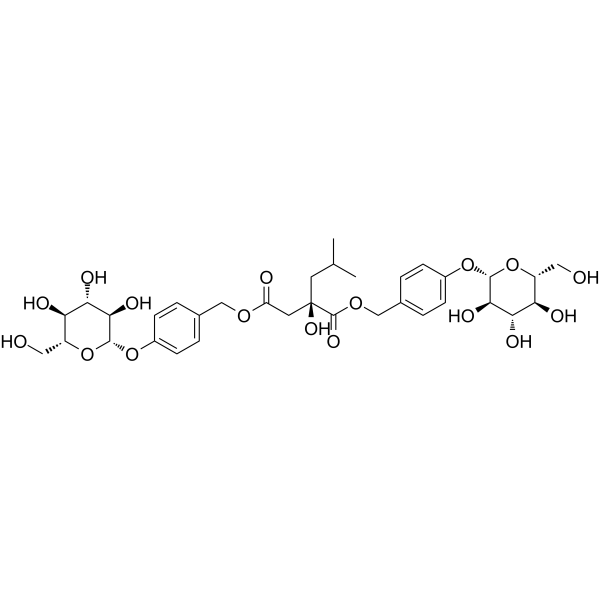
    Demethylcarolignan E is a phenylpropanoid ester that can be isolated from the stems of Hibiscus taiwanensi. Demethylcarolignan E has cytotoxicity against human cancer lines A549 and MCF-7 (IC50: <10 μg/mL) .
    Demethylcarolignan E
  • HY-156033

    EGFR Apoptosis Cancer
    EGFR-IN-88 (Compound 4i) is an EGFR inhibitor (IC50: 87 nM). EGFR-IN-88 shows cytotoxicity against A549 cell with an IC50? of 3.902? μM. EGFR-IN-88 can induce cell apoptosis .
    EGFR-IN-88

Inquiry Online

Your information is safe with us. * Required Fields.

Salutation


Country or Region *

Applicant Name *


Organization Name *

Department *


Email Address *


Product Name *

Cat. No.


Requested quantity *

Phone Number *


Remarks

Inquiry Online

Inquiry Information

Product Name:
Cat. No.:
Quantity:
MCE Japan Authorized Agent:

