13 Results for "

albino rat

" in MedChemExpress (MCE) Product Catalog:
Products (13)

13 Results for "albino rat" in MCE Product Catalog:

Cat. No.: HY-105174A
CAS No.: 1628202-19-6
Target:  

JAK FAK

BPC 157 acetate is an orally active peptide. BPC 157 acetate exhibits multiple activities such as promoting wound healing, tendon healing, neuroprotection, and gastrointestinal protection. BPC 157 acetate can be used in the research of tendon injury, burn, gastric ulcer, and neurological diseases .
loading...
    loading...
Cat. No.: HY-118424
CAS No.: 2036081-86-2
Target:  

iGluR

JNJ-55511118 is a selective TARP γ-8 binding AMPA receptor modulator with oral bioavailability and blood-brain barrier permeability, with a Ki of 26 nM. JNJ-55511118 reduces voluntary intake of sweetened alcohol in male mice. In rodent models, JNJ-55511118 inhibits hippocampal neurotransmission, reduces specific electroencephalogram frequency bands, induces transient hyperlocomotion, impairs learning and memory abilities, and exerts anticonvulsant effects. JNJ-55511118 is applicable to research related to alcohol use disorder and seizures .
loading...
    loading...
Cat. No.: HY-125539
CAS No.: 16891-85-3
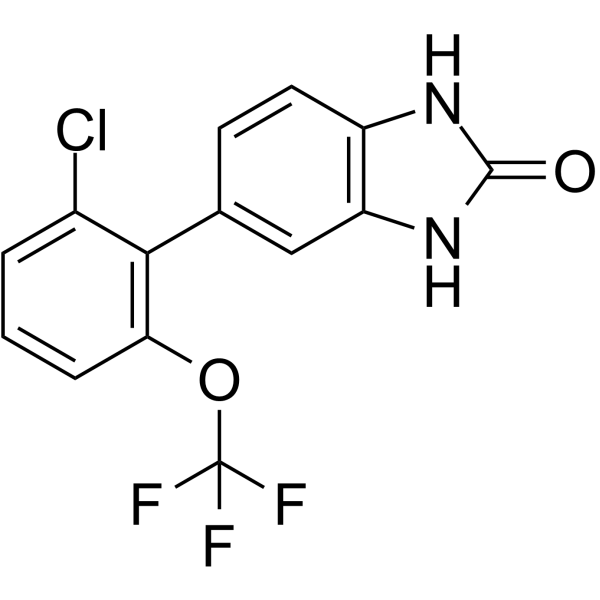
Roridin E is a glucose-6-phosphatase (G6Pase) inhibitor and antibiotic, and is a metabolic byproduct of Roridin A (HY-N9599). Roridin E induces significant oxidative stress, characterized by depletion of glutathione in vivo, induction of hepatic lipid peroxidation, and inhibition of renal superoxide dismutase activity. Roridin E reduces blood glucose levels in rats, but exhibits acute toxicity (which is enhanced when co-administered with linoleic acid (HY-N0729)) and causes hepatotoxicity in male albino mice. Roridin E induces a decrease in total blood protein and increases in the levels of total lipids, γ-glutamyltransferase, alkaline phosphatase, and 5'-nucleotidase. Roridin E can be isolated from molds, and possesses cytostatic and antifungal activities similar to those of Verrucarin A (HY-107426) and Roridin A. Roridin E exhibits in vivo activity in rodents and is commonly used in hepatotoxicity-related studies .
loading...
    loading...
Cat. No.: HY-B2015
CAS No.: 55285-14-8
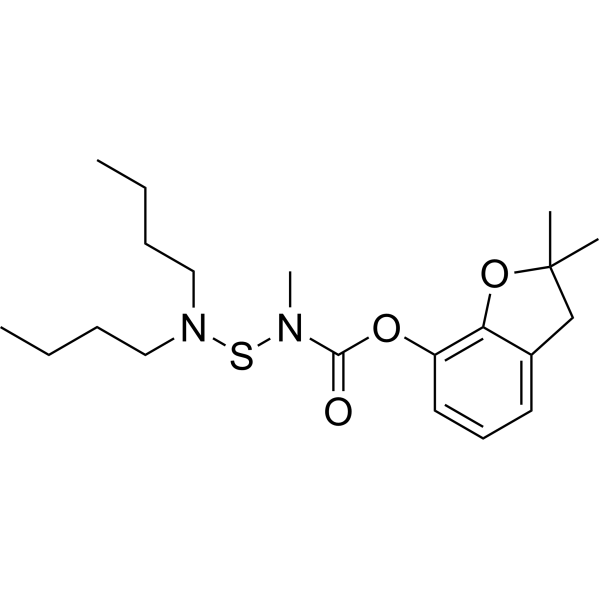
Carbosulfan is an orally active AChE inhibitor that hydrolyzes to Carbofuran in organisms to exert insecticidal effects. Carbosulfan exhibits broad-spectrum insecticidal activity, and it also induces severe oxidative stress by enhancing lipid peroxidation and impairing the antioxidant defense system. Carbosulfan causes reproductive toxicity in male rats and developmental disorders in their offspring. Carbosulfan shows persistence in paddy field environments and potential hazards to non-target organisms, and it is commonly used in studies related to reproductive toxicity and environmental risk assessment .
loading...
    loading...
Cat. No.: HY-W276164
CAS No.: 1120-04-3
Synonyms: Sodium stearyl sulfate
Sodium octadecyl sulfate (Sodium stearyl sulfate) is a long-chain alkyl sodium sulfate that functions as an emulsifier, crosslinking agent, and regulator. Sodium octadecyl sulfate has high safety, with a LD50 greater than 3.00 Gm./Kg for both intraperitoneal injection in mice and oral administration in rats. Sodium octadecyl sulfate enhances continuous contraction of the gastrocnemius muscle in frogs and boosts intestinal smooth muscle activity in albino rats. However, Sodium octadecyl sulfate exerts no significant effect on isolated tortoise myocardium and does not alter the conduction function of frog sciatic nerves. Sodium octadecyl sulfate can also be used to coat the surface of starch aggregates, promote crosslinking and increase aggregate size through hydrophobic and electrostatic interactions, and further form a coexistent B-V type crystalline structure with acid-hydrolyzed gelatinized starch, thereby effectively modifying the structure and surface properties of high-starch systems .
loading...
    loading...
Cat. No.: HY-127165
CAS No.: 124027-47-0
Synonyms: HP 029 free base; Hydroxytacrine
Target:  

Cholinesterase (ChE)

Research Areas:  

Neurological Disease

Velnacrine (HP 029 free base) is an inhibitor for acetylcholinesterase (AChE), with an IC50 of 3.27 μM. Velnacrine reverses the Scopolamine (HY-N0296)-induced amnesia in rat models, and exhibits acute toxicity with LD50 of 65 mg/kg .
loading...
    loading...
Cat. No.: HY-B1573A
CAS No.: 36504-94-6
Synonyms: AY-23,028; dl-Butaclamol hydrochloride
(±)-Butaclamol hydrochloride (AY-23,028) is the antagonist for adrenergic receptor and dopamine receptor. (±)-Butaclamol hydrochloride antagonizes amphetamine or Apomorphine (HY-12723)-induced stereotyped behaviors and emesis, inhibits discriminative avoidance behavior, and induces catalepsy in rats models .
loading...
    loading...
Cat. No.: HY-173485
Target:  

SARS-CoV COX

Research Areas:  

Infection Inflammation/Immunology

SARS-CoV-2 Mpro-IN-41 (Compound 7e) is an orally active inhibitor of COX-2 and SARS-CoV-2 M pro (IC50 values are 9.66 μM and 13.24 μM, respectively). SARS-CoV-2 Mpro-IN-41 also has a certain inhibitory activity against COX-1 (IC50: 46.11 μM). SARS-CoV-2 Mpro-IN-41 can significantly inhibit the expression of inflammatory-related cytokines (such as TNF-α, IL-6, IL-1β) and exert anti-inflammatory effects. SARS-CoV-2 Mpro-IN-41 exerts anti-inflammatory and antiviral effects by selectively inhibiting COX-2 and SARS-CoV-2 M pro. SARS-CoV-2 Mpro-IN-41 can be used for anti-inflammatory and anti-coronavirus research .
loading...
    loading...
Cat. No.: HY-N7007R
CAS No.: 55881-96-4
Sclareol glycol (Standard) is the analytical standard of Sclareol glycol (HY-N7007). This product is intended for research and analytical applications. Sclareol glycol is a blood-brain barrier-permeable, reversible adenylate cyclase (AC) activator. Sclareol glycol induces dose-dependent changes in body temperature, regulates convulsive seizures and spontaneous activity. Sclareol glycol interacts with GABAergic transmission, thereby affecting dopamine-related behaviors. Sclareol glycol can be used in studies related to convulsive seizures, aggressive responses, thermoregulation, etc .
loading...
    loading...
Cat. No.: HY-W237019
CAS No.: 55836-69-6
Target:  

Bacterial

Research Areas:  

Infection

3-Ethoxybenzamide is an alkoxybenzamide compound with antibacterial activity and a FtsZ inhibitor that can cross the blood-brain barrier. 3-Ethoxybenzamide distributes widely and rapidly in vivo, rapidly reaches equilibrium between various tissues and blood, and is linearly taken up by hepatocytes. 3-Ethoxybenzamide is completely dependent on hepatic microsomal oxidation for clearance, with salicylamide as its major metabolite. 3-Ethoxybenzamide can be used for the study of bacterial infections .
loading...
    loading...
Cat. No.: HY-187661
CAS No.: 42408-79-7
Target:  

5-HT Receptor

Research Areas:  

Neurological Disease

Pirandamine free base is a selective serotonin (5-HT) (HY-B1473A) uptake inhibitor with an IC50 of 250 nM. It exerts antidepressant-like effects by enhancing central serotonergic function, does not inhibit norepinephrine (HY-13715) uptake, and exhibits no central anticholinergic or monoamine oxidase inhibitory activity. Pirandamine free base is used in the study of depression .
loading...
    loading...
Cat. No.: HY-183540
CAS No.: 57558-44-8
Target:  

mAChR

Secoverine is a muscarinic cholinergic receptor (mAChR) antagonist and antispasmodic with blood-brain barrier permeability. Secoverine binds competitively to muscarinic receptors, blocks central cholinergic effects, and inhibits cholinergically induced gastrointestinal motility, intestinal smooth muscle contraction, and acetylcholine-mediated neurotransmitter release. Secoverine exerts direct antispasmodic activity on intestinal smooth muscle independent of receptor blockade, and exhibits characteristics such as reversible smooth muscle activity and long duration of action. Secoverine can be used in studies related to hyperintestinal motility, diverticular disease, and colonic spasm .
loading...
    loading...
Cat. No.: HY-180400
CAS No.: 1426293-61-9
Target:  

nAChR Calcium Channel

Research Areas:  

Neurological Disease

PAM-2 is a potent, orally active, CNS-penetrant selective α7 nAChR positive allosteric modulator (human α7 nAChR EC50: 39 μM, rat α7 nAChR EC50: 12 μM) with anti-nociceptive and anti-inflammatory activity. PAM-2 exhibits selectivity over α9α10 nAChR (IC50 = 174 μM) and CaV2.2 channel (IC50 = 89 μM). PAM-2 decreases Streptozotocin (STZ) (HY-13753)- and Oxaliplatin (HY-17371)-inducned nuroparhic pain in mice by α7 nAChR potentiation. PAM-2 can be used for the research of neuropathic pain .
loading...
    loading...
  • 1

