1. Search Result
Search Result
Results for "

amino nitrogen

" in MedChemExpress (MCE) Product Catalog:

33

Inhibitors & Agonists

1

Screening Libraries

1

Fluorescent Dyes

8

Biochemical Assay Reagents

4

Natural
Products

6

Isotope-Labeled Compounds

Cat. No. Product Name Target Research Areas Chemical Structure
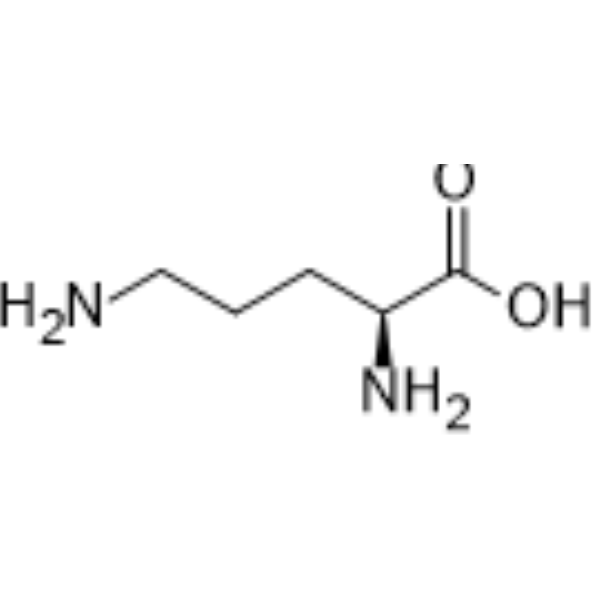
  • HY-B1352
    L-Ornithine
    5+ Cited Publications

    (S)-2,5-Diaminopentanoic acid

    Arginase Endogenous Metabolite Metabolic Disease
    L-Ornithine ((S)-2,5-Diaminopentanoic acid) is a non-proteinogenic amino acid, is mainly used in urea cycle removing excess nitrogen in vivo. L-Ornithine shows nephroprotective .
    L-Ornithine
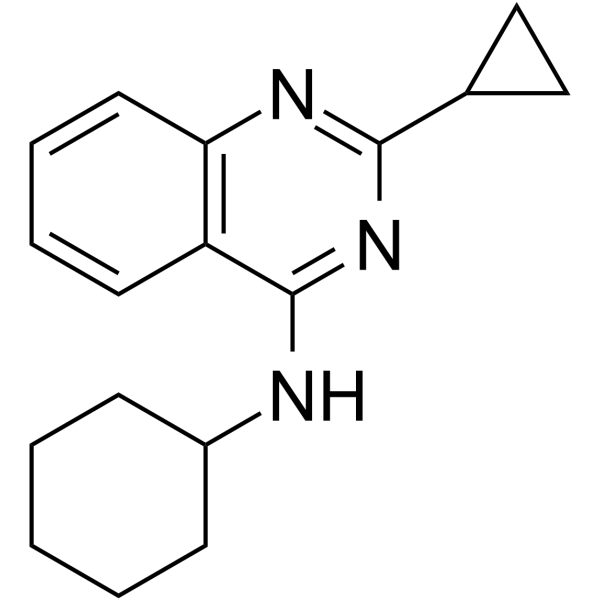
  • HY-147313
    TH10785
    2 Publications Verification

    DNA/RNA Synthesis Metabolic Disease Cancer
    TH10785 is a DNA glycosylase 1 (OGG1) activator, TH10785 can interact with the phenylalanine-319 and glycine-42 amino acids of OGG1 and increase the enzyme activity, generates β, δ-lyase enzymatic function. TH10785 can control the catalytic activity mediated by a nitrogen base within its molecular structure. TH10785 can be used for the research of various diseases and aging connected with DNA oxidative lesions .
    TH10785
  • HY-W017018
    L-Ornithine hydrochloride
    5+ Cited Publications

    Endogenous Metabolite Metabolic Disease
    L-Ornithine hydrochloride is a non-proteinogenic amino acid, is mainly used in urea cycle removing excess nitrogen in vivo. L-Ornithine hydrochloride shows nephroprotective .
    L-Ornithine hydrochloride
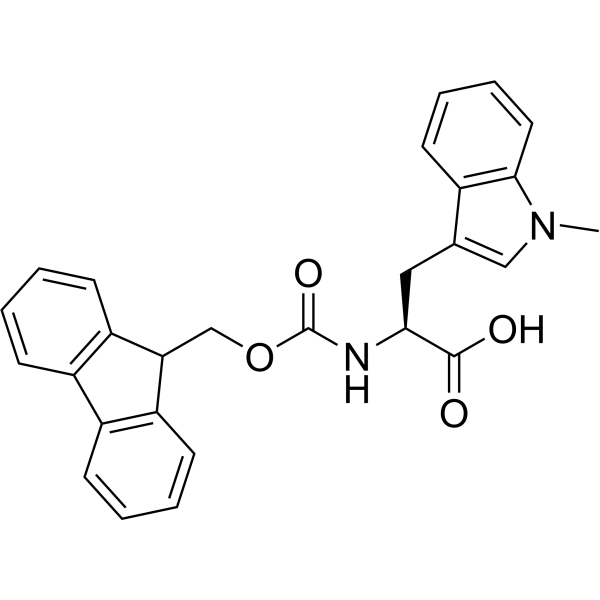
  • HY-W048688

    Amino Acid Derivatives Others
    Fmoc-Trp(Me)-OH is an amino acid derivative. Fmoc-Trp(Me)-OH is formed by introducing a methyl group onto the nitrogen atom (N-1 position) of the indole ring of tryptophan (Trp) and protecting the amino group with Fmoc (9-fluorenylmethyloxycarbonyl). Fmoc-Trp(Me)-OH can be used in the synthesis of proteins or peptides .
    Fmoc-Trp(Me)-OH
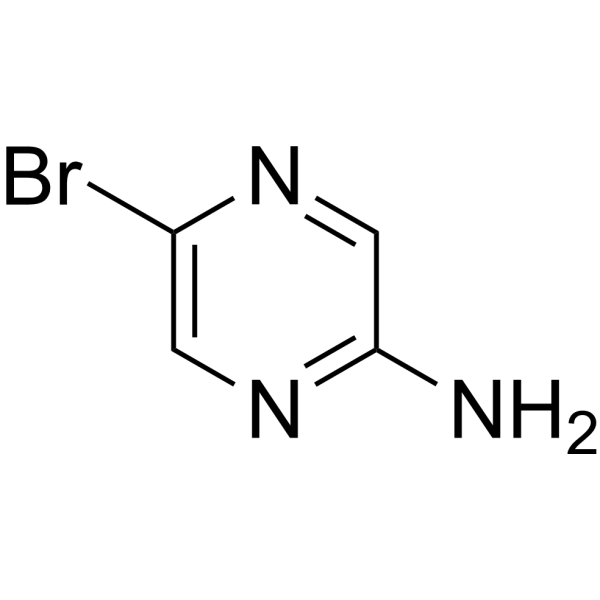
  • HY-59261

    Biochemical Assay Reagents Others
    2-Amino-5-bromopyrazine is a monobrominated 2-aminopyrazine derivative and functionalized intermediate for the synthesis of nitrogen heterocycles .
    2-Amino-5-bromopyrazine
  • HY-D0006

    Fluorescent Dye Others
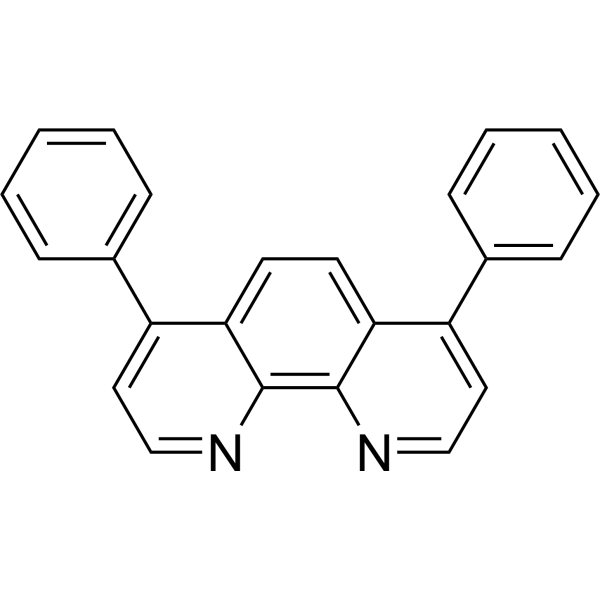
    Bathophenanthroline is a nitrogen-containing organic ligand that can form stable complexes with transition metal ions such as Ru 2+. In proteomics, Bathophenanthroline is often used for in-gel protein staining. The negatively charged sulfonic acid groups of Bathophenanthroline interact electrostatically with the positively charged amino acid residues of proteins, thereby achieving specific binding to proteins and enhancing the fluorescent signal of detection. Bathophenanthroline can be used for protein separation and detection in SDS-PAGE gels in the field of proteomics, as well as other fluorescence studies[1]. Ex/Em=532 nm/610 nm[1].
    Bathophenanthroline
  • HY-Y1078

    N-Dimethoxymethyl-N,N-dimethylamine

    Biochemical Assay Reagents Others
    DMF-DMA (N-Dimethoxymethyl-N,N-dimethylamine) is a reagent with both condensation and alkylation functions. DMF-DMA can undergo condensation reactions with active methylene groups or amino groups to generate enamine and imino derivatives, and can also act as an alkylating agent to methylate nitrogen and oxygen atoms in heterocyclic structures. DMF-DMA is widely used in the synthesis of enaminones and dimethylamino imine intermediates, as well as in the construction of heterocyclic backbones such as pyridine, pyrimidine and pyrazole. DMF-DMA can also serve as a polar aprotic co-solvent; although DMF-DMA cannot dissolve cellulose alone, it can form an efficient cellulose dissolution system with diallylimidazolium methoxyacetate .
    DMF-DMA
  • HY-W048682

    Amino Acid Derivatives Others
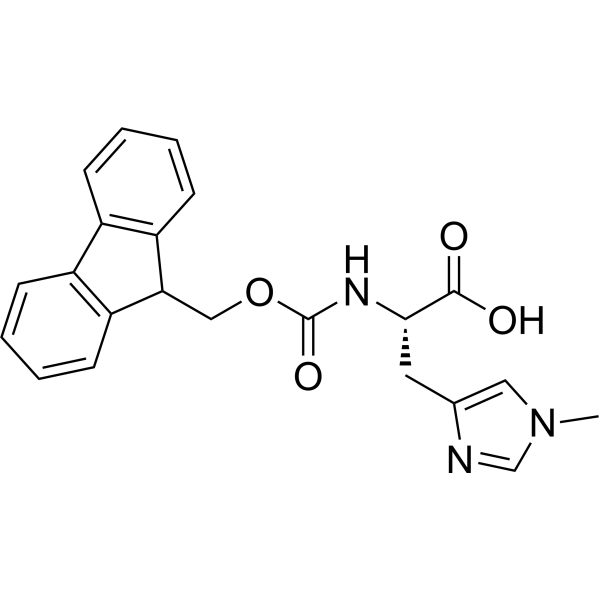
    Fmoc-1-methyl-L-histidine is an Fmoc-protected amino acid as well as an amino acid-containing building block. Fmoc-1-methyl-L-histidine is applicable to the generation of the ε-nitrogen-coordinated copper center in nitrite copper reductase. It also serves as an intermediate in peptide synthesis .
    Fmoc-1-methyl-L-histidine
  • HY-W017018S2

    Isotope-Labeled Compounds Endogenous Metabolite Metabolic Disease
    L-Ornithine-1,2,3,4,5- 13C5 (hydrochloride) is the 13C-labeled L-Ornithine hydrochloride. L-Ornithine hydrochloride is a free amino acid that plays a central role in the urea cycle and is also important for the disposal of excess nitrogen.
    L-Ornithine-1,2,3,4,5-13C5 hydrochloride
  • HY-W017018S

    Endogenous Metabolite Metabolic Disease
    L-Ornithine-d6 (hydrochloride) is the deuterium labeled L-Ornithine hydrochloride. L-Ornithine hydrochloride is a free amino acid that plays a central role in the urea cycle and is also important for the disposal of excess nitrogen.
    L-Ornithine-d6 hydrochloride
  • HY-W017018S4

    Isotope-Labeled Compounds Endogenous Metabolite Metabolic Disease
    L-Ornithine-d7 (hydrochloride) is the deuterium labeled L-Ornithine hydrochloride. L-Ornithine hydrochloride is a free amino acid that plays a central role in the urea cycle and is also important for the disposal of excess nitrogen.
    L-Ornithine-d7 hydrochloride
  • HY-W017018B

    Biochemical Assay Reagents Others
    L-Ornithine monohydrochloride, suitable for cell culture is a non-proteinogenic amino acid that is mainly used in the urea cycle to remove excess nitrogen from the body and can be used for cell culture .
    L-Ornithine monohydrochloride,suitable for cell culture
  • HY-157347A

    YNB Medium without amino Acids

    Biochemical Assay Reagents Others
    Yeast Nitrogen Base Medium without Amino Acids can be used in the cultivation of bacteria in genetic engineering .
    Yeast Nitrogen Base Medium without Amino Acids
  • HY-B1713A

    DL-(±)-Ornithine hydrochloride

    Endogenous Metabolite Metabolic Disease
    DL-Ornithine (DL-(±)-Ornithine) hydrochloride is an amino acid and also a urea cycle promoter. DL-Ornithine hydrochloride has the characteristics of low metabolic rate and rapid excretion, and only the L-enantiomer undergoes decarboxylation. In mice inoculated with L-1210 leukemia cells, DL-Ornithine hydrochloride is excreted in urine in its original form, and its conversion to carbon dioxide within 24 h is negligible. DL-Ornithine hydrochloride is mainly used in the urea cycle to eliminate excess nitrogen in the body and protect the kidneys .
    DL-Ornithine hydrochloride
  • HY-W017018S5

    Endogenous Metabolite Metabolic Disease
    L-Ornithine- 15N2 (hydrochloride) is the 15N-labeled L-Ornithine hydrochloride. L-Ornithine hydrochloride is a free amino acid that plays a central role in the urea cycle and is also important for the disposal of excess nitrogen.
    L-Ornithine-15N2 hydrochloride
  • HY-157372

    Bacterial Others
    Peptone Bacteriological is used as a medium material to provide nitrogen source and amino acid for bacterial growth .
    Peptone Bacteriological
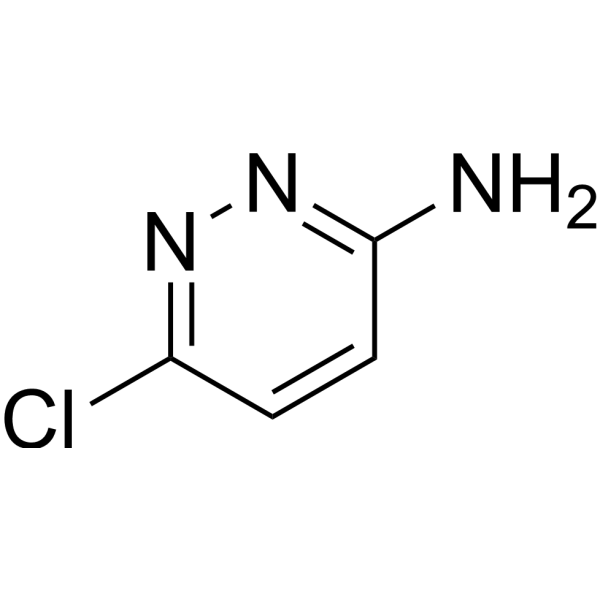
  • HY-Y0141

    Drug Intermediate Others
    3-Amino-6-chloropyridazine is a nitrogen-containing heterocyclic organic compound belonging to the pyridazine derivatives. 3-Amino-6-chloropyridazine has the basicity of amino groups and the nucleophilic substitution activity of chlorine atoms. 3-Amino-6-chloropyridazine can serve as an important intermediate for synthesizing some active compounds .
    3-Amino-6-chloropyridazine
  • HY-W017018R

    Reference Standards Endogenous Metabolite Metabolic Disease
    L-Ornithine (hydrochloride) (Standard) is the analytical standard of L-Ornithine (hydrochloride). This product is intended for research and analytical applications. L-Ornithine hydrochloride is a non-proteinogenic amino acid, is mainly used in urea cycle removing excess nitrogen in vivo. L-Ornithine hydrochloride shows nephroprotective .
    L-Ornithine hydrochloride (Standard)
  • HY-W007345

    4-Fluoro-2-hydroxyaniline

    Biochemical Assay Reagents Others
    2-Amino-5-fluorophenol is an isomer of aminofluorophenol and also a HONO generator. 2-Amino-5-fluorophenol reacts with nitrogen dioxide (NO2) via two pathways to form nitrous acid (HONO): hydrogen abstraction from the hydroxyl group and hydrogen abstraction from the amino group, with both the amino and hydroxyl groups participating in the reaction in the transition state .
    2-Amino-5-fluorophenol
  • HY-W017018S3

    Endogenous Metabolite Metabolic Disease
    L-Ornithine-d2 (hydrochloride) is the deuterium labeled L-Ornithine hydrochloride. L-Ornithine hydrochloride is a free amino acid that plays a central role in the urea cycle and is also important for the disposal of excess nitrogen.
    L-Ornithine-d2 hydrochloride
  • HY-W281713

    Fluorescein chloride

    Fluorescent Dye Others
    3,6-Dichlorofluorescein, a fluoresceina, can be used in the spot test for drugs containing amino and heterocyclic nitrogen .
    3,6-Dichlorofluorescein
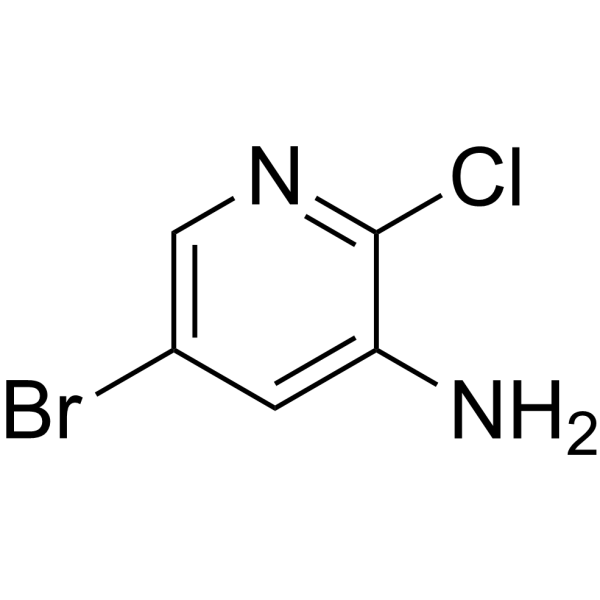
  • HY-32828

    Biochemical Assay Reagents Drug Intermediate Others
    3-Amino-5-bromo-2-chloropyridine is a nitrogen-containing heterocyclic organic compound. 3-Amino-5-bromo-2-chloropyridine is an important intermediate, which can be used for the synthesis of other active compounds .
    3-Amino-5-bromo-2-chloropyridine
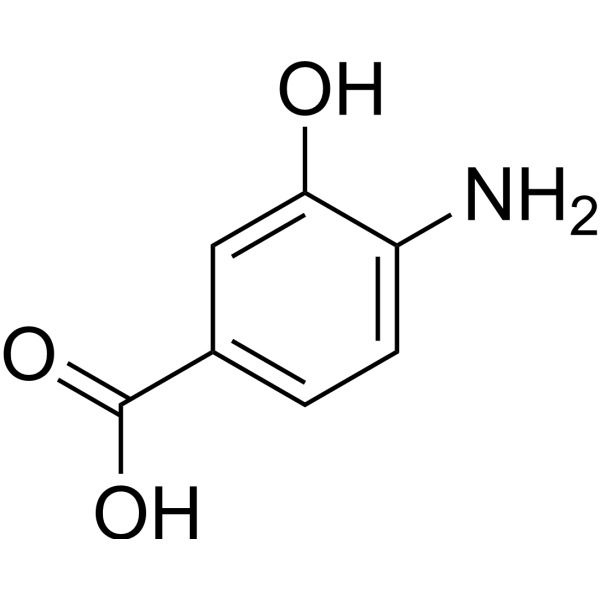
  • HY-W002114

    Bacterial Infection
    4-Amino-3-hydroxybenzoic acid is an aromatic substrate degradable by Bordetella sp. strain 10d. 4-Amino-3-hydroxybenzoic acid can serve as a carbon source, nitrogen source and energy source for the growth of Bordetella sp. strain 10d. 4-Amino-3-hydroxybenzoic acid acts as a substrate for 2-amino-5-carboxymuconate-6-semialdehyde deaminase and 4-amino-3-hydroxybenzoate 2,3-dioxygenase .
    4-Amino-3-hydroxybenzoic acid
  • HY-113289R

    Akt Androgen Receptor Bacterial Drug Metabolite HSV Reference Standards Infection Cardiovascular Disease Neurological Disease Cancer
    L-Ornithine (hydrochloride) (Standard) is the analytical standard of L-Ornithine (hydrochloride). This product is intended for research and analytical applications. L-Ornithine hydrochloride is a non-proteinogenic amino acid, is mainly used in urea cycle removing excess nitrogen in vivo. L-Ornithine hydrochloride shows nephroprotective .
    Brassicasterol (Standard)
  • HY-179054

    Apoptosis Reactive Oxygen Species (ROS) DNA/RNA Synthesis Cancer
    Apoptosis inducer 51 (Compound 5d) is an apoptosis inducer. Apoptosis inducer 51 exhibits strong inhibitory activity against MDA-MB-231 cells. Apoptosis inducer 51 inhibits cell invasion and migration, induces G2/M phase cell cycle arrest and cell apoptosis. Apoptosis inducer 51 causes DNA damage, ROS burst and mitochondrial membrane potential (MMP) collapse. Apoptosis inducer 51 can be used for the study of triple-negative breast cancer.
    Apoptosis inducer 51
  • HY-W030105

    Drug Intermediate Others
    2-Amino-2-thiazoline is a nitrogen-sulfur heterocyclic compound. 2-Amino-2-thiazoline acts as a bidentate ligand involved in the synthesis of nickel (II) complexes, thereby constructing metal complexes with potential DNA-binding capabilities .
    2-Amino-2-thiazoline
  • HY-W017018S1

    Endogenous Metabolite Metabolic Disease
    L-Ornithine-1,2- 13C2 (hydrochloride) is the 13C-labeled L-Ornithine hydrochloride. L-Ornithine hydrochloride is a free amino acid that plays a central role in the urea cycle and is also important for the disposal of excess nitrogen.
    L-Ornithine-1,2-13C2 hydrochloride
  • HY-W1005647

    Biochemical Assay Reagents Others
    (rac)-Isoleucine is the racemic form of Isoleucine. Isoleucine is a mixture of the diastereomers L-isoleucine, L-alloisoleucine, D-isoleucine, and D-alloisoleucine. L-isoleucine is a branched-chain amino acid that acts as a nitrogen donor, and has roles in glucose consumption, fatty acid metabolism, as well as immune function. L-Alloisoleucine is generated by transamination of L-isoleucine. D-Isoleucine and D-alloisoleucine are enantiomers of L-isoleucine and L-alloisoleucine, respectively .
    (rac)-Isoleucine
  • HY-E70082A

    Biochemical Assay Reagents Others
    Fructosyl-Amino Acid Oxidase, Corynebacterium sp. catalyzes the oxidative deglycation of low molecular weight fructosamines. Fructosyl-Amino Acid Oxidase, Corynebacterium sp. catalyzes the oxidation of the C-N bond linking the C1 of the fructosyl moiety and the nitrogen of the amino group of fructosyl amino acids.
    Fructosyl-Amino Acid Oxidase, Corynebacterium sp.
  • HY-E71340

    Biochemical Assay Reagents Others
    γ-Glutamylhistamine synthase (EC 6.3.2.18) belongs to the family of ligases, specifically those forming carbon-nitrogen bonds as acid-D-amino-acid ligases (peptide synthases) .
    γ-Glutamylhistamine synthase
  • HY-115418

    U-68553B

    Dopamine Receptor Neurological Disease
    Alentemol (hydrobromide) is a dopamine antagonist and dihydrophenalene analog with dimethylamino substitution and an orthophenolic hydroxy group relative to the amino nitrogen. Alentemol (hydrobromide) does not impair escape response at a dose that completely suppresses conditioned avoidance in rats .
    Alentemol hydrobromide
  • HY-P2749A

    Biochemical Assay Reagents Metabolic Disease
    L-Glutamine Synthetase, Escherichia coli (EC 6.3.1.2) is an enzyme that plays an important role in nitrogen metabolism, catalyzing the condensation of glutamate and ammonia to produce glutamine. L-Glutamine Synthetase, Escherichia coli (EC 6.3.1.2) utilizes ammonia produced by nitrate reduction, amino acid degradation, and photorespiration.
    L-Glutamine Synthetase, Escherichia coli
  • HY-P2973A

    Aspergillus acid protease (Xeno-free)

    Fungal Endogenous Metabolite Infection
    Aspergillopepsin I (Xeno-free) is an acid protease and aspartic protease. Aspergillopepsin I (Xeno-free) is derived from the marine fungus Aspergillus tubingensis. Aspergillopepsin I from Aspergillus tubingensis hydrolyzes glycinin, especially the 7S globulin .
    Aspergillopepsin I (Xeno-free)

Inquiry Online

Your information is safe with us. * Required Fields.

Salutation


Country or Region *

Applicant Name *


Organization Name *

Department *


Email Address *


Product Name *

Cat. No.


Requested quantity *

Phone Number *


Remarks

Inquiry Online

Inquiry Information

Product Name:
Cat. No.:
Quantity:
MCE Japan Authorized Agent:

