1. Search Result
Search Result
Results for "

and PPARγ

" in MedChemExpress (MCE) Product Catalog:

417

Inhibitors & Agonists

2

Biochemical Assay Reagents

3

Peptides

91

Natural
Products

46

Isotope-Labeled Compounds

1

Click Chemistry

5

Oligonucleotides

Targets Recommended:
Cat. No. Product Name Target Research Areas Chemical Structure
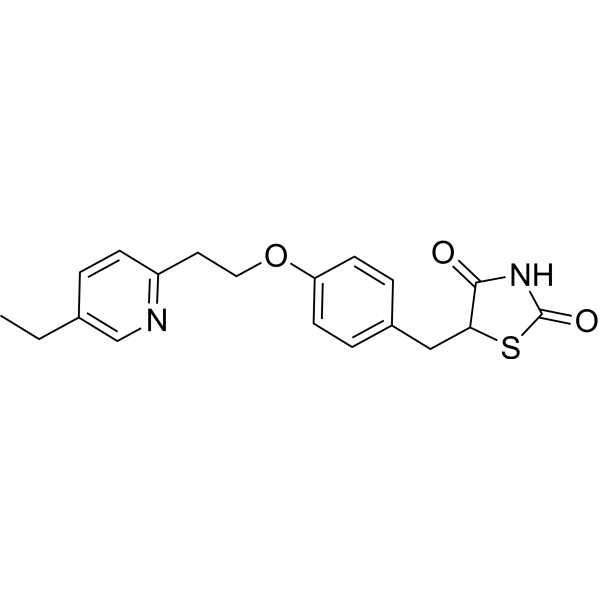
  • HY-13956
    Pioglitazone
    45+ Cited Publications

    U 72107

    PPAR Ferroptosis Metabolic Disease Cancer
    Pioglitazone (U 72107) is an orally active and selective PPARγ (peroxisome proliferator-activated receptor) agonist with high affinity binding to the PPARγ ligand-binding domain with EC50 of 0.93 and 0.99 μM for human and mouse PPARγ, respectively. Pioglitazone can be used in diabetes research .
    Pioglitazone
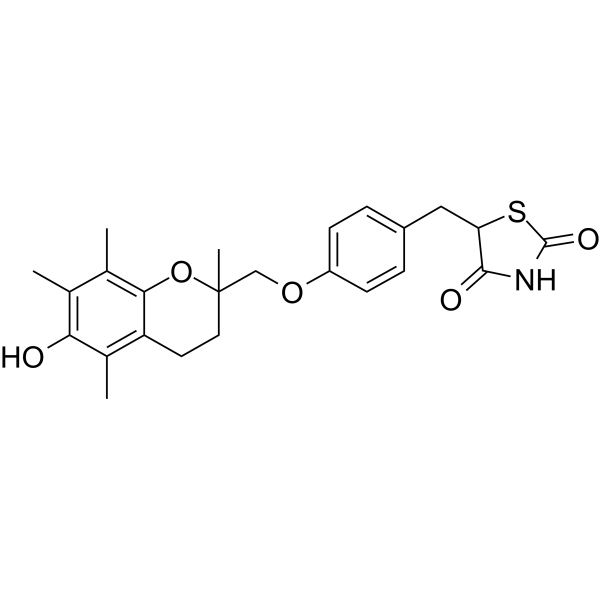
  • HY-50935
    Troglitazone
    30+ Cited Publications

    CS-045

    PPAR Autophagy Apoptosis Ferroptosis Metabolic Disease Cancer
    Troglitazone is an orally active PPARγ agonist, with EC50s of 550 nM and 780 nM for human and murine PPARγ receptor, respectively. Troglitazone has anticancer activity, prevents and inhibits the development of type 2 diabetes.
    Troglitazone
  • HY-16995
    Pirinixic acid
    30+ Cited Publications

    Wy-14643

    PPAR Metabolic Disease Inflammation/Immunology
    Pirinixic acid (Wy-14643) is a potent agonist of PPARα, with EC50s of 0.63 μM, 32 μM for murine PPARα and PPARγ, and 5.0 μM, 60 μM, 35 μM for human PPARα, PPARγ and PPARδ, respectively.
    Pirinixic acid
  • HY-15655
    GW1929
    10+ Cited Publications

    PPAR Neurological Disease Metabolic Disease
    GW 1929 is an orally active peroxisome proliferator-activated receptor-γ (PPARγ) agonist with a pKi of 8.84 for human PPAR-γ, and pEC50s of 8.56 and 8.27 for human PPAR-γ and murine PPAR-γ, respectively. GW 1929 (hydrochloride) has antidiabetic efficacy and neuroprotective potential .
    GW1929
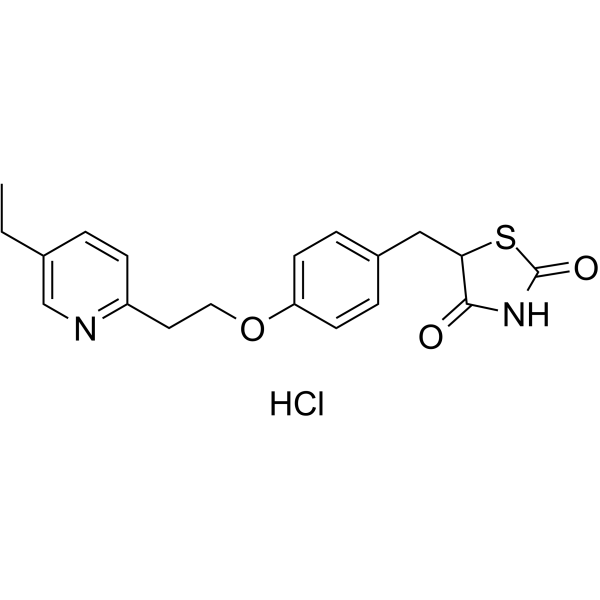
  • HY-14601
    Pioglitazone hydrochloride
    45+ Cited Publications

    U 72107A; AD 4833

    PPAR Ferroptosis Metabolic Disease Cancer
    Pioglitazone hydrochloride is a potent and selective PPARγ agonist with EC50s of 0.93 and 0.99 μM for human and mouse PPARγ, respectively.
    Pioglitazone hydrochloride
  • HY-B0637
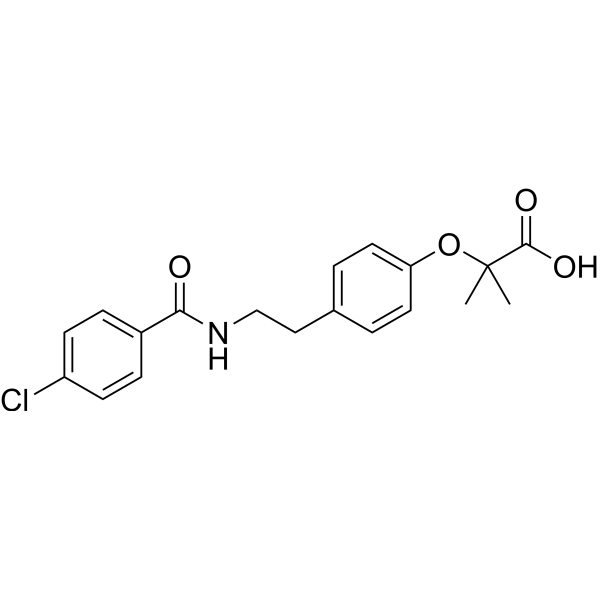
    Bezafibrate
    10+ Cited Publications

    BM15075

    PPAR Cardiovascular Disease Metabolic Disease
    Bezafibrate is an agonist of PPAR, with EC50s of 50 μM, 60 μM, 20 μM for human PPARα, PPARγ and PPARδ, and 90 μM, 55 μM, 110 μM for murine PPARα, PPARγ and PPARδ, respectively; Bezafibrate is used as an hypolipidemic agent.
    Bezafibrate
  • HY-13202
    T0070907
    40+ Cited Publications

    PPAR Cancer
    T0070907 is a potent PPARγ antagonist with a Ki of 1 nM.
    T0070907
  • HY-14600
    Rosiglitazone maleate
    170+ Cited Publications

    BRL 49653C

    PPAR TRP Channel Autophagy Ferroptosis Metabolic Disease Inflammation/Immunology Cancer
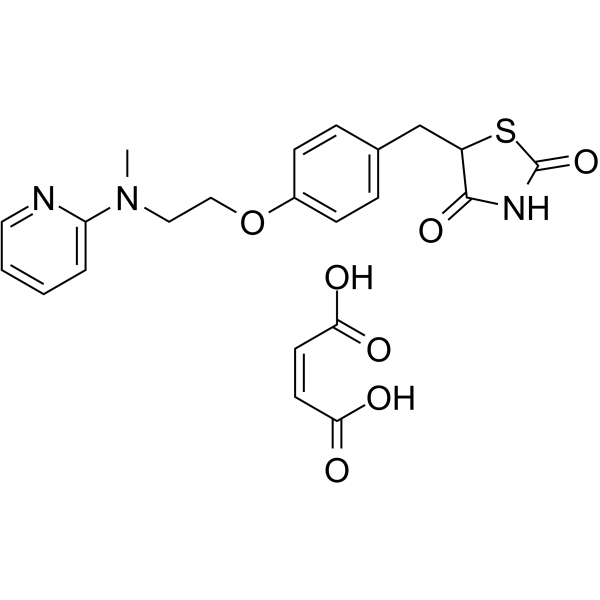
    Rosiglitazone maleate (BRL 49653C) is a potent and selective activator of PPARγ, with EC50s of 30 nM, 100 nM and 60 nM for PPARγ1, PPARγ2, and PPARγ, respectively, and a Kd of appr 40 nM for PPARγ; Rosiglitazone maleate is also an modulator of TRP channels, inhibits TRP melastatin 2 (TRPM2), TRPM3 and activates TRP canonical 5 (TRPC5).
    Rosiglitazone maleate
  • HY-N0246
    Saikosaponin A
    5 Publications Verification

    LXR Bacterial Inflammation/Immunology Cancer
    Saikosaponin A is the main active ingredient in Bupleurum chinense, which can regulate lipid metabolism and promote cholesterol efflux in early atherosclerosis. In addition, Saikosaponin A may also serve as a potential peroxisome proliferator-activated receptor γ (PPAR-γ) agonist, significantly promoting the expression of PPAR-γ. Saikosaponin A can be used in the study of hyperlipidemic pancreatitis .
    Saikosaponin A
  • HY-15725
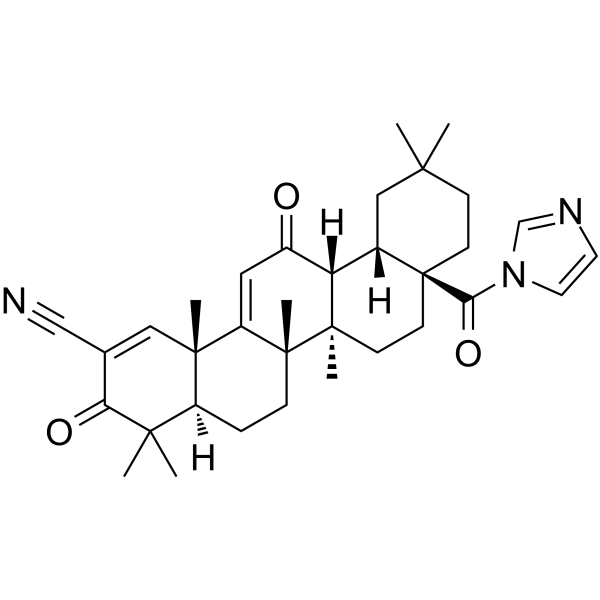
    CDDO-Im
    10+ Cited Publications

    RTA-403; TP-235; CDDO-Imidazolide

    Keap1-Nrf2 PPAR Ferroptosis Cancer
    CDDO-Im (RTA-403) is an activator of Nrf2 and PPAR, with Kis of 232 and 344 nM for PPARα and PPARγ .
    CDDO-Im
  • HY-N2025
    Oroxin A
    4 Publications Verification

    PPAR Glycosidase Metabolic Disease
    Oroxin A is the major component of an ethanol-water Oroxylum indicum (L.) Kurz (Bignoniaceae) seed extract (OISE). Oroxin A acts as a partial PPARγ agonist that can activate PPARγ transcriptional activation. Oroxin A activates PPARγ by docking into the PPARγ protein ligand-binding domain. Oroxin A also exhibits an inhibitory activity against α-glucosidase and an antioxidant capacity . Oroxin A exerts anti-breast cancer effects by inducing ER stress-mediated senescence .
    Oroxin A
  • HY-B0287
    Clofibrate
    4 Publications Verification

    PPAR Metabolic Disease
    Clofibrate is an agonist of PPAR, with EC50s of 50 μM, ~500 μM for murine PPARα and PPARγ, and 55 μM, ~500 μM for human PPARα and PPARγ, respectively.
    Clofibrate
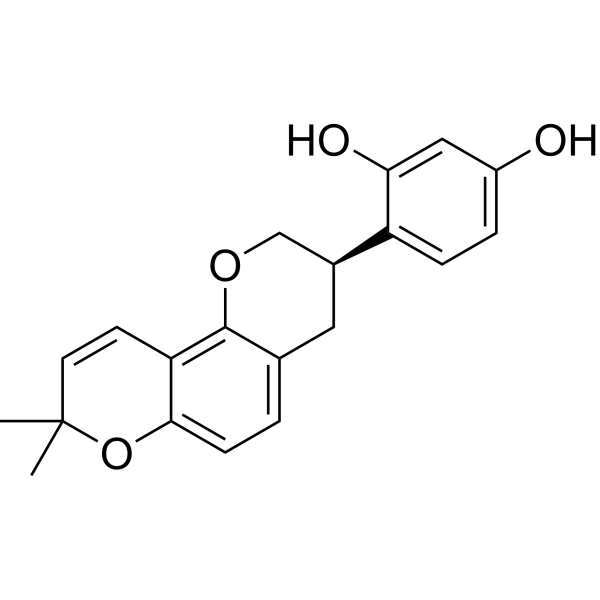
  • HY-N10361

    RAR/RXR PPAR Aldose Reductase Cancer
    Drupanin is an orally active and selective AKR1C3 enzyme inhibitor and an RXRα agonist with an EC50 value of 4.8 μM, which is found in green propolis. Drupanin also activates PPARγ moderately. Drupanin induces adipogenesis and elevates aP2 mRNA levels in 3T3-L1 fibroblasts Drupanin has the potential for the research of breast and prostate cancers .
    Drupanin
  • HY-16086
    Balaglitazone
    1 Publications Verification

    DRF 2593; NN 2344

    PPAR Metabolic Disease
    Balaglitazone is a selective partial PPARγ agonist with an EC50 of 1.351 μM for human PPARγ.
    Balaglitazone
  • HY-12483

    PPAR Metabolic Disease
    SR1664 is a PPARγ antagonist. SR1664 binds to PPARγ and potently inhibits Cdk5-mediated PPARγ phosphorylation (IC50=80 nM; Ki= 28.67 nM) .
    SR1664
  • HY-128671

    6TI; 6-Mercaptopurine riboside

    PPAR LXR JNK NO Synthase Metabolic Disease
    6-Thioinosine (6TI) is a purine antimetabolite and an anti-adipogenic agent. 6-Thioinosine reduces the mRNA levels of PPARγ and C/EBPα and downregulates the mRNA levels of PPARγ target genes (LPL, CD36, aP2, and LXRα). 6-Thioinosine exerts its anti-adipogenic effects by downregulating PPARγ through JNK-dependent iNOS upregulation. 6-Thioinosine can be used to study adipocyte dysfunction .
    6-​Thioinosine
  • HY-14817

    PPM 204

    PPAR Metabolic Disease
    Indeglitazar (PPM 204) is an orally available PPAR pan-agonist for all three PPARα, PPARδ and PPARγ .
    Indeglitazar
  • HY-148351

    PPAR Cancer
    BAY-0069 is a potent and selective PPARγ inverse agonist with an IC50 value of 6.3 nM and 24 nM for human PPARγ and mouse PPARγ. BAY-0069 can be used to research cancer .
    BAY-0069
  • HY-101064S3

    PPAR Metabolic Disease
    Fmoc-leucine-d10 is the deuterium labeled Fmoc-leucine. Fmoc-leucine is a selective PPARγ modulator. Fmoc-leucine activates PPARγ with a lower potency but a similar maximal efficacy than rosiglitazone. Fmoc-leucine improves insulin sensitivity in normal, diet-induced glucose-intolerant, and in diabetic db/db mice. Fmoc-leucine has a lower adipogenic activity .
    Fmoc-leucine-d10
  • HY-N2209

    PPAR Metabolic Disease
    Angeloylgomisin H, as a major lignin extract of Schisandra rubriflora, has the potential to improve insulin-stimulated glucose uptake by activating PPAR-γ .
    Angeloylgomisin H
  • HY-14792B
    Inolitazone dihydrochloride
    5 Publications Verification

    Efatutazone dihydrochloride; CS-7017 dihydrochloride; RS5444 dihydrochloride

    PPAR Cancer
    Inolitazone dihydrochloride (Efatutazone dihydrochloride) is a novel high-affinity PPARγ agonist that is dependent upon PPARγ for its biological activity with IC50 of 0.8 nM for growth inhibition.
    Inolitazone dihydrochloride
  • HY-148352
    BAY-4931
    1 Publications Verification

    PPAR Cancer
    BAY-4931 is a potent, covalent and selective PPARγ inverse-agonist with an IC50 of 0.17 nM .
    BAY-4931
  • HY-101064S2

    N-FMOC-leucine-d3; NPC 15199-d3; NSC 334290-d3

    PPAR Metabolic Disease
    Fmoc-leucine-d3 is the deuterium labeled Fmoc-leucine. Fmoc-leucine is a selective PPARγ modulator. Fmoc-leucine activates PPARγ with a lower potency but a similar maximal efficacy than rosiglitazone. Fmoc-leucine improves insulin sensitivity in normal, diet-induced glucose-intolerant, and in diabetic db/db mice. Fmoc-leucine has a lower adipogenic activity .
    Fmoc-leucine-d3
  • HY-14601R

    U 72107A (Standard); AD 4833 (Standard)

    Reference Standards PPAR Ferroptosis Metabolic Disease Cancer
    Pioglitazone (hydrochloride) (Standard) is the analytical standard of Pioglitazone (hydrochloride). This product is intended for research and analytical applications. Pioglitazone hydrochloride is a potent and selective PPARγ agonist with EC50s of 0.93 and 0.99 μM for human and mouse PPARγ, respectively.
    Pioglitazone hydrochloride (Standard)
  • HY-110118

    PPAR Metabolic Disease
    Edaglitazone is a potent, selective and orally active PPARγ agonist, with EC50s of 35.6 nM and 1053 nM for PPARα and PPARγ, respectively. Edaglitazone displays antiplatelet, antidiabetic and anti-hyperglycemic activity .
    Edaglitazone
  • HY-101064S1

    Isotope-Labeled Compounds PPAR Metabolic Disease
    Fmoc-leucine- 13C6, 15N is a 15N-labeled and 13C-labled Fmoc-leucine. Fmoc-leucine is a selective PPARγ modulator. Fmoc-leucine activates PPARγ with a lower potency but a similar maximal efficacy than rosiglitazone. Fmoc-leucine improves insulin sensitivity
    Fmoc-leucine-13C6,15N
  • HY-N9333

    PPAR Metabolic Disease Cancer
    Wistin, isolated from Caragana sinica roots, is a PPARα and PPARγ agonist .
    Wistin
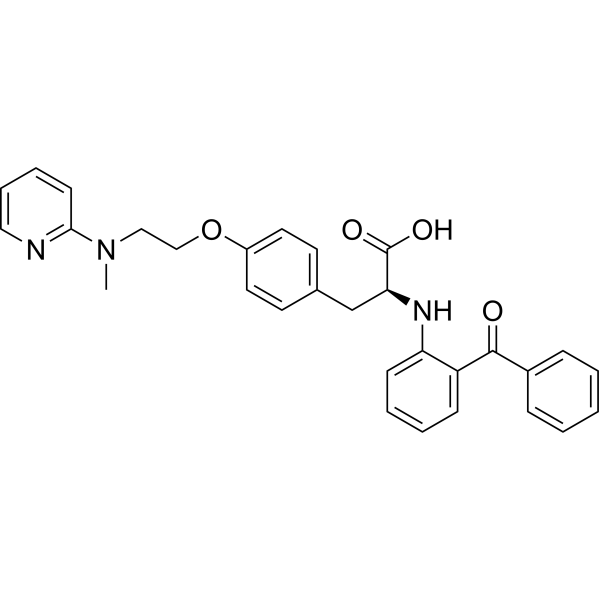
  • HY-122235

    PPAR Cardiovascular Disease
    MRL-24 is a PPARγ agonist. MRL-24 can be used in metabolic disease related research .
    MRL-24
  • HY-150308

    PPAR Cancer
    SR10221, a noncovalent inverse agonist of PPARγ, represses downstream PPARγ target genes leading to growth inhibition in bladder cancer cell lines .
    SR10221
  • HY-13956S1

    Isotope-Labeled Compounds PPAR Ferroptosis Metabolic Disease Cancer
    Pioglitazone-d4 (alkyl) (U 72107-d4 (alkyl)) is the deuterium labeled Pioglitazone. Pioglitazone (U 72107) is a potent and selective PPARγ agonist with high affinity binding to the PPARγ ligand-binding domain with EC50 of 0.93 and 0.99 μM for human and mouse PPARγ, respectively .
    Pioglitazone-d4 (alkyl)
  • HY-17386S

    Isotope-Labeled Compounds PPAR TRP Channel Autophagy Ferroptosis Neurological Disease Metabolic Disease Inflammation/Immunology Cancer
    Rosiglitazone-d3 is the deuterium labeled Rosiglitazone. Rosiglitazone (BRL 49653) is a selective, orally active PPARγ agonist with EC50s of 30 nM, 100 nM and 60 nM for PPARγ1, PPARγ2, and PPARγ, respectively. Rosiglitazone binds to PPARγ with a Kd of approximately 40 nM. Rosiglitazone is also an activator of TRPC5 (EC50=~30 μM) and an inhibitor of TRPM3 .
    Rosiglitazone-d3
  • HY-B0637S

    PPAR Cardiovascular Disease Metabolic Disease
    Bezafibrate-d6 is the deuterium labeled Bezafibrate. Bezafibrate is an agonist of PPAR, with EC50s of 50 μM, 60 μM, 20 μM for human PPARα, PPARγ and PPARδ, and 90 μM, 55 μM, 110 μM for murine PPARα, PPARγ and PPARδ, respectively; Bezafibrate is used as an hypolipidemic agent.
    Bezafibrate-d6
  • HY-14831
    Arhalofenate
    1 Publications Verification

    MBX 102; JNJ 39659100

    PPAR Metabolic Disease
    Arhalofenate (MBX 102) is a selective partial agonist of peroxisome proliferator-activated receptor (PPAR)-γ, used for the treatment of type 2 diabetes.
    Arhalofenate
  • HY-101746

    PPAR Metabolic Disease
    GSK376501A is a selective peroxisome proliferator-activated receptor gamma (PPARγ) modulator for the treatment of type 2 diabetes mellitus .
    GSK376501A
  • HY-146480

    PPAR Cancer
    PPARγ agonist 5 (Compound 1) is a potent and selective agonist of PPARγ. PPARγ agonist 5 has the potential for the research of cancer diseases .
    PPARγ agonist 5
  • HY-116468

    PPAR Metabolic Disease
    PPARγ agonist 11 (compound 20) is a selective agonist of PPARγ (EC50: 0.1 μM) .
    PPARγ agonist 11
  • HY-14792

    Efatutazone; CS-7017; RS5444

    PPAR Cancer
    Inolitazone a novel high-affinity PPARγ agonist that is dependent upon PPARγ for its biological activity with IC50 of 0.8 nM for growth inhibition.
    Inolitazone
  • HY-159944

    PPAR Neurological Disease Metabolic Disease Inflammation/Immunology
    PPARγ agonist 14 (compound 3) is a PPARy agonist (EC50=2.4 μM) with anti-diabetic activity. PPARγ agonist 14 can improve intracellular glucose uptake, promote insulin release, and lower blood sugar. In addition, PPARγ agonist 14 also improves mitochondrial function, reduces oxidative stress, and inhibits inflammatory factors. PPARγ agonist 14 can be used in the study of neurodegenerative diseases, neuroinflammatory diseases, and other diseases .
    PPARγ agonist 14
  • HY-101292

    PPAR Metabolic Disease
    FK614 is an orally active, non-thiazolidinedione (TZD) type, and selective PPARγ modulator (SPPARM). FK614 functions as a PPARγ agonist with potent anti-diabetic activity in vivo. FK614 has different effects on the activation of PPARγ at each stage of adipocyte differentiation. FK614 can be used for the research of hyperglycemia, hypertriglyceridemia, glucose intolerance and type 2 diabetes .
    FK614
  • HY-B0287R
    Clofibrate (Standard)
    4 Publications Verification

    Reference Standards PPAR Metabolic Disease
    Clofibrate (Standard) is the analytical standard of Clofibrate. This product is intended for research and analytical applications. Clofibrate is an agonist of PPAR, with EC50s of 50 μM, ~500 μM for murine PPARα and PPARγ, and 55 μM, ~500 μM for human PPARα and PPARγ, respectively.
    Clofibrate (Standard)
  • HY-138007

    ROR PPAR LXR Metabolic Disease Inflammation/Immunology
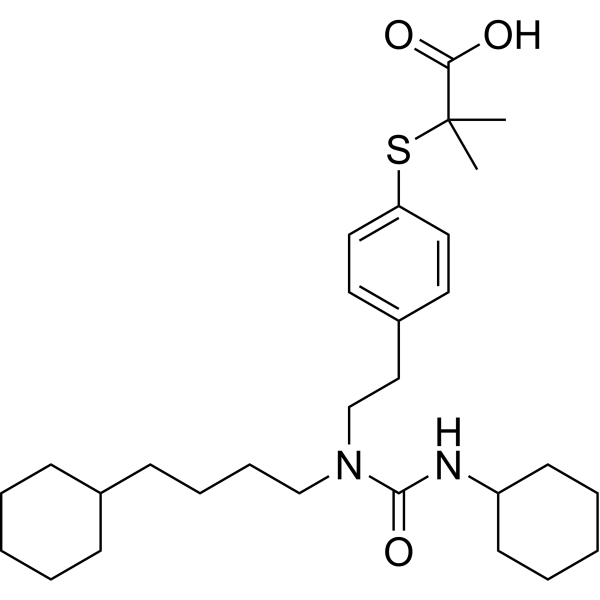
    SR-1903 is an inverse agonist of RORγ and PPARγ (IC50 of ∼100 nM and 209 nM for RORγ and PPARγ, respectively) and a LXR agonist. SR-1903 exhibits anti-inflammatory and anti-diabetic efficacy in collagen-induced arthritis and diet-induced obesity mouse models .
    SR-1903
  • HY-146482

    PPAR Cancer
    PPARγ agonist 6 (Compound 12) is a potent and selective agonist of PPARγ. PPARγ agonist 6 has the potential for the research of cancer diseases .
    PPARγ agonist 6
  • HY-162320

    PPAR Metabolic Disease
    PPARγ agonist 12 (compound 9i) is a potent and selective PPARγ agonist with EC50s of 3.98 and 15.42 μM against PPARγ and PPARδ, respectively. PPARγ agonist 12 improves insulin secretion and has anti-diabetic effect .
    PPARγ agonist 12
  • HY-178447

    PPAR Glutathione Peroxidase SOD TNF Receptor Interleukin Related NF-κB Infection Metabolic Disease Endocrinology
    PPARγ agonist 20 is a potent, orally active PPAR-γ agonist. PPARγ agonist 20 effectively increases antioxidant defenses (SOD, GSH) and reduces lipid peroxidation. PPARγ agonist 20 can upregulate of Pparg, Glut4, and AdipoQ, suppresses of TNF-α, IL-6, and NF-κB p65. PPARγ agonist 20 significantly lowers fasting blood glucose, improving glucose tolerance, and restoring metabolic balance in Streptozotocin (HY-13753)-Nicotinamide (HY-B0150)-induced diabetic rats. PPARγ agonist 20 can be used for the study of type 2 diabetes .
    PPARγ agonist 20
  • HY-13956B

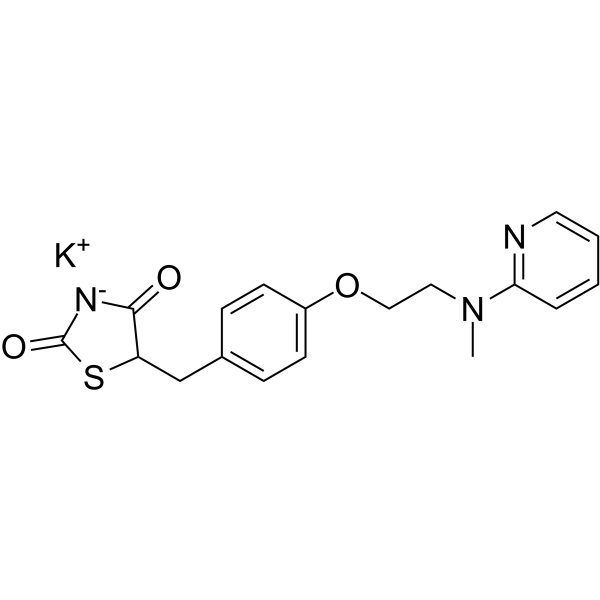
    U 72107 potassium

    PPAR Ferroptosis Metabolic Disease Cancer
    Pioglitazone (U 72107) potassium is an orally active and selective PPARγ (peroxisome proliferator-activated receptor) agonist with high affinity binding to the PPARγ ligand-binding domain with EC50 of 0.93 μM and 0.99 μM for human and mouse PPARγ, respectively. Pioglitazone potassium can be used in diabetes research .
    Pioglitazone potassium
  • HY-50935S

    CS-045-d4

    Isotope-Labeled Compounds PPAR Autophagy Apoptosis Ferroptosis Cancer
    Troglitazone-d4 is deuterium labeled Troglitazone. Troglitazone is a PPARγ agonist, with EC50s of 550 nM and 780 nM for human and murine PPARγ receptor, respectively.
    Troglitazone-d4
  • HY-121448

    PPAR Cardiovascular Disease Metabolic Disease
    GW409544 is a potent PPARα and PPARγ activator, with EC50 values of 2.3 nM and 0.28 nM for PPARα and PPARγ, respectively. GW409544 can be used for the research of metabolic and cardiovascular diseases .
    GW409544
  • HY-13956R

    U 72107 (Standard)

    Reference Standards PPAR Ferroptosis Metabolic Disease Cancer
    Pioglitazone (Standard) is the analytical standard of Pioglitazone. This product is intended for research and analytical applications. Pioglitazone (U 72107) is an orally active and selective PPARγ (peroxisome proliferator-activated receptor) agonist with high affinity binding to the PPARγ ligand-binding domain with EC50 of 0.93 and 0.99 μM for human and mouse PPARγ, respectively. Pioglitazone can be used in diabetes research .
    Pioglitazone (Standard)
  • HY-14792C

    Efatutazone hydrochloride hydrate; CS-7017 hydrochloride hydrate; RS5444 hydrochloride hydrate

    PPAR Cancer
    Inolitazone hydrochloride hydrate (Efatutazone hydrochloride hydrate) is a novel PPARγ high-affinity agonist, with an EC50 value one-fiftieth that of Rosiglitazone (HY-17386), and shows no inhibitory effect on RIE cells that do not express PPARγ. Inolitazone hydrochloride hydrate can be used in the research of cancer .
    Inolitazone hydrochloride hydrate
  • HY-116521

    PPAR Metabolic Disease
    SR2595 is an inverse agonist of PPARγ with an IC50 of 30 nM .
    SR2595

Inquiry Online

Your information is safe with us. * Required Fields.

Salutation


Country or Region *

Applicant Name *


Organization Name *

Department *


Email Address *


Product Name *

Cat. No.


Requested quantity *

Phone Number *


Remarks

Inquiry Online

Inquiry Information

Product Name:
Cat. No.:
Quantity:
MCE Japan Authorized Agent:

