18 Results for "

antibiotic adjuvants

" in MedChemExpress (MCE) Product Catalog:
Products (18)

18 Results for "antibiotic adjuvants" in MCE Product Catalog:

25
25 Cited Publications
Cat. No.: HY-15417
CAS No.: 110448-33-4
Purity:  99.60%
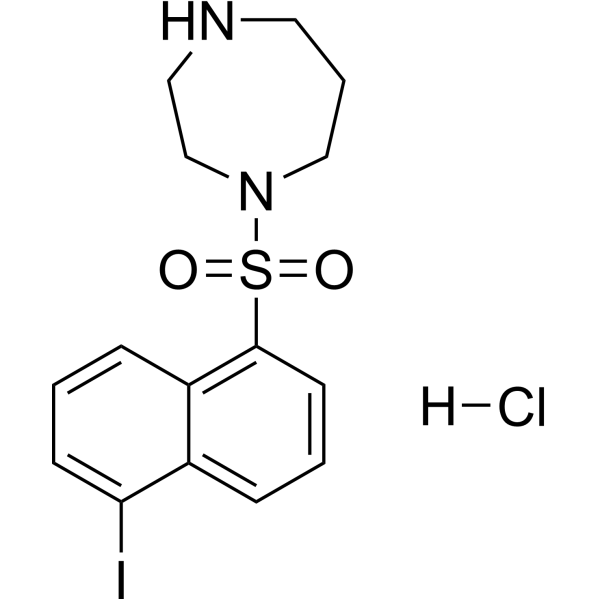
ML-7 hydrochloride is a selective and highly specific myosin light chain kinase (MLCK) inhibitor that acts as a trabecular meshwork (TM) relaxant. ML-7 hydrochloride enhances Quinocetone (HY-123581)-induced phosphorylation of ERK, p38 MAPK and JNK, attenuates Akt activation, and promotes apoptosis of hepatocellular carcinoma cells. ML-7 hydrochloride reduces Th2 cytokine secretion by inhibiting MLCK, while alleviating smooth muscle hyperplasia and collagen deposition . As a non-antibiotic adjuvant, ML-7 hydrochloride restores the sensitivity of drug-resistant bacteria to Tigecycline (HY-B0117) . ML-7 hydrochloride can be used in research related to glaucoma, hepatocellular carcinoma, asthma, and Klebsiella pneumoniae infection .
loading...
    loading...
Cat. No.: HY-W062216
CAS No.: 7720-39-0
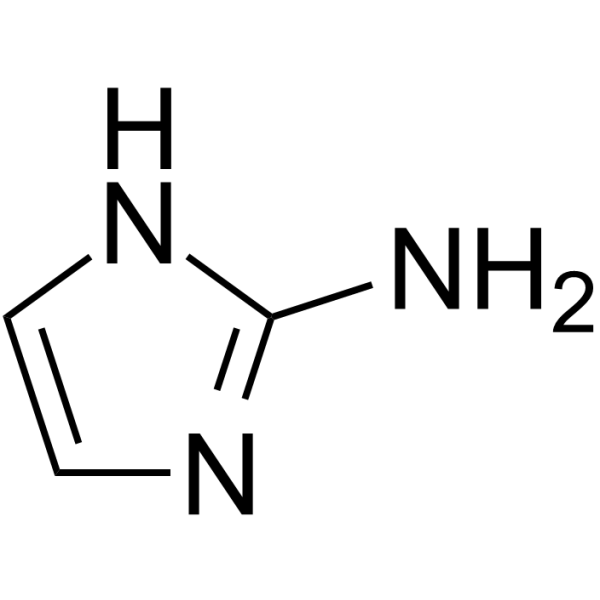
2-Aminoimidazole is a potent antibiofilm agent that can be used as an adjuvant to antimicrobial. 2-aminoimidazoles disrupts the ability of bacteria to protect themselves by inhibiting biofilm formation and genetically-encoded antibiotic resistance traits. 2-Aminoimidazole is also a weak noncompetitive inhibitor of human arginase I with a Ki of 3.6 mM .
loading...
    loading...
Cat. No.: HY-N125722
CAS No.: 33538-71-5
Synonyms: Aabomycin A1
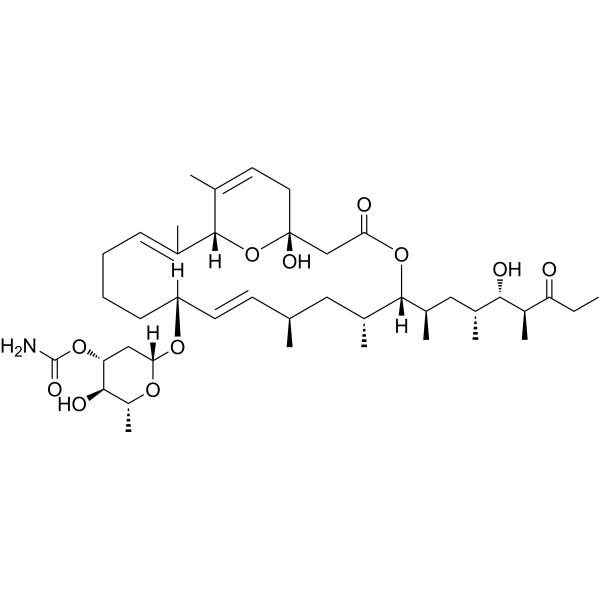
Venturicidin A (Aabomycin A1) is a natural product derived from Streptomyces, possessing antifungal, anti-Trypanosoma brucei, anti-Leishmania donovani, and ATP synthase inhibitory activities. Venturicidin A acts as an antibiotic adjuvant, promoting the uptake of aminoglycoside antibiotics and enhancing bactericidal efficacy. Venturicidin A inhibits ATP synthesis by blocking proton translocation through the FO subunit. In bloodstream-form Trypanosoma brucei, Venturicidin A causes collapse of the mitochondrial membrane potential; in fungi, it disrupts cell membrane integrity, induces leakage of cytoplasmic contents, elevates ROS levels, and downregulates the expression of fungal pathogenicity-related genes. Venturicidin A exhibits antifungal activity against Botrytis cinerea. Venturicidin A is used in research on bacterial infections, trypanosome/leishmania infections, and gray mold disease .
loading...
    loading...
Cat. No.: HY-P10580
CAS No.: 1359657-45-6
Vasculotide is a blood-brain barrier (BBB)-penetrant Tie2 agonist. Vasculotide binds to a unique domain of Tie2, induces receptor clustering to drive phosphorylation, activates downstream PI3K/Akt and eNOS pathways, enhances inter-endothelial cell junctions (such as VE-cadherin and claudin-5), and inhibits inflammatory adhesion molecules, ultimately stabilizing the vascular endothelial barrier and reducing its permeability . Vasculotide alleviates pulmonary microvascular leakage and microcirculatory dysfunction caused by cardiopulmonary bypass, acts as an adjuvant radioprotective agent to reduce acute radiation dermatitis, and promotes BBB recovery after focused ultrasound (FUS). Combination of Vasculotide with antibiotics reduces lung injury .
loading...
    loading...
Cat. No.: HY-P10580A
Vasculotide TFA is a blood-brain barrier (BBB)-penetrant Tie2 agonist. Vasculotide TFA binds to a unique domain of Tie2, induces receptor clustering to drive phosphorylation, activates downstream PI3K/Akt and eNOS pathways, enhances inter-endothelial cell junctions (such as VE-cadherin and claudin-5), and inhibits inflammatory adhesion molecules, ultimately stabilizing the vascular endothelial barrier and reducing its permeability . Vasculotide TFA alleviates pulmonary microvascular leakage and microcirculatory dysfunction caused by cardiopulmonary bypass, acts as an adjuvant radioprotective agent to reduce acute radiation dermatitis, and promotes BBB recovery after focused ultrasound (FUS). Combination of Vasculotide TFA with antibiotics reduces lung injury .
loading...
    loading...
Cat. No.: HY-119038
CAS No.: 109376-83-2
ML-7 is a selective and highly specific myosin light chain kinase (MLCK) inhibitor that acts as a trabecular meshwork (TM) relaxant. ML-7 enhances Quinocetone (HY-123581)-induced phosphorylation of ERK, p38 MAPK and JNK, attenuates Akt activation, and promotes apoptosis of hepatocellular carcinoma cells. ML-7 reduces Th2 cytokine secretion by inhibiting MLCK, while alleviating smooth muscle hyperplasia and collagen deposition . As a non-antibiotic adjuvant, ML-7 restores the sensitivity of drug-resistant bacteria to Tigecycline (HY-B0117) . ML-7 can be used in research related to glaucoma, hepatocellular carcinoma, asthma, and Klebsiella pneumoniae infection .
loading...
    loading...
Cat. No.: HY-144767
CAS No.: 1008121-12-7
Purity:  98.55%
Target:  

Bacterial

Research Areas:  

Infection

PA3552-IN-1 (compound 15) is an antibiotic adjuvant that restores sensitivity of MDR P. aeruginosa DK2 strain to Polymyxin B. PA3552-IN-1 can reduce PA3552 expression .
loading...
    loading...
Cat. No.: HY-W062216R
CAS No.: 7720-39-0
2-Aminoimidazole is a potent antibiofilm agent that can be used as an adjuvant to antimicrobial. 2-aminoimidazoles disrupts the ability of bacteria to protect themselves by inhibiting biofilm formation and genetically-encoded antibiotic resistance traits. 2-Aminoimidazole is also a weak noncompetitive inhibitor of human arginase I with a Ki of 3.6 mM .
loading...
    loading...
Cat. No.: HY-168204
Target:  

Bacterial Fungal

Research Areas:  

Infection

3-Acetyl-28-N–(3–guanidinobutoxy)-oleanolic acid (compound J1) is a potent antimicrobial agent. 3-Acetyl-28-N–(3–guanidinobutoxy)-oleanolic acid shows anti-gram-positive bacteria and fungi activity. 3-Acetyl-28-N–(3–guanidinobutoxy)-oleanolic acid can be used as antibiotic adjuvants. 3-Acetyl-28-N–(3–guanidinobutoxy)-oleanolic disrupts the bacterial cell membrane, inserts into the DNA, and binds to DNA gyrase. 3-Acetyl-28-N–(3–guanidinobutoxy)-oleanolic reduces microbial count in a mouse MRSA skin infection model and accelerates wound healing .
loading...
    loading...
Cat. No.: HY-159929
Target:  

Bacterial

Research Areas:  

Infection

Antibiotic adjuvant 2 (compound 5q) is an antibiotic adjuvant with potent colistin-potentiating activity and low mammalian toxicity. Antibiotic adjuvant 2 has minimum re-sensitizing concentration of 0.125 μg/mL agnist of Escherichia coli AR-0493 .
loading...
    loading...
Cat. No.: HY-159930
CAS No.: 2972593-21-6
Target:  

Bacterial

Research Areas:  

Infection

Antibiotic adjuvant 3 (compound 8g) is an antibiotic adjuvant with potent colistin-potentiating activity and low mammalian toxicity. Antibiotic adjuvant 3 has minimum re-sensitizing concentration of 0.25 μg/mL agnist of Escherichia coli AR-0493 .
loading...
    loading...
Cat. No.: HY-161870
CAS No.: 2351883-15-1
Target:  

Antibiotic

Research Areas:  

Infection

Antibiotic adjuvant 1 (compound 3e) is an antibiotic adjuvant that presents insufficient antibacterial activity (MIC > 128 µg/mL) and potentiate the activity of Cloxacillin (HY-B0466A)(66-fold) with synergistic effect .
loading...
    loading...
Cat. No.: HY-123209
CAS No.: 122228-60-8
Synonyms: WS-9659 A
Target:  

Antibiotic Bacterial

Research Areas:  

Infection Cancer

Lavanducyanin (WS-9659 A) is an antibiotic targeting microbial cell membranes. Lavanducyanin is promising for research of infections and cancer adjuvants .
loading...
    loading...
Cat. No.: HY-146427
Target:  

Fungal

Research Areas:  

Infection

Antifungal agent 29 (compound 9d) is a potent, selective and non-toxic antifungal agent. Antifungal agent 29 shows antifungal activity towards Cryptococcus neoformans (MIC ≤ 0.23 μM) .
loading...
    loading...
Cat. No.: HY-173163
CAS No.: 2811663-45-1
Target:  

Bacterial

Research Areas:  

Infection

(E)-2,6-Di-tert-butyl-4-(4-(diethylamino)styryl)pyrylium (trifluoromethanesulfonate) (Compound 4a) is a Gram-negative outer membrane permeabilizer with synergistic antibacterial activity through the blockage on LptA/LptC interaction via targeting Met47 in LptA. (E)-2,6-Di-tert-butyl-4-(4-(diethylamino)styryl)pyrylium (trifluoromethanesulfonate) potentiates pol B against both wild-typed and MDR A. baumannii and E. coli strains. (E)-2,6-Di-tert-butyl-4-(4-(diethylamino)styryl)pyrylium (trifluoromethanesulfonate) can be used as antibiotic adjuvants against MDR Gram-negative bacteria .
loading...
    loading...
Cat. No.: HY-181935
CAS No.: 2493985-50-3
Target:  

Bacterial

Research Areas:  

Infection

Antibiotic adjuvant 4 (Compound 13) is an Antibiotic adjuvant and efflux pump inhibitor. Antibiotic adjuvant 4 exhibits potent efflux pump inhibitory activity. Antibiotic adjuvant 4 significantly downregulates virulence-related genes of Staphylococcus aureus when used alone or in combination with antibiotics. Antibiotic adjuvant 4 enhances the efficacy of Ciprofloxacin (HY-B0356) against multiagent-resistant Staphylococcus aureus strains .
loading...
    loading...
Cat. No.: HY-182675
CAS No.: 2292113-87-0
Target:  

Antibiotic Bacterial

Research Areas:  

Infection

Antibiotic adjuvant 5 (Compound 2) acts as an Antibiotic adjuvant. Antibiotic adjuvant 5 enhances the activity of Azithromycin (HY-17506), Clarithromycin (HY-17508), Doripenem (HY-B0187) and Rifampin (HY-B0272) against *Pseudomonas aeruginosa* PAO1. When used in combination with Azithromycin, Antibiotic adjuvant 5 increases the survival rate of *Galleria mellonella* during *Pseudomonas aeruginosa* PAO1 infection. Antibiotic adjuvant 5 is applicable for the research of *Pseudomonas aeruginosa* infection .
loading...
    loading...
Cat. No.: HY-189006
CAS No.: 3066273-36-4
Research Areas:  

Infection

MBL-IN-7 is a potent metallo-β-lactamase (MBLs) inhibitor. The IC50 values of MBL-IN-7 against NDM-1, IMP-1, VIM-1, VIM-2, and L1 are 11 nM, 69 nM, 29 nM, 12 nM, and 85 μM, respectively. MBL-IN-7 is an antibiotic adjuvant. MBL-IN-7 competitively inhibits enzyme activity primarily by coordinating with zinc ions in the active site of MBLs and forming hydrogen bonds and π interactions, thereby protecting carbapenem antibiotics from hydrolysis. MBL-IN-7 is applicable to research related to carbapenem-resistant Gram-negative bacterial infections .
loading...
    loading...
  • 1

