



2-Aminoimidazole

Based on 1 Customer Validation
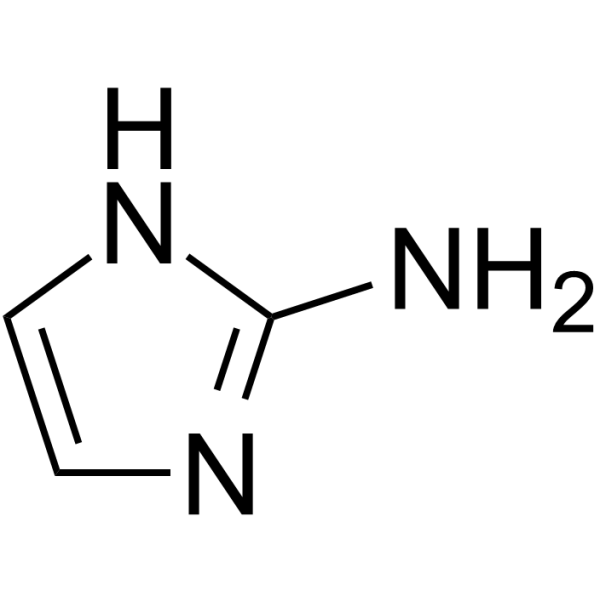
2-Aminoimidazole is a potent antibiofilm agent that can be used as an adjuvant to antimicrobial. 2-aminoimidazoles disrupts the ability of bacteria to protect themselves by inhibiting biofilm formation and genetically-encoded antibiotic resistance traits. 2-Aminoimidazole is also a weak noncompetitive inhibitor of human arginase I with a Ki of 3.6 mM.
Nur für Forschungszwecke. Wir verkaufen nicht an Patienten.
- Reinheit : 98.06%
- CAS. Nr.: 7720-39-0
- Formel: C3H5N3
- Molecular Weight:83.09
-
Speicherung:
-20°C, protect from light
* In solvent : -80°C, 6 months; -20°C, 1 month (protect from light)

To place orders, for customer services and technical support, please contact: MedChemExpress USA
Tel: 609-228-6898 E-mail: [email protected] [email protected]


-
 Biologische Aktivität
-
Chemical Information
-
Lösungsmittel & Löslichkeit
- Protokoll
- Reinheit & Dokumentation
- Verweise
-
 Help & FAQs


-
HY-15775
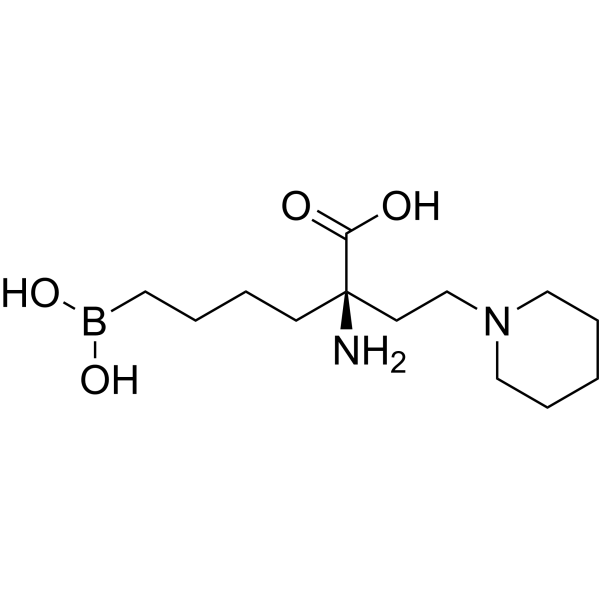
Arginase inhibitor 1Arginases I/II Inhibitor -
HY-112885B
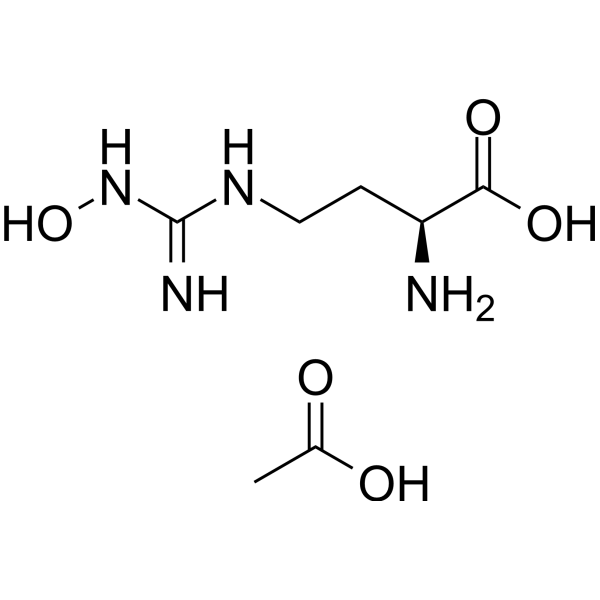
nor-NOHA monoacetateArginase Inhibitor -
HY-112885A
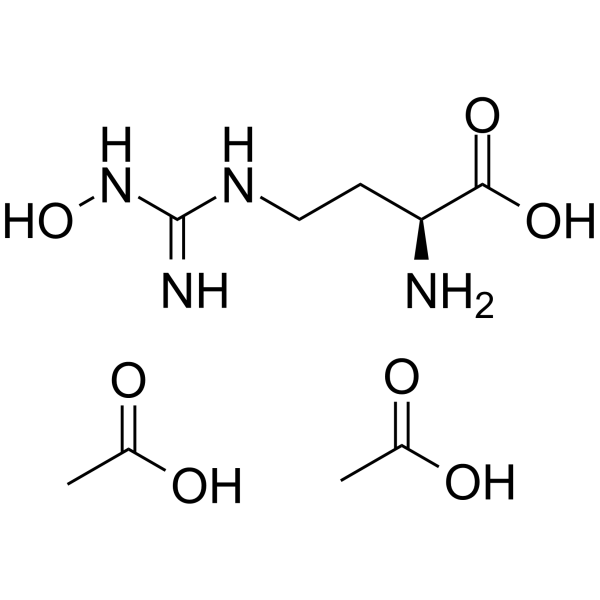
nor-NOHA acetateArginase Inhibitor -
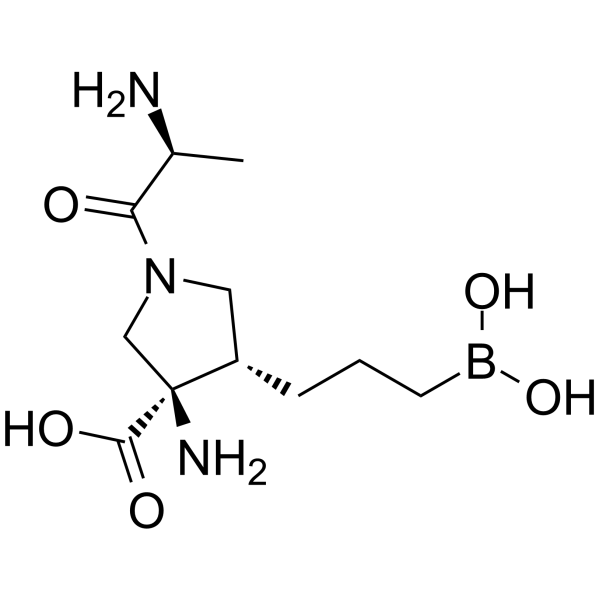
HY-101979
NumidargistatArginase Inhibitor -

HY-W062216R
2-Aminoimidazole (Standard)Antibiofilm Agent -
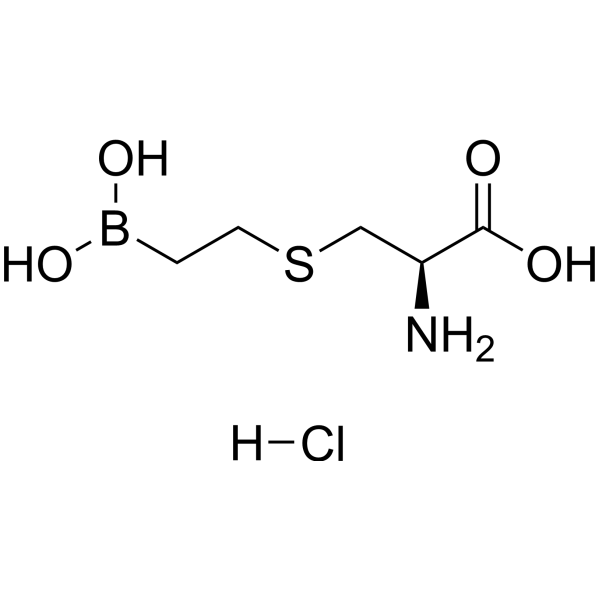
HY-19548A
BEC hydrochlorideArginaseII Inhibitor -
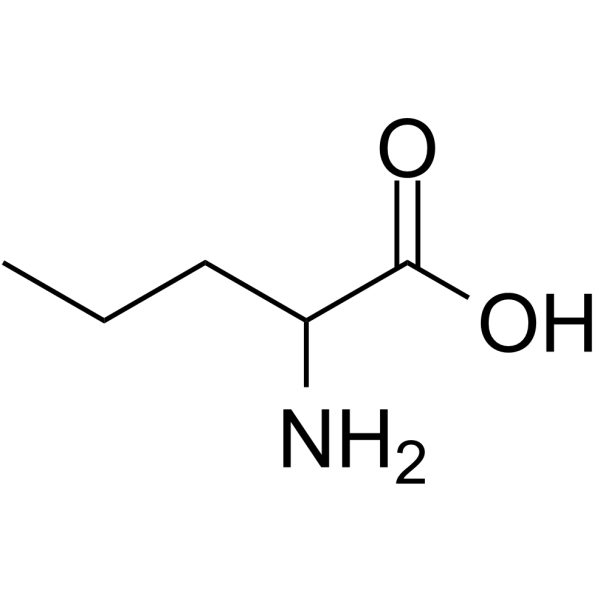
HY-W010510
DL-Norvaline -
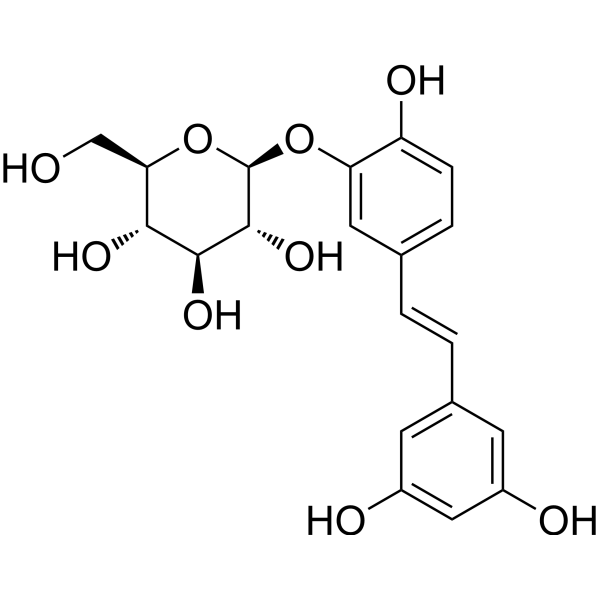
HY-N2237
Piceatannol 3'-O-glucosideNO Synthase Activator -
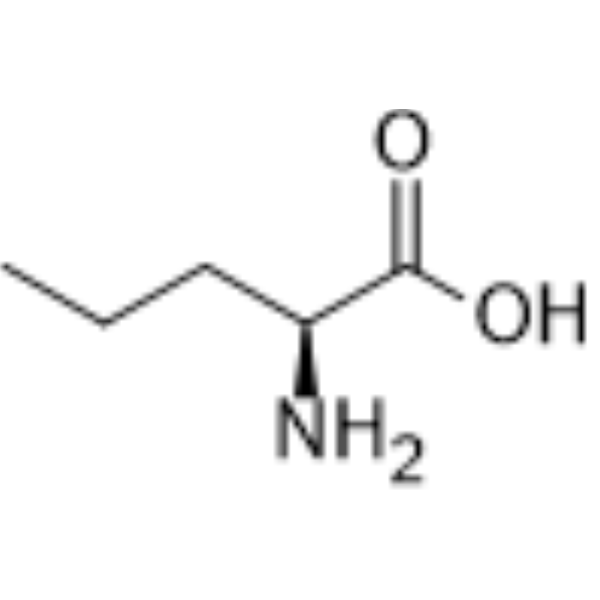
HY-Y0399
L-NorvalineArginase Inhibitor -

HY-W010510R
DL-Norvaline (Standard) -

HY-101979R
Numidargistat (Standard)Reference Standard -

HY-N2237R
Piceatannol 3'-O-glucoside (Standard)NO Synthase Activator


Biologische Aktivität
Beschreibung
IC50 & Target
In Vitro
The 2-aminoimidazole analogs 2AI-1 (100 µM, 30 min) is able to cross both A. baumannii cell membranes and enter the cytoplasm, confirmed by confocal microscopy. [1]. The 2-aminoimidazole analogs 2AI-1 can specificly target to BfmR, a response regulator that is the master controller of biofilm formation, dertermined by pull-down assays and binding assays. [1]. The 2-aminoimidazole analogs imi-AAC-5 (50 µM - 100 µM) displays a significant biofilm reduction in most biofilm models, as dertermined by crystal violet staining[2]. The 2-aminoimidazole analogs imi-AAC-5 (25 µM - 50 µM) displays a low planktonic inhibition in most biofilm models. imi-AAC-5 doesn’ affect planktonic growth in biofilm models where biofilm inhibition is observed at 50 µM and doesn’ affect planktonic growth in any of the biofilm models at 25 µM[2]. The 2-aminoimidazole analogs imi-AAC-5 (25 µM - 50 µM) shows a reduction of the number of metabolically active cells in 3 out of 6 biofilm models each at 50 µM and only 1 out of 6 reduction at 25 µM, based on the resazurin viability assay[2]. The 2-aminoimidazole analogs imi-AAC-5 (25 µM - 50 µM) shows antagonistic effects in 2 out of 6 models at 50 µM combined with 50 µM tannic acid, while shows antagonistic effects in 1 out of 6 model at 25 µM combined with 25 µM tannic acid[2]. 2-Aminoimidazole is a weak noncompetitive inhibitor of human arginase I with Ki = 3.6 mM. In contrast, its analogs A1P is a competitive inhibitor with Ki = 4 μM, but A1P has low micromolar affinity with Kd = 2 μM[3].
MedChemExpress (MCE) has not independently confirmed the accuracy of these methods. They are for reference only. Further protocols information, click here.
In Vivo
MedChemExpress (MCE) has not independently confirmed the accuracy of these methods. They are for reference only.
-
Animal Model:Female Balb/C mice (6 - 8 weeks old) [Acute (3-week) ovalbumin (OVA)-sensitization and -challenge murine model][3]
-
Dosage:80 μg/g, Once in total
-
Administration:Nebulization
-
Result:The 2-aminoimidazole analogs A1P attenuated significantly the total resistance of the respiratory system (R) and the maximum resistance of the central airways (RN) following methacholine challenge.


Chemical Information
-
CAS. Nr. 7720-39-0
-
Appearance Liquid (Density: 1.313±0.06 g/cm3)
-
Molecular Weight 83.09
-
Formel C3H5N3
-
SMILES
NC1=NC=CN1
-
Structure Classification
-
Initial Source
secondary metabolites in various marine sponges
-
Versand
Room temperature in continental US; may vary elsewhere.
-
Speicherung
-20°C, protect from light
* In solvent : -80°C, 6 months; -20°C, 1 month (protect from light)


Lösungsmittel & Löslichkeit
In Vitro:
DMSO : 100 mg/mL (1203.51 mM; Need ultrasonic; Hygroscopic DMSO has a significant impact on the solubility of product, please use newly opened DMSO)
Please refer to the solubility information to select the appropriate solvent. Once prepared, please aliquot and store the solution to prevent product inactivation from repeated freeze-thaw cycles.
Storage method and period of stock solution: -80°C, 6 months; -20°C, 1 month (protect from light). When stored at -80°C, please use it within 6 months. When stored at -20°C, please use it within 1 month.
Please refer to the solubility information to select the appropriate solvent. Once prepared, please aliquot and store the solution to prevent product inactivation from repeated freeze-thaw cycles.
Storage method and period of stock solution: -80°C, 6 months; -20°C, 1 month (protect from light). When stored at -80°C, please use it within 6 months. When stored at -20°C, please use it within 1 month.
Konzentration (Stammlösung) × Volumen (Stammlösung) = Konzentration (Ziellösung) × Volumen (Ziellösung)
In Vivo:
Select the appropriate dissolution method based on your experimental animal and administration route.
- For the following dissolution methods, please ensure to first prepare a clear stock solution using an In Vitro approach and then sequentially add co-solvents:
- To ensure reliable experimental results, the clarified stock solution can be appropriately stored based on storage conditions. As for the working solution for In Vivo experiments, it is recommended to prepare freshly and use it on the same day.
- The percentages shown for the solvents indicate their volumetric ratio in the final prepared solution. If precipitation or phase separation occurs during preparation, heat and/or sonication can be used to aid dissolution.
Add each solvent one by one: 10% DMSO 40% PEG300 5% Tween-80 45% Saline
Solubility: ≥ 2.5 mg/mL (30.09 mM); Clear solution
This protocol yields a clear solution of ≥ 2.5 mg/mL (saturation unknown).
Taking 1 mL working solution as an example, add 100 μL DMSO stock solution (25.0 mg/mL) to 400 μL PEG300, and mix evenly; then add 50 μL Tween-80 and mix evenly; then add 450 μL Saline to adjust the volume to 1 mL.
Preparation of Saline: Dissolve 0.9 g sodium chloride in ddH₂O and dilute to 100 mL to obtain a clear Saline solution.
Add each solvent one by one: 10% DMSO 90% (20% SBE-β-CD in Saline)
Solubility: ≥ 2.5 mg/mL (30.09 mM); Clear solution
This protocol yields a clear solution of ≥ 2.5 mg/mL (saturation unknown).
Taking 1 mL working solution as an example, add 100 μL DMSO stock solution (25.0 mg/mL) to 900 μL 20% SBE-β-CD in Saline, and mix evenly.
Preparation of 20% SBE-β-CD in Saline (4°C, storage for one week): 2 g SBE-β-CD powder is dissolved in 10 mL Saline, completely dissolve until clear.
In Vivo Dissolution Calculator
Please enter the basic information of animal experiments:
-
-
-
-
Recommended: Prepare an additional quantity of animals to account for potential losses during experiments.
Please enter your animal formula composition:
-
%DMSO +
Recommended: Keep the proportion of DMSO in working solution below 2% if your animal is weak.
-
%+
-
+%Tween-80 + +
-
%Saline +
The co-solvents required include: DMSO, . All of co-solvents are available by MedChemExpress (MCE). , Tween 80. All of co-solvents are available by MedChemExpress (MCE).
Working solution concentration: 0.22 mg/mL
Method for preparing stock solution: mg drug dissolved in μL DMSO. Stock solution concentration: mg/mL. * In solvent : -80°C, 6 months; -20°C, 1 month (protect from light)
1. Take μL DMSO stock solution;
2. Add μL .
μL , mix evenly;
3. Then add μL Tween 80, mix evenly;
4. Then add μL
Please ensure that the stock solution in the first step is dissolved to a clear state, and add co-solvents in sequence. You can use ultrasonic heating (ultrasonic cleaner, recommended frequency 20-40 kHz), vortexing, etc. to assist dissolution.

Protokoll
-
Research Protocol for Infectious Diseases
Infectious-disease experiments test how pathogens interact with host barriers, innate immune receptors, inflammatory signaling, pathogen replication, and tissue injury; pattern-recognition receptors such as TLRs, RIG-I-like receptors, NOD-like receptors, and inflammasomes detect microbial molecules and activate NF-κB, interferon, and cytokine responses. The central hypothesis is that infection severity reflects the balance between pathogen burden and host response: protective inflammation restricts pathogen growth, whereas excessive or mislocalized inflammation contributes to tissue damage and disease phenotype. Unresolved questions include which host pathways are protective versus pathogenic, why some infection models fail to translate to human disease, and which combined readouts best predict clinically relevant infection outcomes.
-
Fungal Biofilm Culture
Fungal biofilm culture is an in vitro method for growing surface-attached fungal communities, most commonly Candida albicans, on abiotic substrates such as polystyrene wells, silicone elastomer, or polymethylmethacrylate; the assay models adhesion, proliferation, filamentation, extracellular-matrix-associated maturation, and dispersion. Biofilm output can be read by optical density at 600 nm for adherent biomass, XTT reduction for metabolic activity, CFU recovery for viable attached or dispersed cells, and microscopy for architecture.


Reinheit & Dokumentation
-
Data Sheet (276 KB)
-
SDS (557 KB)
- English - EN (557 KB)
- Français - FR (557 KB)
- Deutsch - DE (557 KB)
- Norwegian - NO (557 KB)
- Español - ES (557 KB)
- Swedish - SV (557 KB)
- Italian - IT (557 KB)
- Korean - KR (557 KB)
- Portuguese - PT (557 KB)
-
Handling Instructions (2659 KB)
Verweise
[1]. Thompson RJ, et, al. Identification of BfmR, a response regulator involved in biofilm development, as a target for a 2-Aminoimidazole-based antibiofilm agent. Biochemistry. 2012 Dec 11;51(49):9776-8. [Content Brief]
[2]. Jacobs L, et, al. 2-Aminoimidazoles as potent inhibitors of contaminating brewery biofilms. Biofouling. 2021 Feb 11;1-17. [Content Brief]
[3]. Ilies M, et, al. 2-aminoimidazole amino acids as inhibitors of the binuclear manganese metalloenzyme human arginase I. J Med Chem. 2010 May 27;53(10):4266-76. [Content Brief]


Complete Stock Solution Preparation Table
Please refer to the solubility information to select the appropriate solvent. Once prepared, please aliquot and store the solution to prevent product inactivation from repeated freeze-thaw cycles.
Storage method and period of stock solution: -80°C, 6 months; -20°C, 1 month (protect from light). When stored at -80°C, please use it within 6 months. When stored at -20°C, please use it within 1 month.
| Optional Solvent | Concentration Solvent Mass | 1 mg | 5 mg | 10 mg | 25 mg |
|---|---|---|---|---|---|
| DMSO | 1 mM | 12.0351 mL | 60.1757 mL | 120.3514 mL | 300.8786 mL |
| 5 mM | 2.4070 mL | 12.0351 mL | 24.0703 mL | 60.1757 mL | |
| 10 mM | 1.2035 mL | 6.0176 mL | 12.0351 mL | 30.0879 mL | |
| 15 mM | 0.8023 mL | 4.0117 mL | 8.0234 mL | 20.0586 mL | |
| 20 mM | 0.6018 mL | 3.0088 mL | 6.0176 mL | 15.0439 mL | |
| 25 mM | 0.4814 mL | 2.4070 mL | 4.8141 mL | 12.0351 mL | |
| 30 mM | 0.4012 mL | 2.0059 mL | 4.0117 mL | 10.0293 mL | |
| 40 mM | 0.3009 mL | 1.5044 mL | 3.0088 mL | 7.5220 mL | |
| 50 mM | 0.2407 mL | 1.2035 mL | 2.4070 mL | 6.0176 mL | |
| 60 mM | 0.2006 mL | 1.0029 mL | 2.0059 mL | 5.0146 mL | |
| 80 mM | 0.1504 mL | 0.7522 mL | 1.5044 mL | 3.7610 mL | |
| 100 mM | 0.1204 mL | 0.6018 mL | 1.2035 mL | 3.0088 mL |


2-Aminoimidazole Related Classifications
HY-W062216 Related Classifications
 Powered by Bioz