





Search Result
Results for "
antibody conjugates
" in MedChemExpress (MCE) Product Catalog:
1568
Inhibitors & Agonists
213
Biochemical Assay Reagents
12
Isotope-Labeled Compounds
| Cat. No. |
Product Name |
Target |
Research Areas |
Chemical Structure |
-
- HY-19792
-
|
DM1; Maytansinoid DM1
|
Microtubule/Tubulin
ADC Payload
|
Cancer
|
|
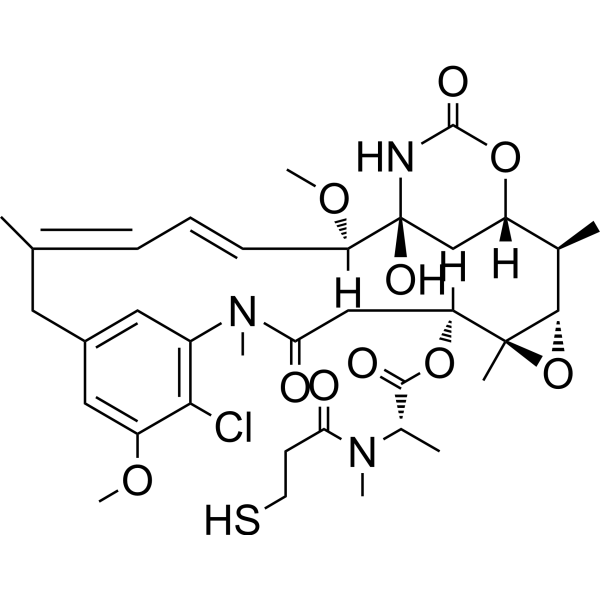
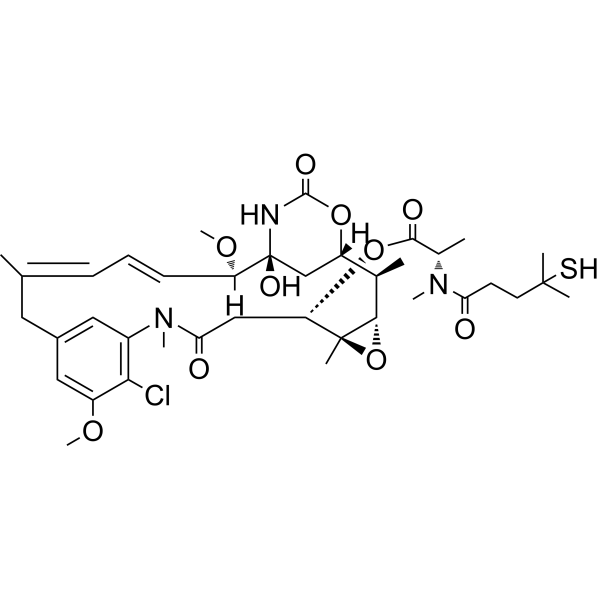
Mertansine (DM1) is a microtubulin inhibitor and is an antibody-conjugatable maytansinoid that is developed to overcome systemic toxicity associated with maytansine and to enhance tumor-specific delivery. Mertansine can be attached to a monoclonal antibody with a linker to create an antibody-drug conjugate (ADC) .
|
-
-
- HY-P99016B
-
|
|
Antibody-Drug Conjugates (ADCs)
Nectin-4
|
Cancer
|
|
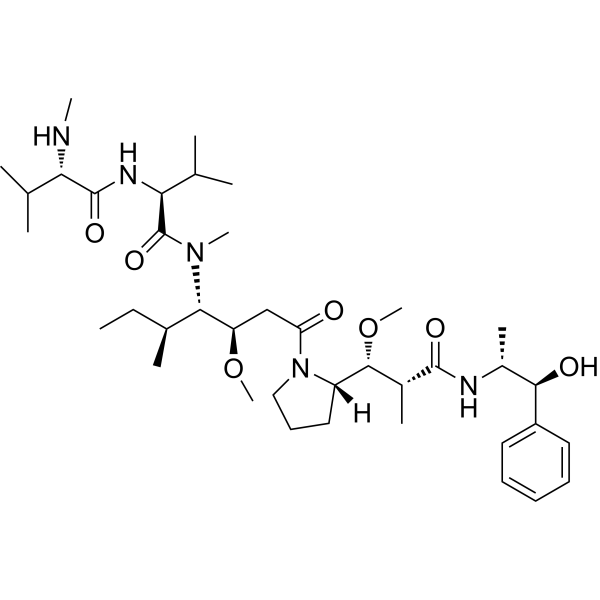
Enfortumab vedotin-ejfv (solution) is an anti-Nectin-4 antibody-drug conjugate (ADC). Enfortumab vedotin-ejfv (solution) is a fully humanized IgG1 antibody conjugated to the microtubule disrupting agent MMAE (HY-15162) via a protease-cleavable Val-Cit linker. The antibody portion is Enfortumab (HY-P99016), and the drug-linker conjugate for ADC is VcMMAE (HY-15575). Nectin-4 is an adhesion protein involved in cellular processes and tumorigenesis, and Enfortumab vedotin-ejfv (solution) is indicated for the inhibition of locally advanced or metastatic urothelial carcinoma .
|
-
-
- HY-109539
-
|
|
Antibody-Drug Conjugates (ADCs)
Apoptosis
|
Cancer
|
|
Gemtuzumab ozogamicin is an antibody-drug conjugate (ADC) consisting of a humanized immunoglobulin (IgG4) antibody directed against CD33 that is conjugated to the cytotoxic agent Calicheamicin (HY-19609). The antibody portion is Gemtuzumab (HY-P99971), and the drug-linker conjugate for ADC is N-Ac-γ-Calicheamicin-AcBut-NHS ester (HY-103688). Gemtuzumab ozogamicin can be used for the research of acute myeloid leukemia (AML) .
|
-
-
- HY-128870
-
|
|
Drug-Linker Conjugates for ADC
|
Cancer
|
|
Mal-PEG2-VCP-Eribulin consists the ADCs linker (Mal-PEG2-VCP) and Eribulin (HY-13442). Eribulin is a mechanistically unique microtubule inhibitor and Eribulin inhibits the proliferation of cancer cells by binding microtubule proteins and microtubules. Mal-PEG2-VCP-Eribulin is an Eribulin-based agent for antibody conjugates .
|
-
-
- HY-171135
-
-
-
- HY-132180A
-
|
|
ADC Payload
DNA/RNA Synthesis
|
Inflammation/Immunology
Cancer
|
|
Seco-DUBA hydrochloride is a DNA-targeting cytotoxic agent. Seco-DUBA hydrochloride binds to the minor groove of A-T-rich DNA regions, alkylates the adenine N3 residue, and undergoes spontaneous spirocyclization to generate active DUBA (HY-160969). Seco-DUBA hydrochloride exerts cytotoxic activity against human cancer cells. The reduced hydrophobicity of Seco-DUBA hydrochloride supports the development of antibody-drug conjugates .
|
-
-
- HY-152121
-
-
-
- HY-157763
-
|
|
PROTAC-Linker Conjugates for PAC
Btk
|
Cancer
|
|
Mal-PEG1-Val-Cit-PABC-diphosphate-BTK degrader-1 is a cleavable linker-payload conjugate and cereblon-binding BTK bifunctional degrader. Mal-PEG1-Val-Cit-PABC-diphosphate-BTK degrader-1 induces BTK degradation and exerts cytotoxic effects when delivered via CD79b monoclonal antibody. Mal-PEG1-Val-Cit-PABC-diphosphate-BTK degrader-1, when formulated as a CD79b antibody-drug conjugate, achieves sustained in vivo BTK degradation in tumor-bearing mice with reduced systemic payload exposure. Mal-PEG1-Val-Cit-PABC-diphosphate-BTK degrader-1 can be used for the research of activated b-cell-like diffuse large b-cell lymphoma (ADC linker: (HY-130944); PROTAC: (HY-163295)) .
|
-
-
- HY-139909A
-
|
|
Drug-Linker Conjugates for ADC
|
Cancer
|
|
CL2E-SN-38 TFA, a highly releasable and structurally stable antibody-SN-38-conjugate, is a part of the antibody drug conjugate (ADC). SN-38, the active metabolite of Irinotecan from camptothecins, is an Topoisomerase I inhibitor .
|
-
-
- HY-W010162
-
|
L-Alanyl-L-alanine; Ala-Ala
|
Amino Acid Derivatives
|
Others
|
H-Ala-Ala-OH is a substrate of human intestinal oligopeptide transporter (PEPT1/SLC15A1), with an IC50 of 0.25 mM and an EC50 of 0.08 mM against human PEPT1. When used as a dipeptide linker in antibody-drug conjugates (ADCs) loaded with glucocorticoid receptor regulator payloads, H-Ala-Ala-OH enables efficient intracellular payload release .
|
-
-
- HY-136287
-
-
-
- HY-160807
-
|
|
Drug-Linker Conjugates for ADC
|
Cancer
|
|
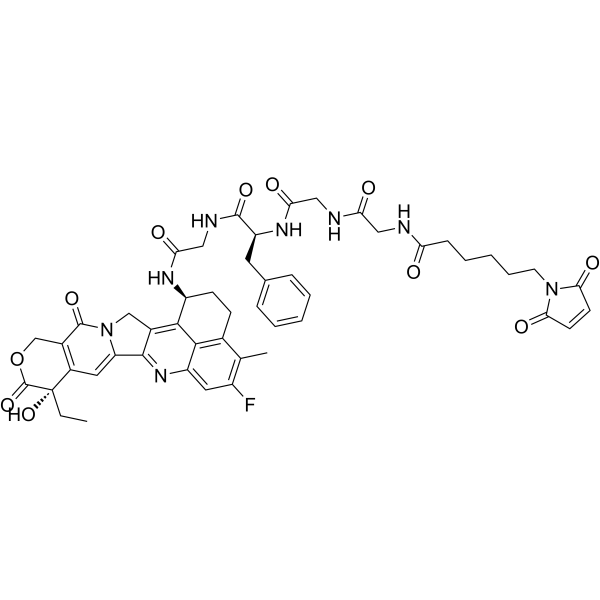
DBM-GGFG-NH-O-CO-Exatecan (Example 4, Compound 14) is a conjugate of an ADC drug toxin molecule and a linker. DBM-GGFG-NH-O-CO-Exatecan is a complete antibody-drug conjugate intermediate that integrates a potent camptothecin-based toxin, a cleavable peptide linker (GGFG), and a reactive terminus that can directly conjugate to antibodies .
|
-
-
- HY-132158
-
|
|
Drug-Linker Conjugates for ADC
|
Cancer
|
|
MC-AAA-NHCH2OCH2COO-7-aminomethyl-10-methyl-11-fluoro camptothecin (compound 21a), a camptothecin payload, can be conjugated to a monoclonal antibody (mAb) for the synthesis of camptothecin antibody-drug conjugate (ADC) .
|
-
-
- HY-178836
-
|
|
Drug-Linker Conjugates for ADC
Ras
|
Cancer
|
|
Z56-L23 is a conjugate of RAS-targeting ADC cytotoxic payload-linker with anti-tumor activity. Z56-L23 can be conjugated with HER3 antibody, EGFR antibody or EGFRxHER3 bispecific antibody to form intact antibody-drug conjugates (ADCs). ADC molecules related to Z56-L23 effectively inhibit the proliferation of tumor cells and also significantly suppress tumor growth in xenograft mouse models. Z56-L23 can be used in the research of pancreatic cancer .
|
-
-
- HY-P99230
-
|
|
Integrin
CD22
|
Cancer
|
|
Pinatuzumab is a humanized monoclonal antibody targeting cell-surface antigen CD22. Pinatuzumab can be used to synthesize antibody-drug conjugate (ADC) such as Pinatuzumab vedotin (HY-141602). Pinatuzumab can be studied in research on cancer such as non-Hodgkin lymphoma. Recommend Isotype Controls: Human IgG1 kappa, Isotype Control (HY-P99001) .
|
-
-
- HY-P99785
-
|
HLX20; HLX43 antibody
|
PD-1/PD-L1
ADC Antibody
|
Cancer
|
|
Opucolimab (HLX20) is an engineered anti-PD-L1 humanised IgG1 antibody. Opucolimab, when conjugated with camptothecin toxoid, yields the PD-L1-targeting ADC, HLX43 (HY-177439). HLX43 can be used for non-small cell lung cancer (NSCLC), head and neck squamous cell carcinoma (HNSCC), esophageal squamous cell carcinoma (ESCC), melanoma (MEL), ovarian cancer (Ovc) research .
|
-
-
- HY-161543
-
|
|
Biochemical Assay Reagents
|
Inflammation/Immunology
|
|
DHT/KLH is a conjugate of DHT (dihydrotestosterone) and keyhole limpet hemocyanin (KLH). By conjugating the antigen with a protein adjuvant, the production of antigen-specific antibodies in vaccine models can be enhanced. The conjugate does not affect protein folding or disrupt linear epitopes, and it can enhance cross-presentation and the generation of antigen-specific T cells.
|
-
-
- HY-44177
-
|
|
Drug-Linker Conjugates for ADC
|
Cancer
|
|
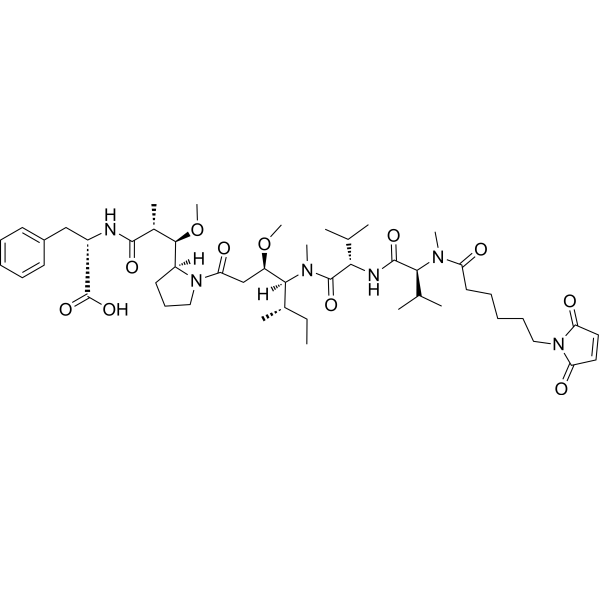
Val-Cit-PAB-MMAF sodium is a drug-Linker conjugate for ADC. Val-Cit-PAB-MMAF sodium contains the ADCs linker (peptide Val-Cit-PAB) and a potent tubulin polymerization inhibitor MMAF (HY-15579)
|
-
-
- HY-P99719
-
|
BAY 1129980; Anti-C4.4a antibody-drug conjugates
|
Antibody-Drug Conjugates (ADCs)
|
Cancer
|
|
Lupartumab Amadotin (BAY 1129980) is an antibody–drug conjugate (ADC) consisting of a fully human C4.4A (LYPD3)-targeting mAb (BAY 1135626) (HY-147281) conjugated to a novel, highly potent derivative of the microtubule-disrupting cytotoxic drug auristatin via a noncleavable alkyl hydrazide linker. Lupartumab Amadotin can be used for the research of non-small cell lung cancer .
|
-
-
- HY-161553
-
|
|
Biochemical Assay Reagents
|
Inflammation/Immunology
|
|
Biotin/KLH is an antigen-adjuvant conjugate that consists of Biotin and Keyhole Limpet Hemocyanin (KLH). By conjugating the antigen with a protein adjuvant, the production of antigen-specific antibodies in vaccine models can be enhanced. The conjugate does not affect protein folding or disrupt major epitopes, and it can enhance cross-presentation and the generation of antigen-specific T cells.
|
-
-
- HY-161533
-
|
|
Biochemical Assay Reagents
|
Inflammation/Immunology
|
|
Digoxin/BSA is an antigen-adjuvant conjugate of Digoxin (HY-B1049) and Bovine Serum Albumin (BSA). By conjugating the antigen with a protein adjuvant, the production of antigen-specific antibodies in vaccine models can be enhanced. The conjugate does not affect protein folding or disrupt major epitopes, and it can enhance cross-presentation and the generation of antigen-specific T cells.
|
-
-
- HY-161560
-
|
|
Biochemical Assay Reagents
|
Inflammation/Immunology
|
|
Tacrolimus/BSA is the antigen-adjuvant conjugate formed by the conjugation of Tacrolimus (HY-13756) with Bovine Serum Albumin (BSA). By conjugating the antigen with a protein adjuvant, it can enhance the production of antigen-specific antibodies in vaccine models. The conjugate does not affect protein folding or disrupt major epitopes, and it can enhance cross-presentation and the generation of antigen-specific T cells.
|
-
-
- HY-148346
-
|
|
Drug-Linker Conjugates for ADC
STING
|
Cancer
|
|
STING agonist-20-Ala-amide-PEG2-C2-NH2 is an active scaffold comprising a stimulator of interferon genes (STING). STING agonist-20-Ala-amide-PEG2-C2-NH2 can be used to synthesize immune-stimulating antibody conjugate (ISAC). STING agonist-20-Ala-amide-PEG2-C2-NH2 can be used for the research of cancer .
|
-
-
- HY-141602
-
-
-
- HY-160182
-
-
-
- HY-171060
-
|
|
Drug-Linker Conjugates for ADC
|
Cancer
|
|
Mc-Pro-PAB-MMAE is a Drug-Linker Conjugate for ADC. Mc-Pro-PAB-MMAE consists of Monomethyl auristatin E (HY-15162) and a linker. Mc-Pro-PAB-MMAE can be used for synthesis of ADCs .
|
-
-
- HY-101909
-
|
|
Drug-Linker Conjugates for ADC
|
Cancer
|
|
Val-Cit-PAB-MMAF is a drug-Linker conjugate for ADC. Val-Cit-PAB-MMAF is composed of an ADC linker (peptide Val-Cit-PAB) and a potent microtubule polymerization inhibitor MMAF (HY-15579) .
|
-
-
- HY-131955
-
|
|
ADC Linker
|
Cancer
|
|
Fmoc-aminooxy-PEG2-NH2 is a cleavable ADC linker used in the synthesis of antibody-drug conjugates (ADCs) .
|
-
-
- HY-156514
-
|
|
Drug-Linker Conjugates for ADC
|
Cancer
|
|
MC-GGFG-AM-(10NH2-11F-Camptothecin) is an antibody drug conjugates (ADC). MC-GGFG-AM-(10NH2-11F-Camptothecin) binds to the anti-TROp-2 antibody sacituzumab via a hydrolysable pH-sensitive linker and has anti-tumor activity. MC-GGFG-AM-(10NH2-11F-Camptothecin) can be used for cancer research .
|
-
-
- HY-161552
-
|
|
Biochemical Assay Reagents
|
Inflammation/Immunology
|
|
T3/BSA is an antigen-adjuvant conjugate of T3 (thyroid hormone) and bovine serum albumin (BSA). By conjugating the antigen with a protein adjuvant, the production of antigen-specific antibodies in vaccine models can be enhanced. The conjugate does not affect protein folding or disrupt major epitopes, and it can enhance cross-presentation and the generation of antigen-specific T cells.
|
-
-
- HY-178270
-
|
|
ADC Payload
|
Inflammation/Immunology
Cancer
|
|
PBD derivative-1 (Compound 7-8) is a derivative of PBD, and PBD is the payload in antibody-drug conjugates (ADCs). PBD derivative-1 can be used for the synthesis of ADCs.
|
-
-
- HY-161541
-
|
|
Biochemical Assay Reagents
|
Inflammation/Immunology
|
|
Estradiol/BSA is the antigen-adjuvant conjugate formed by the coupling of Estradiol (HY-B0141) with Bovine Serum Albumin (BSA). By coupling the antigen with a protein adjuvant, the production of antigen-specific antibodies in vaccine models can be enhanced. The conjugate does not affect protein folding or disrupt major epitopes, and it can enhance cross-presentation and the generation of antigen-specific T cells.
|
-
-
- HY-161526
-
|
|
Biochemical Assay Reagents
|
Inflammation/Immunology
|
|
T3/KLH is an antigen-adjuvant conjugate formed by the coupling of T3 (thyroid hormone) with keyhole limpet hemocyanin (KLH). By coupling the antigen with the protein adjuvant, the production of antigen-specific antibodies in vaccine models can be enhanced. The conjugate does not affect protein folding or disrupt major epitopes, and it can enhance cross-presentation and the generation of antigen-specific T cells.
|
-
-
- HY-D2060
-
|
|
Fluorescent Dye
|
Others
|
|
ATTO 740 is a near-infrared dye (Ex/Em: 740/764 nm). ATTO 740 can be conjugated with the Cetuximab antibody (HY-P9905) .
|
-
-
- HY-148346A
-
|
|
Drug-Linker Conjugates for ADC
STING
|
Cancer
|
|
STING agonist-20-Ala-amide-PEG2-C2-NH2 (Compound 30b) TFA is an active scaffold comprising a stimulator of interferon genes (STING). STING agonist-20-Ala-amide-PEG2-C2-NH2 TFA can be used to synthesize immune-stimulating antibody conjugate (ISAC). STING agonist-20-Ala-amide-PEG2-C2-NH2 TFA can be used for the research of cancer .
|
-
-
- HY-139909
-
|
|
Drug-Linker Conjugates for ADC
|
Cancer
|
|
CL2E-SN-38, a highly releasable and structurally stable antibody-SN-38-conjugate, is a part of the antibody drug conjugate (ADC). SN-38, the active metabolite of Irinotecan from camptothecins, is an Topoisomerase I inhibitor .
|
-
-
- HY-129365
-
|
|
ADC Linker
|
Cancer
|
|
SNPB is a cleavable linker that is used for making antibody-drug conjugate (ADC).
|
-
-
- HY-150075
-
|
|
STING
|
Others
|
|
STING agonist-19 can be used to synthesize ISAC (immune-stimulating antibody conjugates) molecule.
|
-
-
- HY-176927
-
|
|
Drug-Linker Conjugates for ADC
|
Cancer
|
|
ADC-VI (Compound 6) is a conjugate of a toxic molecule and a linker, in which the cytotoxin carried by CPD6 is Deruxtecan (HY-13631E). Tricyclene is used to form an antibody-drug conjugate (ADC) by a chemical conjugation reaction through linking with an anti-FGFR2b antibody .
|
-
-
- HY-156516
-
|
|
ADC Payload
Topoisomerase
|
Cancer
|
|
10NH2-11F-Camptothecin is a Camptothecin (HY-16560) analogue that serves as an ADC cytotoxin for the synthesis of antibody-drug conjugates (ADCs). 10NH2-11F-Camptothecin can inhibit tumor growth and is used in cancer research .
|
-
-
- HY-158279
-
|
|
Antibiotic
Bacterial
|
Inflammation/Immunology
|
|
Gentamicin/OVA is an antigen-adjuvant conjugate conjugate of Gentamicin (HY-A0276A) and ovalbumin (OVA). By conjugating the antigen with a protein adjuvant, the production of antigen-specific antibodies in vaccine models can be enhanced. The conjugate does not affect protein folding or disrupt major epitopes, and can enhance cross-presentation and the production of antigen-specific T cells.
|
-
-
- HY-161566
-
|
|
Biochemical Assay Reagents
|
Inflammation/Immunology
|
|
DHT/BSA is an antigen-adjuvant conjugate formed by the coupling of DHT (dihydrotestosterone) and bovine serum albumin (BSA). By conjugating the antigen with the protein adjuvant, the production of antigen-specific antibodies in vaccine models can be enhanced. The conjugate does not affect protein folding or disrupt major epitopes, and it can enhance cross-presentation and the generation of antigen-specific T cells.
|
-
-
- HY-P991668
-
|
|
ADC Antibody
|
Cancer
|
|
PF-06688992 Antibody is an antibody targeting GD3. PF-06688992 Antibody can be used for the synthesis of the antibody-drug conjugate PF-06688992 (HY-P991668) .
|
-
-
- HY-132031
-
|
|
Drug-Linker Conjugates for ADC
|
Cancer
|
|
Mal-Val-Ala-PAB(C2-glucuronic acid)-DMEA-PNU-159682 is an active molecule-conjugate for ADCs, composed of a cleavable Val-Ala linker and the potent ADC cytotoxic payload PNU-159682 (HY-16700) .
|
-
-
- HY-160453
-
|
|
Drug-Linker Conjugates for ADC
|
Others
|
|
MC-Gly-Gly-Phe-Gly-NH-CH2-O-cyclopropane-CH2COOH is a camptothecin derivative. MC-Gly-Gly-Phe-Gly-NH-CH2-O-cyclopropane-CH2COOH can be used for antibody drug conjugate (ADC) .
|
-
-
- HY-156517
-
|
|
ADC Payload
Topoisomerase
|
Cancer
|
|
7Ethanol-10NH2-11F-Camptothecin is a Camptothecin (HY-16560) analogue that serves as an ADC cytotoxin for the synthesis of antibody-drug conjugates (ADCs). 7Ethanol-10NH2-11F-Camptothecin can inhibit tumor growth and is used in cancer research .
|
-
-
- HY-161544
-
|
|
Biochemical Assay Reagents
|
Inflammation/Immunology
|
|
Cholyglycine/BSA is a conjugate of Cholyglycine and Bovine Serum Albumin (BSA). By conjugating the antigen with a protein adjuvant, the production of antigen-specific antibodies in vaccine models can be enhanced. The conjugate does not affect protein folding or disrupt major epitopes, and it can enhance cross-presentation and the production of antigen-specific T cells.
|
-
-
- HY-161528
-
|
|
Biochemical Assay Reagents
|
Inflammation/Immunology
|
|
T3/OVA is an antigen-adjuvant conjugate formed by conjugating T3 (thyroxine) with ovalbumin (OVA). By conjugating the antigen with protein adjuvants, the production of antigen-specific antibodies in vaccine models can be enhanced. The conjugate does not affect protein folding or disrupt major epitopes, and it can enhance cross-presentation and the generation of antigen-specific T cells.
|
-
-
- HY-161587
-
|
|
Biochemical Assay Reagents
|
Inflammation/Immunology
|
|
Chloramphenicol/OVA is a conjugate of Chloramphenicol (HY-B0239) and Ovalbumin (OVA). By conjugating the antigen with a protein adjuvant, the production of antigen-specific antibodies in vaccine models can be enhanced. The conjugate does not affect protein folding or disrupt major epitopes and can enhance cross-presentation and the production of antigen-specific T cells.
|
-
-
- HY-161581
-
|
|
Biochemical Assay Reagents
|
Inflammation/Immunology
|
|
Metronidazole/OVA is a conjugate of Metronidazole (HY-B0318) and Ovalbumin (OVA). By conjugating the antigen with protein adjuvants, the production of antigen-specific antibodies in vaccine models can be enhanced. The conjugate does not affect protein folding or disrupt the primary epitopes, and it can enhance cross-presentation and the generation of antigen-specific T cells.
|
-
- HY-161583
-
|
|
Biochemical Assay Reagents
|
Inflammation/Immunology
|
|
Marijuana/BSA is the antigen-adjuvant conjugate of Marijuana and Bovine Serum Albumin (BSA). By conjugating the antigen with a protein adjuvant, the production of antigen-specific antibodies in vaccine models can be enhanced. The conjugate does not affect protein folding or destroy major epitopes, and it can enhance cross-presentation and the production of antigen-specific T cells.
|
-
- HY-161549
-
|
|
Biochemical Assay Reagents
|
Inflammation/Immunology
|
|
Phosphotyrosine/BSA is an antigen-adjuvant conjugate formed by coupling Phosphotyrosine with Bovine Serum Albumin (BSA). By conjugating the antigen with protein adjuvants, the production of antigen-specific antibodies in vaccine models can be enhanced. The conjugate does not affect protein folding or disrupt major epitopes, and it can enhance cross-presentation and the generation of antigen-specific T cells.
|
-
- HY-161548
-
|
|
Biochemical Assay Reagents
|
Inflammation/Immunology
|
|
Metronidazole/KLH is a conjugate of Metronidazole (HY-B0318) and Keyhole Limpet Hemocyanin (KLH). By conjugating the antigen with the protein adjuvant, the production of antigen-specific antibodies in vaccine models can be enhanced. The conjugate does not affect protein folding or disrupt major epitopes and can enhance cross-presentation and the generation of antigen-specific T cells.
|
-
- HY-161529
-
|
|
Angiotensin Receptor
|
Inflammation/Immunology
|
|
Angiotensin I/BSA is an antigen-adjuvant conjugate of Angiotensin I and bovine serum albumin (BSA). By conjugating the antigen with a protein adjuvant, the production of antigen-specific antibodies in vaccine models can be enhanced. The conjugate does not affect protein folding or disrupt major epitopes, and it can enhance cross-presentation and the generation of antigen-specific T cells.
|
-
- HY-161531
-
|
|
Biochemical Assay Reagents
|
Inflammation/Immunology
|
|
Diethylstilbestrol/BSA is a conjugate of Diethylstilbestrol (HY-14598) and Bovine Serum Albumin (BSA). By conjugating the antigen with a protein adjuvant, the production of antigen-specific antibodies in vaccine models can be enhanced. The conjugate does not affect protein folding or disrupt major epitopes, and it can enhance cross-presentation and the production of antigen-specific T cells.
|
-
- HY-163556
-
|
|
Biochemical Assay Reagents
|
Inflammation/Immunology
|
|
COT/BSA is the antigen-adjuvant conjugate of COT (cyclooctatetraene) and Bovine Serum Albumin (BSA). By conjugating the antigen with a protein adjuvant, the production of antigen-specific antibodies in vaccine models can be enhanced. The conjugate does not affect protein folding or disrupt major epitopes and can enhance cross-presentation and the generation of antigen-specific T cells.
|
-
- HY-161542
-
|
|
Biochemical Assay Reagents
|
Inflammation/Immunology
|
|
Isoniazid/BSA is an antigen-adjuvant conjugate of Isoniazid (HY-B0329) and Bovine Serum Albumin (BSA). By conjugating the antigen with a protein adjuvant, the production of antigen-specific antibodies in vaccine models can be enhanced. The conjugate does not affect protein folding or disrupt major epitopes, and it can enhance cross-presentation and the generation of antigen-specific T cells.
|
-
- HY-161540
-
|
|
Biochemical Assay Reagents
|
Inflammation/Immunology
|
|
Oxytetracycline/OVA is an antigen-adjuvant conjugate formed by the coupling of Oxytetracycline (HY-B0275) with ovalbumin (OVA). By conjugating the antigen with a protein adjuvant, it enhances the production of antigen-specific antibodies in vaccine models. The conjugate does not affect protein folding or destroy the major epitopes, and it can enhance cross-presentation and the generation of antigen-specific T cells.
|
-
- HY-163555
-
|
|
Biochemical Assay Reagents
|
Inflammation/Immunology
|
|
BZO/BSA is an antigen-adjuvant conjugate formed by the coupling of BZO (benzodiazepine) with bovine serum albumin (BSA). By conjugating the antigen with a protein adjuvant, the production of antigen-specific antibodies in vaccine models can be enhanced. The conjugate does not affect protein folding or disrupt major epitopes, and it can enhance cross-presentation and the production of antigen-specific T cells.
|
-
- HY-161555
-
|
|
Biochemical Assay Reagents
|
Inflammation/Immunology
|
|
Clenbuterol/KLH is an antigen-adjuvant conjugate of Clenbuterol (HY-B1615) and Keyhole Limpet Hemocyanin (KLH). By conjugating the antigen with a protein adjuvant, the production of antigen-specific antibodies in vaccine models can be enhanced. The conjugate does not affect protein folding or disrupt major epitopes, and it can enhance cross-presentation and the generation of antigen-specific T cells.
|
-
- HY-161554
-
|
|
Biochemical Assay Reagents
|
Inflammation/Immunology
|
|
Clenbuterol/BSA is an antigen-adjuvant conjugate of Clenbuterol (HY-B1615) and Bovine Serum Albumin (BSA). By conjugating the antigen with a protein adjuvant, it can enhance the production of antigen-specific antibodies in vaccine models. The conjugate does not affect protein folding or disrupt major epitopes, and it can enhance cross-presentation and the generation of antigen-specific T cells.
|
-
- HY-161532
-
|
|
Biochemical Assay Reagents
|
Inflammation/Immunology
|
|
Eugenol/OVA is an antigen-adjuvant conjugate formed by the conjugation of Eugenol (HY-N0337) with Ovalbumin (OVA). By conjugating the antigen with a protein adjuvant, the production of antigen-specific antibodies in vaccine models can be enhanced. The conjugate does not affect protein folding or disrupt key epitopes, and it can enhance cross-presentation and the generation of antigen-specific T cells.
|
-
- HY-161591
-
|
|
Biochemical Assay Reagents
|
Inflammation/Immunology
|
|
SEM/BSA is an antigen-adjuvant conjugate formed by the conjugation of SEM (furanesalin) with bovine serum albumin (BSA). By conjugating the antigen with a protein adjuvant, the production of antigen-specific antibodies in vaccine models can be enhanced. The conjugate does not affect protein folding or disrupt major epitopes, and it can enhance cross-presentation and the generation of antigen-specific T cells.
|
-
- HY-161594
-
|
|
Biochemical Assay Reagents
|
Inflammation/Immunology
|
|
Furazolidone/BSA is the antigen-adjuvant conjugate of Furazolidone (HY-B1336) and bovine serum albumin (BSA). By conjugating the antigen with the protein adjuvant, the production of antigen-specific antibodies in vaccine models can be enhanced. The conjugate does not affect protein folding or disrupt the major epitopes, and it can enhance cross-presentation and the generation of antigen-specific T cells.
|
-
- HY-161558
-
|
|
Biochemical Assay Reagents
|
Inflammation/Immunology
|
|
Ractopamine/KLH is an antigen-adjuvant conjugate of Ractopamine (HY-113781) and Keyhole Limpet Hemocyanin (KLH). By conjugating the antigen with a protein adjuvant, the production of antigen-specific antibodies in vaccine models can be enhanced. The conjugate does not affect protein folding or disrupt major epitopes, and it can enhance cross-presentation and the production of antigen-specific T cells.
|
-
- HY-163553
-
|
|
Biochemical Assay Reagents
|
Inflammation/Immunology
|
|
Metronidazole/BSA is an antigen-adjuvant conjugate of Metronidazole (HY-B0318) and Bovine Serum Albumin (BSA). By conjugating the antigen with the protein adjuvant, the production of antigen-specific antibodies in vaccine models can be enhanced. The conjugate does not affect protein folding or disrupt major epitopes, and it can enhance cross-presentation and the production of antigen-specific T cells.
|
-
- HY-161580
-
|
|
Biochemical Assay Reagents
|
Inflammation/Immunology
|
|
3-Nitrotyrosine/BSA is an antigen-adjuvant conjugate formed by the conjugation of 3-Nitrotyrosine with Bovine Serum Albumin (BSA). By conjugating the antigen with a protein adjuvant, the production of antigen-specific antibodies in vaccine models can be enhanced. The conjugate does not affect protein folding or disrupt major epitopes, and it enhances cross-presentation and the generation of antigen-specific T cells.
|
-
- HY-161590
-
|
|
Biochemical Assay Reagents
|
Inflammation/Immunology
|
|
AHD/BSA is the antigen-adjuvant conjugate of AHD (furan-2-carboxylic acid) and Bovine Serum Albumin (BSA). By conjugating the antigen with the protein adjuvant, the production of antigen-specific antibodies in vaccine models can be enhanced. The conjugate does not affect protein folding or destroy the main epitopes, and it can enhance cross-presentation and the generation of antigen-specific T cells.
|
-
- HY-161586
-
-
- HY-161546
-
|
|
Biochemical Assay Reagents
|
Inflammation/Immunology
|
|
Melamine/KLH is an antigen-adjuvant conjugate formed by coupling Melamine (HY-Y1117) with Keyhole Limpet Hemocyanin (KLH). By conjugating the antigen with a protein adjuvant, the production of antigen-specific antibodies in vaccine models can be enhanced. The conjugate does not affect protein folding or disrupt the primary epitopes, and can enhance cross-presentation and the generation of antigen-specific T cells.
|
-
- HY-161535
-
|
|
Biochemical Assay Reagents
|
Inflammation/Immunology
|
|
Oxytetracycline/BSA is an antigen-adjuvant conjugate formed by the coupling of Oxytetracycline (HY-B0275) with Bovine Serum Albumin (BSA). By conjugating the antigen with the protein adjuvant, the production of antigen-specific antibodies in vaccine models can be enhanced. The conjugate does not affect protein folding or disrupt major epitopes, and it can enhance cross-presentation and the production of antigen-specific T cells.
|
-
- HY-161557
-
|
|
Biochemical Assay Reagents
|
Inflammation/Immunology
|
|
Ractopamine/BSA is an antigen-adjuvant conjugate formed by the conjugation of Ractopamine (HY-113781) with Bovine Serum Albumin (BSA). By conjugating the antigen with a protein adjuvant, the production of antigen-specific antibodies in vaccine models can be enhanced. The conjugate does not affect protein folding or disrupt major epitopes, and it can enhance cross-presentation and the generation of antigen-specific T cells.
|
-
- HY-161534
-
|
|
Biochemical Assay Reagents
|
Inflammation/Immunology
|
|
Sulfadiazine/BSA is an antigen-adjuvant conjugate formed by the conjugation of Sulfadiazine (HY-B0273) with Bovine Serum Albumin (BSA). By conjugating the antigen with the protein adjuvant, the production of antigen-specific antibodies in vaccine models can be enhanced. The conjugate does not affect protein folding or disrupt major epitopes, and it can enhance cross-presentation and the generation of antigen-specific T cells.
|
-
- HY-161559
-
|
|
Biochemical Assay Reagents
|
Inflammation/Immunology
|
|
Sudan I/OVA is an antigen-adjuvant conjugate formed by coupling Sudan I (HY-D0024) with Ovalbumin (OVA). By conjugating the antigen with a protein adjuvant, the production of antigen-specific antibodies in vaccine models can be enhanced. The conjugate does not affect protein folding or disrupt the main epitopes, and it can enhance cross-presentation and the generation of antigen-specific T cells.
|
-
- HY-161585
-
|
|
Biochemical Assay Reagents
|
Inflammation/Immunology
|
|
Diethylstilbestrol/KLH is an antigen-adjuvant conjugate formed by the coupling of Diethylstilbestrol (HY-14598) with Keyhole Limpet Hemocyanin (KLH). By conjugating the antigen with a protein adjuvant, the production of antigen-specific antibodies in vaccine models can be enhanced. The conjugate does not affect protein folding or disrupt major epitopes, and it can enhance cross-presentation and the generation of antigen-specific T cells.
|
-
- HY-158296
-
|
|
Antibiotic
Biochemical Assay Reagents
|
Others
|
|
Tetracycline/OVA is an tetracycline-carrier protein conjugate of Tetracycline (HY-A0107) and ovalbumin (OVA). Tetracycline/OVA can be used to determine the titer of tetracycline polyclonal antibodies in serum samples .
|
-
- HY-161545
-
|
|
Biochemical Assay Reagents
|
Inflammation/Immunology
|
|
Sudan I/BSA is the antigen-adjuvant conjugate formed by Sudan I (HY-D0024) and Bovine Serum Albumin (BSA). By conjugating the antigen with a protein adjuvant, the production of antigen-specific antibodies in vaccine models can be enhanced. The conjugate does not affect protein folding or disrupt major epitopes, and it can enhance cross-presentation and the generation of antigen-specific T cells.
|
-
- HY-161556
-
|
|
Biochemical Assay Reagents
|
Inflammation/Immunology
|
|
Alginic acid/KLH is an antigen-adjuvant conjugate formed by the coupling of Alginic acid (HY-W127758) with Keyhole Limpet Hemocyanin (KLH). By conjugating the antigen with the protein adjuvant, the production of antigen-specific antibodies in vaccine models can be enhanced. The conjugate does not affect protein folding or disrupt major epitopes, and it can enhance cross-presentation and the generation of antigen-specific T cells.
|
-
- HY-161584
-
|
|
Biochemical Assay Reagents
|
Inflammation/Immunology
|
|
Sudan I/KLH is an antigen-adjuvant conjugate formed by the coupling of Sudan I (HY-D0024) with Keyhole Limpet Hemocyanin (KLH). By conjugating the antigen with a protein adjuvant, the production of antigen-specific antibodies in vaccine models can be enhanced. The conjugate does not affect protein folding or disrupt major epitopes, and it can enhance cross-presentation and the generation of antigen-specific T cells.
|
-
- HY-161565
-
|
|
Biochemical Assay Reagents
|
Inflammation/Immunology
|
|
Gastrin(1-17)/BSA is an antigen-adjuvant conjugate formed by the coupling of Gastrin(1-17) and Bovine Serum Albumin (BSA). By conjugating the antigen with a protein adjuvant, the production of antigen-specific antibodies in vaccine models can be enhanced. The conjugate does not affect protein folding or destroy major epitopes, and it can enhance cross-presentation and the production of antigen-specific T cells.
|
-
- HY-163552
-
|
|
Prostaglandin Receptor
|
Inflammation/Immunology
|
|
Prostaglandin F2a/BSA is an antigen-adjuvant conjugate formed by the conjugation of Prostaglandin F2a with Bovine Serum Albumin (BSA). By conjugating the antigen with a protein adjuvant, the production of antigen-specific antibodies in vaccine models can be enhanced. The conjugate does not affect protein folding or disrupt major epitopes and can enhance cross-presentation as well as the generation of antigen-specific T cells.
|
-
- HY-161563
-
|
|
Biochemical Assay Reagents
|
Inflammation/Immunology
|
|
4,4'-Sulfonyldiphenol/BSA is the antigen-adjuvant conjugate of 4,4'-Sulfonyldiphenol (HY-W011927) and Bovine Serum Albumin (BSA). By conjugating the antigen with a protein adjuvant, the production of antigen-specific antibodies in vaccine models can be enhanced. The conjugate does not affect protein folding or disrupt major epitopes, and it can enhance cross-presentation and the production of antigen-specific T cells.
|
-
- HY-161562
-
|
|
Biochemical Assay Reagents
|
Inflammation/Immunology
|
|
PROMETON/BSA is an antigen-adjuvant conjugate formed by the coupling of PROMETON with bovine serum albumin (BSA). By coupling the antigen to the protein adjuvant, the production of antigen-specific antibodies in vaccine models can be enhanced. The conjugate does not affect protein folding or disrupt major epitopes, and it can enhance cross-presentation and the production of antigen-specific T cells.
|
-
- HY-161551
-
|
|
Biochemical Assay Reagents
|
Inflammation/Immunology
|
|
25-OH Vitamin D3/KLH is an antigen-adjuvant conjugate of 25-OH Vitamin D3 (HY-158285) and Keyhole Limpet Hemocyanin (KLH). By conjugating the antigen with the protein adjuvant, the production of antigen-specific antibodies in vaccine models can be enhanced. The conjugate does not affect protein folding or disrupt major epitopes, and it can enhance cross-presentation and the generation of antigen-specific T cells.
|
-
- HY-161530
-
|
|
Angiotensin Receptor
|
Inflammation/Immunology
|
|
Angiotensin II/BSA is an antigen-adjuvant conjugate formed by the coupling of Angiotensin II with bovine serum albumin (BSA). By coupling the antigen with a protein adjuvant, the production of antigen-specific antibodies in vaccine models can be enhanced. The conjugate does not affect protein folding or disrupt major epitopes, and it can enhance cross-presentation and the generation of antigen-specific T cells.
|
-
- HY-161589
-
|
|
Biochemical Assay Reagents
|
Inflammation/Immunology
|
|
GABA/KLH is an antigen-adjuvant conjugate formed by the coupling of GABA (γ-aminobutyric acid) with keyhole limpet hemocyanin (KLH). By coupling the antigen with a protein adjuvant, it can enhance the production of antigen-specific antibodies in vaccine models. The conjugate does not affect protein folding or disrupt major epitopes, and it can enhance cross-presentation and the generation of antigen-specific T cells.
|
-
- HY-161588
-
|
|
Biochemical Assay Reagents
|
Inflammation/Immunology
|
|
GABA/BSA is an antigen-adjuvant conjugate formed by the coupling of GABA (γ-aminobutyric acid) with Bovine Serum Albumin (BSA). By coupling the antigen with a protein adjuvant, the production of antigen-specific antibodies in vaccine models can be enhanced. The conjugate does not affect protein folding or disrupt major epitopes, and it can enhance cross-presentation and the generation of antigen-specific T cells.
|
-
- HY-161525
-
|
|
Biochemical Assay Reagents
|
Inflammation/Immunology
|
|
1-(2-Aminoethyl)-1H-pyrazol-4-ylphosphonic acid linker/BSA is the conjugate of 1-(2-Aminoethyl)-1H-pyrazol-4-ylphosphonic acid linker and bovine serum albumin (BSA). By conjugating the antigen with a protein adjuvant, it enhances the production of antigen-specific antibodies in vaccine models. The conjugate does not affect protein folding or disrupt key epitopes, and it can enhance cross-presentation and the generation of antigen-specific T cells.
|
-
- HY-D1710
-
|
|
Microtubule/Tubulin
|
Others
|
|
Anti-α-Tubulin Antibody, AF555 conjugate is a conjugate of mouse anti-α-tubulin monoclonal antibody and the red fluorescent dye Alexa Fluor 555. Anti-α-Tubulin Antibody, AF555 conjugate can be used for the detection of tubulin (Ex/Em: 554/567 nm) .
|
-
- HY-W1050525
-
|
|
ADC Linker
|
Cancer
|
|
Fmoc-Val-Ala-Gly (compound 58a) is a cleavable ADC linker, can be conjugated to the antibody Trastuzumab (HY-P9907) to form an antibody-drug conjugate (ADC) .
|
-
- HY-159665
-
-
- HY-161561
-
|
|
Biochemical Assay Reagents
|
Inflammation/Immunology
|
|
PROMETON/OVA is an antigen-adjuvant conjugate formed by the coupling of PROMETON and ovalbumin (OVA). By conjugating the antigen with a protein adjuvant, the production of antigen-specific antibodies in vaccine models can be enhanced. The conjugate does not affect protein folding or disrupt major epitopes and enhances cross-presentation and the production of antigen-specific T cells.
|
-
- HY-163550
-
|
|
Biochemical Assay Reagents
|
Inflammation/Immunology
|
|
5-MethylCytosine/BSA is a conjugate of 5-MethylCytosine (HY-W008091) and Bovine Serum Albumin (BSA). By conjugating the antigen with the protein adjuvant, the production of antigen-specific antibodies in vaccine models can be enhanced. The conjugate does not affect protein folding or destroy key epitopes, and it can enhance cross-presentation and the generation of antigen-specific T cells.
|
-
- HY-180563
-
|
|
Drug-Linker Conjugates for ADC
|
Infection
|
|
ADC 38 drug linker is a drug linker coupling agent used for ADCs, consisting of a CD4 mimic and a linker. ADC 38 drug linker can be used to synthesize antibody-drug conjugates (ADCs), such as ADC 38 .
|
-
- HY-185483
-
|
|
Antibody-Drug Conjugates (ADCs)
Transmembrane Glycoprotein
Microtubule/Tubulin
|
Cancer
|
|
AMG-172 is an antibody-drug conjugate (ADC) composed of a fully human IgG1 monoclonal anti-CD27L antibody conjugated to DM1 (HY-19792) via the non-cleavable linker MCC. AMG-172 releases the intracellular active component Lysine-MCC-DM through catabolism. Lysine-MCC-DM inhibits the assembly and disassembly dynamics of Microtubule and induces cell arrest at metaphase. AMG-172 can be used for research on relapsed/refractory clear cell renal cell carcinoma .
|
-
- HY-P992166
-
|
|
ADC Antibody
Collagen
|
Cancer
|
|
AB-004 is a humanized monoclonal antibody and ADC targeting uPARAP. AB-004 can be conjugated with the topoisomerase-1 inhibitor P1021 via a protease-cleavable tetrapeptide linker to form the ADC ADCE-D01. AB-004 binds to tumor cells expressing uPARAP, triggering the endocytosis of the ADC. AB-004 is applicable for cancer research .
|
-
- HY-183594
-
|
|
Drug-Linker Conjugates for ADC
|
Others
|
|
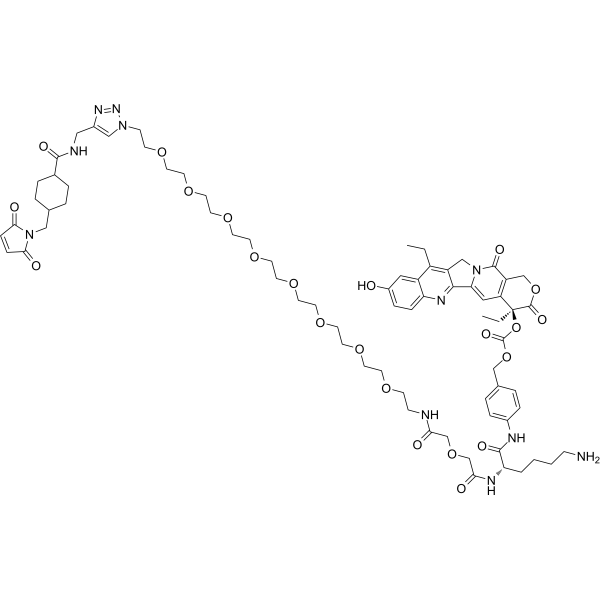
Exatecan-(D-2,4-DHB)-NH2-AA (bPEG8)-Mal is a linker-payload conjugate. Exatecan-(D-2,4-DHB)-NH2-AA (bPEG8)-Mal contains the linker D-2,4-DHB-NH2-AA(bPEG8)-Mal (HY-183595) and the cytotoxic agent Exatecan (HY-13631), a potent DNA topoisomerase I inhibitor. Exatecan-(D-2,4-DHB)-NH2-AA (bPEG8)-Mal can be utilized for the development of antibody-drug conjugates (ADCs) .
|
-
- HY-186031
-
-
- HY-177109
-
|
|
ROR
Drug-Linker Conjugates for ADC
|
Cancer
|
|
BL20-MMAE is an antibody-drug conjugate targeting ROR1, which is formed by conjugating an anti-ROR1 antibody with the Auristatin payload MMAE (HY-15162) via a BL20 linker .
|
-
- HY-P991863
-
|
|
ADC Antibody
TGF-β Receptor
|
Cancer
|
|
GM103 Antibody is a humanized IgG1 antibody against AMHRII. GM103 Antibody can generate antibody drug conjugate (ADC) (GM103) with a potent auristatin derivative. GM103 Antibody can be used for the study of ovarian cancer and hepatocarcinoma .
|
-
- HY-148067
-
|
|
Drug-Linker Conjugates for ADC
|
Cancer
|
|
XMT-1519 conjugate-1 (compound 31) is part of the drug-linker conjugate for ADC and can be conjugated with the HER-2 monoclonal antibody Calotatug (XMT-1519) (HY-P990909) for the synthesis of ADC .
|
-
- HY-171269
-
|
|
ADC Antibody
Mesothelin
|
Cancer
|
|
Anetumab-MMAE is an antibody-drug conjugate (ADC) (Anetumab antibody (HY-P99352), Linker: VC linker, Payload: MMAE (HY-15162)). Anetumab is an anti-mesothelin (MSLN) antibody.
|
-
- HY-126498
-
|
|
ADC Linker
|
Cancer
|
|
PDEC-NB is a disulfide cleavable linker used for the antibody-drug conjugate (ADC).
|
-
- HY-42146
-
|
|
ADC Linker
|
Cancer
|
|
BMPS is a nonclaevable ADC linker used in the synthesis of antibody-drug conjugates (ADCs).
|
-
- HY-160825
-
|
|
ADC Linker
|
Cancer
|
|
CL2A acid is a ADC linker for synthesis of Antibody-drug conjugates (ADCs)
|
-
- HY-129376
-
|
|
ADC Linker
|
Cancer
|
|
Sulfo-SNPB is a cleavable linker that is used for making antibody-drug conjugate (ADC).
|
-
- HY-15581
-
|
Demethyldolastatin 10; Monomethylauristatin D; Monomethyl Dolastatin 10
|
Microtubule/Tubulin
ADC Payload
|
Cancer
|
|
MMAD is a potent tubulin inhibitor, is a toxin payload in antibody agent conjugates (ADCs).
|
-
- HY-126519
-
|
|
ADC Linker
|
Cancer
|
|
PDdEC-NB is a disulfide cleavable linker used for the antibody-drug conjugate (ADC).
|
-
- HY-135660
-
|
|
Drug-Linker Conjugates for ADC
|
Cancer
|
|
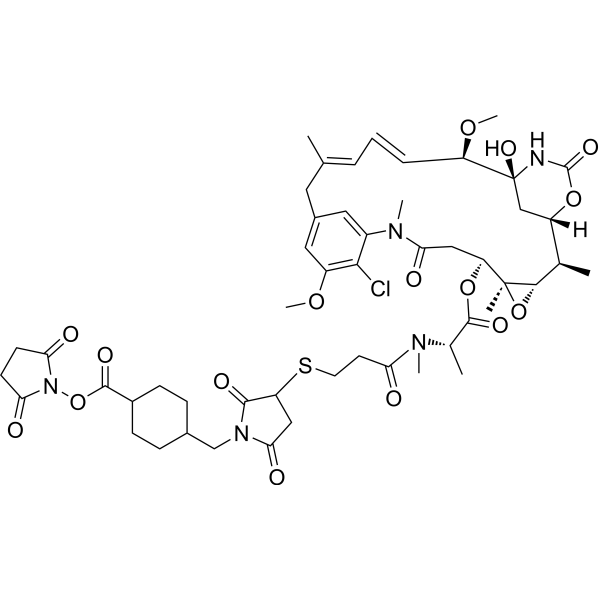
MMAE-SMCC is a agent-linker conjugate for ADC. MMAE-SMCC is composed of a potent mitotic and a tubulin inhibitor MMAE and a linker SMCC to make antibody agent conjugate.
|
-
- HY-P992322
-
|
|
ADC Antibody
Carbonic Anhydrase
|
Cancer
|
|
BAY-79-4620 Antibody is a potent and selective CAIX antibody with a human CAIX Kd of 3.6 nM. BAY-79-4620 Antibody yields antibody-drug conjugate (ADC) through conjugating with Monomethyl auristatin E (HY-15162) via a self-immolative enzyme-cleavable linker. BAY-79-4620 Antibody can be used for the research of cervical carcinoma, non-small cell lung carcinoma, breast carcinoma, pancreatic carcinoma, gastric carcinoma, prostate carcinoma .
|
-
- HY-148067A
-
|
|
Drug-Linker Conjugates for ADC
|
Cancer
|
|
XMT-1519 conjugate-1 TFA (compound 31) is part of the drug-linker conjugate for ADC and can be conjugated with the HER-2 monoclonal antibody Calotatug (XMT-1519) (HY-P990909) for the synthesis of ADC .
|
-
- HY-P99151
-
|
CAC-10
|
ADC Antibody
TNF Receptor
|
Cancer
|
|
Brentuximab (CAC-10) is a chimeric antibody targeting CD30. Brentuximab is conjugated with Monomethyl auristatin E (MMAE) (HY-15162) to form the antibody-drug conjugate Brentuximab vedotin (HY-P99107A). Brentuximab can be used for the research of cancer, such as lymphoma .
|
-
- HY-171270
-
|
|
Antibody-Drug Conjugates (ADCs)
Mucin
|
Cancer
|
|
Clivatuzumab-MMAE is an antibody-drug conjugate (ADC) (Clivatuzumab antibody (HY-P99968), Linker: VC linker, Payload: MMAE (HY-15162)). Anetumab is a humanized anti-mucin monoclonal antibody.
|
-
- HY-P990627
-
|
MEDI-547 antibody
|
ADC Antibody
Ephrin Receptor
|
Cancer
|
|
Anti-EphA2 Antibody (1C1) (MEDI-547 antibody) is an anti-EphA2 monoclonal antibody. Anti-EphA2 Antibody (1C1) can induce degradation of EphA2 protein. Anti-EphA2 Antibody (1C1) conjugated with McMMAF (HY-15578) can form an antibody-conjugated drugs, which has potent antitumor activity. Anti-EphA2 Antibody (1C1) can be used for the research of cancer, such as prostate cancer and glioma .
|
-
- HY-P992002
-
|
|
ADC Antibody
|
Cancer
|
|
AMT-151 Antibody is a monoclonal antibody inhibitor targeting folate receptor α. AMT-151 Antibody can be used to synthesize the antibody-drug conjugate (ADC) AMT-151. AMT-151 Antibody can be used to research related to cancer .
|
-
- HY-P991989
-
|
|
ADC Antibody
|
Cancer
|
|
MRG004A Antibody (HuSC1-39) is a monoclonal antibody inhibitor targeting tissue factor (TF). MRG004A Antibody can be used to synthesize the antibody-drug conjugate (ADC) MRG004A. MRG004A Antibody can be used to research related to cancer .
|
-
- HY-128960
-
-
- HY-129369
-
|
|
ADC Linker
|
Cancer
|
|
SPDMB is a glutathione cleavable ADC linker used for the antibody-drug conjugate (ADCs) .
|
-
- HY-129366
-
|
|
ADC Linker
|
Cancer
|
|
PDB-Pfp is a cleavable ADC linker used in the synthesis of antibody-drug conjugates (ADCs).
|
-
- HY-12448
-
|
|
ADC Linker
|
Cancer
|
|
SPDB is a glutathione cleavable ADC linker used for the antibody-drug conjugate (ADCs) .
|
-
- HY-129368
-
SPDMV
1 Publications Verification
|
ADC Linker
|
Cancer
|
|
SPDMV is a glutathione cleavable ADC linker used for the antibody-drug conjugate (ADCs) .
|
-
- HY-129375
-
|
|
ADC Linker
|
Cancer
|
|
SNPB-sulfo-Me is a cleavable linker that is used for making antibody-drug conjugate (ADC).
|
-
- HY-44235
-
|
|
ADC Linker
|
Cancer
|
|
MC-Gly-Gly-Phe is a cleavable linker used for antibody-drug conjugates (ADC).
|
-
- HY-129373
-
|
|
ADC Linker
|
Cancer
|
|
SPDMV-sulfo is a glutathione cleavable ADC linker used for the antibody-drug conjugate (ADCs).
|
-
- HY-126530
-
-
- HY-126667
-
|
|
ADC Linker
|
Cancer
|
|
SC-Val-Cit-PAB is a cleavable ADC linker for antibody-drug conjugates (ADCs).
|
-
- HY-P992027
-
|
|
ADC Antibody
|
Cancer
|
|
CSC012 Antibody is a monoclonal antibody inhibitor targeting IL-1RAP. CSC012 Antibody can be used to synthesize the antibody-drug conjugate (ADC) CSC012. ADV-101 Antibody can be used to research related to acute myeloid leukemia .
|
-
- HY-P9985
-
|
RC48
|
Antibody-Drug Conjugates (ADCs)
EGFR
|
Cancer
|
|
Disitamab vedotin (RC48) is an antibody-drug conjugate (ADC) comprising a monoclonal antibody against human epidermal growth factor receptor 2 (HER2) conjugated via a cleavable linker to the cytotoxic agent Monomethyl auristatin E (MMAE) (HY-15162), and the drug-linker conjugate for ADC is Deruxtecan (HY-13631E). Disitamab vedotin enhances antitumor immunity .
|
-
- HY-78932A
-
|
|
ADC Linker
|
Cancer
|
|
Dap-NE hydrochloride is a dipeptide hydrochloride and a cleavable ADC Linker.Dap-NE hydrochloride can be used to connect Antibody and toxin molecules (Cytotoxin) to synthesize Antibody-Drug Conjugates (ADCs) .
|
-
- HY-160969
-
|
|
ADC Payload
|
Cancer
|
|
DUBA is a toxin compound that acts on DNA, exhibiting alkylating activity. DUBA is an ADC payload that can be coupled with monoclonal antibodies to synthesize antibody-drug conjugates (ADCs) .
|
-
- HY-164894
-
-
- HY-P99956
-
|
VLS-101; MK-2140
|
Antibody-Drug Conjugates (ADCs)
Apoptosis
|
Cancer
|
|
Zilovertamab vedotin (VLS-101) is a novel antibody-drug conjugate comprising the humanized monoclonal antibody zilovertamab and and the anti-microtubule cytotoxin monomethyl vedotin. Zilovertamab vedotin binding to tumor cell ROR1 results in rapid internalization, trafficking to lysosomes, antibody–agent conjugate cleavage, and monomethyl vedotin release. Zilovertamab vedotin induces apoptosis. Zilovertamab vedotin can be used in research of cancer .
|
-
- HY-19792S2
-
|
DM1-d3; Maytansinoid DM1-d3
|
Isotope-Labeled Compounds
Microtubule/Tubulin
ADC Payload
|
Cancer
|
|
Mertansine-d3 (DM1-d3) is the deuterium labeled Mertansine (HY-19792). Mertansine (DM1) is a microtubulin inhibitor and is an antibody-conjugatable maytansinoid that is developed to overcome systemic toxicity associated with maytansine and to enhance tumor-specific delivery. Mertansine can be attached to a monoclonal antibody with a linker to create an antibody-drug conjugate (ADC) .
|
-
- HY-P991982
-
|
|
ADC Antibody
|
Cancer
|
|
ZV0201 Antibody (ZV02) is a monoclonal antibody inhibitor targeting Her2. ZV0201 Antibody can be used to synthesize the antibody-drug conjugate (ADC) ZV0201. ZV0201 Antibody can be used to research related to HER2-positive tumors .
|
-
- HY-P992003
-
|
IKS01 antibody
|
ADC Antibody
|
Cancer
|
|
IKS012 (IKS01) Antibody is a monoclonal antibody inhibitor targeting folate receptor α (FRA). IKS012 Antibody can be used to synthesize the antibody-drug conjugate (ADC) IKS012. IKS012 Antibody can be used to research related to platinum-resistant ovarian cancer .
|
-
- HY-P992026
-
|
|
ADC Antibody
|
Cancer
|
|
ADV-101 Antibody is a monoclonal antibody inhibitor targeting IL-1RAP. ADV-101 Antibody can be used to synthesize the antibody-drug conjugate (ADC) ADV-101. ADV-101 Antibody can be used to research related to cancer .
|
-
- HY-126493A
-
-
- HY-153195
-
|
|
Drug Intermediate
|
Cancer
|
|
Tetra-O-acetyl-β-D-galactopyranosyl-Ph-CH2OH-Fmoc can be used as conjugates to prepare antibody drug conjugates (ADCs) .
|
-
- HY-150074
-
|
|
STING
ADC Payload
|
Cancer
|
|
STING agonist-18 (compound 1a) is a STING agonist that can be used for synthesis of antibody-drug conjugates (ADCs), such Trastuzumab (HY-P9907) conjugate .
|
-
- HY-136286
-
|
|
Drug-Linker Conjugates for ADC
|
Cancer
|
|
MC-DM1 is a agent-linker conjugate composed of a potent microtubule-disrupting agent DM1 and a linker MC to make antibody agent conjugate (ADC) .
|
-
- HY-147021
-
|
|
ADC Linker
|
Cancer
|
|
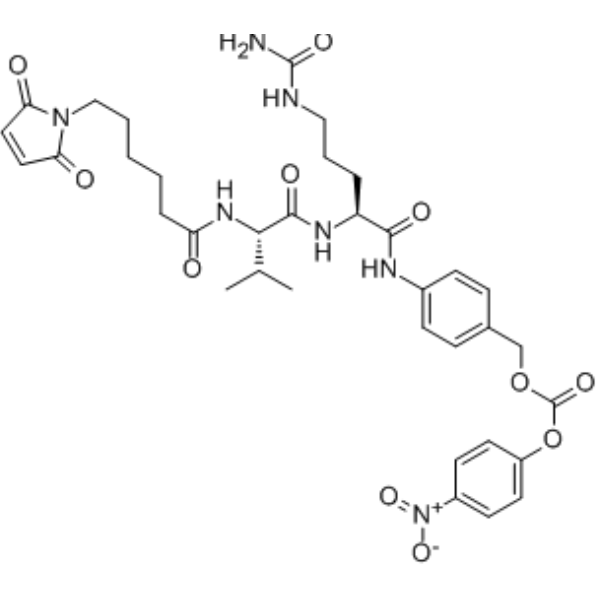
MC-Val-D-Cit-PAB-PNP is a cleavable peptide linker molecule used in the synthesis of antibody-drug conjugates (ADCs). MC-Val-D-Cit-PAB-PNP contains a maleimidocaproyl (Mc) group that can be conjugated to an antibody and a p-nitrophenol (PNP) group that allows the peptide to be linked to antitumor compounds.
|
-
- HY-150043A
-
|
|
ADC Linker
|
Cancer
|
|
MDTF is a non-cleavable ADC linker used in the synthesis of antibody-drug conjugates (ADCs) .
|
-
- HY-130111
-
|
|
ADC Linker
|
Cancer
|
|
DMAC-SPP is a cleavable ADC linker used in the synthesis of antibody-drug conjugates (ADCs) .
|
-
- HY-140014
-
|
|
ADC Linker
|
Cancer
|
|
Val-Cit is a cleavable ADC linker used in the synthesis of antibody-drug conjugates (ADCs) .
|
-
- HY-160157
-
-
- HY-101151
-
|
|
ADC Linker
|
Cancer
|
|
sulfo-SPDB is a cleavable ADC linker used in the synthesis of antibody-drug conjugates (ADCs) .
|
-
- HY-128970
-
|
|
ADC Linker
|
Cancer
|
|
Mp-polymer ester is a noncleavable ADC linker used in the synthesis of antibody-drug conjugates (ADCs) .
|
-
- HY-133540
-
-
- HY-140098
-
|
|
ADC Linker
|
Cancer
|
|
Boc-Cystamine is a cleavable ADC linker used in the synthesis of antibody-drug conjugates (ADCs) .
|
-
- HY-133550
-
|
|
ADC Linker
|
Cancer
|
|
DMAC-SPDB is a cleavable ADC linker used in the synthesis of antibody-drug conjugates (ADCs) .
|
-
- HY-126405
-
|
|
ADC Linker
|
Cancer
|
|
SMPT is a non-cleavable ADC linker used in the synthesis of antibody-drug conjugates (ADCs) .
|
-
- HY-133542
-
|
|
ADC Linker
|
Cancer
|
|
Dimethylamine-SPDB is a cleavable ADC linker used in the synthesis of antibody-drug conjugates (ADCs) .
|
-
- HY-129370
-
|
|
ADC Linker
|
Cancer
|
|
SPDB-sulfo is a glutathione cleavable ADC linker used for the antibody-drug conjugate (ADCs) .
|
-
- HY-126531
-
|
|
ADC Linker
|
Cancer
|
|
DMAC-PDB is a cleavable ADC linker used in the synthesis of antibody-drug conjugates (ADCs) .
|
-
- HY-128927
-
|
|
ADC Linker
|
Cancer
|
|
Mc-Leu-Gly-Arg is a cleavable ether linker for antibody-drug conjugates (ADC) design.
|
-
- HY-W071006
-
|
2,5-Dioxopyrrolidin-1-yl 3-(pyridin-2-yldisulfanyl)butanoate
|
ADC Linker
|
Cancer
|
|
PPC-NHS ester is a cleavable ADC linker used in the synthesis of antibody-drug conjugates (ADCs) .
|
-
- HY-133543
-
|
|
ADC Linker
|
Cancer
|
|
SPDP-sulfo is a cleavable ADC linker used in the synthesis of antibody-drug conjugates (ADCs) .
|
-
- HY-P991877
-
|
|
ADC Antibody
CD3
|
Cancer
|
|
STI-8811 Antibody is an anti-human BCMA antibody. STI-8811 Antibody can generate antibody drug conjugate (ADC) (STI-8811) with an auristatin derivative, Duostatin 5 (HY-145149). STI-8811 Antibody can be used for the study of multiple myeloma .
|
-
- HY-P991874
-
|
|
ADC Antibody
CD3
|
Cancer
|
|
AMG-224 Antibody is an anti-human BCMA IgG1 antibody. AMG-224 Antibody can generate antibody drug conjugate (ADC) (AMG 224) with a tubulin inhibitor Mertansine (HY-19792). AMG-224 Antibody can be used for the study of multiple myeloma .
|
-
- HY-P99453
-
|
|
ADC Antibody
|
Cancer
|
|
Azintuxizumab is an anti-SLAMF7 human IgG4κ monoclonal antibody. Azintuxizumab can be used in the synthesis of antibody-drug conjugate (ADC), Azintuxizumab vedotin .
|
-
- HY-P991505
-
|
AMT-562 antibody
|
ADC Antibody
EGFR
|
Cancer
|
|
Anti-HER3 Antibody (Ab562) is an anti-HER3 monoclonal antibody. Anti-HER3 Antibody (Ab562) can be used to synthesize the antibody-drug conjugate (ADC) AMT-562 (HY-171747) .
|
-
- HY-P991899
-
|
LCB73 antibody
|
ADC Antibody
CD19
|
Cancer
|
|
IKS03 Antibody (LCB73 Antibody) is an anti-human CD19 antibody. IKS03 Antibody can generate antibody drug conjugate (ADC) (IKS03) with a pyrrolobenzodiazepine (PBD) dimer payload. IKS03 Antibody can be used for the study of diffuse large B-cell lymphoma (DLBCL) and mantle cell lymphoma (MCL) .
|
-
- HY-163549
-
-
- HY-150074A
-
|
|
STING
ADC Payload
|
Cancer
|
|
STING agonist-18 (compound 1a) diTFA is a STING agonist that can be used for synthesis of antibody-drug conjugates (ADCs), such Trastuzumab (HY-P9907) conjugate .
|
-
- HY-128951
-
|
|
Drug-Linker Conjugates for ADC
|
Cancer
|
|
AMCC-DM1 is a drug-linker conjugate composed of a potent a tubulin inhibitor DM4 and a linker AMCC to make antibody drug conjugate. AMCC is a noncleavable linker .
|
-
- HY-139956
-
|
|
ADC Linker
|
Cancer
|
|
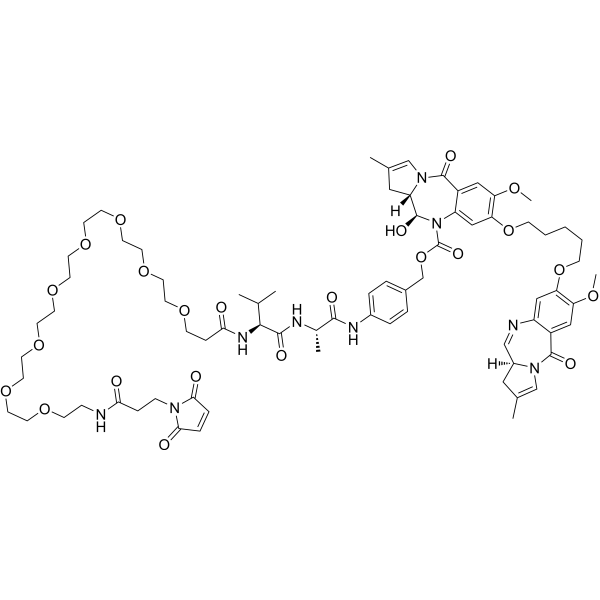
Mal-amido-PEG9-Val-Ala-PAB-SG3200 is a cleavable ADC linker conjugate used in the synthesis of antibody-drug conjugates (ADCs) .
|
-
- HY-148870
-
|
|
ADC Payload
|
Cancer
|
|
Maytansinoid B is a kind of ADC Cytotoxin. Maytansinoid B can be used to conjugates with antibodies to form antibody-drug conjugates (ADCs). Maytansinoids are known as antimitotic agents, binding to tubulin and inhibiting microtubule assembly. Maytansinoids induces G2/M arrest in the cell cycle to induce apoptosis .
|
-
- HY-145627
-
|
BA3021; Anti-ROR2 ADC; CAB-ROR2-ADC
|
Antibody-Drug Conjugates (ADCs)
Microtubule/Tubulin
|
Cancer
|
|
Ozuriftamab vedotin (BA3021), an antibody-drug conjugate (ADC), is a conditionally active biologic (CAB) anti-receptor tyrosine kinase orphan receptor 2 (ROR2) humanized monoclonal antibody Ozuriftamab (HY-145626) conjugated to VcMMAE (HY-15575). Ozuriftamab vedotin has antitumor activities .
|
-
- HY-P991940
-
|
|
ADC Antibody
CCR
|
Cancer
|
|
JBH492 Antibody is a humanized, Fc-silenced anti-CCR7 IgG1 antibody. JBH492 Antibody can generate antibody drug conjugate (ADC) (JBH492) with a maytansinoid microtubule DM4 (HY-12454). JBH492 Antibody can be used for the study of lymphoma .
|
-
- HY-P992350
-
|
|
ADC Antibody
Transmembrane Glycoprotein
|
Cancer
|
|
EBC-129 Antibody is a specific antibody for the synthetic antibody-drug conjugate (ADC) EBC-129, which specifically targets CEACAM5 and CEACAM6 glycosylated at N256. EBC-129 Antibody can be used for the research of pancreatic ductal adenocarcinoma .
|
-
- HY-185462
-
|
|
ADC Linker
|
Others
|
|
Mc-Asn-Asn is a legumain cleavable linker for antibody-drug conjugates (ADCs) which couples the antibody element to the effecting compound. Mc-Asn-Asn can be used in the synthesis of ADCs.
|
-
- HY-156897
-
|
|
Drug-Linker Conjugates for ADC
|
Cancer
|
|
Val-Cit-amide-Ph-Maytansine is an antibody and bispecific antigen-binding mol. that bind hepatocyte growth factor receptor c-Met (MET) or antibody-drug conjugates (ADCs) .
|
-
- HY-P99718
-
|
BAY 1112623
|
ADC Antibody
|
Cancer
|
|
Lupartumab (BAY 1112623) is an anti-LYPD3 (C4.4A) monoclonal antibody that can be used for the synthesis of antibody-drug conjugate BAY 1129980 .
|
-
- HY-P99016
-
|
|
ADC Antibody
Nectin-4
|
Cancer
|
|
Enfortumab is a humanized derived anti-Nectin-4 antibody that can be conjugated with the highly efficient microtubule disruptor MMAE (HY-15162) to generate the antibody drug conjugate (ADC) Enfortumab vedotin-ejfv (HY-P99016A). Enfortumab can be used for the study of locally advanced and metastatic urothelial carcinoma .
|
-
- HY-164893
-
-
- HY-128527
-
|
|
PROTAC-Linker Conjugates for PAC
Estrogen Receptor/ERR
|
Cancer
|
|
PROTAC ER Degrader-3 is an intermediate for synthesis of PAC. PAC, consists the ADCs linker and PROTACs, conjugated to an antibody. PAC extracts from patent WO2017201449A1, compound LP2. PAC conjugated to an antibody is a more marked estrogen receptor-alpha (ERα) degrader compared to PROTAC (without Ab) .
|
-
- HY-171734
-
-
- HY-128528
-
|
|
PROTAC-Linker Conjugates for PAC
Estrogen Receptor/ERR
|
Cancer
|
|
PROTAC ER Degrader-2 is an intermediate for synthesis of PAC. PAC, consists the ADCs linker and PROTACs, conjugated to an antibody. PAC extracts from patent WO2017201449A1, compound LP2. PAC conjugated to an antibody is a more marked estrogen receptor-alpha (ERα) degrader compared to PROTAC (without Ab) .
|
-
- HY-P991876
-
|
|
ADC Antibody
CD3
|
Cancer
|
|
MEDI-2228 Antibody is an anti-human BCMA antibody that preferentially binds to membrane-bound BCMA versus soluble BCMA. MEDI-2228 Antibody can generate antibody drug conjugate (ADC) (MEDI 2228) with a pyrrolobenzodiazepine (PBD) dimer. MEDI-2228 Antibody can be used for the study of multiple myeloma .
|
-
- HY-140987
-
|
|
ADC Linker
|
Cancer
|
|
5-Maleimidovaleric acid is a cleavable ADC linker used in the synthesis of antibody-drug conjugates (ADCs) .
|
-
- HY-130110
-
|
|
ADC Linker
|
Cancer
|
|
Sulfo-DMAC-SPP is a cleavable ADC linker used in the synthesis of antibody-drug conjugates (ADCs) .
|
-
- HY-41919
-
|
mDPR(boc); (S)-MALEOYL-DPR(BOC)-OH·DCHA
|
ADC Linker
|
Cancer
|
|
Mal-L-PA-NH-Boc is a noncleavable ADC linker used in the synthesis of antibody-drug conjugates (ADCs).
|
-
- HY-44246
-
|
Mc-GGFG-OH
|
ADC Linker
|
Cancer
|
|
MC-Gly-Gly-Phe-Gly is a cleavable ADC linker used for antibody-drug conjugates (ADCs).
|
-
- HY-149753
-
|
|
Hapten
|
Inflammation/Immunology
|
|
Methylthiomcresol-succinaldehydic acid is a fenthion hapten that can be used for immunoreagent production (protein conjugates and polyclonal antibodies) .
|
-
- HY-132162A
-
|
|
ADC Payload
|
Cancer
|
|
7-MAD-MDCPT hydrochloride, a Camptothecin analog, is a toxin payload in antibody drug conjugates (ADCs) .
|
-
- HY-141158
-
|
|
ADC Linker
|
Cancer
|
|
N-(Iodoacetamido)-Doxorubicin is a cleavable ADC linker used in the synthesis of antibody-drug conjugates (ADCs) .
|
-
- HY-126495A
-
|
|
ADC Linker
|
Cancer
|
|
Sulfo-LC-SPDP sodium is a cleavable ADC linker used in the synthesis of antibody-drug conjugates (ADCs) .
|
-
- HY-138327
-
|
|
ADC Linker
|
Cancer
|
|
16-Bismesyloxyhexane is a cleavable ADC linker used in the synthesis of antibody-drug conjugates (ADCs) .
|
-
- HY-126364
-
|
|
ADC Linker
|
Cancer
|
|
Mc- Val- Ala- PAB is a cleavable ADC linker used in the synthesis of antibody-drug conjugates (ADCs).
|
-
- HY-19318
-
|
|
ADC Linker
|
Cancer
|
|
Fmoc-Val-Cit-PAB is a cleavable antibody-conjugated active molecule (ADC) commonly used linker.
|
-
- HY-130099
-
|
|
ADC Linker
|
Cancer
|
|
Ald-Ph-amido-PEG2 is a noncleavable ADC linker for antibody-drug conjugate .
|
-
- HY-160790
-
|
|
ADC Linker
|
Cancer
|
|
β-Glu-PNP is an ADC linker used in the synthesis of antibody-drug conjugates (ADCs) .
|
-
- HY-140096
-
|
|
ADC Linker
|
Cancer
|
|
Aminoethyl-SS-propionic acid is a cleavable ADC linker used in the synthesis of antibody-drug conjugates (ADCs) .
|
-
- HY-129353
-
|
|
ADC Linker
|
Cancer
|
|
Boc-Phe-(Alloc)Lys-PAB-PNP is a used as a cleavable linker for antibody-drug conjugates (ADC).
|
-
- HY-126496
-
|
|
ADC Linker
|
Cancer
|
|
PEG4-SPDP is a cleavable ADC linker used for the antibody-drug conjugates (ADCs).
|
-
- HY-W096127
-
|
|
ADC Linker
|
Cancer
|
|
Biotin-sar-oh is a cleavable ADC linker used in the synthesis of antibody-drug conjugates (ADCs) .
|
-
- HY-129367
-
|
|
ADC Linker
|
Cancer
|
|
NO2-SPP is a cleavable linker that is used for making antibody-drug conjugate (ADC).
|
-
- HY-169353
-
|
|
ADC Linker
|
Cancer
|
|
Mal-Exo-EEVC is a cleavable ADC linker used in the synthesis of antibody-drug conjugate (ADC) .
|
-
- HY-P11295
-
|
|
ADC Linker
|
Cancer
|
|
Fmoc-GGFG-PAB-PNP is an ADC linker used in the synthesis of antibody-drug conjugates (ADC) .
|
-
- HY-128929
-
|
|
ADC Linker
|
Cancer
|
|
Fmoc-PEA (Example 1-2) is a used as a cleavable linker for antibody-drug conjugates (ADC) .
|
-
- HY-140122
-
|
|
ADC Linker
|
Cancer
|
|
THP-SS-alcohol is a cleavable ADC linker used in the synthesis of antibody-drug conjugates (ADCs) .
|
-
- HY-P11804
-
|
|
ADC Linker
|
Cancer
|
|
DTyr-Gly-DTyr-Gly is a cleavable linker used in the synthesis of antibody-drug conjugates (ADCs) .
|
-
- HY-129352
-
|
|
ADC Linker
|
Cancer
|
|
Cbz-Phe-(Alloc)Lys-PAB-PNP is an cleavable linker for antibody-drug conjugates (ADC) design.
|
-
- HY-169352
-
|
|
ADC Linker
|
Cancer
|
|
Mal-Exo-EVC is a cleavable ADC linker used in the synthesis of antibody-drug conjugate (ADC) .
|
-
- HY-129360
-
|
|
ADC Linker
|
Cancer
|
|
Ala-Ala-Asn-PAB is a peptide cleavable ADC linker for antibody-drug conjugates (ADCs) .
|
-
- HY-131084
-
|
|
ADC Linker
|
Cancer
|
|
DMAC-SPDB-sulfo is a cleavable ADC linker used in the synthesis of antibody-drug conjugates (ADCs) .
|
-
- HY-132162
-
|
|
ADC Payload
|
Cancer
|
|
7-MAD-MDCPT, a Camptothecin analog, is a toxin payload in antibody drug conjugates (ADCs) .
|
-
- HY-160408
-
|
|
ADC Linker
|
Cancer
|
|
Mal-GGG-Bal-NHS ester is an ADC linker used in the synthesis of antibody-drug conjugates (ADCs) .
|
-
- HY-20560
-
|
|
ADC Linker
|
Cancer
|
|
(Ac)Phe-Lys(Alloc)-PABC-PNP is an useful cleavable chemical linker in antibody drug conjugates.
|
-
- HY-W011541
-
|
Iodoacetic acid N-hydroxysuccinimide ester; N-Succinimidyl Iodoacetate
|
ADC Linker
|
Cancer
|
|
SIA Crosslinker is a non-cleavable ADC linker used in the synthesis of antibody-drug conjugates (ADCs) .
|
-
- HY-W002213
-
|
|
ADC Linker
|
Cancer
|
|
N-Hydroxysulfosuccinimide (sodium) is a non-cleavable ADC linker used in the synthesis of antibody-drug conjugates (ADCs) .
|
-
- HY-140129
-
|
|
ADC Linker
|
Cancer
|
|
NHS-SS-biotin is a cleavable ADC linker used in the synthesis of antibody-drug conjugates (ADCs) .
|
-
- HY-150043
-
|
|
ADC Linker
|
Cancer
|
|
MDTF free acid is a non-cleavable ADC linker used in the synthesis of antibody-drug conjugates (ADCs) .
|
-
- HY-44235A
-
|
|
ADC Linker
|
Cancer
|
|
MC-Gly-Gly-D-Phe is a cleavable linker used for sythesis of antibody-drug conjugates (ADC).
|
-
- HY-139957
-
-
- HY-P991967
-
|
MAB100 antibody
|
EGFR
|
Cancer
|
|
AVID100 (MAB100) Antibody is a monoclonal antibody inhibitor targeting EGFR, which can be used to synthesize a novel antibody-drug conjugate (ADC) molecule AVID100. AVID100 Antibody is applicable to relevant research on breast cancer, head and neck cancer, and lung cancer .
|
-
- HY-P99016A
-
|
|
Antibody-Drug Conjugates (ADCs)
Nectin-4
|
Cancer
|
|
Enfortumab vedotin-ejfv is an anti-Nectin-4 antibody-drug conjugate. Enfortumab vedotin-ejfv is a fully humanized IgG1 antibody conjugated to the microtubule disrupting agent MMAE (HY-15162) via a protease-cleavable Val-Cit linker. The antibody portion is Enfortumab (HY-P99016), and the drug-linker conjugate for ADC is VcMMAE (HY-15575). Nectin-4 is an adhesion protein involved in cellular processes and tumorigenesis, and Enfortumab vedotin-ejfv is indicated for the inhibition of locally advanced or metastatic urothelial carcinoma .
|
-
- HY-P992124
-
|
BAT8006 antibody; BAT-6028
|
Folate Receptor (FR)
|
Cancer
|
|
Onvontatug (BAT8006 Antibody) is a humanized monoclonal antibody targeting folate receptor α (FRα). Onvontatug can be used to construct antibody-drug conjugates (ADCs), such as BAT8006. It is applicable to research related to platinum-resistant ovarian cancer .
|
-
- HY-145365
-
|
|
Drug-Linker Conjugates for ADC
|
Cancer
|
|
DGN549-L is a DNA alkylator and can be utilized for antibody conjugation at lysine residues. DGN549-L can be used in the synthesis of antibody-drug conjugates (ADCs) .
|
-
- HY-49929
-
|
|
ADC Linker
|
Cancer
|
|
MC-GGFG-NH-CH2-O-CH2-cyclopropane-COOH is an ADC linker that can be combined with the cytotoxic Camptothecin (HY-16560) to form ADC-related drug-linker conjugates (Drug-Linker Conjugates for ADC ).MC-GGFG-NH-CH2-O-CH2-cyclopropane-COOH is conjugated to Camptothecin, which can further bind to the antibody Trastuzumab (HY-P9907) to form Antibody-Drug Conjugates (ADCs) .
|
-
- HY-W731085
-
|
|
ADC Linker
|
Cancer
|
|
MC-GGFG-NH-CH2-O-CH2-(s-cyclopropane)-COOH is an ADC linker that can be combined with the cytotoxic Camptothecin (HY-16560) to form an ADC-related drug-linker conjugate (Drug- Linker Conjugates for ADC).MC-GGFG-NH-CH2-O-CH2-cyclopropane-COOH is conjugated to Camptothecin, which can further bind to the antibody Trastuzumab (HY-P9907) to form Antibody-Drug Conjugates (ADCs) .
|
-
- HY-B1091B
-
|
MPD/BSA
|
Biochemical Assay Reagents
|
Others
|
|
Methylphenidate/BSA (MPD/BSA) is an antigen-adjuvant conjugate conjugate of Methylphenidate and BSA. By conjugating the antigen with a protein adjuvant, the production of antigen-specific antibodies in vaccine models can be enhanced. The conjugate does not affect protein folding or disrupt major epitopes, and can enhance cross-presentation and the production of antigen-specific T cells.
|
-
- HY-B1380A
-
|
CAR/BSA
|
Biochemical Assay Reagents
|
Others
|
|
Carisoprodol/BSA (CAR/BSA) is an antigen-adjuvant conjugate conjugate of Carisoprodol and BSA. By conjugating the antigen with a protein adjuvant, the production of antigen-specific antibodies in vaccine models can be enhanced. The conjugate does not affect protein folding or disrupt major epitopes, and can enhance cross-presentation and the production of antigen-specific T cells.
|
-
- HY-171435A
-
|
PCP/BSA
|
Biochemical Assay Reagents
|
Others
|
|
Phencyclidine/BSA (PCP/BSA) is an antigen-adjuvant conjugate conjugate of Phencyclidine and BSA. By conjugating the antigen with a protein adjuvant, the production of antigen-specific antibodies in vaccine models can be enhanced. The conjugate does not affect protein folding or disrupt major epitopes, and can enhance cross-presentation and the production of antigen-specific T cells.
|
-
- HY-P992316
-
|
|
Claudin
ADC Antibody
|
Cancer
|
|
ATG-022 Antibody is a humanized monoclonal antibody targeting Claudin 18.2 (CLDN 18.2). ATG-022 Antibody binds with VcMMAE (HY-15575) to form an Antibody-Drug Conjugate (ADC). ATG-022 Antibody can be used for the research of advanced/metastatic solid tumors and gastric cancer .
|
-
- HY-P991862
-
|
|
ADC Antibody
Anaplastic lymphoma kinase (ALK)
|
Cancer
|
|
CDX-0125-TEI Antibody is an anti-human ALK antibody. AMG-224 Antibody can generate antibody drug conjugate (ADC) (CDX-0125-TEI) with thienoindole (TEI) DNA minor groove alkylating agent. CDX-0125-TEI Antibody can be used for the study of neuroblastoma .
|
-
- HY-141606
-
|
BAY 94-9343
|
Microtubule/Tubulin
Antibody-Drug Conjugates (ADCs)
|
Cancer
|
|
Anetumab ravtansine (BAY 94-9343) is a selective and highly potent antibody-drug conjugate (ADC) to target maytansinoid tubulin. Anetumab ravtansine consists of a human anti-mesothelin antibody conjugated to the maytansinoid tubulin inhibitor DM4. Anetumab ravtansine shows antitumor efficacy correlated with the amount of mesothelin expressed in patient-derived xenograft tumor models .
|
-
- HY-132253
-
|
|
Antibody-Drug Conjugates (ADCs)
Transmembrane Glycoprotein
|
Cancer
|
|
Polatuzumab vedotin is an antibody-drug conjugate targeting CD79b. It contains a humanized anti-CD79b IgG1 monoclonal antibody linked to monomethyl auristatin E (MMAE), a potent microtubule inhibitor. The antibody portion is Polatuzumab (HY-P99042), and the drug-linker conjugate for ADC is VcMMAE (HY-15575). Polatuzumab vedotin has the potential for the research of Large B-cell lymphomas (LBCL) .
|
-
- HY-19792S
-
|
DM1-13C,d3; Maytansinoid DM1-13C,d3
|
Isotope-Labeled Compounds
Microtubule/Tubulin
ADC Payload
|
Cancer
|
|
Mertansine- 13C,d3 (DM1- 13C,d3) is the 13C- and deuterium labeled Mertansine (HY-19792). Mertansine (DM1) is a microtubulin inhibitor and is an antibody-conjugatable maytansinoid that is developed to overcome systemic toxicity associated with maytansine and to enhance tumor-specific delivery. Mertansine can be attached to a monoclonal antibody with a linker to create an antibody-drug conjugate (ADC) .
|
-
- HY-23641
-
|
|
ADC Linker
|
Cancer
|
|
NH-bis(C1-Boc)is a uncleavable linker used for antibody-drug conjugates (ADC).
|
-
- HY-130112
-
|
NHS-C4-MTS
|
ADC Linker
|
Cancer
|
|
N-Succinimidyloxycarbonylpropyl methanethiosulfonate is a non-cleavable ADC linker used in the synthesis of antibody-drug conjugates (ADCs) .
|
-
- HY-101153
-
|
|
ADC Linker
|
Cancer
|
|
MC-Val-Ala-OH is a cleavable ADC linker used in the synthesis of antibody-drug conjugates (ADCs) .
|
-
- HY-140138
-
|
|
ADC Linker
|
Cancer
|
|
PC SPDP-NHS carbonate ester is a cleavable ADC linker used in the synthesis of antibody-drug conjugates (ADCs) .
|
-
- HY-W097109A
-
|
|
ADC Linker
|
Cancer
|
|
Fmoc-(D-Phe)-Osu is a cleavable ADC linker used in the synthesis of antibody-drug conjugates (ADCs) .
|
-
- HY-159794A
-
|
|
ADC Linker
|
Cancer
|
|
Azido-methyltetrazine di-arm linker hydrochloride is a multivalent ADC linker for the synthesis of antibody-drug conjugates (ADCs) .
|
-
- HY-W023121
-
|
|
ADC Linker
|
Cancer
|
|
Fmoc-Gly-Gly-OH is a cleavable ADC linker used in the synthesis of antibody-drug conjugates (ADCs) .
|
-
- HY-141141
-
|
|
ADC Linker
|
Cancer
|
|
Boc-Val-Cit-PAB is a cleavable ADC linker used in the synthesis of antibody-drug conjugates (ADCs) .
|
-
- HY-P11805
-
|
|
ADC Linker
|
Cancer
|
|
Gly-Gly-DTyr-Gly-Gly is a cleavable linker used in the synthesis of antibody-drug conjugates (ADCs) .
|
-
- HY-117409
-
|
|
ADC Linker
|
Cancer
|
|
Aminoethyl-SS-ethylalcohol is a glutathione cleavable ADC linker used in the synthesis of antibody-drug conjugates (ADCs) .
|
-
- HY-132162B
-
|
|
ADC Payload
|
Cancer
|
|
7-MAD-MDCPT TFA, a Camptothecin analog, is a toxin payload in antibody drug conjugates (ADCs) .
|
-
- HY-135418
-
|
|
ADC Linker
|
Cancer
|
|
Fmoc-Asp-NH2 is a cleavable ADC linker used in the synthesis of antibody-drug conjugates (ADCs).
|
-
- HY-140140
-
|
|
ADC Linker
|
Cancer
|
|
PC Mal-NHS carbonate ester is a cleavable ADC linker used in the synthesis of antibody-drug conjugates (ADCs) .
|
-
- HY-138322
-
|
|
ADC Linker
|
Cancer
|
|
N-trifluoroacetyl-β-alanyl chloride is a cleavable ADC linker used in the synthesis of antibody-drug conjugates (ADCs) .
|
-
- HY-159794
-
|
|
ADC Linker
|
Cancer
|
|
Azido-methyltetrazine di-arm linker is a multivalent ADC linker for the synthesis of antibody-drug conjugates (ADCs) .
|
-
- HY-129362
-
|
|
ADC Linker
|
Cancer
|
|
Phe-Lys(Fmoc)-PAB is a cathepsin cleavable ADC linker used for the antibody-drug conjugates (ADCs) .
|
-
- HY-129360A
-
|
|
ADC Linker
|
Cancer
|
|
Ala-Ala-Asn-PAB TFA is a peptide cleavable ADC linker for antibody-drug conjugates (ADCs) .
|
-
- HY-129349
-
|
|
ADC Linker
|
Cancer
|
|
Phe-Lys(Trt)-PAB is a cathepsin cleavable ADC linker used for the antibody-drug conjugates (ADCs) .
|
-
- HY-176930
-
|
|
ADC Linker
|
Others
|
|
N-Fmoc-EvcPAB-PNP is a cleavable ADC linker used in the synthesis of antibody-drug conjugates (ADC) .
|
-
- HY-156396
-
|
|
ADC Linker
|
Cancer
|
|
Fmoc-Val-Ala-Gly is an ADC linker, can be used to synthesize antibody-drug conjugates (ADCs) .
|
-
- HY-W038702
-
|
|
ADC Linker
|
Cancer
|
|
Boc-Val-Cit-OH is a cleavable ADC linker used in the synthesis of antibody-drug conjugates (ADCs) .
|
-
- HY-141664
-
|
|
ADC Linker
|
Cancer
|
|
PPA is an ADC linker (US20060073528A1). PPA can be used for making antibody-drug conjugate .
|
-
- HY-79129
-
|
|
ADC Linker
|
Cancer
|
|
Fmoc-D-Trp(Boc)-OH is a cleavable ADC linker that used in the synthesis of antibody-drug conjugates (ADCs).
|
-
- HY-103447A
-
|
|
Biochemical Assay Reagents
|
Others
|
|
Zearalenone/KLH is an antigen-adjuvant conjugate conjugate of Zearalenone (HY-103447) and KLH. By conjugating the antigen with a protein adjuvant, the production of antigen-specific antibodies in vaccine models can be enhanced. The conjugate does not affect protein folding or disrupt major epitopes, and can enhance cross-presentation and the production of antigen-specific T cells.
|
-
- HY-NP217A
-
|
|
Biochemical Assay Reagents
|
Others
|
|
Valine/BSA is an antigen-adjuvant conjugate conjugate of Valine (HY-N0717) and BSA. By conjugating the antigen with a protein adjuvant, the production of antigen-specific antibodies in vaccine models can be enhanced. The conjugate does not affect protein folding or disrupt major epitopes, and can enhance cross-presentation and the production of antigen-specific T cells.
|
-
- HY-NP209B
-
|
|
Biochemical Assay Reagents
|
Others
|
|
Succinic?acid-KLH is an antigen-adjuvant conjugate conjugate of Succinic acid (HY-N0420) and KLH. By conjugating the antigen with a protein adjuvant, the production of antigen-specific antibodies in vaccine models can be enhanced. The conjugate does not affect protein folding or disrupt major epitopes, and can enhance cross-presentation and the production of antigen-specific T cells.
|
-
- HY-NP209
-
|
|
Biochemical Assay Reagents
|
Others
|
|
Succinic?acid-BSA is an antigen-adjuvant conjugate conjugate of Succinic acid (HY-N0420) and BSA. By conjugating the antigen with a protein adjuvant, the production of antigen-specific antibodies in vaccine models can be enhanced. The conjugate does not affect protein folding or disrupt major epitopes, and can enhance cross-presentation and the production of antigen-specific T cells.
|
-
- HY-183207
-
|
|
Biochemical Assay Reagents
|
Others
|
|
CD56 peptide/BSA is an antigen-adjuvant conjugate conjugate of CD56 peptide and BSA. By conjugating the antigen with a protein adjuvant, the production of antigen-specific antibodies in vaccine models can be enhanced. The conjugate does not affect protein folding or disrupt major epitopes, and can enhance cross-presentation and the production of antigen-specific T cells.
|
-
- HY-183209A
-
|
|
Biochemical Assay Reagents
|
Others
|
|
Puromycin-KLH is an antigen-adjuvant conjugate conjugate of Puromycin (HY-B1743) and KLH. By conjugating the antigen with a protein adjuvant, the production of antigen-specific antibodies in vaccine models can be enhanced. The conjugate does not affect protein folding or disrupt major epitopes, and can enhance cross-presentation and the production of antigen-specific T cells.
|
-
- HY-NP217B
-
|
|
Biochemical Assay Reagents
|
Others
|
|
Valine/KLH is an antigen-adjuvant conjugate conjugate of Valine (HY-N0717) and KLH. By conjugating the antigen with a protein adjuvant, the production of antigen-specific antibodies in vaccine models can be enhanced. The conjugate does not affect protein folding or disrupt major epitopes, and can enhance cross-presentation and the production of antigen-specific T cells.
|
-
- HY-B0015B
-
|
|
Biochemical Assay Reagents
|
Others
|
|
Paclitaxel-BSA is an antigen-adjuvant conjugate conjugate of Paclitaxel (HY-B0015) and BSA. By conjugating the antigen with a protein adjuvant, the production of antigen-specific antibodies in vaccine models can be enhanced. The conjugate does not affect protein folding or disrupt major epitopes, and can enhance cross-presentation and the production of antigen-specific T cells.
|
-
- HY-B0015C
-
|
|
Biochemical Assay Reagents
|
Others
|
|
Paclitaxel-KLH is an antigen-adjuvant conjugate conjugate of Paclitaxel (HY-B0015) and KLH. By conjugating the antigen with a protein adjuvant, the production of antigen-specific antibodies in vaccine models can be enhanced. The conjugate does not affect protein folding or disrupt major epitopes, and can enhance cross-presentation and the production of antigen-specific T cells.
|
-
- HY-NP0207A
-
|
|
Biochemical Assay Reagents
|
Others
|
|
Vomitoxin/KLH is an antigen-adjuvant conjugate conjugate of Vomitoxin (HY-N6684) and KLH. By conjugating the antigen with a protein adjuvant, the production of antigen-specific antibodies in vaccine models can be enhanced. The conjugate does not affect protein folding or disrupt major epitopes, and can enhance cross-presentation and the production of antigen-specific T cells.
|
-
- HY-183209
-
|
|
Biochemical Assay Reagents
|
Others
|
|
Puromycin-BSA is an antigen-adjuvant conjugate conjugate of Puromycin (HY-B1743) and BSA. By conjugating the antigen with a protein adjuvant, the production of antigen-specific antibodies in vaccine models can be enhanced. The conjugate does not affect protein folding or disrupt major epitopes, and can enhance cross-presentation and the production of antigen-specific T cells.
|
-
- HY-156896
-
|
|
Drug-Linker Conjugates for ADC
|
Cancer
|
|
Val-Cit-amide-Cbz-N(Me)-Maytansine is an antibody and bispecific antigen-binding mol. that bind hepatocyte growth factor receptor c-Met (MET) or antibody-drug conjugates (ADCs) .
|
-
- HY-147239
-
|
|
Drug-Linker Conjugates for ADC
|
Cancer
|
|
MC-VA-PABC-MMAE is a agent-linker conjugate for ADC. MC-VA-PABC-MMAE contains the ADCs linker (peptide MC-VA-PABC) and a potent tubulin polymerization inhibitor MMAE (HY-15162) .
|
-
- HY-46225
-
|
|
Drug Intermediate
|
Inflammation/Immunology
|
|
DEX-maleimide is a coupling agent that can be used to synthesize conjugates containing single-domain antibodies (VHH) conjugated with antigens and anti-inflammatory agents. DEX-maleimide can be used for research on autoimmune diseases .
|
-
- HY-49382
-
|
|
Target Protein Ligand-Linker Conjugates
|
Others
|
|
Fluocinolone acetonide 3-benzylaniline (Precursor Example 1) is a glucocorticoid receptor agonist-linker conjugate, which can be used for the synthesis of anti-CD40 antibody-drug conjugates (ADCs) .
|
-
- HY-P992438
-
|
Anti-Notch3 mAb hu28
|
Notch
|
Cancer
|
|
PF-06650808 Antibody (Anti-NOTCH3 mAb hu28) is an IgG1-kappa Notch3-targeting antibody. PF-06650808 Antibody is the antibody component of the antibody-drug conjugate (ADC) PF-06650808. PF-06650808 Antibody can be used for the research of advanced breast cancer, advanced solid tumors .
|
-
- HY-P991930
-
|
|
ADC Antibody
TNF Receptor
|
Cancer
|
|
ARX305 Antibody is an anti-human CD70 antibody. ARX305 Antibody can generate antibody drug conjugate (ADC) (ARX305) with a potent microtubule inhibitor PEG4-aminooxy-MMAF (AS269) (HY-128968). ARX305 Antibody can be used for the study of multiple solid and hematological cancers .
|
-
- HY-130082
-
|
|
ADC Payload
Microtubule/Tubulin
|
Cancer
|
|
DM4-SMe is a metabolite of antibody-maytansin conjugates (AMCs) and a tubulin inhibitor, and also a cytotoxic moiety of antibody-drug conjugates (ADCs), which can be linked to antibody through disulfide bond or stable thioether bond. DM4-SMe inhibits KB cells with an IC50 of 0.026 nM. DM4-SMe is a highly toxic metabolite that can be oxidized and detoxified by human liver microsomes .
|
-
- HY-132253A
-
|
|
Antibody-Drug Conjugates (ADCs)
Transmembrane Glycoprotein
|
Cancer
|
|
Polatuzumab vedotin solution is an antibody-drug conjugate targeting CD79b. It contains a humanized anti-CD79b IgG1 monoclonal antibody linked to monomethyl auristatin E (MMAE), a potent microtubule inhibitor. The antibody portion is Polatuzumab (HY-P99042), and the drug-linker conjugate for ADC is VcMMAE (HY-15575). Polatuzumab vedotin solution has the potential for the research of Large B-cell lymphomas (LBCL) .
|
-
- HY-P99854
-
|
RC48-0
|
EGFR
ADC Antibody
|
Cancer
|
|
Disitamab (RC48-0) is a humanized monoclonal antibody targeting HER2. Disitamab can be used in the synthesis of antibody-drug conjugates (ADCs), Disitamab vedotin (HY-P9985) .
|
-
- HY-132254A
-
|
IMMU-132 (solution)
|
Antibody-Drug Conjugates (ADCs)
TROP2
|
Cancer
|
|
Sacituzumab govitecan (IMMU-132) is an antibody-drug conjugate (ADC) targeting Trop-2 for delivery of SN-38. The antibody portion is Sacituzumab (HY-P99045), and the drug-linker conjugate for ADC is CL2A-SN-38 (HY-128946). Sacituzumab govitecan shows anticancer activity .
|
-
- HY-150363
-
|
|
Antibody-Drug Conjugates (ADCs)
Microtubule/Tubulin
|
Cancer
|
|
ADC Control Human IgG1-sulfo-SPDB-DM4 is an antibody-drug conjugate (ADC) and can inhibit tubulin polymerization. The antibody portion is Human IgG1 kappa, Isotype Control (HY-P99001), and the drug-linker conjugate for ADC is sulfo-SPDB-DM4 (HY-101141) .
|
-
- HY-132254
-
|
IMMU-132
|
Antibody-Drug Conjugates (ADCs)
TROP2
|
Cancer
|
|
Sacituzumab govitecan (IMMU-132) is an antibody-drug conjugate (ADC) targeting Trop-2 for delivery of SN-38. The antibody portion is Sacituzumab (HY-P99045), and the drug-linker conjugate for ADC is CL2A-SN-38 (HY-128946). Sacituzumab govitecan shows anticancer activity .
|
-
- HY-173633
-
|
|
ADC Linker
|
Cancer
|
|
BrAc-Val-Ala is an ADC linker used in the synthesis of antibody-drug conjugates (ADCs), such as ABBV-969 .
|
-
- HY-126353
-
|
|
ADC Linker
|
Cancer
|
|
Fmoc-Val-Ala-PAB-OH is a cleavable ADC linker used in the synthesis of antibody-drug conjugates (ADCs) .
|
-
- HY-44234
-
|
|
ADC Linker
|
Cancer
|
|
Fmoc-Gly-Gly-Phe-OtBu is a cleavable ADC linker used in the synthesis of antibody-drug conjugates (ADCs) .
|
-
- HY-140116
-
|
|
ADC Linker
|
Cancer
|
|
Boc-NH-ethyl-SS-propionic acid is a cleavable ADC linker used in the synthesis of antibody-drug conjugates (ADCs) .
|
-
- HY-130961
-
|
|
ADC Linker
|
Cancer
|
|
Boc-Val-Dil-Dap-OH is a cleavable ADC linker used in the synthesis of antibody-drug conjugates (ADCs) .
|
-
- HY-141145
-
|
|
ADC Linker
|
Cancer
|
|
OPSS-Val-Cit-PAB-PNP is a cleavable ADC linker used in the synthesis of antibody-drug conjugates (ADCs) .
|
-
- HY-44222
-
|
|
ADC Linker
|
Cancer
|
|
MAC glucuronide linker-2 is a cleavable ADC linker used in the synthesis of antibody-drug conjugates (ADCs) .
|
-
- HY-130932
-
|
|
ADC Linker
|
Cancer
|
|
Boc-Val-Ala-PAB-PNP is a cleavable ADC linker used in the synthesis of antibody-drug conjugates (ADCs) .
|
-
- HY-P11807
-
|
|
ADC Linker
|
Cancer
|
|
DArg-DLys-DTyr-DTyr-Gly-DTrp is a cleavable linker used in the synthesis of antibody-drug conjugates (ADCs) .
|
-
- HY-400191A
-
|
|
ADC Linker
|
Cancer
|
|
Fmoc-Gly-Gly-allyl propionate is a cleavable linker that can be used to synthesize Antibody-Drug Conjugates (ADCs) .
|
-
- HY-136136
-
|
|
ADC Linker
|
Cancer
|
|
Fmoc-Val-Ala-PAB-PNP is a cleavable ADC linker used in the synthesis of antibody-drug conjugates (ADCs) .
|
-
- HY-140118
-
|
|
ADC Linker
|
Cancer
|
|
Fmoc-NH-ethyl-SS-propionic acid is a cleavable ADC linker used in the synthesis of antibody-drug conjugates (ADCs) .
|
-
- HY-156727
-
|
|
ADC Linker
|
Cancer
|
|
Val-Cit-PABC-Ahx-May is a cleavable ADC linker used in the synthesis of antibody-drug conjugates (ADCs) .
|
-
- HY-164731
-
|
|
ADC Linker
|
Cancer
|
|
Mal-PEG12-DOTA is an ADC linker used in the synthesis of antibody-drug conjugates (ADCs) .
|
-
- HY-131833
-
|
|
ADC Linker
|
Cancer
|
|
Fmoc-Gly-Gly-Phe-OH is a cleavable ADC linker used in the synthesis of antibody-drug conjugates (ADCs) .
|
-
- HY-141144
-
|
|
ADC Linker
|
Cancer
|
|
OPSS-Val-Cit-PAB-OH is a cleavable ADC linker used in the synthesis of antibody-drug conjugates (ADCs) .
|
-
- HY-126670
-
|
|
ADC Linker
|
Cancer
|
|
mDPR(Boc)-Val-Cit-PAB is a cleavable ADC linker used as a linker for antibody-drug conjugates (ADC) .
|
-
- HY-141142
-
|
|
ADC Linker
|
Cancer
|
|
Boc-Val-Cit-PAB-PNP is a cleavable ADC linker used in the synthesis of antibody-drug conjugates (ADCs) .
|
-
- HY-139353
-
|
|
ADC Linker
|
Cancer
|
|
Fmoc-Phe-Lys(Boc)-PAB is a cleavable ADC linker used in the synthesis of antibody-drug conjugates (ADCs) .
|
-
- HY-140117
-
|
|
ADC Linker
|
Cancer
|
|
Boc-aminooxy-ethyl-SS-propanol is a cleavable ADC linker used in the synthesis of antibody-drug conjugates (ADCs) .
|
-
- HY-400191
-
|
|
ADC Linker
|
Cancer
|
|
Fmoc-Gly-(d-Gly)-allyl propionate is a cleavable linker that can be used to synthesize Antibody-Drug Conjugates (ADCs).
|
-
- HY-130930
-
|
|
ADC Linker
|
Cancer
|
|
Acid-propionylamino-Val-Cit-OH is a cleavable ADC linker used in the synthesis of antibody-drug conjugates (ADCs) .
|
-
- HY-140120
-
|
|
ADC Linker
|
Cancer
|
|
Mal-NH-ethyl-SS-propionic acid is a cleavable ADC linker used in the synthesis of antibody-drug conjugates (ADCs) .
|
-
- HY-140125
-
|
|
ADC Linker
|
Cancer
|
|
2-Hydroxyethyl disulfide mono-tosylate is a cleavable ADC linker used in the synthesis of antibody-drug conjugates (ADCs) .
|
-
- HY-126497
-
|
|
ADC Linker
|
Cancer
|
|
LC-PEG8-SPDP is a cleavable ADC linker used for the antibody-drug conjugates (ADCs) .
|
-
- HY-12454
-
DM4
5 Publications Verification
Ravtansine
|
Microtubule/Tubulin
ADC Payload
|
Cancer
|
|
DM4 is is an antitubulin agent that inhibit cell division. DM4 can be used in the preparation of antibody agent conjugate.
|
-
- HY-136107
-
|
|
ADC Linker
|
Cancer
|
|
Fmoc-Phe-Lys(Trt)-PAB is a cleavable ADC linker used in the synthesis of antibody-drug conjugates (ADCs) .
|
-
- HY-175994
-
|
|
ADC Linker
|
Others
|
|
Fmoc-β-Ala-Trp(Boc)-OH is a cleavable ADC linker used in the synthesis of antibody-drug conjugates (ADCs).
|
-
- HY-126663
-
|
|
ADC Payload
|
Cancer
|
|
N-Me-L-Ala-maytansinol is a hydrophobic, cell permeable payload used for making antibody-drug conjugate (ADC) .
|
-
- HY-135975
-
|
|
ADC Linker
|
Cancer
|
|
MC-Val-Ala-PAB-PNP is a cleavable ADC linker used in the synthesis of antibody-drug conjugates (ADCs) .
|
-
- HY-114430
-
|
|
ADC Linker
|
Others
|
|
Fmoc-Phe-Lys(Boc)-PAB-PNP is a cleavable ADC linker used in the synthesis of antibody-drug conjugates (ADCs).
|
-
- HY-W071007
-
|
|
ADC Linker
|
Cancer
|
|
NO2-SPDMV is a cleavable ADC linker used in the synthesis of antibody-drug conjugates (ADCs) .
|
-
- HY-139856
-
|
|
ADC Linker
|
Cancer
|
|
Mal-Ala-Ala-PAB-PNP is a cleavable ADC linker used in the synthesis of antibody-drug conjugates (ADCs) .
|
-
- HY-183211B
-
|
|
Biochemical Assay Reagents
|
Others
|
|
Glycyrrhizic acid/KLH is an antigen-adjuvant conjugate conjugate of Glycyrrhizic acid (HY-N0184) and KLH. By conjugating the antigen with a protein adjuvant, the production of antigen-specific antibodies in vaccine models can be enhanced. The conjugate does not affect protein folding or disrupt major epitopes, and can enhance cross-presentation and the production of antigen-specific T cells.
|
-
- HY-183208
-
|
|
Biochemical Assay Reagents
|
Others
|
|
Ki-67 peptide/BSA is an antigen-adjuvant conjugate conjugate of Ki-67 peptide and BSA. By conjugating the antigen with a protein adjuvant, the production of antigen-specific antibodies in vaccine models can be enhanced. The conjugate does not affect protein folding or disrupt major epitopes, and can enhance cross-presentation and the production of antigen-specific T cells.
|
-
- HY-183211A
-
|
|
Biochemical Assay Reagents
|
Inflammation/Immunology
|
|
Glycyrrhizic acid/OVA is an antigen-adjuvant conjugate conjugate of Glycyrrhizic acid (HY-N0184) and ovalbumin (OVA). By conjugating the antigen with a protein adjuvant, the production of antigen-specific antibodies in vaccine models can be enhanced. The conjugate does not affect protein folding or disrupt major epitopes, and can enhance cross-presentation and the production of antigen-specific T cells.
|
-
- HY-183209B
-
|
|
Biochemical Assay Reagents
|
Others
|
|
Puromycin-OVA is an antigen-adjuvant conjugate conjugate of Puromycin (HY-B1743) and ovalbumin (OVA). By conjugating the antigen with a protein adjuvant, the production of antigen-specific antibodies in vaccine models can be enhanced. The conjugate does not affect protein folding or disrupt major epitopes, and can enhance cross-presentation and the production of antigen-specific T cells.
|
-
- HY-B1277C
-
|
THP/BSA
|
Biochemical Assay Reagents
|
Others
|
|
Trihexyphenidyl/BSA (THP/BSA) is an antigen-adjuvant conjugate conjugate of Trihexyphenidyl (HY-B1277A) and BSA. By conjugating the antigen with a protein adjuvant, the production of antigen-specific antibodies in vaccine models can be enhanced. The conjugate does not affect protein folding or disrupt major epitopes, and can enhance cross-presentation and the production of antigen-specific T cells.
|
-
- HY-183210
-
|
|
Biochemical Assay Reagents
|
Others
|
|
Ochratoxin A/BSA is an antigen-adjuvant conjugate conjugate of Ochratoxin A (HY-N6788) and BSA. By conjugating the antigen with a protein adjuvant, the production of antigen-specific antibodies in vaccine models can be enhanced. The conjugate does not affect protein folding or disrupt major epitopes, and can enhance cross-presentation and the production of antigen-specific T cells.
|
-
- HY-B0015A
-
|
|
Biochemical Assay Reagents
|
Others
|
|
Paclitaxel-OVA is an antigen-adjuvant conjugate conjugate of Paclitaxel (HY-B0015) and ovalbumin (OVA). By conjugating the antigen with a protein adjuvant, the production of antigen-specific antibodies in vaccine models can be enhanced. The conjugate does not affect protein folding or disrupt major epitopes, and can enhance cross-presentation and the production of antigen-specific T cells.
|
-
- HY-NP217
-
|
|
Biochemical Assay Reagents
|
Inflammation/Immunology
|
|
Valine/OVA is an antigen-adjuvant conjugate conjugate of Valine (HY-N0717) and ovalbumin (OVA). By conjugating the antigen with a protein adjuvant, the production of antigen-specific antibodies in vaccine models can be enhanced. The conjugate does not affect protein folding or disrupt major epitopes, and can enhance cross-presentation and the production of antigen-specific T cells.
|
-
- HY-101070
-
|
DM1-SMCC
|
Drug-Linker Conjugates for ADC
|
Cancer
|
|
SMCC-DM1 (DM1-SMCC) is a agent-linker conjugate composed of a potent microtubule-disrupting agent DM1 and a linker SMCC to make antibody agent conjugate (ADC) .
|
-
- HY-128954
-
-
- HY-128871
-
|
|
Drug-Linker Conjugates for ADC
|
Cancer
|
|
VCP-Eribulin is a bioactive molecule-linker conjugate designed for ADCs (Drug-Linker Conjugates for ADC), formed by conjugating an ADC linker (VCP) with Eribulin (HY-13442). Eribulin is a unique microtubule inhibitor exhibiting antitumor activity. VCP-Eribulin can be utilized for antibody conjugation .
|
-
- HY-NP0211
-
|
|
Biochemical Assay Reagents
|
Inflammation/Immunology
|
|
DHT-OVA is a conjugate of DHT (Dihydrotestosterone) and OVA peptide. By conjugating the antigen with a protein adjuvant, the production of antigen-specific antibodies in vaccine models can be enhanced. The conjugate does not affect protein folding or disrupt linear epitopes, and it can enhance cross-presentation and the generation of antigen-specific T cells.
|
-
- HY-174279
-
|
|
Drug-Linker Conjugates for ADC
|
Cancer
|
|
MCC-AAQ-Exa is a drug-linker conjugates for ADC, obtained by condensing the linker with Exatecan (HY-13631) and can be used to prepare antibody-drug conjugates (ADCs). MCC is an ADC linker containing a maleimide fragment .
|
-
- HY-171265
-
|
MRG003
|
Antibody-Drug Conjugates (ADCs)
EGFR
|
Cancer
|
|
Becotatug vedotin (MRG003) is an Antibody-Drug Conjugate (ADC) that consists of an anti-EGFR humanized IgG1 monoclonal antibody Becotatug (HY-P990049) and MMAE (HY-15162). These two parts are connected through a valine-citrulline (valine-citrulline) linker, where the linker and MMAE constitute the ADC's Drug-Linker conjugate VcMMAE (HY-15575) .
|
-
- HY-P99271
-
|
Anti-Human F3 Recombinant antibody
|
ADC Antibody
|
Cancer
|
|
Tisotumab (Anti-Human F3 Recombinant Antibody) is a human IgG1 monoclonal antibody and ADC antibody. Tisotumab targets tissue factor (TF). Tisotumab can be used to synthesize antibody-drug conjugates (ADCs) targeting tissue factor (TF), Tisotumab vedotin (HY-152963). Tisotumab can be used for the research of solid tumors .
|
-
- HY-W040236
-
-
- HY-130090
-
|
|
ADC Linker
|
Cancer
|
|
NHPI-PEG4-C2-Pfp ester is used as a linker for antibody-drug conjugates (ADC).
|
-
- HY-133547
-
|
|
ADC Linker
|
Cancer
|
|
NO2-SPP-sulfo is a cleavable ADC linker used in the synthesis of antibody-drug conjugates (ADCs) .
|
-
- HY-181426
-
|
|
ADC Linker
|
Cancer
|
|
GDP-L-Fuc-PEG4-BCN is a cleavable ADC linker used in the synthesis of antibody-drug conjugates (ADCs).
|
-
- HY-164759
-
|
|
NAMPT
|
Cancer
|
|
Nampt-IN-13 (example 58m) is a NAMPT inhibitor that can be used in the synthesis of Antibody-drug Conjugate (ADC) .
|
-
- HY-133548
-
|
|
ADC Linker
|
Cancer
|
|
NO2-SPDB-sulfo is a cleavable ADC linker used in the synthesis of antibody-drug conjugates (ADCs) .
|
-
- HY-78921
-
|
|
ADC Linker
|
Cancer
|
|
Fmoc-3VVD-OH is a cleavable ADC linker used in the synthesis of antibody-drug conjugates (ADCs) .
|
-
- HY-130976
-
|
|
ADC Linker
|
Cancer
|
|
N-Boc-Val-Dil-Dap-Doe is a cleavable ADC linker used in the synthesis of antibody-drug conjugates (ADCs) .
|
-
- HY-136132
-
|
|
ADC Linker
|
Cancer
|
|
MC-VC-PAB-NH2 is a cleavable ADC linker used in the synthesis of antibody-drug conjugates (ADCs) .
|
-
- HY-136547
-
|
|
ADC Linker
|
Others
|
|
Boc-Val-Ala-PAB is a cathepsin cleavable ADC linker that is used for making antibody-drug conjugate (ADCs) .
|
-
- HY-129350
-
|
|
ADC Linker
|
Cancer
|
|
Fmoc-Phe-Lys(Trt)-PAB-PNP is a cleavable ADC linker used in the synthesis of antibody-drug conjugates (ADCs) .
|
-
- HY-129378
-
|
|
ADC Linker
|
Cancer
|
|
NO2-SPP-sulfo-Me is a cleavable linker that is used for making antibody-drug conjugate (ADC) .
|
-
- HY-156727A
-
|
|
ADC Linker
|
Cancer
|
|
Val-Cit-PABC-Ahx-May TFA is a cleavable ADC linker used in the synthesis of antibody-drug conjugates (ADCs) .
|
-
- HY-126533
-
|
|
ADC Linker
|
Cancer
|
|
PDP-C1-Ph-Val-Cit is a cleavable ADC linker used for antibody-drug conjugates (ADCs).
|
-
- HY-133549
-
|
|
ADC Linker
|
Cancer
|
|
NO2-SPDMV-sulfo is a cleavable ADC linker used in the synthesis of antibody-drug conjugates (ADCs) .
|
-
- HY-120903
-
|
|
ADC Linker
|
Cancer
|
|
DBCO-C3-Acid is a Click Chemistry intermediate used in the synthesis of antibody-drug conjugate (ADC) linker .
|
-
- HY-130975
-
|
|
ADC Linker
|
Cancer
|
|
Boc-Val-Dil-Dap-Phe-OMe is a cleavable ADC linker used in the synthesis of antibody-drug conjugates (ADCs) .
|
-
- HY-130098
-
|
|
ADC Linker
|
Cancer
|
|
Ald-Ph-amido-PEG3-C-COOH is a noncleavable linker used for the antibody-drug conjugate (ADC).
|
-
- HY-145620
-
-
- HY-P11806
-
|
|
ADC Linker
|
Cancer
|
|
DLeu-DTyr-Gly-DTrp-Gly-DTyr-DTrp is a cleavable linker used in the synthesis of antibody-drug conjugates (ADCs) .
|
-
- HY-140119
-
|
|
ADC Linker
|
Cancer
|
|
Fmoc-NH-ethyl-SS-propionic NHS ester is a cleavable ADC linker used in the synthesis of antibody-drug conjugates (ADCs) .
|
-
- HY-145767A
-
|
|
Drug Intermediate
|
Others
|
|
SN-38-CO-DMEDA TFA is the intermediate product for synthesizing antibody-conjugated drug LND1035 .
|
-
- HY-132251
-
|
|
ADC Linker
|
Cancer
|
|
MCC is non-cleavable ADC linker used in the synthesis of antibody-drug conjugates (ADCs), such as MCC-DM1 .
|
-
- HY-W011561
-
|
|
ADC Linker
|
Cancer
|
|
Boc-NH-C6-Br is a non-cleavable linker used for antibody-drug conjugates (ADC) .
|
-
- HY-147164
-
|
|
ADC Linker
|
Cancer
|
|
MC-Gly-Gly-Phe-Gly-PAB-PNP is a linker for synthesis anti-human EGFR antibody agent conjugate .
|
-
- HY-130933
-
|
|
ADC Linker
|
Cancer
|
|
Fmoc-Ala-Ala-Asn(Trt)-OH is a cleavable ADC linker used in the synthesis of antibody-drug conjugates (ADCs) .
|
-
- HY-49057
-
|
|
ADC Linker
|
Cancer
|
|
MC-Gly-Gly-Phe-Gly-cyclopropylacetic acid is a cleavable ADC linker used in the synthesis of antibody-drug conjugates (ADCs) .
|
-
- HY-136329
-
|
|
ADC Linker
|
Cancer
|
|
β-D-glucuronide-pNP-carbonate is a cleavable ADC linker used in the synthesis of antibody-drug conjugates (ADCs) .
|
-
- HY-164928
-
|
|
ADC Linker
|
Others
|
|
PTAD-PEG8-alkyne is a cleavable ADC linker used in the synthesis of antibody-drug conjugates (ADCs) .
|
-
- HY-158268B
-
|
|
Biochemical Assay Reagents
|
Others
|
|
4-Hydroxynonenal/KLH is an antigen-adjuvant conjugate conjugate of 4-Hydroxynonenal (HY-113466) and KLH. By conjugating the antigen with a protein adjuvant, the production of antigen-specific antibodies in vaccine models can be enhanced. The conjugate does not affect protein folding or disrupt major epitopes, and can enhance cross-presentation and the production of antigen-specific T cells.
|
-
- HY-158268A
-
|
|
Biochemical Assay Reagents
|
Inflammation/Immunology
|
|
4-Hydroxynonenal/OVA is an antigen-adjuvant conjugate conjugate of 4-Hydroxynonenal (HY-113466) and ovalbumin (OVA). By conjugating the antigen with a protein adjuvant, the production of antigen-specific antibodies in vaccine models can be enhanced. The conjugate does not affect protein folding or disrupt major epitopes, and can enhance cross-presentation and the production of antigen-specific T cells.
|
-
- HY-177564
-
|
Del-zota; AOC 1044
|
Antibody-Oligonucleotide Conjugates (AOCs)
Transferrin Receptor
Dystrophin
|
Neurological Disease
|
|
Delpacibart zotadirsen (Del-zota), an antibody oligonucleotide conjugate (AOC), consists of a monoclonal antibody (Delpacibart) (HY-P990051) that binds to the transferrin receptor 1 (TfR1) conjugated to a phosphorodiamidate morpholino conjugate (PMO), Delpacibart zotadirsen is designed to deliver phosphorodiamidate morpholino oligomers (PMOs) to skeletal muscle and heart tissue to specifically skip exon 44 of the dystrophin gene and enable production of near-full length dystrophin. Delpacibart zotadirsen is used for the study of myotonic dystrophy type 1 (DM1) .
|
-
- HY-P99854A
-
|
RC48-0 (powder)
|
EGFR
ADC Antibody
|
Cancer
|
|
Disitamab (RC48-0) (powder) is a humanized monoclonal antibody targeting HER2. Disitamab (powder) can be used in the synthesis of antibody-drug conjugates (ADCs), Disitamab vedotin (HY-P9985) .
|
-
- HY-156299
-
|
|
ADC Linker
|
Cancer
|
|
NMS-P945 is an ADC linker that can be used in the synthesis of antibody-drug conjugates (ADCs). NMS-P945 is suitable for conjugation to mAbs with reproducible Drug Antibody Ratio (DAR) >3.5 .
|
-
- HY-P991928
-
|
|
ADC Antibody
Transmembrane Glycoprotein
|
Cancer
|
|
SGN-CD48A Antibody an anti-human CD48 antibody. SGN-CD48A Antibody can generate antibody drug conjugate (ADC) (SGN-CD48A) with a microtubule inhibitor Monomethyl auristatin E (MMAE) (HY-15162). SGN-CD48A Antibody can be used for the study of multiple myeloma .
|
-
- HY-P99612
-
|
MORAb-202
|
Antibody-Drug Conjugates (ADCs)
|
Cancer
|
|
Farletuzumab ecteribulin (MORAb-202) is an antibody-drug conjugate (ADC), consisting of the humanized anti-human folate receptor alpha (FRA) antibody Farletuzumab (HY-P99153) conjugated via reduced interchain disulfide bonds to Mal-PEG2-Val-Cit-PAB-eribulin. Farletuzumab ecteribulin has a agent-to-antibody ratio of 4.0. Farletuzumab ecteribulin is highly cytotoxic to FRA-positive cells in vitro. Farletuzumab ecteribulin has potent antitumor activity.
|
-
- HY-141596
-
|
|
Drug-Linker Conjugates for ADC
|
Cancer
|
|
Lys-Nε-SPDB-DM4 is a agent-linker conjugate composed of a potent a tubulin inhibitor DM4 and a linker Lys-Nε-SPDB to make antibody agent conjugate (ADC) .
|
-
- HY-NP0250
-
|
|
Biochemical Assay Reagents
|
Inflammation/Immunology
|
|
Kanamycin-BSA is a conjugate of Kanamycin (HY-16566) and BSA. By conjugating the antigen with protein adjuvants, the production of antigen-specific antibodies in vaccine models can be enhanced. The conjugate does not affect protein folding or disrupt the primary epitopes, and it can enhance cross-presentation and the generation of antigen-specific T cells .
|
-
- HY-NP0254A
-
|
|
Biochemical Assay Reagents
|
Inflammation/Immunology
|
|
Thyroxin-BSA is a conjugate of Thyroxin (HY-101406) and BSA. By conjugating the antigen with protein adjuvants, the production of antigen-specific antibodies in vaccine models can be enhanced. The conjugate does not affect protein folding or disrupt the primary epitopes, and it can enhance cross-presentation and the generation of antigen-specific T cells .
|
-
- HY-NP0249A
-
|
|
Biochemical Assay Reagents
|
Inflammation/Immunology
|
|
Neomycin-BSA is a conjugate of Neomycin (HY-150520) and BSA. By conjugating the antigen with protein adjuvants, the production of antigen-specific antibodies in vaccine models can be enhanced. The conjugate does not affect protein folding or disrupt the primary epitopes, and it can enhance cross-presentation and the generation of antigen-specific T cells .
|
-
- HY-P99101
-
|
AEX-4089; MGC026 antibody
|
ADC Antibody
|
Cancer
|
|
Vobramitamab is a humanized B7-H3 monoclonal antibody (mAb). Vobramitamab conjugated with prodrug seco-DUBA (HY-132180A) via a cleavable linker, to form antibody-drug conjugate (ADC), the MGC018. MGC018 displays potent antitumor activity in preclinical tumor models of breast, ovarian, and lung cancer, as well as melanoma .
|
-
- HY-150362
-
|
|
Antibody-Drug Conjugates (ADCs)
|
Cancer
|
|
ADC Control Human IgG1-tirumotecan is an antibody-drug conjugate (ADC). The antibody portion is Human IgG1 kappa, Isotype Control (HY-P99001), and the drug-linker conjugate for ADC is TL033 TFA (HY-147340A). ADC Control Human IgG1-tirumotecan can be as a control of Sacituzumab tirumotecan (HY-164789).
|
-
- HY-P990051
-
|
AOC-1001 antibody; AOC-1044 antibody
|
Transferrin Receptor
|
Neurological Disease
Inflammation/Immunology
|
|
Delpacibart is a humanized IgG1κ monoclonal antibody targeting the transferrin receptor TFRC. Delpacibart can be conjugated with the phosphorodiamidate morpholino oligonucleotide (PMO) Zotadirsen (HY-177972), which targets exon 44 of the dystrophin gene, to synthesize the antibody-oligonucleotide conjugate (AOC) Delpacibart zotadirsen (HY-177564). Delpacibart is suitable for use in Duchenne muscular dystrophy (DMD44) research .
|
-
- HY-112100
-
|
|
PROTAC-Linker Conjugates for PAC
Estrogen Receptor/ERR
|
Cancer
|
|
MC-Val-Cit-PAB-PROTAC ERα Degrader-1 (compound LP2) consists an ADC linker and a PROTAC, whcih can be conjugated to an antibody to form PACs. MC-Val-Cit-PAB-PROTAC ERα Degrader-1 conjugated to an antibody is a more marked estrogen receptor-alpha (ERα) degrader compared to PROTAC (without Ab) .
|
-
- HY-P99007
-
|
BAY 1179470
|
FGFR
|
Cancer
|
|
Aprutumab (BAY 1179470) is a fully human fibroblast growth factor receptor 2 (FGFR2)-specific monoclonal antibody . Aprutumab induces FGFR2 endocytosis and degradation in cancer cells expressing FGFR2. Aprutumab serves as the targeted monoclonal antibody component of the antibody-drug conjugate BAY 1187982 (HY-141600) and mediates the endocytosis of the antibody-drug conjugate into FGFR2-positive cells. Aprutumab can be used for the research of FGFR2-positive solid tumors, including studies on gastric cancer and triple-negative breast cancer .
|
-
- HY-P990047
-
|
AMG133 antibody
|
ADC Antibody
GLP Receptor
|
Metabolic Disease
|
|
Maridebart (AMG133 antibody) is a human immunoglobulin G1-kappa, anti-GIPR (gastric inhibitory polypeptide receptor) monoclonal antibody. Maridebart is the antibody portion of Maridebart cafraglutide (HY-164535) and can be used for the synthesis of antibody-drug conjugates (ADC). Maridebart can be used for the reserrch of obesity and type 2 diabetes .
|
-
- HY-P992209
-
|
|
Transmembrane Glycoprotein
|
Cancer
|
|
Anti-CD318/CDCP1 Antibody (25A11) is an anti-CDCP1 antibody. Anti-CD318/CDCP1 Antibody (25A11) drives the internalization of antibody-CDCP1 complexes, inhibits cancer cell migration and invasion, and blocks downstream migration/invasion signaling pathways. When conjugated with saponin, Anti-CD318/CDCP1 Antibody (25A11) mediates the killing of prostate cancer cells. When conjugated with saponin, this antibody acts as an immunotoxin to inhibit the growth and metastasis of primary prostate tumors in mouse xenograft models. Anti-CD318/CDCP1 Antibody (25A11) is applicable to prostate cancer-related research .
|
-
- HY-N0045C
-
|
|
Biochemical Assay Reagents
|
Others
|
|
Ginsenoside Rg1/KLH is an antigen-adjuvant conjugate conjugate of Ginsenoside Rg1 (HY-N0045) and KLH. By conjugating the antigen with a protein adjuvant, the production of antigen-specific antibodies in vaccine models can be enhanced. The conjugate does not affect protein folding or disrupt major epitopes, and can enhance cross-presentation and the production of antigen-specific T cells.
|
-
- HY-N0045A
-
|
|
Biochemical Assay Reagents
|
Others
|
|
Ginsenoside Rg1/BSA is an antigen-adjuvant conjugate conjugate of Ginsenoside Rg1 (HY-N0045) and BSA. By conjugating the antigen with a protein adjuvant, the production of antigen-specific antibodies in vaccine models can be enhanced. The conjugate does not affect protein folding or disrupt major epitopes, and can enhance cross-presentation and the production of antigen-specific T cells.
|
-
- HY-P99788
-
|
CX-191; CX-2009 antibody
|
ADC Antibody
ALCAM/CD166
|
Cancer
|
|
Praluzatamab is a monoclonal antibody targeting the activated leukocyte cell adhesion molecule (ALCAM/CD116). Praluzatamab can be used to synthesize Praluzatamab ravtansine (antibody-drug conjugates). Praluzatamab can be used for research of cancers .
|
-
- HY-20336
-
|
Maleimidocaproyl-L-valine-L-citrulline-p-aminobenzyl alcohol p-nitrophenyl carbonate
|
ADC Linker
|
Others
Inflammation/Immunology
Cancer
|
|
Mc-Val-Cit-PABC-PNP is a cathepsin cleavable linker for antibody-drug conjugates (ADCs) which couples the antibody element to the effecting compound. Mc-Val-Cit-PABC-PNP can be used in the synthesis of ADCs .
|
-
- HY-179256
-
|
|
ADC Payload
|
Cancer
|
|
U-031 is an anti-tumor agent. U-031 can be connected to monoclonal antibodies via linkers to form antibody-drug conjugate (ADC) molecules. U-031 is commonly used in cancer research .
|
-
- HY-78921AG
-
|
|
ADC Linker
|
Cancer
|
|
Fmoc-3VVD-OH (GMP) is a cleavable ADC linker used in the synthesis of antibody-drug conjugates (ADCs) .
|
-
- HY-136154
-
|
|
ADC Linker
|
Cancer
|
|
Fmoc-Glu-(Boc)-Val-Cit-PAB-PNP is a cleavable ADC linker used in the synthesis of antibody-drug conjugates (ADCs) .
|
-
- HY-141143
-
|
|
ADC Linker
|
Cancer
|
|
MC(C5)-Val-Cit is a cleavable ADC linker used in the synthesis of antibody-drug conjugates (ADCs) .
|
-
- HY-129351
-
|
|
ADC Linker
|
Cancer
|
|
Aloc-D-Ala-Phe-Lys(Aloc)-PAB-PNP is a cleavable ADC linker used in the synthesis of antibody-drug conjugates (ADCs).
|
-
- HY-145488
-
|
|
ADC Linker
|
Cancer
|
|
MethylCBI-azaindole-benzamide-MOM-Boc-ethylenediamine-D is a cleavable ADC linker used in the synthesis of antibody-drug conjugates (ADCs) .
|
-
- HY-138651
-
|
|
ADC Linker
|
Inflammation/Immunology
|
|
PAB-Val-Lys-Boc is a cleavable ADC linker used in the synthesis of antibody-drug conjugates (ADCs) for stimulating an immune response .
|
-
- HY-178222
-
|
|
ADC Linker
|
Others
|
|
Fmoc-Gly-Thr-OH is an ADC Linker. Fmoc-Gly-Thr-OH can be used to synthesize antibody-drug conjugates (ADCs).
|
-
- HY-133584
-
|
|
ADC Linker
|
Cancer
|
|
Bis-SS-C3-NHS ester is a cleavable ADC linker used in the synthesis of antibody-drug conjugates (ADCs) .
|
-
- HY-149752
-
|
|
Hapten
|
Inflammation/Immunology
|
|
Methylthiomcresol-C1-benzoic acid is a fenthion hapten that can be used for immunoreagent production (protein conjugates and polyclonal antibodies) .
|
-
- HY-112805
-
-
- HY-157173
-
-
- HY-400356
-
|
|
ADC Linker
|
Cancer
|
|
Glucocorticoid receptor agonist-1 phosphate Gly-Glu (TFA) is a cleavable linker, that can be used to synthesize Antibody-Drug Conjugates (ADCs).
|
-
- HY-136132A
-
|
|
ADC Linker
|
Cancer
|
|
MC-VC-PAB-NH2 TFA is a cleavable ADC linker used in the synthesis of antibody-drug conjugates (ADCs) .
|
-
- HY-181438
-
-
- HY-126502
-
|
|
ADC Linker
|
Others
|
|
Mal-C2-NHS ester is a non-cleavable ADC linker used in the synthesis of antibody-drug conjugates (ADCs) .
|
-
- HY-140126
-
|
|
ADC Linker
|
Cancer
|
|
Bis-Tos-(2-hydroxyethyl disulfide) is a cleavable ADC linker used in the synthesis of antibody-drug conjugates (ADCs) .
|
-
- HY-NP0247
-
|
|
Biochemical Assay Reagents
|
Inflammation/Immunology
|
|
Sulfadimidine-BSA is a conjugate of Sulfadimidine (HY-B0035) and BSA. By conjugating the antigen with protein adjuvants, the production of antigen-specific antibodies in vaccine models can be enhanced. The conjugate does not affect protein folding or disrupt the primary epitopes, and it can enhance cross-presentation and the generation of antigen-specific T cells .
|
-
- HY-NP0250A
-
|
|
Biochemical Assay Reagents
|
Inflammation/Immunology
|
|
Kanamycin-OVA is a conjugate of Kanamycin (HY-16566) and Ovalbumin (OVA). By conjugating the antigen with protein adjuvants, the production of antigen-specific antibodies in vaccine models can be enhanced. The conjugate does not affect protein folding or disrupt the primary epitopes, and it can enhance cross-presentation and the generation of antigen-specific T cells .
|
-
- HY-161557A
-
|
|
Biochemical Assay Reagents
|
Inflammation/Immunology
|
|
Ractopamine-OVA is a conjugate of Ractopamine (HY-113781) and Ovalbumin (OVA). By conjugating the antigen with protein adjuvants, the production of antigen-specific antibodies in vaccine models can be enhanced. The conjugate does not affect protein folding or disrupt the primary epitopes, and it can enhance cross-presentation and the generation of antigen-specific T cells .
|
-
- HY-NP0249
-
|
|
Biochemical Assay Reagents
|
Inflammation/Immunology
|
|
Neomycin-OVA is a conjugate of Neomycin (HY-150520) and Ovalbumin (OVA). By conjugating the antigen with protein adjuvants, the production of antigen-specific antibodies in vaccine models can be enhanced. The conjugate does not affect protein folding or disrupt the primary epitopes, and it can enhance cross-presentation and the generation of antigen-specific T cells .
|
-
- HY-NP0251
-
|
|
Biochemical Assay Reagents
|
Inflammation/Immunology
|
|
Ofloxacin-BSA is a conjugate of Ofloxacin (HY-B0125) and BS. By conjugating the antigen with protein adjuvants, the production of antigen-specific antibodies in vaccine models can be enhanced. The conjugate does not affect protein folding or disrupt the primary epitopes, and it can enhance cross-presentation and the generation of antigen-specific T cells .
|
-
- HY-NP0255
-
|
|
Biochemical Assay Reagents
|
Inflammation/Immunology
|
|
Amoxicillin-BSA is a conjugate of Amoxicillin (HY-B0467A) and BSA. By conjugating the antigen with protein adjuvants, the production of antigen-specific antibodies in vaccine models can be enhanced. The conjugate does not affect protein folding or disrupt the primary epitopes, and it can enhance cross-presentation and the generation of antigen-specific T cells .
|
-
- HY-161554A
-
|
|
Biochemical Assay Reagents
|
Inflammation/Immunology
|
|
Clenbuterol-OVA is a conjugate of Clenbuterol (HY-101406) and Ovalbumin (OVA). By conjugating the antigen with protein adjuvants, the production of antigen-specific antibodies in vaccine models can be enhanced. The conjugate does not affect protein folding or disrupt the primary epitopes, and it can enhance cross-presentation and the generation of antigen-specific T cells .
|
-
- HY-NP0252
-
|
|
Biochemical Assay Reagents
|
Inflammation/Immunology
|
|
Sulfamonomethoxine-BSA is a conjugate of Sulfamonomethoxine (HY-B0946) and BSA. By conjugating the antigen with protein adjuvants, the production of antigen-specific antibodies in vaccine models can be enhanced. The conjugate does not affect protein folding or disrupt the primary epitopes, and it can enhance cross-presentation and the generation of antigen-specific T cells .
|
-
- HY-NP0253A
-
|
|
Biochemical Assay Reagents
|
Inflammation/Immunology
|
|
Salbutamol-BSA is a conjugate of Salbutamol (HY-B1037) and BSA. By conjugating the antigen with protein adjuvants, the production of antigen-specific antibodies in vaccine models can be enhanced. The conjugate does not affect protein folding or disrupt the primary epitopes, and it can enhance cross-presentation and the generation of antigen-specific T cells .
|
-
- HY-NP0248
-
|
|
Biochemical Assay Reagents
|
Inflammation/Immunology
|
|
Ciprofloxacin-BSA is a conjugate of Ciprofloxacin (HY-B0356) and BSA. By conjugating the antigen with protein adjuvants, the production of antigen-specific antibodies in vaccine models can be enhanced. The conjugate does not affect protein folding or disrupt the primary epitopes, and it can enhance cross-presentation and the generation of antigen-specific T cells .
|
-
- HY-NP0254
-
|
|
Biochemical Assay Reagents
|
Inflammation/Immunology
|
|
Thyroxin-OVA is a conjugate of Thyroxin (HY-101406) and Ovalbumin (OVA). By conjugating the antigen with protein adjuvants, the production of antigen-specific antibodies in vaccine models can be enhanced. The conjugate does not affect protein folding or disrupt the primary epitopes, and it can enhance cross-presentation and the generation of antigen-specific T cells .
|
-
- HY-P991983
-
|
|
ADC Antibody
|
Cancer
|
|
DB-1310 Antibody is a monoclonal antibody inhibitor targeting HER3. DB-1310 Antibody can be used to synthesize the antibody-drug conjugate (ADC) DB-1310. DB-1310 Antibody is applicable to research related to HER3-positive solid tumors, non-small cell lung cancer, breast cancer, colon cancer and prostate cancer .
|
-
- HY-NP0253
-
|
|
Biochemical Assay Reagents
|
Inflammation/Immunology
|
|
Salbutamol-OVA is a conjugate of Salbutamol (HY-B1037) and Ovalbumin (OVA). By conjugating the antigen with protein adjuvants, the production of antigen-specific antibodies in vaccine models can be enhanced. The conjugate does not affect protein folding or disrupt the primary epitopes, and it can enhance cross-presentation and the generation of antigen-specific T cells .
|
-
- HY-161534A
-
|
|
Biochemical Assay Reagents
|
Inflammation/Immunology
|
|
Sulfadiazine-OVA is a conjugate of Sulfadiazinen (HY-B0273) and Ovalbumin (OVA). By conjugating the antigen with protein adjuvants, the production of antigen-specific antibodies in vaccine models can be enhanced. The conjugate does not affect protein folding or disrupt the primary epitopes, and it can enhance cross-presentation and the generation of antigen-specific T cells .
|
-
- HY-NP0246
-
|
|
Biochemical Assay Reagents
|
Inflammation/Immunology
|
|
Sulfamerazine-OVA is a conjugate of Sulfamerazine (HY-B0512) and Ovalbumin (OVA). By conjugating the antigen with protein adjuvants, the production of antigen-specific antibodies in vaccine models can be enhanced. The conjugate does not affect protein folding or disrupt the primary epitopes, and it can enhance cross-presentation and the generation of antigen-specific T cells .
|
-
- HY-NP0247A
-
|
|
Biochemical Assay Reagents
|
Inflammation/Immunology
|
|
Sulfadimidine-OVA is a conjugate of Sulfadimidine (HY-B0035) and Ovalbumin (OVA). By conjugating the antigen with protein adjuvants, the production of antigen-specific antibodies in vaccine models can be enhanced. The conjugate does not affect protein folding or disrupt the primary epitopes, and it can enhance cross-presentation and the generation of antigen-specific T cells .
|
-
- HY-NP0255A
-
|
|
Biochemical Assay Reagents
|
Inflammation/Immunology
|
|
Amoxicillin-OVA is a conjugate of Amoxicillin (HY-B0467A) and Ovalbumin (OVA). By conjugating the antigen with protein adjuvants, the production of antigen-specific antibodies in vaccine models can be enhanced. The conjugate does not affect protein folding or disrupt the primary epitopes, and it can enhance cross-presentation and the generation of antigen-specific T cells .
|
-
- HY-NP0252A
-
|
|
Biochemical Assay Reagents
|
Inflammation/Immunology
|
|
Sulfamonomethoxine-OVA is a conjugate of Sulfamonomethoxine (HY-B0946) and Ovalbumin (OVA). By conjugating the antigen with protein adjuvants, the production of antigen-specific antibodies in vaccine models can be enhanced. The conjugate does not affect protein folding or disrupt the primary epitopes, and it can enhance cross-presentation and the generation of antigen-specific T cells .
|
-
- HY-NP0248A
-
|
|
Biochemical Assay Reagents
|
Inflammation/Immunology
|
|
Ciprofloxacin-OVA is a conjugate of Ciprofloxacin (HY-B0356) and Ovalbumin (OVA). By conjugating the antigen with protein adjuvants, the production of antigen-specific antibodies in vaccine models can be enhanced. The conjugate does not affect protein folding or disrupt the primary epitopes, and it can enhance cross-presentation and the generation of antigen-specific T cells .
|
-
- HY-NP0251A
-
|
|
Biochemical Assay Reagents
|
Inflammation/Immunology
|
|
Ofloxacin-OVA is a conjugate of Ofloxacin (HY-B0125) and Ovalbumin (OVA). By conjugating the antigen with protein adjuvants, the production of antigen-specific antibodies in vaccine models can be enhanced. The conjugate does not affect protein folding or disrupt the primary epitopes, and it can enhance cross-presentation and the generation of antigen-specific T cells .
|
-
- HY-145448
-
|
|
E3 Ligase Ligand-Linker Conjugates
|
Cancer
|
|
MC-VC-PABC-amide-PEG1-CH2-CC-885 (compound I-1) is a neoDegrader-Linker conjugate, consists of the GSPT1 degrader/molecular glue CC-885 (HY-101488) and a linker. MC-VC-PABC-amide-PEG1-CH2-CC-885 can be conjugated to the antibody DAR3.7 that specifically targets CD56 to synthesize Antibody-Drug Conjugates (ADCs) .
|
-
- HY-176415
-
|
|
Drug-Linker Conjugates for ADC
|
Cancer
|
|
Cys-MC-GGFG-Dxd is a cysteine-modified, cleavable ADC drug-linker conjugate. Cys-MC-GGFG-Dxd consists of a maleimidocaproyl-glycine-glycine-L-phenylalanine-glycine (MC-GGFG) linker and an Exatecan (HY-13631) derivative (DXd) (HY-13631D) payload. Cys-MC-GGFG-Dxd can be further conjugated to anti-HER2 IgG1κ antibody for the synthesis of antibody-drug conjugates (ADC), such as the breast cancer-targeting ADC compound Fam-trastuzumab deruxtecan-nxki (Enhertu) .
|
-
- HY-N0045B
-
|
|
Biochemical Assay Reagents
|
Inflammation/Immunology
|
|
Ginsenoside Rg1/OVA is an antigen-adjuvant conjugate conjugate of Ginsenoside Rg1 (HY-N0045) and ovalbumin (OVA). By conjugating the antigen with a protein adjuvant, the production of antigen-specific antibodies in vaccine models can be enhanced. The conjugate does not affect protein folding or disrupt major epitopes, and can enhance cross-presentation and the production of antigen-specific T cells.
|
-
- HY-183211
-
|
|
Biochemical Assay Reagents
|
Others
|
|
Ginsenoside Rg1/OVA is an antigen-adjuvant conjugate conjugate of Ginsenoside Rg1 (HY-N0045) and ovalbumin (OVA). By conjugating the antigen with a protein adjuvant, the production of antigen-specific antibodies in vaccine models can be enhanced. The conjugate does not affect protein folding or disrupt major epitopes, and can enhance cross-presentation and the production of antigen-specific T cells.
|
-
- HY-158278A
-
|
|
Biochemical Assay Reagents
|
Inflammation/Immunology
|
|
Aflatoxin B1/OVA is an antigen-adjuvant conjugate conjugate of Aflatoxin B1 (HY-N6615) and ovalbumin (OVA). By conjugating the antigen with a protein adjuvant, the production of antigen-specific antibodies in vaccine models can be enhanced. The conjugate does not affect protein folding or disrupt major epitopes, and can enhance cross-presentation and the production of antigen-specific T cells.
|
-
- HY-160441
-
-
- HY-160497
-
|
|
PROTAC-Linker Conjugates for PAC
|
Cancer
|
|
MC-(β-Ala)-PABC-(β-D-GlcUA)-amide-PEG1-CH2-CC-885 (Compound Ie) is a neodegrader conjugate, can be used in the synthesis of antibody neoDegrader conjugate (AnDC) .
|
-
- HY-P99285
-
|
hBU 12
|
ADC Antibody
CD19
|
Cancer
|
|
Denintuzumab (hBU 12) is a recombinant humanized anti-CD19 monoclonal antibody. Denintuzumab binds to CD19 on the surface of B cells. Denintuzumab can be used as the antibody moiety (ADC antibody) of antibody-drug conjugates to synthesize ADC, Denintuzumab Mafodotin (SGN-CD19A). Denintuzumab Mafodotin can be used in the research of acute lymphoblastic leukemia .
|
-
- HY-P99107A
-
|
|
Antibody-Drug Conjugates (ADCs)
Apoptosis
|
Cancer
|
|
Brentuximab vedotin (solution) (cAC10-vcMMAE) is an antibody-drug conjugate (ADC) comprising an anti-CD30 antibody and the cytotoxic agent Monomethyl auristatin E (MMAE). The antibody portion is Brentuximab (HY-P99151), and the drug-linker conjugate for ADC is VcMMAE (HY-15575). Brentuximab vedotin (solution) inhibits CD30-positive cells with an IC50 of 2.5 ng/mL. Brentuximab vedotin (solution) can be used for the research of relapsed and refractory Hodgkin lymphoma .
|
-
- HY-W105531
-
|
|
ADC Linker
|
Cancer
|
|
Fmoc-Ala-Ala-Pro-OH is a F-moc protected tripeptide linker which may be employed in the creation of antibody drug conjugates (ADCs).
|
-
- HY-141355
-
|
|
ADC Linker
|
Cancer
|
|
OPSS-PEG36-acid is a cleavable 36 unit PEG ADC linker used in the synthesis of antibody-drug conjugates (ADCs) .
|
-
- HY-130097
-
|
|
ADC Linker
|
Cancer
|
|
Ald-Ph-amido-PEG4-C2-acid is a noncleavable linker used for the antibody-drug conjugate (ADC).
|
-
- HY-145489
-
|
|
ADC Linker
|
Cancer
|
|
Mal-PEG2-Val-Cit-PABA is a cleavable ADC linker used in the synthesis of antibody-drug conjugates (ADCs) .
|
-
- HY-136106
-
|
|
ADC Linker
|
Cancer
|
|
Fmoc-Gly3-Val-Cit-PAB is a cleavable ADC linker used in the synthesis of antibody-drug conjugates (ADCs) .
|
-
- HY-126349
-
|
|
ADC Linker
|
Others
|
|
DTSSP Crosslinker is a crosslinker reactive with primary amines. DTSSP Crosslinker is a cleavable ADC linker used in the synthesis of antibody-drug conjugates (ADCs) .
|
-
- HY-148550
-
|
|
ADC Linker
|
Cancer
|
|
MC-PEG2-NH2 is a cleavable ADC linker used in the synthesis of antibody-drug conjugates (ADCs) .
|
-
- HY-141123
-
|
|
ADC Linker
|
Cancer
|
|
SPDP-C6-Gly-Leu-NHS ester is a cleavable ADC linker used in the synthesis of antibody-drug conjugates (ADCs) .
|
-
- HY-D1112
-
|
|
Fluorescent Dye
|
Others
|
|
TFAX 546,SE triethylammonium, an amine reactive yellow fluorescent dye, can forms bright and photostable conjugates with proteins and antibodies .
|
-
- HY-144630
-
-
- HY-133408
-
|
|
ADC Linker
|
Cancer
|
|
4-Methyl-4-(methyldisulfanyl)pentanoic acid is a cleavable ADC linker used in the synthesis of antibody-drug conjugates (ADCs) .
|
-
- HY-144629
-
-
- HY-173161
-
|
|
ADC Linker
|
Cancer
|
|
Mc-d-Val-d-Cit-PAB-PNP is a cleavable ADC linker that can be used for synthesizing antibody-drug conjugates (ADCs) .
|
-
- HY-133585
-
|
|
ADC Linker
|
Cancer
|
|
Bis-SS-C3-sulfo-NHS ester is a cleavable ADC linker used in the synthesis of antibody-drug conjugates (ADCs) .
|
-
- HY-145367
-
|
|
ADC Linker
|
Cancer
|
|
Ala-CO-amide-C4-Boc is a cleavable ADC linker used in the synthesis of antibody-drug conjugates (ADCs) .
|
-
- HY-156231
-
|
|
Drug Intermediate
|
Cancer
|
|
Glc-GIcNAc-oxazoline (compound 14) is an azido group linker used for antibody-drug conjugate (ADC) synthesis through click chemistry .
|
-
- HY-141353
-
|
|
ADC Linker
|
Cancer
|
|
SPDP-PEG12-acid is a cleavable 12 unit PEG ADC linker used in the synthesis of antibody-drug conjugates (ADCs) .
|
-
- HY-145148
-
|
|
ADC Payload
|
Cancer
|
|
Hemiasterlin derivative-1 is a hemiasterlin derivative. Hemiasterlin derivative-1 can be used for the synthesis of the antibody-drug conjugate (ADC) .
|
-
- HY-P99334
-
|
Anti-Human CD70 Recombinant antibody; SGN-75
|
Antibody-Drug Conjugates (ADCs)
Microtubule/Tubulin
|
Cancer
|
|
Vorsetuzumab mafodotin (SGN-75) is an Auristatin-based anti-CD70 antibody-drug conjugate (ADC). Vorsetuzumab mafodotin consists of a humanized monoclonal antibody, Vorsetuzumab and an ADC cytotoxin MMAF. Vorsetuzumab mafodotin has antineoplastic activity .
|
-
- HY-153345
-
-
- HY-169322
-
|
Mal-Exo-EVC-MMAE
|
Drug-Linker Conjugates for ADC
Microtubule/Tubulin
|
Cancer
|
|
APL-1081 (Mal-Exo-EVC-MMAE) is part of an antibody-conjugated active molecule (ADC). APL-1081 is conjugated with an ADC linker (peptide Mal-Exo-EEVC) and a potent tubulin polymerization inhibitor, MMAE (HY-15162) .
|
-
- HY-170512
-
|
|
Drug-Linker Conjugates for ADC
|
Cancer
|
|
Mal-GGFG-PAB-MMAE (Compound 8) is a drug-linker conjugate, which is composed of the mitotic inhibitor MMAE (HY-15162) and the linker Mal-GGFG-PAB. Mal-GGFG-PAB-MMAE can be used for synthesis of antibody-drug conjugate .
|
-
- HY-NP0245
-
|
|
Biochemical Assay Reagents
|
Inflammation/Immunology
|
|
Retinoic acid-HSA is a conjugate of Retinoic acid (HY-14649) and Human serum albumin (HSA). By conjugating the antigen with protein adjuvants, the production of antigen-specific antibodies in vaccine models can be enhanced. The conjugate does not affect protein folding or disrupt the primary epitopes, and it can enhance cross-presentation and the generation of antigen-specific T cells .
|
-
- HY-P99271A
-
|
Anti-Human F3 Recombinant antibody (powder)
|
ADC Antibody
|
Cancer
|
|
Tisotumab (Anti-Human F3 Recombinant Antibody) (powder) is a human IgG1 monoclonal antibody and ADC antibody. Tisotumab (powder) targets tissue factor (TF). Tisotumab (powder) can be used to synthesize antibody-drug conjugates (ADCs) targeting tissue factor (TF), Tisotumab vedotin (HY-152963). Tisotumab (powder) can be used for the research of solid tumors .
|
-
- HY-P99789
-
|
CX-2009; CD166
|
Antibody-Drug Conjugates (ADCs)
|
Cancer
|
|
Praluzatamab ravtansine (CX-2009) is an anti-CD166 antibody drug conjugate (ADC) with an Kd value of 25.15 nM. Praluzatamab ravtansine contains an anti-CD166 monoclonal antibody Praluzatamab (HY-P99788) conjugated to the microtubule inhibitor DM4 (HY-12454). Praluzatamab ravtansine shows tumor targeting and can be used for the study of lung cancer and breast cancer .
|
-
- HY-136051
-
|
|
ADC Linker
|
Cancer
|
|
Biotin-PEG3-aldehyde is a cleavable 3 unit PEG ADC linker used in the synthesis of antibody-drug conjugates (ADCs) .
|
-
- HY-141594
-
|
|
Microtubule/Tubulin
|
Cancer
|
|
Modified MMAF, an ADC cytotoxin, can be used in the synthesis of Antibody-drug Conjugate (ADC). Modified MMAF can be used for the targeted research of cancer .
|
-
- HY-131156
-
|
|
ADC Linker
|
Cancer
|
|
Mal-PEG2-Val-Cit-PABA-PNP is a cleavable ADC linker used in the synthesis of antibody-drug conjugates (ADCs) .
|
-
- HY-136309
-
|
|
ADC Linker
|
Cancer
|
|
Ald-PEG23-SPDP is a cleavable 23 unit PEG ADC linker used in the synthesis of antibody-drug conjugates (ADCs) .
|
-
- HY-133050
-
|
|
ADC Linker
|
Cancer
|
|
Hydroxy-PEG6-acid is a PEG-based non-cleavable ADC linker that can be used in the synthesis of Antibody-Drug Conjugates (ADCs) .
|
-
- HY-140115
-
|
|
ADC Linker
|
Cancer
|
|
Bis-(PEG6-acid)-SS is a cleavable 6 unit PEG ADC linker used in the synthesis of antibody-drug conjugates (ADCs) .
|
-
- HY-W352966
-
|
|
ADC Linker
|
Cancer
|
|
Mal-PEG2-CH2COOH is an ADC linker used in the synthesis of antibody-drug conjugates (ADCs) .
|
-
- HY-138484
-
|
|
ADC Linker
|
Cancer
|
|
Folate-PEG3-amine is a cleavable 3 unit PEG ADC linker used in the synthesis of antibody-drug conjugates (ADCs) .
|
-
- HY-135961
-
|
|
ADC Linker
|
Cancer
|
|
PTAD-PEG4-amine is a cleavable 4 unit PEG ADC linker used in the synthesis of antibody-drug conjugates (ADCs) .
|
-
- HY-148461
-
|
|
ADC Linker
|
Cancer
|
|
Mal-VC-PAB-PNP is a cleavable ADC linker. Mal-VC-PAB-PNP can be used in the synthesis of antibody-drug conjugates (ADCs) .
|
-
- HY-116655
-
|
|
ADC Linker
|
Cancer
|
|
Hydroxy-PEG1-acid is a non-cleavable 1 unit PEG ADC linker used in the synthesis of antibody-drug conjugates (ADCs) .
|
-
- HY-W426106
-
|
|
ADC Linker
|
Cancer
|
|
Gly-NH-CH2-Boc is a cleavable ADC linker that can be used to synthesize antibody-conjugated active molecules (ADC) .
|
-
- HY-177502
-
-
- HY-135974
-
|
|
ADC Linker
|
Cancer
|
|
Amino-PEG3-SS-acid is a cleavable 3 unit PEG ADC linker used in the synthesis of antibody-drug conjugates (ADCs) .
|
-
- HY-148463
-
|
|
ADC Linker
|
Cancer
|
|
MP-Ala-Ala-PAB is a cleavable ADC linker. Fmoc-Ala-Ala-PAB can be used in the synthesis of antibody-drug conjugates (ADCs) .
|
-
- HY-131086
-
-
- HY-126883
-
-
- HY-135125
-
|
|
ADC Payload
|
Cancer
|
|
DC4, an ADC cytotoxin, can be used in the synthesis of antibody-drug conjugate (ADC). DC4 can be used for the targeted treatment of cancer .
|
-
- HY-133544
-
|
|
ADC Linker
|
Cancer
|
|
Mal-CO-PEG5- NHS ester is a non-cleavable 5 unit PEG ADC linker used in the synthesis of antibody-drug conjugates (ADCs).
|
-
- HY-140244
-
|
|
ADC Linker
|
Cancer
|
|
Gly-PEG3-amine is a cleavable 3 unit PEG ADC linker used in the synthesis of antibody-drug conjugates (ADCs) .
|
-
- HY-P10250
-
|
|
HIV
|
Inflammation/Immunology
|
|
HIV gp120 308-331 is HIV antigen fragments, that conjugates with keyhole limpet hemocyanin (KLH) and generates specific anti-HIV antibody .
|
-
- HY-148462
-
|
|
ADC Linker
|
Cancer
|
|
Fmoc-Ala-Ala-PAB is a cleavable ADC linker. Fmoc-Ala-Ala-PAB can be used in the synthesis of antibody-drug conjugates (ADCs) .
|
-
- HY-140144
-
|
|
ADC Linker
|
Cancer
|
|
Mal-PEG1-Val-Cit-PAB-PNP is a cleavable ADC linker used in the synthesis of antibody-drug conjugates (ADCs) .
|
-
- HY-148464
-
|
|
ADC Linker
|
Cancer
|
|
MC-Ala-Ala-PAB is a cleavable ADC linker. Fmoc-Ala-Ala-PAB can be used in the synthesis of antibody-drug conjugates (ADCs) .
|
-
- HY-140097
-
|
|
ADC Linker
|
Cancer
|
|
Amino-SS-PEG12-acid is a cleavable 12 unit PEG ADC linker used in the synthesis of antibody-drug conjugates (ADCs) .
|
-
- HY-136048
-
|
|
ADC Linker
|
Cancer
|
|
Methylcyclopropene-PEG4-NHS is a cleavable 4 unit PEG ADC linker used in the synthesis of antibody-drug conjugates (ADCs) .
|
-
- HY-136127
-
|
|
ADC Linker
|
Cancer
|
|
ALD-PEG4-OPFP is a cleavable 4 unit PEG ADC linker used in the synthesis of antibody-drug conjugates (ADCs) .
|
-
- HY-138488
-
|
|
ADC Linker
|
Cancer
|
|
Biotin-PEG4-PFP ester is a cleavable 4 unit PEG ADC linker used in the synthesis of antibody-drug conjugates (ADCs) .
|
-
- HY-136432
-
|
Mc-GGFG-PAB-OH
|
ADC Linker
|
Cancer
|
|
Mc-Gly-Gly-Phe-Gly-PAB-OH (Mc-GGFG-PAB-OH) is a cleavable ADC linker used for antibody-drug conjugates (ADCs).
|
-
- HY-135964
-
|
|
ADC Linker
|
Cancer
|
|
(2-pyridyldithio)-PEG4 acid is a cleavable 4 unit PEG ADC linker used in the synthesis of antibody-drug conjugates (ADCs) .
|
-
- HY-136047
-
|
|
ADC Linker
|
Cancer
|
|
Methylcyclopropene-PEG3-amine is a cleavable 3 unit PEG ADC linker used in the synthesis of antibody-drug conjugates (ADCs) .
|
-
- HY-157338
-
|
|
ADC Linker
Kinesin
|
Cancer
|
|
NHS-Ala-Ala-Asn-active metabolite is a cleavable antibody-drug conjugate (ADC) linker for synthesis of kinesin spindle protein (KSP)inhibitor .
|
-
- HY-P10252
-
|
|
HIV
|
Inflammation/Immunology
|
|
HIV gp120 421-438 is HIV antigen fragments, that conjugates with keyhole limpet hemocyanin (KLH) and generates specific anti-HIV antibody .
|
-
- HY-141358
-
|
|
ADC Linker
|
Cancer
|
|
SPDP-PEG36-NHS ester is a cleavable 36 unit PEG ADC linker used in the synthesis of antibody-drug conjugates (ADCs) .
|
-
- HY-141153
-
|
|
ADC Linker
|
Cancer
|
|
Fmoc-PEG3-Ala-Ala-Asn(Trt)-PAB-PNP is a cleavable linker for synthesis of antibody-drug conjugates (ADCs) .
|
-
- HY-129311
-
-
- HY-48668
-
|
|
ADC Linker
|
Cancer
|
|
AcLys-PABC-VC-Aur0101 intermediate-1 is a cathepsin cleavable ADC linker that is used for making antibody-drug conjugate .
|
-
- HY-132163
-
|
|
ADC Linker
|
Cancer
|
|
MP-PEG4-VK(Boc)G-OSu is a cleavable ADC linker used in the synthesis of antibody-drug conjugates (ADCs) .
|
-
- HY-120258
-
-
- HY-132086
-
|
|
ADC Linker
|
Cancer
|
|
2-Pyridyldithio-PEG6 acid is a cleavable 6 unit PEG ADC linker used in the synthesis of antibody-drug conjugates (ADCs) .
|
-
- HY-W019793
-
-
- HY-401369
-
|
|
Drug Intermediate
|
Cancer
|
|
NH2-Benzo[d][1,3]dioxole-CO-bicyclo[1.1.1]pentane-NH-TFA is a synthetic intermediate that can be used for ADCs synthesis .
|
-
- HY-P99043
-
|
SC-0001
|
Notch
|
Cancer
|
|
Rovalpituzumab is a humanized monoclonal antibody against delta-like protein 3 (DLL3). Rovalpituzumab can be used in the synthesis of antibody-drug conjugate (ADC), Rovalpituzumab Tesirine. Rovalpituzumab has activity against small cell lung cancer (SCLC) .
|
-
- HY-164954
-
|
|
Antibody-Drug Conjugates (ADCs)
|
Cancer
|
|
ADC Control Human IgG1-McMMAF is an antibody-drug conjugate (ADC) composed of the ADC antibody IgG1 Human IgG1 kappa, Isotype Control (HY-P99001) and the payload McMMAF (HY-15578).
|
-
- HY-P99967
-
|
|
ADC Antibody
|
Cancer
|
|
Cantuzumab is a monoclonal antibody that can binds the CanAg antigen. Cantuzumab is typically linked to one of several cytotoxic agents, yielding antibody-drug conjugates (ADC), such as Cantuzumab mertansine (HY-P99492) and Cantuzumab ravtansine (HY-P99493) .
|
-
- HY-126686
-
|
|
Drug-Linker Conjugates for ADC
|
Cancer
|
|
Mal-Phe-C4-VC-PAB-MMAE is made by MMAE conjugated to Mal-Phe-C4-VC-PAB linker. Monomethyl auristatin E (MMAE), a potent tubulin inhibitor, is a toxin payload in antibody agent conjugate.
|
-
- HY-P992171
-
|
HuBa-1-3D
|
ADC Antibody
EGFR
|
Neurological Disease
Cancer
|
|
ADCT-701 Antibody is a humanized IgG1 antibody against hDLK-1 and an ADC antibody. ADCT-701 Antibody can be conjugated with the PBD dimer cytotoxin SG3199 (HY-101161) via the cleavable Val-Ala (HY-W007035) linker to construct the ADC ADCT-701. ADCT-701 Antibody can be used in the research of neuroblastoma, hepatocellular carcinoma, small cell lung cancer, and rhabdomyosarcoma .
|
-
- HY-P990673
-
|
DSTP-3086S antibody; RG-7450 antibody
|
ADC Antibody
Transmembrane Glycoprotein
Mitosis
|
Cancer
|
|
Vandortuzumab (DSTP-3086S Antibody; RG-7450 Antibody) is a humanized anti-STEAP1 IgG1 antibody and antimitotic agent that can be conjugated with MMAE (HY-15162) to form the antibody-drug conjugate (ADC) Vandortuzumab vedotin. Vandortuzumab vedotin specifically binds to STEAP1 and drives internalization of the complex, releasing the MMAE (HY-15162) payload intracellularly. After binding to tubulin, MMAE inhibits cell division and induces cell death. Vandortuzumab exhibits antitumor activity in preclinical xenograft models of prostate cancer and can be used for research related to metastatic castration-resistant prostate cancer (mCRPC) .
|
-
- HY-178315
-
|
|
Topoisomerase
ADC Payload
|
Cancer
|
|
Exatecan analog 38 is a camptothecin derivative with potent topoisomerase I inhibitory activity. Exatecan analog 38 can be connected to monoclonal antibodies via linkers to form antibody-drug conjugate (ADC) molecules. Exatecan analog 38 can be used for cancer research .
|
-
- HY-P991041
-
|
Anti-SEZ6 antibody (SC17); ABBV-011 antibody; ABBV-706 antibody
|
ADC Antibody
|
Cancer
|
|
Turmetabart (Anti-SEZ6 Antibody (SC17)) is a humanized anti-SEZ6 IgG1 monoclonal antibody. Anti-SEZ6 Antibody (SC17) can be used to synthesize antibody-drug conjugates (ADC) product, ABBV-011. Recommend Isotype Controls: Human IgG1 kappa, Isotype Control (HY-P99001) .
|
-
- HY-173639
-
|
|
Antibody-Drug Conjugates (ADCs)
Topoisomerase
Apoptosis
|
Cancer
|
|
AZD0516 is a first-in-class antibody-drug conjugate (ADC) targeting six-transmembrane epithelial antigen of the prostate-2 (STEAP2). The anti-STEAP2 monoclonal antibody (mAb) is conjugated via interchain cysteines to a maleimide-reactive, β-glucuronidase-cleavable linker (HY-173635) bearing the topoisomerase 1 inhibitor, Exatecan (HY-13631). AZD0516 can be used for the study of prostate cancer .
|
-
- HY-183031
-
|
|
Drug-Linker Conjugates for ADC
|
Cancer
|
|
BrAA-glycine-BG-PAB-Exatecan (Compound LD-11) is an Drug-Linker Conjugates for ADC, consisting of Exatecan (HY-13631) and a linker. BrAA-glycine-BG-PAB-Exatecan can be conjugated with anti-ROR1 antibodies to form an ADC .
|
-
- HY-152916
-
|
|
Drug-Linker Conjugates for ADC
|
Cancer
|
|
mp-dLAE-PABC-MMAE is a agent-linker conjugate for ADC. mp-dLAE-PABC-MMAE contains a potent tubulin inhibitor Monomethyl auristatin E (HY-15162). mp-dLAE-PABC-MMAE can be used to synthesis antibody-drug conjugates (ADCs) .
|
-
- HY-181428
-
|
|
Drug-Linker Conjugates for ADC
|
Cancer
|
|
Fmoc-Gly-Gly-Phe-Gly-Docetaxel (compound 16h-3) is a drug-linker conjugate for ADC, which comprises a microtubule depolymerization inhibitor and a linker. Puxitatug samrotecan drug-linker can be used to synthesize antibody-drug conjugate (ADC) .
|
-
- HY-P1449
-
|
|
ADC Linker
|
Cancer
|
|
Boc-Gly-Gly-Phe-Gly-OH, a self-assembly of N- and C-protected tetrapeptide, is a protease cleavable linker used for the antibody-drug conjugate (ADC).
|
-
- HY-176899
-
|
|
ADC Linker
|
Cancer
|
|
Boc-VC-PAB-MMAF is a linker that can be synthesized to antibody-drug conjugate (ADC). Boc-VC-PAB-MMAF can be used for the study of cancer .
|
-
- HY-W800847
-
|
|
ADC Linker
|
Cancer
|
|
Mal-Amide-PEG4-Val-Cit-PAB-PNP is a cleavable ADC linker used in the synthesis of antibody-drug conjugates (ADCs) .
|
-
- HY-133545
-
|
|
ADC Linker
|
Cancer
|
|
Mal-Ph-CONH-PEG4- NHS ester is a non-cleavable 4 unit PEG ADC linker used in the synthesis of antibody-drug conjugates (ADCs).
|
-
- HY-135962
-
|
|
ADC Linker
|
Cancer
|
|
Boc-Aminooxy-PEG2-bromide is a cleavable 2 unit PEG ADC linker used in the synthesis of antibody-drug conjugates (ADCs) .
|
-
- HY-140124
-
|
|
ADC Linker
|
Cancer
|
|
THP-SS-PEG1-Tos is a cleavable 1 unit PEG ADC linker used in the synthesis of antibody-drug conjugates (ADCs) .
|
-
- HY-136041
-
|
|
ADC Linker
|
Cancer
|
|
Boc-amino-PEG3-SSPy is a cleavable 3 unit PEG ADC linker used in the synthesis of antibody-drug conjugates (ADCs) .
|
-
- HY-181183
-
|
|
ADC Linker
|
Cancer
|
|
Propargyl-PEG24-acid (Compound 88) is an ADC linker, belonging to the PEG category, and can be used for the synthesis of antibody-drug conjugates (ADCs) .
|
-
- HY-140123
-
|
|
ADC Linker
|
Cancer
|
|
THP-SS-PEG1-Boc is a cleavable 1 unit PEG ADC linker used in the synthesis of antibody-drug conjugates (ADCs) .
|
-
- HY-112561
-
-
- HY-140134
-
|
|
ADC Linker
|
Cancer
|
|
PC Biotin-PEG3-NHS ester is a cleavable 3 unit PEG ADC linker used in the synthesis of antibody-drug conjugates (ADCs) .
|
-
- HY-148425
-
|
|
ADC Linker
|
Cancer
|
|
Mal-amide-PEG8-Val-Ala-PAB-PNP is a cleavable ADC linker used in the synthesis of antibody-drug conjugates (ADCs) .
|
-
- HY-D3279
-
|
|
Biochemical Assay Reagents
|
Others
|
|
SMCC-PE is a dipalmitoylphosphatidylethanolamine derivative modified with the heterobifunctional crosslinker SMCC. SMCC-PE is an intermediate formed by conjugating the SMCC linker with R-phycoerythrin for antibody conjugation .
|
-
- HY-153600
-
-
- HY-136432A
-
|
Mc-GGFG-PAB-OH TFA
|
ADC Linker
|
Cancer
|
|
Mc-Gly-Gly-Phe-Gly-PAB-OH (Mc-GGFG-PAB-OH) TFA is a cleavable ADC linker used for antibody-drug conjugates (ADCs).
|
-
- HY-136037
-
|
|
ADC Linker
|
Cancer
|
|
Boc-amino-PEG3-SS-acid is a cleavable 3 unit PEG ADC linker used in the synthesis of antibody-drug conjugates (ADCs) .
|
-
- HY-177503
-
|
|
ADC Linker
|
Cancer
|
|
cBu-Cit-PAB (Compound 13) is a key intermediate of ADC linker. cBu-Cit-PAB can be used for synthesis of antibody-drug conjugates (ADCs) .
|
-
- HY-138508
-
|
|
ADC Linker
|
Cancer
|
|
Biotin-PEG2-methyl ethanethioate is a cleavable 2 unit PEG ADC linker used in the synthesis of antibody-drug conjugates (ADCs) .
|
-
- HY-165164
-
|
|
Drug Intermediate
|
Cancer
|
|
Methotrexate-alpha-alanine is a prodrug for activation by enzyme-monoclonal antibody conjugates of Methotrexate (HY-14519). Methotrexate-alpha-alanine shows cytotoxicity .
|
-
- HY-P991906
-
|
CD22-4AP antibody; CAT-02-106 antibody
|
ADC Antibody
CD22
|
Cancer
|
|
TRPH-222 Antibody (CD22-4AP Antibody) is an anti-human CD22 antibody site-specifically modified at one site per heavy chain to express formylglycine (FG), allowing site-specific conjugation of a maytansinoid payload, a protease-insensitive spacer, and a functional group for coupling to an aldehyde on antibody FG residues. TRPH-222 Antibody can generate antibody drug conjugate (ADC) (TRPH-222) with an ADC payload and a linker. TRPH-222 Antibody can be used for the study of NHL (non-Hodgkin's lymphoma) .
|
-
- HY-178262A
-
|
|
ADC Payload
|
Cancer
|
|
thioxo-Dxd is a Camptothecin (HY-16560) derivative. thioxo-Dxd can be connected to monoclonal antibodies via linkers to form antibody-drug conjugate (ADC) molecules. thioxo-Dxd can be used for research on tumors with high HER2 or TROP2 expression .
|
-
- HY-P99733
-
|
|
ADC Antibody
TAM Receptor
|
Cancer
|
|
Mipasetamab is an IgG1κ antibody targeting to AXL, a tyrosine kinase receptor and an TAM Receptor. Mipasetamab involves in synthesis of ADCT-601 (Mipasetamab uzoptirine), an AXL-targeted antibody-drug conjugate (ADC). ADCT-601 has anti-tumor activity .
|
-
- HY-163487
-
|
AZD8205 drug-linker
|
Drug-Linker Conjugates for ADC
Topoisomerase
|
Cancer
|
|
Puxitatug samrotecan drug-linker (AZD8205 drug-linker) is a drug-linker conjugate for ADC, which comprises a topoisomerase I inhibitor and a linker. Puxitatug samrotecan drug-linker can be used to synthesis antibody-drug conjugate (ADC), Puxitatug samrotecan (HY-171689) .
|
-
- HY-P9980A
-
|
|
ADC Antibody
TNF Receptor
|
Cancer
|
|
Belantamab (FUT8-KO) is an anti-BCMA (TNFRSF17) monoclonal antibody expressed by CHO cells with the fucosyltransferase 8 gene (FUT8) knocked out. Fucose deficiency enhances the ADCC effect of the antibody. Belantamab (FUT8-KO) can be used to synthesize antibody-active molecule conjugate (ADC), Belantamab mafodotin .
|
-
- HY-P9S0124
-
|
ORM-6151 antibody; BMS-986497 antibody
|
|
Cancer
|
|
Anti-CD33 Antibody (OR000283) (ORM-6151 Antibody; BMS-986497 Antibody) is an antibody targeting CD33. It is generated by grafting the FAb (H&L) sequence of Gemtuzumab (HY-P99971) onto an IgG1 Fc carrying the N297A mutation, which inhibits Fc-γR binding. Anti-CD33 Antibody (OR000283) can be used to construct degrader-antibody conjugates (DACs), such as ORM-6151 (HY-171792) .
|
-
- HY-152963
-
|
|
Antibody-Drug Conjugates (ADCs)
|
Inflammation/Immunology
Cancer
|
|
Tisotumab vedotin is an antibody drug conjugate (ADC) targeting tissue factor (TF), formed by covalently linking a fully human monoclonal antibody (TF-011) against TF with the microtubule disruptor Monomethyll Auristatin E (MMAE) (HY-15162), and the drug-linker conjugate for ADC is VcMMAE (HY-15575). Tisotumab vedotin has immunomodulatory and anti-tumor activities, and can be used in the study of advanced or metastatic solid tumors such as cervical cancer .
|
-
- HY-145636
-
|
AEX4089DC1; MGC018
|
Antibody-Drug Conjugates (ADCs)
|
Cancer
|
|
Vobramitamab duocarmazine (AEX4089DC1; MGC018), a humanized antibody-drug conjugate (ADC) targeted against B7-H3 (CD276). Vobramitamab duocarmazine is comprised of the cleavable linker-Duocarmycin payload, Vc-seco-DUBA (HY-128957), conjugated to an anti-B7-H3 humanized IgG1κ monoclonal antibody. Vobramitamab duocarmazine has antineoplastic activity .
|
-
- HY-171683
-
|
|
Antibody-Drug Conjugates (ADCs)
CCR
Microtubule/Tubulin
Apoptosis
|
Cancer
|
|
Anti-CCL2 (Carlumab)-VcMMAE is an antibody-drug conjugate (ADC) consisting of the humanized anti-CCL2 (chemokine ligand 2) antibody Carlumab (HY-P99188) conjugated with valine-citrulline (vc) and the tubulin inhibitor MMAE (HY-15162). The ADC toxic molecule and linker part are McMMAE (HY-15575). Anti-CCL2 (Carlumab)-VcMMAE induces apoptosis and can be used in cancer research .
|
-
- HY-P99740
-
|
|
CD276/B7-H3
ADC Antibody
|
Cancer
|
|
Mirzotamab is an IgG1κ monoclonal antibody targeting to CD276/B7-H3 with anti-tumor activity. Mirzotamab conjugates with Clezutoclax (HY-137774), a BCL inhibitor to form Mirzotamab clezutoclax (HY-P99741), involving in research with taxane research in relapsed/refractory solid tumors. Mirzotamab clezutoclax (ABBV-155) is a targeted antibody drug conjugate (ADC) .
|
-
- HY-171821
-
|
SGN-PDL1V
|
Antibody-Drug Conjugates (ADCs)
PD-1/PD-L1
|
Cancer
|
|
PF-08046054 (SGN-PDL1V) is a PD-L1-directed Antibody-drug conjugate (ADC), which is comprised of an anti-PD-L1 antibody conjugated to VcMMAE (HY-15575). PF-08046054 is direct cytotoxicity to PD-L1-expressing tumor cells via the intracellular delivery of MMAE. PF-08046054 can be used for the study of solid tumors
|
-
- HY-171682
-
|
|
Antibody-Drug Conjugates (ADCs)
CCR
Microtubule/Tubulin
Apoptosis
|
Cancer
|
|
Anti-CCL2 (Carlumab)-McMMAF is an antibody-drug conjugate (ADC) consisting of the humanized anti-CCL2 (chemokine ligand 2) antibody Carlumab (HY-P99188) conjugated to the protective group maleimidocaproyl and the tubulin inhibitor MMAF (HY-15579). The ADC toxic molecule and linker part are McMMAF (HY-15578). Anti-CCL2 (Carlumab)-McMMAF induces apoptosis and can be used in cancer research .
|
-
- HY-P99349
-
|
Loncastuximab tesirine-lpyl; ADCT-402
|
Antibody-Drug Conjugates (ADCs)
Apoptosis
|
Cancer
|
|
Loncastuximab tesirine is a human cluster of differentiation 19 (CD19)-directed antibody-drug conjugate (ADC). The antibody portion is Loncastuximab (HY-P99711), and the drug-linker conjugate for ADC is Tesirine (HY-128952). Once bound to CD19 on the cell membrane, loncastuximab tesirine is rapidly internalised and triggers cell death. Loncastuximab tesirin induces cell apoptosis, it can be used for the research of diffuse large B-cell lymphoma .
|
-
- HY-176415S
-
|
|
Isotope-Labeled Compounds
Drug-Linker Conjugates for ADC
|
Cancer
|
|
Cys-MC-GGFG-Dxd-d5 is the deuterium labeled Cys-MC-GGFG-Dxd (HY-176415). Cys-MC-GGFG-Dxd is a conjugate of Cys and Deruxtecan (HY-13631E). Cys-MC-GGFG-Dxd is a linker-toxin building block in antibody-drug conjugates (ADCs) used to link antibody Cys residues to cytotoxic drugs. Cys-MC-GGFG-Dxd can be used in cancer research .
|
-
- HY-136261
-
|
|
Drug-Linker Conjugates for ADC
|
Cancer
|
|
DM1-(PEG)4-DBCO is a agent-linker conjugate composed of a potent microtubulin inhibitor DM1 and a linker DBCO-PEG4-Ahx to make antibody agent conjugate (ADC). Mertansine (DM1) is a microtubulin inhibitor and is an antibody-conjugatable maytansinoid that is developed to overcome systemic toxicity associated with maytansine and to enhance tumor-specific delivery. DM1-PEG4-DBCO is a click chemistry reagent, it contains a DBCO group that can undergo strain-promoted alkyne-azide cycloaddition (SPAAC) with molecules containing Azide groups.
|
-
- HY-136260
-
|
|
Drug-Linker Conjugates for ADC
|
Cancer
|
|
DBCO-PEG4-Ahx-DM1 is a agent-linker conjugate composed of a potent microtubulin inhibitor DM1 and a linker DBCO-PEG4-Ahx to make antibody agent conjugate (ADC). Mertansine (DM1) is a microtubulin inhibitor and is an antibody-conjugatable maytansinoid that is developed to overcome systemic toxicity associated with maytansine and to enhance tumor-specific delivery. DBCO-PEG4-Ahx-DM1 is a click chemistry reagent, it contains a DBCO group that can undergo strain-promoted alkyne-azide cycloaddition (SPAAC) with molecules containing Azide groups.
|
-
- HY-W034595
-
|
|
ADC Linker
PROTAC Linkers
|
Cancer
|
|
Eicosanedioic acid is a non-cleavable ADC linker used in the synthesis of antibody-drug conjugates (ADCs). Eicosanedioic acid is also a alkyl chain-based PROTAC linker that can be used in the synthesis
|
-
- HY-160179
-
-
- HY-141292
-
|
|
ADC Linker
|
Cancer
|
|
Oleoyl-Gly-Lys-N-(m-PEG11) is a cleavable 11 unit PEG ADC linker used in the synthesis of antibody-drug conjugates (ADCs) .
|
-
- HY-49206
-
|
|
ADC Linker
|
Cancer
|
|
CbzNH-PEG8-amide-bis(pentayl-5OBz) is a cleavable ADC linker used in the synthesis of antibody-drug conjugates (ADCs).
|
-
- HY-136134
-
|
|
ADC Linker
|
Cancer
|
|
SS-bis-amino-PEG4-NHS ester is a cleavable 4 unit PEG ADC linker used in the synthesis of antibody-drug conjugates (ADCs) .
|
-
- HY-W096135
-
|
|
ADC Linker
|
Cancer
|
|
Biotin-PEG1-NH2 is a cleavable 1 unit PEG ADC linker used in the synthesis of antibody-drug conjugates (ADCs) .
|
-
- HY-126510
-
|
|
ADC Linker
|
Cancer
|
|
MC-PEG2-C2- NHS ester is a nonclaevable 2-unit PEG linker used in the synthesis of antibody-drug conjugates (ADCs).
|
-
- HY-136135
-
|
|
ADC Linker
|
Cancer
|
|
(2-pyridyldithio)-PEG1-hydrazine is a cleavable 1 unit PEG ADC linker used in the synthesis of antibody-drug conjugates (ADCs) .
|
-
- HY-141808
-
|
|
Beta-lactamase
|
Cancer
|
|
AZD-CO-Ph-PEG4-Ph-CO-AZD is a bis-β-lactam linker can be used for antibody-siRNA conjugate synthesis .
|
-
- HY-130091
-
|
|
ADC Linker
|
Cancer
|
|
NHPI-PEG4-C2-NHS ester is an ADC Linker, which can be used to synthesize antibody-drug conjugates (ADCs) .
|
-
- HY-P1449A
-
|
|
ADC Linker
|
Cancer
|
|
Boc-Gly-Gly-Phe-Gly-OH TFA, a self-assembly of N- and C-protected tetrapeptide, is a protease cleavable linker used for the antibody-drug conjugate (ADC).
|
-
- HY-168548
-
|
|
ADC Linker
|
Cancer
|
|
pAF-Oxime-PEG4-OH serves as a linker for Opadotina (HY-147248) and can be utilized in the preparation of antibody-drug conjugates (ADCs) .
|
-
- HY-140099
-
|
|
ADC Linker
|
Cancer
|
|
Amino-ethyl-SS-PEG3-NHBoc is a cleavable 3 unit PEG ADC linker used in the synthesis of antibody-drug conjugates (ADCs) .
|
-
- HY-167774
-
-
- HY-179254
-
|
|
Drug Intermediate
|
Cancer
|
|
Mal-L-Dap (Boc, t-BuOAc) - Pfp Ester (Compound M3) is a highly active linker precursor that can be used to form antibody-drug conjugates (ADCs) .
|
-
- HY-117371
-
|
(-)-Hemiasterlin; Milnamide B
|
ADC Payload
|
Cancer
|
|
Hemiasterlin ((-)-Hemiasterlin) is an antimitotic marine natural product with potent anticancer effects. Hemiasterlin can be used as a cytotoxic payload (ADC Cytotoxin) in antibody-drug conjugates (ADCs) .
|
-
- HY-126524
-
|
|
ADC Linker
|
Cancer
|
|
N3-Ph-NHS ester (compound 133) is an organic synthesis intermediate and ADC linker used for the synthesis of antibody-drug conjugate (ADC) molecules .
|
-
- HY-141190A
-
|
|
ADC Linker
|
Cancer
|
|
Gly-Gly-Gly-PEG3-TCO TFA is a 3 unit PEG ADC linker used in the synthesis of antibody-drug conjugates (ADCs) .
|
-
- HY-133538
-
|
|
ADC Linker
|
Cancer
|
|
4-Succinimidyl-oxycarbonyl-α-(2-pyridyldithio)toluene is a non-cleavable ADC linker used in the synthesis of antibody-drug conjugates (ADCs) .
|
-
- HY-181185
-
|
|
ADC Linker
|
Others
|
|
MC-GGFG-3-Methylenecyclobutyl (compound L-7B) is an ADC linker used in the synthesis of antibody-drug conjugates (ADCs) .
|
-
- HY-159668
-
|
|
ADC Linker
|
Cancer
|
DL002 is a ADC linker that can be used to synthesize antibody-drug conjugates containing BCL-2 family protein degraders, and it's used in tumor research .
|
-
- HY-164724
-
|
|
ADC Linker
|
Cancer
|
|
Bis-PEG30-NHS ester is a non-claevable 30-unit PEG ADC linker used in the synthesis of antibody-drug conjugates (ADCs) .
|
-
- HY-102001
-
|
|
ADC Payload
|
Cancer
|
|
Tomaymycin DM is a tomaymycin derivative, PBD monomer, and DNA alkylating agent. Tomaymycin DM can serve as a payload in tumor-targeting antibody-conjugated active molecules (ADCs).
|
-
- HY-133459
-
|
|
ADC Linker
|
Cancer
|
|
Mal-PEG1-Val-Cit-OH is a cleavable 1 unit PEG ADC linker used in the synthesis of antibody-drug conjugates (ADCs) .
|
-
- HY-130962
-
|
|
ADC Linker
|
Cancer
|
|
Ald-Ph-amido-PEG23-OPSS is a cleavable 23 unit PEG ADC linker used in the synthesis of antibody-drug conjugates (ADCs) .
|
-
- HY-177711
-
|
SHR-A1921
|
Antibody-Drug Conjugates (ADCs)
|
Cancer
|
|
Tizetatug rezetecan (SHR-A1921) is an Antibody-drug Conjugate (ADC) composed of antibody Tizetatug (HY-P991032) and MC-Gly-Gly-Phe-Gly-(R)-Cyclopropane-Exatecan (HY-148668). Tizetatug rezetecan can be used for the research of cancer .
|
-
- HY-156712
-
|
|
Antibody-Drug Conjugates (ADCs)
EGFR
|
Cancer
|
|
Depatuxizumab MMAE is an antibody-drug conjugate (ADC) comprising an anti EGFR monoclonal antibody (Depatuxizumab) (HY-P99849) and the cytotoxic agent Monomethyl auristatin E (MMAE) (HY-15162). Depatuxizumab MMAE can be used for the study of EGFR-expressing advanced solid tumors.
|
-
- HY-15583
-
|
|
ADC Payload
Microtubule/Tubulin
|
Cancer
|
|
Auristatin F is a potent cytotoxin in antibo-conjugated agents and an analogue of MMAF. Auristatin F is a potent microtubule inhibitor and vascular damaging agent (VDA). Auristatin F inhibits cell division by preventing tubulin aggregation.Auristatin F can be used in antibody-drug conjugates (ADC) .
|
-
- HY-148459
-
|
|
Drug-Linker Conjugates for ADC
|
Cancer
|
|
ATAC21, a linker-immune-stimulatory compound that can be formed by conjugating a noncleavable maleimide-PEG4 linker containing a succinimide group with an immune- stimulatory compound. ATAC21 can be combined with SBT-040 (anti-CD40 antibody) to form a conjugate .
|
-
- HY-126350
-
|
|
Drug-Linker Conjugates for ADC
|
Cancer
|
|
CL2-SN-38 is a cleavable linker-based agent-Linker conjugate, it can conjugate with the anti-Trop-2-humanized antibody hRS7. CL2-SN-38 can be used for the reasearch of cancer .
|
-
- HY-P99233
-
|
HuMax-TAC
|
ADC Antibody
Transmembrane Glycoprotein
Interleukin Related
|
Cancer
|
|
Camidanlumab (HuMax-TAC) is a humanized IgG1 monoclonal antibody against CD25. Camidanlumab can be used to synthesize the ADC molecule Camidanlumab tesirine (HY-141599). Camidanlumab can be used in the research of tumors such as lymphoma and leukemia. Recommend Isotype Controls: Human IgG1 kappa, Isotype Control (HY-P99001) .
|
-
- HY-141662
-
|
|
STING
Drug-Linker Conjugates for ADC
|
Inflammation/Immunology
Cancer
|
|
2’,3’-cGAMP-C2-PPA is a cyclic dinucleotide interferon gene-stimulating protein (STING) agonist. 2’,3’-cGAMP-C2-PPA is a drug conjugated conjugate used to target antibody-drug conjugated conjugate (ADC) for the treatment of cancer. 2’,3’-cGAMP-C2-PPA can be used in the study of immune and tumor-related diseases .
|
-
- HY-P99264
-
|
Humanized Anti-CD22 Recombinant antibody
|
ADC Antibody
CD22
Apoptosis
|
Cancer
|
|
Inotuzumab (Humanized Anti-CD22 Recombinant Antibody) is a humanized IgG4κ antibody that targets human CD22. Inotuzumab can be linked to a toxic agent Ozogamicin as an antibody-drug conjugate (ADC), Inotuzumab ozogamicin (HY-P9959). Inotuzumab can be used for the research of acute lymphoblastic leukemia and non-Hodgkin lymphoma .
|
-
- HY-156812
-
|
|
Toll-like Receptor (TLR)
|
Cancer
|
|
SM-360320 drug-linker (compound 19), a drug-linker of SM-360320 (HY-125390), is a small molecule immune agonist. SM-360320 drug-linker can be used to conjugated to PD-1 antibodies to form antibodies in resisting tumors .
|
-
- HY-128994
-
|
|
Drug Intermediate
|
Cancer
|
|
GGFG-Exatecan is a synthetic intermediate for drug-linker conjugates used in antibody-drug conjugates (ADCs). GGFG-Exatecan consists of a glycyl-glycyl-phenylalanyl-glycine (GGFG) tetrapeptide linker and a DNA topoisomerase I inhibitor Exatecan (HY-13631). GGFG-Exatecan can be used for the study of cancer .
|
-
- HY-185577
-
|
|
Drug-Linker Conjugates for ADC
Microtubule/Tubulin
Apoptosis
|
Cancer
|
|
MMAE-PAB-Gyykr is a drug-linker conjugate for ADC, consisting of a cleavable ADC linker (Arg-Lys-Tyr-Tyr-Gly) and a potent tubulin inhibitor Monomethyl auristatin E (MMAE) (HY-15162). MMAE-PAB-Gyykr can be used in the synthesis of antibody-drug conjugates (ADCs) .
|
-
- HY-130941
-
|
|
ADC Linker
|
Cancer
|
|
Fmoc-N-bis-PEG3-NH-Boc is a cleavable 3 unit PEG ADC linker used in the synthesis of antibody-drug conjugates (ADCs) .
|
-
- HY-140145
-
|
|
ADC Linker
|
Cancer
|
|
Mal-PEG4-Val-Cit-PAB-PNP is a cleavable 4 unit PEG ADC linker used in the synthesis of antibody-drug conjugates (ADCs) .
|
-
- HY-148760
-
-
- HY-136108
-
|
|
ADC Linker
|
Cancer
|
|
Fmoc-Gly3-Val-Cit-PAB-PNP is a cleavable 4 unit PEG ADC linker used in the synthesis of antibody-drug conjugates (ADCs) .
|
-
- HY-141149
-
|
|
ADC Linker
|
Cancer
|
|
Fmoc-PEG4-Ala-Ala-Asn-PAB is a cleavable 4 unit PEG ADC linker used in the synthesis of antibody-drug conjugates (ADCs) .
|
-
- HY-136157
-
|
|
ADC Linker
|
Cancer
|
|
Py-ds-dmBut-amido-PEG4-NHS ester is a cleavable 4 unit PEG ADC linker used in the synthesis of antibody-drug conjugates (ADCs) .
|
-
- HY-W025723A
-
|
N-(Benzyloxycarbonyl)-D-homoserine
|
Drug Intermediate
|
Cancer
|
|
N-Carbobenzoxy-D-homoserine (N-(Benzyloxycarbonyl)-D-homoserine) is D-homoserine with N-Carbobenzoxy protecting group, which can be used to synthesize Antibody-Drug Conjugates (ADCs).
|
-
- HY-140113
-
|
|
ADC Linker
|
Cancer
|
|
Acid-PEG3-SS-PEG3-acid is a cleavable 6 unit PEG ADC linker used in the synthesis of antibody-drug conjugates (ADCs) .
|
-
- HY-78932G
-
|
|
ADC Linker
|
Cancer
|
|
Dap-NE hydrochloride (GMP) is Dap-NE hydrochloride (HY-78932A) produced by using GMP guidelines. Dap-NE hydrochloride is an intermediate used in the synthesis of antibody-drug conjugates (ADCs) .
|
-
- HY-140143
-
|
|
ADC Linker
|
Cancer
|
|
Mal-PEG4-Val-Cit-PAB-OH is a cleavable 4 unit PEG ADC linker used in the synthesis of antibody-drug conjugates (ADCs) .
|
-
- HY-112901
-
|
|
ADC Payload
|
Cancer
|
|
DC41 is a DC1 derivative. DC1, a simplified analogue of CC-1065, is an antibody conjugate of cytotoxic DNA alkylators for the targeted treatment of cancer .
|
-
- HY-141154
-
-
- HY-W591339
-
|
|
ADC Linker
|
Cancer
|
|
Mal-PEG8-Val-Cit-PAB-PNP is a ADC linker. Mal-VC-PAB-PNP can be used in the synthesis of antibody-drug conjugates (ADCs).
|
-
- HY-131087
-
|
|
ADC Linker
|
Cancer
|
|
Me-triacetyl-β-D-glucopyranuronate-Ph-CH2OH-Fmoc is a cleavable ADC linker used in the synthesis of antibody-drug conjugates (ADCs) .
|
-
- HY-130094
-
|
|
ADC Linker
|
Cancer
|
|
NHPI-PEG2-C2-Pfp ester is a nonclaevable 2-unit PEG linker used in the synthesis of antibody-drug conjugates (ADCs).
|
-
- HY-140112
-
|
|
ADC Linker
|
Cancer
|
|
Acid-PEG2-SS-PEG2-acid is a cleavable 4 unit PEG ADC linker used in the synthesis of antibody-drug conjugates (ADCs) .
|
-
- HY-D1546
-
|
|
Fluorescent Dye
|
Cancer
|
|
Biotin-C2-maleimide is an antibody conjugate reagent, can bind to many biomolecules without significantly changing the biological activity of the target molecule .
|
-
- HY-130944
-
|
|
ADC Linker
|
Cancer
|
|
Mal-PEG1-Val-Cit-PABC-OH is a cleavable 1 unit PEG ADC linker used in the synthesis of antibody-drug conjugates (ADCs) .
|
-
- HY-130095
-
|
|
ADC Linker
|
Cancer
|
|
NHPI-PEG2-C2-NHS ester is a nonclaevable 2-unit PEG linker used in the synthesis of antibody-drug conjugates (ADCs).
|
-
- HY-157795
-
|
|
ADC Payload
Topoisomerase
|
Cancer
|
|
Exatecan analogue 1 (Icp-3) is a Exatecan (HY-13631) analogue. Exatecan analogue 1 can be used in the synthesis of antibody-drug conjugates (ADCs)
|
-
- HY-132973
-
|
|
ADC Linker
|
Cancer
|
|
MC-Val-Cit-PAB-NH-C2-NH-Boc is a cathepsin cleavable ADC linker used in the synthesis of antibody-drug conjugates (ADCs) .
|
-
- HY-133579
-
|
|
ADC Linker
|
Cancer
|
|
Ald-Ph-amido-PEG3-NHS ester is a non-cleavable 3 unit PEG ADC linker used in the synthesis of antibody-drug conjugates (ADCs) .
|
-
- HY-159841A
-
|
|
Fluorescent Dye
|
Others
|
|
Filricianine sodium is an hydrophilic fluorochrome. It can be conjugated to antibody with higher D/P ratio and widely used applications including western blotting, microscopy, flow cytometry, and cell based assays.
|
-
- HY-130092
-
|
|
ADC Linker
|
Cancer
|
|
NHPI-PEG3-C2-Pfp ester is a nonclaevable 3-unit PEG linker used in the synthesis of antibody-drug conjugates (ADCs).
|
-
- HY-130093
-
|
|
ADC Linker
|
Cancer
|
|
NHPI-PEG3-C2-NHS ester is a nonclaevable 3-unit PEG linker used in the synthesis of antibody-drug conjugates (ADCs).
|
-
- HY-W034918
-
|
|
ADC Linker
PROTAC Linkers
|
Cancer
|
|
Docosanedioic acid is a non-cleavable ADC linker used in the synthesis of antibody-drug conjugates (ADCs). Docosanedioic acid is also a alkyl chain-based PROTAC linker that can be used in the synthesis of PROTACs.
|
-
- HY-133409
-
|
|
ADC Linker
|
Cancer
|
|
4-Methyl-4-(pyridin-2-yldisulfanyl)pentanoic acid is a cleavable ADC linker used in the synthesis of antibody-drug conjugates (ADCs) .
|
-
- HY-P99685
-
|
IMGN-289; J2898A-SMCC-DM1
|
EGFR
Antibody-Drug Conjugates (ADCs)
|
Cancer
|
|
Laprituximab emtansine (IMGN-289) is an immunotoxin targeting HER1. Laprituximab emtansine is an EGFR antibody-drug conjugate (ADC) consisting of the J2898A antibody, DM1 (anti-microtubule agent) and the SMCC thioether linker. Laprituximab emtansine can be used for cancer research .
|
-
- HY-178262
-
|
|
ADC Payload
|
Cancer
|
|
(R)-thioxo-Dxd is a Camptothecin (HY-16560) derivative. (R)-thioxo-Dxd can be connected to monoclonal antibodies via linkers to form antibody-drug conjugate (ADC) molecules. (R)-thioxo-Dxd can be used for research on tumors with high HER2 or TROP2 expression .
|
-
- HY-13631F
-
|
|
Drug-Linker Conjugates for ADC
Topoisomerase
|
Cancer
|
|
Gly-Gly-Phe-Gly-NH-O-CO-Exatecan, as a drug-linker conjugate composed of linker Gly-Gly-Phe-Gly-NH-O-CO and Exatecan, can be used to prepare antibody conjugate drugs. Exatecan is a DNA topoisomerase I inhibitor that can be used in cancer research .
|
-
- HY-177439
-
|
|
Antibody-Drug Conjugates (ADCs)
PD-1/PD-L1
|
Cancer
|
|
HLX43 is an antibody-drug conjugate (ADC) targeting PD-L1. HLX43 consists of a human monoclonal antibody anti-PD-L1 antibody Opucolimab (HY-P99785) with the drug-linker conjugate being DL-01 (HY-155870A). HLX43 exerts superior anticancer efficacy with safety profile in vivo. HLX43 can be used for non-small cell lung cancer (NSCLC), head and neck squamous cell carcinoma (HNSCC), esophageal squamous cell carcinoma (ESCC), melanoma (MEL), ovarian cancer (Ovc) research .
|
-
- HY-P991742
-
|
15A7.5; ETx-22 antibody
|
ADC Antibody
|
Cancer
|
|
LY4101174 Antibody is an ADC antibody. LY4101174 is an antibody-drug conjugate (ADC) that targets the nectin-4 protein present on the surface of certain cancer cells. It can directly deliver a potent chemotherapy agent (Exatecan (HY-13631)) to the tumor site and is used for the study of advanced cancers, such as urothelial carcinoma, triple-negative breast cancer, and non-small cell lung cancer .
|
-
- HY-171747
-
|
|
Antibody-Drug Conjugates (ADCs)
EGFR
Topoisomerase
Apoptosis
|
Cancer
|
|
AMT-562 is an antibody-drug conjugate (ADC) consisting of a novel anti-HER3 antibody Ab562 (HY-P991505) conjugated to the linker MC-VA-PAB and the topoisomerase I inhibitor Exatecan (HY-13631). The ADC toxic molecule and linker portion are MC-VA-PAB-Exatecan (HY-147270). AMT-562 can induce apoptosis and has antitumor activity against pancreatic, esophageal, and gastric cancers .
|
-
- HY-132258A
-
|
IMGN853 (solution)
|
Antibody-Drug Conjugates (ADCs)
Antifolate
|
Cancer
|
|
Mirvetuximab soravtansine (IMGN853) solution is an anti-folate receptor α (FRα) antibody drug-conjugate (ADC) consisting of the cytotoxic maytansinoid, DM4, covalently linked to the humanized monoclonal antibody M9346A, and the drug-linker conjugate for ADC is sulfo-SPDB-DM4 (HY-101141). Mirvetuximab soravtansine selectively binds to folate receptor 1 (FOLR1). Mirvetuximab soravtansine has an anti-proliferative effect via growth arrest and augmented DNA damage .
|
-
- HY-141151
-
|
|
ADC Linker
|
Cancer
|
|
Fmoc-PEG3-Ala-Ala-Asn(Trt)-PAB is a cleavable 3 unit PEG ADC linker used in the synthesis of antibody-drug conjugates (ADCs) .
|
-
- HY-140147
-
|
|
ADC Linker
|
Cancer
|
|
Mal-amido-PEG2-Val-Cit-PAB-PNP is a cleavable 2 unit PEG ADC linker used in the synthesis of antibody-drug conjugates (ADCs) .
|
-
- HY-W025723
-
|
N-(Benzyloxycarbonyl)-L-homoserine
|
ADC Linker
|
Cancer
|
|
N-Carbobenzoxy-L-homoserine (N-(Benzyloxycarbonyl)-L-homoserine) is L-homoserine with N-Carbobenzoxy protecting group, which can be used as a linker (ADC Linker) for the synthesis of Antibody-Drug Conjugates (ADCs).
|
-
- HY-141146
-
|
|
ADC Linker
|
Cancer
|
|
Mal-amido-PEG8-val-gly-PAB-OH is a cleavable 8 unit PEG ADC linker used in the synthesis of antibody-drug conjugates (ADCs) .
|
-
- HY-133572
-
|
|
ADC Linker
|
Cancer
|
|
Ald-Ph-amido-PEG11-NH-Boc is a non-cleavable 11 unit PEG ADC linker used in the synthesis of antibody-drug conjugates (ADCs) .
|
-
- HY-140146
-
|
|
ADC Linker
|
Cancer
|
|
Mal-amido-PEG2-Val-Cit-PAB-OH is a cleavable 2 unit PEG ADC linker used in the synthesis of antibody-drug conjugates (ADCs) .
|
-
- HY-NP194
-
|
|
Biochemical Assay Reagents
|
Inflammation/Immunology
|
|
Cyclosporin A-BSA is a conjugate of Cyclosporin A (HY-B0579) and BSA, primarily used as an immunogen to generate antibodies against Cyclosporin A for therapeutic drug monitoring and research assays .
|
-
- HY-126894
-
|
|
PROTAC Linkers
ADC Linker
|
Cancer
|
|
Bis- PEG9- acid is a PEG-based PROTAC linker can be used in the synthesis of PROTACs. Bis- PEG9- acid is a cleavable ADC linker used in the synthesis of antibody-drug conjugates (ADCs).
|
-
- HY-180568
-
|
|
ADC Linker
|
Cancer
|
|
Bromoacetamide-PEG4-DBCO (Compound bromoacetamido-dPEG ®4-amido-DBCO) is a ADC linker and can be used for synthesis of antibody-drug conjugates (ADCs) .
|
-
- HY-132159
-
|
|
ADC Linker
|
Cancer
|
|
MC-AAA-NHCH2OCH2COOH (compound 20) is a cleavable ADC linker that is used for making antibody-drug conjugate (ADC) .
|
-
- HY-130315
-
-
- HY-W096148
-
|
|
ADC Linker
|
Cancer
|
|
Biotin-C4-amide-C5-NH2 is a cleavable ADC linker used in the synthesis of antibody-drug conjugates (ADCs) .
|
-
- HY-204602
-
|
|
Drug-Linker Conjugates for ADC
|
Cancer
|
|
Fmoc-Val-Cit-PAB-MMAF-OtBu is a conjugate of MMAF and ADC linker, which can be coupled with the corresponding antibody to form an ADC molecule to exert anti-tumor activity .
|
-
- HY-133582
-
|
|
ADC Linker
|
Cancer
|
|
Mal-amido-PEG3-C1- NHS ester is a non-cleavable 3 unit PEG ADC linker used in the synthesis of antibody-drug conjugates (ADCs).
|
-
- HY-126669
-
|
|
ADC Linker
|
Cancer
|
|
Mal-PEG4-VA is a cleavable ADC linker containing a Maleimide group. Mal-PEG4-VA is used for making antibody-drug conjugate.
|
-
- HY-147179
-
|
|
ADC Payload
|
Inflammation/Immunology
|
|
INX-SM-56 is a cytotoxin that can be used for the synthesis of anti-VISTA antibody agent conjugate. VISTA: V-region Immunoglobulin-containing Suppressor of T cell Activation .
|
-
- HY-P99681
-
|
IMMU 130; hMN-14-SN-38
|
Antibody-Drug Conjugates (ADCs)
|
Cancer
|
|
Labetuzumab govitecan (IMMU 130) is an Anti-CEACAM5/SN-38 antibody-drug conjugate (ADC). Labetuzumab govitecan consists of the antibody Labetuzumab, SN-38, and a pH-sensitive Linker. Labetuzumab govitecan can be used for research of cancers, such as colorectal cancer .
|
-
- HY-185188
-
|
|
Antibody-Drug Conjugates (ADCs)
|
Others
|
|
ADC Control Human IgG1-DL-01 is an antibody-drug conjugate (ADC) consisting of the ADC antibody Human IgG1 lambda1, Isotype Control (HY-P99992) and the linker-payload DL-01 formic (HY-155870A).
|
-
- HY-400878
-
|
|
Glucocorticoid Receptor
Drug-Linker Conjugates for ADC
|
Cancer
|
|
Glucocorticoid receptor agonist-1 phosphate Gly-Glu-Mal, a glucocorticoid receptor agonist, is a drug-linker conjugate for ADC. Glucocorticoid receptor agonist-1 phosphate Gly-Glu-Mal can be used to synthesize the anti-CD40 antibody agent conjugates (WO2019106608A1; example 9) .
|
-
- HY-148820
-
|
|
Drug-Linker Conjugates for ADC
Topoisomerase
|
Cancer
|
|
Br-Val-Ala-NH2-bicyclo[1.1.1]pentane-7-MAD-MDCPT (Formula V) is a agent-linker conjugate that composed of a potent topoisomerase I inhibitor and a linker to make an antibody agent conjugate (ADC), ABBV-969 .
|
-
- HY-145943
-
-
- HY-157501
-
|
|
Drug-Linker Conjugates for ADC
|
Cancer
|
|
PC6-VC-PAB-MMAE is a Drug-Linker Conjugates for ADC. PC6-VC-PAB-MMAE consists of the ADC Cytotoxin MMAE (HY-15162) and a linker. PC6-VC-PAB-MMAE can be used for synthesis of ADCs .
|
-
- HY-P3239
-
|
GSK2857916; Belantamab mafodotin-blm
|
Antibody-Drug Conjugates (ADCs)
|
Cancer
|
|
Belantamab mafodotin (GSK2857916) is composed of humanized and focused monoclonal antibody against B cell maturation antigen (BCMA) and McMMAF. The antibody portion is Belantamab (HY-P9980), and the drug-linker conjugate for ADC is McMMAF (HY-15578). Belantamab mafodotin has anti-myeloma activity .
|
-
- HY-P99264A
-
|
Humanized Anti-CD22 Recombinant antibody (powder)
|
ADC Antibody
CD22
Apoptosis
|
Cancer
|
|
Inotuzumab (Humanized Anti-CD22 Recombinant Antibody) (powder) is a humanized IgG4κ antibody that targets human CD22. Inotuzumab (powder) can be linked to a toxic agent Ozogamicin as an antibody-drug conjugate (ADC), Inotuzumab ozogamicin (HY-P9959). Inotuzumab (powder) can be used for the research of acute lymphoblastic leukemia and non-Hodgkin lymphoma .
x
|
-
- HY-P990059
-
|
INT-016; AZD8205 antibody
|
ADC Antibody
CD276/B7-H3
|
Cancer
|
|
Puxitatug (INT-016; AZD8205 Antibody) is a monoclonal antibody targeting VTCN1/B7-H4. Puxitatug can be used to synthesize antibody-drug conjugates (ADCs), such as Puxitatug samrotecan (HY-171689), which can be applied to various solid tumors. Puxitatug can also be used for researching adjuvant therapies for gastric cancer .
|
-
- HY-136133
-
|
|
ADC Linker
|
Cancer
|
|
NHS-PEG2-SS-PEG2-NHS is a cleavable 4 unit PEG ADC linker used in the synthesis of antibody-drug conjugates (ADCs) .
|
-
- HY-140121
-
|
|
ADC Linker
|
Cancer
|
|
m-PEG6-SS-PEG6-methyl is a cleavable 12 unit PEG ADC linker used in the synthesis of antibody-drug conjugates (ADCs) .
|
-
- HY-112899
-
|
|
ADC Payload
DNA Alkylator/Crosslinker
|
Cancer
|
|
DC1, an analogue of the minor groove-binding DNA alkylator CC-1065, is a ADC Cytotoxin. DC1 can be used in synthesis of antibody-drug conjugates for the targeted treatment of cancer.
|
-
- HY-W125504
-
|
|
ADC Linker
PROTAC Linkers
|
Cancer
|
|
AEEA-AEEA is a non-cleavable ADC linker used in the synthesis of antibody-drug conjugates (ADCs). AEEA-AEEA is also a alkyl chain-based PROTAC linker that can be used in the synthesis of PROTACs.
|
-
- HY-153908
-
|
|
Drug-Linker Conjugates for ADC
|
Cancer
|
|
SMP-93566 is a kind of antibody-drug conjugates (ADCs) with a low payload shedding rate and has in vivo tumor inhibitory effects on ovarian cancer, gastric cancer, and breast cancer .
|
-
- HY-W877850
-
|
|
ADC Linker
|
Cancer
|
|
Mal-C5-N-bis(PEG2-C2-acid) is an ADC linker used in the synthesis of antibody-drug conjugates (ADCs) .
|
-
- HY-133581
-
|
|
ADC Linker
|
Cancer
|
|
Mal-PEG3-C1-NHS ester is a non-cleavable 3 unit PEG ADC linker used in the synthesis of antibody-drug conjugates (ADCs) .
|
-
- HY-128873
-
|
|
ADC Payload
DNA Alkylator/Crosslinker
|
Cancer
|
|
Duocarmycin GA is an antibody agent conjugates (ADCs) toxin. Duocarmycin is a DNA alkylating agent that binds in the minor groove. Duocarmycin GA can be used against multi-agent resistant cell lines.
|
-
- HY-176976
-
|
|
Drug-Linker Conjugates for ADC
|
Cancer
|
|
Exatecan-mpGNNG (Compound 10a) is the linker-payload component of an antibody-drug conjugate (ADC). Exatecan-mpGNNG is composed of Exatecan (HY-13631), a potent topoisomerase I inhibitor, and the linker .
|
-
- HY-107770
-
|
|
ADC Payload
DNA Alkylator/Crosslinker
|
Cancer
|
|
Duocarmycin MB is an antibody agent conjugates (ADCs) toxin. Duocarmycin is a DNA alkylating agent that binds in the minor groove. Duocarmycin MB can be used against multi-agent resistant cell lines.
|
-
- HY-P99593
-
|
DMUC5754A
|
Antibody-Drug Conjugates (ADCs)
|
Cancer
|
|
Sofituzumab vedotin (DMUC5754A) is a MMAE-containing anti-MUC16 antibody-drug conjugate (ADC) with a protease-cleavable linker. Sofituzumab vedotin can be used for the research of cancer .
|
-
- HY-P99454
-
|
ABBV-838
|
Antibody-Drug Conjugates (ADCs)
|
Cancer
|
|
Azintuxizumab vedotin (ABBV-838) is an antibody–drug conjugate (ADC) targeting a unique epitope of CD2 subset 1, a cell-surface glycoprotein expressed on multiple myeloma cells .
|
-
- HY-W1124025
-
|
|
ADC Payload
Drug Derivative
|
Cancer
|
|
(5-Cl)-DXd, a derivative of DXd (HY-13631), is a cytotoxic drug that can be used in synthesis of CDH3-targeting antibody-drug conjugates (ADCs) .
|
-
- HY-129526
-
|
|
ADC Linker
|
Cancer
|
|
Mal-PEG3-NHS ester is a noncleavable ADC linker containing a Maleimide group. Mal-PEG3-NHS ester is used for making antibody-drug conjugate .
|
-
- HY-160776
-
|
|
ADC Linker
|
Cancer
|
|
Diazido-methyltetrazine tri-arm is an ADC linker that can be used to synthesize antibody-drug conjugates (ADCs). Diazido-methyltetrazine tri-arm can be applied to the research of refractory breast cancer .
|
-
- HY-126668A
-
|
|
ADC Linker
|
Cancer
|
|
Mal-PEG4-VC-PAB-DMEA TFA is a degradable ADC linker containing a maleimide group and can be used to synthesize antibody conjugate active molecules (ADCs) .
|
-
- HY-18987
-
|
|
ADC Payload
DNA Alkylator/Crosslinker
|
Cancer
|
|
Duocarmycin MA is an antibody agent conjugates (ADCs) toxin. Duocarmycin is a DNA alkylating agent that binds in the minor groove. Duocarmycin MA can be used against multi-agent resistant cell lines.
|
-
- HY-174277
-
|
|
ADC Payload
Topoisomerase
|
Cancer
|
|
Antitumor agent-203 (例7) is a derivative of Exatecan (DX-8951) (HY-13631) and can be used to prepare antibody-drug conjugates (ADCs), as the ADC Cytotoxin .
|
-
- HY-162941
-
|
|
ADC Linker
|
Cancer
|
|
GD-9501-TFA is an auristatin S-based ADC linker with effective off-target toxicity characteristics, which can be used for the preparation of antibody-drug conjugates (ADCs) .
|
-
- HY-147271
-
|
|
Drug-Linker Conjugates for ADC
Topoisomerase
|
Cancer
|
|
Mal-PEG8-Val-Ala-PAB-Exatecan (Compound 9b) is an antibody-drug conjugate linker (ADC linker) that binds to Nectin-4 polypeptides conjugated to chemotherapeutic agents. Mal-PEG8-Val-Ala-PAB-Exatecan can be used for cancer research .
|
-
- HY-D2761
-
|
|
Fluorescent Dye
|
Others
|
|
DY-680-NHS ester is an amine reactive hydrophilic fluorochrome. It can be conjugated to an antibody with higher D/P ratio without causing fluorescence quenching and conjugate precipitation, and it is widely used in applications including western blotting, microscopy, flow cytometry, and cell-based assays. The spectrum has an excitation of 690nm and emission at 709nm.
|
-
- HY-167960
-
|
|
Drug-Linker Conjugates for ADC
|
Cancer
|
|
BrAc-Galactose-Sar-N-Me-alanine-DM1 (compound 11) is a drug-linker conjugate for ADC, which can be conjugated with the anti-TM4SF1 antibody (e.g., AGX-A07 (HY-P991187) for the synthesis of ADC .
|
-
- HY-128994A
-
|
|
Drug Intermediate
|
Cancer
|
|
GGFG-Exatecan TFA is a synthetic intermediate for drug-linker conjugates used in antibody-drug conjugates (ADCs). GGFG-Exatecan TFA consists of a glycyl-glycyl-phenylalanyl-glycine (GGFG) tetrapeptide linker and a DNA topoisomerase I inhibitor Exatecan (HY-13631). GGFG-Exatecan TFA can be used for the study of cancer .
|
-
- HY-179627
-
|
|
Drug-Linker Conjugates for ADC
|
Cancer
|
|
STING agonist-49-CO-C2-mal (compound ncSTING linker-payload) is a non-cleavable drug-linker conjugate for ADC. STING agonist-49-CO-C2-mal can be used in the synthesis of antibody-drug conjugates (ADCs) .
|
-
- HY-P99682
-
|
hLIV22
|
ADC Antibody
|
Cancer
|
|
Ladiratuzumab (hLIV22) is a humanized monoclonal antibody against zinc transporter LIV-1/ZIP6. Ladiratuzumab is conjugated to MMAE (HY-15162) via a cleavable dipeptide linker to synthesize an antibody-drug conjugate (ADC) Ladiratuzumab vedotin (HY-P99683). Ladiratuzumab vedotin selectively targets LIV-1 protein overexpressed on the surface of tumor cells, enters cells through antibody-mediated receptor endocytosis, releases MMAE to inhibit microtubule polymerization, and kills adjacent tumor cells with a bystander effect. Ladiratuzumab can be used in the study of solid tumors such as metastatic triple-negative breast cancer (mTNBC) .
|
-
- HY-130081
-
|
|
ADC Payload
Microtubule/Tubulin
|
Cancer
|
|
DM3-SMe is a maytansine derivative and a tubulin inhibitor, and is a cytotoxic moiety of antibody-drug conjugates (ADCs), which can be linked to antibody through disulfide bond or stable thioether bond. DM3-SMe shows highly cytotoxic activity in vitro with an IC50 of 0.0011 nM .
|
-
- HY-P99234
-
|
|
Interleukin Related
ADC Antibody
|
Cancer
|
|
Pivekimab is a human IgG1 monoclonal antibody that targets interleukin-3 (IL-3) and CD123. Pivekimab is used to synthesize pivekimab sunirine, a CD123-directed antibody-active molecule conjugate (ADC). Pivekimab is used in the study of blastic plasmacytoid dendritic cell neoplasm (BPDCN) .
|
-
- HY-179204
-
|
|
ADC Payload
|
Cancer
|
|
7-MAD-MDCPT-AC-(s-cyclopropane) is a derivative of camptothecin. 7-MAD-MDCPT-AC-(s-cyclopropane) can be connected to monoclonal antibodies via linkers to form antibody-drug conjugate (ADC) molecules. 7-MAD-MDCPT-AC-(s-cyclopropane) can be used for cancer research .
|
-
- HY-151727
-
|
|
ADC Linker
|
Others
|
|
Norbornene-NHS is a norbornene-functionalized antibody-drug conjugate linker (ADC Linker) bearing an NHS ester, which is applicable for highly efficient and specific antibody conjugation reactions in ADC research and development. Norbornene-NHS also acts as an azide-group-containing click chemistry reagent, serving as a dienophile for copper-free click reaction conjugation .
|
-
- HY-138632
-
|
|
PROTACs
Epigenetic Reader Domain
PROTAC-Linker Conjugates for PAC
|
Cancer
|
|
PROTAC BRD4 Degrader linker conjugate is a linker-payload conjugate as well as a bifunctional degrader of BRD4 that binds to VHL, consisting of PROTAC and a linker. PROTAC BRD4 Degrader linker conjugate can be conjugated with STEAP1 and CLL1 antibodies to degrade BRD4 protein, with DC50 values of 0.86 nM and 7.6 nM, respectively. PROTAC BRD4 Degrader linker conjugate can be used in research related to prostate cancer and acute myeloid leukemia (BRD4 ligand: (HY-129939); VHL ligand: (HY-125845)) .\n
|
-
- HY-138298
-
|
T-DXd (solution); DS-8201 (solution); DS-8201a (solution)
|
Antibody-Drug Conjugates (ADCs)
EGFR
|
Cancer
|
|
Trastuzumab deruxtecan (T-DXd; DS-8201a) (solution) is an anti-human epidermal growth factor receptor 2 (HER2) antibody-drug conjugate (ADC). Trastuzumab deruxtecan is composed of a humanized anti-HER2 antibody, an enzymatically cleavable peptide-linker, a topoisomerase I inhibitor (a toxin component of Dxd), and the drug-linker conjugate for ADC is Deruxtecan (HY-13631E). Trastuzumab deruxtecan can be used for the research of HER2-positive breast cancer and gastric cancer .
|
-
- HY-138298A
-
|
T-DXd; DS-8201; DS-8201a
|
Antibody-Drug Conjugates (ADCs)
EGFR
|
Cancer
|
|
Trastuzumab deruxtecan (DS-8201a) is an anti-human epidermal growth factor receptor 2 (HER2) antibody-drug conjugate (ADC). Trastuzumab deruxtecan is composed of a humanized anti-HER2 antibody, an enzymatically cleavable peptide-linker, a topoisomerase I inhibitor (a toxin component of Dxd), and the drug-linker conjugate for ADC is Deruxtecan (HY-13631E). Trastuzumab deruxtecan can be used for the research of HER2-positive breast cancer and gastric cancer .
|
-
- HY-171737
-
|
|
Antibody-Drug Conjugates (ADCs)
Sodium Channel
Microtubule/Tubulin
Apoptosis
|
Cancer
|
|
Anti-SLC34A2 (Lifastuzumab)-McMMAF is an antibody-drug conjugate (ADC) consisting of the humanized anti-SLC34A2 (sodium-dependent phosphate transporter 2) antibody Lifastuzumab (HY-P99970) conjugated to the protective group maleimidocaproyl and the tubulin inhibitor MMAF (HY-15579). The ADC toxic molecule and linker part McMMAF (HY-15578). Anti-SLC34A2 (Lifastuzumab)-McMMAF induces apoptosis and can be used in cancer research .
|
-
- HY-141600
-
|
BAY 1187982
|
Antibody-Drug Conjugates (ADCs)
FGFR
Microtubule/Tubulin
Apoptosis
|
Cancer
|
|
Aprutumab ixadotin (BAY 1187982) is the first antibody-drug conjugate (ADC) to target FGFR2 and the first to use Auristatin-based payload. Aprutumab ixadotin contains a fully human anti-FGFR2 monoclonal antibody (Aprutumab) (HY-P99007) conjugated by lysine side chains to a non-cleavable linker and via this an innovative Auristatin W derivative. Aprutumab ixadotin can be used for the study of advanced solid tumors, such as FGFR2-positive gastric cancer and triple-negative breast cancer .
|
-
- HY-W598456
-
|
|
Drug Intermediate
|
Cancer
|
|
Brigimadlin intermediate-1 is an intermediate of the E3 ubiquitin protein ligase MDM-2 inhibitor Brigimadlin (HY-152859) and can be used to synthesize Antibody-Drug Conjugates (ADCs) .
|
-
- HY-101150
-
|
|
DNA Alkylator/Crosslinker
ADC Payload
|
Cancer
|
|
DGN462, a potent DNA-alkylating agent, shows anti-tumor activity, such as acute myeloid leukemia (AML). DGN462 can be used as a cytotoxic component of antibody-drug conjugates (ADCs) .
|
-
- HY-W040135
-
-
- HY-133574
-
|
|
ADC Linker
|
Cancer
|
|
Mal-amido-PEG3-C1-PFP ester is a non-cleavable 3 unit PEG ADC linker used in the synthesis of antibody-drug conjugates (ADCs) .
|
-
- HY-171081
-
|
|
ADC Payload
Glucocorticoid Receptor
|
Cancer
|
|
Glucocorticoid receptor agonist-6 (Compound A) is a Glucocorticoid receptor (GR) agonist. Glucocorticoid receptor agonist-6 can be used as a cytotoxic payload for synthesis of antibody-drug conjugates (ADCs) .
|
-
- HY-130929
-
|
|
ADC Linker
|
Cancer
|
|
β-Estradiol-6-CMO-PEG3-biotin is a cleavable 3 unit PEG ADC linker used in the synthesis of antibody-drug conjugates (ADCs) .
|
-
- HY-W010975
-
|
|
ADC Linker
PROTAC Linkers
|
Cancer
|
|
Fmoc-Lys-OH hydrochloride is a cleavable ADC linker used in the synthesis of antibody-drug conjugates (ADCs). Fmoc-Lys-OH hydrochloride is also a alkyl chain-based PROTAC linker that can be used in the synthesis of PROTACs.
|
-
- HY-152861
-
|
TAK-676 free base
|
STING
|
Cancer
|
|
Dazostinag (TAK-676 free base) is an agonist of stimulator of interferon genes (STING) protein with antineoplastic activity. Dazostinag can serve as a playload to synthesis antibody-drug conjugates (ADCs) .
|
-
- HY-174810
-
|
|
ADC Linker
|
Cancer
|
|
Bis(vinylsulfonyl)piperazine-triazole-PEG3-O-diisopropylsilyl-Cl is a cleavable and silyl ether-based ADC linker that can be used in the synthesis of antibody-drug conjugates (ADC) .
|
-
- HY-W040246
-
-
- HY-164209
-
|
|
ADC Linker
|
Others
|
|
DBCO-PEG3-C1-acid is an antibody–drug conjugate (ADC) linker, which is used as a reaction handle for strain-promoted azide-alkyne click reaction .
|
-
- HY-150402
-
-
- HY-134669
-
|
N-Cyclopropene-L-Lysine
|
Amino Acid Derivatives
|
Cancer
|
|
CypK (N-Cyclopropene-L-Lysine), a cyclopropene derivative of lysine, is efficiently incorporated into antibodies through genetic-code expansion. CypK is a minimal bioorthogonal handle for the creation of stable therapeutic protein conjugates .
|
-
- HY-164929
-
|
|
ADC Linker
|
Cancer
|
|
PTAD-PEG8-azide is a cleavable ADC linker containing an azide group. PTAD-PEG8-azide can be used in the synthesis of antibody-drug conjugates (ADCs).
|
-
- HY-130083
-
|
|
ADC Payload
DNA Alkylator/Crosslinker
|
Cancer
|
|
Seco-Duocarmycin TM is a DNA alkylator agent belonging to Duocarmycins family that inhibits DNA synthesis. Seco-Duocarmycin TM is a cytotoxic agent, used as the cytotoxic component in antibody-drug conjugates (ADC) [1].
|
-
- HY-161022A
-
|
|
ADC Linker
|
Cancer
|
|
FL118-C3-O-C-amide-C-NH2 format is an ADC linker for the synthesis of synthetic antibody conjugate active molecules (ADCs)..
|
-
- HY-W044078
-
|
|
ADC Linker
PROTAC Linkers
|
Cancer
|
|
N-Boc-diethanolamine is an Alkyl/ether-based PROTAC linker can be used in the synthesis of PROTACs. N-Boc-diethanolamine is a cleavable ADC linker used in the synthesis of antibody-drug conjugates (ADCs) .
|
-
- HY-130546
-
|
|
ADC Linker
|
Cancer
|
|
Hydroxy-PEG3-SS-PEG3-alcohol is also a cleavable 6 unit PEG ADC linker used in the synthesis of antibody-drug conjugates (ADCs) .
|
-
- HY-114233
-
|
MC-GGFG-DX8951
|
Drug-Linker Conjugates for ADC
Topoisomerase
|
Cancer
|
|
MC-GGFG-Exatecan (MC-GGFG-DX8951) is a agent-linker conjugate for ADC. MC-GGFG-Exatecan is a DX8951 (a DNA topoisomerase I inhibitor) derivative with protease cleavable MC-GGFG linker. MC-GGFG-Exatecan shows antitumor activity and can be used to prepare DX8951 antibody conjugate (ADC) .
|
-
- HY-130442
-
|
|
ADC Linker
PROTAC Linkers
|
Cancer
|
|
Mal-PEG2-acid is a non-cleavable ADC linker used in the synthesis of antibody-drug conjugates (ADCs). Mal-PEG2-acid can be conjugated to Tubulysin (HY-128914) and its derivative cytotoxic molecule . Mal-PEG2-acid is also a PROTAC linker that can be used in the synthesis of PROTACs.
|
-
- HY-15578G
-
|
Maleimidocaproyl monomethylauristatin F
|
Drug-Linker Conjugates for ADC
|
Cancer
|
|
McMMAF GMP is a GMP grade McMMAF (HY-15578). McMMAF is a protective group (maleimidocaproyl)-conjugated MMAF, which is a potent tubulin polymerization inhibitor. McMMAF can be used as a agent-linker for antibody-drug conjugates (ADC). McMMAF is uncleavable, and must be internalized and degraded within a cell, releasing cysteine-McMMAF as the active agent .
|
-
- HY-171414
-
|
|
Antibiotic
Bacterial
|
Infection
|
|
MC-VC-PAB-O-Gemcitabine is a linker-antibiotic intermediate, which is part of the antibody-antibiotic conjugate (AAC) molecule. MC-VC-PAB-O-Gemcitabine is conjugated with the linker and the antibiotic Gemcitabine (HY-17026). MC-VC-PAB-O-Gemcitabine can be used to study the immunotherapy of bacterial infections and the development of new antibacterial drugs .
|
-
- HY-164146
-
|
|
Drug-Linker Conjugates for ADC
Microtubule/Tubulin
|
Cancer
|
|
BCN-HS-PEG2(vcPABC-MMAE)2 is a drug-linker conjugate for ADC consists an ADC linker and a tubulin polymerization inhibitor MMAE (HY-15162). BCN-HS-PEG2(vcPABC-MMAE)2 can be used in the synthesis of antibody-agent conjugates (ADCs) .
|
-
- HY-136170
-
MC-SN38
2 Publications Verification
|
Drug-Linker Conjugates for ADC
|
Cancer
|
|
MC-SN38 is a agent-linker conjugate composed of a potent microtubule-disrupting agent SN38 and a non-cleavable MC linker to make antibody agent conjugate (ADC). SN-38, an active metabolite of the Topoisomerase I inhibitor Irinotecan, inhibits DNA synthesis and causes frequent DNA single-strand breaks .
|
-
- HY-130080
-
|
Maytansinoid DM3
|
ADC Payload
Microtubule/Tubulin
|
Cancer
|
|
DM3 (Maytansinoid DM3), a Maytansine (HY-13674) analog bearing disulfide or thiol groups, and is a tubulin inhibitor. DM3 a cytotoxic moiety of antibody-drug conjugates (ADCs) .
|
-
- HY-128880
-
-
- HY-156849
-
|
|
ADC Payload
Topoisomerase
|
Cancer
|
|
Exatecan-methylacetamide-OH (compound 6) is a Exatecan derivative with anticancer effects. Exatecan-methylacetamide-OH is an ADC cytotoxin that can be used to synthesize Antibody-Drug Conjugates (ADCs) (CN112125915A; compound 6) .
|
-
- HY-W123007
-
|
Succinimidyl-[4-(N-maleimidomethyl)]-cyclohexane-1-carboxy-(6-amidocaproate)
|
ADC Linker
|
Cancer
|
|
LC-SMCC (Succinimidyl-[4-(N-maleimidomethyl)]-cyclohexane-1-carboxy-(6-amidocaproate)) is an ADC linker used in the synthesis of antibody-drug conjugates (ADCs) .
|
-
- HY-153179
-
|
|
Drug-Linker Conjugates for ADC
Topoisomerase
|
Cancer
|
|
Mal-Gly-PAB-Exatecan-D-glucuronic acid can be used for Antibody-Drug Conjugates (ADCs) synthesis. Mal-Gly-PAB-Exatecan-D-glucuronic acid can be used for research of tumor research and diagnosis .
|
-
- HY-128881
-
-
- HY-161022
-
|
|
ADC Linker
|
Cancer
|
|
FL118-C3-O-C-amide-C-NH2 (compound 6a) is an ADC linker used in the synthesis of antibody-drug conjugates (ADCs) .
|
-
- HY-12454S
-
-
- HY-148773
-
|
|
ADC Linker
|
Cancer
|
|
MC-Gly-Gly-Phe-Boc is involved in the synthesis of antibody-drug conjugates (ADCs) to Trastuzumab (HY-P9907). MC-Gly-Gly-Phe-Boc can participate in cancer research .
|
-
- HY-126678
-
|
Dimethyl-PBD dimer
|
ADC Payload
|
Cancer
|
|
Dimethyl-SGD-1882 (Dimethyl-PBD dimer) is a highly potent DNA alkylator, and is used as an antibody-drug conjugate (ADC) cytotoxin. PBD Dimer is a DNA alkylator which inhibits DNA replication .
|
-
- HY-130978
-
|
|
DNA Alkylator/Crosslinker
ADC Payload
|
Cancer
|
|
Duocarmycin DM, a DNA minor-groove alkylator, is an antibody agent conjugates (ADCs) toxin. Duocarmycin DM is based on its characteristic curved indole structure and a spirocyclopropylcyclohexadienone electrophile to act anticancer activity .
|
-
- HY-151752
-
|
|
ADC Linker
|
Others
|
|
Mal-AMCHC-N-Propargylamide is a click chemistry reagent containing an azide group. Mal-AMCHC-N-Propargylamide can be a bio-conjugation reagent for antibody-agent-conjugate synthesis using Click-Chemistry .
|
-
- HY-122939
-
|
|
Radionuclide-Drug Conjugates (RDCs)
|
Cancer
|
|
MAIPGG is a bifunctional chelator and an intermediate in the synthesis of radionuclide drug conjugates (RDCs). MAIPGG can be for the radiolabeling of a variety of monoclonal antibodies with 99mTc or 186Re, which then can be used for radioimmunodetection and radioimmunotherapy of cancer .
|
-
- HY-139441
-
-
- HY-44149
-
|
|
ADC Linker
|
Cancer
|
|
m-C-tri(CH2-PEG1-NHS ester) is a non-cleavable 1 unit PEG ADC linker used in the synthesis of antibody-drug conjugates (ADCs) .
|
-
- HY-160683
-
|
|
Drug-Linker Conjugates for ADC
|
Cancer
|
|
MC-Gly-Gly-Phe-Gly-NH-CH2-O-amide-Eribulin (Compound 7) can be used as a linker-drug intermediate for the synthesis of antibody-drug conjugates (ADCs) .
|
-
- HY-153236
-
-
- HY-156693
-
-
- HY-NP218
-
|
|
Fluorescent Dye
|
Others
|
|
NP-APC (Allophycocyanin) is a conjugate that links NP (a hapten) and APC (fluorescent protein) together. NP-APC (Allophycocyanin) is used in immunological research as a tool for specifically labeling cells and antibodies (Ex/Em = 650/660 nm).
|
-
- HY-175218
-
|
|
ADC Linker
|
Cancer
|
|
Maleimide-Ph(3,5-F)-PEG4-Val-Ala is a cleavable PEG-based ADC linker that can be used in the synthesis of antibody-drug conjugates (ADCs) .
|
-
- HY-131990
-
|
|
ADC Linker
|
Cancer
|
|
MC-Gly-Gly-Phe-Gly-NH-CH2-O-CH2COOH is a cleavable ADC linker used in the synthesis of antibody-drug conjugates (ADCs) .
|
-
- HY-P99656
-
|
MCDS0593A
|
ADC Antibody
|
Cancer
|
|
Iladatuzumab (MCDS0593A) is a humanized IgG1 anti-human CD79B monoclonal antibody. Iladatuzumab can be used to synthesize antibody-drug conjugates (ADC) Iladatuzumab vedotin (DCDS0780A; HY-P99657), which has the potential for B-cell non-Hodgkin lymphoma (B-NHL) research .
|
-
- HY-P99813
-
|
HER3-DXd; U3-1402
|
Antibody-Drug Conjugates (ADCs)
|
Cancer
|
|
Patritumab deruxtecan (HER3-DXd) is an antibody-drug conjugate (ADC) consisting of a fully human anti-HER3 IgG1 monoclonal antibody Patritumab (HY-P99275) attached to a topoisomerase I inhibitor payload via a tetrapeptide-based cleavable linker. Patritumab deruxtecan shows anticancer activity .
|
-
- HY-P992130
-
|
TQB2102 antibody
|
ADC Antibody
EGFR
|
Cancer
|
|
Rolditamig (TQB2102 Antibody) is a recombinant humanized anti-human epidermal growth factor receptor 2 (HER2) antibody. Rolditamig can be conjugated with an enzyme-cleavable linker and a topoisomerase I inhibitor to form the ADC TQB2102. Rolditamig is applicable to research on solid tumors such as HER2-positive breast cancer .
|
-
- HY-P992459
-
|
|
ADC Antibody
Transmembrane Glycoprotein
|
Cancer
|
|
SGM-101 Antibody is a chimeric monoclonal antibody targeting carcinoembryonic antigen (CEA). SGM-101 Antibody can serve as a tumor-specific fluorescent imaging probe after being covalently conjugated with the near-infrared fluorescent dye BM104 . SGM-101 Antibody accumulates in CEA-positive tumor tissues via antigen-antibody specific binding, and emits near-infrared fluorescence to enable imaging of tumor lesions. SGM-101 Antibody can be used in research related to gastric cancer, colorectal cancer, pancreatic cancer, non-small cell lung cancer, breast cancer, peritoneal carcinomatosis, and liver metastases .
|
-
- HY-151207
-
|
|
Apoptosis
ADC Payload
|
Cancer
|
|
Anticancer agent 81 (Compound 37b3) is an anticancer agent and can induce tumor cell cycle arrest and apoptosis. Anticancer agent 81 can be used as a payload to conjugate with Trastuzumab (HY-P9907) to obtain the antibody–agent conjugate (ADC) T-PBA. T-PBA maintained its mode of target and internalization ability of Trastuzumab .
|
-
- HY-131157
-
|
|
ADC Linker
|
Cancer
|
|
Lys(MMT)-PAB-oxydiacetamide-PEG8-N3 is a cleavable antibody agent conjugate linker used in the synthesis of antibody-drug conjugates (ADCs) . Lys(MMT)-PAB-oxydiacetamide-PEG8-N3 is a click chemistry reagent, it contains an Azide group and can undergo copper-catalyzed azide-alkyne cycloaddition reaction (CuAAc) with molecules containing Alkyne groups. It can also undergo strain-promoted alkyne-azide cycloaddition (SPAAC) reactions with molecules containing DBCO or BCN groups.
|
-
- HY-171685
-
-
- HY-P991501
-
|
HcHAb18
|
ADC Antibody
Transmembrane Glycoprotein
SARS-CoV
|
Infection
Cancer
|
|
Meplazumab (HcHAb18) is a humanized anti-CD147 IgG1 antibody a Kd of 0.47 nM. Meplazumab shows anti-SARS-CoV-2 and antitumor activity. Meplazumab conjugated with DM1 can form an antibody-conjugated drug ( HcHAb18-DM1), which induces G2/M phase cell cycle arrest and exerts antiproliferative activity in cancer cells. Meplazumab can be used for the researches of COVID-19 pneumonia and non-small cell lung cancer .
|
-
- HY-171681
-
|
|
Antibody-Drug Conjugates (ADCs)
CCR
Microtubule/Tubulin
|
Cancer
|
|
Anti-CCL2 (Carlumab)-SPDB-DM4 is an antibody-drug conjugate (ADC) consisting of the humanized anti-CCL2 (chemokine ligand 2) antibody Carlumab (HY-P99188) conjugated with the linker SPDB (HY-12448) and the tubulin inhibitor DM4 (HY-12454). The ADC toxic molecule and linker part are sulfo-SPDB-DM4 (HY-101141). Anti-CCL2 (Carlumab)-SPDB-DM4 can be used in cancer research .
|
-
- HY-P99238
-
|
|
ADC Antibody
|
Inflammation/Immunology
Cancer
|
|
Rolinsatamab is a IgG1κ type chimeric antibody targeting to PRLR (prolactin receptor). Rolinsatamab can be conjugated with pyrrolobenzodiazepine (PDB) dimer SGD-1882 (HY-101127) via a cleavable maleimidocaproyl type linker, to form an antibody-drug conjugate, Rolinsatamab talirine. One Rolinsatamab talirine has an average of 2 site-specific drug attachment engineered cysteines (S239C). The linker equips the valine-alanine dipeptide, as cathepsine B cleavage site. on an average of 2 site-specific drug attachment engineered cysteines (S239C) .
|
-
- HY-D1464
-
CH1055
1 Publications Verification
|
Fluorescent Dye
|
Cancer
|
|
CH1055 is a near-infrared II (NIR-II) fluorescent dye that can be used as a fluorescent probe for in vivo imaging. CH1055 can be conjugated with antibodies or ligands for specific imaging (for example the tumor imaging) .
|
-
- HY-78931
-
|
|
ADC Linker
|
Cancer
|
|
Boc-Dap-NE is an intermediate in the synthesis of Monomethyl auristatin E (HY-15162), which is an inhibitor of tubulin polymerization. Monomethyl auristatin E can be used to synthesize Antibody-Drug Conjugates (ADCs) as ADC Cytotoxin.
|
-
- HY-153907
-
|
|
Drug-Linker Conjugates for ADC
|
Cancer
|
|
SMP-88480 is an Antibody-Drug Conjugates (ADCs). SMP-88480 is stable in mouse, monkey and human plasma and has in vivo tumor inhibitory effects on ovarian cancer, gastric cancer, and breast cancer .
|
-
- HY-130818
-
|
|
ADC Linker
|
Cancer
|
|
N-(5-Hydroxypentyl)maleimide is a non-cleavable ADC linker used in the synthesis of antibody-drug conjugates (ADCs), such as Gemcitabine-O-Si(di-iso)-O-Mc (HY-130812) ) .
|
-
- HY-148127
-
|
|
Drug-Linker Conjugates for ADC
|
Cancer
|
|
TAM558 is a payload molecule used for the synthesis of OMTX705. OMTX705 is a humanized anti-fibroblast-activating protein (FAP) antibody conjugated to the cytolysin TAM470 (HY-148128), with antitumor activity .
|
-
- HY-145397
-
|
AZ14170132
|
ADC Payload
Topoisomerase
|
Cancer
|
|
(4-NH2)-Exatecan (compound A), a topoisomerase inhibitor, is a derivative of Exatecan. (4-NH2)-Exatecan can be used in the synthesis of antibody-drug conjugates (ADCs) .
|
-
- HY-W090940
-
|
|
ADC Linker
|
Cancer
|
|
H-Gly-Gly-Phe-OH is a tripeptide linker that may be used in the creation of antibody drug conjugates (ADCs). The N-terminal of the glycine tripeptide is free to perform a variety of reactions such as couplings with carboxylic acids or NHS esters.
|
-
- HY-W007324
-
|
|
ADC Linker
Biochemical Assay Reagents
|
Cancer
|
|
Maleimide can be used for production of antibody-drug conjugate (ADC) which is used in cancer research. Maleimide also be leveraged for the preparation of fluorogenic probe, which is mainly used for the specific detection of thiol analytes .
|
-
- HY-108379
-
|
|
ADC Linker
|
Cancer
|
|
Boc-C2-Urea-bis(Boc)-C4-Urea-4-phenylacetic acid is a cleavable ADC linker used in the synthesis of antibody-drug conjugates (ADCs) .
|
-
- HY-131990A
-
|
|
ADC Linker
|
Cancer
|
|
MC-Gly-Gly-{D-Phe}-Gly-NH-CH2-O-CH2COOH is a cleavable ADC linker used in the synthesis of antibody-drug conjugates (ADCs) .
|
-
- HY-117050
-
|
|
ADC Linker
PROTAC Linkers
|
Cancer
|
|
Tos-PEG12 is a noncleavable ADC linker used in the synthesis of antibody-drug conjugates (ADCs). PEG12-Tos is also a PEG-based PROTAC linker that can be used in the synthesis of PROTACs.
|
-
- HY-D2736
-
|
|
Fluorescent Dye
|
Others
|
|
BP Light 800 NHS ester is an amine reactive hydrophilic fluorochrome . It can be conjugated to antibody with higher D/P ratio and widely used applications including western blotting, microscopy, flow cytometry, and cell based assays.
|
-
- HY-41541
-
|
Tos-PEG4
|
ADC Linker
PROTAC Linkers
|
Cancer
|
|
Tetraethylene glycol monotosylate is a cleavable and acylhydrazone-based ADC linker used in the synthesis of antibody-drug conjugates (ADCs) . Tetraethylene glycol monotosylate also can be used as a PROTAC linker that can be used in the synthesis of PROTACs.
|
-
- HY-131085
-
|
|
Drug-Linker Conjugates for ADC
|
Cancer
|
|
Desmethyl Vc-seco-DUBA consists a cleavable ADC linker (Desmethyl Vc-seco) and a DNA alkylating agent (DUBA). Desmethyl Vc-seco-DUBA can be used in the synthesis of antibody-drug conjugates (ADCs) .
|
-
- HY-178279
-
|
|
Drug-Linker Conjugates for ADC
|
Others
|
|
Mc-Gly-Gly-Phe-Gly-PAB-pSar11-Exatecan (compound L-D-5) is a toxin-linker compound that can be used for the preparation of antibody-drug conjugates (ADCs) .
|
-
- HY-19318G
-
|
|
ADC Linker
|
Cancer
|
|
Fmoc-Val-Cit-PAB GMP is a GMP grade Fmoc-Val-Cit-PAB (HY-19318). Fmoc-Val-Cit-PAB is a cleavable antibody-conjugated active molecule (ADC) commonly used linker.
|
-
- HY-135928
-
|
|
ADC Linker
|
Cancer
|
|
Biotin-C2-S-S-pyridine is a cleavable ADC linker. Biotin-C2-S-S-pyridine can be used in the synthesis of antibody-drug conjugates (ADCs) .
|
-
- HY-185427
-
|
IMGN-151
|
Antibody-Drug Conjugates (ADCs)
Folate Receptor (FR)
|
Cancer
|
|
Opugotamig olatansine (IMGN151) is a folate receptor alpha (FRα)-targeting antibody-drug conjugate (ADC). Opugotamig olatansine comprises antibody Opugotamig (HY-P990935) and linker-payload NMS-P945 (HY-185569). Opugotamig olatansine binds to two independent epitopes of FRα and promotes antibody binding, internalization, and processing. Opugotamig olatansine can be used for the research of FRα-positive ovarian cancer .
|
-
- HY-158109
-
|
|
Antibody-Drug Conjugates (ADCs)
CD2
Topoisomerase
|
Cancer
|
|
M3554 is an anti-GD2 antibody-drug conjugate (ADC) based on the humanized anti-GD2 antibody. M3554 consists of the humanized monoclonal antibody hu14.18 (K322A) (HY-P991040) linked to a topoisomerase 1 inhibitor Exatecan (HY-13631) via a cleavable β-glucuronide linker. M3554 can be used for the study of neuroblastoma, osteosarcoma or glioma .
|
-
- HY-153360
-
|
|
Drug-Linker Conjugates for ADC
Topoisomerase
|
Cancer
|
|
MC-GGFG-AM-(10Me-11F-Camptothecin) is a linker-payload conjugate used to synthesize ZW251. ZW251 an antibody-drug conjugate (ADC) targeting human GPC3. ZW251 consists of a humanized IgG1 antibody conjugated to a novel camptothecin-based topoisomerase 1 inhibitor, ZD06519, via a linker. The linker is the maleimide anchor and a glycyl glycyl phenylalanyl glycine (GGFG)-aminomethyl (AM) cleavable linker. ZW251 has high affinity with human and cynomolgus monkey GPC3. ZW251 displays rapid internalization in GPC3-expressing HCC cell lines, and bystander-mediated killing of GPC3 negative cancer cells .
|
-
- HY-186063
-
|
|
Biochemical Assay Reagents
|
Cancer
|
|
Mal-b-Lys(mal)-PEG4-amide-PEG3-azide is a cross-linking agent that can be used to cross-link antibodies. Mal-b-Lys(mal)-PEG4-amide-PEG3-azide can be used to synthesize antibody-drug conjugates (ADCs) .
|
-
- HY-132257
-
|
SC-002
|
Antibody-Drug Conjugates (ADCs)
Notch
|
Cancer
|
|
Rovalpituzumab tesirine (SC-002) is an antibody-drug conjugate (ADC) with anticancer effects. Rovalpituzumab tesirine contains a DLL3-targeting antibody Rovalpituzumab (HY-P99043) tethered to a cytotoxic agent pyrrolobenzodiazepine by means of a protease-cleavable linker. Rovalpituzumab tesirine can be used for the stduy of small cell lung cancer (SCLC) .
|
-
- HY-178265
-
|
|
ADC Payload
|
Cancer
|
|
Exatecan-3-amine is an effective exatecan derivative. Exatecan-3-amine can be connected to monoclonal antibodies via linkers to form antibody-drug conjugate (ADC) molecules. Exatecan-3-amine is often combined with CLDN6 mAb to form ADC drugs for the study of tumors with high expression of CLDN6 .
|
-
- HY-P990947
-
|
AZD9592 antibody
|
ADC Antibody
EGFR
|
Cancer
|
|
Tilatamig (AZD9592 Antibody) is a human antibody of the Ig (G1-κ_G1-λ2) subtype that targets EGFR/MET. Tilatamig conjugates with the Top1 inhibitor AZ14170133 (HY-145399) to form the antibody-drug conjugate (ADC) Tilatamig samrotecan (HY-171124) (AZD9592). Tilatamig accurately targets NSCLC models including EGFR-mutant, EGFR-wildtype, and EGFR tyrosine kinase inhibitor-treated ones, and its activity correlates with high expression of EGFR, c-MET and SLFN11. Tilatamig is available for in vivo anti-tumor studies in patient-derived xenograft models of non-small cell lung cancer (NSCLC) and head and neck squamous cell carcinoma (HNSCC) .
|
-
- HY-176562
-
|
|
ADC Linker
|
Cancer
|
|
4-DTM-phenoxy-PEG4-CH2COOH (Formula 3) is a cleavable PEG-based ADC linker that can be used in the synthesis of antibody-drug conjugates (ADCs) .
|
-
- HY-164212
-
|
|
ADC Linker
|
Cancer
|
|
DBCO-PEG2-C2-acid is an ADC Linker. DBCO-PEG2-C2-acid can be used to synthesize Antibody-Drug Conjugates (ADCs) .
|
-
- HY-76043
-
|
|
ADC Linker
PROTAC Linkers
|
Cancer
|
|
H-Hyp-OMe hydrochloride is a non-cleavable ADC linker used in the synthesis of antibody-drug conjugates (ADCs). H-Hyp-OMe hydrochloride is also a alkyl chain-based PROTAC linker that can be used in the synthesis of PROTACs[1]<
|
-
- HY-133546
-
|
|
ADC Linker
|
Cancer
|
|
Ald-Ph-amido-PEG11-C2-NH2 is a non-cleavable 11 unit PEG ADC linker used in the synthesis of antibody-drug conjugates (ADCs) .
|
-
- HY-65039
-
|
|
ADC Linker
PROTAC Linkers
|
Cancer
|
|
Boc-Hyp-OMe is a non-cleavable ADC linker used in the synthesis of antibody-drug conjugates (ADCs). Boc-Hyp-OMe is also a alkyl chain-based PROTAC linker that can be used in the synthesis of PROTACs .
|
-
- HY-140242
-
|
|
ADC Linker
|
Cancer
|
|
NH2-PEG4-Lys(Boc)-NH-(m-PEG24) is a cleavable 28 unit PEG ADC linker used in the synthesis of antibody-drug conjugates (ADCs) .
|
-
- HY-P99500
-
|
RM-1929; Cetuximab-IRDye-700DX
|
EGFR
|
Cancer
|
|
Cetuximab sarotalocan (RM-1929) is an IRdye700DX (near-infrared photosensitizing dye) conjugate of Cetuximab (anti-EGFR monoclonal antibody). Cetuximab sarotalocan can be used for head and neck cancers research .
|
-
- HY-I0781
-
|
|
ADC Linker
PROTAC Linkers
|
Cancer
|
|
Boc-Hyp-OH is a non-cleavable ADC linker used in the synthesis of antibody-drug conjugates (ADCs). Boc-Hyp-OH is also a alkyl chain-based PROTAC linker that can be used in the synthesis of PROTACs[2]
|
-
- HY-164210
-
|
|
ADC Linker
|
Cancer
|
|
DBCO-PEG2-C2-acid is an ADC Linker. DBCO-PEG2-C2-acid can be used to synthesize Antibody-Drug Conjugates (ADCs) .
|
-
- HY-126893
-
|
|
PROTAC Linkers
ADC Linker
|
Cancer
|
|
Bis-PEG8-acid is a PEG-based PROTAC linker can be used in the synthesis of PROTACs. Bis-PEG8-acid is a cleavable ADC linker used in the synthesis of antibody-drug conjugates (ADCs) .
|
-
- HY-W018154
-
|
|
ADC Linker
PROTAC Linkers
|
Cancer
|
|
H-Glu-OtBu is a non-cleavable ADC linker used in the synthesis of antibody-drug conjugates (ADCs). H-Glu-OtBu is also a alkyl chain-based PROTAC linker that can be used in the synthesis of PROTACs[2
|
-
- HY-164367
-
-
- HY-W016429
-
|
|
ADC Linker
PROTAC Linkers
|
Cancer
|
|
H-cis-Hyp-OMe hydrochloride is a non-cleavable ADC linker used in the synthesis of antibody-drug conjugates (ADCs). H-cis-Hyp-OMe hydrochloride is also a alkyl chain-based PROTAC linker that can be used in the synthesis of PR
|
-
- HY-79125
-
|
|
ADC Linker
PROTAC Linkers
|
Cancer
|
|
Fmoc-Hyp(Bom)-OH is a non-cleavable ADC linker used in the synthesis of antibody-drug conjugates (ADCs). Fmoc-Hyp(Bom)-OH is also a alkyl chain-based PROTAC linker that can be used in the synthesis of PROTACs<
|
-
- HY-156693A
-
-
- HY-147408
-
|
SHR9265
|
Topoisomerase
ADC Payload
|
Cancer
|
|
Rezetecan (SHR9265) is a topoisomerase I inhibitor. In addition, Rezetecan can be used to synthesize Trastuzumab rezetecan, an antineoplastic agent. Rezetecán can be used as a cytotoxic payload (ADC Cytotoxin) in antibody-drug conjugates (ADCs) .
|
-
- HY-132161
-
|
|
Drug-Linker Conjugates for ADC
|
Cancer
|
|
MP-PEG4-Val-Lys-Gly-7-MAD-MDCPT is a Camptothecin-linker compound extracted from patent WO2019195665A1, example 4-1. MP-PEG4-Val-Lys-Gly-7-MAD-MDCPT is a agent-linker conjugate for antibody-drug conjugate (ADC) .
|
-
- HY-15583S
-
|
|
Isotope-Labeled Compounds
ADC Payload
Microtubule/Tubulin
|
Cancer
|
|
Auristatin F-d8 is deuterium labeled Auristatin F (HY-15583). Auristatin F is a potent cytotoxin in antibo-conjugated agents and an analogue of MMAF. Auristatin F is a potent microtubule inhibitor and vascular damaging agent (VDA). Auristatin F inhibits cell division by preventing tubulin aggregation.Auristatin F can be used in antibody-drug conjugates (ADC) .
|
-
- HY-145399S
-
|
SG 3932-d5; AZ-0133-d5
|
Isotope-Labeled Compounds
Drug-Linker Conjugates for ADC
Topoisomerase
|
Cancer
|
|
AZ14170133-d5 (SG 3932-d5) is the deuterium labeled AZ14170133 (HY-145399). AZ14170133 (SG 3932) is a Drug-Linker Conjugates for ADC, which comprises a topoisomerase inhibitor and a linker for ligand unit connecting. AZ14170133 can be used to synthesis antibody-drug conjugate (ADC) .
|
-
- HY-147340
-
|
Tirumotecan
|
Drug-Linker Conjugates for ADC
|
Cancer
|
|
TL033 is a drug-Linker conjugates for ADC. TL033 contains a linker and bioactive small molecule toxins. TL033 can conjugate with Sacituzumab antibody (anti Trop-2) for synthesizing BT001021. BT001021 has anti-cancer activities against various cancers, such as breast cancer, non-small cell lung cancer (NSCLC), gastric cancer .
|
-
- HY-P99843
-
|
|
TROP2
ADC Antibody
|
Cancer
|
|
Datopotamab (CDP7657) is a humanized anti trophoblast cell surface antigen 2 (TROP2) antibody. Datopotamab can generate antibody drug conjugates (ADC) (HY-141598) with DNA topoisomerase I inhibitor Deruxtecan (HY-13631E). Datopotamab can be used in the study of triple negative breast cancer and non-small cell lung cancer .
|
-
- HY-164153
-
|
|
Antibody-Drug Conjugates (ADCs)
Microtubule/Tubulin
|
Cancer
|
|
ADC Control Human IgG1-vcMMAE (solution) is a humanized monoclonal antibody that is an isotype control of ADC human IgG1-vcMMAE and can inhibit tubulin polymerization. The antibody portion is Human IgG1 kappa, Isotype Control (HY-P99001), and the drug-linker conjugate for ADC is vcMMAE (HY-15575) .
|
-
- HY-112099
-
|
|
ADC Linker
|
Cancer
|
|
Mc-Val-Cit-PAB-Cl is a cleavable ADC linker. Mc-Val-Cit-PAB-Cl can be used to conjugate MMAE and antibody to form antibody-MC-vc-MMAE (e.g., anti-CD22-MC-VC-PABC-MMAE with IC50s of 3.3 and 0.95 nM for BJAB and WSU cell lines in cytotoxicity assay).
|
-
- HY-151742
-
|
|
ADC Linker
|
Others
|
|
Norbornene-methyl-NHS is a norbornene-based antibody-drug conjugate linker (ADC Linker) bearing methyl and NHS ester functional groups, which can be used for specific antibody conjugation. Norbornene-methyl-NHS is also a click chemistry reagent containing a TCO group, acting as a dienophile for conjugation via the Diels-Alder reaction, namely the copper-free click reaction with tetrazine .
|
-
- HY-P9994
-
|
SBT6050
|
Antibody-Drug Conjugates (ADCs)
EGFR
Toll-like Receptor (TLR)
|
Inflammation/Immunology
Cancer
|
|
Pertuzumab zuvotolimod (SBT6050) is an anti-HER2 antibody-drug conjugate (ADC). Pertuzumab zuvotolimod is composed of a humanized anti-HER2 antibody (Pertuzumab) (HY-P9912A), a linker, a TLR8 agonist payload, and the drug-linker conjugate for ADC is Zuvotolimod (HY-145620). Pertuzumab zuvotolimod potently induces multiple anti-tumor immune activities through the direct activation myeloid cells and the subsequent induction of T and NK cell cytolytic activity. Pertuzumab zuvotolimod can be used for HER2-expressing solid tumors research .
|
-
- HY-171680
-
|
|
Antibody-Drug Conjugates (ADCs)
CCR
Microtubule/Tubulin
|
Cancer
|
|
Anti-CCL2 (Carlumab)-SMCC-DM1 is an antibody-drug conjugate (ADC) consisting of the humanized anti-CCL2 (chemokine ligand 2) antibody Carlumab (HY-P99188) conjugated to the linker SMCC (HY-42360) and the cytotoxic microtubule inhibitor DM1 (HY-19792). The ADC toxic molecule and linker part are SMCC-DM1 (HY-101070). Anti-CCL2 (Carlumab)-SMCC-DM1 can be used in the research of cancer, especially prostate cancer .
|
-
- HY-171684
-
|
|
Antibody-Drug Conjugates (ADCs)
CCR
Topoisomerase
|
Cancer
|
|
Anti-CCL2 (Carlumab)-MC-Vc-PAB-SN38 is an antibody-drug conjugate (ADC) consisting of the humanized anti-CCL2 (chemokine ligand 2) antibody Carlumab (HY-P99188) conjugated to the linker Mc-VC-PAB and the topoisomerase I inhibitor SN38 (HY-13704). The ADC toxic molecule and linker part are Mc-VC-PAB-SN38 (HY-131057). Anti-CCL2 (Carlumab)-MC-Vc-PAB-SN38 can be used in cancer research .
|
-
- HY-126671
-
|
|
ADC Linker
|
Cancer
|
|
Mal-Phe-C4-Val-Cit-PAB is a cleavable ADC linker containing a Maleimide group. Mal-Phe-C4-Val-Cit-PAB is used for making antibody-drug conjugate.
|
-
- HY-126892
-
|
|
PROTAC Linkers
ADC Linker
|
Cancer
|
|
Bis-PEG7-acid is a PEG-based PROTAC linker can be used in the synthesis of PROTACs. Bis-PEG6-propionic acid is a cleavable ADC linker used in the synthesis of antibody-drug conjugates (ADCs) .
|
-
- HY-D1464A
-
|
|
Fluorescent Dye
|
Cancer
|
|
CH1055 triethylamine is a near-infrared II (NIR-II) fluorescent dye that can be used as a fluorescent probe for in vivo imaging. CH1055 triethylamine can be conjugated with antibodies or ligands for specific imaging (for example the tumor imaging) .
|
-
- HY-15579A
-
|
Monomethylauristatin F hydrochloride
|
Microtubule/Tubulin
ADC Payload
|
Cancer
|
|
MMAF (Monomethylauristatin F) hydrochloride is a potent tubulin polymerization inhibitor and is used as a antitumor agent. MMAF hydrochloride is widely used as a cytotoxic component of antibody-drug conjugates (ADCs) such as Vorsetuzumab mafodotin and SGN-CD19A .
|
-
- HY-W017755
-
|
|
ADC Linker
PROTAC Linkers
|
Cancer
|
|
(R)-Azetidine-2-carboxylic acid is a non-cleavable ADC linker used in the synthesis of antibody-drug conjugates (ADCs). (R)-Azetidine-2-carboxylic acid is also a alkyl chain-based PROTAC linker that can be
|
-
- HY-153043
-
|
|
Drug Metabolite
|
Cancer
|
|
DM-CO-(CH2)5-SMe is an anticancer agent derived from antibody-drug conjugates (ADC) metabolite with cytotoxicity to H1703, H1975, COLO704 and Colo720E cells .
|
-
- HY-126668
-
|
|
ADC Linker
|
Cancer
|
|
Mal-PEG4-VC-PAB-DMEA is a cleavable ADC linker containing a Maleimide group. Mal-PEG4-VC-PAB-DMEA is used in the synthesis of antibody-drug conjugates (ADCs) .
|
-
- HY-117519A
-
|
|
ADC Linker
PROTAC Linkers
|
Cancer
|
|
Amino-Tri-(carboxyethoxymethyl)-methane hydrochloride is a cleavable PEG ADC linker used in the synthesis of antibody-drug conjugates (ADCs). Amino-Tri-(carboxyethoxymethyl)-methan hydrochloride is also a PEG-based PROTAC linker that can be used in the synthesis of PROTACs .
|
-
- HY-153013
-
|
|
Drug-Linker Conjugates for ADC
|
Cancer
|
|
SN38-COOH is used for the synthesis of antibody-drug conjugates (ADCs). SN-38 is an active metabolite of the Topoisomerase I inhibitor Irinotecan. SN-38 inhibits DNA and RNA synthesis .
|
-
- HY-176559
-
|
|
Drug-Linker Conjugates for ADC
|
Cancer
|
|
LacNAc-VC-PAB-MMAE is a component of an Antibody-Drug Conjugate (ADC). LacNAc-VC-PAB-MMAE is assembled onto the N-glycosylation site of Trastuzumab (HY-P9907) by WT Endo-S2 .
|
-
- HY-117519
-
|
|
ADC Linker
PROTAC Linkers
|
Cancer
|
|
Amino-Tri-(carboxyethoxymethyl)-methane is a cleavable PEG ADC linker used in the synthesis of antibody-drug conjugates (ADCs) . Amino-Tri-(carboxyethoxymethyl)-methan is also a PEG-based PROTAC linker that can be used in the synthesis of PROTACs .
|
-
- HY-160247
-
|
|
Drug-Linker Conjugates for ADC
|
Others
|
|
Boc-Lys-PEG8-N-bis(D-glucose) (compound 89-5) is a drug linker that can be used in the synthesis of antibody-drug conjugates (ADCs) extracted from patent WO2023280227A2 .
|
-
- HY-130166
-
|
|
ADC Linker
PROTAC Linkers
|
Cancer
|
|
Amino-PEG9-acid is a PEG-based PROTAC linker can be used in the synthesis of PROTACs. Amino-PEG9-acid is a non-cleavable ADC linker used in the synthesis of antibody-drug conjugates (ADCs) .
|
-
- HY-141379
-
|
|
PROTAC Linkers
ADC Linker
|
Cancer
|
|
N-Bromoacetyl-β-alanine is an alkyl chain-based PROTAC linker that can be used in the synthesis of PROTACs . N-Bromoacetyl-β-alanine is also a cleavable ADC linker used in the synthesis of antibody-drug conjugates (ADCs) .
|
-
- HY-W000423
-
|
|
Biochemical Assay Reagents
|
Cancer
|
|
DBCO-amine is a click chemistry reagent, it contains a DBCO group that can undergo strain-promoted alkyne-azide cycloaddition (SPAAC) with molecules containing Azide groups. DBCO-amine is used in the synthesis of antibody-drug conjugates (ADCs) .
|
-
- HY-P991650
-
|
|
PSMA
|
Cancer
|
|
MDX1201 is a humanized monoclonal antibody targeting PSMA1/7. MDX1201 conjugated with a fluorescent dye AlexaTM488 can be used as a probe for near-infrared fluorescence imaging (NIRF) imaging of prostate cancer .
|
-
- HY-141147
-
|
|
Drug-Linker Conjugates for ADC
|
Cancer
|
|
7-O-(Amino-PEG4)-paclitaxel is a PEG-class Drug-linker conjugates for ADC, containing a paclitaxel moiety and a amino group. The amine group is reactive with carboxylic acids, activated NHS esters, carbonyls (ketone, aldehyde) etc. 7-O-(Amino-PEG4)-paclitaxel can be used in the synthesis of Antibody-Drug Conjugates (ADCs) .
|
-
- HY-W019939
-
|
|
ADC Linker
|
Cancer
|
|
Hydroxy-PEG10-Boc is extacted from patent CN108707228 (example 0024) . Hydroxy-PEG10-Boc is a uncleavable ADC linker used in the synthesis of antibody-drug conjugates (ADCs). Hydroxy-PEG10-Boc can be conjugated to Paclitaxel (HY-B0015) or docetaxel (HY-B0011) .
|
-
- HY-P9921A
-
|
Ado-Trastuzumab emtansine (solution); PRO132365 (solution); T-DM 1 (solution)
|
Antibody-Drug Conjugates (ADCs)
EGFR
|
Cancer
|
|
Trastuzumab emtansine (Ado-Trastuzumab emtansine) is an antibody-drug conjugate (ADC) that incorporates the HER2-targeted antitumor properties of trastuzumab with the cytotoxic activity of the microtubule-inhibitory agent DM1 (derivative of maytansine), and the drug-linker conjugate for ADC is SMCC-DM1 (HY-101070). Trastuzumab emtansine can be used for the research of advanced breast cancer .
|
-
- HY-156174
-
|
|
Toll-like Receptor (TLR)
ADC Payload
|
Cancer
|
|
E104 (compound 1) is a potent and selective TLR7 agonist. E104 can be delivered by antibody-drug conjugate (ADC) technology to elicit potent anticancer activity. E104 induces the activation of mouse macrophages and hPBMCs .
|
-
- HY-400676
-
|
|
ADC Linker
|
Cancer
|
|
NH2-PEG4-GGFG-CH2-O-CH2-Cbz is a reactant for the synthesis of ADC linker and is used to synthesize Antibody-Drug Conjugates (ADCs) .
|
-
- HY-40144
-
|
|
ADC Linker
PROTAC Linkers
|
Cancer
|
|
Azetidin-3-ol hydrochloride is a non-cleavable ADC linker used in the synthesis of antibody-drug conjugates (ADCs). Azetidin-3-ol hydrochloride is also a alkyl chain-based PROTAC linker that can be used in the synthes PROTAC.
|
-
- HY-130528
-
|
|
ADC Linker
PROTAC Linkers
|
Cancer
|
|
m-PEG7-MS is a PEG-based PROTAC linker can be used in the synthesis of PROTACs. m-PEG7-MS is a cleavable ADC linker used in the synthesis of antibody-drug conjugates (ADCs) .
|
-
- HY-148128
-
|
|
Microtubule/Tubulin
ADC Payload
|
Cancer
|
|
TAM470 is a novel cytolysin, inhibiting tubulin polymerization and microtubule depolymerization. TAM470 can be used in the synthesis of OMTX705 as payload molecule, OMTX705 is a novel FAP-targeting antibody-drug conjugates (ADCs) with antitumor activity .
|
-
- HY-D3320
-
|
|
Fluorescent Dye
|
Others
|
|
APC-AF700 is a tandem fluorochrome conjugate for flow cytometry. APC-AF700 can be incorporated into 10-color and 12-color flow cytometry antibody panels (Ex/Em = 633/715 nm) .
|
-
- HY-141170
-
|
|
ADC Linker
PROTAC Linkers
|
Cancer
|
|
TCO-PEG12-NHS ester is a PEG-based PROTAC linker can be used in the synthesis of PROTACs. TCO-PEG12-NHS ester is a cleavable ADC linker used in the synthesis of antibody-drug conjugates (ADCs) .
|
-
- HY-44370
-
|
|
ADC Linker
|
Cancer
|
|
(tert-Butoxycarbonyl)glycyl-glycyl-glycyl-glycyl-glycine is an ADC linker with a Boc group on the N terminus, and it is used for the development of antibody-drug conjugates (ADCs). The Boc group can be deprotected under mild acidic conditions to form the free amine.
|
-
- HY-130408
-
|
|
ADC Linker
PROTAC Linkers
|
Cancer
|
|
m-PEG6-Amine is a PEG-based PROTAC linker can be used in the synthesis of PROTACs. m-PEG6-Amine is a cleavable ADC linker used in the synthesis of antibody-drug conjugates (ADCs) .
|
-
- HY-130457
-
|
|
ADC Linker
PROTAC Linkers
|
Cancer
|
|
m-PEG4-MS is a PEG-based PROTAC linker can be used in the synthesis of PROTACs. m-PEG4-MS is a cleavable ADC linker used in the synthesis of antibody-drug conjugates (ADCs) .
|
-
- HY-W018174
-
|
|
ADC Linker
PROTAC Linkers
|
Cancer
|
|
m-PEG3-Amine is a PEG-based PROTAC linker can be used in the synthesis of PROTACs. m-PEG3-Amine is a cleavable ADC linker used in the synthesis of antibody-drug conjugates (ADCs) .
|
-
- HY-120237
-
|
|
ADC Linker
PROTAC Linkers
|
Cancer
|
|
m-PEG7-Amine is a PEG-based PROTAC linker can be used in the synthesis of PROTACs. m-PEG7-Amine is a cleavable ADC linker used in the synthesis of antibody-drug conjugates (ADCs) .
|
-
- HY-W457085
-
|
|
PD-1/PD-L1
|
Cancer
|
|
PD-1/PD-L1-IN-29 intermediate-2 is an intermediate of PD-1/PD-L1 inhibitors and can be used to synthesize Antibody-Drug Conjugates (ADCs).
|
-
- HY-176526
-
|
|
Drug Intermediate
Btk
|
Cancer
|
|
BTK degrader-1 intermediate (compound 5) is an intermediate for the synthesis of BTK degrader-1 (HY-163295). BTK degrader-1 can be used as an ADC toxin to synthesize antibody-drug conjugate (ADC) .
|
-
- HY-41189
-
|
|
ADC Linker
|
Cancer
|
|
Fmoc-Val-Cit-PAB-PNP is a cleavable ADC linker used in the synthesis of antibody-drug conjugates (ADCs). Fmoc-Val-Cit-PAB-PNP has superior plasma stability comparable to that of non-cleavable linkers .
|
-
- HY-116186
-
|
|
ADC Linker
PROTAC Linkers
|
Cancer
|
|
m-PEG5-MS is a PEG-based PROTAC linker can be used in the synthesis of PROTACs. m-PEG5-MS is a cleavable ADC linker used in the synthesis of antibody-drug conjugates (ADCs) .
|
-
- HY-W040214
-
|
|
ADC Linker
PROTAC Linkers
|
Cancer
|
|
m-PEG4-Amine is a PEG-based PROTAC linker can be used in the synthesis of PROTACs. m-PEG4-Amine is a cleavable ADC linker used in the synthesis of antibody-drug conjugates (ADCs) .
|
-
- HY-W047496
-
|
|
Drug Intermediate
|
Infection
|
|
AN-12-H5 intermediate-2 is an intermediate of the viral inhibitor AN-12-H5 (HY-120900) and can be used to synthesize Antibody-Drug Conjugates (ADCs).
|
-
- HY-W451820
-
|
|
Drug Intermediate
|
Infection
|
|
AN-12-H5 intermediate-3 is an intermediate of the viral inhibitor AN-12-H5 (HY-120900) and can be used to synthesize Antibody-Drug Conjugates (ADCs).
|
-
- HY-W019213
-
|
|
ADC Linker
PROTAC Linkers
|
Cancer
|
|
cis-4-Hydroxy-L-proline hydrochloride is a cleavable ADC linker used in the synthesis of antibody-drug conjugates (ADCs). cis-4-Hydroxy-L-proline hydrochloride is also a PEG-based PROTAC linker that can be used in the synthesis of PROTACs.
|
-
- HY-W008429
-
|
|
ADC Linker
PROTAC Linkers
|
Cancer
|
|
m-PEG2-Amine is a PEG-based PROTAC linker can be used in the synthesis of PROTACs. m-PEG2-Amine is a cleavable ADC linker used in the synthesis of antibody-drug conjugates (ADCs) .
|
-
- HY-79255
-
|
|
ADC Payload
Microtubule/Tubulin
|
Cancer
|
|
Fmoc-MMAF-OMe is an anticancer agent and tubulin polymerization inhibitor with an Fmoc protecting group. The active ingredient of Fmoc-MMAF-OMe, MMAF (HY-15579), is the cytotoxic (ADC Cytotoxin) component of classic antibody drug conjugates (ADCs) .
|
-
- HY-171822
-
-
- HY-155791
-
|
|
ADC Linker
|
Cancer
|
|
SMCC-NH-CH2-triazole-PEG8-oxydiacetamide-Lys(MTT)-PAB (Page 7, Compound C) is an ADC linker that can be used for the synthesis of antibody-conjugated active molecules (ADC) .
|
-
- HY-42745
-
|
|
ADC Linker
PROTAC Linkers
|
Cancer
|
|
m-PEG2-Tos is a uncleavable ADC linker used in the synthesis of antibody-drug conjugates (ADCs). m-PEG2-Tos is also a PEG-based PROTAC linker that can be used in the synthesis of PROTACs.
|
-
- HY-48934
-
|
|
PD-1/PD-L1
|
Cancer
|
|
PD-1/PD-L1-IN-29 intermediate-1 is an intermediate of PD-1/PD-L1 inhibitors and can be used to synthesize Antibody-Drug Conjugates (ADCs).
|
-
- HY-126886
-
|
|
ADC Linker
PROTAC Linkers
|
Cancer
|
|
Mal-PEG1-NHS ester is a non-cleavable ADC linker used in the synthesis of antibody-drug conjugates (ADCs). Mal-PEG1-NHS ester is PEG-based PROTAC linker that can be used in the synthesis of PROTACs.
|
-
- HY-128915
-
|
|
DNA Alkylator/Crosslinker
ADC Payload
|
Cancer
|
|
Duocarmycin DM free base, a DNA minor-groove alkylator, is an antibody agent conjugates (ADCs) toxin. Duocarmycin DM free base is based on its characteristic curved indole structure and a spirocyclopropylcyclohexadienone electrophile to act anticancer activity .
|
-
- HY-130571
-
|
|
ADC Linker
PROTAC Linkers
|
Cancer
|
|
m-PEG9-Amine is a PEG-based PROTAC linker can be used in the synthesis of PROTACs. m-PEG9-Amine is a cleavable ADC linker used in the synthesis of antibody-drug conjugates (ADCs) .
|
-
- HY-W017882
-
|
|
ADC Linker
PROTAC Linkers
|
Cancer
|
|
Boc-trans-D-Hyp-OMe is a non-cleavable ADC linker used in the synthesis of antibody-drug conjugates (ADCs). Boc-trans-D-Hyp-OMe is also a alkyl chain-based PROTAC linker that can be used in the synthesis of PROTACs.
|
-
- HY-153196
-
|
|
ADC Linker
|
Others
|
|
Tetra-O-acetyl-β-D-galactopyranosyl-Ph-CH2-(4-nitrophenyl)carbonate-Fmoc (Example 2.28.6) is an ADC linker that can be used to synthesize antibody-conjugated active molecules (ADCs) .
|
-
- HY-117031
-
|
|
ADC Linker
PROTAC Linkers
|
Cancer
|
|
m-PEG8-MS is a PEG-based PROTAC linker can be used in the synthesis of PROTACs. m-PEG8-MS is a cleavable ADC linker used in the synthesis of antibody-drug conjugates (ADCs) .
|
-
- HY-130410
-
|
|
ADC Linker
PROTAC Linkers
|
Cancer
|
|
Bis-PEG6-NHS ester is a PEG-based PROTAC linker can be used in the synthesis of PROTACs. Bis-PEG6-NHS ester is a cleavable ADC linker used in the synthesis of antibody-drug conjugates (ADCs) .
|
-
- HY-P10870
-
|
|
Peptide-Drug Conjugates (PDCs)
FGFR
Apoptosis
|
Cancer
|
|
Pep1-DNP conjugate 9 is a functionalized peptide which is composed of the DNP-Hapten and the FGFR1 binding peptide. Pep1-DNP conjugate 9 exhibits good affinity to FGFR1 with KD of 5.01 μM. Pep1-DNP conjugate 9 recruits anti-DNP antibodies to the surface of FGFR1-positive cells, inhibits the FGF2-induced proliferation in rat skeletal myoblast cells, and induces apoptosis. Pep1-DNP conjugate 9 exhibits antitumor efficacy in mouse models .
|
-
- HY-177414
-
|
|
Antibody-Drug Conjugates (ADCs)
EGFR
|
Inflammation/Immunology
Cancer
|
|
BB-1701 is an anti-HER2 antibody-drug conjugate (ADC). BB-1701 is composed of a humanized anti-HER2 antibody (Trastuzumab) (HY-P9907), a linker (Mal-PEG2-VCP), a microtubule inhibitor (Eribulin) (HY-13442), and the drug-linker conjugate for ADC is Mal-PEG2-VCP-Eribulin (HY-128870). BB-1701 has a potent cytotoxicity and bystander effects on tumors with heterogeneous target expression. BB-1701 significantly induces immunogenic cell death and the activation of the immune .
|
-
- HY-171735
-
|
|
Antibody-Drug Conjugates (ADCs)
Sodium Channel
Microtubule/Tubulin
|
Cancer
|
|
Anti-SLC34A2 (Lifastuzumab)-SMCC-DM1 is an antibody-drug conjugate (ADC) consisting of the humanized anti-SLC34A2 (sodium-dependent phosphate transporter 2) antibody Lifastuzumab (HY-P99970) conjugated to the linker SMCC (HY-42360) and the the cytotoxic microtubule inhibitor DM1 (HY-19792). The ADC toxic molecule and linker part are SMCC-DM1 (HY-101070). Anti-SLC34A2 (Lifastuzumab)-SMCC-DM1 can be used in the research of cancer .
|
-
- HY-176415S1
-
|
Cys-MC-GGFG-Dxd-d5 TFA
|
Isotope-Labeled Compounds
Drug-Linker Conjugates for ADC
|
Cancer
|
|
Cys-MC-GGFG-Dxd-d5 TFA (Cys-MC-GGFG-Dxd-d5 TFA) is the deuterium labeled Cys-MC-GGFG-Dxd (HY-176415). Cys-MC-GGFG-Dxd-d5 TFA is a conjugate of Cys and Deruxtecan (HY-13631E). Cys-MC-GGFG-Dxd-d5 TFA is a linker-toxin building block in antibody-drug conjugates (ADCs) used to link antibody Cys residues to cytotoxic drugs. Cys-MC-GGFG-Dxd-d5 TFA can be used in cancer research .
|
-
- HY-171736
-
|
|
Antibody-Drug Conjugates (ADCs)
Sodium Channel
Microtubule/Tubulin
|
Cancer
|
|
Anti-SLC34A2 (Lifastuzumab)-SPDB-DM4 is an antibody-drug conjugate (ADC) consisting of the humanized anti-SLC34A2 (sodium-dependent phosphate transporter 2) antibody Lifastuzumab (HY-P99970) conjugated with the linker SPDB (HY-12448) and the tubulin inhibitor DM4 (HY-12454). The ADC toxic molecule and linker part are sulfo-SPDB-DM4 (HY-101141). Anti-SLC34A2 (Lifastuzumab)-SPDB-DM4 can be used in cancer research .
|
-
- HY-D1872
-
|
|
Fluorescent Dye
|
Others
|
|
800CW NHS ester is a near-infrared fluorescent dye active ester that can conjugate with amine-containing small molecules, antibodies, peptides, and other substances to form fluorescent conjugates. 800CW NHS ester exhibits high fluorescence quantum yield and low non-specific binding properties. 800CW NHS ester can be used in biomedical research such as microbial infection imaging, tumor imaging, and biochemical detection .
|
-
- HY-147340A
-
|
Tirumotecan TFA
|
Drug-Linker Conjugates for ADC
|
Cancer
|
|
TL033 TFA is a drug-Linker conjugates for ADC. TL033 TFA contains a linker and bioactive small molecule toxins. TL033 TFA can conjugate with Sacituzumab antibody (anti Trop-2) for synthesizing BT001021. BT001021 has anti-cancer activities against various cancers, such as breast cancer, non-small cell lung cancer (NSCLC), gastric cancer .
|
-
- HY-126958
-
-
- HY-126674
-
|
|
ADC Linker
|
Cancer
|
|
Mal-Phe-C4-Val-Cit-PAB-DMEA is a cleavable ADC linker containing a Maleimide group. Mal-Phe-C4-Val-Cit-PAB-DMEA is used for making antibody-drug conjugate.
|
-
- HY-400677
-
|
|
ADC Linker
|
Cancer
|
|
NH2-PEG4-GGFG-NH-CH2-O-CH2COOH is a reactant for the synthesis of ADC linkers and is used to synthesize Antibody-Drug Conjugates (ADCs) .
|
-
- HY-15579B
-
|
Monomethylauristatin F sodium
|
Microtubule/Tubulin
ADC Payload
|
Cancer
|
|
MMAF sodium (Monomethylauristatin F sodium) is a potent tubulin polymerization inhibitor and is used as a antitumor agent. MMAF sodium (Monomethylauristatin F sodium) is widely used as a cytotoxic component of antibody-drug conjugates (ADCs) such as Vorsetuzumab mafodotin and SGN-CD19A .
|
-
- HY-W040222
-
|
|
ADC Linker
PROTAC Linkers
|
Cancer
|
|
m-PEG11-Amino is a cleavable ADC linker used in the synthesis of antibody-drug conjugates (ADCs). m-PEG11-Amine is also a PEG-based PROTAC linker that can be used in the synthesis of PROTACs .
|
-
- HY-160087
-
|
|
EGFR
Drug-Linker Conjugates for ADC
|
Cancer
|
|
SG3376 is an antibody-drug conjugate (ADC) targeting human epidermal growth factor receptor 2 (HER2). SG3376 is promising for research of HER2-overexpressing cancers (e.g., breast, gastric cancer) .
|
-
- HY-W011277
-
|
|
ADC Linker
PROTAC Linkers
|
Cancer
|
|
Fmoc-azetidine-3-carboxylic acid is a cleavable ADC linker used in the synthesis of antibody-drug conjugates (ADCs). Fmoc-azetidine-3-carboxylic acid is also a alkyl chain-based PROTAC linker that can be used in the synthesis of PROTACs.
|
-
- HY-126673
-
|
|
ADC Linker
|
Cancer
|
|
Mal-C2-Gly3-EDA is a cleavable ADC linker containing a Maleimide group. Mal-C2-Gly3-EDA is used for making antibody-drug conjugate.
|
-
- HY-131833G
-
|
|
ADC Linker
|
Cancer
|
|
Fmoc-Gly-Gly-Phe-OH GMP is a GMP grade Fmoc-Gly-Gly-Phe-OH (HY-131833). Fmoc-Gly-Gly-Phe-OH is a cleavable ADC linker used in the synthesis of antibody-drug conjugates (ADCs) .
|
-
- HY-15579
-
|
Monomethylauristatin F
|
Microtubule/Tubulin
ADC Payload
|
Cancer
|
|
MMAF (Monomethylauristatin F) is a potent tubulin polymerization inhibitor and is used as a antitumor agent. MMAF (Monomethylauristatin F) is widely used as a cytotoxic component of antibody-drug conjugates (ADCs) such as vorsetuzumab mafodotin and SGN-CD19A .
|
-
- HY-131833A
-
|
|
ADC Linker
|
Cancer
|
|
Fmoc-Gly-Gly-D-Phe-OH is a cleavable ADC linker used in the synthesis of antibody-drug conjugates (ADCs). Fmoc-Gly-Gly-D-Phe-OH is the D-isomer of Fmoc-Gly-Gly-Phe-OH (HY-131833).
|
-
- HY-126960
-
-
- HY-D1111
-
|
AFDye 568 NHS Ester
|
Fluorescent Dye
|
Others
|
|
TFAX 568, SE is an orange fluorescent dye and exhibits pH-insensitivity over a very broad range (pH in the 4-10). TFAX 568, SE yields exceptionally bright, photostable conjugates with proteins or antibodies (such as goat anti-mouse IgG) .
|
-
- HY-155665
-
|
|
ADC Linker
|
Cancer
|
|
NH2-CH-CONH-CH2-O-CH2-Cbz (Page 3, Compound E) is an ADC linker that can be used for the synthesis of antibody-conjugated active molecules (ADC) .
|
-
- HY-178257
-
|
|
ADC Payload
|
Cancer
|
|
Fmoc-Val-Lys-PAB-Exatecan is a derivative of Exatecan (DX-8951) (HY-13631). Fmoc-Val-Lys-PAB-Exatecan can be connected to monoclonal antibodies via linkers to form antibody-drug conjugate (ADC) molecules. Fmoc-Val-Lys-PAB-Exatecan is often combined with CD70 mAb to form ADC drugs for the study of tumors with high CD70 expression .
|
-
- HY-164152
-
|
|
Antibody-Drug Conjugates (ADCs)
Topoisomerase
|
Cancer
|
|
ADC Control Human IgG1-Deruxtecan (DAR 4) is a humanized monoclonal antibody that is an isotype control of ADC human IgG1-Deruxtecan and can inhibit DNA topoisomerase I. The antibody portion is Human IgG1 kappa, Isotype Control (HY-P99001), and the drug-linker conjugate for ADC is Deruxtecan (HY-13631E) .
|
-
- HY-151704
-
|
|
Fluorescent Dye
|
Cancer
|
|
ICG-alkyne is a short-wave infrared (SWIR)-emitting cyanine fluorescent probe based on alkyne-derivatized indocyanine green. ICG-alkyne can undergo click chemistry reaction to conjugate with antibody molecules via binding to the azide groups introduced into antibodies. ICG-alkyne enables SWIR fluorescent molecular imaging of breast tumors in living mice. ICG-alkyne can be used in breast cancer-related research .
|
-
- HY-164152A
-
|
|
Antibody-Drug Conjugates (ADCs)
Topoisomerase
|
Cancer
|
|
ADC Control Human IgG1-Deruxtecan (DAR 8) is a humanized monoclonal antibody that is an isotype control of ADC human IgG1-Deruxtecan and can inhibit DNA topoisomerase I. The antibody portion is Human IgG1 kappa, Isotype Control (HY-P99001), and the drug-linker conjugate for ADC is Deruxtecan (HY-13631E) .
|
-
- HY-164154
-
|
|
Antibody-Drug Conjugates (ADCs)
Microtubule/Tubulin
|
Cancer
|
|
ADC Control Human IgG1-vcMMAF is a humanized monoclonal antibody that is an isotype control of ADC human IgG1-vcMMAF and can inhibit tubulin polymerization. The antibody portion is Human IgG1 kappa, Isotype Control (HY-P99001), and the drug-linker conjugate for ADC is MC-Val-Cit-PAB-MMAF (vcMMAF; HY-112786) .
|
-
- HY-Y0530
-
|
|
Environmental Pollutants
ADC Linker
PROTAC Linkers
|
Cancer
|
|
Azetidine-3-carboxylic acid is a non-cleavable ADC linker used in the synthesis of antibody-drug conjugates (ADCs). Azetidine-3-carboxylic acid is also a alkyl chain-based PROTAC linker that can be used in the synthesis of PROTACs[2
|
-
- HY-130328
-
|
|
ADC Linker
PROTAC Linkers
|
Cancer
|
|
NH-bis-PEG2 is a non-cleavable 2 unit PEG ADC linker used in the synthesis of antibody-drug conjugates (ADCs). NH-bis-PEG2 is also a PEG-based PROTAC linker that can be used in the synthesis of PROTACs.
|
-
- HY-15162
-
|
MMAE; SGD-1010
|
Microtubule/Tubulin
ADC Payload
Apoptosis
|
Cancer
|
|
Monomethyl auristatin E (MMAE; SGD-1010) is a synthetic derivative of dolastatin 10 and functions as a potent mitotic inhibitor by inhibiting tubulin polymerization. MMAE is widely used as a cytotoxic component of antibody-drug conjugates (ADCs) to treat several different cancer types.
|
-
- HY-P99921
-
|
HuMax-AXL-ADC
|
Antibody-Drug Conjugates (ADCs)
TAM Receptor
|
Cancer
|
|
Enapotamab vedotin is an AXL-targeted antibody-drug conjugate (ADC) with inhibitory potential against high AXL expressing non-small cell lung cancer (NSCLC). Enapotamab vedotin also exhibits resistant to EGFR inhibitor such as Osimertinib (HY-15772) .
|
-
- HY-W045598
-
|
|
ADC Linker
PROTAC Linkers
|
Cancer
|
|
Boc-C16-COOH is a non-cleavable ADC linker used in the synthesis of antibody-drug conjugates (ADCs). Boc-C16-COOH is also a alkyl chain-based PROTAC linker that can be used in the synthesis of PROTACs
|
-
- HY-33615
-
|
|
ADC Linker
PROTAC Linkers
|
Cancer
|
|
Methyl azetidine-3-carboxylate hydrochloride is a non-cleavable ADC linker used in the synthesis of antibody-drug conjugates (ADCs). Methyl azetidine-3-carboxylate hydrochloride is also a alkyl chain-based PROTAC linker that can be used in the synthesis of PROTACs<
|
-
- HY-W034599
-
|
|
ADC Linker
PROTAC Linkers
|
Cancer
|
|
Boc-C14-COOH is a non-cleavable ADC linker used in the synthesis of antibody-drug conjugates (ADCs). Boc-C14-COOH is also a alkyl chain-based PROTAC linker that can be used in the synthesis of PROTACs.
|
-
- HY-117009
-
|
|
ADC Linker
PROTAC Linkers
|
Cancer
|
|
Bis-PEG9-NHS ester is a PEG/Alkyl/ether-based PROTAC linker can be used in the synthesis of PROTACs. Bis-PEG9-NHS ester is a cleavable ADC linker used in the synthesis of antibody-drug conjugates (ADCs) .
|
-
- HY-126889
-
|
|
ADC Linker
PROTAC Linkers
|
Cancer
|
|
Bis-PEG5-NHS ester is a PEG/Alkyl/ether-based PROTAC linker can be used in the synthesis of PROTACs. Bis-PEG5-NHS ester is a cleavable ADC linker used in the synthesis of antibody-drug conjugates (ADCs) .
|
-
- HY-130825
-
|
|
PROTAC Linkers
ADC Linker
|
Cancer
|
|
Bis-PEG13-NHS ester is a PEG/Alkyl/ether-based PROTAC linker can be used in the synthesis of PROTACs. Bis-PEG13-NHS ester is a cleavable ADC linker used in the synthesis of antibody-drug conjugates (ADCs) .
|
-
- HY-176843
-
-
- HY-W800626
-
|
|
ADC Linker
|
Cancer
|
|
Boc-PEG6-Val-Cit-PAB-OH is an ADC linker that can be used for synthesizing antibody-drug conjugates (ADC). Boc-PEG6-Val-Cit-PAB-OH can be used for cancer research .
|
-
- HY-79584
-
|
|
ADC Linker
|
Cancer
|
|
Propargyl-Tos is a cleavable ADC linker used in the synthesis of antibody-drug conjugates (ADCs) . Propargyl-Tos is a click chemistry reagent, it contains an Alkyne group and can undergo copper-catalyzed azide-alkyne cycloaddition (CuAAc) with molecules containing Azide groups.
|
-
- HY-W045822
-
|
|
ADC Linker
PROTAC Linkers
|
Cancer
|
|
Fmoc-Lys(Pal-Glu-OtBu)-OH is a non-cleavable ADC linker used in the synthesis of antibody-drug conjugates (ADCs). Fmoc-Lys(Pal-Glu-OtBu)-OH is also a alkyl chain-based PROTAC linker that can be used in the synthesis of PROTACs.
|
-
- HY-186048
-
|
|
Drug-Linker Conjugates for ADC
|
Infection
|
|
MC-VC-PAB-Daptomycin (Compound 54) is the linker-payload of an antibody-drug conjugate (ADC). β-Glucuronide-dPBD-PEG6-NH2 is composed of Daptomycin (HY-13631), a lipopeptide antibiotic, and the linker .
|
-
- HY-130827
-
|
|
PROTAC Linkers
ADC Linker
|
Cancer
|
|
Bis-PEG21-NHS ester is a PEG/Alkyl/ether-based PROTAC linker can be used in the synthesis of PROTACs. Bis-PEG21-NHS ester is a cleavable ADC linker used in the synthesis of antibody-drug conjugates (ADCs) .
|
-
- HY-100216
-
SPDP
5 Publications Verification
SPDP Crosslinker; Py-ds-Prp-OSu
|
ADC Linker
|
Cancer
|
|
SPDP (SPDP Crosslinker) is a short-chain crosslinker for amine-to-sulfhydryl conjugation via NHS-ester and pyridyldithiol reactive groups that form cleavable (reducible) disulfide bonds with cysteine sulfhydryls. It is a glutathione cleavable ADC linker used for the antibody-drug conjugates (ADCs) .
|
-
- HY-139292
-
|
|
Amino Acid Derivatives
|
Cancer
|
|
Fmoc-NH-PEG6-alcohol is a cleavable ADC linker used in the synthesis of antibody-drug conjugates (ADCs). Fmoc-NH-PEG6-alcohol is extracted from patent WO2016030791, example comp 91 .
|
-
- HY-44234A
-
|
|
ADC Linker
|
Cancer
|
|
Fmoc-Gly-Gly-D-Phe-OtBu is a cleavable ADC linker used in the synthesis of antibody-drug conjugates (ADCs). Fmoc-Gly-Gly-D-Phe-OtBu is the R-isomer of Fmoc-Gly-Gly-Phe-OtBu (HY-44234) .
|
-
- HY-130826
-
|
|
ADC Linker
PROTAC Linkers
|
Cancer
|
|
Bis-PEG17-NHS ester is a PEG/Alkyl/ether-based PROTAC linker can be used in the synthesis of PROTACs. Bis-PEG17-NHS ester is a cleavable ADC linker used in the synthesis of antibody-drug conjugates (ADCs) .
|
-
- HY-130828
-
|
|
PROTAC Linkers
ADC Linker
|
Cancer
|
|
Bis-PEG25-NHS ester is a PEG/Alkyl/ether-based PROTAC linker can be used in the synthesis of PROTACs. Bis-PEG25-NHS ester is a cleavable ADC linker used in the synthesis of antibody-drug conjugates (ADCs) .
|
-
- HY-120391
-
|
|
Biochemical Assay Reagents
|
Others
|
|
LiLo is a new bifunctional chelator that has the activity of forming kinetically stable chelates with metal ions (such as indium). After using LiLo to bind indium-111 to monoclonal antibodies, the in vitro stability and in vivo biodistribution of the conjugates are superior to those using other chelators.
|
-
- HY-126890
-
|
|
ADC Linker
PROTAC Linkers
|
Cancer
|
|
Bis-PEG7-NHS ester is a PEG/Alkyl/ether-based PROTAC linker can be used in the synthesis of PROTACs. Bis-PEG7-NHS ester is a cleavable ADC linker used in the synthesis of antibody-drug conjugates (ADCs) .
|
-
- HY-141385
-
|
3-(2-Bromoacetamido)propanoic acid NHS ester
|
PROTAC Linkers
ADC Linker
|
Cancer
|
|
N-Succinimidyl 3-(Bromoacetamido)propionate is a PEG-based PROTAC linker that can be used in the synthesis of PROTACs . N-Succinimidyl 3-(Bromoacetamido)propionate is also a cleavable ADC linker used in the synthesis of antibody-drug conjugates (ADCs) .
|
-
- HY-130824
-
|
|
PROTAC Linkers
ADC Linker
|
Cancer
|
|
Bis-PEG10-NHS ester is a PEG/Alkyl/ether-based PROTAC linker can be used in the synthesis of PROTACs. Bis-PEG10-NHS ester is a cleavable ADC linker used in the synthesis of antibody-drug conjugates (ADCs) .
|
-
- HY-141148
-
|
|
Drug-Linker Conjugates for ADC
|
Cancer
|
|
7-O-(Cbz-N-amido-PEG4)-paclitaxel is a PEG-class Drug-linker conjugates for ADC, containing a paclitaxel moiety and a amino group. The amine group is reactive with carboxylic acids, activated NHS esters, carbonyls (ketone, aldehyde) etc. 7-O-(Cbz-N-amido-PEG4)-paclitaxel can be used in the synthesis of Antibody-Drug Conjugates (ADCs) .
|
-
- HY-131158
-
|
|
Drug-Linker Conjugates for ADC
|
Cancer
|
|
DBCO-PEG3-Glu-VC-PABC-MMAF (compound s19b) is a drug-linker conjugate for ADC by using the tubulin inhibitor, MMAF (HY-15579), linked via cathepsin cleavable DBCO-PEG3-Glu-VC-PABC. DBCO-PEG3-Glu-VC-PABC-MMAF can be used in the synthesis of antibody-drug conjugates (ADCs) .
|
-
- HY-171738
-
|
|
Antibody-Drug Conjugates (ADCs)
Topoisomerase
Sodium Channel
|
Cancer
|
|
Anti-SLC34A2 (Lifastuzumab)-MC-Vc-PAB-SN38 is an antibody-drug conjugate (ADC) consisting of the humanized anti-SLC34A2 (sodium-dependent phosphate transporter 2) antibody Lifastuzumab (HY-P99970) conjugated to the linker Mc-VC-PAB and the topoisomerase I inhibitor SN38 (HY-13704). The ADC toxic molecule and linker part are Mc-VC-PAB-SN38 (HY-131057). Anti-SLC34A2 (Lifastuzumab)-MC-Vc-PAB-SN38 can be used in cancer research .
|
-
- HY-171572
-
|
|
Antibody-Drug Conjugates (ADCs)
Microtubule/Tubulin
Apoptosis
|
Inflammation/Immunology
Cancer
|
|
Atezolizumab-MMAE is an anti-PD-L1 antibody-drug conjugate (ADC) with an EC50 of 1.1 nM. Atezolizumab-MMAE is composed of a humanized anti-PD-L1 antibody (Atezolizumab) (HY-P9904), a lysosomally cleavable dipeptide linker (valine-citrulline), a tubulin inhibitor (MMAE) (HY-15162), and the drug-linker conjugate for ADC is VcMMAE (HY-15575). Atezolizumab-MMAE has a potent cytotoxicity (EC50: 9.75-11.94 nM) and immune activation effect. Atezolizumab-MMAE has a significantly anti-tumor activity in MC38 xenograft PD-1-humanized immune system mice model .
|
-
- HY-P99662
-
|
MLN0264; TAK-264
|
Antibody-Drug Conjugates (ADCs)
Guanylate Cyclase
Apoptosis
|
Cancer
|
|
Indusatumab vedotin (MLN-0264; AKT-264) is an antibody-drug conjugate (ADC) consisting of the human anti-guanylate cyclase C (GCC) antibody linked to a microtubule-disruptor Monomethyl auristatin (HY-15162). Indusatumab vedotin has anti-proliferative effects on pancreas cancer cell lines. Indusatumab vedotin arrests cell cycle at G2/M phase, and induces apoptosis .
|
-
- HY-130165
-
-
- HY-136095
-
|
|
ADC Linker
|
Cancer
|
|
Tetrazine-biotin is a cleavable ADC linker used in the synthesis of antibody-drug conjugates (ADCs) . Tetrazine-biotin is a click chemistry reagent, it contains a Tetrazine group that can undergo an inverse electron demand Diels-Alder reaction (iEDDA) with molecules containing TCO groups.
|
-
- HY-131057
-
|
|
Drug-Linker Conjugates for ADC
|
Cancer
|
|
Mc-VC-PAB-SN38 consists a cleavable ADC linker (Mc-VC-PAB) and a DNA topoisomerase I inhibitor (SN38). Mc-VC-PAB-SN38 can be used in the synthesis of antibody-drug conjugates (ADCs) .
|
-
- HY-120845
-
-
- HY-13631K
-
|
|
ADC Payload
|
Cancer
|
|
(1R,9S)-Dxd is an isomer of (Dxd) HY-13631D. (1R,9S)-Dxd is an ADC payload that can be used in the synthesis of ADCs (antibody-drug conjugates) .
|
-
- HY-79254
-
|
|
ADC Payload
|
Cancer
|
|
MMAF intermediate 2 is an intermediate for the synthesis of MMAF (HY-15579). MMAF (Monomethylauristatin F) is a potent inhibitor of tubulin polymerization and the cytotoxic (ADC Cytotoxin) component of classic antibody drug conjugates (ADCs), such as Vorsetuzumab mafodotin and SGN-CD19A .
|
-
- HY-116270
-
|
|
ADC Linker
|
Cancer
|
|
DBCO-Maleimide is a non-cleavable ADC linker used in the synthesis of antibody-drug conjugates (ADCs) . DBCO-Maleimide is a click chemistry reagent, it contains a DBCO group that can undergo strain-promoted alkyne-azide cycloaddition (SPAAC) with molecules containing Azide groups.
|
-
- HY-148245
-
|
|
Drug-Linker Conjugates for ADC
|
Cancer
|
|
OH-Glu-Val-Cit-PAB-MMAE consists a cleavable ADC linker (OH-Glu-Val-Cit-PAB) and a potent tubulin inhibitor (MMAE). SuO-Glu-Val-Cit-PAB-MMAE can be used in the synthesis of antibody-drug conjugates (ADCs) .
|
-
- HY-141382
-
|
|
PROTAC Linkers
ADC Linker
|
Cancer
|
|
Bromoacetamido-PEG4-acid is a PEG-based PROTAC linker that can be used in the synthesis of PROTACs . Bromoacetamido-PEG4-acid is also a cleavable 4 unit PEG ADC linker used in the synthesis of antibody-drug conjugates (ADCs) .
|
-
- HY-126851
-
|
|
ADC Linker
|
Cancer
|
|
Fluorescein-DBCO is a non-cleavable ADC linker used in the synthesis of antibody-drug conjugates (ADCs) . Fluorescein-DBCO is a click chemistry reagent, it contains a DBCO group that can undergo strain-promoted alkyne-azide cycloaddition (SPAAC) with molecules containing Azide groups.
|
-
- HY-117104
-
|
|
ADC Linker
PROTAC Linkers
|
Cancer
|
|
Hydroxy-PEG4-acid is a non-cleavable 4 unit PEG ADC linker used in the synthesis of antibody-drug conjugates (ADCs). Hydroxy-PEG4-acid is also a PEG-based PROTAC linker that can be used in the synthesis of PROTACs .
|
-
- HY-42973
-
|
|
ADC Linker
|
Cancer
|
|
DBCO-NHS ester is a non-cleavable ADC linker used in the synthesis of antibody-drug conjugates (ADCs) . DBCO-NHS ester is a click chemistry reagent, it contains a DBCO group that can undergo strain-promoted alkyne-azide cycloaddition (SPAAC) with molecules containing Azide groups.
|
-
- HY-153672
-
|
|
ADC Linker
|
Cancer
|
|
Amine-PEG3-Lys(PEG3-N3)-PEG3-N3 (compound 5) is a branched linker that can be used in the synthesis of antibody-drug conjugates (ADCs) .
|
-
- HY-126672
-
|
|
ADC Linker
|
Cancer
|
|
Mal-amide-PEG4-Val-Cit-PAB-OH is a cleavable ADC linker containing a Maleimide group. Mal-amide-PEG4-Val-Cit-PAB-OH is used in the synthesis of antibody-drug conjugates (ADCs) .
|
-
- HY-136104
-
|
|
ADC Linker
|
Cancer
|
|
Methyltetrazine-Maleimide is a cleavable ADC linker used in the synthesis of antibody-drug conjugates (ADCs) . Methyltetrazine-Maleimide is a click chemistry reagent, it contains a Tetrazine group that can undergo an inverse electron demand Diels-Alder reaction (iEDDA) with molecules containing TCO groups.
|
-
- HY-D1110
-
|
|
Fluorescent Dye
|
Others
|
|
TFAX 594,SE is a red fluorescent dye and exhibits pH-insensitivity over a very broad range (pH in the 4-10). TFAX 594,SE yields exceptionally bright, photostable conjugates with proteins or antibodies (such as goat anti-mouse IgG) .
|
-
- HY-79253
-
|
|
ADC Payload
|
Cancer
|
|
MMAF intermediate 1 is an intermediate in the synthesis of MMAF (HY-15579). MMAF (Monomethylauristatin F) is a potent inhibitor of tubulin polymerization and the cytotoxic (ADC Cytotoxin) component of classic antibody drug conjugates (ADCs), such as Vorsetuzumab mafodotin and SGN-CD19A .
|
-
- HY-133307
-
|
HO-PEG10-CH2CH2COOH
|
ADC Linker
|
Cancer
|
|
Hydroxy-PEG10-acid (HO-PEG10-CH2CH2COOH) is a PEG-based non-cleavable ADC linker that can be used in the synthesis of Antibody-Drug Conjugates (ADCs) .
|
-
- HY-129938
-
|
|
PROTAC-Linker Conjugates for PAC
|
Cancer
|
|
GNE-987 GSH linker-1, a PROTAC-linker Conjugate for PAC, comprises the chimeric BET degrader GNE-987 (HY-129937A) and disulfide-containing linker. GNE-987 GSH linker-1 remains inactive as a degrader until intracellular release of GNE-987 via disulfide reduction and linker self-immolation. GNE-987 GSH linker-1 can be used for the research of acute myeloid leukemia .
|
-
- HY-153067
-
|
|
Drug-Linker Conjugates for ADC
Topoisomerase
|
Cancer
|
|
Mal-cyclohexane-Gly-Gly-Phe-Gly-Exatecan (Compound 11) is a bioactive compound-linker conjugate for ADC. Mal-cyclohexane-Gly-Gly-Phe-Gly-Exatecan can conjugate with antibodies to form ADC (C-11) with anti-tumor activity. Exatecan is a DNA Topoisomerase I inhibitor. Mal-cyclohexane-Gly-Gly-Phe-Gly-Exatecan can be used in the research of squamous cell carcinoma, pancreatic adenocarcinoma and colorectal cancer .
|
-
- HY-140501
-
|
|
ADC Linker
PROTAC Linkers
|
Cancer
|
|
m-PEG11-acid is a non-cleavable 11 unit PEG ADC linker used in the synthesis of antibody-drug conjugates (ADCs) . m-PEG11-acid is also a PEG-based PROTAC linker that can be used in the synthesis of PROTACs .
|
-
- HY-120702
-
|
|
ADC Linker
PROTAC Linkers
|
Cancer
|
|
N-Boc-PEG5-bromide is a PEG/Alkyl/ether-based PROTAC linker can be used in the synthesis of PROTACs. N-Boc-PEG5-bromide is a cleavable ADC linker used in the synthesis of antibody-drug conjugates (ADCs) .
|
-
- HY-W006445
-
|
|
ADC Linker
PROTAC Linkers
|
Cancer
|
|
N-Boc-PEG2-bromide is a PEG/Alkyl/ether-based PROTAC linker can be used in the synthesis of PROTACs. N-Boc-PEG2-bromide is a cleavable ADC linker used in the synthesis of antibody-drug conjugates (ADCs) .
|
-
- HY-140306
-
|
|
ADC Linker
|
Cancer
|
|
Mal-Sulfo-DBCO is a cleavable ADC linker used in the synthesis of antibody-drug conjugates (ADCs) . Mal-Sulfo-DBCO is a click chemistry reagent, it contains a DBCO group that can undergo strain-promoted alkyne-azide cycloaddition (SPAAC) with molecules containing Azide groups.
|
-
- HY-W003511
-
|
|
ADC Linker
PROTAC Linkers
|
Cancer
|
|
tans-4-Hydroxy-D-proline hydrochloride is a non-cleavable ADC linker used in the synthesis of antibody-drug conjugates (ADCs). tans-4-Hydroxy-D-proline hydrochloride is also a alkyl chain-based PROTAC linker that can be used in the synthesis of PR
|
-
- HY-76105
-
|
|
ADC Linker
PROTAC Linkers
|
Cancer
|
|
D-Proline, 4-hydroxy-, methyl ester hydrochloride is a non-cleavable ADC linker used in the synthesis of antibody-drug conjugates (ADCs). D-Proline, 4-hydroxy-, methyl ester hydrochloride is also a alkyl chain-based PROTAC linker that can be used in the synthesis of PROTACs[2
|
-
- HY-W052600
-
|
|
ADC Linker
PROTAC Linkers
|
Cancer
|
|
Ethyl azetidine-3-carboxylate hydrochloride is a non-cleavable ADC linker used in the synthesis of antibody-drug conjugates (ADCs). Ethyl azetidine-3-carboxylate hydrochloride is also a alkyl chain-based PROTAC linker that can be used in the synthesis of PROTACs[2]
|
-
- HY-130505
-
|
|
ADC Linker
PROTAC Linkers
|
Cancer
|
|
N-Boc-PEG7-alcohol is a PEG/Alkyl/ether-based PROTAC linker can be used in the synthesis of PROTACs. N-Boc-PEG7-alcohol is a cleavable ADC linker used in the synthesis of antibody-drug conjugates (ADCs) .
|
-
- HY-135973
-
|
|
ADC Linker
|
Cancer
|
|
BCN-SS-NHS is a cleavable ADC linker used in the synthesis of antibody-drug conjugates (ADCs) . BCN-SS-NHS is a click chemistry reagent, it contains a BCN group that can undergo strain-promoted alkyne-azide cycloaddition (SPAAC) with molecules containing Azide groups.
|
-
- HY-W071584
-
|
|
ADC Linker
PROTAC Linkers
|
Cancer
|
|
N-Boc-PEG6-alcohol is a PEG/Alkyl/ether-based PROTAC linker can be used in the synthesis of PROTACs. N-Boc-PEG6-alcohol is a cleavable ADC linker used in the synthesis of antibody-drug conjugates (ADCs) .
|
-
- HY-W019799
-
|
|
ADC Linker
PROTAC Linkers
|
Cancer
|
|
Amino-PEG8-Boc is a cleavable 8 unit PEG ADC linker used in the synthesis of antibody-drug conjugates (ADCs). Amino-PEG8-Boc is also a PEG-based PROTAC linker that can be used in the synthesis of PROTACs .
|
-
- HY-D2760
-
|
|
Fluorescent Dye
|
Others
|
|
BP Fluor 488 acid is a powerful labeling dye. It will react with the amine group in antibody, proteins, peptides, amino-modified oligos, and other target molecules. The dye has an excitation peak at 499 nm and an emission peak at 520 nm. The conjugates are widely used in microscopy, flow cytometry, and other applications.
|
-
- HY-W046471
-
|
|
ADC Linker
PROTAC Linkers
|
Cancer
|
|
N-Boc-PEG4-bromide is a PEG/Alkyl/ether-based PROTAC linker can be used in the synthesis of PROTACs. N-Boc-PEG4-bromide is a cleavable ADC linker used in the synthesis of antibody-drug conjugates (ADCs) .
|
-
- HY-76104
-
|
|
ADC Linker
PROTAC Linkers
|
Cancer
|
|
cis-4-Hydroxy-D-proline hydrochloride is a non-cleavable ADC linker used in the synthesis of antibody-drug conjugates (ADCs). cis-4-Hydroxy-D-proline hydrochloride is also a alkyl chain-based PROTAC linker that can be used in the synthesis of PROTACs.
|
-
- HY-126518
-
|
|
ADC Linker
|
Cancer
|
|
Cyclooctyne-O-PFP ester is a cleavable ADC linker used in the synthesis of antibody-drug conjugates (ADCs) . Cyclooctyne-O-PFP ester is a click chemistry reagent, it contains an Alkyne group and can undergo copper-catalyzed azide-alkyne cycloaddition (CuAAc) with molecules containing Azide groups.
|
-
- HY-130503
-
|
|
ADC Linker
PROTAC Linkers
|
Cancer
|
|
N-Boc-PEG1-bromide is a PEG/Alkyl/ether-based PROTAC linker can be used in the synthesis of PROTACs. N-Boc-PEG1-bromide is a cleavable ADC linker used in the synthesis of antibody-drug conjugates (ADCs) .
|
-
- HY-123687
-
|
|
ADC Linker
|
Cancer
|
|
DBCO-Sulfo-NHS ester sodium is a cleavable ADC linker used in the synthesis of antibody-drug conjugates (ADCs) . DBCO-Sulfo-NHS ester (sodium) is a click chemistry reagent, it contains a DBCO group that can undergo strain-promoted alkyne-azide cycloaddition (SPAAC) with molecules containing Azide groups.
|
-
- HY-138506
-
|
|
ADC Linker
|
Cancer
|
|
DBCO-S-S-acid is a cleavable ADC linker used in the synthesis of antibody-drug conjugates (ADCs) . DBCO-S-S-acid is a click chemistry reagent, it contains a DBCO group that can undergo strain-promoted alkyne-azide cycloaddition (SPAAC) with molecules containing Azide groups.
|
-
- HY-126517
-
|
|
ADC Linker
|
Cancer
|
|
Cyclooctyne-O-NHS ester is a cleavable ADC linker used in the synthesis of antibody-drug conjugates (ADCs) . Cyclooctyne-O-NHS ester is a click chemistry reagent, it contains an Alkyne group and can undergo copper-catalyzed azide-alkyne cycloaddition (CuAAc) with molecules containing Azide groups.
|
-
- HY-140500
-
|
|
ADC Linker
PROTAC Linkers
|
Cancer
|
|
m-PEG10-acid is a non-cleavable 10 unit PEG ADC linker used in the synthesis of antibody-drug conjugates (ADCs) . m-PEG10-acid is also a PEG-based PROTAC linker that can be used in the synthesis of PROTACs .
|
-
- HY-77475
-
|
|
ADC Linker
PROTAC Linkers
|
Cancer
|
|
1-Cbz-3-Hydroxyazetidine is a non-cleavable ADC linker used in the synthesis of antibody-drug conjugates (ADCs). 1-Cbz-3-Hydroxyazetidine is also a alkyl chain-based PROTAC linker that can be used in the synthesis of PROTACs.
|
-
- HY-135977
-
|
|
ADC Linker
|
Cancer
|
|
DBCO-SS-aldehyde is a cleavable ADC linker used in the synthesis of antibody-drug conjugates (ADCs) . DBCO-SS-aldehyde is a click chemistry reagent, it contains a DBCO group that can undergo strain-promoted alkyne-azide cycloaddition (SPAAC) with molecules containing Azide groups.
|
-
- HY-W071583
-
|
|
ADC Linker
PROTAC Linkers
|
Cancer
|
|
N-Boc-PEG9-alcohol is a PEG/Alkyl/ether-based PROTAC linker can be used in the synthesis of PROTACs. N-Boc-PEG9-alcohol is a cleavable ADC linker used in the synthesis of antibody-drug conjugates (ADCs) .
|
-
- HY-D1113
-
|
|
Fluorescent Dye
|
Others
|
|
TFAX 488,TFP is a green fluorescent dye and exhibits pH-insensitivity over a very broad range (pH in the 4-10). TFAX 488,TFP yields exceptionally bright, photostable conjugates with proteins or antibodies (such as goat anti-mouse IgG, streptavidin) .
|
-
- HY-171191
-
|
|
Antibody-Drug Conjugates (ADCs)
Microtubule/Tubulin
c-Met/HGFR
|
Cancer
|
|
REGN5093-M114 is a bispecific antibody-drug conjugate (ADC) that targets two epitopes of the MET receptor tyrosine kinase inhibits the proliferation of NSCLC cells, exhibits antitumor efficacy in mouse models. REGN5093-M114 is composed of the human monoclonal anti-MET antibody Davutamig (HY-P990073) and the tubulin-inhibiting linker-payload (HY-148528) .
|
-
- HY-164763
-
|
|
Antibody-Drug Conjugates (ADCs)
EGFR
|
Cancer
|
|
SHR-A1201 is a HER2-targeting antibody-drug conjugate (ADC). SHR-A1201 is composed of a humanized anti-HER2 antibody (HY-P9907), a linker SMCC (HY-42360), and a microtubulin inhibitor payload Mertansine (HY-19792). SHR-A1201 can be used for research in HER2-positive breast cancer .
|
-
- HY-P11083
-
|
|
HBV
|
Cancer
|
|
Xentry is a cell-penetrating peptide (CCP) consisting of only 7 amino acids of hepatitis B virus: LCLRPVG. Xentry-linked anti-B-raf antibodies and siRNAs demonstrates the capability to kill B-raf-dependent melanoma cells. Xentry alone or conjugated to β-galactosidase leads to its delivery to most tissues in mice, except circulating blood cells. Xentry can be used for the delivery of large molecules (antibodies, siRNA, enzymes) .
|
-
- HY-P99683
-
|
SGN-LIV1A
|
Antibody-Drug Conjugates (ADCs)
|
Cancer
|
|
Ladiratuzumab vedotin (SGN-LIV1A) is a LIV-1 targeting antibody drug conjugate (ADC) (IC50: 5.6 nM for LIV-1). Ladiratuzumab vedotin consists of humanized IgG1 monoclonal antibody, MMAE and a protease-cleavable linker. Ladiratuzumab vedotin can drive immunogenic cell death (ICD) to elicit an immune response. Ladiratuzumab vedotin can be used for research of breast cancer .
|
-
- HY-141155
-
|
|
Drug-Linker Conjugates for ADC
|
Cancer
|
|
endo-BCN-PEG4-Val-Cit-PAB-MMAE is a cleavable ADC linker conjugated with drug containing 4-unit PEG, which can be used for synthesizing antibody-drug conjugates (ADCs). endo-BCN-PEG4-Val-Cit-PAB-MMAE is a click chemistry reagent, it contains a BCN group that can undergo strain-promoted alkyne-azide cycloaddition (SPAAC) with molecules containing Azide groups .
|
-
- HY-W590556
-
|
|
Drug-Linker Conjugates for ADC
|
Cancer
|
|
Endo-BCN-PEG4-Val-Cit-PAB-MMAF is a cleavable ADC linker conjugated with drug containing 4-unit PEG, which can be used for synthesizing antibody-drug conjugates (ADCs). endo-BCN-PEG4-Val-Cit-PAB-MMAF is a click chemistry reagent, it contains a BCN group that can undergo strain-promoted alkyne-azide cycloaddition (SPAAC) with molecules containing Azide groups .
|
-
- HY-138634
-
|
|
Drug-Linker Conjugates for ADC
PROTACs
Epigenetic Reader Domain
|
Cancer
|
|
GNE-987 GSH linker-2 is a drug-linker conjugates for ADC. GNE-987 GSH linker-2 is a conjugation of PROTAC GNE-987 (HY-129937A) and ADC linker GSH linker-2 (HY-182740), and can be used to prepare antibody-drug conjugates (ADC) for BRD4 degradation. GNE-987 GSH linker-2 can be used for the research of cancer .
|
-
- HY-145961
-
|
|
Toll-like Receptor (TLR)
TNF Receptor
|
Cancer
|
|
TLR7 agonist 4 is a TLR7 agonist with pro-inflammatory cytokine-stimulating activity. TLR7 agonist 4 modulates TLR7 activity to stimulate the production of pro-inflammatory cytokines. TLR7 agonist 4 stimulates mouse bone marrow-derived macrophages to produce the pro-inflammatory cytokine TNFα. TLR7 agonist 4 can be conjugated with antibodies to form conjugates. TLR7 agonist 4 is applicable to cancer research .
|
-
- HY-164239
-
|
|
Drug-Linker Conjugates for ADC
Microtubule/Tubulin
|
Cancer
|
|
NH2-PEG3-VC-PAB-MMAE is a drug-linker conjugate for ADC, consisting of a cleavable ADC linker (NH2-PEG3-VC-PAB) and a potent tubulin inhibitor Monomethyl auristatin E (MMAE) (HY-15162). NH2-PEG3-VC-PAB-MMAE can be used in the synthesis of antibody-drug conjugates (ADCs) .
|
-
- HY-185484
-
|
BMS-936561
|
Antibody-Drug Conjugates (ADCs)
Transmembrane Glycoprotein
|
Cancer
|
|
MDX-1203 (BMS-936561) is an antibody-drug conjugate targeting CD70. MDX-1203 binds to CD70 and mediates the specific delivery of its conjugated cytotoxic payload to tumors. MDX-1203 delivers a DNA alkylating payload into cells. MDX-1203 can be used in research related to advanced clear cell renal cell carcinoma and relapsed/refractory B-cell non-Hodgkin lymphoma .
|
-
- HY-NP141
-
|
4-Hydroxy-3-nitrophenylacetyl-bovine serum albumin
|
Biochemical Assay Reagents
|
Inflammation/Immunology
|
|
NP-BSA (4-Hydroxy-3-nitrophenylacetyl-bovine serum albumin) is an antigen-adjuvant conjugate of 4-Hydroxy-3-nitrophenylacetyl (NP) conjugated to bovine serum albumin (BSA), which is an immune complex. NP-BSA is taken up, processed, and presented by antigen-presenting cells to stimulate T-cell proliferation and the production of antigen-specific antibodies. NP-BSA can be used in the research of immunological vaccines .
|
-
- HY-P99528
-
|
DSTP 3086S; RG 7450; MSTP2109A
|
Antibody-Drug Conjugates (ADCs)
|
Cancer
|
|
Vandortuzumab vedotin (DSTP 3086S; RG 7450) is a STEAP1-targeted antibody-drug conjugate (ADC). Vandortuzumab vedotin binds specifically to STEAP1, triggers internalization of the conjugate complex, mediates intracellular release of monomethyl auristatin E, inhibits cell division, and induces cell death. Vandortuzumab vedotin exhibits antitumor activity in preclinical prostate cancer xenografts. Vandortuzumab vedotin can be used for the research of metastatic castration-resistant prostate cancer .
|
-
- HY-173625
-
|
|
Drug-Linker Conjugates for ADC
Topoisomerase
|
Cancer
|
|
P5(PEG12)-VC-PAB-Exatecan (LP3) is a drug-linker conjugate composed of a potent a DNA Topoisomerase I inhibitor Exatecan (HY-13631) and a linker P5(PEG24)-VC-PAB to make antibody agent conjugate (ADC). P5(PEG12)-VC-PAB-Exatecan can be used for the research of tumor .
|
-
- HY-147281
-
|
|
Drug-Linker Conjugates for ADC
|
Cancer
|
|
BAY 1135626 is used to synthesize BAY 1129980, and use to anti-tumor research. BAY 1129980 is a Auristatin-based anti-C4.4A (LYPD3) antibody–agent conjugate (ADC), is used to non–small cell lung cancer (NSCLC) research .
|
-
- HY-136033
-
|
|
ADC Linker
|
Cancer
|
|
Methyltetrazine-SS-NHS is a cleavable ADC linker used in the synthesis of antibody-drug conjugates (ADCs) . Methyltetrazine-SS-NHS is a click chemistry reagent, it contains a Tetrazine group that can undergo an inverse electron demand Diels-Alder reaction (iEDDA) with molecules containing TCO groups.
|
-
- HY-126942
-
|
|
ADC Linker
PROTAC Linkers
|
Cancer
|
|
Amino-PEG6-alcohol is a non-cleavable 6 unit PEG ADC linker used in the synthesis of antibody-drug conjugates (ADCs). Amino-PEG6-alcohol is also a PEG-based PROTAC linker that can be used in the synthesis of PROTACs .
|
-
- HY-W071967
-
|
|
ADC Linker
|
Cancer
|
|
Alloc-Val-Ala-PAB is a peptide cleavable linker used in the synthesis of antibody-drug conjugates (ADCs). The Val-Ala will specifically be cleaved by Cathepsin B. The Alloc group is stable to treatment with piperidine and TFA, but can be easily removed under mild conditions by palladium catalyzed allyl transfer.
|
-
- HY-136031
-
|
|
ADC Linker
|
Cancer
|
|
Tetrazine-SS-Biotin is a cleavable ADC linker used in the synthesis of antibody-drug conjugates (ADCs) . Tetrazine-SS-Biotin is a click chemistry reagent, it contains a Tetrazine group that can undergo an inverse electron demand Diels-Alder reaction (iEDDA) with molecules containing TCO groups.
|
-
- HY-141395
-
|
|
ADC Linker
PROTAC Linkers
|
Cancer
|
|
m-PEG4-Boc is a cleavable 4 unit PEG ADC linker used in the synthesis of antibody-drug conjugates (ADCs) . m-PEG4-Boc is also a PEG-based PROTAC linker that can be used in the synthesis of PROTACs .
|
-
- HY-171689
-
|
AZD 8205; P-Sam
|
Antibody-Drug Conjugates (ADCs)
Topoisomerase
|
Cancer
|
|
Puxitatug samrotecan (AZD 8205) is a B7-H4-directed antibody-drug conjugate (ADC) bearing a Topoisomerase I inhibitor (TOP1i) payload. Puxitatug samrotecan improves HR +/HER2 - breast cancer .
|
-
- HY-D2760A
-
|
|
Fluorescent Dye
|
Others
|
|
BP Fluor 488 acid triTEA is a powerful labeling dye. It will react with the amine group in antibody, proteins, peptides, amino-modified oligos, and other target molecules. The dye has an excitation peak at 499 nm and an emission peak at 520 nm. The conjugates are widely used in microscopy, flow cytometry, and other applications.
|
-
- HY-136032
-
|
|
ADC Linker
|
Cancer
|
|
Tetrazine-SS-NHS is a cleavable ADC linker used in the synthesis of antibody-drug conjugates (ADCs) . Tetrazine-SS-NHS is a click chemistry reagent, it contains a Tetrazine group that can undergo an inverse electron demand Diels-Alder reaction (iEDDA) with molecules containing TCO groups.
|
-
- HY-130298
-
|
|
ADC Linker
PROTAC Linkers
|
Cancer
|
|
Amino-PEG11-OH is non-cleavable 11 unit PEG ADC linker used in the synthesis of antibody-drug conjugates (ADCs). Amino-PEG11-OH is also a PEG-based PROTAC linker that can be used in the synthesis of PROTACs .
|
-
- HY-130928
-
|
|
ADC Linker
|
Cancer
|
|
Tetrazine-Ph-OPSS is a cleavable ADC linker used in the synthesis of antibody-drug conjugates (ADCs) . Tetrazine-Ph-OPSS is a click chemistry reagent, it contains a Tetrazine group that can undergo an inverse electron demand Diels-Alder reaction (iEDDA) with molecules containing TCO groups.
|
-
- HY-W046348
-
|
|
ADC Linker
PROTAC Linkers
|
Cancer
|
|
22-(tert-Butoxy)-22-oxodocosanoic acid is a non-cleavable ADC linker used in the synthesis of antibody-drug conjugates (ADCs). 22-(tert-Butoxy)-22-oxodocosanoic acid is also a alkyl chain-based PROTAC linker that can be used in t
|
-
- HY-133066
-
|
|
PROTAC Linkers
ADC Linker
|
Inflammation/Immunology
Cancer
|
|
m-PEG6-NHS ester is a non-cleavable 6 unit PEG ADC linker used in the synthesis of antibody-drug conjugates (ADCs). m-PEG6-NHS ester is a PEG/Alkyl/ether-based PROTAC linker can be used in the synthesis of PROTACs.
|
-
- HY-164860
-
|
|
Glucocorticoid Receptor
ADC Payload
|
Inflammation/Immunology
|
|
Glucocorticoid receptor agonist-5 (compound 4), a glucocorticoid molecule, is a potent glucocorticoid receptor agonist. Glucocorticoid receptor agonist-5 shows anti-inflammatory and immunosuppressive activity. Glucocorticoid receptor agonist-5 is used as an ADC Cytotoxin for antibody-drug conjugate .
|
-
- HY-141607
-
|
BT-062; nBT062-DM4
|
Antibody-Drug Conjugates (ADCs)
Bacterial
|
Cancer
|
|
Indatuximab ravtansine (BT-062) is an antibody-drug conjugate (ADC) based on a murine/human chimeric form of B-B4 (specific for CD138), linked to the maytansinoid agent DM4 by disulphide bonds. Indatuximab ravtansine shows anti-tumor activities .
|
-
- HY-122715
-
|
|
ADC Payload
DNA/RNA Synthesis
|
Cancer
|
|
(S,S)-D211 is a stereoisomer of D211. (S,S)-D211 belongs to PBD dimer family with DNA damage activity. (S,S)-D211 can be used as a cytotoxic payload for synthesis of antibody-drug conjugates (ADCs) .
|
-
- HY-136039
-
|
|
ADC Linker
|
Cancer
|
|
TCO-SS-amine is a cleavable ADC linker used in the synthesis of antibody-drug conjugates (ADCs) . TCO-SS-amine is a click chemistry reagent, it contains a TCO group that can undergo an inverse electron demand Diels-Alder reaction (iEDDA) with molecules containing Tetrazine groups.
|
-
- HY-120761
-
|
|
ADC Linker
PROTAC Linkers
|
Cancer
|
|
Amino-PEG10-OH is non-cleavable 10 unit PEG ADC linker used in the synthesis of antibody-drug conjugates (ADCs). Amino-PEG10-OH is also a PEG-based PROTAC linker that can be used in the synthesis of PROTACs .
|
-
- HY-P992488
-
|
ZV0501 antibody
|
Transmembrane Glycoprotein
ADC Antibody
|
Cancer
|
|
ZV05 (ZV0501 Antibody) is an anti-5T4 monoclonal antibody with an EC50 of 4.3 ng/mL against h5T4. ZV05 does not induce apoptosis or interfere with cell cycle progression. ZV05 accumulates specifically in 5T4-positive tumor xenografts. ZV05 can serve as the antibody component of antibody-active molecule conjugates (ADCs) to bind the 5T4 glycoprotein, thereby enabling targeted delivery of toxins. ZV05 is used in studies of 5T4-positive cancers, including triple-negative breast cancer .
|
-
- HY-164762
-
|
SHR-A1811
|
Antibody-Drug Conjugates (ADCs)
EGFR
|
Cancer
|
|
Trastuzumab rezetecan (SHR-A1811) is a HER2-targeting antibody-drug conjugate (ADC). Trastuzumab rezetecan is composed of a humanized anti-HER2 antibody (HY-P9907), a cleavable linker MC-Gly-Gly-Phe-Gly (HY-44246), and a topoisomerase I inhibitor payload Rezetecán (HY-147408). Trastuzumab rezetecan can be used for research in HER2-positive breast cancer .
|
-
- HY-P9959
-
|
CMC-544; PF-5208773; WAY-207294
|
Antibody-Drug Conjugates (ADCs)
CD22
|
Cancer
|
|
Inotuzumab ozogamicin (CMC-544) is an antibody-targeted chemotherapy agent composed of a humanized anti-CD22 antibody conjugated to Calicheamicin (HY-19609). Inotuzumab ozogamicin and G544 bind human CD22 with similar affinities (Kd ≈ 150 pM). Inotuzumab ozogamicin has demonstrated efficacy against CD22 + B-cell non-Hodgkin’s lymphoma. Inotuzumab ozogamicin can be used in the research of acute lymphoblastic leukemia .
|
-
- HY-P991699
-
|
AZD9829 antibody; INT-020
|
ADC Antibody
Interleukin Related
|
Cancer
|
|
Lixarkitug (AZD9829 antibody; INT-020) is a humanized IgG1κ antibody targeting IL-3Ra/CD123. Lixarkitug can be conjugated with Samrotecan to form the intact ADC molecule lixarkitug samrotecan (AZD9829), which is used in studies of acute myeloid leukemia (AML) . The isotype control corresponding to Lixarkitug is Human IgG1 kappa, Isotype Control (HY-P99001).
|
-
- HY-145622
-
|
BA3011; CAB-Axl-ADC; CAB-anti-Axl-ADC
|
Antibody-Drug Conjugates (ADCs)
TAM Receptor
|
Cancer
|
|
Mecbotamab vedotin (BA3011) is a pH dependent antibody drug conjugate (ADC) targeting AXL. Mecbotamab vedotin can significantly inhibit AXL in DU145 cells and LCLC-103H cells and kills cells. Mecbotamab vedotin can be used for research on cancer such as lung cancer, pancreatic cancer and prostate cancer. The antibody component is Mecbotamab (HY-P9988), and the ADC toxin molecule is Monomethyl auristatin E (MMAE) (HY-15162) .
|
-
- HY-171945
-
|
ABBV-400; Temab-A
|
Antibody-Drug Conjugates (ADCs)
Topoisomerase
c-Met/HGFR
|
Cancer
|
|
Telisotuzumab Adizutecan (ABBV-400) is an anti-c-Met antibody-drug conjugate (ADC). Telisotuzumab Adizutecan is composed of the humanized anti-c-Met antibody Telisotuzumab (HY-P99391) and the topoisomerase 1 inhibitor (7-MAD-MDCPT) (HY-132162). Telisotuzumab Adizutecan exhibits significant anti-tumor activity against advanced solid tumors such as colorectal cancer, gastric cancer, and non-small cell lung cancer .
|
-
- HY-P99705
-
|
RG-7599; DNIB-0600A; NaPi2b-ADC
|
Antibody-Drug Conjugates (ADCs)
|
Cancer
|
|
Lifastuzumab vedotin (RG-7599; DNIB0600A) is an antibody-drug conjugate (ADC) that comprises a humanized IgG1 anti-NaPi2b monoclonal antibody (MNIB2126A) and a potent antimitotic agent, monomethyl auristatin E (MMAE), which inhibits cell division by blocking the polymerization of tubulin. Lifastuzumab vedotin has the potential for non-small cell lung cancer (NSCLC) and platinum-resistant ovarian cancer (PROC) research .
|
-
- HY-141601
-
|
ABBV-399
|
Antibody-Drug Conjugates (ADCs)
c-Met/HGFR
Microtubule/Tubulin
|
Cancer
|
|
Telisotuzumab vedotin (ABBV-399) (Teliso-V) is an anti-c-Met antibody-drug conjugate. Telisotuzumab vedotin consists of an anti-c-Met monoclonal antibody Telisotuzumab (ABT-700) (HY-P99391) and Monomethyl Auristatin E (HY-15162). Telisotuzumab vedotin exerts antitumor activity with acceptable toxicity in vivo. Telisotuzumab vedotin can be used for non-small cell lung cancer (NSCLC) research .
|
-
- HY-78908
-
|
|
Microtubule/Tubulin
|
Cancer
|
|
Monomethyl auristatin E intermediate-11 is an intermediate reactant in the synthesis of Monomethyl auristatin E (HY-15162). Monomethyl auristatin E (MMAE) is a microtubule/tubulin inhibitor with anticancer activity. MMAE is widely used as the cytotoxic component (ADC Cytotoxin) of antibody-drug conjugates (ADCs) .
|
-
- HY-103664A
-
|
|
Amino Acid Derivatives
|
Cancer
|
|
Fmoc-1,6-diaminohexane hydrochloride is the hydrochloride form of Fmoc-1,6-diaminohexane (HY-103664). Fmoc-1,6-diaminohexane hydrochloride conjugates with monoclonal antibody, and exhibits anticancer activity against p21-deficient cancer .
|
-
- HY-126918
-
|
|
PROTAC Linkers
ADC Linker
|
Cancer
|
|
THP-PEG6-OH is a PEG-based PROTAC linker that can be used in the synthesis of PROTACs . THP-PEG6-OH is also a non-cleavable 3 unit PEG ADC linker used in the synthesis of antibody-drug conjugates (ADCs) .
|
-
- HY-33048
-
|
|
Microtubule/Tubulin
|
Cancer
|
|
Monomethyl auristatin E intermediate-1 is an intermediate reagent in the synthesis of Monomethyl auristatin E (HY-15162). Monomethyl auristatin E (MMAE) is a microtubule/tubulin inhibitor with anticancer activity. MMAE is widely used as the cytotoxic component (ADC Cytotoxin) of antibody-drug conjugates (ADCs) .
|
-
- HY-130449
-
|
|
ADC Linker
PROTAC Linkers
|
Cancer
|
|
N-Boc-N-bis(PEG4-OH) is a PEG-based PROTAC linker can be used in the synthesis of PROTACs. N-Boc-N-bis(PEG4-OH) is a cleavable ADC linker used in the synthesis of antibody-drug conjugates (ADCs) .
|
-
- HY-78903
-
|
|
Microtubule/Tubulin
Drug Intermediate
|
Cancer
|
|
Monomethyl auristatin E intermediate-9 is an intermediate reagent in the synthesis of Monomethyl auristatin E (HY-15162). Monomethyl auristatin E (MMAE) is a microtubule/tubulin inhibitor with anticancer activity. MMAE is widely used as the cytotoxic component (ADC Cytotoxin) of antibody-drug conjugates (ADCs) .
|
-
- HY-78901A
-
|
|
Microtubule/Tubulin
|
Cancer
|
|
Monomethyl auristatin E intermediate-8 is an intermediate reagent in the synthesis of Monomethyl auristatin E (HY-15162). Monomethyl auristatin E (MMAE) is a microtubule/tubulin inhibitor with anticancer activity. MMAE is widely used as the cytotoxic component (ADC Cytotoxin) of antibody-drug conjugates (ADCs) .
|
-
- HY-140226
-
|
|
ADC Linker
PROTAC Linkers
|
Cancer
|
|
m-PEG10-amine is a non-cleavable 10 unit PEG ADC linker used in the synthesis of antibody-drug conjugates (ADCs) . m-PEG10-amine is also a PEG-based PROTAC linker that can be used in the synthesis of PROTACs .
|
-
- HY-130935
-
|
|
ADC Linker
|
Cancer
|
|
DBCO-Val-Cit-OH is a cleavable ADC linker used in the synthesis of antibody-drug conjugates (ADCs) . DBCO-Val-Cit-OH is a click chemistry reagent, it contains a DBCO group that can undergo strain-promoted alkyne-azide cycloaddition (SPAAC) with molecules containing Azide groups.
|
-
- HY-I1129
-
|
|
Isotope-Labeled Compounds
ADC Linker
|
Cancer
|
|
Fmoc-3VVD-OH-d8 is a deuterium labeled Fmoc-3VVD-OH (HY-78921). Fmoc-3VVD-OH is a cleavable ADC linker used in the synthesis of antibody-drug conjugates (ADCs) .
|
-
- HY-21577
-
|
|
ADC Linker
PROTAC Linkers
|
Cancer
|
|
Tris[[2-(tert-butoxycarbonyl)ethoxy]methyl]methylamine is a cleavable PEG ADC linker used in the synthesis of antibody-drug conjugates (ADCs). Amino-Tri-(t-butoxycarbonylethoxymethyl)-methane is also a PEG/Alkyl/ether-based PROTAC linker that can be used in the synthesis of PROTACs .
|
-
- HY-126951
-
|
|
ADC Linker
PROTAC Linkers
|
Cancer
|
|
Aminooxy-PEG2-alcohol is a non-cleavable 2 unit PEG ADC linker used in the synthesis of antibody-drug conjugates (ADCs) . Aminooxy-PEG2-alcohol is also a PEG-based PROTAC linker that can be used in the synthesis of PROTACs .
|
-
- HY-78911
-
|
|
Microtubule/Tubulin
|
Cancer
|
|
Monomethyl auristatin E intermediate-13 is an intermediate reagent in the synthesis of Monomethyl auristatin E (HY-15162). Monomethyl auristatin E (MMAE) is a microtubule/tubulin inhibitor with anticancer activity. MMAE is widely used as the cytotoxic component (ADC Cytotoxin) of antibody-drug conjugates (ADCs) .
|
-
- HY-160180
-
-
- HY-79196
-
|
|
Microtubule/Tubulin
|
Cancer
|
|
Monomethyl auristatin E intermediate-15 is an intermediate reagent in the synthesis of Monomethyl auristatin E (HY-15162). Monomethyl auristatin E (MMAE) is a microtubule/tubulin inhibitor with anticancer activity. MMAE is widely used as the cytotoxic component (ADC Cytotoxin) of antibody-drug conjugates (ADCs) .
|
-
- HY-79198
-
|
|
Microtubule/Tubulin
Drug Intermediate
ADC Payload
|
Cancer
|
|
Monomethyl auristatin E intermediate-16 is an intermediate reagent in the synthesis of Monomethyl auristatin E (HY-15162). Monomethyl auristatin E (MMAE) is a microtubule/tubulin inhibitor with anticancer activity. MMAE is widely used as the cytotoxic component (ADC Cytotoxin) of antibody-drug conjugates (ADCs) .
|
-
- HY-78910
-
|
|
Microtubule/Tubulin
|
Cancer
|
|
Monomethyl auristatin E intermediate-12 is an intermediate reagent in the synthesis of Monomethyl auristatin E (HY-15162). Monomethyl auristatin E (MMAE) is a microtubule/tubulin inhibitor with anticancer activity. MMAE is widely used as the cytotoxic component (ADC Cytotoxin) of antibody-drug conjugates (ADCs) .
|
-
- HY-164919
-
-
- HY-78903A
-
|
|
Microtubule/Tubulin
|
Cancer
|
|
Monomethyl auristatin E intermediate-10 is an intermediate reagent in the synthesis of Monomethyl auristatin E (HY-15162). Monomethyl auristatin E (MMAE) is a microtubule/tubulin inhibitor with anticancer activity. MMAE is widely used as the cytotoxic component (ADC Cytotoxin) of antibody-drug conjugates (ADCs) .
|
-
- HY-141220
-
|
|
PROTAC Linkers
ADC Linker
|
Cancer
|
|
m-PEG12-OH is a PEG-based PROTAC linker that can be used in the synthesis of PROTACs . m-PEG12-OH is also a non-cleavable 12 unit PEG ADC linker used in the synthesis of antibody-drug conjugates (ADCs) .
|
-
- HY-W034597
-
|
|
ADC Linker
PROTAC Linkers
|
Cancer
|
|
20-(tert-Butoxy)-20-oxoicosanoic acid is a non-cleavable ADC linker used in the synthesis of antibody-drug conjugates (ADCs). 20-(tert-Butoxy)-20-oxoicosanoic acid is also a alkyl chain-based PROTAC linker that can be used in the synthesis of PROTACs
|
-
- HY-130222
-
|
|
ADC Linker
PROTAC Linkers
|
Cancer
|
|
Mal-PEG2-Val-Cit-PAB-OH is a cleavable ADC linker used in the synthesis of antibody-drug conjugates (ADCs). Mal-PEG2-Val-Cit-PAB-OH also can be used as a PROTAC linker that can be used in the synthesis of PROTACs.
|
-
- HY-43147
-
|
|
Microtubule/Tubulin
|
Cancer
|
|
Monomethyl auristatin E intermediate-4 is an intermediate reagent in the synthesis of Monomethyl auristatin E (HY-15162). Monomethyl auristatin E (MMAE) is a microtubule/tubulin inhibitor with anticancer activity. MMAE is widely used as the cytotoxic component (ADC Cytotoxin) of antibody-drug conjugates (ADCs) .
|
-
- HY-D1114
-
|
|
Fluorescent Dye
|
Others
|
|
TFAX 488,SE dilithium is a green fluorescent dye and exhibits pH-insensitivity over a very broad range (pH in the 4-10). TFAX 488,SE dilithium yields exceptionally bright, photostable conjugates with proteins or antibodies (such as goat anti-mouse IgG, streptavidin) .
|
-
- HY-140227
-
|
|
PROTAC Linkers
ADC Linker
|
Cancer
|
|
m-PEG12-amine is a PEG-based PROTAC linker that can be used in the synthesis of PROTACs . m-PEG12-amine is also a non-cleavable 12 unit PEG ADC linker used in the synthesis of antibody-drug conjugates (ADCs) .
|
-
- HY-W042654
-
-
- HY-176844
-
|
|
ADC Payload
Drug Intermediate
|
Cancer
|
|
eIF4A-IN-1 intermediate (Compound 71E) is an intermediate of Eukaryotic translation initiation factor 4A (eIF4A) inhibitor. eIF4A-IN-1 intermediate can be used as a cytotoxic payload for synthesis of antibody-drug conjugates (ADCs) .
|
-
- HY-124123
-
|
|
ADC Linker
PROTAC Linkers
|
Cancer
|
|
Aminooxy-PEG4-alcohol is a non-cleavable 4 unit PEG ADC linker used in the synthesis of antibody-drug conjugates (ADCs) . Aminooxy-PEG4-alcohol is also a PEG-based PROTAC linker that can be used in the synthesis of PROTACs .
|
-
- HY-130810
-
|
|
ADC Linker
|
Cancer
|
|
DBCO-Sulfo-Link-biotin is a cleavable ADC linker used in the synthesis of antibody-drug conjugates (ADCs) . DBCO-Sulfo-Link-biotin is a click chemistry reagent, it contains a DBCO group that can undergo strain-promoted alkyne-azide cycloaddition (SPAAC) with molecules containing Azide groups.
|
-
- HY-W034918R
-
|
|
ADC Linker
Reference Standards
PROTAC Linkers
|
Cancer
|
|
Docosanedioic acid (Standard) is the analytical standard of Docosanedioic acid (HY-W034918). This product is intended for research and analytical applications. Docosanedioic acid is a non-cleavable ADC linker used in the synthesis of antibody-drug conjugates (ADCs). Docosanedioic acid is also a alkyl chain-based PROTAC linker that can be used in the synthesis of PROTACs.
|
-
- HY-W008005
-
|
|
PROTAC Linkers
ADC Linker
|
Cancer
|
|
Amino-PEG4-alcohol is a PEG-based PROTAC linker can be used in the synthesis of PROTACs . Amino-PEG4-alcohol is also a non-cleavable 4 unit PEG ADC linker used in the synthesis of antibody-drug conjugates (ADCs) .
|
-
- HY-114995
-
-
- HY-177577
-
|
|
ADC Linker
|
Cancer
|
|
N-Di(D-mannose)-PEG12-MC-VC-PAB-MMAE is a linker that can be synthesized to antibody-drug conjugate (ADC). N-Di(D-mannose)-PEG12-MC-VC-PAB-MMAE can be used for the study of cancer .
|
-
- HY-160178
-
-
- HY-78899
-
|
|
Microtubule/Tubulin
Drug Intermediate
|
Cancer
|
|
Monomethyl auristatin E intermediate-6 is an intermediate reagent in the synthesis of Monomethyl auristatin E (HY-15162). Monomethyl auristatin E (MMAE) is a microtubule/tubulin inhibitor with anticancer activity. MMAE is widely used as the cytotoxic component (ADC Cytotoxin) of antibody-drug conjugates (ADCs) .
|
-
- HY-78901
-
|
|
Microtubule/Tubulin
|
Cancer
|
|
Monomethyl auristatin E intermediate-7 is an intermediate reagent in the synthesis of Monomethyl auristatin E (HY-15162). Monomethyl auristatin E (MMAE) is a microtubule/tubulin inhibitor with anticancer activity. MMAE is widely used as the cytotoxic component (ADC Cytotoxin) of antibody-drug conjugates (ADCs) .
|
-
- HY-79205
-
|
|
Microtubule/Tubulin
|
Cancer
|
|
Monomethyl auristatin E intermediate-17 is an intermediate reagent in the synthesis of Monomethyl auristatin E (HY-15162). Monomethyl auristatin E (MMAE) is a microtubule/tubulin inhibitor with anticancer activity. MMAE is widely used as the cytotoxic component (ADC Cytotoxin) of antibody-drug conjugates (ADCs) .
|
-
- HY-49413
-
|
|
Microtubule/Tubulin
|
Cancer
|
|
Monomethyl auristatin E intermediate-2 is an intermediate reagent in the synthesis of Monomethyl auristatin E (HY-15162). Monomethyl auristatin E (MMAE) is a microtubule/tubulin inhibitor with anticancer activity. MMAE is widely used as the cytotoxic component (ADC Cytotoxin) of antibody-drug conjugates (ADCs) .
|
-
- HY-43149
-
|
|
Microtubule/Tubulin
|
Cancer
|
|
Monomethyl auristatin E intermediate-5 is an intermediate reagent in the synthesis of Monomethyl auristatin E (HY-15162). Monomethyl auristatin E (MMAE) is a microtubule/tubulin inhibitor with anticancer activity. MMAE is widely used as the cytotoxic component (ADC Cytotoxin) of antibody-drug conjugates (ADCs) .
|
-
- HY-78913
-
|
|
ADC Payload
|
Cancer
|
|
Monomethyl auristatin E intermediate-14 is an intermediate reagent in the synthesis of Monomethyl auristatin E (HY-15162). Monomethyl auristatin E (MMAE) is a microtubule/tubulin inhibitor with anticancer activity. MMAE is widely used as the cytotoxic component (ADC Cytotoxin) of antibody-drug conjugates (ADCs) .
|
-
- HY-135122
-
|
|
ADC Payload
DNA Alkylator/Crosslinker
|
Cancer
|
|
DC10SMe is a DNA alkylator, can be used in the synthesis of antibody-drug conjugate (ADC). DC10SMe exhibits IC50s of 15 pM, 12 pM, and 12 pM for Ramos, Namalwa, and HL60/s cancer cells, respectively .
|
-
- HY-40142
-
|
|
ADC Linker
PROTAC Linkers
|
Cancer
|
|
1-N-Boc-3-hydroxyazetidine is a non-cleavable ADC linker used in the synthesis of antibody-drug conjugates (ADCs). 1-N-Boc-3-hydroxyazetidine is also a alkyl chain-based PROTAC linker that can be used in the synthesis of PROTACs
|
-
- HY-131056
-
|
|
Drug-Linker Conjugates for ADC
|
Cancer
|
|
Gly3-VC-PAB-MMAE consists a cleavable ADC linker (Gly3-VC-PAB) and a potent tubulin inhibitor (MMAE). Gly3-VC-PAB-MMAE can be used in the synthesis of antibody-drug conjugates (ADCs) .
|
-
- HY-43146
-
|
|
Microtubule/Tubulin
|
Cancer
|
|
Monomethyl auristatin E intermediate-3 is an intermediate reagent in the synthesis of Monomethyl auristatin E (HY-15162). Monomethyl auristatin E (MMAE) is a microtubule/tubulin inhibitor with anticancer activity. MMAE is widely used as the cytotoxic component (ADC Cytotoxin) of antibody-drug conjugates (ADCs) .
|
-
- HY-141598
-
|
DS-1062 (solution); Dato-DXd (solution)
|
TROP2
Antibody-Drug Conjugates (ADCs)
Topoisomerase
|
Cancer
|
|
Datopotamab deruxtecan (DS-1062) solution is a TROP2-targeted antibody-drug conjugate (ADC) with human TROP2 Kd of 0.74 nmol/L. Datopotamab deruxtecan solution consists of the antibody Datopotamab (HY-P99843) and the toxic molecule-linker conjugate Deruxtecan (HY-13631E). Datopotamab deruxtecan solution binds TROP2, triggers internalization and lysosomal trafficking and releases DXd topoisomerase I inhibitor payload. Datopotamab deruxtecan solution disrupts DNA function, induces DNA damage, apoptosis, and bystander killing of tumor microenvironment cells. Datopotamab deruxtecan solution can be used in research related to triple-negative breast cancer, gastric cancer, and non-small cell lung cancer .
|
-
- HY-183253
-
|
|
Drug-Linker Conjugates for ADC
Eukaryotic Initiation Factor (eIF)
EGFR
|
Cancer
|
|
DL149 is a component of an antibody-drug conjugate (ADC) formed by conjugating the eIF4A inhibitor FD236 (HY-186186) with an ADC linker, and exhibits potential antitumor activity. DL149 can bind to an anti-HER2 antibody to form a complete ADC molecule, which precisely binds to the HER2 receptor on the surface of tumor cells. After internalization into cells, it releases the eIF4A inhibitor payload. DL149 irreversibly blocks the mRNA translation process in tumor cells, thereby inhibiting tumor cell proliferation and inducing their death. DL149 exhibits in vivo antitumor activity in the SK-OV-3 xenograft tumor model, and can be used for the research of HER2-positive solid tumors .
|
-
- HY-178238
-
|
|
ADC Payload
Topoisomerase
|
Cancer
|
|
LD2-3 is a cytotoxic compound derived from Exatecan (HY-13631), designed to be conjugated with anti-FGFR2b or anti-CEA antibodies to form intact antibody-drug conjugate (ADC) molecules. LD2-3 exhibits a remarkable bystander killing effect: it not only effectively kills FGFR2b-positive tumor cells, but also eliminates surrounding FGFR2b-negative cells in co-culture and mixed tumor xenograft models, thereby inducing complete tumor regression. LD2-3 can be used for anti-tumor research in relevant fields such as gastric cancer and lung cancer .
|
-
- HY-171124
-
|
AZD9592
|
Antibody-Drug Conjugates (ADCs)
EGFR
c-Met/HGFR
Topoisomerase
DNA/RNA Synthesis
|
Cancer
|
|
Tilatamig samrotecan (AZD9592) is an anti-EGFR/c-MET antibody-drug conjugate (ADC). Tilatamig samrotecan consists of an anti-EGFR/c-MET antibody with the drug-linker conjugate being AZ14170133 (HY-145399) (a topoisomerase I (TOP1i) inhibitor payload). Tilatamig samrotecan induces multiple DNA damage response pathway markers (like ATM, ATR, γH2AX). Tilatamig samrotecan selectively binds to EGFR and c-MET, delivering the cytotoxic payload. Tilatamig samrotecan exerts anti-tumor activity in vivo. Tilatamig samrotecan can be used for non-small cell lung cancer (NSCLC) and head and neck squamous cell carcinoma (HNSCC) research .
|
-
- HY-145951
-
|
|
Drug-Linker Conjugates for ADC
|
Cancer
|
|
Amidate-VC-PAB-MMAF consists a cleavable ADC linker (Amidate-VC-PAB) and a potent tubulin polymerization inhibitor (MMAF). Amidate-VC-PAB-MMAF can be used in the synthesis of antibody-drug conjugates (ADCs). Amidate-VC-PAB-MMAF reduces off-target cytotoxicity of ADCs .
|
-
- HY-402648
-
|
|
Drug Derivative
ADC Linker
PROTAC Linkers
|
Cancer
|
|
Fmoc-L-Lys(Boc-AEEA-AEEA)-OH is the derivative of AEEA-AEEA (HY-W125504). AEEA-AEEA is a non-cleavable ADC linker used in the synthesis of antibody-drug conjugates (ADCs). AEEA-AEEA is also an alkyl chain-based PROTAC linker that can be used in the synthesis of PROTACs.
|
-
- HY-181118
-
|
|
Drug Derivative
|
Cancer
|
|
Dexamethasone phosphate-C2-NH2 (Compound 49) is a derivative of Dexamethasone (HY-14648). Dexamethasone phosphate-C2-NH2 can be used for the synthesis of antibody-drug conjugates (ADC) and can be used for the research of cancer .
|
-
- HY-164637
-
|
|
Drug-Linker Conjugates for ADC
|
Cancer
|
|
Aniline-PEG3-C1-Boc (compound D-1) is an intermediate of cytotoxic drug linker polymer. Aniline-PEG3-C1-Boc can be used in the synthesis of antibody-drug conjugates (ADCs) .
|
-
- HY-176452
-
|
|
|
Cancer
|
|
NLRP3 agonist 3 (Compound Payload 5) is an antibody-drug conjugate (ADC). NLRP3 agonist 3 is a NLRP3 agonist that induces IL-1β secretion in primary human monocytes. NLRP3 agonist 3 can be used in cancer research .
|
-
- HY-130150
-
|
|
PROTAC Linkers
ADC Linker
|
Inflammation/Immunology
Cancer
|
|
m-PEG5-succinimidyl carbonate is a non-cleavable 5 unit PEG ADC linker used in the synthesis of antibody-drug conjugates (ADCs). m-PEG5-succinimidyl carbonate is a PEG/Alkyl/ether-based PROTAC linker can be used in the synthesis of PROTACs.
|
-
- HY-112560
-
|
|
PROTAC Linkers
ADC Linker
|
Cancer
|
|
Bis-PEG2-PFP ester is also a non-cleavable 2 unit PEG ADC linker used in the synthesis of antibody-drug conjugates (ADCs) . Bis-PEG2-PFP ester is also a PEG-based PROTAC linker that can be used in the synthesis of PROTACs .
|
-
- HY-P99595
-
|
AGS15E; ASG-15ME; 1vcMMAE
|
Antibody-Drug Conjugates (ADCs)
|
Cancer
|
|
Sirtratumab vedotin (ASG15-ME) is an ADC composed of a SLITRK6-specific human gamma 2 antibody (Igγ2) conjugated to a small molecule microtubule disrupting agent, monomethyl auristatin E (MMAE) via a protease-cleavable linker .
|
-
- HY-176893
-
|
|
ADC Linker
|
Others
|
|
Mm-C3-OSu (Methyl Maleate-C3-N-Hydroxysuccinimide Ester) is a structurally defined linker intermediate with a cis-configured methyl maleate (Mm) core and a C3 alkyl chain terminated by an N-hydroxysuccinimide (OSu) reactive group, designed for constructing stable antibody-drug conjugates (ADCs).
|
-
- HY-115384
-
|
|
ADC Linker
PROTAC Linkers
|
Cancer
|
|
Amino-PEG5-C2-acid is a PEG-based PROTAC linker can be used in the synthesis of PROTACs. Amino-PEG5-C2-acid is a non-cleavable ADC linker used in the synthesis of antibody-drug conjugates (ADCs) .
|
-
- HY-133504
-
|
|
ADC Linker
|
Cancer
|
|
Tetrazine-Ph-SS-amine is a cleavable ADC linker used in the synthesis of antibody-drug conjugates (ADCs) . Tetrazine-Ph-SS-amine is a click chemistry reagent, it contains a Tetrazine group that can undergo an inverse electron demand Diels-Alder reaction (iEDDA) with molecules containing TCO groups.
|
-
- HY-144012B
-
|
16:0 PEG550 PE; 1,2-Dipalmitoyl-sn-glycero-3-phosphoethanolamine-N-[methoxy(polyethylene glycol)-550] ammonium
|
Biochemical Assay Reagents
Liposome
|
Others
|
|
DPPE-PEG550 is a PEG lipid functional end group used in the synthesis of liposomes (LPs) for the design of conjugated polymer nanoparticles. Through biotin modification and carboxyl terminus, lipid nanoparticles (LNPs) further coupling with other biomolecules can be achieved. Functionalized nanoparticles can be used for targeted labeling of specific cellular proteins. With streptavidin as a linker, biotinylated PEG lipid-conjugated polymer nanoparticles are able to bind to biotinylated antibodies on cell surface receptors, yielding the utility of fluorescence-based imaging and sensing.
|
-
- HY-144013B
-
|
DSPE-mPEG550 ammonium; 1,2-Distearoyl-sn-glycero-3-phosphoethanolamine-N-[methoxy(polyethylene glycol)-550] ammonium
|
Biochemical Assay Reagents
Liposome
|
Others
|
|
18:0 mPEG550 PE (ammonium) is a PEG lipid functional end group used in the synthesis of liposomes (LPs) for the design of conjugated polymeric nanoparticles. Through biotin modification and carboxyl terminus, lipid nanoparticles (LNPs) further coupling with other biomolecules can be achieved. Functionalized nanoparticles can be used for targeted labeling of specific cellular proteins. With streptavidin as a linker, biotinylated PEG lipid-conjugated polymer nanoparticles are able to bind to biotinylated antibodies on cell surface receptors, yielding the utility of fluorescence-based imaging and sensing.
|
-
- HY-144012C
-
|
16:0 PEG750 PE; 1,2-Dipalmitoyl-sn-glycero-3-phosphoethanolamine-N-[methoxy(polyethylene glycol)-750] ammonium
|
Biochemical Assay Reagents
Liposome
|
Others
|
|
DPPE-PEG750 is a PEG lipid functional end group used in the synthesis of liposomes (LPs) for the design of conjugated polymer nanoparticles. Through biotin modification and carboxyl terminus, lipid nanoparticles (LNPs) further coupling with other biomolecules can be achieved. Functionalized nanoparticles can be used for targeted labeling of specific cellular proteins. With streptavidin as a linker, biotinylated PEG lipid-conjugated polymer nanoparticles are able to bind to biotinylated antibodies on cell surface receptors, yielding the utility of fluorescence-based imaging and sensing.
|
-
- HY-144012E
-
|
16:0 PEG3000 PE; 1,2-Dipalmitoyl-sn-glycero-3-phosphoethanolamine-N-[methoxy(polyethylene glycol)-3000] ammonium
|
Liposome
|
Others
|
|
DPPE-PEG3000 is a PEG lipid functional end group used in the synthesis of liposomes (LPs) for the design of conjugated polymer nanoparticles. Through biotin modification and carboxyl terminus, lipid nanoparticles (LNPs) further coupling with other biomolecules can be achieved. Functionalized nanoparticles can be used for targeted labeling of specific cellular proteins. With streptavidin as a linker, biotinylated PEG lipid-conjugated polymer nanoparticles are able to bind to biotinylated antibodies on cell surface receptors, yielding the utility of fluorescence-based imaging and sensing.
|
-
- HY-144013A
-
|
DSPE-mPEG350 ammonium; 1,2-Distearoyl-sn-glycero-3-phosphoethanolamine-N-[methoxy(polyethylene glycol)-350] ammonium
|
Liposome
|
Others
|
|
18:0 mPEG350 PE (ammonium) is a PEG lipid functional end group used in the synthesis of liposomes (LPs) for the design of conjugated polymer nanoparticles. Through biotin modification and carboxyl terminus, lipid nanoparticles (LNPs) further coupling with other biomolecules can be achieved. Functionalized nanoparticles can be used for targeted labeling of specific cellular proteins. With streptavidin as a linker, biotinylated PEG lipid-conjugated polymer nanoparticles are able to bind to biotinylated antibodies on cell surface receptors, yielding the utility of fluorescence-based imaging and sensing.
|
-
- HY-177953
-
|
|
Drug-Linker Conjugates for ADC
c-Met/HGFR
|
Cancer
|
|
Mal-PEG2-Val-Arg-PABC-OMe-Eribulin (Compound L-1) is a drug-linker conjugate composed of O-Me Eribulin (HY-159576) and the linker Mal-PEG2-Val-Cit-PAB-OH (HY-130222). Mal-PEG2-Val-Arg-PABC-OMe-Eribulin can be used to synthesize anti-HER3/MET antibody-drug conjugates (ADCs) .
|
-
- HY-144013D
-
|
DSPE-mPEG1000 ammonium; 1,2-Distearoyl-sn-glycero-3-phosphoethanolamine-N-[methoxy(polyethylene glycol)-1000] ammonium
|
Liposome
|
Others
|
|
18:0 mPEG1000 PE (ammonium) is a PEG lipid functional end group used in the synthesis of liposomes (LPs) for the design of conjugated polymeric nanoparticles. Through biotin modification and carboxyl terminus, lipid nanoparticles (LNPs) further coupling with other biomolecules can be achieved. Functionalized nanoparticles can be used for targeted labeling of specific cellular proteins. With streptavidin as a linker, biotinylated PEG lipid-conjugated polymer nanoparticles are able to bind to biotinylated antibodies on cell surface receptors, yielding the utility of fluorescence-based imaging and sensing.
|
-
- HY-144012D
-
|
16:0 PEG1000 PE; 1,2-Dipalmitoyl-sn-glycero-3-phosphoethanolamine-N-[methoxy(polyethylene glycol)-1000] ammonium
|
Liposome
|
Others
|
|
DPPE-PEG1000 is a PEG lipid functional end group used in the synthesis of liposomes (LPs) for the design of conjugated polymer nanoparticles. Through biotin modification and carboxyl terminus, lipid nanoparticles (LNPs) further coupling with other biomolecules can be achieved. Functionalized nanoparticles can be used for targeted labeling of specific cellular proteins. With streptavidin as a linker, biotinylated PEG lipid-conjugated polymer nanoparticles are able to bind to biotinylated antibodies on cell surface receptors, yielding the utility of fluorescence-based imaging and sensing.
|
-
- HY-144013E
-
|
DSPE-mPEG3000 ammonium; 1,2-Distearoyl-sn-glycero-3-phosphoethanolamine-N-[methoxy(polyethylene glycol)-3000] ammonium
|
Liposome
|
Others
|
|
18:0 mPEG3000 PE (ammonium) is a PEG lipid functional end group used in the synthesis of liposomes (LPs) for the design of conjugated polymeric nanoparticles. Through biotin modification and carboxyl terminus, lipid nanoparticles (LNPs) further coupling with other biomolecules can be achieved. Functionalized nanoparticles can be used for targeted labeling of specific cellular proteins. With streptavidin as a linker, biotinylated PEG lipid-conjugated polymer nanoparticles are able to bind to biotinylated antibodies on cell surface receptors, yielding the utility of fluorescence-based imaging and sensing.
|
-
- HY-144013C
-
|
DSPE-mPEG750 ammonium; 1,2-Distearoyl-sn-glycero-3-phosphoethanolamine-N-[methoxy(polyethylene glycol)-750] ammonium
|
Biochemical Assay Reagents
Liposome
|
Others
|
|
18:0 mPEG750 PE (ammonium) is a PEG lipid functional end group used in the synthesis of liposomes (LPs) for the design of conjugated polymeric nanoparticles. Through biotin modification and carboxyl terminus, lipid nanoparticles (LNPs) further coupling with other biomolecules can be achieved. Functionalized nanoparticles can be used for targeted labeling of specific cellular proteins. With streptavidin as a linker, biotinylated PEG lipid-conjugated polymer nanoparticles are able to bind to biotinylated antibodies on cell surface receptors, yielding the utility of fluorescence-based imaging and sensing.
|
-
- HY-P99054
-
|
SAR-408377; PF-08046050 antibody; SAR445953 antibody
|
Transmembrane Glycoprotein
ADC Antibody
|
Cancer
|
|
Tusamitamab is an IgG1 monoclonal antibody that targets CEACAM5. Tusamitamab can be used to synthesize ADC Tusamitamab ravtansine (SAR408701) (HY-P99542) .
|
-
- HY-185561
-
|
RC88
|
Mesothelin
|
Cancer
|
|
Misitatug blivedotin (RC88) is an antibody-drug conjugate (ADC) targeting mesothelin (MSLN). Misitatug blivedotin binds to mesothelin and exhibits dose‐dependent antitumor activity. Misitatug blivedotin can be used for the research of ovarian cancer, non-squamous non-small-cell lung carcinoma, cervical cancer .
|
-
- HY-120775
-
|
|
ADC Linker
PROTAC Linkers
|
Cancer
|
|
Boc-NH-PEG1-CH2CH2COOH is a cleavable (1 unit PEG) ADC linker and also a PEG- and Alkyl/ether-based PROTAC linker can be used in the synthesis of antibody-drug conjugates (ADCs) or PROTACs .
|
-
- HY-44369
-
|
|
ADC Payload
Topoisomerase
|
Cancer
|
|
Exatecan Intermediate 6 is the intermediate of Exatecan (HY-13631) And Exatecan (DX-8951) is a DNA topoisomerase I inhibitor with an IC50 value of 2.2 μM (0.975 μg/mL) that can be used in cancer research. Exatecan Intermediate 6 can be used to synthesize Antibody-Drug Conjugates (ADCs).
|
-
- HY-W040165
-
|
|
ADC Linker
PROTAC Linkers
|
Cancer
|
|
Amino-PEG3-C2-acid is a cleavable PEG ADC linker used in the synthesis of antibody-drug conjugates (ADCs). Amino-PEG3-C2-acid is also a PEG-based PROTAC linker that can be used in the synthesis of PROTACs .
|
-
- HY-130937
-
|
|
ADC Linker
|
Cancer
|
|
DBCO-Val-Cit-PABC-PNP is a cleavable ADC linker used in the synthesis of antibody-drug conjugates (ADCs) . DBCO-Val-Cit-PABC-PNP is a click chemistry reagent, it contains a DBCO group that can undergo strain-promoted alkyne-azide cycloaddition (SPAAC) with molecules containing Azide groups.
|
-
- HY-133412
-
|
|
ADC Linker
|
Cancer
|
|
DBCO-NHCO-S-S-NHS ester is a cleavable ADC linker used in the synthesis of antibody-drug conjugates (ADCs) . DBCO-NHCO-S-S-NHS ester is a click chemistry reagent, it contains a DBCO group that can undergo strain-promoted alkyne-azide cycloaddition (SPAAC) with molecules containing Azide groups.
|
-
- HY-130936
-
|
|
ADC Linker
|
Cancer
|
|
DBCO-Val-Cit-PABC-OH is a cleavable ADC linker used in the synthesis of antibody-drug conjugates (ADCs) . DBCO-Val-Cit-PABC-OH is a click chemistry reagent, it contains a DBCO group that can undergo strain-promoted alkyne-azide cycloaddition (SPAAC) with molecules containing Azide groups.
|
-
- HY-43564
-
|
|
ADC Payload
Topoisomerase
|
Cancer
|
|
Exatecan Intermediate 5 is the intermediate of Exatecan (HY-13631) And Exatecan (DX-8951) is a DNA topoisomerase I inhibitor with an IC50 value of 2.2 μM (0.975 μg/mL) that can be used in cancer research. Exatecan Intermediate 5 can be used to synthesize Antibody-Drug Conjugates (ADCs).
|
-
- HY-46081
-
|
|
ADC Payload
Topoisomerase
|
Cancer
|
|
Exatecan Intermediate 3 is the intermediate of Exatecan (HY-13631) And Exatecan (DX-8951) is a DNA topoisomerase I inhibitor with an IC50 value of 2.2 μM (0.975 μg/mL) that can be used in cancer research. Exatecan Intermediate 3 can be used to synthesize Antibody-Drug Conjugates (ADCs).
|
-
- HY-133413
-
|
|
ADC Linker
|
Cancer
|
|
DBCO-CONH-S-S-NHS ester is a cleavable ADC linker used in the synthesis of antibody-drug conjugates (ADCs) . DBCO-CONH-S-S-NHS ester is a click chemistry reagent, it contains a DBCO group that can undergo strain-promoted alkyne-azide cycloaddition (SPAAC) with molecules containing Azide groups.
|
-
- HY-P9921
-
|
Ado-Trastuzumab emtansine; PRO132365; T-DM 1
|
Antibody-Drug Conjugates (ADCs)
EGFR
|
Cancer
|
|
Trastuzumab emtansine (Ado-Trastuzumab emtansine) is an antibody-drug conjugate (ADC) that incorporates the HER2-targeted antitumor properties of trastuzumab with the cytotoxic activity of the microtubule-inhibitory agent DM1 (HY-19792). Trastuzumab emtansine can be used for the research of advanced breast cancer .
|
-
- HY-117079
-
|
|
ADC Linker
PROTAC Linkers
|
Cancer
|
|
N-Boc-N-bis(PEG2-OH) is a PEG/Alkyl/ether-based PROTAC linker can be used in the synthesis of PROTACs. N-Boc-N-bis(PEG2-OH) is a cleavable ADC linker used in the synthesis of antibody-drug conjugates (ADCs) .
|
-
- HY-40141
-
|
|
ADC Linker
PROTAC Linkers
|
Cancer
|
|
1-Boc-azetidine-3-carboxylic acid is a non-cleavable ADC linker used in the synthesis of antibody-drug conjugates (ADCs). 1-Boc-azetidine-3-carboxylic acid is also a alkyl chain-based PROTAC linker that can be used in the synthesis of PROTACs[2]
|
-
- HY-78921R
-
|
|
Reference Standards
ADC Linker
|
Cancer
|
|
Fmoc-3VVD-OH (Standard) is the analytical standard of Fmoc-3VVD-OH (HY-78921). This product is intended for research and analytical applications. Fmoc-3VVD-OH is a cleavable ADC linker used in the synthesis of antibody-drug conjugates (ADCs).
|
-
- HY-160649
-
|
|
Drug-Linker Conjugates for ADC
Topoisomerase
|
Cancer
|
|
MC-Gly-Gly-Phe-Gly-GABA-Exatecan is an agent linker conjugate for ADC, with an inhibitor for Topoisomerase Exatecan (HY-13631) with IC50 of 22 μM. MC-Gly-Gly-Phe-Gly-GABA-Exatecan targets various antibodies, exhibits cytotoxic and antitumor efficacy in vitro and in vivo .
|
-
- HY-W002886
-
|
|
ADC Linker
PROTAC Linkers
|
Cancer
|
|
N-Boc-cis-4-hydroxy-L-proline is a non-cleavable ADC linker used in the synthesis of antibody-drug conjugates (ADCs). N-Boc-cis-4-hydroxy-L-proline is also a alkyl chain-based PROTAC linker that can be used in the synthesis of PROTACs[2
|
-
- HY-W004868
-
|
|
ADC Linker
PROTAC Linkers
|
Cancer
|
|
1-Cbz-azetidine-3-carboxylic acid is a non-cleavable ADC linker used in the synthesis of antibody-drug conjugates (ADCs). 1-Cbz-azetidine-3-carboxylic acid is also a alkyl chain-based PROTAC linker that can be used in the synthesis of PROTACs[1]
|
-
- HY-141604
-
|
CDX-011; CR011-vcMMAE
|
Antibody-Drug Conjugates (ADCs)
Microtubule/Tubulin
|
Cancer
|
|
Glembatumumab vedotin (CDX-011) is an ADC comprising a fully human IgG2 monoclonal antibody (CR011) directed against glycoprotein NMB (GPNMB) and conjugated to the potent tubulinbinding cytotoxic agent MMAE via a protease-sensitive vc linker. Glembatumumab vedotin has potent anticancer effects .
|
-
- HY-45157
-
|
|
ADC Payload
Topoisomerase
|
Cancer
|
|
Exatecan Intermediate 7 is the intermediate of Exatecan (HY-13631) And Exatecan (DX-8951) is a DNA topoisomerase I inhibitor with an IC50 value of 2.2 μM (0.975 μg/mL) that can be used in cancer research. Exatecan Intermediate 7 can be used to synthesize Antibody-Drug Conjugates (ADCs).
|
-
- HY-155470
-
|
|
Biochemical Assay Reagents
|
Cancer
|
|
IMP 243 is a symmetric di-HSG (histamine-succinyl-glycine) bivalent hapten containing a Tscg-Cys ligand and two HSG groups. IMP 243 can be radiolabeled with 99mTc-pertechnetate. IMP 243 can be conjugated to other peptides to design bispecific antibodies (bsMAbs) for cancer research .
|
-
- HY-P99971
-
|
|
ADC Antibody
Transmembrane Glycoprotein
|
Cancer
|
|
Gemtuzumab is a monoclonal IgG4-κ antibody targeting CD33 antigen. Gemtuzumab affects cell necrosis by specifically targeting CD33 expressed on the surface of leukaemic cell blasts in acute myeloid leukemia (AML). Gemtuzumab can be used for synthesis of antibody-drug conjugate (ADC), Gemtuzumab ozogamicin (HY-109539). Gemtuzumab ozogamicin consists of a cytotoxic derivative of Calicheamicin (a cytotoxic antibiotic), and a monoclonal antibody. Gemtuzumab ozogamicin can be used for the research of acute myeloid leukemia. Recommend Isotype Controls: Human IgG4 (S228P) kappa, Isotype Control (HY-P99003) .
|
-
- HY-P99045
-
|
HRS7; hRS7
|
ADC Antibody
TROP2
|
Cancer
|
|
Sacituzumab is a humanized IgG1 monoclonal antibody targeting Trophoblast cell surface antigen 2 (TROP2). Sacituzumab demonstrates a lack of antitumor effects alone and does not inhibit the function of TROP-2 during tumor metastasis, binding to the linear epitopes of TROP-2 protein. Sacituzumab can be used for the synthesis of antibody-drug conjugates (ADC) drug Sacituzumab govitecan (HY-132254). Sacituzumab govitecan can be used in the field of triple-negative breast cancer .
|
-
- HY-172820
-
|
DP303c
|
Antibody-Drug Conjugates (ADCs)
EGFR
|
Cancer
|
|
Trastuzumab envedotin (DP303c) is a anti-human epidermal growth factor receptor 2 (HER2) antibody-drug conjugate (ADC). Trastuzumab envedotin is composed of the tubulin polymerization inhibitor Monomethyl auristatin E (MMAE) (HY-15162) to the anti-HER2 antibody DP001 via a cleavable linker. Trastuzumab envedotin can be used for the research of HER2-positive solid tumors, such as breast cancer, colorectal cancer, and gastric cancer .
|
-
- HY-W1052492D
-
|
|
Biochemical Assay Reagents
|
Others
|
|
DPPE-PEG10000-Mal is a conjugate composed of DPPE, PEG chains, and maleimide (Mal). The maleimide group in DPPE-PEG10000-Mal can undergo a specific Michael addition reaction with thiol-containing (-SH) biomolecules (such as peptides, antibodies, and aptamers), enabling targeted modification of liposomes/nanoparticles.
|
-
- HY-40151
-
|
|
ADC Linker
PROTAC Linkers
|
Cancer
|
|
Methyl 1-Boc-azetidine-3-carboxylate is a non-cleavable ADC linker used in the synthesis of antibody-drug conjugates (ADCs). Methyl 1-Boc-azetidine-3-carboxylate is also a alkyl chain-based PROTAC linker that can be used in the synthesis of PROTACs [1
|
-
- HY-W1052492
-
|
|
Biochemical Assay Reagents
|
Others
|
|
DPPE-PEG2000-Mal is a conjugate composed of DPPE, PEG chains, and maleimide (Mal). The maleimide group in DPPE-PEG2000-Mal can undergo a specific Michael addition reaction with thiol-containing (-SH) biomolecules (such as peptides, antibodies, and aptamers), enabling targeted modification of liposomes/nanoparticles.
|
-
- HY-133540G
-
|
Maleimido-mono-amide-DOTA
|
ADC Linker
|
Inflammation/Immunology
Cancer
|
|
Maleimide-DOTA (Maleimido-mono-amide-DOTA) (GMP) is Maleimide-DOTA (HY-133540) produced by using GMP guidelines. GMP small molecules works appropriately as an auxiliary reagent for cell therapy manufacture. Maleimide-DOTA is a non-cleavable ADC linker used in the synthesis of antibody-drug conjugates (ADCs) .
|
-
- HY-W1052227A
-
|
|
Biochemical Assay Reagents
|
Others
|
|
DMPE-PEG3400-Mal is a conjugate composed of DMPE, PEG chains, and maleimide (Mal). The maleimide group in DMPE-PEG3400-Mal can undergo a specific Michael addition reaction with thiol-containing (-SH) biomolecules (such as peptides, antibodies, and aptamers), enabling targeted modification of liposomes/nanoparticles.
|
-
- HY-183126A
-
|
|
Biochemical Assay Reagents
|
Others
|
|
DSG-PEG2000-Mal is a conjugate composed of DSG, PEG chains, and maleimide (Mal). The maleimide group in DSG-PEG2000-Mal can undergo a specific Michael addition reaction with thiol-containing (-SH) biomolecules (such as peptides, antibodies, and aptamers), enabling targeted modification of liposomes/nanoparticles.
|
-
- HY-P9988
-
|
BA301
|
ADC Antibody
TAM Receptor
|
Cancer
|
|
Mecbotamab is a humanized IgG1-κ antibody targeting to AXL receptor tyrosine kinase (AXL). Mecbotamab can serves as a conditionally active biologic (CAB), which can be conjugated with MMAE (HY-15162) via a cleavable linker, to form ADC Mecbotamab vedotin (BA3011) .
|
-
- HY-W002887
-
|
|
ADC Linker
PROTAC Linkers
|
Cancer
|
|
N-Boc-cis-4-Hydroxy-D-proline is a non-cleavable ADC linker used in the synthesis of antibody-drug conjugates (ADCs). N-Boc-cis-4-Hydroxy-D-proline is also a alkyl chain-based PROTAC linker that can be used in the Synthesis of ADCs or PROTACs.
|
-
- HY-183126B
-
|
|
Biochemical Assay Reagents
|
Others
|
|
DSG-PEG3400-Mal is a conjugate composed of DSG, PEG chains, and maleimide (Mal). The maleimide group in DSG-PEG3400-Mal can undergo a specific Michael addition reaction with thiol-containing (-SH) biomolecules (such as peptides, antibodies, and aptamers), enabling targeted modification of liposomes/nanoparticles.
|
-
- HY-125586
-
|
|
DNA/RNA Synthesis
ADC Payload
|
Cancer
|
|
β-Amanitin is a cyclic peptide toxin in the poisonous Amanita phalloides mushroom. β-Amanitin inhibits inhibits eukaryotic RNA polymerase II and III. β-Amanitin inhibits protein synthesis. β-Amanitin can be used as a cytotoxic component of antibody-drug conjugates (ADCs) .
|
-
- HY-183126D
-
|
|
Biochemical Assay Reagents
|
Others
|
|
DSG-PEG10000-Mal is a conjugate composed of DSG, PEG chains, and maleimide (Mal). The maleimide group in DSG-PEG10000-Mal can undergo a specific Michael addition reaction with thiol-containing (-SH) biomolecules (such as peptides, antibodies, and aptamers), enabling targeted modification of liposomes/nanoparticles.
|
-
- HY-W1052227C
-
|
|
Biochemical Assay Reagents
|
Others
|
|
DMPE-PEG1000-Mal is a conjugate composed of DMPE, PEG chains, and maleimide (Mal). The maleimide group in DMPE-PEG1000-Mal can undergo a specific Michael addition reaction with thiol-containing (-SH) biomolecules (such as peptides, antibodies, and aptamers), enabling targeted modification of liposomes/nanoparticles.
|
-
- HY-W1052227B
-
|
|
Biochemical Assay Reagents
|
Others
|
|
DMPE-PEG5000-Mal is a conjugate composed of DMPE, PEG chains, and maleimide (Mal). The maleimide group in DMPE-PEG5000-Mal can undergo a specific Michael addition reaction with thiol-containing (-SH) biomolecules (such as peptides, antibodies, and aptamers), enabling targeted modification of liposomes/nanoparticles.
|
-
- HY-P990049
-
|
JMT-101; MRG003 antibody
|
EGFR
|
Cancer
|
|
Becotatug (JMT-101) is a humanized IgG1 antibody targeting EGFR. Becotatug can also be conjugated to Afatinib (HY-10261) and Osimertinib (HY-15772) as a synthetic ADC. Becotatug can be used for the study of EGFR-mutated advanced non-small cell lung cancer (NSCLC) .
|
-
- HY-W1052492C
-
|
|
Biochemical Assay Reagents
|
Others
|
|
DPPE-PEG1000-Mal is a conjugate composed of DPPE, PEG chains, and maleimide (Mal). The maleimide group in DPPE-PEG1000-Mal can undergo a specific Michael addition reaction with thiol-containing (-SH) biomolecules (such as peptides, antibodies, and aptamers), enabling targeted modification of liposomes/nanoparticles.
|
-
- HY-181855
-
|
|
PI3K
|
Cancer
|
|
PI3K/PIKK-IN-2 (Compound 2) is an inhibitor of PI3K/PIKK. PI3K/PIKK-IN-2 can be used in preparing antibody-drug conjugates (ADCs) .
|
-
- HY-W1052492B
-
|
|
Biochemical Assay Reagents
|
Others
|
|
DPPE-PEG5000-Mal is a conjugate composed of DPPE, PEG chains, and maleimide (Mal). The maleimide group in DPPE-PEG5000-Mal can undergo a specific Michael addition reaction with thiol-containing (-SH) biomolecules (such as peptides, antibodies, and aptamers), enabling targeted modification of liposomes/nanoparticles.
|
-
- HY-W729138
-
|
|
ADC Linker
|
Others
|
|
Fmoc-D-homoArg(Et)2-OH (hydrochloride) is a Fmoc-protected derivative of D-Homoarginine (HArg) that renders peptides and proteins resistant to proteolysis by trypsin. Fmoc-D-homoArg(Et)2-OH (hydrochloride) can be used as a cleavable ADC linker to synthesize antibody-drug conjugates (ADCs) .
|
-
- HY-W1052227D
-
|
|
Biochemical Assay Reagents
|
Others
|
|
DMPE-PEG10000-Mal is a conjugate composed of DMPE, PEG chains, and maleimide (Mal). The maleimide group in DMPE-PEG10000-Mal can undergo a specific Michael addition reaction with thiol-containing (-SH) biomolecules (such as peptides, antibodies, and aptamers), enabling targeted modification of liposomes/nanoparticles.
|
-
- HY-W1052492A
-
|
|
Biochemical Assay Reagents
|
Others
|
|
DPPE-PEG3400-Mal is a conjugate composed of DPPE, PEG chains, and maleimide (Mal). The maleimide group in DPPE-PEG3400-Mal can undergo a specific Michael addition reaction with thiol-containing (-SH) biomolecules (such as peptides, antibodies, and aptamers), enabling targeted modification of liposomes/nanoparticles.
|
-
- HY-42974
-
|
|
ADC Linker
|
Cancer
|
|
DBCO-PEG3-acid is a non-cleavable 3 unit PEG ADC linker used in the synthesis of antibody-drug conjugates (ADCs). DBCO-PEG3-acid contains a DBCO group that can undergo strain-promoted alkyne-azide cycloaddition (SPAAC) with molecules containing Azide groups .
|
-
- HY-130989
-
|
NHS-Glutarate-Val-Cit-PAB-MMAE
|
Drug-Linker Conjugates for ADC
|
Cancer
|
|
SuO-Glu-Val-Cit-PAB-MMAE (NHS-Glutarate-Val-Cit-PAB-MMAE) consists a cleavable ADC linker (SuO-Glu-Val-Cit-PAB) and a potent tubulin inhibitor (MMAE). SuO-Glu-Val-Cit-PAB-MMAE can be used in the synthesis of antibody-drug conjugates (ADCs) .
|
-
- HY-183126C
-
|
|
Biochemical Assay Reagents
|
Others
|
|
DSG-PEG5000-Mal is a conjugate composed of DSG, PEG chains, and maleimide (Mal). The maleimide group in DSG-PEG5000-Mal can undergo a specific Michael addition reaction with thiol-containing (-SH) biomolecules (such as peptides, antibodies, and aptamers), enabling targeted modification of liposomes/nanoparticles.
|
-
- HY-W1052227
-
|
|
Biochemical Assay Reagents
|
Others
|
|
DMPE-PEG2000-Mal is a conjugate composed of DMPE, PEG chains, and maleimide (Mal). The maleimide group in DMPE-PEG2000-Mal can undergo a specific Michael addition reaction with thiol-containing (-SH) biomolecules (such as peptides, antibodies, and aptamers), enabling targeted modification of liposomes/nanoparticles.
|
-
- HY-183126
-
|
|
Biochemical Assay Reagents
|
Others
|
|
DSG-PEG1000-Mal is a conjugate composed of DSG, PEG chains, and maleimide (Mal). The maleimide group in DSG-PEG1000-Mal can undergo a specific Michael addition reaction with thiol-containing (-SH) biomolecules (such as peptides, antibodies, and aptamers), enabling targeted modification of liposomes/nanoparticles.
|
-
- HY-D2763
-
|
|
Fluorescent Dye
|
Others
|
|
BP Fluor 532 maleimide is a photostable, bright yellow-fluorescent dye with pH insensitive emission from pH 4 to pH 10. The excitation of BP Fluor 532 is ideally suited for the frequency-doubled Nd:YAG laser line. BP Fluor 532 dye can be conjugated to a variety of antibodies, peptides, proteins, tracers, and amplification substrates, and is often used for the generation of stable signals in imaging and flow cytometry.
Maleimide is the most popular sulfhydryl-reactive group for conjugating the dye to a thiol group on a protein, oligonucleotide thiophosphate, or low molecular weight ligand. The maleimide group specifically and efficiently reacts with reduced thiols (sulfhydryl groups, –SH) at pH 6.5 to 7.5 to form a stable thioether bond. The resulting conjugates exhibit brighter fluorescence and greater photostability than the conjugates of many other spectrally similar fluorophores.
|
-
- HY-42709
-
|
Carbobenzoxy-L-valyl-L-alanine
|
Amino Acid Derivatives
|
Cancer
|
|
Z-Val-Ala-OH is a dipeptide derivative of valine and alanine. Z-Val-Ala-OH undergoes cleavage by cathepsin B and other lysosomal proteases to enable payload release following lysosomal internalization. Z-Val-Ala-OH can be used for the research of antibody-drug conjugate (ADC) development[1] .
|
-
- HY-W007324R
-
|
|
Reference Standards
ADC Linker
Biochemical Assay Reagents
|
Cancer
|
|
Maleimide (Standard) is the analytical standard of Maleimide (HY-W007324). This product is intended for research and analytical applications. Maleimide can be used for production of antibody-drug conjugate (ADC) which is used in cancer research. Maleimide also be leveraged for the preparation of fluorogenic probe, which is mainly used for the specific detection of thiol analytes .
|
-
- HY-15579BG
-
|
Monomethylauristatin F sodium
|
Microtubule/Tubulin
ADC Payload
|
Cancer
|
|
MMAF sodium GMP is a GMP grade MMAF (sodium) (HY-15579B). MMAF sodium (Monomethylauristatin F sodium) is a potent tubulin polymerization inhibitor and is used as a antitumor agent. MMAF sodium (Monomethylauristatin F sodium) is widely used as a cytotoxic component of antibody-drug conjugates (ADCs) such as Vorsetuzumab mafodotin and SGN-CD19A .
|
-
- HY-164107
-
|
|
ADC Payload
Microtubule/Tubulin
|
Cancer
|
|
Auristatin S is an Auristatin payload with potent antitumor activity. Auristatin S attenuates bystander activity with improved off-target toxicity. Auristatin S has excellent tolerability in Karpas/KarpasBVR cell models. Auristatin S can be used as a cytotoxic component of antibody-drug conjugates (ADCs) to treat several different cancer types .
|
-
- HY-112900
-
|
|
ADC Payload
|
Cancer
|
|
DC41SMe, a DC1 derivative, shows cytotoxicity in Ramos, Namalwa, and HL60/s cells with IC50s ranging from 18-25 pM. DC1, a simplified analogue of CC-1065, is an antibody conjugate of cytotoxic DNA alkylators for the targeted treatment of cancer .
|
-
- HY-122534
-
|
|
Mitochondrial Metabolism
ADC Payload
Apoptosis
|
Cancer
|
|
Mensacarcin, a highly complex polyketide, strongly inhibits cell growth universally in cancer cell lines and potently induces apoptosis in melanoma cells. Mensacarcin targets to mitochondria, affects energy metabolism in mitochondria, and activates caspase-dependent apoptotic pathways. Mensacarcin, an antibiotic, can be used as a cytotoxic component of antibody-drug conjugates (ADCs) .
|
-
- HY-W040168
-
|
|
ADC Linker
PROTAC Linkers
|
Cancer
|
|
Amino-PEG2-C2-acid is a cleavable 3 unit PEG ADC linker used in the synthesis of antibody-drug conjugates (ADCs). Amino-PEG2-C2-acid is also a PEG-based PROTAC linker that can be used in the synthesis of PROTACs .
|
-
- HY-176774
-
|
|
Toll-like Receptor (TLR)
NF-κB
|
Cancer
|
|
L07-2 is a TLR7/8 agonist. L07-2 is a linker-toxin building block that can be used to synthesize immunostimulatory antibody conjugates (ISACs) for cancer research. L07-2 can be used to studies related to tumors such as non-small cell lung cancer .
|
-
- HY-W006629
-
|
|
ADC Linker
PROTAC Linkers
|
Cancer
|
|
(4S)-4-Hydroxy-D-proline methyl ester hydrochloride is a non-cleavable ADC linker used in the synthesis of antibody-drug conjugates (ADCs). (4S)-4-Hydroxy-D-proline methyl ester hydrochloride is also a alkyl chain-based PROTAC linker that can be used in the synthesis of PROTACs.
|
-
- HY-42640
-
|
|
ADC Linker
PROTAC Linkers
|
Cancer
|
|
Boc-NH-PEG4-CH2COOH is a cleavable ADC linker used as a linker for antibody-drug conjugates (ADC). Boc-NH-PEG4-CH2COOH is also a PEG-based PROTAC linker that can be used in the synthesis of PROTACs .
|
-
- HY-40152
-
|
|
ADC Linker
PROTAC Linkers
|
Cancer
|
|
1-Boc-azetidine-3-yl-methanol is a non-cleavable ADC linker used in the synthesis of antibody-drug conjugates (ADCs). 1-Boc-azetidine-3-yl-methanol is also a alkyl chain-based PROTAC linker that can be used in the synthesis of PROTACs[1]
|
-
- HY-141218
-
|
Decaethylene glycol monomethyl ether
|
ADC Linker
PROTAC Linkers
|
Cancer
|
|
m-PEG10-alcohol (Decaethylene glycol monomethyl ether) is a non-cleavable 10 unit PEG ADC linker used in the synthesis of antibody-drug conjugates (ADCs) . m-PEG10-alcohol is also a PEG-based PROTAC linker that can be used in the synthesis of PROTACs .
|
-
- HY-133062
-
|
|
ADC Linker
PROTAC Linkers
|
Cancer
|
|
Fmoc-NH-PEG5-CH2COOH is a cleavable ADC linker used in the synthesis of antibody-drug conjugates (ADCs). Fmoc-NH-PEG5-CH2COOH is also a PEG-based PROTAC linker that can be used in the synthesis of PROTACs .
|
-
- HY-78931G
-
|
|
ADC Linker
|
Cancer
|
|
Boc-Dap-NE (GMP) is Boc-Dap-NE (HY-78931) produced by using GMP guidelines. Boc-Dap-NE is an intermediate in the synthesis of Monomethyl auristatin E (HY-15162), which is an inhibitor of tubulin polymerization. Monomethyl auristatin E can be used to synthesize Antibody-Drug Conjugates (ADCs) as ADC Cytotoxin.
|
-
- HY-147917
-
|
|
ADC Payload
DNA/RNA Synthesis
|
Cancer
|
|
RNA polymerase II-IN-2 is a RNA polymerase II inhibitor with a Ki value of 74.1 nM. RNA polymerase II-IN-2 inhibits Pol II-mediated transcription and induces cytotoxicity in mammalian cells. RNA polymerase II-IN-2 serves as a payload for antibody-drug conjugates (ADC) and is applicable for cancer research .
|
-
- HY-136125
-
|
|
ADC Linker
|
Cancer
|
|
BCOT-PEF3-OPFP is a cleavable ADC linker used in the synthesis of antibody-drug conjugates (ADCs) . BCOT-PEF3-OPFP is a click chemistry reagent, it contains an Alkyne group and can undergo copper-catalyzed azide-alkyne cycloaddition (CuAAc) with molecules containing Azide groups.
|
-
- HY-130364
-
|
|
ADC Linker
PROTAC Linkers
|
Cancer
|
|
Fmoc-NH-PEG6-CH2COOH is a cleavable ADC linker used in the synthesis of antibody-drug conjugates (ADCs). Fmoc-NH-PEG6-CH2COOH is also a PEG-based PROTAC linker that can be used in the synthesis of PROTACs .
|
-
- HY-W019798
-
|
|
ADC Linker
PROTAC Linkers
|
Cancer
|
|
NH2-PEG8-acid is a non-cleavable 8 unit PEG ADC linker used in the synthesis of antibody-drug conjugates (ADCs) . NH2-PEG8-acid also is a PEG-based PROTAC linker that can be used in the synthesis of PROTACs .
|
-
- HY-176563
-
|
|
ADC Linker
|
Cancer
|
|
Di(4-morpholine-amide)-4-DTM-phenoxy(3,5-F)-PEG4-CH2COOH (compound BL) is a cleavable PEG-based ADC linker that can be used in the synthesis of antibody-drug conjugates (ADCs) .
|
-
- HY-120537
-
|
|
ADC Linker
PROTAC Linkers
|
Cancer
|
|
m-PEG5-CH2COOH is a non-cleavable ADC linker used in the synthesis of antibody-drug conjugates (ADCs). m-PEG5-CH2COOH is also a PEG-based PROTAC linker that can be used in the synthesis of PROTACs .
|
-
- HY-145593
-
|
|
ADC Linker
|
Cancer
|
|
Aminooxy-PEG2-BCN is a cleavable PEG ADC linker used in the synthesis of antibody-drug conjugates (ADCs) . Aminooxy-PEG2-BCN is a click chemistry reagent, it contains a BCN group that can undergo strain-promoted alkyne-azide cycloaddition (SPAAC) with molecules containing Azide groups.
|
-
- HY-133063
-
|
|
ADC Linker
PROTAC Linkers
|
Cancer
|
|
Fmoc-NH-PEG8-CH2COOH is a cleavable ADC linker used in the synthesis of antibody-drug conjugates (ADCs). Fmoc-NH-PEG8-CH2COOH is also a PEG-based PROTAC linker that can be used in the synthesis of PROTACs .
|
-
- HY-W019226
-
|
|
ADC Linker
PROTAC Linkers
|
Cancer
|
|
Methyl 1-Cbz-azetidine-3-carboxylate is a non-cleavable ADC linker used in the synthesis of antibody-drug conjugates (ADCs). Methyl 1-Cbz-azetidine-3-carboxylate is also a alkyl chain-based PROTAC linker that can be used in the synthesis of PROTACs[1
|
-
- HY-W055861
-
|
|
ADC Linker
PROTAC Linkers
|
Cancer
|
|
Fmoc-NH-PEG1-CH2COOH is a cleavable ADC linker used in the synthesis of antibody-drug conjugates (ADCs). Fmoc-NH-PEG1-CH2COOH is also a PEG-based PROTAC linker that can be used in the synthesis of PROTACs .
|
-
- HY-120770
-
|
|
ADC Linker
|
Cancer
|
|
DBCO-PEG4-Maleimide is a non-cleavable ADC linker used in the synthesis of antibody-drug conjugates (ADCs) . DBCO-PEG4-Maleimide is a click chemistry reagent, it contains a DBCO group that can undergo strain-promoted alkyne-azide cycloaddition (SPAAC) with molecules containing Azide groups.
|
-
- HY-147193A
-
|
|
NAMPT
|
Cancer
|
|
Nampt-IN-10 trihydrochloride (compound 4) is a Nicotinamide Phosphoribosyltransferase (NAMPT) inhibitor. Nampt-IN-10 trihydrochloride shows cellular potency to A2780 and CORL23 cell lines with IC50 values of 5 and 19 nM, respectively. Nampt-IN-10 trihydrochloride can be used as a novel non-antimitotic payload for antibody-drug conjugate (ADC) .
|
-
- HY-130175
-
|
|
ADC Linker
PROTAC Linkers
|
Cancer
|
|
Fmoc-NH-PEG4-CH2COOH is a cleavable ADC linker used in the synthesis of antibody-drug conjugates (ADCs). Fmoc-NH-PEG4-CH2COOH is also a PEG-based PROTAC linker that can be used in the synthesis of PROTACs .
|
-
- HY-77593
-
|
|
ADC Linker
PROTAC Linkers
|
Cancer
|
|
N-tert-Butoxycarbonyl-trans-4-hydroxy-D-proline is a non-cleavable ADC linker used in the synthesis of antibody-drug conjugates (ADCs). N-tert-Butoxycarbonyl-trans-4-hydroxy-D-proline is also a alkyl chain-based PROTAC linker that can be used in the synthesis of PROTACs.
|
-
- HY-Y0755
-
|
|
ADC Linker
PROTAC Linkers
|
Cancer
|
|
N-Boc-cis-4-hydroxy-L-proline methyl ester is a non-cleavable ADC linker used in the synthesis of antibody-drug conjugates (ADCs). N-Boc-cis-4-hydroxy-L-proline methyl ester is also a alkyl chain-based PROTAC linker that can be used in the synthesis of PROTACs[2
|
-
- HY-W000423G
-
|
|
Biochemical Assay Reagents
|
Cancer
|
|
DBCO-amine (GMP) is a GMP grade DBCO-amine (HY-W000423). DBCO-amine is a click chemistry reagent, it contains a DBCO group that can undergo strain-promoted alkyne-azide cycloaddition (SPAAC) with molecules containing Azide groups. DBCO-amine is used in the synthesis of antibody-drug conjugates (ADCs) .
|
-
- HY-147215
-
|
|
Toll-like Receptor (TLR)
|
Inflammation/Immunology
|
|
UC-1V150 is a specific TLR7 (Toll-like receptor) agonist that stimulates cellular immune responses and has anti-tumor activity. UC-1V150 can be used to synthesize ISAC (Immune-Stimulating Antibody Conjugates) molecule .
|
-
- HY-185664
-
|
|
|
Cancer
|
|
2-MSP-2-(pent-4-yn-1-yloxy)acetic acid-VC-PAB-Eribulin is a drug-linker conjugate comprising Eribulin (HY-13442), can be used for preparation of multi-projectile antibody-drug conjugates (ADCs).2-MSP-2-(pent-4-yn-1-yloxy)acetic acid-VC-PAB-Eribulin can be used for the research of tumor diseases .
|
-
- HY-128946
-
|
|
Drug-Linker Conjugates for ADC
|
Inflammation/Immunology
Cancer
|
|
CL2A-SN-38 is a agent-linker conjugate composed of a potent a DNA Topoisomerase I inhibitor SN-38 and a linker CL2A to make antibody agent conjugate (ADC). CL2A-SN-38 provides significant and specific antitumor effects against a range of human solid tumor types. CL2A-SN-38 uses hydrolyzable linker to deliver active agents within tumor cells and in the tumor microenvironment, resulting in bystander effects .
|
-
- HY-174304
-
|
|
Drug-Linker Conjugates for ADC
|
Cancer
|
|
Bis (vinylsulfonyl) piperazine-triazole-PEG3-O-diisopropylsilyl-triptolide is a drug-linker conjugates for ADC. Bis (vinylsulfonyl) piperazine-triazole-PEG3-O-diisopropylsilyl-triptolide consists of Triptolide (HY-32735) and a stable cleavable linker (Bis (vinylsulfonyl) piperazine-triazole-PEG3-O-diisopropylsilyl-Cl) (HY-174810). Bis (vinylsulfonyl) piperazine-triazole-PEG3-O-diisopropylsilyl-triptolide can be used for the synthesis of antibody-drug conjugates (ADCs) .
|
-
- HY-181679
-
|
|
ADC Linker
|
Cancer
|
|
TML-2Cl is a dichloro-modified trimethyl lock adapter for antibody-drug conjugates and payload releaser.TML-2Cl undergoes 1,6-elimination followed by rapid self-cyclization to facilitate release of the payload Exatecan after cathepsin B cleavage of the associated linker.TML-2Cl exhibits high stability when conjugated to a drug and high intrinsic hydrophobicity.TML-2Cl can be used for the research of gastric carcinoma .
|
-
- HY-164995
-
|
|
PROTACs
Epigenetic Reader Domain
Drug-Linker Conjugates for ADC
|
Cancer
|
|
L1BC8 (compound 13a) is a BRD4 PROTAC degrader with anticancer effects. L1BC8 is also a drug-linker conjugate for ADC that can be used for the synthesis of ADCs. The resulting BRD4-degrader antibody conjugates exhibit potent and antigen-dependent BRD4 degradation and antiproliferation activities in cell-based experiments. (Pink: BRD4 ligand (HY-129939); Blue: VHL ligand (HY-125845); Black: linker (HY-171663)) .
|
-
- HY-126690
-
|
|
Drug-Linker Conjugates for ADC
|
Cancer
|
|
DBCO-(PEG2-VC-PAB-MMAE)2 is made by MMAE conjugated to the cleavable DBCO-(PEG2-VC-PAB)2 linker. Monomethyl auristatin E (MMAE), a potent tubulin inhibitor, is a toxin payload in antibody agent conjugate . DBCO-(PEG2-VC-PAB-MMAE)2 is a click chemistry reagent, it contains a DBCO group that can undergo strain-promoted alkyne-azide cycloaddition (SPAAC) with molecules containing Azide groups.
|
-
- HY-164346
-
|
|
Microtubule/Tubulin
Drug-Linker Conjugates for ADC
|
Cancer
|
|
Amine-PEG8-Val-Cit-PAB-MMAE is a potent drug-linker conjugate for antibody-drug conjugates (ADCs).Amine-PEG8-Val-Cit-PAB-MMAE consists of the linker amine-PEG8-Vali-Cit-PAB and the payload MMAE (HY-15162), and can be used to synthesize ADCs. Amine-PEG8-Val-Cit-PAB-MMAE can be used for the research of gastric cancer, colon cancer, lung adenocarcinoma .
|
-
- HY-P99045A
-
|
|
ADC Antibody
TROP2
|
Cancer
|
|
Sacituzumab (powder) is a humanized IgG1 monoclonal antibody targeting Trophoblast cell surface antigen 2 (TROP2). Sacituzumab (powder) demonstrates a lack of antitumor effects alone and does not inhibit the function of TROP-2 during tumor metastasis, binding to the linear epitopes of TROP-2 protein. Sacituzumab (powder) can be used for the synthesis of antibody-drug conjugates (ADC) drug Sacituzumab govitecan (HY-132254). Sacituzumab govitecan can be used in the field of triple-negative breast cancer .
|
-
- HY-P99970
-
|
|
ADC Antibody
Sodium Phosphate Cotransporter
|
Cancer
|
|
Lifastuzumab is a humanized anti-NaPi2b IgG1 monoclonal antibody. Lifastuzumab can be coupled with monomethyl auristatin E (MMAE) (HY-15162) through ADC Linker to form an antibody-drug conjugate (ADC) Lifastuzumab vedotin (HY-P99705) with anticancer activity. Lifastuzumab vedotin can be studied in research for non-small cell lung cancer and ovarian cancer. Recommend Isotype Control: Human IgG1 kappa, Isotype Control (HY-P99001) .
|
-
- HY-78899A
-
|
|
Microtubule/Tubulin
|
Cancer
|
|
(4R,5S)-Monomethyl auristatin E intermediate-6 is an intermediate reagent in the synthesis of Monomethyl auristatin E (HY-15162). Monomethyl auristatin E (MMAE) is a microtubule/tubulin inhibitor with anticancer activity. MMAE is widely used as the cytotoxic component (ADC Cytotoxin) of antibody-drug conjugates (ADCs) .
|
-
- HY-136044
-
|
|
ADC Linker
|
Cancer
|
|
APN-PEG4-BCN is a cleavable 4 unit PEG ADC linker used in the synthesis of antibody-drug conjugates (ADCs) . APN-PEG4-BCN is a click chemistry reagent, it contains a BCN group that can undergo strain-promoted alkyne-azide cycloaddition (SPAAC) with molecules containing Azide groups.
|
-
- HY-W076556
-
|
((Allyloxy)carbonyl)-L-valyl-L-alanine
|
Biochemical Assay Reagents
|
Others
|
|
Alloc-Val-Ala-OH (((Allyloxy)carbonyl)-L-valyl-L-alanine) is a building block in the synthesis of Tesirine, a clinical antibody-drug conjugate (ADC) pyrrolobenzodiazepine (PBD) dimer payload. The Val-Ala will specifically be cleaved by Cathepsin B. The Alloc group is stable to treatment with piperidine and TFA, but can be easily removed under mild conditions by palladium catalyzed allyl transfer.
|
-
- HY-179678
-
|
|
Biochemical Assay Reagents
|
Others
|
|
Macropa-PEG4-TPF (Compound 7g) is a bifunctional chelator. Macropa-PEG4-TPF can be conjugated to lysine residues on YS5, with an average of about 2.6 chelators per antibody. Macropa-PEG4-TPF can be used for PET imaging studies .
|
-
- HY-130486
-
|
|
PROTAC Linkers
ADC Linker
|
Cancer
|
|
NH2-PEG6-Boc is a PEG-based PROTAC linker that can be used in the synthesis of PROTACs . NH2-PEG6-Boc is also a non-cleavable 6 unit PEG ADC linker used in the synthesis of antibody-drug conjugates (ADCs) .
|
-
- HY-171982
-
|
|
Biochemical Assay Reagents
|
Others
|
|
ATII (Traseolide), a Polycyclic musk fragrance, is a hydrophobic hapten. ATII has no genotoxicity in the human lymphocytes and the human hepatoma cell line Hep G2. ATII can be bound by antibody M02/05/01 (H93 Val) with superior binding capacity. ATII can be conjugated to carrier proteins for antigen design .
|
-
- HY-136049
-
|
|
ADC Linker
|
Cancer
|
|
APN-PEG4-DBCO is a cleavable 4 unit PEG ADC linker used in the synthesis of antibody-drug conjugates (ADCs) . APN-PEG4-DBCO is a click chemistry reagent, it contains a DBCO group that can undergo strain-promoted alkyne-azide cycloaddition (SPAAC) with molecules containing Azide groups.
|
-
- HY-78931F
-
|
|
Drug Intermediate
|
Cancer
|
|
(R,S,S,S,R)-Boc-Dap-NE is an isomer of the dipeptide Boc-Dap-NE (HY-78931). Boc-Dap-NE is an intermediate in the synthesis of Monomethyl auristatin E (HY-15162), which is an inhibitor of tubulin polymerization. Monomethyl auristatin E can be used to synthesize Antibody-Drug Conjugates (ADCs) as ADC Cytotoxin.
|
-
- HY-156516A
-
|
|
ADC Payload
Topoisomerase
|
Cancer
|
|
10NH2-11F-Camptothecin TFA is a Camptothecin (HY-16560) analogue that serves as an ADC cytotoxin for the synthesis of antibody-drug conjugates (ADCs). 10NH2-11F-Camptothecin TFA has anticancer effects (WO2022246576A1; compound 140) .
|
-
- HY-136046
-
|
|
ADC Linker
|
Cancer
|
|
PTAD-PEG4-alkyne is a cleavable 4 unit PEG ADC linker used in the synthesis of antibody-drug conjugates (ADCs) . PTAD-PEG4-alkyne is a click chemistry reagent, it contains an Alkyne group and can undergo copper-catalyzed azide-alkyne cycloaddition (CuAAc) with molecules containing Azide groups.
|
-
- HY-136067
-
|
|
ADC Linker
|
Cancer
|
|
DBCO-PEG4-HyNic is a cleavable 4 unit PEG ADC linker used in the synthesis of antibody-drug conjugates (ADCs) . DBCO-PEG4-HyNic is a click chemistry reagent, it contains a DBCO group that can undergo strain-promoted alkyne-azide cycloaddition (SPAAC) with molecules containing Azide groups.
|
-
- HY-D2291
-
|
|
Fluorescent Dye
|
Others
|
|
BODIPY TMR NHS ester is bright, orange fluorescent dye with Ex/Em of 544/570 nm. The NHS ester (or succinimidyl ester) of BODIPY TMR NHS ester is a popular tool for conjugating the dye to a protein or antibody. NHS esters can be used to label the primary amines (R-NH2) of proteins, amine-modified oligonucleotides, and other amine-containing molecules .
|
-
- HY-W002680
-
|
|
ADC Linker
PROTAC Linkers
|
Cancer
|
|
N-Boc-cis-4-hydroxy-D-proline methyl ester is a non-cleavable ADC linker used in the synthesis of antibody-drug conjugates (ADCs). N-Boc-cis-4-hydroxy-D-proline methyl ester is also a alkyl chain-based PROTAC linker that can be used in the synthesis of PROTACs[1
|
-
- HY-136061
-
|
|
ADC Linker
|
Cancer
|
|
BCN-PEG4-HyNic is a cleavable 4 unit PEG ADC linker used in the synthesis of antibody-drug conjugates (ADCs) . BCN-PEG4-HyNic is a click chemistry reagent, it contains a BCN group that can undergo strain-promoted alkyne-azide cycloaddition (SPAAC) with molecules containing Azide groups.
|
-
- HY-136075
-
|
|
ADC Linker
|
Cancer
|
|
HyNic-PEG4-alkyne is a cleavable 4 unit PEG ADC linker used in the synthesis of antibody-drug conjugates (ADCs) . HyNic-PEG4-alkyne is a click chemistry reagent, it contains an Alkyne group and can undergo copper-catalyzed azide-alkyne cycloaddition (CuAAc) with molecules containing Azide groups.
|
-
- HY-78931C
-
|
|
Drug Intermediate
|
Cancer
|
|
(S,S,R,S,R)-Boc-Dap-NE is an isomer of the dipeptide Boc-Dap-NE (HY-78931). Boc-Dap-NE is an intermediate in the synthesis of Monomethyl auristatin E (HY-15162), which is an inhibitor of tubulin polymerization. Monomethyl auristatin E can be used to synthesize Antibody-Drug Conjugates (ADCs) as ADC Cytotoxin.
|
-
- HY-47018
-
|
BCN-HS-PEG2-VA-PABC-SG3199
|
ADC Linker
|
Others
|
|
PL1601 (BCN-HS-PEG2-VA-PABC-SG3199) is a pyrrolobenzodiazepine that can be used as a agent linker of antibody-drug conjugates (ADC) . PL1601 is a click chemistry reagent, it contains a BCN group that can undergo strain-promoted alkyne-azide cycloaddition (SPAAC) with molecules containing Azide groups.
|
-
- HY-136101
-
|
|
ADC Linker
|
Cancer
|
|
Bocaminooxyacetamide-PEG3-alkyne is a cleavable 3 unit PEG ADC linker used in the synthesis of antibody-drug conjugates (ADCs) . Bocaminooxyacetamide-PEG3-alkyne is a click chemistry reagent, it contains an Alkyne group and can undergo copper-catalyzed azide-alkyne cycloaddition (CuAAc) with molecules containing Azide groups.
|
-
- HY-130939
-
|
|
ADC Linker
|
Cancer
|
|
APN-PEG4-Amine (hydrochloride) is a cleavable 4 unit PEG ADC linker used in the synthesis of antibody-drug conjugates (ADCs) . APN-PEG4-Amine (hydrochloride) is a click chemistry reagent, it contains an Alkyne group and can undergo copper-catalyzed azide-alkyne cycloaddition (CuAAc) with molecules containing Azide groups.
|
-
- HY-129637
-
|
|
PROTAC Linkers
ADC Linker
|
Cancer
|
|
NH2-PEG5-OH is a PEG-based PROTAC linker that can be used in the synthesis of PROTACs . NH2-PEG5-OH is also a non-cleavable 5 unit PEG ADC linker used in the synthesis of antibody-drug conjugates (ADCs) .
|
-
- HY-65039A
-
|
|
Others
|
Cancer
|
|
rel-Boc-Hyp-OMe is the isomer of Boc-Hyp-OMe (HY-65039), and can be used as an experimental control. Boc-Hyp-OMe is a non-cleavable ADC linker used in the synthesis of antibody-drug conjugates (ADCs). Boc-Hyp-OMe is also a alkyl chain-based PROTAC linker that can be used in the synthesis of PROTACs .
|
-
- HY-147236
-
|
|
Toll-like Receptor (TLR)
|
Inflammation/Immunology
|
|
TLR7/8 agonist 7 (compound 10) is a TLR7/8 agonist. TLR7/8 agonist 7 activates a variety of immune cells and it can be used to synthesize immune stimulating antibody conjugate (ISAC) molecules. TLR7/8 agonist 7 can be used for the research of immunity .
|
-
- HY-135971
-
|
|
ADC Linker
|
Cancer
|
|
endo-BCN-PEG4-acid is a cleavable 4 unit PEG ADC linker used in the synthesis of antibody-drug conjugates (ADCs) . endo-BCN-PEG4-acid is a click chemistry reagent, it contains a BCN group that can undergo strain-promoted alkyne-azide cycloaddition (SPAAC) with molecules containing Azide groups.
|
-
- HY-78931E
-
|
|
Drug Intermediate
|
Cancer
|
|
(R,S,R,S,R)-Boc-Dap-NE is an isomer of the dipeptide Boc-Dap-NE (HY-78931). Boc-Dap-NE is an intermediate in the synthesis of Monomethyl auristatin E (HY-15162), which is an inhibitor of tubulin polymerization. Monomethyl auristatin E can be used to synthesize Antibody-Drug Conjugates (ADCs) as ADC Cytotoxin.
|
-
- HY-147325
-
|
|
ADC Linker
|
Others
|
|
bisSP1 is an antibody agent conjugates linker . bisSP1 is a click chemistry reagent, it contains an Azide group and can undergo copper-catalyzed azide-alkyne cycloaddition reaction (CuAAc) with molecules containing Alkyne groups. It can also undergo strain-promoted alkyne-azide cycloaddition (SPAAC) reactions with molecules containing DBCO or BCN groups.
|
-
- HY-155926
-
|
14:0 PEG750 PE ammonium; 1,2-Dimyristoyl-sn-glycero-3-phosphoethanolamine-N-[methoxy(polyethylene glycol)-750] ammonium
|
Liposome
|
Others
|
|
DMPE-PEG750 ammonium (14:0 PEG750 PE ammonium) is a PEG lipid functional end group used in the synthesis of liposomes (LPs) for the design of conjugated polymeric nanoparticles. Through biotin modification and carboxyl terminus, lipid nanoparticles (LNPs) further coupling with other biomolecules can be achieved. Functionalized nanoparticles can be used for targeted labeling of specific cellular proteins. With streptavidin as a linker, biotinylated PEG lipid-conjugated polymer nanoparticles are able to bind to biotinylated antibodies on cell surface receptors, yielding the utility of fluorescence-based imaging and sensing.
|
-
- HY-155931
-
|
DOPE-PEG550 ammonium; 1,2-Dioleoyl-sn-glycero-3-phosphoethanolamine-N-[methoxy(polyethylene glycol)-550] ammonium
|
Liposome
|
Others
|
|
18:1 PEG550 PE ammonium (DOPE-PEG550 ammonium) is a PEG lipid functional end group used in the synthesis of liposomes (LPs) for the design of conjugated polymer nanoparticles. Through biotin modification and carboxyl terminus, lipid nanoparticles (LNPs) further coupling with other biomolecules can be achieved. Functionalized nanoparticles can be used for targeted labeling of specific cellular proteins. With streptavidin as a linker, biotinylated PEG lipid-conjugated polymer nanoparticles are able to bind to biotinylated antibodies on cell surface receptors, yielding the utility of fluorescence-based imaging and sensing.
|
-
- HY-155924
-
|
14:0 PEG350 PE ammonium; 1,2-Dimyristoyl-sn-glycero-3-phosphoethanolamine-N-[methoxy(polyethylene glycol)-350] ammonium
|
Liposome
|
Others
|
|
DMPE-PEG350 ammonium (14:0 PEG350 PE ammonium) is a PEG lipid functional end group used in the synthesis of liposomes (LPs) for the design of conjugated polymer nanoparticles. Through biotin modification and carboxyl terminus, lipid nanoparticles (LNPs) further coupling with other biomolecules can be achieved. Functionalized nanoparticles can be used for targeted labeling of specific cellular proteins. With streptavidin as a linker, biotinylated PEG lipid-conjugated polymer nanoparticles are able to bind to biotinylated antibodies on cell surface receptors, yielding the utility of fluorescence-based imaging and sensing.
|
-
- HY-155927
-
|
14:0 PEG1000 PE ammonium; 1,2-Dimyristoyl-sn-glycero-3-phosphoethanolamine-N-[methoxy(polyethylene glycol)-1000] ammonium
|
Liposome
|
Others
|
|
DMPE-PEG1000 ammonium (14:0 PEG1000 PE ammonium) is a PEG lipid functional end group used in the synthesis of liposomes (LPs) for the design of conjugated polymer nanoparticles. Through biotin modification and carboxyl terminus, lipid nanoparticles (LNPs) further coupling with other biomolecules can be achieved. Functionalized nanoparticles can be used for targeted labeling of specific cellular proteins. With streptavidin as a linker, biotinylated PEG lipid-conjugated polymer nanoparticles are able to bind to biotinylated antibodies on cell surface receptors, yielding the utility of fluorescence-based imaging and sensing.
|
-
- HY-155934
-
|
DOPE-PEG5000 ammonium; 1,2-Dioleoyl-sn-glycero-3-phosphoethanolamine-N-[methoxy(polyethylene glycol)-5000] ammonium
|
Liposome
|
Others
|
|
18:1 PEG5000 PE ammonium (DOPE-PEG5000 ammonium) is a PEG lipid functional end group used in the synthesis of liposomes (LPs) for the design of conjugated polymer nanoparticles. Through biotin modification and carboxyl terminus, lipid nanoparticles (LNPs) further coupling with other biomolecules can be achieved. Functionalized nanoparticles can be used for targeted labeling of specific cellular proteins. With streptavidin as a linker, biotinylated PEG lipid-conjugated polymer nanoparticles are able to bind to biotinylated antibodies on cell surface receptors, yielding the utility of fluorescence-based imaging and sensing.
|
-
- HY-185101
-
|
|
Drug-Linker Conjugates for ADC
|
Cancer
|
|
MC-AcLys-GDEVD-PABC-Exatecan (MC-AcLys-GDEVD-PABC-DX8951) is a agent-linker conjugate for ADC. MC-AcLys-GDEVD-PABC-Exatecan is a DX8951 (a DNA topoisomerase I inhibitor) derivative with a novel caspase-3 cleavable peptide linker MC-AcLys-GDEVD-PABC linker. MC-AcLys-GDEVD-PABC-Exatecan can be used to prepare DX8951 antibody conjugate (ADC), and it exhibites significant bystander effect mediated by the caspase-3-triggered extracellular cleavage of the linker, enhancing payload release into the tumor microenvironment.
|
-
- HY-155933
-
|
DOPE-PEG3000 ammonium; 1,2-Dioleoyl-sn-glycero-3-phosphoethanolamine-N-[methoxy(polyethylene glycol)-3000] ammonium
|
Liposome
|
Others
|
|
18:1 PEG3000 PE ammonium (DOPE-PEG3000 ammonium) is a PEG lipid functional end group used in the synthesis of liposomes (LPs) for the design of conjugated polymer nanoparticles. Through biotin modification and carboxyl terminus, lipid nanoparticles (LNPs) further coupling with other biomolecules can be achieved. Functionalized nanoparticles can be used for targeted labeling of specific cellular proteins. With streptavidin as a linker, biotinylated PEG lipid-conjugated polymer nanoparticles are able to bind to biotinylated antibodies on cell surface receptors, yielding the utility of fluorescence-based imaging and sensing.
|
-
- HY-155932
-
|
DOPE-PEG1000 ammonium; 1,2-Dioleoyl-sn-glycero-3-phosphoethanolamine-N-[methoxy(polyethylene glycol)-1000] ammonium
|
Liposome
|
Others
|
|
18:1 PEG1000 PE ammonium (DOPE-PEG1000 ammonium) is a PEG lipid functional end group used in the synthesis of liposomes (LPs) for the design of conjugated polymer nanoparticles. Through biotin modification and carboxyl terminus, lipid nanoparticles (LNPs) further coupling with other biomolecules can be achieved. Functionalized nanoparticles can be used for targeted labeling of specific cellular proteins. With streptavidin as a linker, biotinylated PEG lipid-conjugated polymer nanoparticles are able to bind to biotinylated antibodies on cell surface receptors, yielding the utility of fluorescence-based imaging and sensing.
|
-
- HY-155925
-
|
14:0 PEG550 PE ammonium; 1,2-Dimyristoyl-sn-glycero-3-phosphoethanolamine-N-[methoxy(polyethylene glycol)-550] ammonium
|
Liposome
|
Others
|
|
DMPE-PEG550 ammonium (14:0 PEG550 PE ammonium) is a PEG lipid functional end group used in the synthesis of liposomes (LPs) for the design of conjugated polymeric nanoparticles. Through biotin modification and carboxyl terminus, lipid nanoparticles (LNPs) further coupling with other biomolecules can be achieved. Functionalized nanoparticles can be used for targeted labeling of specific cellular proteins. With streptavidin as a linker, biotinylated PEG lipid-conjugated polymer nanoparticles are able to bind to biotinylated antibodies on cell surface receptors, yielding the utility of fluorescence-based imaging and sensing.
|
-
- HY-155930
-
|
DOPE-PEG350 ammonium; 1,2-Dioleoyl-sn-glycero-3-phosphoethanolamine-N-[methoxy(polyethylene glycol)-350] ammonium
|
Liposome
|
Others
|
|
18:1 PEG350 PE ammonium (DOPE-PEG350 ammonium) is a PEG lipid functional end group used in the synthesis of liposomes (LPs) for the design of conjugated polymer nanoparticles. Through biotin modification and carboxyl terminus, lipid nanoparticles (LNPs) further coupling with other biomolecules can be achieved. Functionalized nanoparticles can be used for targeted labeling of specific cellular proteins. With streptavidin as a linker, biotinylated PEG lipid-conjugated polymer nanoparticles are able to bind to biotinylated antibodies on cell surface receptors, yielding the utility of fluorescence-based imaging and sensing.
|
-
- HY-155929
-
|
14:0 PEG5000 PE ammonium; 1,2-Dimyristoyl-sn-glycero-3-phosphoethanolamine-N-[methoxy(polyethylene glycol)-5000] ammonium
|
Liposome
|
Others
|
|
DMPE-PEG5000 ammonium (14:0 PEG5000 PE ammonium) is a PEG lipid functional end group used in the synthesis of liposomes (LPs) for the design of conjugated polymer nanoparticles. Through biotin modification and carboxyl terminus, lipid nanoparticles (LNPs) further coupling with other biomolecules can be achieved. Functionalized nanoparticles can be used for targeted labeling of specific cellular proteins. With streptavidin as a linker, biotinylated PEG lipid-conjugated polymer nanoparticles are able to bind to biotinylated antibodies on cell surface receptors, yielding the utility of fluorescence-based imaging and sensing.
|
-
- HY-155928
-
|
14:0 PEG3000 PE ammonium; 1,2-Dimyristoyl-sn-glycero-3-phosphoethanolamine-N-[methoxy(polyethylene glycol)-3000] ammonium
|
Liposome
|
Others
|
|
DMPE-PEG3000 ammonium (14:0 PEG3000 PE ammonium) is a PEG lipid functional end group used in the synthesis of liposomes (LPs) for the design of conjugated polymer nanoparticles. Through biotin modification and carboxyl terminus, lipid nanoparticles (LNPs) further coupling with other biomolecules can be achieved. Functionalized nanoparticles can be used for targeted labeling of specific cellular proteins. With streptavidin as a linker, biotinylated PEG lipid-conjugated polymer nanoparticles are able to bind to biotinylated antibodies on cell surface receptors, yielding the utility of fluorescence-based imaging and sensing.
|
-
- HY-130524
-
|
|
PROTAC Linkers
ADC Linker
|
Cancer
|
|
Amino-PEG4-CH2COOH is a PEG-based PROTAC linker that can be used in the synthesis of PROTACs . Amino-PEG4-CH2COOH is also a non-cleavable 4 unit PEG ADC linker used in the synthesis of antibody-drug conjugates (ADCs) .
|
-
- HY-130925
-
|
|
ADC Linker
|
Cancer
|
|
BCN-PEG3-OH is a non-cleavable 4 unit PEG ADC linker used in the synthesis of antibody-drug conjugates (ADCs) . BCN-PEG3-OH is a click chemistry reagent, it contains a BCN group that can undergo strain-promoted alkyne-azide cycloaddition (SPAAC) with molecules containing Azide groups.
|
-
- HY-136052
-
|
|
ADC Linker
|
Cancer
|
|
Tetrazine-PEG4-oxyamine (hydrochloride) is a cleavable 4 unit PEG ADC linker used in the synthesis of antibody-drug conjugates (ADCs) . Tetrazine-PEG4-oxyamine (hydrochloride) is a click chemistry reagent, it contains a Tetrazine group that can undergo an inverse electron demand Diels-Alder reaction (iEDDA) with molecules containing TCO groups.
|
-
- HY-140078
-
|
|
ADC Linker
|
Cancer
|
|
bis-PEG2-endo-BCN is a cleavable 2 unit PEG ADC linker used in the synthesis of antibody-drug conjugates (ADCs) . bis-PEG2-endo-BCN is a click chemistry reagent, it contains a BCN group that can undergo strain-promoted alkyne-azide cycloaddition (SPAAC) with molecules containing Azide groups.
|
-
- HY-133431
-
|
|
ADC Linker
|
Cancer
|
|
DBCO-PEG3-SS-NHS ester is a cleavable 3 unit PEG ADC linker used in the synthesis of antibody-drug conjugates (ADCs) . DBCO-PEG3-SS-NHS ester is a click chemistry reagent, it contains a DBCO group that can undergo strain-promoted alkyne-azide cycloaddition (SPAAC) with molecules containing Azide groups.
|
-
- HY-130924
-
|
|
ADC Linker
|
Cancer
|
|
BCN-PEG3-Biotin is a non-cleavable 3 unit PEG ADC linker used in the synthesis of antibody-drug conjugates (ADCs) . BCN-PEG3-Biotin is a click chemistry reagent, it contains a BCN group that can undergo strain-promoted alkyne-azide cycloaddition (SPAAC) with molecules containing Azide groups.
|
-
- HY-185280
-
|
HS-20089; GSK5733584
|
Antibody-Drug Conjugates (ADCs)
|
Cancer
|
|
Mocertatug rezetecan (HS-20089; GSK5733584) is an antibody-drug conjugate (ADC) targeting B7-H4. Mocertatug rezetecan exhibits activity against platinum-resistant ovarian cancer. Mocertatug rezetecan is used for the research of advanced solid tumors, especially ovarian cancer and triple-negative breast cancer .
|
-
- HY-136086
-
|
|
ADC Linker
|
Cancer
|
|
Tetrazine-PEG6-amine (hydrochloride) is a cleavable 6 unit PEG ADC linker used in the synthesis of antibody-drug conjugates (ADCs) . Tetrazine-PEG6-amine (hydrochloride) is a click chemistry reagent, it contains a Tetrazine group that can undergo an inverse electron demand Diels-Alder reaction (iEDDA) with molecules containing TCO groups.
|
-
- HY-148211
-
|
|
ADC Linker
|
Cancer
|
|
Tetrazine-PEG7-amine hydrochloride is a cleavable 7 unit PEG ADC linker used in the synthesis of antibody-drug conjugates (ADCs) . Tetrazine-PEG7-amine (hydrochloride) is a click chemistry reagent, it contains a Tetrazine group that can undergo an inverse electron demand Diels-Alder reaction (iEDDA) with molecules containing TCO groups.
|
-
- HY-130926
-
|
|
ADC Linker
|
Cancer
|
|
BCN-PEG3-oxyamine is a non-cleavable 3 unit PEG ADC linker used in the synthesis of antibody-drug conjugates (ADCs) . BCN-PEG3-oxyamine is a click chemistry reagent, it contains a BCN group that can undergo strain-promoted alkyne-azide cycloaddition (SPAAC) with molecules containing Azide groups.
|
-
- HY-100216R
-
|
SPDP Crosslinker (Standard); Py-ds-Prp-OSu (Standard)
|
ADC Linker
Reference Standards
|
Cancer
|
|
SPDP (Standard) is the analytical standard of SPDP (HY-100216). This product is intended for research and analytical applications. SPDP (SPDP Crosslinker) is a short-chain crosslinker for amine-to-sulfhydryl conjugation via NHS-ester and pyridyldithiol reactive groups that form cleavable (reducible) disulfide bonds with cysteine sulfhydryls. It is a glutathione cleavable ADC linker used for the antibody-drug conjugates (ADCs) .
|
-
- HY-140130
-
|
|
ADC Linker
|
Cancer
|
|
PC Biotin-PEG3-alkyne is a cleavable 3 unit PEG ADC linker used in the synthesis of antibody-drug conjugates (ADCs) . PC Biotin-PEG3-alkyne is a click chemistry reagent, it contains an Alkyne group and can undergo copper-catalyzed azide-alkyne cycloaddition (CuAAc) with molecules containing Azide groups.
|
-
- HY-130927
-
|
|
ADC Linker
|
Cancer
|
|
BCN-PEG4-Ts is a non-cleavable 4 unit PEG ADC linker used in the synthesis of antibody-drug conjugates (ADCs) . BCN-PEG4-Ts is a click chemistry reagent, it contains a BCN group that can undergo strain-promoted alkyne-azide cycloaddition (SPAAC) with molecules containing Azide groups.
|
-
- HY-140108
-
|
|
ADC Linker
|
Cancer
|
|
Propargyl-PEG1-SS-alcohol is a cleavable 1 unit PEG ADC linker used in the synthesis of antibody-drug conjugates (ADCs) . Propargyl-PEG1-SS-alcohol is a click chemistry reagent, it contains an Alkyne group and can undergo copper-catalyzed azide-alkyne cycloaddition (CuAAc) with molecules containing Azide groups.
|
-
- HY-103688
-
|
|
ADC Payload
|
Cancer
|
|
AcBut-N-Ac-γ-Calicheamicin is an ADC cytotoxic payload that induces cell cycle arrest and apoptosis by causing DNA double-strand breaks. AcBut-N-Ac-γ-Calicheamicin is primarily used in the synthesis of antibody-drug conjugates (ADC) and holds promise for research in the field of cancer, including acute lymphoblastic leukemia (ALL) and other hematological malignancies .
|
-
- HY-117161
-
|
|
Cytochrome P450
|
Cancer
|
|
ZINC05626394 is a cytochrome b5 reductase 3 inhibitor with activity by increasing nitric oxide bioavailability. ZINC05626394 may have potential applications in anti-cancer suppression, especially in combination with antibody drug conjugates (ADCs) and immune checkpoint inhibitors. The efficacy of ZINC05626394 may be limited by different mechanisms, including antigen-related resistance and failure of endocytosis .
|
-
- HY-24144
-
|
|
DNA Alkylator/Crosslinker
|
Cancer
|
|
Tesirine intermediate-2 is the intermediate of Tesirine (HY-128952). Tesirine (SG3249), a pyrrole benzodiazepine (PBD) dimer, is a DNA small channel crosslinker with strong cytotoxicity. Tesirine can be used to synthesize Antibody-Drug Conjugates (ADCs), the warhead component of the payload is SG3199 (HY-101161), which has strong anticancer cell activity.
|
-
- HY-136045
-
|
|
ADC Linker
|
Cancer
|
|
APN-PEG4-tetrazine is a cleavable 4 unit PEG ADC linker used in the synthesis of antibody-drug conjugates (ADCs) . APN-PEG4-tetrazine is a click chemistry reagent, it contains a Tetrazine group that can undergo an inverse electron demand Diels-Alder reaction (iEDDA) with molecules containing TCO groups.
|
-
- HY-115524
-
|
|
ADC Linker
|
Cancer
|
|
DBCO-NHS ester 2 is a cleavable linker that is used for making antibody-drug conjugate (ADC). DBCO-NHS ester 2 is a derivative of Dibenzylcyclooctyne (DBCO) used in copper-free click chemistry[1]. DBCO-NHS ester 2 is a click chemistry reagent, it contains a DBCO group that can undergo strain-promoted alkyne-azide cycloaddition (SPAAC) with molecules containing Azide groups.
|
-
- HY-136096
-
|
|
ADC Linker
|
Cancer
|
|
DBCO-PEG3 acetic-EVCit-PAB is a cleavable 3 unit PEG ADC linker used in the synthesis of antibody-drug conjugates (ADCs) . DBCO-PEG3 acetic-EVCit-PAB is a click chemistry reagent, it contains a DBCO group that can undergo strain-promoted alkyne-azide cycloaddition (SPAAC) with molecules containing Azide groups.
|
-
- HY-133430
-
|
|
ADC Linker
|
Cancer
|
|
DBCO-PEG4-alkyne is a non-cleavable 4 unit PEG ADC linker used in the synthesis of antibody-drug conjugates (ADCs) . DBCO-PEG4-alkyne is a click chemistry reagent, it contains an Alkyne group and can undergo copper-catalyzed azide-alkyne cycloaddition (CuAAc) with molecules containing Azide groups.
|
-
- HY-136050
-
|
|
ADC Linker
|
Cancer
|
|
TCO-PEG3-Biotin is a cleavable 3 unit PEG ADC linker used in the synthesis of antibody-drug conjugates (ADCs) . TCO-PEG3-Biotin is a click chemistry reagent, it contains a TCO group that can undergo an inverse electron demand Diels-Alder reaction (iEDDA) with molecules containing Tetrazine groups.
|
-
- HY-47820
-
|
|
DNA Alkylator/Crosslinker
|
Cancer
|
|
Tesirine intermediate-1 is the intermediate of Tesirine (HY-128952). Tesirine (SG3249), a pyrrole benzodiazepine (PBD) dimer, is a DNA small channel crosslinker with strong cytotoxicity. Tesirine can be used to synthesize Antibody-Drug Conjugates (ADCs), the warhead component of the payload is SG3199 (HY-101161), which has strong anticancer cell activity.
|
-
- HY-136074
-
|
|
ADC Linker
|
Cancer
|
|
Methyltetrazine-PEG4-aldehyde is a cleavable 4 unit PEG ADC linker used in the synthesis of antibody-drug conjugates (ADCs) . Methyltetrazine-PEG4-aldehyde is a click chemistry reagent, it contains a Tetrazine group that can undergo an inverse electron demand Diels-Alder reaction (iEDDA) with molecules containing TCO groups.
|
-
- HY-130972
-
|
|
ADC Linker
|
Cancer
|
|
Amino-bis-PEG3-DBCO is a cleavable 3 unit PEG ADC linker used in the synthesis of antibody-drug conjugates (ADCs) . Amino-bis-PEG3-DBCO is a click chemistry reagent, it contains a DBCO group that can undergo strain-promoted alkyne-azide cycloaddition (SPAAC) with molecules containing Azide groups.
|
-
- HY-136087
-
|
|
ADC Linker
|
Cancer
|
|
Mal-bis-PEG3-DBCO is a cleavable 3 unit PEG ADC linker used in the synthesis of antibody-drug conjugates (ADCs) . Mal-bis-PEG3-DBCO is a click chemistry reagent, it contains a DBCO group that can undergo strain-promoted alkyne-azide cycloaddition (SPAAC) with molecules containing Azide groups.
|
-
- HY-140139
-
|
|
ADC Linker
|
Cancer
|
|
PC Alkyne-PEG4-NHS ester is a cleavable 4 unit PEG ADC linker used in the synthesis of antibody-drug conjugates (ADCs) . PC Alkyne-PEG4-NHS ester is a click chemistry reagent, it contains an Alkyne group and can undergo copper-catalyzed azide-alkyne cycloaddition (CuAAc) with molecules containing Azide groups.
|
-
- HY-136085
-
|
|
ADC Linker
|
Cancer
|
|
Amino-bis-PEG3-BCN is a cleavable 3 unit PEG ADC linker used in the synthesis of antibody-drug conjugates (ADCs) . Amino-bis-PEG3-BCN is a click chemistry reagent, it contains a BCN group that can undergo strain-promoted alkyne-azide cycloaddition (SPAAC) with molecules containing Azide groups.
|
-
- HY-160806
-
|
|
ADC Payload
Topoisomerase
|
Cancer
|
|
(5-Cl)-Exatecan is a derivative of Exatecan (HY-13631) and a DNA topoisomerase inhibitor. (5-Cl)-Exatecan serves as the cytotoxic payload component in antibody-drug conjugates (ADC) targeting ROR1-positive cancers. (5-Cl)-Exatecan is applicable for the research of ROR1-positive cancers .
|
-
- HY-140930
-
|
|
ADC Linker
|
Cancer
|
|
Diazo Biotin-PEG3-DBCO is a cleavable 3 unit PEG ADC linker used in the synthesis of antibody-drug conjugates (ADCs) . Diazo Biotin-PEG3-DBCO is a click chemistry reagent, it contains a DBCO group that can undergo strain-promoted alkyne-azide cycloaddition (SPAAC) with molecules containing Azide groups.
|
-
- HY-163789
-
|
|
ADC Linker
|
Cancer
|
|
Desthiobiotin-PEG3-triazole-DBCO-sulfo-Maleimide is an ADC linker used in the synthesis of antibody-drug conjugates (ADCs). Desthiobiotin-PEG3-triazole-DBCO-sulfo-Maleimide is a click chemistry reagent, it contains a DBCO group that can undergo strain-promoted alkyne-azide cycloaddition (SPAAC) with molecules containing Azide groups .
|
-
- HY-136053
-
|
|
ADC Linker
|
Cancer
|
|
Tetrazine-PEG4-biotin is a cleavable 4 unit PEG ADC linker used in the synthesis of antibody-drug conjugates (ADCs) . Tetrazine-PEG4-biotin is a click chemistry reagent, it contains a Tetrazine group that can undergo an inverse electron demand Diels-Alder reaction (iEDDA) with molecules containing TCO groups.
|
-
- HY-176777
-
|
|
Drug Derivative
ADC Payload
|
Cancer
|
|
7-Methylol-9-methoxy-10-F-camptothecin (Compound D6-1) is a derivative of Camptothecin (HY-16560). 7-Methylol-9-methoxy-10-F-camptothecin can be used as a cytotoxic payload for synthesis of antibody-drug conjugates (ADCs) .
|
-
- HY-164669
-
|
|
Antibody-Drug Conjugates (ADCs)
|
Cancer
|
|
ADC Control Human IgG1-DM4 is an isotype control of ADC Human IgG1-DM4. The antibody portion is Human IgG1 kappa, Isotype Control (HY-P99001), and the drug-linker conjugate for ADC is SPDB-DM4 (HY-12460).
|
-
- HY-130977
-
|
|
ADC Linker
|
Cancer
|
|
Tetrazine-PEG4-amine (hydrochloride) is a cleavable 4 unit PEG ADC linker used in the synthesis of antibody-drug conjugates (ADCs) . Tetrazine-PEG4-amine (hydrochloride) is a click chemistry reagent, it contains a Tetrazine group that can undergo an inverse electron demand Diels-Alder reaction (iEDDA) with molecules containing TCO groups.
|
-
- HY-133427
-
|
|
ADC Linker
|
Cancer
|
|
Propargyl-PEG4-hydrazide is a non-cleavable 4 unit PEG ADC linker used in the synthesis of antibody-drug conjugates (ADCs) . Propargyl-PEG4-hydrazide is a click chemistry reagent, it contains an Alkyne group and can undergo copper-catalyzed azide-alkyne cycloaddition (CuAAc) with molecules containing Azide groups.
|
-
- HY-114816
-
|
C4-HSL; N-Butyryl-L-homoserine lactone
|
ADC Linker
Bacterial
|
Infection
Inflammation/Immunology
|
|
N-Butanoyl-L-homoserine lactone (C4-HSL) is a cleavable ADC linker used in the synthesis of antibody-drug conjugates (ADCs). N-Butanoyl-L-homoserine lactone has antibacterial activity and is used in antibacterial biofilm . N-Butanoyl-L-homoserine lactone aptamers blocks qurom sensing and inhibits biofilm formation in Pseudomonas aeruginosa .
|
-
- HY-133429
-
|
|
ADC Linker
|
Cancer
|
|
DBCO-PEG3-oxyamine is a non-cleavable 3 unit PEG ADC linker used in the synthesis of antibody-drug conjugates (ADCs) . DBCO-PEG3-oxyamine is a click chemistry reagent, it contains a DBCO group that can undergo strain-promoted alkyne-azide cycloaddition (SPAAC) with molecules containing Azide groups.
|
-
- HY-136056
-
|
|
ADC Linker
|
Cancer
|
|
Methyltetrazine-PEG4-oxyamine is a cleavable 4 unit PEG ADC linker used in the synthesis of antibody-drug conjugates (ADCs) . Methyltetrazine-PEG4-oxyamine is a click chemistry reagent, it contains a Tetrazine group that can undergo an inverse electron demand Diels-Alder reaction (iEDDA) with molecules containing TCO groups.
|
-
- HY-148420
-
|
|
STING
|
Inflammation/Immunology
|
|
CDN-A is a cyclic di-nucleotide, it can be used to synthesis antibody-drug conjugate (ADC). Cyclic di-nucleotides are potent stimulators of innate and adaptive immune responses. In humans, cyclic di-nucleotide, which are either produced endogenously in response to foreign DNA or by invading bacterial pathogens, trigger the innate immune system by activating the expression of interferon genes .
|
-
- HY-140136
-
|
|
ADC Linker
|
Cancer
|
|
PC DBCO-PEG3-biotin is a cleavable 3 unit PEG ADC linker used in the synthesis of antibody-drug conjugates (ADCs) . PC DBCO-PEG3-biotin is a click chemistry reagent, it contains a DBCO group that can undergo strain-promoted alkyne-azide cycloaddition (SPAAC) with molecules containing Azide groups.
|
-
- HY-135979
-
|
|
ADC Linker
|
Cancer
|
|
DBCO-SS-PEG4-Biotin is a cleavable 4 unit PEG ADC linker used in the synthesis of antibody-drug conjugates (ADCs) . DBCO-SS-PEG4-Biotin is a click chemistry reagent, it contains a DBCO group that can undergo strain-promoted alkyne-azide cycloaddition (SPAAC) with molecules containing Azide groups.
|
-
- HY-185460
-
|
|
Antibody-Drug Conjugates (ADCs)
EGFR
PI3K
mTOR
|
Cancer
|
|
Pertuzumab-LD3 is a humanized antibody-drug conjugate (ADC) targeting HER2. Pertuzumab-LD3 consists of the anti-HER2 humanized IgG1 monoclonal antibody Pertuzumab (HY-P9912), the cleavable linker Gly-Gly-Phe-Gly (HY-P3669), and the PI3K/mTOR-IN-21 (HY-185456) payload. Pertuzumab-LD3 can be used in research on metastatic HER2-positive breast cancer.
|
-
- HY-P991294
-
|
|
ADC Antibody
|
Cancer
|
|
MGTA-117 is a humanized monoclonal antibody targeting CD117. MGTA-117 can be used for synthesis of antibody-drug conjugate (ADC), utilizing an amanitin payload. MGTA-117 has potent anti-tumor activity and increases survival in three acute myeloid leukemia (AML) xenograft hNSG mice models (Kasumi-1, AML PDX 1 and AML PDX 2). MGTA-117 enables hematopoietic stem cell transplantation (HSCT) preprocessing in AML, myelodysplasia with excess blasts (MDS-EB) and gene therapy .
|
-
- HY-177434
-
|
Precem-TcT; M 9140
|
Antibody-Drug Conjugates (ADCs)
Transmembrane Glycoprotein
Topoisomerase
|
Cancer
|
|
Precemtabart tocentecan (Precem-TcT; M 9140) is an anti-CEACAM5 (carcinoembryonic antigen-related cell adhesion molecule 5) antibody-drug conjugate (ADC). Precemtabart tocentecan consists of a tumor-specific anti-CEACAM5 monoclonal antibody Precemtabart (HY-P990940), a highly hydrophilic and stable cleavable β-glucuronide linker, and a topoisomerase 1 inhibitor payload Exatecan (HY-13631), and the drug-linker conjugate for ADC is Mal-Gly-PAB-Exatecan-D-glucuronic acid (HY-153179). Precemtabart tocentecan inhibits the growth of CEACAM5-positive cancer cells. Precemtabart tocentecan exhibits significant antitumor activity in CEACAM5-expressing xenograft models. Precemtabart tocentecan can be used for the study of CEACAM5-expressing advanced solid tumors, especially mCRC .
|
-
- HY-D2745
-
|
|
Fluorescent Dye
|
Others
|
|
BP Fluor 594 NHS ester is the most popular tool for modifying proteins or antibodies through the primary amines (Lys), amine-modified oligonucleotides, and other amine-containing biomolecules with BP Fluor 594 label. The labeling occurs most efficiently at pH 7-9 and forms a stable, covalent amide bond. BP Fluor 594 dye can be used for proteins labeling at high molar ratios without significant self-quenching, enabling brighter conjugates and more sensitive detection.
BP Fluor 594 is bright, water-soluble, and pH-insensitive from pH 4 to pH 10 red-fluorescent dye with absorption and emission maxima at 590 and 617 nm, respectively. It can be used with the 561 nm and 594 nm laser lines. BP Fluor 594 dye conjugated to a variety of antibodies, peptides, proteins, tracers, and amplification substrates often used for generation of stable signal in imaging and flow cytometry.
|
-
- HY-136288
-
|
|
Drug-Linker Conjugates for ADC
|
Cancer
|
|
Azide-PEG4-VC-PAB-Doxorubicin is a agent-linker conjugate composed of a cytotoxic anthracycline antibiotic Doxorubicin and a linker Azide-PEG4-VC-PAB to make antibody agent conjugate (ADC) . Azide-PEG4-VC-PAB-Doxorubicin is a click chemistry reagent, it contains an Azide group and can undergo copper-catalyzed azide-alkyne cycloaddition reaction (CuAAc) with molecules containing Alkyne groups. It can also undergo strain-promoted alkyne-azide cycloaddition (SPAAC) reactions with molecules containing DBCO or BCN groups.
|
-
- HY-140309
-
|
|
ADC Linker
|
Cancer
|
|
Gly-Gly-Gly-PEG4-DBCO is a 4 unit PEG ADC linker used in the synthesis of antibody-drug conjugates (ADCs) . Gly-Gly-Gly-PEG4-DBCO is a click chemistry reagent, it contains a DBCO group that can undergo strain-promoted alkyne-azide cycloaddition (SPAAC) with molecules containing Azide groups.
|
-
- HY-141190
-
|
|
ADC Linker
|
Cancer
|
|
Gly-Gly-Gly-PEG3-TCO is a 3 unit PEG ADC linker used in the synthesis of antibody-drug conjugates (ADCs) . Gly-Gly-Gly-PEG3-TCO is a click chemistry reagent, it contains a TCO group that can undergo an inverse electron demand Diels-Alder reaction (iEDDA) with molecules containing Tetrazine groups.
|
-
- HY-W087187
-
|
|
Radionuclide-Drug Conjugates (RDCs)
Biochemical Assay Reagents
|
Infection
Cancer
|
|
DOTAGA-anhydride is a DOTA-based metal chelator that can bind to radionuclides and is used to prepare radionuclide drug conjugates (RDCs). DOTAGA-anhydride has been successfully used for labeling antibodies (e.g., Trastuzumab (HY-P9907)). DOTAGA-anhydride can be used for the synthesis of a bimodal tag for Single-photon emission computed tomography (SPECT) or PET/optical imaging .
|
-
- HY-150233
-
|
|
Microtubule/Tubulin
|
Cancer
|
|
Cys-McMMAF is the released payload of AlMcMMAF, an anti-5T4 humanized A1 antibody conjugated to the microtubule disrupting MMAF (HY-15579) via a maleimidocaproyl linker. Cys-McMMAF has antitumor efficacy in two tumor mouse models (H1975 and MDA-MB-361-DYT2 models) .
|
-
- HY-164668
-
|
|
Antibody-Drug Conjugates (ADCs)
|
Cancer
|
|
ADC Control Human IgG1-SN-38 is an isotype control of ADC Human IgG1-SN-38. The antibody portion is Human IgG1 kappa, Isotype Control (HY-P99001), and the drug-linker conjugate for ADC is CL2A-SN-38 (HY-128946).
|
-
- HY-130185
-
|
|
ADC Linker
PROTAC Linkers
|
Cancer
|
|
m-PEG7-CH2CH2CHO is a non-cleavable ADC linker used in the synthesis of antibody-drug conjugates (ADCs). m-PEG7-CH2CH2CHO is also a PEG-based PROTAC linker that can be used in the synthesis of PROTACs.
|
-
- HY-145397S
-
|
AZ14170132-d5
|
Isotope-Labeled Compounds
Topoisomerase
ADC Payload
|
Cancer
|
|
(4-NH2)-Exatecan-d5 is a deuterated labeled (4-NH2)-Exatecan . (4-NH2)-Exatecan (compound A), a topoisomerase inhibitor, is a derivative of Exatecan. (4-NH2)-Exatecan can be used in the synthesis of antibody-drug conjugates (ADCs) .
|
-
- HY-15162R
-
|
MMAE (Standard); SGD-1010 (Standard); Vedotin (Standard)
|
Reference Standards
Microtubule/Tubulin
Apoptosis
|
Cancer
|
|
Monomethyl auristatin E (MMAE) (Standard) is the analytical standard of Monomethyl auristatin E (HY-15162). This product is intended for research and analytical applications. Monomethyl auristatin E is a synthetic derivative of dolastatin 10 and functions as a potent mitotic inhibitor by inhibiting tubulin polymerization. MMAE is widely used as a cytotoxic component of antibody-drug conjugates (ADCs) against several different cancer types .
|
-
- HY-78931B
-
|
|
Drug Intermediate
|
Cancer
|
|
(S,S,S,S,R)-Boc-Dap-NE is the inactive isomer of Boc-Dap-NE (HY-78931), and can be used as an experimental control. Boc-Dap-NE, is an intermediate in the synthesis of Monomethyl auristatin E (HY-15162), which is an inhibitor of tubulin polymerization. Monomethyl auristatin E can be used to synthesize Antibody-Drug Conjugates (ADCs) as ADC Cytotoxin.
|
-
- HY-138635
-
|
|
PROTACs
Epigenetic Reader Domain
|
Cancer
|
|
PROTAC BRD4 Degrader-12 (compound 9c) is a PROTAC connected by ligands for von Hippel-Lindau and BRD4. PROTAC BRD4 Degrader-12 can be conjugated with STEAP1 and CLL1 antibodies to degrade the BRD4 protein in PC3 prostate cancer cells, with a DC50 of 0.39 nM and 0.24 nM, respectively .
|
-
- HY-133466
-
|
|
ADC Linker
|
Cancer
|
|
Methyltetrazine-PEG4-SS-NHS ester is a cleavable 4 unit PEG ADC linker used in the synthesis of antibody-drug conjugates (ADCs) . Methyltetrazine-PEG4-SS-NHS ester is a click chemistry reagent, it contains a Tetrazine group that can undergo an inverse electron demand Diels-Alder reaction (iEDDA) with molecules containing TCO groups.
|
-
- HY-132259
-
|
ABT-414
|
Antibody-Drug Conjugates (ADCs)
EGFR
|
Cancer
|
|
Depatuxizumab mafodotin (ABT-414) is an antibody-drug conjugate (ADC). Depatuxizumab mafodotin specifically targets the epidermal growth factor receptor (EGFR). Depatuxizumab mafodotin can be used in the study of glioma, head and neck squamous cell carcinoma, non-small cell lung cancer, epidermoid carcinoma of the skin, and squamous cell carcinoma of the tongue .
|
-
- HY-W067509
-
|
|
ADC Linker
PROTAC Linkers
|
Cancer
|
|
m-PEG3-CH2CH2COOH is a non-cleavable ADC linker used in the synthesis of antibody-drug conjugates (ADCs). m-PEG3-CH2CH2COOH is also a PEG-based PROTAC linker that can be used in the synthesis of PROTACs.
|
-
- HY-130922
-
|
|
ADC Linker
|
Cancer
|
|
BCN-PEG1-Val-Cit-OH is a cleavable 1 unit PEG ADC linker used in the synthesis of antibody-drug conjugates (ADCs) . BCN-PEG1-Val-Cit-OH is a click chemistry reagent, it contains a BCN group that can undergo strain-promoted alkyne-azide cycloaddition (SPAAC) with molecules containing Azide groups.
|
-
- HY-136035
-
|
|
ADC Linker
|
Cancer
|
|
Methyltetrazine-SS-PEG4-Biotin is a cleavable 4 unit PEG ADC linker used in the synthesis of antibody-drug conjugates (ADCs) . Methyltetrazine-SS-PEG4-Biotin is a click chemistry reagent, it contains a Tetrazine group that can undergo an inverse electron demand Diels-Alder reaction (iEDDA) with molecules containing TCO groups.
|
-
- HY-164165
-
|
|
Microtubule/Tubulin
Drug Derivative
|
Cancer
|
|
Paclitaxel-2′-succinate NHS ester is a paclitaxel derivative with a succinic acid linker, in which the carboxyl group is activated by the NHS ester. The NHS ester group is highly reactive toward amino or hydroxyl groups and can be used to conjugate with other molecules such as peptides, proteins, antibodies, enzymes or polymers. Paclitaxel-2′-succinate NHS ester can be used in the development of nanomedicines and in the study of cancer therapy .
|
-
- HY-136077
-
|
|
ADC Linker
|
Cancer
|
|
(S)-TCO-PEG3-aldehyde is a cleavable 3 unit PEG ADC linker used in the synthesis of antibody-drug conjugates (ADCs) . (S)-TCO-PEG3-aldehyde is a click chemistry reagent, it contains a TCO group that can undergo an inverse electron demand Diels-Alder reaction (iEDDA) with molecules containing Tetrazine groups.
|
-
- HY-130955
-
|
|
ADC Linker
|
Cancer
|
|
Amino-bis-PEG3-TCO is a cleavable 3 unit PEG ADC linker used in the synthesis of antibody-drug conjugates (ADCs) . Amino-bis-PEG3-TCO is a click chemistry reagent, it contains a TCO group that can undergo an inverse electron demand Diels-Alder reaction (iEDDA) with molecules containing Tetrazine groups.
|
-
- HY-136078
-
|
|
ADC Linker
|
Cancer
|
|
Tetrazine-diazo-PEG4-biotin is a cleavable 4 unit PEG ADC linker used in the synthesis of antibody-drug conjugates (ADCs) . Tetrazine-diazo-PEG4-biotin is a click chemistry reagent, it contains a Tetrazine group that can undergo an inverse electron demand Diels-Alder reaction (iEDDA) with molecules containing TCO groups.
|
-
- HY-133432
-
|
|
ADC Linker
|
Cancer
|
|
DBCO-PEG4-SS-TCO is a cleavable 4 unit PEG ADC linker used in the synthesis of antibody-drug conjugates (ADCs) . DBCO-PEG4-SS-TCO is a click chemistry reagent, it contains a TCO group that can undergo an inverse electron demand Diels-Alder reaction (iEDDA) with molecules containing Tetrazine groups.
|
-
- HY-130945
-
|
|
ADC Linker
|
Cancer
|
|
Tetrazine-PEG5-SS-amine is a cleavable 5 unit PEG ADC linker used in the synthesis of antibody-drug conjugates (ADCs) . Tetrazine-PEG5-SS-amine is a click chemistry reagent, it contains a Tetrazine group that can undergo an inverse electron demand Diels-Alder reaction (iEDDA) with molecules containing TCO groups.
|
-
- HY-133435
-
|
|
ADC Linker
|
Cancer
|
|
Aminooxy-amido-PEG4-propargyl is a non-cleavable 4 unit PEG ADC linker used in the synthesis of antibody-drug conjugates (ADCs) . Aminooxy-amido-PEG4-propargyl is a click chemistry reagent, it contains an Alkyne group and can undergo copper-catalyzed azide-alkyne cycloaddition (CuAAc) with molecules containing Azide groups.
|
-
- HY-138633
-
|
|
PROTACs
Epigenetic Reader Domain
|
Cancer
|
|
PROTAC BRD4 Degrader-10 (compound 8b) is a PROTAC connected by ligands for von Hippel-Lindau and BRD4. PROTAC BRD4 Degrader-10 can be conjugated with STEAP1 and CLL1 antibodies to degrade the BRD4 protein in PC3 prostate cancer cells, with a DC50 of 1.3 nM and 18 nM, respectively .
|
-
- HY-136040
-
|
|
ADC Linker
|
Cancer
|
|
Tetrazine-PEG4-SS-NHS is a cleavable 4 unit PEG ADC linker used in the synthesis of antibody-drug conjugates (ADCs) . Tetrazine-PEG4-SS-NHS is a click chemistry reagent, it contains a Tetrazine group that can undergo an inverse electron demand Diels-Alder reaction (iEDDA) with molecules containing TCO groups.
|
-
- HY-78931A
-
|
|
Drug Intermediate
|
Cancer
|
|
(R,S,S,R,S)-Boc-Dap-NE is the inactive isomer of Boc-Dap-NE (HY-78931), and can be used as an experimental control. Boc-Dap-NE, is an intermediate in the synthesis of Monomethyl auristatin E (HY-15162), which is an inhibitor of tubulin polymerization. Monomethyl auristatin E can be used to synthesize Antibody-Drug Conjugates (ADCs) as ADC Cytotoxin.
|
-
- HY-W035376
-
|
|
ADC Linker
PROTAC Linkers
|
Cancer
|
|
m-PEG6-CH2CH2CHO is a non-cleavable ADC linker used in the synthesis of antibody-drug conjugates (ADCs). m-PEG6-CH2CH2CHO is also a PEG-based PROTAC linker that can be used in the synthesis of PROTACs.
|
-
- HY-163672
-
|
|
Glucocorticoid Receptor
|
Metabolic Disease
Inflammation/Immunology
|
|
Glucocorticoid receptor modulator 3 (Payload 6) is a thioester-containing glucocorticoid receptor modulator (IC50=0.6 nM). Glucocorticoid receptor modulator 3 is designed to inactivate unconjugated payloads rapidly through liver metabolism, thereby minimizing systemic exposure. Glucocorticoid receptor modulator 3 can be utilized in the development of antibody-drug conjugates (ADCs) targeting autoimmune diseases .
|
-
- HY-136036
-
|
|
ADC Linker
|
Cancer
|
|
Tetrazine-SS-PEG4-Biotin is a cleavable 4 unit PEG ADC linker used in the synthesis of antibody-drug conjugates (ADCs) . Tetrazine-SS-PEG4-Biotin is a click chemistry reagent, it contains a Tetrazine group that can undergo an inverse electron demand Diels-Alder reaction (iEDDA) with molecules containing TCO groups.
|
-
- HY-136141
-
|
|
ADC Linker
|
Cancer
|
|
DBCO-PEG3-propionic EVCit-PAB is a cleavable 3 unit PEG ADC linker used in the synthesis of antibody-drug conjugates (ADCs) . DBCO-PEG3-propionic EVCit-PAB is a click chemistry reagent, it contains a DBCO group that can undergo strain-promoted alkyne-azide cycloaddition (SPAAC) with molecules containing Azide groups.
|
-
- HY-121805
-
|
|
ADC Linker
|
Cancer
|
|
DBCO-C6-acid is a non-cleavable ADC linker used in the synthesis of antibody-drug conjugates (ADCs). DBCO-C6-acid can be used in the synthesis of carmaphycin analogues . DBCO- C6- acid is a click chemistry reagent, it contains a DBCO group that can undergo strain-promoted alkyne-azide cycloaddition (SPAAC) with molecules containing Azide groups.
|
-
- HY-130151
-
|
|
ADC Linker
PROTAC Linkers
|
Cancer
|
|
m-PEG7-CH2CH2COOH is a non-cleavable ADC linker used in the synthesis of antibody-drug conjugates (ADCs). m-PEG7-CH2CH2COOH is also a PEG-based PROTAC linker that can be used in the synthesis of PROTACs.
|
-
- HY-130947
-
|
|
ADC Linker
|
Cancer
|
|
Tetrazine-PEG4-SS-Py is a cleavable 4 unit PEG ADC linker used in the synthesis of antibody-drug conjugates (ADCs) . Tetrazine-PEG4-SS-Py is a click chemistry reagent, it contains a Tetrazine group that can undergo an inverse electron demand Diels-Alder reaction (iEDDA) with molecules containing TCO groups.
|
-
- HY-185426
-
|
SC-011
|
Antibody-Drug Conjugates (ADCs)
|
Cancer
|
|
ABBV-011 (SC-011) is a SEZ6-targeted, antibody-drug conjugate (ADC). ABBV-011 binds cell surface-expressed SEZ6 by anti-SEZ6 antibody Turmetabart (HY-P991041), triggers ADC-receptor complex internalization into lysosomes, releases Calicheamicin (HY-19609) payload, and mediates cytotoxicity. ABBV-011 induces tumor regression and mediates selective killing of SEZ6-positive cells. ABBV-011 can be used for the research of small cell lung cancer .
|
-
- HY-170554
-
|
|
Antibody-Drug Conjugates (ADCs)
Topoisomerase
DNA/RNA Synthesis
|
Inflammation/Immunology
Cancer
|
|
ABBV-706 is a SEZ6-targeted topoisomerase 1 inhibitor Antibody-Drug Conjugates (ADCs), which is composed of the Linker-Payload conjugation (HY-148820) and the Anti-SEZ6 Antibody (SC17) (HY-P991041). ABBV-706 can inhibit cancer cells proliferation and induce DNA damage and G2/M arrest. ABBV-706 exhibits high efficacy against small cell lung cancer (SCLC), neuroendocrine tumors (NENs) and central nervous system (CNS) tumors .
|
-
- HY-161493
-
-
- HY-158274
-
-
- HY-161486
-
-
- HY-158299
-
-
- HY-158276
-
|
|
Antibiotic
|
Inflammation/Immunology
|
|
Rifampin/KLH is a biochemical reagent that can be used as a biological material or organic compound for life science related research .
|
-
- HY-158283
-
-
- HY-158282
-
-
- HY-161488
-
-
- HY-161477
-
-
- HY-158289
-
-
- HY-158275
-
-
- HY-158285
-
-
- HY-161481
-
-
- HY-161489
-
|
|
Antibiotic
|
Inflammation/Immunology
|
|
Enrofloxacin/BSA is a biochemical reagent that can be used as a biological material or organic compound for life science related research .
|
-
- HY-158273
-
-
- HY-158270
-
|
|
Antibiotic
|
Inflammation/Immunology
|
|
Ethambutol-KLH is a biochemical reagent that can be used as a biological material or organic compound for life science related research .
|
-
- HY-161487
-
-
- HY-158290
-
-
- HY-158298
-
-
- HY-158288
-
|
|
Autophagy
|
Inflammation/Immunology
|
|
Pyrazinamide-BSA is a biochemical reagent that can be used as a biological material or organic compound for life science related research .
|
-
- HY-161482
-
-
- HY-158287
-
-
- HY-158291
-
-
- HY-158297
-
-
- HY-158293
-
-
- HY-158295
-
-
- HY-158267
-
-
- HY-158300
-
-
- HY-161490
-
|
|
TSPO
|
Inflammation/Immunology
|
|
AMOZ/BSA is a biochemical reagent that can be used as a biological material or organic compound for life science related research .
|
-
- HY-161484
-
|
|
Bacterial
|
Inflammation/Immunology
|
|
Penicillin G/OVA is a biochemical reagent that can be used as a biological material or organic compound for life science related research .
|
-
- HY-161485
-
|
|
Bacterial
|
Inflammation/Immunology
|
|
Gentamicin/BSA is a biochemical reagent that can be used as a biological material or organic compound for life science related research .
|
-
- HY-161478
-
-
- HY-158268
-
-
- HY-158292
-
-
- HY-158280
-
-
- HY-158286
-
-
- HY-158284
-
|
|
Bacterial
|
Inflammation/Immunology
|
|
Penicillin G/BSA is a biochemical reagent that can be used as a biological material or organic compound for life science related research .
|
-
- HY-161480
-
-
- HY-158269
-
-
- HY-158277
-
-
- HY-161479
-
-
- HY-130167
-
|
|
ADC Linker
PROTAC Linkers
|
Cancer
|
|
Fmoc-NH-PEG9-CH2CH2COOH is a cleavable ADC linker used in the synthesis of antibody-drug conjugates (ADCs). Fmoc-NH-PEG9-CH2CH2COOH is also a PEG-based PROTAC linker that can be used in the synthesis of PROTACs .
|
-
- HY-130934
-
|
|
ADC Linker
|
Cancer
|
|
TCO-PEG1-Val-Cit-OH is a cleavable 1 unit PEG ADC linker used in the synthesis of antibody-drug conjugates (ADCs) . TCO-PEG1-Val-Cit-OH is a click chemistry reagent, it contains a TCO group that can undergo an inverse electron demand Diels-Alder reaction (iEDDA) with molecules containing Tetrazine groups.
|
-
- HY-133576
-
|
|
ADC Linker
|
Cancer
|
|
Cyclooctyne-O-amido-PEG4-PFP ester is a non-cleavable 4 unit PEG ADC linker used in the synthesis of antibody-drug conjugates (ADCs) . Cyclooctyne-O-amido-PEG4-PFP ester is a click chemistry reagent, it contains an Alkyne group and can undergo copper-catalyzed azide-alkyne cycloaddition (CuAAc) with molecules containing Azide groups.
|
-
- HY-133575
-
|
|
ADC Linker
|
Cancer
|
|
Cyclooctyne-O-amido-PEG3-PFP ester is a non-cleavable 3 unit PEG ADC linker used in the synthesis of antibody-drug conjugates (ADCs) . Cyclooctyne-O-amido-PEG3-PFP ester is a click chemistry reagent, it contains an Alkyne group and can undergo copper-catalyzed azide-alkyne cycloaddition (CuAAc) with molecules containing Azide groups.
|
-
- HY-W040238
-
|
|
ADC Linker
PROTAC Linkers
|
Cancer
|
|
Fmoc-NH-PEG2-CH2CH2COOH is a cleavable ADC linker used in the synthesis of antibody-drug conjugates (ADCs). Fmoc-NH-PEG2-CH2CH2COOH is also a PEG-based PROTAC linker that can be used in the synthesis of PROTACs .
|
-
- HY-20336G
-
|
|
ADC Linker
|
Cancer
|
|
Mc-Val-Cit-PABC-PNP GMP is a GMP grade Mc-Val-Cit-PABC-PNP (HY-20336). GMP small molecules works appropriately as an auxiliary reagent for cell therapy manufacture. Mc-Val-Cit-PABC-PNP is a cathepsin cleavable ADC linker. Mc-Val-Cit-PABC-PNP can be used in the synthesis of antibody-drug conjugates (ADCs) .
|
-
- HY-145397A
-
|
(R)-AZ14170132
|
ADC Payload
Topoisomerase
|
Cancer
|
|
(R)-(4-NH2)-Exatecan is the R enantiomer of (4-NH2)-Exatecan (Compound A). (R)-(4-NH2)-Exatecan, a topoisomerase inhibitor, is a derivative of Exatecan. (R)-(4-NH2)-Exatecan can be used in the synthesis of antibody-drug conjugates (ADCs) .
|
-
- HY-133426
-
|
Ald-benzyl-amide-PEG4-propargyl
|
ADC Linker
|
Cancer
|
|
Ald-Ph-amido-PEG4-propargyl is a non-cleavable 4 unit PEG ADC linker used in the synthesis of antibody-drug conjugates (ADCs) . Ald-Ph-amido-PEG4-propargyl is a click chemistry reagent, it contains an Alkyne group and can undergo copper-catalyzed azide-alkyne cycloaddition (CuAAc) with molecules containing Azide groups.
|
-
- HY-185488
-
|
|
DNA Alkylator/Crosslinker
ADC Payload
|
Cancer
|
|
seco-CBI dimer is a DNA alkylating agent and a prodrug of Duocarmycin, which can serve as a payload for synthesizing antibody-drug conjugates (ADCs). seco-CBI dimer binds to the minor groove of A-T-rich regions in DNA, alkylates the N3 position of adenine residues, and induces DNA strand breaks. seco-CBI dimer can be used in the research of non-Hodgkin's lymphoma .
|
-
- HY-135124
-
|
|
ADC Payload
|
Cancer
|
|
DC44SMe, a phosphate proagent of cytotoxic DNA alkylator DC44, can be used in the synthesis of antibody-drug conjugate (ADC). DC44SMe exhibits IC50s of 2.0 nM, 2.8 nM, and 1.9 nM for Ramos, Namalwa, and HL60/s cancer cells, respectively. DC44SMe can be used for the targeted treatment of cancer .
|
-
- HY-160694
-
|
cBu-Cit-PROTAC BRD4 Degrader-5
|
PROTAC-Linker Conjugates for PAC
Epigenetic Reader Domain
|
Cancer
|
|
cBu-Cit-GAL-02-221 is a PROTAC that degrades BRD4 by association with cBu-Cit. cBu-Cit-GAL-02-221 can effectively inhibit BRD4 in HER2 positive and negative breast cancer cell lines. cBu-Cit-GAL-02-221 has a single bond and can be conjugated to an ADC antibody to form a PAC .
|
-
- HY-136098
-
|
|
ADC Linker
|
Cancer
|
|
DBCO-PEG4-acetic-Val-Cit-PAB is a cleavable 4 unit PEG ADC linker used in the synthesis of antibody-drug conjugates (ADCs) . DBCO-PEG4-acetic-Val-Cit-PAB is a click chemistry reagent, it contains a DBCO group that can undergo strain-promoted alkyne-azide cycloaddition (SPAAC) with molecules containing Azide groups.
|
-
- HY-15578
-
|
Maleimidocaproyl monomethylauristatin F
|
Drug-Linker Conjugates for ADC
Apoptosis
|
Cancer
|
|
McMMAF (Maleimidocaproyl monomethylauristatin F) is an active molecule linker for ADC, made by coupling the powerful microtubule inhibitor Monomethyl auristatin F (MMAF) (HY-15579) with the protecting group maleimidocaproyl. McMMAF can be conjugated with anti-BCMA antibodies to form J6M0-mcMMAF, promoting apoptosis and inhibiting tumor growth .
|
-
- HY-135123
-
|
|
ADC Payload
|
Cancer
|
|
DC4SMe, a phosphate proagent of cytotoxic DNA alkylator DC4, can be used in the synthesis of antibody-drug conjugate (ADC). DC4SMe exhibits IC50s of 1.9 nM, 2.9 nM, and 1.8 nM for Ramos, Namalwa, and HL60/s cancer cells, respectively. DC4SMe can be used for the targeted treatment of cancer .
|
-
- HY-171792
-
|
ORM-6151
|
Transmembrane Glycoprotein
|
Cancer
|
|
BMS-986497 (ORM-6151) is a CD33-targeting antibody-conjugated GSPT1 degrader. BMS-986497 delivers the GSPT1 degrader SMol006 to CD33-expressing cells and induces GSPT1 protein degradation. BMS-986497 shows potential for research on acute myeloid leukemia (AML) .
|
-
- HY-141284
-
|
|
ADC Linker
|
Cancer
|
|
Gly-Gly-Gly-PEG4-methyltetrazine is a cleavable 4 unit PEG ADC linker used in the synthesis of antibody-drug conjugates (ADCs) . Gly-Gly-Gly-PEG4-methyltetrazine is a click chemistry reagent, it contains a Tetrazine group that can undergo an inverse electron demand Diels-Alder reaction (iEDDA) with molecules containing TCO groups.
|
-
- HY-144497
-
-
- HY-W615327
-
|
|
Biochemical Assay Reagents
|
Others
|
|
Bis-sulfone NHS Ester is a bis-alkylating labeling reagent that is selective for the cysteine sulfur atoms from a native disulfide. These reagents undergo bis-alkylation to conjugate both thiols derived from the two cysteine residues of a reduced native disulfide bond such as the interchain disulfide bonds of an antibody. The reaction results in covalent rebridging of the disulfide bond via a three carbon bridge leaving the protein structurally intact.
|
-
- HY-129942
-
|
|
ADC Linker
|
Cancer
|
|
S-(1-Hydroxy-2-methylpropan-2-yl) methanesulfonothioate is a glutathione cleavable ADC linker used for the antibody-drug conjugates (ADCs) and refers to the Alkyl-Chain composition. S-(1-Hydroxy-2-methylpropan-2-yl) methanesulfonothioate is the linker portions of the molecules employed for mAb attachment purposes .
|
-
- HY-133436
-
|
|
ADC Linker
|
Cancer
|
|
Boc-aminooxy-amide-PEG4-propargyl is a non-cleavable 4 unit PEG ADC linker used in the synthesis of antibody-drug conjugates (ADCs) . Boc-aminooxy-amide-PEG4-propargyl is a click chemistry reagent, it contains an Alkyne group and can undergo copper-catalyzed azide-alkyne cycloaddition (CuAAc) with molecules containing Azide groups.
|
-
- HY-133573
-
|
|
ADC Linker
|
Cancer
|
|
Cyclooctyne-O-amido-PEG2-PFP ester is a non-cleavable 2 unit PEG ADC linker used in the synthesis of antibody-drug conjugates (ADCs) . Cyclooctyne-O-amido-PEG2-PFP ester is a click chemistry reagent, it contains an Alkyne group and can undergo copper-catalyzed azide-alkyne cycloaddition (CuAAc) with molecules containing Azide groups.
|
-
- HY-15582
-
|
|
Microtubule/Tubulin
ADC Payload
|
Cancer
|
|
Auristatin E is a cytotoxic microtubule polymerization inhibitor with potent and selective antitumor activity. Auristatin E is a cytotoxin in antibody-drug conjugates (ADC). Auristatin E inhibits cell division by blocking the polymerisation of tubulin, promising for research in B-cell malignancies. Auristatin E, a synthetic analogue of the Dolastatin 10 (HY-15580), is linear peptides comprised of four amino acids .
|
-
- HY-W040231
-
|
|
ADC Linker
PROTAC Linkers
|
Cancer
|
|
Fmoc-NH-PEG3-CH2CH2COOH is a cleavable ADC linker used in the synthesis of antibody-drug conjugates (ADCs). Fmoc-NH-PEG3-CH2CH2COOH is also a PEG-based PROTAC linker that can be used in the synthesis of PROTACs .
|
-
- HY-136103
-
|
|
ADC Linker
|
Cancer
|
|
DBCO-PEG4-Propionic-Val-Cit-PAB is a cleavable 4 unit PEG ADC linker used in the synthesis of antibody-drug conjugates (ADCs) . DBCO-PEG4-Propionic-Val-Cit-PAB is a click chemistry reagent, it contains a DBCO group that can undergo strain-promoted alkyne-azide cycloaddition (SPAAC) with molecules containing Azide groups.
|
-
- HY-170971
-
|
|
Apoptosis
Src
|
Cancer
|
|
Src Inhibitor 4 (Compound 18) is a derivative of KX-01 and an Src inhibitor. Src Inhibitor 4 can inhibit tumor cells, disrupt microtubules, and induce cell cycle arrest, apoptosis, and immunogenic cell death. After the introduction of phenolic or aniline functionality, Src Inhibitor 4 can serve as a payload attachment site for antibody-drug conjugates and has anti-tumor activity .
|
-
- HY-W040244
-
|
|
ADC Linker
PROTAC Linkers
|
Cancer
|
|
Boc-NH-PEG6-CH2CH2COOH is a cleavable ADC linker used as a linker for antibody-drug conjugates (ADC). Boc-NH-PEG6-CH2CH2COOH is also a PEG-based PROTAC linker that can be used in the synthesis of PROTACs .
|
-
- HY-W000434
-
|
Fmoc-15-amino-4,7,10,13-tetraoxapentadecanoic acid
|
ADC Linker
PROTAC Linkers
|
Cancer
|
|
Fmoc-NH-PEG4-CH2CH2COOH is a cleavable ADC linker used in the synthesis of antibody-drug conjugates (ADCs). Fmoc-NH-PEG4-CH2CH2COOH is also a PEG-based PROTAC linker that can be used in the synthesis of PROTACs .
|
-
- HY-130923
-
|
|
ADC Linker
|
Cancer
|
|
BCN-PEG1-Val-Cit-PABC-OH is a cleavable 1 unit PEG ADC linker used in the synthesis of antibody-drug conjugates (ADCs) . BCN-PEG1-Val-Cit-PABC-OH is a click chemistry reagent, it contains a BCN group that can undergo strain-promoted alkyne-azide cycloaddition (SPAAC) with molecules containing Azide groups.
|
-
- HY-163673
-
|
|
Glucocorticoid Receptor
Drug-Linker Conjugates for ADC
|
Inflammation/Immunology
|
|
Glucocorticoid receptor modulator 4 (Compound DL5) is a conjugate of a linker and a glucocorticoid receptor modulator. Glucocorticoid receptor modulator 4 exhibits GRE Reporter activity in mTNF expressing K562 cell with an EC50 of 40 μM. Glucocorticoid receptor modulator 4 binds with an anti-tumor necrosis factor (TNF) antibody, and exhibits anti-inflammtory activity against arthritis in mouse models .
|
-
- HY-P99712
-
|
hz208F2-4
|
IGF-1R
Apoptosis
ADC Antibody
|
Cancer
|
|
Lonigutamab (hz208F2-4) is a humanized anti-IGF-1R monoclonal antibody, serveing as a targeting vector for antibody-drug conjugates (ADCs). Lonigutamab causes G2-M phase cell cycle arrest and increases apoptosis in IGF-1R-overexpressing tumor cells. Lonigutamab demonstrates potent antitumor efficacy in IGF-1R-overexpressing xenograft models. Lonigutamab can be used for the study of Solid tumors with overexpression of IGF-1R and thyroid eye
diseases .
|
-
- HY-171544
-
|
AGS-16M8F
|
Antibody-Drug Conjugates (ADCs)
Phosphodiesterase (PDE)
|
Cancer
|
|
AGS-16C3F is an antibody-drug conjugate (ADC) targeting ENPP3. AGS-16C3F is composed of ENPP3-targeting Anti-ENPP3/CD203c Antibody (HY-P990315) linked to Monomethyl auristatin F (HY-15579) via a linker. AGS-16C3F has anti-tumor activity and can be used in the study of metastatic renal cell carcinoma (mRCC) .
|
-
- HY-D3334
-
|
|
Fluorescent Dye
CD74
|
Others
|
|
PE-CF594 is a labeled monoclonal antibody conjugate that specifically binds to HLA-DR on the surface of monocytes and B cells, while acting as a signal attenuator. Through steric hindrance and a possible fluorescence resonance energy transfer mechanism, PE-CF594 specifically reduces the fluorescence intensity of PE-CD124 staining, but does not interfere with the staining of other PE-labeled antibodies such as CD40, CD4 or CD14. PE-CF594 can also be used to detect the emission signal of mt-Keima after excitation with a 561-nm laser, thereby effectively evaluating mitophagy activity .
|
-
- HY-111434
-
|
UAA crosslinker 1
|
Amino Acid Derivatives
|
Cancer
|
|
N6-[(2-Azidoethoxy) carbonyl]-L-lysine (UAA crosslinker 1) is a click chemistry-reactive amino acid derivative. N6-[(2-Azidoethoxy) carbonyl]-L-lysine mediates the generation of antibody-drug conjugates (ADCs). N6-[(2-Azidoethoxy) carbonyl]-L-lysine is used for site-specific incorporation into recombinant proteins, or for synthesizing chemical probes and tools for biological research .
|
-
- HY-W035378
-
|
|
ADC Linker
PROTAC Linkers
|
Cancer
|
|
Fmoc-N-methyl-PEG3-CH2CH2COOH is a cleavable ADC linker used in the synthesis of antibody-drug conjugates (ADCs). Fmoc-N-methyl-PEG3-CH2CH2COOH is also a PEG-based PROTAC linker that can be used in the synthesis of PROTACs .
|
-
- HY-140105
-
|
|
ADC Linker
|
Cancer
|
|
Azidoethyl-SS-ethylazide is a cleavable ADC linker used in the synthesis of antibody-drug conjugates (ADCs) . Azidoethyl-SS-ethylazide is a click chemistry reagent, it contains an Azide group and can undergo copper-catalyzed azide-alkyne cycloaddition reaction (CuAAc) with molecules containing Alkyne groups. It can also undergo strain-promoted alkyne-azide cycloaddition (SPAAC) reactions with molecules containing DBCO or BCN groups.
|
-
- HY-136100
-
|
|
ADC Linker
|
Cancer
|
|
TCO-PEG1-Val-Cit-PABC-PNP is a cleavable 1 unit PEG ADC linker used in the synthesis of antibody-drug conjugates (ADCs). TCO-PEG1-Val-Cit-PABC-PNP is a click chemistry reagent, which contains a TCO group that can undergo an inverse electron demand Diels-Alder reaction (iEDDA) with molecules containing Tetrazine groups .
|
-
- HY-15579G
-
|
Monomethylauristatin F
|
Microtubule/Tubulin
ADC Payload
|
Cancer
|
|
MMAF (Monomethylauristatin F) GMP is a GMP grade MMAF (HY-15579). GMP small molecules works appropriately as an auxiliary reagent for cell therapy manufacture. MMAF (Monomethylauristatin F) is a potent tubulin polymerization inhibitor and is used as a antitumor agent. MMAF (Monomethylauristatin F) is widely used as a cytotoxic component of antibody-drug conjugates (ADCs) such as vorsetuzumab mafodotin and SGN-CD19A .
|
-
- HY-140100
-
|
|
ADC Linker
|
Cancer
|
|
Azidoethyl-SS-propionic acid is a cleavable ADC linker used in the synthesis of antibody-drug conjugates (ADCs) . Azidoethyl-SS-propionic acid is a click chemistry reagent, it contains an Azide group and can undergo copper-catalyzed azide-alkyne cycloaddition reaction (CuAAc) with molecules containing Alkyne groups. It can also undergo strain-promoted alkyne-azide cycloaddition (SPAAC) reactions with molecules containing DBCO or BCN groups.
|
-
- HY-W040132
-
|
|
PROTAC Linkers
ADC Linker
|
Cancer
|
|
Boc-NH-PEG4-CH2CH2COOH is a PEG-based PROTAC linker can be used in the synthesis of PROTAC . Boc-NH-PEG4-CH2CH2COOH is also a cleavable ADC linker used as a linker for antibody-drug conjugates (ADC) .
|
-
- HY-130966
-
|
|
ADC Linker
|
Cancer
|
|
TCO-PEG1-Val-Cit-PABC-OH is a cleavable 1 unit PEG ADC linker used in the synthesis of antibody-drug conjugates (ADCs) . TCO-PEG1-Val-Cit-PABC-OH is a click chemistry reagent, it contains a TCO group that can undergo an inverse electron demand Diels-Alder reaction (iEDDA) with molecules containing Tetrazine groups.
|
-
- HY-W007713
-
|
Fmoc-NH-PEG2-CH2COOH
|
ADC Linker
PROTAC Linkers
|
Cancer
|
|
Fmoc-8-amino-3,6-dioxaoctanoic acid (Fmoc-NH-PEG2-CH2COOH) is a cleavable ADC linker used in the synthesis of antibody-drug conjugates (ADCs). Fmoc-8-amino-3,6-dioxaoctanoic acid is also a PEG-based PROTAC linker that can be used in the synthesis of PROTACs .
|
-
- HY-42149
-
|
|
PROTAC Linkers
ADC Linker
|
Cancer
|
|
NH2-PEG2-C2-Boc is a PEG-based PROTAC linker that can be used in the synthesis of PROTACs . NH2-PEG2-C2-Boc is also a non-cleavable 2 unit PEG ADC linker used in the synthesis of antibody-drug conjugates (ADCs) .
|
-
- HY-171337B
-
|
|
Biochemical Assay Reagents
|
Others
|
|
C18-PEG5000-Mal is a conjugate composed of a octadecyl (C18 aliphatic chain), a PEG chain, and maleimide (Mal). C18-PEG5000-Mal combines the membrane compatibility of lipids with the specific Michael addition reaction with thiol-containing (-SH) biomolecules (such as peptides, antibodies, and aptamers), making it suitable for research in biomaterial construction and drug delivery.
|
-
- HY-148424
-
|
|
ADC Payload
DNA Alkylator/Crosslinker
|
Cancer
|
|
PBD dimer-2 (compound 2c) is a C8-linked pyrrolobenzodiazepine dimer. PBD dimer-2 can span an extra base pair and cross-link the 5′-Pu-GA(T/A)TC-Py sequence. PBD dimer-2 can be used as a payload for antibody–agent conjugates (ADCs), and it can be used for the research of cancer .
|
-
- HY-183135
-
|
|
Biochemical Assay Reagents
|
Others
|
|
C16-PEG2000-Mal is a conjugate composed of a hexadecyl (C16 aliphatic chain), a PEG chain, and maleimide (Mal). C16-PEG2000-Mal combines the membrane compatibility of lipids with the specific Michael addition reaction with thiol-containing (-SH) biomolecules (such as peptides, antibodies, and aptamers), making it suitable for research in biomaterial construction and drug delivery.
|
-
- HY-183263
-
|
|
ADC Payload
N-myristoyltransferase
|
Cancer
|
|
MYX1715 analog 1 is an analog of MYX1715 (HY-164285). MYX1715 analog 1 is an N-myristoyltransferase (NMT) inhibitor that inhibits protein myristoylation modification. MYX1715 analog 1 can be conjugated to targeting antibodies via cleavable or non-cleavable linkers for use as an ADC cytotoxin. MYX1715 analog 1 is used in the development of drugs targeting tumor-associated antigens .
|
-
- HY-129937
-
|
|
PROTACs
Epigenetic Reader Domain
|
Cancer
|
|
(S)-GNE-987 (compound 4), the GNE-987 (a chimeric BET degrader) hydroxy-proline epimer, abrogates binding to von Hippel-Lindau and does not degrade BRD4 protein. (S)-GNE-987 binds to the BRD4 BD1(IC50=4 nM) and BD2 (3.9 nM) bromodomains and can be used to design PROTAC-Antibody Conjugate (PAC) .
|
-
- HY-140104
-
|
|
ADC Linker
|
Cancer
|
|
Azidoethyl-SS-ethylamine is a cleavable ADC linker used in the synthesis of antibody-drug conjugates (ADCs) . Azidoethyl-SS-ethylamine is a click chemistry reagent, it contains an Azide group and can undergo copper-catalyzed azide-alkyne cycloaddition reaction (CuAAc) with molecules containing Alkyne groups. It can also undergo strain-promoted alkyne-azide cycloaddition (SPAAC) reactions with molecules containing DBCO or BCN groups.
|
-
- HY-124386
-
|
|
ADC Linker
PROTAC Linkers
|
Cancer
|
|
DBCO-NHCO-PEG4-amine is a PEG-based PROTAC linker can be used in the synthesis of PROTACs. DBCO-NHCO-PEG4-amine is a cleavable ADC linker used to conjugate MMAE (HY-15162) and antibody (e.g., DBCO-VCpAB MMAE and DBCO-TRX MMAE with EC50s of 280 nM and 22 nM in SKBR3 cells, respectively) .
|
-
- HY-140109
-
|
|
ADC Linker
|
Cancer
|
|
Propargyl-PEG1-SS-PEG1-acid is a cleavable 2 unit PEG ADC linker used in the synthesis of antibody-drug conjugates (ADCs) . Propargyl-PEG1-SS-PEG1-acid is a click chemistry reagent, it contains an Alkyne group and can undergo copper-catalyzed azide-alkyne cycloaddition (CuAAc) with molecules containing Azide groups.
|
-
- HY-171337
-
|
|
Biochemical Assay Reagents
|
Others
|
|
C18-PEG2000-Mal is a conjugate composed of a octadecyl (C18 aliphatic chain), a PEG chain, and maleimide (Mal). C18-PEG2000-Mal combines the membrane compatibility of lipids with the specific Michael addition reaction with thiol-containing (-SH) biomolecules (such as peptides, antibodies, and aptamers), making it suitable for research in biomaterial construction and drug delivery.
|
-
- HY-130383
-
|
|
ADC Linker
PROTAC Linkers
|
Cancer
|
|
Propargyl-PEG7-acid is a PEG-based PROTAC linker can be used in the synthesis of PROTACs. Propargyl-PEG7-acid is a cleavable ADC linker used in the synthesis of antibody-drug conjugates (ADCs) . Propargyl-PEG7-acid is a click chemistry reagent, it contains an Alkyne group and can undergo copper-catalyzed azide-alkyne cycloaddition (CuAAc) with molecules containing Azide groups.
|
-
- HY-112616
-
|
|
NAMPT
Drug-Linker Conjugates for ADC
|
Cancer
|
|
NAMPT inhibitor-linker 2 is a agent-linker conjugates for ADC, composed of an NAMPT inhibitor as a payload, and a linker. ADC-4 consists of an NAMPT inhibitor-linker 2 and an anti-c-Kit monoclonal antibody, exihibits potent activity against c-Kit expressing cell lines such as GIST-T1 and NCI-H526, with IC50s of <7 pM and 40 pM, respectively.
|
-
- HY-183135A
-
|
|
Biochemical Assay Reagents
|
Others
|
|
C16-PEG3400-Mal is a conjugate composed of a hexadecyl (C16 aliphatic chain), a PEG chain, and maleimide (Mal). C16-PEG3400-Mal combines the membrane compatibility of lipids with the specific Michael addition reaction with thiol-containing (-SH) biomolecules (such as peptides, antibodies, and aptamers), making it suitable for research in biomaterial construction and drug delivery.
|
-
- HY-130386
-
|
|
ADC Linker
PROTAC Linkers
|
Cancer
|
|
Propargyl-PEG6-acid is a PEG-based PROTAC linker can be used in the synthesis of PROTACs. Propargyl-PEG6-acid is a cleavable ADC linker used in the synthesis of antibody-drug conjugates (ADCs) . Propargyl-PEG6-acid is a click chemistry reagent, it contains an Alkyne group and can undergo copper-catalyzed azide-alkyne cycloaddition (CuAAc) with molecules containing Azide groups.
|
-
- HY-183135B
-
|
|
Biochemical Assay Reagents
|
Others
|
|
C16-PEG5000-Mal is a conjugate composed of a hexadecyl (C16 aliphatic chain), a PEG chain, and maleimide (Mal). C16-PEG5000-Mal combines the membrane compatibility of lipids with the specific Michael addition reaction with thiol-containing (-SH) biomolecules (such as peptides, antibodies, and aptamers), making it suitable for research in biomaterial construction and drug delivery.
|
-
- HY-111434A
-
|
UAA crosslinker 1 hydrochloride
|
Amino Acid Derivatives
|
Cancer
|
|
N6-[(2-Azidoethoxy)carbonyl]-L-lysine hydrochloride (UAA crosslinker 1 hydrochloride) is a click chemistry-reactive amino acid derivative. N6-[(2-Azidoethoxy)carbonyl]-L-lysine hydrochloride mediates the generation of antibody-drug conjugates (ADCs). N6-[(2-Azidoethoxy)carbonyl]-L-lysine hydrochloride is used for site-specific incorporation into recombinant proteins, or for synthesizing chemical probes and tools for biological research .
|
-
- HY-136131
-
|
|
ADC Linker
|
Cancer
|
|
NH2-PEG4-hydrazone-DBCO is a cleavable 4 unit PEG ADC linker used in the synthesis of antibody-drug conjugates (ADCs) . NH2-PEG4-hydrazone-DBCO is a click chemistry reagent, it contains a DBCO group that can undergo strain-promoted alkyne-azide cycloaddition (SPAAC) with molecules containing Azide groups.
|
-
- HY-130572
-
|
|
PROTAC Linkers
ADC Linker
|
Inflammation/Immunology
Cancer
|
|
Azido-PEG5-acid is a PEG-based PROTAC linker can be used in the synthesis of PROTACs, such as the conjugate CPT-APO (CPT: Camptothecin (HY-16560)). Azido-PEG5-acid is a non-cleavable 5 unit PEG ADC linker used in the synthesis of antibody-drug conjugates (ADCs) . Azido-PEG5-acid is a click chemistry reagent, it contains an Azide group and can undergo copper-catalyzed azide-alkyne cycloaddition reaction (CuAAc) with molecules containing Alkyne groups. It can also undergo strain-promoted alkyne-azide cycloaddition (SPAAC) reactions with molecules containing DBCO or BCN groups.
|
-
- HY-164202
-
|
|
Antibody-Drug Conjugates (ADCs)
|
Cancer
|
|
ORM-5029 is a first-in-class human epidermal growth factor receptor 2 (HER2)-targeted antibody-drug conjugate (ADC) comprised of SMol006, a highly potent GSPT1 degrader, conjugated to Pertuzumab (HY-P9912). ORM-5029 exhibits robust efficacy across 14 HER2-positive breast cancer cell lines, with IC50 values ranging from 0.3 to 14.4 nM.ORM-5029 demonstrates anti-tumor activity in the BT474 xenograft model. ORM-5029 can be used for study of breast cancer .
|
-
- HY-140313
-
|
|
ADC Linker
|
Cancer
|
|
Methyltetrazine-DBCO is a non-cleavable ADC linker used in the synthesis of antibody-drug conjugates (ADCs) . Methyltetrazine-DBCO is a click chemistry reagent, it contains a DBCO group that can undergo strain-promoted alkyne-azide cycloaddition (SPAAC) with molecules containing Azide groups. Methyltetrazine-DBCO also contains a Tetrazine group that can undergo an inverse electron demand Diels-Alder reaction (iEDDA) with molecules containing TCO groups.
|
-
- HY-129356
-
|
|
Antibiotic
ADC Payload
DNA Alkylator/Crosslinker
Apoptosis
|
Cancer
|
|
Seco-Duocarmycin SA is a DNA alkylator. Seco-Duocarmycin SA is an antitumor antibiotic (IC50 = 10 pM). Seco-Duocarmycin SA can induce a concentration-dependent increase in apoptotic cell death. Seco-Duocarmycin SA can lead to significant cell cycle arrest in S and G2/M phases. Seco-Duocarmycin SA acts as an ADC cytotoxin for antibody-drug conjugates .
|
-
- HY-164789
-
|
SKB264; MK-2870
|
Antibody-Drug Conjugates (ADCs)
TROP2
|
Cancer
|
|
Sacituzumab tirumotecan is an antibody-drug conjugate and TROP2-directed, topoisomerase I inhibitor payload-delivering agent, with a TROP2 EC50 of 2.787 ng/ml, TROP2 Ka of 0.3083 nM, and topoisomerase I IC50 of 0.7 μmol/L. Sacituzumab tirumotecan can be used for the research of metastatic triple-negative breast cancer, and metastatic non-small cell lung cancer .
|
-
- HY-135970
-
|
|
ADC Linker
|
Cancer
|
|
Alkyne-PEG4-SS-PEG4-alkyne is a cleavable 8 unit PEG ADC linker used in the synthesis of antibody-drug conjugates (ADCs) . Alkyne-PEG4-SS-PEG4-alkyne is a click chemistry reagent, it contains an Alkyne group and can undergo copper-catalyzed azide-alkyne cycloaddition (CuAAc) with molecules containing Azide groups.
|
-
- HY-177285
-
|
|
Kinesin
ADC Payload
|
Cancer
|
|
NVP-BQS481 (Compound 1) is a selective Kinesin spindle protein-5 (Eg5) inhibitor with an IC50< 0.5 nM. NVP-BQS481 has significant antimitotic and antitumor activity (IC50: 0.0.9 nM for SK-OV-3ip cells). NVP-BQS481 can be used as a cytotoxic payload for synthesis of antibody-drug conjugates (ADCs) .
|
-
- HY-130968
-
|
|
ADC Linker
|
Cancer
|
|
Amino-PEG4-bis-PEG3-propargyl is a cleavable 6 unit PEG ADC linker used in the synthesis of antibody-drug conjugates (ADCs) . Amino-PEG4-bis-PEG3-propargyl is a click chemistry reagent, it contains an Alkyne group and can undergo copper-catalyzed azide-alkyne cycloaddition (CuAAc) with molecules containing Azide groups.
|
-
- HY-136088
-
|
|
ADC Linker
|
Cancer
|
|
Acid-PEG1-bis-PEG3-BCN is a cleavable 4 unit PEG ADC linker used in the synthesis of antibody-drug conjugates (ADCs) . Acid-PEG1-bis-PEG3-BCN is a click chemistry reagent, it contains a BCN group that can undergo strain-promoted alkyne-azide cycloaddition (SPAAC) with molecules containing Azide groups.
|
-
- HY-112615
-
|
|
Drug-Linker Conjugates for ADC
|
Cancer
|
|
NAMPT inhibitor-linker 1 is a agent-linker conjugates for ADC, composed of an NAMPT inhibitor as a payload, and a linker. ADC-3 consists of an NAMPT inhibitor-linker 1 and an anti-c-Kit monoclonal antibody, exihibits potent activity against c-Kit expressing cell lines such as GIST-T1 and NCI-H526 cells, with IC50s of <3 pM and 9 pM, respectively.
|
-
- HY-130973
-
|
|
ADC Linker
|
Cancer
|
|
Mal-PEG4-bis-PEG4-propargyl is a cleavable 8 unit PEG ADC linker used in the synthesis of antibody-drug conjugates (ADCs) . Mal-PEG4-bis-PEG4-propargyl is a click chemistry reagent, it contains an Alkyne group and can undergo copper-catalyzed azide-alkyne cycloaddition (CuAAc) with molecules containing Azide groups.
|
-
- HY-D2460
-
|
|
Fluorescent Dye
|
Cardiovascular Disease
Cancer
|
|
Dextran-CY5.5 is a CY5.5 (HY-D0924) labeled Dextran (HY-112624) conjugate. CY5.5 is a Cyanine dye (The excitation wavelength is usually 673 nm and the emission wavelength is 707 nm) that can be used for the labeling of proteins, antibodies and small molecular compounds. Dextran has an inhibitory effect on thrombocyte aggregation and coagulation factors and is used as a plasma volume expander .
|
-
- HY-177454
-
|
|
ADC Linker
|
Others
|
|
Basivarsen linker is a linker used in HY-177452 Zeleciment basivarsen for coupling a TfR1-binding Fab (HY-P990780 Zeleciment) and an antisense oligonucleotide. Zeleciment basivarsen is an antibody-oligonucleotide conjugate (AOC) designed to target mutant nuclear myotonic dystrophy protein kinase (DMPK) RNA for RHase H-mediated degradation to correct splicing. It is used for the study of myotonic dystrophy type 1 (DM1).
|
-
- HY-130971
-
|
|
ADC Linker
|
Cancer
|
|
Mal-PEG4-bis-PEG3-DBCO is a cleavable 7 unit PEG ADC linker used in the synthesis of antibody-drug conjugates (ADCs) . Mal-PEG4-bis-PEG3-DBCO is a click chemistry reagent, it contains a DBCO group that can undergo strain-promoted alkyne-azide cycloaddition (SPAAC) with molecules containing Azide groups.
|
-
- HY-124386A
-
|
|
ADC Linker
PROTAC Linkers
|
Cancer
|
|
DBCO-NHCO-PEG4-amine TFA is a PEG-based PROTAC linker can be used in the synthesis of PROTACs. DBCO-NHCO-PEG4-amine TFA is a cleavable ADC linker used to conjugate MMAE (HY-15162) and antibody (e.g., DBCO-VCpAB MMAE and DBCO-TRX MMAE with EC50s of 280 nM and 22 nM in SKBR3 cells, respectively) .
|
-
- HY-140102
-
|
|
ADC Linker
|
Cancer
|
|
Azidoethyl-SS-propionic NHS ester is a cleavable ADC linker used in the synthesis of antibody-drug conjugates (ADCs) . Azidoethyl-SS-propionic NHS ester is a click chemistry reagent, it contains an Azide group and can undergo copper-catalyzed azide-alkyne cycloaddition reaction (CuAAc) with molecules containing Alkyne groups. It can also undergo strain-promoted alkyne-azide cycloaddition (SPAAC) reactions with molecules containing DBCO or BCN groups.
|
-
- HY-140111
-
|
|
ADC Linker
|
Cancer
|
|
Propargyl-PEG1-SS-PEG1-propargyl is a cleavable 2 unit PEG ADC linker used in the synthesis of antibody-drug conjugates (ADCs) . Propargyl-PEG1-SS-PEG1-propargyl is a click chemistry reagent, it contains an Alkyne group and can undergo copper-catalyzed azide-alkyne cycloaddition (CuAAc) with molecules containing Azide groups.
|
-
- HY-115545
-
|
|
ADC Linker
|
Cancer
|
|
DBCO-NHS ester 3 (Compound 12) is a cleavable linker that is used for making antibody-drug conjugate (ADC). DBCO-NHS ester 3 is a derivative of Dibenzylcyclooctyne (DBCO) obtained by activation of N-hydroxysuccinimide by the carboxylic acid moiety of both methyl-oxanorbornadiene (MeOND) and dibenzoazacyclooctyne (DIBAC) . DBCO-NHS ester 3 is a click chemistry reagent, it contains a DBCO group that can undergo strain-promoted alkyne-azide cycloaddition (SPAAC) with molecules containing Azide groups.
|
-
- HY-112898
-
|
|
ADC Payload
|
Cancer
|
|
DC1Sme, a DC1 derivative, exhibits IC50 values of 22 pM, 10 pM, 32 pM and 250 pM for Ramos, Namalwa, HL60/s and COLO 205 cancer cells, respectively. DC1, an analogue of the minor groove-binding DNA alkylator CC-1065, is a ADC Cytotoxin. DC1 can be used in synthesis of antibody-drug conjugates for the targeted treatment of cancer.
|
-
- HY-136100A
-
|
|
ADC Linker
|
Cancer
|
|
TCO-PEG1-Val-Cit-PABC-PNP TFA is a cleavable 1 unit PEG ADC linker used in the synthesis of antibody-drug conjugates (ADCs). TCO-PEG1-Val-Cit-PABC-PNP TFA is a click chemistry reagent, which contains a TCO group that can undergo an inverse electron demand Diels-Alder reaction (iEDDA) with molecules containing Tetrazine groups .
|
-
- HY-128914
-
|
|
ADC Payload
Microtubule/Tubulin
Apoptosis
|
Cancer
|
|
Tubulysin is a microtubule destabilizer that binds to the β-tubulin peptide site adjacent to the vinca alkaloid binding site and inhibits tubulin polymerization. Tubulysin induces apoptosis and exhibits antiproliferative activity against a variety of human cancer cells, including multidrug-resistant strains. Tubulysin can be conjugated to antibodies via a disulfide-containing quaternary ammonium linker for ADC synthesis . Tubulysin is applicable to tumor-related research .
|
-
- HY-136089
-
|
|
ADC Linker
|
Cancer
|
|
Aminooxy-PEG2-bis-PEG3-BCN is a cleavable 5 unit PEG ADC linker used in the synthesis of antibody-drug conjugates (ADCs) . Aminooxy-PEG2-bis-PEG3-BCN is a click chemistry reagent, it contains a BCN group that can undergo strain-promoted alkyne-azide cycloaddition (SPAAC) with molecules containing Azide groups.
|
-
- HY-140110
-
|
|
ADC Linker
|
Cancer
|
|
Propargyl-PEG1-SS-PEG1-PFP ester is a cleavable 1 unit PEG ADC linker used in the synthesis of antibody-drug conjugates (ADCs) . Propargyl-PEG1-SS-PEG1-PFP ester is a click chemistry reagent, it contains an Alkyne group and can undergo copper-catalyzed azide-alkyne cycloaddition (CuAAc) with molecules containing Azide groups.
|
-
- HY-130426
-
|
Mal-PEG3-acid
|
ADC Linker
PROTAC Linkers
|
Cancer
|
|
Maleimido-tri(ethylene glycol)-propionic acid is a cleavable ADC linker used in the synthesis of antibody-drug conjugates (ADCs). Maleimido-tri(ethylene glycol)-propionic acid is used for the preparation of neolymphostin-based ADC precursors for site-specific cysteine mutant trastuzumab-A114C conjugation . Maleimido-tri(ethylene glycol)-propionic acid also can be used as a PEG-based PROTAC linker that can be used in the synthesis of PROTACs.
|
-
- HY-138387
-
|
|
ADC Linker
|
Cancer
|
|
6-Azido-hexylamine is a cleavable ADC linker used in the synthesis of antibody-drug conjugates (ADCs) . 6-Azido-hexylamine is a click chemistry reagent, it contains an Azide group and can undergo copper-catalyzed azide-alkyne cycloaddition reaction (CuAAc) with molecules containing Alkyne groups. It can also undergo strain-promoted alkyne-azide cycloaddition (SPAAC) reactions with molecules containing DBCO or BCN groups.
|
-
- HY-136076
-
|
|
ADC Linker
|
Cancer
|
|
TCO-PEG3-CH2-aldehyde is a cleavable 3 unit PEG ADC linker used in the synthesis of antibody-drug conjugates (ADCs) . TCO-PEG3-CH2-aldehyde is a click chemistry reagent, it contains a TCO group that can undergo an inverse electron demand Diels-Alder reaction (iEDDA) with molecules containing Tetrazine groups.
|
-
- HY-136060
-
|
|
ADC Linker
|
Cancer
|
|
Mal-PEG2-bis-PEG3-BCN is a cleavable 5 unit PEG ADC linker used in the synthesis of antibody-drug conjugates (ADCs) . Mal-PEG2-bis-PEG3-BCN is a click chemistry reagent, it contains a BCN group that can undergo strain-promoted alkyne-azide cycloaddition (SPAAC) with molecules containing Azide groups.
|
-
- HY-P992367
-
|
|
TROP2
|
Cancer
|
|
hIMB1636 is a humanized monoclonal antibody targeting Trop2. By binding to the conformational Trop2 epitope, hIMB1636 regulates related signaling pathways, triggers lysosomal endocytosis, and further induces apoptosis, cell cycle arrest, and antibody-dependent cellular cytotoxicity. hIMB1636 effectively inhibits tumor cell proliferation, migration and in vivo tumor growth, and also exerts bystander killing effect and mediates long-term retention. hIMB1636 can be conjugated with NOTA/DOTA for radiolabeling to enable immuno-PET imaging, or prepared as hIMB1636-LDP-AE to significantly inhibit the growth of breast cancer and lung cancer xenografts .
|
-
- HY-P9980
-
|
GSK2857914
|
ADC Antibody
TNF Receptor
|
Cancer
|
|
Belantamab (GSK2857916) is a humanized IgG1 anti-BCMA/TNFRSF17 monoclonal antibody. Belantamab is linked to MMAF (HY-15579) through a non-cleavable ADC linker to synthesize the antibody-active molecule conjugate (ADC) Belantamab mafodotin (HY-P3239). After binding to BCMA on the surface of tumor cells, Belantamab mafodotin enters the cell through receptor-mediated endocytosis. After entering the cell, Belantamab mafodotin releases MMAF, blocks cell division by inhibiting tubulin polymerization, arrests the cell cycle and induces cell apoptosis. Belantamab can be used for the study of multiple myeloma, especially relapsed/refractory multiple myeloma .
|
-
- HY-171754
-
|
|
Antibody-Drug Conjugates (ADCs)
|
Cancer
|
|
LM-305 is an anti-G protein-coupled receptor class 5 member D (GPRC5D) antibody-drug conjugate (ADC). LM-305 consists of Anti-GPRC5D Antibody (HY-P991197) and VcMMAE (HY-15575). LM-305 exhibits potent cytotoxicity against multiple myeloma cells (NCI-H929 and MM.1R) with IC50 values ranging from 0.1 to 0.3 nM. LM-305 can be used in the study of GPRC5D-related relapsed and refractory multiple myeloma (RRMM) .
|
-
- HY-180467
-
|
|
ADC Linker
|
Cancer
|
|
Neu5Ac-2Galβ1-3Glc-oxazoline-(2)Me (Compound G12) is a disaccharide linker. Neu5Ac-2Galβ1-3Glc-oxazoline-(2)Me can be efficiently recognized by the endo-glycosidase Endo-S2 and can be directedly transferred to the conserved N-glycosylation site (Asn297 position) of the antibody's Fc domain through enzymatic catalytic reactions, thereby achieving site-specific modification of the antibody. Neu5Ac-2Galβ1-3Glc-oxazoline-(2)Me can be used for for the synthesis of antibody-conjugated drugs (ADCs) .
|
-
- HY-176202
-
|
|
Drug-Linker Conjugates for ADC
|
Cancer
|
|
TLR7/8 agonist 12-PAB-(PEG4-Me)-Cit-Val-PEG2-amide-C2-MC (compound LIV1-IMC (12) linker-payload) is a linker-payload conjugate, used in the synthesis of antibody-drug conjugates (ADCs).TLR7/8 agonist 12-PAB-(PEG4-Me)-Cit-Val-PEG2-amide-C2-MC contains TLR7/8 agonist (HY-170770) (ADC payload) and a linker (HY-176478) .
|
-
- HY-22055B
-
|
(2S,4S)-1-tert-butyl 2-methyl-4-hydroxypiperidine-1,2-dicarboxylate
|
Drug Intermediate
|
Infection
|
|
AN-12-H5 intermediate-1 ((2S,4S)-1-tert-butyl 2-methyl-4-hydroxypiperidine-1,2-dicarboxylate) is an intermediate of the viral inhibitor AN-12-H5 (HY-120900) and can be used to synthesize Antibody-Drug Conjugates (ADCs).
|
-
- HY-181833
-
|
|
ADC Payload
PI3K
|
Cancer
|
|
PI3K/PIKK-IN-1 is a PI3K and PIKK inhibitor that serves as a payload for antibody-drug conjugates (ADC) to prepare ADC. PI3K/PIKK-IN-1 is applicable to research related to breast cancer, multiple myeloma, Burkitt lymphoma, diffuse large B-cell lymphoma, and non-small cell lung cancer .
|
-
- HY-116427
-
|
|
ADC Linker
PROTAC Linkers
|
Cancer
|
|
Propargyl-PEG4-thiol is a PEG-based PROTAC linker can be used in the synthesis of PROTACs. Propargyl-PEG4-thiol is a non-cleavable ADC linker used in the synthesis of antibody-drug conjugates (ADCs) . Propargyl-PEG4-thiol is a click chemistry reagent, it contains an Alkyne group and can undergo copper-catalyzed azide-alkyne cycloaddition (CuAAc) with molecules containing Azide groups.
|
-
- HY-130372
-
|
|
ADC Linker
PROTAC Linkers
|
Cancer
|
|
Propargyl-PEG9-bromide is a PEG-based PROTAC linker can be used in the synthesis of PROTACs. Propargyl-PEG9-bromide is a non-cleavable ADC linker used in the synthesis of antibody-drug conjugates (ADCs) . Propargyl-PEG9-bromide is a click chemistry reagent, it contains an Alkyne group and can undergo copper-catalyzed azide-alkyne cycloaddition (CuAAc) with molecules containing Azide groups.
|
-
- HY-140313A
-
|
|
ADC Linker
|
Cancer
|
|
Methyltetrazine-DBCO TEA is a non-cleavable ADC linker used in the synthesis of antibody-drug conjugates (ADCs). Methyltetrazine-DBCO TEA is a click chemistry reagent, it contains a DBCO group that can undergo strain-promoted alkyne-azide cycloaddition (SPAAC) with molecules containing Azide groups. Methyltetrazine-DBCO TEA also contains a Tetrazine group that can undergo an inverse electron demand Diels-Alder reaction (iEDDA) with molecules containing TCO groups .
|
-
- HY-130387
-
|
|
PROTAC Linkers
ADC Linker
|
Cancer
|
|
Propargyl-PEG4-Tos is a PEG-based PROTAC linker can be used in the synthesis of PROTACs. Propargyl-PEG4-Tos is a cleavable ADC linker used in the synthesis of antibody-drug conjugates (ADCs) . Propargyl-PEG4-Tos is a click chemistry reagent, it contains an Alkyne group and can undergo copper-catalyzed azide-alkyne cycloaddition (CuAAc) with molecules containing Azide groups.
|
-
- HY-130346
-
|
|
ADC Linker
PROTAC Linkers
|
Cancer
|
|
DBCO-PEG4-DBCO is a PEG-based PROTAC linker can be used in the synthesis of PROTACs. DBCO-PEG4-DBCO is a cleavable ADC linker used in the synthesis of antibody-drug conjugates (ADCs) . DBCO-PEG4-DBCO is a click chemistry reagent, it contains a DBCO group that can undergo strain-promoted alkyne-azide cycloaddition (SPAAC) with molecules containing Azide groups.
|
-
- HY-130967
-
|
|
ADC Linker
|
Cancer
|
|
Ald-Ph-PEG4-bis-PEG4-propargyl is a cleavable 8 unit PEG ADC linker used in the synthesis of antibody-drug conjugates (ADCs) . Ald-Ph-PEG4-bis-PEG4-propargyl is a click chemistry reagent, it contains an Alkyne group and can undergo copper-catalyzed azide-alkyne cycloaddition (CuAAc) with molecules containing Azide groups.
|
-
- HY-D2460A
-
|
|
Fluorescent Dye
|
Cardiovascular Disease
Cancer
|
|
Dextran-CY5.5 (MW 10000) is a CY5.5 (HY-D0924) labeled Dextran (HY-112624) conjugate. CY5.5 is a Cyanine dye (The excitation wavelength is usually 673 nm and the emission wavelength is 707 nm) that can be used for the labeling of proteins, antibodies and small molecular compounds. Dextran has an inhibitory effect on thrombocyte aggregation and coagulation factors and is used as a plasma volume expander .
|
-
- HY-130943
-
|
|
ADC Linker
|
Cancer
|
|
Methyltetrazine-PEG4-SS-PEG4-methyltetrazine is a cleavable 8 unit PEG ADC linker used in the synthesis of antibody-drug conjugates (ADCs) . Methyltetrazine-PEG4-SS-PEG4-methyltetrazine is a click chemistry reagent, it contains a Tetrazine group that can undergo an inverse electron demand Diels-Alder reaction (iEDDA) with molecules containing TCO groups.
|
-
- HY-D2460B
-
|
|
Fluorescent Dye
|
Cardiovascular Disease
Cancer
|
|
Dextran-CY5.5 (MW 40000) is a CY5.5 (HY-D0924) labeled Dextran (HY-112624) conjugate. CY5.5 is a Cyanine dye (The excitation wavelength is usually 673 nm and the emission wavelength is 707 nm) that can be used for the labeling of proteins, antibodies and small molecular compounds. Dextran has an inhibitory effect on thrombocyte aggregation and coagulation factors and is used as a plasma volume expander .
|
-
- HY-130931
-
|
|
ADC Linker
|
Cancer
|
|
Propargyl-NH-PEG3-C2-NHS ester is a non-cleavable 3 unit PEG ADC linker used in the synthesis of antibody-drug conjugates (ADCs) . Propargyl-NH-PEG3-C2-NHS ester is a click chemistry reagent, it contains an Alkyne group and can undergo copper-catalyzed azide-alkyne cycloaddition (CuAAc) with molecules containing Azide groups.
|
-
- HY-130591
-
|
|
ADC Linker
PROTAC Linkers
|
Cancer
|
|
Propargyl-PEG4-Br is a PEG-based PROTAC linker can be used in the synthesis of PROTACs. Propargyl-PEG4-Br is a non-cleavable ADC linker used in the synthesis of antibody-drug conjugates (ADCs) . Propargyl-PEG4-Br is a click chemistry reagent, it contains an Alkyne group and can undergo copper-catalyzed azide-alkyne cycloaddition (CuAAc) with molecules containing Azide groups.
|
-
- HY-130970
-
|
|
ADC Linker
|
Cancer
|
|
Amino-PEG4-bis-PEG3-methyltetrazine is a cleavable 7 unit PEG ADC linker used in the synthesis of antibody-drug conjugates (ADCs) . Amino-PEG4-bis-PEG3-methyltetrazine is a click chemistry reagent, it contains a Tetrazine group that can undergo an inverse electron demand Diels-Alder reaction (iEDDA) with molecules containing TCO groups.
|
-
- HY-118808
-
|
|
ADC Linker
PROTAC Linkers
|
Cancer
|
|
Propargyl-PEG2-NHBoc is a cleavable ADC linker used in the synthesis of antibody-drug conjugates (ADCs). Propargyl-PEG2-NHBoc is a PEG-based PROTAC linker can be used in the synthesis of PROTACs . Propargyl-PEG2-NHBoc is a click chemistry reagent, it contains an Alkyne group and can undergo copper-catalyzed azide-alkyne cycloaddition (CuAAc) with molecules containing Azide groups.
|
-
- HY-185208
-
|
|
Antibody-Drug Conjugates (ADCs)
VEGFR
Apoptosis
|
Cancer
|
|
Bevacizumab vedotin is an antibody-drug conjugate (ADC). Bevacizumab vedotin blocks the VEGF/VEGFR pathway to exert anti-angiogenic effects. Bevacizumab vedotin exhibits anti-proliferative effects on cancer cells, promotes cancer cell apoptosis (Apoptosis), induces cancer cell cycle arrest, and possesses anti-migratory activity against breast cancer cells. Bevacizumab vedotin can be used in research related to glioma, hepatocellular carcinoma, and breast cancer .
|
-
- HY-D3036
-
|
|
Fluorescent Dye
|
Others
|
|
5-(6)-Carboxy SNAFL-1 SE is an amine-reactive succinimidyl ester pH indicator. 5-(6)-Carboxy SNAFL-1 SE can be readily conjugated to peptides, antibodies and other amino-containing molecules such as amino-modified oligos. 5-(6)-Carboxy SNAFL-1 SE can be used for measurement of pH changes between 7-8 (Ex/Em = 490/513 nm) .
|
-
- HY-126976
-
|
|
ADC Linker
PROTAC Linkers
|
Cancer
|
|
Propargyl-PEG5-amine is a non-cleavable ADC linker used in the synthesis of antibody-drug conjugates (ADCs). Propargyl-PEG5-amine is a PEG-based PROTAC linker can be used in the synthesis of PROTACs . Propargyl-PEG5-amine is a click chemistry reagent, it contains an Alkyne group and can undergo copper-catalyzed azide-alkyne cycloaddition (CuAAc) with molecules containing Azide groups.
|
-
- HY-133539
-
|
|
ADC Linker
|
Cancer
|
|
Propargyl-C8-amido-PEG2-NHS ester is a non-cleavable 2 unit PEG ADC linker used in the synthesis of antibody-drug conjugates (ADCs) . Propargyl-C8-amido-PEG2-NHS ester is a click chemistry reagent, it contains an Alkyne group and can undergo copper-catalyzed azide-alkyne cycloaddition (CuAAc) with molecules containing Azide groups.
|
-
- HY-130953
-
|
|
ADC Linker
|
Cancer
|
|
Mal-PEG4-bis-PEG3-methyltetrazine is a cleavable 7 unit PEG ADC linker used in the synthesis of antibody-drug conjugates (ADCs) . Mal-PEG4-bis-PEG3-methyltetrazine is a click chemistry reagent, it contains a Tetrazine group that can undergo an inverse electron demand Diels-Alder reaction (iEDDA) with molecules containing TCO groups.
|
-
- HY-130377
-
|
|
ADC Linker
PROTAC Linkers
|
Cancer
|
|
Propargyl-PEG8-bromide is a PEG-based PROTAC linker can be used in the synthesis of PROTACs. Propargyl-PEG8-bromide is a non-cleavable ADC linker used in the synthesis of antibody-drug conjugates (ADCs) . Propargyl-PEG8-bromide is a click chemistry reagent, it contains an Alkyne group and can undergo copper-catalyzed azide-alkyne cycloaddition (CuAAc) with molecules containing Azide groups.
|
-
- HY-125541
-
|
|
ADC Linker
PROTAC Linkers
|
Cancer
|
|
DBCO-Amide-PEG5-acid is a PEG-based PROTAC linker can be used in the synthesis of PROTACs. DBCO-Amide-PEG5-acid is a cleavable ADC linker used in the synthesis of antibody-drug conjugates (ADCs) . DBCO-NHCO-PEG4-acid is a click chemistry reagent, it contains a DBCO group that can undergo strain-promoted alkyne-azide cycloaddition (SPAAC) with molecules containing Azide groups.
|
-
- HY-W021787
-
|
|
ADC Linker
PROTAC Linkers
|
Cancer
|
|
NH2-PEG4-CH2CH2COOH is a cleavable 4 unit PEG ADC linker used in the synthesis of antibody-drug conjugates (ADCs). NH2-PEG4-CH2CH2COOH is also a PEG-based PROTAC linker that can be used in the synthesis of PROTACs.
|
-
- HY-178275
-
|
|
Drug-Linker Conjugates for ADC
|
Cancer
|
|
Hydrotecan-NH-L-Ala-L-Val-L-Gln(CO-C5-succinimide)-D-glucitol (Example 9) is a conjugate of the ADC toxic molecule and the linker, where the toxic molecule part is Hydrotecan (HY-164378), and the linker part is Mc-Glu(D-Glucamine)-val-ala (HY-178309) .
|
-
- HY-D2738
-
|
|
Fluorescent Dye
|
Others
|
|
BP Fluor 532 NHS ester is an amine reactive, yellow-emitting dye routinely used to label proteins or antibodies through primary amines (Lys), amine-modified oligonucleotides, and other amine-containing biomolecules. The labeling occurs most efficiently at pH 7-9 and forms a stable, covalent amide bond.
BP Fluor 532 is a bright yellow-fluorescent dye with pH insensitive emission from pH 4 to pH 10. The excitation of BP Fluor 532 is ideally suited for the frequency-doubled Nd:YAG laser line. BP Fluor 532 can be conjugated to a variety of antibodies, peptides, proteins, tracers, and amplification substrates, and is often used for the generation of stable signals in imaging and flow cytometry.
|
-
- HY-126974
-
|
|
ADC Linker
PROTAC Linkers
|
Cancer
|
|
Propargyl-PEG3-NHS ester is a PEG/Alkyl/ether-based PROTAC linker can be used in the synthesis of PROTACs. Propargyl-PEG3-NHS ester is a cleavable ADC linker used in the synthesis of antibody-drug conjugates (ADCs) . Propargyl-PEG3-NHS ester is a click chemistry reagent, it contains an Alkyne group and can undergo copper-catalyzed azide-alkyne cycloaddition (CuAAc) with molecules containing Azide groups.
|
-
- HY-136099
-
|
|
ADC Linker
|
Cancer
|
|
Bocaminooxyacetamide-PEG2-Azido is a cleavable 2 unit PEG ADC linker used in the synthesis of antibody-drug conjugates (ADCs) . Bocaminooxyacetamide-PEG2-Azido is a click chemistry reagent, it contains an Azide group and can undergo copper-catalyzed azide-alkyne cycloaddition reaction (CuAAc) with molecules containing Alkyne groups. It can also undergo strain-promoted alkyne-azide cycloaddition (SPAAC) reactions with molecules containing DBCO or BCN groups.
|
-
- HY-118764
-
|
|
ADC Linker
PROTAC Linkers
|
Cancer
|
|
Propargyl-PEG2-acid is a non-cleavable 2 unit PEG ADC linker used in the synthesis of antibody-drug conjugates (ADCs). Propargyl-PEG2-acid is also a PEG-based PROTAC linker that can be used in the synthesis of PROTACs . Propargyl-PEG2-acid is a click chemistry reagent, it contains an Alkyne group and can undergo copper-catalyzed azide-alkyne cycloaddition (CuAAc) with molecules containing Azide groups.
|
-
- HY-145066
-
|
|
ADC Linker
|
Cancer
|
|
Gly-Gly-Gly-PEG4-azide is an ADC linker used in the synthesis of antibody-drug conjugates (ADCs) . Gly-Gly-Gly-PEG4-azide is a click chemistry reagent, it contains an Azide group and can undergo copper-catalyzed azide-alkyne cycloaddition reaction (CuAAc) with molecules containing Alkyne groups. It can also undergo strain-promoted alkyne-azide cycloaddition (SPAAC) reactions with molecules containing DBCO or BCN groups.
|
-
- HY-126885
-
|
|
ADC Linker
PROTAC Linkers
|
Cancer
|
|
DBCO-PEG5-NHS ester is a PEG/Alkyl/ether-based PROTAC linker can be used in the synthesis of PROTACs. DBCO-PEG5-NHS ester is a cleavable ADC linker used in the synthesis of antibody-drug conjugates (ADCs) . DBCO-PEG5-NHS ester is a click chemistry reagent, it contains a DBCO group that can undergo strain-promoted alkyne-azide cycloaddition (SPAAC) with molecules containing Azide groups.
|
-
- HY-111456
-
|
|
ADC Linker
PROTAC Linkers
|
Cancer
|
|
DBCO-NHCO-PEG4-NHS ester is a PEG/Alkyl/ether-based PROTAC linker can be used in the synthesis of PROTACs. DBCO-NHCO-PEG4-NHS ester is a cleavable ADC linker used in the synthesis of antibody-drug conjugates (ADCs) . DBCO-NHCO-PEG4-NHS ester is a click chemistry reagent, it contains a DBCO group that can undergo strain-promoted alkyne-azide cycloaddition (SPAAC) with molecules containing Azide groups.
|
-
- HY-130161
-
|
|
ADC Linker
PROTAC Linkers
|
Cancer
|
|
m-PEG4-Br is a cleavable ADC linker used in the synthesis of antibody-drug conjugate (ADC) for Trastuzumab (HY-P9907). m-PEG4-Br is placed distally from the monomethyl auristatin E (MMAE) payload to yield an ADC with altered hydrophilicity, antigen binding, and in vitro potency . m-PEG4-Br also can be used as a PROTAC linker that can be used in the synthesis of PROTACs.
|
-
- HY-P991577
-
|
DS-8895A
|
Ephrin Receptor
|
Cancer
|
|
DS-8895(DS-8895A) is an anti-EphA2 monoclonal antibody with specific binding to EphA2 receptors and EphA2-expressing cells. DS-8895, when conjugated with 89Zr, 111In, or 125I, supports molecular imaging of EphA2 expression in xenograft models. DS-8895 allows noninvasive measurement of EphA2 expresssion in tumors in vivo. .
|
-
- HY-W800680
-
|
|
Fluorescent Dye
|
Others
|
|
BP Fluor 488 DBCO is a popular labeling dye used in copper-free Click Chemistry reactions. It will react with the azide group in antibody, proteins, peptides, amino-modified oligos, and other target molecules. The dye has an excitation peak at 499 nm and an emission peak at 520 nm. The conjugates are widely used in microscopy, flow cytometry, and other applications. BP Fluor 488 is a pure 5-sulfonated rhodamine molecule and it eliminates the lot-to-lot variation caused by two isomers ratio differences.
|
-
- HY-130388
-
|
|
ADC Linker
PROTAC Linkers
|
Cancer
|
|
Propargyl-PEG5-NHS ester is a PEG/Alkyl/ether-based PROTAC linker can be used in the synthesis of PROTACs. Propargyl-PEG5-NHS ester is a cleavable ADC linker used in the synthesis of antibody-drug conjugates (ADCs) . Propargyl-PEG5-NHS ester is a click chemistry reagent, it contains an Alkyne group and can undergo copper-catalyzed azide-alkyne cycloaddition (CuAAc) with molecules containing Azide groups.
|
-
- HY-W781921
-
|
|
Fluorescent Dye
|
Others
|
|
BP Fluor 488 Alkyne is a popular labeling dye used in Click Chemistry reactions. It will react with the azide group in antibody, proteins, peptides, amino-modified oligos, and other target molecules. The dye has an excitation peak at 499 nm and an emission peak at 520 nm. The conjugates are widely used in microscopy, flow cytometry, and other applications. BP Fluor 488 is a pure 5-sulfonated rhodamine molecule and it eliminates the lot-to-lot variation caused by two isomers ratio differences.
|
-
- HY-W096133
-
|
|
ADC Linker
|
Cancer
|
|
Biotin-PEG1-azide is a cleavable 1 unit PEG ADC linker used in the synthesis of antibody-drug conjugates (ADCs) . Biotin-PEG1-azide is a click chemistry reagent, it contains an Azide group and can undergo copper-catalyzed azide-alkyne cycloaddition reaction (CuAAc) with molecules containing Alkyne groups. It can also undergo strain-promoted alkyne-azide cycloaddition (SPAAC) reactions with molecules containing DBCO or BCN groups.
|
-
- HY-W190952
-
|
|
Biochemical Assay Reagents
|
Others
|
|
Bis-sulfone-PEG4-NHS Ester is a bis-alkylating labeling reagent that is selective for the cysteine sulfur atoms from a native disulfide. These reagents undergo bis-alkylation to conjugate both thiols derived from the two cysteine residues of a reduced native disulfide bond such as the interchain disulfide bonds of an antibody. The reaction results in covalent rebridging of the disulfide bond via a three carbon bridge leaving the protein structurally intact. The hydrophilic PEG spacer increases solubility in aqueous media.
|
-
- HY-103664AR
-
|
|
Reference Standards
Others
|
Cancer
|
|
Fmoc-1,6-diaminohexane hydrochloride (Standard) is the analytical standard of Fmoc-1,6-diaminohexane hydrochloride (HY-103664A). This product is intended for research and analytical applications. Fmoc-1,6-diaminohexane hydrochloride is the hydrochloride form of Fmoc-1,6-diaminohexane (HY-103664). Fmoc-1,6-diaminohexane hydrochloride conjugates with monoclonal antibody, and exhibits anticancer activity against p21-deficient cancer .
|
-
- HY-157813
-
|
|
Drug-Linker Conjugates for ADC
Topoisomerase
|
Cancer
|
|
2-MSP-5-HA-GGFG-NH-CH2-O-CH2-CO-Exatecan is a drug-linker conjugates for ADC, consiting of a cleavable linker and Exatecan (HY-13631). 2-MSP-5-HA-GGFG-NH-CH2-O-CH2-CO-Exatecan can be linked to anti-Her3 antibody .
|
-
- HY-157275
-
|
|
ADC Linker
|
Cancer
|
|
Gly-Gly-Gly-PEG2-azide is an ADC linker used in the synthesis of antibody-drug conjugates (ADCs) . Gly-Gly-Gly-PEG4-azide is a click chemistry reagent, it contains an Azide group and can undergo copper-catalyzed azide-alkyne cycloaddition reaction (CuAAc) with molecules containing Alkyne groups. It can also undergo strain-promoted alkyne-azide cycloaddition (SPAAC) reactions with molecules containing DBCO or BCN groups.
|
-
- HY-151764A
-
|
|
ADC Linker
|
Others
|
|
N3-D-Orn(Boc)-OH (CHA) is a Boc-protected pentanoic amino acid derivative, can be used as a click chemistry reagent and has been used to synthesis antibody-drug conjugates (ADC) . It contains an azide group and can undergo copper-catalyzed azide-alkyne cycloaddition (CuAAc) with molecules containing alkyne groups. It can also undergo ring strain-promoted alkyne-azide cycloaddition (SPAAC) with molecules containing DBCO or BCN groups.
|
-
- HY-139859
-
|
|
ADC Linker
|
Cancer
|
|
APN-PEG36-tetrazine is an analogue of APN-PEG4-tetrazine. APN-PEG4-tetrazine is a cleavable 4 unit PEG ADC linker used in the synthesis of antibody-drug conjugates (ADCs) . APN-PEG36-tetrazine is a click chemistry reagent, it contains a Tetrazine group that can undergo an inverse electron demand Diels-Alder reaction (iEDDA) with molecules containing TCO groups.
|
-
- HY-130974
-
|
|
ADC Linker
|
Cancer
|
|
Ald-Ph-PEG4-bis-PEG3-methyltetrazine is a cleavable 7 unit PEG ADC linker used in the synthesis of antibody-drug conjugates (ADCs) . Ald-Ph-PEG4-bis-PEG3-methyltetrazine is a click chemistry reagent, it contains a Tetrazine group that can undergo an inverse electron demand Diels-Alder reaction (iEDDA) with molecules containing TCO groups.
|
-
- HY-185279
-
|
HS-20093; GSK5764227
|
Antibody-Drug Conjugates (ADCs)
CD276/B7-H3
|
Cancer
|
|
Risvutatug rezetecan (HS-20093; GSK5764227) is a B7-H3-targeting antibody-drug conjugate (ADC). Risvutatug rezetecan binds to B7-H3 on tumor cells and delivers a topoisomerase I inhibitor payload via a tumor microenvironment-responsive cleavable linker. Risvutatug rezetecan is applicable for the research of extensive-stage small cell lung cancer and non-small cell lung cancer .
|
-
- HY-130381
-
|
|
ADC Linker
PROTAC Linkers
|
Cancer
|
|
Propargyl-PEG7-NHS ester is a PEG/Alkyl/ether-based PROTAC linker can be used in the synthesis of PROTACs. Propargyl-PEG7-NHS ester is a cleavable ADC linker used in the synthesis of antibody-drug conjugates (ADCs) . Propargyl-PEG7-NHS ester is a click chemistry reagent, it contains an Alkyne group and can undergo copper-catalyzed azide-alkyne cycloaddition (CuAAc) with molecules containing Azide groups.
|
-
- HY-W1048851B
-
|
4-Arm-PEG10000-Mal
|
Biochemical Assay Reagents
|
Others
|
|
4-Arm-PEG10000-Maleimide (4-Arm-PEG10000-Mal) is a four-arm star-shaped multifunctional PEG crosslinker with an average molecular weight of 10 kDa and maleimide terminal groups. 4-Arm-PEG10000-Maleimide efficiently conjugates biomolecules via thiol-Michael reaction, and is widely used in protein modification, antibody-drug conjugation and biomaterial preparation .
|
-
- HY-138521
-
|
|
ADC Linker
|
Cancer
|
|
Azido-C6-OH is a cleavable ADC linker used in the synthesis of antibody-drug conjugates (ADCs) . Azido-C6-OH is a click chemistry reagent, it contains an Azide group and can undergo copper-catalyzed azide-alkyne cycloaddition reaction (CuAAc) with molecules containing Alkyne groups. It can also undergo strain-promoted alkyne-azide cycloaddition (SPAAC) reactions with molecules containing DBCO or BCN groups.
|
-
- HY-151764
-
|
|
ADC Linker
|
Others
|
|
N3-D-Orn(Boc)-OH is a Boc-protected pentanoic amino acid derivative, can be used as a click chemistry reagent and has been used to synthesis antibody-drug conjugates (ADC) . It contains an azide group and can undergo copper-catalyzed azide-alkyne cycloaddition (CuAAc) with molecules containing alkyne groups. It can also undergo ring strain-promoted alkyne-azide cycloaddition (SPAAC) with molecules containing DBCO or BCN groups.
|
-
- HY-W039178
-
|
|
ADC Linker
PROTAC Linkers
|
Cancer
|
|
Hydroxy-PEG4-(CH2)2-Boc is a uncleavable ADC linker used in the synthesis of antibody-drug conjugates (ADCs). Hydroxy-PEG4-(CH2)2-Boc is extracted from patent WO2004008101A2 (compound 191). Hydroxy-PEG4-(CH2)2-Boc is also a PROTAC linker that can be used in the synthesis of PROTACs.
|
-
- HY-138745
-
|
|
ADC Linker
|
Cancer
|
|
Bis-sulfone-PEG3-Azide is a cleavable ADC linker used in the synthesis of antibody-drug conjugates (ADCs). Bis-sulfone-PEG3-Azide is a click chemistry reagent, it contains an Azide group and can undergo copper-catalyzed azide-alkyne cycloaddition reaction (CuAAc) with molecules containing Alkyne groups. It can also undergo strain-promoted alkyne-azide cycloaddition (SPAAC) reactions with molecules containing DBCO or BCN groups.
|
-
- HY-W800627
-
|
|
Biochemical Assay Reagents
|
Others
|
|
Bis-sulfone-PEG8-NHS Ester is a bis-alkylating labeling reagent that is selective for the cysteine sulfur atoms from a native disulfide. These reagents undergo bis-alkylation to conjugate both thiols derived from the two cysteine residues of a reduced native disulfide bond such as the interchain disulfide bonds of an antibody. The reaction results in covalent rebridging of the disulfide bond via a three carbon bridge leaving the protein structurally intact. The hydrophilic PEG spacer increases solubility in aqueous media.
|
-
- HY-W008352
-
|
|
ADC Linker
PROTAC Linkers
|
Cancer
|
|
Boc-NH-PEG4-CH2CH2NH2 a cleavable 5 unit PEG ADC linker used in the synthesis of antibody-drug conjugates (ADCs). Boc-NH-PEG4-CH2CH2NH2 is also a PEG-based PROTAC linker that can be used in the synthesis of PROTACs .
|
-
- HY-139107
-
|
|
ADC Linker
|
Cancer
|
|
Biotin-PEG4-SS-azide is a cleavable, biotin-labeled, ADC linker used in the synthesis of antibody-drug conjugates (ADCs). Biotin-PEG4-SS-azide is a click chemistry reagent, it contains an Azide group and can undergo copper-catalyzed azide-alkyne cycloaddition reaction (CuAAc) with molecules containing Alkyne groups. It can also undergo strain-promoted alkyne-azide cycloaddition (SPAAC) reactions with molecules containing DBCO or BCN groups.
|
-
- HY-173635
-
|
|
ADC Linker
|
Cancer
|
|
Mal((3S,3aR,6S,6aR)-Hexahydrofuro[3,2-b]furan-3,6-diamine-PEG12)-β-Glu-PAB is an interchain cysteines to a Maleimide-reactive, β-glucuronidase-cleavable ADC linker used in the synthesis of antibody-drug conjugates (ADCs), such as AZD0516 (HY-173639) .
|
-
- HY-130385
-
|
|
ADC Linker
PROTAC Linkers
|
Cancer
|
|
Propargyl-PEG6-NHS ester is a PEG/Alkyl/ether-based PROTAC linker can be used in the synthesis of PROTACs. Propargyl-PEG6-NHS ester is a cleavable ADC linker used in the synthesis of antibody-drug conjugates (ADCs) . Propargyl-PEG6-NHS ester is a click chemistry reagent, it contains an Alkyne group and can undergo copper-catalyzed azide-alkyne cycloaddition (CuAAc) with molecules containing Azide groups.
|
-
- HY-115374
-
|
|
ADC Linker
|
Inflammation/Immunology
Cancer
|
|
m-PEG6-azide is a non-cleavable 6 unit PEG ADC linker used in the synthesis of antibody-drug conjugates (ADCs). m-PEG6-azide is a click chemistry reagent, it contains an Azide group and can undergo copper-catalyzed azide-alkyne cycloaddition reaction (CuAAc) with molecules containing Alkyne groups. It can also undergo strain-promoted alkyne-azide cycloaddition (SPAAC) reactions with molecules containing DBCO or BCN groups.
|
-
- HY-42488
-
|
|
ADC Linker
PROTAC Linkers
|
Cancer
|
|
Hydroxy-PEG2-(CH2)2-Boc is a uncleavable ADC linker used in the synthesis of antibody-drug conjugates (ADCs). Hydroxy-PEG2-(CH2)2-Boc is extracted from patent WO2004008101A2 (compound 196) . Hydroxy-PEG2-(CH2)2-Boc is also a PROTAC linker that can be used in the synthesis of PROTACs.
|
-
- HY-140352
-
|
|
ADC Linker
|
Cancer
|
|
Azide-PEG5-Tos is a cleavable 5 unit PEG ADC linker used in the synthesis of antibody-drug conjugates (ADCs) . Azide-PEG5-Tos is a click chemistry reagent, it contains an Azide group and can undergo copper-catalyzed azide-alkyne cycloaddition reaction (CuAAc) with molecules containing Alkyne groups. It can also undergo strain-promoted alkyne-azide cycloaddition (SPAAC) reactions with molecules containing DBCO or BCN groups.
|
-
- HY-136038
-
|
|
ADC Linker
|
Cancer
|
|
Azido-PEG3-SSPy is a cleavable 3 unit PEG ADC linker used in the synthesis of antibody-drug conjugates (ADCs) . Azido-PEG3-SSPy is a click chemistry reagent, it contains an Azide group and can undergo copper-catalyzed azide-alkyne cycloaddition reaction (CuAAc) with molecules containing Alkyne groups. It can also undergo strain-promoted alkyne-azide cycloaddition (SPAAC) reactions with molecules containing DBCO or BCN groups.
|
-
- HY-114816S
-
|
|
Isotope-Labeled Compounds
ADC Linker
Bacterial
|
Infection
Inflammation/Immunology
|
|
N-butyryl-L-Homoserine lactone-d5 is the deuterium labeled N-Butanoyl-L-homoserine lactone. N-Butanoyl-L-homoserine lactone (C4-HSL) is a cleavable ADC linker used in the synthesis of antibody-drug conjugates (ADCs). N-Butanoyl-L-homoserine lactone has antibacterial activity and is used in antibacterial biofilm . N-Butanoyl-L-homoserine lactone aptamers blocks qurom sensing and inhibits biofilm formation in Pseudomonas aeruginosa .
|
-
- HY-W040257
-
|
|
ADC Linker
PROTAC Linkers
|
Cancer
|
|
NH2-PEG6-CH2CH2COOH is a cleavable 6 unit PEG ADC linker used in the synthesis of antibody-drug conjugates (ADCs). NH2-PEG6-CH2CH2COOH is also a PEG-based PROTAC linker that can be used in the synthesis of PROTACs .
|
-
- HY-W051634
-
|
|
ADC Linker
PROTAC Linkers
|
Cancer
|
|
Propargyl-PEG2-amine is a non-cleavable ADC linker used in the synthesis of antibody-drug conjugates (ADCs). Propargyl-PEG2-amine is a PEG-based PROTAC linker can be used in the synthesis of PROTACs . Propargyl-PEG2-amine is a click chemistry reagent, it contains an Alkyne group and can undergo copper-catalyzed azide-alkyne cycloaddition (CuAAc) with molecules containing Azide groups.
|
-
- HY-138535
-
|
|
ADC Linker
|
Cancer
|
|
Azide-C2-Azide is a cleavable ADC linker used in the synthesis of antibody-drug conjugates (ADCs) . Azide-C2-Azide is a click chemistry reagent, it contains an Azide group and can undergo copper-catalyzed azide-alkyne cycloaddition reaction (CuAAc) with molecules containing Alkyne groups. It can also undergo strain-promoted alkyne-azide cycloaddition (SPAAC) reactions with molecules containing DBCO or BCN groups.
|
-
- HY-130376
-
|
|
ADC Linker
PROTAC Linkers
|
Cancer
|
|
Propargyl-PEG8-NHS ester is a PEG/Alkyl/ether-based PROTAC linker can be used in the synthesis of PROTACs. Propargyl-PEG8-NHS ester is a cleavable ADC linker used in the synthesis of antibody-drug conjugates (ADCs) . Propargyl-PEG8-NHS ester is a click chemistry reagent, it contains an Alkyne group and can undergo copper-catalyzed azide-alkyne cycloaddition (CuAAc) with molecules containing Azide groups.
|
-
- HY-145449
-
|
|
E3 Ligase Ligand-Linker Conjugates
ADC Payload
|
Cancer
|
|
CC-885-CH2-PEG1-NH-CH3 is a neoDegrader that can be used in the synthesis of Antibody neoDegrader Conjugate (AnDC). CC-885-CH2-PEG1-NH-CH3 is the toxic molecule of ADC, which can specifically degrade the target protein in cancer cells through the E3 ubiquitin ligase pathway .
|
-
- HY-W067061
-
|
|
ADC Linker
PROTAC Linkers
|
Cancer
|
|
Hydroxy-PEG2-(CH2)2-Boc is a uncleavable ADC linker used in the synthesis of antibody-drug conjugates (ADCs). Hydroxy-PEG2-(CH2)2-Boc is extracted from patent WO2004008101A2 (compound 196) . Hydroxy-PEG2-(CH2)2-Boc is also a PROTAC linker that can be used in the synthesis of PROTACs.
|
-
- HY-128952
-
|
SG3249
|
Drug-Linker Conjugates for ADC
DNA Alkylator/Crosslinker
|
Cancer
|
|
Tesirine (SG3249) is an antibody-drug conjugate (ADC) pyrrolobenzodiazepine (PBD) dimer payload. Tesirine combines potent antitumor activity with desirable physicochemical properties such as favorable hydrophobicity and improved conjugation characteristics. SG3199 (HY-101161) is the released warhead component of the ADC payload Tesirine. SG3199 retains picomolar activity in a panel of cancer cell lines. PBD dimers are highly efficient DNA minor groove cross-linking agents with potent cytotoxicity .
|
-
- HY-W800702
-
|
|
Fluorescent Dye
|
Others
|
|
BP Fluor 555 Azide is a water-soluble, bright orange-fluorescent dye with excitation ideally suited for the 532 nm or 555 nm laser lines and visualized with TRITC (tetramethylrhodamine) filter sets. BP Fluor 555 conjugates of antibodies, peptides, and proteins are pH insensitive from pH 4 to pH 10. AF 555 conjugates ideally suited for detection of low abundance targets.
BP Fluor 555 Azide can be reacted with terminal alkynes via a copper-catalyzed click reaction (CuAAC). It also reacts with strained cyclooctyne via a copper-free “click chemistry” reaction to form a stable triazole and does not require Cu-catalyst or elevated temperatures. The brightness and photostability of this dye are best suited to direct imaging of low-abundance targets.
|
-
- HY-177442
-
|
DS-3939
|
Antibody-Drug Conjugates (ADCs)
Mucin
Topoisomerase
Apoptosis
|
Cancer
|
|
DS-3939a (DS-3939) is an anti-TA-MUC1 (tumor-associated mucin-1) antibody-drug conjugate (ADC). DS-3939a consists of a humanized anti-TA-MUC1 IgG1 monoclonal antibody Gatipotuzumab ( HY-P99634), a stable and cleavable tetrapeptide-based linker (Gly-Gly-Phe-Gly), and a DNA topoisomerase I inhibitor payload (DXd) (HY-13631D), and the drug-linker conjugate for ADC is Deruxtecan (HY-13631E). DS-3939a inhibits the growth of TA-MUC1-positive cancer cells (CFPAC-1, NCI-H2110) by inducing DNA damage and apoptosis. DS-3939a exhibits significant antitumor activity in a variety of TA-MUC1-expressing advanced solid tumors. DS-3939a can be used for the study of TA-MUC1-expressing advanced cancers .
|
-
- HY-P3371
-
|
DS-7300a; MABX-9001a; I-DXd
|
Antibody-Drug Conjugates (ADCs)
Topoisomerase
Apoptosis
|
Cancer
|
|
Ifinatamab deruxtecan (DS-7300a) is a B7-H3-targeting Antibody-drug conjugate (ADC), which is composed of a humanized anti-B7-H3 monoclonal antibody, an enzymatically cleavable peptide-based linker, and Exatecan derivative (DXd) (HY-13631D). Ifinatamab deruxtecan is a DNA Topoisomerase I inhibitor. Ifinatamab deruxtecan induces Apoptosis. DS-7300a exerts potent antitumor activities against B7-H3-expressing tumors. against rhabdomyosarcoma, endometrial adenocarcinoma and lung adenocarcinoma. Ifinatamab deruxtecan does not exert direct immunomodulatory effects
|
-
- HY-145736A
-
|
|
Drug-Linker Conjugates for ADC
Apoptosis
|
Cancer
|
|
β-Glucuronide-dPBD-PEG5-NH2 TFA is the β-glucuronide-linked pyrrolobenzodiazepine dimer, which binds to the prenylated antibody for synthesis of antibody-drug conjugate (ADC) cIRCR201-dPBD.β-glucuronide-linkage as a cleavable linker. β-Glucuronide-dPBD-PEG5-NH2 TFA, as a proagent of cIRCR201-dPBD, reduces side effects. β-Glucuronide-dPBD-PEG5-NH2 TFA can induce apoptosis and arrest cell cycle. β-Glucuronide-dPBD-PEG5-NH2 TFA has antitumor activity .
|
-
- HY-145736
-
|
|
Drug-Linker Conjugates for ADC
Apoptosis
|
Cancer
|
|
β-Glucuronide-dPBD-PEG5-NH2 is the β-glucuronide-linked pyrrolobenzodiazepine dimer, which binds to the prenylated antibody for synthesis of antibody-drug conjugate (ADC) cIRCR201-dPBD. β-glucuronide-linkage as a cleavable linker. β-Glucuronide-dPBD-PEG5-NH2, as a proagent of cIRCR201-dPBD, reduces side effects. β-Glucuronide-dPBD-PEG5-NH2 can induce apoptosis and arrest cell cycle. β-Glucuronide-dPBD-PEG5-NH2 has antitumor activity .
|
-
- HY-177542
-
|
Emi-Le; XMT-1660
|
|
Cancer
|
|
Emiltatug ledadotin (Emi-Le; XMT-1660) is a B7-H4-targeted antibody-drug conjugate (ADC). Emiltatug ledadotin consists of the tumor-specific anti-B7-H4 monoclonal antibody Emiltatug (HY-P990918) and the linker-payload system Ledadotin (HY-177541), with site-specific conjugation achieved via GlycoConnect click chemistry. Emiltatug ledadotin inhibits the growth of B7-H4-positive cancer cells. Emiltatug ledadotin can be used to study advanced solid tumors with B7-H4 overexpression, particularly breast cancer, ovarian cancer, and endometrial cancer .
|
-
- HY-130695
-
|
|
ADC Linker
|
Cancer
|
|
N-(Amino-PEG5)-N-bis(PEG4-acid) is a PEG derivative containing an amino group with two terminal carboxylic acids. The amino group is reactive with carboxylic acids, activated NHS esters. The terminal carboxylic acids can react with primary amine groups in the presence of activators to form a stable amide bond. N-(Amino-PEG5)-N-bis(PEG4-acid) can be useful in the development of antibody drug conjugates (ADCs) .
|
-
- HY-126523
-
|
|
ADC Linker
|
Cancer
|
|
N3-C5-NHS ester is a noncleavable ADC linker used in the synthesis of antibody-drug conjugates (ADCs). N3-C5-NHS ester is a click chemistry reagent, it contains an Azide group and can undergo copper-catalyzed azide-alkyne cycloaddition reaction (CuAAc) with molecules containing Alkyne groups. It can also undergo strain-promoted alkyne-azide cycloaddition (SPAAC) reactions with molecules containing DBCO or BCN groups.
|
-
- HY-161022S1
-
|
|
Isotope-Labeled Compounds
ADC Linker
|
Cancer
|
|
FL118-C3-O-C-amide-C-NH2-d5 formate is a deuterium labeled FL118-C3-O-C-amide-C-NH2 formate. FL118-C3-O-C-amide-C-NH2 formate is an ADC linker used in the synthesis of antibody-drug conjugates (ADCs) .
|
-
- HY-126521
-
|
|
ADC Linker
|
Cancer
|
|
N3-C3-NHS ester is a noncleavable ADC linker used in the synthesis of antibody-drug conjugates (ADCs). N3-C3-NHS ester is a click chemistry reagent, it contains an Azide group and can undergo copper-catalyzed azide-alkyne cycloaddition reaction (CuAAc) with molecules containing Alkyne groups. It can also undergo strain-promoted alkyne-azide cycloaddition (SPAAC) reactions with molecules containing DBCO or BCN groups.
|
-
- HY-135966
-
|
|
ADC Linker
|
Cancer
|
|
Azido-PEG3-SS-NHS is a cleavable 3 unit PEG ADC linker used in the synthesis of antibody-drug conjugates (ADCs) . Azido-PEG3-SS-NHS is a click chemistry reagent, it contains an Azide group and can undergo copper-catalyzed azide-alkyne cycloaddition reaction (CuAAc) with molecules containing Alkyne groups. It can also undergo strain-promoted alkyne-azide cycloaddition (SPAAC) reactions with molecules containing DBCO or BCN groups.
|
-
- HY-136034
-
|
|
ADC Linker
|
Cancer
|
|
Azido-PEG1-Val-Cit-OH is a cleavable 1 unit PEG ADC linker used in the synthesis of antibody-drug conjugates (ADCs) . Azido-PEG1-Val-Cit-OH is a click chemistry reagent, it contains an Azide group and can undergo copper-catalyzed azide-alkyne cycloaddition reaction (CuAAc) with molecules containing Alkyne groups. It can also undergo strain-promoted alkyne-azide cycloaddition (SPAAC) reactions with molecules containing DBCO or BCN groups.
|
-
- HY-130940
-
|
PTAD-PEG4-N3
|
ADC Linker
|
Cancer
|
|
PTAD-PEG4-N3 is a cleavable 4 unit PEG ADC linker used in the synthesis of antibody-drug conjugates (ADCs) . PTAD-PEG4-N3 is a click chemistry reagent, it contains an Azide group and can undergo copper-catalyzed azide-alkyne cycloaddition reaction (CuAAc) with molecules containing Alkyne groups. It can also undergo strain-promoted alkyne-azide cycloaddition (SPAAC) reactions with molecules containing DBCO or BCN groups.
|
-
- HY-136084
-
|
|
ADC Linker
|
Cancer
|
|
Mal-PEG4-(PEG3-DBCO)-(PEG3-TCO) is a cleavable 10 unit PEG ADC linker used in the synthesis of antibody-drug conjugates (ADCs) . Mal-PEG4-(PEG3-DBCO)-(PEG3-TCO) is a click chemistry reagent, it contains a TCO group that can undergo an inverse electron demand Diels-Alder reaction (iEDDA) with molecules containing Tetrazine groups.
|
-
- HY-160756
-
|
|
Drug-Linker Conjugates for ADC
Topoisomerase
|
Cancer
|
|
Val-Cit-Exatecan is a peptide-linked anti-tumor payload that can be used for the synthesis of antibody-drug conjugates (ADC). Val-Cit-Exatecan consists of DNA TopI inhibitor Exatecan (HY-13631) and a cathepsin-cleavable ADC linker (valine-citrulline). Val-Cit-Exatecan can be used in the research of colorectal cancer, gastric cancer, breast cancer, non-small cell lung cancer, ovarian cancer, head and neck cancer, pancreatic cancer, cervical cancer, and melanoma .
|
-
- HY-126522
-
|
|
ADC Linker
|
Cancer
|
|
N3-C4-NHS ester is a noncleavable ADC linker used in the synthesis of antibody-drug conjugates (ADCs). N3-C4-NHS ester is a click chemistry reagent, it contains an Azide group and can undergo copper-catalyzed azide-alkyne cycloaddition reaction (CuAAc) with molecules containing Alkyne groups. It can also undergo strain-promoted alkyne-azide cycloaddition (SPAAC) reactions with molecules containing DBCO or BCN groups.
|
-
- HY-136130
-
|
|
ADC Linker
|
Cancer
|
|
N,N-Bis(PEG2-alkyne)-N-amido-PEG2-thiol is a cleavable 4 unit PEG ADC linker used in the synthesis of antibody-drug conjugates (ADCs) . N,N-Bis(PEG2-alkyne)-N-amido-PEG2-thiol is a click chemistry reagent, it contains an Alkyne group and can undergo copper-catalyzed azide-alkyne cycloaddition (CuAAc) with molecules containing Azide groups.
|
-
- HY-133434
-
|
|
ADC Linker
|
Cancer
|
|
Aminoxyacetamide-PEG3-azide is a non-cleavable 3 unit PEG ADC linker used in the synthesis of antibody-drug conjugates (ADCs) . Aminoxyacetamide-PEG3-azide is a click chemistry reagent, it contains an Azide group and can undergo copper-catalyzed azide-alkyne cycloaddition reaction (CuAAc) with molecules containing Alkyne groups. It can also undergo strain-promoted alkyne-azide cycloaddition (SPAAC) reactions with molecules containing DBCO or BCN groups.
|
-
- HY-141599
-
|
ADCT 301
|
Antibody-Drug Conjugates (ADCs)
Interleukin Related
|
Cancer
|
|
Camidanlumab tesirine (ADCT 301) is an ADC comprising HuMax-TAC, a human IgG1 mAb directed against human CD25, stochastically conjugated through a dipeptide cleavable linker to a pyrrolobenzodiazepine (PBD) dimer warhead. Camidanlumab tesirine has a drug–antibody ratio (DAR) of 2.3. Camidanlumab tesirine binds human CD25 with picomolar affinity. Camidanlumab tesirine has highly potent and selective cytotoxicity against a panel of CD25-expressing human lymphoma cell lines .
|
-
- HY-126884
-
|
|
ADC Linker
PROTAC Linkers
|
Cancer
|
|
DBCO-NHCO-PEG4-NH-Boc is a PEG/Alkyl/ether-based PROTAC linker can be used in the synthesis of PROTACs. DBCO-NHCO-PEG4-NH-Boc is a cleavable ADC linker used in the synthesis of antibody-drug conjugates (ADCs) . DBCO-NHCO-PEG4-NH-Boc is a click chemistry reagent, it contains a DBCO group that can undergo strain-promoted alkyne-azide cycloaddition (SPAAC) with molecules containing Azide groups.
|
-
- HY-126525
-
|
|
ADC Linker
|
Cancer
|
|
4-N3Pfp-NHS ester is a noncleavable ADC linker used in the synthesis of antibody-drug conjugates (ADCs) . 4-N3Pfp-NHS ester is a click chemistry reagent, it contains an Azide group and can undergo copper-catalyzed azide-alkyne cycloaddition reaction (CuAAc) with molecules containing Alkyne groups. It can also undergo strain-promoted alkyne-azide cycloaddition (SPAAC) reactions with molecules containing DBCO or BCN groups.
|
-
- HY-126520
-
|
|
ADC Linker
|
Cancer
|
|
N3-C2-NHS ester is a noncleavable ADC linker used in the synthesis of antibody-drug conjugates (ADCs). N3-C2-NHS ester is a click chemistry reagent, it contains an Azide group and can undergo copper-catalyzed azide-alkyne cycloaddition reaction (CuAAc) with molecules containing Alkyne groups. It can also undergo strain-promoted alkyne-azide cycloaddition (SPAAC) reactions with molecules containing DBCO or BCN groups.
|
-
- HY-132160
-
|
|
ADC Payload
|
Cancer
|
|
7-Aminomethyl-10-methyl-11-fluoro camptothecin is a cytotoxin of MC-AAA-NHCH2OCH2COO-7-aminomethyl-10-methyl-11-fluoro camptothecin (HY-132158). 7-Aminomethyl-10-methyl-11-fluoro camptothecin can be used for the synthesis of camptothecin antibody-drug conjugate (ADC) .
|
-
- HY-130379
-
|
|
ADC Linker
PROTAC Linkers
Bacterial
|
Infection
Cancer
|
|
Propargyl-PEG8-acid is a PEG-based PROTAC linker can be used in the synthesis of PROTACs. Propargyl-PEG8-acid is a cleavable ADC linker used in the synthesis of antibody-drug conjugates (ADCs). The ADCs can be used in bacterial infections caused by Gram-negative bacteria . Propargyl-PEG8-acid is a click chemistry reagent, it contains an Alkyne group and can undergo copper-catalyzed azide-alkyne cycloaddition (CuAAc) with molecules containing Azide groups.
|
-
- HY-132160A
-
|
|
ADC Payload
|
Cancer
|
|
7-Aminomethyl-10-methyl-11-fluoro camptothecin TFA is a cytotoxin of MC-AAA-NHCH2OCH2COO-7-aminomethyl-10-methyl-11-fluoro camptothecin (HY-132158). 7-Aminomethyl-10-methyl-11-fluoro camptothecin TFA can be used for the synthesis of camptothecin antibody-drug conjugate (ADC) .
|
-
- HY-140944
-
|
|
ADC Linker
|
Cancer
|
|
Biotin-PEG3-SS-azide is a cleavable 3 unit PEG ADC linker used in the synthesis of antibody-drug conjugates (ADCs) . Biotin-PEG3-SS-azide is a click chemistry reagent, it contains an Azide group and can undergo copper-catalyzed azide-alkyne cycloaddition reaction (CuAAc) with molecules containing Alkyne groups. It can also undergo strain-promoted alkyne-azide cycloaddition (SPAAC) reactions with molecules containing DBCO or BCN groups.
|
-
- HY-140132
-
|
|
ADC Linker
|
Cancer
|
|
PC Biotin-PEG3-azide is a cleavable 3 unit PEG ADC linker used in the synthesis of antibody-drug conjugates (ADCs) . PC Biotin-PEG3-azide is a click chemistry reagent, it contains an Azide group and can undergo copper-catalyzed azide-alkyne cycloaddition reaction (CuAAc) with molecules containing Alkyne groups. It can also undergo strain-promoted alkyne-azide cycloaddition (SPAAC) reactions with molecules containing DBCO or BCN groups.
|
-
- HY-15582S
-
|
|
Isotope-Labeled Compounds
Microtubule/Tubulin
ADC Payload
|
Cancer
|
|
Auristatin E-d8 is the deuterium labeled Auristatin E (HY-15582). Auristatin E is a cytotoxic microtubule polymerization inhibitor with potent and selective antitumor activity. Auristatin E is a cytotoxin in antibody-drug conjugates (ADC). Auristatin E inhibits cell division by blocking the polymerisation of tubulin, promising for research in B-cell malignancies. Auristatin E, a synthetic analogue of the Dolastatin 10 (HY-15580), is linear peptides comprised of four amino acids .
|
-
- HY-113764
-
|
(Rac)-C4-HSL
|
Bacterial
|
Infection
Inflammation/Immunology
|
|
N-Butanoyl-DL-homoserine lactone ((Rac)-C4-HSL) is a racemic mixture of N-Butanoyl-D-homoserine lactone and N-Butanoyl-L-homoserine lactone. N-Butanoyl-L-homoserine lactone is a cleavable ADC linker used in the synthesis of antibody-drug conjugates (ADCs). N-Butanoyl-L-homoserine lactone has antibacterial activity and is used in antibacterial biofilm. N-Butanoyl-L-homoserine lactone aptamers blocks qurom sensing and inhibits biofilm formation in Pseudomonas aeruginosa .
|
-
- HY-130954
-
|
|
ADC Linker
|
Cancer
|
|
Hynic-PEG3-N3 is a cleavable 3 unit PEG ADC linker used in the synthesis of antibody-drug conjugates (ADCs) . Hynic-PEG3-N3 is a click chemistry reagent, it contains an Azide group and can undergo copper-catalyzed azide-alkyne cycloaddition reaction (CuAAc) with molecules containing Alkyne groups. It can also undergo strain-promoted alkyne-azide cycloaddition (SPAAC) reactions with molecules containing DBCO or BCN groups.
|
-
- HY-130736
-
|
JF549, SE; JF549, NHS
|
Fluorescent Dye
|
Others
|
|
Janelia Fluor® 549, SE (JF549, SE) is a cell-permeable fluorescent dye with an NHS ester (succinimidyl ester (SE)) reactive group. NHS esters react with primary amines and are commonly used to conjugate dyes to proteins, antibodies, amine-modified oligonucleotides, and other molecules. Janelia Fluor® 549, SE also acts as a ligand for self-labeling tags such as HaloTag and SNAP-tag, and can be used in live-cell imaging studies (Ex/Em = 549 nm/571 nm) .\n
|
-
- HY-164992
-
|
MRG002; Trastuzumab MMAE
|
Antibody-Drug Conjugates (ADCs)
EGFR
Microtubule/Tubulin
|
Cancer
|
|
Trastuzumab vedotin (MRG002; Trastuzumab MMAE) is an antibody-drug conjugate and cytotoxin targeting HER2, with a Kd of 7.50E-11 M for human HER2. After binding to HER2, Trastuzumab vedotin undergoes internalization and lysosomal trafficking, delivering a cytotoxic payload to HER2-expressing cells and inducing tumor regression in in vivo xenograft models with HER2-expressing tumors. The anti-tumor activity of Trastuzumab vedotin is enhanced when used in combination with anti-PD-1 antibodies, and it exhibits preclinical anti-tumor activity in drug-resistant breast cancer, gastric cancer, and urothelial carcinoma PDX models. Trastuzumab vedotin has low antibody-dependent cellular cytotoxicity activity and can be used in studies related to HER2-positive breast cancer, HER2-positive gastric cancer, and unresectable locally advanced or metastatic HER2-positive urothelial carcinoma .
|
-
- HY-163099
-
|
|
Drug-Linker Conjugates for ADC
Topoisomerase
Apoptosis
|
Cancer
|
|
P5 (PEG24)-VC-PAB-Exatecan is a TOP1 inhibitor payload with antibody-conjugation-dependent activity. Conjugation of P5 (PEG24)-VC-PAB-Exatecan with Trastuzumab (HY-P9907) generates a DAR8 antibody-drug conjugate (ADCs) with antibody-like pharmacokinetic properties. P5 (PEG24)-VC-PAB-Exatecan induces S-phase and G2-M-phase cell cycle arrest, DNA damage and apoptosis in target-positive tumor cells, and releases damage-associated molecular patterns (DAMP) related to immunogenic cell death (ICD). The ADCs prepared from it exert bystander killing effects on non-target tumor cells. ADCs based on P5 (PEG24)-VC-PAB-Exatecan exhibit linker stability in vitro and in vivo, show in vivo efficacy, and can be used in research related to HER2-positive cancers .
|
-
- HY-173634
-
|
|
Drug-Linker Conjugates for ADC
Topoisomerase
|
Cancer
|
|
Mal((3S,3aR,6S,6aR)-Hexahydrofuro[3,2-b]furan-3,6-diamine-PEG12)-β-Glu-PAB-Exatecan (LP1) is a drug-linker conjugate composed of a potent a DNA Topoisomerase I inhibitor Exatecan (HY-13631) and a linker Mal((3S,3aR,6S,6aR)-Hexahydrofuro[3,2-b]furan-3,6-diamine-PEG12)-β-Glu-PAB (HY-173635) to make antibody agent conjugate (ADC), AZD0516 (HY-173639) .
|
-
- HY-178290
-
|
|
Drug-Linker Conjugates for ADC
Drug Intermediate
|
Cancer
|
|
MC-Gly-Gly-Phe-Exatecan analog 38 (Compound L-II-4) is part of an antibody-drug conjugate (ADC), consisting of an ADC toxicant molecule and an ADC linker. MC-Gly-Gly-Phe-Exatecan analog 38 can be used to synthesize ADCs (such as ADC-II-15 and ADC-III-13). MC-Gly-Gly-Phe-Exatecan analog 38 can also be used in cancer research (ADC Cytotoxin: HY-178315, ADC Linker: HY-44235) .
|
-
- HY-136137
-
|
|
ADC Linker
|
Cancer
|
|
Azide-PEG1-Val-Cit-PABC-OH is a cleavable 1 unit PEG ADC linker used in the synthesis of antibody-drug conjugates (ADCs) . Azide-PEG1-Val-Cit-PABC-OH is a click chemistry reagent, it contains an Azide group and can undergo copper-catalyzed azide-alkyne cycloaddition reaction (CuAAc) with molecules containing Alkyne groups. It can also undergo strain-promoted alkyne-azide cycloaddition (SPAAC) reactions with molecules containing DBCO or BCN groups.
|
-
- HY-140148
-
|
|
ADC Linker
|
Cancer
|
|
Azido-PEG3-Val-Cit-PAB-OH is a cleavable 3 unit PEG ADC linker used in the synthesis of antibody-drug conjugates (ADCs) . Azido-PEG3-Val-Cit-PAB-OH is a click chemistry reagent, it contains an Azide group and can undergo copper-catalyzed azide-alkyne cycloaddition reaction (CuAAc) with molecules containing Alkyne groups. It can also undergo strain-promoted alkyne-azide cycloaddition (SPAAC) reactions with molecules containing DBCO or BCN groups.
|
-
- HY-141150
-
|
|
ADC Linker
|
Cancer
|
|
Azido-PEG5-Ala-Ala-Asn-PAB is a cleavable 5 unit PEG ADC linker used in the synthesis of antibody-drug conjugates (ADCs) . Azido-PEG5-Ala-Ala-Asn-PAB is a click chemistry reagent, it contains an Azide group and can undergo copper-catalyzed azide-alkyne cycloaddition reaction (CuAAc) with molecules containing Alkyne groups. It can also undergo strain-promoted alkyne-azide cycloaddition (SPAAC) reactions with molecules containing DBCO or BCN groups.
|
-
- HY-114816R
-
|
C4-HSL (Standard); N-Butyryl-L-homoserine lactone (Standard)
|
Reference Standards
ADC Linker
Bacterial
|
Infection
Inflammation/Immunology
Cancer
|
|
N-Butanoyl-L-homoserine lactone (Standard) (C4-HSL (Standard)) is the analytical standard of N-Butanoyl-L-homoserine lactone (HY-114816). This product is intended for research and analytical applications. N-Butanoyl-L-homoserine lactone (C4-HSL) is a cleavable ADC linker used in the synthesis of antibody-drug conjugates (ADCs). N-Butanoyl-L-homoserine lactone has antibacterial activity and is used in antibacterial biofilm. N-Butanoyl-L-homoserine lactone aptamers blocks qurom sensing and inhibits biofilm formation in Pseudomonas aeruginosa.
|
-
- HY-130182
-
|
|
ADC Linker
PROTAC Linkers
|
Cancer
|
|
Propargyl-PEG8-NH2 (compound 3b) is a PEG-based PROTAC linker can be used in the synthesis of PROTACs. Propargyl-PEG8-NH2 is a non-cleavable ADC linker used in the synthesis of antibody-drug conjugates (ADCs) . Propargyl-PEG8-NH2 is a click chemistry reagent, it contains an Alkyne group and can undergo copper-catalyzed azide-alkyne cycloaddition (CuAAc) with molecules containing Azide groups.
|
-
- HY-P992458
-
|
|
Toll-like Receptor (TLR)
HBV
|
Infection
|
|
SBT8230 is an ASGR1-targeted TLR8 agonist and an ASGR1-TLR8 immune TAC conjugate. SBT8230 achieves liver enrichment via conjugation with an anti-ASGR1 antibody, activates myeloid cells and induces anti-HBV immune responses. SBT8230 is applicable to research on chronic hepatitis B infection. The corresponding isotype control is: Human lgG1 kappa,lsotype Control (HY-P99001) .
|
-
- HY-140081
-
|
|
PROTAC Linkers
ADC Linker
|
Cancer
|
|
Boc-gly-PEG3-endo-BCN is a PEG-based PROTAC linker that can be used in the synthesis of PROTACs . Boc-gly-PEG3-endo-BCN is also a cleavable 2 unit PEG ADC linker used in the synthesis of antibody-drug conjugates (ADCs) . Boc-gly-PEG3-endo-BCN is a click chemistry reagent, it contains a BCN group that can undergo strain-promoted alkyne-azide cycloaddition (SPAAC) with molecules containing Azide groups.
|
-
- HY-164734
-
|
R-DXd; DS-6000
|
Antibody-Drug Conjugates (ADCs)
|
Cancer
|
|
Raludotatug Deruxtecan is an antibody-drug conjugate targeting CDH6, with an EC50 of 64.7 ng/mL in humans, 70.4 ng/mL in cynomolgus monkeys, and 228 ng/mL in mice. Raludotatug Deruxtecan specifically binds to CDH6 on the surface of cancer cells, triggers lysosomal internalization, and releases the DXd payload that inhibits TOP1. Raludotatug Deruxtecan induces DNA damage, Chk1 phosphorylation, caspase-3 cleavage, apoptosis, and bystander cell death. Raludotatug Deruxtecan is applicable to research related to serous ovarian cancer and renal cell carcinoma .
|
-
- HY-136155
-
|
|
ADC Linker
|
Cancer
|
|
Fmoc-NH-Azide-PEG4-L-Lysine-PFP ester is a cleavable 4 unit PEG ADC linker used in the synthesis of antibody-drug conjugates (ADCs) . Fmoc-NH-Azide-PEG4-L-Lysine-PFP ester is a click chemistry reagent, it contains an Azide group and can undergo copper-catalyzed azide-alkyne cycloaddition reaction (CuAAc) with molecules containing Alkyne groups. It can also undergo strain-promoted alkyne-azide cycloaddition (SPAAC) reactions with molecules containing DBCO or BCN groups.
|
-
- HY-136054
-
|
|
ADC Linker
|
Cancer
|
|
N3-PEG5-aldehyde is a cleavable 5 unit PEG ADC linker used in the synthesis of antibody-drug conjugates (ADCs) . N3-PEG5-aldehyde is a click chemistry reagent, it contains an Azide group and can undergo copper-catalyzed azide-alkyne cycloaddition reaction (CuAAc) with molecules containing Alkyne groups. It can also undergo strain-promoted alkyne-azide cycloaddition (SPAAC) reactions with molecules containing DBCO or BCN groups.
|
-
- HY-133428
-
|
|
ADC Linker
|
Cancer
|
|
DBCO-PEG3-TCO is a non-cleavable 3 unit PEG ADC linker used in the synthesis of antibody-drug conjugates (ADCs) . DBCO-PEG3-TCO is a click chemistry reagent, it contains a DBCO group that can undergo strain-promoted alkyne-azide cycloaddition (SPAAC) with molecules containing Azide groups. DBCO-PEG3-TCO also contains a TCO group that can undergo an inverse electron demand Diels-Alder reaction (iEDDA) with molecules containing Tetrazine groups.
|
-
- HY-131082
-
|
|
ADC Linker
|
Cancer
|
|
(R)-8-Azido-2-(Fmoc-amino)octanoic acid is a non-cleavable ADC linker used in the synthesis of antibody-drug conjugates (ADCs) . (R)-8-Azido-2-(Fmoc-amino)octanoic acid is a click chemistry reagent, it contains an Azide group and can undergo copper-catalyzed azide-alkyne cycloaddition reaction (CuAAc) with molecules containing Alkyne groups. It can also undergo strain-promoted alkyne-azide cycloaddition (SPAAC) reactions with molecules containing DBCO or BCN groups.
|
-
- HY-P2483B
-
|
|
Bacterial
Proteasome
|
Infection
Inflammation/Immunology
Cancer
|
|
Octaarginine acetate is a cell-penetrating peptide and proteasome inhibitor. Octaarginine acetate exhibits mixed-type inhibition against 20S proteasome chymotrypsin-like, caspase-like, and trypsin-like activities, and inhibits 26S proteasome activity with decreased efficiency. Octaarginine acetate induces ubiquitin-conjugated protein accumulation, mediates HSPG-dependent cellular internalization via macropinocytosis, enhances liposomal cargo uptake and gene delivery. Octaarginine acetate can be used for the research of cervix carcinoma, collagen antibody-induced arthritis, and bacterial infections .
|
-
- HY-140127
-
|
|
ADC Linker
|
Cancer
|
|
Azide-C2-SS-C2-biotin is a cleavable ADC linker used in the synthesis of antibody-drug conjugates (ADCs) . Azide-C2-SS-C2-biotin is a click chemistry reagent, it contains an Azide group and can undergo copper-catalyzed azide-alkyne cycloaddition reaction (CuAAc) with molecules containing Alkyne groups. It can also undergo strain-promoted alkyne-azide cycloaddition (SPAAC) reactions with molecules containing DBCO or BCN groups.
|
-
- HY-185493
-
|
|
Drug-Linker Conjugates for ADC
|
Cancer
|
|
Mal-VC-PAB-seco-CBI-PBD dimer is a highly active drug-linker conjugate. Mal-VC-PAB-seco-CBI-PBD dimer integrates the DNA-damaging effects of two distinct types of compounds: seco-cyclopropabenzindoline (seco-CBI) and pyrrolobenzodiazepine (PBD). Mal-VC-PAB-seco-CBI-PBD dimer is linked via a valine-alanine (VC) linker cleavable by cathepsin B and achieves targeted delivery relying on monoclonal antibodies. Mal-VC-PAB-seco-CBI-PBD dimer is applicable for cancer research .
|
-
- HY-185428
-
|
|
Antibody-Drug Conjugates (ADCs)
CD20
|
Cancer
|
|
TRS-005 is an anti-CD20 ADC, formed by conjugating an anti-CD20 monoclonal antibody to MMAE (HY-15162) via a Val-Cit (HY-140014) linker. TRS-005 targets CD20-positive tumor cells and delivers MMAE into cells through receptor-mediated endocytosis. TRS-005 can be used for research on relapsed/refractory B-cell non-Hodgkin lymphoma (specifically diffuse large B-cell lymphoma) .
|
-
- HY-P2483
-
|
|
Proteasome
Bacterial
|
Infection
Inflammation/Immunology
Cancer
|
|
Octaarginine is a cell-penetrating peptide and proteasome inhibitor. Octaarginine exhibits mixed-type inhibition against 20S proteasome chymotrypsin-like, caspase-like, and trypsin-like activities, and inhibits 26S proteasome activity with decreased efficiency. Octaarginine induces ubiquitin-conjugated protein accumulation, mediates HSPG-dependent cellular internalization via macropinocytosis, enhances liposomal cargo uptake and gene delivery. Octaarginine can be used for the research of cervix carcinoma, collagen antibody-induced arthritis, and bacterial infections .
|
-
- HY-126676
-
|
|
ADC Linker
PROTAC Linkers
|
Cancer
|
|
DBCO-(PEG2-Val-Cit-PAB)2 is a dual cleavable ADC linker for antibody-drug conjugates (ADCs). DBCO-(PEG2-Val-Cit-PAB)2 is also a PEG-based PROTAC linker that can be used in the synthesis of PROTACs. DBCO-(PEG2-Val-Cit-PAB)2 is a click chemistry reagent, it contains a DBCO group that can undergo strain-promoted alkyne-azide cycloaddition (SPAAC) with molecules containing Azide groups.
|
-
- HY-W422109
-
|
|
Drug Derivative
|
Others
|
|
4-(6-Methyl-1,2,4,5-tetrazin-3-yl) benzoic acid is an asymmetric tetrazine derivative and a bioorthogonal reaction partner. 4-(6-Methyl-1,2,4,5-tetrazin-3-yl) benzoic acid can be conjugated with Bevacizumab (HY-P9906) via EDC/NHS activation while retaining the VEGF-binding affinity of the antibody, thus constructing a targeting agent for pretargeted immuno-PET/NIRF imaging .
|
-
- HY-133583
-
|
|
ADC Linker
|
Cancer
|
|
Propargyl-O-C1-amido-PEG3-C2-NHS ester is a non-cleavable 3 unit PEG ADC linker used in the synthesis of antibody-drug conjugates (ADCs) . Propargyl-O-C1-amido-PEG3-C2-NHS ester is a click chemistry reagent, it contains an Alkyne group and can undergo copper-catalyzed azide-alkyne cycloaddition (CuAAc) with molecules containing Azide groups.
|
-
- HY-131990G
-
|
|
ADC Linker
|
Cancer
|
|
MC-Gly-Gly-Phe-Gly-NH-CH2-O-CH2COOH GMP is a GMP grade MC-Gly-Gly-Phe-Gly-NH-CH2-O-CH2COOH (HY-131990). MC-Gly-Gly-Phe-Gly-NH-CH2-O-CH2COOH is a cleavable ADC linker used in the synthesis of antibody-drug conjugates (ADCs) .
|
-
- HY-145449A
-
|
|
E3 Ligase Ligand-Linker Conjugates
ADC Payload
|
Cancer
|
|
CC-885-CH2-PEG1-NH-CH3 TFA is a new degrader that can be used to synthesize antibody-based novel degrader conjugated active molecules (AnDC). CC-885-CH2-PEG1-NH-CH3 TFA is the toxic molecule of ADC, which can specifically degrade the target protein in cancer cells through the E3 ubiquitin ligase pathway .
|
-
- HY-136105
-
|
|
ADC Linker
|
Cancer
|
|
Azido-PEG1-Val-Cit-PABC-PNP is a cleavable 1 unit PEG ADC linker used in the synthesis of antibody-drug conjugates (ADCs) . Azido-PEG1-Val-Cit-PABC-PNP is a click chemistry reagent, it contains an Azide group and can undergo copper-catalyzed azide-alkyne cycloaddition reaction (CuAAc) with molecules containing Alkyne groups. It can also undergo strain-promoted alkyne-azide cycloaddition (SPAAC) reactions with molecules containing DBCO or BCN groups.
|
-
- HY-402912
-
|
|
Drug Intermediate
|
Others
|
|
((1R,8S,9s)-Bicyclonon-4-yn-9-yl) methyl (N-(2-(2-(((N,N-bis (2-(((4-nitrophenoxy) carbonyl) oxy) ethyl) sulfamoyl) carbamoyl) oxy) ethoxy) ethyl) sulfamoyl) carbamate is a bifunctional linker component containing a bicyclonon-4-yne click probe and a hydrophilic carbamoyl sulfamide group, which is used for the synthesis of antibody-drug conjugates .
|
-
- HY-177578
-
|
|
Antibody-Drug Conjugates (ADCs)
c-Kit
Apoptosis
Microtubule/Tubulin
ERK
Akt
Caspase
|
Cancer
|
|
NN3201 is a c-Kit-targeting antibody-drug conjugate (ADC) with high affinity (KD = 0.19 pM). NN3201 is composed of 4-(3-Tosyl-2-(tosylmethyl)propanoyl)benzoic acid-glu(PEG24-Me)-val-cit-NH-benzyloxyformic acid-MMAE (HY-178219) and an anti-c-Kit human monoclonal antibody NN2101 (HY-P991293). NN3201 rapidly internalizes and inhibits stem cell factor (SCF)-driven signaling, thereby delivering its payload to induce cell cycle arrest and apoptosis. NN3201 exhibits no Fc-mediated effector functions antibody-dependent cell-mediated cytotoxicity (ADCC)/complement-dependent cytotoxicity (CDC) due to reduced FcγR binding. NN3201 exhibits significant c-Kit-dependent anti-tumor efficacies in various tumor models. NN3201 can be used in small cell lung cancer (SCLC) and gastrointestinal stromal tumor (GIST) and acute myeloid leukemia (AML) research [1][2].
|
-
- HY-136058
-
|
Fmoc-Lys(PEG4-N3)-OH
|
ADC Linker
|
Cancer
|
|
N3-PEG4-amido-Lys(Fmoc)-acid is a cleavable 4 unit PEG ADC linker used in the synthesis of antibody-drug conjugates (ADCs) . N3-PEG4-amido-Lys(Fmoc)-acid is a click chemistry reagent, it contains an Azide group and can undergo copper-catalyzed azide-alkyne cycloaddition reaction (CuAAc) with molecules containing Alkyne groups. It can also undergo strain-promoted alkyne-azide cycloaddition (SPAAC) reactions with molecules containing DBCO or BCN groups.
|
-
- HY-140739
-
|
|
Liposome
|
Neurological Disease
Cancer
|
|
DSPE-PEG2000-Maleimide sodium (purity>95%) is a phospholipid-PEG conjugate. DSPE-PEG2000-Maleimide utilizes the amphiphilicity of DSPE to insert into the lipid bilayer of liposomes or nanoparticles. DSPE-PEG2000-Maleimide covalently couples to the sulfhydryl (-SH) of ligands (such as antibodies, peptides, or proteins) via thiol-maleimide click chemistry, giving the particles targeting capabilities. DSPE-PEG2000-Maleimide sodium (purity>95%) can be used in the researches of breast cancer, lymphoma, and inherited retinal degeneration .
|
-
- HY-140739A
-
|
|
Liposome
|
Neurological Disease
Cancer
|
|
DSPE-PEG2000-Maleimide free acid is a phospholipid-PEG conjugate. DSPE-PEG2000-Maleimide free acid utilizes the amphiphilicity of DSPE to insert into the lipid bilayer of liposomes or nanoparticles. DSPE-PEG2000-Maleimide free acid covalently couples to the sulfhydryl (-SH) of ligands (such as antibodies, peptides, or proteins) via thiol-maleimide click chemistry, giving the particles targeting capabilities. DSPE-PEG2000-Maleimide free acid can be used in the researches of breast cancer, lymphoma, and inherited retinal degeneration .
|
-
- HY-P992430
-
|
|
Transmembrane Glycoprotein
Radionuclide-Drug Conjugates (RDCs)
|
Inflammation/Immunology
Cancer
|
|
OI-3 is a monoclonal antibody targeting CD146 (MCAM). OI-3 specifically binds to CD146 on the surface of human mesothelioma cells and undergoes endocytosis; both chimeric (chOI-3) and murine (mOI-3) variants possess this activity. When conjugated with 212Pb to form 212Pb-TCMC-OI-3, OI-3 acts as a cytotoxic agent that delivers α-emitting radionuclides to induce targeted cytotoxicity. OI-3 can be used in research related to malignant peritoneal mesothelioma .
|
-
- HY-145746
-
|
|
Fluorescent Dye
PD-1/PD-L1
|
Inflammation/Immunology
Cancer
|
|
Sulfo-Cy5 azide is a near-infrared fluorescent probe with favorable click chemistry reactivity. Sulfo-Cy5 azide enables fluorescence imaging, tissue and cellular visualization of PD-L1 in tumors, and site-specific modification of anti-PD-L1 antibodies. Sulfo-Cy5 azide has been employed for RNA labeling and imaging. Sulfo-Cy5 azide can be conjugated to targeting agents for fluorescence imaging in atherosclerosis and breast cancer models (Ex/Em = 645/670 nm) .
|
-
- HY-130475
-
|
|
PROTAC Linkers
ADC Linker
|
Inflammation/Immunology
Cancer
|
|
Azido-PEG9-acid is a non-cleavable 9 unit PEG ADC linker used in the synthesis of antibody-drug conjugates (ADCs). Azido-PEG9-acid is a PEG-based PROTAC linker can be used in the synthesis of PROTACs. Azido-PEG9-acid is a click chemistry reagent, it contains an Azide group and can undergo copper-catalyzed azide-alkyne cycloaddition reaction (CuAAc) with molecules containing Alkyne groups. It can also undergo strain-promoted alkyne-azide cycloaddition (SPAAC) reactions with molecules containing DBCO or BCN groups.
|
-
- HY-175615
-
|
|
ADC Payload
Glutathione Peroxidase
Ferroptosis
|
Cancer
|
|
RSL3-NH2 is a GPX4 inhibitor and ferroptosis inducer. RSL3-NH2 triggers the iron-dependent cell death pathway associated with lipid peroxidation by inhibiting GPX4 activity. RSL3-NH2 exhibits significant cytotoxicity against colorectal cancer cells and effectively induces their ferroptosis. RSL3-NH2 can serve as a ADC payload for synthesizing antibody-drug conjugates (ADC) and be used in colorectal cancer-related research .
|
-
- HY-101157
-
|
|
ADC Linker
PROTAC Linkers
|
Cancer
|
|
Propargyl-PEG5-acid is a non-cleavable 5 unit PEG ADC linker used in the synthesis of antibody-drug conjugates (ADCs). Propargyl-PEG5-acid can used to synthesize ADC inhibitors of Galectin-3. Propargyl-PEG5-acid is a PEG-based PROTAC linker that can be used in the synthesis of PROTACs . Propargyl-PEG5-acid is a click chemistry reagent, it contains an Alkyne group and can undergo copper-catalyzed azide-alkyne cycloaddition (CuAAc) with molecules containing Azide groups.
|
-
- HY-136079
-
|
|
ADC Linker
|
Cancer
|
|
Methyltetrazine-PEG4-hydrazone-DBCO is a cleavable 4 unit PEG ADC linker used in the synthesis of antibody-drug conjugates (ADCs) . Methyltetrazine-PEG4-hydrazone-DBCO is a click chemistry reagent, it contains a DBCO group that can undergo strain-promoted alkyne-azide cycloaddition (SPAAC) with molecules containing Azide groups. Methyltetrazine-PEG4-hydrazone-DBCO also contains a Tetrazine group that can undergo an inverse electron demand Diels-Alder reaction (iEDDA) with molecules containing TCO groups.
|
-
- HY-W087187G
-
|
|
Radionuclide-Drug Conjugates (RDCs)
|
Cancer
|
|
DOTAGA-anhydride (GMP) is DOTAGA-anhydride (HY-W087187) produced by using GMP guidelines. GMP small molecules works appropriately as an auxiliary reagent for cell therapy manufacture. DOTAGA-anhydride is a DOTA-based metal chelator that can bind to radionuclides and is used to prepare radionuclide drug conjugates (RDCs). DOTAGA-anhydride has been successfully used for labeling antibodies (e.g., Trastuzumab (HY-P9907)). DOTAGA-anhydride can be used for the synthesis of a bimodal tag for Single-photon emission computed tomography (SPECT) or PET/optical imaging .
|
-
- HY-P2483A
-
|
|
Proteasome
Bacterial
|
Infection
Neurological Disease
Cancer
|
|
Octaarginine TFA is a cell-penetrating peptide and proteasome inhibitor. Octaarginine TFA exhibits mixed-type inhibition against 20S proteasome chymotrypsin-like, caspase-like, and trypsin-like activities, and inhibits 26S proteasome activity with decreased efficiency. Octaarginine TFA induces ubiquitin-conjugated protein accumulation, mediates HSPG-dependent cellular internalization via macropinocytosis, enhances liposomal cargo uptake and gene delivery. Octaarginine TFA can be used for the research of cervix carcinoma, collagen antibody-induced arthritis, and bacterial infections .
|
-
- HY-140634
-
|
|
ADC Linker
|
Cancer
|
|
Ald-CH2-PEG5-azide is a non-cleavable 5 unit PEG ADC linker used in the synthesis of antibody-drug conjugates (ADCs) . Ald-CH2-PEG5-azide is a click chemistry reagent, it contains an Azide group and can undergo copper-catalyzed azide-alkyne cycloaddition reaction (CuAAc) with molecules containing Alkyne groups. It can also undergo strain-promoted alkyne-azide cycloaddition (SPAAC) reactions with molecules containing DBCO or BCN groups.
|
-
- HY-140133
-
|
|
ADC Linker
|
Cancer
|
|
PC-Biotin-PEG4-PEG3-azide is a cleavable 7 unit PEG ADC linker used in the synthesis of antibody-drug conjugates (ADCs) . PC-Biotin-PEG4-PEG3-azide is a click chemistry reagent, it contains an Azide group and can undergo copper-catalyzed azide-alkyne cycloaddition reaction (CuAAc) with molecules containing Alkyne groups. It can also undergo strain-promoted alkyne-azide cycloaddition (SPAAC) reactions with molecules containing DBCO or BCN groups.
|
-
- HY-136318
-
|
|
ADC Linker
|
Cancer
|
|
β-D-tetraacetylgalactopyranoside-PEG1-N3 is a cleavable 1 unit PEG ADC linker used in the synthesis of antibody-drug conjugates (ADCs) . β-D-tetraacetylgalactopyranoside-PEG1-N3 is a click chemistry reagent, it contains an Azide group and can undergo copper-catalyzed azide-alkyne cycloaddition reaction (CuAAc) with molecules containing Alkyne groups. It can also undergo strain-promoted alkyne-azide cycloaddition (SPAAC) reactions with molecules containing DBCO or BCN groups.
|
-
- HY-140454
-
|
|
ADC Linker
PROTAC Linkers
|
Cancer
|
|
Azido-PEG8-acid is a non-cleavable 8 unit PEG ADC linker used in the synthesis of antibody-drug conjugates (ADCs). Azido-PEG8-acid is also a PEG-based PROTAC linker that can be used in the synthesis of PROTACs . Azido-PEG8-acid is a click chemistry reagent, it contains an Azide group and can undergo copper-catalyzed azide-alkyne cycloaddition reaction (CuAAc) with molecules containing Alkyne groups. It can also undergo strain-promoted alkyne-azide cycloaddition (SPAAC) reactions with molecules containing DBCO or BCN groups.
|
-
- HY-126529
-
|
|
ADC Linker
|
Cancer
|
|
N3-PEG3-C2-PFP ester is a nonclaevable 3-unit PEG linker used in the synthesis of antibody-drug conjugates (ADCs). N3-PEG3-C2-PFP ester is a click chemistry reagent, it contains an Azide group and can undergo copper-catalyzed azide-alkyne cycloaddition reaction (CuAAc) with molecules containing Alkyne groups. It can also undergo strain-promoted alkyne-azide cycloaddition (SPAAC) reactions with molecules containing DBCO or BCN groups.
|
-
- HY-130324
-
|
|
ADC Linker
PROTAC Linkers
|
Cancer
|
|
Azido-PEG7-amine is a non-cleavable 7 unit PEG ADC linker used in the synthesis of antibody-drug conjugates (ADCs). Azido-PEG7-amine is also a PEG-based PROTAC linker that can be used in the synthesis of PROTACs . Azido-PEG7-amine is a click chemistry reagent, it contains an Azide group and can undergo copper-catalyzed azide-alkyne cycloaddition reaction (CuAAc) with molecules containing Alkyne groups. It can also undergo strain-promoted alkyne-azide cycloaddition (SPAAC) reactions with molecules containing DBCO or BCN groups.
|
-
- HY-130990
-
|
|
Drug-Linker Conjugates for ADC
|
Cancer
|
|
DBCO-PEG4-Val-Cit-PAB-MMAF consists a cleavable 4 unit PEG ADC linker (DBCO-PEG4-Val-Cit-PAB) and a potent tubulin polymerization inhibitor (MMAF). DBCO-PEG4-Val-Cit-PAB-MMAF can be used in the synthesis of antibody-drug conjugates (ADCs) . DBCO-PEG4-Val-Cit-PAB-MMAF is a click chemistry reagent, it contains a DBCO group that can undergo strain-promoted alkyne-azide cycloaddition (SPAAC) with molecules containing Azide groups.
|
-
- HY-130108
-
|
|
ADC Linker
|
Cancer
|
|
N3-PEG4-C2-Pfp ester is a nonclaevable 4-unit PEG linker used in the synthesis of antibody-drug conjugates (ADCs). N3-PEG4-C2-Pfp ester is a click chemistry reagent, it contains an Azide group and can undergo copper-catalyzed azide-alkyne cycloaddition reaction (CuAAc) with molecules containing Alkyne groups. It can also undergo strain-promoted alkyne-azide cycloaddition (SPAAC) reactions with molecules containing DBCO or BCN groups.
|
-
- HY-108379R
-
|
|
Reference Standards
ADC Linker
|
Cancer
|
|
Boc-C2-Urea-bis(Boc)-C4-Urea-4-phenylacetic acid (Standard) is the analytical standard of Boc-C2-Urea-bis(Boc)-C4-Urea-4-phenylacetic acid (HY-108379). This product is intended for research and analytical applications. Boc-C2-Urea-bis(Boc)-C4-Urea-4-phenylacetic acid is a cleavable ADC linker used in the synthesis of antibody-drug conjugates (ADCs) .
|
-
- HY-112806
-
|
|
Drug-Linker Conjugates for ADC
HDAC
EGFR
Microtubule/Tubulin
|
Cancer
|
|
ST8155AA1 is a part of antibody agent conjugates (ADCs) charged with HDAC inhibitor. ST8155AA1 induces α-tubulin, histone H3/H4 acetylation via direct enzymatic inhibition. ST8155AA1 recognizes and binds EGFR, undergoes internalization into EGFR-expressing tumor cells. ST8155AA1 inhibits cancer cell proliferation and exerts activity in mouse tumor models. ST8155AA1 can be used for the research of non-small cell lung cancer .
|
-
- HY-140101
-
|
|
ADC Linker
|
Cancer
|
|
Azido-C2-SS-PEG2-C2-acid is a cleavable 2 unit PEG ADC linker used in the synthesis of antibody-drug conjugates (ADCs) . Azido-C2-SS-PEG2-C2-acid is a click chemistry reagent, it contains an Azide group and can undergo copper-catalyzed azide-alkyne cycloaddition reaction (CuAAc) with molecules containing Alkyne groups. It can also undergo strain-promoted alkyne-azide cycloaddition (SPAAC) reactions with molecules containing DBCO or BCN groups.
|
-
- HY-126527
-
|
|
ADC Linker
|
Cancer
|
|
N3-PEG2-C2-PFP ester is a nonclaevable 2-unit PEG linker used in the synthesis of antibody-drug conjugates (ADCs). N3-PEG2-C2-PFP ester is a click chemistry reagent, it contains an Azide group and can undergo copper-catalyzed azide-alkyne cycloaddition reaction (CuAAc) with molecules containing Alkyne groups. It can also undergo strain-promoted alkyne-azide cycloaddition (SPAAC) reactions with molecules containing DBCO or BCN groups.
|
-
- HY-130435
-
|
|
ADC Linker
PROTAC Linkers
|
Cancer
|
|
DBCO-PEG4-amine is a PEG-based PROTAC linker can be used in the synthesis of PROTACs. DBCO-PEG4-amine is a cleavable ADC linker used in the synthesis of antibody-drug conjugates (ADCs). DBCO-PEG4-amine can be used in the synthesis of FPM-PEG4-DBCO (a homobifunctional azide-to-azide cross-linker) . DBCO-PEG4-amine is a click chemistry reagent, it contains a DBCO group that can undergo strain-promoted alkyne-azide cycloaddition (SPAAC) with molecules containing Azide groups.
|
-
- HY-125858B
-
|
|
Drug-Linker Conjugates for ADC
MDM-2/p53
|
Others
|
|
(S,R,S)-MI-1061 is the isomer of MI-1061(HY-125858). (S,R,S)-MI-1061 can used to synthesize Antibody-Drug Conjugates (ADCs). MI-1061 is a potent, orally bioavailable, and chemically stable MDM2 (MDM2-p53 interaction) inhibitor (IC50=4.4 nM; Ki=0.16 nM). MI-1061 potently activates p53 and induces apoptosis in the SJSA-1 xenograft tumor tissue in mice. Anti-tumor activity .
|
-
- HY-130169
-
|
|
ADC Linker
PROTAC Linkers
|
Cancer
|
|
Azido-PEG9-amine is a non-cleavable 9 unit PEG ADC linker used in the synthesis of antibody-drug conjugates (ADCs). Azido-PEG9-amine is also a PEG-based PROTAC linker that can be used in the synthesis of PROTACs . Azido-PEG9-amine is a click chemistry reagent, it contains an Azide group and can undergo copper-catalyzed azide-alkyne cycloaddition reaction (CuAAc) with molecules containing Alkyne groups. It can also undergo strain-promoted alkyne-azide cycloaddition (SPAAC) reactions with molecules containing DBCO or BCN groups.
|
-
- HY-126528
-
|
|
ADC Linker
|
Cancer
|
|
N3-PEG3-C2-NHS ester is a nonclaevable 3-unit PEG linker used in the synthesis of antibody-drug conjugates (ADCs). N3-PEG3-C2-NHS ester is a click chemistry reagent, it contains an Azide group and can undergo copper-catalyzed azide-alkyne cycloaddition reaction (CuAAc) with molecules containing Alkyne groups. It can also undergo strain-promoted alkyne-azide cycloaddition (SPAAC) reactions with molecules containing DBCO or BCN groups.
|
-
- HY-126526
-
|
|
ADC Linker
|
Cancer
|
|
N3-PEG2-C2-NHS ester is a nonclaevable 2-unit PEG linker used in the synthesis of antibody-drug conjugates (ADCs). N3-PEG2-C2-NHS ester is a click chemistry reagent, it contains an Azide group and can undergo copper-catalyzed azide-alkyne cycloaddition reaction (CuAAc) with molecules containing Alkyne groups. It can also undergo strain-promoted alkyne-azide cycloaddition (SPAAC) reactions with molecules containing DBCO or BCN groups.
|
-
- HY-130957
-
|
|
ADC Linker
|
Cancer
|
|
Amino-PEG6-amido-bis-PEG5-N3 is a cleavable 11 unit PEG ADC linker used in the synthesis of antibody-drug conjugates (ADCs) . Amino-PEG6-amido-bis-PEG5-N3 is a click chemistry reagent, it contains an Azide group and can undergo copper-catalyzed azide-alkyne cycloaddition reaction (CuAAc) with molecules containing Alkyne groups. It can also undergo strain-promoted alkyne-azide cycloaddition (SPAAC) reactions with molecules containing DBCO or BCN groups.
|
-
- HY-136090
-
|
|
ADC Linker
|
Cancer
|
|
Amino-PEG4-bis-PEG3-N3 is a cleavable 7 unit PEG ADC linker used in the synthesis of antibody-drug conjugates (ADCs) . Amino-PEG4-bis-PEG3-N3 is a click chemistry reagent, it contains an Azide group and can undergo copper-catalyzed azide-alkyne cycloaddition reaction (CuAAc) with molecules containing Alkyne groups. It can also undergo strain-promoted alkyne-azide cycloaddition (SPAAC) reactions with molecules containing DBCO or BCN groups.
|
-
- HY-130969
-
|
|
ADC Linker
|
Cancer
|
|
Ald-Ph-PEG4-bis-PEG3-N3 is a cleavable 6 unit PEG ADC linker used in the synthesis of antibody-drug conjugates (ADCs) . Ald-Ph-PEG4-bis-PEG3-N3 is a click chemistry reagent, it contains an Azide group and can undergo copper-catalyzed azide-alkyne cycloaddition reaction (CuAAc) with molecules containing Alkyne groups. It can also undergo strain-promoted alkyne-azide cycloaddition (SPAAC) reactions with molecules containing DBCO or BCN groups.
|
-
- HY-130109
-
|
|
ADC Linker
|
Cancer
|
|
N3-PEG4-C2-NHS ester is a nonclaevable 4-unit PEG linker used in the synthesis of antibody-drug conjugates (ADCs). N3-PEG4-C2-NHS ester is a click chemistry reagent, it contains an Azide group and can undergo copper-catalyzed azide-alkyne cycloaddition reaction (CuAAc) with molecules containing Alkyne groups. It can also undergo strain-promoted alkyne-azide cycloaddition (SPAAC) reactions with molecules containing DBCO or BCN groups.
|
-
- HY-147363
-
|
|
Drug-Linker Conjugates for ADC
|
Others
|
|
DIBAC-GGFG-NH2CH2-Dxd (compound LP4), a Camptothecin (HY-16560) derivative, is a linker-payload of protein-agent conjugates . Dxd (HY-13631D) can be used as a payload for the antibody-coupling drug ADC (DS-8201a).DIBAC-GGFG-NH2CH2-Dxd is a click chemistry reagent, it contains a DBCO group that can undergo strain-promoted alkyne-azide cycloaddition (SPAAC) with molecules containing Azide groups .
|
-
- HY-P4087
-
|
|
HIV
|
Infection
Cancer
|
|
Cys(Npys)-(Arg)9 is a synthetic cationic cell-penetrating peptide with a reversible thiol-reactive nitropyridyl (Npys) group. Cys(Npys)-(Arg)9 efficiently mediates the internalization and delivery of various "cargo" such as proteins and antibodies by forming reversible disulfide bonds with surface-exposed cysteine residues. Cys(Npys)-(Arg)9 endows TALEN proteins with cell-penetrating activity, enabling gene knockout in mammalian cells and protein transduction in wheat microspores. Cys(Npys)-(Arg)9 can be conjugated with antibodies to form cationized IgG for enhancing endosomal escape of oligonucleotides, or form siRNA delivery complexes. When the molar ratio of Cys(Npys)-(Arg)9 to loaded molecules is higher than 1:1, it exerts certain cytotoxic effects on cells. Cys(Npys)-(Arg)9 can be used in studies related to oral squamous cell carcinoma and HIV infection .
|
-
- HY-P4087B
-
|
|
HIV
|
Others
|
|
Cys(Npys)-(Arg)9 acetate is a synthetic cationic cell-penetrating peptide with a reversible thiol-reactive nitropyridyl (Npys) group. Cys(Npys)-(Arg)9 acetate efficiently mediates the internalization and delivery of various "cargo" such as proteins and antibodies by forming reversible disulfide bonds with surface-exposed cysteine residues. Cys(Npys)-(Arg)9 acetate endows TALEN proteins with cell-penetrating activity, enabling gene knockout in mammalian cells and protein transduction in wheat microspores. Cys(Npys)-(Arg)9 acetate can be conjugated with antibodies to form cationized IgG for enhancing endosomal escape of oligonucleotides, or form siRNA delivery complexes. When the molar ratio of Cys(Npys)-(Arg)9 acetate to loaded molecules is higher than 1:1, it exerts certain cytotoxic effects on cells. Cys(Npys)-(Arg)9 acetate can be used in studies related to oral squamous cell carcinoma and HIV infection .
|
-
- HY-130474
-
|
|
ADC Linker
PROTAC Linkers
|
Cancer
|
|
Azido-PEG6-NHS ester is a cleavable 6 unit PEG ADC linker used in the synthesis of antibody-drug conjugates (ADCs) . Azido-PEG6-NHS ester is also a PEG- and Alkyl/ether based PROTAC linker that can be used in the synthesis of PROTACs . Azido-PEG6-NHS ester is a click chemistry reagent, it contains an Azide group and can undergo copper-catalyzed azide-alkyne cycloaddition reaction (CuAAc) with molecules containing Alkyne groups. It can also undergo strain-promoted alkyne-azide cycloaddition (SPAAC) reactions with molecules containing DBCO or BCN groups.
|
-
- HY-140215
-
|
|
PROTAC Linkers
ADC Linker
|
Cancer
|
|
Azido-PEG6-amine is a PEG-based PROTAC linker that can be used in the synthesis of PROTACs . Azido-PEG6-amine is also a non-cleavable 6 unit PEG ADC linker used in the synthesis of antibody-drug conjugates (ADCs) . Azido-PEG6-amine is a click chemistry reagent, it contains an Azide group and can undergo copper-catalyzed azide-alkyne cycloaddition reaction (CuAAc) with molecules containing Alkyne groups. It can also undergo strain-promoted alkyne-azide cycloaddition (SPAAC) reactions with molecules containing DBCO or BCN groups.
|
-
- HY-140004
-
|
|
PROTAC Linkers
ADC Linker
|
Cancer
|
|
Azide-PEG3-Tos is a PEG-based PROTAC linker that can be used in the synthesis of PROTACs . Azide-PEG3-Tos is also a non-cleavable 3 unit PEG ADC linker used in the synthesis of antibody-drug conjugates (ADCs) . Azide-PEG3-Tos is a click chemistry reagent, it contains an Azide group and can undergo copper-catalyzed azide-alkyne cycloaddition reaction (CuAAc) with molecules containing Alkyne groups. It can also undergo strain-promoted alkyne-azide cycloaddition (SPAAC) reactions with molecules containing DBCO or BCN groups.
|
-
- HY-113931
-
|
|
PROTAC Linkers
ADC Linker
|
Cancer
|
|
Aminooxy-PEG2-azide is a PEG-based PROTAC linker that can be used in the synthesis of PROTACs . Aminooxy-PEG2-azide is also a non-cleavable 2 unit PEG ADC linker used in the synthesis of antibody-drug conjugates (ADCs) . Aminooxy-PEG2-azide is a click chemistry reagent, it contains an Azide group and can undergo copper-catalyzed azide-alkyne cycloaddition reaction (CuAAc) with molecules containing Alkyne groups. It can also undergo strain-promoted alkyne-azide cycloaddition (SPAAC) reactions with molecules containing DBCO or BCN groups.
|
-
- HY-130184
-
|
|
ADC Linker
PROTAC Linkers
|
Cancer
|
|
Azido-PEG8-NHS ester is a cleavable 8 unit PEG ADC linker used in the synthesis of antibody-drug conjugates (ADCs) . Azido-PEG8-NHS ester is also a PEG- and Alkyl/ether-based PROTAC linker that can be used in the synthesis of PROTACs . Azido-PEG8-NHS ester is a click chemistry reagent, it contains an Azide group and can undergo copper-catalyzed azide-alkyne cycloaddition reaction (CuAAc) with molecules containing Alkyne groups. It can also undergo strain-promoted alkyne-azide cycloaddition (SPAAC) reactions with molecules containing DBCO or BCN groups.
|
-
- HY-130537
-
|
|
PROTAC Linkers
ADC Linker
|
Cancer
|
|
Azido-PEG6-alcohol is a PEG-based PROTAC linker that can be used in the synthesis of PROTACs . Azido-PEG6-alcohol is also a non-cleavable 6 unit PEG ADC linker used in the synthesis of antibody-drug conjugates (ADCs) . Azido-PEG6-alcohol is a click chemistry reagent, it contains an Azide group and can undergo copper-catalyzed azide-alkyne cycloaddition reaction (CuAAc) with molecules containing Alkyne groups. It can also undergo strain-promoted alkyne-azide cycloaddition (SPAAC) reactions with molecules containing DBCO or BCN groups.
|
-
- HY-130211
-
|
|
ADC Linker
PROTAC Linkers
|
Cancer
|
|
Azido-PEG5-alcohol is a non-cleavable 5 unit PEG ADC linker used in the synthesis of antibody-drug conjugates (ADCs) . Azido-PEG5-alcohol is also a PEG-based PROTAC linker that can be used in the synthesis of PROTACs . Azido-PEG5-alcohol is a click chemistry reagent, it contains an Azide group and can undergo copper-catalyzed azide-alkyne cycloaddition reaction (CuAAc) with molecules containing Alkyne groups. It can also undergo strain-promoted alkyne-azide cycloaddition (SPAAC) reactions with molecules containing DBCO or BCN groups.
|
-
- HY-113764R
-
|
(Rac)-C4-HSL (Standard)
|
Bacterial
Reference Standards
|
Infection
Inflammation/Immunology
|
|
N-Butanoyl-DL-homoserine lactone (Standard) is the analytical standard of N-Butanoyl-DL-homoserine lactone. This product is intended for research and analytical applications. N-Butanoyl-DL-homoserine lactone ((Rac)-C4-HSL) is a racemic mixture of N-Butanoyl-D-homoserine lactone and N-Butanoyl-L-homoserine lactone. N-Butanoyl-L-homoserine lactone is a cleavable ADC linker used in the synthesis of antibody-drug conjugates (ADCs). N-Butanoyl-L-homoserine lactone has antibacterial activity and is used in antibacterial biofilm. N-Butanoyl-L-homoserine lactone aptamers blocks qurom sensing and inhibits biofilm formation in Pseudomonas aeruginosa .
|
-
- HY-W1129940
-
|
|
Radionuclide-Drug Conjugates (RDCs)
|
Cancer
|
|
p-SCN-Macropa is a bifunctional macrocyclic chelator featuring macrocyclic polyamine skeletons and thiocyanate (-SCN) reactive moieties. p-SCN-Macropa can conjugate with monoclonal antibodies including Nimotuzumab (HY-P9968), Rituximab (HY-P9913) and Trastuzumab (HY-P9907)-PEG6-DM1 for 225Ac radiolabeling to construct radioimmunoconjugates. p-SCN-Macropa is applicable for the research of colorectal cancer, HER2-positive breast cancer, TROP-2-positive cancers, and PSMA-positive cancers .
|
-
- HY-136314
-
|
|
Drug-Linker Conjugates for ADC
|
Cancer
|
|
DBCO-PEG4-VC-PAB-MMAE consists a ADC linker (DBCO-PEG4-VC-PAB) and a tubulin polymerization inhibitor MMAE (HY-15162). DBCO-PEG4-VC-PAB-MMAE can be used in the synthesis of antibody-agent conjugates (ADCs). MMAE is a synthetic derivative of dolastatin 10 and functions as a potent mitotic inhibitor by inhibiting tubulin polymerization. DBCO-PEG4-VC-PAB-MMAE is a click chemistry reagent, it contains a DBCO group that can undergo strain-promoted alkyne-azide cycloaddition (SPAAC) with molecules containing Azide groups.
|
-
- HY-140310
-
|
|
ADC Linker
PROTAC Linkers
|
Cancer
|
|
TCO-PEG4-DBCO is a PEG-based PROTAC linker can be used in the synthesis of PROTACs. TCO-PEG4-DBCO is a cleavable ADC linker used in the synthesis of antibody-drug conjugates (ADCs) . TCO-PEG4-DBCO is a click chemistry reagent, it contains a DBCO group that can undergo strain-promoted alkyne-azide cycloaddition (SPAAC) with molecules containing Azide groups. TCO-PEG4-DBCO also contains a TCO group that can undergo an inverse electron demand Diels-Alder reaction (iEDDA) with molecules containing Tetrazine groups.
|
-
- HY-130690
-
|
|
ADC Linker
PROTAC Linkers
|
Cancer
|
|
Propargyl-PEG1-SS-PEG1-C2-Boc is a Alkyl/ether-based PROTAC linker can be used in the synthesis of PROTACs. Propargyl-PEG1-SS-PEG1-C2-Boc is a cleavable ADC linker used in the synthesis of antibody-drug conjugates (ADCs) . Propargyl-PEG1-SS-PEG1-C2-Boc is a click chemistry reagent, it contains an Alkyne group and can undergo copper-catalyzed azide-alkyne cycloaddition (CuAAc) with molecules containing Azide groups.
|
-
- HY-126949
-
|
|
ADC Linker
PROTAC Linkers
|
Cancer
|
|
Aminooxy-PEG3-azide is a non-cleavable 3 unit PEG ADC linker used in the synthesis of antibody-drug conjugates (ADCs) . Aminooxy-C2-PEG3-azide is also a PEG-based PROTAC linker that can be used in the synthesis of PROTACs . Aminooxy-PEG3-azide is a click chemistry reagent, it contains an Azide group and can undergo copper-catalyzed azide-alkyne cycloaddition reaction (CuAAc) with molecules containing Alkyne groups. It can also undergo strain-promoted alkyne-azide cycloaddition (SPAAC) reactions with molecules containing DBCO or BCN groups.
|
-
- HY-136129
-
|
|
ADC Linker
|
Cancer
|
|
N,N-Bis(PEG2-N3)-N-amido-PEG2-thiol is a cleavable 4 unit PEG ADC linker used in the synthesis of antibody-drug conjugates (ADCs) . N,N-Bis(PEG2-N3)-N-amido-PEG2-thiol is a click chemistry reagent, it contains an Azide group and can undergo copper-catalyzed azide-alkyne cycloaddition reaction (CuAAc) with molecules containing Alkyne groups. It can also undergo strain-promoted alkyne-azide cycloaddition (SPAAC) reactions with molecules containing DBCO or BCN groups.
|
-
- HY-128952G
-
|
SG3249
|
Drug-Linker Conjugates for ADC
DNA Alkylator/Crosslinker
|
Cancer
|
|
Tesirine (GMP) (SG3249 (GMP)) is Tesirine (HY-128952) produced by using GMP guidelines. GMP small molecules works appropriately as an auxiliary reagent for cell therapy manufacture. Tesirine (SG3249) is an antibody-drug conjugate (ADC) pyrrolobenzodiazepine (PBD) dimer payload. Tesirine combines potent antitumor activity with desirable physicochemical properties such as favorable hydrophobicity and improved conjugation characteristics. SG3199 (HY-101161) is the released warhead component of the ADC payload Tesirine. SG3199 retains picomolar activity in a panel of cancer cell lines. PBD dimers are highly efficient DNA minor groove cross-linking agents with potent cytotoxicity .
|
-
- HY-164535
-
|
AMG 133
|
Antibody-Drug Conjugates (ADCs)
GLP Receptor
Insulin Receptor
|
Metabolic Disease
|
|
Maridebart cafraglutide (AMG 133) is a long-acting peptide-antibody conjugate that combines GLP-1 receptor agonist with glucose-dependent insulinotropic polypeptide (GIP) receptor antagonism. Maridebart cafraglutide shows antagonist activity against human, cynomolgus monkey and rat GIPR with IC50 values of 46.4 nM, 26.5 nM, 822.3 nM, respectively. Maridebart cafraglutide shows agonist activity against human, cynomolgus monkey, rat and mouse GLP-1R with EC50 values of 24.4 pM, 5.7 pM, 2.4 pM and 123 pM, respectively. Maridebart cafraglutide can be used for the study of obesity and type 2 diabetes .
|
-
- HY-140025
-
|
|
ADC Linker
|
Cancer
|
|
Propargyl-PEG4-CH2CO2-NHS (compound P-7) is a PEG derivative containing a propargyl group and an NHS group. Propargyl-PEG4-CH2CO2-NHS is an ADC linker used in the synthesis of antibody-drug conjugates (ADCs). Propargyl-PEG4-CH2CO2-NHS is a click chemistry reagent, it contains an Alkyne group and can undergo copper-catalyzed azide-alkyne cycloaddition (CuAAc) with molecules containing Azide groups .
|
-
- HY-130485
-
|
|
ADC Linker
PROTAC Linkers
|
Cancer
|
|
Bromo-PEG2-C2-azide is a non-cleavable ADC linker used in the synthesis of antibody-drug conjugates (ADCs). Bromo-PEG2-C2-azide is also a PEG-based PROTAC linker that can be used in the synthesis of PROTACs . Bromo-PEG2-C2-azide is a click chemistry reagent, it contains an Azide group and can undergo copper-catalyzed azide-alkyne cycloaddition reaction (CuAAc) with molecules containing Alkyne groups. It can also undergo strain-promoted alkyne-azide cycloaddition (SPAAC) reactions with molecules containing DBCO or BCN groups.
|
-
- HY-140150
-
|
|
ADC Linker
PROTAC Linkers
|
Cancer
|
|
Azido-PEG3-Val-Cit-PAB-PNP is a cleavable 3 unit PEG ADC linker used in the synthesis of antibody-drug conjugates (ADCs) . Azido-PEG3-Val-Cit-PAB-PNP is also a PEG-based PROTAC linker that can be used in the synthesis of PROTACs . Azido-PEG3-Val-Cit-PAB-PNP is a click chemistry reagent, it contains an Azide group and can undergo copper-catalyzed azide-alkyne cycloaddition reaction (CuAAc) with molecules containing Alkyne groups. It can also undergo strain-promoted alkyne-azide cycloaddition (SPAAC) reactions with molecules containing DBCO or BCN groups.
|
-
- HY-140149
-
|
|
ADC Linker
PROTAC Linkers
|
Cancer
|
|
Azido-PEG4-Val-Cit-PAB-OH is a cleavable 4 unit PEG ADC linker used in the synthesis of antibody-drug conjugates (ADCs) . Azido-PEG4-Val-Cit-PAB-OH is also a PEG-based PROTAC linker that can be used in the synthesis of PROTACs . Azido-PEG4-Val-Cit-PAB-OH is a click chemistry reagent, it contains an Azide group and can undergo copper-catalyzed azide-alkyne cycloaddition reaction (CuAAc) with molecules containing Alkyne groups. It can also undergo strain-promoted alkyne-azide cycloaddition (SPAAC) reactions with molecules containing DBCO or BCN groups.
|
-
- HY-130144
-
|
|
ADC Linker
PROTAC Linkers
|
Cancer
|
|
Ald-CH2-PEG3-azide is a cleavable 3 unit PEG ADC linker used in the synthesis of antibody-drug conjugates (ADCs). Ald-CH2-PEG3-azide is a PEG-based PROTAC linker can be used in the synthesis of PROTACs . Ald-CH2-PEG3-azide is a click chemistry reagent, it contains an Azide group and can undergo copper-catalyzed azide-alkyne cycloaddition reaction (CuAAc) with molecules containing Alkyne groups. It can also undergo strain-promoted alkyne-azide cycloaddition (SPAAC) reactions with molecules containing DBCO or BCN groups.
|
-
- HY-130653
-
|
|
PROTAC Linkers
ADC Linker
|
Inflammation/Immunology
Cancer
|
|
Azido-PEG4-C2-acid a PEG-based PROTAC linker can be used in the synthesis of vRucaparib-TP4. Azido-PEG4-C2-acid is also a non-cleavable 4 unit PEG ADC linker used in the synthesis of antibody-drug conjugates (ADCs). Azido-PEG4-C2-acid is a click chemistry reagent, it contains an Azide group and can undergo copper-catalyzed azide-alkyne cycloaddition reaction (CuAAc) with molecules containing Alkyne groups. It can also undergo strain-promoted alkyne-azide cycloaddition (SPAAC) reactions with molecules containing DBCO or BCN groups.
|
-
- HY-P992103
-
|
BNT326/YL202 antibody
|
ADC Payload
|
Cancer
|
|
Beruzatatug (BNT326/YL202 Antibody) is an IgG1 monoclonal antibody against HER3. Beruzatatug can be used for the synthesis of ADCs, such as BNT326/YL202 .
|
-
- HY-D3330
-
|
|
Fluorescent Dye
|
Others
|
|
APC-Cy7 is an APC-tandem fluorochrome (allophycocyanin-cyanine 7) and degradable fluorochrome, with maximum absorption at ~650 nm, peak emission at 767 nm when excited by a 633 nm red laser, and cell-dependent degradation. APC-Cy7 undergoes time-dependent degradation (decoupling) when bound to peripheral blood leukocytes, leading to nonspecific APC channel signal, with degradation cell type-dependent. APC-Cy7 shows reduced degradation when immunolabeled cells have inhibited metabolic activity or are incubated with vitamin C. APC-Cy7 serves as a tandem fluorochrome in multiparametric flow cytometry for detection of leukocyte surface proteins when conjugated to specific antibodies (Ex/Em = 650 nm/778 nm) .
|
-
- HY-101157R
-
|
|
ADC Linker
Reference Standards
PROTAC Linkers
|
Cancer
|
|
Propargyl-PEG5-acid (Standard) is the analytical standard of Propargyl-PEG5-acid (HY-101157). This product is intended for research and analytical applications. Propargyl-PEG5-acid is a non-cleavable 5 unit PEG ADC linker used in the synthesis of antibody-drug conjugates (ADCs). Propargyl-PEG5-acid can used to synthesize ADC inhibitors of Galectin-3. Propargyl-PEG5-acid is a PEG-based PROTAC linker that can be used in the synthesis of PROTACs . Propargyl-PEG5-acid is a click chemistry reagent, it contains an Alkyne group and can undergo copper-catalyzed azide-alkyne cycloaddition (CuAAc) with molecules containing Azide groups.
|
-
- HY-P99881
-
|
ABBV 176
|
Antibody-Drug Conjugates (ADCs)
|
Cancer
|
|
Rolinsatamab talirine (ABBV 176) is a prolactin receptor (PRLR)-targeting antibody-drug conjugate (ADC), compoused of Rolinsatamab (HY-P99238) and SGD-1882 (HY-101127). Rolinsatamab talirine binds to PRLR to deliver a cytotoxin to tumor cells. Rolinsatamab talirine induces DNA damage, and exhibits cytotoxicity against multiple breast tumor models, including triple negative and low PRLR-expressing models. Rolinsatamab talirine demonstrates enhanced anti-tumor activity in several breast cancer models. Rolinsatamab talirine can be used for the research of breast cancer, hepatocellular carcinoma, ovarian cancer, endometrial cancer, prostate cancer, colorectal cancer, adrenocortical carcinoma, and solid tumors .
|
-
- HY-12455
-
|
|
ADC Payload
Antibiotic
DNA Alkylator/Crosslinker
Apoptosis
Caspase
|
Cancer
|
|
Duocarmycin A is an antitumor antibiotic and DNA alkylating agent with broad-spectrum antibacterial activity, which can serve as a payload for synthesizing antibody-drug conjugates (ADCs). Duocarmycin A selectively binds to the AT-rich minor groove of DNA, forms covalent adducts by alkylating the adenine N3 residue, thereby disrupting DNA structure and inhibiting its replication and transcription. Duocarmycin A induces apoptosis, sub-G1 phase accumulation and chromatin condensation, reduces the levels of pro-caspase-3/9, and induces p53-independent p21 expression. Duocarmycin A is widely used in the research of various malignancies, including leukemia, sarcoma, glioblastoma, as well as multiple solid tumor models such as lung cancer, breast cancer, and colorectal cancer .
|
-
- HY-130946
-
|
|
ADC Linker
|
Cancer
|
|
NH2-C5-PEG4-N3-L-Lysine-PEG3-N3 is a cleavable 7 unit PEG ADC linker used in the synthesis of antibody-drug conjugates (ADCs) . NH2-C5-PEG4-N3-L-Lysine-PEG3-N3 is a click chemistry reagent, it contains an Azide group and can undergo copper-catalyzed azide-alkyne cycloaddition reaction (CuAAc) with molecules containing Alkyne groups. It can also undergo strain-promoted alkyne-azide cycloaddition (SPAAC) reactions with molecules containing DBCO or BCN groups.
|
-
- HY-42618
-
|
|
ADC Linker
PROTAC Linkers
|
Cancer
|
|
Azido-PEG4-CH2-Boc is a cleavable 4 unit PEG ADC linker used in the synthesis of antibody-drug conjugates (ADCs) . Azido-PEG4-CH2-Boc is also a PEG- and Alkyl/ether-based PROTAC linker that can be used in the synthesis of PROTACs . Azido-PEG4-CH2-Boc is a click chemistry reagent, it contains an Azide group and can undergo copper-catalyzed azide-alkyne cycloaddition reaction (CuAAc) with molecules containing Alkyne groups. It can also undergo strain-promoted alkyne-azide cycloaddition (SPAAC) reactions with molecules containing DBCO or BCN groups.
|
-
- HY-W800701
-
|
|
Biochemical Assay Reagents
|
Others
|
|
BP Fluor 546 DBCO is an azide-reactive probe that can be used for imaging azide-tagged biomolecules via a copper-free click reaction. The DBCO moiety reacts with azides to form a stable triazole and does not require a Cu-catalyst or elevated temperatures. In applications where the presence of copper is a concern, BP Fluor 546 DBCO is an ideal alternative to copper-requiring fluorescent alkynes.
BP Fluor 546 is a water-soluble, pH-insensitive (from pH 4-10), orange-fluorescent dye with absorption and emission maxima at 554 and 570 nm, respectively. It can be used with the 488 nm and 532 nm laser lines. BP Fluor 546 dye conjugates to a variety of antibodies, peptides, proteins, tracers, and amplification substrates, which are often used for generating stable signals in imaging and flow cytometry.
|
-
- HY-164729
-
|
|
Antibody-Drug Conjugates (ADCs)
Topoisomerase
Apoptosis
|
Cancer
|
|
FZ-AD005 is a DLL3-targeting antibody-drug conjugate (ADC) with high selectivity, composed of the anti-DLL3 antibody FZ-A038 (HY-P990896), a dipeptide linker (Val-Ala), and DXd (HY-13631D). The Kd value of FZ-AD005 for human DLL3 ranges from 13.29 to 58.3 pmol/L. After binding to DLL3 on the cell surface, FZ-AD005 mediates endocytosis, and the payload DXd is released via cleavage by lysosomal cathepsins. DXd inhibits topoisomerase TopI to induce double-strand DNA breaks, cell cycle arrest and apoptosis, and FZ-AD005 exhibits bystander killing activity against adjacent DLL3-negative cells. FZ-AD005 shows stable circulation in vivo, has good tolerance and acceptable pharmacokinetic profiles in rats and cynomolgus monkeys, and effectively inhibits the growth of DLL3-expressing tumor cells. FZ-AD005 serves as a promising candidate molecule for research on small cell lung cancer and human neuroendocrine prostate cancer .
|
-
- HY-130194
-
|
|
ADC Linker
PROTAC Linkers
|
Cancer
|
|
Azido-PEG5-CH2CO2H is a cleavable 5 unit PEG ADC linker used in the synthesis of antibody-drug conjugates (ADCs). Azido-PEG5-CH2CO2H is also a PEG-based PROTAC linker that can be used in the synthesis of PROTACs . Azido-PEG5-CH2CO2H is a click chemistry reagent, it contains an Azide group and can undergo copper-catalyzed azide-alkyne cycloaddition reaction (CuAAc) with molecules containing Alkyne groups. It can also undergo strain-promoted alkyne-azide cycloaddition (SPAAC) reactions with molecules containing DBCO or BCN groups.
|
-
- HY-42489
-
|
|
ADC Linker
PROTAC Linkers
|
Cancer
|
|
N3-PEG3-CH2CH2-Boc is a cleavable 3 unit PEG ADC linker used in the synthesis of antibody-drug conjugates (ADCs) . N3-PEG3-CH2CH2-Boc is also a PEG- and Alkyl/ether-based PROTAC linker that can be used in the synthesis of PROTACs . N3-PEG3-CH2CH2-Boc is a click chemistry reagent, it contains an Azide group and can undergo copper-catalyzed azide-alkyne cycloaddition reaction (CuAAc) with molecules containing Alkyne groups. It can also undergo strain-promoted alkyne-azide cycloaddition (SPAAC) reactions with molecules containing DBCO or BCN groups.
|
-
- HY-140213
-
|
N3-PEG2-CH2CH2NH2
|
PROTAC Linkers
ADC Linker
|
Cancer
|
|
Azido-PEG2-C2-amine (N3-PEG2-CH2CH2NH2) is a PEG-based PROTAC linker that can be used in the synthesis of PROTACs . Azido-PEG2-C2-amine is also a non-cleavable 2 unit PEG ADC linker used in the synthesis of antibody-drug conjugates (ADCs) . Azido-PEG2-C2-amine is a click chemistry reagent, it contains an Azide group and can undergo copper-catalyzed azide-alkyne cycloaddition reaction (CuAAc) with molecules containing Alkyne groups. It can also undergo strain-promoted alkyne-azide cycloaddition (SPAAC) reactions with molecules containing DBCO or BCN groups.
|
-
- HY-42490
-
|
|
PROTAC Linkers
ADC Linker
|
Inflammation/Immunology
Cancer
|
|
N3-PEG3-CH2CH2COOH a PEG-based PROTAC linker can be used in the synthesis of BI-3663 (HY-111546), BI-4216 and BI-0319. Azido-PEG3-acid is also a non-cleavable 3 unit PEG ADC linker used in the synthesis of antibody-drug conjugates (ADCs). N3-PEG3-CH2CH2COOH is a click chemistry reagent, it contains an Azide group and can undergo copper-catalyzed azide-alkyne cycloaddition reaction (CuAAc) with molecules containing Alkyne groups. It can also undergo strain-promoted alkyne-azide cycloaddition (SPAAC) reactions with molecules containing DBCO or BCN groups.
|
-
- HY-B0633D
-
|
|
CD44
Endogenous Metabolite
Bacterial
Akt
PI3K
|
Neurological Disease
Metabolic Disease
Inflammation/Immunology
Cancer
|
|
Hyaluronic acid sodium (MW 200-1560) is a biopolymer composed of repeating disaccharide units, with a molecular weight of 200-1560. Hyaluronic acid sodium is a major component of the extracellular matrix (ECM). It is synthesized on the plasma membrane. Hyaluronic acid sodium exerts its effects by binding to receptors CD44 and RHAMM. Hyaluronic acid sodium activates PI3K-Akt signaling. Hyaluronic acid sodium also enhances cell invasion and angiogenesis by promoting or stimulating the binding of proteolytic MMP-9 to the cell surface. Elevated hyaluronic acid levels are associated with tumor cell growth, adhesion, migration, invasion, and angiogenesis in digestive system cancers. Hyaluronic acid sodium is involved in tissue remodeling and rapid cell proliferation in several physiological processes, including embryonic morphogenesis and wound healing. Hyaluronic acid sodium can be used as a regulator of cancer-associated lymphangiogenesis. Hyaluronic acid sodium can be used as a drug delivery carrier for sodium butyrate, enhancing its anti-proliferative activity against breast cancer cell lines. Hyaluronic acid sodium can lubricate the corneal endothelium. Hyaluronic acid sodium can improve tissue hydration and enhance the resistance of cells to mechanical damage. Hyaluronic acid sodium has been conjugated with antibodies to ensure that the active compound continues to exert its effects at the site of inflammation. Hyaluronic acid sodium can be used in research in the fields of osteoarthritis, ophthalmology, cosmetic dermatology, oncology, and liver diseases .
|
-
- HY-B0633E
-
|
Hyaluronan, low endotoxin; Hyaluronate, low endotoxin
|
Endogenous Metabolite
CD44
Bacterial
Akt
PI3K
|
Neurological Disease
Metabolic Disease
Inflammation/Immunology
Cancer
|
|
Hyaluronic acid, low endotoxin (Hyaluronan, low endotoxin) is a biopolymer composed of repeating disaccharide units containing low levels of endotoxin. Hyaluronic acid is a major component of the extracellular matrix (ECM). It is synthesized on the plasma membrane. Hyaluronic acid exerts its effects by binding to receptors CD44 and RHAMM. Hyaluronic acid activates PI3K-Akt signaling. Hyaluronic acid also enhances cell invasion and angiogenesis by promoting or stimulating the binding of proteolytic MMP-9 to the cell surface. Elevated hyaluronic acid levels are associated with tumor cell growth, adhesion, migration, invasion, and angiogenesis in digestive system cancers. Hyaluronic acid is involved in tissue remodeling and rapid cell proliferation in several physiological processes, including embryonic morphogenesis and wound healing. Hyaluronic acid can be used as a regulator of cancer-associated lymphangiogenesis. Hyaluronic acid can be used as a drug delivery carrier for sodium butyrate, enhancing its anti-proliferative activity against breast cancer cell lines. Hyaluronic acid can lubricate the corneal endothelium. Hyaluronic acid can improve tissue hydration and enhance the resistance of cells to mechanical damage. Hyaluronic acid has been conjugated with antibodies to ensure that the active compound continues to exert its effects at the site of inflammation. Hyaluronic acid can be used in research in the fields of osteoarthritis, ophthalmology, cosmetic dermatology, oncology, and liver diseases .
|
-
-
-
HY-L023
-
|
|
115 compounds
|
|
Antibody-Drug Conjugates (ADCs), a new class of treatment for cancer, are composed with a monoclonal antibody, a linker and a cytotoxic agent also referred to as a payload. To date, several ADCs have received market approval and more than 60 ADCs are currently in clinical trials. ADCs are one of the fastest growing classes of oncology drugs worldwide.
The payload or cytotoxic agent is the most important unit in the ADC. ADC has the capability to kill cancer cell depending on the potency of the payload. MCE provides 115 highly potent cytotoxins that contain auristatin derivatives, maytansinoids, calicheamicin, duocarmycin, pyrrolobenzodiazepines (PBDs), etc.
|
| Cat. No. |
Product Name |
Type |
-
- HY-138298
-
|
T-DXd (solution); DS-8201 (solution); DS-8201a (solution)
|
Fluorescent Dyes
|
|
Trastuzumab deruxtecan (T-DXd; DS-8201a) (solution) is an anti-human epidermal growth factor receptor 2 (HER2) antibody-drug conjugate (ADC). Trastuzumab deruxtecan is composed of a humanized anti-HER2 antibody, an enzymatically cleavable peptide-linker, a topoisomerase I inhibitor (a toxin component of Dxd), and the drug-linker conjugate for ADC is Deruxtecan (HY-13631E). Trastuzumab deruxtecan can be used for the research of HER2-positive breast cancer and gastric cancer .
|
-
- HY-138298A
-
|
T-DXd; DS-8201; DS-8201a
|
Fluorescent Dyes
|
|
Trastuzumab deruxtecan (DS-8201a) is an anti-human epidermal growth factor receptor 2 (HER2) antibody-drug conjugate (ADC). Trastuzumab deruxtecan is composed of a humanized anti-HER2 antibody, an enzymatically cleavable peptide-linker, a topoisomerase I inhibitor (a toxin component of Dxd), and the drug-linker conjugate for ADC is Deruxtecan (HY-13631E). Trastuzumab deruxtecan can be used for the research of HER2-positive breast cancer and gastric cancer .
|
-
- HY-141598
-
|
DS-1062 (solution); Dato-DXd (solution)
|
Fluorescent Dyes
|
|
Datopotamab deruxtecan (DS-1062) solution is a TROP2-targeted antibody-drug conjugate (ADC) with human TROP2 Kd of 0.74 nmol/L. Datopotamab deruxtecan solution consists of the antibody Datopotamab (HY-P99843) and the toxic molecule-linker conjugate Deruxtecan (HY-13631E). Datopotamab deruxtecan solution binds TROP2, triggers internalization and lysosomal trafficking and releases DXd topoisomerase I inhibitor payload. Datopotamab deruxtecan solution disrupts DNA function, induces DNA damage, apoptosis, and bystander killing of tumor microenvironment cells. Datopotamab deruxtecan solution can be used in research related to triple-negative breast cancer, gastric cancer, and non-small cell lung cancer .
|
-
- HY-132254
-
|
IMMU-132
|
Fluorescent Dyes
|
|
Sacituzumab govitecan (IMMU-132) is an antibody-drug conjugate (ADC) targeting Trop-2 for delivery of SN-38. The antibody portion is Sacituzumab (HY-P99045), and the drug-linker conjugate for ADC is CL2A-SN-38 (HY-128946). Sacituzumab govitecan shows anticancer activity .
|
-
- HY-P99016B
-
|
|
Fluorescent Dyes
|
|
Enfortumab vedotin-ejfv (solution) is an anti-Nectin-4 antibody-drug conjugate (ADC). Enfortumab vedotin-ejfv (solution) is a fully humanized IgG1 antibody conjugated to the microtubule disrupting agent MMAE (HY-15162) via a protease-cleavable Val-Cit linker. The antibody portion is Enfortumab (HY-P99016), and the drug-linker conjugate for ADC is VcMMAE (HY-15575). Nectin-4 is an adhesion protein involved in cellular processes and tumorigenesis, and Enfortumab vedotin-ejfv (solution) is indicated for the inhibition of locally advanced or metastatic urothelial carcinoma .
|
-
- HY-132254A
-
|
IMMU-132 (solution)
|
Fluorescent Dyes
|
|
Sacituzumab govitecan (IMMU-132) is an antibody-drug conjugate (ADC) targeting Trop-2 for delivery of SN-38. The antibody portion is Sacituzumab (HY-P99045), and the drug-linker conjugate for ADC is CL2A-SN-38 (HY-128946). Sacituzumab govitecan shows anticancer activity .
|
-
- HY-164789
-
|
SKB264; MK-2870
|
Fluorescent Dyes
|
|
Sacituzumab tirumotecan is an antibody-drug conjugate and TROP2-directed, topoisomerase I inhibitor payload-delivering agent, with a TROP2 EC50 of 2.787 ng/ml, TROP2 Ka of 0.3083 nM, and topoisomerase I IC50 of 0.7 μmol/L. Sacituzumab tirumotecan can be used for the research of metastatic triple-negative breast cancer, and metastatic non-small cell lung cancer .
|
-
- HY-P99016A
-
|
|
Fluorescent Dyes
|
|
Enfortumab vedotin-ejfv is an anti-Nectin-4 antibody-drug conjugate. Enfortumab vedotin-ejfv is a fully humanized IgG1 antibody conjugated to the microtubule disrupting agent MMAE (HY-15162) via a protease-cleavable Val-Cit linker. The antibody portion is Enfortumab (HY-P99016), and the drug-linker conjugate for ADC is VcMMAE (HY-15575). Nectin-4 is an adhesion protein involved in cellular processes and tumorigenesis, and Enfortumab vedotin-ejfv is indicated for the inhibition of locally advanced or metastatic urothelial carcinoma .
|
-
- HY-P9921A
-
|
Ado-Trastuzumab emtansine (solution); PRO132365 (solution); T-DM 1 (solution)
|
Fluorescent Dyes
|
|
Trastuzumab emtansine (Ado-Trastuzumab emtansine) is an antibody-drug conjugate (ADC) that incorporates the HER2-targeted antitumor properties of trastuzumab with the cytotoxic activity of the microtubule-inhibitory agent DM1 (derivative of maytansine), and the drug-linker conjugate for ADC is SMCC-DM1 (HY-101070). Trastuzumab emtansine can be used for the research of advanced breast cancer .
|
-
- HY-P3371
-
|
DS-7300a; MABX-9001a; I-DXd
|
Fluorescent Dyes
|
|
Ifinatamab deruxtecan (DS-7300a) is a B7-H3-targeting Antibody-drug conjugate (ADC), which is composed of a humanized anti-B7-H3 monoclonal antibody, an enzymatically cleavable peptide-based linker, and Exatecan derivative (DXd) (HY-13631D). Ifinatamab deruxtecan is a DNA Topoisomerase I inhibitor. Ifinatamab deruxtecan induces Apoptosis. DS-7300a exerts potent antitumor activities against B7-H3-expressing tumors. against rhabdomyosarcoma, endometrial adenocarcinoma and lung adenocarcinoma. Ifinatamab deruxtecan does not exert direct immunomodulatory effects
|
-
- HY-141601
-
|
ABBV-399
|
Fluorescent Dyes
|
|
Telisotuzumab vedotin (ABBV-399) (Teliso-V) is an anti-c-Met antibody-drug conjugate. Telisotuzumab vedotin consists of an anti-c-Met monoclonal antibody Telisotuzumab (ABT-700) (HY-P99391) and Monomethyl Auristatin E (HY-15162). Telisotuzumab vedotin exerts antitumor activity with acceptable toxicity in vivo. Telisotuzumab vedotin can be used for non-small cell lung cancer (NSCLC) research .
|
-
- HY-164535
-
|
AMG 133
|
Fluorescent Dyes
|
|
Maridebart cafraglutide (AMG 133) is a long-acting peptide-antibody conjugate that combines GLP-1 receptor agonist with glucose-dependent insulinotropic polypeptide (GIP) receptor antagonism. Maridebart cafraglutide shows antagonist activity against human, cynomolgus monkey and rat GIPR with IC50 values of 46.4 nM, 26.5 nM, 822.3 nM, respectively. Maridebart cafraglutide shows agonist activity against human, cynomolgus monkey, rat and mouse GLP-1R with EC50 values of 24.4 pM, 5.7 pM, 2.4 pM and 123 pM, respectively. Maridebart cafraglutide can be used for the study of obesity and type 2 diabetes .
|
-
- HY-132253
-
|
|
Fluorescent Dyes
|
|
Polatuzumab vedotin is an antibody-drug conjugate targeting CD79b. It contains a humanized anti-CD79b IgG1 monoclonal antibody linked to monomethyl auristatin E (MMAE), a potent microtubule inhibitor. The antibody portion is Polatuzumab (HY-P99042), and the drug-linker conjugate for ADC is VcMMAE (HY-15575). Polatuzumab vedotin has the potential for the research of Large B-cell lymphomas (LBCL) .
|
-
- HY-164153
-
|
|
Fluorescent Dyes
|
|
ADC Control Human IgG1-vcMMAE (solution) is a humanized monoclonal antibody that is an isotype control of ADC human IgG1-vcMMAE and can inhibit tubulin polymerization. The antibody portion is Human IgG1 kappa, Isotype Control (HY-P99001), and the drug-linker conjugate for ADC is vcMMAE (HY-15575) .
|
-
- HY-164152A
-
|
|
Fluorescent Dyes
|
|
ADC Control Human IgG1-Deruxtecan (DAR 8) is a humanized monoclonal antibody that is an isotype control of ADC human IgG1-Deruxtecan and can inhibit DNA topoisomerase I. The antibody portion is Human IgG1 kappa, Isotype Control (HY-P99001), and the drug-linker conjugate for ADC is Deruxtecan (HY-13631E) .
|
-
- HY-171945
-
|
ABBV-400; Temab-A
|
Fluorescent Dyes
|
|
Telisotuzumab Adizutecan (ABBV-400) is an anti-c-Met antibody-drug conjugate (ADC). Telisotuzumab Adizutecan is composed of the humanized anti-c-Met antibody Telisotuzumab (HY-P99391) and the topoisomerase 1 inhibitor (7-MAD-MDCPT) (HY-132162). Telisotuzumab Adizutecan exhibits significant anti-tumor activity against advanced solid tumors such as colorectal cancer, gastric cancer, and non-small cell lung cancer .
|
-
- HY-164992
-
|
MRG002; Trastuzumab MMAE
|
Fluorescent Dyes
|
|
Trastuzumab vedotin (MRG002; Trastuzumab MMAE) is an antibody-drug conjugate and cytotoxin targeting HER2, with a Kd of 7.50E-11 M for human HER2. After binding to HER2, Trastuzumab vedotin undergoes internalization and lysosomal trafficking, delivering a cytotoxic payload to HER2-expressing cells and inducing tumor regression in in vivo xenograft models with HER2-expressing tumors. The anti-tumor activity of Trastuzumab vedotin is enhanced when used in combination with anti-PD-1 antibodies, and it exhibits preclinical anti-tumor activity in drug-resistant breast cancer, gastric cancer, and urothelial carcinoma PDX models. Trastuzumab vedotin has low antibody-dependent cellular cytotoxicity activity and can be used in studies related to HER2-positive breast cancer, HER2-positive gastric cancer, and unresectable locally advanced or metastatic HER2-positive urothelial carcinoma .
|
-
- HY-171135
-
|
|
Fluorescent Dyes
|
|
Cetuximab MMAE is an antibody-drug conjugate (ADC) consisting of the EGFR-targeting humanized monoclonal antibody Cetuximab (HY-P9905) conjugated to VcMMAE (HY-15575). Cetuximab MMAE exhibits antitumor activity .
|
-
- HY-171265
-
|
MRG003
|
Fluorescent Dyes
|
|
Becotatug vedotin (MRG003) is an Antibody-Drug Conjugate (ADC) that consists of an anti-EGFR humanized IgG1 monoclonal antibody Becotatug (HY-P990049) and MMAE (HY-15162). These two parts are connected through a valine-citrulline (valine-citrulline) linker, where the linker and MMAE constitute the ADC's Drug-Linker conjugate VcMMAE (HY-15575) .
|
-
- HY-164152
-
|
|
Fluorescent Dyes
|
|
ADC Control Human IgG1-Deruxtecan (DAR 4) is a humanized monoclonal antibody that is an isotype control of ADC human IgG1-Deruxtecan and can inhibit DNA topoisomerase I. The antibody portion is Human IgG1 kappa, Isotype Control (HY-P99001), and the drug-linker conjugate for ADC is Deruxtecan (HY-13631E) .
|
-
- HY-177434
-
|
Precem-TcT; M 9140
|
Fluorescent Dyes
|
|
Precemtabart tocentecan (Precem-TcT; M 9140) is an anti-CEACAM5 (carcinoembryonic antigen-related cell adhesion molecule 5) antibody-drug conjugate (ADC). Precemtabart tocentecan consists of a tumor-specific anti-CEACAM5 monoclonal antibody Precemtabart (HY-P990940), a highly hydrophilic and stable cleavable β-glucuronide linker, and a topoisomerase 1 inhibitor payload Exatecan (HY-13631), and the drug-linker conjugate for ADC is Mal-Gly-PAB-Exatecan-D-glucuronic acid (HY-153179). Precemtabart tocentecan inhibits the growth of CEACAM5-positive cancer cells. Precemtabart tocentecan exhibits significant antitumor activity in CEACAM5-expressing xenograft models. Precemtabart tocentecan can be used for the study of CEACAM5-expressing advanced solid tumors, especially mCRC .
|
-
- HY-171821
-
|
SGN-PDL1V
|
Fluorescent Dyes
|
|
PF-08046054 (SGN-PDL1V) is a PD-L1-directed Antibody-drug conjugate (ADC), which is comprised of an anti-PD-L1 antibody conjugated to VcMMAE (HY-15575). PF-08046054 is direct cytotoxicity to PD-L1-expressing tumor cells via the intracellular delivery of MMAE. PF-08046054 can be used for the study of solid tumors
|
-
- HY-126851
-
|
|
Fluorescent Dyes
|
|
Fluorescein-DBCO is a non-cleavable ADC linker used in the synthesis of antibody-drug conjugates (ADCs) . Fluorescein-DBCO is a click chemistry reagent, it contains a DBCO group that can undergo strain-promoted alkyne-azide cycloaddition (SPAAC) with molecules containing Azide groups.
|
-
- HY-123687
-
|
|
Fluorescent Dyes
|
|
DBCO-Sulfo-NHS ester sodium is a cleavable ADC linker used in the synthesis of antibody-drug conjugates (ADCs) . DBCO-Sulfo-NHS ester (sodium) is a click chemistry reagent, it contains a DBCO group that can undergo strain-promoted alkyne-azide cycloaddition (SPAAC) with molecules containing Azide groups.
|
-
- HY-170554
-
|
|
Fluorescent Dyes
|
|
ABBV-706 is a SEZ6-targeted topoisomerase 1 inhibitor Antibody-Drug Conjugates (ADCs), which is composed of the Linker-Payload conjugation (HY-148820) and the Anti-SEZ6 Antibody (SC17) (HY-P991041). ABBV-706 can inhibit cancer cells proliferation and induce DNA damage and G2/M arrest. ABBV-706 exhibits high efficacy against small cell lung cancer (SCLC), neuroendocrine tumors (NENs) and central nervous system (CNS) tumors .
|
-
- HY-177442
-
|
DS-3939
|
Fluorescent Dyes
|
|
DS-3939a (DS-3939) is an anti-TA-MUC1 (tumor-associated mucin-1) antibody-drug conjugate (ADC). DS-3939a consists of a humanized anti-TA-MUC1 IgG1 monoclonal antibody Gatipotuzumab ( HY-P99634), a stable and cleavable tetrapeptide-based linker (Gly-Gly-Phe-Gly), and a DNA topoisomerase I inhibitor payload (DXd) (HY-13631D), and the drug-linker conjugate for ADC is Deruxtecan (HY-13631E). DS-3939a inhibits the growth of TA-MUC1-positive cancer cells (CFPAC-1, NCI-H2110) by inducing DNA damage and apoptosis. DS-3939a exhibits significant antitumor activity in a variety of TA-MUC1-expressing advanced solid tumors. DS-3939a can be used for the study of TA-MUC1-expressing advanced cancers .
|
-
- HY-145746
-
|
|
Fluorescent Dyes
|
|
Sulfo-Cy5 azide is a near-infrared fluorescent probe with favorable click chemistry reactivity. Sulfo-Cy5 azide enables fluorescence imaging, tissue and cellular visualization of PD-L1 in tumors, and site-specific modification of anti-PD-L1 antibodies. Sulfo-Cy5 azide has been employed for RNA labeling and imaging. Sulfo-Cy5 azide can be conjugated to targeting agents for fluorescence imaging in atherosclerosis and breast cancer models (Ex/Em = 645/670 nm) .
|
-
- HY-173639
-
|
|
Fluorescent Dyes
|
|
AZD0516 is a first-in-class antibody-drug conjugate (ADC) targeting six-transmembrane epithelial antigen of the prostate-2 (STEAP2). The anti-STEAP2 monoclonal antibody (mAb) is conjugated via interchain cysteines to a maleimide-reactive, β-glucuronidase-cleavable linker (HY-173635) bearing the topoisomerase 1 inhibitor, Exatecan (HY-13631). AZD0516 can be used for the study of prostate cancer .
|
-
- HY-D1464
-
CH1055
1 Publications Verification
|
Fluorescent Dyes
|
|
CH1055 is a near-infrared II (NIR-II) fluorescent dye that can be used as a fluorescent probe for in vivo imaging. CH1055 can be conjugated with antibodies or ligands for specific imaging (for example the tumor imaging) .
|
-
- HY-D1872
-
|
|
Fluorescent Dyes
|
|
800CW NHS ester is a near-infrared fluorescent dye active ester that can conjugate with amine-containing small molecules, antibodies, peptides, and other substances to form fluorescent conjugates. 800CW NHS ester exhibits high fluorescence quantum yield and low non-specific binding properties. 800CW NHS ester can be used in biomedical research such as microbial infection imaging, tumor imaging, and biochemical detection .
|
-
- HY-164919
-
|
XMT-2056
|
Fluorescent Dyes
|
|
Calotatug ginistinag (XMT-2056) is an antibody-drug conjugate targeting HER2, with an effective payload connected via a linker (LP, HY-148067) to a STING agonist (STING agonist-20, HY-148068), and has potential immune activation and anticancer activity .
|
-
- HY-164729
-
|
|
Fluorescent Dyes
|
|
FZ-AD005 is a DLL3-targeting antibody-drug conjugate (ADC) with high selectivity, composed of the anti-DLL3 antibody FZ-A038 (HY-P990896), a dipeptide linker (Val-Ala), and DXd (HY-13631D). The Kd value of FZ-AD005 for human DLL3 ranges from 13.29 to 58.3 pmol/L. After binding to DLL3 on the cell surface, FZ-AD005 mediates endocytosis, and the payload DXd is released via cleavage by lysosomal cathepsins. DXd inhibits topoisomerase TopI to induce double-strand DNA breaks, cell cycle arrest and apoptosis, and FZ-AD005 exhibits bystander killing activity against adjacent DLL3-negative cells. FZ-AD005 shows stable circulation in vivo, has good tolerance and acceptable pharmacokinetic profiles in rats and cynomolgus monkeys, and effectively inhibits the growth of DLL3-expressing tumor cells. FZ-AD005 serves as a promising candidate molecule for research on small cell lung cancer and human neuroendocrine prostate cancer .
|
-
- HY-164894
-
|
|
Fluorescent Dyes
|
ABBV-3373 is an anti-TNF antibody-drug conjugate (ADC). ABBV-3373 consists of a humanized TNF antibody Adalimumab (HY-P9908) conjugated to a glucocorticoid receptor agonist (HY-148436). ABBV-3373 can be used for the research of rheumatoid arthritis .
|
-
- HY-132253A
-
|
|
Fluorescent Dyes
|
|
Polatuzumab vedotin solution is an antibody-drug conjugate targeting CD79b. It contains a humanized anti-CD79b IgG1 monoclonal antibody linked to monomethyl auristatin E (MMAE), a potent microtubule inhibitor. The antibody portion is Polatuzumab (HY-P99042), and the drug-linker conjugate for ADC is VcMMAE (HY-15575). Polatuzumab vedotin solution has the potential for the research of Large B-cell lymphomas (LBCL) .
|
-
- HY-158109
-
|
|
Fluorescent Dyes
|
|
M3554 is an anti-GD2 antibody-drug conjugate (ADC) based on the humanized anti-GD2 antibody. M3554 consists of the humanized monoclonal antibody hu14.18 (K322A) (HY-P991040) linked to a topoisomerase 1 inhibitor Exatecan (HY-13631) via a cleavable β-glucuronide linker. M3554 can be used for the study of neuroblastoma, osteosarcoma or glioma .
|
-
- HY-164762
-
|
SHR-A1811
|
Fluorescent Dyes
|
|
Trastuzumab rezetecan (SHR-A1811) is a HER2-targeting antibody-drug conjugate (ADC). Trastuzumab rezetecan is composed of a humanized anti-HER2 antibody (HY-P9907), a cleavable linker MC-Gly-Gly-Phe-Gly (HY-44246), and a topoisomerase I inhibitor payload Rezetecán (HY-147408). Trastuzumab rezetecan can be used for research in HER2-positive breast cancer .
|
-
- HY-164154
-
|
|
Fluorescent Dyes
|
|
ADC Control Human IgG1-vcMMAF is a humanized monoclonal antibody that is an isotype control of ADC human IgG1-vcMMAF and can inhibit tubulin polymerization. The antibody portion is Human IgG1 kappa, Isotype Control (HY-P99001), and the drug-linker conjugate for ADC is MC-Val-Cit-PAB-MMAF (vcMMAF; HY-112786) .
|
-
- HY-164893
-
|
|
Fluorescent Dyes
|
|
ABBV-154 is an anti-TNF antibody-drug conjugate (ADC). ABBV-154 is composed of the humanized antibody Adalimumab (HY-P9908) conjugated with a glucocorticoid receptor modulator (HY-137883). ABBV-154 can be used in studies of rheumatoid arthritis, Crohn's disease and polymyalgia rheumatica .
|
-
- HY-156712
-
|
|
Fluorescent Dyes
|
|
Depatuxizumab MMAE is an antibody-drug conjugate (ADC) comprising an anti EGFR monoclonal antibody (Depatuxizumab) (HY-P99849) and the cytotoxic agent Monomethyl auristatin E (MMAE) (HY-15162). Depatuxizumab MMAE can be used for the study of EGFR-expressing advanced solid tumors.
|
-
- HY-D2910
-
|
|
Fluorescent Dyes
|
|
Ox4 is a selective covalent modifier targeting Methionine residues. Ox4 is promising for research of protein functionalization, antibody-drug conjugate (ADC) synthesis, and proteome-wide identification of reactive methionine sites .
|
-
- HY-145622
-
|
BA3011; CAB-Axl-ADC; CAB-anti-Axl-ADC
|
Fluorescent Dyes
|
|
Mecbotamab vedotin (BA3011) is a pH dependent antibody drug conjugate (ADC) targeting AXL. Mecbotamab vedotin can significantly inhibit AXL in DU145 cells and LCLC-103H cells and kills cells. Mecbotamab vedotin can be used for research on cancer such as lung cancer, pancreatic cancer and prostate cancer. The antibody component is Mecbotamab (HY-P9988), and the ADC toxin molecule is Monomethyl auristatin E (MMAE) (HY-15162) .
|
-
- HY-W000423G
-
|
|
Fluorescent Dyes
|
|
DBCO-amine (GMP) is a GMP grade DBCO-amine (HY-W000423). DBCO-amine is a click chemistry reagent, it contains a DBCO group that can undergo strain-promoted alkyne-azide cycloaddition (SPAAC) with molecules containing Azide groups. DBCO-amine is used in the synthesis of antibody-drug conjugates (ADCs) .
|
-
- HY-171544
-
|
AGS-16M8F
|
Fluorescent Dyes
|
|
AGS-16C3F is an antibody-drug conjugate (ADC) targeting ENPP3. AGS-16C3F is composed of ENPP3-targeting Anti-ENPP3/CD203c Antibody (HY-P990315) linked to Monomethyl auristatin F (HY-15579) via a linker. AGS-16C3F has anti-tumor activity and can be used in the study of metastatic renal cell carcinoma (mRCC) .
|
-
- HY-15579G
-
|
Monomethylauristatin F
|
Fluorescent Dyes
|
|
MMAF (Monomethylauristatin F) GMP is a GMP grade MMAF (HY-15579). GMP small molecules works appropriately as an auxiliary reagent for cell therapy manufacture. MMAF (Monomethylauristatin F) is a potent tubulin polymerization inhibitor and is used as a antitumor agent. MMAF (Monomethylauristatin F) is widely used as a cytotoxic component of antibody-drug conjugates (ADCs) such as vorsetuzumab mafodotin and SGN-CD19A .
|
-
- HY-130736
-
|
JF549, SE; JF549, NHS
|
Fluorescent Dyes
|
|
Janelia Fluor® 549, SE (JF549, SE) is a cell-permeable fluorescent dye with an NHS ester (succinimidyl ester (SE)) reactive group. NHS esters react with primary amines and are commonly used to conjugate dyes to proteins, antibodies, amine-modified oligonucleotides, and other molecules. Janelia Fluor® 549, SE also acts as a ligand for self-labeling tags such as HaloTag and SNAP-tag, and can be used in live-cell imaging studies (Ex/Em = 549 nm/571 nm) .\n
|
-
- HY-171747
-
|
|
Fluorescent Dyes
|
|
AMT-562 is an antibody-drug conjugate (ADC) consisting of a novel anti-HER3 antibody Ab562 (HY-P991505) conjugated to the linker MC-VA-PAB and the topoisomerase I inhibitor Exatecan (HY-13631). The ADC toxic molecule and linker portion are MC-VA-PAB-Exatecan (HY-147270). AMT-562 can induce apoptosis and has antitumor activity against pancreatic, esophageal, and gastric cancers .
|
-
- HY-D1464A
-
|
|
Fluorescent Dyes
|
|
CH1055 triethylamine is a near-infrared II (NIR-II) fluorescent dye that can be used as a fluorescent probe for in vivo imaging. CH1055 triethylamine can be conjugated with antibodies or ligands for specific imaging (for example the tumor imaging) .
|
-
- HY-D2060
-
|
|
Fluorescent Dyes
|
|
ATTO 740 is a near-infrared dye (Ex/Em: 740/764 nm). ATTO 740 can be conjugated with the Cetuximab antibody (HY-P9905) .
|
-
- HY-78921AG
-
|
|
Fluorescent Dyes
|
|
Fmoc-3VVD-OH (GMP) is a cleavable ADC linker used in the synthesis of antibody-drug conjugates (ADCs) .
|
-
- HY-D1546
-
|
|
Fluorescent Dyes
|
|
Biotin-C2-maleimide is an antibody conjugate reagent, can bind to many biomolecules without significantly changing the biological activity of the target molecule .
|
- HY-78932G
-
|
|
Fluorescent Dyes
|
|
Dap-NE hydrochloride (GMP) is Dap-NE hydrochloride (HY-78932A) produced by using GMP guidelines. Dap-NE hydrochloride is an intermediate used in the synthesis of antibody-drug conjugates (ADCs) .
|
- HY-15578G
-
|
Maleimidocaproyl monomethylauristatin F
|
Fluorescent Dyes
|
|
McMMAF GMP is a GMP grade McMMAF (HY-15578). McMMAF is a protective group (maleimidocaproyl)-conjugated MMAF, which is a potent tubulin polymerization inhibitor. McMMAF can be used as a agent-linker for antibody-drug conjugates (ADC). McMMAF is uncleavable, and must be internalized and degraded within a cell, releasing cysteine-McMMAF as the active agent .
|
- HY-P9994
-
|
SBT6050
|
Fluorescent Dyes
|
|
Pertuzumab zuvotolimod (SBT6050) is an anti-HER2 antibody-drug conjugate (ADC). Pertuzumab zuvotolimod is composed of a humanized anti-HER2 antibody (Pertuzumab) (HY-P9912A), a linker, a TLR8 agonist payload, and the drug-linker conjugate for ADC is Zuvotolimod (HY-145620). Pertuzumab zuvotolimod potently induces multiple anti-tumor immune activities through the direct activation myeloid cells and the subsequent induction of T and NK cell cytolytic activity. Pertuzumab zuvotolimod can be used for HER2-expressing solid tumors research .
|
- HY-176559
-
|
|
Fluorescent Dyes
|
|
LacNAc-VC-PAB-MMAE is a component of an Antibody-Drug Conjugate (ADC). LacNAc-VC-PAB-MMAE is assembled onto the N-glycosylation site of Trastuzumab (HY-P9907) by WT Endo-S2 .
|
- HY-D1110
-
|
|
Fluorescent Dyes
|
|
TFAX 594,SE is a red fluorescent dye and exhibits pH-insensitivity over a very broad range (pH in the 4-10). TFAX 594,SE yields exceptionally bright, photostable conjugates with proteins or antibodies (such as goat anti-mouse IgG) .
|
- HY-D2760
-
|
|
Fluorescent Dyes
|
|
BP Fluor 488 acid is a powerful labeling dye. It will react with the amine group in antibody, proteins, peptides, amino-modified oligos, and other target molecules. The dye has an excitation peak at 499 nm and an emission peak at 520 nm. The conjugates are widely used in microscopy, flow cytometry, and other applications.
|
- HY-20336G
-
|
|
Fluorescent Dyes
|
|
Mc-Val-Cit-PABC-PNP GMP is a GMP grade Mc-Val-Cit-PABC-PNP (HY-20336). GMP small molecules works appropriately as an auxiliary reagent for cell therapy manufacture. Mc-Val-Cit-PABC-PNP is a cathepsin cleavable ADC linker. Mc-Val-Cit-PABC-PNP can be used in the synthesis of antibody-drug conjugates (ADCs) .
|
- HY-D2460
-
|
|
Fluorescent Dyes
|
|
Dextran-CY5.5 is a CY5.5 (HY-D0924) labeled Dextran (HY-112624) conjugate. CY5.5 is a Cyanine dye (The excitation wavelength is usually 673 nm and the emission wavelength is 707 nm) that can be used for the labeling of proteins, antibodies and small molecular compounds. Dextran has an inhibitory effect on thrombocyte aggregation and coagulation factors and is used as a plasma volume expander .
|
- HY-W800701
-
|
|
Fluorescent Dyes
|
|
BP Fluor 546 DBCO is an azide-reactive probe that can be used for imaging azide-tagged biomolecules via a copper-free click reaction. The DBCO moiety reacts with azides to form a stable triazole and does not require a Cu-catalyst or elevated temperatures. In applications where the presence of copper is a concern, BP Fluor 546 DBCO is an ideal alternative to copper-requiring fluorescent alkynes.
BP Fluor 546 is a water-soluble, pH-insensitive (from pH 4-10), orange-fluorescent dye with absorption and emission maxima at 554 and 570 nm, respectively. It can be used with the 488 nm and 532 nm laser lines. BP Fluor 546 dye conjugates to a variety of antibodies, peptides, proteins, tracers, and amplification substrates, which are often used for generating stable signals in imaging and flow cytometry.
|
- HY-P991668
-
|
|
Fluorescent Dyes
|
|
PF-06688992 Antibody is an antibody targeting GD3. PF-06688992 Antibody can be used for the synthesis of the antibody-drug conjugate PF-06688992 (HY-P991668) .
|
- HY-19318G
-
|
|
Fluorescent Dyes
|
|
Fmoc-Val-Cit-PAB GMP is a GMP grade Fmoc-Val-Cit-PAB (HY-19318). Fmoc-Val-Cit-PAB is a cleavable antibody-conjugated active molecule (ADC) commonly used linker.
|
- HY-177414
-
|
|
Fluorescent Dyes
|
|
BB-1701 is an anti-HER2 antibody-drug conjugate (ADC). BB-1701 is composed of a humanized anti-HER2 antibody (Trastuzumab) (HY-P9907), a linker (Mal-PEG2-VCP), a microtubule inhibitor (Eribulin) (HY-13442), and the drug-linker conjugate for ADC is Mal-PEG2-VCP-Eribulin (HY-128870). BB-1701 has a potent cytotoxicity and bystander effects on tumors with heterogeneous target expression. BB-1701 significantly induces immunogenic cell death and the activation of the immune .
|
- HY-131833G
-
|
|
Fluorescent Dyes
|
|
Fmoc-Gly-Gly-Phe-OH GMP is a GMP grade Fmoc-Gly-Gly-Phe-OH (HY-131833). Fmoc-Gly-Gly-Phe-OH is a cleavable ADC linker used in the synthesis of antibody-drug conjugates (ADCs) .
|
- HY-151704
-
|
|
Fluorescent Dyes
|
|
ICG-alkyne is a short-wave infrared (SWIR)-emitting cyanine fluorescent probe based on alkyne-derivatized indocyanine green. ICG-alkyne can undergo click chemistry reaction to conjugate with antibody molecules via binding to the azide groups introduced into antibodies. ICG-alkyne enables SWIR fluorescent molecular imaging of breast tumors in living mice. ICG-alkyne can be used in breast cancer-related research .
|
- HY-D1113
-
|
|
Fluorescent Dyes
|
|
TFAX 488,TFP is a green fluorescent dye and exhibits pH-insensitivity over a very broad range (pH in the 4-10). TFAX 488,TFP yields exceptionally bright, photostable conjugates with proteins or antibodies (such as goat anti-mouse IgG, streptavidin) .
|
- HY-171191
-
|
|
Fluorescent Dyes
|
|
REGN5093-M114 is a bispecific antibody-drug conjugate (ADC) that targets two epitopes of the MET receptor tyrosine kinase inhibits the proliferation of NSCLC cells, exhibits antitumor efficacy in mouse models. REGN5093-M114 is composed of the human monoclonal anti-MET antibody Davutamig (HY-P990073) and the tubulin-inhibiting linker-payload (HY-148528) .
|
- HY-D1114
-
|
|
Fluorescent Dyes
|
|
TFAX 488,SE dilithium is a green fluorescent dye and exhibits pH-insensitivity over a very broad range (pH in the 4-10). TFAX 488,SE dilithium yields exceptionally bright, photostable conjugates with proteins or antibodies (such as goat anti-mouse IgG, streptavidin) .
|
- HY-172820
-
|
DP303c
|
Fluorescent Dyes
|
|
Trastuzumab envedotin (DP303c) is a anti-human epidermal growth factor receptor 2 (HER2) antibody-drug conjugate (ADC). Trastuzumab envedotin is composed of the tubulin polymerization inhibitor Monomethyl auristatin E (MMAE) (HY-15162) to the anti-HER2 antibody DP001 via a cleavable linker. Trastuzumab envedotin can be used for the research of HER2-positive solid tumors, such as breast cancer, colorectal cancer, and gastric cancer .
|
- HY-133540G
-
|
Maleimido-mono-amide-DOTA
|
Fluorescent Dyes
|
|
Maleimide-DOTA (Maleimido-mono-amide-DOTA) (GMP) is Maleimide-DOTA (HY-133540) produced by using GMP guidelines. GMP small molecules works appropriately as an auxiliary reagent for cell therapy manufacture. Maleimide-DOTA is a non-cleavable ADC linker used in the synthesis of antibody-drug conjugates (ADCs) .
|
- HY-D2291
-
|
|
Fluorescent Dyes
|
|
BODIPY TMR NHS ester is bright, orange fluorescent dye with Ex/Em of 544/570 nm. The NHS ester (or succinimidyl ester) of BODIPY TMR NHS ester is a popular tool for conjugating the dye to a protein or antibody. NHS esters can be used to label the primary amines (R-NH2) of proteins, amine-modified oligonucleotides, and other amine-containing molecules .
|
- HY-D2745
-
|
|
Fluorescent Dyes
|
|
BP Fluor 594 NHS ester is the most popular tool for modifying proteins or antibodies through the primary amines (Lys), amine-modified oligonucleotides, and other amine-containing biomolecules with BP Fluor 594 label. The labeling occurs most efficiently at pH 7-9 and forms a stable, covalent amide bond. BP Fluor 594 dye can be used for proteins labeling at high molar ratios without significant self-quenching, enabling brighter conjugates and more sensitive detection.
BP Fluor 594 is bright, water-soluble, and pH-insensitive from pH 4 to pH 10 red-fluorescent dye with absorption and emission maxima at 590 and 617 nm, respectively. It can be used with the 561 nm and 594 nm laser lines. BP Fluor 594 dye conjugated to a variety of antibodies, peptides, proteins, tracers, and amplification substrates often used for generation of stable signal in imaging and flow cytometry.
|
- HY-D2460A
-
|
|
Fluorescent Dyes
|
|
Dextran-CY5.5 (MW 10000) is a CY5.5 (HY-D0924) labeled Dextran (HY-112624) conjugate. CY5.5 is a Cyanine dye (The excitation wavelength is usually 673 nm and the emission wavelength is 707 nm) that can be used for the labeling of proteins, antibodies and small molecular compounds. Dextran has an inhibitory effect on thrombocyte aggregation and coagulation factors and is used as a plasma volume expander .
|
- HY-D2460B
-
|
|
Fluorescent Dyes
|
|
Dextran-CY5.5 (MW 40000) is a CY5.5 (HY-D0924) labeled Dextran (HY-112624) conjugate. CY5.5 is a Cyanine dye (The excitation wavelength is usually 673 nm and the emission wavelength is 707 nm) that can be used for the labeling of proteins, antibodies and small molecular compounds. Dextran has an inhibitory effect on thrombocyte aggregation and coagulation factors and is used as a plasma volume expander .
|
- HY-W800680
-
|
|
Fluorescent Dyes
|
|
BP Fluor 488 DBCO is a popular labeling dye used in copper-free Click Chemistry reactions. It will react with the azide group in antibody, proteins, peptides, amino-modified oligos, and other target molecules. The dye has an excitation peak at 499 nm and an emission peak at 520 nm. The conjugates are widely used in microscopy, flow cytometry, and other applications. BP Fluor 488 is a pure 5-sulfonated rhodamine molecule and it eliminates the lot-to-lot variation caused by two isomers ratio differences.
|
- HY-131990G
-
|
|
Fluorescent Dyes
|
|
MC-Gly-Gly-Phe-Gly-NH-CH2-O-CH2COOH GMP is a GMP grade MC-Gly-Gly-Phe-Gly-NH-CH2-O-CH2COOH (HY-131990). MC-Gly-Gly-Phe-Gly-NH-CH2-O-CH2COOH is a cleavable ADC linker used in the synthesis of antibody-drug conjugates (ADCs) .
|
- HY-W087187G
-
|
|
Fluorescent Dyes
|
|
DOTAGA-anhydride (GMP) is DOTAGA-anhydride (HY-W087187) produced by using GMP guidelines. GMP small molecules works appropriately as an auxiliary reagent for cell therapy manufacture. DOTAGA-anhydride is a DOTA-based metal chelator that can bind to radionuclides and is used to prepare radionuclide drug conjugates (RDCs). DOTAGA-anhydride has been successfully used for labeling antibodies (e.g., Trastuzumab (HY-P9907)). DOTAGA-anhydride can be used for the synthesis of a bimodal tag for Single-photon emission computed tomography (SPECT) or PET/optical imaging .
|
- HY-128952G
-
|
SG3249
|
Fluorescent Dyes
|
|
Tesirine (GMP) (SG3249 (GMP)) is Tesirine (HY-128952) produced by using GMP guidelines. GMP small molecules works appropriately as an auxiliary reagent for cell therapy manufacture. Tesirine (SG3249) is an antibody-drug conjugate (ADC) pyrrolobenzodiazepine (PBD) dimer payload. Tesirine combines potent antitumor activity with desirable physicochemical properties such as favorable hydrophobicity and improved conjugation characteristics. SG3199 (HY-101161) is the released warhead component of the ADC payload Tesirine. SG3199 retains picomolar activity in a panel of cancer cell lines. PBD dimers are highly efficient DNA minor groove cross-linking agents with potent cytotoxicity .
|
- HY-160453
-
|
|
Fluorescent Dyes
|
|
MC-Gly-Gly-Phe-Gly-NH-CH2-O-cyclopropane-CH2COOH is a camptothecin derivative. MC-Gly-Gly-Phe-Gly-NH-CH2-O-cyclopropane-CH2COOH can be used for antibody drug conjugate (ADC) .
|
- HY-D1112
-
|
|
Fluorescent Dyes
|
|
TFAX 546,SE triethylammonium, an amine reactive yellow fluorescent dye, can forms bright and photostable conjugates with proteins and antibodies .
|
- HY-D2761
-
|
|
Fluorescent Dyes
|
|
DY-680-NHS ester is an amine reactive hydrophilic fluorochrome. It can be conjugated to an antibody with higher D/P ratio without causing fluorescence quenching and conjugate precipitation, and it is widely used in applications including western blotting, microscopy, flow cytometry, and cell-based assays. The spectrum has an excitation of 690nm and emission at 709nm.
|
- HY-D2736
-
|
|
Fluorescent Dyes
|
|
BP Light 800 NHS ester is an amine reactive hydrophilic fluorochrome . It can be conjugated to antibody with higher D/P ratio and widely used applications including western blotting, microscopy, flow cytometry, and cell based assays.
|
- HY-D1111
-
|
AFDye 568 NHS Ester
|
Fluorescent Dyes
|
|
TFAX 568, SE is an orange fluorescent dye and exhibits pH-insensitivity over a very broad range (pH in the 4-10). TFAX 568, SE yields exceptionally bright, photostable conjugates with proteins or antibodies (such as goat anti-mouse IgG) .
|
- HY-D2760A
-
|
|
Fluorescent Dyes
|
|
BP Fluor 488 acid triTEA is a powerful labeling dye. It will react with the amine group in antibody, proteins, peptides, amino-modified oligos, and other target molecules. The dye has an excitation peak at 499 nm and an emission peak at 520 nm. The conjugates are widely used in microscopy, flow cytometry, and other applications.
|
- HY-15579BG
-
|
Monomethylauristatin F sodium
|
Fluorescent Dyes
|
|
MMAF sodium GMP is a GMP grade MMAF (sodium) (HY-15579B). MMAF sodium (Monomethylauristatin F sodium) is a potent tubulin polymerization inhibitor and is used as a antitumor agent. MMAF sodium (Monomethylauristatin F sodium) is widely used as a cytotoxic component of antibody-drug conjugates (ADCs) such as Vorsetuzumab mafodotin and SGN-CD19A .
|
- HY-78931G
-
|
|
Fluorescent Dyes
|
|
Boc-Dap-NE (GMP) is Boc-Dap-NE (HY-78931) produced by using GMP guidelines. Boc-Dap-NE is an intermediate in the synthesis of Monomethyl auristatin E (HY-15162), which is an inhibitor of tubulin polymerization. Monomethyl auristatin E can be used to synthesize Antibody-Drug Conjugates (ADCs) as ADC Cytotoxin.
|
- HY-D2738
-
|
|
Fluorescent Dyes
|
|
BP Fluor 532 NHS ester is an amine reactive, yellow-emitting dye routinely used to label proteins or antibodies through primary amines (Lys), amine-modified oligonucleotides, and other amine-containing biomolecules. The labeling occurs most efficiently at pH 7-9 and forms a stable, covalent amide bond.
BP Fluor 532 is a bright yellow-fluorescent dye with pH insensitive emission from pH 4 to pH 10. The excitation of BP Fluor 532 is ideally suited for the frequency-doubled Nd:YAG laser line. BP Fluor 532 can be conjugated to a variety of antibodies, peptides, proteins, tracers, and amplification substrates, and is often used for the generation of stable signals in imaging and flow cytometry.
|
- HY-W800702
-
|
|
Fluorescent Dyes
|
|
BP Fluor 555 Azide is a water-soluble, bright orange-fluorescent dye with excitation ideally suited for the 532 nm or 555 nm laser lines and visualized with TRITC (tetramethylrhodamine) filter sets. BP Fluor 555 conjugates of antibodies, peptides, and proteins are pH insensitive from pH 4 to pH 10. AF 555 conjugates ideally suited for detection of low abundance targets.
BP Fluor 555 Azide can be reacted with terminal alkynes via a copper-catalyzed click reaction (CuAAC). It also reacts with strained cyclooctyne via a copper-free “click chemistry” reaction to form a stable triazole and does not require Cu-catalyst or elevated temperatures. The brightness and photostability of this dye are best suited to direct imaging of low-abundance targets.
|
- HY-D3279
-
|
|
Fluorescent Dyes
|
|
SMCC-PE is a dipalmitoylphosphatidylethanolamine derivative modified with the heterobifunctional crosslinker SMCC. SMCC-PE is an intermediate formed by conjugating the SMCC linker with R-phycoerythrin for antibody conjugation .
|
- HY-D3320
-
|
|
Fluorescent Dyes
|
|
APC-AF700 is a tandem fluorochrome conjugate for flow cytometry. APC-AF700 can be incorporated into 10-color and 12-color flow cytometry antibody panels (Ex/Em = 633/715 nm) .
|
- HY-D2763
-
|
|
Fluorescent Dyes
|
|
BP Fluor 532 maleimide is a photostable, bright yellow-fluorescent dye with pH insensitive emission from pH 4 to pH 10. The excitation of BP Fluor 532 is ideally suited for the frequency-doubled Nd:YAG laser line. BP Fluor 532 dye can be conjugated to a variety of antibodies, peptides, proteins, tracers, and amplification substrates, and is often used for the generation of stable signals in imaging and flow cytometry.
Maleimide is the most popular sulfhydryl-reactive group for conjugating the dye to a thiol group on a protein, oligonucleotide thiophosphate, or low molecular weight ligand. The maleimide group specifically and efficiently reacts with reduced thiols (sulfhydryl groups, –SH) at pH 6.5 to 7.5 to form a stable thioether bond. The resulting conjugates exhibit brighter fluorescence and greater photostability than the conjugates of many other spectrally similar fluorophores.
|
- HY-D3334
-
|
|
Fluorescent Dyes
|
|
PE-CF594 is a labeled monoclonal antibody conjugate that specifically binds to HLA-DR on the surface of monocytes and B cells, while acting as a signal attenuator. Through steric hindrance and a possible fluorescence resonance energy transfer mechanism, PE-CF594 specifically reduces the fluorescence intensity of PE-CD124 staining, but does not interfere with the staining of other PE-labeled antibodies such as CD40, CD4 or CD14. PE-CF594 can also be used to detect the emission signal of mt-Keima after excitation with a 561-nm laser, thereby effectively evaluating mitophagy activity .
|
- HY-D3036
-
|
|
Fluorescent Dyes
|
|
5-(6)-Carboxy SNAFL-1 SE is an amine-reactive succinimidyl ester pH indicator. 5-(6)-Carboxy SNAFL-1 SE can be readily conjugated to peptides, antibodies and other amino-containing molecules such as amino-modified oligos. 5-(6)-Carboxy SNAFL-1 SE can be used for measurement of pH changes between 7-8 (Ex/Em = 490/513 nm) .
|
- HY-D3330
-
|
|
Fluorescent Dyes
|
|
APC-Cy7 is an APC-tandem fluorochrome (allophycocyanin-cyanine 7) and degradable fluorochrome, with maximum absorption at ~650 nm, peak emission at 767 nm when excited by a 633 nm red laser, and cell-dependent degradation. APC-Cy7 undergoes time-dependent degradation (decoupling) when bound to peripheral blood leukocytes, leading to nonspecific APC channel signal, with degradation cell type-dependent. APC-Cy7 shows reduced degradation when immunolabeled cells have inhibited metabolic activity or are incubated with vitamin C. APC-Cy7 serves as a tandem fluorochrome in multiparametric flow cytometry for detection of leukocyte surface proteins when conjugated to specific antibodies (Ex/Em = 650 nm/778 nm) .
|
| Cat. No. |
Product Name |
Type |
-
- HY-W010162
-
|
L-Alanyl-L-alanine; Ala-Ala
|
Biochemical Assay Reagents
|
H-Ala-Ala-OH is a substrate of human intestinal oligopeptide transporter (PEPT1/SLC15A1), with an IC50 of 0.25 mM and an EC50 of 0.08 mM against human PEPT1. When used as a dipeptide linker in antibody-drug conjugates (ADCs) loaded with glucocorticoid receptor regulator payloads, H-Ala-Ala-OH enables efficient intracellular payload release .
|
-
- HY-161543
-
|
|
Biochemical Assay Reagents
|
|
DHT/KLH is a conjugate of DHT (dihydrotestosterone) and keyhole limpet hemocyanin (KLH). By conjugating the antigen with a protein adjuvant, the production of antigen-specific antibodies in vaccine models can be enhanced. The conjugate does not affect protein folding or disrupt linear epitopes, and it can enhance cross-presentation and the generation of antigen-specific T cells.
|
-
- HY-161553
-
|
|
Biochemical Assay Reagents
|
|
Biotin/KLH is an antigen-adjuvant conjugate that consists of Biotin and Keyhole Limpet Hemocyanin (KLH). By conjugating the antigen with a protein adjuvant, the production of antigen-specific antibodies in vaccine models can be enhanced. The conjugate does not affect protein folding or disrupt major epitopes, and it can enhance cross-presentation and the generation of antigen-specific T cells.
|
-
- HY-161533
-
|
|
Biochemical Assay Reagents
|
|
Digoxin/BSA is an antigen-adjuvant conjugate of Digoxin (HY-B1049) and Bovine Serum Albumin (BSA). By conjugating the antigen with a protein adjuvant, the production of antigen-specific antibodies in vaccine models can be enhanced. The conjugate does not affect protein folding or disrupt major epitopes, and it can enhance cross-presentation and the generation of antigen-specific T cells.
|
-
- HY-161560
-
|
|
Biochemical Assay Reagents
|
|
Tacrolimus/BSA is the antigen-adjuvant conjugate formed by the conjugation of Tacrolimus (HY-13756) with Bovine Serum Albumin (BSA). By conjugating the antigen with a protein adjuvant, it can enhance the production of antigen-specific antibodies in vaccine models. The conjugate does not affect protein folding or disrupt major epitopes, and it can enhance cross-presentation and the generation of antigen-specific T cells.
|
-
- HY-161552
-
|
|
Biochemical Assay Reagents
|
|
T3/BSA is an antigen-adjuvant conjugate of T3 (thyroid hormone) and bovine serum albumin (BSA). By conjugating the antigen with a protein adjuvant, the production of antigen-specific antibodies in vaccine models can be enhanced. The conjugate does not affect protein folding or disrupt major epitopes, and it can enhance cross-presentation and the generation of antigen-specific T cells.
|
-
- HY-161541
-
|
|
Biochemical Assay Reagents
|
|
Estradiol/BSA is the antigen-adjuvant conjugate formed by the coupling of Estradiol (HY-B0141) with Bovine Serum Albumin (BSA). By coupling the antigen with a protein adjuvant, the production of antigen-specific antibodies in vaccine models can be enhanced. The conjugate does not affect protein folding or disrupt major epitopes, and it can enhance cross-presentation and the generation of antigen-specific T cells.
|
-
- HY-161526
-
|
|
Biochemical Assay Reagents
|
|
T3/KLH is an antigen-adjuvant conjugate formed by the coupling of T3 (thyroid hormone) with keyhole limpet hemocyanin (KLH). By coupling the antigen with the protein adjuvant, the production of antigen-specific antibodies in vaccine models can be enhanced. The conjugate does not affect protein folding or disrupt major epitopes, and it can enhance cross-presentation and the generation of antigen-specific T cells.
|
-
- HY-78921AG
-
|
|
Biochemical Assay Reagents
|
|
Fmoc-3VVD-OH (GMP) is a cleavable ADC linker used in the synthesis of antibody-drug conjugates (ADCs) .
|
-
- HY-158279
-
|
|
Biochemical Assay Reagents
|
|
Gentamicin/OVA is an antigen-adjuvant conjugate conjugate of Gentamicin (HY-A0276A) and ovalbumin (OVA). By conjugating the antigen with a protein adjuvant, the production of antigen-specific antibodies in vaccine models can be enhanced. The conjugate does not affect protein folding or disrupt major epitopes, and can enhance cross-presentation and the production of antigen-specific T cells.
|
-
- HY-161566
-
|
|
Biochemical Assay Reagents
|
|
DHT/BSA is an antigen-adjuvant conjugate formed by the coupling of DHT (dihydrotestosterone) and bovine serum albumin (BSA). By conjugating the antigen with the protein adjuvant, the production of antigen-specific antibodies in vaccine models can be enhanced. The conjugate does not affect protein folding or disrupt major epitopes, and it can enhance cross-presentation and the generation of antigen-specific T cells.
|
-
- HY-161544
-
|
|
Biochemical Assay Reagents
|
|
Cholyglycine/BSA is a conjugate of Cholyglycine and Bovine Serum Albumin (BSA). By conjugating the antigen with a protein adjuvant, the production of antigen-specific antibodies in vaccine models can be enhanced. The conjugate does not affect protein folding or disrupt major epitopes, and it can enhance cross-presentation and the production of antigen-specific T cells.
|
-
- HY-161528
-
|
|
Biochemical Assay Reagents
|
|
T3/OVA is an antigen-adjuvant conjugate formed by conjugating T3 (thyroxine) with ovalbumin (OVA). By conjugating the antigen with protein adjuvants, the production of antigen-specific antibodies in vaccine models can be enhanced. The conjugate does not affect protein folding or disrupt major epitopes, and it can enhance cross-presentation and the generation of antigen-specific T cells.
|
-
- HY-161587
-
|
|
Biochemical Assay Reagents
|
|
Chloramphenicol/OVA is a conjugate of Chloramphenicol (HY-B0239) and Ovalbumin (OVA). By conjugating the antigen with a protein adjuvant, the production of antigen-specific antibodies in vaccine models can be enhanced. The conjugate does not affect protein folding or disrupt major epitopes and can enhance cross-presentation and the production of antigen-specific T cells.
|
-
- HY-161581
-
|
|
Biochemical Assay Reagents
|
|
Metronidazole/OVA is a conjugate of Metronidazole (HY-B0318) and Ovalbumin (OVA). By conjugating the antigen with protein adjuvants, the production of antigen-specific antibodies in vaccine models can be enhanced. The conjugate does not affect protein folding or disrupt the primary epitopes, and it can enhance cross-presentation and the generation of antigen-specific T cells.
|
-
- HY-161583
-
|
|
Biochemical Assay Reagents
|
|
Marijuana/BSA is the antigen-adjuvant conjugate of Marijuana and Bovine Serum Albumin (BSA). By conjugating the antigen with a protein adjuvant, the production of antigen-specific antibodies in vaccine models can be enhanced. The conjugate does not affect protein folding or destroy major epitopes, and it can enhance cross-presentation and the production of antigen-specific T cells.
|
-
- HY-161549
-
|
|
Biochemical Assay Reagents
|
|
Phosphotyrosine/BSA is an antigen-adjuvant conjugate formed by coupling Phosphotyrosine with Bovine Serum Albumin (BSA). By conjugating the antigen with protein adjuvants, the production of antigen-specific antibodies in vaccine models can be enhanced. The conjugate does not affect protein folding or disrupt major epitopes, and it can enhance cross-presentation and the generation of antigen-specific T cells.
|
-
- HY-161548
-
|
|
Biochemical Assay Reagents
|
|
Metronidazole/KLH is a conjugate of Metronidazole (HY-B0318) and Keyhole Limpet Hemocyanin (KLH). By conjugating the antigen with the protein adjuvant, the production of antigen-specific antibodies in vaccine models can be enhanced. The conjugate does not affect protein folding or disrupt major epitopes and can enhance cross-presentation and the generation of antigen-specific T cells.
|
-
- HY-161529
-
|
|
Biochemical Assay Reagents
|
|
Angiotensin I/BSA is an antigen-adjuvant conjugate of Angiotensin I and bovine serum albumin (BSA). By conjugating the antigen with a protein adjuvant, the production of antigen-specific antibodies in vaccine models can be enhanced. The conjugate does not affect protein folding or disrupt major epitopes, and it can enhance cross-presentation and the generation of antigen-specific T cells.
|
-
- HY-161531
-
|
|
Biochemical Assay Reagents
|
|
Diethylstilbestrol/BSA is a conjugate of Diethylstilbestrol (HY-14598) and Bovine Serum Albumin (BSA). By conjugating the antigen with a protein adjuvant, the production of antigen-specific antibodies in vaccine models can be enhanced. The conjugate does not affect protein folding or disrupt major epitopes, and it can enhance cross-presentation and the production of antigen-specific T cells.
|
-
- HY-163556
-
|
|
Biochemical Assay Reagents
|
|
COT/BSA is the antigen-adjuvant conjugate of COT (cyclooctatetraene) and Bovine Serum Albumin (BSA). By conjugating the antigen with a protein adjuvant, the production of antigen-specific antibodies in vaccine models can be enhanced. The conjugate does not affect protein folding or disrupt major epitopes and can enhance cross-presentation and the generation of antigen-specific T cells.
|
-
- HY-161542
-
|
|
Biochemical Assay Reagents
|
|
Isoniazid/BSA is an antigen-adjuvant conjugate of Isoniazid (HY-B0329) and Bovine Serum Albumin (BSA). By conjugating the antigen with a protein adjuvant, the production of antigen-specific antibodies in vaccine models can be enhanced. The conjugate does not affect protein folding or disrupt major epitopes, and it can enhance cross-presentation and the generation of antigen-specific T cells.
|
-
- HY-161540
-
|
|
Biochemical Assay Reagents
|
|
Oxytetracycline/OVA is an antigen-adjuvant conjugate formed by the coupling of Oxytetracycline (HY-B0275) with ovalbumin (OVA). By conjugating the antigen with a protein adjuvant, it enhances the production of antigen-specific antibodies in vaccine models. The conjugate does not affect protein folding or destroy the major epitopes, and it can enhance cross-presentation and the generation of antigen-specific T cells.
|
-
- HY-163555
-
|
|
Biochemical Assay Reagents
|
|
BZO/BSA is an antigen-adjuvant conjugate formed by the coupling of BZO (benzodiazepine) with bovine serum albumin (BSA). By conjugating the antigen with a protein adjuvant, the production of antigen-specific antibodies in vaccine models can be enhanced. The conjugate does not affect protein folding or disrupt major epitopes, and it can enhance cross-presentation and the production of antigen-specific T cells.
|
-
- HY-161555
-
|
|
Biochemical Assay Reagents
|
|
Clenbuterol/KLH is an antigen-adjuvant conjugate of Clenbuterol (HY-B1615) and Keyhole Limpet Hemocyanin (KLH). By conjugating the antigen with a protein adjuvant, the production of antigen-specific antibodies in vaccine models can be enhanced. The conjugate does not affect protein folding or disrupt major epitopes, and it can enhance cross-presentation and the generation of antigen-specific T cells.
|
-
- HY-161554
-
|
|
Biochemical Assay Reagents
|
|
Clenbuterol/BSA is an antigen-adjuvant conjugate of Clenbuterol (HY-B1615) and Bovine Serum Albumin (BSA). By conjugating the antigen with a protein adjuvant, it can enhance the production of antigen-specific antibodies in vaccine models. The conjugate does not affect protein folding or disrupt major epitopes, and it can enhance cross-presentation and the generation of antigen-specific T cells.
|
-
- HY-161532
-
|
|
Biochemical Assay Reagents
|
|
Eugenol/OVA is an antigen-adjuvant conjugate formed by the conjugation of Eugenol (HY-N0337) with Ovalbumin (OVA). By conjugating the antigen with a protein adjuvant, the production of antigen-specific antibodies in vaccine models can be enhanced. The conjugate does not affect protein folding or disrupt key epitopes, and it can enhance cross-presentation and the generation of antigen-specific T cells.
|
-
- HY-161591
-
|
|
Biochemical Assay Reagents
|
|
SEM/BSA is an antigen-adjuvant conjugate formed by the conjugation of SEM (furanesalin) with bovine serum albumin (BSA). By conjugating the antigen with a protein adjuvant, the production of antigen-specific antibodies in vaccine models can be enhanced. The conjugate does not affect protein folding or disrupt major epitopes, and it can enhance cross-presentation and the generation of antigen-specific T cells.
|
-
- HY-161594
-
|
|
Biochemical Assay Reagents
|
|
Furazolidone/BSA is the antigen-adjuvant conjugate of Furazolidone (HY-B1336) and bovine serum albumin (BSA). By conjugating the antigen with the protein adjuvant, the production of antigen-specific antibodies in vaccine models can be enhanced. The conjugate does not affect protein folding or disrupt the major epitopes, and it can enhance cross-presentation and the generation of antigen-specific T cells.
|
-
- HY-161558
-
|
|
Biochemical Assay Reagents
|
|
Ractopamine/KLH is an antigen-adjuvant conjugate of Ractopamine (HY-113781) and Keyhole Limpet Hemocyanin (KLH). By conjugating the antigen with a protein adjuvant, the production of antigen-specific antibodies in vaccine models can be enhanced. The conjugate does not affect protein folding or disrupt major epitopes, and it can enhance cross-presentation and the production of antigen-specific T cells.
|
-
- HY-163553
-
|
|
Biochemical Assay Reagents
|
|
Metronidazole/BSA is an antigen-adjuvant conjugate of Metronidazole (HY-B0318) and Bovine Serum Albumin (BSA). By conjugating the antigen with the protein adjuvant, the production of antigen-specific antibodies in vaccine models can be enhanced. The conjugate does not affect protein folding or disrupt major epitopes, and it can enhance cross-presentation and the production of antigen-specific T cells.
|
-
- HY-161580
-
|
|
Biochemical Assay Reagents
|
|
3-Nitrotyrosine/BSA is an antigen-adjuvant conjugate formed by the conjugation of 3-Nitrotyrosine with Bovine Serum Albumin (BSA). By conjugating the antigen with a protein adjuvant, the production of antigen-specific antibodies in vaccine models can be enhanced. The conjugate does not affect protein folding or disrupt major epitopes, and it enhances cross-presentation and the generation of antigen-specific T cells.
|
-
- HY-161590
-
|
|
Biochemical Assay Reagents
|
|
AHD/BSA is the antigen-adjuvant conjugate of AHD (furan-2-carboxylic acid) and Bovine Serum Albumin (BSA). By conjugating the antigen with the protein adjuvant, the production of antigen-specific antibodies in vaccine models can be enhanced. The conjugate does not affect protein folding or destroy the main epitopes, and it can enhance cross-presentation and the generation of antigen-specific T cells.
|
-
- HY-161586
-
|
|
Biochemical Assay Reagents
|
|
Chloramphenicol/BSA is the antigen-adjuvant conjugate formed by the coupling of Chloramphenicol (HY-B0239) with Bovine Serum Albumin (BSA). By conjugating the antigen with a protein adjuvant, the production of antigen-specific antibodies in vaccine models can be enhanced. The conjugate does not affect protein folding or disrupt major epitopes, and it can enhance cross-presentation and the generation of antigen-specific T cells.
|
-
- HY-161546
-
|
|
Biochemical Assay Reagents
|
|
Melamine/KLH is an antigen-adjuvant conjugate formed by coupling Melamine (HY-Y1117) with Keyhole Limpet Hemocyanin (KLH). By conjugating the antigen with a protein adjuvant, the production of antigen-specific antibodies in vaccine models can be enhanced. The conjugate does not affect protein folding or disrupt the primary epitopes, and can enhance cross-presentation and the generation of antigen-specific T cells.
|
-
- HY-161535
-
|
|
Biochemical Assay Reagents
|
|
Oxytetracycline/BSA is an antigen-adjuvant conjugate formed by the coupling of Oxytetracycline (HY-B0275) with Bovine Serum Albumin (BSA). By conjugating the antigen with the protein adjuvant, the production of antigen-specific antibodies in vaccine models can be enhanced. The conjugate does not affect protein folding or disrupt major epitopes, and it can enhance cross-presentation and the production of antigen-specific T cells.
|
-
- HY-161557
-
|
|
Biochemical Assay Reagents
|
|
Ractopamine/BSA is an antigen-adjuvant conjugate formed by the conjugation of Ractopamine (HY-113781) with Bovine Serum Albumin (BSA). By conjugating the antigen with a protein adjuvant, the production of antigen-specific antibodies in vaccine models can be enhanced. The conjugate does not affect protein folding or disrupt major epitopes, and it can enhance cross-presentation and the generation of antigen-specific T cells.
|
-
- HY-161534
-
|
|
Biochemical Assay Reagents
|
|
Sulfadiazine/BSA is an antigen-adjuvant conjugate formed by the conjugation of Sulfadiazine (HY-B0273) with Bovine Serum Albumin (BSA). By conjugating the antigen with the protein adjuvant, the production of antigen-specific antibodies in vaccine models can be enhanced. The conjugate does not affect protein folding or disrupt major epitopes, and it can enhance cross-presentation and the generation of antigen-specific T cells.
|
-
- HY-161559
-
|
|
Biochemical Assay Reagents
|
|
Sudan I/OVA is an antigen-adjuvant conjugate formed by coupling Sudan I (HY-D0024) with Ovalbumin (OVA). By conjugating the antigen with a protein adjuvant, the production of antigen-specific antibodies in vaccine models can be enhanced. The conjugate does not affect protein folding or disrupt the main epitopes, and it can enhance cross-presentation and the generation of antigen-specific T cells.
|
-
- HY-161585
-
|
|
Biochemical Assay Reagents
|
|
Diethylstilbestrol/KLH is an antigen-adjuvant conjugate formed by the coupling of Diethylstilbestrol (HY-14598) with Keyhole Limpet Hemocyanin (KLH). By conjugating the antigen with a protein adjuvant, the production of antigen-specific antibodies in vaccine models can be enhanced. The conjugate does not affect protein folding or disrupt major epitopes, and it can enhance cross-presentation and the generation of antigen-specific T cells.
|
-
- HY-158296
-
|
|
Biochemical Assay Reagents
|
|
Tetracycline/OVA is an tetracycline-carrier protein conjugate of Tetracycline (HY-A0107) and ovalbumin (OVA). Tetracycline/OVA can be used to determine the titer of tetracycline polyclonal antibodies in serum samples .
|
-
- HY-163551
-
|
|
Biochemical Assay Reagents
|
|
The BNP peptide/KLH is an antigen-adjuvant conjugate formed by linking BNP peptide (human brain natriuretic peptide) with keyhole limpet hemocyanin (KLH). By conjugating the antigen with a protein adjuvant, the production of antigen-specific antibodies in vaccine models can be enhanced. The conjugate does not affect protein folding or damage the major epitopes, and it can enhance cross-presentation and the generation of antigen-specific T cells.
|
-
- HY-161545
-
|
|
Biochemical Assay Reagents
|
|
Sudan I/BSA is the antigen-adjuvant conjugate formed by Sudan I (HY-D0024) and Bovine Serum Albumin (BSA). By conjugating the antigen with a protein adjuvant, the production of antigen-specific antibodies in vaccine models can be enhanced. The conjugate does not affect protein folding or disrupt major epitopes, and it can enhance cross-presentation and the generation of antigen-specific T cells.
|
-
- HY-161556
-
|
|
Biochemical Assay Reagents
|
|
Alginic acid/KLH is an antigen-adjuvant conjugate formed by the coupling of Alginic acid (HY-W127758) with Keyhole Limpet Hemocyanin (KLH). By conjugating the antigen with the protein adjuvant, the production of antigen-specific antibodies in vaccine models can be enhanced. The conjugate does not affect protein folding or disrupt major epitopes, and it can enhance cross-presentation and the generation of antigen-specific T cells.
|
-
- HY-161584
-
|
|
Biochemical Assay Reagents
|
|
Sudan I/KLH is an antigen-adjuvant conjugate formed by the coupling of Sudan I (HY-D0024) with Keyhole Limpet Hemocyanin (KLH). By conjugating the antigen with a protein adjuvant, the production of antigen-specific antibodies in vaccine models can be enhanced. The conjugate does not affect protein folding or disrupt major epitopes, and it can enhance cross-presentation and the generation of antigen-specific T cells.
|
-
- HY-161565
-
|
|
Biochemical Assay Reagents
|
|
Gastrin(1-17)/BSA is an antigen-adjuvant conjugate formed by the coupling of Gastrin(1-17) and Bovine Serum Albumin (BSA). By conjugating the antigen with a protein adjuvant, the production of antigen-specific antibodies in vaccine models can be enhanced. The conjugate does not affect protein folding or destroy major epitopes, and it can enhance cross-presentation and the production of antigen-specific T cells.
|
-
- HY-163552
-
|
|
Biochemical Assay Reagents
|
|
Prostaglandin F2a/BSA is an antigen-adjuvant conjugate formed by the conjugation of Prostaglandin F2a with Bovine Serum Albumin (BSA). By conjugating the antigen with a protein adjuvant, the production of antigen-specific antibodies in vaccine models can be enhanced. The conjugate does not affect protein folding or disrupt major epitopes and can enhance cross-presentation as well as the generation of antigen-specific T cells.
|
-
- HY-161563
-
|
|
Biochemical Assay Reagents
|
|
4,4'-Sulfonyldiphenol/BSA is the antigen-adjuvant conjugate of 4,4'-Sulfonyldiphenol (HY-W011927) and Bovine Serum Albumin (BSA). By conjugating the antigen with a protein adjuvant, the production of antigen-specific antibodies in vaccine models can be enhanced. The conjugate does not affect protein folding or disrupt major epitopes, and it can enhance cross-presentation and the production of antigen-specific T cells.
|
-
- HY-161562
-
|
|
Biochemical Assay Reagents
|
|
PROMETON/BSA is an antigen-adjuvant conjugate formed by the coupling of PROMETON with bovine serum albumin (BSA). By coupling the antigen to the protein adjuvant, the production of antigen-specific antibodies in vaccine models can be enhanced. The conjugate does not affect protein folding or disrupt major epitopes, and it can enhance cross-presentation and the production of antigen-specific T cells.
|
-
- HY-161551
-
|
|
Biochemical Assay Reagents
|
|
25-OH Vitamin D3/KLH is an antigen-adjuvant conjugate of 25-OH Vitamin D3 (HY-158285) and Keyhole Limpet Hemocyanin (KLH). By conjugating the antigen with the protein adjuvant, the production of antigen-specific antibodies in vaccine models can be enhanced. The conjugate does not affect protein folding or disrupt major epitopes, and it can enhance cross-presentation and the generation of antigen-specific T cells.
|
- HY-161530
-
|
|
Biochemical Assay Reagents
|
|
Angiotensin II/BSA is an antigen-adjuvant conjugate formed by the coupling of Angiotensin II with bovine serum albumin (BSA). By coupling the antigen with a protein adjuvant, the production of antigen-specific antibodies in vaccine models can be enhanced. The conjugate does not affect protein folding or disrupt major epitopes, and it can enhance cross-presentation and the generation of antigen-specific T cells.
|
- HY-161589
-
|
|
Biochemical Assay Reagents
|
|
GABA/KLH is an antigen-adjuvant conjugate formed by the coupling of GABA (γ-aminobutyric acid) with keyhole limpet hemocyanin (KLH). By coupling the antigen with a protein adjuvant, it can enhance the production of antigen-specific antibodies in vaccine models. The conjugate does not affect protein folding or disrupt major epitopes, and it can enhance cross-presentation and the generation of antigen-specific T cells.
|
- HY-161588
-
|
|
Biochemical Assay Reagents
|
|
GABA/BSA is an antigen-adjuvant conjugate formed by the coupling of GABA (γ-aminobutyric acid) with Bovine Serum Albumin (BSA). By coupling the antigen with a protein adjuvant, the production of antigen-specific antibodies in vaccine models can be enhanced. The conjugate does not affect protein folding or disrupt major epitopes, and it can enhance cross-presentation and the generation of antigen-specific T cells.
|
- HY-161525
-
|
|
Biochemical Assay Reagents
|
|
1-(2-Aminoethyl)-1H-pyrazol-4-ylphosphonic acid linker/BSA is the conjugate of 1-(2-Aminoethyl)-1H-pyrazol-4-ylphosphonic acid linker and bovine serum albumin (BSA). By conjugating the antigen with a protein adjuvant, it enhances the production of antigen-specific antibodies in vaccine models. The conjugate does not affect protein folding or disrupt key epitopes, and it can enhance cross-presentation and the generation of antigen-specific T cells.
|
- HY-NP0211
-
|
|
Biochemical Assay Reagents
|
|
DHT-OVA is a conjugate of DHT (Dihydrotestosterone) and OVA peptide. By conjugating the antigen with a protein adjuvant, the production of antigen-specific antibodies in vaccine models can be enhanced. The conjugate does not affect protein folding or disrupt linear epitopes, and it can enhance cross-presentation and the generation of antigen-specific T cells.
|
- HY-NP0250
-
|
|
Biochemical Assay Reagents
|
|
Kanamycin-BSA is a conjugate of Kanamycin (HY-16566) and BSA. By conjugating the antigen with protein adjuvants, the production of antigen-specific antibodies in vaccine models can be enhanced. The conjugate does not affect protein folding or disrupt the primary epitopes, and it can enhance cross-presentation and the generation of antigen-specific T cells .
|
- HY-NP0255
-
|
|
Biochemical Assay Reagents
|
|
Amoxicillin-BSA is a conjugate of Amoxicillin (HY-B0467A) and BSA. By conjugating the antigen with protein adjuvants, the production of antigen-specific antibodies in vaccine models can be enhanced. The conjugate does not affect protein folding or disrupt the primary epitopes, and it can enhance cross-presentation and the generation of antigen-specific T cells .
|
- HY-NP0248
-
|
|
Biochemical Assay Reagents
|
|
Ciprofloxacin-BSA is a conjugate of Ciprofloxacin (HY-B0356) and BSA. By conjugating the antigen with protein adjuvants, the production of antigen-specific antibodies in vaccine models can be enhanced. The conjugate does not affect protein folding or disrupt the primary epitopes, and it can enhance cross-presentation and the generation of antigen-specific T cells .
|
- HY-161561
-
|
|
Biochemical Assay Reagents
|
|
PROMETON/OVA is an antigen-adjuvant conjugate formed by the coupling of PROMETON and ovalbumin (OVA). By conjugating the antigen with a protein adjuvant, the production of antigen-specific antibodies in vaccine models can be enhanced. The conjugate does not affect protein folding or disrupt major epitopes and enhances cross-presentation and the production of antigen-specific T cells.
|
- HY-163550
-
|
|
Biochemical Assay Reagents
|
|
5-MethylCytosine/BSA is a conjugate of 5-MethylCytosine (HY-W008091) and Bovine Serum Albumin (BSA). By conjugating the antigen with the protein adjuvant, the production of antigen-specific antibodies in vaccine models can be enhanced. The conjugate does not affect protein folding or destroy key epitopes, and it can enhance cross-presentation and the generation of antigen-specific T cells.
|
- HY-161527
-
|
|
Biochemical Assay Reagents
|
|
1-(2-Aminoethyl)-1H-pyrazol-4-ylphosphonic acid-OVA is a conjugate of 1-(2-Aminoethyl)-1H-pyrazol-4-ylphosphonic acid and ovalbumin (OVA). By conjugating the antigen with a protein adjuvant, the production of antigen-specific antibodies in vaccine models can be enhanced. The conjugate does not affect protein folding or disrupt major epitopes, and it can enhance cross-presentation and the production of antigen-specific T cells.
|
- HY-B1091B
-
|
MPD/BSA
|
Biochemical Assay Reagents
|
|
Methylphenidate/BSA (MPD/BSA) is an antigen-adjuvant conjugate conjugate of Methylphenidate and BSA. By conjugating the antigen with a protein adjuvant, the production of antigen-specific antibodies in vaccine models can be enhanced. The conjugate does not affect protein folding or disrupt major epitopes, and can enhance cross-presentation and the production of antigen-specific T cells.
|
- HY-B1380A
-
|
CAR/BSA
|
Biochemical Assay Reagents
|
|
Carisoprodol/BSA (CAR/BSA) is an antigen-adjuvant conjugate conjugate of Carisoprodol and BSA. By conjugating the antigen with a protein adjuvant, the production of antigen-specific antibodies in vaccine models can be enhanced. The conjugate does not affect protein folding or disrupt major epitopes, and can enhance cross-presentation and the production of antigen-specific T cells.
|
- HY-171435A
-
|
PCP/BSA
|
Biochemical Assay Reagents
|
|
Phencyclidine/BSA (PCP/BSA) is an antigen-adjuvant conjugate conjugate of Phencyclidine and BSA. By conjugating the antigen with a protein adjuvant, the production of antigen-specific antibodies in vaccine models can be enhanced. The conjugate does not affect protein folding or disrupt major epitopes, and can enhance cross-presentation and the production of antigen-specific T cells.
|
- HY-103447A
-
|
|
Biochemical Assay Reagents
|
|
Zearalenone/KLH is an antigen-adjuvant conjugate conjugate of Zearalenone (HY-103447) and KLH. By conjugating the antigen with a protein adjuvant, the production of antigen-specific antibodies in vaccine models can be enhanced. The conjugate does not affect protein folding or disrupt major epitopes, and can enhance cross-presentation and the production of antigen-specific T cells.
|
- HY-NP217A
-
|
|
Biochemical Assay Reagents
|
|
Valine/BSA is an antigen-adjuvant conjugate conjugate of Valine (HY-N0717) and BSA. By conjugating the antigen with a protein adjuvant, the production of antigen-specific antibodies in vaccine models can be enhanced. The conjugate does not affect protein folding or disrupt major epitopes, and can enhance cross-presentation and the production of antigen-specific T cells.
|
- HY-NP209B
-
|
|
Biochemical Assay Reagents
|
|
Succinic?acid-KLH is an antigen-adjuvant conjugate conjugate of Succinic acid (HY-N0420) and KLH. By conjugating the antigen with a protein adjuvant, the production of antigen-specific antibodies in vaccine models can be enhanced. The conjugate does not affect protein folding or disrupt major epitopes, and can enhance cross-presentation and the production of antigen-specific T cells.
|
- HY-NP209
-
|
|
Biochemical Assay Reagents
|
|
Succinic?acid-BSA is an antigen-adjuvant conjugate conjugate of Succinic acid (HY-N0420) and BSA. By conjugating the antigen with a protein adjuvant, the production of antigen-specific antibodies in vaccine models can be enhanced. The conjugate does not affect protein folding or disrupt major epitopes, and can enhance cross-presentation and the production of antigen-specific T cells.
|
- HY-183207
-
|
|
Biochemical Assay Reagents
|
|
CD56 peptide/BSA is an antigen-adjuvant conjugate conjugate of CD56 peptide and BSA. By conjugating the antigen with a protein adjuvant, the production of antigen-specific antibodies in vaccine models can be enhanced. The conjugate does not affect protein folding or disrupt major epitopes, and can enhance cross-presentation and the production of antigen-specific T cells.
|
- HY-183209A
-
|
|
Biochemical Assay Reagents
|
|
Puromycin-KLH is an antigen-adjuvant conjugate conjugate of Puromycin (HY-B1743) and KLH. By conjugating the antigen with a protein adjuvant, the production of antigen-specific antibodies in vaccine models can be enhanced. The conjugate does not affect protein folding or disrupt major epitopes, and can enhance cross-presentation and the production of antigen-specific T cells.
|
- HY-NP217B
-
|
|
Biochemical Assay Reagents
|
|
Valine/KLH is an antigen-adjuvant conjugate conjugate of Valine (HY-N0717) and KLH. By conjugating the antigen with a protein adjuvant, the production of antigen-specific antibodies in vaccine models can be enhanced. The conjugate does not affect protein folding or disrupt major epitopes, and can enhance cross-presentation and the production of antigen-specific T cells.
|
- HY-B0015B
-
|
|
Biochemical Assay Reagents
|
|
Paclitaxel-BSA is an antigen-adjuvant conjugate conjugate of Paclitaxel (HY-B0015) and BSA. By conjugating the antigen with a protein adjuvant, the production of antigen-specific antibodies in vaccine models can be enhanced. The conjugate does not affect protein folding or disrupt major epitopes, and can enhance cross-presentation and the production of antigen-specific T cells.
|
- HY-B0015C
-
|
|
Biochemical Assay Reagents
|
|
Paclitaxel-KLH is an antigen-adjuvant conjugate conjugate of Paclitaxel (HY-B0015) and KLH. By conjugating the antigen with a protein adjuvant, the production of antigen-specific antibodies in vaccine models can be enhanced. The conjugate does not affect protein folding or disrupt major epitopes, and can enhance cross-presentation and the production of antigen-specific T cells.
|
- HY-NP0207A
-
|
|
Biochemical Assay Reagents
|
|
Vomitoxin/KLH is an antigen-adjuvant conjugate conjugate of Vomitoxin (HY-N6684) and KLH. By conjugating the antigen with a protein adjuvant, the production of antigen-specific antibodies in vaccine models can be enhanced. The conjugate does not affect protein folding or disrupt major epitopes, and can enhance cross-presentation and the production of antigen-specific T cells.
|
- HY-183209
-
|
|
Biochemical Assay Reagents
|
|
Puromycin-BSA is an antigen-adjuvant conjugate conjugate of Puromycin (HY-B1743) and BSA. By conjugating the antigen with a protein adjuvant, the production of antigen-specific antibodies in vaccine models can be enhanced. The conjugate does not affect protein folding or disrupt major epitopes, and can enhance cross-presentation and the production of antigen-specific T cells.
|
- HY-183211B
-
|
|
Biochemical Assay Reagents
|
|
Glycyrrhizic acid/KLH is an antigen-adjuvant conjugate conjugate of Glycyrrhizic acid (HY-N0184) and KLH. By conjugating the antigen with a protein adjuvant, the production of antigen-specific antibodies in vaccine models can be enhanced. The conjugate does not affect protein folding or disrupt major epitopes, and can enhance cross-presentation and the production of antigen-specific T cells.
|
- HY-183208
-
|
|
Biochemical Assay Reagents
|
|
Ki-67 peptide/BSA is an antigen-adjuvant conjugate conjugate of Ki-67 peptide and BSA. By conjugating the antigen with a protein adjuvant, the production of antigen-specific antibodies in vaccine models can be enhanced. The conjugate does not affect protein folding or disrupt major epitopes, and can enhance cross-presentation and the production of antigen-specific T cells.
|
- HY-183211A
-
|
|
Biochemical Assay Reagents
|
|
Glycyrrhizic acid/OVA is an antigen-adjuvant conjugate conjugate of Glycyrrhizic acid (HY-N0184) and ovalbumin (OVA). By conjugating the antigen with a protein adjuvant, the production of antigen-specific antibodies in vaccine models can be enhanced. The conjugate does not affect protein folding or disrupt major epitopes, and can enhance cross-presentation and the production of antigen-specific T cells.
|
- HY-183209B
-
|
|
Biochemical Assay Reagents
|
|
Puromycin-OVA is an antigen-adjuvant conjugate conjugate of Puromycin (HY-B1743) and ovalbumin (OVA). By conjugating the antigen with a protein adjuvant, the production of antigen-specific antibodies in vaccine models can be enhanced. The conjugate does not affect protein folding or disrupt major epitopes, and can enhance cross-presentation and the production of antigen-specific T cells.
|
- HY-B1277C
-
|
THP/BSA
|
Biochemical Assay Reagents
|
|
Trihexyphenidyl/BSA (THP/BSA) is an antigen-adjuvant conjugate conjugate of Trihexyphenidyl (HY-B1277A) and BSA. By conjugating the antigen with a protein adjuvant, the production of antigen-specific antibodies in vaccine models can be enhanced. The conjugate does not affect protein folding or disrupt major epitopes, and can enhance cross-presentation and the production of antigen-specific T cells.
|
- HY-183210
-
|
|
Biochemical Assay Reagents
|
|
Ochratoxin A/BSA is an antigen-adjuvant conjugate conjugate of Ochratoxin A (HY-N6788) and BSA. By conjugating the antigen with a protein adjuvant, the production of antigen-specific antibodies in vaccine models can be enhanced. The conjugate does not affect protein folding or disrupt major epitopes, and can enhance cross-presentation and the production of antigen-specific T cells.
|
- HY-B0015A
-
|
|
Biochemical Assay Reagents
|
|
Paclitaxel-OVA is an antigen-adjuvant conjugate conjugate of Paclitaxel (HY-B0015) and ovalbumin (OVA). By conjugating the antigen with a protein adjuvant, the production of antigen-specific antibodies in vaccine models can be enhanced. The conjugate does not affect protein folding or disrupt major epitopes, and can enhance cross-presentation and the production of antigen-specific T cells.
|
- HY-NP217
-
|
|
Biochemical Assay Reagents
|
|
Valine/OVA is an antigen-adjuvant conjugate conjugate of Valine (HY-N0717) and ovalbumin (OVA). By conjugating the antigen with a protein adjuvant, the production of antigen-specific antibodies in vaccine models can be enhanced. The conjugate does not affect protein folding or disrupt major epitopes, and can enhance cross-presentation and the production of antigen-specific T cells.
|
- HY-158268B
-
|
|
Biochemical Assay Reagents
|
|
4-Hydroxynonenal/KLH is an antigen-adjuvant conjugate conjugate of 4-Hydroxynonenal (HY-113466) and KLH. By conjugating the antigen with a protein adjuvant, the production of antigen-specific antibodies in vaccine models can be enhanced. The conjugate does not affect protein folding or disrupt major epitopes, and can enhance cross-presentation and the production of antigen-specific T cells.
|
- HY-158268A
-
|
|
Biochemical Assay Reagents
|
|
4-Hydroxynonenal/OVA is an antigen-adjuvant conjugate conjugate of 4-Hydroxynonenal (HY-113466) and ovalbumin (OVA). By conjugating the antigen with a protein adjuvant, the production of antigen-specific antibodies in vaccine models can be enhanced. The conjugate does not affect protein folding or disrupt major epitopes, and can enhance cross-presentation and the production of antigen-specific T cells.
|
- HY-NP0254A
-
|
|
Biochemical Assay Reagents
|
|
Thyroxin-BSA is a conjugate of Thyroxin (HY-101406) and BSA. By conjugating the antigen with protein adjuvants, the production of antigen-specific antibodies in vaccine models can be enhanced. The conjugate does not affect protein folding or disrupt the primary epitopes, and it can enhance cross-presentation and the generation of antigen-specific T cells .
|
- HY-NP0249A
-
|
|
Biochemical Assay Reagents
|
|
Neomycin-BSA is a conjugate of Neomycin (HY-150520) and BSA. By conjugating the antigen with protein adjuvants, the production of antigen-specific antibodies in vaccine models can be enhanced. The conjugate does not affect protein folding or disrupt the primary epitopes, and it can enhance cross-presentation and the generation of antigen-specific T cells .
|
- HY-N0045C
-
|
|
Biochemical Assay Reagents
|
|
Ginsenoside Rg1/KLH is an antigen-adjuvant conjugate conjugate of Ginsenoside Rg1 (HY-N0045) and KLH. By conjugating the antigen with a protein adjuvant, the production of antigen-specific antibodies in vaccine models can be enhanced. The conjugate does not affect protein folding or disrupt major epitopes, and can enhance cross-presentation and the production of antigen-specific T cells.
|
- HY-N0045A
-
|
|
Biochemical Assay Reagents
|
|
Ginsenoside Rg1/BSA is an antigen-adjuvant conjugate conjugate of Ginsenoside Rg1 (HY-N0045) and BSA. By conjugating the antigen with a protein adjuvant, the production of antigen-specific antibodies in vaccine models can be enhanced. The conjugate does not affect protein folding or disrupt major epitopes, and can enhance cross-presentation and the production of antigen-specific T cells.
|
- HY-NP0247
-
|
|
Biochemical Assay Reagents
|
|
Sulfadimidine-BSA is a conjugate of Sulfadimidine (HY-B0035) and BSA. By conjugating the antigen with protein adjuvants, the production of antigen-specific antibodies in vaccine models can be enhanced. The conjugate does not affect protein folding or disrupt the primary epitopes, and it can enhance cross-presentation and the generation of antigen-specific T cells .
|
- HY-NP0250A
-
|
|
Biochemical Assay Reagents
|
|
Kanamycin-OVA is a conjugate of Kanamycin (HY-16566) and Ovalbumin (OVA). By conjugating the antigen with protein adjuvants, the production of antigen-specific antibodies in vaccine models can be enhanced. The conjugate does not affect protein folding or disrupt the primary epitopes, and it can enhance cross-presentation and the generation of antigen-specific T cells .
|
- HY-161557A
-
|
|
Biochemical Assay Reagents
|
|
Ractopamine-OVA is a conjugate of Ractopamine (HY-113781) and Ovalbumin (OVA). By conjugating the antigen with protein adjuvants, the production of antigen-specific antibodies in vaccine models can be enhanced. The conjugate does not affect protein folding or disrupt the primary epitopes, and it can enhance cross-presentation and the generation of antigen-specific T cells .
|
- HY-NP0249
-
|
|
Biochemical Assay Reagents
|
|
Neomycin-OVA is a conjugate of Neomycin (HY-150520) and Ovalbumin (OVA). By conjugating the antigen with protein adjuvants, the production of antigen-specific antibodies in vaccine models can be enhanced. The conjugate does not affect protein folding or disrupt the primary epitopes, and it can enhance cross-presentation and the generation of antigen-specific T cells .
|
- HY-NP0251
-
|
|
Biochemical Assay Reagents
|
|
Ofloxacin-BSA is a conjugate of Ofloxacin (HY-B0125) and BS. By conjugating the antigen with protein adjuvants, the production of antigen-specific antibodies in vaccine models can be enhanced. The conjugate does not affect protein folding or disrupt the primary epitopes, and it can enhance cross-presentation and the generation of antigen-specific T cells .
|
- HY-161554A
-
|
|
Biochemical Assay Reagents
|
|
Clenbuterol-OVA is a conjugate of Clenbuterol (HY-101406) and Ovalbumin (OVA). By conjugating the antigen with protein adjuvants, the production of antigen-specific antibodies in vaccine models can be enhanced. The conjugate does not affect protein folding or disrupt the primary epitopes, and it can enhance cross-presentation and the generation of antigen-specific T cells .
|
- HY-NP0252
-
|
|
Biochemical Assay Reagents
|
|
Sulfamonomethoxine-BSA is a conjugate of Sulfamonomethoxine (HY-B0946) and BSA. By conjugating the antigen with protein adjuvants, the production of antigen-specific antibodies in vaccine models can be enhanced. The conjugate does not affect protein folding or disrupt the primary epitopes, and it can enhance cross-presentation and the generation of antigen-specific T cells .
|
- HY-NP0253A
-
|
|
Biochemical Assay Reagents
|
|
Salbutamol-BSA is a conjugate of Salbutamol (HY-B1037) and BSA. By conjugating the antigen with protein adjuvants, the production of antigen-specific antibodies in vaccine models can be enhanced. The conjugate does not affect protein folding or disrupt the primary epitopes, and it can enhance cross-presentation and the generation of antigen-specific T cells .
|
- HY-NP0254
-
|
|
Biochemical Assay Reagents
|
|
Thyroxin-OVA is a conjugate of Thyroxin (HY-101406) and Ovalbumin (OVA). By conjugating the antigen with protein adjuvants, the production of antigen-specific antibodies in vaccine models can be enhanced. The conjugate does not affect protein folding or disrupt the primary epitopes, and it can enhance cross-presentation and the generation of antigen-specific T cells .
|
- HY-NP0253
-
|
|
Biochemical Assay Reagents
|
|
Salbutamol-OVA is a conjugate of Salbutamol (HY-B1037) and Ovalbumin (OVA). By conjugating the antigen with protein adjuvants, the production of antigen-specific antibodies in vaccine models can be enhanced. The conjugate does not affect protein folding or disrupt the primary epitopes, and it can enhance cross-presentation and the generation of antigen-specific T cells .
|
- HY-161534A
-
|
|
Biochemical Assay Reagents
|
|
Sulfadiazine-OVA is a conjugate of Sulfadiazinen (HY-B0273) and Ovalbumin (OVA). By conjugating the antigen with protein adjuvants, the production of antigen-specific antibodies in vaccine models can be enhanced. The conjugate does not affect protein folding or disrupt the primary epitopes, and it can enhance cross-presentation and the generation of antigen-specific T cells .
|
- HY-NP0246
-
|
|
Biochemical Assay Reagents
|
|
Sulfamerazine-OVA is a conjugate of Sulfamerazine (HY-B0512) and Ovalbumin (OVA). By conjugating the antigen with protein adjuvants, the production of antigen-specific antibodies in vaccine models can be enhanced. The conjugate does not affect protein folding or disrupt the primary epitopes, and it can enhance cross-presentation and the generation of antigen-specific T cells .
|
- HY-NP0247A
-
|
|
Biochemical Assay Reagents
|
|
Sulfadimidine-OVA is a conjugate of Sulfadimidine (HY-B0035) and Ovalbumin (OVA). By conjugating the antigen with protein adjuvants, the production of antigen-specific antibodies in vaccine models can be enhanced. The conjugate does not affect protein folding or disrupt the primary epitopes, and it can enhance cross-presentation and the generation of antigen-specific T cells .
|
- HY-NP0255A
-
|
|
Biochemical Assay Reagents
|
|
Amoxicillin-OVA is a conjugate of Amoxicillin (HY-B0467A) and Ovalbumin (OVA). By conjugating the antigen with protein adjuvants, the production of antigen-specific antibodies in vaccine models can be enhanced. The conjugate does not affect protein folding or disrupt the primary epitopes, and it can enhance cross-presentation and the generation of antigen-specific T cells .
|
- HY-NP0252A
-
|
|
Biochemical Assay Reagents
|
|
Sulfamonomethoxine-OVA is a conjugate of Sulfamonomethoxine (HY-B0946) and Ovalbumin (OVA). By conjugating the antigen with protein adjuvants, the production of antigen-specific antibodies in vaccine models can be enhanced. The conjugate does not affect protein folding or disrupt the primary epitopes, and it can enhance cross-presentation and the generation of antigen-specific T cells .
|
- HY-NP0248A
-
|
|
Biochemical Assay Reagents
|
|
Ciprofloxacin-OVA is a conjugate of Ciprofloxacin (HY-B0356) and Ovalbumin (OVA). By conjugating the antigen with protein adjuvants, the production of antigen-specific antibodies in vaccine models can be enhanced. The conjugate does not affect protein folding or disrupt the primary epitopes, and it can enhance cross-presentation and the generation of antigen-specific T cells .
|
- HY-NP0251A
-
|
|
Biochemical Assay Reagents
|
|
Ofloxacin-OVA is a conjugate of Ofloxacin (HY-B0125) and Ovalbumin (OVA). By conjugating the antigen with protein adjuvants, the production of antigen-specific antibodies in vaccine models can be enhanced. The conjugate does not affect protein folding or disrupt the primary epitopes, and it can enhance cross-presentation and the generation of antigen-specific T cells .
|
- HY-N0045B
-
|
|
Biochemical Assay Reagents
|
|
Ginsenoside Rg1/OVA is an antigen-adjuvant conjugate conjugate of Ginsenoside Rg1 (HY-N0045) and ovalbumin (OVA). By conjugating the antigen with a protein adjuvant, the production of antigen-specific antibodies in vaccine models can be enhanced. The conjugate does not affect protein folding or disrupt major epitopes, and can enhance cross-presentation and the production of antigen-specific T cells.
|
- HY-183211
-
|
|
Biochemical Assay Reagents
|
|
Ginsenoside Rg1/OVA is an antigen-adjuvant conjugate conjugate of Ginsenoside Rg1 (HY-N0045) and ovalbumin (OVA). By conjugating the antigen with a protein adjuvant, the production of antigen-specific antibodies in vaccine models can be enhanced. The conjugate does not affect protein folding or disrupt major epitopes, and can enhance cross-presentation and the production of antigen-specific T cells.
|
- HY-158278A
-
|
|
Biochemical Assay Reagents
|
|
Aflatoxin B1/OVA is an antigen-adjuvant conjugate conjugate of Aflatoxin B1 (HY-N6615) and ovalbumin (OVA). By conjugating the antigen with a protein adjuvant, the production of antigen-specific antibodies in vaccine models can be enhanced. The conjugate does not affect protein folding or disrupt major epitopes, and can enhance cross-presentation and the production of antigen-specific T cells.
|
- HY-NP0245
-
|
|
Biochemical Assay Reagents
|
|
Retinoic acid-HSA is a conjugate of Retinoic acid (HY-14649) and Human serum albumin (HSA). By conjugating the antigen with protein adjuvants, the production of antigen-specific antibodies in vaccine models can be enhanced. The conjugate does not affect protein folding or disrupt the primary epitopes, and it can enhance cross-presentation and the generation of antigen-specific T cells .
|
- HY-78932G
-
|
|
Biochemical Assay Reagents
|
|
Dap-NE hydrochloride (GMP) is Dap-NE hydrochloride (HY-78932A) produced by using GMP guidelines. Dap-NE hydrochloride is an intermediate used in the synthesis of antibody-drug conjugates (ADCs) .
|
- HY-NP194
-
|
|
Biochemical Assay Reagents
|
|
Cyclosporin A-BSA is a conjugate of Cyclosporin A (HY-B0579) and BSA, primarily used as an immunogen to generate antibodies against Cyclosporin A for therapeutic drug monitoring and research assays .
|
- HY-15578G
-
|
Maleimidocaproyl monomethylauristatin F
|
Biochemical Assay Reagents
|
|
McMMAF GMP is a GMP grade McMMAF (HY-15578). McMMAF is a protective group (maleimidocaproyl)-conjugated MMAF, which is a potent tubulin polymerization inhibitor. McMMAF can be used as a agent-linker for antibody-drug conjugates (ADC). McMMAF is uncleavable, and must be internalized and degraded within a cell, releasing cysteine-McMMAF as the active agent .
|
- HY-NP218
-
|
|
Biochemical Assay Reagents
|
|
NP-APC (Allophycocyanin) is a conjugate that links NP (a hapten) and APC (fluorescent protein) together. NP-APC (Allophycocyanin) is used in immunological research as a tool for specifically labeling cells and antibodies (Ex/Em = 650/660 nm).
|
- HY-19318G
-
|
|
Biochemical Assay Reagents
|
|
Fmoc-Val-Cit-PAB GMP is a GMP grade Fmoc-Val-Cit-PAB (HY-19318). Fmoc-Val-Cit-PAB is a cleavable antibody-conjugated active molecule (ADC) commonly used linker.
|
- HY-135928
-
|
|
Biochemical Assay Reagents
|
|
Biotin-C2-S-S-pyridine is a cleavable ADC linker. Biotin-C2-S-S-pyridine can be used in the synthesis of antibody-drug conjugates (ADCs) .
|
- HY-131833G
-
|
|
Biochemical Assay Reagents
|
|
Fmoc-Gly-Gly-Phe-OH GMP is a GMP grade Fmoc-Gly-Gly-Phe-OH (HY-131833). Fmoc-Gly-Gly-Phe-OH is a cleavable ADC linker used in the synthesis of antibody-drug conjugates (ADCs) .
|
- HY-NP141
-
|
4-Hydroxy-3-nitrophenylacetyl-bovine serum albumin
|
Biochemical Assay Reagents
|
|
NP-BSA (4-Hydroxy-3-nitrophenylacetyl-bovine serum albumin) is an antigen-adjuvant conjugate of 4-Hydroxy-3-nitrophenylacetyl (NP) conjugated to bovine serum albumin (BSA), which is an immune complex. NP-BSA is taken up, processed, and presented by antigen-presenting cells to stimulate T-cell proliferation and the production of antigen-specific antibodies. NP-BSA can be used in the research of immunological vaccines .
|
- HY-144012B
-
|
16:0 PEG550 PE; 1,2-Dipalmitoyl-sn-glycero-3-phosphoethanolamine-N-[methoxy(polyethylene glycol)-550] ammonium
|
Biochemical Assay Reagents
|
|
DPPE-PEG550 is a PEG lipid functional end group used in the synthesis of liposomes (LPs) for the design of conjugated polymer nanoparticles. Through biotin modification and carboxyl terminus, lipid nanoparticles (LNPs) further coupling with other biomolecules can be achieved. Functionalized nanoparticles can be used for targeted labeling of specific cellular proteins. With streptavidin as a linker, biotinylated PEG lipid-conjugated polymer nanoparticles are able to bind to biotinylated antibodies on cell surface receptors, yielding the utility of fluorescence-based imaging and sensing.
|
- HY-144013B
-
|
DSPE-mPEG550 ammonium; 1,2-Distearoyl-sn-glycero-3-phosphoethanolamine-N-[methoxy(polyethylene glycol)-550] ammonium
|
Biochemical Assay Reagents
|
|
18:0 mPEG550 PE (ammonium) is a PEG lipid functional end group used in the synthesis of liposomes (LPs) for the design of conjugated polymeric nanoparticles. Through biotin modification and carboxyl terminus, lipid nanoparticles (LNPs) further coupling with other biomolecules can be achieved. Functionalized nanoparticles can be used for targeted labeling of specific cellular proteins. With streptavidin as a linker, biotinylated PEG lipid-conjugated polymer nanoparticles are able to bind to biotinylated antibodies on cell surface receptors, yielding the utility of fluorescence-based imaging and sensing.
|
- HY-144012C
-
|
16:0 PEG750 PE; 1,2-Dipalmitoyl-sn-glycero-3-phosphoethanolamine-N-[methoxy(polyethylene glycol)-750] ammonium
|
Biochemical Assay Reagents
|
|
DPPE-PEG750 is a PEG lipid functional end group used in the synthesis of liposomes (LPs) for the design of conjugated polymer nanoparticles. Through biotin modification and carboxyl terminus, lipid nanoparticles (LNPs) further coupling with other biomolecules can be achieved. Functionalized nanoparticles can be used for targeted labeling of specific cellular proteins. With streptavidin as a linker, biotinylated PEG lipid-conjugated polymer nanoparticles are able to bind to biotinylated antibodies on cell surface receptors, yielding the utility of fluorescence-based imaging and sensing.
|
- HY-144012E
-
|
16:0 PEG3000 PE; 1,2-Dipalmitoyl-sn-glycero-3-phosphoethanolamine-N-[methoxy(polyethylene glycol)-3000] ammonium
|
Biochemical Assay Reagents
|
|
DPPE-PEG3000 is a PEG lipid functional end group used in the synthesis of liposomes (LPs) for the design of conjugated polymer nanoparticles. Through biotin modification and carboxyl terminus, lipid nanoparticles (LNPs) further coupling with other biomolecules can be achieved. Functionalized nanoparticles can be used for targeted labeling of specific cellular proteins. With streptavidin as a linker, biotinylated PEG lipid-conjugated polymer nanoparticles are able to bind to biotinylated antibodies on cell surface receptors, yielding the utility of fluorescence-based imaging and sensing.
|
- HY-144013A
-
|
DSPE-mPEG350 ammonium; 1,2-Distearoyl-sn-glycero-3-phosphoethanolamine-N-[methoxy(polyethylene glycol)-350] ammonium
|
Biochemical Assay Reagents
|
|
18:0 mPEG350 PE (ammonium) is a PEG lipid functional end group used in the synthesis of liposomes (LPs) for the design of conjugated polymer nanoparticles. Through biotin modification and carboxyl terminus, lipid nanoparticles (LNPs) further coupling with other biomolecules can be achieved. Functionalized nanoparticles can be used for targeted labeling of specific cellular proteins. With streptavidin as a linker, biotinylated PEG lipid-conjugated polymer nanoparticles are able to bind to biotinylated antibodies on cell surface receptors, yielding the utility of fluorescence-based imaging and sensing.
|
- HY-144013D
-
|
DSPE-mPEG1000 ammonium; 1,2-Distearoyl-sn-glycero-3-phosphoethanolamine-N-[methoxy(polyethylene glycol)-1000] ammonium
|
Biochemical Assay Reagents
|
|
18:0 mPEG1000 PE (ammonium) is a PEG lipid functional end group used in the synthesis of liposomes (LPs) for the design of conjugated polymeric nanoparticles. Through biotin modification and carboxyl terminus, lipid nanoparticles (LNPs) further coupling with other biomolecules can be achieved. Functionalized nanoparticles can be used for targeted labeling of specific cellular proteins. With streptavidin as a linker, biotinylated PEG lipid-conjugated polymer nanoparticles are able to bind to biotinylated antibodies on cell surface receptors, yielding the utility of fluorescence-based imaging and sensing.
|
- HY-144012D
-
|
16:0 PEG1000 PE; 1,2-Dipalmitoyl-sn-glycero-3-phosphoethanolamine-N-[methoxy(polyethylene glycol)-1000] ammonium
|
Biochemical Assay Reagents
|
|
DPPE-PEG1000 is a PEG lipid functional end group used in the synthesis of liposomes (LPs) for the design of conjugated polymer nanoparticles. Through biotin modification and carboxyl terminus, lipid nanoparticles (LNPs) further coupling with other biomolecules can be achieved. Functionalized nanoparticles can be used for targeted labeling of specific cellular proteins. With streptavidin as a linker, biotinylated PEG lipid-conjugated polymer nanoparticles are able to bind to biotinylated antibodies on cell surface receptors, yielding the utility of fluorescence-based imaging and sensing.
|
- HY-144013E
-
|
DSPE-mPEG3000 ammonium; 1,2-Distearoyl-sn-glycero-3-phosphoethanolamine-N-[methoxy(polyethylene glycol)-3000] ammonium
|
Biochemical Assay Reagents
|
|
18:0 mPEG3000 PE (ammonium) is a PEG lipid functional end group used in the synthesis of liposomes (LPs) for the design of conjugated polymeric nanoparticles. Through biotin modification and carboxyl terminus, lipid nanoparticles (LNPs) further coupling with other biomolecules can be achieved. Functionalized nanoparticles can be used for targeted labeling of specific cellular proteins. With streptavidin as a linker, biotinylated PEG lipid-conjugated polymer nanoparticles are able to bind to biotinylated antibodies on cell surface receptors, yielding the utility of fluorescence-based imaging and sensing.
|
- HY-144013C
-
|
DSPE-mPEG750 ammonium; 1,2-Distearoyl-sn-glycero-3-phosphoethanolamine-N-[methoxy(polyethylene glycol)-750] ammonium
|
Biochemical Assay Reagents
|
|
18:0 mPEG750 PE (ammonium) is a PEG lipid functional end group used in the synthesis of liposomes (LPs) for the design of conjugated polymeric nanoparticles. Through biotin modification and carboxyl terminus, lipid nanoparticles (LNPs) further coupling with other biomolecules can be achieved. Functionalized nanoparticles can be used for targeted labeling of specific cellular proteins. With streptavidin as a linker, biotinylated PEG lipid-conjugated polymer nanoparticles are able to bind to biotinylated antibodies on cell surface receptors, yielding the utility of fluorescence-based imaging and sensing.
|
- HY-W1052492D
-
|
|
Biochemical Assay Reagents
|
|
DPPE-PEG10000-Mal is a conjugate composed of DPPE, PEG chains, and maleimide (Mal). The maleimide group in DPPE-PEG10000-Mal can undergo a specific Michael addition reaction with thiol-containing (-SH) biomolecules (such as peptides, antibodies, and aptamers), enabling targeted modification of liposomes/nanoparticles.
|
- HY-W1052492
-
|
|
Biochemical Assay Reagents
|
|
DPPE-PEG2000-Mal is a conjugate composed of DPPE, PEG chains, and maleimide (Mal). The maleimide group in DPPE-PEG2000-Mal can undergo a specific Michael addition reaction with thiol-containing (-SH) biomolecules (such as peptides, antibodies, and aptamers), enabling targeted modification of liposomes/nanoparticles.
|
- HY-133540G
-
|
Maleimido-mono-amide-DOTA
|
Biochemical Assay Reagents
|
|
Maleimide-DOTA (Maleimido-mono-amide-DOTA) (GMP) is Maleimide-DOTA (HY-133540) produced by using GMP guidelines. GMP small molecules works appropriately as an auxiliary reagent for cell therapy manufacture. Maleimide-DOTA is a non-cleavable ADC linker used in the synthesis of antibody-drug conjugates (ADCs) .
|
- HY-W1052227A
-
|
|
Biochemical Assay Reagents
|
|
DMPE-PEG3400-Mal is a conjugate composed of DMPE, PEG chains, and maleimide (Mal). The maleimide group in DMPE-PEG3400-Mal can undergo a specific Michael addition reaction with thiol-containing (-SH) biomolecules (such as peptides, antibodies, and aptamers), enabling targeted modification of liposomes/nanoparticles.
|
- HY-183126A
-
|
|
Biochemical Assay Reagents
|
|
DSG-PEG2000-Mal is a conjugate composed of DSG, PEG chains, and maleimide (Mal). The maleimide group in DSG-PEG2000-Mal can undergo a specific Michael addition reaction with thiol-containing (-SH) biomolecules (such as peptides, antibodies, and aptamers), enabling targeted modification of liposomes/nanoparticles.
|
- HY-183126B
-
|
|
Biochemical Assay Reagents
|
|
DSG-PEG3400-Mal is a conjugate composed of DSG, PEG chains, and maleimide (Mal). The maleimide group in DSG-PEG3400-Mal can undergo a specific Michael addition reaction with thiol-containing (-SH) biomolecules (such as peptides, antibodies, and aptamers), enabling targeted modification of liposomes/nanoparticles.
|
- HY-183126D
-
|
|
Biochemical Assay Reagents
|
|
DSG-PEG10000-Mal is a conjugate composed of DSG, PEG chains, and maleimide (Mal). The maleimide group in DSG-PEG10000-Mal can undergo a specific Michael addition reaction with thiol-containing (-SH) biomolecules (such as peptides, antibodies, and aptamers), enabling targeted modification of liposomes/nanoparticles.
|
- HY-W1052227C
-
|
|
Biochemical Assay Reagents
|
|
DMPE-PEG1000-Mal is a conjugate composed of DMPE, PEG chains, and maleimide (Mal). The maleimide group in DMPE-PEG1000-Mal can undergo a specific Michael addition reaction with thiol-containing (-SH) biomolecules (such as peptides, antibodies, and aptamers), enabling targeted modification of liposomes/nanoparticles.
|
- HY-W1052227B
-
|
|
Biochemical Assay Reagents
|
|
DMPE-PEG5000-Mal is a conjugate composed of DMPE, PEG chains, and maleimide (Mal). The maleimide group in DMPE-PEG5000-Mal can undergo a specific Michael addition reaction with thiol-containing (-SH) biomolecules (such as peptides, antibodies, and aptamers), enabling targeted modification of liposomes/nanoparticles.
|
- HY-W1052492C
-
|
|
Biochemical Assay Reagents
|
|
DPPE-PEG1000-Mal is a conjugate composed of DPPE, PEG chains, and maleimide (Mal). The maleimide group in DPPE-PEG1000-Mal can undergo a specific Michael addition reaction with thiol-containing (-SH) biomolecules (such as peptides, antibodies, and aptamers), enabling targeted modification of liposomes/nanoparticles.
|
- HY-W1052492B
-
|
|
Biochemical Assay Reagents
|
|
DPPE-PEG5000-Mal is a conjugate composed of DPPE, PEG chains, and maleimide (Mal). The maleimide group in DPPE-PEG5000-Mal can undergo a specific Michael addition reaction with thiol-containing (-SH) biomolecules (such as peptides, antibodies, and aptamers), enabling targeted modification of liposomes/nanoparticles.
|
- HY-W1052227D
-
|
|
Biochemical Assay Reagents
|
|
DMPE-PEG10000-Mal is a conjugate composed of DMPE, PEG chains, and maleimide (Mal). The maleimide group in DMPE-PEG10000-Mal can undergo a specific Michael addition reaction with thiol-containing (-SH) biomolecules (such as peptides, antibodies, and aptamers), enabling targeted modification of liposomes/nanoparticles.
|
- HY-W1052492A
-
|
|
Biochemical Assay Reagents
|
|
DPPE-PEG3400-Mal is a conjugate composed of DPPE, PEG chains, and maleimide (Mal). The maleimide group in DPPE-PEG3400-Mal can undergo a specific Michael addition reaction with thiol-containing (-SH) biomolecules (such as peptides, antibodies, and aptamers), enabling targeted modification of liposomes/nanoparticles.
|
- HY-183126C
-
|
|
Biochemical Assay Reagents
|
|
DSG-PEG5000-Mal is a conjugate composed of DSG, PEG chains, and maleimide (Mal). The maleimide group in DSG-PEG5000-Mal can undergo a specific Michael addition reaction with thiol-containing (-SH) biomolecules (such as peptides, antibodies, and aptamers), enabling targeted modification of liposomes/nanoparticles.
|
- HY-W1052227
-
|
|
Biochemical Assay Reagents
|
|
DMPE-PEG2000-Mal is a conjugate composed of DMPE, PEG chains, and maleimide (Mal). The maleimide group in DMPE-PEG2000-Mal can undergo a specific Michael addition reaction with thiol-containing (-SH) biomolecules (such as peptides, antibodies, and aptamers), enabling targeted modification of liposomes/nanoparticles.
|
- HY-183126
-
|
|
Biochemical Assay Reagents
|
|
DSG-PEG1000-Mal is a conjugate composed of DSG, PEG chains, and maleimide (Mal). The maleimide group in DSG-PEG1000-Mal can undergo a specific Michael addition reaction with thiol-containing (-SH) biomolecules (such as peptides, antibodies, and aptamers), enabling targeted modification of liposomes/nanoparticles.
|
- HY-15579BG
-
|
Monomethylauristatin F sodium
|
Biochemical Assay Reagents
|
|
MMAF sodium GMP is a GMP grade MMAF (sodium) (HY-15579B). MMAF sodium (Monomethylauristatin F sodium) is a potent tubulin polymerization inhibitor and is used as a antitumor agent. MMAF sodium (Monomethylauristatin F sodium) is widely used as a cytotoxic component of antibody-drug conjugates (ADCs) such as Vorsetuzumab mafodotin and SGN-CD19A .
|
- HY-78931G
-
|
|
Biochemical Assay Reagents
|
|
Boc-Dap-NE (GMP) is Boc-Dap-NE (HY-78931) produced by using GMP guidelines. Boc-Dap-NE is an intermediate in the synthesis of Monomethyl auristatin E (HY-15162), which is an inhibitor of tubulin polymerization. Monomethyl auristatin E can be used to synthesize Antibody-Drug Conjugates (ADCs) as ADC Cytotoxin.
|
- HY-W000423G
-
|
|
Biochemical Assay Reagents
|
|
DBCO-amine (GMP) is a GMP grade DBCO-amine (HY-W000423). DBCO-amine is a click chemistry reagent, it contains a DBCO group that can undergo strain-promoted alkyne-azide cycloaddition (SPAAC) with molecules containing Azide groups. DBCO-amine is used in the synthesis of antibody-drug conjugates (ADCs) .
|
- HY-155926
-
|
14:0 PEG750 PE ammonium; 1,2-Dimyristoyl-sn-glycero-3-phosphoethanolamine-N-[methoxy(polyethylene glycol)-750] ammonium
|
Biochemical Assay Reagents
|
|
DMPE-PEG750 ammonium (14:0 PEG750 PE ammonium) is a PEG lipid functional end group used in the synthesis of liposomes (LPs) for the design of conjugated polymeric nanoparticles. Through biotin modification and carboxyl terminus, lipid nanoparticles (LNPs) further coupling with other biomolecules can be achieved. Functionalized nanoparticles can be used for targeted labeling of specific cellular proteins. With streptavidin as a linker, biotinylated PEG lipid-conjugated polymer nanoparticles are able to bind to biotinylated antibodies on cell surface receptors, yielding the utility of fluorescence-based imaging and sensing.
|
- HY-155931
-
|
DOPE-PEG550 ammonium; 1,2-Dioleoyl-sn-glycero-3-phosphoethanolamine-N-[methoxy(polyethylene glycol)-550] ammonium
|
Biochemical Assay Reagents
|
|
18:1 PEG550 PE ammonium (DOPE-PEG550 ammonium) is a PEG lipid functional end group used in the synthesis of liposomes (LPs) for the design of conjugated polymer nanoparticles. Through biotin modification and carboxyl terminus, lipid nanoparticles (LNPs) further coupling with other biomolecules can be achieved. Functionalized nanoparticles can be used for targeted labeling of specific cellular proteins. With streptavidin as a linker, biotinylated PEG lipid-conjugated polymer nanoparticles are able to bind to biotinylated antibodies on cell surface receptors, yielding the utility of fluorescence-based imaging and sensing.
|
- HY-155924
-
|
14:0 PEG350 PE ammonium; 1,2-Dimyristoyl-sn-glycero-3-phosphoethanolamine-N-[methoxy(polyethylene glycol)-350] ammonium
|
Biochemical Assay Reagents
|
|
DMPE-PEG350 ammonium (14:0 PEG350 PE ammonium) is a PEG lipid functional end group used in the synthesis of liposomes (LPs) for the design of conjugated polymer nanoparticles. Through biotin modification and carboxyl terminus, lipid nanoparticles (LNPs) further coupling with other biomolecules can be achieved. Functionalized nanoparticles can be used for targeted labeling of specific cellular proteins. With streptavidin as a linker, biotinylated PEG lipid-conjugated polymer nanoparticles are able to bind to biotinylated antibodies on cell surface receptors, yielding the utility of fluorescence-based imaging and sensing.
|
- HY-155927
-
|
14:0 PEG1000 PE ammonium; 1,2-Dimyristoyl-sn-glycero-3-phosphoethanolamine-N-[methoxy(polyethylene glycol)-1000] ammonium
|
Biochemical Assay Reagents
|
|
DMPE-PEG1000 ammonium (14:0 PEG1000 PE ammonium) is a PEG lipid functional end group used in the synthesis of liposomes (LPs) for the design of conjugated polymer nanoparticles. Through biotin modification and carboxyl terminus, lipid nanoparticles (LNPs) further coupling with other biomolecules can be achieved. Functionalized nanoparticles can be used for targeted labeling of specific cellular proteins. With streptavidin as a linker, biotinylated PEG lipid-conjugated polymer nanoparticles are able to bind to biotinylated antibodies on cell surface receptors, yielding the utility of fluorescence-based imaging and sensing.
|
- HY-155934
-
|
DOPE-PEG5000 ammonium; 1,2-Dioleoyl-sn-glycero-3-phosphoethanolamine-N-[methoxy(polyethylene glycol)-5000] ammonium
|
Biochemical Assay Reagents
|
|
18:1 PEG5000 PE ammonium (DOPE-PEG5000 ammonium) is a PEG lipid functional end group used in the synthesis of liposomes (LPs) for the design of conjugated polymer nanoparticles. Through biotin modification and carboxyl terminus, lipid nanoparticles (LNPs) further coupling with other biomolecules can be achieved. Functionalized nanoparticles can be used for targeted labeling of specific cellular proteins. With streptavidin as a linker, biotinylated PEG lipid-conjugated polymer nanoparticles are able to bind to biotinylated antibodies on cell surface receptors, yielding the utility of fluorescence-based imaging and sensing.
|
- HY-155933
-
|
DOPE-PEG3000 ammonium; 1,2-Dioleoyl-sn-glycero-3-phosphoethanolamine-N-[methoxy(polyethylene glycol)-3000] ammonium
|
Biochemical Assay Reagents
|
|
18:1 PEG3000 PE ammonium (DOPE-PEG3000 ammonium) is a PEG lipid functional end group used in the synthesis of liposomes (LPs) for the design of conjugated polymer nanoparticles. Through biotin modification and carboxyl terminus, lipid nanoparticles (LNPs) further coupling with other biomolecules can be achieved. Functionalized nanoparticles can be used for targeted labeling of specific cellular proteins. With streptavidin as a linker, biotinylated PEG lipid-conjugated polymer nanoparticles are able to bind to biotinylated antibodies on cell surface receptors, yielding the utility of fluorescence-based imaging and sensing.
|
- HY-155932
-
|
DOPE-PEG1000 ammonium; 1,2-Dioleoyl-sn-glycero-3-phosphoethanolamine-N-[methoxy(polyethylene glycol)-1000] ammonium
|
Biochemical Assay Reagents
|
|
18:1 PEG1000 PE ammonium (DOPE-PEG1000 ammonium) is a PEG lipid functional end group used in the synthesis of liposomes (LPs) for the design of conjugated polymer nanoparticles. Through biotin modification and carboxyl terminus, lipid nanoparticles (LNPs) further coupling with other biomolecules can be achieved. Functionalized nanoparticles can be used for targeted labeling of specific cellular proteins. With streptavidin as a linker, biotinylated PEG lipid-conjugated polymer nanoparticles are able to bind to biotinylated antibodies on cell surface receptors, yielding the utility of fluorescence-based imaging and sensing.
|
- HY-155925
-
|
14:0 PEG550 PE ammonium; 1,2-Dimyristoyl-sn-glycero-3-phosphoethanolamine-N-[methoxy(polyethylene glycol)-550] ammonium
|
Biochemical Assay Reagents
|
|
DMPE-PEG550 ammonium (14:0 PEG550 PE ammonium) is a PEG lipid functional end group used in the synthesis of liposomes (LPs) for the design of conjugated polymeric nanoparticles. Through biotin modification and carboxyl terminus, lipid nanoparticles (LNPs) further coupling with other biomolecules can be achieved. Functionalized nanoparticles can be used for targeted labeling of specific cellular proteins. With streptavidin as a linker, biotinylated PEG lipid-conjugated polymer nanoparticles are able to bind to biotinylated antibodies on cell surface receptors, yielding the utility of fluorescence-based imaging and sensing.
|
- HY-155930
-
|
DOPE-PEG350 ammonium; 1,2-Dioleoyl-sn-glycero-3-phosphoethanolamine-N-[methoxy(polyethylene glycol)-350] ammonium
|
Biochemical Assay Reagents
|
|
18:1 PEG350 PE ammonium (DOPE-PEG350 ammonium) is a PEG lipid functional end group used in the synthesis of liposomes (LPs) for the design of conjugated polymer nanoparticles. Through biotin modification and carboxyl terminus, lipid nanoparticles (LNPs) further coupling with other biomolecules can be achieved. Functionalized nanoparticles can be used for targeted labeling of specific cellular proteins. With streptavidin as a linker, biotinylated PEG lipid-conjugated polymer nanoparticles are able to bind to biotinylated antibodies on cell surface receptors, yielding the utility of fluorescence-based imaging and sensing.
|
- HY-155929
-
|
14:0 PEG5000 PE ammonium; 1,2-Dimyristoyl-sn-glycero-3-phosphoethanolamine-N-[methoxy(polyethylene glycol)-5000] ammonium
|
Biochemical Assay Reagents
|
|
DMPE-PEG5000 ammonium (14:0 PEG5000 PE ammonium) is a PEG lipid functional end group used in the synthesis of liposomes (LPs) for the design of conjugated polymer nanoparticles. Through biotin modification and carboxyl terminus, lipid nanoparticles (LNPs) further coupling with other biomolecules can be achieved. Functionalized nanoparticles can be used for targeted labeling of specific cellular proteins. With streptavidin as a linker, biotinylated PEG lipid-conjugated polymer nanoparticles are able to bind to biotinylated antibodies on cell surface receptors, yielding the utility of fluorescence-based imaging and sensing.
|
- HY-155928
-
|
14:0 PEG3000 PE ammonium; 1,2-Dimyristoyl-sn-glycero-3-phosphoethanolamine-N-[methoxy(polyethylene glycol)-3000] ammonium
|
Biochemical Assay Reagents
|
|
DMPE-PEG3000 ammonium (14:0 PEG3000 PE ammonium) is a PEG lipid functional end group used in the synthesis of liposomes (LPs) for the design of conjugated polymer nanoparticles. Through biotin modification and carboxyl terminus, lipid nanoparticles (LNPs) further coupling with other biomolecules can be achieved. Functionalized nanoparticles can be used for targeted labeling of specific cellular proteins. With streptavidin as a linker, biotinylated PEG lipid-conjugated polymer nanoparticles are able to bind to biotinylated antibodies on cell surface receptors, yielding the utility of fluorescence-based imaging and sensing.
|
- HY-163789
-
|
|
Biochemical Assay Reagents
|
|
Desthiobiotin-PEG3-triazole-DBCO-sulfo-Maleimide is an ADC linker used in the synthesis of antibody-drug conjugates (ADCs). Desthiobiotin-PEG3-triazole-DBCO-sulfo-Maleimide is a click chemistry reagent, it contains a DBCO group that can undergo strain-promoted alkyne-azide cycloaddition (SPAAC) with molecules containing Azide groups .
|
- HY-161493
-
|
|
Biochemical Assay Reagents
|
|
1-(2-Aminoethyl)-1H-pyrazol-4-ylphosphonic acid/BSA is a biochemical reagent that can be used as a biological material or organic compound for life science related research .
|
- HY-158274
-
|
|
Biochemical Assay Reagents
|
|
Gibberellins/BSA is a biochemical reagent that can be used as a biological material or organic compound for life science related research .
|
- HY-161486
-
|
|
Biochemical Assay Reagents
|
|
AOZ/OVA is a biochemical reagent that can be used as a biological material or organic compound for life science related research .
|
- HY-158299
-
|
|
Biochemical Assay Reagents
|
|
Periplogenin/BSA is a biochemical reagent that can be used as a biological material or organic compound for life science related research .
|
- HY-158276
-
|
|
Biochemical Assay Reagents
|
|
Rifampin/KLH is a biochemical reagent that can be used as a biological material or organic compound for life science related research .
|
- HY-158283
-
|
|
Biochemical Assay Reagents
|
|
Ethambutol-BSA is a biochemical reagent that can be used as a biological material or organic compound for life science related research .
|
- HY-158282
-
|
|
Biochemical Assay Reagents
|
|
Pyrazinamide-KLH is a biochemical reagent that can be used as a biological material or organic compound for life science related research .
|
- HY-161488
-
|
|
Biochemical Assay Reagents
|
|
Eugenol/BSA is a biochemical reagent that can be used as a biological material or organic compound for life science related research .
|
- HY-161477
-
|
|
Biochemical Assay Reagents
|
|
Histamine/BSA is a biochemical reagent that can be used as a biological material or organic compound for life science related research .
|
- HY-158289
-
|
|
Biochemical Assay Reagents
|
|
Isoniazid-KLH is a biochemical reagent that can be used as a biological material or organic compound for life science related research .
|
- HY-158275
-
|
|
Biochemical Assay Reagents
|
|
Rifampin/BSA is a biochemical reagent that can be used as a biological material or organic compound for life science related research .
|
- HY-158285
-
|
|
Biochemical Assay Reagents
|
|
25-OH Vitamin D3/BSA is a biochemical reagent that can be used as a biological material or organic compound for life science related research .
|
- HY-161481
-
|
|
Biochemical Assay Reagents
|
|
Melamine/bov igG is a biochemical reagent that can be used as a biological material or organic compound for life science related research .
|
- HY-161489
-
|
|
Biochemical Assay Reagents
|
|
Enrofloxacin/BSA is a biochemical reagent that can be used as a biological material or organic compound for life science related research .
|
- HY-158273
-
|
|
Biochemical Assay Reagents
|
|
2,4-D/BSA is a biochemical reagent that can be used as a biological material or organic compound for life science related research .
|
- HY-158270
-
|
|
Biochemical Assay Reagents
|
|
Ethambutol-KLH is a biochemical reagent that can be used as a biological material or organic compound for life science related research .
|
- HY-161487
-
|
|
Biochemical Assay Reagents
|
|
AOZ/BSA is a biochemical reagent that can be used as a biological material or organic compound for life science related research .
|
- HY-158290
-
|
|
Biochemical Assay Reagents
|
|
Natrexone/BSA is a biochemical reagent that can be used as a biological material or organic compound for life science related research .
|
- HY-158298
-
|
|
Biochemical Assay Reagents
|
|
Penicillin/BSA is a biochemical reagent that can be used as a biological material or organic compound for life science related research .
|
- HY-158288
-
|
|
Biochemical Assay Reagents
|
|
Pyrazinamide-BSA is a biochemical reagent that can be used as a biological material or organic compound for life science related research .
|
- HY-161482
-
|
|
Biochemical Assay Reagents
|
|
Alginic acid/BSA is a biochemical reagent that can be used as a biological material or organic compound for life science related research .
|
- HY-158287
-
|
|
Biochemical Assay Reagents
|
|
2,4-D/KLH is a biochemical reagent that can be used as a biological material or organic compound for life science related research .
|
- HY-158291
-
|
|
Biochemical Assay Reagents
|
|
Periplogenin/KLH is a biochemical reagent that can be used as a biological material or organic compound for life science related research .
|
- HY-158297
-
|
|
Biochemical Assay Reagents
|
|
Histamine/OVA is a biochemical reagent that can be used as a biological material or organic compound for life science related research .
|
- HY-158293
-
|
|
Biochemical Assay Reagents
|
|
Toosendanin/OVA is a biochemical reagent that can be used as a biological material or organic compound for life science related research .
|
- HY-158295
-
|
|
Biochemical Assay Reagents
|
|
IAA/BSA is a biochemical reagent that can be used as a biological material or organic compound for life science related research .
|
- HY-158267
-
|
|
Biochemical Assay Reagents
|
|
Enrofloxacin/OVA is a biochemical reagent that can be used as a biological material or organic compound for life science related research .
|
- HY-158300
-
|
|
Biochemical Assay Reagents
|
|
HCY/BSA is a biochemical reagent that can be used as a biological material or organic compound for life science related research .
|
- HY-161490
-
|
|
Biochemical Assay Reagents
|
|
AMOZ/BSA is a biochemical reagent that can be used as a biological material or organic compound for life science related research .
|
- HY-161484
-
|
|
Biochemical Assay Reagents
|
|
Penicillin G/OVA is a biochemical reagent that can be used as a biological material or organic compound for life science related research .
|
- HY-161485
-
|
|
Biochemical Assay Reagents
|
|
Gentamicin/BSA is a biochemical reagent that can be used as a biological material or organic compound for life science related research .
|
- HY-161478
-
|
|
Biochemical Assay Reagents
|
|
Phosphoserine/BSA is a biochemical reagent that can be used as a biological material or organic compound for life science related research .
|
- HY-158268
-
|
|
Biochemical Assay Reagents
|
|
4-Hydroxynonenal/BSA is a biochemical reagent that can be used as a biological material or organic compound for life science related research .
|
- HY-158292
-
|
|
Biochemical Assay Reagents
|
|
Digoxin-OVA is a biochemical reagent that can be used as a biological material or organic compound for life science related research .
|
- HY-158280
-
|
|
Biochemical Assay Reagents
|
|
Streptomycin/KLH is a biochemical reagent that can be used as a biological material or organic compound for life science related research .
|
- HY-158286
-
|
|
Biochemical Assay Reagents
|
|
Streptomycin/OVA is a biochemical reagent that can be used as a biological material or organic compound for life science related research .
|
- HY-158284
-
|
|
Biochemical Assay Reagents
|
|
Penicillin G/BSA is a biochemical reagent that can be used as a biological material or organic compound for life science related research .
|
- HY-161480
-
|
|
Biochemical Assay Reagents
|
|
Melamine/BSA is a biochemical reagent that can be used as a biological material or organic compound for life science related research .
|
- HY-158269
-
|
|
Biochemical Assay Reagents
|
|
T4-BSA is a biochemical reagent that can be used as a biological material or organic compound for life science related research .
|
- HY-158294
-
|
|
Biochemical Assay Reagents
|
|
Toosendanin/BSA is a biochemical reagent that can be used as a biological material or organic compound for life science related research .
|
- HY-158277
-
|
|
Biochemical Assay Reagents
|
|
Streptomycin/BSA is a biochemical reagent that can be used as a biological material or organic compound for life science related research .
|
- HY-161479
-
|
|
Biochemical Assay Reagents
|
|
Melamine/OVA is a biochemical reagent that can be used as a biological material or organic compound for life science related research .
|
- HY-20336G
-
|
|
Biochemical Assay Reagents
|
|
Mc-Val-Cit-PABC-PNP GMP is a GMP grade Mc-Val-Cit-PABC-PNP (HY-20336). GMP small molecules works appropriately as an auxiliary reagent for cell therapy manufacture. Mc-Val-Cit-PABC-PNP is a cathepsin cleavable ADC linker. Mc-Val-Cit-PABC-PNP can be used in the synthesis of antibody-drug conjugates (ADCs) .
|
- HY-15579G
-
|
Monomethylauristatin F
|
Biochemical Assay Reagents
|
|
MMAF (Monomethylauristatin F) GMP is a GMP grade MMAF (HY-15579). GMP small molecules works appropriately as an auxiliary reagent for cell therapy manufacture. MMAF (Monomethylauristatin F) is a potent tubulin polymerization inhibitor and is used as a antitumor agent. MMAF (Monomethylauristatin F) is widely used as a cytotoxic component of antibody-drug conjugates (ADCs) such as vorsetuzumab mafodotin and SGN-CD19A .
|
- HY-171337B
-
|
|
Biochemical Assay Reagents
|
|
C18-PEG5000-Mal is a conjugate composed of a octadecyl (C18 aliphatic chain), a PEG chain, and maleimide (Mal). C18-PEG5000-Mal combines the membrane compatibility of lipids with the specific Michael addition reaction with thiol-containing (-SH) biomolecules (such as peptides, antibodies, and aptamers), making it suitable for research in biomaterial construction and drug delivery.
|
- HY-183135
-
|
|
Biochemical Assay Reagents
|
|
C16-PEG2000-Mal is a conjugate composed of a hexadecyl (C16 aliphatic chain), a PEG chain, and maleimide (Mal). C16-PEG2000-Mal combines the membrane compatibility of lipids with the specific Michael addition reaction with thiol-containing (-SH) biomolecules (such as peptides, antibodies, and aptamers), making it suitable for research in biomaterial construction and drug delivery.
|
- HY-171337
-
|
|
Biochemical Assay Reagents
|
|
C18-PEG2000-Mal is a conjugate composed of a octadecyl (C18 aliphatic chain), a PEG chain, and maleimide (Mal). C18-PEG2000-Mal combines the membrane compatibility of lipids with the specific Michael addition reaction with thiol-containing (-SH) biomolecules (such as peptides, antibodies, and aptamers), making it suitable for research in biomaterial construction and drug delivery.
|
- HY-183135A
-
|
|
Biochemical Assay Reagents
|
|
C16-PEG3400-Mal is a conjugate composed of a hexadecyl (C16 aliphatic chain), a PEG chain, and maleimide (Mal). C16-PEG3400-Mal combines the membrane compatibility of lipids with the specific Michael addition reaction with thiol-containing (-SH) biomolecules (such as peptides, antibodies, and aptamers), making it suitable for research in biomaterial construction and drug delivery.
|
- HY-183135B
-
|
|
Biochemical Assay Reagents
|
|
C16-PEG5000-Mal is a conjugate composed of a hexadecyl (C16 aliphatic chain), a PEG chain, and maleimide (Mal). C16-PEG5000-Mal combines the membrane compatibility of lipids with the specific Michael addition reaction with thiol-containing (-SH) biomolecules (such as peptides, antibodies, and aptamers), making it suitable for research in biomaterial construction and drug delivery.
|
- HY-W1048851B
-
|
4-Arm-PEG10000-Mal
|
Biochemical Assay Reagents
|
|
4-Arm-PEG10000-Maleimide (4-Arm-PEG10000-Mal) is a four-arm star-shaped multifunctional PEG crosslinker with an average molecular weight of 10 kDa and maleimide terminal groups. 4-Arm-PEG10000-Maleimide efficiently conjugates biomolecules via thiol-Michael reaction, and is widely used in protein modification, antibody-drug conjugation and biomaterial preparation .
|
- HY-131990G
-
|
|
Biochemical Assay Reagents
|
|
MC-Gly-Gly-Phe-Gly-NH-CH2-O-CH2COOH GMP is a GMP grade MC-Gly-Gly-Phe-Gly-NH-CH2-O-CH2COOH (HY-131990). MC-Gly-Gly-Phe-Gly-NH-CH2-O-CH2COOH is a cleavable ADC linker used in the synthesis of antibody-drug conjugates (ADCs) .
|
- HY-140739
-
|
|
Biochemical Assay Reagents
|
|
DSPE-PEG2000-Maleimide sodium (purity>95%) is a phospholipid-PEG conjugate. DSPE-PEG2000-Maleimide utilizes the amphiphilicity of DSPE to insert into the lipid bilayer of liposomes or nanoparticles. DSPE-PEG2000-Maleimide covalently couples to the sulfhydryl (-SH) of ligands (such as antibodies, peptides, or proteins) via thiol-maleimide click chemistry, giving the particles targeting capabilities. DSPE-PEG2000-Maleimide sodium (purity>95%) can be used in the researches of breast cancer, lymphoma, and inherited retinal degeneration .
|
- HY-W087187G
-
|
|
Biochemical Assay Reagents
|
|
DOTAGA-anhydride (GMP) is DOTAGA-anhydride (HY-W087187) produced by using GMP guidelines. GMP small molecules works appropriately as an auxiliary reagent for cell therapy manufacture. DOTAGA-anhydride is a DOTA-based metal chelator that can bind to radionuclides and is used to prepare radionuclide drug conjugates (RDCs). DOTAGA-anhydride has been successfully used for labeling antibodies (e.g., Trastuzumab (HY-P9907)). DOTAGA-anhydride can be used for the synthesis of a bimodal tag for Single-photon emission computed tomography (SPECT) or PET/optical imaging .
|
- HY-128952G
-
|
SG3249
|
Biochemical Assay Reagents
|
|
Tesirine (GMP) (SG3249 (GMP)) is Tesirine (HY-128952) produced by using GMP guidelines. GMP small molecules works appropriately as an auxiliary reagent for cell therapy manufacture. Tesirine (SG3249) is an antibody-drug conjugate (ADC) pyrrolobenzodiazepine (PBD) dimer payload. Tesirine combines potent antitumor activity with desirable physicochemical properties such as favorable hydrophobicity and improved conjugation characteristics. SG3199 (HY-101161) is the released warhead component of the ADC payload Tesirine. SG3199 retains picomolar activity in a panel of cancer cell lines. PBD dimers are highly efficient DNA minor groove cross-linking agents with potent cytotoxicity .
|
- HY-B0633E
-
|
Hyaluronan, low endotoxin; Hyaluronate, low endotoxin
|
Biochemical Assay Reagents
|
|
Hyaluronic acid, low endotoxin (Hyaluronan, low endotoxin) is a biopolymer composed of repeating disaccharide units containing low levels of endotoxin. Hyaluronic acid is a major component of the extracellular matrix (ECM). It is synthesized on the plasma membrane. Hyaluronic acid exerts its effects by binding to receptors CD44 and RHAMM. Hyaluronic acid activates PI3K-Akt signaling. Hyaluronic acid also enhances cell invasion and angiogenesis by promoting or stimulating the binding of proteolytic MMP-9 to the cell surface. Elevated hyaluronic acid levels are associated with tumor cell growth, adhesion, migration, invasion, and angiogenesis in digestive system cancers. Hyaluronic acid is involved in tissue remodeling and rapid cell proliferation in several physiological processes, including embryonic morphogenesis and wound healing. Hyaluronic acid can be used as a regulator of cancer-associated lymphangiogenesis. Hyaluronic acid can be used as a drug delivery carrier for sodium butyrate, enhancing its anti-proliferative activity against breast cancer cell lines. Hyaluronic acid can lubricate the corneal endothelium. Hyaluronic acid can improve tissue hydration and enhance the resistance of cells to mechanical damage. Hyaluronic acid has been conjugated with antibodies to ensure that the active compound continues to exert its effects at the site of inflammation. Hyaluronic acid can be used in research in the fields of osteoarthritis, ophthalmology, cosmetic dermatology, oncology, and liver diseases .
|
| Cat. No. |
Product Name |
Target |
Research Area |
-
- HY-P1449
-
|
|
ADC Linker
|
Cancer
|
|
Boc-Gly-Gly-Phe-Gly-OH, a self-assembly of N- and C-protected tetrapeptide, is a protease cleavable linker used for the antibody-drug conjugate (ADC).
|
-
- HY-125586
-
|
|
DNA/RNA Synthesis
ADC Payload
|
Cancer
|
|
β-Amanitin is a cyclic peptide toxin in the poisonous Amanita phalloides mushroom. β-Amanitin inhibits inhibits eukaryotic RNA polymerase II and III. β-Amanitin inhibits protein synthesis. β-Amanitin can be used as a cytotoxic component of antibody-drug conjugates (ADCs) .
|
-
- HY-136432
-
|
Mc-GGFG-PAB-OH
|
ADC Linker
|
Cancer
|
|
Mc-Gly-Gly-Phe-Gly-PAB-OH (Mc-GGFG-PAB-OH) is a cleavable ADC linker used for antibody-drug conjugates (ADCs).
|
-
- HY-P4166
-
|
|
Peptides
|
Cancer
|
|
Ac-{Gly(N-me)}-Sar-Sar-Sar-Sar-Sar-Sar-Sar-Sar-Sar is a decapeptide. Ac-{Gly(N-me)}-Sar-Sar-Sar-Sar-Sar-Sar-Sar-Sar-Sar can be used to preparation of antibody-drug conjugate .
|
-
- HY-42709
-
|
Carbobenzoxy-L-valyl-L-alanine
|
Amino Acid Derivatives
|
Cancer
|
|
Z-Val-Ala-OH is a dipeptide derivative of valine and alanine. Z-Val-Ala-OH undergoes cleavage by cathepsin B and other lysosomal proteases to enable payload release following lysosomal internalization. Z-Val-Ala-OH can be used for the research of antibody-drug conjugate (ADC) development[1] .
|
-
- HY-P11295
-
|
|
ADC Linker
|
Cancer
|
|
Fmoc-GGFG-PAB-PNP is an ADC linker used in the synthesis of antibody-drug conjugates (ADC) .
|
-
- HY-P2483B
-
|
|
Bacterial
Proteasome
|
Infection
Inflammation/Immunology
Cancer
|
|
Octaarginine acetate is a cell-penetrating peptide and proteasome inhibitor. Octaarginine acetate exhibits mixed-type inhibition against 20S proteasome chymotrypsin-like, caspase-like, and trypsin-like activities, and inhibits 26S proteasome activity with decreased efficiency. Octaarginine acetate induces ubiquitin-conjugated protein accumulation, mediates HSPG-dependent cellular internalization via macropinocytosis, enhances liposomal cargo uptake and gene delivery. Octaarginine acetate can be used for the research of cervix carcinoma, collagen antibody-induced arthritis, and bacterial infections .
|
-
- HY-P2483
-
|
|
Proteasome
Bacterial
|
Infection
Inflammation/Immunology
Cancer
|
|
Octaarginine is a cell-penetrating peptide and proteasome inhibitor. Octaarginine exhibits mixed-type inhibition against 20S proteasome chymotrypsin-like, caspase-like, and trypsin-like activities, and inhibits 26S proteasome activity with decreased efficiency. Octaarginine induces ubiquitin-conjugated protein accumulation, mediates HSPG-dependent cellular internalization via macropinocytosis, enhances liposomal cargo uptake and gene delivery. Octaarginine can be used for the research of cervix carcinoma, collagen antibody-induced arthritis, and bacterial infections .
|
-
- HY-P4087
-
|
|
HIV
|
Infection
Cancer
|
|
Cys(Npys)-(Arg)9 is a synthetic cationic cell-penetrating peptide with a reversible thiol-reactive nitropyridyl (Npys) group. Cys(Npys)-(Arg)9 efficiently mediates the internalization and delivery of various "cargo" such as proteins and antibodies by forming reversible disulfide bonds with surface-exposed cysteine residues. Cys(Npys)-(Arg)9 endows TALEN proteins with cell-penetrating activity, enabling gene knockout in mammalian cells and protein transduction in wheat microspores. Cys(Npys)-(Arg)9 can be conjugated with antibodies to form cationized IgG for enhancing endosomal escape of oligonucleotides, or form siRNA delivery complexes. When the molar ratio of Cys(Npys)-(Arg)9 to loaded molecules is higher than 1:1, it exerts certain cytotoxic effects on cells. Cys(Npys)-(Arg)9 can be used in studies related to oral squamous cell carcinoma and HIV infection .
|
-
- HY-136432A
-
|
Mc-GGFG-PAB-OH TFA
|
ADC Linker
|
Cancer
|
|
Mc-Gly-Gly-Phe-Gly-PAB-OH (Mc-GGFG-PAB-OH) TFA is a cleavable ADC linker used for antibody-drug conjugates (ADCs).
|
-
- HY-P1449A
-
|
|
ADC Linker
|
Cancer
|
|
Boc-Gly-Gly-Phe-Gly-OH TFA, a self-assembly of N- and C-protected tetrapeptide, is a protease cleavable linker used for the antibody-drug conjugate (ADC).
|
-
- HY-P4087B
-
|
|
HIV
|
Others
|
|
Cys(Npys)-(Arg)9 acetate is a synthetic cationic cell-penetrating peptide with a reversible thiol-reactive nitropyridyl (Npys) group. Cys(Npys)-(Arg)9 acetate efficiently mediates the internalization and delivery of various "cargo" such as proteins and antibodies by forming reversible disulfide bonds with surface-exposed cysteine residues. Cys(Npys)-(Arg)9 acetate endows TALEN proteins with cell-penetrating activity, enabling gene knockout in mammalian cells and protein transduction in wheat microspores. Cys(Npys)-(Arg)9 acetate can be conjugated with antibodies to form cationized IgG for enhancing endosomal escape of oligonucleotides, or form siRNA delivery complexes. When the molar ratio of Cys(Npys)-(Arg)9 acetate to loaded molecules is higher than 1:1, it exerts certain cytotoxic effects on cells. Cys(Npys)-(Arg)9 acetate can be used in studies related to oral squamous cell carcinoma and HIV infection .
|
-
- HY-P10870
-
|
|
Peptide-Drug Conjugates (PDCs)
FGFR
Apoptosis
|
Cancer
|
|
Pep1-DNP conjugate 9 is a functionalized peptide which is composed of the DNP-Hapten and the FGFR1 binding peptide. Pep1-DNP conjugate 9 exhibits good affinity to FGFR1 with KD of 5.01 μM. Pep1-DNP conjugate 9 recruits anti-DNP antibodies to the surface of FGFR1-positive cells, inhibits the FGF2-induced proliferation in rat skeletal myoblast cells, and induces apoptosis. Pep1-DNP conjugate 9 exhibits antitumor efficacy in mouse models .
|
-
- HY-P11083
-
|
|
HBV
|
Cancer
|
|
Xentry is a cell-penetrating peptide (CCP) consisting of only 7 amino acids of hepatitis B virus: LCLRPVG. Xentry-linked anti-B-raf antibodies and siRNAs demonstrates the capability to kill B-raf-dependent melanoma cells. Xentry alone or conjugated to β-galactosidase leads to its delivery to most tissues in mice, except circulating blood cells. Xentry can be used for the delivery of large molecules (antibodies, siRNA, enzymes) .
|
-
- HY-W1050525
-
|
|
ADC Linker
|
Cancer
|
|
Fmoc-Val-Ala-Gly (compound 58a) is a cleavable ADC linker, can be conjugated to the antibody Trastuzumab (HY-P9907) to form an antibody-drug conjugate (ADC) .
|
-
- HY-P10250
-
|
|
HIV
|
Inflammation/Immunology
|
|
HIV gp120 308-331 is HIV antigen fragments, that conjugates with keyhole limpet hemocyanin (KLH) and generates specific anti-HIV antibody .
|
-
- HY-P10252
-
|
|
HIV
|
Inflammation/Immunology
|
|
HIV gp120 421-438 is HIV antigen fragments, that conjugates with keyhole limpet hemocyanin (KLH) and generates specific anti-HIV antibody .
|
-
- HY-P5271
-
|
|
Peptides
|
Others
|
|
Influenza hemagglutinin (HA) epitope is a polypeptide. Influenza hemagglutinin (HA) epitope is conjugated to keyhole limpet hemocyanin to generate anti-HA polyclonal antibodies following immunization of rabbits .
|
-
- HY-W729138
-
|
|
ADC Linker
|
Others
|
|
Fmoc-D-homoArg(Et)2-OH (hydrochloride) is a Fmoc-protected derivative of D-Homoarginine (HArg) that renders peptides and proteins resistant to proteolysis by trypsin. Fmoc-D-homoArg(Et)2-OH (hydrochloride) can be used as a cleavable ADC linker to synthesize antibody-drug conjugates (ADCs) .
|
-
- HY-P2483A
-
|
|
Proteasome
Bacterial
|
Infection
Neurological Disease
Cancer
|
|
Octaarginine TFA is a cell-penetrating peptide and proteasome inhibitor. Octaarginine TFA exhibits mixed-type inhibition against 20S proteasome chymotrypsin-like, caspase-like, and trypsin-like activities, and inhibits 26S proteasome activity with decreased efficiency. Octaarginine TFA induces ubiquitin-conjugated protein accumulation, mediates HSPG-dependent cellular internalization via macropinocytosis, enhances liposomal cargo uptake and gene delivery. Octaarginine TFA can be used for the research of cervix carcinoma, collagen antibody-induced arthritis, and bacterial infections .
|
-
- HY-P11804
-
|
|
ADC Linker
|
Cancer
|
|
DTyr-Gly-DTyr-Gly is a cleavable linker used in the synthesis of antibody-drug conjugates (ADCs) .
|
-
- HY-P11805
-
|
|
ADC Linker
|
Cancer
|
|
Gly-Gly-DTyr-Gly-Gly is a cleavable linker used in the synthesis of antibody-drug conjugates (ADCs) .
|
-
- HY-P11807
-
|
|
ADC Linker
|
Cancer
|
|
DArg-DLys-DTyr-DTyr-Gly-DTrp is a cleavable linker used in the synthesis of antibody-drug conjugates (ADCs) .
|
-
- HY-P11806
-
|
|
ADC Linker
|
Cancer
|
|
DLeu-DTyr-Gly-DTrp-Gly-DTyr-DTrp is a cleavable linker used in the synthesis of antibody-drug conjugates (ADCs) .
|
| Cat. No. |
Product Name |
Target |
Research Area |
Image |
-
- HY-P99045
-
|
HRS7; hRS7
|
ADC Antibody
TROP2
|
Cancer
|
|
Sacituzumab is a humanized IgG1 monoclonal antibody targeting Trophoblast cell surface antigen 2 (TROP2). Sacituzumab demonstrates a lack of antitumor effects alone and does not inhibit the function of TROP-2 during tumor metastasis, binding to the linear epitopes of TROP-2 protein. Sacituzumab can be used for the synthesis of antibody-drug conjugates (ADC) drug Sacituzumab govitecan (HY-132254). Sacituzumab govitecan can be used in the field of triple-negative breast cancer .
|
-
(5)
-
- HY-P99016B
-
|
|
Antibody-Drug Conjugates (ADCs)
Nectin-4
|
Cancer
|
|
Enfortumab vedotin-ejfv (solution) is an anti-Nectin-4 antibody-drug conjugate (ADC). Enfortumab vedotin-ejfv (solution) is a fully humanized IgG1 antibody conjugated to the microtubule disrupting agent MMAE (HY-15162) via a protease-cleavable Val-Cit linker. The antibody portion is Enfortumab (HY-P99016), and the drug-linker conjugate for ADC is VcMMAE (HY-15575). Nectin-4 is an adhesion protein involved in cellular processes and tumorigenesis, and Enfortumab vedotin-ejfv (solution) is indicated for the inhibition of locally advanced or metastatic urothelial carcinoma .
|
-
(5)
-
- HY-P99016
-
|
|
ADC Antibody
Nectin-4
|
Cancer
|
|
Enfortumab is a humanized derived anti-Nectin-4 antibody that can be conjugated with the highly efficient microtubule disruptor MMAE (HY-15162) to generate the antibody drug conjugate (ADC) Enfortumab vedotin-ejfv (HY-P99016A). Enfortumab can be used for the study of locally advanced and metastatic urothelial carcinoma .
|
-
(5)
-
- HY-P99843
-
|
|
TROP2
ADC Antibody
|
Cancer
|
|
Datopotamab (CDP7657) is a humanized anti trophoblast cell surface antigen 2 (TROP2) antibody. Datopotamab can generate antibody drug conjugates (ADC) (HY-141598) with DNA topoisomerase I inhibitor Deruxtecan (HY-13631E). Datopotamab can be used in the study of triple negative breast cancer and non-small cell lung cancer .
|
-
(5)
-
- HY-P99349
-
|
Loncastuximab tesirine-lpyl; ADCT-402
|
Antibody-Drug Conjugates (ADCs)
Apoptosis
|
Cancer
|
|
Loncastuximab tesirine is a human cluster of differentiation 19 (CD19)-directed antibody-drug conjugate (ADC). The antibody portion is Loncastuximab (HY-P99711), and the drug-linker conjugate for ADC is Tesirine (HY-128952). Once bound to CD19 on the cell membrane, loncastuximab tesirine is rapidly internalised and triggers cell death. Loncastuximab tesirin induces cell apoptosis, it can be used for the research of diffuse large B-cell lymphoma .
|
-
(5)
-
- HY-P99151
-
|
CAC-10
|
ADC Antibody
TNF Receptor
|
Cancer
|
|
Brentuximab (CAC-10) is a chimeric antibody targeting CD30. Brentuximab is conjugated with Monomethyl auristatin E (MMAE) (HY-15162) to form the antibody-drug conjugate Brentuximab vedotin (HY-P99107A). Brentuximab can be used for the research of cancer, such as lymphoma .
|
-
(5)
-
- HY-P99264
-
|
Humanized Anti-CD22 Recombinant antibody
|
ADC Antibody
CD22
Apoptosis
|
Cancer
|
|
Inotuzumab (Humanized Anti-CD22 Recombinant Antibody) is a humanized IgG4κ antibody that targets human CD22. Inotuzumab can be linked to a toxic agent Ozogamicin as an antibody-drug conjugate (ADC), Inotuzumab ozogamicin (HY-P9959). Inotuzumab can be used for the research of acute lymphoblastic leukemia and non-Hodgkin lymphoma .
|
-
(5)
-
- HY-P99054
-
|
SAR-408377; PF-08046050 antibody; SAR445953 antibody
|
Transmembrane Glycoprotein
ADC Antibody
|
Cancer
|
|
Tusamitamab is an IgG1 monoclonal antibody that targets CEACAM5. Tusamitamab can be used to synthesize ADC Tusamitamab ravtansine (SAR408701) (HY-P99542) .
|
-
(5)
-
- HY-P9980
-
|
GSK2857914
|
ADC Antibody
TNF Receptor
|
Cancer
|
|
Belantamab (GSK2857916) is a humanized IgG1 anti-BCMA/TNFRSF17 monoclonal antibody. Belantamab is linked to MMAF (HY-15579) through a non-cleavable ADC linker to synthesize the antibody-active molecule conjugate (ADC) Belantamab mafodotin (HY-P3239). After binding to BCMA on the surface of tumor cells, Belantamab mafodotin enters the cell through receptor-mediated endocytosis. After entering the cell, Belantamab mafodotin releases MMAF, blocks cell division by inhibiting tubulin polymerization, arrests the cell cycle and induces cell apoptosis. Belantamab can be used for the study of multiple myeloma, especially relapsed/refractory multiple myeloma .
|
-
(5)
-
- HY-132253
-
|
|
Antibody-Drug Conjugates (ADCs)
Transmembrane Glycoprotein
|
Cancer
|
|
Polatuzumab vedotin is an antibody-drug conjugate targeting CD79b. It contains a humanized anti-CD79b IgG1 monoclonal antibody linked to monomethyl auristatin E (MMAE), a potent microtubule inhibitor. The antibody portion is Polatuzumab (HY-P99042), and the drug-linker conjugate for ADC is VcMMAE (HY-15575). Polatuzumab vedotin has the potential for the research of Large B-cell lymphomas (LBCL) .
|
-
(5)
-
- HY-P99043
-
|
SC-0001
|
Notch
|
Cancer
|
|
Rovalpituzumab is a humanized monoclonal antibody against delta-like protein 3 (DLL3). Rovalpituzumab can be used in the synthesis of antibody-drug conjugate (ADC), Rovalpituzumab Tesirine. Rovalpituzumab has activity against small cell lung cancer (SCLC) .
|
-
(5)
-
- HY-P990673
-
|
DSTP-3086S antibody; RG-7450 antibody
|
ADC Antibody
Transmembrane Glycoprotein
Mitosis
|
Cancer
|
|
Vandortuzumab (DSTP-3086S Antibody; RG-7450 Antibody) is a humanized anti-STEAP1 IgG1 antibody and antimitotic agent that can be conjugated with MMAE (HY-15162) to form the antibody-drug conjugate (ADC) Vandortuzumab vedotin. Vandortuzumab vedotin specifically binds to STEAP1 and drives internalization of the complex, releasing the MMAE (HY-15162) payload intracellularly. After binding to tubulin, MMAE inhibits cell division and induces cell death. Vandortuzumab exhibits antitumor activity in preclinical xenograft models of prostate cancer and can be used for research related to metastatic castration-resistant prostate cancer (mCRPC) .
|
-
(5)
-
- HY-P99234
-
|
|
Interleukin Related
ADC Antibody
|
Cancer
|
|
Pivekimab is a human IgG1 monoclonal antibody that targets interleukin-3 (IL-3) and CD123. Pivekimab is used to synthesize pivekimab sunirine, a CD123-directed antibody-active molecule conjugate (ADC). Pivekimab is used in the study of blastic plasmacytoid dendritic cell neoplasm (BPDCN) .
|
-
(5)
-
- HY-164153
-
|
|
Antibody-Drug Conjugates (ADCs)
Microtubule/Tubulin
|
Cancer
|
|
ADC Control Human IgG1-vcMMAE (solution) is a humanized monoclonal antibody that is an isotype control of ADC human IgG1-vcMMAE and can inhibit tubulin polymerization. The antibody portion is Human IgG1 kappa, Isotype Control (HY-P99001), and the drug-linker conjugate for ADC is vcMMAE (HY-15575) .
|
-
(5)
-
- HY-P99854
-
|
RC48-0
|
EGFR
ADC Antibody
|
Cancer
|
|
Disitamab (RC48-0) is a humanized monoclonal antibody targeting HER2. Disitamab can be used in the synthesis of antibody-drug conjugates (ADCs), Disitamab vedotin (HY-P9985) .
|
-
(5)
-
- HY-164152
-
|
|
Antibody-Drug Conjugates (ADCs)
Topoisomerase
|
Cancer
|
|
ADC Control Human IgG1-Deruxtecan (DAR 4) is a humanized monoclonal antibody that is an isotype control of ADC human IgG1-Deruxtecan and can inhibit DNA topoisomerase I. The antibody portion is Human IgG1 kappa, Isotype Control (HY-P99001), and the drug-linker conjugate for ADC is Deruxtecan (HY-13631E) .
|
-
(5)
-
- HY-P99971
-
|
|
ADC Antibody
Transmembrane Glycoprotein
|
Cancer
|
|
Gemtuzumab is a monoclonal IgG4-κ antibody targeting CD33 antigen. Gemtuzumab affects cell necrosis by specifically targeting CD33 expressed on the surface of leukaemic cell blasts in acute myeloid leukemia (AML). Gemtuzumab can be used for synthesis of antibody-drug conjugate (ADC), Gemtuzumab ozogamicin (HY-109539). Gemtuzumab ozogamicin consists of a cytotoxic derivative of Calicheamicin (a cytotoxic antibiotic), and a monoclonal antibody. Gemtuzumab ozogamicin can be used for the research of acute myeloid leukemia. Recommend Isotype Controls: Human IgG4 (S228P) kappa, Isotype Control (HY-P99003) .
|
-
(5)
-
- HY-P99956
-
|
VLS-101; MK-2140
|
Antibody-Drug Conjugates (ADCs)
Apoptosis
|
Cancer
|
|
Zilovertamab vedotin (VLS-101) is a novel antibody-drug conjugate comprising the humanized monoclonal antibody zilovertamab and and the anti-microtubule cytotoxin monomethyl vedotin. Zilovertamab vedotin binding to tumor cell ROR1 results in rapid internalization, trafficking to lysosomes, antibody–agent conjugate cleavage, and monomethyl vedotin release. Zilovertamab vedotin induces apoptosis. Zilovertamab vedotin can be used in research of cancer .
|
-
(5)
-
- HY-P99101
-
|
AEX-4089; MGC026 antibody
|
ADC Antibody
|
Cancer
|
|
Vobramitamab is a humanized B7-H3 monoclonal antibody (mAb). Vobramitamab conjugated with prodrug seco-DUBA (HY-132180A) via a cleavable linker, to form antibody-drug conjugate (ADC), the MGC018. MGC018 displays potent antitumor activity in preclinical tumor models of breast, ovarian, and lung cancer, as well as melanoma .
|
-
(5)
-
- HY-P990051
-
|
AOC-1001 antibody; AOC-1044 antibody
|
Transferrin Receptor
|
Neurological Disease
Inflammation/Immunology
|
|
Delpacibart is a humanized IgG1κ monoclonal antibody targeting the transferrin receptor TFRC. Delpacibart can be conjugated with the phosphorodiamidate morpholino oligonucleotide (PMO) Zotadirsen (HY-177972), which targets exon 44 of the dystrophin gene, to synthesize the antibody-oligonucleotide conjugate (AOC) Delpacibart zotadirsen (HY-177564). Delpacibart is suitable for use in Duchenne muscular dystrophy (DMD44) research .
|
-
(5)
-
- HY-P991041
-
|
Anti-SEZ6 antibody (SC17); ABBV-011 antibody; ABBV-706 antibody
|
ADC Antibody
|
Cancer
|
|
Turmetabart (Anti-SEZ6 Antibody (SC17)) is a humanized anti-SEZ6 IgG1 monoclonal antibody. Anti-SEZ6 Antibody (SC17) can be used to synthesize antibody-drug conjugates (ADC) product, ABBV-011. Recommend Isotype Controls: Human IgG1 kappa, Isotype Control (HY-P99001) .
|
-
(5)
-
- HY-P99045A
-
|
|
ADC Antibody
TROP2
|
Cancer
|
|
Sacituzumab (powder) is a humanized IgG1 monoclonal antibody targeting Trophoblast cell surface antigen 2 (TROP2). Sacituzumab (powder) demonstrates a lack of antitumor effects alone and does not inhibit the function of TROP-2 during tumor metastasis, binding to the linear epitopes of TROP-2 protein. Sacituzumab (powder) can be used for the synthesis of antibody-drug conjugates (ADC) drug Sacituzumab govitecan (HY-132254). Sacituzumab govitecan can be used in the field of triple-negative breast cancer .
|
-
(5)
-
- HY-141606
-
|
BAY 94-9343
|
Microtubule/Tubulin
Antibody-Drug Conjugates (ADCs)
|
Cancer
|
|
Anetumab ravtansine (BAY 94-9343) is a selective and highly potent antibody-drug conjugate (ADC) to target maytansinoid tubulin. Anetumab ravtansine consists of a human anti-mesothelin antibody conjugated to the maytansinoid tubulin inhibitor DM4. Anetumab ravtansine shows antitumor efficacy correlated with the amount of mesothelin expressed in patient-derived xenograft tumor models .
|
-
(5)
-
- HY-P990047
-
|
AMG133 antibody
|
ADC Antibody
GLP Receptor
|
Metabolic Disease
|
|
Maridebart (AMG133 antibody) is a human immunoglobulin G1-kappa, anti-GIPR (gastric inhibitory polypeptide receptor) monoclonal antibody. Maridebart is the antibody portion of Maridebart cafraglutide (HY-164535) and can be used for the synthesis of antibody-drug conjugates (ADC). Maridebart can be used for the reserrch of obesity and type 2 diabetes .
|
-
(5)
-
- HY-P990627
-
|
MEDI-547 antibody
|
ADC Antibody
Ephrin Receptor
|
Cancer
|
|
Anti-EphA2 Antibody (1C1) (MEDI-547 antibody) is an anti-EphA2 monoclonal antibody. Anti-EphA2 Antibody (1C1) can induce degradation of EphA2 protein. Anti-EphA2 Antibody (1C1) conjugated with McMMAF (HY-15578) can form an antibody-conjugated drugs, which has potent antitumor activity. Anti-EphA2 Antibody (1C1) can be used for the research of cancer, such as prostate cancer and glioma .
|
-
(5)
-
- HY-P99271
-
|
Anti-Human F3 Recombinant antibody
|
ADC Antibody
|
Cancer
|
|
Tisotumab (Anti-Human F3 Recombinant Antibody) is a human IgG1 monoclonal antibody and ADC antibody. Tisotumab targets tissue factor (TF). Tisotumab can be used to synthesize antibody-drug conjugates (ADCs) targeting tissue factor (TF), Tisotumab vedotin (HY-152963). Tisotumab can be used for the research of solid tumors .
|
-
(5)
-
- HY-P99285
-
|
hBU 12
|
ADC Antibody
CD19
|
Cancer
|
|
Denintuzumab (hBU 12) is a recombinant humanized anti-CD19 monoclonal antibody. Denintuzumab binds to CD19 on the surface of B cells. Denintuzumab can be used as the antibody moiety (ADC antibody) of antibody-drug conjugates to synthesize ADC, Denintuzumab Mafodotin (SGN-CD19A). Denintuzumab Mafodotin can be used in the research of acute lymphoblastic leukemia .
|
-
(5)
-
- HY-P99967
-
|
|
ADC Antibody
|
Cancer
|
|
Cantuzumab is a monoclonal antibody that can binds the CanAg antigen. Cantuzumab is typically linked to one of several cytotoxic agents, yielding antibody-drug conjugates (ADC), such as Cantuzumab mertansine (HY-P99492) and Cantuzumab ravtansine (HY-P99493) .
|
-
(5)
-
- HY-P99682
-
|
hLIV22
|
ADC Antibody
|
Cancer
|
|
Ladiratuzumab (hLIV22) is a humanized monoclonal antibody against zinc transporter LIV-1/ZIP6. Ladiratuzumab is conjugated to MMAE (HY-15162) via a cleavable dipeptide linker to synthesize an antibody-drug conjugate (ADC) Ladiratuzumab vedotin (HY-P99683). Ladiratuzumab vedotin selectively targets LIV-1 protein overexpressed on the surface of tumor cells, enters cells through antibody-mediated receptor endocytosis, releases MMAE to inhibit microtubule polymerization, and kills adjacent tumor cells with a bystander effect. Ladiratuzumab can be used in the study of solid tumors such as metastatic triple-negative breast cancer (mTNBC) .
|
-
(5)
-
- HY-141600
-
|
BAY 1187982
|
Antibody-Drug Conjugates (ADCs)
FGFR
Microtubule/Tubulin
Apoptosis
|
Cancer
|
|
Aprutumab ixadotin (BAY 1187982) is the first antibody-drug conjugate (ADC) to target FGFR2 and the first to use Auristatin-based payload. Aprutumab ixadotin contains a fully human anti-FGFR2 monoclonal antibody (Aprutumab) (HY-P99007) conjugated by lysine side chains to a non-cleavable linker and via this an innovative Auristatin W derivative. Aprutumab ixadotin can be used for the study of advanced solid tumors, such as FGFR2-positive gastric cancer and triple-negative breast cancer .
|
-
(5)
-
- HY-P991501
-
|
HcHAb18
|
ADC Antibody
Transmembrane Glycoprotein
SARS-CoV
|
Infection
Cancer
|
|
Meplazumab (HcHAb18) is a humanized anti-CD147 IgG1 antibody a Kd of 0.47 nM. Meplazumab shows anti-SARS-CoV-2 and antitumor activity. Meplazumab conjugated with DM1 can form an antibody-conjugated drug ( HcHAb18-DM1), which induces G2/M phase cell cycle arrest and exerts antiproliferative activity in cancer cells. Meplazumab can be used for the researches of COVID-19 pneumonia and non-small cell lung cancer .
|
-
(5)
-
- HY-141607
-
|
BT-062; nBT062-DM4
|
Antibody-Drug Conjugates (ADCs)
Bacterial
|
Cancer
|
|
Indatuximab ravtansine (BT-062) is an antibody-drug conjugate (ADC) based on a murine/human chimeric form of B-B4 (specific for CD138), linked to the maytansinoid agent DM4 by disulphide bonds. Indatuximab ravtansine shows anti-tumor activities .
|
-
(5)
-
- HY-P99453
-
|
|
ADC Antibody
|
Cancer
|
|
Azintuxizumab is an anti-SLAMF7 human IgG4κ monoclonal antibody. Azintuxizumab can be used in the synthesis of antibody-drug conjugate (ADC), Azintuxizumab vedotin .
|
-
(5)
-
- HY-P99007
-
|
BAY 1179470
|
FGFR
|
Cancer
|
|
Aprutumab (BAY 1179470) is a fully human fibroblast growth factor receptor 2 (FGFR2)-specific monoclonal antibody . Aprutumab induces FGFR2 endocytosis and degradation in cancer cells expressing FGFR2. Aprutumab serves as the targeted monoclonal antibody component of the antibody-drug conjugate BAY 1187982 (HY-141600) and mediates the endocytosis of the antibody-drug conjugate into FGFR2-positive cells. Aprutumab can be used for the research of FGFR2-positive solid tumors, including studies on gastric cancer and triple-negative breast cancer .
|
-
(5)
-
- HY-P99740
-
|
|
CD276/B7-H3
ADC Antibody
|
Cancer
|
|
Mirzotamab is an IgG1κ monoclonal antibody targeting to CD276/B7-H3 with anti-tumor activity. Mirzotamab conjugates with Clezutoclax (HY-137774), a BCL inhibitor to form Mirzotamab clezutoclax (HY-P99741), involving in research with taxane research in relapsed/refractory solid tumors. Mirzotamab clezutoclax (ABBV-155) is a targeted antibody drug conjugate (ADC) .
|
-
(5)
-
- HY-P99230
-
|
|
Integrin
CD22
|
Cancer
|
|
Pinatuzumab is a humanized monoclonal antibody targeting cell-surface antigen CD22. Pinatuzumab can be used to synthesize antibody-drug conjugate (ADC) such as Pinatuzumab vedotin (HY-141602). Pinatuzumab can be studied in research on cancer such as non-Hodgkin lymphoma. Recommend Isotype Controls: Human IgG1 kappa, Isotype Control (HY-P99001) .
|
-
(5)
-
- HY-P99785
-
|
HLX20; HLX43 antibody
|
PD-1/PD-L1
ADC Antibody
|
Cancer
|
|
Opucolimab (HLX20) is an engineered anti-PD-L1 humanised IgG1 antibody. Opucolimab, when conjugated with camptothecin toxoid, yields the PD-L1-targeting ADC, HLX43 (HY-177439). HLX43 can be used for non-small cell lung cancer (NSCLC), head and neck squamous cell carcinoma (HNSCC), esophageal squamous cell carcinoma (ESCC), melanoma (MEL), ovarian cancer (Ovc) research .
|
-
(5)
-
- HY-P99788
-
|
CX-191; CX-2009 antibody
|
ADC Antibody
ALCAM/CD166
|
Cancer
|
|
Praluzatamab is a monoclonal antibody targeting the activated leukocyte cell adhesion molecule (ALCAM/CD116). Praluzatamab can be used to synthesize Praluzatamab ravtansine (antibody-drug conjugates). Praluzatamab can be used for research of cancers .
|
-
(5)
-
- HY-P99233
-
|
HuMax-TAC
|
ADC Antibody
Transmembrane Glycoprotein
Interleukin Related
|
Cancer
|
|
Camidanlumab (HuMax-TAC) is a humanized IgG1 monoclonal antibody against CD25. Camidanlumab can be used to synthesize the ADC molecule Camidanlumab tesirine (HY-141599). Camidanlumab can be used in the research of tumors such as lymphoma and leukemia. Recommend Isotype Controls: Human IgG1 kappa, Isotype Control (HY-P99001) .
|
-
(5)
-
- HY-P990059
-
|
INT-016; AZD8205 antibody
|
ADC Antibody
CD276/B7-H3
|
Cancer
|
|
Puxitatug (INT-016; AZD8205 Antibody) is a monoclonal antibody targeting VTCN1/B7-H4. Puxitatug can be used to synthesize antibody-drug conjugates (ADCs), such as Puxitatug samrotecan (HY-171689), which can be applied to various solid tumors. Puxitatug can also be used for researching adjuvant therapies for gastric cancer .
|
-
(5)
-
- HY-P99593
-
|
DMUC5754A
|
Antibody-Drug Conjugates (ADCs)
|
Cancer
|
|
Sofituzumab vedotin (DMUC5754A) is a MMAE-containing anti-MUC16 antibody-drug conjugate (ADC) with a protease-cleavable linker. Sofituzumab vedotin can be used for the research of cancer .
|
-
(5)
-
- HY-164154
-
|
|
Antibody-Drug Conjugates (ADCs)
Microtubule/Tubulin
|
Cancer
|
|
ADC Control Human IgG1-vcMMAF is a humanized monoclonal antibody that is an isotype control of ADC human IgG1-vcMMAF and can inhibit tubulin polymerization. The antibody portion is Human IgG1 kappa, Isotype Control (HY-P99001), and the drug-linker conjugate for ADC is MC-Val-Cit-PAB-MMAF (vcMMAF; HY-112786) .
|
-
(5)
-
- HY-P991699
-
|
AZD9829 antibody; INT-020
|
ADC Antibody
Interleukin Related
|
Cancer
|
|
Lixarkitug (AZD9829 antibody; INT-020) is a humanized IgG1κ antibody targeting IL-3Ra/CD123. Lixarkitug can be conjugated with Samrotecan to form the intact ADC molecule lixarkitug samrotecan (AZD9829), which is used in studies of acute myeloid leukemia (AML) . The isotype control corresponding to Lixarkitug is Human IgG1 kappa, Isotype Control (HY-P99001).
|
-
(5)
-
- HY-P990049
-
|
JMT-101; MRG003 antibody
|
EGFR
|
Cancer
|
|
Becotatug (JMT-101) is a humanized IgG1 antibody targeting EGFR. Becotatug can also be conjugated to Afatinib (HY-10261) and Osimertinib (HY-15772) as a synthetic ADC. Becotatug can be used for the study of EGFR-mutated advanced non-small cell lung cancer (NSCLC) .
|
-
(5)
-
- HY-P99970
-
|
|
ADC Antibody
Sodium Phosphate Cotransporter
|
Cancer
|
|
Lifastuzumab is a humanized anti-NaPi2b IgG1 monoclonal antibody. Lifastuzumab can be coupled with monomethyl auristatin E (MMAE) (HY-15162) through ADC Linker to form an antibody-drug conjugate (ADC) Lifastuzumab vedotin (HY-P99705) with anticancer activity. Lifastuzumab vedotin can be studied in research for non-small cell lung cancer and ovarian cancer. Recommend Isotype Control: Human IgG1 kappa, Isotype Control (HY-P99001) .
|
-
(5)
-
- HY-145627
-
|
BA3021; Anti-ROR2 ADC; CAB-ROR2-ADC
|
Antibody-Drug Conjugates (ADCs)
Microtubule/Tubulin
|
Cancer
|
|
Ozuriftamab vedotin (BA3021), an antibody-drug conjugate (ADC), is a conditionally active biologic (CAB) anti-receptor tyrosine kinase orphan receptor 2 (ROR2) humanized monoclonal antibody Ozuriftamab (HY-145626) conjugated to VcMMAE (HY-15575). Ozuriftamab vedotin has antitumor activities .
|
-
(5)
-
- HY-P99718
-
|
BAY 1112623
|
ADC Antibody
|
Cancer
|
|
Lupartumab (BAY 1112623) is an anti-LYPD3 (C4.4A) monoclonal antibody that can be used for the synthesis of antibody-drug conjugate BAY 1129980 .
|
-
(5)
-
- HY-P9980A
-
|
|
ADC Antibody
TNF Receptor
|
Cancer
|
|
Belantamab (FUT8-KO) is an anti-BCMA (TNFRSF17) monoclonal antibody expressed by CHO cells with the fucosyltransferase 8 gene (FUT8) knocked out. Fucose deficiency enhances the ADCC effect of the antibody. Belantamab (FUT8-KO) can be used to synthesize antibody-active molecule conjugate (ADC), Belantamab mafodotin .
|
-
(5)
-
- HY-P99656
-
|
MCDS0593A
|
ADC Antibody
|
Cancer
|
|
Iladatuzumab (MCDS0593A) is a humanized IgG1 anti-human CD79B monoclonal antibody. Iladatuzumab can be used to synthesize antibody-drug conjugates (ADC) Iladatuzumab vedotin (DCDS0780A; HY-P99657), which has the potential for B-cell non-Hodgkin lymphoma (B-NHL) research .
|
-
(5)
-
- HY-P99238
-
|
|
ADC Antibody
|
Inflammation/Immunology
Cancer
|
|
Rolinsatamab is a IgG1κ type chimeric antibody targeting to PRLR (prolactin receptor). Rolinsatamab can be conjugated with pyrrolobenzodiazepine (PDB) dimer SGD-1882 (HY-101127) via a cleavable maleimidocaproyl type linker, to form an antibody-drug conjugate, Rolinsatamab talirine. One Rolinsatamab talirine has an average of 2 site-specific drug attachment engineered cysteines (S239C). The linker equips the valine-alanine dipeptide, as cathepsine B cleavage site. on an average of 2 site-specific drug attachment engineered cysteines (S239C) .
|
-
(5)
- HY-P99854A
-
|
RC48-0 (powder)
|
EGFR
ADC Antibody
|
Cancer
|
|
Disitamab (RC48-0) (powder) is a humanized monoclonal antibody targeting HER2. Disitamab (powder) can be used in the synthesis of antibody-drug conjugates (ADCs), Disitamab vedotin (HY-P9985) .
|
-
(5)
- HY-P99334
-
|
Anti-Human CD70 Recombinant antibody; SGN-75
|
Antibody-Drug Conjugates (ADCs)
Microtubule/Tubulin
|
Cancer
|
|
Vorsetuzumab mafodotin (SGN-75) is an Auristatin-based anti-CD70 antibody-drug conjugate (ADC). Vorsetuzumab mafodotin consists of a humanized monoclonal antibody, Vorsetuzumab and an ADC cytotoxin MMAF. Vorsetuzumab mafodotin has antineoplastic activity .
|
-
(5)
- HY-P99685
-
|
IMGN-289; J2898A-SMCC-DM1
|
EGFR
Antibody-Drug Conjugates (ADCs)
|
Cancer
|
|
Laprituximab emtansine (IMGN-289) is an immunotoxin targeting HER1. Laprituximab emtansine is an EGFR antibody-drug conjugate (ADC) consisting of the J2898A antibody, DM1 (anti-microtubule agent) and the SMCC thioether linker. Laprituximab emtansine can be used for cancer research .
|
-
(5)
- HY-P991742
-
|
15A7.5; ETx-22 antibody
|
ADC Antibody
|
Cancer
|
|
LY4101174 Antibody is an ADC antibody. LY4101174 is an antibody-drug conjugate (ADC) that targets the nectin-4 protein present on the surface of certain cancer cells. It can directly deliver a potent chemotherapy agent (Exatecan (HY-13631)) to the tumor site and is used for the study of advanced cancers, such as urothelial carcinoma, triple-negative breast cancer, and non-small cell lung cancer .
|
-
(5)
- HY-P99264A
-
|
Humanized Anti-CD22 Recombinant antibody (powder)
|
ADC Antibody
CD22
Apoptosis
|
Cancer
|
|
Inotuzumab (Humanized Anti-CD22 Recombinant Antibody) (powder) is a humanized IgG4κ antibody that targets human CD22. Inotuzumab (powder) can be linked to a toxic agent Ozogamicin as an antibody-drug conjugate (ADC), Inotuzumab ozogamicin (HY-P9959). Inotuzumab (powder) can be used for the research of acute lymphoblastic leukemia and non-Hodgkin lymphoma .
x
|
-
(5)
- HY-P990947
-
|
AZD9592 antibody
|
ADC Antibody
EGFR
|
Cancer
|
|
Tilatamig (AZD9592 Antibody) is a human antibody of the Ig (G1-κ_G1-λ2) subtype that targets EGFR/MET. Tilatamig conjugates with the Top1 inhibitor AZ14170133 (HY-145399) to form the antibody-drug conjugate (ADC) Tilatamig samrotecan (HY-171124) (AZD9592). Tilatamig accurately targets NSCLC models including EGFR-mutant, EGFR-wildtype, and EGFR tyrosine kinase inhibitor-treated ones, and its activity correlates with high expression of EGFR, c-MET and SLFN11. Tilatamig is available for in vivo anti-tumor studies in patient-derived xenograft models of non-small cell lung cancer (NSCLC) and head and neck squamous cell carcinoma (HNSCC) .
|
-
(5)
- HY-P99662
-
|
MLN0264; TAK-264
|
Antibody-Drug Conjugates (ADCs)
Guanylate Cyclase
Apoptosis
|
Cancer
|
|
Indusatumab vedotin (MLN-0264; AKT-264) is an antibody-drug conjugate (ADC) consisting of the human anti-guanylate cyclase C (GCC) antibody linked to a microtubule-disruptor Monomethyl auristatin (HY-15162). Indusatumab vedotin has anti-proliferative effects on pancreas cancer cell lines. Indusatumab vedotin arrests cell cycle at G2/M phase, and induces apoptosis .
|
-
(5)
- HY-P9988
-
|
BA301
|
ADC Antibody
TAM Receptor
|
Cancer
|
|
Mecbotamab is a humanized IgG1-κ antibody targeting to AXL receptor tyrosine kinase (AXL). Mecbotamab can serves as a conditionally active biologic (CAB), which can be conjugated with MMAE (HY-15162) via a cleavable linker, to form ADC Mecbotamab vedotin (BA3011) .
|
-
(5)
- HY-P99712
-
|
hz208F2-4
|
IGF-1R
Apoptosis
ADC Antibody
|
Cancer
|
|
Lonigutamab (hz208F2-4) is a humanized anti-IGF-1R monoclonal antibody, serveing as a targeting vector for antibody-drug conjugates (ADCs). Lonigutamab causes G2-M phase cell cycle arrest and increases apoptosis in IGF-1R-overexpressing tumor cells. Lonigutamab demonstrates potent antitumor efficacy in IGF-1R-overexpressing xenograft models. Lonigutamab can be used for the study of Solid tumors with overexpression of IGF-1R and thyroid eye
diseases .
|
-
(5)
- HY-P99921
-
|
HuMax-AXL-ADC
|
Antibody-Drug Conjugates (ADCs)
TAM Receptor
|
Cancer
|
|
Enapotamab vedotin is an AXL-targeted antibody-drug conjugate (ADC) with inhibitory potential against high AXL expressing non-small cell lung cancer (NSCLC). Enapotamab vedotin also exhibits resistant to EGFR inhibitor such as Osimertinib (HY-15772) .
|
-
(5)
- HY-P99733
-
|
|
ADC Antibody
TAM Receptor
|
Cancer
|
|
Mipasetamab is an IgG1κ antibody targeting to AXL, a tyrosine kinase receptor and an TAM Receptor. Mipasetamab involves in synthesis of ADCT-601 (Mipasetamab uzoptirine), an AXL-targeted antibody-drug conjugate (ADC). ADCT-601 has anti-tumor activity .
|
-
(5)
- HY-P9994
-
|
SBT6050
|
Antibody-Drug Conjugates (ADCs)
EGFR
Toll-like Receptor (TLR)
|
Inflammation/Immunology
Cancer
|
|
Pertuzumab zuvotolimod (SBT6050) is an anti-HER2 antibody-drug conjugate (ADC). Pertuzumab zuvotolimod is composed of a humanized anti-HER2 antibody (Pertuzumab) (HY-P9912A), a linker, a TLR8 agonist payload, and the drug-linker conjugate for ADC is Zuvotolimod (HY-145620). Pertuzumab zuvotolimod potently induces multiple anti-tumor immune activities through the direct activation myeloid cells and the subsequent induction of T and NK cell cytolytic activity. Pertuzumab zuvotolimod can be used for HER2-expressing solid tumors research .
|
-
(5)
- HY-P991668
-
|
|
ADC Antibody
|
Cancer
|
|
PF-06688992 Antibody is an antibody targeting GD3. PF-06688992 Antibody can be used for the synthesis of the antibody-drug conjugate PF-06688992 (HY-P991668) .
|
-
(5)
- HY-P991505
-
|
AMT-562 antibody
|
ADC Antibody
EGFR
|
Cancer
|
|
Anti-HER3 Antibody (Ab562) is an anti-HER3 monoclonal antibody. Anti-HER3 Antibody (Ab562) can be used to synthesize the antibody-drug conjugate (ADC) AMT-562 (HY-171747) .
|
-
(5)
- HY-P99271A
-
|
Anti-Human F3 Recombinant antibody (powder)
|
ADC Antibody
|
Cancer
|
|
Tisotumab (Anti-Human F3 Recombinant Antibody) (powder) is a human IgG1 monoclonal antibody and ADC antibody. Tisotumab (powder) targets tissue factor (TF). Tisotumab (powder) can be used to synthesize antibody-drug conjugates (ADCs) targeting tissue factor (TF), Tisotumab vedotin (HY-152963). Tisotumab (powder) can be used for the research of solid tumors .
|
-
(5)
- HY-P99500
-
|
RM-1929; Cetuximab-IRDye-700DX
|
EGFR
|
Cancer
|
|
Cetuximab sarotalocan (RM-1929) is an IRdye700DX (near-infrared photosensitizing dye) conjugate of Cetuximab (anti-EGFR monoclonal antibody). Cetuximab sarotalocan can be used for head and neck cancers research .
|
-
(5)
- HY-P991650
-
|
|
PSMA
|
Cancer
|
|
MDX1201 is a humanized monoclonal antibody targeting PSMA1/7. MDX1201 conjugated with a fluorescent dye AlexaTM488 can be used as a probe for near-infrared fluorescence imaging (NIRF) imaging of prostate cancer .
|
-
(5)
- HY-P991294
-
|
|
ADC Antibody
|
Cancer
|
|
MGTA-117 is a humanized monoclonal antibody targeting CD117. MGTA-117 can be used for synthesis of antibody-drug conjugate (ADC), utilizing an amanitin payload. MGTA-117 has potent anti-tumor activity and increases survival in three acute myeloid leukemia (AML) xenograft hNSG mice models (Kasumi-1, AML PDX 1 and AML PDX 2). MGTA-117 enables hematopoietic stem cell transplantation (HSCT) preprocessing in AML, myelodysplasia with excess blasts (MDS-EB) and gene therapy .
|
-
(5)
- HY-P992166
-
|
|
ADC Antibody
Collagen
|
Cancer
|
|
AB-004 is a humanized monoclonal antibody and ADC targeting uPARAP. AB-004 can be conjugated with the topoisomerase-1 inhibitor P1021 via a protease-cleavable tetrapeptide linker to form the ADC ADCE-D01. AB-004 binds to tumor cells expressing uPARAP, triggering the endocytosis of the ADC. AB-004 is applicable for cancer research .
|
-
(5)
- HY-P991863
-
|
|
ADC Antibody
TGF-β Receptor
|
Cancer
|
|
GM103 Antibody is a humanized IgG1 antibody against AMHRII. GM103 Antibody can generate antibody drug conjugate (ADC) (GM103) with a potent auristatin derivative. GM103 Antibody can be used for the study of ovarian cancer and hepatocarcinoma .
|
-
(5)
- HY-P992322
-
|
|
ADC Antibody
Carbonic Anhydrase
|
Cancer
|
|
BAY-79-4620 Antibody is a potent and selective CAIX antibody with a human CAIX Kd of 3.6 nM. BAY-79-4620 Antibody yields antibody-drug conjugate (ADC) through conjugating with Monomethyl auristatin E (HY-15162) via a self-immolative enzyme-cleavable linker. BAY-79-4620 Antibody can be used for the research of cervical carcinoma, non-small cell lung carcinoma, breast carcinoma, pancreatic carcinoma, gastric carcinoma, prostate carcinoma .
|
-
(5)
- HY-P992002
-
|
|
ADC Antibody
|
Cancer
|
|
AMT-151 Antibody is a monoclonal antibody inhibitor targeting folate receptor α. AMT-151 Antibody can be used to synthesize the antibody-drug conjugate (ADC) AMT-151. AMT-151 Antibody can be used to research related to cancer .
|
-
(5)
- HY-P991989
-
|
|
ADC Antibody
|
Cancer
|
|
MRG004A Antibody (HuSC1-39) is a monoclonal antibody inhibitor targeting tissue factor (TF). MRG004A Antibody can be used to synthesize the antibody-drug conjugate (ADC) MRG004A. MRG004A Antibody can be used to research related to cancer .
|
-
(5)
- HY-P992027
-
|
|
ADC Antibody
|
Cancer
|
|
CSC012 Antibody is a monoclonal antibody inhibitor targeting IL-1RAP. CSC012 Antibody can be used to synthesize the antibody-drug conjugate (ADC) CSC012. ADV-101 Antibody can be used to research related to acute myeloid leukemia .
|
-
(5)
- HY-P991982
-
|
|
ADC Antibody
|
Cancer
|
|
ZV0201 Antibody (ZV02) is a monoclonal antibody inhibitor targeting Her2. ZV0201 Antibody can be used to synthesize the antibody-drug conjugate (ADC) ZV0201. ZV0201 Antibody can be used to research related to HER2-positive tumors .
|
-
(5)
- HY-P992003
-
|
IKS01 antibody
|
ADC Antibody
|
Cancer
|
|
IKS012 (IKS01) Antibody is a monoclonal antibody inhibitor targeting folate receptor α (FRA). IKS012 Antibody can be used to synthesize the antibody-drug conjugate (ADC) IKS012. IKS012 Antibody can be used to research related to platinum-resistant ovarian cancer .
|
-
(5)
- HY-P992026
-
|
|
ADC Antibody
|
Cancer
|
|
ADV-101 Antibody is a monoclonal antibody inhibitor targeting IL-1RAP. ADV-101 Antibody can be used to synthesize the antibody-drug conjugate (ADC) ADV-101. ADV-101 Antibody can be used to research related to cancer .
|
-
(5)
- HY-P991877
-
|
|
ADC Antibody
CD3
|
Cancer
|
|
STI-8811 Antibody is an anti-human BCMA antibody. STI-8811 Antibody can generate antibody drug conjugate (ADC) (STI-8811) with an auristatin derivative, Duostatin 5 (HY-145149). STI-8811 Antibody can be used for the study of multiple myeloma .
|
-
(5)
- HY-P991874
-
|
|
ADC Antibody
CD3
|
Cancer
|
|
AMG-224 Antibody is an anti-human BCMA IgG1 antibody. AMG-224 Antibody can generate antibody drug conjugate (ADC) (AMG 224) with a tubulin inhibitor Mertansine (HY-19792). AMG-224 Antibody can be used for the study of multiple myeloma .
|
-
(5)
- HY-P991899
-
|
LCB73 antibody
|
ADC Antibody
CD19
|
Cancer
|
|
IKS03 Antibody (LCB73 Antibody) is an anti-human CD19 antibody. IKS03 Antibody can generate antibody drug conjugate (ADC) (IKS03) with a pyrrolobenzodiazepine (PBD) dimer payload. IKS03 Antibody can be used for the study of diffuse large B-cell lymphoma (DLBCL) and mantle cell lymphoma (MCL) .
|
-
(5)
- HY-P991940
-
|
|
ADC Antibody
CCR
|
Cancer
|
|
JBH492 Antibody is a humanized, Fc-silenced anti-CCR7 IgG1 antibody. JBH492 Antibody can generate antibody drug conjugate (ADC) (JBH492) with a maytansinoid microtubule DM4 (HY-12454). JBH492 Antibody can be used for the study of lymphoma .
|
-
(5)
- HY-P992350
-
|
|
ADC Antibody
Transmembrane Glycoprotein
|
Cancer
|
|
EBC-129 Antibody is a specific antibody for the synthetic antibody-drug conjugate (ADC) EBC-129, which specifically targets CEACAM5 and CEACAM6 glycosylated at N256. EBC-129 Antibody can be used for the research of pancreatic ductal adenocarcinoma .
|
-
(5)
- HY-P991876
-
|
|
ADC Antibody
CD3
|
Cancer
|
|
MEDI-2228 Antibody is an anti-human BCMA antibody that preferentially binds to membrane-bound BCMA versus soluble BCMA. MEDI-2228 Antibody can generate antibody drug conjugate (ADC) (MEDI 2228) with a pyrrolobenzodiazepine (PBD) dimer. MEDI-2228 Antibody can be used for the study of multiple myeloma .
|
-
(5)
- HY-P991967
-
|
MAB100 antibody
|
EGFR
|
Cancer
|
|
AVID100 (MAB100) Antibody is a monoclonal antibody inhibitor targeting EGFR, which can be used to synthesize a novel antibody-drug conjugate (ADC) molecule AVID100. AVID100 Antibody is applicable to relevant research on breast cancer, head and neck cancer, and lung cancer .
|
-
(5)
- HY-P992124
-
|
BAT8006 antibody; BAT-6028
|
Folate Receptor (FR)
|
Cancer
|
|
Onvontatug (BAT8006 Antibody) is a humanized monoclonal antibody targeting folate receptor α (FRα). Onvontatug can be used to construct antibody-drug conjugates (ADCs), such as BAT8006. It is applicable to research related to platinum-resistant ovarian cancer .
|
-
(5)
- HY-P992316
-
|
|
Claudin
ADC Antibody
|
Cancer
|
|
ATG-022 Antibody is a humanized monoclonal antibody targeting Claudin 18.2 (CLDN 18.2). ATG-022 Antibody binds with VcMMAE (HY-15575) to form an Antibody-Drug Conjugate (ADC). ATG-022 Antibody can be used for the research of advanced/metastatic solid tumors and gastric cancer .
|
-
(5)
- HY-P991862
-
|
|
ADC Antibody
Anaplastic lymphoma kinase (ALK)
|
Cancer
|
|
CDX-0125-TEI Antibody is an anti-human ALK antibody. AMG-224 Antibody can generate antibody drug conjugate (ADC) (CDX-0125-TEI) with thienoindole (TEI) DNA minor groove alkylating agent. CDX-0125-TEI Antibody can be used for the study of neuroblastoma .
|
-
(5)
- HY-P992438
-
|
Anti-Notch3 mAb hu28
|
Notch
|
Cancer
|
|
PF-06650808 Antibody (Anti-NOTCH3 mAb hu28) is an IgG1-kappa Notch3-targeting antibody. PF-06650808 Antibody is the antibody component of the antibody-drug conjugate (ADC) PF-06650808. PF-06650808 Antibody can be used for the research of advanced breast cancer, advanced solid tumors .
|
-
(5)
- HY-P991930
-
|
|
ADC Antibody
TNF Receptor
|
Cancer
|
|
ARX305 Antibody is an anti-human CD70 antibody. ARX305 Antibody can generate antibody drug conjugate (ADC) (ARX305) with a potent microtubule inhibitor PEG4-aminooxy-MMAF (AS269) (HY-128968). ARX305 Antibody can be used for the study of multiple solid and hematological cancers .
|
-
(5)
- HY-P991928
-
|
|
ADC Antibody
Transmembrane Glycoprotein
|
Cancer
|
|
SGN-CD48A Antibody an anti-human CD48 antibody. SGN-CD48A Antibody can generate antibody drug conjugate (ADC) (SGN-CD48A) with a microtubule inhibitor Monomethyl auristatin E (MMAE) (HY-15162). SGN-CD48A Antibody can be used for the study of multiple myeloma .
|
-
(5)
- HY-P992209
-
|
|
Transmembrane Glycoprotein
|
Cancer
|
|
Anti-CD318/CDCP1 Antibody (25A11) is an anti-CDCP1 antibody. Anti-CD318/CDCP1 Antibody (25A11) drives the internalization of antibody-CDCP1 complexes, inhibits cancer cell migration and invasion, and blocks downstream migration/invasion signaling pathways. When conjugated with saponin, Anti-CD318/CDCP1 Antibody (25A11) mediates the killing of prostate cancer cells. When conjugated with saponin, this antibody acts as an immunotoxin to inhibit the growth and metastasis of primary prostate tumors in mouse xenograft models. Anti-CD318/CDCP1 Antibody (25A11) is applicable to prostate cancer-related research .
|
-
(5)
- HY-P991983
-
|
|
ADC Antibody
|
Cancer
|
|
DB-1310 Antibody is a monoclonal antibody inhibitor targeting HER3. DB-1310 Antibody can be used to synthesize the antibody-drug conjugate (ADC) DB-1310. DB-1310 Antibody is applicable to research related to HER3-positive solid tumors, non-small cell lung cancer, breast cancer, colon cancer and prostate cancer .
|
-
(5)
- HY-P992171
-
|
HuBa-1-3D
|
ADC Antibody
EGFR
|
Neurological Disease
Cancer
|
|
ADCT-701 Antibody is a humanized IgG1 antibody against hDLK-1 and an ADC antibody. ADCT-701 Antibody can be conjugated with the PBD dimer cytotoxin SG3199 (HY-101161) via the cleavable Val-Ala (HY-W007035) linker to construct the ADC ADCT-701. ADCT-701 Antibody can be used in the research of neuroblastoma, hepatocellular carcinoma, small cell lung cancer, and rhabdomyosarcoma .
|
-
(5)
- HY-P991906
-
|
CD22-4AP antibody; CAT-02-106 antibody
|
ADC Antibody
CD22
|
Cancer
|
|
TRPH-222 Antibody (CD22-4AP Antibody) is an anti-human CD22 antibody site-specifically modified at one site per heavy chain to express formylglycine (FG), allowing site-specific conjugation of a maytansinoid payload, a protease-insensitive spacer, and a functional group for coupling to an aldehyde on antibody FG residues. TRPH-222 Antibody can generate antibody drug conjugate (ADC) (TRPH-222) with an ADC payload and a linker. TRPH-222 Antibody can be used for the study of NHL (non-Hodgkin's lymphoma) .
|
-
(5)
- HY-P9S0124
-
|
ORM-6151 antibody; BMS-986497 antibody
|
|
Cancer
|
|
Anti-CD33 Antibody (OR000283) (ORM-6151 Antibody; BMS-986497 Antibody) is an antibody targeting CD33. It is generated by grafting the FAb (H&L) sequence of Gemtuzumab (HY-P99971) onto an IgG1 Fc carrying the N297A mutation, which inhibits Fc-γR binding. Anti-CD33 Antibody (OR000283) can be used to construct degrader-antibody conjugates (DACs), such as ORM-6151 (HY-171792) .
|
-
(5)
- HY-P992130
-
|
TQB2102 antibody
|
ADC Antibody
EGFR
|
Cancer
|
|
Rolditamig (TQB2102 Antibody) is a recombinant humanized anti-human epidermal growth factor receptor 2 (HER2) antibody. Rolditamig can be conjugated with an enzyme-cleavable linker and a topoisomerase I inhibitor to form the ADC TQB2102. Rolditamig is applicable to research on solid tumors such as HER2-positive breast cancer .
|
-
(5)
- HY-P992459
-
|
|
ADC Antibody
Transmembrane Glycoprotein
|
Cancer
|
|
SGM-101 Antibody is a chimeric monoclonal antibody targeting carcinoembryonic antigen (CEA). SGM-101 Antibody can serve as a tumor-specific fluorescent imaging probe after being covalently conjugated with the near-infrared fluorescent dye BM104 . SGM-101 Antibody accumulates in CEA-positive tumor tissues via antigen-antibody specific binding, and emits near-infrared fluorescence to enable imaging of tumor lesions. SGM-101 Antibody can be used in research related to gastric cancer, colorectal cancer, pancreatic cancer, non-small cell lung cancer, breast cancer, peritoneal carcinomatosis, and liver metastases .
|
-
(5)
- HY-P99528
-
|
DSTP 3086S; RG 7450; MSTP2109A
|
Antibody-Drug Conjugates (ADCs)
|
Cancer
|
|
Vandortuzumab vedotin (DSTP 3086S; RG 7450) is a STEAP1-targeted antibody-drug conjugate (ADC). Vandortuzumab vedotin binds specifically to STEAP1, triggers internalization of the conjugate complex, mediates intracellular release of monomethyl auristatin E, inhibits cell division, and induces cell death. Vandortuzumab vedotin exhibits antitumor activity in preclinical prostate cancer xenografts. Vandortuzumab vedotin can be used for the research of metastatic castration-resistant prostate cancer .
|
-
(5)
- HY-P992488
-
|
ZV0501 antibody
|
Transmembrane Glycoprotein
ADC Antibody
|
Cancer
|
|
ZV05 (ZV0501 Antibody) is an anti-5T4 monoclonal antibody with an EC50 of 4.3 ng/mL against h5T4. ZV05 does not induce apoptosis or interfere with cell cycle progression. ZV05 accumulates specifically in 5T4-positive tumor xenografts. ZV05 can serve as the antibody component of antibody-active molecule conjugates (ADCs) to bind the 5T4 glycoprotein, thereby enabling targeted delivery of toxins. ZV05 is used in studies of 5T4-positive cancers, including triple-negative breast cancer .
|
-
(5)
- HY-P992367
-
|
|
TROP2
|
Cancer
|
|
hIMB1636 is a humanized monoclonal antibody targeting Trop2. By binding to the conformational Trop2 epitope, hIMB1636 regulates related signaling pathways, triggers lysosomal endocytosis, and further induces apoptosis, cell cycle arrest, and antibody-dependent cellular cytotoxicity. hIMB1636 effectively inhibits tumor cell proliferation, migration and in vivo tumor growth, and also exerts bystander killing effect and mediates long-term retention. hIMB1636 can be conjugated with NOTA/DOTA for radiolabeling to enable immuno-PET imaging, or prepared as hIMB1636-LDP-AE to significantly inhibit the growth of breast cancer and lung cancer xenografts .
|
-
(5)
- HY-P991577
-
|
DS-8895A
|
Ephrin Receptor
|
Cancer
|
|
DS-8895(DS-8895A) is an anti-EphA2 monoclonal antibody with specific binding to EphA2 receptors and EphA2-expressing cells. DS-8895, when conjugated with 89Zr, 111In, or 125I, supports molecular imaging of EphA2 expression in xenograft models. DS-8895 allows noninvasive measurement of EphA2 expresssion in tumors in vivo. .
|
-
(5)
- HY-P991319
-
|
|
Inhibitory Antibodies
|
Cancer
|
|
TAB-004 is a murine IgG1 monoclonal antibody that specifically binds to the tumor-associated hypoglycosylated mucin 1 (tMUC1), with high selectivity for human tMUC1. TAB-004 can be conjugated with Indocyanine green (ICG) (HY-D0711) for in vivo targeted imaging. TAB-004 can be used for the research of early detection, tumor progression monitoring and cancer stem cell targeting in breast cancer and pancreatic cancer.
|
-
(5)
- HY-P3371
-
|
DS-7300a; MABX-9001a; I-DXd
|
Antibody-Drug Conjugates (ADCs)
Topoisomerase
Apoptosis
|
Cancer
|
|
Ifinatamab deruxtecan (DS-7300a) is a B7-H3-targeting Antibody-drug conjugate (ADC), which is composed of a humanized anti-B7-H3 monoclonal antibody, an enzymatically cleavable peptide-based linker, and Exatecan derivative (DXd) (HY-13631D). Ifinatamab deruxtecan is a DNA Topoisomerase I inhibitor. Ifinatamab deruxtecan induces Apoptosis. DS-7300a exerts potent antitumor activities against B7-H3-expressing tumors. against rhabdomyosarcoma, endometrial adenocarcinoma and lung adenocarcinoma. Ifinatamab deruxtecan does not exert direct immunomodulatory effects
|
-
(5)
- HY-141599
-
|
ADCT 301
|
Antibody-Drug Conjugates (ADCs)
Interleukin Related
|
Cancer
|
|
Camidanlumab tesirine (ADCT 301) is an ADC comprising HuMax-TAC, a human IgG1 mAb directed against human CD25, stochastically conjugated through a dipeptide cleavable linker to a pyrrolobenzodiazepine (PBD) dimer warhead. Camidanlumab tesirine has a drug–antibody ratio (DAR) of 2.3. Camidanlumab tesirine binds human CD25 with picomolar affinity. Camidanlumab tesirine has highly potent and selective cytotoxicity against a panel of CD25-expressing human lymphoma cell lines .
|
-
(5)
- HY-P992458
-
|
|
Toll-like Receptor (TLR)
HBV
|
Infection
|
|
SBT8230 is an ASGR1-targeted TLR8 agonist and an ASGR1-TLR8 immune TAC conjugate. SBT8230 achieves liver enrichment via conjugation with an anti-ASGR1 antibody, activates myeloid cells and induces anti-HBV immune responses. SBT8230 is applicable to research on chronic hepatitis B infection. The corresponding isotype control is: Human lgG1 kappa,lsotype Control (HY-P99001) .
|
-
(5)
- HY-P992430
-
|
|
Transmembrane Glycoprotein
Radionuclide-Drug Conjugates (RDCs)
|
Inflammation/Immunology
Cancer
|
|
OI-3 is a monoclonal antibody targeting CD146 (MCAM). OI-3 specifically binds to CD146 on the surface of human mesothelioma cells and undergoes endocytosis; both chimeric (chOI-3) and murine (mOI-3) variants possess this activity. When conjugated with 212Pb to form 212Pb-TCMC-OI-3, OI-3 acts as a cytotoxic agent that delivers α-emitting radionuclides to induce targeted cytotoxicity. OI-3 can be used in research related to malignant peritoneal mesothelioma .
|
-
(5)
- HY-P992103
-
|
BNT326/YL202 antibody
|
ADC Payload
|
Cancer
|
|
Beruzatatug (BNT326/YL202 Antibody) is an IgG1 monoclonal antibody against HER3. Beruzatatug can be used for the synthesis of ADCs, such as BNT326/YL202 .
|
-
(5)
- HY-P99881
-
|
ABBV 176
|
Antibody-Drug Conjugates (ADCs)
|
Cancer
|
|
Rolinsatamab talirine (ABBV 176) is a prolactin receptor (PRLR)-targeting antibody-drug conjugate (ADC), compoused of Rolinsatamab (HY-P99238) and SGD-1882 (HY-101127). Rolinsatamab talirine binds to PRLR to deliver a cytotoxin to tumor cells. Rolinsatamab talirine induces DNA damage, and exhibits cytotoxicity against multiple breast tumor models, including triple negative and low PRLR-expressing models. Rolinsatamab talirine demonstrates enhanced anti-tumor activity in several breast cancer models. Rolinsatamab talirine can be used for the research of breast cancer, hepatocellular carcinoma, ovarian cancer, endometrial cancer, prostate cancer, colorectal cancer, adrenocortical carcinoma, and solid tumors .
|
-
(5)
| Cat. No. |
Product Name |
Category |
Target |
Chemical Structure |
| Cat. No. |
Product Name |
Chemical Structure |
-
- HY-12454S
-
|
|
|
DM4-d6 is deuterium labeled DM4. DM4 is is an antitubulin agent that inhibit cell division. DM4 can be used in the preparation of antibody agent conjugate.
|
-
-
- HY-15582S
-
|
|
|
Auristatin E-d8 is the deuterium labeled Auristatin E (HY-15582). Auristatin E is a cytotoxic microtubule polymerization inhibitor with potent and selective antitumor activity. Auristatin E is a cytotoxin in antibody-drug conjugates (ADC). Auristatin E inhibits cell division by blocking the polymerisation of tubulin, promising for research in B-cell malignancies. Auristatin E, a synthetic analogue of the Dolastatin 10 (HY-15580), is linear peptides comprised of four amino acids .
|
-
-
- HY-161022S1
-
|
|
|
FL118-C3-O-C-amide-C-NH2-d5 formate is a deuterium labeled FL118-C3-O-C-amide-C-NH2 formate. FL118-C3-O-C-amide-C-NH2 formate is an ADC linker used in the synthesis of antibody-drug conjugates (ADCs) .
|
-
-
- HY-176415S
-
|
|
|
Cys-MC-GGFG-Dxd-d5 is the deuterium labeled Cys-MC-GGFG-Dxd (HY-176415). Cys-MC-GGFG-Dxd is a conjugate of Cys and Deruxtecan (HY-13631E). Cys-MC-GGFG-Dxd is a linker-toxin building block in antibody-drug conjugates (ADCs) used to link antibody Cys residues to cytotoxic drugs. Cys-MC-GGFG-Dxd can be used in cancer research .
|
-
-
- HY-15583S
-
|
|
|
Auristatin F-d8 is deuterium labeled Auristatin F (HY-15583). Auristatin F is a potent cytotoxin in antibo-conjugated agents and an analogue of MMAF. Auristatin F is a potent microtubule inhibitor and vascular damaging agent (VDA). Auristatin F inhibits cell division by preventing tubulin aggregation.Auristatin F can be used in antibody-drug conjugates (ADC) .
|
-
-
- HY-145399S
-
|
|
|
AZ14170133-d5 (SG 3932-d5) is the deuterium labeled AZ14170133 (HY-145399). AZ14170133 (SG 3932) is a Drug-Linker Conjugates for ADC, which comprises a topoisomerase inhibitor and a linker for ligand unit connecting. AZ14170133 can be used to synthesis antibody-drug conjugate (ADC) .
|
-
-
- HY-I1129
-
|
|
|
Fmoc-3VVD-OH-d8 is a deuterium labeled Fmoc-3VVD-OH (HY-78921). Fmoc-3VVD-OH is a cleavable ADC linker used in the synthesis of antibody-drug conjugates (ADCs) .
|
-
-
- HY-145397S
-
|
|
|
(4-NH2)-Exatecan-d5 is a deuterated labeled (4-NH2)-Exatecan . (4-NH2)-Exatecan (compound A), a topoisomerase inhibitor, is a derivative of Exatecan. (4-NH2)-Exatecan can be used in the synthesis of antibody-drug conjugates (ADCs) .
|
-
-
- HY-114816S
-
|
|
|
N-butyryl-L-Homoserine lactone-d5 is the deuterium labeled N-Butanoyl-L-homoserine lactone. N-Butanoyl-L-homoserine lactone (C4-HSL) is a cleavable ADC linker used in the synthesis of antibody-drug conjugates (ADCs). N-Butanoyl-L-homoserine lactone has antibacterial activity and is used in antibacterial biofilm . N-Butanoyl-L-homoserine lactone aptamers blocks qurom sensing and inhibits biofilm formation in Pseudomonas aeruginosa .
|
-
-
- HY-19792S2
-
|
|
|
Mertansine-d3 (DM1-d3) is the deuterium labeled Mertansine (HY-19792). Mertansine (DM1) is a microtubulin inhibitor and is an antibody-conjugatable maytansinoid that is developed to overcome systemic toxicity associated with maytansine and to enhance tumor-specific delivery. Mertansine can be attached to a monoclonal antibody with a linker to create an antibody-drug conjugate (ADC) .
|
-
-
- HY-19792S
-
|
|
|
Mertansine- 13C,d3 (DM1- 13C,d3) is the 13C- and deuterium labeled Mertansine (HY-19792). Mertansine (DM1) is a microtubulin inhibitor and is an antibody-conjugatable maytansinoid that is developed to overcome systemic toxicity associated with maytansine and to enhance tumor-specific delivery. Mertansine can be attached to a monoclonal antibody with a linker to create an antibody-drug conjugate (ADC) .
|
-
-
- HY-176415S1
-
|
|
|
Cys-MC-GGFG-Dxd-d5 TFA (Cys-MC-GGFG-Dxd-d5 TFA) is the deuterium labeled Cys-MC-GGFG-Dxd (HY-176415). Cys-MC-GGFG-Dxd-d5 TFA is a conjugate of Cys and Deruxtecan (HY-13631E). Cys-MC-GGFG-Dxd-d5 TFA is a linker-toxin building block in antibody-drug conjugates (ADCs) used to link antibody Cys residues to cytotoxic drugs. Cys-MC-GGFG-Dxd-d5 TFA can be used in cancer research .
|
-
| Cat. No. |
Product Name |
|
Classification |
-
- HY-42973
-
|
|
|
DBCO
ADC Synthesis
|
|
DBCO-NHS ester is a non-cleavable ADC linker used in the synthesis of antibody-drug conjugates (ADCs) . DBCO-NHS ester is a click chemistry reagent, it contains a DBCO group that can undergo strain-promoted alkyne-azide cycloaddition (SPAAC) with molecules containing Azide groups.
|
-
- HY-W000423
-
|
|
|
ADC Synthesis
DBCO
|
|
DBCO-amine is a click chemistry reagent, it contains a DBCO group that can undergo strain-promoted alkyne-azide cycloaddition (SPAAC) with molecules containing Azide groups. DBCO-amine is used in the synthesis of antibody-drug conjugates (ADCs) .
|
-
- HY-120770
-
|
|
|
ADC Synthesis
DBCO
|
|
DBCO-PEG4-Maleimide is a non-cleavable ADC linker used in the synthesis of antibody-drug conjugates (ADCs) . DBCO-PEG4-Maleimide is a click chemistry reagent, it contains a DBCO group that can undergo strain-promoted alkyne-azide cycloaddition (SPAAC) with molecules containing Azide groups.
|
-
- HY-116270
-
|
|
|
ADC Synthesis
DBCO
|
|
DBCO-Maleimide is a non-cleavable ADC linker used in the synthesis of antibody-drug conjugates (ADCs) . DBCO-Maleimide is a click chemistry reagent, it contains a DBCO group that can undergo strain-promoted alkyne-azide cycloaddition (SPAAC) with molecules containing Azide groups.
|
-
- HY-115524
-
|
|
|
DBCO
ADC Synthesis
|
|
DBCO-NHS ester 2 is a cleavable linker that is used for making antibody-drug conjugate (ADC). DBCO-NHS ester 2 is a derivative of Dibenzylcyclooctyne (DBCO) used in copper-free click chemistry[1]. DBCO-NHS ester 2 is a click chemistry reagent, it contains a DBCO group that can undergo strain-promoted alkyne-azide cycloaddition (SPAAC) with molecules containing Azide groups.
|
-
- HY-140309
-
|
|
|
ADC Synthesis
DBCO
|
|
Gly-Gly-Gly-PEG4-DBCO is a 4 unit PEG ADC linker used in the synthesis of antibody-drug conjugates (ADCs) . Gly-Gly-Gly-PEG4-DBCO is a click chemistry reagent, it contains a DBCO group that can undergo strain-promoted alkyne-azide cycloaddition (SPAAC) with molecules containing Azide groups.
|
-
- HY-131157
-
|
|
|
Azide
ADC Synthesis
|
|
Lys(MMT)-PAB-oxydiacetamide-PEG8-N3 is a cleavable antibody agent conjugate linker used in the synthesis of antibody-drug conjugates (ADCs) . Lys(MMT)-PAB-oxydiacetamide-PEG8-N3 is a click chemistry reagent, it contains an Azide group and can undergo copper-catalyzed azide-alkyne cycloaddition reaction (CuAAc) with molecules containing Alkyne groups. It can also undergo strain-promoted alkyne-azide cycloaddition (SPAAC) reactions with molecules containing DBCO or BCN groups.
|
-
- HY-126851
-
|
|
|
ADC Synthesis
DBCO
|
|
Fluorescein-DBCO is a non-cleavable ADC linker used in the synthesis of antibody-drug conjugates (ADCs) . Fluorescein-DBCO is a click chemistry reagent, it contains a DBCO group that can undergo strain-promoted alkyne-azide cycloaddition (SPAAC) with molecules containing Azide groups.
|
-
- HY-123687
-
|
|
|
DBCO
ADC Synthesis
|
|
DBCO-Sulfo-NHS ester sodium is a cleavable ADC linker used in the synthesis of antibody-drug conjugates (ADCs) . DBCO-Sulfo-NHS ester (sodium) is a click chemistry reagent, it contains a DBCO group that can undergo strain-promoted alkyne-azide cycloaddition (SPAAC) with molecules containing Azide groups.
|
-
- HY-141155
-
|
|
|
ADC Synthesis
BCN
|
|
endo-BCN-PEG4-Val-Cit-PAB-MMAE is a cleavable ADC linker conjugated with drug containing 4-unit PEG, which can be used for synthesizing antibody-drug conjugates (ADCs). endo-BCN-PEG4-Val-Cit-PAB-MMAE is a click chemistry reagent, it contains a BCN group that can undergo strain-promoted alkyne-azide cycloaddition (SPAAC) with molecules containing Azide groups .
|
-
- HY-130937
-
|
|
|
ADC Synthesis
DBCO
|
|
DBCO-Val-Cit-PABC-PNP is a cleavable ADC linker used in the synthesis of antibody-drug conjugates (ADCs) . DBCO-Val-Cit-PABC-PNP is a click chemistry reagent, it contains a DBCO group that can undergo strain-promoted alkyne-azide cycloaddition (SPAAC) with molecules containing Azide groups.
|
-
- HY-130810
-
|
|
|
DBCO
ADC Synthesis
|
|
DBCO-Sulfo-Link-biotin is a cleavable ADC linker used in the synthesis of antibody-drug conjugates (ADCs) . DBCO-Sulfo-Link-biotin is a click chemistry reagent, it contains a DBCO group that can undergo strain-promoted alkyne-azide cycloaddition (SPAAC) with molecules containing Azide groups.
|
-
- HY-126690
-
|
|
|
DBCO
|
|
DBCO-(PEG2-VC-PAB-MMAE)2 is made by MMAE conjugated to the cleavable DBCO-(PEG2-VC-PAB)2 linker. Monomethyl auristatin E (MMAE), a potent tubulin inhibitor, is a toxin payload in antibody agent conjugate . DBCO-(PEG2-VC-PAB-MMAE)2 is a click chemistry reagent, it contains a DBCO group that can undergo strain-promoted alkyne-azide cycloaddition (SPAAC) with molecules containing Azide groups.
|
-
- HY-47018
-
|
BCN-HS-PEG2-VA-PABC-SG3199
|
|
BCN
ADC Synthesis
|
|
PL1601 (BCN-HS-PEG2-VA-PABC-SG3199) is a pyrrolobenzodiazepine that can be used as a agent linker of antibody-drug conjugates (ADC) . PL1601 is a click chemistry reagent, it contains a BCN group that can undergo strain-promoted alkyne-azide cycloaddition (SPAAC) with molecules containing Azide groups.
|
-
- HY-133429
-
|
|
|
ADC Synthesis
DBCO
|
|
DBCO-PEG3-oxyamine is a non-cleavable 3 unit PEG ADC linker used in the synthesis of antibody-drug conjugates (ADCs) . DBCO-PEG3-oxyamine is a click chemistry reagent, it contains a DBCO group that can undergo strain-promoted alkyne-azide cycloaddition (SPAAC) with molecules containing Azide groups.
|
-
- HY-130924
-
|
|
|
BCN
ADC Synthesis
|
|
BCN-PEG3-Biotin is a non-cleavable 3 unit PEG ADC linker used in the synthesis of antibody-drug conjugates (ADCs) . BCN-PEG3-Biotin is a click chemistry reagent, it contains a BCN group that can undergo strain-promoted alkyne-azide cycloaddition (SPAAC) with molecules containing Azide groups.
|
-
- HY-141190
-
|
|
|
TCO
ADC Synthesis
|
|
Gly-Gly-Gly-PEG3-TCO is a 3 unit PEG ADC linker used in the synthesis of antibody-drug conjugates (ADCs) . Gly-Gly-Gly-PEG3-TCO is a click chemistry reagent, it contains a TCO group that can undergo an inverse electron demand Diels-Alder reaction (iEDDA) with molecules containing Tetrazine groups.
|
-
- HY-126524
-
|
|
|
Azide
ADC Synthesis
|
|
N3-Ph-NHS ester (compound 133) is an organic synthesis intermediate and ADC linker used for the synthesis of antibody-drug conjugate (ADC) molecules .
|
-
- HY-136095
-
|
|
|
ADC Synthesis
Tetrazine
|
|
Tetrazine-biotin is a cleavable ADC linker used in the synthesis of antibody-drug conjugates (ADCs) . Tetrazine-biotin is a click chemistry reagent, it contains a Tetrazine group that can undergo an inverse electron demand Diels-Alder reaction (iEDDA) with molecules containing TCO groups.
|
-
- HY-133413
-
|
|
|
ADC Synthesis
DBCO
|
|
DBCO-CONH-S-S-NHS ester is a cleavable ADC linker used in the synthesis of antibody-drug conjugates (ADCs) . DBCO-CONH-S-S-NHS ester is a click chemistry reagent, it contains a DBCO group that can undergo strain-promoted alkyne-azide cycloaddition (SPAAC) with molecules containing Azide groups.
|
-
- HY-136261
-
|
|
|
ADC Synthesis
DBCO
|
|
DM1-(PEG)4-DBCO is a agent-linker conjugate composed of a potent microtubulin inhibitor DM1 and a linker DBCO-PEG4-Ahx to make antibody agent conjugate (ADC). Mertansine (DM1) is a microtubulin inhibitor and is an antibody-conjugatable maytansinoid that is developed to overcome systemic toxicity associated with maytansine and to enhance tumor-specific delivery. DM1-PEG4-DBCO is a click chemistry reagent, it contains a DBCO group that can undergo strain-promoted alkyne-azide cycloaddition (SPAAC) with molecules containing Azide groups.
|
-
- HY-136104
-
|
|
|
Tetrazine
ADC Synthesis
|
|
Methyltetrazine-Maleimide is a cleavable ADC linker used in the synthesis of antibody-drug conjugates (ADCs) . Methyltetrazine-Maleimide is a click chemistry reagent, it contains a Tetrazine group that can undergo an inverse electron demand Diels-Alder reaction (iEDDA) with molecules containing TCO groups.
|
-
- HY-133412
-
|
|
|
ADC Synthesis
DBCO
|
|
DBCO-NHCO-S-S-NHS ester is a cleavable ADC linker used in the synthesis of antibody-drug conjugates (ADCs) . DBCO-NHCO-S-S-NHS ester is a click chemistry reagent, it contains a DBCO group that can undergo strain-promoted alkyne-azide cycloaddition (SPAAC) with molecules containing Azide groups.
|
-
- HY-130925
-
|
|
|
ADC Synthesis
BCN
|
|
BCN-PEG3-OH is a non-cleavable 4 unit PEG ADC linker used in the synthesis of antibody-drug conjugates (ADCs) . BCN-PEG3-OH is a click chemistry reagent, it contains a BCN group that can undergo strain-promoted alkyne-azide cycloaddition (SPAAC) with molecules containing Azide groups.
|
-
- HY-136053
-
|
|
|
ADC Synthesis
Tetrazine
|
|
Tetrazine-PEG4-biotin is a cleavable 4 unit PEG ADC linker used in the synthesis of antibody-drug conjugates (ADCs) . Tetrazine-PEG4-biotin is a click chemistry reagent, it contains a Tetrazine group that can undergo an inverse electron demand Diels-Alder reaction (iEDDA) with molecules containing TCO groups.
|
-
- HY-130977
-
|
|
|
ADC Synthesis
Tetrazine
|
|
Tetrazine-PEG4-amine (hydrochloride) is a cleavable 4 unit PEG ADC linker used in the synthesis of antibody-drug conjugates (ADCs) . Tetrazine-PEG4-amine (hydrochloride) is a click chemistry reagent, it contains a Tetrazine group that can undergo an inverse electron demand Diels-Alder reaction (iEDDA) with molecules containing TCO groups.
|
-
- HY-136288
-
|
|
|
Azide
|
|
Azide-PEG4-VC-PAB-Doxorubicin is a agent-linker conjugate composed of a cytotoxic anthracycline antibiotic Doxorubicin and a linker Azide-PEG4-VC-PAB to make antibody agent conjugate (ADC) . Azide-PEG4-VC-PAB-Doxorubicin is a click chemistry reagent, it contains an Azide group and can undergo copper-catalyzed azide-alkyne cycloaddition reaction (CuAAc) with molecules containing Alkyne groups. It can also undergo strain-promoted alkyne-azide cycloaddition (SPAAC) reactions with molecules containing DBCO or BCN groups.
|
-
- HY-159794
-
|
|
|
Azide
Tetrazine
|
|
Azido-methyltetrazine di-arm linker is a multivalent ADC linker for the synthesis of antibody-drug conjugates (ADCs) .
|
-
- HY-120903
-
|
|
|
ADC Synthesis
DBCO
|
|
DBCO-C3-Acid is a Click Chemistry intermediate used in the synthesis of antibody-drug conjugate (ADC) linker .
|
-
- HY-151727
-
|
|
|
Tetrazine
|
|
Norbornene-NHS is a norbornene-functionalized antibody-drug conjugate linker (ADC Linker) bearing an NHS ester, which is applicable for highly efficient and specific antibody conjugation reactions in ADC research and development. Norbornene-NHS also acts as an azide-group-containing click chemistry reagent, serving as a dienophile for copper-free click reaction conjugation .
|
-
- HY-D2910
-
|
|
|
Alkynes
|
|
Ox4 is a selective covalent modifier targeting Methionine residues. Ox4 is promising for research of protein functionalization, antibody-drug conjugate (ADC) synthesis, and proteome-wide identification of reactive methionine sites .
|
-
- HY-141170
-
|
|
|
TCO
ADC Synthesis
PROTAC Synthesis
|
|
TCO-PEG12-NHS ester is a PEG-based PROTAC linker can be used in the synthesis of PROTACs. TCO-PEG12-NHS ester is a cleavable ADC linker used in the synthesis of antibody-drug conjugates (ADCs) .
|
-
- HY-136031
-
|
|
|
ADC Synthesis
Tetrazine
|
|
Tetrazine-SS-Biotin is a cleavable ADC linker used in the synthesis of antibody-drug conjugates (ADCs) . Tetrazine-SS-Biotin is a click chemistry reagent, it contains a Tetrazine group that can undergo an inverse electron demand Diels-Alder reaction (iEDDA) with molecules containing TCO groups.
|
-
- HY-42974
-
|
|
|
DBCO
|
|
DBCO-PEG3-acid is a non-cleavable 3 unit PEG ADC linker used in the synthesis of antibody-drug conjugates (ADCs). DBCO-PEG3-acid contains a DBCO group that can undergo strain-promoted alkyne-azide cycloaddition (SPAAC) with molecules containing Azide groups .
|
-
- HY-W000423G
-
|
|
|
DBCO
|
|
DBCO-amine (GMP) is a GMP grade DBCO-amine (HY-W000423). DBCO-amine is a click chemistry reagent, it contains a DBCO group that can undergo strain-promoted alkyne-azide cycloaddition (SPAAC) with molecules containing Azide groups. DBCO-amine is used in the synthesis of antibody-drug conjugates (ADCs) .
|
-
- HY-147325
-
|
|
|
ADC Synthesis
Azide
|
|
bisSP1 is an antibody agent conjugates linker . bisSP1 is a click chemistry reagent, it contains an Azide group and can undergo copper-catalyzed azide-alkyne cycloaddition reaction (CuAAc) with molecules containing Alkyne groups. It can also undergo strain-promoted alkyne-azide cycloaddition (SPAAC) reactions with molecules containing DBCO or BCN groups.
|
-
- HY-148211
-
|
|
|
Tetrazine
ADC Synthesis
|
|
Tetrazine-PEG7-amine hydrochloride is a cleavable 7 unit PEG ADC linker used in the synthesis of antibody-drug conjugates (ADCs) . Tetrazine-PEG7-amine (hydrochloride) is a click chemistry reagent, it contains a Tetrazine group that can undergo an inverse electron demand Diels-Alder reaction (iEDDA) with molecules containing TCO groups.
|
-
- HY-136050
-
|
|
|
ADC Synthesis
TCO
|
|
TCO-PEG3-Biotin is a cleavable 3 unit PEG ADC linker used in the synthesis of antibody-drug conjugates (ADCs) . TCO-PEG3-Biotin is a click chemistry reagent, it contains a TCO group that can undergo an inverse electron demand Diels-Alder reaction (iEDDA) with molecules containing Tetrazine groups.
|
-
- HY-79584
-
|
|
|
Alkynes
ADC Synthesis
|
|
Propargyl-Tos is a cleavable ADC linker used in the synthesis of antibody-drug conjugates (ADCs) . Propargyl-Tos is a click chemistry reagent, it contains an Alkyne group and can undergo copper-catalyzed azide-alkyne cycloaddition (CuAAc) with molecules containing Azide groups.
|
-
- HY-131158
-
|
|
|
DBCO
|
|
DBCO-PEG3-Glu-VC-PABC-MMAF (compound s19b) is a drug-linker conjugate for ADC by using the tubulin inhibitor, MMAF (HY-15579), linked via cathepsin cleavable DBCO-PEG3-Glu-VC-PABC. DBCO-PEG3-Glu-VC-PABC-MMAF can be used in the synthesis of antibody-drug conjugates (ADCs) .
|
-
- HY-135973
-
|
|
|
BCN
ADC Synthesis
|
|
BCN-SS-NHS is a cleavable ADC linker used in the synthesis of antibody-drug conjugates (ADCs) . BCN-SS-NHS is a click chemistry reagent, it contains a BCN group that can undergo strain-promoted alkyne-azide cycloaddition (SPAAC) with molecules containing Azide groups.
|
-
- HY-135971
-
|
|
|
ADC Synthesis
BCN
|
|
endo-BCN-PEG4-acid is a cleavable 4 unit PEG ADC linker used in the synthesis of antibody-drug conjugates (ADCs) . endo-BCN-PEG4-acid is a click chemistry reagent, it contains a BCN group that can undergo strain-promoted alkyne-azide cycloaddition (SPAAC) with molecules containing Azide groups.
|
-
- HY-136087
-
|
|
|
DBCO
ADC Synthesis
|
|
Mal-bis-PEG3-DBCO is a cleavable 3 unit PEG ADC linker used in the synthesis of antibody-drug conjugates (ADCs) . Mal-bis-PEG3-DBCO is a click chemistry reagent, it contains a DBCO group that can undergo strain-promoted alkyne-azide cycloaddition (SPAAC) with molecules containing Azide groups.
|
-
- HY-135979
-
|
|
|
DBCO
ADC Synthesis
|
|
DBCO-SS-PEG4-Biotin is a cleavable 4 unit PEG ADC linker used in the synthesis of antibody-drug conjugates (ADCs) . DBCO-SS-PEG4-Biotin is a click chemistry reagent, it contains a DBCO group that can undergo strain-promoted alkyne-azide cycloaddition (SPAAC) with molecules containing Azide groups.
|
-
- HY-151742
-
|
|
|
TCO
|
|
Norbornene-methyl-NHS is a norbornene-based antibody-drug conjugate linker (ADC Linker) bearing methyl and NHS ester functional groups, which can be used for specific antibody conjugation. Norbornene-methyl-NHS is also a click chemistry reagent containing a TCO group, acting as a dienophile for conjugation via the Diels-Alder reaction, namely the copper-free click reaction with tetrazine .
|
-
- HY-130936
-
|
|
|
ADC Synthesis
DBCO
|
|
DBCO-Val-Cit-PABC-OH is a cleavable ADC linker used in the synthesis of antibody-drug conjugates (ADCs) . DBCO-Val-Cit-PABC-OH is a click chemistry reagent, it contains a DBCO group that can undergo strain-promoted alkyne-azide cycloaddition (SPAAC) with molecules containing Azide groups.
|
-
- HY-140078
-
|
|
|
BCN
ADC Synthesis
|
|
bis-PEG2-endo-BCN is a cleavable 2 unit PEG ADC linker used in the synthesis of antibody-drug conjugates (ADCs) . bis-PEG2-endo-BCN is a click chemistry reagent, it contains a BCN group that can undergo strain-promoted alkyne-azide cycloaddition (SPAAC) with molecules containing Azide groups.
|
-
- HY-140139
-
|
|
|
ADC Synthesis
Alkynes
|
|
PC Alkyne-PEG4-NHS ester is a cleavable 4 unit PEG ADC linker used in the synthesis of antibody-drug conjugates (ADCs) . PC Alkyne-PEG4-NHS ester is a click chemistry reagent, it contains an Alkyne group and can undergo copper-catalyzed azide-alkyne cycloaddition (CuAAc) with molecules containing Azide groups.
|
-
- HY-136085
-
|
|
|
ADC Synthesis
BCN
|
|
Amino-bis-PEG3-BCN is a cleavable 3 unit PEG ADC linker used in the synthesis of antibody-drug conjugates (ADCs) . Amino-bis-PEG3-BCN is a click chemistry reagent, it contains a BCN group that can undergo strain-promoted alkyne-azide cycloaddition (SPAAC) with molecules containing Azide groups.
|
-
- HY-133430
-
|
|
|
DBCO
Alkynes
ADC Synthesis
|
|
DBCO-PEG4-alkyne is a non-cleavable 4 unit PEG ADC linker used in the synthesis of antibody-drug conjugates (ADCs) . DBCO-PEG4-alkyne is a click chemistry reagent, it contains an Alkyne group and can undergo copper-catalyzed azide-alkyne cycloaddition (CuAAc) with molecules containing Azide groups.
|
- HY-130972
-
|
|
|
ADC Synthesis
DBCO
|
|
Amino-bis-PEG3-DBCO is a cleavable 3 unit PEG ADC linker used in the synthesis of antibody-drug conjugates (ADCs) . Amino-bis-PEG3-DBCO is a click chemistry reagent, it contains a DBCO group that can undergo strain-promoted alkyne-azide cycloaddition (SPAAC) with molecules containing Azide groups.
|
- HY-133466
-
|
|
|
ADC Synthesis
Tetrazine
|
|
Methyltetrazine-PEG4-SS-NHS ester is a cleavable 4 unit PEG ADC linker used in the synthesis of antibody-drug conjugates (ADCs) . Methyltetrazine-PEG4-SS-NHS ester is a click chemistry reagent, it contains a Tetrazine group that can undergo an inverse electron demand Diels-Alder reaction (iEDDA) with molecules containing TCO groups.
|
- HY-136260
-
|
|
|
DBCO
ADC Synthesis
|
|
DBCO-PEG4-Ahx-DM1 is a agent-linker conjugate composed of a potent microtubulin inhibitor DM1 and a linker DBCO-PEG4-Ahx to make antibody agent conjugate (ADC). Mertansine (DM1) is a microtubulin inhibitor and is an antibody-conjugatable maytansinoid that is developed to overcome systemic toxicity associated with maytansine and to enhance tumor-specific delivery. DBCO-PEG4-Ahx-DM1 is a click chemistry reagent, it contains a DBCO group that can undergo strain-promoted alkyne-azide cycloaddition (SPAAC) with molecules containing Azide groups.
|
- HY-151752
-
|
|
|
Alkynes
|
|
Mal-AMCHC-N-Propargylamide is a click chemistry reagent containing an azide group. Mal-AMCHC-N-Propargylamide can be a bio-conjugation reagent for antibody-agent-conjugate synthesis using Click-Chemistry .
|
- HY-138506
-
|
|
|
ADC Synthesis
DBCO
|
|
DBCO-S-S-acid is a cleavable ADC linker used in the synthesis of antibody-drug conjugates (ADCs) . DBCO-S-S-acid is a click chemistry reagent, it contains a DBCO group that can undergo strain-promoted alkyne-azide cycloaddition (SPAAC) with molecules containing Azide groups.
|
- HY-136039
-
|
|
|
TCO
ADC Synthesis
|
|
TCO-SS-amine is a cleavable ADC linker used in the synthesis of antibody-drug conjugates (ADCs) . TCO-SS-amine is a click chemistry reagent, it contains a TCO group that can undergo an inverse electron demand Diels-Alder reaction (iEDDA) with molecules containing Tetrazine groups.
|
- HY-130935
-
|
|
|
DBCO
ADC Synthesis
|
|
DBCO-Val-Cit-OH is a cleavable ADC linker used in the synthesis of antibody-drug conjugates (ADCs) . DBCO-Val-Cit-OH is a click chemistry reagent, it contains a DBCO group that can undergo strain-promoted alkyne-azide cycloaddition (SPAAC) with molecules containing Azide groups.
|
- HY-145593
-
|
|
|
BCN
ADC Synthesis
|
|
Aminooxy-PEG2-BCN is a cleavable PEG ADC linker used in the synthesis of antibody-drug conjugates (ADCs) . Aminooxy-PEG2-BCN is a click chemistry reagent, it contains a BCN group that can undergo strain-promoted alkyne-azide cycloaddition (SPAAC) with molecules containing Azide groups.
|
- HY-136046
-
|
|
|
Alkynes
ADC Synthesis
|
|
PTAD-PEG4-alkyne is a cleavable 4 unit PEG ADC linker used in the synthesis of antibody-drug conjugates (ADCs) . PTAD-PEG4-alkyne is a click chemistry reagent, it contains an Alkyne group and can undergo copper-catalyzed azide-alkyne cycloaddition (CuAAc) with molecules containing Azide groups.
|
- HY-136061
-
|
|
|
BCN
ADC Synthesis
|
|
BCN-PEG4-HyNic is a cleavable 4 unit PEG ADC linker used in the synthesis of antibody-drug conjugates (ADCs) . BCN-PEG4-HyNic is a click chemistry reagent, it contains a BCN group that can undergo strain-promoted alkyne-azide cycloaddition (SPAAC) with molecules containing Azide groups.
|
- HY-136075
-
|
|
|
Alkynes
ADC Synthesis
|
|
HyNic-PEG4-alkyne is a cleavable 4 unit PEG ADC linker used in the synthesis of antibody-drug conjugates (ADCs) . HyNic-PEG4-alkyne is a click chemistry reagent, it contains an Alkyne group and can undergo copper-catalyzed azide-alkyne cycloaddition (CuAAc) with molecules containing Azide groups.
|
- HY-133431
-
|
|
|
DBCO
ADC Synthesis
|
|
DBCO-PEG3-SS-NHS ester is a cleavable 3 unit PEG ADC linker used in the synthesis of antibody-drug conjugates (ADCs) . DBCO-PEG3-SS-NHS ester is a click chemistry reagent, it contains a DBCO group that can undergo strain-promoted alkyne-azide cycloaddition (SPAAC) with molecules containing Azide groups.
|
- HY-136096
-
|
|
|
ADC Synthesis
DBCO
|
|
DBCO-PEG3 acetic-EVCit-PAB is a cleavable 3 unit PEG ADC linker used in the synthesis of antibody-drug conjugates (ADCs) . DBCO-PEG3 acetic-EVCit-PAB is a click chemistry reagent, it contains a DBCO group that can undergo strain-promoted alkyne-azide cycloaddition (SPAAC) with molecules containing Azide groups.
|
- HY-133427
-
|
|
|
ADC Synthesis
Alkynes
|
|
Propargyl-PEG4-hydrazide is a non-cleavable 4 unit PEG ADC linker used in the synthesis of antibody-drug conjugates (ADCs) . Propargyl-PEG4-hydrazide is a click chemistry reagent, it contains an Alkyne group and can undergo copper-catalyzed azide-alkyne cycloaddition (CuAAc) with molecules containing Azide groups.
|
- HY-164209
-
|
|
|
DBCO
|
|
DBCO-PEG3-C1-acid is an antibody–drug conjugate (ADC) linker, which is used as a reaction handle for strain-promoted azide-alkyne click reaction .
|
- HY-151704
-
|
|
|
Alkynes
|
|
ICG-alkyne is a short-wave infrared (SWIR)-emitting cyanine fluorescent probe based on alkyne-derivatized indocyanine green. ICG-alkyne can undergo click chemistry reaction to conjugate with antibody molecules via binding to the azide groups introduced into antibodies. ICG-alkyne enables SWIR fluorescent molecular imaging of breast tumors in living mice. ICG-alkyne can be used in breast cancer-related research .
|
- HY-140306
-
|
|
|
ADC Synthesis
DBCO
|
|
Mal-Sulfo-DBCO is a cleavable ADC linker used in the synthesis of antibody-drug conjugates (ADCs) . Mal-Sulfo-DBCO is a click chemistry reagent, it contains a DBCO group that can undergo strain-promoted alkyne-azide cycloaddition (SPAAC) with molecules containing Azide groups.
|
- HY-135977
-
|
|
|
ADC Synthesis
DBCO
|
|
DBCO-SS-aldehyde is a cleavable ADC linker used in the synthesis of antibody-drug conjugates (ADCs) . DBCO-SS-aldehyde is a click chemistry reagent, it contains a DBCO group that can undergo strain-promoted alkyne-azide cycloaddition (SPAAC) with molecules containing Azide groups.
|
- HY-136032
-
|
|
|
ADC Synthesis
Tetrazine
|
|
Tetrazine-SS-NHS is a cleavable ADC linker used in the synthesis of antibody-drug conjugates (ADCs) . Tetrazine-SS-NHS is a click chemistry reagent, it contains a Tetrazine group that can undergo an inverse electron demand Diels-Alder reaction (iEDDA) with molecules containing TCO groups.
|
- HY-130928
-
|
|
|
ADC Synthesis
Tetrazine
|
|
Tetrazine-Ph-OPSS is a cleavable ADC linker used in the synthesis of antibody-drug conjugates (ADCs) . Tetrazine-Ph-OPSS is a click chemistry reagent, it contains a Tetrazine group that can undergo an inverse electron demand Diels-Alder reaction (iEDDA) with molecules containing TCO groups.
|
- HY-136044
-
|
|
|
ADC Synthesis
BCN
|
|
APN-PEG4-BCN is a cleavable 4 unit PEG ADC linker used in the synthesis of antibody-drug conjugates (ADCs) . APN-PEG4-BCN is a click chemistry reagent, it contains a BCN group that can undergo strain-promoted alkyne-azide cycloaddition (SPAAC) with molecules containing Azide groups.
|
- HY-140130
-
|
|
|
ADC Synthesis
Alkynes
|
|
PC Biotin-PEG3-alkyne is a cleavable 3 unit PEG ADC linker used in the synthesis of antibody-drug conjugates (ADCs) . PC Biotin-PEG3-alkyne is a click chemistry reagent, it contains an Alkyne group and can undergo copper-catalyzed azide-alkyne cycloaddition (CuAAc) with molecules containing Azide groups.
|
- HY-136045
-
|
|
|
ADC Synthesis
Tetrazine
|
|
APN-PEG4-tetrazine is a cleavable 4 unit PEG ADC linker used in the synthesis of antibody-drug conjugates (ADCs) . APN-PEG4-tetrazine is a click chemistry reagent, it contains a Tetrazine group that can undergo an inverse electron demand Diels-Alder reaction (iEDDA) with molecules containing TCO groups.
|
- HY-140136
-
|
|
|
ADC Synthesis
DBCO
|
|
PC DBCO-PEG3-biotin is a cleavable 3 unit PEG ADC linker used in the synthesis of antibody-drug conjugates (ADCs) . PC DBCO-PEG3-biotin is a click chemistry reagent, it contains a DBCO group that can undergo strain-promoted alkyne-azide cycloaddition (SPAAC) with molecules containing Azide groups.
|
- HY-164928
-
|
|
|
Alkynes
|
|
PTAD-PEG8-alkyne is a cleavable ADC linker used in the synthesis of antibody-drug conjugates (ADCs) .
|
- HY-164212
-
|
|
|
DBCO
|
|
DBCO-PEG2-C2-acid is an ADC Linker. DBCO-PEG2-C2-acid can be used to synthesize Antibody-Drug Conjugates (ADCs) .
|
- HY-164210
-
|
|
|
DBCO
|
|
DBCO-PEG2-C2-acid is an ADC Linker. DBCO-PEG2-C2-acid can be used to synthesize Antibody-Drug Conjugates (ADCs) .
|
- HY-173625
-
|
|
|
Alkynes
|
|
P5(PEG12)-VC-PAB-Exatecan (LP3) is a drug-linker conjugate composed of a potent a DNA Topoisomerase I inhibitor Exatecan (HY-13631) and a linker P5(PEG24)-VC-PAB to make antibody agent conjugate (ADC). P5(PEG12)-VC-PAB-Exatecan can be used for the research of tumor .
|
- HY-136033
-
|
|
|
Tetrazine
ADC Synthesis
|
|
Methyltetrazine-SS-NHS is a cleavable ADC linker used in the synthesis of antibody-drug conjugates (ADCs) . Methyltetrazine-SS-NHS is a click chemistry reagent, it contains a Tetrazine group that can undergo an inverse electron demand Diels-Alder reaction (iEDDA) with molecules containing TCO groups.
|
- HY-133504
-
|
|
|
Tetrazine
ADC Synthesis
|
|
Tetrazine-Ph-SS-amine is a cleavable ADC linker used in the synthesis of antibody-drug conjugates (ADCs) . Tetrazine-Ph-SS-amine is a click chemistry reagent, it contains a Tetrazine group that can undergo an inverse electron demand Diels-Alder reaction (iEDDA) with molecules containing TCO groups.
|
- HY-136125
-
|
|
|
BCN
ADC Synthesis
|
|
BCOT-PEF3-OPFP is a cleavable ADC linker used in the synthesis of antibody-drug conjugates (ADCs) . BCOT-PEF3-OPFP is a click chemistry reagent, it contains an Alkyne group and can undergo copper-catalyzed azide-alkyne cycloaddition (CuAAc) with molecules containing Azide groups.
|
- HY-136049
-
|
|
|
DBCO
ADC Synthesis
|
|
APN-PEG4-DBCO is a cleavable 4 unit PEG ADC linker used in the synthesis of antibody-drug conjugates (ADCs) . APN-PEG4-DBCO is a click chemistry reagent, it contains a DBCO group that can undergo strain-promoted alkyne-azide cycloaddition (SPAAC) with molecules containing Azide groups.
|
- HY-136067
-
|
|
|
DBCO
ADC Synthesis
|
|
DBCO-PEG4-HyNic is a cleavable 4 unit PEG ADC linker used in the synthesis of antibody-drug conjugates (ADCs) . DBCO-PEG4-HyNic is a click chemistry reagent, it contains a DBCO group that can undergo strain-promoted alkyne-azide cycloaddition (SPAAC) with molecules containing Azide groups.
|
- HY-136101
-
|
|
|
Alkynes
ADC Synthesis
|
|
Bocaminooxyacetamide-PEG3-alkyne is a cleavable 3 unit PEG ADC linker used in the synthesis of antibody-drug conjugates (ADCs) . Bocaminooxyacetamide-PEG3-alkyne is a click chemistry reagent, it contains an Alkyne group and can undergo copper-catalyzed azide-alkyne cycloaddition (CuAAc) with molecules containing Azide groups.
|
- HY-130939
-
|
|
|
ADC Synthesis
|
|
APN-PEG4-Amine (hydrochloride) is a cleavable 4 unit PEG ADC linker used in the synthesis of antibody-drug conjugates (ADCs) . APN-PEG4-Amine (hydrochloride) is a click chemistry reagent, it contains an Alkyne group and can undergo copper-catalyzed azide-alkyne cycloaddition (CuAAc) with molecules containing Azide groups.
|
- HY-136052
-
|
|
|
Tetrazine
ADC Synthesis
|
|
Tetrazine-PEG4-oxyamine (hydrochloride) is a cleavable 4 unit PEG ADC linker used in the synthesis of antibody-drug conjugates (ADCs) . Tetrazine-PEG4-oxyamine (hydrochloride) is a click chemistry reagent, it contains a Tetrazine group that can undergo an inverse electron demand Diels-Alder reaction (iEDDA) with molecules containing TCO groups.
|
- HY-136086
-
|
|
|
ADC Synthesis
Tetrazine
|
|
Tetrazine-PEG6-amine (hydrochloride) is a cleavable 6 unit PEG ADC linker used in the synthesis of antibody-drug conjugates (ADCs) . Tetrazine-PEG6-amine (hydrochloride) is a click chemistry reagent, it contains a Tetrazine group that can undergo an inverse electron demand Diels-Alder reaction (iEDDA) with molecules containing TCO groups.
|
- HY-130926
-
|
|
|
BCN
ADC Synthesis
|
|
BCN-PEG3-oxyamine is a non-cleavable 3 unit PEG ADC linker used in the synthesis of antibody-drug conjugates (ADCs) . BCN-PEG3-oxyamine is a click chemistry reagent, it contains a BCN group that can undergo strain-promoted alkyne-azide cycloaddition (SPAAC) with molecules containing Azide groups.
|
- HY-130927
-
|
|
|
BCN
ADC Synthesis
|
|
BCN-PEG4-Ts is a non-cleavable 4 unit PEG ADC linker used in the synthesis of antibody-drug conjugates (ADCs) . BCN-PEG4-Ts is a click chemistry reagent, it contains a BCN group that can undergo strain-promoted alkyne-azide cycloaddition (SPAAC) with molecules containing Azide groups.
|
- HY-140108
-
|
|
|
Alkynes
ADC Synthesis
|
|
Propargyl-PEG1-SS-alcohol is a cleavable 1 unit PEG ADC linker used in the synthesis of antibody-drug conjugates (ADCs) . Propargyl-PEG1-SS-alcohol is a click chemistry reagent, it contains an Alkyne group and can undergo copper-catalyzed azide-alkyne cycloaddition (CuAAc) with molecules containing Azide groups.
|
- HY-136074
-
|
|
|
Tetrazine
ADC Synthesis
|
|
Methyltetrazine-PEG4-aldehyde is a cleavable 4 unit PEG ADC linker used in the synthesis of antibody-drug conjugates (ADCs) . Methyltetrazine-PEG4-aldehyde is a click chemistry reagent, it contains a Tetrazine group that can undergo an inverse electron demand Diels-Alder reaction (iEDDA) with molecules containing TCO groups.
|
- HY-140930
-
|
|
|
ADC Synthesis
DBCO
|
|
Diazo Biotin-PEG3-DBCO is a cleavable 3 unit PEG ADC linker used in the synthesis of antibody-drug conjugates (ADCs) . Diazo Biotin-PEG3-DBCO is a click chemistry reagent, it contains a DBCO group that can undergo strain-promoted alkyne-azide cycloaddition (SPAAC) with molecules containing Azide groups.
|
- HY-163789
-
|
|
|
DBCO
|
|
Desthiobiotin-PEG3-triazole-DBCO-sulfo-Maleimide is an ADC linker used in the synthesis of antibody-drug conjugates (ADCs). Desthiobiotin-PEG3-triazole-DBCO-sulfo-Maleimide is a click chemistry reagent, it contains a DBCO group that can undergo strain-promoted alkyne-azide cycloaddition (SPAAC) with molecules containing Azide groups .
|
- HY-136056
-
|
|
|
Tetrazine
ADC Synthesis
|
|
Methyltetrazine-PEG4-oxyamine is a cleavable 4 unit PEG ADC linker used in the synthesis of antibody-drug conjugates (ADCs) . Methyltetrazine-PEG4-oxyamine is a click chemistry reagent, it contains a Tetrazine group that can undergo an inverse electron demand Diels-Alder reaction (iEDDA) with molecules containing TCO groups.
|
- HY-130922
-
|
|
|
ADC Synthesis
BCN
|
|
BCN-PEG1-Val-Cit-OH is a cleavable 1 unit PEG ADC linker used in the synthesis of antibody-drug conjugates (ADCs) . BCN-PEG1-Val-Cit-OH is a click chemistry reagent, it contains a BCN group that can undergo strain-promoted alkyne-azide cycloaddition (SPAAC) with molecules containing Azide groups.
|
- HY-136035
-
|
|
|
ADC Synthesis
Tetrazine
|
|
Methyltetrazine-SS-PEG4-Biotin is a cleavable 4 unit PEG ADC linker used in the synthesis of antibody-drug conjugates (ADCs) . Methyltetrazine-SS-PEG4-Biotin is a click chemistry reagent, it contains a Tetrazine group that can undergo an inverse electron demand Diels-Alder reaction (iEDDA) with molecules containing TCO groups.
|
- HY-156231
-
|
|
|
Azide
|
|
Glc-GIcNAc-oxazoline (compound 14) is an azido group linker used for antibody-drug conjugate (ADC) synthesis through click chemistry .
|
- HY-181183
-
|
|
|
Alkynes
|
|
Propargyl-PEG24-acid (Compound 88) is an ADC linker, belonging to the PEG category, and can be used for the synthesis of antibody-drug conjugates (ADCs) .
|
- HY-W590556
-
|
|
|
BCN
|
|
Endo-BCN-PEG4-Val-Cit-PAB-MMAF is a cleavable ADC linker conjugated with drug containing 4-unit PEG, which can be used for synthesizing antibody-drug conjugates (ADCs). endo-BCN-PEG4-Val-Cit-PAB-MMAF is a click chemistry reagent, it contains a BCN group that can undergo strain-promoted alkyne-azide cycloaddition (SPAAC) with molecules containing Azide groups .
|
- HY-181679
-
|
|
|
Azide
|
|
TML-2Cl is a dichloro-modified trimethyl lock adapter for antibody-drug conjugates and payload releaser.TML-2Cl undergoes 1,6-elimination followed by rapid self-cyclization to facilitate release of the payload Exatecan after cathepsin B cleavage of the associated linker.TML-2Cl exhibits high stability when conjugated to a drug and high intrinsic hydrophobicity.TML-2Cl can be used for the research of gastric carcinoma .
|
- HY-136077
-
|
|
|
TCO
ADC Synthesis
|
|
(S)-TCO-PEG3-aldehyde is a cleavable 3 unit PEG ADC linker used in the synthesis of antibody-drug conjugates (ADCs) . (S)-TCO-PEG3-aldehyde is a click chemistry reagent, it contains a TCO group that can undergo an inverse electron demand Diels-Alder reaction (iEDDA) with molecules containing Tetrazine groups.
|
- HY-130955
-
|
|
|
TCO
ADC Synthesis
|
|
Amino-bis-PEG3-TCO is a cleavable 3 unit PEG ADC linker used in the synthesis of antibody-drug conjugates (ADCs) . Amino-bis-PEG3-TCO is a click chemistry reagent, it contains a TCO group that can undergo an inverse electron demand Diels-Alder reaction (iEDDA) with molecules containing Tetrazine groups.
|
- HY-136078
-
|
|
|
ADC Synthesis
Tetrazine
|
|
Tetrazine-diazo-PEG4-biotin is a cleavable 4 unit PEG ADC linker used in the synthesis of antibody-drug conjugates (ADCs) . Tetrazine-diazo-PEG4-biotin is a click chemistry reagent, it contains a Tetrazine group that can undergo an inverse electron demand Diels-Alder reaction (iEDDA) with molecules containing TCO groups.
|
- HY-133432
-
|
|
|
DBCO
TCO
ADC Synthesis
|
|
DBCO-PEG4-SS-TCO is a cleavable 4 unit PEG ADC linker used in the synthesis of antibody-drug conjugates (ADCs) . DBCO-PEG4-SS-TCO is a click chemistry reagent, it contains a TCO group that can undergo an inverse electron demand Diels-Alder reaction (iEDDA) with molecules containing Tetrazine groups.
|
- HY-130945
-
|
|
|
ADC Synthesis
Tetrazine
|
|
Tetrazine-PEG5-SS-amine is a cleavable 5 unit PEG ADC linker used in the synthesis of antibody-drug conjugates (ADCs) . Tetrazine-PEG5-SS-amine is a click chemistry reagent, it contains a Tetrazine group that can undergo an inverse electron demand Diels-Alder reaction (iEDDA) with molecules containing TCO groups.
|
- HY-133435
-
|
|
|
ADC Synthesis
Alkynes
|
|
Aminooxy-amido-PEG4-propargyl is a non-cleavable 4 unit PEG ADC linker used in the synthesis of antibody-drug conjugates (ADCs) . Aminooxy-amido-PEG4-propargyl is a click chemistry reagent, it contains an Alkyne group and can undergo copper-catalyzed azide-alkyne cycloaddition (CuAAc) with molecules containing Azide groups.
|
- HY-136040
-
|
|
|
ADC Synthesis
Tetrazine
|
|
Tetrazine-PEG4-SS-NHS is a cleavable 4 unit PEG ADC linker used in the synthesis of antibody-drug conjugates (ADCs) . Tetrazine-PEG4-SS-NHS is a click chemistry reagent, it contains a Tetrazine group that can undergo an inverse electron demand Diels-Alder reaction (iEDDA) with molecules containing TCO groups.
|
- HY-136036
-
|
|
|
Tetrazine
ADC Synthesis
|
|
Tetrazine-SS-PEG4-Biotin is a cleavable 4 unit PEG ADC linker used in the synthesis of antibody-drug conjugates (ADCs) . Tetrazine-SS-PEG4-Biotin is a click chemistry reagent, it contains a Tetrazine group that can undergo an inverse electron demand Diels-Alder reaction (iEDDA) with molecules containing TCO groups.
|
- HY-136141
-
|
|
|
DBCO
ADC Synthesis
|
|
DBCO-PEG3-propionic EVCit-PAB is a cleavable 3 unit PEG ADC linker used in the synthesis of antibody-drug conjugates (ADCs) . DBCO-PEG3-propionic EVCit-PAB is a click chemistry reagent, it contains a DBCO group that can undergo strain-promoted alkyne-azide cycloaddition (SPAAC) with molecules containing Azide groups.
|
- HY-121805
-
|
|
|
ADC Synthesis
DBCO
|
|
DBCO-C6-acid is a non-cleavable ADC linker used in the synthesis of antibody-drug conjugates (ADCs). DBCO-C6-acid can be used in the synthesis of carmaphycin analogues . DBCO- C6- acid is a click chemistry reagent, it contains a DBCO group that can undergo strain-promoted alkyne-azide cycloaddition (SPAAC) with molecules containing Azide groups.
|
- HY-130947
-
|
|
|
ADC Synthesis
Tetrazine
|
|
Tetrazine-PEG4-SS-Py is a cleavable 4 unit PEG ADC linker used in the synthesis of antibody-drug conjugates (ADCs) . Tetrazine-PEG4-SS-Py is a click chemistry reagent, it contains a Tetrazine group that can undergo an inverse electron demand Diels-Alder reaction (iEDDA) with molecules containing TCO groups.
|
- HY-130934
-
|
|
|
TCO
ADC Synthesis
|
|
TCO-PEG1-Val-Cit-OH is a cleavable 1 unit PEG ADC linker used in the synthesis of antibody-drug conjugates (ADCs) . TCO-PEG1-Val-Cit-OH is a click chemistry reagent, it contains a TCO group that can undergo an inverse electron demand Diels-Alder reaction (iEDDA) with molecules containing Tetrazine groups.
|
- HY-133426
-
|
Ald-benzyl-amide-PEG4-propargyl
|
|
Alkynes
ADC Synthesis
|
|
Ald-Ph-amido-PEG4-propargyl is a non-cleavable 4 unit PEG ADC linker used in the synthesis of antibody-drug conjugates (ADCs) . Ald-Ph-amido-PEG4-propargyl is a click chemistry reagent, it contains an Alkyne group and can undergo copper-catalyzed azide-alkyne cycloaddition (CuAAc) with molecules containing Azide groups.
|
- HY-136098
-
|
|
|
ADC Synthesis
DBCO
|
|
DBCO-PEG4-acetic-Val-Cit-PAB is a cleavable 4 unit PEG ADC linker used in the synthesis of antibody-drug conjugates (ADCs) . DBCO-PEG4-acetic-Val-Cit-PAB is a click chemistry reagent, it contains a DBCO group that can undergo strain-promoted alkyne-azide cycloaddition (SPAAC) with molecules containing Azide groups.
|
- HY-141284
-
|
|
|
ADC Synthesis
Tetrazine
|
|
Gly-Gly-Gly-PEG4-methyltetrazine is a cleavable 4 unit PEG ADC linker used in the synthesis of antibody-drug conjugates (ADCs) . Gly-Gly-Gly-PEG4-methyltetrazine is a click chemistry reagent, it contains a Tetrazine group that can undergo an inverse electron demand Diels-Alder reaction (iEDDA) with molecules containing TCO groups.
|
- HY-133436
-
|
|
|
ADC Synthesis
Alkynes
|
|
Boc-aminooxy-amide-PEG4-propargyl is a non-cleavable 4 unit PEG ADC linker used in the synthesis of antibody-drug conjugates (ADCs) . Boc-aminooxy-amide-PEG4-propargyl is a click chemistry reagent, it contains an Alkyne group and can undergo copper-catalyzed azide-alkyne cycloaddition (CuAAc) with molecules containing Azide groups.
|
- HY-136103
-
|
|
|
DBCO
ADC Synthesis
|
|
DBCO-PEG4-Propionic-Val-Cit-PAB is a cleavable 4 unit PEG ADC linker used in the synthesis of antibody-drug conjugates (ADCs) . DBCO-PEG4-Propionic-Val-Cit-PAB is a click chemistry reagent, it contains a DBCO group that can undergo strain-promoted alkyne-azide cycloaddition (SPAAC) with molecules containing Azide groups.
|
- HY-130923
-
|
|
|
ADC Synthesis
BCN
|
|
BCN-PEG1-Val-Cit-PABC-OH is a cleavable 1 unit PEG ADC linker used in the synthesis of antibody-drug conjugates (ADCs) . BCN-PEG1-Val-Cit-PABC-OH is a click chemistry reagent, it contains a BCN group that can undergo strain-promoted alkyne-azide cycloaddition (SPAAC) with molecules containing Azide groups.
|
- HY-111434
-
|
UAA crosslinker 1
|
|
Azide
|
|
N6-[(2-Azidoethoxy) carbonyl]-L-lysine (UAA crosslinker 1) is a click chemistry-reactive amino acid derivative. N6-[(2-Azidoethoxy) carbonyl]-L-lysine mediates the generation of antibody-drug conjugates (ADCs). N6-[(2-Azidoethoxy) carbonyl]-L-lysine is used for site-specific incorporation into recombinant proteins, or for synthesizing chemical probes and tools for biological research .
|
- HY-140105
-
|
|
|
ADC Synthesis
Azide
|
|
Azidoethyl-SS-ethylazide is a cleavable ADC linker used in the synthesis of antibody-drug conjugates (ADCs) . Azidoethyl-SS-ethylazide is a click chemistry reagent, it contains an Azide group and can undergo copper-catalyzed azide-alkyne cycloaddition reaction (CuAAc) with molecules containing Alkyne groups. It can also undergo strain-promoted alkyne-azide cycloaddition (SPAAC) reactions with molecules containing DBCO or BCN groups.
|
- HY-136100
-
|
|
|
ADC Synthesis
TCO
|
|
TCO-PEG1-Val-Cit-PABC-PNP is a cleavable 1 unit PEG ADC linker used in the synthesis of antibody-drug conjugates (ADCs). TCO-PEG1-Val-Cit-PABC-PNP is a click chemistry reagent, which contains a TCO group that can undergo an inverse electron demand Diels-Alder reaction (iEDDA) with molecules containing Tetrazine groups .
|
- HY-140100
-
|
|
|
Azide
ADC Synthesis
|
|
Azidoethyl-SS-propionic acid is a cleavable ADC linker used in the synthesis of antibody-drug conjugates (ADCs) . Azidoethyl-SS-propionic acid is a click chemistry reagent, it contains an Azide group and can undergo copper-catalyzed azide-alkyne cycloaddition reaction (CuAAc) with molecules containing Alkyne groups. It can also undergo strain-promoted alkyne-azide cycloaddition (SPAAC) reactions with molecules containing DBCO or BCN groups.
|
- HY-130966
-
|
|
|
ADC Synthesis
TCO
|
|
TCO-PEG1-Val-Cit-PABC-OH is a cleavable 1 unit PEG ADC linker used in the synthesis of antibody-drug conjugates (ADCs) . TCO-PEG1-Val-Cit-PABC-OH is a click chemistry reagent, it contains a TCO group that can undergo an inverse electron demand Diels-Alder reaction (iEDDA) with molecules containing Tetrazine groups.
|
- HY-140104
-
|
|
|
ADC Synthesis
Azide
|
|
Azidoethyl-SS-ethylamine is a cleavable ADC linker used in the synthesis of antibody-drug conjugates (ADCs) . Azidoethyl-SS-ethylamine is a click chemistry reagent, it contains an Azide group and can undergo copper-catalyzed azide-alkyne cycloaddition reaction (CuAAc) with molecules containing Alkyne groups. It can also undergo strain-promoted alkyne-azide cycloaddition (SPAAC) reactions with molecules containing DBCO or BCN groups.
|
- HY-124386
-
|
|
|
DBCO
|
|
DBCO-NHCO-PEG4-amine is a PEG-based PROTAC linker can be used in the synthesis of PROTACs. DBCO-NHCO-PEG4-amine is a cleavable ADC linker used to conjugate MMAE (HY-15162) and antibody (e.g., DBCO-VCpAB MMAE and DBCO-TRX MMAE with EC50s of 280 nM and 22 nM in SKBR3 cells, respectively) .
|
- HY-140109
-
|
|
|
Alkynes
ADC Synthesis
|
|
Propargyl-PEG1-SS-PEG1-acid is a cleavable 2 unit PEG ADC linker used in the synthesis of antibody-drug conjugates (ADCs) . Propargyl-PEG1-SS-PEG1-acid is a click chemistry reagent, it contains an Alkyne group and can undergo copper-catalyzed azide-alkyne cycloaddition (CuAAc) with molecules containing Azide groups.
|
- HY-130383
-
|
|
|
Alkynes
ADC Synthesis
PROTAC Synthesis
|
|
Propargyl-PEG7-acid is a PEG-based PROTAC linker can be used in the synthesis of PROTACs. Propargyl-PEG7-acid is a cleavable ADC linker used in the synthesis of antibody-drug conjugates (ADCs) . Propargyl-PEG7-acid is a click chemistry reagent, it contains an Alkyne group and can undergo copper-catalyzed azide-alkyne cycloaddition (CuAAc) with molecules containing Azide groups.
|
- HY-111434A
-
|
UAA crosslinker 1 hydrochloride
|
|
Azide
|
|
N6-[(2-Azidoethoxy)carbonyl]-L-lysine hydrochloride (UAA crosslinker 1 hydrochloride) is a click chemistry-reactive amino acid derivative. N6-[(2-Azidoethoxy)carbonyl]-L-lysine hydrochloride mediates the generation of antibody-drug conjugates (ADCs). N6-[(2-Azidoethoxy)carbonyl]-L-lysine hydrochloride is used for site-specific incorporation into recombinant proteins, or for synthesizing chemical probes and tools for biological research .
|
- HY-136131
-
|
|
|
DBCO
ADC Synthesis
|
|
NH2-PEG4-hydrazone-DBCO is a cleavable 4 unit PEG ADC linker used in the synthesis of antibody-drug conjugates (ADCs) . NH2-PEG4-hydrazone-DBCO is a click chemistry reagent, it contains a DBCO group that can undergo strain-promoted alkyne-azide cycloaddition (SPAAC) with molecules containing Azide groups.
|
- HY-130572
-
|
|
|
Azide
ADC Synthesis
PROTAC Synthesis
|
|
Azido-PEG5-acid is a PEG-based PROTAC linker can be used in the synthesis of PROTACs, such as the conjugate CPT-APO (CPT: Camptothecin (HY-16560)). Azido-PEG5-acid is a non-cleavable 5 unit PEG ADC linker used in the synthesis of antibody-drug conjugates (ADCs) . Azido-PEG5-acid is a click chemistry reagent, it contains an Azide group and can undergo copper-catalyzed azide-alkyne cycloaddition reaction (CuAAc) with molecules containing Alkyne groups. It can also undergo strain-promoted alkyne-azide cycloaddition (SPAAC) reactions with molecules containing DBCO or BCN groups.
|
- HY-140313
-
|
|
|
DBCO
ADC Synthesis
Tetrazine
|
|
Methyltetrazine-DBCO is a non-cleavable ADC linker used in the synthesis of antibody-drug conjugates (ADCs) . Methyltetrazine-DBCO is a click chemistry reagent, it contains a DBCO group that can undergo strain-promoted alkyne-azide cycloaddition (SPAAC) with molecules containing Azide groups. Methyltetrazine-DBCO also contains a Tetrazine group that can undergo an inverse electron demand Diels-Alder reaction (iEDDA) with molecules containing TCO groups.
|
- HY-135970
-
|
|
|
ADC Synthesis
Alkynes
|
|
Alkyne-PEG4-SS-PEG4-alkyne is a cleavable 8 unit PEG ADC linker used in the synthesis of antibody-drug conjugates (ADCs) . Alkyne-PEG4-SS-PEG4-alkyne is a click chemistry reagent, it contains an Alkyne group and can undergo copper-catalyzed azide-alkyne cycloaddition (CuAAc) with molecules containing Azide groups.
|
- HY-130968
-
|
|
|
Alkynes
ADC Synthesis
|
|
Amino-PEG4-bis-PEG3-propargyl is a cleavable 6 unit PEG ADC linker used in the synthesis of antibody-drug conjugates (ADCs) . Amino-PEG4-bis-PEG3-propargyl is a click chemistry reagent, it contains an Alkyne group and can undergo copper-catalyzed azide-alkyne cycloaddition (CuAAc) with molecules containing Azide groups.
|
- HY-136088
-
|
|
|
ADC Synthesis
BCN
|
|
Acid-PEG1-bis-PEG3-BCN is a cleavable 4 unit PEG ADC linker used in the synthesis of antibody-drug conjugates (ADCs) . Acid-PEG1-bis-PEG3-BCN is a click chemistry reagent, it contains a BCN group that can undergo strain-promoted alkyne-azide cycloaddition (SPAAC) with molecules containing Azide groups.
|
- HY-130973
-
|
|
|
Alkynes
ADC Synthesis
|
|
Mal-PEG4-bis-PEG4-propargyl is a cleavable 8 unit PEG ADC linker used in the synthesis of antibody-drug conjugates (ADCs) . Mal-PEG4-bis-PEG4-propargyl is a click chemistry reagent, it contains an Alkyne group and can undergo copper-catalyzed azide-alkyne cycloaddition (CuAAc) with molecules containing Azide groups.
|
- HY-130971
-
|
|
|
DBCO
ADC Synthesis
|
|
Mal-PEG4-bis-PEG3-DBCO is a cleavable 7 unit PEG ADC linker used in the synthesis of antibody-drug conjugates (ADCs) . Mal-PEG4-bis-PEG3-DBCO is a click chemistry reagent, it contains a DBCO group that can undergo strain-promoted alkyne-azide cycloaddition (SPAAC) with molecules containing Azide groups.
|
- HY-124386A
-
|
|
|
DBCO
|
|
DBCO-NHCO-PEG4-amine TFA is a PEG-based PROTAC linker can be used in the synthesis of PROTACs. DBCO-NHCO-PEG4-amine TFA is a cleavable ADC linker used to conjugate MMAE (HY-15162) and antibody (e.g., DBCO-VCpAB MMAE and DBCO-TRX MMAE with EC50s of 280 nM and 22 nM in SKBR3 cells, respectively) .
|
- HY-140102
-
|
|
|
Azide
ADC Synthesis
|
|
Azidoethyl-SS-propionic NHS ester is a cleavable ADC linker used in the synthesis of antibody-drug conjugates (ADCs) . Azidoethyl-SS-propionic NHS ester is a click chemistry reagent, it contains an Azide group and can undergo copper-catalyzed azide-alkyne cycloaddition reaction (CuAAc) with molecules containing Alkyne groups. It can also undergo strain-promoted alkyne-azide cycloaddition (SPAAC) reactions with molecules containing DBCO or BCN groups.
|
- HY-140111
-
|
|
|
ADC Synthesis
Alkynes
|
|
Propargyl-PEG1-SS-PEG1-propargyl is a cleavable 2 unit PEG ADC linker used in the synthesis of antibody-drug conjugates (ADCs) . Propargyl-PEG1-SS-PEG1-propargyl is a click chemistry reagent, it contains an Alkyne group and can undergo copper-catalyzed azide-alkyne cycloaddition (CuAAc) with molecules containing Azide groups.
|
- HY-115545
-
|
|
|
ADC Synthesis
DBCO
|
|
DBCO-NHS ester 3 (Compound 12) is a cleavable linker that is used for making antibody-drug conjugate (ADC). DBCO-NHS ester 3 is a derivative of Dibenzylcyclooctyne (DBCO) obtained by activation of N-hydroxysuccinimide by the carboxylic acid moiety of both methyl-oxanorbornadiene (MeOND) and dibenzoazacyclooctyne (DIBAC) . DBCO-NHS ester 3 is a click chemistry reagent, it contains a DBCO group that can undergo strain-promoted alkyne-azide cycloaddition (SPAAC) with molecules containing Azide groups.
|
- HY-136089
-
|
|
|
ADC Synthesis
BCN
|
|
Aminooxy-PEG2-bis-PEG3-BCN is a cleavable 5 unit PEG ADC linker used in the synthesis of antibody-drug conjugates (ADCs) . Aminooxy-PEG2-bis-PEG3-BCN is a click chemistry reagent, it contains a BCN group that can undergo strain-promoted alkyne-azide cycloaddition (SPAAC) with molecules containing Azide groups.
|
- HY-140110
-
|
|
|
ADC Synthesis
Alkynes
|
|
Propargyl-PEG1-SS-PEG1-PFP ester is a cleavable 1 unit PEG ADC linker used in the synthesis of antibody-drug conjugates (ADCs) . Propargyl-PEG1-SS-PEG1-PFP ester is a click chemistry reagent, it contains an Alkyne group and can undergo copper-catalyzed azide-alkyne cycloaddition (CuAAc) with molecules containing Azide groups.
|
- HY-138387
-
|
|
|
ADC Synthesis
Azide
|
|
6-Azido-hexylamine is a cleavable ADC linker used in the synthesis of antibody-drug conjugates (ADCs) . 6-Azido-hexylamine is a click chemistry reagent, it contains an Azide group and can undergo copper-catalyzed azide-alkyne cycloaddition reaction (CuAAc) with molecules containing Alkyne groups. It can also undergo strain-promoted alkyne-azide cycloaddition (SPAAC) reactions with molecules containing DBCO or BCN groups.
|
- HY-136076
-
|
|
|
ADC Synthesis
TCO
|
|
TCO-PEG3-CH2-aldehyde is a cleavable 3 unit PEG ADC linker used in the synthesis of antibody-drug conjugates (ADCs) . TCO-PEG3-CH2-aldehyde is a click chemistry reagent, it contains a TCO group that can undergo an inverse electron demand Diels-Alder reaction (iEDDA) with molecules containing Tetrazine groups.
|
- HY-136060
-
|
|
|
BCN
ADC Synthesis
|
|
Mal-PEG2-bis-PEG3-BCN is a cleavable 5 unit PEG ADC linker used in the synthesis of antibody-drug conjugates (ADCs) . Mal-PEG2-bis-PEG3-BCN is a click chemistry reagent, it contains a BCN group that can undergo strain-promoted alkyne-azide cycloaddition (SPAAC) with molecules containing Azide groups.
|
- HY-116427
-
|
|
|
PROTAC Synthesis
Alkynes
ADC Synthesis
|
|
Propargyl-PEG4-thiol is a PEG-based PROTAC linker can be used in the synthesis of PROTACs. Propargyl-PEG4-thiol is a non-cleavable ADC linker used in the synthesis of antibody-drug conjugates (ADCs) . Propargyl-PEG4-thiol is a click chemistry reagent, it contains an Alkyne group and can undergo copper-catalyzed azide-alkyne cycloaddition (CuAAc) with molecules containing Azide groups.
|
- HY-130372
-
|
|
|
Alkynes
ADC Synthesis
PROTAC Synthesis
|
|
Propargyl-PEG9-bromide is a PEG-based PROTAC linker can be used in the synthesis of PROTACs. Propargyl-PEG9-bromide is a non-cleavable ADC linker used in the synthesis of antibody-drug conjugates (ADCs) . Propargyl-PEG9-bromide is a click chemistry reagent, it contains an Alkyne group and can undergo copper-catalyzed azide-alkyne cycloaddition (CuAAc) with molecules containing Azide groups.
|
- HY-140313A
-
|
|
|
DBCO
|
|
Methyltetrazine-DBCO TEA is a non-cleavable ADC linker used in the synthesis of antibody-drug conjugates (ADCs). Methyltetrazine-DBCO TEA is a click chemistry reagent, it contains a DBCO group that can undergo strain-promoted alkyne-azide cycloaddition (SPAAC) with molecules containing Azide groups. Methyltetrazine-DBCO TEA also contains a Tetrazine group that can undergo an inverse electron demand Diels-Alder reaction (iEDDA) with molecules containing TCO groups .
|
- HY-130387
-
|
|
|
PROTAC Synthesis
Alkynes
ADC Synthesis
|
|
Propargyl-PEG4-Tos is a PEG-based PROTAC linker can be used in the synthesis of PROTACs. Propargyl-PEG4-Tos is a cleavable ADC linker used in the synthesis of antibody-drug conjugates (ADCs) . Propargyl-PEG4-Tos is a click chemistry reagent, it contains an Alkyne group and can undergo copper-catalyzed azide-alkyne cycloaddition (CuAAc) with molecules containing Azide groups.
|
- HY-130346
-
|
|
|
ADC Synthesis
PROTAC Synthesis
DBCO
|
|
DBCO-PEG4-DBCO is a PEG-based PROTAC linker can be used in the synthesis of PROTACs. DBCO-PEG4-DBCO is a cleavable ADC linker used in the synthesis of antibody-drug conjugates (ADCs) . DBCO-PEG4-DBCO is a click chemistry reagent, it contains a DBCO group that can undergo strain-promoted alkyne-azide cycloaddition (SPAAC) with molecules containing Azide groups.
|
- HY-130967
-
|
|
|
Alkynes
ADC Synthesis
|
|
Ald-Ph-PEG4-bis-PEG4-propargyl is a cleavable 8 unit PEG ADC linker used in the synthesis of antibody-drug conjugates (ADCs) . Ald-Ph-PEG4-bis-PEG4-propargyl is a click chemistry reagent, it contains an Alkyne group and can undergo copper-catalyzed azide-alkyne cycloaddition (CuAAc) with molecules containing Azide groups.
|
- HY-130943
-
|
|
|
ADC Synthesis
Tetrazine
|
|
Methyltetrazine-PEG4-SS-PEG4-methyltetrazine is a cleavable 8 unit PEG ADC linker used in the synthesis of antibody-drug conjugates (ADCs) . Methyltetrazine-PEG4-SS-PEG4-methyltetrazine is a click chemistry reagent, it contains a Tetrazine group that can undergo an inverse electron demand Diels-Alder reaction (iEDDA) with molecules containing TCO groups.
|
- HY-130931
-
|
|
|
Alkynes
ADC Synthesis
|
|
Propargyl-NH-PEG3-C2-NHS ester is a non-cleavable 3 unit PEG ADC linker used in the synthesis of antibody-drug conjugates (ADCs) . Propargyl-NH-PEG3-C2-NHS ester is a click chemistry reagent, it contains an Alkyne group and can undergo copper-catalyzed azide-alkyne cycloaddition (CuAAc) with molecules containing Azide groups.
|
- HY-130591
-
|
|
|
PROTAC Synthesis
ADC Synthesis
Alkynes
|
|
Propargyl-PEG4-Br is a PEG-based PROTAC linker can be used in the synthesis of PROTACs. Propargyl-PEG4-Br is a non-cleavable ADC linker used in the synthesis of antibody-drug conjugates (ADCs) . Propargyl-PEG4-Br is a click chemistry reagent, it contains an Alkyne group and can undergo copper-catalyzed azide-alkyne cycloaddition (CuAAc) with molecules containing Azide groups.
|
- HY-130970
-
|
|
|
Tetrazine
ADC Synthesis
|
|
Amino-PEG4-bis-PEG3-methyltetrazine is a cleavable 7 unit PEG ADC linker used in the synthesis of antibody-drug conjugates (ADCs) . Amino-PEG4-bis-PEG3-methyltetrazine is a click chemistry reagent, it contains a Tetrazine group that can undergo an inverse electron demand Diels-Alder reaction (iEDDA) with molecules containing TCO groups.
|
- HY-118808
-
|
|
|
Alkynes
ADC Synthesis
PROTAC Synthesis
|
|
Propargyl-PEG2-NHBoc is a cleavable ADC linker used in the synthesis of antibody-drug conjugates (ADCs). Propargyl-PEG2-NHBoc is a PEG-based PROTAC linker can be used in the synthesis of PROTACs . Propargyl-PEG2-NHBoc is a click chemistry reagent, it contains an Alkyne group and can undergo copper-catalyzed azide-alkyne cycloaddition (CuAAc) with molecules containing Azide groups.
|
- HY-126976
-
|
|
|
Alkynes
PROTAC Synthesis
ADC Synthesis
|
|
Propargyl-PEG5-amine is a non-cleavable ADC linker used in the synthesis of antibody-drug conjugates (ADCs). Propargyl-PEG5-amine is a PEG-based PROTAC linker can be used in the synthesis of PROTACs . Propargyl-PEG5-amine is a click chemistry reagent, it contains an Alkyne group and can undergo copper-catalyzed azide-alkyne cycloaddition (CuAAc) with molecules containing Azide groups.
|
- HY-133539
-
|
|
|
Alkynes
ADC Synthesis
|
|
Propargyl-C8-amido-PEG2-NHS ester is a non-cleavable 2 unit PEG ADC linker used in the synthesis of antibody-drug conjugates (ADCs) . Propargyl-C8-amido-PEG2-NHS ester is a click chemistry reagent, it contains an Alkyne group and can undergo copper-catalyzed azide-alkyne cycloaddition (CuAAc) with molecules containing Azide groups.
|
- HY-130953
-
|
|
|
ADC Synthesis
Tetrazine
|
|
Mal-PEG4-bis-PEG3-methyltetrazine is a cleavable 7 unit PEG ADC linker used in the synthesis of antibody-drug conjugates (ADCs) . Mal-PEG4-bis-PEG3-methyltetrazine is a click chemistry reagent, it contains a Tetrazine group that can undergo an inverse electron demand Diels-Alder reaction (iEDDA) with molecules containing TCO groups.
|
- HY-130377
-
|
|
|
Alkynes
PROTAC Synthesis
ADC Synthesis
|
|
Propargyl-PEG8-bromide is a PEG-based PROTAC linker can be used in the synthesis of PROTACs. Propargyl-PEG8-bromide is a non-cleavable ADC linker used in the synthesis of antibody-drug conjugates (ADCs) . Propargyl-PEG8-bromide is a click chemistry reagent, it contains an Alkyne group and can undergo copper-catalyzed azide-alkyne cycloaddition (CuAAc) with molecules containing Azide groups.
|
- HY-125541
-
|
|
|
ADC Synthesis
PROTAC Synthesis
DBCO
|
|
DBCO-Amide-PEG5-acid is a PEG-based PROTAC linker can be used in the synthesis of PROTACs. DBCO-Amide-PEG5-acid is a cleavable ADC linker used in the synthesis of antibody-drug conjugates (ADCs) . DBCO-NHCO-PEG4-acid is a click chemistry reagent, it contains a DBCO group that can undergo strain-promoted alkyne-azide cycloaddition (SPAAC) with molecules containing Azide groups.
|
- HY-126974
-
|
|
|
PROTAC Synthesis
ADC Synthesis
Alkynes
|
|
Propargyl-PEG3-NHS ester is a PEG/Alkyl/ether-based PROTAC linker can be used in the synthesis of PROTACs. Propargyl-PEG3-NHS ester is a cleavable ADC linker used in the synthesis of antibody-drug conjugates (ADCs) . Propargyl-PEG3-NHS ester is a click chemistry reagent, it contains an Alkyne group and can undergo copper-catalyzed azide-alkyne cycloaddition (CuAAc) with molecules containing Azide groups.
|
- HY-136099
-
|
|
|
ADC Synthesis
Azide
|
|
Bocaminooxyacetamide-PEG2-Azido is a cleavable 2 unit PEG ADC linker used in the synthesis of antibody-drug conjugates (ADCs) . Bocaminooxyacetamide-PEG2-Azido is a click chemistry reagent, it contains an Azide group and can undergo copper-catalyzed azide-alkyne cycloaddition reaction (CuAAc) with molecules containing Alkyne groups. It can also undergo strain-promoted alkyne-azide cycloaddition (SPAAC) reactions with molecules containing DBCO or BCN groups.
|
- HY-118764
-
|
|
|
PROTAC Synthesis
Alkynes
ADC Synthesis
|
|
Propargyl-PEG2-acid is a non-cleavable 2 unit PEG ADC linker used in the synthesis of antibody-drug conjugates (ADCs). Propargyl-PEG2-acid is also a PEG-based PROTAC linker that can be used in the synthesis of PROTACs . Propargyl-PEG2-acid is a click chemistry reagent, it contains an Alkyne group and can undergo copper-catalyzed azide-alkyne cycloaddition (CuAAc) with molecules containing Azide groups.
|
- HY-145066
-
|
|
|
Azide
ADC Synthesis
|
|
Gly-Gly-Gly-PEG4-azide is an ADC linker used in the synthesis of antibody-drug conjugates (ADCs) . Gly-Gly-Gly-PEG4-azide is a click chemistry reagent, it contains an Azide group and can undergo copper-catalyzed azide-alkyne cycloaddition reaction (CuAAc) with molecules containing Alkyne groups. It can also undergo strain-promoted alkyne-azide cycloaddition (SPAAC) reactions with molecules containing DBCO or BCN groups.
|
- HY-126885
-
|
|
|
DBCO
ADC Synthesis
PROTAC Synthesis
|
|
DBCO-PEG5-NHS ester is a PEG/Alkyl/ether-based PROTAC linker can be used in the synthesis of PROTACs. DBCO-PEG5-NHS ester is a cleavable ADC linker used in the synthesis of antibody-drug conjugates (ADCs) . DBCO-PEG5-NHS ester is a click chemistry reagent, it contains a DBCO group that can undergo strain-promoted alkyne-azide cycloaddition (SPAAC) with molecules containing Azide groups.
|
- HY-111456
-
|
|
|
PROTAC Synthesis
DBCO
ADC Synthesis
|
|
DBCO-NHCO-PEG4-NHS ester is a PEG/Alkyl/ether-based PROTAC linker can be used in the synthesis of PROTACs. DBCO-NHCO-PEG4-NHS ester is a cleavable ADC linker used in the synthesis of antibody-drug conjugates (ADCs) . DBCO-NHCO-PEG4-NHS ester is a click chemistry reagent, it contains a DBCO group that can undergo strain-promoted alkyne-azide cycloaddition (SPAAC) with molecules containing Azide groups.
|
- HY-130388
-
|
|
|
Alkynes
ADC Synthesis
PROTAC Synthesis
|
|
Propargyl-PEG5-NHS ester is a PEG/Alkyl/ether-based PROTAC linker can be used in the synthesis of PROTACs. Propargyl-PEG5-NHS ester is a cleavable ADC linker used in the synthesis of antibody-drug conjugates (ADCs) . Propargyl-PEG5-NHS ester is a click chemistry reagent, it contains an Alkyne group and can undergo copper-catalyzed azide-alkyne cycloaddition (CuAAc) with molecules containing Azide groups.
|
- HY-W096133
-
|
|
|
ADC Synthesis
Azide
|
|
Biotin-PEG1-azide is a cleavable 1 unit PEG ADC linker used in the synthesis of antibody-drug conjugates (ADCs) . Biotin-PEG1-azide is a click chemistry reagent, it contains an Azide group and can undergo copper-catalyzed azide-alkyne cycloaddition reaction (CuAAc) with molecules containing Alkyne groups. It can also undergo strain-promoted alkyne-azide cycloaddition (SPAAC) reactions with molecules containing DBCO or BCN groups.
|
- HY-157275
-
|
|
|
Azide
ADC Synthesis
|
|
Gly-Gly-Gly-PEG2-azide is an ADC linker used in the synthesis of antibody-drug conjugates (ADCs) . Gly-Gly-Gly-PEG4-azide is a click chemistry reagent, it contains an Azide group and can undergo copper-catalyzed azide-alkyne cycloaddition reaction (CuAAc) with molecules containing Alkyne groups. It can also undergo strain-promoted alkyne-azide cycloaddition (SPAAC) reactions with molecules containing DBCO or BCN groups.
|
- HY-151764A
-
|
|
|
Azide
ADC Synthesis
|
|
N3-D-Orn(Boc)-OH (CHA) is a Boc-protected pentanoic amino acid derivative, can be used as a click chemistry reagent and has been used to synthesis antibody-drug conjugates (ADC) . It contains an azide group and can undergo copper-catalyzed azide-alkyne cycloaddition (CuAAc) with molecules containing alkyne groups. It can also undergo ring strain-promoted alkyne-azide cycloaddition (SPAAC) with molecules containing DBCO or BCN groups.
|
- HY-139859
-
|
|
|
ADC Synthesis
Tetrazine
|
|
APN-PEG36-tetrazine is an analogue of APN-PEG4-tetrazine. APN-PEG4-tetrazine is a cleavable 4 unit PEG ADC linker used in the synthesis of antibody-drug conjugates (ADCs) . APN-PEG36-tetrazine is a click chemistry reagent, it contains a Tetrazine group that can undergo an inverse electron demand Diels-Alder reaction (iEDDA) with molecules containing TCO groups.
|
- HY-130974
-
|
|
|
Tetrazine
ADC Synthesis
|
|
Ald-Ph-PEG4-bis-PEG3-methyltetrazine is a cleavable 7 unit PEG ADC linker used in the synthesis of antibody-drug conjugates (ADCs) . Ald-Ph-PEG4-bis-PEG3-methyltetrazine is a click chemistry reagent, it contains a Tetrazine group that can undergo an inverse electron demand Diels-Alder reaction (iEDDA) with molecules containing TCO groups.
|
- HY-130381
-
|
|
|
Alkynes
ADC Synthesis
PROTAC Synthesis
|
|
Propargyl-PEG7-NHS ester is a PEG/Alkyl/ether-based PROTAC linker can be used in the synthesis of PROTACs. Propargyl-PEG7-NHS ester is a cleavable ADC linker used in the synthesis of antibody-drug conjugates (ADCs) . Propargyl-PEG7-NHS ester is a click chemistry reagent, it contains an Alkyne group and can undergo copper-catalyzed azide-alkyne cycloaddition (CuAAc) with molecules containing Azide groups.
|
- HY-138521
-
|
|
|
Azide
ADC Synthesis
|
|
Azido-C6-OH is a cleavable ADC linker used in the synthesis of antibody-drug conjugates (ADCs) . Azido-C6-OH is a click chemistry reagent, it contains an Azide group and can undergo copper-catalyzed azide-alkyne cycloaddition reaction (CuAAc) with molecules containing Alkyne groups. It can also undergo strain-promoted alkyne-azide cycloaddition (SPAAC) reactions with molecules containing DBCO or BCN groups.
|
- HY-151764
-
|
|
|
Azide
ADC Synthesis
|
|
N3-D-Orn(Boc)-OH is a Boc-protected pentanoic amino acid derivative, can be used as a click chemistry reagent and has been used to synthesis antibody-drug conjugates (ADC) . It contains an azide group and can undergo copper-catalyzed azide-alkyne cycloaddition (CuAAc) with molecules containing alkyne groups. It can also undergo ring strain-promoted alkyne-azide cycloaddition (SPAAC) with molecules containing DBCO or BCN groups.
|
- HY-138745
-
|
|
|
Azide
ADC Synthesis
|
|
Bis-sulfone-PEG3-Azide is a cleavable ADC linker used in the synthesis of antibody-drug conjugates (ADCs). Bis-sulfone-PEG3-Azide is a click chemistry reagent, it contains an Azide group and can undergo copper-catalyzed azide-alkyne cycloaddition reaction (CuAAc) with molecules containing Alkyne groups. It can also undergo strain-promoted alkyne-azide cycloaddition (SPAAC) reactions with molecules containing DBCO or BCN groups.
|
- HY-139107
-
|
|
|
ADC Synthesis
Azide
|
|
Biotin-PEG4-SS-azide is a cleavable, biotin-labeled, ADC linker used in the synthesis of antibody-drug conjugates (ADCs). Biotin-PEG4-SS-azide is a click chemistry reagent, it contains an Azide group and can undergo copper-catalyzed azide-alkyne cycloaddition reaction (CuAAc) with molecules containing Alkyne groups. It can also undergo strain-promoted alkyne-azide cycloaddition (SPAAC) reactions with molecules containing DBCO or BCN groups.
|
- HY-130385
-
|
|
|
PROTAC Synthesis
Alkynes
ADC Synthesis
|
|
Propargyl-PEG6-NHS ester is a PEG/Alkyl/ether-based PROTAC linker can be used in the synthesis of PROTACs. Propargyl-PEG6-NHS ester is a cleavable ADC linker used in the synthesis of antibody-drug conjugates (ADCs) . Propargyl-PEG6-NHS ester is a click chemistry reagent, it contains an Alkyne group and can undergo copper-catalyzed azide-alkyne cycloaddition (CuAAc) with molecules containing Azide groups.
|
- HY-115374
-
|
|
|
Azide
ADC Synthesis
|
|
m-PEG6-azide is a non-cleavable 6 unit PEG ADC linker used in the synthesis of antibody-drug conjugates (ADCs). m-PEG6-azide is a click chemistry reagent, it contains an Azide group and can undergo copper-catalyzed azide-alkyne cycloaddition reaction (CuAAc) with molecules containing Alkyne groups. It can also undergo strain-promoted alkyne-azide cycloaddition (SPAAC) reactions with molecules containing DBCO or BCN groups.
|
- HY-140352
-
|
|
|
ADC Synthesis
Azide
|
|
Azide-PEG5-Tos is a cleavable 5 unit PEG ADC linker used in the synthesis of antibody-drug conjugates (ADCs) . Azide-PEG5-Tos is a click chemistry reagent, it contains an Azide group and can undergo copper-catalyzed azide-alkyne cycloaddition reaction (CuAAc) with molecules containing Alkyne groups. It can also undergo strain-promoted alkyne-azide cycloaddition (SPAAC) reactions with molecules containing DBCO or BCN groups.
|
- HY-136038
-
|
|
|
Azide
ADC Synthesis
|
|
Azido-PEG3-SSPy is a cleavable 3 unit PEG ADC linker used in the synthesis of antibody-drug conjugates (ADCs) . Azido-PEG3-SSPy is a click chemistry reagent, it contains an Azide group and can undergo copper-catalyzed azide-alkyne cycloaddition reaction (CuAAc) with molecules containing Alkyne groups. It can also undergo strain-promoted alkyne-azide cycloaddition (SPAAC) reactions with molecules containing DBCO or BCN groups.
|
- HY-W051634
-
|
|
|
ADC Synthesis
Alkynes
PROTAC Synthesis
|
|
Propargyl-PEG2-amine is a non-cleavable ADC linker used in the synthesis of antibody-drug conjugates (ADCs). Propargyl-PEG2-amine is a PEG-based PROTAC linker can be used in the synthesis of PROTACs . Propargyl-PEG2-amine is a click chemistry reagent, it contains an Alkyne group and can undergo copper-catalyzed azide-alkyne cycloaddition (CuAAc) with molecules containing Azide groups.
|
- HY-138535
-
|
|
|
ADC Synthesis
Azide
|
|
Azide-C2-Azide is a cleavable ADC linker used in the synthesis of antibody-drug conjugates (ADCs) . Azide-C2-Azide is a click chemistry reagent, it contains an Azide group and can undergo copper-catalyzed azide-alkyne cycloaddition reaction (CuAAc) with molecules containing Alkyne groups. It can also undergo strain-promoted alkyne-azide cycloaddition (SPAAC) reactions with molecules containing DBCO or BCN groups.
|
- HY-130376
-
|
|
|
Alkynes
PROTAC Synthesis
ADC Synthesis
|
|
Propargyl-PEG8-NHS ester is a PEG/Alkyl/ether-based PROTAC linker can be used in the synthesis of PROTACs. Propargyl-PEG8-NHS ester is a cleavable ADC linker used in the synthesis of antibody-drug conjugates (ADCs) . Propargyl-PEG8-NHS ester is a click chemistry reagent, it contains an Alkyne group and can undergo copper-catalyzed azide-alkyne cycloaddition (CuAAc) with molecules containing Azide groups.
|
- HY-126523
-
|
|
|
ADC Synthesis
Azide
|
|
N3-C5-NHS ester is a noncleavable ADC linker used in the synthesis of antibody-drug conjugates (ADCs). N3-C5-NHS ester is a click chemistry reagent, it contains an Azide group and can undergo copper-catalyzed azide-alkyne cycloaddition reaction (CuAAc) with molecules containing Alkyne groups. It can also undergo strain-promoted alkyne-azide cycloaddition (SPAAC) reactions with molecules containing DBCO or BCN groups.
|
- HY-126521
-
|
|
|
ADC Synthesis
Azide
|
|
N3-C3-NHS ester is a noncleavable ADC linker used in the synthesis of antibody-drug conjugates (ADCs). N3-C3-NHS ester is a click chemistry reagent, it contains an Azide group and can undergo copper-catalyzed azide-alkyne cycloaddition reaction (CuAAc) with molecules containing Alkyne groups. It can also undergo strain-promoted alkyne-azide cycloaddition (SPAAC) reactions with molecules containing DBCO or BCN groups.
|
- HY-135966
-
|
|
|
ADC Synthesis
Azide
|
|
Azido-PEG3-SS-NHS is a cleavable 3 unit PEG ADC linker used in the synthesis of antibody-drug conjugates (ADCs) . Azido-PEG3-SS-NHS is a click chemistry reagent, it contains an Azide group and can undergo copper-catalyzed azide-alkyne cycloaddition reaction (CuAAc) with molecules containing Alkyne groups. It can also undergo strain-promoted alkyne-azide cycloaddition (SPAAC) reactions with molecules containing DBCO or BCN groups.
|
- HY-136034
-
|
|
|
ADC Synthesis
Azide
|
|
Azido-PEG1-Val-Cit-OH is a cleavable 1 unit PEG ADC linker used in the synthesis of antibody-drug conjugates (ADCs) . Azido-PEG1-Val-Cit-OH is a click chemistry reagent, it contains an Azide group and can undergo copper-catalyzed azide-alkyne cycloaddition reaction (CuAAc) with molecules containing Alkyne groups. It can also undergo strain-promoted alkyne-azide cycloaddition (SPAAC) reactions with molecules containing DBCO or BCN groups.
|
- HY-130940
-
|
PTAD-PEG4-N3
|
|
Azide
ADC Synthesis
|
|
PTAD-PEG4-N3 is a cleavable 4 unit PEG ADC linker used in the synthesis of antibody-drug conjugates (ADCs) . PTAD-PEG4-N3 is a click chemistry reagent, it contains an Azide group and can undergo copper-catalyzed azide-alkyne cycloaddition reaction (CuAAc) with molecules containing Alkyne groups. It can also undergo strain-promoted alkyne-azide cycloaddition (SPAAC) reactions with molecules containing DBCO or BCN groups.
|
- HY-136084
-
|
|
|
TCO
ADC Synthesis
|
|
Mal-PEG4-(PEG3-DBCO)-(PEG3-TCO) is a cleavable 10 unit PEG ADC linker used in the synthesis of antibody-drug conjugates (ADCs) . Mal-PEG4-(PEG3-DBCO)-(PEG3-TCO) is a click chemistry reagent, it contains a TCO group that can undergo an inverse electron demand Diels-Alder reaction (iEDDA) with molecules containing Tetrazine groups.
|
- HY-126522
-
|
|
|
Azide
ADC Synthesis
|
|
N3-C4-NHS ester is a noncleavable ADC linker used in the synthesis of antibody-drug conjugates (ADCs). N3-C4-NHS ester is a click chemistry reagent, it contains an Azide group and can undergo copper-catalyzed azide-alkyne cycloaddition reaction (CuAAc) with molecules containing Alkyne groups. It can also undergo strain-promoted alkyne-azide cycloaddition (SPAAC) reactions with molecules containing DBCO or BCN groups.
|
- HY-136130
-
|
|
|
ADC Synthesis
Alkynes
|
|
N,N-Bis(PEG2-alkyne)-N-amido-PEG2-thiol is a cleavable 4 unit PEG ADC linker used in the synthesis of antibody-drug conjugates (ADCs) . N,N-Bis(PEG2-alkyne)-N-amido-PEG2-thiol is a click chemistry reagent, it contains an Alkyne group and can undergo copper-catalyzed azide-alkyne cycloaddition (CuAAc) with molecules containing Azide groups.
|
- HY-133434
-
|
|
|
ADC Synthesis
Azide
|
|
Aminoxyacetamide-PEG3-azide is a non-cleavable 3 unit PEG ADC linker used in the synthesis of antibody-drug conjugates (ADCs) . Aminoxyacetamide-PEG3-azide is a click chemistry reagent, it contains an Azide group and can undergo copper-catalyzed azide-alkyne cycloaddition reaction (CuAAc) with molecules containing Alkyne groups. It can also undergo strain-promoted alkyne-azide cycloaddition (SPAAC) reactions with molecules containing DBCO or BCN groups.
|
- HY-126884
-
|
|
|
PROTAC Synthesis
DBCO
ADC Synthesis
|
|
DBCO-NHCO-PEG4-NH-Boc is a PEG/Alkyl/ether-based PROTAC linker can be used in the synthesis of PROTACs. DBCO-NHCO-PEG4-NH-Boc is a cleavable ADC linker used in the synthesis of antibody-drug conjugates (ADCs) . DBCO-NHCO-PEG4-NH-Boc is a click chemistry reagent, it contains a DBCO group that can undergo strain-promoted alkyne-azide cycloaddition (SPAAC) with molecules containing Azide groups.
|
- HY-126525
-
|
|
|
Azide
ADC Synthesis
|
|
4-N3Pfp-NHS ester is a noncleavable ADC linker used in the synthesis of antibody-drug conjugates (ADCs) . 4-N3Pfp-NHS ester is a click chemistry reagent, it contains an Azide group and can undergo copper-catalyzed azide-alkyne cycloaddition reaction (CuAAc) with molecules containing Alkyne groups. It can also undergo strain-promoted alkyne-azide cycloaddition (SPAAC) reactions with molecules containing DBCO or BCN groups.
|
- HY-126520
-
|
|
|
ADC Synthesis
Azide
|
|
N3-C2-NHS ester is a noncleavable ADC linker used in the synthesis of antibody-drug conjugates (ADCs). N3-C2-NHS ester is a click chemistry reagent, it contains an Azide group and can undergo copper-catalyzed azide-alkyne cycloaddition reaction (CuAAc) with molecules containing Alkyne groups. It can also undergo strain-promoted alkyne-azide cycloaddition (SPAAC) reactions with molecules containing DBCO or BCN groups.
|
- HY-130379
-
|
|
|
ADC Synthesis
PROTAC Synthesis
Alkynes
|
|
Propargyl-PEG8-acid is a PEG-based PROTAC linker can be used in the synthesis of PROTACs. Propargyl-PEG8-acid is a cleavable ADC linker used in the synthesis of antibody-drug conjugates (ADCs). The ADCs can be used in bacterial infections caused by Gram-negative bacteria . Propargyl-PEG8-acid is a click chemistry reagent, it contains an Alkyne group and can undergo copper-catalyzed azide-alkyne cycloaddition (CuAAc) with molecules containing Azide groups.
|
- HY-140944
-
|
|
|
ADC Synthesis
Azide
|
|
Biotin-PEG3-SS-azide is a cleavable 3 unit PEG ADC linker used in the synthesis of antibody-drug conjugates (ADCs) . Biotin-PEG3-SS-azide is a click chemistry reagent, it contains an Azide group and can undergo copper-catalyzed azide-alkyne cycloaddition reaction (CuAAc) with molecules containing Alkyne groups. It can also undergo strain-promoted alkyne-azide cycloaddition (SPAAC) reactions with molecules containing DBCO or BCN groups.
|
- HY-140132
-
|
|
|
Azide
ADC Synthesis
|
|
PC Biotin-PEG3-azide is a cleavable 3 unit PEG ADC linker used in the synthesis of antibody-drug conjugates (ADCs) . PC Biotin-PEG3-azide is a click chemistry reagent, it contains an Azide group and can undergo copper-catalyzed azide-alkyne cycloaddition reaction (CuAAc) with molecules containing Alkyne groups. It can also undergo strain-promoted alkyne-azide cycloaddition (SPAAC) reactions with molecules containing DBCO or BCN groups.
|
- HY-130954
-
|
|
|
ADC Synthesis
Azide
|
|
Hynic-PEG3-N3 is a cleavable 3 unit PEG ADC linker used in the synthesis of antibody-drug conjugates (ADCs) . Hynic-PEG3-N3 is a click chemistry reagent, it contains an Azide group and can undergo copper-catalyzed azide-alkyne cycloaddition reaction (CuAAc) with molecules containing Alkyne groups. It can also undergo strain-promoted alkyne-azide cycloaddition (SPAAC) reactions with molecules containing DBCO or BCN groups.
|
- HY-163099
-
|
|
|
Alkynes
|
|
P5 (PEG24)-VC-PAB-Exatecan is a TOP1 inhibitor payload with antibody-conjugation-dependent activity. Conjugation of P5 (PEG24)-VC-PAB-Exatecan with Trastuzumab (HY-P9907) generates a DAR8 antibody-drug conjugate (ADCs) with antibody-like pharmacokinetic properties. P5 (PEG24)-VC-PAB-Exatecan induces S-phase and G2-M-phase cell cycle arrest, DNA damage and apoptosis in target-positive tumor cells, and releases damage-associated molecular patterns (DAMP) related to immunogenic cell death (ICD). The ADCs prepared from it exert bystander killing effects on non-target tumor cells. ADCs based on P5 (PEG24)-VC-PAB-Exatecan exhibit linker stability in vitro and in vivo, show in vivo efficacy, and can be used in research related to HER2-positive cancers .
|
- HY-136137
-
|
|
|
ADC Synthesis
Azide
|
|
Azide-PEG1-Val-Cit-PABC-OH is a cleavable 1 unit PEG ADC linker used in the synthesis of antibody-drug conjugates (ADCs) . Azide-PEG1-Val-Cit-PABC-OH is a click chemistry reagent, it contains an Azide group and can undergo copper-catalyzed azide-alkyne cycloaddition reaction (CuAAc) with molecules containing Alkyne groups. It can also undergo strain-promoted alkyne-azide cycloaddition (SPAAC) reactions with molecules containing DBCO or BCN groups.
|
- HY-140148
-
|
|
|
ADC Synthesis
Azide
|
|
Azido-PEG3-Val-Cit-PAB-OH is a cleavable 3 unit PEG ADC linker used in the synthesis of antibody-drug conjugates (ADCs) . Azido-PEG3-Val-Cit-PAB-OH is a click chemistry reagent, it contains an Azide group and can undergo copper-catalyzed azide-alkyne cycloaddition reaction (CuAAc) with molecules containing Alkyne groups. It can also undergo strain-promoted alkyne-azide cycloaddition (SPAAC) reactions with molecules containing DBCO or BCN groups.
|
- HY-141150
-
|
|
|
Azide
ADC Synthesis
|
|
Azido-PEG5-Ala-Ala-Asn-PAB is a cleavable 5 unit PEG ADC linker used in the synthesis of antibody-drug conjugates (ADCs) . Azido-PEG5-Ala-Ala-Asn-PAB is a click chemistry reagent, it contains an Azide group and can undergo copper-catalyzed azide-alkyne cycloaddition reaction (CuAAc) with molecules containing Alkyne groups. It can also undergo strain-promoted alkyne-azide cycloaddition (SPAAC) reactions with molecules containing DBCO or BCN groups.
|
- HY-130182
-
|
|
|
ADC Synthesis
PROTAC Synthesis
Alkynes
|
|
Propargyl-PEG8-NH2 (compound 3b) is a PEG-based PROTAC linker can be used in the synthesis of PROTACs. Propargyl-PEG8-NH2 is a non-cleavable ADC linker used in the synthesis of antibody-drug conjugates (ADCs) . Propargyl-PEG8-NH2 is a click chemistry reagent, it contains an Alkyne group and can undergo copper-catalyzed azide-alkyne cycloaddition (CuAAc) with molecules containing Azide groups.
|
- HY-140081
-
|
|
|
BCN
ADC Synthesis
PROTAC Synthesis
|
|
Boc-gly-PEG3-endo-BCN is a PEG-based PROTAC linker that can be used in the synthesis of PROTACs . Boc-gly-PEG3-endo-BCN is also a cleavable 2 unit PEG ADC linker used in the synthesis of antibody-drug conjugates (ADCs) . Boc-gly-PEG3-endo-BCN is a click chemistry reagent, it contains a BCN group that can undergo strain-promoted alkyne-azide cycloaddition (SPAAC) with molecules containing Azide groups.
|
- HY-136155
-
|
|
|
ADC Synthesis
Azide
|
|
Fmoc-NH-Azide-PEG4-L-Lysine-PFP ester is a cleavable 4 unit PEG ADC linker used in the synthesis of antibody-drug conjugates (ADCs) . Fmoc-NH-Azide-PEG4-L-Lysine-PFP ester is a click chemistry reagent, it contains an Azide group and can undergo copper-catalyzed azide-alkyne cycloaddition reaction (CuAAc) with molecules containing Alkyne groups. It can also undergo strain-promoted alkyne-azide cycloaddition (SPAAC) reactions with molecules containing DBCO or BCN groups.
|
- HY-136054
-
|
|
|
ADC Synthesis
Azide
|
|
N3-PEG5-aldehyde is a cleavable 5 unit PEG ADC linker used in the synthesis of antibody-drug conjugates (ADCs) . N3-PEG5-aldehyde is a click chemistry reagent, it contains an Azide group and can undergo copper-catalyzed azide-alkyne cycloaddition reaction (CuAAc) with molecules containing Alkyne groups. It can also undergo strain-promoted alkyne-azide cycloaddition (SPAAC) reactions with molecules containing DBCO or BCN groups.
|
- HY-133428
-
|
|
|
DBCO
ADC Synthesis
TCO
|
|
DBCO-PEG3-TCO is a non-cleavable 3 unit PEG ADC linker used in the synthesis of antibody-drug conjugates (ADCs) . DBCO-PEG3-TCO is a click chemistry reagent, it contains a DBCO group that can undergo strain-promoted alkyne-azide cycloaddition (SPAAC) with molecules containing Azide groups. DBCO-PEG3-TCO also contains a TCO group that can undergo an inverse electron demand Diels-Alder reaction (iEDDA) with molecules containing Tetrazine groups.
|
- HY-131082
-
|
|
|
Azide
ADC Synthesis
|
|
(R)-8-Azido-2-(Fmoc-amino)octanoic acid is a non-cleavable ADC linker used in the synthesis of antibody-drug conjugates (ADCs) . (R)-8-Azido-2-(Fmoc-amino)octanoic acid is a click chemistry reagent, it contains an Azide group and can undergo copper-catalyzed azide-alkyne cycloaddition reaction (CuAAc) with molecules containing Alkyne groups. It can also undergo strain-promoted alkyne-azide cycloaddition (SPAAC) reactions with molecules containing DBCO or BCN groups.
|
- HY-140127
-
|
|
|
Azide
ADC Synthesis
|
|
Azide-C2-SS-C2-biotin is a cleavable ADC linker used in the synthesis of antibody-drug conjugates (ADCs) . Azide-C2-SS-C2-biotin is a click chemistry reagent, it contains an Azide group and can undergo copper-catalyzed azide-alkyne cycloaddition reaction (CuAAc) with molecules containing Alkyne groups. It can also undergo strain-promoted alkyne-azide cycloaddition (SPAAC) reactions with molecules containing DBCO or BCN groups.
|
- HY-126676
-
|
|
|
DBCO
ADC Synthesis
PROTAC Synthesis
|
|
DBCO-(PEG2-Val-Cit-PAB)2 is a dual cleavable ADC linker for antibody-drug conjugates (ADCs). DBCO-(PEG2-Val-Cit-PAB)2 is also a PEG-based PROTAC linker that can be used in the synthesis of PROTACs. DBCO-(PEG2-Val-Cit-PAB)2 is a click chemistry reagent, it contains a DBCO group that can undergo strain-promoted alkyne-azide cycloaddition (SPAAC) with molecules containing Azide groups.
|
- HY-W422109
-
|
|
|
Tetrazine
|
|
4-(6-Methyl-1,2,4,5-tetrazin-3-yl) benzoic acid is an asymmetric tetrazine derivative and a bioorthogonal reaction partner. 4-(6-Methyl-1,2,4,5-tetrazin-3-yl) benzoic acid can be conjugated with Bevacizumab (HY-P9906) via EDC/NHS activation while retaining the VEGF-binding affinity of the antibody, thus constructing a targeting agent for pretargeted immuno-PET/NIRF imaging .
|
- HY-133583
-
|
|
|
Alkynes
ADC Synthesis
|
|
Propargyl-O-C1-amido-PEG3-C2-NHS ester is a non-cleavable 3 unit PEG ADC linker used in the synthesis of antibody-drug conjugates (ADCs) . Propargyl-O-C1-amido-PEG3-C2-NHS ester is a click chemistry reagent, it contains an Alkyne group and can undergo copper-catalyzed azide-alkyne cycloaddition (CuAAc) with molecules containing Azide groups.
|
- HY-136105
-
|
|
|
Azide
ADC Synthesis
|
|
Azido-PEG1-Val-Cit-PABC-PNP is a cleavable 1 unit PEG ADC linker used in the synthesis of antibody-drug conjugates (ADCs) . Azido-PEG1-Val-Cit-PABC-PNP is a click chemistry reagent, it contains an Azide group and can undergo copper-catalyzed azide-alkyne cycloaddition reaction (CuAAc) with molecules containing Alkyne groups. It can also undergo strain-promoted alkyne-azide cycloaddition (SPAAC) reactions with molecules containing DBCO or BCN groups.
|
- HY-136058
-
|
Fmoc-Lys(PEG4-N3)-OH
|
|
ADC Synthesis
Azide
|
|
N3-PEG4-amido-Lys(Fmoc)-acid is a cleavable 4 unit PEG ADC linker used in the synthesis of antibody-drug conjugates (ADCs) . N3-PEG4-amido-Lys(Fmoc)-acid is a click chemistry reagent, it contains an Azide group and can undergo copper-catalyzed azide-alkyne cycloaddition reaction (CuAAc) with molecules containing Alkyne groups. It can also undergo strain-promoted alkyne-azide cycloaddition (SPAAC) reactions with molecules containing DBCO or BCN groups.
|
- HY-145746
-
|
|
|
Labeling and Fluorescence Imaging
Azide
|
|
Sulfo-Cy5 azide is a near-infrared fluorescent probe with favorable click chemistry reactivity. Sulfo-Cy5 azide enables fluorescence imaging, tissue and cellular visualization of PD-L1 in tumors, and site-specific modification of anti-PD-L1 antibodies. Sulfo-Cy5 azide has been employed for RNA labeling and imaging. Sulfo-Cy5 azide can be conjugated to targeting agents for fluorescence imaging in atherosclerosis and breast cancer models (Ex/Em = 645/670 nm) .
|
- HY-130475
-
|
|
|
ADC Synthesis
PROTAC Synthesis
Azide
|
|
Azido-PEG9-acid is a non-cleavable 9 unit PEG ADC linker used in the synthesis of antibody-drug conjugates (ADCs). Azido-PEG9-acid is a PEG-based PROTAC linker can be used in the synthesis of PROTACs. Azido-PEG9-acid is a click chemistry reagent, it contains an Azide group and can undergo copper-catalyzed azide-alkyne cycloaddition reaction (CuAAc) with molecules containing Alkyne groups. It can also undergo strain-promoted alkyne-azide cycloaddition (SPAAC) reactions with molecules containing DBCO or BCN groups.
|
- HY-101157
-
|
|
|
PROTAC Synthesis
Alkynes
ADC Synthesis
|
|
Propargyl-PEG5-acid is a non-cleavable 5 unit PEG ADC linker used in the synthesis of antibody-drug conjugates (ADCs). Propargyl-PEG5-acid can used to synthesize ADC inhibitors of Galectin-3. Propargyl-PEG5-acid is a PEG-based PROTAC linker that can be used in the synthesis of PROTACs . Propargyl-PEG5-acid is a click chemistry reagent, it contains an Alkyne group and can undergo copper-catalyzed azide-alkyne cycloaddition (CuAAc) with molecules containing Azide groups.
|
- HY-136079
-
|
|
|
DBCO
Tetrazine
ADC Synthesis
|
|
Methyltetrazine-PEG4-hydrazone-DBCO is a cleavable 4 unit PEG ADC linker used in the synthesis of antibody-drug conjugates (ADCs) . Methyltetrazine-PEG4-hydrazone-DBCO is a click chemistry reagent, it contains a DBCO group that can undergo strain-promoted alkyne-azide cycloaddition (SPAAC) with molecules containing Azide groups. Methyltetrazine-PEG4-hydrazone-DBCO also contains a Tetrazine group that can undergo an inverse electron demand Diels-Alder reaction (iEDDA) with molecules containing TCO groups.
|
- HY-140634
-
|
|
|
Azide
ADC Synthesis
|
|
Ald-CH2-PEG5-azide is a non-cleavable 5 unit PEG ADC linker used in the synthesis of antibody-drug conjugates (ADCs) . Ald-CH2-PEG5-azide is a click chemistry reagent, it contains an Azide group and can undergo copper-catalyzed azide-alkyne cycloaddition reaction (CuAAc) with molecules containing Alkyne groups. It can also undergo strain-promoted alkyne-azide cycloaddition (SPAAC) reactions with molecules containing DBCO or BCN groups.
|
- HY-140133
-
|
|
|
Azide
ADC Synthesis
|
|
PC-Biotin-PEG4-PEG3-azide is a cleavable 7 unit PEG ADC linker used in the synthesis of antibody-drug conjugates (ADCs) . PC-Biotin-PEG4-PEG3-azide is a click chemistry reagent, it contains an Azide group and can undergo copper-catalyzed azide-alkyne cycloaddition reaction (CuAAc) with molecules containing Alkyne groups. It can also undergo strain-promoted alkyne-azide cycloaddition (SPAAC) reactions with molecules containing DBCO or BCN groups.
|
- HY-136318
-
|
|
|
ADC Synthesis
Azide
|
|
β-D-tetraacetylgalactopyranoside-PEG1-N3 is a cleavable 1 unit PEG ADC linker used in the synthesis of antibody-drug conjugates (ADCs) . β-D-tetraacetylgalactopyranoside-PEG1-N3 is a click chemistry reagent, it contains an Azide group and can undergo copper-catalyzed azide-alkyne cycloaddition reaction (CuAAc) with molecules containing Alkyne groups. It can also undergo strain-promoted alkyne-azide cycloaddition (SPAAC) reactions with molecules containing DBCO or BCN groups.
|
- HY-140454
-
|
|
|
Azide
PROTAC Synthesis
ADC Synthesis
|
|
Azido-PEG8-acid is a non-cleavable 8 unit PEG ADC linker used in the synthesis of antibody-drug conjugates (ADCs). Azido-PEG8-acid is also a PEG-based PROTAC linker that can be used in the synthesis of PROTACs . Azido-PEG8-acid is a click chemistry reagent, it contains an Azide group and can undergo copper-catalyzed azide-alkyne cycloaddition reaction (CuAAc) with molecules containing Alkyne groups. It can also undergo strain-promoted alkyne-azide cycloaddition (SPAAC) reactions with molecules containing DBCO or BCN groups.
|
- HY-126529
-
|
|
|
ADC Synthesis
Azide
|
|
N3-PEG3-C2-PFP ester is a nonclaevable 3-unit PEG linker used in the synthesis of antibody-drug conjugates (ADCs). N3-PEG3-C2-PFP ester is a click chemistry reagent, it contains an Azide group and can undergo copper-catalyzed azide-alkyne cycloaddition reaction (CuAAc) with molecules containing Alkyne groups. It can also undergo strain-promoted alkyne-azide cycloaddition (SPAAC) reactions with molecules containing DBCO or BCN groups.
|
- HY-130324
-
|
|
|
ADC Synthesis
PROTAC Synthesis
Azide
|
|
Azido-PEG7-amine is a non-cleavable 7 unit PEG ADC linker used in the synthesis of antibody-drug conjugates (ADCs). Azido-PEG7-amine is also a PEG-based PROTAC linker that can be used in the synthesis of PROTACs . Azido-PEG7-amine is a click chemistry reagent, it contains an Azide group and can undergo copper-catalyzed azide-alkyne cycloaddition reaction (CuAAc) with molecules containing Alkyne groups. It can also undergo strain-promoted alkyne-azide cycloaddition (SPAAC) reactions with molecules containing DBCO or BCN groups.
|
- HY-130990
-
|
|
|
DBCO
ADC Synthesis
|
|
DBCO-PEG4-Val-Cit-PAB-MMAF consists a cleavable 4 unit PEG ADC linker (DBCO-PEG4-Val-Cit-PAB) and a potent tubulin polymerization inhibitor (MMAF). DBCO-PEG4-Val-Cit-PAB-MMAF can be used in the synthesis of antibody-drug conjugates (ADCs) . DBCO-PEG4-Val-Cit-PAB-MMAF is a click chemistry reagent, it contains a DBCO group that can undergo strain-promoted alkyne-azide cycloaddition (SPAAC) with molecules containing Azide groups.
|
- HY-130108
-
|
|
|
Azide
ADC Synthesis
|
|
N3-PEG4-C2-Pfp ester is a nonclaevable 4-unit PEG linker used in the synthesis of antibody-drug conjugates (ADCs). N3-PEG4-C2-Pfp ester is a click chemistry reagent, it contains an Azide group and can undergo copper-catalyzed azide-alkyne cycloaddition reaction (CuAAc) with molecules containing Alkyne groups. It can also undergo strain-promoted alkyne-azide cycloaddition (SPAAC) reactions with molecules containing DBCO or BCN groups.
|
- HY-140101
-
|
|
|
Azide
ADC Synthesis
|
|
Azido-C2-SS-PEG2-C2-acid is a cleavable 2 unit PEG ADC linker used in the synthesis of antibody-drug conjugates (ADCs) . Azido-C2-SS-PEG2-C2-acid is a click chemistry reagent, it contains an Azide group and can undergo copper-catalyzed azide-alkyne cycloaddition reaction (CuAAc) with molecules containing Alkyne groups. It can also undergo strain-promoted alkyne-azide cycloaddition (SPAAC) reactions with molecules containing DBCO or BCN groups.
|
- HY-126527
-
|
|
|
Azide
ADC Synthesis
|
|
N3-PEG2-C2-PFP ester is a nonclaevable 2-unit PEG linker used in the synthesis of antibody-drug conjugates (ADCs). N3-PEG2-C2-PFP ester is a click chemistry reagent, it contains an Azide group and can undergo copper-catalyzed azide-alkyne cycloaddition reaction (CuAAc) with molecules containing Alkyne groups. It can also undergo strain-promoted alkyne-azide cycloaddition (SPAAC) reactions with molecules containing DBCO or BCN groups.
|
- HY-130435
-
|
|
|
ADC Synthesis
DBCO
PROTAC Synthesis
|
|
DBCO-PEG4-amine is a PEG-based PROTAC linker can be used in the synthesis of PROTACs. DBCO-PEG4-amine is a cleavable ADC linker used in the synthesis of antibody-drug conjugates (ADCs). DBCO-PEG4-amine can be used in the synthesis of FPM-PEG4-DBCO (a homobifunctional azide-to-azide cross-linker) . DBCO-PEG4-amine is a click chemistry reagent, it contains a DBCO group that can undergo strain-promoted alkyne-azide cycloaddition (SPAAC) with molecules containing Azide groups.
|
- HY-130169
-
|
|
|
PROTAC Synthesis
ADC Synthesis
Azide
|
|
Azido-PEG9-amine is a non-cleavable 9 unit PEG ADC linker used in the synthesis of antibody-drug conjugates (ADCs). Azido-PEG9-amine is also a PEG-based PROTAC linker that can be used in the synthesis of PROTACs . Azido-PEG9-amine is a click chemistry reagent, it contains an Azide group and can undergo copper-catalyzed azide-alkyne cycloaddition reaction (CuAAc) with molecules containing Alkyne groups. It can also undergo strain-promoted alkyne-azide cycloaddition (SPAAC) reactions with molecules containing DBCO or BCN groups.
|
- HY-126528
-
|
|
|
ADC Synthesis
Azide
|
|
N3-PEG3-C2-NHS ester is a nonclaevable 3-unit PEG linker used in the synthesis of antibody-drug conjugates (ADCs). N3-PEG3-C2-NHS ester is a click chemistry reagent, it contains an Azide group and can undergo copper-catalyzed azide-alkyne cycloaddition reaction (CuAAc) with molecules containing Alkyne groups. It can also undergo strain-promoted alkyne-azide cycloaddition (SPAAC) reactions with molecules containing DBCO or BCN groups.
|
- HY-126526
-
|
|
|
Azide
ADC Synthesis
|
|
N3-PEG2-C2-NHS ester is a nonclaevable 2-unit PEG linker used in the synthesis of antibody-drug conjugates (ADCs). N3-PEG2-C2-NHS ester is a click chemistry reagent, it contains an Azide group and can undergo copper-catalyzed azide-alkyne cycloaddition reaction (CuAAc) with molecules containing Alkyne groups. It can also undergo strain-promoted alkyne-azide cycloaddition (SPAAC) reactions with molecules containing DBCO or BCN groups.
|
- HY-130957
-
|
|
|
ADC Synthesis
Azide
|
|
Amino-PEG6-amido-bis-PEG5-N3 is a cleavable 11 unit PEG ADC linker used in the synthesis of antibody-drug conjugates (ADCs) . Amino-PEG6-amido-bis-PEG5-N3 is a click chemistry reagent, it contains an Azide group and can undergo copper-catalyzed azide-alkyne cycloaddition reaction (CuAAc) with molecules containing Alkyne groups. It can also undergo strain-promoted alkyne-azide cycloaddition (SPAAC) reactions with molecules containing DBCO or BCN groups.
|
- HY-136090
-
|
|
|
ADC Synthesis
Azide
|
|
Amino-PEG4-bis-PEG3-N3 is a cleavable 7 unit PEG ADC linker used in the synthesis of antibody-drug conjugates (ADCs) . Amino-PEG4-bis-PEG3-N3 is a click chemistry reagent, it contains an Azide group and can undergo copper-catalyzed azide-alkyne cycloaddition reaction (CuAAc) with molecules containing Alkyne groups. It can also undergo strain-promoted alkyne-azide cycloaddition (SPAAC) reactions with molecules containing DBCO or BCN groups.
|
- HY-130969
-
|
|
|
ADC Synthesis
Azide
|
|
Ald-Ph-PEG4-bis-PEG3-N3 is a cleavable 6 unit PEG ADC linker used in the synthesis of antibody-drug conjugates (ADCs) . Ald-Ph-PEG4-bis-PEG3-N3 is a click chemistry reagent, it contains an Azide group and can undergo copper-catalyzed azide-alkyne cycloaddition reaction (CuAAc) with molecules containing Alkyne groups. It can also undergo strain-promoted alkyne-azide cycloaddition (SPAAC) reactions with molecules containing DBCO or BCN groups.
|
- HY-130109
-
|
|
|
Azide
ADC Synthesis
|
|
N3-PEG4-C2-NHS ester is a nonclaevable 4-unit PEG linker used in the synthesis of antibody-drug conjugates (ADCs). N3-PEG4-C2-NHS ester is a click chemistry reagent, it contains an Azide group and can undergo copper-catalyzed azide-alkyne cycloaddition reaction (CuAAc) with molecules containing Alkyne groups. It can also undergo strain-promoted alkyne-azide cycloaddition (SPAAC) reactions with molecules containing DBCO or BCN groups.
|
- HY-147363
-
|
|
|
DBCO
ADC Synthesis
|
|
DIBAC-GGFG-NH2CH2-Dxd (compound LP4), a Camptothecin (HY-16560) derivative, is a linker-payload of protein-agent conjugates . Dxd (HY-13631D) can be used as a payload for the antibody-coupling drug ADC (DS-8201a).DIBAC-GGFG-NH2CH2-Dxd is a click chemistry reagent, it contains a DBCO group that can undergo strain-promoted alkyne-azide cycloaddition (SPAAC) with molecules containing Azide groups .
|
- HY-130474
-
|
|
|
Azide
PROTAC Synthesis
ADC Synthesis
|
|
Azido-PEG6-NHS ester is a cleavable 6 unit PEG ADC linker used in the synthesis of antibody-drug conjugates (ADCs) . Azido-PEG6-NHS ester is also a PEG- and Alkyl/ether based PROTAC linker that can be used in the synthesis of PROTACs . Azido-PEG6-NHS ester is a click chemistry reagent, it contains an Azide group and can undergo copper-catalyzed azide-alkyne cycloaddition reaction (CuAAc) with molecules containing Alkyne groups. It can also undergo strain-promoted alkyne-azide cycloaddition (SPAAC) reactions with molecules containing DBCO or BCN groups.
|
- HY-140215
-
|
|
|
ADC Synthesis
PROTAC Synthesis
Azide
|
|
Azido-PEG6-amine is a PEG-based PROTAC linker that can be used in the synthesis of PROTACs . Azido-PEG6-amine is also a non-cleavable 6 unit PEG ADC linker used in the synthesis of antibody-drug conjugates (ADCs) . Azido-PEG6-amine is a click chemistry reagent, it contains an Azide group and can undergo copper-catalyzed azide-alkyne cycloaddition reaction (CuAAc) with molecules containing Alkyne groups. It can also undergo strain-promoted alkyne-azide cycloaddition (SPAAC) reactions with molecules containing DBCO or BCN groups.
|
- HY-140004
-
|
|
|
PROTAC Synthesis
Azide
ADC Synthesis
|
|
Azide-PEG3-Tos is a PEG-based PROTAC linker that can be used in the synthesis of PROTACs . Azide-PEG3-Tos is also a non-cleavable 3 unit PEG ADC linker used in the synthesis of antibody-drug conjugates (ADCs) . Azide-PEG3-Tos is a click chemistry reagent, it contains an Azide group and can undergo copper-catalyzed azide-alkyne cycloaddition reaction (CuAAc) with molecules containing Alkyne groups. It can also undergo strain-promoted alkyne-azide cycloaddition (SPAAC) reactions with molecules containing DBCO or BCN groups.
|
- HY-113931
-
|
|
|
Azide
ADC Synthesis
PROTAC Synthesis
|
|
Aminooxy-PEG2-azide is a PEG-based PROTAC linker that can be used in the synthesis of PROTACs . Aminooxy-PEG2-azide is also a non-cleavable 2 unit PEG ADC linker used in the synthesis of antibody-drug conjugates (ADCs) . Aminooxy-PEG2-azide is a click chemistry reagent, it contains an Azide group and can undergo copper-catalyzed azide-alkyne cycloaddition reaction (CuAAc) with molecules containing Alkyne groups. It can also undergo strain-promoted alkyne-azide cycloaddition (SPAAC) reactions with molecules containing DBCO or BCN groups.
|
- HY-130184
-
|
|
|
PROTAC Synthesis
ADC Synthesis
Azide
|
|
Azido-PEG8-NHS ester is a cleavable 8 unit PEG ADC linker used in the synthesis of antibody-drug conjugates (ADCs) . Azido-PEG8-NHS ester is also a PEG- and Alkyl/ether-based PROTAC linker that can be used in the synthesis of PROTACs . Azido-PEG8-NHS ester is a click chemistry reagent, it contains an Azide group and can undergo copper-catalyzed azide-alkyne cycloaddition reaction (CuAAc) with molecules containing Alkyne groups. It can also undergo strain-promoted alkyne-azide cycloaddition (SPAAC) reactions with molecules containing DBCO or BCN groups.
|
- HY-130537
-
|
|
|
ADC Synthesis
PROTAC Synthesis
Azide
|
|
Azido-PEG6-alcohol is a PEG-based PROTAC linker that can be used in the synthesis of PROTACs . Azido-PEG6-alcohol is also a non-cleavable 6 unit PEG ADC linker used in the synthesis of antibody-drug conjugates (ADCs) . Azido-PEG6-alcohol is a click chemistry reagent, it contains an Azide group and can undergo copper-catalyzed azide-alkyne cycloaddition reaction (CuAAc) with molecules containing Alkyne groups. It can also undergo strain-promoted alkyne-azide cycloaddition (SPAAC) reactions with molecules containing DBCO or BCN groups.
|
- HY-130211
-
|
|
|
PROTAC Synthesis
Azide
ADC Synthesis
|
|
Azido-PEG5-alcohol is a non-cleavable 5 unit PEG ADC linker used in the synthesis of antibody-drug conjugates (ADCs) . Azido-PEG5-alcohol is also a PEG-based PROTAC linker that can be used in the synthesis of PROTACs . Azido-PEG5-alcohol is a click chemistry reagent, it contains an Azide group and can undergo copper-catalyzed azide-alkyne cycloaddition reaction (CuAAc) with molecules containing Alkyne groups. It can also undergo strain-promoted alkyne-azide cycloaddition (SPAAC) reactions with molecules containing DBCO or BCN groups.
|
- HY-136314
-
|
|
|
DBCO
ADC Synthesis
|
|
DBCO-PEG4-VC-PAB-MMAE consists a ADC linker (DBCO-PEG4-VC-PAB) and a tubulin polymerization inhibitor MMAE (HY-15162). DBCO-PEG4-VC-PAB-MMAE can be used in the synthesis of antibody-agent conjugates (ADCs). MMAE is a synthetic derivative of dolastatin 10 and functions as a potent mitotic inhibitor by inhibiting tubulin polymerization. DBCO-PEG4-VC-PAB-MMAE is a click chemistry reagent, it contains a DBCO group that can undergo strain-promoted alkyne-azide cycloaddition (SPAAC) with molecules containing Azide groups.
|
- HY-140310
-
|
|
|
DBCO
PROTAC Synthesis
ADC Synthesis
TCO
|
|
TCO-PEG4-DBCO is a PEG-based PROTAC linker can be used in the synthesis of PROTACs. TCO-PEG4-DBCO is a cleavable ADC linker used in the synthesis of antibody-drug conjugates (ADCs) . TCO-PEG4-DBCO is a click chemistry reagent, it contains a DBCO group that can undergo strain-promoted alkyne-azide cycloaddition (SPAAC) with molecules containing Azide groups. TCO-PEG4-DBCO also contains a TCO group that can undergo an inverse electron demand Diels-Alder reaction (iEDDA) with molecules containing Tetrazine groups.
|
- HY-130690
-
|
|
|
Alkynes
ADC Synthesis
PROTAC Synthesis
|
|
Propargyl-PEG1-SS-PEG1-C2-Boc is a Alkyl/ether-based PROTAC linker can be used in the synthesis of PROTACs. Propargyl-PEG1-SS-PEG1-C2-Boc is a cleavable ADC linker used in the synthesis of antibody-drug conjugates (ADCs) . Propargyl-PEG1-SS-PEG1-C2-Boc is a click chemistry reagent, it contains an Alkyne group and can undergo copper-catalyzed azide-alkyne cycloaddition (CuAAc) with molecules containing Azide groups.
|
- HY-126949
-
|
|
|
ADC Synthesis
Azide
PROTAC Synthesis
|
|
Aminooxy-PEG3-azide is a non-cleavable 3 unit PEG ADC linker used in the synthesis of antibody-drug conjugates (ADCs) . Aminooxy-C2-PEG3-azide is also a PEG-based PROTAC linker that can be used in the synthesis of PROTACs . Aminooxy-PEG3-azide is a click chemistry reagent, it contains an Azide group and can undergo copper-catalyzed azide-alkyne cycloaddition reaction (CuAAc) with molecules containing Alkyne groups. It can also undergo strain-promoted alkyne-azide cycloaddition (SPAAC) reactions with molecules containing DBCO or BCN groups.
|
- HY-136129
-
|
|
|
Azide
ADC Synthesis
|
|
N,N-Bis(PEG2-N3)-N-amido-PEG2-thiol is a cleavable 4 unit PEG ADC linker used in the synthesis of antibody-drug conjugates (ADCs) . N,N-Bis(PEG2-N3)-N-amido-PEG2-thiol is a click chemistry reagent, it contains an Azide group and can undergo copper-catalyzed azide-alkyne cycloaddition reaction (CuAAc) with molecules containing Alkyne groups. It can also undergo strain-promoted alkyne-azide cycloaddition (SPAAC) reactions with molecules containing DBCO or BCN groups.
|
- HY-130485
-
|
|
|
Azide
ADC Synthesis
PROTAC Synthesis
|
|
Bromo-PEG2-C2-azide is a non-cleavable ADC linker used in the synthesis of antibody-drug conjugates (ADCs). Bromo-PEG2-C2-azide is also a PEG-based PROTAC linker that can be used in the synthesis of PROTACs . Bromo-PEG2-C2-azide is a click chemistry reagent, it contains an Azide group and can undergo copper-catalyzed azide-alkyne cycloaddition reaction (CuAAc) with molecules containing Alkyne groups. It can also undergo strain-promoted alkyne-azide cycloaddition (SPAAC) reactions with molecules containing DBCO or BCN groups.
|
- HY-140150
-
|
|
|
ADC Synthesis
Azide
PROTAC Synthesis
|
|
Azido-PEG3-Val-Cit-PAB-PNP is a cleavable 3 unit PEG ADC linker used in the synthesis of antibody-drug conjugates (ADCs) . Azido-PEG3-Val-Cit-PAB-PNP is also a PEG-based PROTAC linker that can be used in the synthesis of PROTACs . Azido-PEG3-Val-Cit-PAB-PNP is a click chemistry reagent, it contains an Azide group and can undergo copper-catalyzed azide-alkyne cycloaddition reaction (CuAAc) with molecules containing Alkyne groups. It can also undergo strain-promoted alkyne-azide cycloaddition (SPAAC) reactions with molecules containing DBCO or BCN groups.
|
- HY-140149
-
|
|
|
ADC Synthesis
Azide
PROTAC Synthesis
|
|
Azido-PEG4-Val-Cit-PAB-OH is a cleavable 4 unit PEG ADC linker used in the synthesis of antibody-drug conjugates (ADCs) . Azido-PEG4-Val-Cit-PAB-OH is also a PEG-based PROTAC linker that can be used in the synthesis of PROTACs . Azido-PEG4-Val-Cit-PAB-OH is a click chemistry reagent, it contains an Azide group and can undergo copper-catalyzed azide-alkyne cycloaddition reaction (CuAAc) with molecules containing Alkyne groups. It can also undergo strain-promoted alkyne-azide cycloaddition (SPAAC) reactions with molecules containing DBCO or BCN groups.
|
- HY-130144
-
|
|
|
PROTAC Synthesis
ADC Synthesis
Azide
|
|
Ald-CH2-PEG3-azide is a cleavable 3 unit PEG ADC linker used in the synthesis of antibody-drug conjugates (ADCs). Ald-CH2-PEG3-azide is a PEG-based PROTAC linker can be used in the synthesis of PROTACs . Ald-CH2-PEG3-azide is a click chemistry reagent, it contains an Azide group and can undergo copper-catalyzed azide-alkyne cycloaddition reaction (CuAAc) with molecules containing Alkyne groups. It can also undergo strain-promoted alkyne-azide cycloaddition (SPAAC) reactions with molecules containing DBCO or BCN groups.
|
- HY-130653
-
|
|
|
PROTAC Synthesis
ADC Synthesis
Azide
|
|
Azido-PEG4-C2-acid a PEG-based PROTAC linker can be used in the synthesis of vRucaparib-TP4. Azido-PEG4-C2-acid is also a non-cleavable 4 unit PEG ADC linker used in the synthesis of antibody-drug conjugates (ADCs). Azido-PEG4-C2-acid is a click chemistry reagent, it contains an Azide group and can undergo copper-catalyzed azide-alkyne cycloaddition reaction (CuAAc) with molecules containing Alkyne groups. It can also undergo strain-promoted alkyne-azide cycloaddition (SPAAC) reactions with molecules containing DBCO or BCN groups.
|
- HY-130946
-
|
|
|
Azide
ADC Synthesis
|
|
NH2-C5-PEG4-N3-L-Lysine-PEG3-N3 is a cleavable 7 unit PEG ADC linker used in the synthesis of antibody-drug conjugates (ADCs) . NH2-C5-PEG4-N3-L-Lysine-PEG3-N3 is a click chemistry reagent, it contains an Azide group and can undergo copper-catalyzed azide-alkyne cycloaddition reaction (CuAAc) with molecules containing Alkyne groups. It can also undergo strain-promoted alkyne-azide cycloaddition (SPAAC) reactions with molecules containing DBCO or BCN groups.
|
- HY-42618
-
|
|
|
PROTAC Synthesis
Azide
ADC Synthesis
|
|
Azido-PEG4-CH2-Boc is a cleavable 4 unit PEG ADC linker used in the synthesis of antibody-drug conjugates (ADCs) . Azido-PEG4-CH2-Boc is also a PEG- and Alkyl/ether-based PROTAC linker that can be used in the synthesis of PROTACs . Azido-PEG4-CH2-Boc is a click chemistry reagent, it contains an Azide group and can undergo copper-catalyzed azide-alkyne cycloaddition reaction (CuAAc) with molecules containing Alkyne groups. It can also undergo strain-promoted alkyne-azide cycloaddition (SPAAC) reactions with molecules containing DBCO or BCN groups.
|
- HY-130194
-
|
|
|
ADC Synthesis
PROTAC Synthesis
Azide
|
|
Azido-PEG5-CH2CO2H is a cleavable 5 unit PEG ADC linker used in the synthesis of antibody-drug conjugates (ADCs). Azido-PEG5-CH2CO2H is also a PEG-based PROTAC linker that can be used in the synthesis of PROTACs . Azido-PEG5-CH2CO2H is a click chemistry reagent, it contains an Azide group and can undergo copper-catalyzed azide-alkyne cycloaddition reaction (CuAAc) with molecules containing Alkyne groups. It can also undergo strain-promoted alkyne-azide cycloaddition (SPAAC) reactions with molecules containing DBCO or BCN groups.
|
- HY-42489
-
|
|
|
PROTAC Synthesis
ADC Synthesis
Azide
|
|
N3-PEG3-CH2CH2-Boc is a cleavable 3 unit PEG ADC linker used in the synthesis of antibody-drug conjugates (ADCs) . N3-PEG3-CH2CH2-Boc is also a PEG- and Alkyl/ether-based PROTAC linker that can be used in the synthesis of PROTACs . N3-PEG3-CH2CH2-Boc is a click chemistry reagent, it contains an Azide group and can undergo copper-catalyzed azide-alkyne cycloaddition reaction (CuAAc) with molecules containing Alkyne groups. It can also undergo strain-promoted alkyne-azide cycloaddition (SPAAC) reactions with molecules containing DBCO or BCN groups.
|
- HY-140213
-
|
N3-PEG2-CH2CH2NH2
|
|
Azide
ADC Synthesis
PROTAC Synthesis
|
|
Azido-PEG2-C2-amine (N3-PEG2-CH2CH2NH2) is a PEG-based PROTAC linker that can be used in the synthesis of PROTACs . Azido-PEG2-C2-amine is also a non-cleavable 2 unit PEG ADC linker used in the synthesis of antibody-drug conjugates (ADCs) . Azido-PEG2-C2-amine is a click chemistry reagent, it contains an Azide group and can undergo copper-catalyzed azide-alkyne cycloaddition reaction (CuAAc) with molecules containing Alkyne groups. It can also undergo strain-promoted alkyne-azide cycloaddition (SPAAC) reactions with molecules containing DBCO or BCN groups.
|
- HY-42490
-
|
|
|
PROTAC Synthesis
Azide
ADC Synthesis
|
|
N3-PEG3-CH2CH2COOH a PEG-based PROTAC linker can be used in the synthesis of BI-3663 (HY-111546), BI-4216 and BI-0319. Azido-PEG3-acid is also a non-cleavable 3 unit PEG ADC linker used in the synthesis of antibody-drug conjugates (ADCs). N3-PEG3-CH2CH2COOH is a click chemistry reagent, it contains an Azide group and can undergo copper-catalyzed azide-alkyne cycloaddition reaction (CuAAc) with molecules containing Alkyne groups. It can also undergo strain-promoted alkyne-azide cycloaddition (SPAAC) reactions with molecules containing DBCO or BCN groups.
|
| Cat. No. |
Product Name |
|
Classification |
-
- HY-140739
-
|
|
|
Pegylated Lipids
|
|
DSPE-PEG2000-Maleimide sodium (purity>95%) is a phospholipid-PEG conjugate. DSPE-PEG2000-Maleimide utilizes the amphiphilicity of DSPE to insert into the lipid bilayer of liposomes or nanoparticles. DSPE-PEG2000-Maleimide covalently couples to the sulfhydryl (-SH) of ligands (such as antibodies, peptides, or proteins) via thiol-maleimide click chemistry, giving the particles targeting capabilities. DSPE-PEG2000-Maleimide sodium (purity>95%) can be used in the researches of breast cancer, lymphoma, and inherited retinal degeneration .
|
-
- HY-144013B
-
|
DSPE-mPEG550 ammonium; 1,2-Distearoyl-sn-glycero-3-phosphoethanolamine-N-[methoxy(polyethylene glycol)-550] ammonium
|
|
Pegylated Lipids
|
|
18:0 mPEG550 PE (ammonium) is a PEG lipid functional end group used in the synthesis of liposomes (LPs) for the design of conjugated polymeric nanoparticles. Through biotin modification and carboxyl terminus, lipid nanoparticles (LNPs) further coupling with other biomolecules can be achieved. Functionalized nanoparticles can be used for targeted labeling of specific cellular proteins. With streptavidin as a linker, biotinylated PEG lipid-conjugated polymer nanoparticles are able to bind to biotinylated antibodies on cell surface receptors, yielding the utility of fluorescence-based imaging and sensing.
|
-
- HY-144013A
-
|
DSPE-mPEG350 ammonium; 1,2-Distearoyl-sn-glycero-3-phosphoethanolamine-N-[methoxy(polyethylene glycol)-350] ammonium
|
|
Pegylated Lipids
|
|
18:0 mPEG350 PE (ammonium) is a PEG lipid functional end group used in the synthesis of liposomes (LPs) for the design of conjugated polymer nanoparticles. Through biotin modification and carboxyl terminus, lipid nanoparticles (LNPs) further coupling with other biomolecules can be achieved. Functionalized nanoparticles can be used for targeted labeling of specific cellular proteins. With streptavidin as a linker, biotinylated PEG lipid-conjugated polymer nanoparticles are able to bind to biotinylated antibodies on cell surface receptors, yielding the utility of fluorescence-based imaging and sensing.
|
-
- HY-144013D
-
|
DSPE-mPEG1000 ammonium; 1,2-Distearoyl-sn-glycero-3-phosphoethanolamine-N-[methoxy(polyethylene glycol)-1000] ammonium
|
|
Pegylated Lipids
|
|
18:0 mPEG1000 PE (ammonium) is a PEG lipid functional end group used in the synthesis of liposomes (LPs) for the design of conjugated polymeric nanoparticles. Through biotin modification and carboxyl terminus, lipid nanoparticles (LNPs) further coupling with other biomolecules can be achieved. Functionalized nanoparticles can be used for targeted labeling of specific cellular proteins. With streptavidin as a linker, biotinylated PEG lipid-conjugated polymer nanoparticles are able to bind to biotinylated antibodies on cell surface receptors, yielding the utility of fluorescence-based imaging and sensing.
|
-
- HY-144013E
-
|
DSPE-mPEG3000 ammonium; 1,2-Distearoyl-sn-glycero-3-phosphoethanolamine-N-[methoxy(polyethylene glycol)-3000] ammonium
|
|
Pegylated Lipids
|
|
18:0 mPEG3000 PE (ammonium) is a PEG lipid functional end group used in the synthesis of liposomes (LPs) for the design of conjugated polymeric nanoparticles. Through biotin modification and carboxyl terminus, lipid nanoparticles (LNPs) further coupling with other biomolecules can be achieved. Functionalized nanoparticles can be used for targeted labeling of specific cellular proteins. With streptavidin as a linker, biotinylated PEG lipid-conjugated polymer nanoparticles are able to bind to biotinylated antibodies on cell surface receptors, yielding the utility of fluorescence-based imaging and sensing.
|
-
- HY-144013C
-
|
DSPE-mPEG750 ammonium; 1,2-Distearoyl-sn-glycero-3-phosphoethanolamine-N-[methoxy(polyethylene glycol)-750] ammonium
|
|
Pegylated Lipids
|
|
18:0 mPEG750 PE (ammonium) is a PEG lipid functional end group used in the synthesis of liposomes (LPs) for the design of conjugated polymeric nanoparticles. Through biotin modification and carboxyl terminus, lipid nanoparticles (LNPs) further coupling with other biomolecules can be achieved. Functionalized nanoparticles can be used for targeted labeling of specific cellular proteins. With streptavidin as a linker, biotinylated PEG lipid-conjugated polymer nanoparticles are able to bind to biotinylated antibodies on cell surface receptors, yielding the utility of fluorescence-based imaging and sensing.
|
-
- HY-155934
-
|
DOPE-PEG5000 ammonium; 1,2-Dioleoyl-sn-glycero-3-phosphoethanolamine-N-[methoxy(polyethylene glycol)-5000] ammonium
|
|
Pegylated Lipids
|
|
18:1 PEG5000 PE ammonium (DOPE-PEG5000 ammonium) is a PEG lipid functional end group used in the synthesis of liposomes (LPs) for the design of conjugated polymer nanoparticles. Through biotin modification and carboxyl terminus, lipid nanoparticles (LNPs) further coupling with other biomolecules can be achieved. Functionalized nanoparticles can be used for targeted labeling of specific cellular proteins. With streptavidin as a linker, biotinylated PEG lipid-conjugated polymer nanoparticles are able to bind to biotinylated antibodies on cell surface receptors, yielding the utility of fluorescence-based imaging and sensing.
|
-
- HY-155926
-
|
14:0 PEG750 PE ammonium; 1,2-Dimyristoyl-sn-glycero-3-phosphoethanolamine-N-[methoxy(polyethylene glycol)-750] ammonium
|
|
Pegylated Lipids
|
|
DMPE-PEG750 ammonium (14:0 PEG750 PE ammonium) is a PEG lipid functional end group used in the synthesis of liposomes (LPs) for the design of conjugated polymeric nanoparticles. Through biotin modification and carboxyl terminus, lipid nanoparticles (LNPs) further coupling with other biomolecules can be achieved. Functionalized nanoparticles can be used for targeted labeling of specific cellular proteins. With streptavidin as a linker, biotinylated PEG lipid-conjugated polymer nanoparticles are able to bind to biotinylated antibodies on cell surface receptors, yielding the utility of fluorescence-based imaging and sensing.
|
-
- HY-155924
-
|
14:0 PEG350 PE ammonium; 1,2-Dimyristoyl-sn-glycero-3-phosphoethanolamine-N-[methoxy(polyethylene glycol)-350] ammonium
|
|
Pegylated Lipids
|
|
DMPE-PEG350 ammonium (14:0 PEG350 PE ammonium) is a PEG lipid functional end group used in the synthesis of liposomes (LPs) for the design of conjugated polymer nanoparticles. Through biotin modification and carboxyl terminus, lipid nanoparticles (LNPs) further coupling with other biomolecules can be achieved. Functionalized nanoparticles can be used for targeted labeling of specific cellular proteins. With streptavidin as a linker, biotinylated PEG lipid-conjugated polymer nanoparticles are able to bind to biotinylated antibodies on cell surface receptors, yielding the utility of fluorescence-based imaging and sensing.
|
-
- HY-155927
-
|
14:0 PEG1000 PE ammonium; 1,2-Dimyristoyl-sn-glycero-3-phosphoethanolamine-N-[methoxy(polyethylene glycol)-1000] ammonium
|
|
Pegylated Lipids
|
|
DMPE-PEG1000 ammonium (14:0 PEG1000 PE ammonium) is a PEG lipid functional end group used in the synthesis of liposomes (LPs) for the design of conjugated polymer nanoparticles. Through biotin modification and carboxyl terminus, lipid nanoparticles (LNPs) further coupling with other biomolecules can be achieved. Functionalized nanoparticles can be used for targeted labeling of specific cellular proteins. With streptavidin as a linker, biotinylated PEG lipid-conjugated polymer nanoparticles are able to bind to biotinylated antibodies on cell surface receptors, yielding the utility of fluorescence-based imaging and sensing.
|
-
- HY-155925
-
|
14:0 PEG550 PE ammonium; 1,2-Dimyristoyl-sn-glycero-3-phosphoethanolamine-N-[methoxy(polyethylene glycol)-550] ammonium
|
|
Pegylated Lipids
|
|
DMPE-PEG550 ammonium (14:0 PEG550 PE ammonium) is a PEG lipid functional end group used in the synthesis of liposomes (LPs) for the design of conjugated polymeric nanoparticles. Through biotin modification and carboxyl terminus, lipid nanoparticles (LNPs) further coupling with other biomolecules can be achieved. Functionalized nanoparticles can be used for targeted labeling of specific cellular proteins. With streptavidin as a linker, biotinylated PEG lipid-conjugated polymer nanoparticles are able to bind to biotinylated antibodies on cell surface receptors, yielding the utility of fluorescence-based imaging and sensing.
|
-
- HY-155929
-
|
14:0 PEG5000 PE ammonium; 1,2-Dimyristoyl-sn-glycero-3-phosphoethanolamine-N-[methoxy(polyethylene glycol)-5000] ammonium
|
|
Pegylated Lipids
|
|
DMPE-PEG5000 ammonium (14:0 PEG5000 PE ammonium) is a PEG lipid functional end group used in the synthesis of liposomes (LPs) for the design of conjugated polymer nanoparticles. Through biotin modification and carboxyl terminus, lipid nanoparticles (LNPs) further coupling with other biomolecules can be achieved. Functionalized nanoparticles can be used for targeted labeling of specific cellular proteins. With streptavidin as a linker, biotinylated PEG lipid-conjugated polymer nanoparticles are able to bind to biotinylated antibodies on cell surface receptors, yielding the utility of fluorescence-based imaging and sensing.
|
-
- HY-155928
-
|
14:0 PEG3000 PE ammonium; 1,2-Dimyristoyl-sn-glycero-3-phosphoethanolamine-N-[methoxy(polyethylene glycol)-3000] ammonium
|
|
Pegylated Lipids
|
|
DMPE-PEG3000 ammonium (14:0 PEG3000 PE ammonium) is a PEG lipid functional end group used in the synthesis of liposomes (LPs) for the design of conjugated polymer nanoparticles. Through biotin modification and carboxyl terminus, lipid nanoparticles (LNPs) further coupling with other biomolecules can be achieved. Functionalized nanoparticles can be used for targeted labeling of specific cellular proteins. With streptavidin as a linker, biotinylated PEG lipid-conjugated polymer nanoparticles are able to bind to biotinylated antibodies on cell surface receptors, yielding the utility of fluorescence-based imaging and sensing.
|
-
- HY-144012B
-
|
16:0 PEG550 PE; 1,2-Dipalmitoyl-sn-glycero-3-phosphoethanolamine-N-[methoxy(polyethylene glycol)-550] ammonium
|
|
Pegylated Lipids
|
|
DPPE-PEG550 is a PEG lipid functional end group used in the synthesis of liposomes (LPs) for the design of conjugated polymer nanoparticles. Through biotin modification and carboxyl terminus, lipid nanoparticles (LNPs) further coupling with other biomolecules can be achieved. Functionalized nanoparticles can be used for targeted labeling of specific cellular proteins. With streptavidin as a linker, biotinylated PEG lipid-conjugated polymer nanoparticles are able to bind to biotinylated antibodies on cell surface receptors, yielding the utility of fluorescence-based imaging and sensing.
|
-
- HY-144012C
-
|
16:0 PEG750 PE; 1,2-Dipalmitoyl-sn-glycero-3-phosphoethanolamine-N-[methoxy(polyethylene glycol)-750] ammonium
|
|
Pegylated Lipids
|
|
DPPE-PEG750 is a PEG lipid functional end group used in the synthesis of liposomes (LPs) for the design of conjugated polymer nanoparticles. Through biotin modification and carboxyl terminus, lipid nanoparticles (LNPs) further coupling with other biomolecules can be achieved. Functionalized nanoparticles can be used for targeted labeling of specific cellular proteins. With streptavidin as a linker, biotinylated PEG lipid-conjugated polymer nanoparticles are able to bind to biotinylated antibodies on cell surface receptors, yielding the utility of fluorescence-based imaging and sensing.
|
-
- HY-144012E
-
|
16:0 PEG3000 PE; 1,2-Dipalmitoyl-sn-glycero-3-phosphoethanolamine-N-[methoxy(polyethylene glycol)-3000] ammonium
|
|
Pegylated Lipids
|
|
DPPE-PEG3000 is a PEG lipid functional end group used in the synthesis of liposomes (LPs) for the design of conjugated polymer nanoparticles. Through biotin modification and carboxyl terminus, lipid nanoparticles (LNPs) further coupling with other biomolecules can be achieved. Functionalized nanoparticles can be used for targeted labeling of specific cellular proteins. With streptavidin as a linker, biotinylated PEG lipid-conjugated polymer nanoparticles are able to bind to biotinylated antibodies on cell surface receptors, yielding the utility of fluorescence-based imaging and sensing.
|
-
- HY-144012D
-
|
16:0 PEG1000 PE; 1,2-Dipalmitoyl-sn-glycero-3-phosphoethanolamine-N-[methoxy(polyethylene glycol)-1000] ammonium
|
|
Pegylated Lipids
|
|
DPPE-PEG1000 is a PEG lipid functional end group used in the synthesis of liposomes (LPs) for the design of conjugated polymer nanoparticles. Through biotin modification and carboxyl terminus, lipid nanoparticles (LNPs) further coupling with other biomolecules can be achieved. Functionalized nanoparticles can be used for targeted labeling of specific cellular proteins. With streptavidin as a linker, biotinylated PEG lipid-conjugated polymer nanoparticles are able to bind to biotinylated antibodies on cell surface receptors, yielding the utility of fluorescence-based imaging and sensing.
|
-
- HY-155931
-
|
DOPE-PEG550 ammonium; 1,2-Dioleoyl-sn-glycero-3-phosphoethanolamine-N-[methoxy(polyethylene glycol)-550] ammonium
|
|
Pegylated Lipids
|
|
18:1 PEG550 PE ammonium (DOPE-PEG550 ammonium) is a PEG lipid functional end group used in the synthesis of liposomes (LPs) for the design of conjugated polymer nanoparticles. Through biotin modification and carboxyl terminus, lipid nanoparticles (LNPs) further coupling with other biomolecules can be achieved. Functionalized nanoparticles can be used for targeted labeling of specific cellular proteins. With streptavidin as a linker, biotinylated PEG lipid-conjugated polymer nanoparticles are able to bind to biotinylated antibodies on cell surface receptors, yielding the utility of fluorescence-based imaging and sensing.
|
-
- HY-155933
-
|
DOPE-PEG3000 ammonium; 1,2-Dioleoyl-sn-glycero-3-phosphoethanolamine-N-[methoxy(polyethylene glycol)-3000] ammonium
|
|
Pegylated Lipids
|
|
18:1 PEG3000 PE ammonium (DOPE-PEG3000 ammonium) is a PEG lipid functional end group used in the synthesis of liposomes (LPs) for the design of conjugated polymer nanoparticles. Through biotin modification and carboxyl terminus, lipid nanoparticles (LNPs) further coupling with other biomolecules can be achieved. Functionalized nanoparticles can be used for targeted labeling of specific cellular proteins. With streptavidin as a linker, biotinylated PEG lipid-conjugated polymer nanoparticles are able to bind to biotinylated antibodies on cell surface receptors, yielding the utility of fluorescence-based imaging and sensing.
|
-
- HY-155932
-
|
DOPE-PEG1000 ammonium; 1,2-Dioleoyl-sn-glycero-3-phosphoethanolamine-N-[methoxy(polyethylene glycol)-1000] ammonium
|
|
Pegylated Lipids
|
|
18:1 PEG1000 PE ammonium (DOPE-PEG1000 ammonium) is a PEG lipid functional end group used in the synthesis of liposomes (LPs) for the design of conjugated polymer nanoparticles. Through biotin modification and carboxyl terminus, lipid nanoparticles (LNPs) further coupling with other biomolecules can be achieved. Functionalized nanoparticles can be used for targeted labeling of specific cellular proteins. With streptavidin as a linker, biotinylated PEG lipid-conjugated polymer nanoparticles are able to bind to biotinylated antibodies on cell surface receptors, yielding the utility of fluorescence-based imaging and sensing.
|
-
- HY-155930
-
|
DOPE-PEG350 ammonium; 1,2-Dioleoyl-sn-glycero-3-phosphoethanolamine-N-[methoxy(polyethylene glycol)-350] ammonium
|
|
Pegylated Lipids
|
|
18:1 PEG350 PE ammonium (DOPE-PEG350 ammonium) is a PEG lipid functional end group used in the synthesis of liposomes (LPs) for the design of conjugated polymer nanoparticles. Through biotin modification and carboxyl terminus, lipid nanoparticles (LNPs) further coupling with other biomolecules can be achieved. Functionalized nanoparticles can be used for targeted labeling of specific cellular proteins. With streptavidin as a linker, biotinylated PEG lipid-conjugated polymer nanoparticles are able to bind to biotinylated antibodies on cell surface receptors, yielding the utility of fluorescence-based imaging and sensing.
|
-
- HY-140739A
-
|
|
|
Pegylated Lipids
|
|
DSPE-PEG2000-Maleimide free acid is a phospholipid-PEG conjugate. DSPE-PEG2000-Maleimide free acid utilizes the amphiphilicity of DSPE to insert into the lipid bilayer of liposomes or nanoparticles. DSPE-PEG2000-Maleimide free acid covalently couples to the sulfhydryl (-SH) of ligands (such as antibodies, peptides, or proteins) via thiol-maleimide click chemistry, giving the particles targeting capabilities. DSPE-PEG2000-Maleimide free acid can be used in the researches of breast cancer, lymphoma, and inherited retinal degeneration .
|
| Cat. No. |
Product Name |
Target |
Research Areas |
Chemical Structure |
-
- HY-78921AG
-
|
|
ADC Linker
|
Cancer
|
|
Fmoc-3VVD-OH (GMP) is a cleavable ADC linker used in the synthesis of antibody-drug conjugates (ADCs) .
|
-
-
- HY-78932G
-
|
|
ADC Linker
|
Cancer
|
|
Dap-NE hydrochloride (GMP) is Dap-NE hydrochloride (HY-78932A) produced by using GMP guidelines. Dap-NE hydrochloride is an intermediate used in the synthesis of antibody-drug conjugates (ADCs) .
|
-
-
- HY-15578G
-
|
Maleimidocaproyl monomethylauristatin F
|
Drug-Linker Conjugates for ADC
|
Cancer
|
|
McMMAF GMP is a GMP grade McMMAF (HY-15578). McMMAF is a protective group (maleimidocaproyl)-conjugated MMAF, which is a potent tubulin polymerization inhibitor. McMMAF can be used as a agent-linker for antibody-drug conjugates (ADC). McMMAF is uncleavable, and must be internalized and degraded within a cell, releasing cysteine-McMMAF as the active agent .
|
-
-
- HY-19318G
-
|
|
ADC Linker
|
Cancer
|
|
Fmoc-Val-Cit-PAB GMP is a GMP grade Fmoc-Val-Cit-PAB (HY-19318). Fmoc-Val-Cit-PAB is a cleavable antibody-conjugated active molecule (ADC) commonly used linker.
|
-
-
- HY-131833G
-
|
|
ADC Linker
|
Cancer
|
|
Fmoc-Gly-Gly-Phe-OH GMP is a GMP grade Fmoc-Gly-Gly-Phe-OH (HY-131833). Fmoc-Gly-Gly-Phe-OH is a cleavable ADC linker used in the synthesis of antibody-drug conjugates (ADCs) .
|
-
-
- HY-133540G
-
|
Maleimido-mono-amide-DOTA
|
ADC Linker
|
Inflammation/Immunology
Cancer
|
|
Maleimide-DOTA (Maleimido-mono-amide-DOTA) (GMP) is Maleimide-DOTA (HY-133540) produced by using GMP guidelines. GMP small molecules works appropriately as an auxiliary reagent for cell therapy manufacture. Maleimide-DOTA is a non-cleavable ADC linker used in the synthesis of antibody-drug conjugates (ADCs) .
|
-
-
- HY-15579BG
-
|
Monomethylauristatin F sodium
|
Microtubule/Tubulin
ADC Payload
|
Cancer
|
|
MMAF sodium GMP is a GMP grade MMAF (sodium) (HY-15579B). MMAF sodium (Monomethylauristatin F sodium) is a potent tubulin polymerization inhibitor and is used as a antitumor agent. MMAF sodium (Monomethylauristatin F sodium) is widely used as a cytotoxic component of antibody-drug conjugates (ADCs) such as Vorsetuzumab mafodotin and SGN-CD19A .
|
-
-
- HY-78931G
-
|
|
ADC Linker
|
Cancer
|
|
Boc-Dap-NE (GMP) is Boc-Dap-NE (HY-78931) produced by using GMP guidelines. Boc-Dap-NE is an intermediate in the synthesis of Monomethyl auristatin E (HY-15162), which is an inhibitor of tubulin polymerization. Monomethyl auristatin E can be used to synthesize Antibody-Drug Conjugates (ADCs) as ADC Cytotoxin.
|
-
-
- HY-W000423G
-
|
|
Biochemical Assay Reagents
|
Cancer
|
|
DBCO-amine (GMP) is a GMP grade DBCO-amine (HY-W000423). DBCO-amine is a click chemistry reagent, it contains a DBCO group that can undergo strain-promoted alkyne-azide cycloaddition (SPAAC) with molecules containing Azide groups. DBCO-amine is used in the synthesis of antibody-drug conjugates (ADCs) .
|
-
-
- HY-20336G
-
|
|
ADC Linker
|
Cancer
|
|
Mc-Val-Cit-PABC-PNP GMP is a GMP grade Mc-Val-Cit-PABC-PNP (HY-20336). GMP small molecules works appropriately as an auxiliary reagent for cell therapy manufacture. Mc-Val-Cit-PABC-PNP is a cathepsin cleavable ADC linker. Mc-Val-Cit-PABC-PNP can be used in the synthesis of antibody-drug conjugates (ADCs) .
|
-
-
- HY-15579G
-
|
Monomethylauristatin F
|
Microtubule/Tubulin
ADC Payload
|
Cancer
|
|
MMAF (Monomethylauristatin F) GMP is a GMP grade MMAF (HY-15579). GMP small molecules works appropriately as an auxiliary reagent for cell therapy manufacture. MMAF (Monomethylauristatin F) is a potent tubulin polymerization inhibitor and is used as a antitumor agent. MMAF (Monomethylauristatin F) is widely used as a cytotoxic component of antibody-drug conjugates (ADCs) such as vorsetuzumab mafodotin and SGN-CD19A .
|
-
-
- HY-131990G
-
|
|
ADC Linker
|
Cancer
|
|
MC-Gly-Gly-Phe-Gly-NH-CH2-O-CH2COOH GMP is a GMP grade MC-Gly-Gly-Phe-Gly-NH-CH2-O-CH2COOH (HY-131990). MC-Gly-Gly-Phe-Gly-NH-CH2-O-CH2COOH is a cleavable ADC linker used in the synthesis of antibody-drug conjugates (ADCs) .
|
-
-
- HY-W087187G
-
|
|
Radionuclide-Drug Conjugates (RDCs)
|
Cancer
|
|
DOTAGA-anhydride (GMP) is DOTAGA-anhydride (HY-W087187) produced by using GMP guidelines. GMP small molecules works appropriately as an auxiliary reagent for cell therapy manufacture. DOTAGA-anhydride is a DOTA-based metal chelator that can bind to radionuclides and is used to prepare radionuclide drug conjugates (RDCs). DOTAGA-anhydride has been successfully used for labeling antibodies (e.g., Trastuzumab (HY-P9907)). DOTAGA-anhydride can be used for the synthesis of a bimodal tag for Single-photon emission computed tomography (SPECT) or PET/optical imaging .
|
-
-
- HY-128952G
-
|
SG3249
|
Drug-Linker Conjugates for ADC
DNA Alkylator/Crosslinker
|
Cancer
|
|
Tesirine (GMP) (SG3249 (GMP)) is Tesirine (HY-128952) produced by using GMP guidelines. GMP small molecules works appropriately as an auxiliary reagent for cell therapy manufacture. Tesirine (SG3249) is an antibody-drug conjugate (ADC) pyrrolobenzodiazepine (PBD) dimer payload. Tesirine combines potent antitumor activity with desirable physicochemical properties such as favorable hydrophobicity and improved conjugation characteristics. SG3199 (HY-101161) is the released warhead component of the ADC payload Tesirine. SG3199 retains picomolar activity in a panel of cancer cell lines. PBD dimers are highly efficient DNA minor groove cross-linking agents with potent cytotoxicity .
|
-
Your information is safe with us. * Required Fields.
Inquiry Information
- Product Name:
- Cat. No.:
- Quantity:
- MCE Japan Authorized Agent:

