Search Result
Results for "
antiviral efficacy
" in MedChemExpress (MCE) Product Catalog:
| Cat. No. |
Product Name |
Target |
Research Areas |
Chemical Structure |
-
- HY-N6693
-
|
NSC 122023
|
Apoptosis
Antibiotic
Autophagy
Fungal
|
Infection
Others
Cancer
|
|
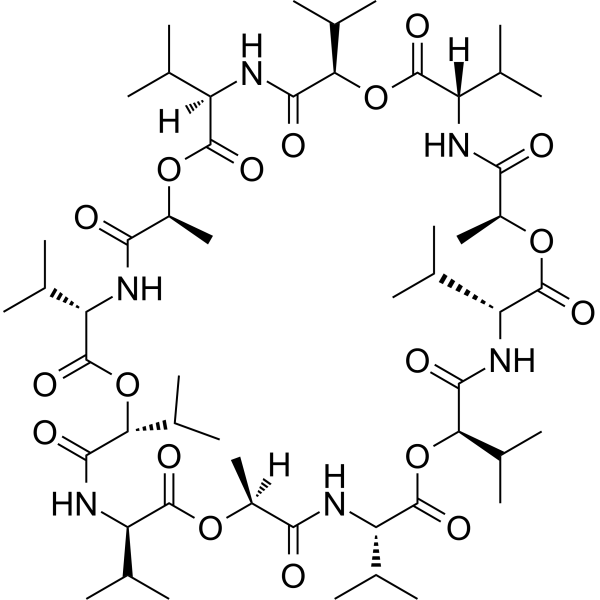
Valinomycin is a potassium-specific ionophore, the valinomycin-K + complex can be incorporated into biological bilayer membranes with the hydrophobic surface of valinomycin, destroys the normal K + gradient across the membrane, and as a result kills the cells, incorporating into liposomes can significantly reduces the cytotoxicity and enhances the targeting effect. Valinomycin exhibits antibiotic, antifungal, antiviral, antitumor and insecticidal efficacy, thus can be used for relevant research .
|
-
-
- HY-153810
-
|
JNJ-1802
|
Virus Protease
Flavivirus
Dengue Virus
|
Infection
|
|
Mosnodenvir (JNJ-1802) is an orally active pan serotype dengue virus (DENV) inhibitor, with EC50 values ranging from 0.057 to 11 nM for four dengue virus (DENV) serotypes. Mosnodenvir blocks viral replication by inhibiting the formation of complexes between two viral proteins, nonstructural protein 3 (NS3) and NS4B, thereby preventing the formation of new viral RNA. Mosnodenvir exhibits picomolar to nanomolar antiviral activity in vitro and has antiviral efficacy in mice and non-human primates .
|
-
-
- HY-133894
-
|
FB2001
|
SARS-CoV
|
Infection
|
|
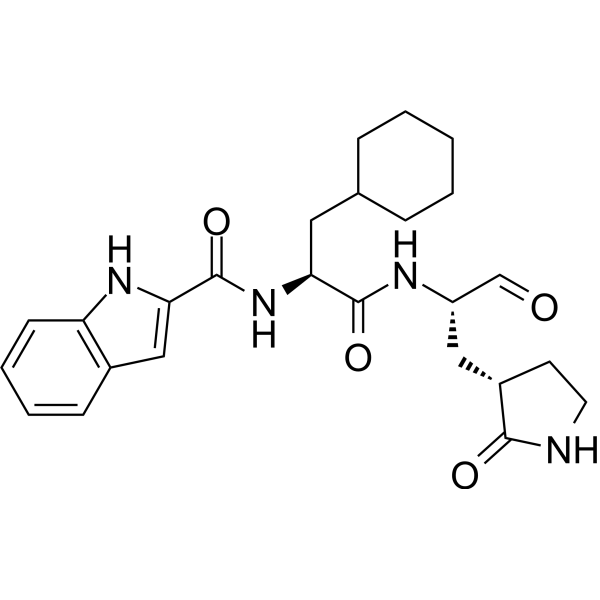
Bofutrelvir (FB2001) is a SARS-CoV-2 main protease M pro inhibitor with an IC50 value of 53 nM and an EC50 value of 0.53 μM. Bofutrelvir exhibits potent antiviral efficacy against several current SARS-CoV-2 variants with EC50 values of 0.26-0.42 μM. Bofutrelvir has an additive antiviral effect when combined with Remdesivir (HY-104077) .
|
-
-
- HY-W013441
-
|
|
HIV
|
Infection
|
|
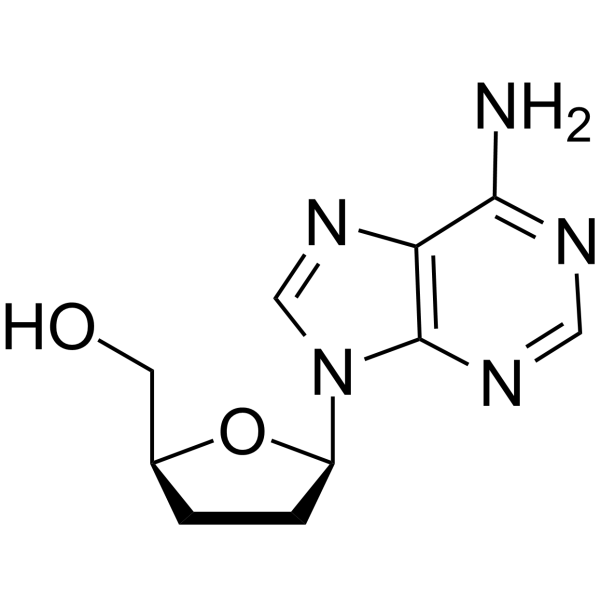
2',3'-Dideoxyadenosine is an inhibitor of HIV replication . Antiretroviral activity . Antiviral efficacy .
|
-
-
- HY-100176
-
-
-
- HY-175469
-
|
|
Influenza Virus
|
Infection
|
|
VNT-101 is an orally active influenza A (IAV) inhibitor. VNT-101 disrupts NP-NP PPI to block NP oligomerization and destabilize the viral ribonucleoprotein (RNP) complex, with potent antiviral activity across multiple influenza A subtypes. VNT-101 exhibits EC50 values of 4-5 nM in cellular cytopathic effect (CPE) assay, 4-8 nM in neuraminidase (NA) assay, and 21-45 nM in RNP assay. VNT-101 demonstrates robust in vivo antiviral efficacy in mice infected with lethal H1N1 virus. VNT-101 can be used for the study of influenza A infection .
|
-
-
- HY-173189A
-
|
2′,5′-ApApA pentasodium; 2′,5′-trioligoadenylate pentasodium; 5'-O-Triphosphoryladenylyl-(2'→5')-adenylyl-(2'→5')-adenosine pentasodium
|
RSV
DNA/RNA Synthesis
|
Infection
Cancer
|
2-5A (2′,5′-ApApA) pentasodium solution 100 mM is a high-affinity (Ka=0.04 nM) RNase L binder. 2-5A pentasodium solution 100 mM activates the nuclease activity of latent RNase L to cleave single-stranded RNA by inducing conformational changes and dimerization of latent RNase L, thereby mediating critical antiviral responses and enhancing interferon effects. 2-5A pentasodium solution 100 mM not only effectively inhibits Rauscher murine leukemia virus replication, reduces viremia and splenomegaly, but also enhances antileukemic efficacy when combined with amphotericin B and exhibits favorable high-dose tolerance. 2-5A pentasodium solution 100 mM is an important tool molecule for investigating the pathological mechanisms of viral infection, hereditary prostate cancer and leukemia .
|
-
-
- HY-136782
-
|
|
Flavivirus
Dengue Virus
|
Infection
|
|
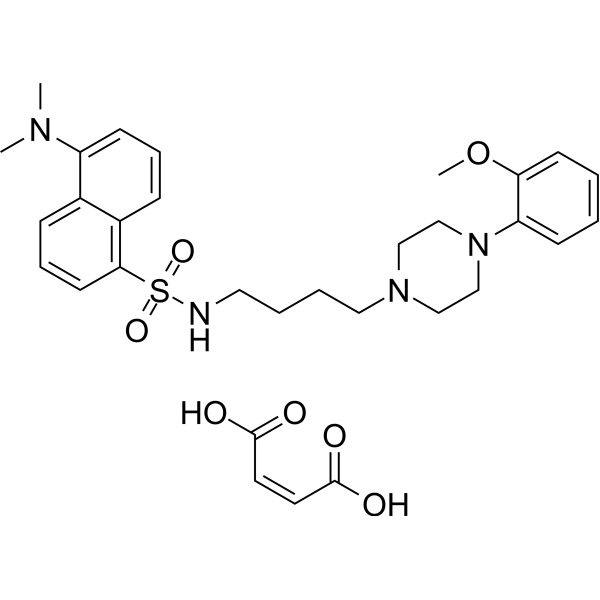
ST-148 maleate is a potent and orally active DENV inhibitor. ST-148 maleate shows antiviral efficacy and low cell toxicity. ST-148 alters the interaction between lipid droplets and the C protein, thereby inhibiting viral replication. .
|
-
-
- HY-131944
-
|
|
Apoptosis
HSV
|
Infection
Cancer
|
|
S-Acetylglutathione is a derivative of Glutathione (HY-D0187). S-Acetylglutathione is stable in blood, and can be converted to glutathione by intracellular thioesterases. S-Acetylglutathione restores the intracellular glutathione content in glutathione synthetase deficient fibroblasts. S-Acetylglutathione exhibits antiviral efficacy in HSV-1 infected model through inhibition of viral replication. S-Acetylglutathione induces apoptosis in cancer cells MOLT4 and UKF-NB-3 .
|
-
-
- HY-135646
-
|
|
Influenza Virus
|
Infection
Inflammation/Immunology
|
|
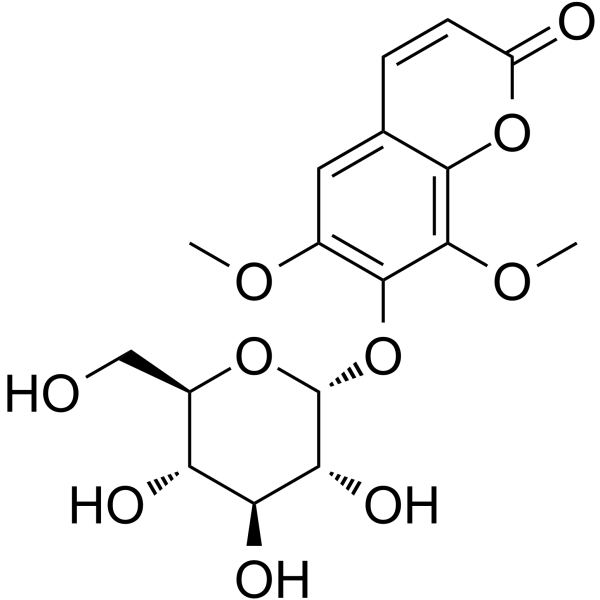
Eleutheroside B1, a coumarin compound, has a wide spectrum of anti-human influenza virus efficacy, with an IC50 value of 64-125 µg/ml. Eleutheroside B1 mediates its anti-influenza activity through POLR2A and N-glycosylation. Eleutheroside B1 inhibits the mRNA expression of several chemokine genes and the influenza nucleoprotein (NP) gene, and exhibits low cytotoxicity. Antiviral and anti-inflammatory activities .
|
-
-
- HY-176264
-
|
|
SARS-CoV
Virus Protease
Cytochrome P450
|
Infection
|
|
DNDI-6510 (Compound (S)-x38) is a non-covalent SARS-CoV-2 MPro inhibitor with a IC50 of 0.04 μM. DNDI-6510 has a potent antiviral activity across SARS-CoV-2 and its variants as well as a weak efficacy to SARS-CoV-1. DNDI-6510 significantly improves drug exposure in metabolically humanized mice model (8HUM) .
|
-
-
- HY-124662
-
|
|
Flavivirus
Dengue Virus
Glycosidase
|
Infection
|
|
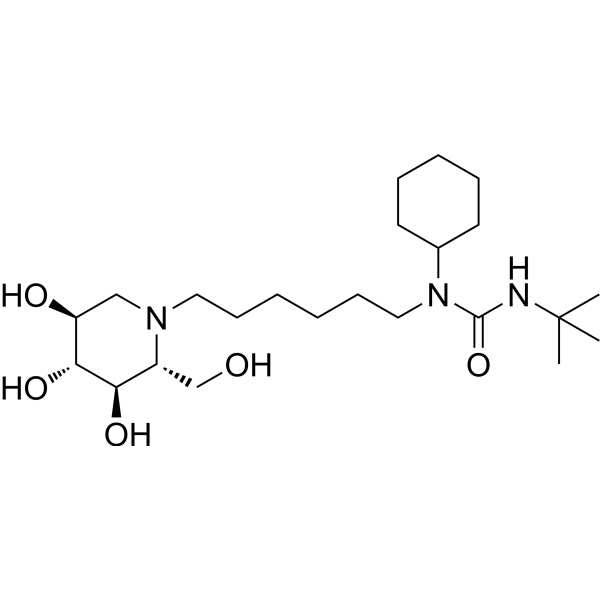
IHVR-19029 is a potent endoplasmic reticulum (ER) α-glucosidases I and II inhibitor, with an IC50 of 0.48 μM for ER a-glucosidase I. IHVR-19029 efficiently blocks the replication of several hemorrhagic fever viruses, such as Dengue virus (DENV), Ebola virus (EBOV) and Rift Valley fever virus. The combination of IHVR-19029 with Favipiravir (HY-14768) improves the antiviral efficacy .
|
-
-
- HY-33015A
-
|
trans-p-Chlorocinnamaldehyde
|
Enterovirus
|
Infection
|
|
4-Chlorocinnamaldehyde (trans-p-Chlorocinnamaldehyde) is an antiviral agent. 4-Chlorocinnamaldehyde inhibits the replication of Coxsackievirus B3 in cardiomyocytes, but shows poor efficacy in animal experiments. 4-Chlorocinnamaldehyde can be used in studies related to viral myocarditis .
|
-
-
- HY-132306
-
|
CCF981
|
SARS-CoV
Virus Protease
|
Infection
|
|
CCF0058981 (CCF981), 3-chlorophenyl analogue, is a noncovalent SARS-CoV-2 3CL pro (SC2) inhibitor with an IC50 of 68 nM. CCF0058981 inhibits SC1 (SARS-CoV-1 3CL pro) with an IC50 of 19 nM. CCF0058981 has antiviral efficacy and has the potential for COVID-19 research .
|
-
-
- HY-156786
-
|
|
Reactive Oxygen Species (ROS)
Influenza Virus
SARS-CoV
HSV
|
Infection
|
|
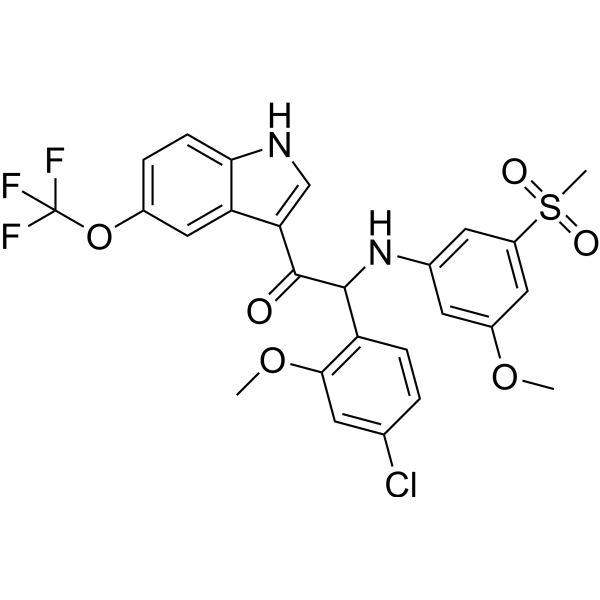
TLD-1433 is the fourth-generation ruthenium (II) based photodynamic compound (PDC). TLD-1433 is activated by green light (525 ± 25 nm) and efficiently generates ROS to achieve pathogen inactivation. After photoinactivation, TLD-1433 significantly induces lipid peroxidation of the cell membrane, which can directly damage the integrity of the viral envelope. TLD-1433 has ID50 for enveloped viruses (such as H1N1 influenza virus, coronavirus OC43, HSV-1, Zika virus) is as low as nanomolar level; for non-enveloped viruses (such as adenovirus Ad5, mammalian rotavirus MRV), a concentration of micro-molar level is required for inactivation. TLD-1433 has antigen retention property and can be used for the preparation of inactivated vaccines .
|
-
-
- HY-178690
-
|
|
MyD88
IFNAR
|
Infection
Inflammation/Immunology
|
|
MyD88-IN-4 is a MyD88 inhibitor. MyD88-IN-4 exerts antiviral effects by up-regulating IFN-β, and anti-inflammatory effects by inhibiting pro-inflammatory cytokine production. MyD88-IN-4 prevents MyD88 homodimer formation and its interaction with IRF3/IRF7. MyD88-IN-4 demonstrates efficacy against encephalitic alphavirus infections by reducing viral replication and improving survival in VEEV TC-83-infected mouse models. MyD88-IN-4 can be used for the study of alphavirus infections, bacterial toxin-related diseases, and sepsis .
|
-
-
- HY-178160
-
|
|
SARS-CoV
Virus Protease
|
Infection
|
|
SARS-CoV-2 PLpro-IN-2 (Compound 12) is a highly selective SARS-CoV-2 papain-like protease (PLpro) inhibitor of (IC50=0.06 μM). SARS-CoV-2 PLpro-IN-2 inhibits viral replication and immune evasion. SARS-CoV-2 PLpro-IN-2 exhibits antiviral efficacy in HeLa-ACE2 cells (EC50=2.9 μM). SARS-CoV-2 PLpro-IN-2 is promising for research of COVID-19 .
|
-
-
- HY-N15215
-
|
|
Enterovirus
Influenza Virus
RSV
HSV
|
Infection
Cancer
|
|
Antiviral agent 64 (Compound 12) is a diarylheptanoid that can be isolated from Alpinia officinarum. Antiviral agent 64 exhibits cytotoxicity in human neuroblastoma cell IMR-32 with an IC50 of 0.23 μM. Antiviral agent 64 exhibits antiviral efficacy, that inhibits RSV, poliovirus, measles virus, HSV-1, and influenza virus H1N1, with EC50 of 13.3, 3.7, 6.3, 5.7, and <10 μg/mL, respectively .
|
-
-
- HY-174819
-
|
|
HBV
|
Infection
|
|
VNRX-9945 is a potent, broadly and orally active HBV CAM (capsid assembly modulator) with an EC50 of 2.6 nM. VNRX-9945 exhibits excellent and broad antiviral activity against multiple HBV genotypes in vitro, along with favorable pharmacokinetic profiles across multiple species. VNRX-9945 demonstrates robust antiviral efficacy in the adeno-associated virus mice models of HBV (AAV-HBV) infection .
|
-
-
- HY-120616
-
|
|
HIV Protease
HIV
|
Infection
|
|
BMS 186318 is an HIV protease inhibitor. BMS 186318 exhibits better anti-HIV efficacy when used in combination with reverse transcriptase inhibitors such as Stavudine (HY-B0116) and other protease inhibitors such as Saquinavir (HY-17007). BMS 186318 can be used in antiviral research .
|
-
-
- HY-107338
-
|
Vratizolin; Wratizolin
|
VZV
HSV
Interleukin Related
|
Infection
Inflammation/Immunology
Cancer
|
|
Denotivir (Vratizolin) is an orally active antiviral agent for herpes simplex virus (HSV) and varicella-zoster virus (VZV). Denotivir inhibits the proliferation of various cancer cells, and exhibits anti-leukemic activity. Denotivir inhibits the generation of TNF-α, IL-1 and IL-6, exhibits immunosuppressive efficacy .
|
-
-
- HY-170395
-
|
|
RSV
DNA/RNA Synthesis
|
Infection
|
|
GHP-88309 is a broad-spectrum, orally active antiviral agent targeting paramyxoviruses, that targets the viral polymerase, interupts the viral RNA synthesis, and inhibits respiratory syncytial virus (RSV), measles virus (MeV), and canine distemper virus (CDV) with EC50 of 0.06-1.2 μM. GHP-88309 exhibits anti-infectious efficacy in mouse models .
|
-
-
- HY-170922
-
|
|
SARS-CoV
|
Infection
|
|
SARS-CoV-2-IN-110 (compound Bb1) is a SARS-CoV-2 inhibitor. SARS-CoV-2-IN-110 exhibits antiviral efficacy against SARS-CoV-2 with an EC50 of 1.10 μM and significantly lower toxicity compared to Lapatinib (HY-50898). SARS-CoV-2-IN-110 inhibits SARS-CoV-2 with a CC50 of > 100 μM, with a selectivity index (SI) of >91 .
|
-
-
- HY-P10804
-
|
|
SARS-CoV
|
Infection
|
|
PIH is an antiviral peptide that effectively inhibits the HR1/HR2-mediated membrane fusion between MERS-CoV and host cells, with an IC50 of 1.171 μM. By forming a complex with gold nanorods (AuNRs), the antiviral efficacy of PIH can be further enhanced by 10-fold .
|
-
-
- HY-W013441R
-
|
|
Reference Standards
HIV
|
Infection
|
|
2',3'-Dideoxyadenosine (Standard) is the analytical standard of 2',3'-Dideoxyadenosine. This product is intended for research and analytical applications. 2',3'-Dideoxyadenosine is an inhibitor of HIV replication . Antiretroviral activity . Antiviral efficacy .
|
-
-
- HY-174429
-
|
|
HSV
|
Infection
|
|
HSV-1-IN-3 (Compound A50) is a HSV inhibitor. HSV-1-IN-3 shows good antiviral efficacy against both Acyclovir (HY-17422) -sensitive and -resistant HSV strains .
|
-
-
- HY-P99710
-
|
BI 767551; DZIF-10c
|
SARS-CoV
|
Infection
|
|
Lomtegovimab (BI 767551) is a human anti-SARS-COV-2 spike glycoprotein monoclonal antibody. Lomtegovimab binds and neutralizes SARS-CoV-2. Lomtegovimab shows antiviral efficacy. Lomtegovimab has the potential for the research of COVID-19 .
|
-
-
- HY-14818B
-
|
R 125489 TFA
|
Influenza Virus
|
Infection
|
|
Laninamivir TFA (R 125489 TFA) is an antiviral compound with inhibitory and prophylactic activity against influenza A and B viruses. Laninamivir TFA is a long-acting neuraminidase inhibitor administered by nasal inhalation. Laninamivir TFA has shown good safety and efficacy in the inhibition of influenza viruses .
|
-
-
- HY-W070093
-
|
|
HBV
|
Infection
|
|
KKJ00626 is an inhibitor for Hepatitis B virus (HBV) with an IC50 of 0.12~0.23 μM. KKJ00626 inhibits the interaction between HBV core protein and the surface protein PreS region, prevents the maturation and secretion of HBV particles, and exhibits antiviral efficacy .
|
-
-
- HY-156346
-
|
|
SARS-CoV
|
Infection
|
|
HCoV-OC43-IN-1 (Compound IV-16) is a coronavirus HCoV-OC43 inhibitor. HCoV-OC43-IN-1 has antiviral efficacy (EC50: 90 nM). HCoV-OC43-IN-1 inhibits the mRNA level and expression of viral nucleocapsid protein (NP) .
|
-
-
- HY-121763
-
|
|
HSV
|
Infection
|
|
SCH-43478 is a non-nucleoside antiviral agent. SCH-43478 shows potent and selective activity against herpes simplex virus type 2 (HSV-2) with an IC50 of 1.8 μg/mL using Vero cells. SCH-43478 demonstrates significant efficacy in the guinea pig genital model of HSV infection .
|
-
-
- HY-107009
-
|
|
VZV
HSV
VSV
|
Infection
|
|
CTC 96 is an antiviral agent, showing inhibitory effects particularly on herpes viruses and adenoviruses. CTC 96 directly blocks the fusion process between the viral envelope and the cell membrane, preventing the entry of viral nucleic acids and proteins into the cells. CTC 96 can completely block the penetration and intercellular transmission of HSV-1, preventing the synthesis of viral proteins and mRNA. CTC 96 exhibits significant anti-adenovirus activity in rabbit eye models. CTC 96 is also effective against varicella-zoster virus (VZV) and vesicular stomatitis virus (VSV). CTC 96 can be used for broad-spectrum antiviral research .
|
-
-
- HY-107468
-
|
|
HIV Protease
|
Infection
Inflammation/Immunology
|
|
PL-100 is a potent HIV-1 protease inhibitor with a Ki of 36 pM and an EC50 of 16 nM. PL-100 inhibits viral replication by suppressing HIV-1 protease activity and demonstrates excellent antiviral efficacy against drug-resistant HIV strains. PL-100 can be used in research on drug-resistant HIV disease .
|
-
-
- HY-100176R
-
-
-
- HY-19925
-
|
|
HIV
|
Infection
|
|
AIC-292 is a potent and selective inhibitor of HIV-1 nonnucleoside reverse transcriptase. AIC-292 inhibits wild-type HIV-1 laboratory strains at low nanomolar concentrations. AIC-292 displays potent antiviral in vivo efficacy in a mouse xenograft model. AIC-292 has the potential for the research of HIV-1 infection .
|
-
-
- HY-170483
-
|
|
HSV
HIV
|
Infection
Cancer
|
|
Antitumor agent-191 (Compound 7) exhibits antiviral activity against HSV-1 and HIV with EC50 of 0.03 μM and 0.81 μM. Antitumor agent-191 exhibits potential antitumor efficacy, that inhibits cancer cell HepG2, WI-38, Vero and MCF-7, with IC50s of 19.6, 39.3, 18.3 and 28 μM, respectively .
|
-
-
- HY-159961
-
|
|
SARS-CoV
Virus Protease
|
Infection
|
|
SARS-CoV-2 Mpro-IN-34 (Compound 26) is an inhibitor for SARS-CoV-2 Mpro with an IC50 of 6 nM. SARS-CoV-2 Mpro-IN-34 exhibits inhibitory efficacy against OC43 Mpro with an IC50 of 33 nM. SARS-CoV-2 Mpro-IN-34 exhibits antiviral activity in SARS-CoV-2 infected Vero E6 cell with an EC50 of 0.103 μM .
|
-
-
- HY-162719
-
|
|
DNA/RNA Synthesis
SARS-CoV
|
Infection
|
|
RH12 is a dual inhibitor for SARS-CoV-2 related RNA-dependent RNA polymerase (RdRp, IC50 is 4.42 nM) and human transmembrane serine protease 2 (TMPRSS2, IC50 is 4.2 nM). RH12 exhibits antiviral efficacy. RH12 inhibits viral replication and absorption, and exhibits a 90.5% virucidal effects on Vero-E6 cells. RH12 inhibits cell viability of Calu-3 with an IC50 of 17.5 nM .
|
-
-
- HY-W014109
-
|
(E)-5-(2-Bromovinyl)uracil; BVU
|
DNA/RNA Synthesis
|
Infection
|
|
(E)-5-(2-Bromovinyl)uracil (BVU) is a pyrimidine base and an inactive metabolite of the antiviral agents sorivudine and (E)-5-(2-bromovinyl)-2'-deoxyuridine (BVDU) that may be regenerated to BVDU in vivo. BVU irreversibly inactivates dihydropyrimidine dehydrogenase (DPD) in an NADPH-dependent manner. It enhances the efficacy of the chemotherapeutic agent and DPD substrate 5-fluorouracil (HY-90006) in a P388 murine leukemia model when administered at a dose of 200 μmol/kg, increasing survival time.
|
-
-
- HY-162720
-
|
|
HIV
Potassium Channel
Reverse Transcriptase
|
Infection
|
|
NNRT-IN-4 (Compound 10p) is an inhibitor for non-nucleoside reverse transcriptase (NNRT) with an IC50 of 0.713 µM for HIV-1 RT. NNRT-IN-4 exhibits antiviral efficacy, inhibits HIV-1 wildtype and mutant strains with EC50 of 6-63 nM. NNRT-IN-4 exhibits a slight inhibitory activities against hERG (IC50=25.9 µM) and CYP enzymes (IC50>50 µM). NNRT-IN-4 exhibits good tolerability and safety in mice (2 g/kg) .
|
-
-
- HY-164682
-
|
|
HIV
CXCR
|
Infection
|
|
AMD 3329 octahydrobromide is a potent and selective anti-HIV-1 and HIV-2 compound with activity to inhibit viral replication. AMD 3329 blocks viral invasion by binding to the chemokine receptor CXCR4. AMD 3329 exhibits EC50 values as low as 0.8 and 1.6 nM when inhibiting HIV-1 and HIV-2 replication, showing better antiviral efficacy than AMD3100. AMD 3329 significantly inhibits the binding of specific CXCR4 monoclonal antibodies and the Ca(2+) flux induced by SDF-1alpha. AMD 3329 is also able to effectively interfere with virus-induced syncytium formation, with an EC50 value of 12 nM .
|
-
-
- HY-167919
-
|
|
Drug Derivative
|
Infection
|
|
1-(1-Adamantyl)-3-butyl-2-thiourea is a compound with antiviral activity, demonstrating efficacy against various viral pathogens; 1-(1-Adamantyl)-3-butyl-2-thiourea serves as a potential therapeutic agent in the treatment of viral infections.
|
-
-
- HY-182317
-
|
|
Drug Isomer
Dengue Virus
|
Infection
|
|
(+)-Mosnodenvir is an isomer of Mosnodenvir (HY-153810). Mosnodenvir (JNJ-1802) is an orally active pan serotype dengue virus (DENV) inhibitor, with EC50 values ranging from 0.057 to 11 nM for four dengue virus (DENV) serotypes. Mosnodenvir blocks viral replication by inhibiting the formation of complexes between two viral proteins, nonstructural protein 3 (NS3) and NS4B, thereby preventing the formation of new viral RNA. Mosnodenvir exhibits picomolar to nanomolar antiviral activity in vitro and has antiviral efficacy in mice and non-human primates .
|
-
-
- HY-10246A
-
|
|
HCV
DNA/RNA Synthesis
|
Infection
|
|
A-837093 sodium is a potent and orally active inhibitor of the hepatitis C virus (HCV) nonstructural protein 5B (NS5B) polymerase. A-837093 sodium shows potencies against polymerases derived from both HCV genotypes 1a (IC50 = 1.25 nM) and 1b (IC50 = 0.33 nM). A-837093 sodium exhibits antiviral efficacy in HCV-infected chimpanzees. A-837093 sodium can be used for HCV infection research .
|
-
-
- HY-108029
-
|
ACH-2684 sodium; Neceprevir sodium
|
HCV
HCV Protease
|
Infection
|
|
Deldeprevir (ACH-2684; Neceprevir) sodium is a HCV NS3/4A protease inhibitor and resistance inhibitor. Deldeprevir sodium exhibits activity against wild-type genotype 1a and 1b HCV, including mutant strains resistant to other NS3 protease inhibitors. Deldeprevir sodium blocks the emergence of HCV mutant strains resistant to ACH-3422 in vitro, with enhanced efficacy when used in triple combination with ACH-3422 and ACH-3102 (HY-124182). Deldeprevir sodium shows additive antiviral potency when combined with ACH-3422, and exerts antiviral activity against HCV replicons carrying ACH-3102. Deldeprevir sodium is applicable to research related to hepatitis C .
|
-
-
- HY-180524
-
|
|
HBV
|
Infection
|
|
CAB7-3 is an orally active HBV capsid assembly modulator (CAM). CAB7-3 exhibits an exceptional antiviral efficacy reducing HBV DNA with an EC50 = 70 nM, CC50 = 32.3 μM in HepDES19 cells. CAB7-3 exhibits significant anti-HBV activity in HBV-integrated HepDES19 (EC50 = 70 nM), HepAD38 (EC50 = 1 nM) and HBV-infected HLCZ01 cells (EC50 = 2 nM), respectively. CAB7-3 effectively reduces Hepatic HBV core protein levels and suppresses viral replication in vivo. CAB7-3 demonstrates a favorable drug-like and safety profile. CAB7-3 can be used for Hepatitis B Virus (HBV) research .
|
-
| Cat. No. |
Product Name |
Target |
Research Area |
-
- HY-N6693
-
|
NSC 122023
|
Apoptosis
Antibiotic
Autophagy
Fungal
|
Infection
Others
Cancer
|
|
Valinomycin is a potassium-specific ionophore, the valinomycin-K + complex can be incorporated into biological bilayer membranes with the hydrophobic surface of valinomycin, destroys the normal K + gradient across the membrane, and as a result kills the cells, incorporating into liposomes can significantly reduces the cytotoxicity and enhances the targeting effect. Valinomycin exhibits antibiotic, antifungal, antiviral, antitumor and insecticidal efficacy, thus can be used for relevant research .
|
-
- HY-P10804
-
|
|
SARS-CoV
|
Infection
|
|
PIH is an antiviral peptide that effectively inhibits the HR1/HR2-mediated membrane fusion between MERS-CoV and host cells, with an IC50 of 1.171 μM. By forming a complex with gold nanorods (AuNRs), the antiviral efficacy of PIH can be further enhanced by 10-fold .
|
| Cat. No. |
Product Name |
Target |
Research Area |
Image |
-
- HY-P99710
-
|
BI 767551; DZIF-10c
|
SARS-CoV
|
Infection
|
|
Lomtegovimab (BI 767551) is a human anti-SARS-COV-2 spike glycoprotein monoclonal antibody. Lomtegovimab binds and neutralizes SARS-CoV-2. Lomtegovimab shows antiviral efficacy. Lomtegovimab has the potential for the research of COVID-19 .
|
-
(5)
| Cat. No. |
Product Name |
Category |
Target |
Chemical Structure |
-
- HY-N6693
-
-
-
- HY-135646
-
-
-
- HY-N15215
-
|
|
Structural Classification
Monophenols
Phenols
Alpinia officinarum Hance
Plants
Source Classification
Zingiberaceae
|
Enterovirus
Influenza Virus
RSV
HSV
|
|
Antiviral agent 64 (Compound 12) is a diarylheptanoid that can be isolated from Alpinia officinarum. Antiviral agent 64 exhibits cytotoxicity in human neuroblastoma cell IMR-32 with an IC50 of 0.23 μM. Antiviral agent 64 exhibits antiviral efficacy, that inhibits RSV, poliovirus, measles virus, HSV-1, and influenza virus H1N1, with EC50 of 13.3, 3.7, 6.3, 5.7, and <10 μg/mL, respectively .
|
-
| Cat. No. |
Product Name |
|
Classification |
-
- HY-173189A
-
|
2′,5′-ApApA pentasodium; 2′,5′-trioligoadenylate pentasodium; 5'-O-Triphosphoryladenylyl-(2'→5')-adenylyl-(2'→5')-adenosine pentasodium
|
|
Nucleotide Analogs
Adenine Nucleotide
|
2-5A (2′,5′-ApApA) pentasodium solution 100 mM is a high-affinity (Ka=0.04 nM) RNase L binder. 2-5A pentasodium solution 100 mM activates the nuclease activity of latent RNase L to cleave single-stranded RNA by inducing conformational changes and dimerization of latent RNase L, thereby mediating critical antiviral responses and enhancing interferon effects. 2-5A pentasodium solution 100 mM not only effectively inhibits Rauscher murine leukemia virus replication, reduces viremia and splenomegaly, but also enhances antileukemic efficacy when combined with amphotericin B and exhibits favorable high-dose tolerance. 2-5A pentasodium solution 100 mM is an important tool molecule for investigating the pathological mechanisms of viral infection, hereditary prostate cancer and leukemia .
|
Your information is safe with us. * Required Fields.
Inquiry Information
- Product Name:
- Cat. No.:
- Quantity:
- MCE Japan Authorized Agent:

