1. Search Result
Search Result
Results for "

autophagic degradation

" in MedChemExpress (MCE) Product Catalog:
Cat. No. Product Name Target Research Areas Chemical Structure
  • HY-D0195

    Environmental Pollutants Biochemical Assay Reagents Neurological Disease Metabolic Disease Inflammation/Immunology Cancer
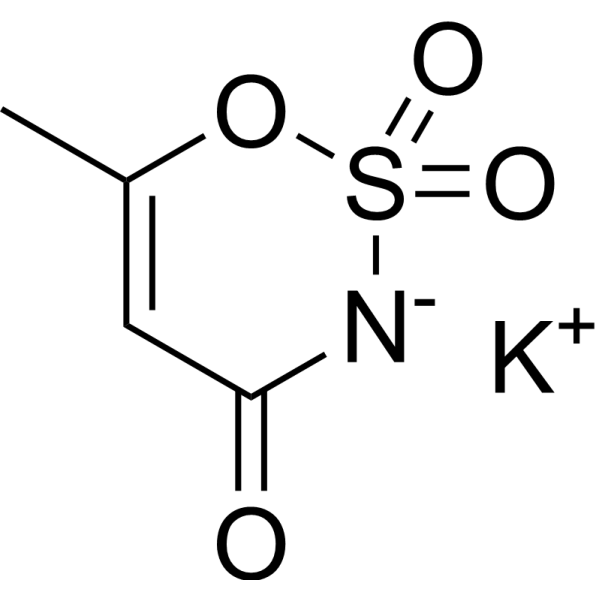
    Acesulfame potassium is a synthetic sweetener. Long-term use of Acesulfame potassium can affect cognitive function, possibly by altering the neurometabolic functions in mice. Acesulfame potassium can suppress autophagic degradation of PD-L1 in RIL-175 and SK-Hep1 cells through the ERK1/2-mTORC1-ULK1 pathway, which may be related to immune evasion in cancer cells. Acesulfame potassium can be used in research on neurological diseases, metabolic disorders, cancer, and immune evasion .
    Acesulfame potassium
  • HY-158420

    Autophagy Cancer
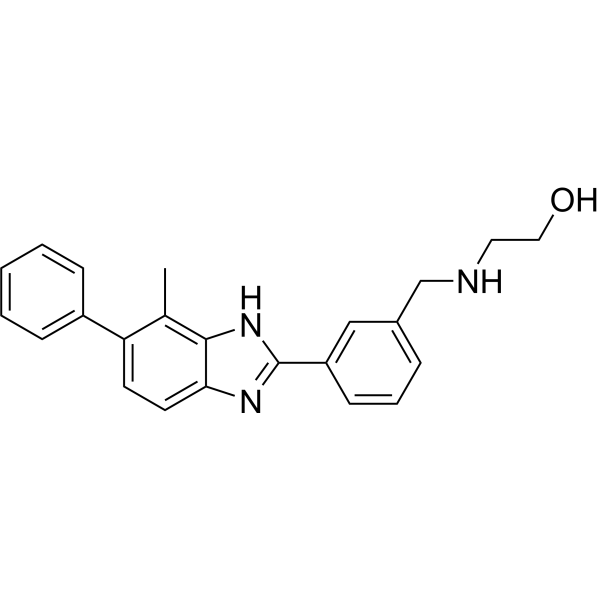
    STL001 is potent and selective FOXM1 inhibitor. STL001 induces the translocation of nuclear FOXM1 to the cytoplasm and promotes its autophagic degradation. STL001 sensitizes human cancers to a broad-spectrum of cancer therapies .
    STL001
  • HY-161743

    AUTOTACs Autophagy Neurological Disease Cancer
    PBA-1105 is an autophagy-targeting chimera (AUTOTAC) that induces p62 self-oligomerization. PBA-1105 selectively binds to exposed hydrophobic regions of misfolded proteins, facilitating their degradation via the autophagic pathway. PBA-1105 increases the autophagic flux of Ub-conjugated aggregates .
    PBA-1105
  • HY-161746

    AUTOTACs Autophagy Neurological Disease
    Anle138b-F105 is an autophagy-targeting chimera (AUTOTAC) that targets p62/Sequestosome-1/SQSTM1. Anle138b-F105 binds to the ZZ domain of p62, induces conformational activation, self-oligomerization, interaction with LC3, and formation of autophagosomes. Anle138b-F105 induces autophagic flux of ubiquitin-conjugated aggregated proteins, leading to their lysosomal degradation. Anle138b-F105 is applicable for the research of neurodegenerative proteinopathies .
    Anle138b-F105
  • HY-155994
    PIK5-12d
    1 Publications Verification

    PROTACs PIKfyve Autophagy Cancer
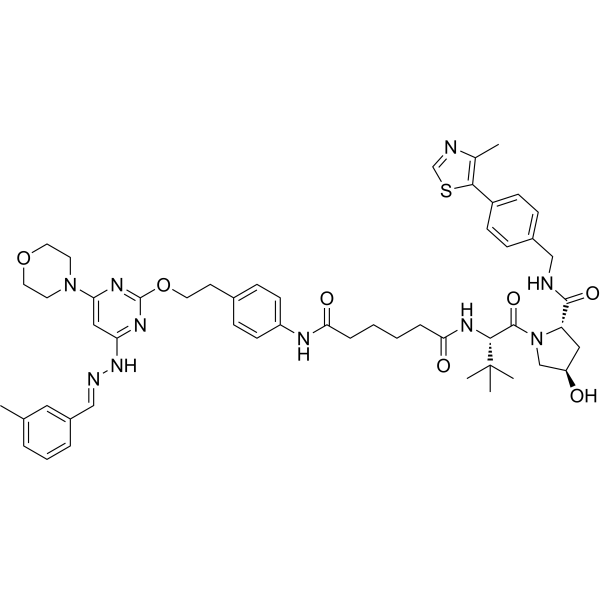
    PIK5-12d is a PROTAC PIKfyve degrader (DC50 = 1.48 nM). PIK5-12d induces massive cytoplasmic vacuolization and blocks autophagic flux in multiple prostate cancer cells. PIK5-12d inhibits prostate cancer cell proliferation. PIK5-12d significantly suppresses tumor proliferation in mice bearing LTL-331R human prostate cancer PDX tumors. PIK5-12d can be used for the study of prostate cancer. (Pink: PIKfyve ligand (HY-175631), Blue: VHL Ligand (HY-125845), Black: Linker, PIKfyve ligand-linker conjugate (HY-175632)) .
    PIK5-12d
  • HY-155971

    Autophagy Inflammation/Immunology Cancer
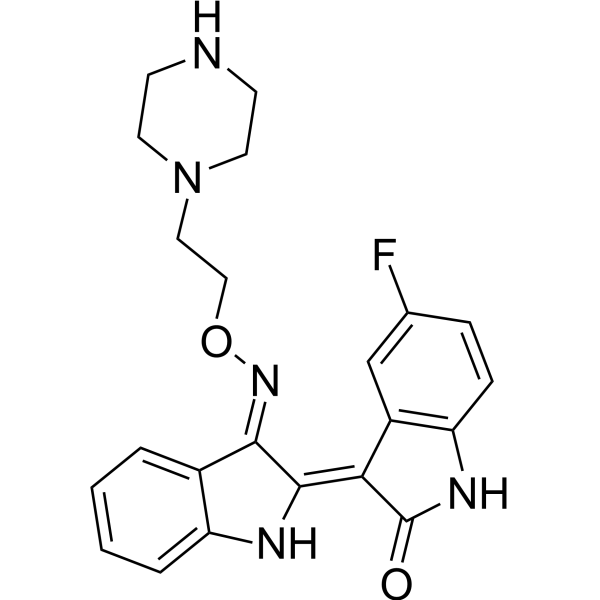
    VISTA-IN-2 (Compound 1) is an inhibitor of V-domain Ig suppressor of T-cell activation (VISTA). VISTA-IN-2 induces VISTA degradation in cells through an autophagic mechanism. VISTA-IN-2 rescues VISTA-mediated immunosuppression, and enhances antitumor activity of immune cells. VISTA-IN-2 also activates the antitumor immunity and inhibits tumor growth in a CT26 mouse model .
    VISTA-IN-2
  • HY-175689

    Ligands for Target Protein for PROTAC Phosphodiesterase (PDE) Cancer
    PDEδ-IN-1 is the ligand of PDEδ. PDEδ-IN-1 can be used to synthesize PDEδ autophagic degrader 1 (HY-157458) .
    PDEδ-IN-1
  • HY-157458

    ATTECs Phosphodiesterase (PDE) Autophagy Cancer
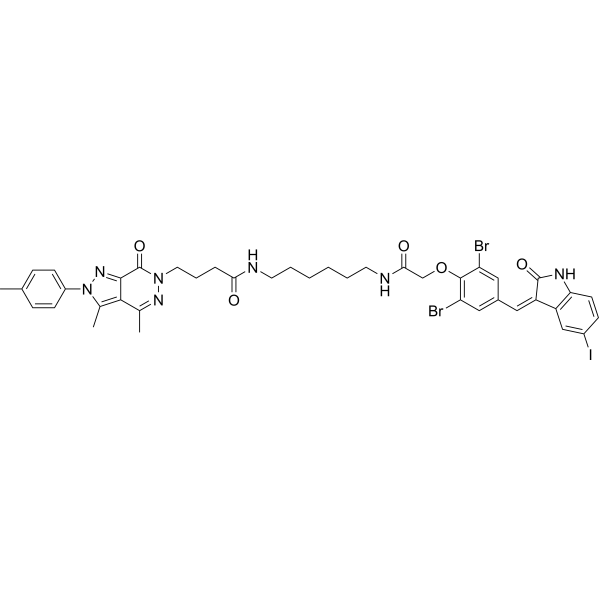
    PDEδ autophagic degrader 1 (compound 12c), an autophagosome-tethering compound (ATTEC). is a potent PDEδ autophagic degrader. PDEδ autophagic degrader 1 reduces the PDEδ protein level through lysosome-mediated autophagy without affecting the PDEδ mRNA expression. PDEδ autophagic degrader 1 suppresses the growth in KRAS mutant pancreatic cancer cells .
    PDEδ autophagic degrader 1
  • HY-160902

    Autophagy AUTACs Others
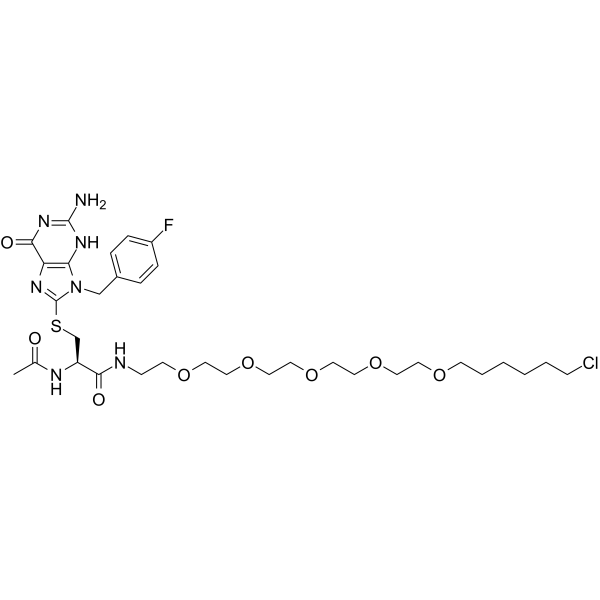
    2G-HaloAUTAC (Compound tt44) is a Autophagy-targeting chimera (2G-HaloAUTAC) that improves the activity of AUTACs by replacing the L-Cysteine ​​(L-Cys) linker with other structures. 2G-HaloAUTAC exhibits degradation activity against EGFP-HaloTag protein through an Autophagic mechanism .
    2G-HaloAUTAC
  • HY-175665

    Ligands for E3 Ligase Others
    LC3 liagnd-2 is an E3 ligase ligand. LC3 liagnd-2 can be used for synthesis of PROTAC PDEδ autophagic degrader 1 (HY-157458) .
    LC3 liagnd-2
  • HY-179578

    Enolase AMPK Autophagy Apoptosis mTOR Caspase Metabolic Disease Cancer
    SU212 is a podophyllotoxin-derived ENO1 inhibitor and AMPK activator. SU212 can selectively induce oxidative phosphorylation, reduce glycolysis activity and glucose uptake in tumor cells, and directly bind to ENO1 without affecting these pathways in normal cells. SU212 induces apoptosis and promotes ENO1 degradation via proteasomal and autophagic pathways without inhibiting the catalytic activity. SU212 leads to mitotic arrest and apoptosis in TNBC (triple-negative breast cancer) cells by activating AMPK, demonstrating potent anti-tumor activity in vitro. SU212 inhibits tumor growth and metastasis in syngeneic, xenograft, and diabetic mouse models, exhibiting an excellent safety profile. SU212 can be used in research on t TNBC, diabetes, and fatty liver disease .
    SU212
  • HY-168896

    CDK ATTECs Cancer
    CDK9 autophagic degrader 1 (Compound 28) is a ATTEC degrader that can be used to degrade CDK9 and also affects the levels of the associated Cyclin T1. CDK9 autophagic degrader 1 shows over 80% CDK9 inhibition rate at 100 nM . ( Pink: LC3B ligand (HY-168897); Black: linker (HY-W017758); Blue: target protein ligand (HY-10008); linker + target protein ligand (HY-168898))
    CDK9 autophagic degrader 1
  • HY-176043

    ATTECs PCSK9 Cancer
    PCSK9 autophagic degrader 2 (W6) is a PCSK9 targeted autophagosome, with an DC50 of 20.6 nM. PCSK9 autophagic degrader 2 (W6) demonstrates comparable antiatherosclerosis effect and exhibits a KD of 2.5 μM for LC3B (Pink: PCSK9 ligand HY-176044; Blue: LC3B ligand HY-176045; Black: linker HY-141373) .
    PCSK9 autophagic degrader 2
  • HY-176045

    Ligands for E3 Ligase Cardiovascular Disease Cancer
    LC3B ligand 2 is a ligand for E3 ubiquitin ligase. LC3B ligand 2 can be connected to the ligand for protein by a linker to form PROTAC PCSK9 autophagic degrader 2 (HY-176043). PROTACs are inducers of ubiquitination-mediated degradation of cancer-promoting proteins .
    LC3B ligand 2
  • HY-149539

    FLT3 RET Cancer
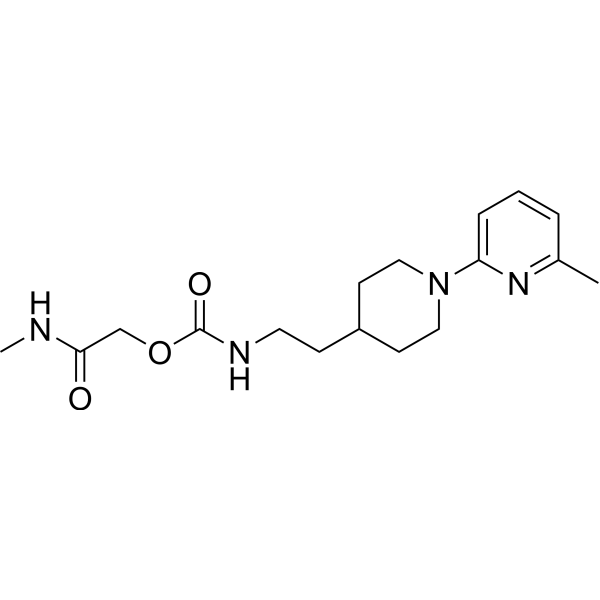
    PLM-101 is an orally available anticancer agent targeting FLT3 and RET with inhibitory activity against acute myeloid leukemia cells. PLM-101 inhibits RET, thereby inducing autophagic degradation of FLT3; and it inhibits the PI3K and Ras/ERK pathways, resulting in anti-leukemia activity. PLM-101 has anti-tumor efficacy in a mouse MV4-11 flank xenograft model (dose: 3, 10 mg/kg; po) and an allogeneic xenograft mouse model (dose: 40 mg/kg; po) .
    PLM-101
  • HY-161743A

    AUTOTACs Autophagy Neurological Disease Cancer
    PBA-1105 TFA is an autophagy-targeting chimera (AUTOTAC) that induces p62 self-oligomerization. PBA-1105 TFA selectively binds to exposed hydrophobic regions of misfolded proteins, facilitating their degradation via the autophagic pathway. PBA-1105 TFA increases the autophagic flux of Ub-conjugated aggregates .
    PBA-1105 TFA
  • HY-176044

    Ligands for Target Protein for PROTAC Cancer
    PCSK9 ligand 2 is a target protein ligand for PROTAC PCSK9 autophagic degrader 2 (HY-176043), which can be used in antiatherosclerosis research .
    PCSK9 ligand 2
  • HY-168897

    Ligands for Target Protein for PROTAC Others
    LC3B ligand 1 is a ligand for the target protein of PROTAC and can be used for the synthesis of PROTAC CDK9 autophagic degrader 1 (HY-168896) .
    LC3B ligand 1
  • HY-168898

    Target Protein Ligand-Linker Conjugates Others
    1,3-Propanediol-SNS-032 is a target protein ligand and linker conjugate, which can be used for the synthesis of PROTAC CDK9 autophagic degrader 1 (HY-168896) .
    1,3-Propanediol-SNS-032
  • HY-161741

    AUTOTACs Androgen Receptor Cancer
    VinclozolinM2-2204 is a androgen receptor (AR) AUTOTAC degrader, with an DC50 of 200 nM in LNCaP prostate cancer cells. VinclozolinM2-2204 induces the formation of AR +LC3 + autophagic membranes. VinclozolinM2-2204 can be used for the research of cancer .(Pink: AR inhibitor (HY-168296); Black: linker (HY-128833); Blue: CRBN Ligand (HY-168293))
    VinclozolinM2-2204
  • HY-W550739

    PD-1/PD-L1 ERK mTOR Autophagy Neurological Disease Metabolic Disease Inflammation/Immunology Cancer
    Acesulfame is a synthetic sweetener. Long-term use of Acesulfame can affect cognitive function. Acesulfame potassium can suppress autophagic degradation of PD-L1 in RIL-175 and SK-Hep1 cells through the ERK1/2-mTORC1-ULK1 pathway, which may be related to immune evasion in cancer cells. Acesulfame can be used in research on neurological diseases, metabolic disorders, cancer, and immune evasion .
    Acesulfame
  • HY-D0195R

    Biochemical Assay Reagents Reference Standards Neurological Disease Metabolic Disease Inflammation/Immunology Cancer
    Acesulfame potassium (Standard) is the analytical standard of Acesulfame potassium (HY-D0195). This product is intended for research and analytical applications. Acesulfame potassium is a synthetic sweetener. Long-term use of Acesulfame potassium can affect cognitive function, possibly by altering the neurometabolic functions in mice. Acesulfame potassium can suppress autophagic degradation of PD-L1 in RIL-175 and SK-Hep1 cells through the ERK1/2-mTORC1-ULK1 pathway, which may be related to immune evasion in cancer cells. Acesulfame potassium can be used in research on neurological diseases, metabolic disorders, cancer, and immune evasion .
    Acesulfame potassium (Standard)
  • HY-176046

    E3 Ligase Ligand-Linker Conjugates Cancer
    E3 Ligase Ligand-linker Conjugate 183 is an E3 ligase ligand-linker conjugate of PCSK9 autophagic degrader 2 (HY-176043). E3 Ligase Ligand-linker Conjugate 183 consists of LC3B ligand 2 (HY-176045) and the corresponding linker (HY-141373) .
    E3 Ligase Ligand-linker Conjugate 183

Inquiry Online

Your information is safe with us. * Required Fields.

Salutation


Country or Region *

Applicant Name *


Organization Name *

Department *


Email Address *


Product Name *

Cat. No.


Requested quantity *

Phone Number *


Remarks

Inquiry Online

Inquiry Information

Product Name:
Cat. No.:
Quantity:
MCE Japan Authorized Agent:

