28 Results for "

autophagy-lysosome pathway

" in MedChemExpress (MCE) Product Catalog:
Products (28)

28 Results for "autophagy-lysosome pathway" in MCE Product Catalog:

Cat. No.: HY-155021
CAS No.: 2781922-42-5
Purity:  99.95%
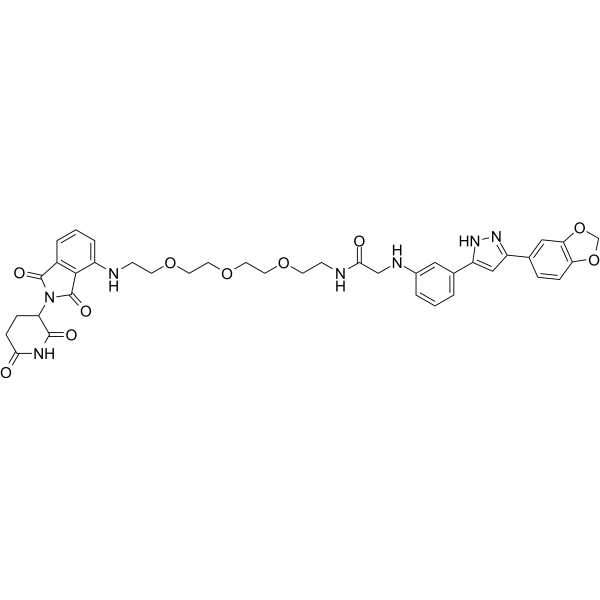
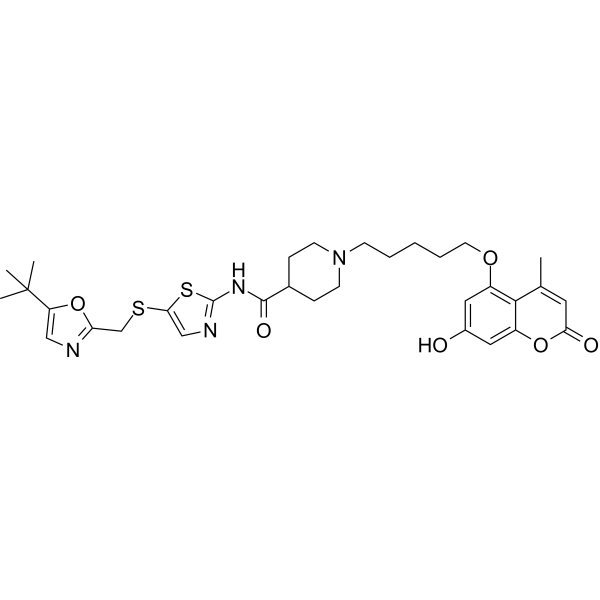
PROTAC α-synuclein degrader 5 is a selective PROTAC degrader targeting α‑synuclein aggregates, with a DC50 of 7.51 μM. PROTAC α-synuclein degrader 5 binds to αSyn aggregates, recruits the CRBN E3 ubiquitin ligase, and mediates the ubiquitination and subsequent degradation of α‑synuclein aggregates. PROTAC α-synuclein degrader 5 activates the autophagy-lysosome pathway. PROTAC α-synuclein degrader 5 reduces ROS levels in neuroblastoma cells, restores mitochondrial membrane potential, rescues cell viability, and decreases LDH release. PROTAC α-synuclein degrader 5 degrades αSyn aggregates in Caenorhabditis elegans and ameliorates oxidative stress. PROTAC α-synuclein degrader 5 is used for the research of synucleinopathies, such as Parkinson's disease .
loading...
    loading...
Cat. No.: HY-175839
Target:  

PROTACs EGFR ATP Synthase

Research Areas:  

Inflammation/Immunology Cancer

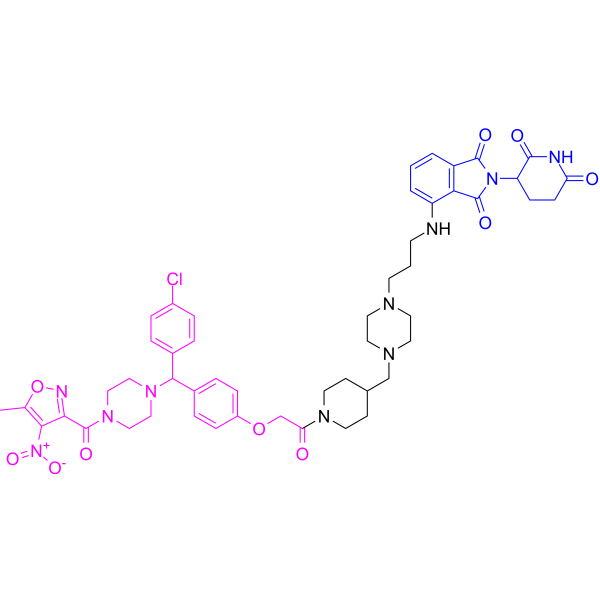
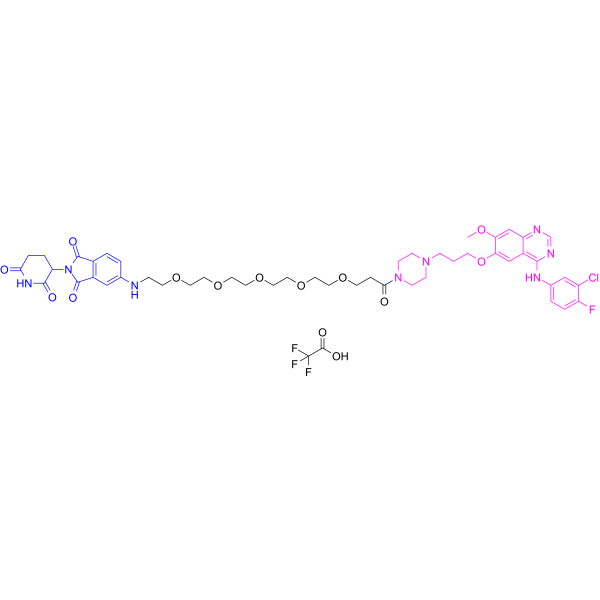
PROTAC EGFR degrader 15 is a Pomalidomide (HY-10984)-based Gefitinib (HY-50895) EGFR PROTAC degrader. PROTAC EGFR degrader 15 triggers EGFR degradation via ubiquitin-proteasome-dependent proteolysis and autophagy-lysosome activation pathways. PROTAC EGFR degrader 15 targets ETFA to enhance ATP production. PROTAC EGFR degrader 15 significantly suppresses tumor growth in a Gefitinib-acquired resistant HCC-827 xenograft model. PROTAC EGFR degrader 15 can be used for the study of non-small cell lung cancer (NSCLC) .
loading...
    loading...
Cat. No.: HY-149236
CAS No.: 2916433-81-1
Purity:  99.35%
PROTAC GPX4 degrader-1 is a glutathione peroxidase 4 (GPX4) PROTAC degrader with a DC50 of 30 nM. PROTAC GPX4 degrader-1 induces ROS accumulation and ferroptosis in cancer cells. PROTAC GPX4 degrader-1 inhibits cell growth and reduces GPX4 levels in tumor tissues. PROTAC GPX4 degrader-1 can be used in research related to various cancers including fibrosarcoma, non-small cell lung cancer, and melanoma .
loading...
    loading...
Cat. No.: HY-N2991
CAS No.: 77012-31-8
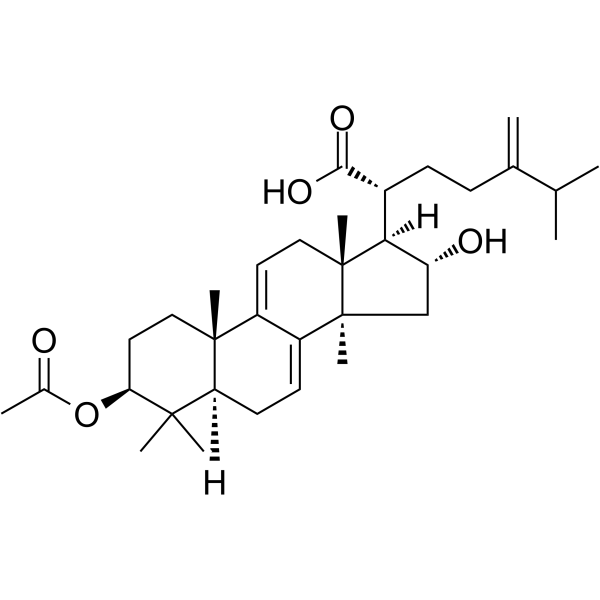
Dehydropachymic acid is one of the major triterpenes isolated from Poria cocos. Dehydropachymic acid is more effective in autophagy-lysosome pathway (ALP) impaired cells rather than normal cells .
loading...
    loading...
Cat. No.: HY-147941
CAS No.: 2772613-37-1
Purity:  95.29%
Target:  

PROTACs EGFR

Research Areas:  

Inflammation/Immunology Cancer

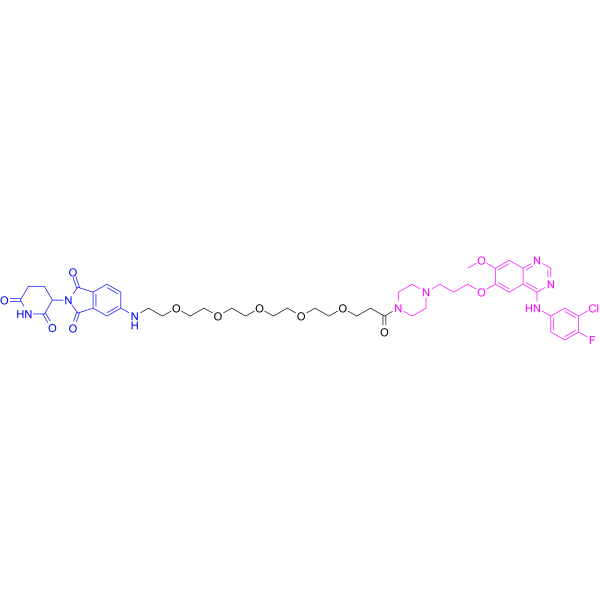
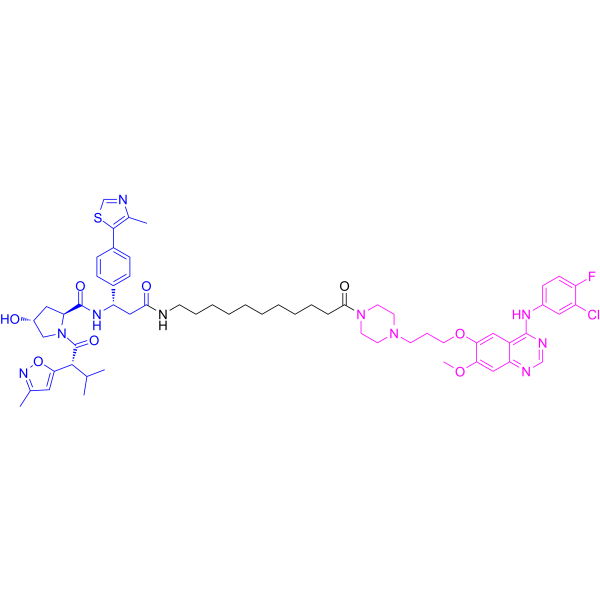
MS9427 is a potent PROTAC EGFR degrader with Kds of 7.1 nM and 4.3 nM for EGFR WT and EGFR L858R, respectively. MS9427 selectively degrades the mutant but not the WT EGFR through both the ubiquitin/proteasome system (UPS) and autophagy/lysosome pathways. MS9427 potently inhibits the proliferation of NSCLC cells. MS9427 can be used for researching anticancer .
loading...
    loading...
Cat. No.: HY-147942
CAS No.: 2772612-96-9
Purity:  98.95%
Target:  

PROTACs EGFR

Research Areas:  

Cancer

MS9449 is a potent PROTAC EGFR degrader, with Kd values of 17 nM and 10 nM for wild-type EGFR and mutant EGFR L858R, respectively, and a DC50 of 7.1 nM for EGFR Del19. MS9449 effectively induces the degradation of mutant EGFR through the ubiquitin-proteasome system (UPS) and the autophagy-lysosome pathway. MS9449 exhibits anticancer activity against non-small cell lung cancer. MS9449 can be applied in related research on non-small cell lung cancer .
loading...
    loading...
Cat. No.: HY-176130
CAS No.: 3115333-82-6
Research Areas:  

Neurological Disease

MRL828 is a heterobifunctional molecule that targets aggregated tau protein. As an autophagy-targeting chimera (ATTEC), MRL828 selectively labels aggregated tau protein for clearance via the autophagy (autophagy)-lysosome pathway. The activity of MRL828 depends on autophagosomes rather than lysosomes, and it induces autophagosome-dependent secretion. MRL828 acts as an intracellular aggregate inhibitor and a secretory autophagy inducer, reducing intracellular levels of aggregated tau protein through autophagosome-dependent secretory autophagy instead of lysosomal degradation. MRL828 can be used in the research of neurodegenerative diseases such as Alzheimer's disease .
loading...
    loading...
Cat. No.: HY-147941A
Purity:  99.01%
Target:  

PROTACs EGFR

MS9427 TFA is a potent PROTAC EGFR degrader with Kds of 7.1 nM and 4.3 nM for EGFR WT and EGFR L858R, respectively. MS9427 TFA selectively degrades the mutant but not the WT EGFR through both the ubiquitin/proteasome system (UPS) and autophagy/lysosome pathways. MS9427 TFA potently inhibits the proliferation of NSCLC cells. MS9427 TFA can be used for researching anticancer .
loading...
    loading...
Cat. No.: HY-157788
ZX703 is a GPX4 PROTAC degrader with a DC50 of 0.135 μM. ZX703 degrades GPX4 via the ubiquitin-proteasome and autophagy-lysosome pathways. ZX703 induces the accumulation of ROS, thereby triggering Ferroptosis. ZX703 can be used in studies related to fibrosarcoma and prostate cancer .
loading...
    loading...
Cat. No.: HY-176451
Target:  

HyT CDK Apoptosis

Research Areas:  

Cancer

CDK9 degrader-1 is a HyT-type CDK9 degrader that selectively induces protein degradation by recruiting ATG101 (with a DC50 of 0.4073 μM in HCT116 cells). CDK9 degrader-1 recruits ATG101 to initiate the autophagy-lysosome pathway, forming LC3-containing autophagosomes that fuse with lysosomes to degrade CDK9. CDK9 degrader-1 mediates the degradation of Cyclin T1 via the same autophagy-lysosome pathway. CDK9 degrader-1 induces downstream phenotypic effects associated with CDK9 degradation. CDK9 degrader-1 can be used in the research of colorectal cancer (Blue: hydrophobic group; Pnk: CDK9 ligand (HY-50940); Black: linker (HY-N0420)) .
loading...
    loading...
Cat. No.: HY-156795
CAS No.: 3020773-91-2
Research Areas:  

Cancer

CDK9/CycT1 degrader-1 is an autophagy-anchored bifunctional degrader that mediates the degradation of the CDK9/cyclin T1 protein complex. CDK9/CycT1 degrader-1 binds both CDK9 and LC3B simultaneously to form a ternary complex, achieving target protein degradation via the autophagy-lysosome pathway. CDK9/CycT1 degrader-1 downregulates the protein levels of Mcl‑1 and c‑Myc and induces apoptosis. PROTAC CDK9/CycT1 Degrader-2 is applicable to cancer-related research .
loading...
    loading...
Cat. No.: HY-168892
CAS No.: 380636-64-6
Target:  

Atg8/LC3 Autophagy

Research Areas:  

Cancer

LC3B recruiter 2 (34R) is an LC3B recruiter and a component of the autophagy-lysosome pathway degradation system (ATTEC, Autophagy-Tethering Compounds), which directly binds to LC3B. LC3B recruiter 2 binds to CDK9 inhibitor SNS-032 (HY-10008) through a linker, forming an ATTEC that targets the degradation of the CDK9 and Cyclin T1 complex (with inhibitory effects on both). Therefore, LC3B recruiter 2 exerts activity through the LC3B-dependent autophagy-lysosome pathway, interfering with the cell cycle of cancer cells, thus exhibiting antitumor activity .
loading...
    loading...
Cat. No.: HY-169363
Research Areas:  

Cancer

PD-L1 degrader-2 (Compound B3) is an orally active AUTAC degrader, that degrades PD-L1 through autophagy-lysosome pathway with a DC50 of 0.5 μM. PD-L1 degrader-2 exhibits inhibitory activity against PD-1/PD-L1 interaction with an IC50 of 22.8 nM. PD-L1 degrader-2 upregulates the expressions of Atg9b, Lamp1 and Mitf, and activates the autophagy lysosome system. PD-L1 degrader- exhibits antitumor efficacy in CT26 mouse model . (Pink: autophagy-lysosome activator (HY-159894); Black: linker (HY-W015088); Blue: PD-L1 ligand (HY-169365))
loading...
    loading...
Cat. No.: HY-156083
CAS No.: 3020773-81-0
Research Areas:  

Cancer

CDK9 degrader-2 is a bifunctional degrader of ATTEC (Autophagy-Tethering Compound) that degrades the CDK9/cyclin T1 complex. CDK9 degrader-2 forms a ternary complex with CDK9 and LC3B, and achieves degradation through the autophagy-lysosome pathway, a process independent of the ubiquitin-proteasome system. CDK9 degrader-2 downregulates the expression of Mcl-1 and c-Myc proteins, induces apoptosis, and exhibits antitumor activity in in vivo MV4-11 xenograft models. CDK9 degrader-2 can be used for leukemia research .
loading...
    loading...
Cat. No.: HY-N2991R
CAS No.: 77012-31-8
Dehydropachymic acid (Standard) is the analytical standard of Dehydropachymic acid. This product is intended for research and analytical applications. Dehydropachymic acid is one of the major triterpenes isolated from Poria cocos. Dehydropachymic acid is more effective in autophagy-lysosome pathway (ALP) impaired cells rather than normal cells .
loading...
    loading...
Cat. No.: HY-170989
Research Areas:  

Cancer

BRD4 degrader-5 (Compound 23) is a hydrophobic tag (HyTag)-based protein degrader for BRD4 (DC50 = 24.7 μM) through ER stress and autophagy-lysosome pathway. BRD4 degrader-5 inhibits the proliferation of cancer cell 4T1 with an IC50 of 20.6 μM .
loading...
    loading...
Cat. No.: HY-182760
MN33-63 is a Bcl-2 inhibitor, caspase-3 activator and DNA crosslinker with broad-spectrum anticancer activity. MN33-63 improves the water solubility of SN-38 (HY-13704), inhibits tumor growth and proliferation in a dose-dependent manner, and causes no obvious toxicity. MN33-63 relieves the inhibition of the mitochondrial apoptotic pathway, initiates the apoptosis program, inhibits Topo I activity, and promotes its degradation via the ubiquitin-proteasome and autophagy-lysosome pathways. MN33-63 induces DNA crosslinking, G2/M cell cycle arrest, inhibition of cancer cell migration, and cancer cell apoptosis through the mitochondrial pathway. MN33-63 can be used in the research of colorectal cancer, cervical cancer, hepatocellular carcinoma, lung adenocarcinoma and gastric cancer .
loading...
    loading...
Cat. No.: HY-187533
Research Areas:  

Cancer

EGFR AUTOTAC-1 is a p62/SQSTM1-directed EGFR AUTOTAC degrader. EGFR AUTOTAC-1 recruits p62 to form a ternary complex, activates the ubiquitin-proteasome system-independent Atg5-dependent autophagy-lysosome pathway, mediates autophagic degradation of EGFR and inhibits the AKT/ERK signaling pathway, thereby promoting apoptosis and activating autophagy. EGFR AUTOTAC-1 can be used for the research of non-small cell lung cancer.(Pink: EGFR ligand (HY-79511); Blue: p62 ligand (HY-187557); Black: Linker)
loading...
    loading...
Cat. No.: HY-187534
Research Areas:  

Cancer

VEGFR2 AUTOTAC-1 is a VEGFR2 AUTOTAC degrader. VEGFR2 AUTOTAC-1 recruits p62, activates the autophagy-lysosome pathway through the p62-LC3 axis cascade, forms a ternary complex with VEGFR2 and p62, and drives UPS-independent post-translational degradation of VEGFR2. VEGFR2 AUTOTAC-1 induces G1 phase arrest and endogenous apoptosis in cells via the mitochondrial and caspase apoptotic pathways, thereby inhibiting cancer cell proliferation, migration and malignant phenotypes; meanwhile, it inhibits endothelial cell tube formation, migration and endothelial-mesenchymal transition by regulating E-cadherin and MMP2. VEGFR2 AUTOTAC-1 is applicable to research related to triple-negative breast cancer.(Pink: VEGFR2 target protein ligand (HY-187558); Blue: p62 ligand (HY-W014292); Black: Linker)
loading...
    loading...
Cat. No.: HY-187387
CAS No.: 3092711-76-4
Research Areas:  

Cancer

PROTAC HDAC6/ERα degrader 1 is a dual-target PROTAC that targets HDAC6/ERα, with DC50 values of 1.21 μM (HDAC6), 0.28 μM (ERα) in MCF-7 cells and 0.67 μM (HDAC6), 0.14 μM (ERα) in LCC2 cells, respectively. PROTAC HDAC6/ERα degrader 1 selectively degrades ERα and HDAC6 via the proteasomal pathway, inhibits the transcriptional activation of ERα and blocks the estrogen signaling pathway. PROTAC HDAC6/ERα degrader 1 inhibits the function of HDAC6, attenuates hormone responses, and disrupts autophagy-lysosome function. PROTAC HDAC6/ERα degrader 1 induces cell cycle arrest, apoptosis and ferroptosis, and exhibits antiproliferative activity in breast cancer cells. PROTAC HDAC6/ERα degrader 1 can be used for breast cancer research .
loading...
    loading...

