19 Results for "

bacterial conditions

" in MedChemExpress (MCE) Product Catalog:
Products (19)

19 Results for "bacterial conditions" in MCE Product Catalog:

3
3 Cited Publications
Cat. No.: HY-N7123
CAS No.: 144-80-9
Synonyms: Sulphacetamide
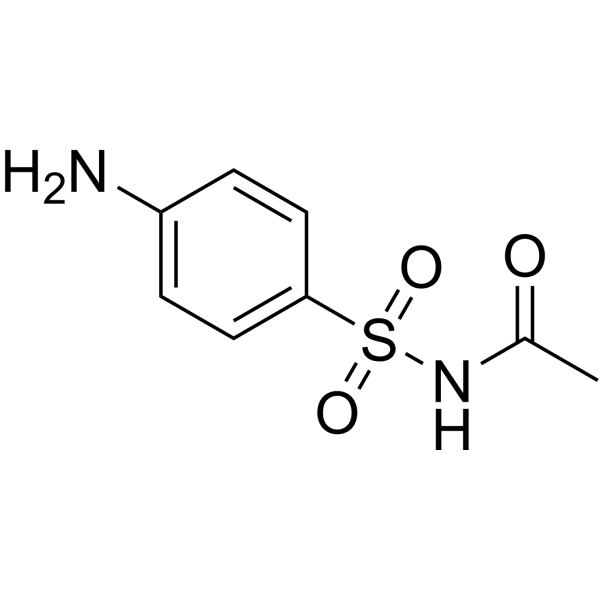
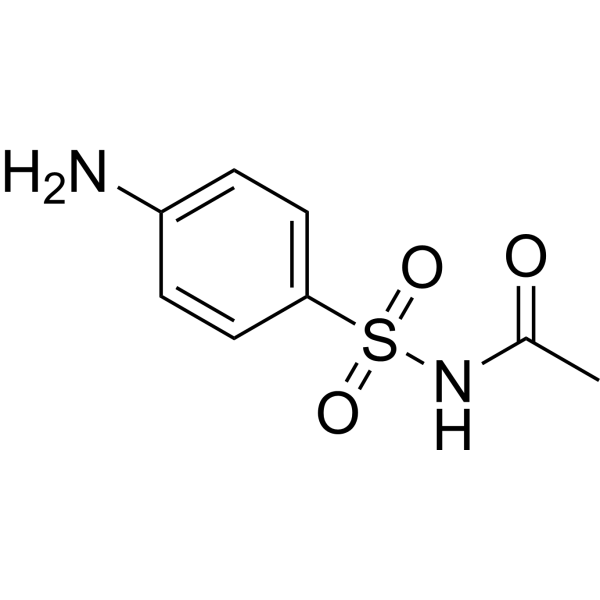
Sulfacetamide (Sulphacetamide) is a sulfonamide antibiotic. Sulfacetamide has antifungal and antibacterial activities. Sulfacetamide is employed as a topical formulation in various ophthalmic, dermatological, and hair solutions against bacterial infections, acne and scalp conditions. Sulfacetamide targets bacterial folic acid synthesis and is effective against various gram-positive and gram-negative bacteria. Sulfacetamide inhibits the synthesis of both dihydro-folic acid and para-aminobenzoic acid. Sulfacetamide can be used for the study of ocular infections .
loading...
    loading...
Cat. No.: HY-160238
CAS No.: 95536-41-7
Synonyms: Corynebactin
Bacillibactin (Corynebactin) is a cyclic tricatecholate siderophore. Bacillibactin’s primary function is to facilitate bacterial iron acquisition by chelating iron ions (Fe 3+) from the environment, thereby aiding bacterial survival under iron-limited conditions. Bacillibactin exhibits direct antimicrobial activity, such as inhibition of the growth of the producing bacteria Pseudomonas aeruginosa and Aeromonas veronae, as well as plant pathogens such as Pseudomonas syringae.Bacillibactin can be used in antibacterial and antifungal research .
loading...
    loading...
Cat. No.: HY-117778
CAS No.: 107729-45-3
Purity:  ≥95.0%
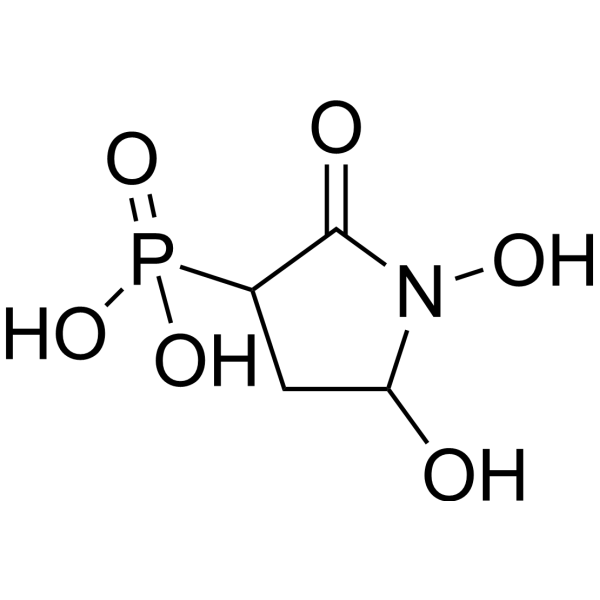
SF2312 is a phosphonate Antibiotic and Enolase inhibitor, with an IC50 of 18.4 nM against E. coli enolase. SF2312 reduces intracellular ATP levels and inhibits glycolytic flux. SF2312 exhibits activity against both Gram-positive and Gram-negative bacteria, and exerts synergistic effects against E. coli when combined with Fosfomycin (HY-B1075A). SF2312 shows selective toxicity toward gliomas with ENO1 gene knockout. SF2312 can be used in research related to bacterial infections and gliomas .
loading...
    loading...
Cat. No.: HY-134635
CAS No.: 1080-12-2
Purity:  99.98%
Target:  

Bacterial Fungal HIV CDK

Research Areas:  

Infection Cancer

Dehydrozingerone is a ginger-derived component and cyclin D1 inhibitor that downregulates cyclin D1 expression and induces cell cycle G1 phase arrest. Dehydrozingerone reduces the proliferative capacity of castration-resistant prostate cancer cells under in vitro conditions. Dehydrozingerone reduces subcutaneous tumor growth by inhibiting cell proliferation and angiogenesis. Dehydrozingerone exerts antibacterial and antifungal activities via its α,β-unsaturated carbonyl conjugated system. Dehydrozingerone can be used in studies related to castration-resistant prostate cancer, bacterial infections, and food spoilage fungal infections .
loading...
    loading...
Cat. No.: HY-124452
CAS No.: 26605-16-3
Purity:  95.00%
Synonyms: Desferrioxamine E; Nocardamin
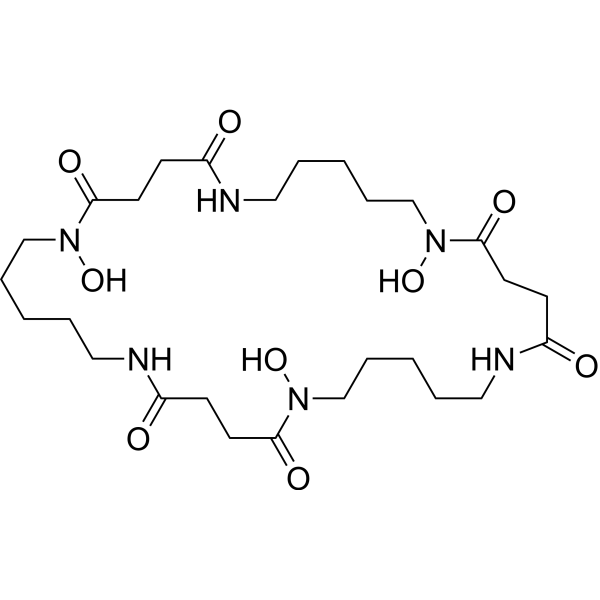
Nocardamine (Desferrioxamine E; Nocardamin) is a cyclic trihydroxamate siderophore with iron ion chelation, antioxidant, antibacterial and other activities. Nocardamine is synthesized by Pseudomonas stutzeri under iron-deficient conditions, and excessive iron ions significantly inhibit its biosynthesis process. Nocardamine increases the level of phosphorylated ERK protein, promotes nuclear translocation of β-catenin, and restores the downregulated expression of SIRT1 protein. Nocardamine alleviates cellular oxidative stress, reduces ROS content, and simultaneously repairs the ability to form mineralized nodules and the expression of osteogenic markers. Nocardamine induces FoxA gene transcription and protein expression to assist Pseudomonas aeruginosa in iron ion uptake; it also selectively inhibits the proliferation of mycobacteria. Nocardamine induces spindle-shaped morphological changes in BM-N4 insect cells, and sufficient iron ions inhibit this cellular morphological change. Nocardamine is suitable for research related to bacterial infections .
loading...
    loading...
Cat. No.: HY-117778B
Purity:  ≥98.0%
Research Areas:  

Infection Cancer

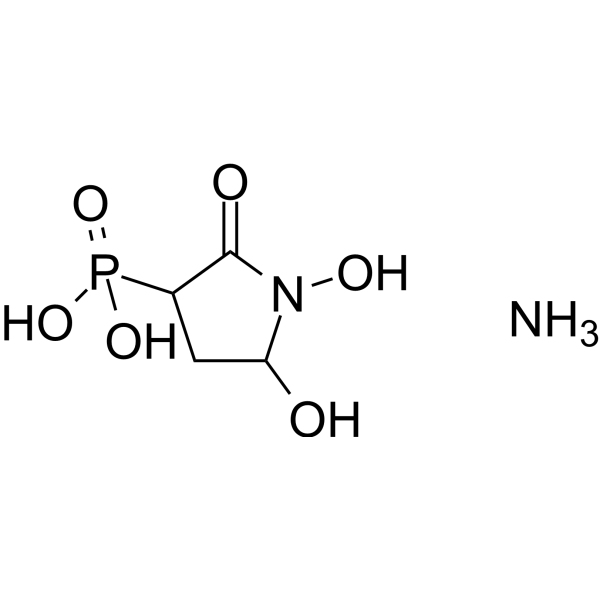
SF2312 ammonium is a phosphonate Antibiotic and Enolase inhibitor, with an IC50 of 18.4 nM against E. coli enolase. SF2312 ammonium reduces intracellular ATP levels and inhibits glycolytic flux. SF2312 ammonium exhibits activity against both Gram-positive and Gram-negative bacteria, and exerts synergistic effects against E. coli when combined with Fosfomycin (HY-B1075A). SF2312 ammonium shows selective toxicity toward gliomas with ENO1 gene knockout. SF2312 ammonium can be used in research related to bacterial infections and gliomas .
loading...
    loading...
Cat. No.: HY-144002
CAS No.: 216014-46-9
Synonyms: RC-529
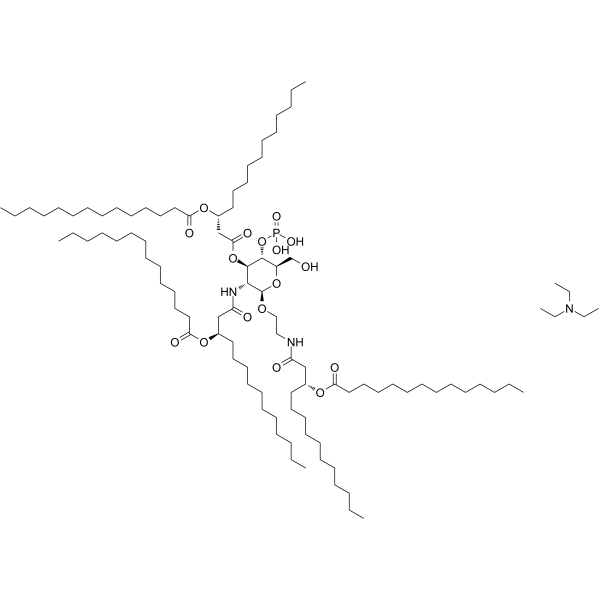
RIBI-529 (RC-529) is a fully synthetic, low-toxicity TLR4 agonist vaccine adjuvant. RIBI-529 upregulates cell surface co-stimulatory molecules, receptors, cytokines and chemokines, and activates the innate immune system. RIBI-529 enhances short-term CD4 + T cell clonal expansion, division, and ex vivo survival under growth factor withdrawal conditions. RIBI-529 enhances humoral and cell-mediated adaptive immune responses, induces non-specific resistance against viral and bacterial pathogens, and skews responses toward a Th1 type, accompanied by Th2 responses .
loading...
    loading...
Cat. No.: HY-W704598
CAS No.: 72864-23-4
Research Areas:  

Infection

Methyl 3-hydroxydodecanoate is a poly (3-hydroxyalkanoate) monomer. Methyl 3-hydroxydodecanoate can be produced with the involvement of Pseudomonas putida Bet001 .
loading...
    loading...
Cat. No.: HY-N7123R
CAS No.: 144-80-9
Synonyms: Sulphacetamide (Standard)
Sulfacetamide (Standard) (Sulphacetamide (Standard)) is the analytical standard of Sulfacetamide (HY-N7123). This product is intended for research and analytical applications. Sulfacetamide (Sulphacetamide) is a sulfonamide antibiotic. Sulfacetamide has antifungal and antibacterial activities. Sulfacetamide is employed as a topical formulation in various ophthalmic, dermatological, and hair solutions against bacterial infections, acne and scalp conditions. Sulfacetamide targets bacterial folic acid synthesis and is effective against various gram-positive and gram-negative bacteria. Sulfacetamide inhibits the synthesis of both dihydro-folic acid and para-aminobenzoic acid. Sulfacetamide can be used for the study of ocular infections .
loading...
    loading...
Cat. No.: HY-158905
CAS No.: 2923694-73-7
Synonyms: MTDB-Alk
Target:  

Drug Intermediate

Research Areas:  

Infection Others

MTDB-Alkyne (MTDB-Alk) is a β-coronavirus pseudoknot RNA-binding ligand that binds to the β-coronavirus pseudoknot RNA structure on the SARS-CoV-2 genome. MTDB-Alkyne can be used to synthesize Proximity-Induced Nucleic Acid Degrader (PINAD) for degrading SARS-CoV-2 RNA. MTDB-Alkyne is applicable to research related to the development of SARS-CoV-2-targeted RNA probes .
loading...
    loading...
Cat. No.: HY-121120
CAS No.: 77900-75-5
Isosulfazecin (iSZ) is a novel β-lactam antibiotic produced by Pseudomonas acidophilus sp., synthesized in a nutrient solution supplemented with glycerol and sodium thiosulfate under aerobic conditions in parallel with bacterial growth. It is purified by chromatography and crystallization from aqueous methanol. Physicochemical analysis determined its molecular formula to be C12H20N4O9S, showing a structure with a β-lactam ring, methoxyl and sulfonate groups. Acid hydrolysis yields L-alanine and D-glutamic acid. iSZ is a diastereomer of sulfadiazine and exhibits moderate activity against both gram-positive and gram-negative bacteria, but potent activity against bacteria resistant to β-lactam antibiotics .
loading...
    loading...
Cat. No.: HY-P990801
Anti-Mouse CD11a/LFA-1α Antibody (M17/4) is an anti-mouse CD11a/LFA-1α IgG2a monoclonal antibody. Anti-Mouse CD11a/LFA-1α Antibody (M17/4) can reduce the recruitment of effector memory CD8 T cells. Anti-Mouse CD11a/LFA-1α Antibody (M17/4) promotes the formation of xenograft tumors by reducing immune rejection reactions. Anti-Mouse CD11a/LFA-1α Antibody (M17/4) can be used for researches on cancer, infection conditions and immunology such as glioblastoma, parasitic and bacterial infections. The recommend isotype control of Anti-Mouse CD11a/LFA-1α Antibody (M17/4): Rat IgG2a kappa, Isotype Control (HY-P990679) .
loading...
    loading...
Cat. No.: HY-187934
CAS No.: 431058-65-0
DX-619 is an antibacterial agent. DX-619 inhibits bacterial type II topoisomerases, DNA gyrase (GyrA), and topoisomerase IV (GrlA). DX-619 can be used in research related to bacterial infections, pneumonia, and other conditions .
loading...
    loading...
Cat. No.: HY-E71562
Research Areas:  

Others

2-Hydroxyhexa-2,4-dienoate hydratase (EC 4.2.1.132) catalyses a late step in the bacterial steroid degradation pathway; the product, 4-hydroxy-2-oxohexanoate, forms a 2-hydroxy-4-hex-2-enolactone under acidic conditions.
loading...
    loading...
Cat. No.: HY-185180
CAS No.: 14836-73-8
Research Areas:  

Others

Ferrioxamine B is a bacterial desferrioxamine siderophore produced by actinomycetes. Ferrioxamine B acts as a ligand for FpvB and FoxA, and is transported into Pseudomonas aeruginosa via the FpvB and FoxA transporters. Ferrioxamine B competitively binds to FpvB, thereby antagonizing the uptake of thiostrepton into Pseudomonas aeruginosa. Ferrioxamine B can provide an iron source to support the growth of Pseudomonas aeruginosa under iron-limiting conditions .
loading...
    loading...
Cat. No.: HY-D3400
Research Areas:  

Infection

CouCyCF3 is a fluorescent probe for bacterial cytoplasmic pH, with a pKa of 7.0. CouCyCF3 can be taken up by both Gram-positive and Gram-negative bacteria. Under acidic conditions, the fluorescence of CouCyCF3 in the red channel increases, while its fluorescence in the blue channel increases with elevated pH. A linear quantitative response is achieved via the I_red/I_blue ratio within the pH range of 5.0-7.5, with excitation/emission wavelengths of 445/472 nm (blue) and 640/708 nm (red). CouCyCF3 can be used for studies on bacterial acid tolerance and phagolysosome acidification .
loading...
    loading...
Cat. No.: HY-K0002

MCE Bacterial Protein Extraction Reagent integrates both lysozyme and nuclease activities and is specifically formulated for E. coli lysis. It efficiently disrupts the peptidoglycan layer under mild conditions to rapidly release intracellular proteins. Simultaneously, the incorporated nucleases degrade genomic DNA/RNA, significantly reducing lysate viscosity and minimizing nucleic-acid interference, thereby preserving the native conformation and functional integrity of target proteins to the greatest extent.

loading...
    loading...
Cat. No.: HY-123448
CAS No.: 854005-84-8
Target:  

Bacterial Antibiotic

Research Areas:  

Infection

CCG-120304 is a TonB system inhibitor and bacteriostatic agent. CCG-120304 inhibits TonB-dependent functions. CCG-120304 is applicable to research related to urinary tract infections .
loading...
    loading...
Cat. No.: HY-L065
3,276 compounds

Chinese herbal therapy is an important part of Traditional Chinese Medicine (TCM). It has been used for centuries in China, where herbs are considered fundamental therapy for many acute and chronic conditions. Many studies indicated TCM exerted an overall regulatory effect via multi-component and multi-target network. Active components from Traditional Chinese Medicine possess many medicinal properties such as antioxidant, anti-cancer, and anti-bacterial effects, which makes it an important source of new drugs. Nearly 200 modern medicines have been developed either directly or indirectly from the plants used as medicines in China. For example, artemisinin, used in multidrug resistant malaria, was first isolated from the Chinese herb Artemisia annua L. Today, scientists continue to identify compounds in Chinese herbal remedies that may be useful in the development of new therapeutic agents applicable in Western medicine.

MCE designs a unique collection of 3,276 active compounds of Chinese Herbal Medicines. MCE Traditional Chinese Medicine Active Compound Library is a useful tool for discovery new drugs from TCM.

  • 1

