1. Search Result
Search Result
Results for "

blood-brain

" in MedChemExpress (MCE) Product Catalog:

1757

Inhibitors & Agonists

5

Screening Libraries

32

Fluorescent Dyes

25

Biochemical Assay Reagents

89

Peptides

21

Inhibitory Antibodies

187

Natural
Products

144

Isotope-Labeled Compounds

11

Click Chemistry

12

Oligonucleotides

3

GMP Molecules

Cat. No. Product Name Target Research Areas Chemical Structure
  • HY-128868A
    FITC-Dextran (MW 4000)
    Maximum Cited Publications
    90 Publications Verification

    Fluorescent Dye Others
    FITC-Dextran (MW 4000) is a fluorescent probe for fluorescein isothiocyanate (FITC) dextran (Ex=495 nm; Em=525 nm). FITC-Dextran (MW 4000) can be used as a marker to reveal heat shock-induced cell damage and to study the early and late stages of apoptosis. FITC-Dextran (MW 4000) can also be used for cell permeability studies, such as blood-brain barrier permeability and determination of the extent of blood-brain barrier disruption .
    FITC-Dextran (MW 4000)
  • HY-128868
    FITC-Dextran (MW 10000)
    Maximum Cited Publications
    90 Publications Verification

    Fluorescent Dye Others
    FITC-Dextran (MW 10000) is a fluorescent probe for fluorescein isothiocyanate (FITC) dextran (Ex=495 nm; Em=525 nm). FITC-Dextran (MW 10000) can be used as a marker to reveal heat shock-induced cell damage and to study the early and late stages of apoptosis. FITC-Dextran (MW 10000) can also be used for cell permeability studies, such as blood-brain barrier permeability and determination of the extent of blood-brain barrier disruption .
    FITC-Dextran (MW 10000)
  • HY-128868D
    FITC-Dextran (MW 40000)
    10+ Cited Publications

    Fluorescent Dye Others
    FITC-Dextran (MW 40000) is a fluorescent probe for fluorescein isothiocyanate (FITC) dextran (Ex=495 nm; Em=525 nm). FITC-Dextran (MW 40000) can be used as a marker to reveal heat shock-induced cell damage and to study the early and late stages of apoptosis. FITC-Dextran (MW 40000) can also be used for cell permeability studies, such as blood-brain barrier permeability and determination of the extent of blood-brain barrier disruption .
    FITC-Dextran (MW 40000)
  • HY-N0304
    L-DOPA
    30+ Cited Publications

    Levodopa; 3,4-Dihydroxyphenylalanine

    Dopamine Receptor Endogenous Metabolite Neurological Disease Cancer
    L-DOPA (Levodopa) is an orally active metabolic precursor of neurotransmitters dopamine. L-DOPA can cross the blood-brain barrier and is converted into dopamine in the brain. L-DOPA has anti-allodynic effects and the potential for Parkinson's disease .
    L-DOPA
  • HY-18738

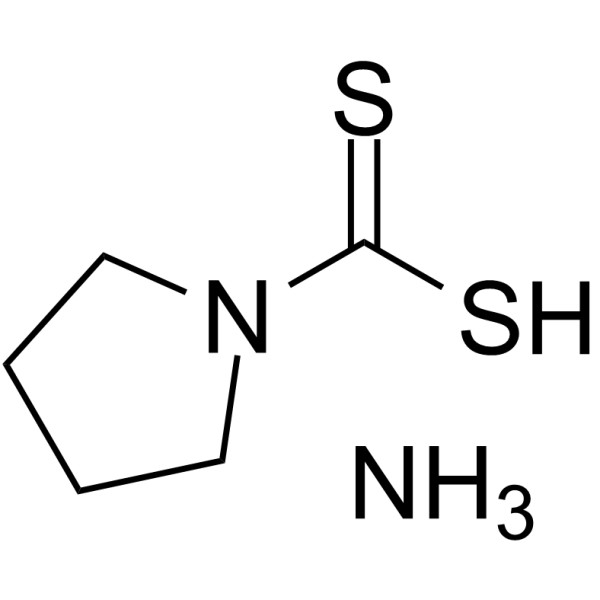
    Ammonium pyrrolidinedithiocarbamate; PDTC ammonium; APDC

    NF-κB Inflammation/Immunology Cancer
    Pyrrolidinedithiocarbamate ammonium (Ammonium pyrrolidinedithiocarbamate) is a selective and blood-brain barrier (BBB) permeable NF-κB inhibitor.
    Pyrrolidinedithiocarbamate ammonium
  • HY-10974
    MK-0752
    10+ Cited Publications

    γ-secretase Neurological Disease Cancer
    MK-0752 is a potent, orally active and specific γ-secretase inhibitor, showing dose-dependent reduction of Aβ40 with an IC50 of 5 nM in human SH-SY5Y cells. MK-0752 crosses the blood-brain barrier. MK-0752 reduces newly generated CNS Aβ in vivo .
    MK-0752
  • HY-B1395
    Mecamylamine hydrochloride
    5 Publications Verification

    nAChR Histamine Receptor Cardiovascular Disease Neurological Disease
    Mecamylamine hydrochloride is an orally active, nonselective, noncompetitive nAChR antagonist. Mecamylamine hydrochloride is also a ganglionic blocker. Mecamylamine hydrochloride can across the blood-brain barrier. Mecamylamine hydrochloride can be used in the research of neuropsychiatric disorders, hypertension, antidepressant area .
    Mecamylamine hydrochloride
  • HY-N6608
    Physostigmine
    2 Publications Verification

    Eserine

    Cholinesterase (ChE) Neurological Disease
    Physostigmine (Eserine) is a reversible acetylcholinesterase (AChE) inhibitor. Physostigmine can crosses the blood-brain barrier and stimulates central cholinergic neurotransmission. Physostigmine can reverse memory deficits in transgenic mice with Alzheimer's disease. Physostigmine is also an antidote for anticholinergic poisoning .
    Physostigmine
  • HY-B1266
    Physostigmine salicylate
    2 Publications Verification

    Eserine salicylate

    Cholinesterase (ChE) Neurological Disease
    Physostigmine salicylate (Eserine salicylate) is a reversible acetylcholinesterase (AChE) inhibitor. Physostigmine salicylate crosses the blood-brain barrier and stimulates central cholinergic neurotransmission. Physostigmine salicylate can reverse memory deficits in transgenic mice with Alzheimer's disease. Physostigmine salicylate is also an antidote for anticholinergic poisoning .
    Physostigmine salicylate
  • HY-109012
    Seltorexant
    3 Publications Verification

    JNJ-42847922

    Orexin Receptor (OX Receptor) Neurological Disease Endocrinology
    Seltorexant (JNJ-42847922) is an orally active, high-affinity, and selective orexin-2 receptor (OX2R) antagonist (pKi values of 8.0 and 8.1 for human and rat OX2R). Seltorexant (JNJ-42847922) crosses the blood-brain barrier and quickly occupies OX2R binding sites in the rat brain .
    Seltorexant
  • HY-148419
    Ralometostat
    2 Publications Verification

    TNG908

    Histone Methyltransferase Cancer
    TNG908 is a MTAP synergistic PRMT5 inhibitor. TNG908 crosses the blood-brain barrier and is orally active. TNG908 could be used in cancer research .
    Ralometostat
  • HY-136964

    Biochemical Assay Reagents Neurological Disease
    Sulfo-NHS-Biotin sodium is a low-molecular-weight (MW 443.4 Da) tracer. Sulfo-NHS-Biotin sodium can used to assess blood-brain barrier permeability .
    Sulfo-NHS-Biotin sodium
  • HY-171306

    Liposome Others
    MK16 is a lipid material that can be used to construct blood-brain barrier penetrable lipid nanoparticles for mRNA delivery. MK16 facilitates blood-brain barrier crossing via γ-secretase-mediated and caveolae-mediated transcytosis. MK16 can be used for drug delivery research .
    MK16
  • HY-15981

    MK-3102

    Dipeptidyl Peptidase Neurological Disease Metabolic Disease
    Omarigliptin (MK-3102) is a potent, selective, orally active and cross the blood-brain barrier dipeptidyl peptidase 4 (DPP-4) inhibitor. Omarigliptin shows anti-parkinsonian activity. Omarigliptin has the neuroprotective effect to improve diabetes-associated cognitive dysfunction .
    Omarigliptin
  • HY-148417

    Serotonin Transporter Neurological Disease
    ZZL-7 is a fast-onset antidepressant agent. ZZL-7 works by disrupting the interaction between the serotonin transporter (SERT) and neuronal nitric oxide synthase (nNOS) in the dorsal raphe nucleus (DRN). ZZL-7 can cross the blood-brain barrier readily. ZZL-7 can be used for the research of major depressive disorder (MDD) .
    ZZL-7
  • HY-A0067
    Oxybenzone
    5+ Cited Publications

    Benzophenone 3

    Environmental Pollutants Autophagy RAR/RXR Apoptosis Neurological Disease
    Oxybenzone (Benzophenone 3) is a commonly used UV filter in sun tans and skin protectants. Oxybenzone act as endocrine disrupting chemicals (EDCs) and can pass through the placental and blood-brain barriers. Benzophenone-3 impairs autophagy, alters epigenetic status, and disrupts retinoid X receptor signaling in apoptotic neuronal cells .
    Oxybenzone
  • HY-119624

    PIKfyve Cancer
    MOMIPP, a macropinocytosis inducer, is a PIKfyve inhibitor. MOMIPP penetrates the blood-brain barrier (BBB) .
    MOMIPP
  • HY-DY1016

    Fluorescent Dye Others
    FITC-Dextran (MW 10000) (solution) is a fluorescent probe for fluorescein isothiocyanate (FITC) dextran (Ex=495 nm; Em=525 nm). FITC-Dextran (MW 10000) can be used as a marker to reveal heat shock-induced cell damage and to study the early and late stages of apoptosis. FITC-Dextran (MW 10000) can also be used for cell permeability studies, such as blood-brain barrier permeability and determination of the extent of blood-brain barrier disruption .
    Solvent and Concentration: Sterile water: 2 mM
    FITC-Dextran (MW 10000) (solution)
  • HY-W016586
    Acivicin
    2 Publications Verification

    AT-125; U-42126

    Parasite γ-Glutamyl Transferase (GGT) Infection Cancer
    Acivicin (AT-125), a natural product produced by Streptomyces sviceus is a γ-glutamyl transpeptidase (GGT) inhibitor. Acivicin can across the blood-brain barrier and has anti-cancer, anti-parasitic properties .
    Acivicin
  • HY-W016586A
    Acivicin hydrochloride
    2 Publications Verification

    AT-125 hydrochloride; U-42126 hydrochloride

    Parasite Infection Cancer
    Acivicin hydrochloride (AT-125 hydrochloride), a natural product produced by Streptomyces sviceus, is a γ-glutamyl transpeptidase (GGT) inhibitor. Acivicin hydrochloride can across the blood-brain barrier and has anti-cancer, anti-parasitic properties .
    Acivicin hydrochloride
  • HY-D0873

    EPPS

    Amyloid-β Neurological Disease
    HEPPS (EPPS) is a buffering agent with the useful pH range from 7.3 ~ 8.7. HEPPS reduces -aggregate-induced memory deficits and rescues cognitive deficits in mice. EPPS is orally active and penetrates the blood-brain barrier .
    HEPPS
  • HY-19838

    GPR139 Neurological Disease
    JNJ-63533054 is a potent, selective and orally active GPR139 agonist with an EC50 of 16 nM for human GPR139 (hGPR139). JNJ-63533054 shows selective for GPR139 over other GPCRs, ion channels, and transporters. JNJ-63533054 can cross the blood-brain barrier (BBB) .
    JNJ-63533054
  • HY-109012A
    Seltorexant hydrochloride
    3 Publications Verification

    JNJ-42847922 hydrochloride

    Orexin Receptor (OX Receptor) Neurological Disease Metabolic Disease
    Seltorexant hydrochloride (JNJ-42847922 hydrochloride) is an orally active, high-affinity, and selective OX2R antagonist (pKi values of 8.0 and 8.1 for human and rat OX2R). Seltorexant hydrochloride crosses the blood-brain barrier and quickly occupies OX2R binding sites in the rat brain .
    Seltorexant hydrochloride
  • HY-10835
    DG-041
    3 Publications Verification

    Prostaglandin Receptor Cardiovascular Disease
    DG-041 is a potent, high affinity and selective EP3 receptor antagonist with IC50s of 4.6 nM and 8.1 nM in the binding and FLIPR assay, respectively. DG-041 inhibits PGE2 facilitation of platelet aggregation. DG-041 crosses the blood-brain barrier .
    DG-041
  • HY-100501
    M2698
    1 Publications Verification

    MSC2363318A

    Ribosomal S6 Kinase (RSK) Akt Cancer
    M2698 (MSC2363318A) is an orally active, ATP competitive, selective p70S6K and Akt dual-inhibitor with IC50s of 1 nM for p70S6K, Akt1 and Akt3. M2698 can cross the blood-brain barrier and has anti-cancer activity .
    M2698
  • HY-10202
    Tandutinib
    5 Publications Verification

    MLN518; CT53518

    FLT3 c-Kit PDGFR Apoptosis Cancer
    Tandutinib (MLN518) is a potent and selective inhibitor of the FLT3 with an IC50 of 0.22 μM, and also inhibits c-Kit and PDGFR with IC50s of 0.17 μM and 0.20 μM, respectively. Tandutinib can be used for acute myelogenous leukemia (AML) . Tandutinib has the ability to cross the blood-brain barrier .
    Tandutinib
  • HY-105283

    Sodium Channel Neurological Disease
    PF 04531083 is an orally active and selective NaV1.8 blocker with an IC50 of 0.7 μM. PF 04531083 is a blood-brain barrier (BBB) penetrant compound. PF 04531083 can be used for the research of respiratory system and neuropathic/inflammatory pain .
    PF 04531083
  • HY-129441

    BW 197U

    Histone Methyltransferase Antifolate Neurological Disease Cancer
    Metoprine (BW 197U) is a potent histamine N-methyltransferase (HMT) inhibitor. Metoprine, a diaminopyrimidine derivative, can cross the blood-brain barrier and increase brain histamine levels by inhibiting HMT . Metoprine is an antifolate and antitumor agent .
    Metoprine
  • HY-B0186B

    FK-037

    Bacterial Antibiotic Infection
    Cefoselis sulfate (FK-037), the fourth gen-eration of cephalosporin, is a β-lactam antibiotic. Cefoselis sulfate exhibits good activity against a wide range of Gram-positive and Gram-negative organisms. Cefoselis sulfate penetrates the blood-brain barrier .
    Cefoselis sulfate
  • HY-122489

    Drug Metabolite Neurological Disease
    DL-Laudanosine, an Atracurium and Cisatracurium metabolite, crosses the blood–brain barrier and may cause excitement and seizure activity .
    DL-Laudanosine
  • HY-162235

    Orexin Receptor (OX Receptor) Cardiovascular Disease
    CVN766 is an orally active inhibitor of orexin 1 receptor antagonist with blood-brain permeability with the IC50 values of 8 nM and >10 μM for OX1R and OX2R, respectively. CVN766 can be used for study schizophrenia .
    CVN766
  • HY-N2320
    Physostigmine hemisulfate
    2 Publications Verification

    Eserine hemisulfate

    Cholinesterase (ChE) Neurological Disease
    Physostigmine hemisulfate (Eserine hemisulfate) is a reversible acetylcholinesterase (AChE) inhibitor. Physostigmine hemisulfate can crosses the blood-brain barrier and stimulates central cholinergic neurotransmission. Physostigmine hemisulfate can reverse memory deficits in transgenic mice with Alzheimer's disease. Physostigmine hemisulfate is also an antidote for anticholinergic poisoning .
    Physostigmine hemisulfate
  • HY-N0304A
    L-DOPA sodium
    30+ Cited Publications

    Levodopa sodium; 3,4-Dihydroxyphenylalanine sodium

    Dopamine Receptor Endogenous Metabolite Neurological Disease
    L-DOPA (Levodopa) sodium is an orally active metabolic precursor of neurotransmitters dopamine. L-DOPA sodium can cross the blood-brain barrier and is converted into dopamine in the brain. L-DOPA sodium has anti-allodynic effects, and can be used for Parkinson's disease research .
    L-DOPA sodium
  • HY-P3585

    TNF Receptor Neurological Disease Inflammation/Immunology
    Epobis, a dendrimeric peptide, is a recombinant form of erythropoietin. Epobis is a potent erythropoietin receptor agonist. Epobis promotes neuritogenesis in primary motoneurons. Epobis decrease TNF release and crosses the blood-brain barrier. Epobis has anti-inflammatory and memory enhancing properties .
    Epobis
  • HY-P10216

    Biochemical Assay Reagents Neurological Disease
    CAQK peptide selectively binds to injured mouse brain. CAQK peptide selectively targets demyelinating areas and it is absent from healthy tissue. The CAQK peptide target is a proteoglycan complex upregulated in brain injuries and is used for drug delivery. CAQK peptide can penetrate the blood-brain barrier .
    CAQK peptide
  • HY-N7062

    Takeda-25

    FAAH Neurological Disease
    JNJ-1661010 (Takeda-25) a potent and selective fatty acid amide hydrolase (FAAH) inhibitor with IC50s of 34 and 33 nM for rat FAAH and human FAAH, respectively. JNJ-1661010 can cross the blood-brain barrier and used as broad-spectrum analgesics .
    JNJ-1661010
  • HY-161117

    RSV Cancer
    AD-8007 is an acetyl CoA synthase 2 (ACSS2) inhibitor that can cross the blood-brain barrier. AD-8007 can significantly reduce lipid storage and cell colony formation in vitro models, and increase tumor cell death. AD-8007 has anti-cancer activity and can be used in the research of breast cancer .
    AD-8007
  • HY-149278

    Complement System Inflammation/Immunology
    Complement C1s-IN-1 is a potent, selective, orally active and cross the blood-brain barrier C1s inhibitor with an IC50 value of 36 nM .
    Complement C1s-IN-1
  • HY-153175

    RET Neurological Disease
    BT44 is a selective RET activator. BT44 can penetrate through the blood-brain barrier and can be used for the research of neurodegenerative disorders and diabetes mellitus .
    BT44
  • HY-155079

    EGFR Cancer
    DZD1516 is a potent and selective HER2 inhibitor (IC50=0.56 nM) with good blood-brain permeability. DZD1516 exhibits antitumor activity in CNS and subcutaneous xenograft mouse models .
    DZD1516
  • HY-105077A

    INN 00835 diTFA

    5-HT Receptor Neurological Disease
    Nemifitide diTFA (INN 00835 diTFA) is a synthetic pentapeptide antidepressant with a potential for rapid onset of action . Nemifitide diTFA is a peptide analog of melanocyte-inhibiting factor (MIF) . Nemifitide diTFA can cross the blood-brain barrier .
    Nemifitide diTFA
  • HY-116800

    Adenosine Receptor Neurological Disease
    FR194921 is a potent, selective and orally active and cross the blood-brain barrier Adenosine A1 antagonist with Ki value of 6.6, 5400 nM for A1, A2A, respectively. FR194921 shows cognitive-enhancing and anxiolytic activity .
    FR194921
  • HY-163565

    Btk Neurological Disease
    BIIB129 is a covalent, selective, small molecule inhibitor of Bruton's tyrosine kinase (BTK) capable of penetrating the blood-brain barrier. BIIB129 inhibits the activity of BTK by covalently binding to Cys481 in BTK, thereby affecting the function of B cells and myeloid cells. BIIB129 can be used in multiple sclerosis (MS) research .
    BIIB129
  • HY-DY1018

    Fluorescent Dye Others
    FITC-Dextran (MW 4000) (solution) is a fluorescent probe for fluorescein isothiocyanate (FITC) dextran (Ex=495 nm; Em=525 nm). FITC-Dextran (MW 4000) can be used as a marker to reveal heat shock-induced cell damage and to study the early and late stages of apoptosis. FITC-Dextran (MW 4000) can also be used for cell permeability studies, such as blood-brain barrier permeability and determination of the extent of blood-brain barrier disruption .
    Solvent and Concentration: Sterile water: 2 mM
    FITC-Dextran (MW 4000) (solution)
  • HY-W015715

    Orcinol monohydrate

    Tyrosinase Neurological Disease
    5-Methylresorcinol monohydrate (Orcinol monohydrate) is a tyrosinase inhibitor. 5-Methylresorcinol monohydrate shows cytotoxicity. 5-Methylresorcinol monohydrate also is an oral active and cross the blood-brain barrier anxiolytic agent .
    5-Methylresorcinol monohydrate
  • HY-108295

    CXB-722

    GABA Receptor Neurological Disease
    Pivagabine (CXB 722) is a hydrophobic 4-aminobutyric acid derivative with neuromodulatory activity. Pivagabine penetrates the blood-brain barrier in rats. Pivagabine antagonizes the effects of foot shock on both GABAA receptor function and corticotropin-releasing factor (CRF) concentrations in rat brain .
    Pivagabine
  • HY-134228

    Biochemical Assay Reagents Cancer
    4-Hydroperoxyifosfamide is an anticancer agent that can penetrate the blood-brain barrier (BBB) .
    4-Hydroperoxyifosfamide
  • HY-10202A
    Tandutinib hydrochloride
    5 Publications Verification

    MLN518 hydrochloride; CT53518 hydrochloride

    FLT3 c-Kit PDGFR Apoptosis Cancer
    Tandutinib hydrochloride (MLN518 hydrochloride) is a potent and selective inhibitor of the FLT3 with an IC50 of 0.22 μM, and also inhibits c-Kit and PDGFR with IC50s of 0.17 μM and 0.20 μM, respectively. Tandutinib hydrochloride can be used for acute myelogenous leukemia (AML) . Tandutinib hydrochloride has the ability to cross the blood-brain barrier .
    Tandutinib hydrochloride
  • HY-112403
    (S)-Roscovitine
    1 Publications Verification

    (S)-Seliciclib; (S)-CYC202

    CDK Neurological Disease
    (S)-Roscovitine ((S)-Seliciclib; (S)-CYC202) is a potent and cross the blood-brain barrier CDKs inhibitor. (S)-Roscovitine shows neuroprotective efficacy. (S)-Roscovitine has the potential for the research of stroke .
    (S)-Roscovitine
  • HY-159527

    Glovadalen

    Dopamine Receptor Neurological Disease
    Glovadalenum (Glovadalen) is an orally active, selective, blood-brain barrier permeable positive allosteric modulator of dopamine D1 receptor. Glovadalenum selectively enhances the efficacy of dopamine in activating dopamine D1 receptor. Glovadalenum can be used for the research of Parkinson's disease .
    Glovadalenum

Inquiry Online

Your information is safe with us. * Required Fields.

Salutation


Country or Region *

Applicant Name *


Organization Name *

Department *


Email Address *


Product Name *

Cat. No.


Requested quantity *

Phone Number *


Remarks

Inquiry Online

Inquiry Information

Product Name:
Cat. No.:
Quantity:
MCE Japan Authorized Agent:

