16 Results for "

caspase-3/9

" in MedChemExpress (MCE) Product Catalog:
Products (16)

16 Results for "caspase-3/9" in MCE Product Catalog:

9
9 Cited Publications
Cat. No.: HY-108599
CAS No.: 28399-31-7
Purity:  ≥98.0%
Synonyms: FR236924
Research Areas:  

Neurological Disease

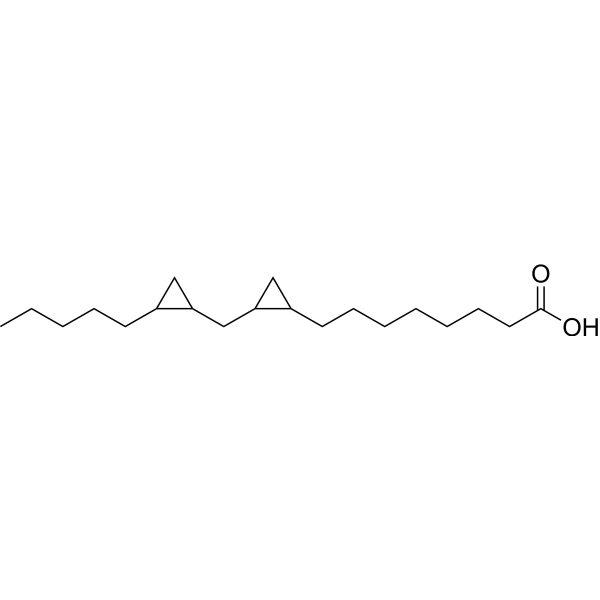
DCP-LA (FR236924), a linoleic acid derivative, selectively and directly activates PKCε. DCP-LA activates Ca( 2+)/calmodulin-dependent protein kinase II (CaMKII) and inhibits protein phosphatase-1 (PP-1) to stimulate AMPA receptor exocytosis. DCP-LA inhibits activation of caspase-3/-9 and protects neurons at least in part from oxidative stress-induced apoptosis [3].
loading...
    loading...
Cat. No.: HY-137371
CAS No.: 148409-20-5
Purity:  97.31%
Research Areas:  

Infection Cancer

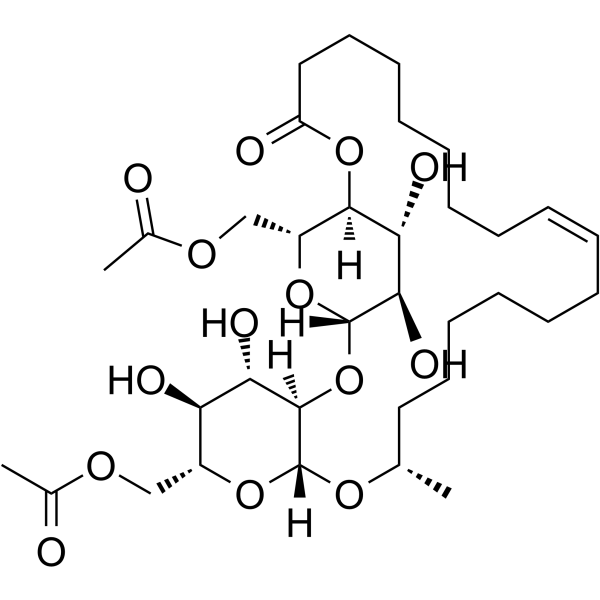
Lactonic sophorolipid is an apoptosis inducer and antimicrobial surfactant with antitumor activity. Lactonic sophorolipid regulates Bax/Bcl-gene expression through caspase-3/9 and induces apoptosis in tumor cells. Lactonic sophorolipid can disrupt cell membrane permeability and exert antibacterial effects (MIC for oral pathogens is 100-400 μg/mL). Lactonic sophorolipid promotes mitochondrial membrane potential depolarization, activates the intrinsic apoptotic pathway, and can synergize with antibiotics to enhance the antibacterial effect. Lactonic sophorolipid can be used in liver cancer research and the development of oral hygiene antibacterial agents[1][2][3].
loading...
    loading...
Cat. No.: HY-114243
CAS No.: 1382469-39-7
Purity:  98.28%
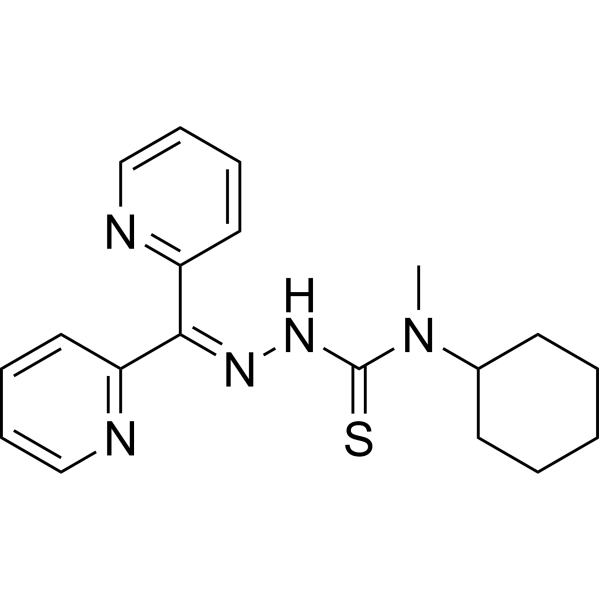
DpC is a selective, orally active iron chelator with anticancer activity. DpC acts on signaling pathway-related targets such as JNK, NF-κB, and its activity is competitively inhibited by another iron chelator Dp44mT (HY-18973). By chelating intracellular iron and copper ions in tumor cells to form redox-active complexes, DpC induces oxidative stress, activates the JNK, NF-κB pathways and downregulates IκBα, upregulates the expressions of neuroglobin and cytoglobin, activates caspase 3/9 to induce tumor cell apoptosis. It also overcomes P-glycoprotein-mediated multidrug resistance through a lysosome-targeting mechanism, and exhibits broad-spectrum synergistic effects when combined with various chemotherapeutic agents. DpC inhibits tumor metastasis and increases TNF-α levels in the tumor microenvironment to enhance endogenous immune responses. DpC is applicable to the research of various malignancies including neuroblastoma, pancreatic cancer, prostate cancer, lung cancer, and breast cancer [3].
loading...
    loading...
Cat. No.: HY-P1823
CAS No.: 147516-85-6
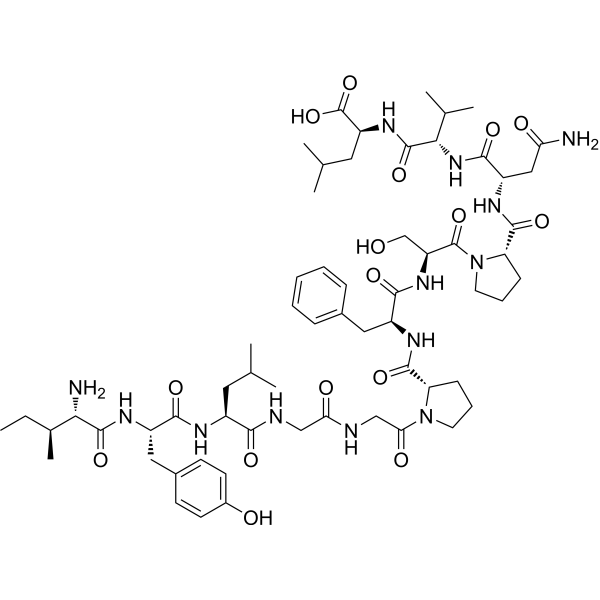
C-Reactive Protein (CRP) is an anti-pneumococcal plasma protein that can serve as an inflammatory marker. C-Reactive protein can protect mice from pneumococcal infection by activating complement. C-Reactive protein can inhibit the activation of caspase-3/9 through the CD64/AKT/mTOR pathway, thereby promoting chemotherapy resistance in mice with tongue squamous cell carcinoma .
loading...
    loading...
Cat. No.: HY-12455
CAS No.: 118292-34-5
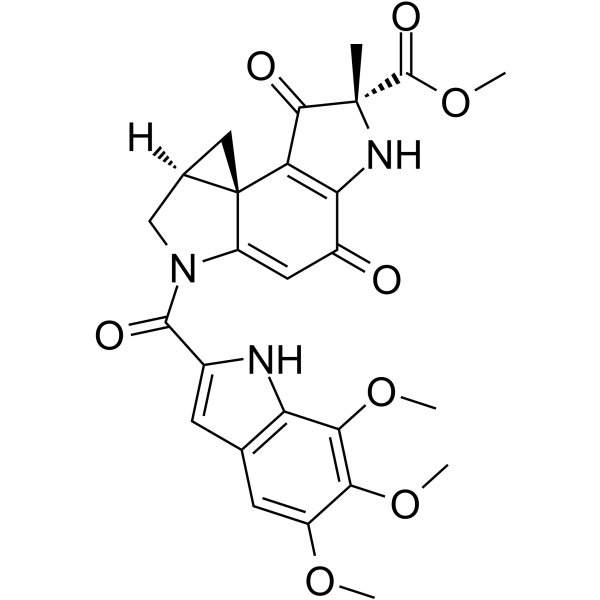
Duocarmycin A is an antitumor antibiotic and DNA alkylating agent with broad-spectrum antibacterial activity, which can serve as a payload for synthesizing antibody-drug conjugates (ADCs). Duocarmycin A selectively binds to the AT-rich minor groove of DNA, forms covalent adducts by alkylating the adenine N3 residue, thereby disrupting DNA structure and inhibiting its replication and transcription. Duocarmycin A induces apoptosis, sub-G1 phase accumulation and chromatin condensation, reduces the levels of pro-caspase-3/9, and induces p53-independent p21 expression. Duocarmycin A is widely used in the research of various malignancies, including leukemia, sarcoma, glioblastoma, as well as multiple solid tumor models such as lung cancer, breast cancer, and colorectal cancer [3].
loading...
    loading...
Cat. No.: HY-N16535
CAS No.: 289499-72-5
Stigmalactam is an aristolactam-type alkaloid extracted from Orophea enterocarpa with anticancer effects. Stigmalactam induces apoptosis via the mitochondrial pathway, with the activation of caspase-3/9, and a decrease in mitochondrial membrane potential (MTP). Stigmalactam exhibits antioxidant activity by decreasing ROS production. Stigmalactam can be used for liver and breast cancer research .
loading...
    loading...
Cat. No.: HY-N6926
CAS No.: 1073897-80-9
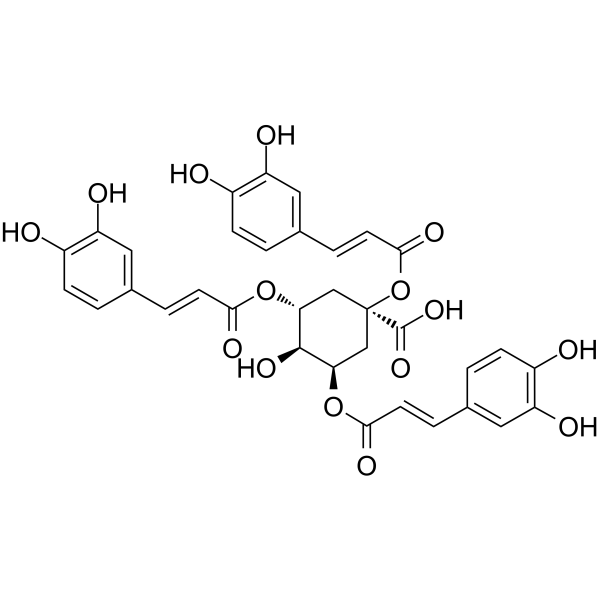
1,3,5-Tricaffeoylquinic acid acts as an angiogenesis inhibitor and apoptosis inducer, and exhibits anti-HIV activity. 1,3,5-Tricaffeoylquinic acid inhibits the phosphorylation of VEGFR2, ERK, PI3K, Akt and mTOR in the angiogenesis signaling pathway. 1,3,5-Tricaffeoylquinic acid regulates apoptosis-related proteins, upregulates the levels of activated caspase-8, Bax, activated PARP and caspase-3/9, while downregulates the level of Bcl-2. 1,3,5-Tricaffeoylquinic acid inhibits tube formation and shows cytotoxicity against ovarian cancer cells. 1,3,5-Tricaffeoylquinic acid can be used in studies related to ovarian cancer .
loading...
    loading...
Cat. No.: HY-15668
CAS No.: 1370037-59-4
Research Areas:  

Cancer

ST09 is an efficient and low toxicity Curcumin (HY-N0005) derivative. ST09 significantly inhibits cell migration and downregulates the expression of MMP1, MMP2, and Vimentin. ST09 has strong cytotoxicity to breast cancer cells, such as MDA-MB-231, MCF7 and T47D cells. ST09 induces cell apoptosis by upregulating Bax and cleaved caspase-3/9. ST09 can be used in the research of cancer such as breast cancer .
loading...
    loading...
Cat. No.: HY-N2199
CAS No.: 2608-21-1
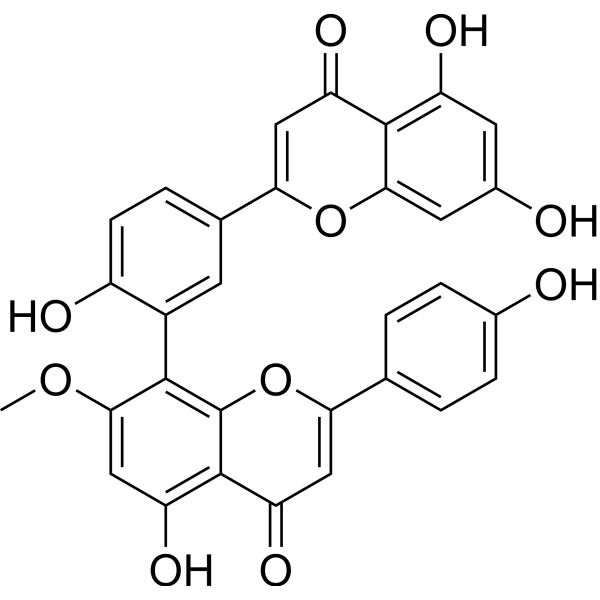
Sotetsuflavone is a flavonoid that can be isolated from Cycas revolute. Sotetsuflavone inhibits phosphorylation of PI3K, Akt, mTOR, JNK, and p38 MAPK; modulates expression of Cyclin D1, CDK4, Bcl-2, Bax, cleaved caspases 3/9, MMP-9, TGF-β, STAT3, and β-catenin. Sotetsuflavone induces G0/G1 cell cycle arrest, apoptosis, autophagy, and intracellular ROS elevation, inhibits cancer cell proliferation. Sotetsuflavone inhibits tumor growth in mouse tumor xenograft models. Sotetsuflavone can be used for the research of non-small cell lung cancer and Crohn’s disease [3] .
loading...
    loading...
Cat. No.: HY-175227
Research Areas:  

Cancer

STAT3/NF-κB-IN-1 is a potentSTAT3 and NF-κB inhibitor with IC50s of 5.86 (STAT3) and 4.22 μM (NF-κB) in 4T1 cells. STAT3/NF-κB-IN-1 is able to induce apoptosis via its upregulation on key apoptotic regulators; caspases-3/9, Bax and downregulation of Bcl-2. STAT3/NF-κB-IN-1 exerts considerable anticancer activity against breast cancer cell lines and reduces tumor volume in vivo. STAT3/NF-κB-IN-1 can be used for the study of breast cancer .
loading...
    loading...
Cat. No.: HY-108599R
CAS No.: 28399-31-7
Synonyms: FR236924 (Standard)
DCP-LA (Standard) is the analytical standard of DCP-LA. This product is intended for research and analytical applications. DCP-LA (FR236924), a linoleic acid derivative, selectively and directly activates PKCε. DCP-LA activates Ca(2+)/calmodulin-dependent protein kinase II (CaMKII) and inhibits protein phosphatase-1 (PP-1) to stimulate AMPA receptor exocytosis. DCP-LA inhibits activation of caspase-3/-9 and protects neurons at least in part from oxidative stress-induced apoptosis[1][2][3].
loading...
    loading...
Cat. No.: HY-162895
Research Areas:  

Cancer

NL13 is a Polo-like kinase 4 (PLK4) inhibitor with an IC50 value of 2.32 μM. NL13 can inhibit the viability of PC3 and DU145 prostate cancer cells, with IC50 values of 3.51 μM and 2.53 μM, respectively. NL13 can lead to the inactivation of the AKT signaling pathway by downregulating CCNB1/CDK1, inducing G2/M cell cycle arrest, and triggering apoptosis through the cleavage of caspase-9/caspase-3. In prostate cancer mice, NL13 can inhibit tumor growth .
loading...
    loading...
Cat. No.: HY-182349
CAS No.: 3034297-25-8
Research Areas:  

Cancer

Bax activator-2 is a pro-apoptotic agent targeting BAX, with an IC50 of 0.30 μM against human BAX. Bax activator-2 binds to the trigger site of BAX and induces its conformational change. Bax activator-2 induces mitochondrial depolarization, cytochrome c release, cleavage of caspase-3/9 and PARP, thereby initiating apoptosis. Bax activator-2 exhibits cytotoxicity against a variety of cancer cell lines. Bax activator-2 can be used in research related to acute myeloid leukemia and solid tumors .
loading...
    loading...
Cat. No.: HY-180242
Research Areas:  

Cancer

EGFR/CDK2-IN-5 is a potent dual EGFR and CDK2 inhibitor with IC50s of 17.30 and 212.10 nM, respectively. EGFR/CDK2-IN-5 also inhibits EGFR T790M with an IC50 of 123.8 nM. EGFR/CDK2-IN-5 exhibits potent anticancer activity. EGFR/CDK2-IN-5 induces G1 and S cell cycle arrest and apoptosis, accompanied by increased levels of caspase-3/9 and Bax, as well as decreased Bcl-2 levels. EGFR/CDK2-IN-5 can be used for the research of cancers, such as lung cancer, breast cancer, and leukemia .
loading...
    loading...
Cat. No.: HY-180324
CAS No.: 77727-18-5
Candidone is a type of flavanone phenolic compound with anti-cancer and antibacterial activities. Candidone inhibits the proliferation of hepatoblastoma and cholangiocarcinoma cells and induces their apoptosis by up-regulating p21, Bax, and caspase 3/9, and down-regulating Bcl-2 and survivin. It reduces the metastatic ability of cancer cells by inhibiting the expression of phosphorylated p38 and matrix metalloproteinase MMP-9. Candidone has inhibitory effects on multidrug-resistant bacterial strains. Candidone binds to the base pairs of DNA in a groove-binding manner, thereby slightly altering the conformation of DNA [3].
loading...
    loading...
Cat. No.: HY-114243A
CAS No.: 1382469-40-0
DpC hydrochloride is a selective, orally active iron chelator with anticancer activity. DpC hydrochloride acts on signaling pathway-related targets such as JNK, NF-κB, and its activity is competitively inhibited by another iron chelator Dp44mT (HY-18973). By chelating intracellular iron and copper ions in tumor cells to form redox-active complexes, DpC hydrochloride induces oxidative stress, activates the JNK, NF-κB pathways and downregulates IκBα, upregulates the expressions of neuroglobin and cytoglobin, activates caspase 3/9 to induce tumor cell apoptosis. It also overcomes P-glycoprotein-mediated multidrug resistance through a lysosome-targeting mechanism, and exhibits broad-spectrum synergistic effects when combined with various chemotherapeutic agents. DpC hydrochloride inhibits tumor metastasis and increases TNF-α levels in the tumor microenvironment to enhance endogenous immune responses. DpC hydrochloride is applicable to the research of various malignancies including neuroblastoma, pancreatic cancer, prostate cancer, lung cancer, and breast cancer [3].
loading...
    loading...
  • 1

