23 Results for "

central nervous system stimulant

" in MedChemExpress (MCE) Product Catalog:
Products (23)

23 Results for "central nervous system stimulant" in MCE Product Catalog:

8
8 Cited Publications
Cat. No.: HY-W017389
CAS No.: 69-89-6
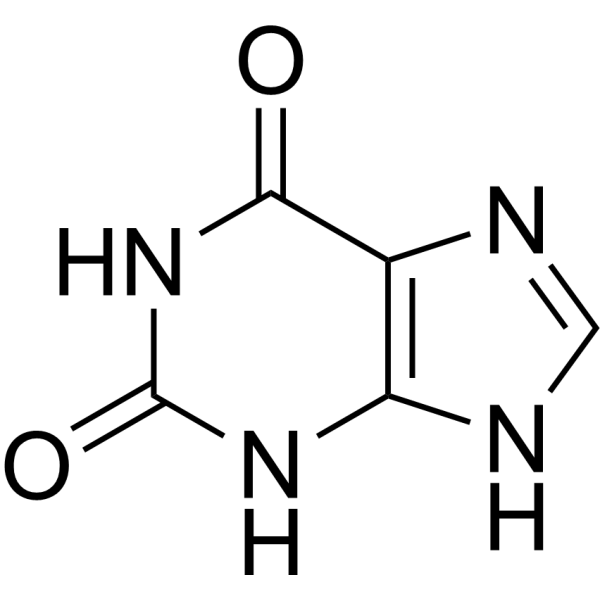
Xanthine, a plant alkaloid found in tea, coffee, and cocoa, is a mild stimulant of the central nervous system. Xanthine also acts as an intermediate product on the pathway of purine degradation .
loading...
    loading...
Cat. No.: HY-75095
CAS No.: 2627-86-3
Synonyms: S-(-)-α-Phenylethylamine; L-(-)-α-Methylbenzylamine
(S)-(-)-1-Phenylethanamine (S-(-)-α-Phenylethylamine; L-(-)-α-Methylbenzylamine) is a S-isomer of 1-Phenylethanamine (HY-W012848). (S)-(-)-1-Phenylethanamine can be used as a pharmaceutical intermediate for the synthesis of various active compounds .
loading...
    loading...
Cat. No.: HY-W012848
CAS No.: 618-36-0
Synonyms: DL-α-Methylbenzylamine
Target:  

Endogenous Metabolite

Research Areas:  

Neurological Disease Cancer

1-Phenylethanamine is a potential central nervous system stimulant and a related compound of β-phenylethylamine. Due to the replacement of its benzene ring with an indole group, its brain glycogenolytic activity is significantly reduced. Therefore, 1-Phenylethanamine can be used to study the impact of the chemical structure of phenylethylamine derivatives on central nervous system activity. In addition, 1-Phenylethanamine can also be used to synthesize the tyrosine kinase (tyrosine kinase) inhibitor CLM3 (HY-164413) .
loading...
    loading...
Cat. No.: HY-W017389S
CAS No.: 1262670-81-4
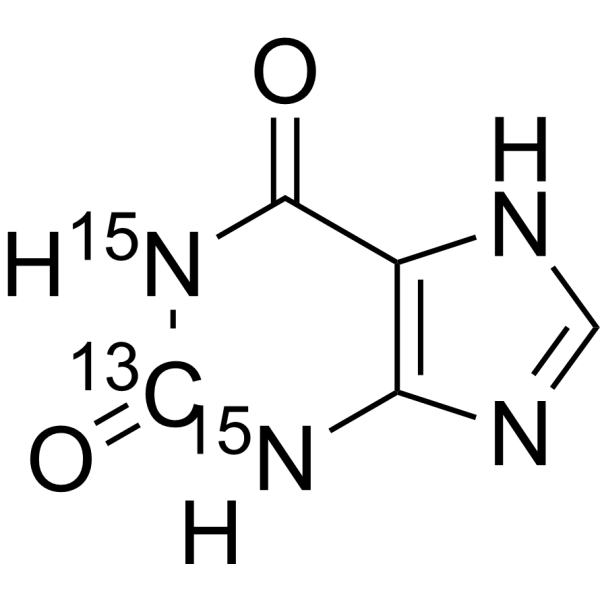
Xanthine- 13C, 15N2 is a 15N-labeled and 13C-labled Xanthine (HY-W017389). Xanthine is a plant alkaloid with mild stimulant activity of the central nervous system. Xanthine also acts as an intermediate product on the pathway of purine degradation .
loading...
    loading...
Cat. No.: HY-121944
CAS No.: 524-40-3
Purity:  99.81%
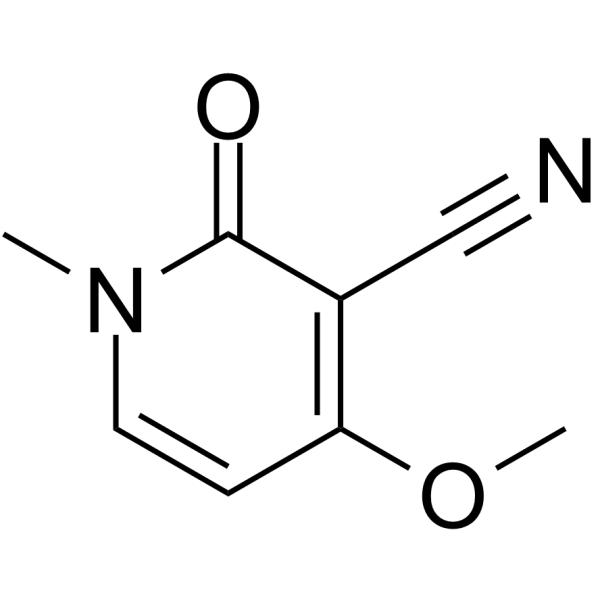
Ricinine is a central nervous system stimulant found in Ricinus communis. Ricinine binds near the benzodiazepine site of the GABAA receptor, reducing benzodiazepine binding affinity through an allosteric effect, and shows no interaction with AMPA, 5-HT1A, muscarinic receptors, or α1 adrenergic receptors. Ricinine improves memory consolidation in mice at low doses, while at high doses it induces seizures, an effect that is selectively inhibited by diazepam. Ricinine shortens the lifespan of Anopheles mosquitoes through sugar feeding and promotes the development of Plasmodium falciparum in mosquitoes . Ricinine is used in research related to epilepsy, amnesia, and malaria .
loading...
    loading...
Cat. No.: HY-B1326
CAS No.: 64-65-3
Synonyms: 3-Ethyl-3-methylglutarimide; Bemegrid
Target:  

GABA Receptor

Research Areas:  

Neurological Disease

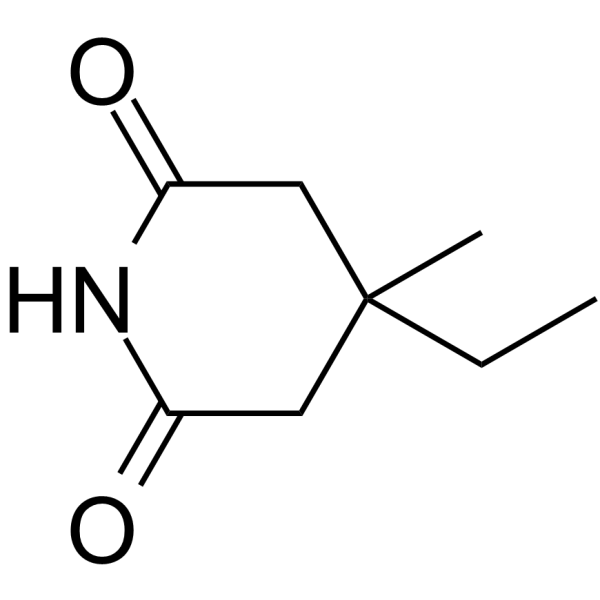
Bemegride (3-Ethyl-3-methylglutarimide) is a central nervous system stimulant and antidote for barbiturate poisoning .
loading...
    loading...
Cat. No.: HY-W017389R
CAS No.: 69-89-6
Xanthine (Standard) is the analytical standard of Xanthine. This product is intended for research and analytical applications. Xanthine, a plant alkaloid found in tea, coffee, and cocoa, is a mild stimulant of the central nervous system. Xanthine also acts as an intermediate product on the pathway of purine degradation . In Vitro: A number of stimulants are derived from Xanthine including caffeine and theobromine. Xanthine is a product on the pathway of purine degradation. Xanthine is subsequently converted to uric acid by the action of the Xanthine oxidase enzyme.
loading...
    loading...
Cat. No.: HY-W017389S1
CAS No.: 161770-53-2
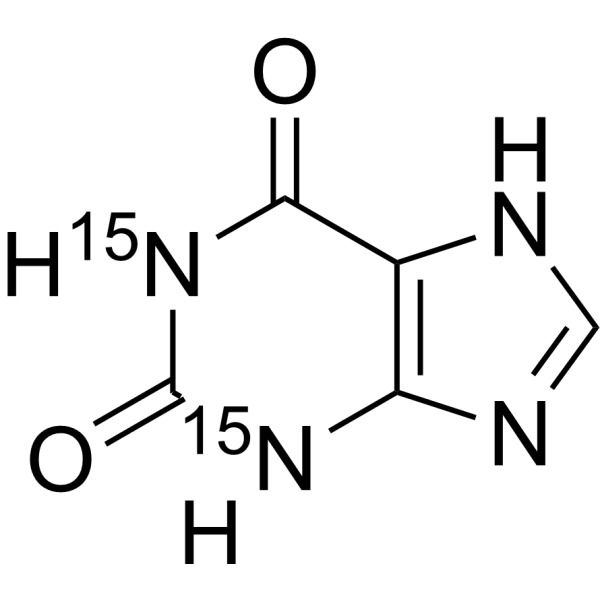
Xanthine- 15N2 is a 15N-labeled Xanthine (HY-W017389) . Xanthine, a plant alkaloid found in tea, coffee, and cocoa, is a mild stimulant of the central nervous system. Xanthine also acts as an intermediate product on the pathway of purine degradation .
loading...
    loading...
Cat. No.: HY-158756
CAS No.: 2446466-61-9
Target:  

Drug Derivative

Research Areas:  

Neurological Disease

3-EEC hydrochloride is the hydrochloride of 3-EEC. 3-EEC belongs to the class of central nervous system stimulants. 3-EEC can be used for the study of neurological disease .
loading...
    loading...
Cat. No.: HY-W749852
CAS No.: 1196-43-6
Xanthine sodium, 98%, a plant alkaloid found in tea, coffee, and cocoa, is a mild stimulant of the central nervous system. Xanthine sodium, 98% also acts as an intermediate product on the pathway of purine degradation .
loading...
    loading...
Cat. No.: HY-W158945
CAS No.: 35378-15-5
Target:  

Serotonin Transporter

Research Areas:  

Neurological Disease

3-Chloroamphetamine hydrochloride is a derivative of Amphetamine that acts as a central nervous system stimulant by releasing serotonin and dopamine.
loading...
    loading...
Cat. No.: HY-109149
CAS No.: 1032291-80-7
Synonyms: KP 106
Target:  

Others

Research Areas:  

Neurological Disease

Lomardexamfetamine (KP 106) is an orally active central nervous system stimulant composed of d-amphetamine and a ligand. Lomardexamfetamine can be used for the research of attention-deficit hyperactivity disorder .
loading...
    loading...
Cat. No.: HY-W749852A
CAS No.: 1196-43-6
Xanthine sodium, for cell culture, a plant alkaloid found in tea, coffee, and cocoa, is a mild stimulant of the central nervous system. Xanthine sodium, for cell culture also acts as an intermediate product on the pathway of purine degradation .
loading...
    loading...
Cat. No.: HY-121944R
CAS No.: 524-40-3
Ricinine (Standard) is the analytical standard of Ricinine (HY-121944). This product is intended for research and analytical applications. Ricinine is a central nervous system stimulant found in Ricinus communis. Ricinine binds near the benzodiazepine site of the GABAA receptor, reducing benzodiazepine binding affinity through an allosteric effect, and shows no interaction with AMPA, 5-HT1A, muscarinic receptors, or α1 adrenergic receptors. Ricinine improves memory consolidation in mice at low doses, while at high doses it induces seizures, an effect that is selectively inhibited by diazepam. Ricinine shortens the lifespan of Anopheles mosquitoes through sugar feeding and promotes the development of Plasmodium falciparum in mosquitoes . Ricinine is used in research related to epilepsy, amnesia, and malaria .
loading...
    loading...
Cat. No.: HY-121944S
CAS No.: 1313734-77-8
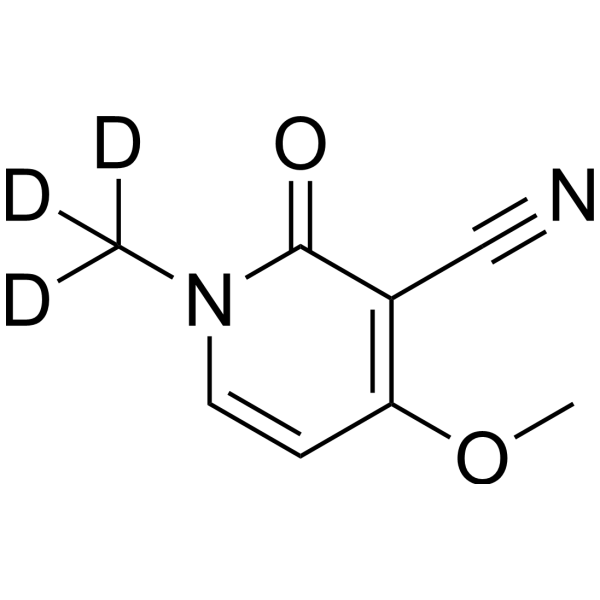
Ricinine-d3 is the d3-labeled Ricinine (HY-121944). Ricinine is a central nervous system stimulant found in Ricinus communis. Ricinine binds near the benzodiazepine site of the GABAA receptor, reducing benzodiazepine binding affinity through an allosteric effect, and shows no interaction with AMPA, 5-HT1A, muscarinic receptors, or α1 adrenergic receptors. Ricinine improves memory consolidation in mice at low doses, while at high doses it induces seizures, an effect that is selectively inhibited by diazepam. Ricinine shortens the lifespan of Anopheles mosquitoes through sugar feeding and promotes the development of Plasmodium falciparum in mosquitoes . Ricinine is used in research related to epilepsy, amnesia, and malaria .
loading...
    loading...
Cat. No.: HY-123320S
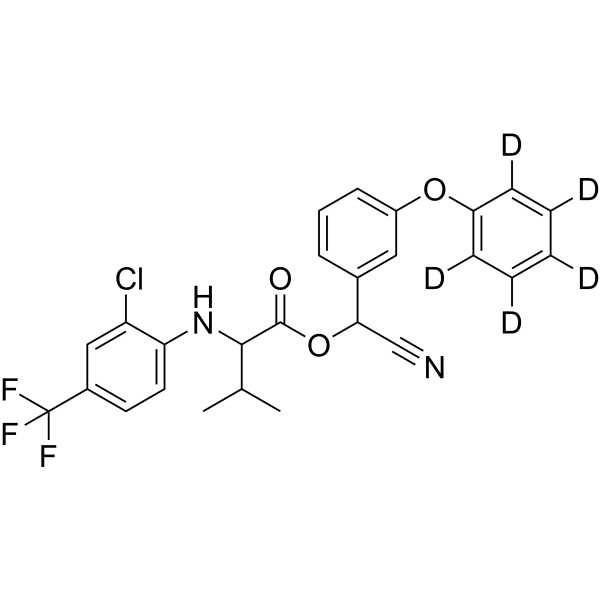
Fluvalinate-d5 is the deuterated-labeled Fluvalinate (HY-123320). Fluvalinate is an orally active acaricide classified as a sodium channel inhibitor. Fluvalinate delays sodium channel closure, prolongs cell membrane depolarization, inhibits the excitability of honeybee brain neurons, and exerts a central nervous system inhibitory effect. Fluvalinate negatively affects the learning ability, memory ability, sucrose responsiveness, and survival of honeybees. Fluvalinate potentiates pentobarbital-induced hypnosis, reduces spontaneous activity in mice, and decreases the total white blood cell count and absolute lymphocyte count in mice. Fluvalinate induces acute toxic symptoms in rats, acts as a cholinergic stimulant, and induces the production of hepatic enzymes in rats. Fluvalinate causes the death of Varroa jacobsoni sensitive to τ-Fluvalinate (HY-B2021). Fluvalinate can be used in studies related to mite pest control .
loading...
    loading...
Cat. No.: HY-175061
CAS No.: 2271360-92-8
Target:  

Drug Isomer

Research Areas:  

Neurological Disease

2-MeOMC hydrochloride is a positional isomer of Methedrone. 2-MeOMC hydrochloride has central nervous system stimulant activity .
loading...
    loading...
Cat. No.: HY-B1326R
CAS No.: 64-65-3
Synonyms: 3-Ethyl-3-methylglutarimide (Standard); Bemegrid (Standard)
Research Areas:  

Neurological Disease

Bemegride (Standard) is the analytical standard of Bemegride. This product is intended for research and analytical applications. Bemegride (3-Ethyl-3-methylglutarimide) is a central nervous system stimulant and antidote for barbiturate poisoning .
loading...
    loading...
Cat. No.: HY-187059
CAS No.: 39640-15-8
Synonyms: EGYT-475; Trelibet
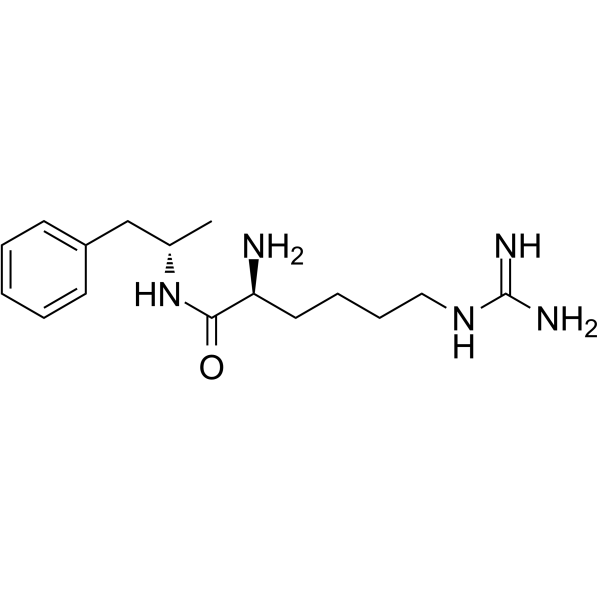
Piberaline (EGYT-475; Trelibet) is a psychoactive piperazine derivative with stimulant and antidepressant effects. Piberaline antagonizes Reserpine (HY-N0480)-induced dopamine depletion. Piberaline can be used for research on depression and central nervous system disorders .
loading...
    loading...
Cat. No.: HY-W115741S1
1-Phenylethanamine-d3 hydrochloride is the deuterated-labeled 1-Phenylethanamine hydrochloride. 1-Phenylethanamine is a potential central nervous system stimulant and a related compound of β-phenylethylamine. Due to the replacement of its benzene ring with an indole group, its brain glycogenolytic activity is significantly reduced. Therefore, 1-Phenylethanamine can be used to study the impact of the chemical structure of phenylethylamine derivatives on central nervous system activity. In addition, 1-Phenylethanamine can also be used to synthesize the tyrosine kinase (tyrosine kinase) inhibitor CLM3 (HY-164413).
loading...
    loading...

