14 Results for "

clot formation

" in MedChemExpress (MCE) Product Catalog:
Products (14)

14 Results for "clot formation" in MCE Product Catalog:

9
9 Publications Verification
Cat. No.: HY-114164H
CAS No.: 9002-04-4
Synonyms: EC 3.4.21.5 (Lyophilized); Human Alpha Thrombin (Lyophilized)
Human α-Thrombin (EC 3.4.21.5; Human Alpha Thrombin) (Lyophilized) is a terminal serine protease in the coagulation cascade, as well as a potent physiological platelet agonist and fibrin-generating enzyme in vivo. Human α-Thrombin catalyzes the conversion of fibrinogen to fibrin for blood clot formation, and activates platelet aggregation by cleaving the protease-activated receptors PAR1 (major) (Kd = 1 nM) and PAR4 (minor) on the platelet surface to expose tethered ligands. Human α-Thrombin also amplifies coagulation via positive feedback by activating coagulation factors V, VIII, XI (FV/FVIII/FXI), and switches to activate protein C to exert anticoagulant effects after binding to thrombomodulin .
This product is in a freeze-dried form.
loading...
    loading...
4
4 Cited Publications
Cat. No.: HY-B0236
CAS No.: 60-32-2
Synonyms: EACA; Epsilon-Amino-n-caproic Acid; 6-Aminohexanoic acid
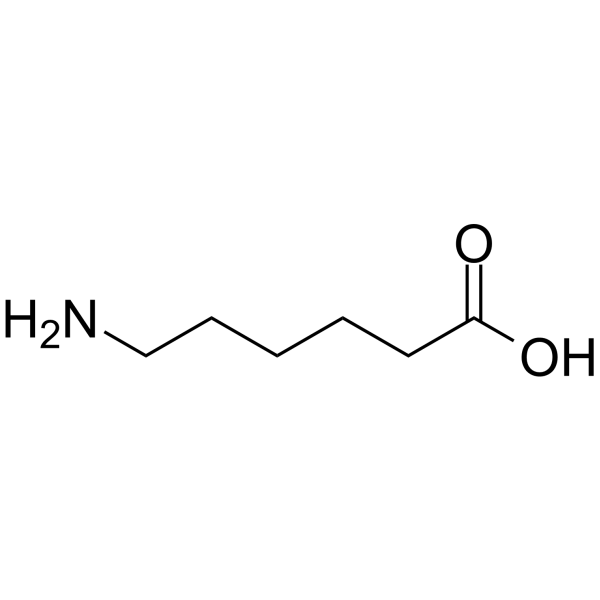
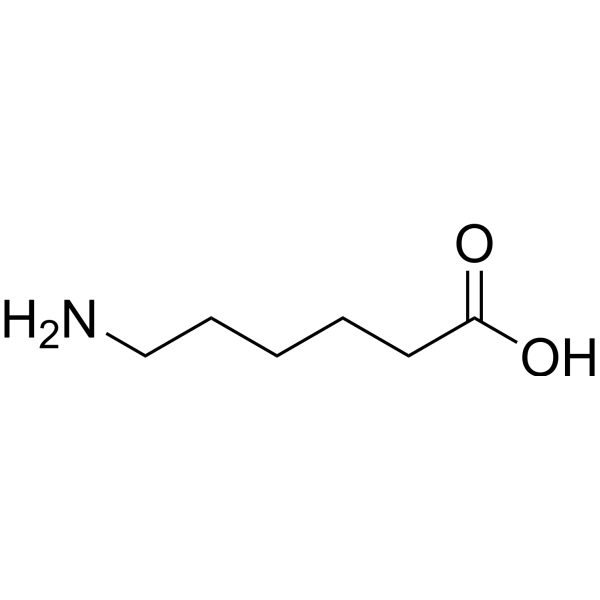
6-Aminocaproic acid (EACA), a monoamino carboxylic acid, is a potent and orally active inhibitor of plasmin and plasminogen. 6-Aminocaproic acid is a potent antifibrinolytic agent. 6-Aminocaproic acid prevents clot lysis through the competitive binding of lysine residues on plasminogen, inhibiting plasmin formation and reducing fibrinolysis. 6-Aminocaproic acid can be used for the research of bleeding disorders .
loading...
    loading...
Cat. No.: HY-N2600
CAS No.: 76472-87-2
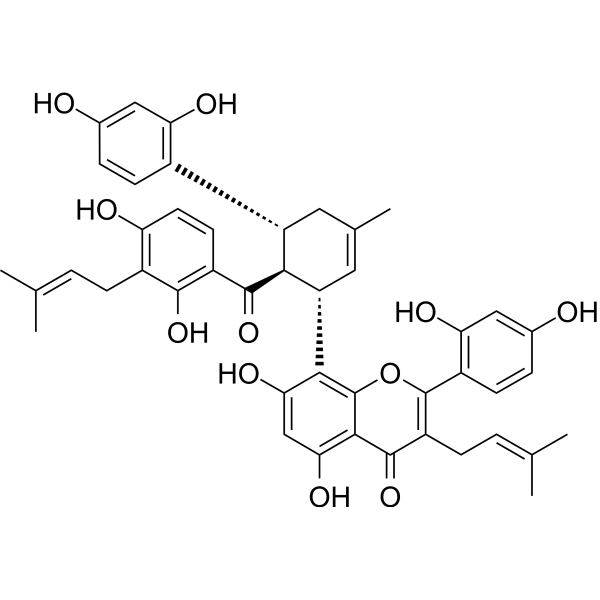
Kuwanon H is a selective non-peptide bombesin receptor antagonist and platelet activation inhibitor. Kuwanon H also acts as a specific antagonist of GRP-preferring receptors, with a Ki value of 290 nM for mouse GRP-R and 6500 nM for rat NMB-R. Kuwanon H inhibits the phosphorylation of AKT, mTOR, ERK, cPLA2 and p38, and upregulates TRIB3. It induces endoplasmic reticulum stress, apoptosis and autophagosome formation. Kuwanon H blocks calcium mobilization, mitogenic signaling, DNA synthesis, dense granule secretion, thromboxane A2 generation and integrin αIIb/β3 activity. It inhibits collagen-induced platelet aggregation and fibronectin adhesion, and delays clot retraction. Kuwanon H inhibits melanoma cell growth in vitro and in vivo, and enhances the sensitivity of melanoma cells to CDDP. It can be used in research related to melanoma, small cell lung cancer and thrombosis .
loading...
    loading...
Cat. No.: HY-B0236A
CAS No.: 4321-58-8
Synonyms: EACA hydrochloride; Epsilon-Amino-n-caproic Acid hydrochloride; 6-Aminohexanoic acid hydrochloride
Target:  

Drug Derivative PAI-1

Research Areas:  

Metabolic Disease Cancer

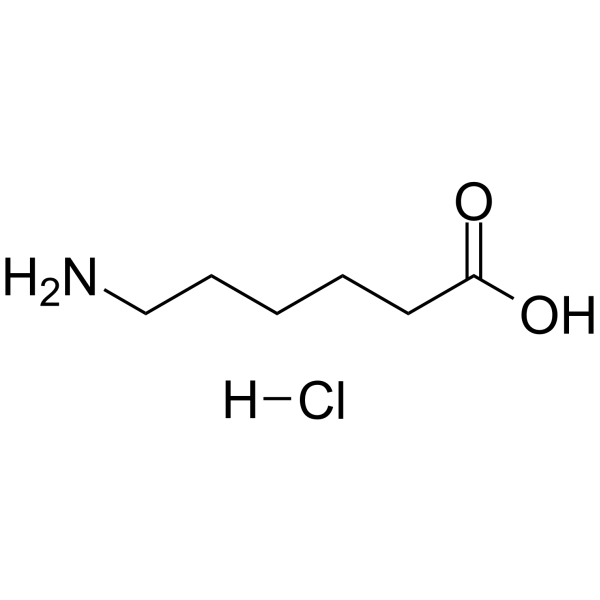
6-Aminocaproic acid hydrochloride, a monoamino carboxylic acid, is a potent and orally active inhibitor of plasmin and plasminogen. 6-Aminocaproic acid is a potent antifibrinolytic agent. 6-Aminocaproic acid prevents clot lysis through the competitive binding of lysine residues on plasminogen, inhibiting plasmin formation and reducing fibrinolysis. 6-Aminocaproic acid can be used for the research of bleeding disorders .
loading...
    loading...
Cat. No.: HY-B0236S
CAS No.: 1228656-08-3
Synonyms: EACA-d6; Epsilon-Amino-n-caproic acid-d6; 6-Aminohexanoic acid-d6
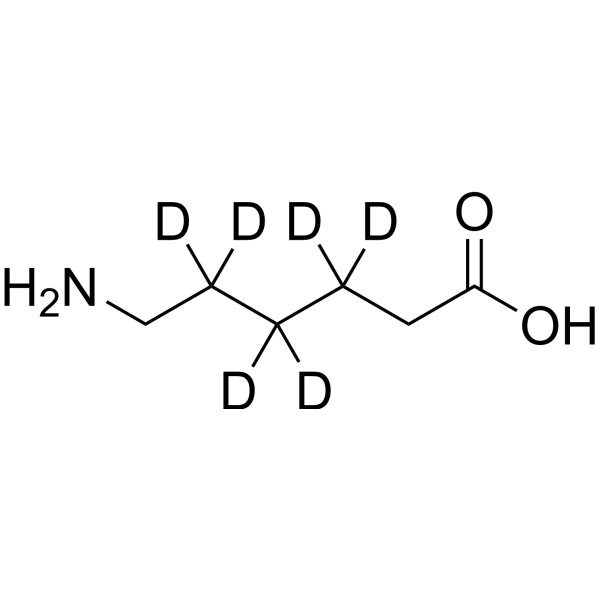
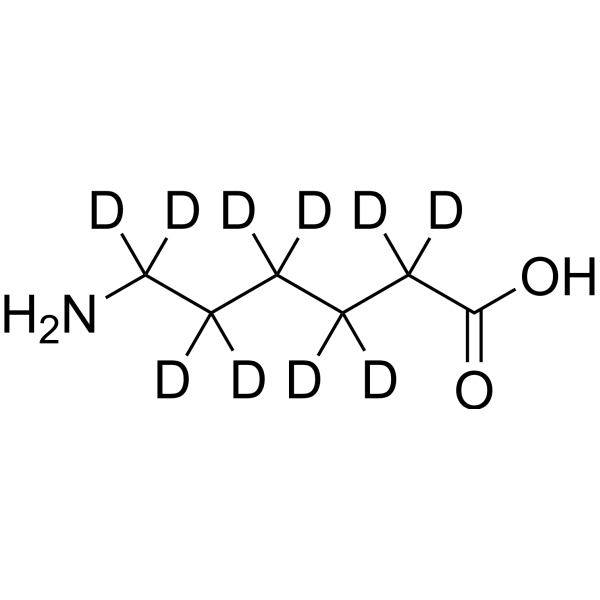
6-Aminocaproic acid-d6 is deuterium labeled 6-Aminocaproic acid. 6-Aminocaproic acid (EACA), a monoamino carboxylic acid, is a potent and orally active inhibitor of plasmin and plasminogen. 6-Aminocaproic acid is a potent antifibrinolytic agent. 6-Aminocaproic acid prevents clot lysis through the competitive binding of lysine residues on plasminogen, inhibiting plasmin formation and reducing fibrinolysis. 6-Aminocaproic acid can be used for the research of bleeding disorders .
loading...
    loading...
Cat. No.: HY-P4721
CAS No.: 131791-98-5
Target:  

Thrombin

Research Areas:  

Cardiovascular Disease

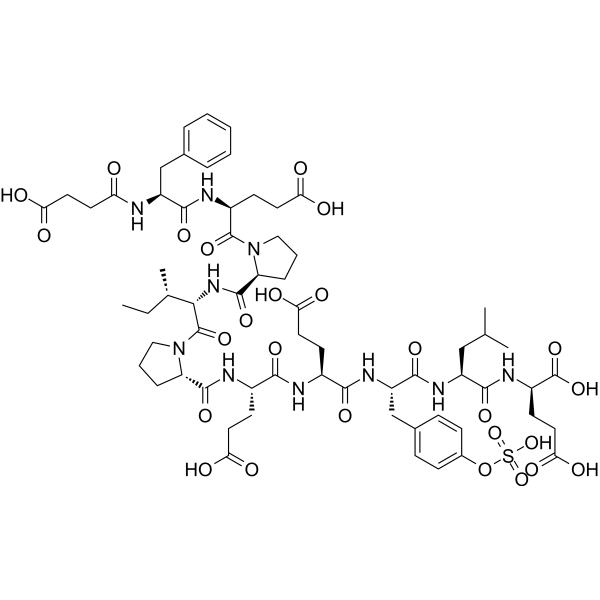
Succinyl-(Pro58,D-Glu65)-Hirudin (56-65) (sulfated) is a hirugen-like peptide, and has high affnity for thrombin than Hirugen, with a KD < 100 nM. Succinyl-(Pro58,D-Glu65)-Hirudin (56-65) (sulfated) is an antithrombotic agent. Succinyl-(Pro58,D-Glu65)-Hirudin (56-65) (sulfated) inhibits the thrombin-induced fibrin clot formation with an IC50 value of 0.087 μM .
loading...
    loading...
Cat. No.: HY-177804
Target:  

Thrombin

Research Areas:  

Inflammation/Immunology

Thrombin aptamer is a 11mer-DNA aptamer that targets thrombin. Thrombin aptamer inhibites thrombin-catalysed fibrin-clot formation in vitro
loading...
    loading...
Cat. No.: HY-B0236R
CAS No.: 60-32-2
Synonyms: EACA(Standard); Epsilon-Amino-n-caproic Acid(Standard); 6-Aminohexanoic acid (Standard)
6-Aminocaproic acid (Standard) is the analytical standard of 6-Aminocaproic acid. This product is intended for research and analytical applications. 6-Aminocaproic acid (EACA), a monoamino carboxylic acid, is a potent and orally active inhibitor of plasmin and plasminogen. 6-Aminocaproic acid is a potent antifibrinolytic agent. 6-Aminocaproic acid prevents clot lysis through the competitive binding of lysine residues on plasminogen, inhibiting plasmin formation and reducing fibrinolysis. 6-Aminocaproic acid can be used for the research of bleeding disorders .
loading...
    loading...
Cat. No.: HY-B0236S1
CAS No.: 461432-51-9
Synonyms: EACA-d10; Epsilon-Amino-n-caproic Acid-d10; 6-Aminohexanoic acid-d10
6-Aminocaproic acid-d10 is the deuterium labeled 6-Aminocaproic acid. 6-Aminocaproic acid (EACA), a monoamino carboxylic acid, is a potent and orally active inhibitor of plasmin and plasminogen. 6-Aminocaproic acid is a potent antifibrinolytic agent. 6-Aminocaproic acid prevents clot lysis through the competitive binding of lysine residues on plasminogen, inhibiting plasmin formation and reducing fibrinolysis. 6-Aminocaproic acid can be used for the research of bleeding disorders .
loading...
    loading...
Cat. No.: HY-W701541
CAS No.: 1246819-49-7
Synonyms: EACA-d10 hydrochloride; Epsilon-Amino-n-caproic Acid-d10 hydrochloride; 6-Aminohexanoic acid-d10 hydrochloride
6-Aminocaproic acid-d10 hydrochloride (EACA-d10 hydrochloride; Epsilon-Amino-n-caproic Acid-d10 hydrochloride; 6-Aminohexanoic acid-d10 hydrochloride) is the deuterium labeled 6-Aminocaproic acid hydrochloride (HY-B0236A). 6-Aminocaproic acid hydrochloride, a monoamino carboxylic acid, is a potent and orally active inhibitor of plasmin and plasminogen. 6-Aminocaproic acid is a potent antifibrinolytic agent. 6-Aminocaproic acid prevents clot lysis through the competitive binding of lysine residues on plasminogen, inhibiting plasmin formation and reducing fibrinolysis. 6-Aminocaproic acid can be used for the research of bleeding disorders .
loading...
    loading...
Cat. No.: HY-N2600R
CAS No.: 76472-87-2
Kuwanon H (Standard) is the analytical standard of Kuwanon H. This product is intended for research and analytical applications. Kuwanon H is a selective non-peptide bombesin receptor antagonist and platelet activation inhibitor. Kuwanon H also acts as a specific antagonist of GRP-preferring receptors, with a Ki value of 290 nM for mouse GRP-R and 6500 nM for rat NMB-R. Kuwanon H inhibits the phosphorylation of AKT, mTOR, ERK, cPLA2 and p38, and upregulates TRIB3. It induces endoplasmic reticulum stress, apoptosis and autophagosome formation. Kuwanon H blocks calcium mobilization, mitogenic signaling, DNA synthesis, dense granule secretion, thromboxane A2 generation and integrin αIIb/β3 activity. It inhibits collagen-induced platelet aggregation and fibronectin adhesion, and delays clot retraction. Kuwanon H inhibits melanoma cell growth in vitro and in vivo, and enhances the sensitivity of melanoma cells to CDDP. It can be used in research related to melanoma, small cell lung cancer and thrombosis .
loading...
    loading...
Cat. No.: HY-19220
CAS No.: 167843-21-2
Target:  

Thrombin

Research Areas:  

Cardiovascular Disease

S-18326 is an orally active direct thrombin inhibitor. S-18326 inhibits thrombus formation by reversibly and with high affinity binding to the active site of thrombin, directly preventing the conversion of fibrinogen to fibrin. S-18326 effectively prolongs various clotting times in human plasma. S-18326 has demonstrated antithrombotic efficacy in multiple animal models without causing thrombocytopenia. S-18326 can be used in research on thromboembolic diseases .
loading...
    loading...
Cat. No.: HY-L136
1,525 compounds

Coagulation, also known as clotting, is the process in which blood changes from a liquid to a solid gel to form a blood clot. Thrombin, which is accurately and evenly generated in the injured part of blood vessels, is a key effector enzyme of the blood coagulation system and participates in many important biological processes, such as platelet activation, fibrinogen conversion to fibrin network, coagulation feedback amplification, etc. At the same time, to avoid the accidental formation of thrombus in the body, there is also an anticoagulant mechanism that inhibits blood coagulation.

Normal coagulation mechanism represents a balance between the pro-coagulant pathway in the injured site and anti-coagulant pathway beyond it. The blood coagulation system may be out of balance during the perioperative period or critical illness, which may lead to thrombosis or excessive bleeding. Therefore, the physiological study of coagulation balance is an important basis for clinical diagnosis and treatment of the abnormal coagulation process.

MCE supplies a unique collection of 1,525 compounds targeting key proteins in coagulation and anti-coagulation system. MCE Coagulation and Anti-coagulation Compound Library is a useful tool for study the mechanism of coagulation and anticoagulation.

Cat. No.: HY-189107
CAS No.: 787548-03-2
Synonyms: INS50589 free acid
Target:  

P2Y Receptor

Research Areas:  

Cardiovascular Disease

Regrelor (INS50589 (free acid)) is a selective, reversible, and competitive P2Y12 receptor antagonist and an adenosine 5′-monophosphate derivative. Regrelor inhibits ADP (HY-W010918)-induced aggregation of human washed platelets with an IC50 of 0.016 μM. Intravenous infusion of Regrelor rapidly and dose-dependently inhibits ADP-induced platelet function, and platelet function gradually recovers after cessation of infusion. Regrelor can be used for research on P2Y12-mediated platelet function and cardiovascular regulation .
loading...
    loading...
  • 1

