9 Results for "

conidia

" in MedChemExpress (MCE) Product Catalog:
Products (9)

9 Results for "conidia" in MCE Product Catalog:

Cat. No.: HY-P10447
CAS No.: 103651-09-8
Synonyms: Fengycin IX; SNA-60-367-3
Target:  

Phospholipase Fungal

Research Areas:  

Infection

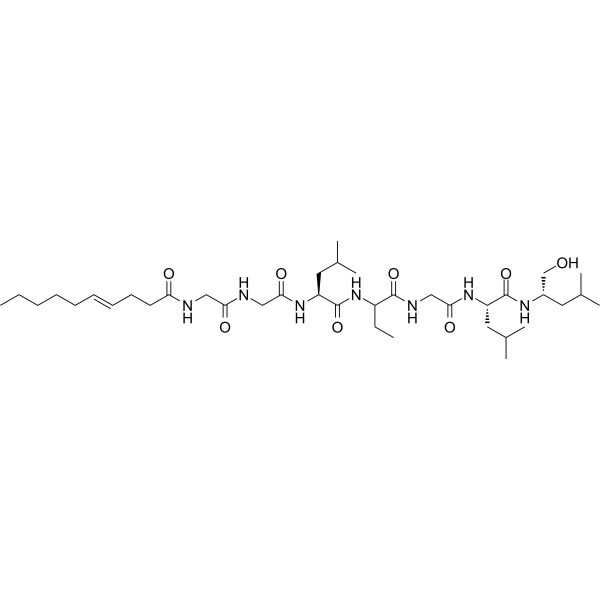
Plipastatin A1 (Fengycin IX; SNA-60-367-3) is a lipopeptide with phospholipase A2 inhibitory activity. Plipastatin A1 inhibits conidial germination of Botrytis cinerea in vitro and reduces the incidence of gray mold on tomato leaves. Plipastatin A1 is applicable to research related to gray mold [1][2].
loading...
    loading...
Cat. No.: HY-W007328
CAS No.: 1006-94-6
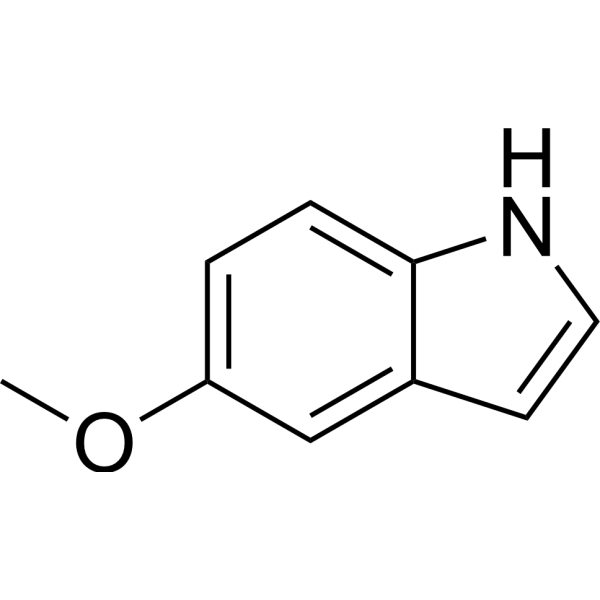
5-Methoxyindole is an L-tryptophan metabolite with antifungal activity, and also serves as a pharmaceutical intermediate. Metabolites of 5-Methoxyindole exhibit COX-2 inhibitory, anti-inflammatory and anti-tumor activities. 5-Methoxyindole induces morphological distortion of hyphae and conidia, ROS accumulation, apoptosis and cell death in Gaeumannomyces graminis. 5-Methoxyindole can be used in studies related to fungal infections and organic synthesis .
loading...
    loading...
Cat. No.: HY-126795
CAS No.: 483305-08-4
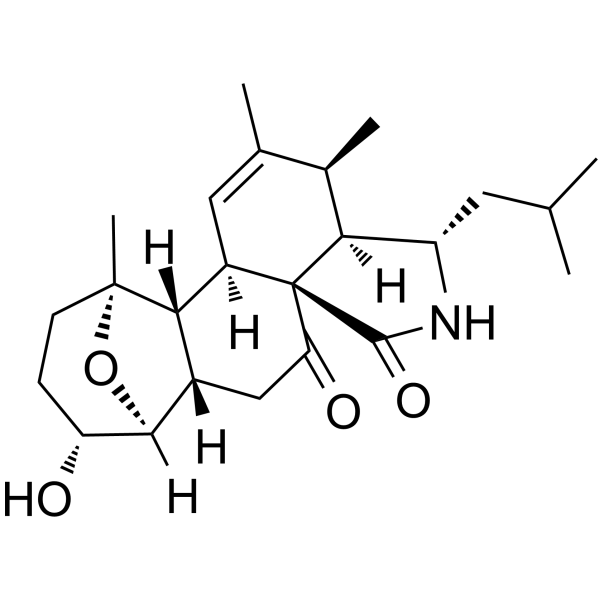
Aspergillin PZ is a novel isoindole-alkaloid from Aspergillus awamori. Aspergillin PZ induces conidia of P. oryzae to deform moderately .
loading...
    loading...
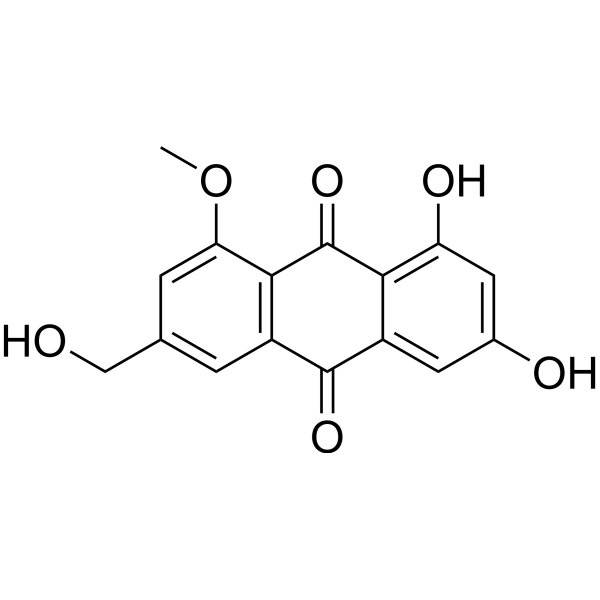
Cat. No.: HY-N10267
CAS No.: 478-35-3
Carviolin is a compound isolated from the mycelia of the ascomycete Neobulgaria pura. Carviolin inhibits the formation of appressoria in germinating conidia of Magnaporthe grisea on inductive (hydrophobic) surface. Carviolin exhibits moderate cytotoxic, but no antifungal, antibacterial, or phytotoxic activities .
loading...
    loading...
Cat. No.: HY-129515
CAS No.: 140939-04-4
Trichodecenin II is a fungal metabolite that can be found in conidia of the fungus, Trichoderma viride .
loading...
    loading...
Cat. No.: HY-N10255
CAS No.: 1900-29-4
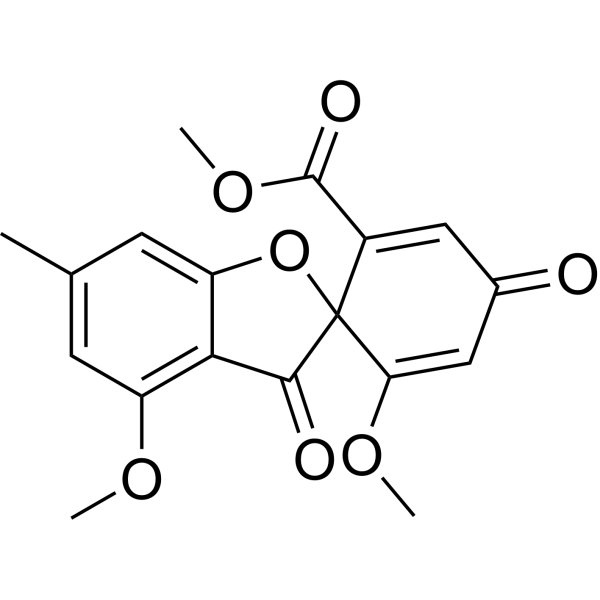
Trypacidin is the conidia-bound metabolite with antiprotozoal activity. Trypacidin has a protective function against phagocytes both in the environment and during the infection process .
loading...
    loading...
Cat. No.: HY-N16867
CAS No.: 138231-04-6
Synonyms: 8-HPODE; PsiBα
Target:  

Fungal

8(R)-Hydroxylinoleic acid (8-HPODE; PsiBα) is an oxygenated unsaturated C18 fatty acid that regulates fungal sporulation. 8(R)-Hydroxylinoleic acid increases the level of ascospores and decreases the level of conidia in fungi. 8(R)-Hydroxylinoleic acid can be used in studies related to fungi .
loading...
    loading...
Cat. No.: HY-W007328S
CAS No.: 90663-68-6
5-Methoxyindole-d3 is the deuterated-labeled 5-Methoxyindole (HY-W007328). 5-Methoxyindole is an L-tryptophan metabolite with antifungal activity, and also serves as a pharmaceutical intermediate. Metabolites of 5-Methoxyindole exhibit COX-2 inhibitory, anti-inflammatory and anti-tumor activities. 5-Methoxyindole induces morphological distortion of hyphae and conidia, ROS accumulation, apoptosis and cell death in Gaeumannomyces graminis. 5-Methoxyindole can be used in studies related to fungal infections and organic synthesis .
loading...
    loading...
Cat. No.: HY-N18242
CAS No.: 61470-49-3
Isohemigossylic acid lactone 2-methyl ether is a sesquiterpene lactone fungal inhibitor. Isohemigossylic acid lactone 2-methyl ether inhibits the conidial growth of Verticillium dahliae with a ED50 of 7.8 μg/mL. Isohemigossylic acid lactone 2-methyl ether is isolated from the roots of Bombax malbaricum(synonym Salmalia malbaricum). Isohemigossylic acid lactone 2-methyl ether is applicable to studies related to Verticillium dahliae infection .
loading...
    loading...

