1. Search Result
Search Result
Results for "

covalent antagonist

" in MedChemExpress (MCE) Product Catalog:

20

Inhibitors & Agonists

1

Natural
Products

1

Click Chemistry

Cat. No. Nombre del producto Target Áreas de investigación Chemical Structure
  • HY-112693
    H-151
    Maximum Cited Publications
    138 Publications Verification

    STING Inflammation/Immunology
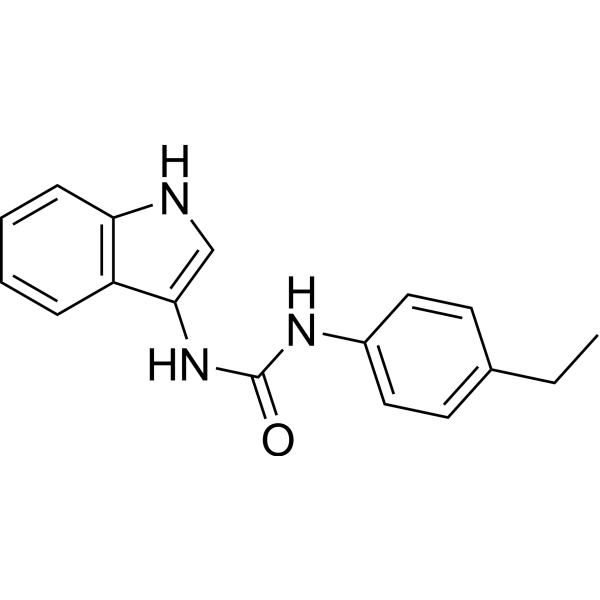
    H-151 is a potent, selective and covalent antagonist of STING that has noteworthy inhibitory activity both in cells and in vivo. H-151 reduces TBK1 phosphorylation and suppresses STING palmitoylation. H-151 can be used for the research of autoinflammatory disease .
    H-151
  • HY-N2909

    NF-κB RIP kinase Mixed Lineage Kinase Cardiovascular Disease Neurological Disease Inflammation/Immunology
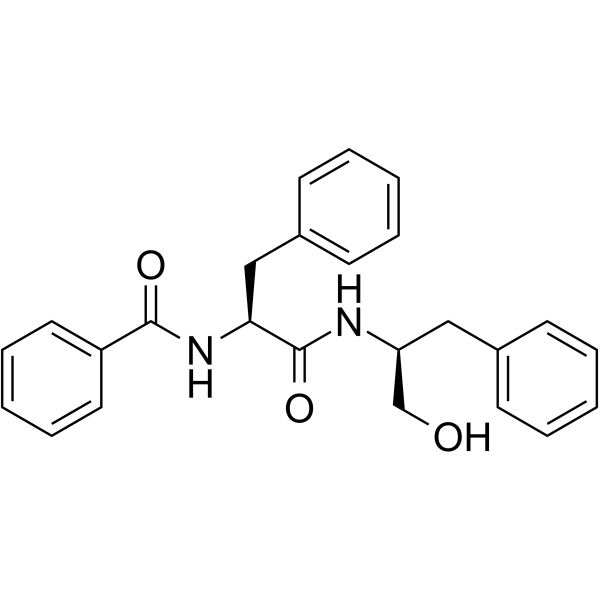
    Aurantiamide is a non-covalent, orally active, blood-brain-permeable GRPR selective antagonist with anti-inflammatory and neuroprotective effects. Aurantiamide reduces inflammation and oxidative stress in renal tissue by inhibiting GRPR-mediated renal necrosis pathways (such as RIPK3/MLKL signaling) and NF-κB inflammatory pathways, exerting anti-acute kidney injury and endothelial function activities. Aurantiamide also inhibits the M1 polarization of microglia and inhibits NLRP3 activation, thereby improving AD mouse models. Aurantiamide has in vivo inhibitory efficacy in acute kidney injury models such as ischemia/reperfusion, sepsis, and hypertension models .
    Aurantiamide
  • HY-112596
    H3B-6545
    3 Publications Verification

    Estrogen Receptor/ERR Cancer
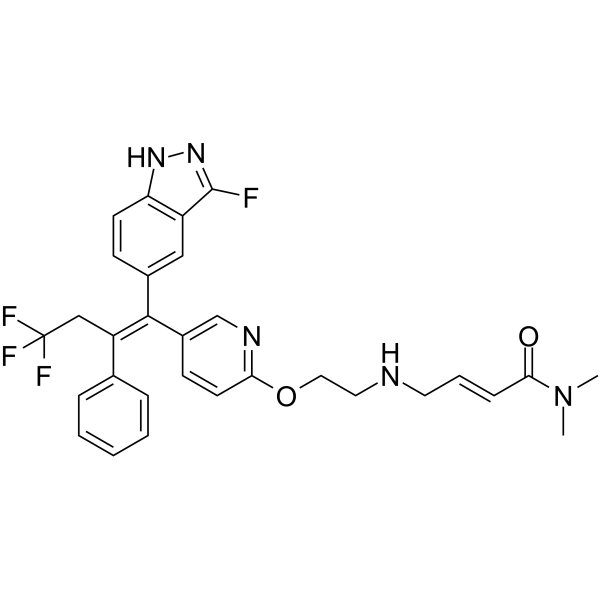
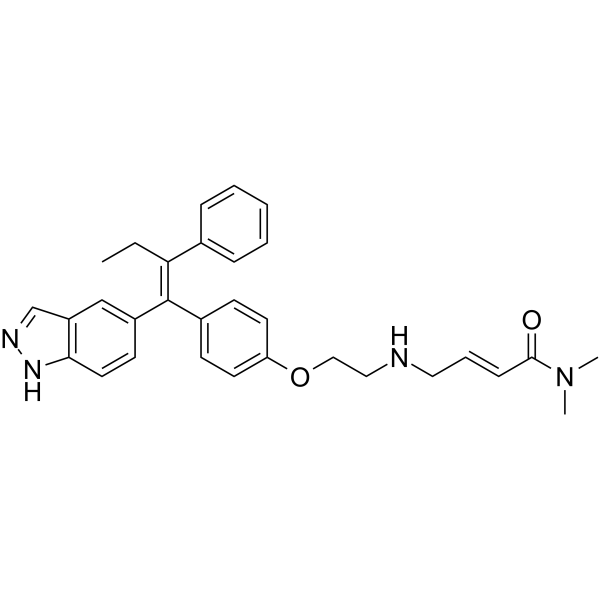
    H3B-6545 is an oral, selective estrogen receptor covalent antagonist (SERCA) for the research of metastatic ER-positive, HER2-negative breast cancer .
    H3B-6545
  • HY-112611

    Estrogen Receptor/ERR Cancer
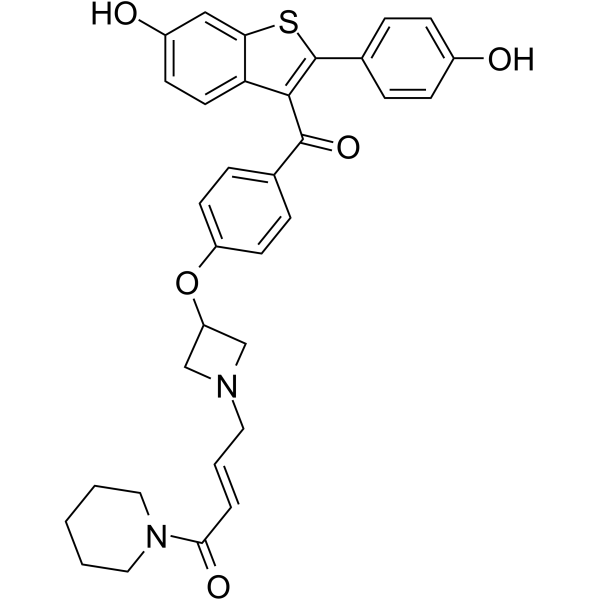
    H3B-5942 is a selective, irreversible and orally active estrogen receptor covalent antagonist, inactivates both wild-type and mutant ERα by targeting Cys530, with Kis of 1 nM and 0.41 nM, respectively. H3B-5942 reduces ERα target gene GREB1, shows potent antitumor activity both in multiple cell lines or animals bearing ERα WT or ERα mutations .
    H3B-5942
  • HY-112247

    PPAR TGF-beta/Smad Metabolic Disease Inflammation/Immunology
    SR 16832 is a dual-site covalent, orthosteric and allosteric PPARγ antagonist. SR 16832 activates the TGF-β signaling pathway and upregulates the expression of Vimentin and Fibronectin (Fibronectin). SR 16832 is toxic to bronchial epithelium. SR 16832 can be used in research related to type 2 diabetes and pulmonary fibrosis .
    SR 16832
  • HY-112596A
    H3B-6545 hydrochloride
    3 Publications Verification

    Estrogen Receptor/ERR Cancer
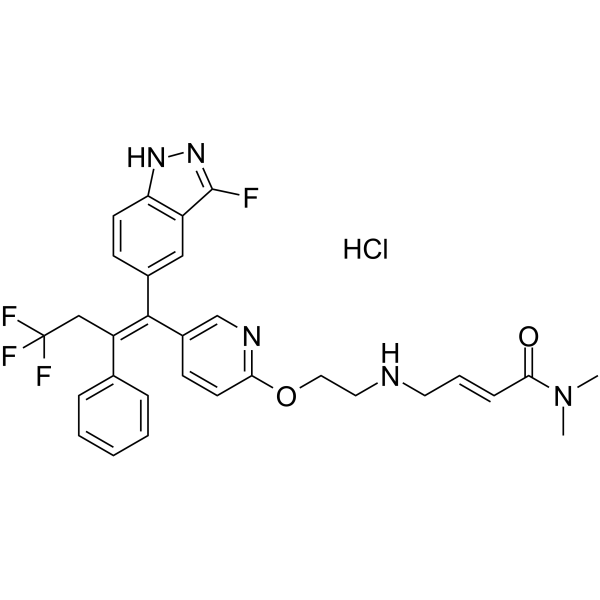
    H3B-6545 hydrochloride is an oral, selective estrogen receptor covalent antagonist (SERCA) for the research of metastatic ER-positive, HER2-negative breast cancer .
    H3B-6545 hydrochloride
  • HY-123669

    P2Y Receptor Drug Metabolite Cardiovascular Disease
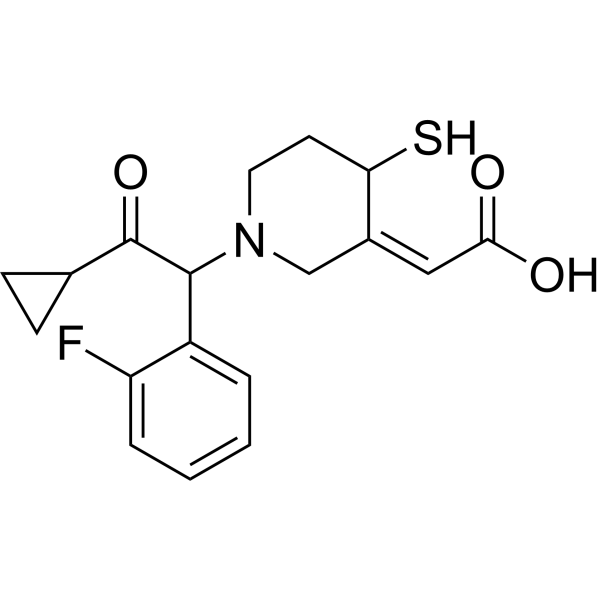
    R-138727, the major active metabolite of Prasugrel (HY-15284), is a highly potent and selective irreversible antagonist of the P2Y12 receptor, with an IC50 of 2.5 μM. R-138727 covalently binds to the P2Y12 receptor on the platelet surface, blocking adenosine diphosphate-mediated platelet activation and aggregation. R-138727 can be used to study stroke, cerebral infarction and neurological deficits.
    R-138727
  • HY-144733

    Estrogen Receptor/ERR Apoptosis Cancer
    ERα antagonist 1 (Compound 19d) is a potent, selective, covalent estrogen receptor α (ERα) antagonist. ERα antagonist 1 induces apoptosis and cell cycle G0/G1 phase arrest in MCF-7 cells .
    ERα antagonist 1
  • HY-170382

    Estrogen Receptor/ERR Apoptosis Cancer
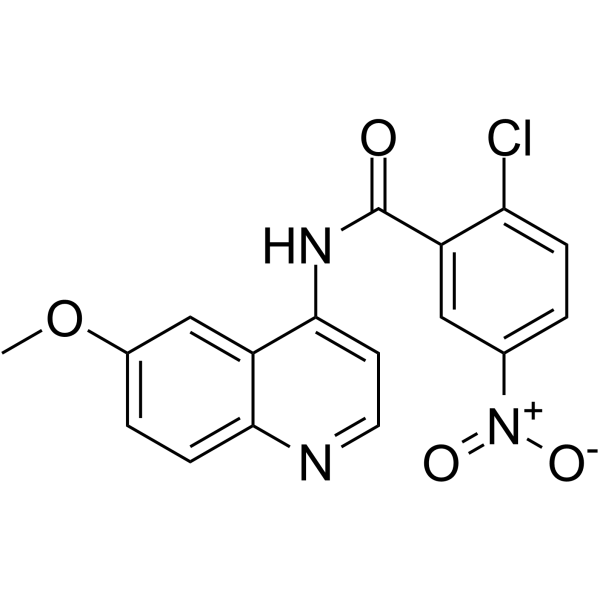
    ER covalent antagonist-1 (Compound 39D) is the antagonist for estrogen receptor α (ERα). ER covalent antagonist-1 inhibits the proliferation of ERα-positive cell MCF-7 with an IC50 of 0.98 μM, arrests the cell cycle at G0/G1 phase, and induces apoptosis. ER covalent antagonist-1 exhibits antitumor efficacy in mouse model .
    ER covalent antagonist-1
  • HY-120188

    PPAR Others
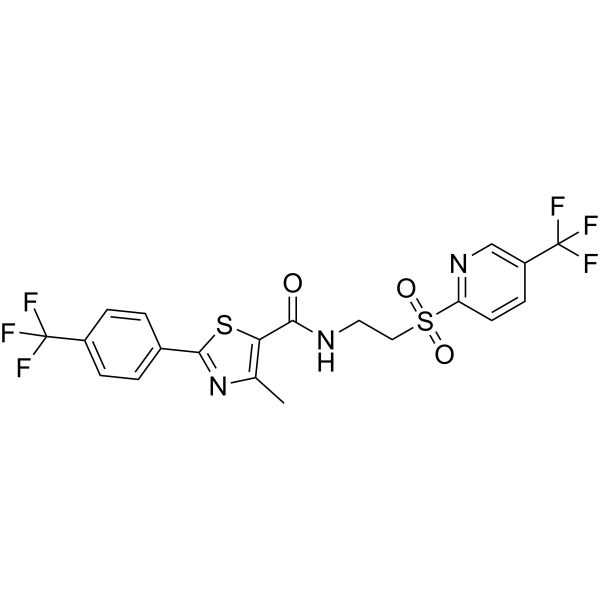
    CC618 is a selective PPARβ/δ antagonist. CC618 covalently modifies conserved Cys249 in the PPARβ/δ ligand-binding pocket via nucleophilic aromatic substitution, converting its thiol moiety to a 5-trifluoromethyl-2-pyridylthioether .
    CC618
  • HY-135698

    M-CAM

    Opioid Receptor Neurological Disease
    Methocinnamox (M-CAM) a selective and long-acting μ-opioid receptor (MOR) antagonist with a Ki of 0.6 nM. Methocinnamox binds to the orthosteric site of the MOR in a pseudo-irreversible, non-covalent manner, resulting in prolonged receptor blockade that persists until new receptors are synthesized. Methocinnamox acts as a reversible antagonist at both the kappa-opioid receptor (KOR) (Ki = 4.9 nM) and delta-opioid receptor (DOR) (Ki = 2.2 nM), and it exhibits no intrinsic agonist activity at these receptors. Methocinnamox can be used to reverse and prevent opioid overdose and addiction .
    Methocinnamox
  • HY-145823

    EGFR Cancer
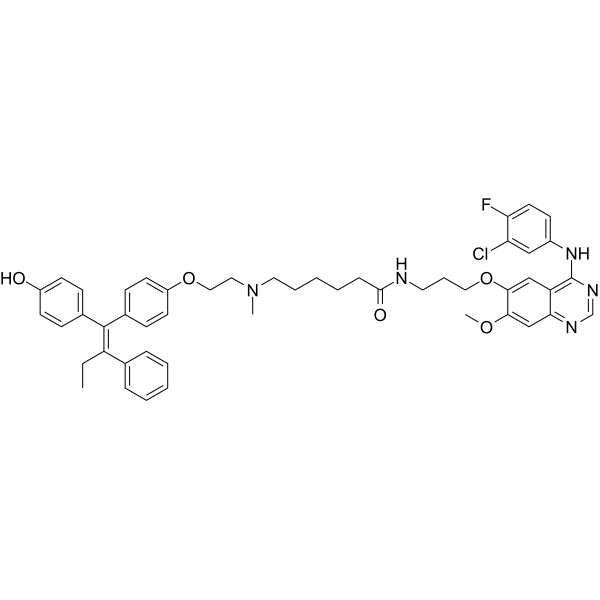
    EGFR-IN-42 (Compound 17b) is a potent inhibitor of EGFR with single-digit nanomolar activity. EGFR-IN-42 connects tamoxifen or endoxifen with the EGFR-inhibitor gefitinib via a covalent linkage. EGFR-IN-42 retains both ER antagonist activity and EGFR inhibition. EGFR-IN-42 has superior anti-cancer activity .
    EGFR-IN-42
  • HY-145824

    EGFR Cancer
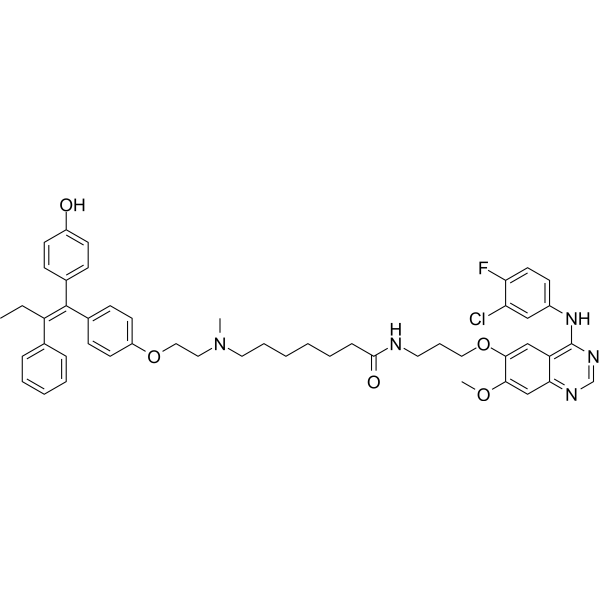
    EGFR-IN-43 (Compound 17c) is a potent inhibitor of EGFR with single-digit nanomolar activity. EGFR-IN-43 connects tamoxifen or endoxifen with the EGFR-inhibitor gefitinib via a covalent linkage. EGFR-IN-43 retains both ER antagonist activity and EGFR inhibition. EGFR-IN-43 has superior anti-cancer activity .
    EGFR-IN-43
  • HY-180507

    Toll-like Receptor (TLR) Neurological Disease Inflammation/Immunology Cancer
    TLR2/9 antagonist 1 (Compound 24) is a reversible covalent TLR2 (IC₅₀ = 0.5 μM (TLR2/TLR6); IC₅₀ = 0.6 μM (TLR2/TLR1)) and TLR9 (IC₅₀ = 0.32 μM) antagonist. TLR2/9 antagonist 1 has no significant effect on other TLR subtypes. TLR2/9 antagonist 1 can be used for studying central nervous system diseases and malignant tumors caused by inflammation .
    TLR2/9 antagonist 1
  • HY-181427

    Androgen Receptor Cancer
    UT-143 is an orally active, selective irreversible covalent antagonist of androgen receptor (AR). UT-143 inhibits the proliferation of AR-positive prostate cancer cells, reduces the weight of androgen target tissues in rats, and suppresses the growth of AR-positive xenograft tumors. UT-143 can be used for the research of prostate cancer .
    UT-143
  • HY-122222

    PPAR Others
    MRL20 is a PPARγ constitutive and allosteric agonist. MRL20 enhances the interaction between PPARγ and the co-activating peptide of TRAP220, with its EC50 being 10 nM. Even after being covalently blocked in the constitutive pocket by GW9662 (HY-16578) or T0070907 (HY-13202), MRL20 can still strengthen the interaction between PPARγ and TRAP220, with EC50 values of 176 and 440 nM respectively. MRL20 fails to completely inhibit its cell activation effect. MRL20 can be used to study the allosteric regulatory mechanism of PPARγ .
    MRL20
  • HY-175761

    Bacterial Infection
    Riboswit-modulator-1 (Compound A1), a covalent RNA ligand, is a bacterial Flavin mononucleotide (FMN) riboswitch modulator. Riboswit-modulator-1 modifies unpaired guanine residues (G11 and G62) proximal to the FMN-binding site through a proximity-driven mechanism, and interferes with its conformational transitions. Riboswit-modulator-1 acts as a negative antagonist by eliciting the opposite effect of the natural effector molecule .
    Riboswit-modulator-1
  • HY-180120

    STING IKK NF-κB IFNAR Interleukin Related Inflammation/Immunology
    UM-203 is a reversible covalent STING antagonist. UM-203 is effective against both mouse and human STING, and in particular, it inhibits the most common human STING R232 variant. UM-203 can inhibit STING oligomerization and reduce phosphorylation of downstream TBK1 and IRF3, thereby blocking the IRF3 and NF-κB-mediated signaling pathways and inhibiting IFNβ and IL-6 secretion. UM-203 can be used for the research of inflammation and immunology, such as systemic lupus erythematosus .
    UM-203
  • HY-186083

    mAChR Cardiovascular Disease
    Propylbenzilylcholine mustard (PrBCM) is an irreversible, covalently binding selective antagonist targeting rat cardiac muscarinic receptors, with a preference for muscarinic receptor subtypes that show low affinity for agonists. Propylbenzilylcholine mustard inactivates such receptors in a dose- and time-dependent manner in vitro, and its receptor selectivity remains stable across different ionic strengths and in GTP-containing buffer systems. Propylbenzilylcholine mustard can be applied to basic pharmacological studies on the structure and function of muscarinic receptors, especially focusing on the heterogeneity of cardiac muscarinic receptors and related cardiovascular pharmacological research .
    Propylbenzilylcholine mustard
  • HY-180814

    Drug Derivative Dopamine Receptor Cancer
    SKF-83566-PEG1-pomalidomide is an anti-tumor agent and is formed by the covalent connection of SKF-83566 (HY-103430A) (dopamine D1 receptor antagonist) and Pomalidomide (HY-10984) (immunomodulatory agent). SKF-83566-PEG1-pomalidomide can inhibit cancer cells invasion, migration and colony formation. SKF-83566-PEG1-pomalidomide can inhibit tumor growth and angiogenesis in MDA-MB-231 cell chicken embryo chorioallantoic membrane (CAM) xenograft model. SKF-83566-PEG1-pomalidomide can be used for research of breast cancer .
    SKF-83566-PEG1-pomalidomide

Consulta en línea

Your information is safe with us. * Required Fields.

Saludo


Country or Region *

Nombre del solicitante *


Nombre de la Organizaciòn *

Department *


Direcciòn del E-mail *


Nombre del producto *

Cat. No.


Requested quantity *

Número de teléfono *


Observaciones

Consulta en línea

Inquiry Information

Nombre del producto:
Cat. No.:
Cantidad:
MCE Japan Authorized Agent:

