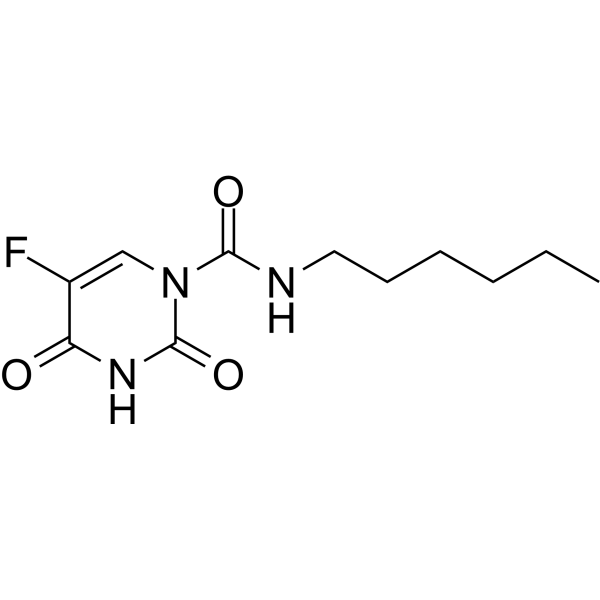
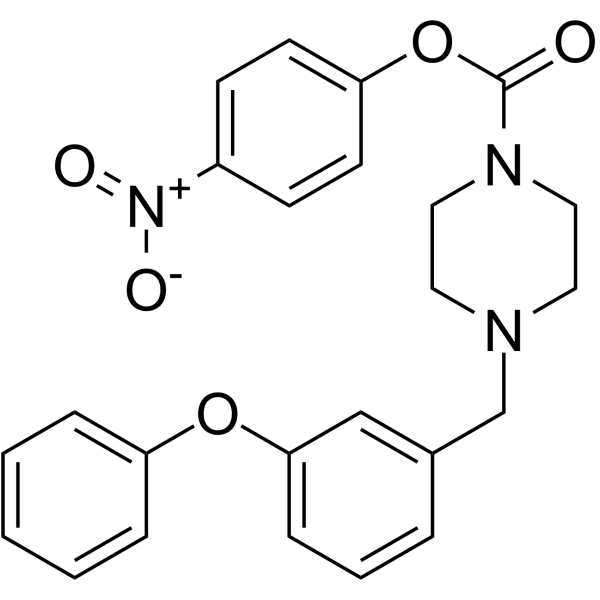
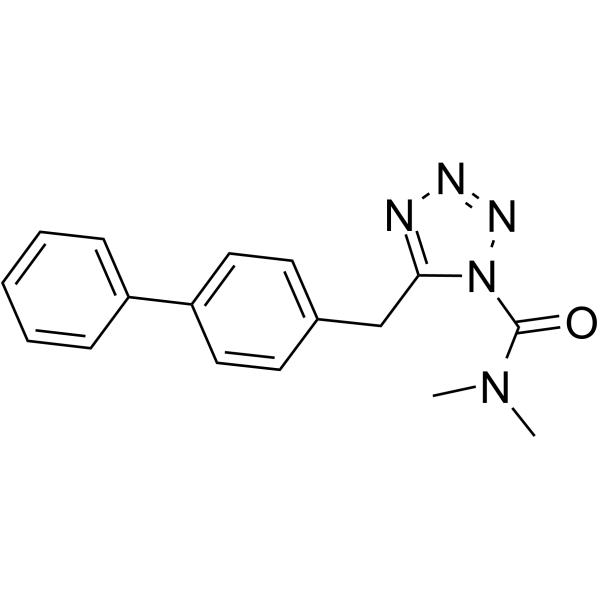
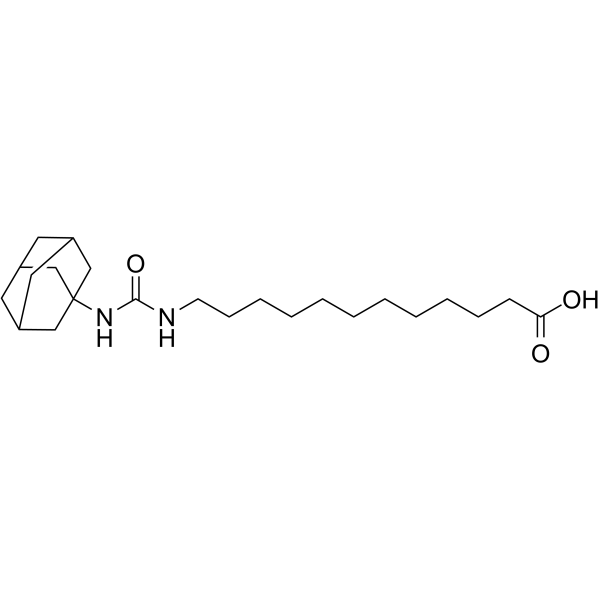
1. Search Result
Search Result
Results for "

dNTPases/NUDIX hydrolases

" in MedChemExpress (MCE) Product Catalog:

509

Inhibitors & Agonists

8

Fluorescent Dye

5

Biochemical Assay Reagents

4

Peptides

1

Inhibitory Antibodies

40

Natural
Products

5

Recombinant Proteins

19

Isotope-Labeled Compounds

3

Antibodies

1

Click Chemistry

7

Oligonucleotides

Cat. No. Product Name Target Research Areas Chemical Structure
  • HY-12814
    TH588
    2 Publications Verification

    DNA/RNA Synthesis Cancer
    TH588 is first-in-class nudix hydrolase family inhibitor that potently and selectively engage and inhibit the MTH1 (IC50= 5 nM).
    TH588
  • HY-P2803B
    Beta-glucuronidase (helix pomatia)
    1 Publications Verification

    β-glucuronidase Metabolic Disease
    Beta-glucuronidase (helix pomatia) is a glycosyl hydrolase that hydrolyzes β-glucuronic acid and sulfate esters in urine and other biological fluids, and then releases β-glucuronate .
    Beta-glucuronidase (helix pomatia)
  • HY-14380
    PF-3845
    2 Publications Verification

    FAAH Autophagy Inflammation/Immunology Cancer
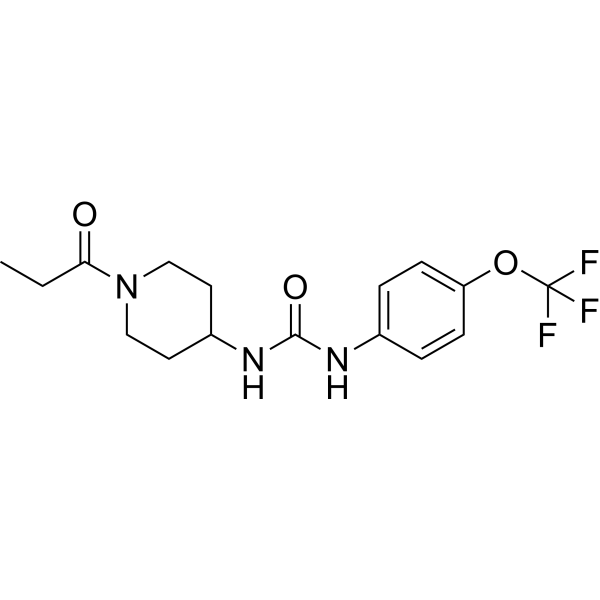
    PF-3845 is a potent, selective, irreversible and orally active inhibitor of fatty acid amide hydrolase (FAAH), with a Ki of 0.23 μM. PF-3845 is a covalent inhibitor that carbamylates FAAH's serine nucleophile. PF-3845 can reduce pain sensation, inflammation, and anxiety/depression without substantial effects on motility or cognition .
    PF-3845
  • HY-W040256

    ACP

    Endogenous Metabolite Metabolic Disease Cancer
    Acid phosphatase, wheat (ACP) is a hydrolase enzyme found in wheat. Acid phosphatase, wheat catalyses the hydrolysis of orthophosphate monoesters under acidic conditions .
    Acid phosphatase, wheat
  • HY-113974
    trans-AUCB
    2 Publications Verification

    t-AUCB

    Epoxide Hydrolase Cancer
    trans-AUCB (t-AUCB) is a potent, orally active and selective soluble epoxide hydrolase (sEH) inhibitor with IC50s of 1.3 nM, 8 nM, 8 nM for hsEH, mouse sEH and rat sEH, respectively. trans-AUCB has anti-glioma activity .
    trans-AUCB
  • HY-18638
    TCID
    5+ Cited Publications

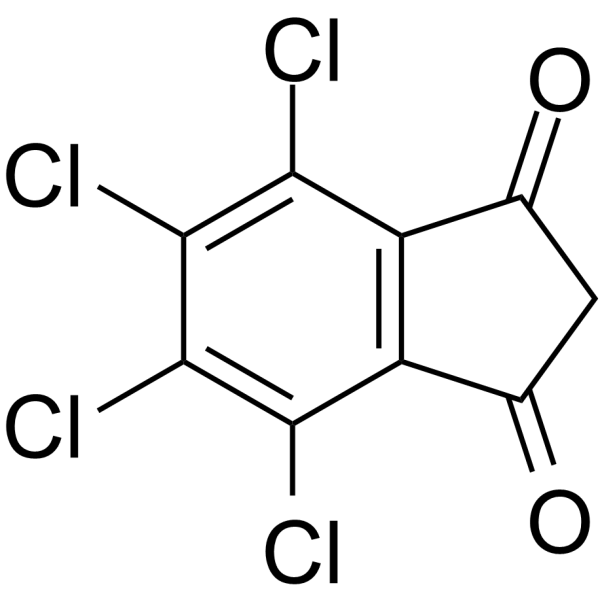
    4,5,6,7-Tetrachloroindan-1,3-dione

    Deubiquitinase Neurological Disease
    TCID (4,5,6,7-Tetrachloroindan-1,3-dione) is a potent and selective neuronal ubiquitin C-terminal hydrolase (UCH-L3) inhibitor with an IC50 of 0.6 μM . TCID diminishes glycine transporter GlyT2 ubiquitination in brainstem and spinal cord primary neurons .
    TCID
  • HY-P3208B

    Biochemical Assay Reagents Others
    Endoproteinase Lys-C (MS grade) is a hydrolase that cleaves peptide bonds at the carboxyl side of lysine residues. Endoproteinase Lys-C (MS grade) causes non-specific hydrolysis of peptide bonds linked to the carboxyl groups of non-lysine residues, resulting in partial cleavage at these sites .
    Endoproteinase Lys-C (MS grade)
  • HY-10865
    LY2183240
    3 Publications Verification

    FAAH Autophagy Neurological Disease
    LY2183240 is a highly potent blocker of anandamide uptake (IC50= 270 pM; Ki=540 nM). LY2183240 is a potent, covalent inhibitor of the endocannabinoid-degrading enzyme fatty acid amide hydrolase (FAAH) with an IC50 of 12.4 nM. LY2183240 inactivates FAAH by carbamylation of the enzyme's serine nucleophile. LY2183240 also inhibits several other brain serine hydrolases with IC50s of 5.3, 0.09, 8.2 nM for MAG lipase, bh6 and KIAA1363, respectively .
    LY2183240
  • HY-108570
    AUDA
    3 Publications Verification

    Epoxide Hydrolase Inflammation/Immunology
    AUDA (compound 43) is a potent soluble epoxide hydrolase (sEH) inhibitor with IC50s of 18 and 69 nM for the mouse and human sEH, respectively . AUDA has anti-inflammatory activity .
    AUDA
  • HY-147519

    Wnt Cancer
    ARUK3001185 is a potent, selective, orally active and brain-penetrant inhibitor of Notum (IC50 = 6.7 nM). ARUK3001185 can restore Wnt signaling in the presence of Notum in vitro. ARUK3001185 is selective against serine hydrolases, kinases, and drug targets. ARUK3001185 can be used to research the role of Notum plays in diseases .
    ARUK3001185
  • HY-135653
    EC5026
    1 Publications Verification

    BPN-19186

    Epoxide Hydrolase Neurological Disease
    EC5026 (BPN-19186) is a first-in-class, non-opioid and orally active soluble Epoxide Hydrolase (sEH) inhibitor. EC5026 shows efficacy for inflammatory and neuropathic pain .
    EC5026
  • HY-137298

    LTA4H-IN-1

    Aminopeptidase Inflammation/Immunology
    LTA4H-IN-1 is a potent inhibitor of leukotriene A4 hydrolase (LTA4H) extracted from patent WO2015092740A1, example 29, has an IC50 of 2 nM. LTA4H-IN-1 can be used for the research of inflammatory and autoimmune disorders .
    LYS006
  • HY-135659
    BSH-IN-1
    2 Publications Verification

    Bacterial Infection
    BSH-IN-1 is a potent and covalent inhibitor of gut bacterial recombinant bile salt hydrolases (BSHs) with IC50s of 108 nM and 427 nM for B. longum BSH (Gram positive) and B. theta BSH (Gram negative), respectively .
    BSH-IN-1
  • HY-P2877

    Endogenous Metabolite Others
    Tannase is a tannin acyl hydrolase. Tannase catalyzes the hydrolysis of ester bonds in gallotannins, complex tannins and gallic acid esters to release gallic acid. Tannase plays a role in industrial production, including the manufacture of instant tea, beer, fruit juice, some wines, and the production of gallic acid .
    Tannase
  • HY-110138

    FAAH Others
    PDP-EA is a compound that increases the amidohydrolase activity of FAAH (fatty acid amide hydrolase) .
    PDP-EA
  • HY-18081

    FAAH Autophagy Neurological Disease Metabolic Disease
    PF 750 is a selective, covalent and brain-penetrant fatty acid amide hydrolase (FAAH) inhibitor. PF 750 covalently carbamylates FAAH's catalytic serine nucleophile to inactivate the enzyme .
    PF 750
  • HY-124063
    BI-1935
    1 Publications Verification

    Epoxide Hydrolase Cardiovascular Disease
    BI-1935, a chemical probe, is a potent soluble epoxide hydrolase (sEH) inhibitor. BI-1935 can be used for the research of cardiovascular disease .
    BI-1935
  • HY-N7062

    Takeda-25

    FAAH Neurological Disease
    JNJ-1661010 (Takeda-25) a potent and selective fatty acid amide hydrolase (FAAH) inhibitor with IC50s of 34 and 33 nM for rat FAAH and human FAAH, respectively. JNJ-1661010 can cross the blood-brain barrier and used as broad-spectrum analgesics .
    JNJ-1661010
  • HY-W040088

    H-Ala-Leu-OH

    Aminopeptidase Metabolic Disease
    L-Alanyl-L-leucine is a competitive inhibitor of small intestinal glycyl-L-leucine hydrolase with Ki values of 0.53 mM (phosphate buffer) or 0.22 mM (Tris buffer). L-Alanyl-L-leucine can be used for research on Hartnup disease and cystinuria .
    L-Alanyl-L-leucine
  • HY-121538
    CUDA
    1 Publications Verification

    Epoxide Hydrolase PPAR Cardiovascular Disease
    CUDA is a potent inhibitor of soluble epoxide hydrolase (sEH), with IC50s of 11.1 nM and 112 nM for mouse sEH and human sEH, respectively . CUDA selectively increases peroxisome proliferator-activated receptor (PPAR) alpha activity. CUDA may be valuable for the research of cardiovascular disease .
    CUDA
  • HY-111151

    APAU

    Epoxide Hydrolase Infection Cardiovascular Disease Metabolic Disease
    AR9281 (APAU) is a potent, selective and orally active soluble epoxide hydrolase (s-EH) inhibitor. AR-9281 can inhibits human sEH (HsEH) and murine sEH (MsEH) with IC50 values of 13.8 nM and 1.7 nM, respectively. AR9281 can be used for the research of inflammation, hypertension and type 2 diabetes .
    AR-9281
  • HY-126326

    Epoxide Hydrolase Metabolic Disease
    SWE101 (compound 22 b) is a potent soluble epoxide hydrolase (sEH)-P inhibitor with IC50s of 4 μM and 2.8 μM for human and rat sEH-P, respectively. SWE101 does not inhibit neither hydrolase nor phosphatase activity of the mouse sEH .
    SWE101
  • HY-113862

    Fluorescent Dye Others
    PHOME is a fluorogenic substrate for sEH. sEH can hydrolyze the epoxy ring in the PHOME substrate. PHOME can be used for fluorescent epoxide hydrolase assay .
    PHOME
  • HY-130837

    Bacterial Infection
    JH-LPH-28, a sulfonyl piperazine analog, is a potent UDP-2,3-diacylglucosamine pyrophosphate hydrolase LpxH inhibitor. JH-LPH-28 displays outstanding antibiotic activity with a MIC value of 0.83 μg/mL .
    JH-LPH-28
  • HY-125254
    LEI110
    1 Publications Verification

    Phospholipase HRASLS Infection Metabolic Disease
    LEI110 is a potent, selective and cell-permeable pan-inhibitor of the HRASLS family of thiol hydrolases. LEI110 inhibits PLA2G16, HRASLS2, RARRES3 and iNAT, with pIC50 values of 7.0, 6.8, 6.8, and 7.6, respectively. LEI110 reduces cellular arachidonic acid levels and oleic acid-induced lipolysis in HepG2 cells .
    LEI110
  • HY-118960

    ATP Synthase Cardiovascular Disease
    BMS-199264 hydrochloride is an inhibitor of F1F0 ATP hydrolase (IC50=0.5 μM) without inhibitory effect on F1F0 ATP synthase. BMS-199264 hydrochloride selectively inhibits ATP decline during ischemia to reduces cardiac necrosis. BMS-199264 hydrochloride also enhances the recovery of contractile function following reperfusion .
    BMS-199264 hydrochloride
  • HY-146248

    SARS-CoV Poly(ADP-ribose) Glycohydrolase (PARG) Protease Activated Receptor (PAR) Infection
    TFMU-ADPr is a selective reporter substrate of SARS-CoV-2 Macro1 (IC50=0.59 μM), with an excitation wavelength (λEx) of 385 nm, and an emission wavelength (λEm) of 502 nm (or 495 nm). TFMU-ADPr can also undergo enzymatic hydrolysis with Poly(ADP-ribose) Glycohydrolase (PARG) sourced from human, Tetrahymena thermophila and ADP-ribosylhydrolase 3 from human to release fluorophores, thereby directly reporting total poly (ADP-ribose) hydrolase activity. TFMU-ADPr binds to the ADPr-binding site of SARS-CoV-2 Macro1, and its TFMU moiety inserts into the narrow hydrophobic groove of this protein. TFMU-ADPr can thus be used to evaluate small-molecule inhibitors targeting PAR hydrolases under in vitro conditions, to investigate the regulatory mechanisms of ADP-ribosyl catabolic enzymes, or to detect PAR hydrolase activity in whole-cell lysate assays. TFMU-ADPr is also applicable to COVID-19-related research .
    TFMU-ADPr
  • HY-W027340
    ARM1
    1 Publications Verification

    4BSA

    Aminopeptidase Epoxide Hydrolase Cancer
    ARM1 (4BSA) is a potent aminopeptidase and epoxide hydrolase inhibitor. ARM1 shows aminopeptidase inhibitory activity with an IC50 7.61 µM and epoxide hydrolase inhibitory activity with an IC50 12.4 µM .
    ARM1
  • HY-103226
    SC-57461A
    2 Publications Verification

    Aminopeptidase Inflammation/Immunology
    SC-57461A is a potent, orally active, nonpeptide, and selective inhibitor of Leukotriene A4 (LTA4) hydrolase with IC50s of 2.5 nM, 3 nM, and 23 nM for recombinant human, mouse, and rat LTA4 hydrolase, respectively .
    SC-57461A
  • HY-120494

    Epoxide Hydrolase Inflammation/Immunology
    sEH inhibitor-1 (compound TCPU ) is a potent and oral active inhibitor of sEH (soluble epoxide hydrolase) with IC50s of 0.4 and 5.3 nM in human and murine, respectively .
    sEH inhibitor-1
  • HY-18544

    MAGL FAAH Metabolic Disease
    AA38-3 is a serine hydrolase (SH) inhibitor. AA38-3 can inhibit three SHs, ABHD6, ABHD11, and FAAH .
    AA38-3
  • HY-146696

    Epoxide Hydrolase Cardiovascular Disease Neurological Disease Cancer
    mEH-IN-1 (Compound 62) is a potent microsomal epoxide hydrolase (mEH) inhibitor with the IC50 of 2.2 nM. The mEH is a mammalian α/β-fold hydrolase enzyme, expressed in almost all tissues, hydrolyzes a wide range of epoxide containing molecules. The mEH is mainly localized in the endoplasmic reticulum (ER) of eukaryotic cells. mEH-IN-1 can be used for the research of preeclampsia, hypercholanemia and cancer .
    mEH-IN-1
  • HY-130838

    Bacterial Infection
    JH-LPH-33, a sulfonyl piperazine analog, is a potent UDP-2,3-diacylglucosamine pyrophosphate hydrolase LpxH inhibitor. JH-LPH-33 displays outstanding antibiotic activity with a MIC value of 0.66 μg/mL .
    JH-LPH-33
  • HY-E70103

    Glycosidase Others
    α-L-Arabinofuranosidase is a kind of glycoside hydrolase. It hydrolyzes the non-reducing ends of α-L-arabinofuranosyl residues to form the side chains of arabinoxylan, arabinogalactan and arabinan .
    α-L-Arabinofuranosidase
  • HY-103462

    FAAH Cardiovascular Disease Metabolic Disease Inflammation/Immunology Cancer
    TC-F2 is a reversible non-covalent binding inhibitor of fatty acid amide hydrolase (FAAH) with an IC50 of 28 nM. FAAH is involved in many human diseases, particularly cancer, pain and inflammation as well as neurological, metabolic and cardiovascular disorders .
    TC-F2
  • HY-P2958

    Biochemical Assay Reagents Metabolic Disease
    Choloylglycine hydrolase is a conjugated bile salt hydrolase that catalyses the hydrolysis of amide bond in conjugated bile acids. Choloylglycine hydrolase is expressed by intestinal microbiota. Choloylglycine hydrolase can be studied in research on type 2 diabetes .
    Choloylglycine hydrolase
  • HY-126031

    DAGL Inflammation/Immunology
    (R)-KT109 is a peripherally restricted serine hydrolase inhibitor that cannot cross the blood-brain barrier. (R)-KT109 irreversibly inhibits ABHD6, DAGLα and DAGLβ via carbamoylation of the active-site serine. (R)-KT109 exerts selective inhibitory effects on serine hydrolases in mouse brains, with pIC50 values of 8.6, 9.1 and 8.2 against human ABHD6, DAGLα and DAGLβ, respectively. (R)-KT109 effectively reduces the levels of 2-arachidonoylglycerol, arachidonic acid, eicosanoids and TNF-α. (R)-KT109 is widely used in studies of metabolic syndrome-related diseases and neuroinflammation .
    (R)-KT109
  • HY-E70042

    Endogenous Metabolite Metabolic Disease
    Nucleoside hydrolase (IAGNH) is a glycosidase. Nucleoside hydrolase (IAGNH) catalyzes the cleavage of the N-glycosidic bond in nucleosides to enable the recycling of the nucleobases and Rib .
    Nucleoside hydrolase (IAGNH)
  • HY-153433

    Cholinesterase (ChE) Neurological Disease
    Serine Hydrolase inhibitor-21 (compound 8), a pyridine, is a serine hydrolase inhibitor with a Ki of 429 nM for BuChE. Serine Hydrolase inhibitor-21 has the potential for Alzheimer's disease research .
    Serine Hydrolase inhibitor-21
  • HY-P2874

    Aminopeptidase Others
    Prolidase is a metallo-dependent hydrolase. Prolidase is a metal-dependent peptidase specialized in the cleavage of dipeptides containing proline or hydroxyproline on their C-termini .
    Prolidase
  • HY-130836
    LpxH-IN-AZ1
    1 Publications Verification

    Bacterial Infection
    LpxH-IN-AZ1, a sulfonyl piperazine compound, is a potent UDP-2,3-diacylglucosamine pyrophosphate hydrolase LpxH inhibitor. LpxH-IN-AZ1 is a potent inhibitor of Klebsiella pneumoniae LpxH with IC50 of 0.36 μM .
    LpxH-IN-AZ1
  • HY-139193

    DNA/RNA Synthesis Cancer
    TH1760 is an inhibitor of NUDIX-type 15 (NUDT15) with an IC50 value of 25 nM. TH1760 sensitizes cells to 6-thioguanine by enhancing the accumulation of 6-thio- (d) GTP in nucleic acids. TH1760 enhances the anti-leukemia effect of thiopurine .
    TH1760
  • HY-W040088R

    H-Ala-Leu-OH (Standard)

    Reference Standards Aminopeptidase Metabolic Disease
    L-Alanyl-L-leucine is an endogenous metabolite. This product is used for research and analytical applications. L-Alanyl-L-leucine is a competitive inhibitor of small intestinal glycyl-L-leucine hydrolase with Ki values of 0.53 mM (phosphate buffer) or 0.22 mM (Tris buffer). L-Alanyl-L-leucine can be used for research on Hartnup disease and cystinuria .
    L-Alanyl-L-leucine (Standard)
  • HY-D1726

    Deubiquitinase Cancer
    8RK59, a Bodipy probe, is a potent UCHL1 (ubiquitin C-terminal hydrolase L1) inhibitor, with an IC50 close to 1 μM. 8RK59 could penetrate and label living cells. BodipyFL-alkyne is coupled to the azide of 8RK64 (HY-148254) using copper(I)-mediated click chemistry, resulting in compound 8RK59 .
    8RK59
  • HY-152251

    Cannabinoid Receptor FAAH Inflammation/Immunology
    CB2R/FAAH modulator-1 is a cannabinoid type 2 receptor (CB2R) full agonist with Kis of 14.8 nM and 241.3 nM for CB2R and CB1R, respectively. CB2R/FAAH modulator-1 is a fatty acid amide hydrolase (FAAH) inhibitor with an IC50 of 4 μM. CB2R/FAAH modulator-1 decreases pro-inflammatory and increases anti-inflammatory cytokines production .
    CB2R/FAAH modulator-1
  • HY-E70418

    Endogenous Metabolite Cardiovascular Disease Inflammation/Immunology
    Epoxide hydrolase is an enzyme responsible for catalyzing the reaction between epoxides and water, converting epoxide groups into diols. Epoxide hydrolase plays a key role in the metabolism of environmental pollutants and lipids, contributing to detoxification, inflammation responses, and the regulation of cardiovascular system health. Additionally, epoxide hydrolase can be used in asymmetric catalytic reactions, such as the asymmetric ring-opening of epoxides, to produce chiral drug molecules .
    Epoxide hydrolase
  • HY-138031

    PteGlu6

    Endogenous Metabolite Others
    Pteroylhexaglutamate (PteGlu6) inhibits the T2-phage-induced synthetase by 50% at 0.6 μM in the absence of Mg 2+. Pteroylhexaglutamate is a substrate for pteroylpolyglutamate hydrolase, and can be used to monitor the activity of pteroylpolyglutamate hydrolase .
    Pteroylhexaglutamate
  • HY-E70888

    Lipase Others
    Lipase, Candida antarctica, expressed in Aspergillus niger, is a serine hydrolase, which belongs to the α/β hydrolase fold family .
    Lipase, Candida antarctica, expressed in Aspergillus niger
  • HY-W751418

    (Z)-2-tetracos-15-enamidoethanesulfonic acid

    FAAH Neurological Disease
    N-Nervonoyl taurine ((Z)-2-tetracos-15-enamidoethanesulfonic acid) is a fatty acid-taurine conjugate derived from nervonic acid. N-Nervonoyl taurine is a substrate of fatty acid amide hydrolase (FAAH) discovered during metabolite profiling .
    N-Nervonoyl taurine
  • HY-P2878A

    PDE, Rattlesnake venom

    Phosphodiesterase (PDE) Metabolic Disease
    Phosphodiesterase l, Rattlesnake venom (PDE, Rattlesnake venom) is a non-selective phosphodiester bond hydrolase targeting phosphodiester bonds in oligonucleotides, catalyzing their hydrolysis into mononucleotides. Phosphodiesterase l, Rattlesnake venom cleaves phosphodiester linkages in DNA fragments digested by DNase I. Phosphodiesterase l, Rattlesnake venom is promising for research of nucleic acid structure and metabolism .
    Phosphodiesterase l, Rattlesnake venom

Inquiry Online

Your information is safe with us. * Required Fields.

Salutation


Country or Region *

Applicant Name *


Organization Name *

Department *


Email Address *


Product Name *

Cat. No.


Requested quantity *

Phone Number *


Remarks

Inquiry Online

Inquiry Information

Product Name:
Cat. No.:
Quantity:
MCE Japan Authorized Agent:

