

Search Result
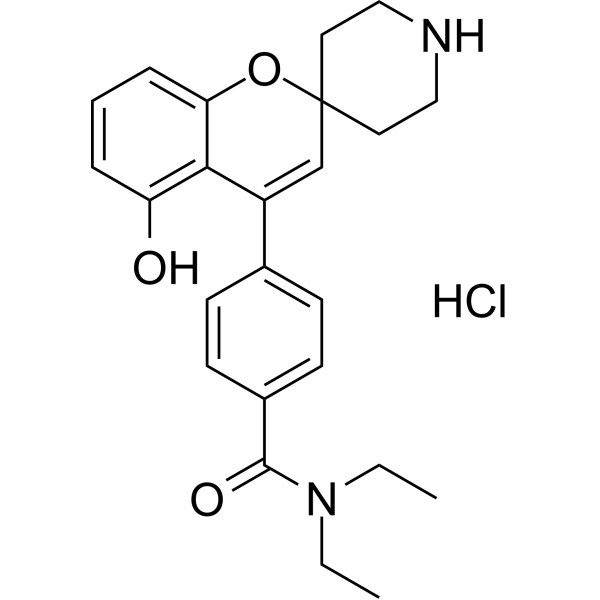
Results for "
delta opioid receptors
" in MedChemExpress (MCE) Product Catalog:
8
Isotope-Labeled Compounds
| Cat. No. |
Product Name |
Target |
Research Areas |
Chemical Structure |
-
- HY-76711
-
|
|
Opioid Receptor
|
Neurological Disease
Metabolic Disease
Inflammation/Immunology
Cancer
|
Naltrexone is an orally active, long-acting opioid receptor (opioid receptor) antagonist. Naltrexone blocks the euphoric effects of exogenous opioids and reduces alcohol craving by blocking opioid receptors (μ, κ, and δ) as well as opioid growth factor receptors. Low doses of Naltrexone are used to relieve chronic pain, treat inflammatory diseases and inhibit tumor growth, while high doses or continuous administration exert pro-inflammatory or pro-proliferative effects. Naltrexone relieves intractable pruritus caused by psoriasis, atopic dermatitis and other conditions, and its combination with Bupropion (HY-B0403) inhibits food craving, thereby reducing body weight .
|
-
-
- HY-P1502
-
|
|
Opioid Receptor
|
Neurological Disease
|
|
β-Endorphin, human, a prominent endogenous peptide, existing in the hypophysis cerebri and hypothalamus, is an agonist of opioid receptor, with preferred affinity for μ-opioid receptor and δ-opioid receptor; β-Endorphin, human exhibits antinociception activity.
|
-
-
- HY-P1333
-
|
|
Opioid Receptor
Apoptosis
Caspase
Endogenous Metabolite
|
Neurological Disease
|
|
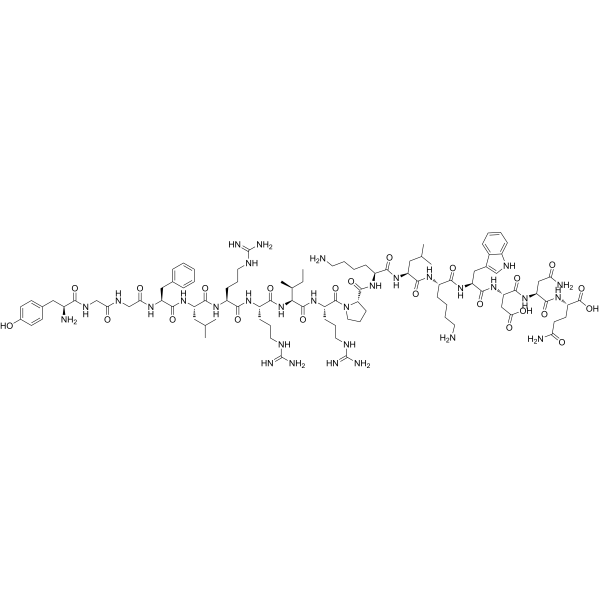
Dynorphin A is an endogenous opioid peptide involved in inhibitory neurotransmission in the central nervous system (CNS). Dynorphin A is a highy potent kappa opioid receptor (KOR) agonist, and is also an agonist for other opioid receptors, such as mu (MOR) and delta (DOR). Dynorphin A can induce neuronal death, and can be used in the research of neurological disease .
|
-
-
- HY-13243
-
|
ADL 8-2698; LY 246736
|
Opioid Receptor
|
Neurological Disease
|
|
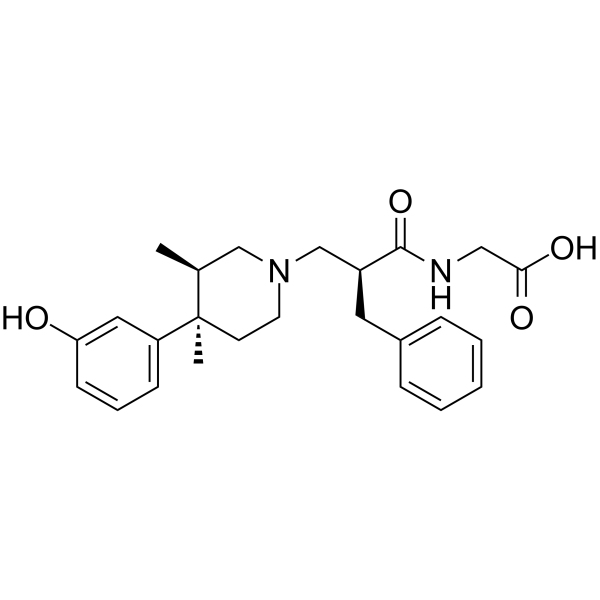
Alvimopan (ADL 8-2698) is a potent, selective, orally active and reversible μ-opioid receptor antagonist, with an IC50 of 1.7 nM. Alvimopan has selectivity for μ-opioid receptor (Ki=0.47 nM) over κ- and δ-opioid receptors (Kis=100, 12 nM, respectively). Alvimopan can be used for the research of postoperative ileus .
|
-
-
- HY-101302
-
|
|
Opioid Receptor
TRP Channel
|
Inflammation/Immunology
|
|
Naltriben mesylate is a potent δ2-opioid receptor antagonist and a TRPM7 activator. Naltriben mesylate shows Ki values of 0.013 nM, 19 nM and 152 nM for δ, μ and κ receptors, respectively. Naltriben mesylate enhances glioblastoma cell migration and invasion. Naltriben mesylate can be used in research into neurological diseases and cancer .
|
-
-
- HY-P1335
-
CTAP
2 Publications Verification
|
Opioid Receptor
|
Neurological Disease
|
|
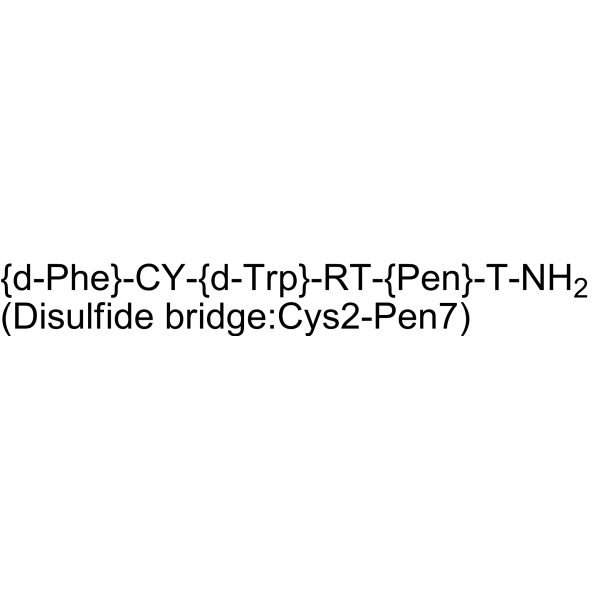
CTAP is a potent, highly selective, and BBB penetrant μ opioid receptor antagonist, with an IC50 of 3.5 nM. CTAP displays over 1200-fold selectivity over δ opioid (IC50=4500 nM) and somatostatin receptors. CTAP can be used for the study of L-DOPA-induced dyskinesia (LID) and opiate overdose or addiction .
|
-
-
- HY-P1334
-
-
-
- HY-123689
-
|
ALKS-33; RDC-0313
|
Opioid Receptor
|
Neurological Disease
|
|
Samidorphan (ALKS-33) is an orally active opioid system modulator that has a high affinity for binding with μ‐opioid, κ‐opioid, and δ‐opioid receptors. Samidorphan acts as an antagonist at μ‐opioid receptors and acts as a partial agonist at k-opioid and δ‐opioid receptors. Samidorphan primarily acts as an opioid receptor antagonist in vivo. Samidorphan can improve the behavior of depressed animals .
|
-
-
- HY-P0098
-
-
-
- HY-P1470
-
-
-
- HY-P1336
-
-
-
- HY-104006
-
|
|
Opioid Receptor
|
Neurological Disease
|
|
CYM51010 is a biased ligand of μ-opioid receptor – δ-opioid receptor heterodimers with an EC50 of 403 nM. CYM51010 exhibits anti-nociceptive activity similar to morphine but with a decreased levels of tolerance development and withdrawal symptoms .
|
-
-
- HY-107741
-
-
-
- HY-76711S
-
|
|
Isotope-Labeled Compounds
Opioid Receptor
|
Neurological Disease
Metabolic Disease
Inflammation/Immunology
Cancer
|
Naltrexone-d4 is deuterium labeled Naltrexone (HY-76711). Naltrexone is an orally active, long-acting opioid receptor (opioid receptor) antagonist. Naltrexone blocks the euphoric effects of exogenous opioids and reduces alcohol craving by blocking opioid receptors (μ, κ, and δ) as well as opioid growth factor receptors. Low doses of Naltrexone are used to relieve chronic pain, treat inflammatory diseases and inhibit tumor growth, while high doses or continuous administration exert pro-inflammatory or pro-proliferative effects. Naltrexone relieves intractable pruritus caused by psoriasis, atopic dermatitis and other conditions, and its combination with Bupropion (HY-B0403) inhibits food craving, thereby reducing body weight.
|
-
-
- HY-P1467A
-
|
5-Methionine-enkephalin amide TFA
|
Opioid Receptor
|
Neurological Disease
|
|
[Met5]-Enkephalin, amide TFA is an agonist for δ opioid receptors as well as putative ζ ζ opioid receptors.
|
-
-
- HY-P1334A
-
-
-
- HY-14157
-
|
|
Opioid Receptor
|
Inflammation/Immunology
|
|
ADL-5747 is a selective and orally active agonist of the δ-opioid receptor (DOR). By binding to the δ-opioid receptors, ADL-5747 activates these receptors, thereby playing a role in pain management pathways. ADL-5747 can be used for research into pain management mechanisms .
|
-
-
- HY-P1013A
-
-
-
- HY-137279
-
|
|
Opioid Receptor
|
Inflammation/Immunology
|
|
Naloxone methiodide is a peripherally restricted, nonselective, and competitive opioid receptor antagonist. Naloxone methiodide does not penetrate the blood-brain barrier .
|
-
-
- HY-W048697
-
|
|
Amino Acid Derivatives
|
Others
|
|
Fmoc-D-Pen(Trt)-OH is an amino acid derivative with an Fmoc protecting group, which can be used to synthesize analogs of cyclic lanthionine enkephalin, a δ-opioid receptor selective ligand .
|
-
-
- HY-P1335A
-
|
|
Opioid Receptor
|
Neurological Disease
|
|
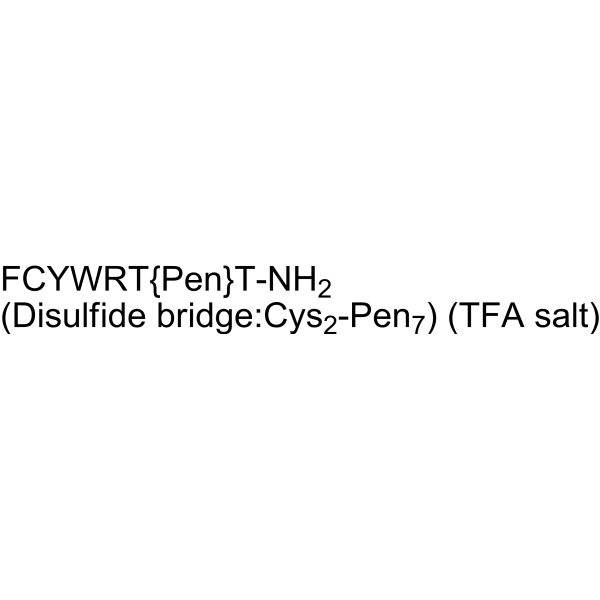
CTAP TFA is a potent, highly selective, and BBB penetrant μ opioid receptor antagonist, with an IC50 of 3.5 nM. CTAP TFA displays over 1200-fold selectivity over δ opioid (IC50=4500 nM) and somatostatin receptors. CTAP TFA can be used for the study of L-DOPA-induced dyskinesia (LID) and opiate overdose or addiction .
|
-
-
- HY-136208
-
|
|
Opioid Receptor
|
Neurological Disease
|
|
TAN-452 is an orally active, selective peripherally acting δ-opioid receptor (DOR) antagonist with a Ki of 0.47 nM and a Kb of 0.21 nM. TAN-452 is an antagonist for μ-opioid receptor (MOR; Ki=36.56 nM and Kb=9.43 nM) and κ-opioid receptor (KOR; Ki=5.31 nM and Kb=7.18 nM). TAN-452, a derivative of Naltrindole, demonstrates low brain penetrability and attenuates morphine-induced side effects without affecting pain control .
|
-
-
- HY-101307
-
|
7-Benzylidenenaltrexone maleate
|
Opioid Receptor
|
Neurological Disease
|
|
BNTX (7-Benzylidenenaltrexone) maleate is a δ1-opioid receptor antagonist with the Kis of 0.1, 10.8, 13.3, and 58.6 nM for δ1, δ2-, μ-, and κ-opioid receptor, respectively. BNTX maleate shows antinociceptive activity .
|
-
-
- HY-101230
-
|
|
Opioid Receptor
|
Neurological Disease
|
|
ICI 174864 is a selective and brain-penetrant δ-opioid receptor antagonist with Ke values of 22.0 nM to 30.6 nM at δ-opioid receptor in mouse vas deferens. ICI 174864 selectively blocks biological effects mediated by the δ-opioid receptor agonist DPDPE (HY-P1334) after central administration. ICI 174864 reverses hypotension in rats with endotoxic shock and inhibits acetic acid-induced writhing in mice. ICI 174864 can be used for the research of opioid receptor subtypes, endotoxic hypotension and analgesic pathways .
|
-
-
- HY-107750A
-
|
|
Opioid Receptor
|
Neurological Disease
|
|
Cyprodime hydrochloride is a highly selective μ-opioid receptor antagonist with Ki values of 5.4 nM, 244.6 nM and 2187 nM for μ-, δ- and κ-opioid receptors, respectively. Cyprodime hydrochloride has anti-depressant-like effect .
|
-
-
- HY-P1866A
-
|
|
Opioid Receptor
|
Neurological Disease
|
|
β-Endorphin, equine TFA is an endogenous opioid peptide, which binds at high affinity to both μ/δ opioid receptors. β-Endorphin, equine TFA has analgesic properties .
|
-
-
- HY-76657A
-
|
ADL 8-2698 dihydrate; LY 246736 dihydrate
|
Opioid Receptor
|
Neurological Disease
Cancer
|
|
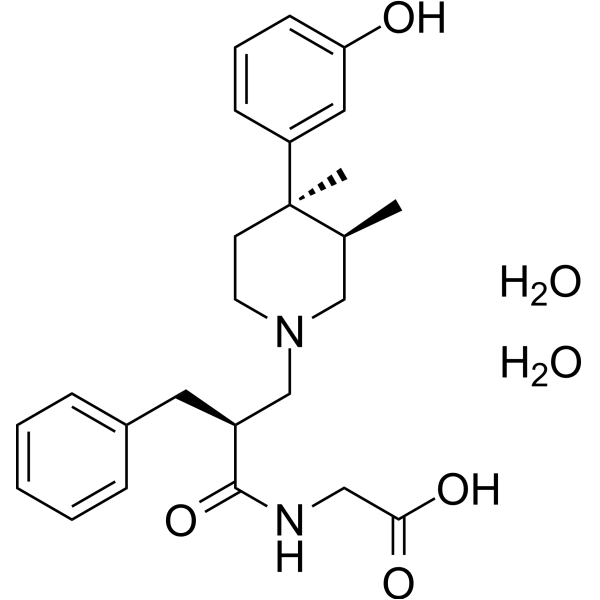
Alvimopan dihydrate (ADL 8-2698 dihydrate) is a potent, selective, orally active and reversible μ-opioid receptor antagonist, with an IC50 of 1.7 nM. Alvimopan dihydrate has selectivity for μ-opioid receptor (Ki=0.47 nM) over κ- and δ-opioid receptors (Kis=100, 12 nM, respectively). Alvimopan dihydrate can be used for the research of postoperative ileus .
|
-
-
- HY-P3546
-
-
-
- HY-76711R
-
|
|
Reference Standards
Opioid Receptor
|
Neurological Disease
Metabolic Disease
Inflammation/Immunology
Cancer
|
Naltrexone (Standard) is the analytical standard of Naltrexone (HY-76711). This product is intended for research and analytical applications. Naltrexone is an orally active, long-acting opioid receptor (opioid receptor) antagonist. Naltrexone blocks the euphoric effects of exogenous opioids and reduces alcohol craving by blocking opioid receptors (μ, κ, and δ) as well as opioid growth factor receptors. Low doses of Naltrexone are used to relieve chronic pain, treat inflammatory diseases and inhibit tumor growth, while high doses or continuous administration exert pro-inflammatory or pro-proliferative effects. Naltrexone relieves intractable pruritus caused by psoriasis, atopic dermatitis and other conditions, and its combination with Bupropion (HY-B0403) inhibits food craving, thereby reducing body weight.
|
-
-
- HY-169867
-
|
7-Benzylidenenaltrexone
|
Opioid Receptor
|
Neurological Disease
|
|
BNTX (7-Benzylidenenaltrexone) is a highly selective δ1 opioid receptor antagonist. BNTX selectively antagonizes the antinociceptive activity mediated by spinal δ1 opioid receptors, and does not alter the antinociceptive effects mediated by δ2, μ or κ opioid receptors at selective doses .
|
-
-
- HY-P1013
-
-
-
- HY-101039A
-
|
|
Opioid Receptor
|
Neurological Disease
|
|
AR-M 1000390 hydrochloride is an exceptionally selective, potent δ opioid receptor agonist with an EC50 of 7.2±0.9 nM for δ agonist potency.
|
-
-
- HY-107743
-
|
NalBzoH
|
Opioid Receptor
|
Neurological Disease
|
|
Naloxone benzoylhydrazone (NalBzoH) is a mixed agonist/antagonist. Naloxone benzoylhydrazone is a prototypic κ3-opioid receptor agonist, and a partial agonist at the cloned μ and δ opioid receptors, and an antagonist at opioid-like NOP receptors. Naloxone benzoylhydrazone has potently analgesia effect .
|
-
-
- HY-101233
-
-
-
- HY-P3555
-
-
-
- HY-19231
-
|
Org 41793
|
Opioid Receptor
|
Neurological Disease
|
|
DPI-3290 (Org 41793) is a potent and specific opioid receptors agonist with Ki values of 0.18 nM, 0.46 nM, and 0.62 nM for δ-, μ-, and κ-opioid receptors, respectively. DPI-3290 is one of a series of novel centrally acting agents with potent antinociceptive activity .
|
-
-
- HY-178235
-
|
|
Opioid Receptor
|
Neurological Disease
|
|
MDAN-21 is a bivalent opioid ligand that contains both μ-opioid receptor agonists and δ-opioid receptor antagonists. MDAN-21 has a strong analgesic effect and does not produce tolerance in mouse studies. MDAN-21 can effectively inhibit the withdrawal of morphine dependent monkeys and alleviate abnormal pain in the study of rhesus monkeys. MDAN-21 can be used for the study of allodynia .
|
-
-
- HY-A0115R
-
|
HOE 498 diacid (Standard); Ramipril diacid (Standard)
|
Drug Metabolite
Reference Standards
Angiotensin-converting Enzyme (ACE)
Endogenous Metabolite
|
Cardiovascular Disease
|
|
Alvimopan (dihydrate) (Standard) is the analytical standard of Alvimopan (dihydrate). This product is intended for research and analytical applications. Alvimopan dihydrate (ADL 8-2698 dihydrate) is a potent, selective, orally active and reversible μ-opioid receptor antagonist, with an IC50 of 1.7 nM. Alvimopan dihydrate has selectivity for μ-opioid receptor (Ki=0.47 nM) over κ- and δ-opioid receptors (Kis=100, 12 nM, respectively). Alvimopan dihydrate can be used for the research of postoperative ileus .
|
-
-
- HY-16979
-
|
|
Opioid Receptor
|
Neurological Disease
|
|
RK-851 is a highly selective and orally active δ-opioid receptor antagonist, with a negative logarithm of the antagonist concentration (pA2) of 8.84. TRK-851 exhibits the selectivity for the δ receptor of more than 100 times higher than that for the μ or κ receptors. TRK-851 exhibits a potent antitussive effect in a rat model of capsaicin-induced cough. TRK-851 can be used for research on antitussive effects .
|
-
-
- HY-175661
-
|
|
Opioid Receptor
Beta-secretase
|
Neurological Disease
|
|
SRI-22136 is a Delta Opioid Receptor (DOR) antagonist that can cross blood-brain barrier with a IC50 of 0.42 nM. SRI-22136 does not have agonistic activity but antagonistic activity against DOR, MOR (IC50 = 370 nM), KOR (IC50 = 54 nM) and can avoid addiction/aversion effects. SRI-22136 can effectively inhibit the BACE1 activity induced by DADLE (a DOR agonist) (HY-105343) (IC50 = 120 nM). SRI-22136 prevents completely Alzheimer’s-like pathology in mouse model. SRI-22136 can used for the study of Alzheimer’s disease .
|
-
-
- HY-123689S1
-
|
ALKS-33-d5; RDC-0313-d5
|
Isotope-Labeled Compounds
Opioid Receptor
|
Neurological Disease
|
|
Samidorphan-d5 (ALKS-33-d5) is is a deuterated compound of Samidorphan. Samidorphan is an orally active opioid system modulator that binds with high affinity to μ-opioid, κ-opioid, and δ-opioid receptors. Samidorphan is a μ-opioid receptor antagonist and a partial agonist at k-opioid and δ-opioid receptors. Samidorphan acts primarily as an opioid receptor antagonist in vivo .
|
-
-
- HY-P1467
-
-
-
- HY-101317A
-
|
SB-205607
|
Opioid Receptor
|
Metabolic Disease
|
|
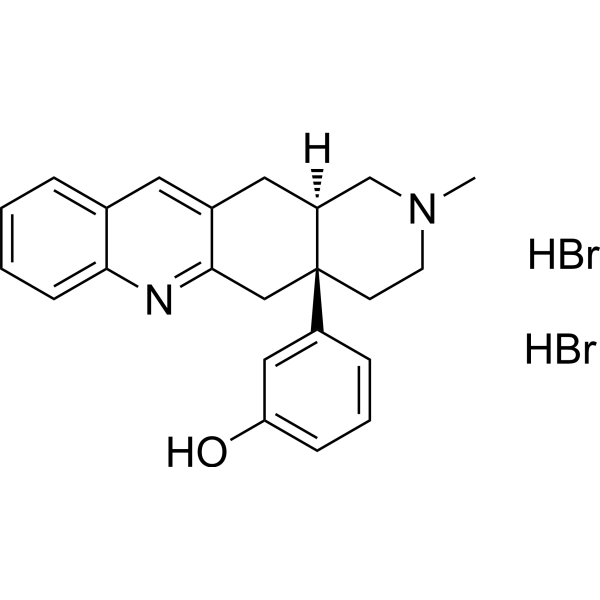
TAN-67 (SB-205607) is a non-peptidic delta-opioid receptor agonist that exhibits significant antinociceptive activity in both diabetic and non-diabetic mice. TAN-67 demonstrates a marked and dose-dependent reduction in acetic acid-induced abdominal constrictions, with a notably stronger effect in diabetic mice compared to their non-diabetic counterparts. TAN-67's antinociceptive properties are primarily mediated through the activation of delta 1-opioid receptors, as indicated by the pronounced antagonism observed upon administration of a selective delta 1-opioid receptor antagonist.
|
-
-
- HY-133717
-
|
|
Opioid Receptor
TRP Channel
|
Cancer
|
|
Naltriben is a selective δ2-opioid receptor antagonist and TRPM7 activator. Naltriben enhances glioblastoma cell migration and invasion. Naltriben can be used in research into neurological diseases and cancer .
|
-
-
- HY-151811
-
|
|
Opioid Receptor
|
Neurological Disease
|
|
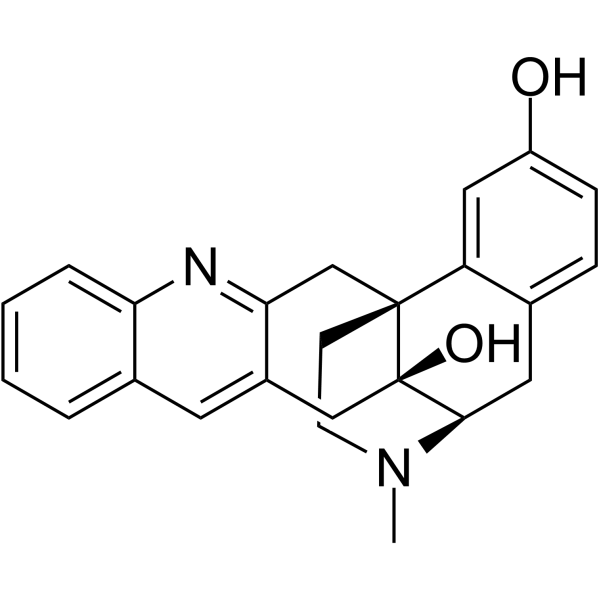
NAQ is a potent and selective μ opioid receptor partial agonist, with a Ki of 0.55 nM. NAQ shows selectivity for Mu opioid receptor over the δ receptor (Ki=132.50 nM) and the κ receptor (Ki=26.45 nM). NAQ can be used for the research of opioid withdrawal or dependence .
|
-
-
- HY-P1866
-
-
-
- HY-P1332
-
|
[D-Ser2, Leu5, Thr6]-enkephalin
|
Opioid Receptor
|
Neurological Disease
|
|
DSLET ([D-Ser2, Leu5, Thr6]-enkephalin) is a highly specific agonist of the δ-receptor. DSLET is an enkephalin-related peptide selectively bound to the δ opioid receptor .
|
-
-
- HY-120024
-
-
-
- HY-16765
-
|
TD-1211
|
Opioid Receptor
|
Neurological Disease
|
|
Axelopran (TD-1211) is an opioid receptor antagonist with pKi values of 9.8, 8.8 and 9.9 for human recombinant μ and δ receptors and guinea pig κ receptor, respectively.
|
-
-
- HY-106732
-
|
|
Opioid Receptor
|
Neurological Disease
|
|
AT-076 is an opioid pan antagonist at nociception, kappa, mu, and delta opioid receptors, with Ki values of 1.75 nM (NOP), 1.67 nM (MOP), 1.14 nM (KOP) and 19.6 nM (DOP), respectively .
|
-
- HY-156988
-
-
- HY-76657
-
|
ADL 8-2698 monohydrate; LY 246736 monohydrate
|
Opioid Receptor
|
Neurological Disease
Cancer
|
|
Alvimopan monohydrate (ADL 8-2698 monohydrate) is a potent, selective, orally active and reversible μ-opioid receptor antagonist, with an IC50 of 1.7 nM. Alvimopan monohydrate has selectivity for μ-opioid receptor (Ki=0.47 nM) over κ- and δ-opioid receptors (Kis=100, 12 nM, respectively). Alvimopan monohydrate can be used for the research of postoperative ileus .
|
-
- HY-135698
-
|
M-CAM
|
Opioid Receptor
|
Neurological Disease
|
|
Methocinnamox (M-CAM) a selective and long-acting μ-opioid receptor (MOR) antagonist with a Ki of 0.6 nM. Methocinnamox binds to the orthosteric site of the MOR in a pseudo-irreversible, non-covalent manner, resulting in prolonged receptor blockade that persists until new receptors are synthesized. Methocinnamox acts as a reversible antagonist at both the kappa-opioid receptor (KOR) (Ki = 4.9 nM) and delta-opioid receptor (DOR) (Ki = 2.2 nM), and it exhibits no intrinsic agonist activity at these receptors. Methocinnamox can be used to reverse and prevent opioid overdose and addiction .
|
-
- HY-171758
-
|
|
Opioid Receptor
|
Neurological Disease
|
|
BU72 is a highly potent and long-acting agonist of μ and κ opioid receptors, and also has a partial agonist effect on δ opioid receptors (EC50 values are 0.054, 0.033, and 0.58 nM, respectively). BU72 has a strong and long-lasting analgesic effect, which is mainly mediated by μ opioid receptors. BU72 has a long-lasting activity and can partially reverse the analgesic effect of morphine. BU72 can be used in the study of opioid dependence .
|
-
- HY-107751
-
-
- HY-108043
-
|
|
Opioid Receptor
|
Neurological Disease
|
|
AZD-2327 is a potent and selective δ-opioid receptor agonist. AZD-2327 binds to the human opioid receptor (Ki of 0.49 and 0.75 nM and EC50 of 24 and 9.2 nM at the C27 and F27 isoforms, respectively). AZD-2327 shows selectivity of >1000-fold over the human μ- and κ-opioid receptor subtypes as well as >130 other receptors and channels. AZD-2327 exhibits antidepressant and anxiolytic activities and can be used for the research of neurological disease .
|
-
- HY-129271
-
|
Deltorphin A; Dermenkephalin
|
Opioid Receptor
|
Others
|
|
Deltorphin (Deltorphin A; Dermenkephalin) is a biological active peptide. (Deltorphin A peptide was isolated from skin extracts of the South American frog, Phyllomedusa sauvagei. Deltorphin A is a potent and selective agonist for the delta-opioid receptor.)
|
-
- HY-P1299
-
|
|
Opioid Receptor
|
Neurological Disease
|
|
UFP-101 is a potent, selective, and competitive antagonist of the NOP receptor, with a pKi of 10.24. UFP-101 displays >3000-fold selectivity over δ, μ and κ opioid receptors. UFP-101 shows antidepressant-like effect .
|
-
- HY-122189
-
|
(-)-Akuammine; Vincamajoridine
|
Others
|
Neurological Disease
|
|
Akuammine is an indole alkaloid that has been found in Picralima nitida and has analgesic activity. It selectively binds to the μ- and κ-opioid receptors over the δ-opioid receptor (Kis=0.3, 1.68, and 10.4 μM for the human receptors, respectively). Akuammine inhibits forskolin-induced cAMP production in HEK293 cells expressing human μ- or κ-opioid receptors (IC50s=2.6 and 0.073 μM, respectively). It increases the latency to withdrawal in the tail-flick or hot plate test in mice when administered at a dose of 60 mg/kg.
|
-
- HY-11051
-
|
|
Opioid Receptor
|
Inflammation/Immunology
|
|
JNJ-20788560 is a selective and orally active delta opioid receptor agonist with an affinity of 2.0 nM for DOR (rat brain cortex binding assay). JNJ-20788560 also is a potent and efficacious antihyperalgesic agent that does not produce respiratory depression, pharmacologic tolerance, or physical dependence. JNJ-20788560 can be used for the research of the relief of inflammatory hyperalgesia .
|
-
- HY-P10203
-
|
|
Opioid Receptor
|
Inflammation/Immunology
|
|
μ/κ/δ opioid receptor agonist 1 is a μ opioid receptor (MOR), κ opioid receptor (KOR), and δ opioid receptor (DOR) agonist. μ/κ/δ opioid receptor agonist 1 produces a strong and long-lasting analgesic effect through peripheral MOR and KOR in the tail-flick test .
|
-
- HY-163895
-
|
|
Fluorescent Dye
Opioid Receptor
|
Neurological Disease
|
|
δ opioid receptor antagonist 1 (compound 6-Cy3) is a fluorescent antagonist probe with high selectivity for δ opioid receptor (DOR) (Ki=1.7 nM). δ opioid receptor antagonist 1 can be used to study the mechanism of pain perception .
|
-
- HY-123689A
-
|
ALKS-33 hydrochloride; RDC-0313 hydrochloride
|
Opioid Receptor
|
Neurological Disease
|
|
Samidorphan hydrochloride is an orally active opioid system modulator that has a high affinity for binding with μ‐opioid, κ‐opioid, and δ‐opioid receptors. Samidorphan hydrochloride acts as an antagonist at μ‐opioid receptors and acts as a partial agonist at k-opioid and δ‐opioid receptors. Samidorphan hydrochloride primarily acts as an opioid receptor antagonist in vivo. Samidorphan can improve the behavior of depressed animals .
|
-
- HY-123689S
-
|
ALKS-33-d4; RDC-0313-d4
|
Isotope-Labeled Compounds
Opioid Receptor
|
Neurological Disease
|
|
Samidorphan-d4 is the deuterium labeled Samidorphan(HY-123689).Samidorphan (ALKS-33) is an orally active opioid system modulator that has a high affinity for binding with μ‐opioid, κ‐opioid, and δ‐opioid receptors. Samidorphan acts as an antagonist at μ‐opioid receptors and acts as a partial agonist at k-opioid and δ‐opioid receptors. Samidorphan primarily acts as an opioid receptor antagonist in vivo .
|
-
- HY-170033
-
|
|
Opioid Receptor
|
Neurological Disease
|
|
3-Carboxamidonaltrexone (example 32) is a opioid receptor binding compound with Ki values of 1.9 nM, 110 nM, and 22 nM for μ-opioid receptor, δ-opioid receptor, and K-opioid receptor, respectively .
|
-
- HY-123689R
-
|
ALKS-33 (Standard); RDC-0313 (Standard)
|
Opioid Receptor
Reference Standards
|
Neurological Disease
|
|
Samidorphan (Standard) is the analytical standard of Samidorphan. This product is intended for research and analytical applications. Samidorphan (ALKS-33) is an orally active opioid system modulator that has a high affinity for binding with μ‐opioid, κ‐opioid, and δ‐opioid receptors. Samidorphan acts as an antagonist at μ‐opioid receptors and acts as a partial agonist at k-opioid and δ‐opioid receptors. Samidorphan primarily acts as an opioid receptor antagonist in vivo. Samidorphan can improve the behavior of depressed animals.
|
-
- HY-109166
-
-
- HY-101199
-
|
|
Opioid Receptor
|
Neurological Disease
|
|
N-Benzylnaltrindole hydrochloride is a potent δ2-selective opioid receptor antagonist. Benzylnaltrindole hydrochloride has a long duration of action in vivo than Naltriben (NTB). N-Benzylnaltrindole hydrochloride iserve as a useful tool in the pharmacologic characterization of δ-opioid receptor function .
|
-
- HY-14157A
-
|
|
Opioid Receptor
|
Inflammation/Immunology
|
|
ADL-5747 hydrochloride is a selective and orally active agonist of the δ-opioid receptor (DOR). By binding to the δ-opioid receptors, ADL-5747 hydrochloride activates these receptors, thereby playing a role in pain management pathways. ADL-5747 hydrochloride can be used for research into pain management mechanisms .
|
-
- HY-P2199
-
-
- HY-101039
-
-
- HY-P2669
-
-
- HY-123142
-
-
- HY-129422
-
-
- HY-16765A
-
|
TD-1211 sulfate
|
Opioid Receptor
|
Neurological Disease
|
|
Axelopran sulfate is an opioid receptor antagonist with pKi values of 9.8, 8.8 and 9.9 for human recombinant μ and δ receptors and guinea pig κ receptor, respectively.
|
-
- HY-P1502F
-
|
|
Opioid Receptor
|
Neurological Disease
|
|
Biocytin-β-endorphin, human is abiotinylated β-Endorphin, human (HY-P1502). β-Endorphin, human, a prominent endogenous peptide, existing in the hypophysis cerebri and hypothalamus, is an agonist of opioid receptor, with preferred affinity for μ-opioid receptor and δ-opioid receptor; β-Endorphin, human exhibits antinociception activity.
|
-
- HY-118615
-
|
|
Opioid Receptor
|
Neurological Disease
|
|
LY2048978 is a non-selective opioid receptor antagonist with Ki of 0.287, 0.471 and 1.05 nM for human mu, kappa and delta opioid receptors in vitro, respectively. LY2048978 can be used in the research of major depressive disorder and alcohol use disorder .
|
-
- HY-P1333A
-
|
|
Opioid Receptor
Apoptosis
Caspase
Endogenous Metabolite
|
Neurological Disease
|
|
Dynorphin A TFA is an endogenous opioid peptide involved in inhibitory neurotransmission in the central nervous system (CNS). Dynorphin A TFA is a highy potent kappa opioid receptor (KOR) agonist, and is also an agonist for other opioid receptors, such as mu (MOR) and delta (DOR). Dynorphin A TFA can induce neuronal death, and can be used in the research of neurological disease .
|
-
- HY-P3555A
-
|
|
Opioid Receptor
|
Others
|
|
D-Ala-Gly-Phe-Met-NH2 monoacetate, an opioid peptide, is a potent opiate δ-receptor agonist .
|
-
- HY-107750
-
-
- HY-117881
-
|
|
Opioid Receptor
|
Neurological Disease
|
|
CJ-15208 is a potent and selective κ-opioid receptor antagonist with significant opioid activity. CJ-15208 exhibited strong analgesic effects in the warm water tail withdrawal test in mice and was mediated through multiple opioid receptors. The stereoisomers of CJ-15208 exhibited different opioid activity characteristics, for example, one stereoisomer exhibited κ-opioid receptor antagonism, while the other exhibited δ-opioid receptor antagonism. All stereoisomers of CJ-15208 had no significant effects on respiration. The stereoisomers of CJ-15208 did not lead to the development of drug tolerance, which makes it potential in the further development of safe opioid analgesics .
|
-
- HY-177790
-
|
|
Orexin Receptor (OX Receptor)
|
Neurological Disease
|
|
Orexin receptor antagonist 7 (Compound 34) is an antagonist of the orexin receptor (OX1R), with a Ki value of 4.05 nM. Orexin receptor antagonist 7 shows no detectable activity towards OX2R and has very low affinities for the three opioid receptors (μ, δ, κ) (Ki > 1,000 nM). Orexin receptor antagonist 7 can be used for research on opioid addiction .
|
-
- HY-13243R
-
|
ADL 8-2698 (Standard); LY 246736 (Standard)
|
Opioid Receptor
Reference Standards
|
Neurological Disease
Cancer
|
|
Alvimopan (Standard) is the analytical standard of Alvimopan. This product is intended for research and analytical applications. Alvimopan (ADL 8-2698) is a potent, selective, orally active and reversible μ-opioid receptor antagonist, with an IC50 of 1.7 nM. Alvimopan has selectivity for μ-opioid receptor (Ki=0.47 nM) over κ- and δ-opioid receptors (Kis=100, 12 nM, respectively). Alvimopan can be used for the research of postoperative ileus .
|
-
- HY-113683
-
|
AZD7268
|
Opioid Receptor
|
Neurological Disease
|
|
AZ 12488024 (AZD7268) is a SNC80 (HY-101202) derivative and a δ-opioid receptor agonist. AZ 12488024 is available for research into major depressive disorder .
|
-
- HY-P1625
-
|
Dynorphin A ethylamide (1-9)
|
Opioid Receptor
|
Neurological Disease
|
|
Daeatal (Dynorphin A ethylamide (1-9)) is an ethylamine-modified dynorphin fragment that can be used in the study of analgesia, addiction, depression, etc. Dynorphin A is an endogenous opioid peptide involved in inhibitory neurotransmission in the central nervous system (CNS). Dynorphin A is a highy potent kappa opioid receptor (KOR) agonist, and is also an agonist for other opioid receptors, such as mu (MOR) and delta (DOR). Dynorphin A can induce neuronal death, and can be used in the research of neurological disease .
|
-
- HY-107745
-
-
- HY-76657AR
-
|
ADL 8-2698 dihydrate (Standard); LY 246736 dihydrate (Standard)
|
Reference Standards
Opioid Receptor
|
Neurological Disease
Cancer
|
|
Alvimopan (dihydrate) (Standard) is the analytical standard of Alvimopan (dihydrate). This product is intended for research and analytical applications. Alvimopan dihydrate (ADL 8-2698 dihydrate) is a potent, selective, orally active and reversible μ-opioid receptor antagonist, with an IC50 of 1.7 nM. Alvimopan dihydrate has selectivity for μ-opioid receptor (Ki=0.47 nM) over κ- and δ-opioid receptors (Kis=100, 12 nM, respectively). Alvimopan dihydrate can be used for the research of postoperative ileus .
|
-
- HY-11052A
-
|
|
Opioid Receptor
|
Neurological Disease
|
|
Trap-101 hydrochloride is a potent, selective and competitive antagonist of NOP receptors over classical opioid receptors. Trap-101 stimulates GTPγ 35S binding to CHOhNOP membranes with pKi values of 8.65, 6.60, 6.14 and <5 for NOP, μ-, κ-, and δ-opioid receptors, respectively. Trap-101 attenuates motor deficits in a rat model of parkinson's disease and can be used for the research of nervous system diseases .
|
-
- HY-P5892
-
|
|
Opioid Receptor
|
Neurological Disease
|
|
β-Endorphin (1-27) (human) is an opioid antagonist that binds μ-, δ-, and κ-opioid receptors with Kis of 5.31, 6.17, and 39.82 nM, respectively. β-Endorphin (1-27) (human) inhibits β-Endorphin (HY-P1502)-induced and etorphine-induced analgesia .
|
-
- HY-182453
-
|
|
Opioid Receptor
|
Neurological Disease
|
|
RM1490 (Compound 251) acts as an inhibitor of μ-opioid receptor (MOR) (IC50 ≤ 300 nM), an activator of δ-opioid receptor (DOR) (EC50 > 3000 nM), and an inhibitor of κ-opioid receptor (KOR) (IC50 ≤ 300 nM). RM1490 is applicable to the research of neuropsychiatric disorders .
|
-
- HY-180212
-
|
|
Opioid Receptor
|
Neurological Disease
|
|
SYK-1106 is a potent delta-opioid receptor (DOR) agonist with an EC50 of 89 pM and a Ki of 848 pM. SYK-1106 is selective for μ and κ opioid receptors, with Ki values of 9.54 nM and 2.45 nM, respectively. SYK-1106 induces dose-dependent antidepressant-like effects. SYK-1106 can be used for the research of depression .
|
-
- HY-W399025
-
|
|
Opioid Receptor
Arrestin
|
Neurological Disease
|
|
ID110460001 is a full agonist of μ-opioid receptor and an agonist of δ-opioid receptor. ID110460001 exhibits high intrinsic efficacy for G protein pathway activation of μ-opioid receptor, and this property is not affected by the reduction in receptor quantity. ID110460001 acts only as a very weak partial agonist in the β-arrestin-2 pathway of both receptors, and binds to μ-opioid receptor via a specific mode. The efficacy of ID110460001 in the G protein pathway of δ-opioid receptor is sensitive to changes in receptor quantity. ID110460001 can be used in pain-related research .
|
-
- HY-179282
-
|
|
Opioid Receptor
|
Neurological Disease
|
|
Mu opioid receptor antagonist 9 is potent, selective and CNS-pentrant mu-opioid receptor (MOR) antagonist with a Ki of 77.3 nM. Mu opioid receptor antagonist 9 exhibits selectivity over kappa-opioid receptor (KOR), and delta-opioid receptor (DOR). Mu opioid receptor antagonist 9 effectively blocks the antinociceptive effects of psychoactive substances. Mu opioid receptor antagonist 9 can reverse psychoactive substances-induced respiratory depression in mice. Mu opioid receptor antagonist 9 can be used for the research of Opioid Use Disorder (OUD) .
|
-
- HY-P1336A
-
|
Deltorphin 1 TFA; Deltorphin C TFA; [D-Ala2] Deltorphin I TFA
|
Opioid Receptor
|
Neurological Disease
|
|
Deltorphin I TFA (Deltorphin 1 TFA; Deltorphin C TFA; [D-Ala2] Deltorphin I TFA) is a high-affinity, selective δ-opioid receptor agonist that targets the δ1 and δ2 opioid receptor subtypes. Deltorphin I TFA produces analgesic effects in the rat spinal cord. Deltorphin I TFA increases the pain threshold in rats. Deltorphin I TFA can be used in studies related to nociception (acute pain) .
|
-
- HY-182563
-
|
|
Opioid Receptor
|
Endocrinology
|
|
Tyr-Ala-N-(1,3-dimethylbutyl)glycinamide is a μ/δ opioid receptor ligand with high μ opioid receptor selectivity and agonist activity. Tyr-Ala-N-(1,3-dimethylbutyl)glycinamide has an IC50 of 237 nM for μ receptors and 1050 nM for δ receptors. Tyr-Ala-N-(1,3-dimethylbutyl)glycinamide shows Ki values of 17 nM for μ receptors and 480 nM for δ receptors. Tyr-Ala-N-(1,3-dimethylbutyl)glycinamide inhibits electrically evoked contractions of guinea pig ileum and mouse vas deferens. Tyr-Ala-N-(1,3-dimethylbutyl)glycinamide serves as a starting compound for structure-activity relationship investigations of μ receptor recognition .
|
-
- HY-N12302A
-
|
(E/Z)-N1-Dihydrocaffeoyl, N10-caffeoyl spermidine
|
Drug Derivative
|
Others
|
|
(E/Z)-Scotanamine D is a hydroxycinnamic acid amide found in the roots of Scopolia tangutica. (E/Z)-Scotanamine D is inactive against μ-, δ-, and κ-opioid receptors .
|
-
- HY-13243S1
-
|
ADL 8-2698-d7; LY 246736-d7
|
Isotope-Labeled Compounds
Opioid Receptor
|
Neurological Disease
Cancer
|
|
Alvimopan-d7 (ADL 8-2698-d7) is deuterium labeled Alvimopan. Alvimopan (ADL 8-2698) is a potent, selective, orally active and reversible μ-opioid receptor antagonist, with an IC50 of 1.7 nM. Alvimopan has selectivity for μ-opioid receptor (Ki=0.47 nM) over κ- and δ-opioid receptors (Kis=100, 12 nM, respectively). Alvimopan can be used for the research of postoperative ileus .
|
-
- HY-104006R
-
|
|
Reference Standards
Opioid Receptor
|
Neurological Disease
|
|
CYM51010 (Standard) is the analytical standard of CYM51010 (HY-104006). This product is intended for research and analytical applications. CYM51010 is a biased ligand of μ-opioid receptor – δ-opioid receptor heterodimers with an EC50 of 403 nM. CYM51010 exhibits anti-nociceptive activity similar to morphine but with a decreased levels of tolerance development and withdrawal symptoms .
|
-
- HY-183773
-
|
|
Opioid Receptor
|
Neurological Disease
|
|
KOR agonist-9 is a selective kappa opioid receptor (KOR) agonist with an EC50 of 1.41 nM. KOR agonist-9 exhibits >125-fold selectivity over μ/δ-opioid receptors. KOR agonist-9 antinociceptive and antipruritic effects in mice. KOR agonist-9 can be used for the research of pain, pruritus .
|
-
- HY-P992012
-
|
|
Opioid Receptor
|
Neurological Disease
Cancer
|
|
CA1001 is a small-molecule ZNF74 inhibitor and a peripherally restricted κ/δ dual opioid receptor agonist. CA1001 exhibits potent antitumor activity both in vitro and in vivo. CA1001, in combination with immune checkpoint inhibitors, significantly enhances tumor regression. CA1001 activates peripherally restricted κ/δ dual opioid receptors and exerts analgesic effects under conditions of inflammatory pain, neuropathic pain, and mechanical hyperalgesia. CA1001 can be used in research related to melanoma, mechanical hyperalgesia, neuropathic pain, and inflammatory arthritis pain.
|
-
- HY-125790
-
|
|
Opioid Receptor
|
Neurological Disease
|
|
Cyclazocine is a μ, δ, and κ opioid receptor modulator with Ki values of 0.32, 1.1, and 0.18 nM, respectively. Cyclazocine exhibits "mixed" pharmacological activities, acting as a μ-partial antagonist, κ-agonist, and low-affinity δ ligand. Cyclazocine shows antinociceptive activity in mice. Cyclazocine can be used in studies on psychoactive substance addiction .
|
-
- HY-P1316
-
|
|
Opioid Receptor
|
Neurological Disease
|
|
Ac-RYYRWK-NH2 is a potent and selective partial agonist for the nociceptin receptor (NOP), [ 3H]Ac-RYYRWK-NH2 binds to rat cortical membranes ORL1 with a Kd of 0.071 nM, but has no affinity for µ-, κ- or δ-opioid receptors .
|
-
- HY-120613
-
|
|
Opioid Receptor
|
Neurological Disease
|
|
BMS-986187 is an δ-opioid receptor-selective positive allosteric modulator (PAM) with an EC50 of 0.03 μM and a pKB of 6.02 (~1 μM). BMS-986187 has no observable PAM activity at the μ-receptor (EC50=3 μM) .
|
-
- HY-P1316A
-
|
|
Opioid Receptor
|
Neurological Disease
|
|
Ac-RYYRWK-NH2 is a potent and selective partial agonist for the nociceptin receptor (NOP), [ 3H]Ac-RYYRWK-NH2 binds to rat cortical membranes ORL1 with a Kd of 0.071 nM, but has no affinity for μ-, κ- or δ-opioid receptors .
|
-
- HY-19627A
-
|
S-297995 tosylate
|
Opioid Receptor
|
Neurological Disease
Metabolic Disease
|
|
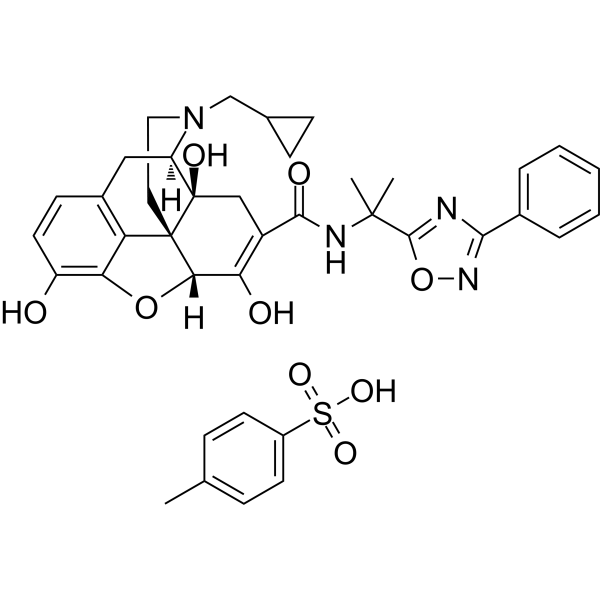
Naldemedine (S-297995) tosylate is an orally active μ-opioid receptor antagonist (PAMORA) . Naldemedine tosylate shows potent binding affinities (Ki=0.34, 0.43, 0.94 nM, respectively) and antagonist activities (IC50=25.57, 7.09, 16.1 nM, respectively) for recombinant human μ-, δ-, and κ- opioid receptors . Naldemedine can be used in opioid-induced constipation (OIC) research . Naldemedine tosylate is predicted to bind to 3CL pro encoded by SARS-CoV2 genome .
|
-
- HY-19627
-
|
S-297995
|
Opioid Receptor
|
Neurological Disease
Metabolic Disease
|
|
Naldemedine (S-297995) is an orally active μ-opioid receptor antagonist (PAMORA) . Naldemedine shows potent binding affinities (Ki=0.34, 0.43, 0.94 nM, respectively) and antagonist activities (IC50=25.57, 7.09, 16.1 nM, respectively) for recombinant human μ-, δ-, and κ- opioid receptors . Naldemedine can be used in opioid-induced constipation (OIC) research . Naldemedine is predicted to bind to 3CL pro encoded by SARS-CoV2 genome .
|
-
- HY-170437
-
|
|
Opioid Receptor
|
Neurological Disease
|
|
MOR modulator-1 (compound 6) is a potent and selective μ opioid receptor (MOR) modulator. MOR modulator-1 exhibits improved opioid receptor selectivity, enhanced in vivo antagonistic effect, and overall fewer withdrawal symptoms compared to NAT (6α-configuration). MOR modulator-1 links with carboxamido linker μ, δ, γ with Kis of 0.25, 41.1, 1.30 nM, respectively[1]
|
-
- HY-145404
-
|
|
Opioid Receptor
|
Metabolic Disease
|
|
Mitragynine pseudoindoxyl is a potent orally active agonist of the μ-opioid receptor (MOR-1, Ki=0.8 nM) and an antagonist of the δ-opioid receptor (DOR-1, Ki=3.0 nM). Mitragynine pseudoindoxyl has moderate affinity for the κ-opioid receptor (KOR-1, Ki=24 nM) and does not recruit β-arrestin-2, acting through G protein-mediated signaling pathways without β-arrestin-2-related activation. Mitragynine pseudoindoxyl produces potent analgesic activity through a mixed μ-agonist/δ-antagonist mechanism, with low side effects such as physical dependence, respiratory depression, and constipation, and no rewarding or aversive behaviors. Mitragynine pseudoindoxyl reduces hyperactivity, inhibits GI transit, and enhances characteristics, making it a potential analgesic .
|
-
- HY-124959
-
|
U-62066 mesylate
|
Opioid Receptor
|
Neurological Disease
|
|
Spiradoline mesylate (U-62066 mesylate), an arylacetamide, is a selective kappa opioid receptor (KOR) agonist with a Ki of 8.6 nM in guinea pig. The Ki values of Spiradoline mesylate for μ and δ receptors are 252 nM and 9400 nM, respectively. Spiradoline mesylate has potent diuretic, analgesic, antiarrythmic, antitussive, neuroprotective properties and easily penetrates the blood-brain barrier .
|
-
- HY-106756
-
|
U-62066
|
Opioid Receptor
|
Neurological Disease
|
|
Spiradoline (U-62066), an arylacetamide, is a selective kappa opioid receptor (KOR) agonist with a Ki of 8.6 nM in guinea pig. The Ki values of Spiradoline for μ and δ receptors are 252 nM and 9400 nM, respectively. Spiradoline has potent diuretic, analgesic, antiarrythmic, antitussive, neuroprotective properties and easily penetrates the blood-brain barrier .
|
-
- HY-P2429
-
|
|
Opioid Receptor
|
Others
|
|
N,N-Diallyl-Tyr-Aib-Aib-Phe-Leu is a compound that can antagonize the δ-opioid receptor and the action of [D-Pen2,D-Pen ] enkephalin in vivo. Its antagonistic effect can be verified by specific behavioral experiments.
|
-
- HY-105389
-
|
RWJ-38705
|
Opioid Receptor
|
Neurological Disease
|
|
Tramadol N-oxide (RWJ 38705) is an analgesic. Tramadol N-oxide sproduces dose-related, long-lasting antinociception. Tramadol N-oxide has affinity for μ opioid receptor (Ki = 38.5 μM) and δ, κ receptors (Ki > 100 μM). Tramadol N-oxide can be used for the study of analgesic effect .
|
-
- HY-P1299A
-
|
|
Opioid Receptor
|
Neurological Disease
|
|
UFP-101 TFA is a potent, selective, and competitive antagonist of the N/OFQ peptide (NOP) receptor, with a pKi of 10.24. UFP-101 TFA displays >3000-fold selectivity over δ, μ and κ opioid receptors. UFP-101 TFA shows antidepressant-like effect .
|
-
- HY-172149
-
|
5'-NTII
|
Opioid Receptor
|
Neurological Disease
|
|
Naltrindole 5′-isothiocyanate (5'-NTII) is a non-selective delta opioid receptor antagonist that can antagonize the analgesic effects induced by DSLET (HY-P1332) without affecting the analgesic effects induced by DPDPE (HY-P1334) .
|
-
- HY-G0021
-
|
Norclozapine; Desmethylclozapine; Normethylclozapine
|
mAChR
Opioid Receptor
Drug Metabolite
Virus Protease
|
Infection
|
|
N-Desmethylclozapine is a major active metabolite of the atypical antipsychotic agent Clozapine. N-Desmethylclozapine is a potent, allosteric and partial M1 receptors agonist (EC50=115 nM) and is able to potentiate hippocampal N-methyl-d-aspartate (NMDA) receptor currents through M1 receptor activation. N-Desmethylclozapine is also a δ-opioid agonist .
|
-
- HY-101317
-
|
SB-205607 dihydrobromide
|
Opioid Receptor
|
Neurological Disease
|
|
TAN-67 (SB-205607) dihydrobromide is a potent and selective nonpeptidic δ-opioid receptor agonist with a Ki value of 0.647 nM. TAN-67 dihydrobromide has neuroprotective effect. TAN-67 dihydrobromide can be used in research of ischemic stroke .
|
-
- HY-119733
-
|
|
Opioid Receptor
|
Neurological Disease
|
|
BU09059 is a potent and selective Kappa-opioid receptor antagonist with a pA2 of 8.62. BU09059 has nanomolar affinity for the κ-receptor, with 15-fold and 616-fold selectivity over μ- and δ-receptors, respectively. BU09059 significantly blocks U50488 (HY-15997B)-induced antinociception .
|
-
- HY-170973
-
|
|
Opioid Receptor
|
|
|
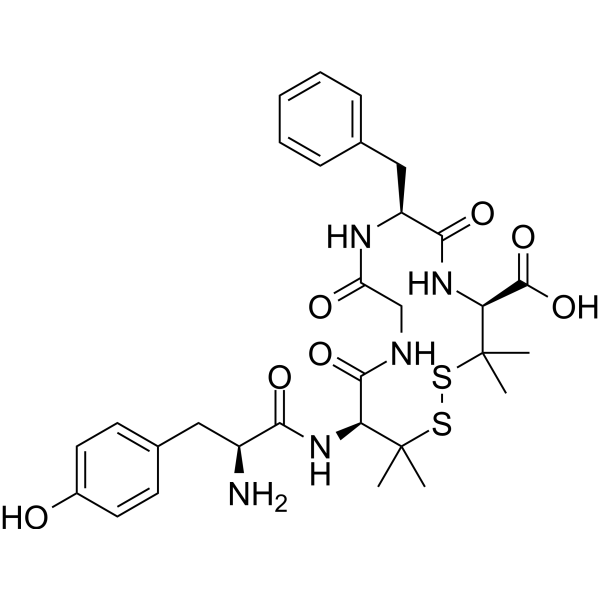
KOR agonist 4 (compound 39) is an agonist of Kappa Opioid Receptor. KOR agonist 4 is an activator of G-protein signaling. KOR agonist 4 binds with GTPγS with an EC50 of 14 nM and with an Emax of 83 %. KOR agonist 4 demonstrates moderate to high intrinsic clearance in human hepatocytes. KOR agonist 4 exhibits 60- and 810-fold selectivities versus the related mu (MOR) and delta (DOR) opioid receptors. KOR agonist 4 is potential for central nervous system (CNS) disorders research .
|
-
- HY-156131
-
Loperamide
Maximum Cited Publications
12 Publications Verification
ADL 2-1294
|
Opioid Receptor
|
Neurological Disease
Inflammation/Immunology
|
|
Loperamide (ADL 2-1294) is selective and orally active μ opioid receptor agonist with Ki valuess of 3, 48 and 1156 nM against μ, δ and κ opioid receptor, respectively. Loperamide produces antinociception and antihyperalgesia. Loperamide exhibits peripheral selectivity, enhancing fluid, electrolyte, and glucose absorption, reversing PGE2 (HY-101952)- and Cholera toxin (HY-P1446)-induced intestinal secretion, and reducing intestinal motility. Loperamide can be used for the researches of inflammatory pain and protracted diarrhoea .
|
-
- HY-118949
-
|
|
Opioid Receptor
|
Metabolic Disease
|
|
LY255582 is a pan-opioid antagonist and has high affinity for mu, delta, and kappa receptors (Ki: 0.4 nM, 5.2, 2.0 nM respectively). LY255582 can decrease food intake and body weight. LY255582 can be used for the research of obesity .
|
-
- HY-120511
-
KNT-127
1 Publications Verification
|
Opioid Receptor
|
Neurological Disease
|
|
KNT-127 is a selective and BBB-penetrant δ-opioid receptor (DOR) agonist (Ki = 0.16 nM). KNT-127 is highly selective to the δ receptor, with Ki values of 0.16, 21.3 and 153 nM for δ, μ and κ receptors, respectively. KNT-127 acts as a biased ligand that mainly activates cyclic adenosine monophosphate (cAMP) signaling with lower beta-arrestin signaling activation. KNT-127 increases the release of dopamine and L-glutamate in the striatum, nucleus accumbens, and prefrontal cortex. KNT-127 exhibits antidepressant- and anxiolytic-like effects. KNT-127 can be studied in research on neurological diseases .
|
-
- HY-W414109
-
|
|
Opioid Receptor
Arrestin
|
Neurological Disease
|
|
ID110460002 possesses both full agonist activity at the μ-opioid receptor (OPRM) and agonist activity at the δ-opioid receptor (OPRD). ID110460002 acts as a potent agonist for the G protein pathways of both receptors, but exhibits only very weak partial agonist activity towards the β-arrestin-2 pathway. The agonistic potency of ID110460002 at OPRM has extremely high intrinsic activity and is unaffected by reduced receptor expression levels, while its potency at OPRD depends on receptor expression levels. ID110460002 displays tissue- or organ-dependent properties, and serves as a critical compound for investigating pain mechanisms and analgesia .
|
-
- HY-175366
-
|
|
Opioid Receptor
Arrestin
|
Neurological Disease
|
|
DOR agonist 3 (Compound 10) is a δ-opioid receptor (DOR)-selective positive allosteric modulator. DOR agonist 3 enhances G protein signaling while reducing β-arrestin2 recruitment. DOR agonist 3 is promising for research of chronic pain and depression .
|
-
- HY-P4053
-
|
|
Opioid Receptor
|
Neurological Disease
|
|
Dalargin is a potent δ-opioid receptor agonist. Dalargin mitigates Gentamicin (HY-A0276)-induced cell death. Dalargin shows nephroprotective effects on Gentamicin (HY-A0276A)-induced kidney injury. Dalargin shows antiulcer activity .
|
-
- HY-P1301
-
|
|
Opioid Receptor
|
Neurological Disease
|
|
[Arg14,Lys15]Nociceptin is a highly potent and selective NOP receptor (ORL1; OP4) agonist, with an EC50 of 1 nM. [Arg14,Lys15]Nociceptin displays high selectivity over opioid receptors, with IC50s of 0.32, 280, >10000 and 1500 nM for NOP, μ, δ and κ receptors, respectively .
|
-
- HY-117702
-
-
- HY-14356
-
-
- HY-101202
-
|
NIH 10815
|
Opioid Receptor
|
Neurological Disease
|
|
SNC80 (NIH 10815) is a potent, highly selective and non-peptide δ-opioid receptor agonist with a Ki of 1.78 nM and an IC50 of 2.73 nM. SNC80 also selectively activates μ-δ heteromer in HEK293 cells with an EC50 of 52.8 nM. SNC80 shows antinociceptive, antihyperalgesic and antidepressant‐like effects. SNC80 has the potential for multiple headache disorders treatment .
|
-
- HY-P1301A
-
|
|
Opioid Receptor
|
Neurological Disease
|
|
[Arg14,Lys15]Nociceptin TFA is a highly potent and selective NOP receptor (ORL1; OP4) agonist, with an EC50 of 1 nM. [Arg14,Lys15]Nociceptin TFA displays high selectivity over opioid receptors, with IC50s of 0.32, 280, >10000 and 1500 nM for NOP, μ, δ and κ receptors, respectively .
|
-
- HY-162850
-
-
- HY-13044
-
-
- HY-180212A
-
|
|
Opioid Receptor
|
Neurological Disease
|
|
SYK-1106 dihydrochloride is a selective δ opioid receptor (DOR) agonist with an EC50 of 0.089 nM. SYK-1106 dihydrochloride shows high selectivity over MOR and KOR. SYK-1106 dihydrochloride exhibits antidepressant-like effects in the mouse forced-swimming tests. SYK-1106 dihydrochloride can be used for the research of depression .
|
-
- HY-G0021S
-
|
Norclozapine-d8; Desmethylclozapine-d8; Normethylclozapine-d8
|
mAChR
Opioid Receptor
Drug Metabolite
Virus Protease
|
Infection
|
|
N-Desmethylclozapine-d8 is the deuterium labeled N-Desmethylclozapine. N-Desmethylclozapine is a major active metabolite of the atypical antipsychotic agent Clozapine. N-Desmethylclozapine is a potent, allosteric and partial M1 receptors agonist (EC50=115 nM) and is able to potentiate hippocampal N-methyl-d-aspartate (NMDA) receptor currents through M1 receptor activation. N-Desmethylclozapine is also a δ-opioid agonist .
|
-
- HY-144224S
-
|
|
Isotope-Labeled Compounds
Opioid Receptor
iGluR
MMP
PI3K
Akt
NF-κB
|
Neurological Disease
Inflammation/Immunology
Cancer
|
|
Tianeptine-d6 hydrochloride is the deuterium labeled Tianeptine hydrochloride. Tianeptine hydrochloride is an atypical antidepressant. Tianeptine hydrochloride is a moderate-intensity agonist of the μ-opioid receptor (MOR), and to a lesser extent, is an agonist of the δ-opioid receptor (DOR). Tianeptine hydrochloride is a glutamate modulator that can enhance AMPA receptor and antagonize NMDA receptor. Tianeptine hydrochloride increases sensitivity of the α1 adrenergic receptor, which only manifests in chronic treatment. Tianeptine hydrochloride exerts neuroprotective effects under stress/inflammation-induced conditions, exhibiting anti-inflammatory and antioxidant properties. Tianeptine hydrochloride inhibits MMP-9 by suppressing the PI3K/Akt-mediated NF-κB pathway. Tianeptine hydrochloride can be used to alleviate symptoms of depression and anxiety, but does not cause sedative effects.
|
-
- HY-90003A
-
|
|
Opioid Receptor
iGluR
MMP
PI3K
Akt
NF-κB
|
Neurological Disease
Inflammation/Immunology
|
|
Tianeptine sodium salt is an atypical antidepressant. Tianeptine sodium salt is a moderate-intensity agonist of the μ-opioid receptor (MOR), and to a lesser extent, is an agonist of the δ-opioid receptor (DOR). Tianeptine sodium salt is a glutamate modulator that can enhance AMPA receptor and antagonize NMDA receptor. Tianeptine sodium salt increases sensitivity of the α1 adrenergic receptor, which only manifests in chronic treatment. Tianeptine sodium salt exerts neuroprotective effects under stress/inflammation-induced conditions, exhibiting anti-inflammatory and antioxidant properties. Tianeptine sodium salt inhibits MMP-9 by suppressing the PI3K/Akt-mediated NF-κB pathway. Tianeptine sodium salt can be used to alleviate symptoms of depression and anxiety, but does not cause sedative effects .
|
-
- HY-90003
-
|
|
Opioid Receptor
iGluR
MMP
PI3K
Akt
NF-κB
|
Neurological Disease
Inflammation/Immunology
|
|
Tianeptine is an atypical antidepressant. Tianeptine is a moderate-intensity agonist of the μ-opioid receptor (MOR), and to a lesser extent, is an agonist of the δ-opioid receptor (DOR). Tianeptine is a glutamate modulator that can enhance AMPA receptor and antagonize NMDA receptor. tianeptine increases sensitivity of the α1 adrenergic receptor, which only manifests in chronic treatment. Tianeptine exerts neuroprotective effects under stress/inflammation-induced conditions, exhibiting anti-inflammatory and antioxidant properties. Tianeptine inhibits MMP-9 by suppressing the PI3K/Akt-mediated NF-κB pathway. Tianeptine can be used to alleviate symptoms of depression and anxiety, but does not cause sedative effects .
|
-
- HY-105343
-
BW-180C
1 Publications Verification
[D-Ala2, D-Leu5]-Enkephalin; DADLE
|
Opioid Receptor
|
Neurological Disease
|
|
BW-180C ([D-Ala2, D-Leu5]-Enkephalin; DADLE) is an δ opioid receptor (DOR) agonist, which belongs to the enkephalin family. Neuroprotective agent. BW-180C reversibly inhibits cellular transcription in neurons without causing cell injury .
|
-
- HY-G0021S1
-
|
Norclozapine-d8 hydrochloride; Desmethylclozapine-d8 hydrochloride; Normethylclozapine-d8 hydrochloride
|
mAChR
Opioid Receptor
Drug Metabolite
Virus Protease
|
Infection
|
|
N-Desmethylclozapine-d8 (hydrochloride) is the deuterium labeled N-Desmethylclozapine hydrochloride. N-Desmethylclozapine hydrochloride is a major active metabolite of the atypical antipsychotic agent Clozapine. N-Desmethylclozapine hydrochloride is a potent, allosteric and partial M1 receptors agonist (EC50=115 nM) and is able to potentiate hippocampal N-methyl-d-aspartate (NMDA) receptor currents through M1 receptor activation. N-Desmethylclozapine hydrochloride is also a δ-opioid agonist .
|
-
- HY-G0021R
-
|
Norclozapine (Standard); Desmethylclozapine (Standard); Normethylclozapine (Standard)
|
Reference Standards
mAChR
Opioid Receptor
Drug Metabolite
Virus Protease
|
Infection
|
|
N-Desmethylclozapine (Standard) is the analytical standard of N-Desmethylclozapine. This product is intended for research and analytical applications. N-Desmethylclozapine is a major active metabolite of the atypical antipsychotic agent Clozapine. N-Desmethylclozapine is a potent, allosteric and partial M1 receptors agonist (EC50=115 nM) and is able to potentiate hippocampal N-methyl-d-aspartate (NMDA) receptor currents through M1 receptor activation. N-Desmethylclozapine is also a δ-opioid agonist .
|
-
- HY-P1300
-
|
|
Opioid Receptor
|
Neurological Disease
|
|
[(pF)Phe4]Nociceptin(1-13)NH2 is a highly potent and selective NOP receptor (OP4) agonist, with a pKi of 10.68 and a pEC50 of 9.31. [(pF)Phe4]Nociceptin(1-13)NH2 displays high selectivity over δ, κ, and μ opioid receptors (>3000 fold) .
|
-
- HY-W158948
-
|
|
Opioid Receptor
|
Neurological Disease
|
|
6-Fluoro-3-(1,2,3,6-tetrahydropyridin-4-yl)-1H-indole is a ORL-1 receptor modulator. 6-Fluoro-3-(1,2,3,6-tetrahydropyridin-4-yl)-1H-indole regulates downstream pathways associated with nociception, cognition and physiological processes. 6-Fluoro-3-(1,2,3,6-tetrahydropyridin-4-yl)-1H-indole is used in the research of central nervous system diseases and pain-related disorders including anxiety, depression, Alzheimer's disease and attention deficit disorder .
|
-
- HY-P1300A
-
|
|
Opioid Receptor
|
Neurological Disease
|
|
[(pF)Phe4]Nociceptin(1-13)NH2 TFA is a highly potent and selective NOP receptor (OP4) agonist, with a pKi of 10.68 and a pEC50 of 9.31. [(pF)Phe4]Nociceptin(1-13)NH2 TFA displays high selectivity over δ, κ, and μ opioid receptors (>3000 fold) .
|
-
- HY-90003S
-
|
|
Isotope-Labeled Compounds
Opioid Receptor
iGluR
MMP
PI3K
Akt
NF-κB
|
Neurological Disease
Inflammation/Immunology
|
|
Tianeptine-d12 is a deuterated analog of Tianeptine (HY-90003).Tianeptine is an atypical antidepressant. Tianeptine is a moderate-intensity agonist of the μ-opioid receptor (MOR), and to a lesser extent, is an agonist of the δ-opioid receptor (DOR). Tianeptine is a glutamate modulator that can enhance AMPA receptor and antagonize NMDA receptor. Tianeptine increases sensitivity of the α1 adrenergic receptor, which only manifests in chronic treatment. Tianeptine exerts neuroprotective effects under stress/inflammation-induced conditions, exhibiting anti-inflammatory and antioxidant properties. Tianeptine inhibits MMP-9 by suppressing the PI3K/Akt-mediated NF-κB pathway. Tianeptine can be used to alleviate symptoms of depression and anxiety, but does not cause sedative effects.
|
-
- HY-90003AR
-
|
|
Reference Standards
Opioid Receptor
iGluR
MMP
PI3K
Akt
NF-κB
|
Neurological Disease
Inflammation/Immunology
|
|
Tianeptine sodium salt (Standard) is the analytical standard of Tianeptine sodium salt (HY-90003A). This product is intended for research and analytical applications. Tianeptine sodium salt is an atypical antidepressant. Tianeptine sodium salt is a moderate-intensity agonist of the μ-opioid receptor (MOR), and to a lesser extent, is an agonist of the δ-opioid receptor (DOR). Tianeptine sodium salt is a glutamate modulator that can enhance AMPA receptor and antagonize NMDA receptor. Tianeptine sodium salt increases sensitivity of the α1 adrenergic receptor, which only manifests in chronic treatment. Tianeptine sodium salt exerts neuroprotective effects under stress/inflammation-induced conditions, exhibiting anti-inflammatory and antioxidant properties. Tianeptine sodium salt inhibits MMP-9 by suppressing the PI3K/Akt-mediated NF-κB pathway. Tianeptine sodium salt can be used to alleviate symptoms of depression and anxiety, but does not cause sedative effects.
|
-
- HY-178945
-
|
|
Opioid Receptor
Interleukin Related
TNF Receptor
Sigma Receptor
|
Neurological Disease
Inflammation/Immunology
|
|
KOR agonist 7 (Compound 29) is a highly selective κ-opioid receptor (KOR) agonist with a Ki of 138 nM. KOR agonist 7 shows no activity at μ- and δ-opioid receptors or σ1 receptor, and exhibits extremely low affinity for σ2 receptor (Ki = 2.8 μM). KOR agonist 7 significantly reduces the secretion of pro-inflammatory cytokines such as IL-6, TNF-α, and IFN-γ, while increasing the production of the anti-inflammatory cytokine IL-10. KOR agonist 7 downregulates the expression of the pro-inflammatory M1 macrophage marker CD80 and upregulates the anti-inflammatory M2 macrophage marker CD163. KOR agonist 7 holds potential for applications in analgesia and immune modulation .
|
-
- HY-101202R
-
|
NIH 10815 (Standard)
|
Opioid Receptor
Reference Standards
|
Neurological Disease
|
|
SNC80 (Standard) is the analytical standard of SNC80 (HY-101202). This product is intended for research and analytical applications. SNC80 (NIH 10815) is a potent, highly selective and non-peptide δ-opioid receptor agonist with a Ki of 1.78 nM and an IC50 of 2.73 nM. SNC80 also selectively activates μ-δ heteromer in HEK293 cells with an EC50 of 52.8 nM. SNC80 shows antinociceptive, antihyperalgesic and antidepressant‐like effects. SNC80 has the potential for multiple headache disorders treatment .
|
-
- HY-101343
-
|
|
5-HT Receptor
|
Neurological Disease
|
|
RS 39604 is a potent, selective, and orally active 5-HT4 receptor antagonist with a pKi of 9.1 in guinea pig striatal membranes. RS 39604 displays a low affinity (pKi<6.5) for 5-HT1A, 5-HT2C, 5-HT3, α1c, D1, D2, M1, M2, AT1, B1 and opioid mu receptors and moderate affinity for δ1, (pKi=6.8) and δ2 (pKi=7.8) sites .
|
-
- HY-101202A
-
|
(Rac)-NIH 10815
|
Opioid Receptor
|
Neurological Disease
|
|
(Rac)-SNC80 is a racemate of SNC80 (HY-101202). SNC80 (NIH 10815) is a potent, highly selective and non-peptide δ-opioid receptor agonist with a Ki of 1.78 nM and an IC50 of 2.73 nM. SNC80 shows antinociceptive, antihyperalgesic and antidepressant‐like effects. SNC80 has the potential for multiple headache disorders treatment .
|
-
- HY-10233
-
|
Lu 02-030 hydrochloride; THIP hydrochloride
|
GABA Receptor
|
Neurological Disease
|
|
Gaboxadol hydrochloride (Lu 02-030 hydrochloride) is a potent agonist of the GABAA receptor and an antagonist of GABAC receptors (IC50=25 μM). Gaboxadol hydrochloride displays a partial agonist efficacy on subunit α1β2γ2 with an ED50 value of 143 μM, a full agonist efficacy at α5 subunit (ED50=28-129 μM) and a superagonist efficacy at α4β3δ (ED50=6 μM). Gaboxadol hydrochloride is a non-opioid agent .
|
-
- HY-105343R
-
|
[D-Ala2, D-Leu5]-Enkephalin (Standard); DADLE (Standard)
|
Reference Standards
Opioid Receptor
|
Neurological Disease
|
|
BW-180C (Standard) is the analytical standard of BW-180C (HY-105343). This product is intended for research and analytical applications. BW-180C ([D-Ala2, D-Leu5]-Enkephalin; DADLE) is an δ opioid receptor (DOR) agonist, which belongs to the enkephalin family. Neuroprotective agent. BW-180C reversibly inhibits cellular transcription in neurons without causing cell injury .
|
-
- HY-130118
-
|
|
Mas-related G-protein-coupled Receptor (MRGPR)
|
Neurological Disease
|
|
MRGPRX1 agonist 1 is a highly potent MRGPRX1 agonist (EC50=50 nM) with greater than 50-fold selectivity for δ, μ, and κ opioid receptors. MRGPRX1 agonist 1 is inactive against MRGPRC11. MRGPRC11 inhibits high voltage-activated (HVA) Ca 2+ currents, reduces neurotransmitter release, and mitigates nociceptive transmission in the spinal cord. MRGPRX1 agonist 1 is useful for the study of chronic pain, especially neuropathic pain .
|
-
- HY-10233R
-
|
Lu 02-030 hydrochloride (Standard); THIP hydrochloride (Standard)
|
Reference Standards
GABA Receptor
|
Neurological Disease
|
|
Gaboxadol (hydrochloride) (Standard) is the analytical standard of Gaboxadol (hydrochloride). This product is intended for research and analytical applications. Gaboxadol hydrochloride (Lu 02-030 hydrochloride) is a potent agonist of the GABAA receptor and an antagonist of GABAC receptors (IC50=25 μM). Gaboxadol hydrochloride displays a partial agonist efficacy on subunit α1β2γ2 with an ED50 value of 143 μM, a full agonist efficacy at α5 subunit (ED50=28-129 μM) and a superagonist efficacy at α4β3δ (ED50=6 μM). Gaboxadol hydrochloride is a non-opioid agent .
|
-
- HY-P11642
-
|
|
ERK
Androgen Receptor
Opioid Receptor
Enteropeptidase
mTOR
Aminopeptidase
|
Neurological Disease
Inflammation/Immunology
Cancer
|
|
Sialorphin is a neutral endopeptidase (NEP) and aminopeptidase N (APN) inhibitor that responds to androgen signals. Sialorphin blocks the degradation of endogenous opioid peptides and interacts with μ-, δ-, κ-opioid receptors. Sialorphin regulates the ERK/mTOR signaling pathway by inducing cell cycle arrest, enhancing ERK1/2 activity, and reducing the phosphorylation levels of mTOR, 4E-BP1, p70S6K; accordingly, Sialorphin exhibits antiproliferative activity against colorectal cancer, glioma and prostate cancer cells without cytotoxicity. In addition, Sialorphin also produces antinociceptive responses, regulates sexual behavior, relaxes corpus cavernosum smooth muscle, and alleviates experimental colitis. Sialorphin is also a copper (II) ion-binding ligand. Sialorphin has been used in mechanistic studies related to cancer, pain management and inflammatory bowel disease .
|
-
- HY-P11642A
-
|
|
Enteropeptidase
Aminopeptidase
Opioid Receptor
ERK
mTOR
Androgen Receptor
|
Inflammation/Immunology
|
|
Sialorphin TFA is a neutral endopeptidase (NEP) and aminopeptidase N (APN) inhibitor that responds to androgen signals. Sialorphin TFA blocks the degradation of endogenous opioid peptides and interacts with μ-, δ-, κ-opioid receptors. Sialorphin TFA regulates the ERK/mTOR signaling pathway by inducing cell cycle arrest, enhancing ERK1/2 activity, and reducing the phosphorylation levels of mTOR, 4E-BP1, p70S6K; accordingly, Sialorphin TFA exhibits antiproliferative activity against colorectal cancer, glioma and prostate cancer cells without cytotoxicity. In addition, Sialorphin TFA also produces antinociceptive responses, regulates sexual behavior, relaxes corpus cavernosum smooth muscle, and alleviates experimental colitis. Sialorphin TFA is also a copper (II) ion-binding ligand. Sialorphin TFA has been used in mechanistic studies related to cancer, pain management and inflammatory bowel disease .
|
-
- HY-175532
-
|
|
mAChR
|
Neurological Disease
|
|
M4 mAChR Modulator-2 is an orally active, selective, brain-penetrant positive allosteric modulator (PAM) of the M4 muscarinic acetylcholine receptor (M4 mAChR) (EC50 = 513 nM). M4 mAChR Modulator-2 exhibits high target selectivity, showing negligible affinity and low inhibition rates for non-target receptors (D1R/D2R/D3R, 5-HT subtypes, κ/δ/μ opioid receptors, H1, M1/M2) while specifically binding to M4 mAChR with a Ki of 377 nM and an inhibition rate of 62.8%. M4 mAChR Modulator-2 reverses Dizocilpine (MK-801) (HY-15084B)-induced hyperlocomotion in mice. M4 mAChR Modulator-2 can be used for the study of schizophrenia
|
-
- HY-115500
-
|
|
Endogenous Metabolite
Opioid Receptor
Leukotriene Receptor
|
Neurological Disease
Inflammation/Immunology
|
|
PL265 is an orally active dual enkephalinase inhibitor. PL265 is a prodrug of PL254, which can simultaneously and efficiently inhibit neutral endopeptidase (Neprilysin) and Aminopeptidase N. PL265 can effectively protect and significantly increase the local concentration of enkephalins (such as Met-Enkephalin and Leu-Enkephalin) released by cells at the pain or inflammation sites, thereby activating μ and δ opioid receptors to produce a potent analgesic effect. PL254 can also inhibit leukotriene A4 hydrolase (LTA4H), which may contribute to its additional anti-inflammatory effect by reducing the production of pro-inflammatory mediator leukotriene B4 (LTB4). PL265 can be used in non-addictive chronic pain research .
|
-
| Cat. No. |
Product Name |
Target |
Research Area |
-
- HY-P1502
-
|
|
Opioid Receptor
|
Neurological Disease
|
|
β-Endorphin, human, a prominent endogenous peptide, existing in the hypophysis cerebri and hypothalamus, is an agonist of opioid receptor, with preferred affinity for μ-opioid receptor and δ-opioid receptor; β-Endorphin, human exhibits antinociception activity.
|
-
- HY-P1333
-
|
|
Opioid Receptor
Apoptosis
Caspase
Endogenous Metabolite
|
Neurological Disease
|
|
Dynorphin A is an endogenous opioid peptide involved in inhibitory neurotransmission in the central nervous system (CNS). Dynorphin A is a highy potent kappa opioid receptor (KOR) agonist, and is also an agonist for other opioid receptors, such as mu (MOR) and delta (DOR). Dynorphin A can induce neuronal death, and can be used in the research of neurological disease .
|
-
- HY-P1335
-
CTAP
2 Publications Verification
|
Opioid Receptor
|
Neurological Disease
|
|
CTAP is a potent, highly selective, and BBB penetrant μ opioid receptor antagonist, with an IC50 of 3.5 nM. CTAP displays over 1200-fold selectivity over δ opioid (IC50=4500 nM) and somatostatin receptors. CTAP can be used for the study of L-DOPA-induced dyskinesia (LID) and opiate overdose or addiction .
|
-
- HY-P1334
-
-
- HY-P4053
-
|
|
Opioid Receptor
|
Neurological Disease
|
|
Dalargin is a potent δ-opioid receptor agonist. Dalargin mitigates Gentamicin (HY-A0276)-induced cell death. Dalargin shows nephroprotective effects on Gentamicin (HY-A0276A)-induced kidney injury. Dalargin shows antiulcer activity .
|
-
- HY-P0098
-
-
- HY-P1470
-
-
- HY-P1336
-
-
- HY-105343
-
BW-180C
1 Publications Verification
[D-Ala2, D-Leu5]-Enkephalin; DADLE
|
Opioid Receptor
|
Neurological Disease
|
|
BW-180C ([D-Ala2, D-Leu5]-Enkephalin; DADLE) is an δ opioid receptor (DOR) agonist, which belongs to the enkephalin family. Neuroprotective agent. BW-180C reversibly inhibits cellular transcription in neurons without causing cell injury .
|
-
- HY-P1467A
-
|
5-Methionine-enkephalin amide TFA
|
Opioid Receptor
|
Neurological Disease
|
|
[Met5]-Enkephalin, amide TFA is an agonist for δ opioid receptors as well as putative ζ ζ opioid receptors.
|
-
- HY-P1334A
-
-
- HY-P1013A
-
-
- HY-W048697
-
|
|
Amino Acid Derivatives
|
Others
|
|
Fmoc-D-Pen(Trt)-OH is an amino acid derivative with an Fmoc protecting group, which can be used to synthesize analogs of cyclic lanthionine enkephalin, a δ-opioid receptor selective ligand .
|
-
- HY-P1335A
-
|
|
Opioid Receptor
|
Neurological Disease
|
|
CTAP TFA is a potent, highly selective, and BBB penetrant μ opioid receptor antagonist, with an IC50 of 3.5 nM. CTAP TFA displays over 1200-fold selectivity over δ opioid (IC50=4500 nM) and somatostatin receptors. CTAP TFA can be used for the study of L-DOPA-induced dyskinesia (LID) and opiate overdose or addiction .
|
-
- HY-101230
-
|
|
Opioid Receptor
|
Neurological Disease
|
|
ICI 174864 is a selective and brain-penetrant δ-opioid receptor antagonist with Ke values of 22.0 nM to 30.6 nM at δ-opioid receptor in mouse vas deferens. ICI 174864 selectively blocks biological effects mediated by the δ-opioid receptor agonist DPDPE (HY-P1334) after central administration. ICI 174864 reverses hypotension in rats with endotoxic shock and inhibits acetic acid-induced writhing in mice. ICI 174864 can be used for the research of opioid receptor subtypes, endotoxic hypotension and analgesic pathways .
|
-
- HY-P1866A
-
|
|
Opioid Receptor
|
Neurological Disease
|
|
β-Endorphin, equine TFA is an endogenous opioid peptide, which binds at high affinity to both μ/δ opioid receptors. β-Endorphin, equine TFA has analgesic properties .
|
-
- HY-P3546
-
-
- HY-P1013
-
-
- HY-P3555
-
-
- HY-P1299A
-
|
|
Opioid Receptor
|
Neurological Disease
|
|
UFP-101 TFA is a potent, selective, and competitive antagonist of the N/OFQ peptide (NOP) receptor, with a pKi of 10.24. UFP-101 TFA displays >3000-fold selectivity over δ, μ and κ opioid receptors. UFP-101 TFA shows antidepressant-like effect .
|
-
- HY-P1467
-
-
- HY-P1866
-
-
- HY-P1332
-
|
[D-Ser2, Leu5, Thr6]-enkephalin
|
Opioid Receptor
|
Neurological Disease
|
|
DSLET ([D-Ser2, Leu5, Thr6]-enkephalin) is a highly specific agonist of the δ-receptor. DSLET is an enkephalin-related peptide selectively bound to the δ opioid receptor .
|
-
- HY-129271
-
|
Deltorphin A; Dermenkephalin
|
Opioid Receptor
|
Others
|
|
Deltorphin (Deltorphin A; Dermenkephalin) is a biological active peptide. (Deltorphin A peptide was isolated from skin extracts of the South American frog, Phyllomedusa sauvagei. Deltorphin A is a potent and selective agonist for the delta-opioid receptor.)
|
-
- HY-P1299
-
|
|
Opioid Receptor
|
Neurological Disease
|
|
UFP-101 is a potent, selective, and competitive antagonist of the NOP receptor, with a pKi of 10.24. UFP-101 displays >3000-fold selectivity over δ, μ and κ opioid receptors. UFP-101 shows antidepressant-like effect .
|
-
- HY-P1316A
-
|
|
Opioid Receptor
|
Neurological Disease
|
|
Ac-RYYRWK-NH2 is a potent and selective partial agonist for the nociceptin receptor (NOP), [ 3H]Ac-RYYRWK-NH2 binds to rat cortical membranes ORL1 with a Kd of 0.071 nM, but has no affinity for μ-, κ- or δ-opioid receptors .
|
-
- HY-P11642A
-
|
|
Enteropeptidase
Aminopeptidase
Opioid Receptor
ERK
mTOR
Androgen Receptor
|
Inflammation/Immunology
|
|
Sialorphin TFA is a neutral endopeptidase (NEP) and aminopeptidase N (APN) inhibitor that responds to androgen signals. Sialorphin TFA blocks the degradation of endogenous opioid peptides and interacts with μ-, δ-, κ-opioid receptors. Sialorphin TFA regulates the ERK/mTOR signaling pathway by inducing cell cycle arrest, enhancing ERK1/2 activity, and reducing the phosphorylation levels of mTOR, 4E-BP1, p70S6K; accordingly, Sialorphin TFA exhibits antiproliferative activity against colorectal cancer, glioma and prostate cancer cells without cytotoxicity. In addition, Sialorphin TFA also produces antinociceptive responses, regulates sexual behavior, relaxes corpus cavernosum smooth muscle, and alleviates experimental colitis. Sialorphin TFA is also a copper (II) ion-binding ligand. Sialorphin TFA has been used in mechanistic studies related to cancer, pain management and inflammatory bowel disease .
|
-
- HY-P10203
-
|
|
Opioid Receptor
|
Inflammation/Immunology
|
|
μ/κ/δ opioid receptor agonist 1 is a μ opioid receptor (MOR), κ opioid receptor (KOR), and δ opioid receptor (DOR) agonist. μ/κ/δ opioid receptor agonist 1 produces a strong and long-lasting analgesic effect through peripheral MOR and KOR in the tail-flick test .
|
-
- HY-109166
-
-
- HY-P2199
-
-
- HY-P2669
-
-
- HY-129422
-
-
- HY-P1502F
-
|
|
Opioid Receptor
|
Neurological Disease
|
|
Biocytin-β-endorphin, human is abiotinylated β-Endorphin, human (HY-P1502). β-Endorphin, human, a prominent endogenous peptide, existing in the hypophysis cerebri and hypothalamus, is an agonist of opioid receptor, with preferred affinity for μ-opioid receptor and δ-opioid receptor; β-Endorphin, human exhibits antinociception activity.
|
-
- HY-P1333A
-
|
|
Opioid Receptor
Apoptosis
Caspase
Endogenous Metabolite
|
Neurological Disease
|
|
Dynorphin A TFA is an endogenous opioid peptide involved in inhibitory neurotransmission in the central nervous system (CNS). Dynorphin A TFA is a highy potent kappa opioid receptor (KOR) agonist, and is also an agonist for other opioid receptors, such as mu (MOR) and delta (DOR). Dynorphin A TFA can induce neuronal death, and can be used in the research of neurological disease .
|
-
- HY-P3555A
-
|
|
Opioid Receptor
|
Others
|
|
D-Ala-Gly-Phe-Met-NH2 monoacetate, an opioid peptide, is a potent opiate δ-receptor agonist .
|
-
- HY-P1625
-
|
Dynorphin A ethylamide (1-9)
|
Opioid Receptor
|
Neurological Disease
|
|
Daeatal (Dynorphin A ethylamide (1-9)) is an ethylamine-modified dynorphin fragment that can be used in the study of analgesia, addiction, depression, etc. Dynorphin A is an endogenous opioid peptide involved in inhibitory neurotransmission in the central nervous system (CNS). Dynorphin A is a highy potent kappa opioid receptor (KOR) agonist, and is also an agonist for other opioid receptors, such as mu (MOR) and delta (DOR). Dynorphin A can induce neuronal death, and can be used in the research of neurological disease .
|
-
- HY-P5892
-
|
|
Opioid Receptor
|
Neurological Disease
|
|
β-Endorphin (1-27) (human) is an opioid antagonist that binds μ-, δ-, and κ-opioid receptors with Kis of 5.31, 6.17, and 39.82 nM, respectively. β-Endorphin (1-27) (human) inhibits β-Endorphin (HY-P1502)-induced and etorphine-induced analgesia .
|
-
- HY-P1316
-
|
|
Opioid Receptor
|
Neurological Disease
|
|
Ac-RYYRWK-NH2 is a potent and selective partial agonist for the nociceptin receptor (NOP), [ 3H]Ac-RYYRWK-NH2 binds to rat cortical membranes ORL1 with a Kd of 0.071 nM, but has no affinity for µ-, κ- or δ-opioid receptors .
|
-
- HY-P2429
-
|
|
Opioid Receptor
|
Others
|
|
N,N-Diallyl-Tyr-Aib-Aib-Phe-Leu is a compound that can antagonize the δ-opioid receptor and the action of [D-Pen2,D-Pen ] enkephalin in vivo. Its antagonistic effect can be verified by specific behavioral experiments.
|
-
- HY-P1301
-
|
|
Opioid Receptor
|
Neurological Disease
|
|
[Arg14,Lys15]Nociceptin is a highly potent and selective NOP receptor (ORL1; OP4) agonist, with an EC50 of 1 nM. [Arg14,Lys15]Nociceptin displays high selectivity over opioid receptors, with IC50s of 0.32, 280, >10000 and 1500 nM for NOP, μ, δ and κ receptors, respectively .
|
-
- HY-P1301A
-
|
|
Opioid Receptor
|
Neurological Disease
|
|
[Arg14,Lys15]Nociceptin TFA is a highly potent and selective NOP receptor (ORL1; OP4) agonist, with an EC50 of 1 nM. [Arg14,Lys15]Nociceptin TFA displays high selectivity over opioid receptors, with IC50s of 0.32, 280, >10000 and 1500 nM for NOP, μ, δ and κ receptors, respectively .
|
-
- HY-P1300
-
|
|
Opioid Receptor
|
Neurological Disease
|
|
[(pF)Phe4]Nociceptin(1-13)NH2 is a highly potent and selective NOP receptor (OP4) agonist, with a pKi of 10.68 and a pEC50 of 9.31. [(pF)Phe4]Nociceptin(1-13)NH2 displays high selectivity over δ, κ, and μ opioid receptors (>3000 fold) .
|
-
- HY-P1300A
-
|
|
Opioid Receptor
|
Neurological Disease
|
|
[(pF)Phe4]Nociceptin(1-13)NH2 TFA is a highly potent and selective NOP receptor (OP4) agonist, with a pKi of 10.68 and a pEC50 of 9.31. [(pF)Phe4]Nociceptin(1-13)NH2 TFA displays high selectivity over δ, κ, and μ opioid receptors (>3000 fold) .
|
-
- HY-P1336A
-
|
Deltorphin 1 TFA; Deltorphin C TFA; [D-Ala2] Deltorphin I TFA
|
Opioid Receptor
|
Neurological Disease
|
|
Deltorphin I TFA (Deltorphin 1 TFA; Deltorphin C TFA; [D-Ala2] Deltorphin I TFA) is a high-affinity, selective δ-opioid receptor agonist that targets the δ1 and δ2 opioid receptor subtypes. Deltorphin I TFA produces analgesic effects in the rat spinal cord. Deltorphin I TFA increases the pain threshold in rats. Deltorphin I TFA can be used in studies related to nociception (acute pain) .
|
-
- HY-105343R
-
|
[D-Ala2, D-Leu5]-Enkephalin (Standard); DADLE (Standard)
|
Reference Standards
Opioid Receptor
|
Neurological Disease
|
|
BW-180C (Standard) is the analytical standard of BW-180C (HY-105343). This product is intended for research and analytical applications. BW-180C ([D-Ala2, D-Leu5]-Enkephalin; DADLE) is an δ opioid receptor (DOR) agonist, which belongs to the enkephalin family. Neuroprotective agent. BW-180C reversibly inhibits cellular transcription in neurons without causing cell injury .
|
-
- HY-P11642
-
|
|
ERK
Androgen Receptor
Opioid Receptor
Enteropeptidase
mTOR
Aminopeptidase
|
Neurological Disease
Inflammation/Immunology
Cancer
|
|
Sialorphin is a neutral endopeptidase (NEP) and aminopeptidase N (APN) inhibitor that responds to androgen signals. Sialorphin blocks the degradation of endogenous opioid peptides and interacts with μ-, δ-, κ-opioid receptors. Sialorphin regulates the ERK/mTOR signaling pathway by inducing cell cycle arrest, enhancing ERK1/2 activity, and reducing the phosphorylation levels of mTOR, 4E-BP1, p70S6K; accordingly, Sialorphin exhibits antiproliferative activity against colorectal cancer, glioma and prostate cancer cells without cytotoxicity. In addition, Sialorphin also produces antinociceptive responses, regulates sexual behavior, relaxes corpus cavernosum smooth muscle, and alleviates experimental colitis. Sialorphin is also a copper (II) ion-binding ligand. Sialorphin has been used in mechanistic studies related to cancer, pain management and inflammatory bowel disease .
|
| Cat. No. |
Product Name |
Target |
Research Area |
Image |
-
- HY-P992012
-
|
|
Opioid Receptor
|
Neurological Disease
Cancer
|
|
CA1001 is a small-molecule ZNF74 inhibitor and a peripherally restricted κ/δ dual opioid receptor agonist. CA1001 exhibits potent antitumor activity both in vitro and in vivo. CA1001, in combination with immune checkpoint inhibitors, significantly enhances tumor regression. CA1001 activates peripherally restricted κ/δ dual opioid receptors and exerts analgesic effects under conditions of inflammatory pain, neuropathic pain, and mechanical hyperalgesia. CA1001 can be used in research related to melanoma, mechanical hyperalgesia, neuropathic pain, and inflammatory arthritis pain.
|
-
(5)
| Cat. No. |
Product Name |
Category |
Target |
Chemical Structure |
| Cat. No. |
Product Name |
Chemical Structure |
-
- HY-76711S
-
|
|
Naltrexone-d4 is deuterium labeled Naltrexone (HY-76711). Naltrexone is an orally active, long-acting opioid receptor (opioid receptor) antagonist. Naltrexone blocks the euphoric effects of exogenous opioids and reduces alcohol craving by blocking opioid receptors (μ, κ, and δ) as well as opioid growth factor receptors. Low doses of Naltrexone are used to relieve chronic pain, treat inflammatory diseases and inhibit tumor growth, while high doses or continuous administration exert pro-inflammatory or pro-proliferative effects. Naltrexone relieves intractable pruritus caused by psoriasis, atopic dermatitis and other conditions, and its combination with Bupropion (HY-B0403) inhibits food craving, thereby reducing body weight.
|
-
-
- HY-G0021S1
-
|
|
|
N-Desmethylclozapine-d8 (hydrochloride) is the deuterium labeled N-Desmethylclozapine hydrochloride. N-Desmethylclozapine hydrochloride is a major active metabolite of the atypical antipsychotic agent Clozapine. N-Desmethylclozapine hydrochloride is a potent, allosteric and partial M1 receptors agonist (EC50=115 nM) and is able to potentiate hippocampal N-methyl-d-aspartate (NMDA) receptor currents through M1 receptor activation. N-Desmethylclozapine hydrochloride is also a δ-opioid agonist .
|
-
-
- HY-123689S1
-
|
|
|
Samidorphan-d5 (ALKS-33-d5) is is a deuterated compound of Samidorphan. Samidorphan is an orally active opioid system modulator that binds with high affinity to μ-opioid, κ-opioid, and δ-opioid receptors. Samidorphan is a μ-opioid receptor antagonist and a partial agonist at k-opioid and δ-opioid receptors. Samidorphan acts primarily as an opioid receptor antagonist in vivo .
|
-
-
- HY-G0021S
-
|
|
|
N-Desmethylclozapine-d8 is the deuterium labeled N-Desmethylclozapine. N-Desmethylclozapine is a major active metabolite of the atypical antipsychotic agent Clozapine. N-Desmethylclozapine is a potent, allosteric and partial M1 receptors agonist (EC50=115 nM) and is able to potentiate hippocampal N-methyl-d-aspartate (NMDA) receptor currents through M1 receptor activation. N-Desmethylclozapine is also a δ-opioid agonist .
|
-
-
- HY-90003S
-
|
|
|
Tianeptine-d12 is a deuterated analog of Tianeptine (HY-90003).Tianeptine is an atypical antidepressant. Tianeptine is a moderate-intensity agonist of the μ-opioid receptor (MOR), and to a lesser extent, is an agonist of the δ-opioid receptor (DOR). Tianeptine is a glutamate modulator that can enhance AMPA receptor and antagonize NMDA receptor. Tianeptine increases sensitivity of the α1 adrenergic receptor, which only manifests in chronic treatment. Tianeptine exerts neuroprotective effects under stress/inflammation-induced conditions, exhibiting anti-inflammatory and antioxidant properties. Tianeptine inhibits MMP-9 by suppressing the PI3K/Akt-mediated NF-κB pathway. Tianeptine can be used to alleviate symptoms of depression and anxiety, but does not cause sedative effects.
|
-
-
- HY-123689S
-
|
|
|
Samidorphan-d4 is the deuterium labeled Samidorphan(HY-123689).Samidorphan (ALKS-33) is an orally active opioid system modulator that has a high affinity for binding with μ‐opioid, κ‐opioid, and δ‐opioid receptors. Samidorphan acts as an antagonist at μ‐opioid receptors and acts as a partial agonist at k-opioid and δ‐opioid receptors. Samidorphan primarily acts as an opioid receptor antagonist in vivo .
|
-
-
- HY-144224S
-
|
|
|
Tianeptine-d6 hydrochloride is the deuterium labeled Tianeptine hydrochloride. Tianeptine hydrochloride is an atypical antidepressant. Tianeptine hydrochloride is a moderate-intensity agonist of the μ-opioid receptor (MOR), and to a lesser extent, is an agonist of the δ-opioid receptor (DOR). Tianeptine hydrochloride is a glutamate modulator that can enhance AMPA receptor and antagonize NMDA receptor. Tianeptine hydrochloride increases sensitivity of the α1 adrenergic receptor, which only manifests in chronic treatment. Tianeptine hydrochloride exerts neuroprotective effects under stress/inflammation-induced conditions, exhibiting anti-inflammatory and antioxidant properties. Tianeptine hydrochloride inhibits MMP-9 by suppressing the PI3K/Akt-mediated NF-κB pathway. Tianeptine hydrochloride can be used to alleviate symptoms of depression and anxiety, but does not cause sedative effects.
|
-
-
- HY-13243S1
-
|
|
|
Alvimopan-d7 (ADL 8-2698-d7) is deuterium labeled Alvimopan. Alvimopan (ADL 8-2698) is a potent, selective, orally active and reversible μ-opioid receptor antagonist, with an IC50 of 1.7 nM. Alvimopan has selectivity for μ-opioid receptor (Ki=0.47 nM) over κ- and δ-opioid receptors (Kis=100, 12 nM, respectively). Alvimopan can be used for the research of postoperative ileus .
|
-
Your information is safe with us. * Required Fields.
Inquiry Information
- Product Name:
- Cat. No.:
- Quantity:
- MCE Japan Authorized Agent:

