11 Results for "

egfr antagonist

" in MedChemExpress (MCE) Product Catalog:
Products (11)

11 Results for "egfr antagonist" in MCE Product Catalog:

1
1 Cited Publications
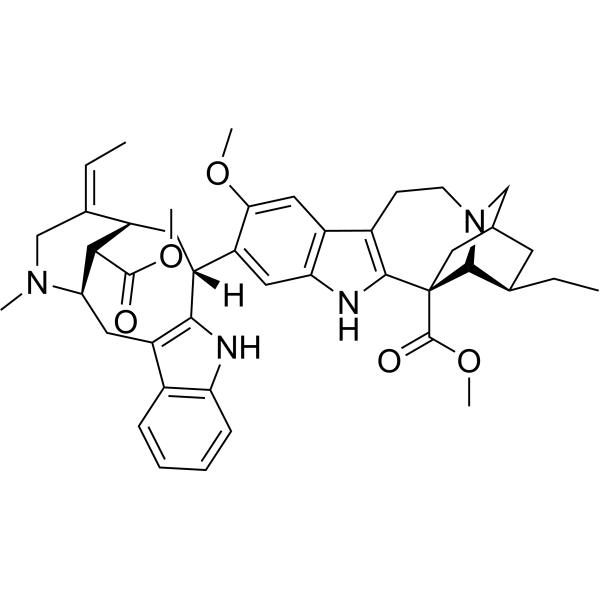
Cat. No.: HY-N6932
CAS No.: 3371-85-5
Voacamine is an indole alkaloid with cannabinoid 1 (CB1) antagonistic activity. Voacamine can inhibit nuclear translocation. Voacamine is effective in enhancing the effect of Doxorubicin (HY-15142A) as it interferes with the P-glycoprotein (P-gp) function. Voacamine promotes apoptosis-independent autophagic cell death in human osteosarcoma cells. Voacamine activates mitochondrial-associated apoptosis signaling pathway and inhibition of PI3K/Akt/mTOR signaling pathway to suppress breast cancer progression. Voacamine inhibits EGFR to exert oncogenic activity against colorectal cancer .
loading...
    loading...
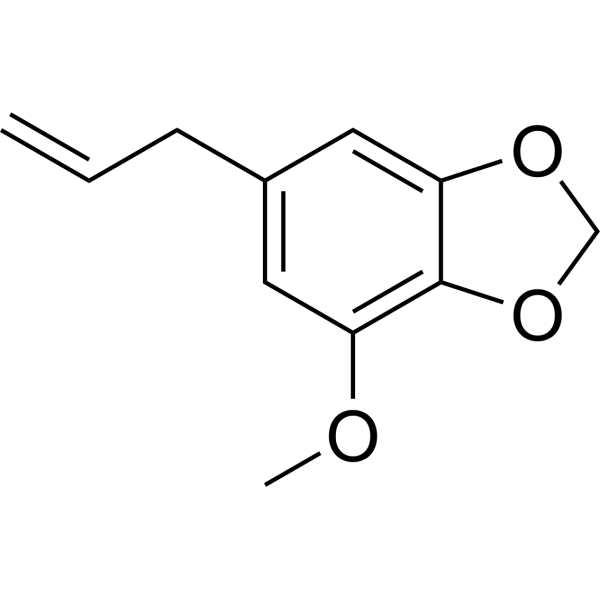
Cat. No.: HY-N2510
CAS No.: 607-91-0
Synonyms: Myristicine
Myristicine is an orally bioavailable serotonin receptor antagonist and weak monoamine oxidase (MAO) inhibitor. Myristicine also exerts anti-cancer effects on gastric cancer cells by inhibiting the EGFR/ERK signaling pathway. Myristicine is the main component of nutmeg essential oil and has anti-cancer, anti-proliferative, antibacterial, anti-inflammatory and apoptosis-inducing effects. Myristicine abuse can produce hallucinogenic effects, organ damage, etc .
loading...
    loading...
Cat. No.: HY-160053
Target:  

PDGFR

Research Areas:  

Cancer

Gint4.T aptamer sodium is a nuclease-resistant RNA aptamer-based antagonist targeting platelet-derived growth factor receptor beta (PDGFRβ) (Kd: 9.6 nM). Gint4.T aptamer sodium inhibits PDGFRβ heterodimerization and EGFR transactivation. It can significantly inhibit cell migration and proliferation, induce differentiation and prevent tumor growth in vivo. Gint4.T aptamer sodium specifically inhibits PDGFRβ-mediated tropism of mesenchymal stem cells (MSCs) toward the tumor microenvironment .
loading...
    loading...
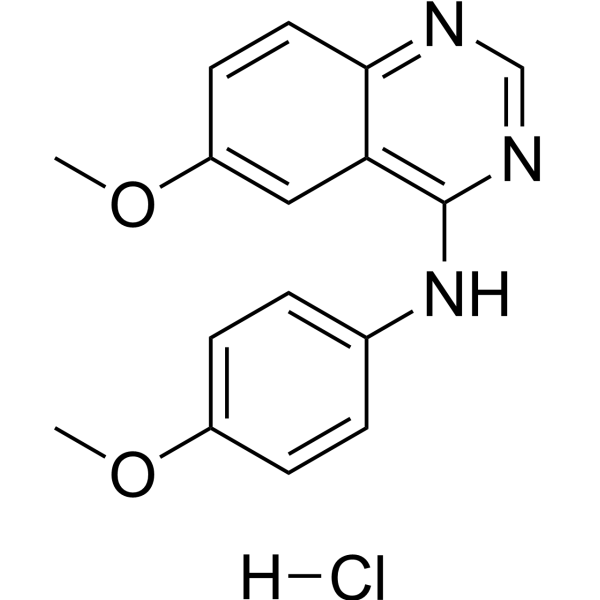
Cat. No.: HY-103566
CAS No.: 338736-46-2
Purity:  99.81%
LY456236 is a selective, non-competitive and orally active antagonist of glutamate receptor 1 (mGlu1), which can inhibit phosphatidylinositol hydrolysis with an IC50 of 0.145 μM. LY456236 can also inhibit EGFR, with an IC50 of 0.918 μM. LY456236 blocks cell proliferation by inhibiting the MAPK pathway, reversing the anti-apoptotic effect of DHPG (HY-12598A). LY456236 can be used in epilepsy research .
loading...
    loading...
Cat. No.: HY-19909
CAS No.: 936446-61-6
Target:  

EGFR

Research Areas:  

Cancer

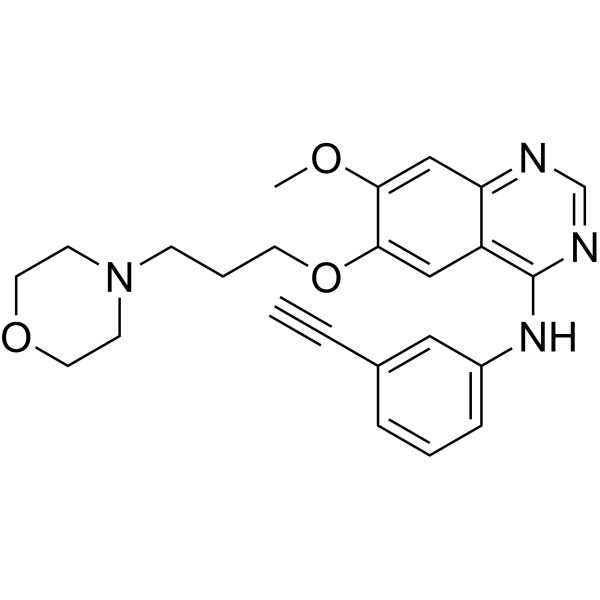
NRC-2694 is an epidermal growth factor receptor (EGFR) antagonist with anti-cancer and anti-proliferative properties. NRC-2694 is a click chemistry reagent, it contains an Alkyne group and can undergo copper-catalyzed azide-alkyne cycloaddition (CuAAc) with molecules containing Azide groups.
loading...
    loading...
Cat. No.: HY-N2510R
CAS No.: 607-91-0
Synonyms: Myristicine (Standard)
Myristicin (Standard) is the analytical standard of Myristicin. This product is intended for research and analytical applications. Myristicine is an orally bioavailable serotonin receptor antagonist and weak monoamine oxidase (MAO) inhibitor. Myristicine also exerts anti-cancer effects on gastric cancer cells by inhibiting the EGFR/ERK signaling pathway. Myristicine is the main component of nutmeg essential oil and has anti-cancer, anti-proliferative, antibacterial, anti-inflammatory and apoptosis-inducing effects. Myristicine abuse can produce hallucinogenic effects, organ damage, etc .
loading...
    loading...
Cat. No.: HY-145823
CAS No.: 3031307-73-7
Target:  

EGFR

Research Areas:  

Cancer

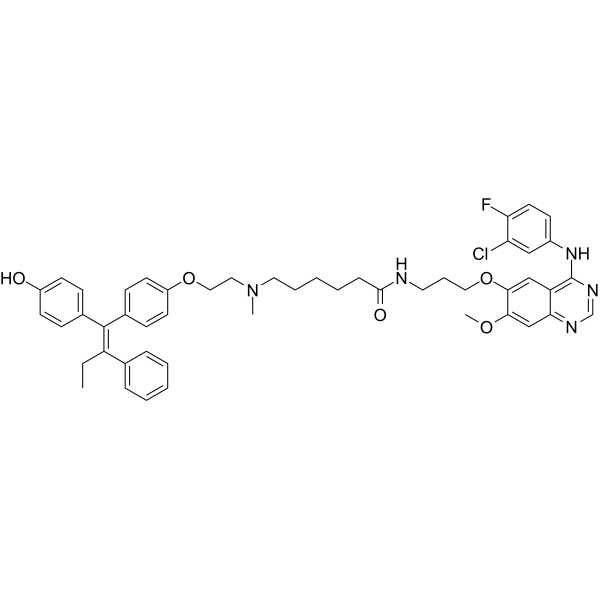
EGFR-IN-42 (Compound 17b) is a potent inhibitor of EGFR with single-digit nanomolar activity. EGFR-IN-42 connects tamoxifen or endoxifen with the EGFR-inhibitor gefitinib via a covalent linkage. EGFR-IN-42 retains both ER antagonist activity and EGFR inhibition. EGFR-IN-42 has superior anti-cancer activity .
loading...
    loading...
Cat. No.: HY-145824
CAS No.: 3031307-74-8
Target:  

EGFR

Research Areas:  

Cancer

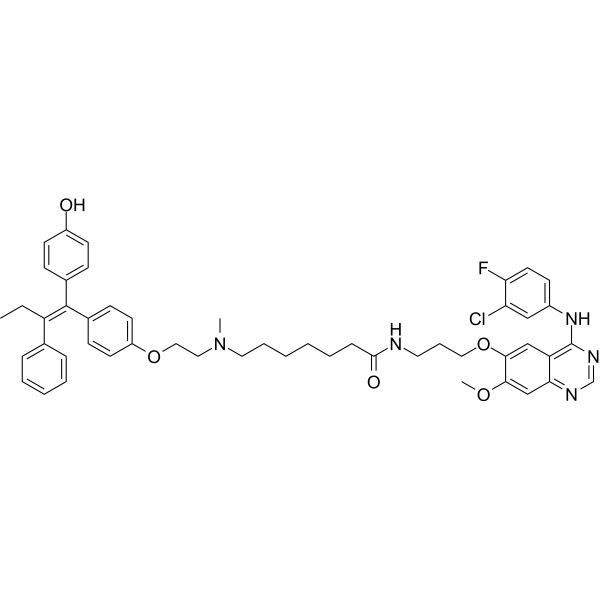
EGFR-IN-43 (Compound 17c) is a potent inhibitor of EGFR with single-digit nanomolar activity. EGFR-IN-43 connects tamoxifen or endoxifen with the EGFR-inhibitor gefitinib via a covalent linkage. EGFR-IN-43 retains both ER antagonist activity and EGFR inhibition. EGFR-IN-43 has superior anti-cancer activity .
loading...
    loading...
Cat. No.: HY-103566A
CAS No.: 338738-57-1
Research Areas:  

Neurological Disease

LY456236 free base is a selective, non-competitive and orally active antagonist of glutamate receptor 1 (mGlu1), which can inhibit phosphatidylinositol hydrolysis with an IC50 of 0.145 μM. LY456236 free base can also inhibit EGFR, with an IC50 of 0.918 μM. LY456236 free base blocks cell proliferation by inhibiting the MAPK pathway, reversing the anti-apoptotic effect of DHPG (HY-12598A). LY456236 free base can be used in epilepsy research .
loading...
    loading...
Cat. No.: HY-103566R
CAS No.: 338736-46-2
LY456236 (Standard) is the analytical standard of LY456236 (HY-103566). This product is intended for research and analytical applications. LY456236 is a selective, non-competitive and orally active antagonist of glutamate receptor 1 (mGlu1), which can inhibit phosphatidylinositol hydrolysis with an IC50 of 0.145 μM. LY456236 can also inhibit EGFR, with an IC50 of 0.918 μM. LY456236 has anticonvulsant effects and blocks cell proliferation by inhibiting the MAPK pathway, reversing the anti-apoptotic effect of DHPG (HY-12598A). LY456236 can be used in epilepsy research .
loading...
    loading...
Cat. No.: HY-183456
CAS No.: 71308-35-5
Tyrphostin AG17 is an orally active CDK2 inhibitor and EGFR tyrosine kinase antagonist. Tyrphostin AG17 reduces the levels of p21 and p16. Tyrphostin AG17 induces G1 phase cell cycle arrest, Apoptosis, mitochondrial dysfunction, decreased ATP levels, and inhibits DNA, RNA and protein synthesis, adipogenesis, and lipid synthesis. Tyrphostin AG17 inhibits fat accumulation, white adipose tissue hypertrophy, and alterations of glycogen and lipid inclusions in hepatocytes in obese mice without changing their serum biochemical parameters. Tyrphostin AG17 exhibits anticancer effects. Tyrphostin AG17 can be used in research related to immunoblastic lymphoma, leukemia, ovarian cancer, glioblastoma, colon cancer, breast cancer, melanoma, obesity and hepatic steatosis .
loading...
    loading...
  • 1

